Achieving High-Purity Virus Preparations: Essential Strategies for Successful X-ray Crystallography and Structural Studies
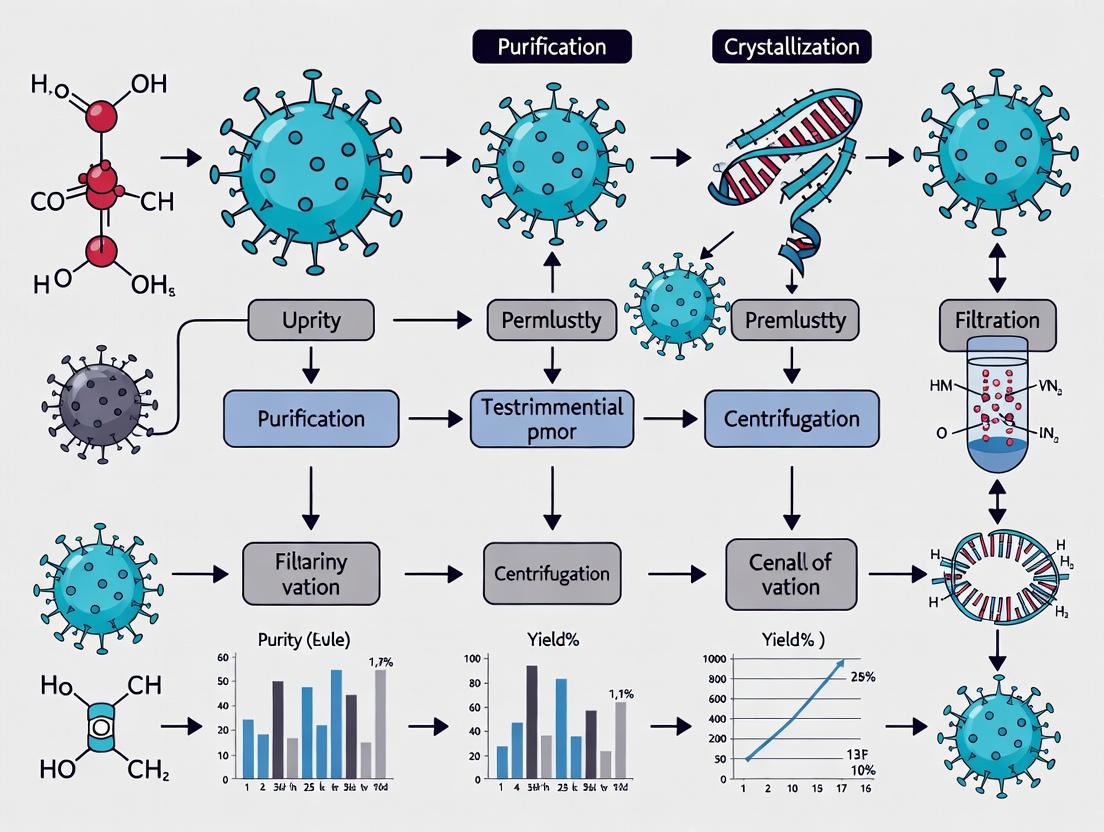
This article provides a comprehensive guide for researchers and drug development professionals on optimizing virus purification for crystallization.
Achieving High-Purity Virus Preparations: Essential Strategies for Successful X-ray Crystallography and Structural Studies
Abstract
This article provides a comprehensive guide for researchers and drug development professionals on optimizing virus purification for crystallization. We explore the fundamental principles of why purity is critical for obtaining high-resolution crystal structures, detail current best-practice methodologies from cell culture to final polishing steps, address common troubleshooting scenarios and optimization strategies, and present validation techniques to assess and compare preparation quality. The content synthesizes the latest advances to serve as a practical roadmap for overcoming one of the most significant bottlenecks in structural virology and antiviral drug design.
Why Purity is Paramount: The Foundation of High-Resolution Virus Crystallography
The Direct Link Between Sample Homogeneity and Crystal Lattice Order
Technical Support Center: Troubleshooting Crystallization of Virus Preparations
Frequently Asked Questions (FAQs)
Q1: Our virus crystals consistently form, but they are too small for high-resolution diffraction. How can we increase crystal size? A: This often indicates adequate nucleation but insufficient growth due to sample heterogeneity. Impurities or polydisperse particles act as non-productive nucleation sites. Implement a final size-exclusion chromatography (SEC) step immediately prior to crystallization setup. Data shows that a monodisperse peak with a polydispersity index (PdI) < 0.1, as measured by dynamic light scattering (DLS), is correlated with a >50% increase in achievable crystal dimensions.
Q2: Diffraction patterns show high mosaicity. What sample parameter should we address first? A: High mosaicity is a direct consequence of disorder within the crystal lattice, frequently stemming from conformational heterogeneity of the viral capsid. Focus on stabilizing a single, uniform conformational state. Utilize cryo-electron microscopy (cryo-EM) single-particle analysis to check for structural uniformity. Employing a cocktail of protease inhibitors and optimizing buffer conditions (pH, specific ions) to lock the conformation is critical.
Q3: Crystallization trials yield only precipitate or amorphous aggregates, never crystals. What is the most likely cause? A: This is a classic symptom of severe sample impurity or aggregation. The virus preparation likely contains host cell contaminants (nucleic acids, lipids, host proteins) that disrupt orderly lattice formation. Implement a multi-step purification strategy: Clarify lysate with nuclease treatment (e.g., Benzonase), use ultracentrifugation (e.g., sucrose gradient), and follow with affinity chromatography (e.g., immobilized heparin for many viruses).
Q4: How critical is the removal of empty capsids, and what is the best method to achieve it? A: Extremely critical. A mixture of full and empty capsids represents a fundamental heterogeneity in mass and often structure, preventing long-range order. Analytical ultracentrifugation (AUC) is the gold standard for resolving and quantifying these populations. A successful preparation for crystallization should have >95% full capsids. Isopycnic centrifugation in a cesium chloride (CsCl) gradient is highly effective for separation, though care must be taken to avoid inactivation.
Experimental Protocols Cited
Protocol 1: Assessing Sample Homogeneity via Dynamic Light Scattering (DLS)
- Sample Prep: Clarify virus buffer by 0.1 µm filtration. Dilute virus stock to an appropriate concentration (e.g., 0.5-1 mg/mL) in its final crystallization buffer.
- Instrument Setup: Equilibrate DLS instrument at desired temperature (e.g., 4°C or 20°C). Perform alignment with a toluene standard.
- Measurement: Load 50 µL of sample into a low-volume quartz cuvette. Run a minimum of 12 acquisitions per measurement.
- Data Analysis: Use cumulants analysis to determine the hydrodynamic radius (Rh) and the polydispersity index (PdI). A PdI < 0.1 is considered monodisperse and acceptable for crystallization trials.
Protocol 2: Final Size-Exclusion Chromatography (SEC) Polishing Step
- Column Selection: Use a high-resolution SEC column (e.g., Superose 6 Increase 10/300 GL) compatible with the virus size.
- Buffer Preparation: Use the final crystallization screening buffer or a compatible, low-salt buffer (e.g., 20 mM Tris-HCl, 150 mM NaCl, pH 7.5). Filter (0.22 µm) and degas.
- Chromatography: Equilibrate the column with at least 1.5 column volumes (CV) of buffer. Load concentrated virus sample (volume ≤ 0.5% of CV). Run isocratically at a low flow rate (e.g., 0.3 mL/min).
- Collection: Collect the central, symmetrical portion of the main peak, avoiding the leading and trailing edges. Concentrate immediately for crystallization setup.
Quantitative Data Summary
Table 1: Impact of Purification Steps on Sample Homogeneity and Crystallization Success
| Purification Step | Key Metric (DLS PdI) | % of Trials Yielding Crystals | Typical Diffraction Limit |
|---|---|---|---|
| Crude Lysate | >0.35 | <5% | N/A (No crystals) |
| After Ultracentrifugation | 0.15 - 0.25 | 15% | >6 Å |
| After Affinity Chromatography | 0.10 - 0.15 | 35% | 4 - 6 Å |
| After Final SEC Polish | < 0.10 | 65% | < 3 Å |
Table 2: Effect of Capsid Filling on Crystal Lattice Order
| % Full Capsids (by AUC) | Crystal Morphology | Lattice Disorder (Mosaicity) | Successful Structure Determination |
|---|---|---|---|
| < 70% | Thin plates, needles | >1.5° | No |
| 70-90% | Blocks, but small | 0.8° - 1.5° | Low Resolution (≥4Å) |
| > 95% | Large, single cubes | < 0.7° | High Resolution (≤3Å) |
Mandatory Visualizations
Title: Purification Workflow for Crystallization-Grade Virus
Title: How Sample Homogeneity Affects Crystal Order
The Scientist's Toolkit: Research Reagent Solutions
Table 3: Essential Materials for High-Purity Virus Crystallography
| Reagent/Material | Function & Role in Ensuring Homogeneity |
|---|---|
| Benzonase Nuclease | Degrades host nucleic acids that coat virions and cause aggregation, a major source of heterogeneity. |
| Protease Inhibitor Cocktail (e.g., EDTA-free) | Prevents proteolytic cleavage of viral surface proteins, preserving structural integrity and uniformity. |
| Heparin Sepharose Affinity Resin | Exploits specific glycosaminoglycan binding properties of many viruses for high-selectivity purification. |
| Sucrose (for Gradient Ultracentrifugation) | Forms density gradients to separate virus particles based on buoyant density, removing lighter contaminants. |
| Cesium Chloride (CsCl) | Forms isopycnic gradients for the high-resolution separation of full vs. empty capsids. |
| Size-Exclusion Resin (e.g., Superose 6) | Final polishing step to isolate monodisperse population and remove small aggregates. |
| Crystallization Screens (Sparse Matrix) | Commercial screens (e.g., JCSG+, MemGold) systematically probe conditions that promote orderly lattice formation. |
| Detergents (e.g., OG, DDM) | For enveloped viruses, maintains membrane integrity and prevents fusion/aggregation. |
Technical Support Center
Troubleshooting Guides & FAQs
FAQ 1: My virus preparation has consistently low infectivity-to-particle (I:P) ratio after purification. What are the likely contaminants, and how can I address this?
- Answer: A low I:P ratio often indicates a high proportion of non-infectious, defective particles or viral aggregates. These contaminants often co-purify with intact virions using standard methods like ultracentrifugation.
- Solution: Implement a size-based separation technique after your initial capture step. Size-exclusion chromatography (SEC) is highly effective at resolving monomers from aggregates. For separating defective from infectious particles, consider continuous density gradient ultracentrifugation (e.g., iodixanol gradients) with finer resolution than sucrose cushions.
- Protocol: Analytical SEC for Aggregate Detection.
- Equilibrate a Superose 6 Increase 5/150 GL column with 2 column volumes (CV) of your storage buffer (e.g., 20 mM Tris, 150 mM NaCl, pH 7.4).
- Concentrate your purified virus sample to ≤100 µL.
- Centrifuge the sample at 10,000 x g for 5 minutes at 4°C to remove any pre-column aggregates.
- Inject 50 µL of supernatant onto the column using an HPLC or FPLC system at a flow rate of 0.3 mL/min.
- Monitor absorbance at 260 nm (nucleic acid) and 280 nm (protein). Aggregates will elute in the void volume (first peak). The monomeric virus peak will elute later.
- Collect the monomer peak for downstream crystallization trials.
FAQ 2: I suspect host cell membrane proteins/vesicles are contaminating my enveloped virus preps. How can I confirm and reduce this?
- Answer: Host-derived vesicles (e.g., exosomes) have similar physical properties to enveloped viruses. Contamination can be confirmed by mass spectrometry or by assaying for host-specific markers (e.g., CD9, CD63 for exosomes) using Western blot.
- Solution: Introduce an affinity purification step. Use a lectin-affinity column (e.g., Galanthus nivalis lectin for high-mannose glycans) if your virus is glycosylated, or an immunoaffinity column with a virus-specific monoclonal antibody. This provides superior specificity over density-based methods alone.
- Protocol: Lectin-Affinity Chromatography for Enveloped Virus Capture.
- Pack a 1 mL column with Agarose-bound Galanthus nivalis Lectin (GNL).
- Equilibrate with 10 CV of Binding/Wash Buffer (20 mM HEPES, 150 mM NaCl, 1 mM CaCl₂, pH 7.4).
- Load clarified virus harvest (in binding buffer) onto the column at a flow rate of 0.5 mL/min.
- Wash with 10 CV of Binding/Wash Buffer until UV baseline stabilizes.
- Elute bound virus with 5 CV of Elution Buffer (Binding/Wash Buffer + 500 mM Methyl α-D-mannopyranoside).
- Desalt immediately into crystallization buffer using a PD-10 desalting column.
FAQ 3: My purified virus samples form amorphous precipitate in crystallization screens instead of crystals. Could contaminants be the cause?
- Answer: Yes. Trace amounts of host cell DNA/RNA, lipids, or non-ionic detergents (e.g., Triton X-100) from lysis can drastically interfere with crystal lattice formation. Aggregated virus particles also promote precipitation.
- Solution: Incorporate a nuclease treatment (Benzonase) and a final polishing step. For non-enveloped viruses, consider ion-exchange chromatography to remove nucleic acids. For all viruses, a final SEC step is recommended to yield a monodisperse population.
- Protocol: Benzonase Treatment & Final Polishing SEC.
- To your purified virus sample, add MgCl₂ to a final concentration of 2 mM.
- Add Benzonase Nuclease to a final concentration of 50 U/mL.
- Incubate at room temperature (or 37°C for heat-stable viruses) for 1 hour.
- Remove enzyme and salt by buffer exchange into your desired low-salt crystallization screen buffer using a 100kDa MWCO centrifugal concentrator.
- Perform a final SEC step (as in FAQ 1, Protocol) directly into the crystallization buffer. Collect the monomer peak.
Quantitative Data on Common Contaminants Table 1: Impact of Common Contaminants on Virus Crystallization
| Contaminant Class | Typical Source | Impact on Crystallization | Effective Removal Method(s) |
|---|---|---|---|
| Host Cell Proteins | Lysate, membrane vesicles | Introduces heterogeneity; disrupts lattice packing. | Affinity Chromatography, Ion-Exchange Chromatography |
| Nucleic Acids (host/viral) | Lysate, defective particles | Causes viscous solutions; non-specific charge interactions. | Benzonase Treatment, Anion-Exchange Chromatography |
| Viral Aggregates | Concentration steps, buffer mismatch | Promotes amorphous precipitation over nucleation. | Size-Exclusion Chromatography, Optimized Gradient Ultracentrifugation |
| Defective Particles | Viral replication cycle | Structural heterogeneity; reduces long-range order. | Continuous Density Gradient, Selective Precipitation |
| Lipids/Detergents | Cell membranes, purification buffers | Interferes with protein-protein contacts; forms micelles. | Detergent exchange, Hydrophobic Interaction Chromatography |
Experimental Workflow for High-Purity Virus Preparation
Title: High-Purity Virus Prep Workflow for Crystallization
The Scientist's Toolkit: Key Research Reagent Solutions Table 2: Essential Materials for Contaminant Removal
| Reagent / Material | Function in Purification | Key Contaminant Targeted |
|---|---|---|
| Benzonase Nuclease | Degrades all forms of DNA and RNA. Removes viscosity and nucleic acid contaminants. | Host & viral nucleic acids. |
| Iodixanol (OptiPrep) | Inert, non-ionic density gradient medium. Forms continuous gradients for high-resolution separation. | Defective particles, host vesicles. |
| GNL-Agarose Lectin | Binds high-mannose glycans on viral envelope glycoproteins for affinity capture. | Host membrane proteins, vesicles. |
| Superose 6 Increase SEC Column | High-resolution size-based separation. Resolves monomeric virus from aggregates. | Viral aggregates, protein complexes. |
| Virus-Specific mAb Agarose | Immunoaffinity resin for highly specific capture of intact virions. | All non-targeted contaminants. |
| Anion-Exchange Resin (e.g., Q Sepharose) | Binds negatively charged contaminants at appropriate pH/conductivity. | Nucleic acids, acidic host proteins. |
| 100kDa MWCO Centrifugal Concentrator | Buffer exchange and concentration while removing small-molecule contaminants. | Salts, detergents, nucleotides. |
How Impurities Disrupt Nucleation and Crystal Growth
Troubleshooting Guides & FAQs
Q1: Why are my protein crystals growing as micro-crystals or amorphous precipitate instead of large, single crystals? A: This is a classic sign of impurity-driven heterogeneous nucleation. Impurities (e.g., host cell proteins, degraded viral protein, nucleic acid fragments) act as competing nucleation sites, leading to a high density of small, disordered crystal nuclei. To troubleshoot:
- Assess Purity: Run SDS-PAGE and dynamic light scattering (DLS) on your sample. A single band on SDS-PAGE and a monodisperse peak in DLS (polydispersity index <20%) are necessary but not always sufficient.
- Implement Additional Purification: Add an orthogonal polishing step, such as size-exclusion chromatography (SEC) or anion-exchange chromatography (AEX), after your primary affinity capture.
- Optimize Nucleation: Use seeding techniques to bypass the primary nucleation event, which is most sensitive to impurities.
Q2: Our virus preparation appears pure by SDS-PAGE, but crystallization still fails. What invisible impurities should we suspect? A: You are likely encountering "chemical impurities" or conformational heterogeneity. Key suspects include:
- Detergents/Stabilizers: Residual detergents from purification (e.g., CHAPS, DDM) can disrupt crystal lattice formation.
- Buffer Components: Compounds like imidazole or reducing agents (DTT, TCEP) can act as ligands or redox agents, causing heterogeneity.
- Post-Translational Modifications: Variable glycosylation or phosphorylation states on viral surface proteins create a non-uniform population.
- Nucleic Acid Contamination: Trace amounts of RNA/DNA can bind to viral proteins and inhibit ordered packing.
Q3: How do we quantify the impact of a specific impurity on nucleation kinetics? A: You can set up a controlled experiment using dynamic light scattering (DLS) or turbidity measurements to monitor nucleation lag time. The protocol and typical data are below.
Experimental Protocol: Measuring Impurity Impact on Nucleation Lag Time
Objective: To determine how a specific impurity (e.g., host cell protein contaminant) extends the nucleation lag time of your target viral protein. Materials:
- Purified viral protein sample (control).
- Viral protein sample spiked with a known concentration of the impurity.
- Crystallization precipitant solution.
- Dynamic Light Scattering (DLS) plate reader or turbidimeter.
- 96-well glass-bottom plates.
Method:
- Prepare two identical solutions of your viral protein at the target concentration for crystallization (e.g., 10 mg/mL).
- To the "test" solution, add a known quantity of the isolated impurity (e.g., 5% w/w).
- In the DLS plate, mix 150 nL of protein solution with 150 nL of precipitant solution per well, for both control and test samples. Use at least 6 replicates each.
- Immediately load the plate into the instrument.
- Program the instrument to measure the mean particle size and scattering intensity (or count rate) for each well every 5 minutes for 24-48 hours.
- The nucleation lag time is defined as the time point before a sharp, sustained increase in scattering intensity/particle size is observed, indicating the formation of crystal nuclei.
Quantitative Data Summary:
Table 1: Effect of Host Cell Protein (HCP) Impurity on Nucleation Lag Time of Capsid Protein VP60
| Impurity Type | Concentration (% w/w) | Mean Nucleation Lag Time (hours) | Standard Deviation (hours) | Crystal Outcome (72h) |
|---|---|---|---|---|
| None (Control) | 0% | 8.5 | ± 1.2 | Large, single crystals |
| HCP Fraction A | 2% | 14.7 | ± 2.1 | Fewer, smaller crystals |
| HCP Fraction A | 5% | 24.3 | ± 3.8 | Micro-crystalline shower |
| HCP Fraction A | 10% | >48 | N/A | Amorphous precipitate |
Q4: What advanced purification strategies are critical for virus crystallization in a thesis focused on improving purity? A: Your thesis work should incorporate multi-modal purification and analytics:
- Tandem Affinity Purification: Use two sequential, orthogonal affinity tags (e.g., His-tag followed by Strep-tag) to achieve exceptional baseline purity.
- High-Resolution SEC: Use Superose 6 Increase or similar columns immediately before crystallization trials to isolate monodisperse particles and remove aggregates.
- Charge-Based Separation: AEX or CEX HPLC can separate viral particles based on subtle differences in surface charge caused by bound impurities or modifications.
- Ultracentrifugation: Sucrose or glycerol gradient ultracentrifugation remains a gold standard for isolating intact, homogeneous viral particles away from lighter-weight contaminants.
The Scientist's Toolkit: Key Research Reagent Solutions
Table 2: Essential Materials for High-Purity Virus Crystallization Research
| Item | Function & Rationale |
|---|---|
| Pierce HCV Protease | For precise, tag-free cleavage of affinity tags to prevent lattice interference. |
| Superose 6 Increase 10/300 GL | High-resolution SEC column for final polishing and aggregate removal. |
| HIS-Select Nickel Affinity Gel | High-capacity, high-specificity resin for initial capture of His-tagged constructs. |
| Tris(2-carboxyethyl)phosphine (TCEP) | Stable, non-thiol reducing agent to control disulfide bonds and prevent oxidation heterogeneity. |
| Octyl β-D-glucopyranoside (OG) | Mild detergent for solubilizing membranes without disrupting protein-protein interactions. |
| Protease Inhibitor Cocktail (EDTA-free) | Prevents proteolytic degradation during purification, a major source of impurities. |
| RNase A & DNase I | Enzymatic removal of nucleic acid contaminants that promote aggregation. |
| Malvern Zetasizer Ultra | Instrument for DLS and zeta potential measurements to assess size, dispersity, and surface charge. |
Visualization of Concepts & Workflows
Impurity Impact on Crystallization Pathway
High-Purity Virus Prep Workflow
Setting Purity Benchmarks for Different Virus Families (e.g., Icosahedral vs. Complex Viruses).
Technical Support Center
FAQs & Troubleshooting
Q1: During ultracentrifugation, my enveloped virus (e.g., influenza) sample loses infectivity and appears aggregated. What could be the cause? A: This is a common issue with complex, enveloped viruses due to their fragility. The likely cause is shear stress or osmotic shock during density gradient preparation or high-speed pelleting.
- Troubleshooting:
- Avoid pelleting: Switch to an isopycnic (equilibrium) density gradient centrifugation method (e.g., sucrose or iodixanol gradient) without a pelleting step.
- Use gentler gradients: Prepare gradients manually or using a gradient maker for smoother interfaces. Pre-formed continuous gradients are often gentler than step gradients.
- Optimize buffer: Ensure iso-osmotic conditions and include stabilizers like 100-200mM NaCl, 1mM MgCl₂, 10-20mM HEPES pH 7.4, and 0.5-1% (w/v) human serum albumin (HSA) or sucrose.
- Reduce centrifugal force: Use the lowest speed and shortest time sufficient for separation.
Q2: My icosahedral virus (e.g., enterovirus) preparation after size-exclusion chromatography (SEC) has high A260/A280 ratios, indicating nucleic acid contamination. How can I improve purity? A: High nucleic acid content is a typical challenge with non-enveloped viruses. It suggests co-purification of host cell DNA/RNA or unpackaged viral genomes.
- Troubleshooting:
- Pre-treatment with nucleases: Incubate the clarified lysate with Benzonase (25-50 U/mL) or RNase A/DNase I (5-10 µg/mL) for 30-60 minutes at room temperature prior to purification. This degrades free nucleic acids.
- Adjust SEC parameters: Use a column with a higher resolution matrix (e.g., Sepharose 4FF or 6FF) and a longer bed height. Reduce the sample load volume to <2% of the column volume.
- Introduce an orthogonal step: Add an anion-exchange chromatography (AEX) step before SEC. Under appropriate pH/conductivity, viruses bind while nucleic acids flow through. Elute with a salt gradient.
Q3: For both virus types, how do I objectively assess purity to know if I've met a benchmark for crystallization trials? A: Purity must be assessed using multiple complementary analytical techniques. Relying on a single method is insufficient.
Table 1: Purity Benchmark Assessment Techniques
| Technique | Icosahedral Virus Benchmark | Complex/Enveloped Virus Benchmark | Purpose |
|---|---|---|---|
| SDS-PAGE / Silver Stain | No detectable host protein bands; a single dominant coat protein band pattern. | Major structural proteins (e.g., HA, NA, Matrix) visible with minimal host contaminants. | Protein purity and subunit integrity. |
| Negative Stain EM | >95% particles are full, uniform, and without visible debris. | >70% particles are intact, spherical (if applicable), with visible envelopes. | Structural integrity, aggregation, and contaminant visualization. |
| Analytical SEC / DLS | Single, sharp peak; Polydispersity Index (PDI) < 15%. | A major monodisperse peak; PDI < 25% acceptable due to inherent heterogeneity. | Hydrodynamic size homogeneity and aggregation state. |
| A260/A280 Ratio | Ratio consistent with packaged genome (e.g., ~1.5 for many RNA viruses). | ~1.2-1.4, lower due to lipid envelope. Deviations indicate free nucleic acids. | Nucleic acid vs. protein content ratio. |
| Infectivity Assay (Plaque) | Specific infectivity should plateau at highest purity fractions. | Specific infectivity is a key functional benchmark for fragile viruses. | Functional integrity assessment. |
Experimental Protocol: Orthogonal Purification for an Icosahedral Enterovirus
Objective: Obtain crystallization-grade virus free of host nucleic acids and proteins.
Materials: Clarified cell lysate containing virus.
Procedure:
- Nuclease Treatment: Add MgCl₂ to 2mM final concentration and Benzonase to 50 U/mL. Incubate with gentle agitation for 1 hour at room temperature.
- Polyethylene Glycol (PEG) Precipitation: Add NaCl to 0.5M and solid PEG-8000 to 8% (w/v). Stir for 2 hours at 4°C. Pellet precipitate by centrifugation at 10,000 x g for 30 min. Resuspend pellet in AEX Buffer A (20mM Tris, pH 8.0).
- Anion-Exchange Chromatography (AEX):
- Equilibrate a HiTrap Q HP column with Buffer A.
- Load the resuspended PEG pellet.
- Wash with 5 column volumes (CV) of Buffer A to elute nucleic acids.
- Elute with a linear gradient of 0-50% Buffer B (Buffer A + 1M NaCl) over 20 CV. Collect fractions.
- Size-Exclusion Chromatography (SEC):
- Pool virus-containing AEX fractions and concentrate using a 100-kDa centrifugal filter.
- Equilibrate a HiPrep Sephacryl S-500 HR column with Storage Buffer (20mM HEPES, 100mM NaCl, pH 7.4).
- Load concentrated sample (<2% of column volume). Elute isocratically, collecting the first major peak.
- Assessment: Analyze the SEC peak fraction using all techniques in Table 1.
Title: Purification Workflow for Icosahedral Viruses
The Scientist's Toolkit: Key Research Reagent Solutions
| Reagent / Material | Function in Virus Purification |
|---|---|
| Benzonase Nuclease | Degrades all forms of DNA and RNA (linear, circular, single- or double-stranded). Crucial for removing host nucleic acids that co-sediment with viruses. |
| OptiPrep (Iodixanol) | Inert, non-ionic density gradient medium. Ideal for isopycnic separation of fragile enveloped viruses due to its low osmolarity and viscosity. |
| Sucrose (UltraPure Grade) | Standard medium for rate-zonal and equilibrium density gradient centrifugation of stable viruses. Provides a density and viscosity barrier for separation. |
| Polyethylene Glycol (PEG-8000) | Precipitates viruses from large-volume, dilute lysates via volume exclusion, providing an effective initial concentration and purification step. |
| Anion-Exchange Resin (e.g., Q Sepharose) | Binds viruses based on surface charge at neutral-weakly basic pH. Excellent for separating viruses from most nucleic acids (which bind more strongly). |
| Size-Exclusion Matrix (e.g., Sephacryl S-500) | Separates particles based on hydrodynamic radius. Final polishing step to remove aggregates and small-molecule contaminants. |
| HEPES Buffer | A non-coordinating, zwitterionic buffering agent preferred for crystallization research due to its minimal metal ion interaction. |
| Protease Inhibitor Cocktail (EDTA-free) | Prevents proteolytic degradation of viral structural proteins during initial lysis and clarification, especially critical for complex viruses. |
The Role of Dynamic Light Scattering (DLS) and UV-Vis Spectroscopy in Initial Assessment
Technical Support Center: Troubleshooting Guides and FAQs
Dynamic Light Scattering (DLS) FAQs
Q1: My DLS measurement of a purified virus sample shows multiple peaks or a very high polydispersity index (PdI). What does this indicate and how should I proceed? A: Multiple peaks or a PdI >0.2 in virus preparations typically indicates sample heterogeneity, which is detrimental to crystallization. This can be caused by:
- Aggregation: Virus particles may have aggregated due to buffer incompatibility, freeze-thaw cycles, or concentration steps.
- Impurities: Presence of non-viral particles like cellular debris, protein aggregates, or empty capsids.
- Degradation: Partial degradation of viral particles.
- Troubleshooting Steps:
- Filter the sample through a 0.22 µm or 0.1 µm syringe filter (ensure the filter material does not adsorb your virus).
- Check and adjust the buffer composition. Use a low-salt, non-ionic buffer (e.g., 10-20 mM Tris-HCl, pH 7.5-8.0) to minimize interparticle interactions.
- Avoid freeze-thaw cycles. Aliquot and flash-freeze in liquid nitrogen if storage is necessary.
- Consider further purification steps, such as density gradient ultracentrifugation or size-exclusion chromatography (SEC), and re-analyze.
- Troubleshooting Steps:
Q2: The measured hydrodynamic radius (Rh) from DLS is significantly different from the expected size based on electron microscopy. Why? A: DLS measures the hydrodynamic radius (Rh), which includes the solvation shell and is influenced by particle shape and surface charge. Electron microscopy provides a dry, geometric size. Viruses often have surface glycoproteins or a fuzzy coat that increases the Rh. A consistent discrepancy >10-20% may suggest:
- Sample aggregation (increases Rh).
- Incorrect viscosity or refractive index parameters set in the DLS software for your specific buffer.
- Action: Verify instrument settings match your solvent. Use the "solvent library" or manually input known values. Confirm sample monodispersity (low PdI) before comparing sizes.
Q3: My virus sample has a low concentration. Can I still get a reliable DLS reading? A: It depends. Very low concentrations (<0.1 mg/mL for proteins; viruses may vary) can result in a weak signal-to-noise ratio, making data unreliable.
- Solution: Concentrate the sample using centrifugal concentrators (e.g., 100kDa MWCO). Always centrifuge the concentrated sample briefly (e.g., 10,000 x g, 5 min) to remove any aggregates formed during concentration before DLS analysis.
UV-Vis Spectroscopy FAQs
Q4: How do I use UV-Vis to determine the concentration and purity of my virus preparation? A: For enveloped viruses, use the absorbance at 260 nm and 280 nm. The A260/A280 ratio indicates purity from nucleic acid and protein contaminants. Concentration can be derived from A260.
- Protocol:
- Blank the spectrophotometer with your exact dialysis or storage buffer.
- Scan from 240 nm to 320 nm.
- Record absorbance at A260 and A280.
- Calculate ratio: A260/A280.
- Estimate concentration using the Beer-Lambert law (A = ε * c * l). The extinction coefficient (ε) is virus-specific and must be obtained from literature (e.g., ~3.0 for influenza virus).
Q5: My UV-Vis spectrum shows a high baseline drift or scattering at longer wavelengths (>320 nm). What does this mean? A: Significant light scattering at wavelengths where the sample should not absorb is a classic sign of large, aggregated particles or insoluble impurities.
- Interpretation: This correlates with a poor DLS result (high PdI). The sample is not suitable for crystallization.
- Action: Clarify the sample by gentle centrifugation (2,000 - 5,000 x g for 5-10 min) or filtration. Re-measure the supernatant/filtrate. If scattering persists, major repurification is needed.
Q6: The A260/A280 ratio is far from the expected literature value for my virus. How do I interpret this? A: Deviations indicate contamination.
- Ratio too low: Suggests excess protein contamination (e.g., serum albumin, cellular proteins).
- Ratio too high: Suggests excess nucleic acid contamination (e.g., free RNA/DNA, host cell DNA).
- Action: This quantitative data guides the next purification step. Use nuclease treatment for high ratios or affinity chromatography/ultracentrifugation for low ratios.
Data Presentation: Expected Values and Troubleshooting Guide
Table 1: Diagnostic Values for Initial Assessment of Virus Purity
| Technique | Optimal Result for Crystallization | Warning Zone | Indicated Problem | Recommended Next Step | |||||
|---|---|---|---|---|---|---|---|---|---|
| DLS - PdI | < 0.1 | 0.1 - 0.2 | > 0.2 | Moderate heterogeneity | High heterogeneity/aggregation | Filter, check buffer, dilute sample. | Requires repurification (e.g., SEC, gradient). | ||
| DLS - Peak Count | Single, sharp peak | One main peak + very minor shoulder | Two or more distinct peaks | Minor impurity | Significant impurity/aggregates | Proceed with caution to crystallization screening. | Not crystallizable. Purify further. | ||
| UV-Vis - A260/A280 | Virus-specific (e.g., ~1.2-1.6) | Within ±0.1 of target | ±0.2 to ±0.3 of target | >±0.3 from target | Slight impurity | Significant protein/nucleic acid load | Severe contamination | Use complementary assay (SDS-PAGE, PCR). | Nuclease treatment or affinity purification. |
| UV-Vis - Baseline (320 nm) | Absorbance < 0.05 | 0.05 - 0.1 | > 0.1 | Minimal scattering | Moderate scattering | Severe scattering/aggregates | Clarify by low-speed centrifugation. | Ultracentrifuge or gel filtration. |
Table 2: Key Research Reagent Solutions for Virus Purity Assessment
| Reagent/Material | Function in Purity Assessment | Key Consideration |
|---|---|---|
| Size-Exclusion Chromatography (SEC) Buffer | Final polishing step to separate monomers from aggregates. Provides ideal DLS/UV-Vis sample. | Use low-salt, volatile buffers (e.g., ammonium acetate) compatible with downstream crystallization. |
| Ultracentrifuge Density Gradient Media | Separates full particles from empty capsids and cellular debris based on buoyant density. | Sucrose vs. iodixanol. Iodixanol is iso-osmotic and less damaging to delicate envelopes. |
| Nanopore-Filtered Water/Buffer | Used for all dilution and instrument blanking. Eliminates dust/particulate noise in DLS. | Essential for reproducible, low-noise DLS measurements. |
| Sterile, Low-Binding Filters | Clarifies sample prior to DLS/UV-Vis by removing large aggregates. | Use 0.22 µm or 0.1 µm pore size. PES or PVDF membranes recommended for low protein adsorption. |
| Nuclease Enzyme (e.g., Benzonase) | Digests free nucleic acid contaminants, improving A260/A280 ratio and homogeneity. | Add with Mg2+, incubate post-purification, then remove enzyme via chromatography. |
Experimental Protocols
Protocol 1: Integrated DLS & UV-Vis Analysis for Virus Samples
Objective: To concurrently assess size distribution, aggregation state, and spectral purity of a virus preparation.
- Sample Preparation: Dialyze virus preparation into a low-salt, non-absorbing buffer (e.g., 20 mM Tris-HCl, 50 mM NaCl, pH 7.8). Clarify by centrifugation at 5,000 x g for 5 min at 4°C.
- UV-Vis Scan:
- Blank spectrophotometer with dialysis buffer.
- Load clarified sample in a quartz cuvette (path length 10 mm or 2 mm for high conc.).
- Record spectrum from 240 nm to 350 nm.
- Note A260, A280, A260/A280 ratio, and A320.
- DLS Measurement:
- Transfer an aliquot of the same sample used in UV-Vis to a disposable microcuvette or quartz cuvette.
- Equilibrate to measurement temperature (e.g., 20°C) for 2 minutes.
- Perform measurement with appropriate settings (solvent viscosity/RI, virus RI ~1.45).
- Record intensity-based size distribution and polydispersity index (PdI).
- Data Correlation: Cross-reference DLS PdI with UV-Vis A320. High values in both confirm aggregation. Use A260/A280 to identify contaminant type if PdI is elevated.
Protocol 2: Rapid Pre-Crystallization Quality Control Check
Objective: A quick, sub-30-minute assessment to determine if a sample is worthy of entering crystallization trials.
- Visual Inspection: Check for clarity. Opalescence is acceptable; cloudiness is not.
- UV-Vis Purity Check: Perform a quick scan from 260 nm to 350 nm. Calculate A260/A280 ratio. Accept if within 0.1 of target and A320 < 0.08.
- DLS Snapshot: Run a single 60-second DLS measurement. Accept if primary peak is within expected size range and PdI < 0.15.
- Decision Point: If both UV-Vis and DLS criteria are met, proceed to crystallization screening. If one fails, return to purification.
Visualizations
Title: Pre-Crystallization Quality Control Workflow for Virus Samples
Title: DLS & UV-Vis Result Troubleshooting Decision Tree
From Culture to Crystal: A Step-by-Step Purification Pipeline for Structural Virology
Technical Support Center: Troubleshooting & FAQs
Frequently Asked Questions
Q1: My adherent cell culture for virus production is showing poor viability and detachment before harvest. What could be the cause? A: This is often due to substrate exhaustion or cytotoxic metabolite accumulation. Monitor glucose and glutamine levels daily; concentrations below 1.0 mM and 0.5 mM, respectively, can trigger stress. Ensure pH remains between 7.0-7.4. For prolonged cultures, consider fed-batch protocols with targeted nutrient feeds to maintain metabolite levels below inhibitory thresholds (e.g., lactate < 25 mM, ammonium < 5 mM).
Q2: I am observing low viral titer in my harvest supernatant despite high cell density. How can I troubleshoot this? A: Low titer with high cell density often indicates a harvest timing or cell health issue. Check the following:
- Infection Multiplicity (MOI): An incorrect MOI can lead to poor synchronization of infection. Perform an MOI time-course experiment (see Protocol 1).
- Time of Harvest: Harvesting too early or too late post-infection can drastically reduce yield. For many enveloped viruses (e.g., influenza, VSV), the optimal harvest window is typically 24-48 hours post-infection when cytopathic effect (CPE) is ~80-90%.
- Cell Status at Infection: Cells must be in optimal mid-log phase growth. Infection of over-confluent, contact-inhibited cells reduces yield.
Q3: After harvesting by centrifugation, my virus pellet is difficult to resuspend and I suspect aggregation. How can I prevent this? A: Virus aggregation during harvest compromises integrity and purity. Implement these steps:
- Harvest Buffer: Always use an isotonic, buffered solution (e.g., NTE: 100 mM NaCl, 10 mM Tris, 1 mM EDTA, pH 7.4) with 0.1-1.0% human serum albumin (HSA) or sucrose as a stabilizer.
- Centrifugation Parameters: Use lower g-forces for pelleting (e.g., 10,000-15,000 x g for 1-2 hours at 4°C) rather than ultracentrifugation speeds if followed by a purification step. A slow acceleration/deceleration rotor is ideal.
- Resuspension Technique: Allow pellet to soften on ice for 30 minutes, then resuspend gently using a wide-bore pipette tip in a small volume of cold stabilization buffer. Avoid vortexing.
Q4: My clarification filters clog rapidly during harvest processing, causing volume loss. What alternatives exist? A: Rapid filter clogging indicates high cellular debris load. Implement a pre-clarification cascade:
- Low-Speed Centrifugation: 500 x g for 10 min to remove bulk cells.
- Depth Filtration: Use a 1.0 - 0.5 µm pore size depth filter to remove fine debris and reduce load on the final sterilizing-grade filter (0.22 µm).
- Tangential Flow Filtration (TFF): For larger volumes, consider TFF with a 0.2 µm hollow fiber filter for gentle clarification and simultaneous concentration.
Detailed Experimental Protocols
Protocol 1: MOI Time-Course Optimization for Virus Yield Objective: To determine the optimal Multiplicity of Infection (MOI) and time of harvest (TOH) for maximum infectious titer. Materials: See "Research Reagent Solutions" table. Method:
- Seed adherent cells (e.g., HEK293, Sf9) in a 12-well plate to reach 70-80% confluence at time of infection.
- Prepare serial dilutions of virus stock to achieve target MOIs of 0.01, 0.1, 1, and 5 (Particle/cell or PFU/cell).
- Aspirate media, inoculate wells with virus dilutions in a minimal volume (e.g., 200 µL). Incubate at culture temp for 1 hour with gentle rocking every 15 min.
- Add complete medium to each well. Set up plate for parallel harvest.
- Harvest Samples: Collect 100 µL supernatant from replicate wells at 12, 24, 36, 48, 60, and 72 hours post-infection (hpi). Store at -80°C.
- Titer Analysis: Quantify virus yield for each MOI/TOH combination using a plaque assay, TCID50, or qPCR.
- Analysis: Plot titer vs. time for each MOI. The peak titer indicates optimal TOH for a given MOI.
Protocol 2: Gentle Harvest and Clarification for Integrity Preservation Objective: To recover virus-containing supernatant with minimal host cell contamination and particle damage. Materials: See "Research Reagent Solutions" table. Method:
- Conditioned Media Collection: For suspension cultures, take the entire bioreactor volume. For adherent cultures, decant or pipette supernatant into a chilled container.
- Low-Speed Clarification: Centrifuge at 500 x g for 10 minutes at 4°C to pellet intact cells.
- Depth Filtration (Optional): Pass supernatant through a 0.45 µm PES syringe filter or depth filter capsule.
- Benchtop Clarification: Transfer supernatant to a high-clarity centrifuge tube. Centrifuge at 10,000 x g for 1 hour at 4°C to pellet viral particles.
- Resuspension: Carefully decant supernatant. Place pellet on ice for 30 min. Gently resuspend in 1/100th of the original volume using cold NTE-HSA buffer with a wide-bore pipette tip.
- Final Clarification: Centrifuge the resuspended pellet at 2,000 x g for 5 minutes at 4°C to remove any remaining aggregates. Transfer clarified virus to a fresh tube. Aliquot and store at -80°C.
Data Presentation
Table 1: Impact of Harvest Time on Viral Titer and Host Cell Protein (HCP) Contamination
| Virus Type | Cell Line | Optimal Harvest (hpi) | Peak Titer (PFU/mL) | HCP at Peak (ng/10^9 particles) | HCP at 24h Post-Peak (ng/10^9 particles) |
|---|---|---|---|---|---|
| Influenza A (H1N1) | MDCK-SIAT1 | 48 | 2.5 x 10^8 | 1,200 | 15,500 |
| Vesicular Stomatitis Virus (VSV) | Vero | 24 | 1.1 x 10^9 | 850 | 8,900 |
| Baculovirus (BV) | Sf9 | 72 | 5.0 x 10^7* | 3,500 | 41,000 |
| Lentivirus (LV) | HEK293T | 48 | 5.0 x 10^7* | 950 | 11,200 |
*Titer reported as Transducing Units (TU)/mL for BV and LV.
Table 2: Clarification Method Efficiency for Virus Recovery
| Method | Primary Mechanism | Typical Recovery Yield (%) | Key Advantage | Key Limitation |
|---|---|---|---|---|
| Low-Speed Spin (500 x g) | Sedimentation | >95 | Fast, simple, low shear | Does not remove debris |
| Depth Filtration (0.5/0.2 µm) | Size Exclusion/Adsorption | 85-95 | Scalable, reduces fine debris | Can bind virus, filter clogging |
| Tangential Flow Filtration (TFF) | Crossflow filtration | 90-98 | Scalable, enables concentration | High initial cost, optimization needed |
| Sterile Filtration (0.22 µm) | Size Exclusion | 70-90 (virus-dependent) | Ensures sterility | Significant titer loss for large viruses |
The Scientist's Toolkit: Research Reagent Solutions
| Item | Function | Example Product/Catalog # |
|---|---|---|
| Virus Stabilization Buffer | Maintains virion integrity during harvest and storage by providing osmotic balance and preventing aggregation. | NTE Buffer (100mM NaCl, 10mM Tris, 1mM EDTA, pH 7.4) + 0.1% Human Serum Albumin (HSA). |
| Protease Inhibitor Cocktail | Prevents viral protein degradation by endogenous proteases released from lysed cells during harvest. | EDTA-free Protease Inhibitor Cocktail Tablets (e.g., Roche, cOmplete). |
| Nuclease (e.g., Benzonase) | Degrades host cell DNA/RNA to reduce viscosity and downstream nucleic acid contamination. | Benzonase Nuclease (≥250 units/µL). |
| Depth Filter Capsules | Pre-filters harvest fluid to remove fine cellular debris and protect final sterile filters. | 0.5/0.2 µm polyethersulfone (PES) graded pore size capsules. |
| High-Clarity Centrifuge Tubes | Allows for clear visualization of virus pellets after ultracentrifugation. | Polypropylene tubes, thin-wall, for specific rotors (e.g., Beckman Coulter #326819). |
| Wide-Bore Pipette Tips | Enables gentle resuspension of delicate viral pellets without shearing forces. | Tips with ≥2 mm orifice diameter. |
Visualization: Experimental Workflows
Diagram 1: Upstream Optimization & Harvest Workflow
Diagram 2: MOI & Harvest Time Optimization Logic
Troubleshooting Guides & FAQs
TFF Troubleshooting
Q: My TFF system is experiencing a rapid and irreversible decline in filtrate flux. What could be the cause and how can I address it?
- A: This is typically caused by membrane fouling or concentration polarization. For virus purification, fouling by host cell proteins/DNA is common.
- Troubleshooting Steps:
- Pre-filtration: Ensure your viral lysate is pre-clarified through a 0.45µm or 0.8µm filter before TFF.
- Diafiltration: Implement a mid-process diafiltration step with a neutral buffer (e.g., Tris-HCl, PBS) to wash away loosely bound contaminants.
- Cleaning: Perform a post-use clean-in-place (CIP) protocol immediately. Use a sequence of: 1) NaOH (0.1-0.5 M) to remove proteins/lipids, 2) Ethanol (20-30%) or Isopropanol for sanitization, and 3) HNO₃ (0.1-0.2 M) for inorganic removal. Always follow manufacturer guidelines.
- Process Parameters: Reduce transmembrane pressure (TMP) and increase cross-flow rate to minimize the fouling layer.
Q: I am observing low virus recovery yields after TFF. Where is my sample being lost?
- A: Losses can occur due to non-specific adsorption to the membrane and system tubing, or from dead volume in the system.
- Troubleshooting Steps:
- Membrane Conditioning: Prior to sample processing, pre-condition the membrane by flushing with a solution of bovine serum albumin (BSA, 1%) or the final storage buffer containing a mild non-ionic detergent (e.g., 0.01% Tween-80). Flush thoroughly with your buffer before use.
- System Flushing: Optimize the product recovery step. Use a combination of retentate pumping and strategic air or buffer flushing of the retentate line to minimize holdup volume.
- Buffer Optimization: Ensure your buffer's pH and ionic strength are optimal for virus stability and minimize hydrophobic interactions with the membrane material (often PES or RC).
Ultracentrifugation Troubleshooting
Q: My virus pellet after ultracentrifugation is difficult to resuspend and appears heterogeneous. How can I improve this?
- A: Over-concentration and pelleting into a dense, compact layer can cause irreversible aggregation, detrimental to crystallization.
- Troubleshooting Steps:
- Avoid Hard Pellets: Use a sucrose cushion (e.g., 20-30% w/v sucrose) instead of pelleting directly onto the tube wall. The virus will form a band at the interface, which is gentler.
- Resuspension Protocol: For pellets, let them drain for 5 minutes after decanting. Add a small volume of appropriate buffer and let it sit on ice for 30-60 minutes. Gently pipette up and down along the side of the tube, avoiding foam generation. Do not vortex.
- Gradient Purification: Transition to rate-zonal or equilibrium density gradient centrifugation (e.g., sucrose, iodixanol) for higher purity and to avoid pelleting altogether.
Q: After ultracentrifugation on a sucrose gradient, I obtain multiple bands. How do I identify which band contains my intact virus?
- A: Multiple bands can indicate empty capsids, partially packaged genomes, or viral aggregates.
- Troubleshooting Steps:
- Fraction Analysis: Carefully fractionate the gradient and analyze each band/fraction.
- Diagnostic Assays: Correlate the bands with analytical techniques:
- A260/A280 Ratio: A higher ratio indicates nucleic acid content (full virions). Empty capsids have a lower ratio.
- Negative Stain TEM: The quickest method to visually assess particle integrity and homogeneity of each band.
- Infectivity Assay: (If applicable) The band with the highest specific infectivity (e.g., plaque-forming units per µg of protein) contains the functional virus.
General FAQs
Q: For crystallization research, which method is superior for final concentration: TFF or ultracentrifugation?
- A: For the final step, TFF is generally preferred. It is a gentler, continuous process that avoids the high g-forces and resuspension challenges of ultracentrifugation, which can induce aggregation and damage fragile viruses. Ultracentrifugation is best used as a prior purification step via density gradients.
Q: What is the typical particle size range suitable for TFF in virus purification?
- A: TFF is ideal for viruses and viral vectors in the range of ~20 nm to 200 nm. Membrane molecular weight cut-offs (MWCO) or pore sizes are selected based on the target virus.
- 100 kDa MWCO: Retains small viruses (~20-30 nm, e.g., parvoviruses).
- 300-500 kDa MWCO: Common for adenoviruses, AAVs, and lentiviruses.
- 0.1 µm Pore Size: Used for larger viruses or pre-filtration.
- A: TFF is ideal for viruses and viral vectors in the range of ~20 nm to 200 nm. Membrane molecular weight cut-offs (MWCO) or pore sizes are selected based on the target virus.
Table 1: Comparison of TFF vs. Ultracentrifugation for Virus Concentration
| Parameter | Tangential Flow Filtration (TFF) | Ultracentrifugation |
|---|---|---|
| Typical Recovery Yield | 70-90% (highly process-dependent) | 50-80% (losses from pelleting/resuspension) |
| Concentration Factor | High (>100x) achievable | Very High, but limited by pellet resuspension |
| Process Time | Moderate (2-6 hours) | Long (including tube prep, run, fractionation: 4-18 hours) |
| Sample Shear Stress | Low to Moderate (controlled by pump speed) | Very High during pelleting |
| Risk of Aggregation | Low | High (during pelleting and resuspension) |
| Scalability | Excellent, from mL to 100s of L | Poor, limited by rotor capacity |
| Best Use Case | Final concentration & buffer exchange; large volumes | Intermediate purification via density gradients |
Table 2: Common Gradient Media for Virus Ultracentrifugation
| Medium | Typical Concentration Range | Advantages | Disadvantages |
|---|---|---|---|
| Sucrose | 10-60% (w/v) | Inexpensive, high resolution | High osmotic stress, viscous, must be removed post-purification |
| Cesium Chloride (CsCl) | 1.2-1.4 g/cm³ | Forms sharp, self-generating gradients; high resolution | Highly corrosive, expensive, requires extensive dialysis for removal, can inactivate some viruses |
| Iodixanol (OptiPrep) | 10-60% (w/v) | Low osmotic stress & viscosity, biologically inert, iso-osmotic at all concentrations | More expensive than sucrose, lower density than CsCl |
Experimental Protocols
Protocol 1: Virus Concentration & Buffer Exchange using TFF Objective: Concentrate and diafilter clarified virus lysate into crystallization buffer.
- System Setup: Assemble a TFF system with a peristaltic pump, pressure gauges, and a 300 kDa MWCO polyethersulfone (PES) cassette. Sterilize with 0.5 M NaOH for 30 min, then rinse with sterile PBS pH 7.4.
- Equilibration: Circulate 500 mL of final crystallization buffer (e.g., 20 mM Tris, 100 mM NaCl, 2 mM MgCl₂, pH 7.8) through the system for 10 min.
- Loading & Concentration: Load the clarified viral lysate into the feed reservoir. Start the pump, maintaining a cross-flow rate of 150-200 mL/min and a TMP of 5-10 psi. Concentrate until the retentate volume is reduced 10-fold.
- Diafiltration: Initiate continuous diafiltration by adding fresh crystallization buffer to the reservoir at the same rate as the filtrate is removed. Perform for 10 volume exchanges.
- Recovery: Recover the concentrated retentate. Flush the system with buffer to maximize recovery. Perform a final 0.22 µm sterile filtration.
- Analysis: Measure virus titer (e.g., by qPCR or plaque assay) and total protein (Bradford assay) to calculate recovery and specific activity.
Protocol 2: Virus Purification via Sucrose Density Gradient Ultracentrifugation Objective: Separate full virions from empty capsids and cellular debris.
- Gradient Preparation: Prepare discontinuous sucrose gradients in ultracentrifuge tubes (e.g., for SW41 rotor). Carefully layer from bottom: 2 mL of 60% (w/v) sucrose, 3 mL of 40%, 3 mL of 25%, and 2 mL of 15% sucrose in buffer.
- Sample Loading: Carefully load up to 1 mL of pre-clarified and concentrated viral sample onto the top of the gradient.
- Centrifugation: Balance tubes precisely. Centrifuge at 100,000 x g for 3 hours at 4°C in a swinging bucket rotor. Use no brake for deceleration.
- Fraction Collection: Pierce the tube bottom with a needle and collect ~0.5 mL fractions. Alternatively, carefully aspirate from the top using a micropipette.
- Analysis: Measure the refractive index and A260 of each fraction. Pool fractions corresponding to the main A260 peak (typically at ~40-50% sucrose density).
- Buffer Exchange: Desalt the pooled fractions into the desired low-ionic-strength crystallization buffer using size-exclusion chromatography (e.g., PD-10 column) or dialysis.
Diagrams
TFF Concentration & Diafiltration Workflow
Virus Purification via Sucrose Gradient Ultracentrifugation
The Scientist's Toolkit
Table 3: Key Research Reagent Solutions for Virus Purification
| Item | Function in Purification | Key Consideration for Crystallization |
|---|---|---|
| TFF Cassette (300 kDa MWCO, PES) | Size-based retention and concentration of viral particles. | Low protein-binding membranes reduce non-specific losses. |
| Sucrose (Ultra-pure Grade) | Forms density gradient for separation of virus from contaminants. | Must be removed completely; even traces can inhibit crystal growth. |
| Iodixanol (OptiPrep) | Iso-osmotic, inert density gradient medium. | Ideal for sensitive viruses; easier to remove than CsCl. |
| Tris-HCl Buffer (1M stock, pH 7.4-8.0) | Common buffer for maintaining viral stability. | Final buffer must be optimized for the specific virus's isoelectric point. |
| Magnesium Chloride (MgCl₂) | Divalent cation often added to stabilize capsid structure. | May be a required component in crystallization screen. |
| Polysorbate 80 (Tween-80) | Non-ionic surfactant used to prevent adsorption to surfaces. | Use at low concentration (0.001-0.01%) to prevent interference. |
| Size-Exclusion Chromatography Column (e.g., Sepharose 4FF) | Final polishing step to remove aggregates and exchange into low-salt buffer. | Critical for achieving monodispersity, a prerequisite for crystallization. |
| 0.22 µm PES Syringe Filter | Terminal sterile filtration of final product. | Verifies no large aggregates remain post-purification. |
Technical Support Center: Troubleshooting & FAQs
Frequently Asked Questions
Q1: My virus band is diffuse and not sharp after sucrose gradient centrifugation. What are the likely causes? A: A diffuse band typically indicates sample overload, a poorly formed gradient, or particle heterogeneity. Ensure you do not exceed 10-20% of the gradient's capacity. Verify the gradient former is functioning correctly and allow for proper diffusion time (e.g., 1-2 hours at 4°C) after creating a step gradient before centrifugation. Check the purity of your initial virus lysate.
Q2: After CsCl gradient ultracentrifugation, my virus yield is extremely low. What went wrong? A: Low recovery often stems from inefficient fractionation or virus instability. Use a syringe pump or a displacement needle for precise, slow fractionation from the top or bottom to avoid disturbing the band. Confirm the CsCl density (g/mL) precisely matches your virus's isopycnic point (see Table 1). Add stabilizing agents (e.g., 1 mM MgCl2, 1% serum albumin) to the gradient buffer.
Q3: How do I choose between sucrose and cesium chloride for my virus purification? A: The choice depends on the virus stability and the required purity level. See Table 1 for a direct comparison.
Q4: My virus appears to be inactive/denatured post-purification. How can I preserve infectivity? A: Maintain cold conditions (4°C) throughout. For sucrose, use buffered solutions (e.g., Tris or HEPES, pH 7.4) to maintain pH. For CsCl, which can be corrosive, limit the virus exposure time to <24 hours and dialyze immediately post-fractionation into a stabilizing storage buffer. Consider using iodixanol gradients for particularly labile viruses.
Troubleshooting Guide
| Problem | Potential Cause | Solution |
|---|---|---|
| No visible band | Virus concentration too low. | Concentrate sample prior to loading. Increase detection sensitivity (e.g., use a UV monitor at 260 nm). |
| Multiple bands | Presence of empty capsids, cellular debris, or aggregated virus. | Pre-purify via PEG precipitation or size-exclusion chromatography. Include a detergent (e.g., 0.1% Triton X-100) in the lysis buffer to reduce aggregates. |
| Poor separation from contaminants | Centrifugation time or speed insufficient. | Calculate and apply the correct ( \omega^2 t ) integral (see Protocol). Use a steeper gradient or a different medium density. |
| Gradient disruption during collection | Improper fractionation technique. | Collect fractions slowly from the top using a peristaltic pump or from the bottom by puncturing the tube. |
Table 1: Comparison of Density Gradient Media for Virus Purification
| Parameter | Sucrose (Rate-Zonal) | Cesium Chloride (Isopycnic) |
|---|---|---|
| Typical Concentration Range | 10-60% (w/v) | 1.2-1.5 g/mL (aqueous solution) |
| Primary Separation Principle | Size/Mass & Shape | Buoyant Density |
| Typical Run Time | 1-3 hours | 12-48 hours |
| Max Relative Centrifugal Force (RCF) | 100,000 - 250,000 x g | 100,000 - 350,000 x g |
| Key Advantage | Faster; preserves infectivity; inexpensive | Higher purity & resolution; inherent sterilization |
| Key Disadvantage | Lower final purity; osmotic stress | Longer runs; high salt requires removal; can inactivate some viruses |
| Common Use in Virology | Initial purification/enrichment | Final, high-purity preparation for structural studies |
Table 2: Example Isopycnic Densities of Common Viruses (in CsCl)
| Virus Family | Example Virus | Buoyant Density (g/cm³ in CsCl) |
|---|---|---|
| Parvoviridae | Adeno-associated virus (AAV) | 1.39 - 1.42 |
| Picornaviridae | Poliovirus | 1.33 - 1.34 |
| Adenoviridae | Human Adenovirus type 5 | 1.32 - 1.35 |
| Herpesviridae | Herpes Simplex Virus 1 | 1.27 - 1.29 |
| Retroviridae | HIV-1 | 1.16 - 1.18 |
Experimental Protocols
Protocol 1: Sucrose Rate-Zonal Centrifugation for Virus Enrichment
Objective: Separate intact virus particles from cellular debris and larger aggregates based on sedimentation rate.
- Gradient Preparation: Prepare step gradients in ultracentrifuge tubes (e.g., Beckman SW41). Carefully layer decreasing concentrations of buffered sucrose (e.g., 2 mL each of 60%, 50%, 40%, 30%, 20% in TNE buffer: 50 mM Tris-HCl, pH 7.4, 100 mM NaCl, 1 mM EDTA).
- Equilibration: Allow tubes to stand horizontally at 4°C for 2-3 hours to diffuse into a near-linear gradient.
- Sample Loading: Carefully layer clarified and concentrated virus lysate (volume ≤10% of tube capacity) on top of the gradient.
- Centrifugation: Balance tubes precisely. Centrifuge at 100,000 x g (e.g., 35,000 rpm in SW41 rotor) for 2 hours at 4°C.
- Fraction Collection: Use a fractionator or careful manual pipetting to collect 0.5-1 mL fractions from the top.
- Analysis: Measure refractive index/weight of fractions to determine sucrose density. Assay fractions for virus (e.g., infectivity, PCR, SDS-PAGE).
Protocol 2: CsCl Isopycnic Ultracentrifugation for High-Purity Virus
Objective: Purify virus to homogeneity based on intrinsic buoyant density.
- Solution Preparation: Prepare a CsCl solution in appropriate buffer with a density slightly below the expected virus density (see Table 2). Filter sterilize (0.22 µm).
- Sample Mixing: Mix pre-concentrated virus material directly with the CsCl solution in an ultracentrifuge tube. Fill tubes completely.
- Centrifugation: Balance tubes to within 0.01 g. Centrifuge at ≥150,000 x g (e.g., 45,000 rpm in Beckman Type 70.1 Ti rotor) for 18-24 hours at 4°C.
- Band Visualization & Collection: A sharp, opalescent virus band should be visible. Puncture the tube bottom with a needle and collect drops (~0.25 mL fractions) or collect from the top using a syringe pump.
- Desalting/Dialysis: Immediately dialyze virus-containing fractions against a large volume of cold storage buffer (e.g., PBS with 5% glycerol) using a 100kDa MWCO membrane to remove CsCl. Alternatively, use centrifugal desalting columns.
Visualizations
Title: Sucrose Rate-Zonal Virus Separation Workflow
Title: CsCl Isopycnic Separation Principle
The Scientist's Toolkit: Research Reagent Solutions
| Item | Function & Key Consideration |
|---|---|
| Ultracentrifuge & Rotors | Provides high centrifugal force. Swinging-bucket rotors (e.g., Beckman SW41, SW32) are essential for density gradients. |
| Optima-Grade Sucrose | High-purity, nuclease-free sucrose for preparing consistent, non-cytotoxic gradients. |
| Molecular Biology Grade CsCl | Ultra-pure, endotoxin-tested. Prepared as weight/volume (g/mL) solutions for precise density. |
| Gradient Former | Apparatus (manual or automated) to create reproducible linear or step gradients. |
| Fraction Recovery System | Syringe pump, capillary tube, or tube piercer to collect gradients with minimal mixing. |
| Refractometer | Critical for measuring the density of gradient fractions by refractive index. |
| Biocompatible Detergent | (e.g., Triton X-100, NP-40) For lysing membranes and preventing aggregation in initial lysate. |
| Protease/Nuclease Inhibitors | Cocktails added to lysis buffer to maintain particle integrity during purification. |
| Dialysis Membranes/Cassettes | For rapid desalting of CsCl-purified virus into a physiological storage buffer. |
| Buffering Agents | HEPES or Tris, to maintain physiological pH (7.2-7.8) throughout the process. |
Technical Support & Troubleshooting Center
This support center is designed to assist researchers in improving the purity of virus preparations for crystallization research using SEC and Ion Exchange Chromatography (IEX). The following guides address common experimental challenges.
Troubleshooting Guides & FAQs
Q1: My SEC run shows poor resolution and asymmetric peaks for my virus sample. What could be the cause? A: This is often due to column overloading or sample viscosity issues.
- Solution:
- Reduce Sample Load: Do not exceed 0.5-5% of the total column volume. For a standard 24 mL column, load ≤ 1.2 mL.
- Optimize Sample Viscosity: Ensure your sample buffer matches the SEC running buffer in composition and ionic strength. If necessary, dilute the sample with running buffer.
- Check Flow Rate: Use a moderate, consistent flow rate (e.g., 0.5-1.0 mL/min for analytical columns). High flow rates reduce resolution.
- Column Maintenance: Clean and sanitize the column according to the manufacturer's instructions to remove aggregates.
Q2: I am observing low virus recovery after Ion Exchange Chromatography. How can I improve yield? A: Low recovery often indicates overly strong binding or sample aggregation on the column.
- Solution:
- Optimize Binding Conditions: Ensure the sample pH and conductivity allow for binding. The pH should be at least 0.5-1.0 unit away from the viral isoelectric point (pI). Use conductivity ≤ 5-10 mS/cm for binding.
- Optimize Elution Gradient: Use a shallower salt gradient (e.g., 20-30 column volumes) for better separation and recovery. A step elution may be too harsh.
- Include Stabilizers: Add 1-5% glycerol or 100-150 mM NaCl to the binding buffer to reduce non-specific interactions and aggregation.
- Prevent Overloading: Follow the resin manufacturer's dynamic binding capacity guidelines for large particles like viruses (typically 10-20% of the capacity for proteins).
Q3: My purified virus preparation is aggregating after concentration steps post-chromatography. How can I prevent this? A: Aggregation post-purification is common and detrimental to crystallization.
- Solution:
- Use Gentle Concentration: Prefer centrifugal concentrators with large pore-size membranes suitable for viruses (e.g., 100 kDa MWCO). Avoid drying the membrane.
- Maintain Buffer Conditions: Keep the virus in a storage buffer with appropriate pH (near physiological), ionic strength (≥ 150 mM NaCl), and stabilizers (e.g., 1% sucrose, 0.01% pluronic F68).
- Avoid Freeze-Thaw: Aliquot the purified virus and flash-freeze in liquid nitrogen. Store at -80°C. Thaw on ice only once.
Q4: How do I choose between SEC and IEX as a final polishing step for crystallization? A: The choice depends on the sample state after initial capture.
- Use SEC when the sample has adequate purity but needs buffer exchange into crystallization buffer or removal of small aggregates/salt. It is a mild, non-binding method.
- Use IEX when the sample requires removal of similarly sized impurities (e.g., host cell nucleic acids, contaminating proteins) based on charge differences. It concentrates the sample.
Table 1: Typical Operational Parameters for Virus Polishing Chromatography
| Parameter | Size Exclusion (SEC) | Cation Exchange (CIEX) | Anion Exchange (AIEX) |
|---|---|---|---|
| Sample Load Volume | 0.5-5% of CV | ≤ 20% of CV | ≤ 20% of CV |
| Typical Flow Rate | 0.2-1.0 mL/min | 0.5-2.0 mL/min | 0.5-2.0 mL/min |
| Binding Condition | Not applicable | pH < pI, Low Conductivity (< 5 mS/cm) | pH > pI, Low Conductivity (< 5 mS/cm) |
| Elution Method | Isocratic | Salt Gradient (NaCl, 0-1 M) | Salt Gradient (NaCl, 0-1 M) |
| Key Resolution Factor | Particle Size/Hydrodynamic Radius | Surface Charge at given pH | Surface Charge at given pH |
| Primary Purpose in Polishing | Aggregate removal, Buffer exchange | Removal of impurities, Concentration | Removal of nucleic acids, Concentration |
Table 2: Common Performance Issues and Diagnostic Values
| Issue | Possible Cause | Diagnostic Check | Target Value/Range |
|---|---|---|---|
| High Backpressure (SEC/IEX) | Column clogging, Aggregated sample | Check pressure against new column baseline | Increase > 50% from baseline |
| Low Recovery Yield (< 60%) | Strong binding, Aggregation | Measure A260/A280 of flow-through | Virus-specific; A260/A280 shift indicates loss |
| Poor Purity Post-IEX | Incorrect pH selection, Shallow gradient | Analyze pI of virus vs. major contaminants | Choose pH where charge difference is maximized |
| Broad SEC Peaks | High sample viscosity, Slow flow rate | Compare buffer vs. sample viscosity | Sample viscosity ≤ 2x buffer viscosity |
Detailed Experimental Protocols
Protocol 1: Sequential SEC-IEX Polishing for Crystallization-Grade Virus This protocol assumes a semi-purified virus preparation after ultracentrifugation or precipitation.
- Sample Preparation: Dialyze or dilute the virus preparation into SEC running buffer (e.g., 20 mM HEPES, 150 mM NaCl, pH 7.4). Filter through a 0.22 µm low-protein-binding filter.
- SEC Polishing:
- Equilibrate a high-resolution SEC column (e.g., Sepharose 6 Increase) with 2-3 column volumes (CV) of running buffer.
- Load ≤ 2% of the CV with your sample. Collect the main virus peak, monitoring by A260/A280.
- Concentrate the pooled SEC fractions using a 100 kDa MWCO centrifugal concentrator.
- IEX Polishing (e.g., Anion Exchange):
- Dialyze the concentrated SEC sample into IEX binding buffer (e.g., 20 mM Tris, pH 8.0, 50 mM NaCl).
- Equilibrate an anion exchange column (e.g., RESOURCE Q) with 5 CV of binding buffer.
- Load the dialyzed sample. Wash with 5-10 CV of binding buffer.
- Elute with a linear 20 CV gradient from 50 mM to 1 M NaCl in 20 mM Tris, pH 8.0. Collect 1 mL fractions.
- Analyze fractions by SDS-PAGE and dynamic light scattering (DLS). Pool pure, monodisperse fractions.
- Final Buffer Exchange & Concentration:
- Concentrate pooled IEX fractions. Perform a final buffer exchange into crystallization storage buffer (e.g., 10 mM Tris, 100 mM NaCl, 1% sucrose, pH 7.5).
- Aliquot, flash-freeze in liquid N₂, and store at -80°C.
Protocol 2: Troubleshooting Column Performance: Cleaning-in-Place (CIP) Perform this if resolution degrades or backpressure increases.
- For SEC Columns: Flush with 2 CV of 0.1 M NaOH at a reduced flow rate (0.2 mL/min), followed by 3 CV of water and 3 CV of storage buffer (20% ethanol). Do not let NaOH sit in the column > 1 hour.
- For IEX Columns: Wash with 2 CV of 1 M NaCl to remove bound material. Then sanitize with 2 CV of 0.5 M NaOH (for resin stability check), followed by 5 CV of water and 5 CV of storage buffer (20% ethanol).
Visualizations
Polishing Workflow for Crystallization
Troubleshooting Poor SEC Resolution
The Scientist's Toolkit: Research Reagent Solutions
Table 3: Essential Materials for High-Resolution Virus Polishing
| Item | Function & Rationale | Example Product/Type |
|---|---|---|
| High-Resolution SEC Resin | Separates particles by size. Large pore size is critical for viruses (≥ 100 nm). | Sepharose 6 Increase, Superose 6 Increase |
| IEX Resins (CIEX & AIEX) | Binds viruses/impurities based on surface charge. Useful for nucleic acid removal (AIEX). | Capto S (CIEX), Capto Q (AIEX), RESOURCE Q |
| Low-Protein-Binding Filters | Sterile filtration of samples and buffers without adsorptive losses. | 0.22 µm PES or PVDF membrane filters |
| Centrifugal Concentrators | Gentle concentration of large particles. Membrane MWCO must be appropriate. | 100 kDa MWCO, Ultracel regenerated cellulose |
| Chromatography System | For precise control of gradient formation, flow rate, and fraction collection. | ÄKTA pure, Bio-Rad NGC system |
| Dynamic Light Scattering (DLS) | Critical for assessing monodispersity and aggregate levels pre/post purification. | Malvern Zetasizer, Wyatt DynaPro |
| Stabilizing Additives | Prevent aggregation and maintain infectivity/structure during purification. | Sucrose (1-5%), Glycerol (1-5%), Pluronic F68 (0.01%) |
| High-Purity Buffers & Salts | Consistent buffer composition is vital for reproducibility in IEX binding/elution. | Molecular biology grade Tris, HEPES, NaCl |
Technical Support Center
Affinity Chromatography Troubleshooting
Q1: My virus elution from the affinity column is very dilute, compromising my crystallization screen concentration. What could be wrong? A: Low elution concentration often stems from inefficient elution conditions. For antibody-based affinity resins, ensure you are using a competitive eluent (e.g., 0.1 M glycine-HCl, pH 2.5-3.0) and neutralize the eluted fraction immediately (with 1 M Tris-HCl, pH 9.0). If using a tagged system (e.g., His-tag), consider imidazole gradient elution instead of a step. Always precondition your elution buffer and ensure adequate contact time (10-15 minutes). Low ligand density on the resin can also be a cause; validate ligand coupling efficiency.
Q2: I observe significant virus aggregation on the affinity column, leading to high backpressure and low recovery. How can I mitigate this? A: Aggregation is often due to local high concentration at binding sites. Implement the following: 1) Include a mild non-ionic detergent (e.g., 0.01% Tween-20) in all buffers to reduce non-specific interactions. 2) Reduce the flow rate during loading and washing by 50%. 3) Ensure your equilibration and wash buffers match the sample buffer precisely (pH, ionic strength). 4) Consider adding 5% (w/v) sucrose or 0.1 M Arginine to the elution buffer as a stabilizing agent.
Aqueous Two-Phase System (ATPS) Troubleshooting
Q3: My virus partitions inconsistently between the PEG and salt phases. How can I achieve reproducible partitioning for crystallization prep? A: Reproducibility requires strict control over system parameters. Key factors are:
- Molecular Weight of PEG: A higher MW PEG (e.g., PEG 8000 vs. 4000) favors virus partitioning to the salt-rich bottom phase.
- Tie-Line Length (TLL): A longer TLL gives a more defined phase separation but can increase interfacial tension. For fragile viruses, use a shorter TLL.
- System pH: Adjust pH to be at least 1 unit away from the virus's isoelectric point (pI) to maximize charge-driven partitioning.
- NaCl Addition: Adding 0.1-0.3 M NaCl can suppress electrostatic interactions and improve consistency.
Q4: I get low virus recovery yields after ATPS extraction. What steps can optimize yield? A: Low recovery is often due to interfacial adsorption or incomplete phase separation.
- Prevent Interfacial Loss: Add 0.1% (w/v) bovine serum albumin (BSA) to the system to saturate the interface before adding your virus sample.
- Ensure Complete Separation: Centrifuge the phase system gently (500-1000 x g, 5 min) after mixing.
- Multi-Stage Extraction: Perform a second extraction of the virus-rich phase with a fresh counter-phase to increase yield.
- Back-Extraction: If virus is in the PEG-rich top phase, back-extract into a fresh salt phase by adjusting the TLL or pH.
CE-SDS Troubleshooting
Q5: My CE-SDS analysis of viral coat proteins shows poor peak resolution and migration time drift. How do I stabilize the analysis? A: This indicates issues with capillary conditioning or sample preparation.
- Capillary Conditioning: Perform a rigorous conditioning between runs: Flush with 0.1 M NaOH (2 min), deionized water (2 min), and then sieving matrix buffer (5 min). For coated capillaries, follow the manufacturer's protocol strictly.
- Sample Preparation: Ensure complete denaturation and reduction. Use fresh 2-Mercaptoethanol (BME) or DTT (10-20 mM) and heat at 70°C for 10 minutes. Include an internal standard (e.g., 10 kDa ladder) in each sample.
- Voltage Stability: Use a constant voltage (15 kV) and ensure the instrument's temperature is stable at 25°C.
Q6: The CE-SDS profile shows additional low molecular weight peaks not seen in SDS-PAGE. Are these degradation products? A: CE-SDS is more sensitive than SDS-PAGE. These peaks could be:
- Genuine Degradation: Increase protease inhibitors during virus lysis and keep samples on ice.
- Incomplete Denaturation: Verify heating time and temperature. Ensure sufficient SDS concentration (1% final).
- Capillary Adsorption: For basic proteins, use a dynamically coated capillary or include 0.1% SDS in the sample buffer.
- Buffer Artifacts: Always run a buffer-only blank to identify system peaks.
Data Presentation
Table 1: Optimized Parameters for Virus Purification Techniques
| Technique | Key Parameter | Optimal Range for Virus Crystallization | Impact on Purity (Relative) | Typical Yield (%) |
|---|---|---|---|---|
| Affinity Chromatography | Elution pH (for mAb) | 2.5 - 3.0 | High (+++) | 70-90 |
| Imidazole [ ] (for His-tag) | 150 - 300 mM | High (+++) | 60-85 | |
| Aqueous Two-Phase | PEG MW (for Salt-rich phase) | 6000 - 8000 Da | Medium (++) | 60-80 |
| Tie-Line Length (TLL) | 25 - 35% w/w | Medium (++) | 65-85 | |
| Added NaCl | 0.1 - 0.2 M | Medium (++) | - | |
| CE-SDS Analysis | Denaturation Temp/Time | 70°C / 10 min | N/A (Analytical) | N/A |
| Separation Voltage | 15 - 18 kV | N/A (Analytical) | N/A |
Experimental Protocols
Protocol 1: Virus Purification via His-Tag Affinity Chromatography for Crystallization
- Column Equilibration: Equilibrate a 5 mL Ni-NTA column with 10 column volumes (CV) of Lysis/Binding Buffer (50 mM Tris, 300 mM NaCl, 10 mM Imidazole, pH 8.0).
- Sample Load: Clarify virus lysate by centrifugation (10,000 x g, 30 min). Load supernatant onto the column at a flow rate of 0.5 mL/min.
- Wash: Wash with 15 CV of Wash Buffer (50 mM Tris, 300 mM NaCl, 25 mM Imidazole, pH 8.0) until A280 baseline is stable.
- Elution: Elute bound virus with 10 CV of Elution Buffer (50 mM Tris, 300 mM NaCl, 250 mM Imidazole, pH 8.0). Collect 1 mL fractions.
- Buffer Exchange & Concentrate: Pool peak fractions and concentrate using a 100 kDa MWCO centrifugal filter. Perform buffer exchange into Crystallization Buffer (e.g., 20 mM HEPES, 150 mM NaCl, pH 7.2).
Protocol 2: Virus Partitioning in a PEG-Sulfate ATPS
- System Preparation: Weigh out PEG 8000 and sodium sulfate to create a 10% w/w system with a Tie-Line Length (TLL) of 30% (e.g., 8% PEG, 10% sulfate). Dissolve in 50 mM phosphate buffer, pH 7.4, containing 0.15 M NaCl.
- Phase Mixing: Combine the polymers in a graduated tube. Add clarified virus lysate (up to 20% of total system weight). Vortex vigorously for 1 minute.
- Phase Separation: Allow the system to settle at 4°C for 1 hour, or centrifuge at 500 x g for 10 minutes at 4°C.
- Phase Harvesting: Carefully separate the top (PEG-rich) and bottom (sulfate-rich) phases with a pipette. Measure virus concentration in each phase via A260 or plaque assay.
- Virus Recovery: Dialyze the virus-rich phase against your desired crystallization buffer to remove polymers and salts.
Mandatory Visualization
Title: Affinity Chromatography Workflow for Virus Purification
Title: Decision Tree for ATPS Parameter Selection
The Scientist's Toolkit
Table 2: Key Research Reagent Solutions for Virus Purification
| Item | Function in Virus Crystallization Prep |
|---|---|
| Ni-NTA Superflow Resin | Immobilized metal affinity chromatography matrix for purification of His-tagged viral capsids or associated proteins. |
| Anti-Capsid Monoclonal Antibody (mAb) | Ligand for immunoaffinity chromatography, offering high specificity for intact virions. |
| PEG 8000 | Polymer for creating the top phase in ATPS; MW choice critically influences virus partitioning. |
| Sodium Sulfate | Salt for creating the bottom phase in PEG-sulfate ATPS systems. |
| 10 kDa CE-SDS Internal Standard | A ladder of known proteins used in CE-SDS to calibrate migration time and ensure run validity. |
| Benzonase Nuclease | Degrades host nucleic acids co-purifying with virus, improving purity for crystallization. |
| 100 kDa MWCO Centrifugal Filter | For concentrating virus samples to the high concentrations (5-20 mg/mL) required for crystallization trials. |
| HEPES Crystallization Buffer (20 mM, pH 7.2) | A common, non-reactive buffer for final formulation of virus prep prior to crystallization screens. |
Solving Common Purification Challenges: Troubleshooting Low Yield, Aggregation, and Instability
Diagnosing and Preventing Virus Aggregation During Concentration and Buffer Exchange
Technical Support Center: Troubleshooting & FAQs
Q1: How can I tell if my virus sample has aggregated during concentration with a centrifugal filter? A: Indicators include a significant, unexpected drop in recoverable infectious titer (e.g., >50% loss), increased turbidity or visible particulates in the solution, and broader or shifted peaks in dynamic light scattering (DLS) or size-exclusion chromatography (SEC) profiles. Analytical ultracentrifugation (AUC) will show a prominent high-molecular-weight species.
Q2: What are the most critical buffer components to optimize to prevent aggregation during buffer exchange? A: The key components are:
- pH: Maintain within the virus's stable range, typically near physiological pH (7.2-7.6) for many enveloped viruses.
- Salt Type & Concentration: Use 100-150 mM NaCl or other kosmotropic salts (e.g., (NH₄)₂SO₄) to shield electrostatic interactions.
- Stabilizers: Include non-ionic surfactants (e.g., 0.01% Polysorbate 80) and polyols (e.g., 5% Sorbitol or 2.5% Sucrose).
Q3: My virus loses infectivity after diafiltration. Is this always due to aggregation? A: Not always. While aggregation is a major cause, shear stress from excessive flow rates, unspecific binding to membrane surfaces, or inactivation due to incorrect final buffer pH/ionic strength can also be responsible. Systematic diagnosis is required.
Q4: Are there alternatives to centrifugal concentration that minimize aggregation risk? A: Yes. For aggregation-prone samples, consider:
- Ultracentrifugation onto a cushion: A discontinuous sucrose gradient (e.g., 20% w/v) cushions the pellet and reduces mechanical stress.
- Tangential Flow Filtration (TFF): Offers lower shear forces and avoids the high local concentration "dead zone" of centrifugal devices.
Table 1: Common Stabilizing Additives and Their Effects on Virus Integrity
| Additive | Typical Concentration | Proposed Function | Impact on Crystallization |
|---|---|---|---|
| Polysorbate 80 | 0.005 - 0.02% v/v | Surfactant; reduces surface adsorption & interfacial stress | Can interfere with crystal contacts; may require removal post-concentration. |
| Sucrose | 2.5 - 10% w/v | Excluded volume agent; preferential hydration stabilizes native state | Generally benign; may be isomorphous with mother liquor. |
| Sodium Chloride | 50 - 150 mM | Shields repulsive charges, prevents charge-mediated aggregation | Common crystallant; compatible with many screens. |
| HEPES Buffer | 10 - 20 mM, pH 7.4 | Maintains physiological pH with minimal metal chelation | Good buffer for initial purification steps. |
| MgCl₂ | 1 - 5 mM | Stabilizes nucleic acid-protein interactions in some viruses | Can be a crystallant or inhibitor; screen carefully. |
Table 2: Diagnostic Techniques for Aggregation
| Technique | Sample Volume | Measured Parameter | Aggregation Indicator |
|---|---|---|---|
| Dynamic Light Scattering (DLS) | 50 µL | Hydrodynamic radius polydispersity | Polydispersity Index (PDI) > 0.2, multiple peaks |
| Size-Exclusion Chromatography (SEC) | 50-100 µL | Elution volume / hydrodynamic size | Early elution peak, peak shoulder/tailing |
| Analytical Ultracentrifugation (AUC) | 400 µL | Sedimentation coefficient | Presence of fast-sedimenting species |
| Infectivity Assay (Plaque/TCID₅₀) | Variable | Functional titer | Disproportionate loss vs. concentration factor |
Experimental Protocols
Protocol 1: Diagnostic SEC for Aggregation Post-Concentration
- Equipment: HPLC or FPLC system with UV detector, Superose 6 Increase 3.2/300 column.
- Buffers: Use final exchange/storage buffer as the mobile phase. Degas and filter (0.22 µm).
- Method: Equilibrate column with 1.5 column volumes (CV) at 0.15 mL/min. Inject 50 µL of concentrated sample (OD₂₆₀ ~1-5). Run isocratically for 1.5 CV.
- Analysis: Compare elution profile (A₂₈₀) to a standard of the non-aggregated virus. Aggregates elute in the void volume (earlier peak).
Protocol 2: Concentration via Ultracentrifugation with Cushion (for aggregation-sensitive samples)
- Prepare Cushion: Add 500 µL of 20% (w/v) sucrose in stabilization buffer (e.g., TNE: 50 mM Tris, 100 mM NaCl, 1 mM EDTA, pH 7.4) to a 5 mL ultracentrifuge tube.
- Layer Sample: Carefully layer clarified virus lysate (up to 4.5 mL) on top of the sucrose cushion.
- Centrifuge: Use a swinging bucket rotor (e.g., SW 55 Ti). Pellet at 100,000 x g for 90 minutes at 4°C.
- Resuspend: Discard supernatant. Gently resuspend the barely visible pellet in 50-100 µL of stabilization buffer without sucrose. Incubate on ice for 1-2 hours with occasional gentle pipetting. Avoid vortexing.
Protocol 3: Buffer Exchange via Gel Filtration (Desalting) Column
- Column Preparation: Use a PD MiniTrap G-25 or similar. Equilibrate with >5 CV of your target exchange buffer.
- Sample Load: Load sample volume ≤ 0.15 x column bed volume (e.g., ≤ 750 µL for a 5 mL column).
- Elution & Collection: Elute with 1.1 CV of target buffer. Collect the eluate. The virus will elute in the void volume, separated from small molecules.
- Concentration Check: Measure absorbance at 260/280 nm to confirm recovery and final concentration.
Diagrams
Title: Troubleshooting Workflow for Virus Aggregation
Title: Key Mechanisms Leading to Virus Aggregation
The Scientist's Toolkit
Table 3: Essential Research Reagent Solutions for Virus Stabilization
| Item | Function & Rationale | Example Product/Buffer |
|---|---|---|
| Low-Protein-Bind Filters | Minimizes loss of virus particles via surface adsorption during filtration/concentration. | Amicon Ultra (Ultracel membrane), 0.22 µm PES filters |
| Non-Ionic Surfactant | Reduces interfacial tension at air-liquid and solid-liquid interfaces, preventing surface denaturation. | Polysorbate 80 (Tween 80), diluted to 0.01% v/v |
| Kosmotropic Salts | Stabilizes protein structure via preferential hydration; shields charges to prevent aggregation. | 100-150 mM NaCl, (NH₄)₂SO₄ in final buffer |
| Polyol Stabilizer | Acts as a chemical chaperone and excluded volume agent to favor compact native state. | 5% (w/v) Sorbitol or 2.5% Sucrose |
| Physiological pH Buffer | Maintains consistent protonation states of capsid proteins. Avoids phosphate if using divalent cations. | 20 mM HEPES-NaOH, pH 7.4 |
| Protease Inhibitor Cocktail | Prevents degradation of viral surface proteins during processing, which can act as aggregation nuclei. | EDTA-free commercial cocktail (e.g., from Roche) |
| Sucrose Cushion | Provides a dense barrier during ultracentrifugation, preventing pellet compression and damage. | 20% (w/v) sucrose in purification buffer |
| Desalting/Gel Filtration Column | For gentle buffer exchange without subjecting sample to convective flow or phase boundaries. | Zeba Spin Columns, PD MiniTrap G-25 |
Technical Support & Troubleshooting Center
This support center is designed to assist researchers in optimizing buffer conditions to improve the purity and stability of virus preparations for crystallization research.
Troubleshooting Guides
Issue: Low Virus Recovery after Ultrafiltration/Concentration
- Possible Cause: Viral adsorption to the membrane due to inappropriate pH or ionic strength.
- Solution: Adjust buffer pH to be at least 1 unit away from the viral isoelectric point (pI). Increase ionic strength (e.g., add 50-100 mM NaCl) to shield electrostatic interactions. Consider adding a non-ionic detergent like 0.01% Tween-80.
- Protocol: Determine the pI of your virus via capillary isoelectric focusing or calculation from capsid protein sequence. Perform a small-scale concentration test with buffers at pH (pI - 1) and (pI + 1) containing 100 mM NaCl.
Issue: Loss of Infectivity/Activity during Purification
- Possible Cause: Oxidative damage or metalloprotease activity.
- Solution: Include 0.5-2 mM EDTA to chelate divalent cations and inhibit metalloproteases. For enveloped viruses or those with sensitive surface proteins, add 1-5 mM DTT or TCEP to maintain reducing conditions and prevent disulfide-mediated aggregation.
- Protocol: Prepare a master stock of your standard purification buffer (e.g., 50 mM Tris, 100 mM NaCl). Create three aliquots: 1) +1 mM EDTA, 2) +2 mM DTT, 3) +1 mM EDTA & +2 mM DTT. Compare virus titer/activity after 24-hour incubation at 4°C.
Issue: Virus Aggregation in Final Crystallization Buffer
- Possible Cause: Low ionic strength or absence of stabilizing osmolytes.
- Solution: Perform a graded dialysis into a buffer containing 5-10% (v/v) glycerol or 1-2% (w/v) sucrose. These additives stabilize protein surfaces via the preferential exclusion effect.
- Protocol: Dialyze purified virus against a series of three buffers over 24 hours: 1) Standard buffer + 5% glycerol, 2) Standard buffer + 7.5% glycerol, 3) Final crystallization buffer + 10% glycerol. Monitor aggregation by dynamic light scattering (DLS).
Frequently Asked Questions (FAQs)
Q1: What is the optimal pH range for stabilizing most viruses during purification? A: Most animal viruses are stable between pH 7.0 and 8.0. However, this is highly virus-specific. Picornaviruses may be stable at lower pH (~5.0-6.0), while some parvoviruses prefer pH 8.0-8.5. Always consult literature for your specific virus and perform a stability screen from pH 5.0 to 9.0 in 0.5 unit increments.
Q2: How does ionic strength affect virus purity during ultracentrifugation? A: Ionic strength is critical for cesium chloride (CsCl) or sucrose gradient ultracentrifugation. Too low ionic strength can cause virus aggregation or nonspecific binding to host cell contaminants. Too high can disrupt weak protein-protein interactions in the capsid. A starting point is 50-150 mM NaCl in the gradient medium. Refer to Table 1 for specific recommendations.
Q3: Can I use both DTT and glycerol in the same buffer? A: Yes, they are compatible and address different stabilization mechanisms. DTT is a reducing agent that maintains thiol groups, while glycerol is a stabilizing osmolyte. Note that DTT loses potency over time (hours to days), especially at pH >7.5. For long-term storage, use the more stable TCEP and store aliquots at -20°C.
Q4: My virus loses integrity during buffer exchange into low-salt crystallization screens. What can I do? A: This indicates a strong ionic strength dependence. Do not dialyze directly into low salt. First, identify a minimum stabilizing ionic strength via a light scattering assay. Then, include this critical concentration of salt (e.g., 50 mM NaCl) or replace it with a non-ionic stabilizer like 0.1% octyl-β-D-glucoside or 5% glycerol in your crystallization screen formulations.
Data Presentation
Table 1: Optimized Buffer Conditions for Model Viruses in Crystallization Research
| Virus Family | Example Virus | Optimal pH Range | Recommended Ionic Strength (NaCl) | Essential Additives | Purpose for Crystallization |
|---|---|---|---|---|---|
| Picornaviridae | Poliovirus | 7.0 - 7.5 | 100 - 150 mM | 1 mM EDTA, 1% Sucrose | Stabilizes empty capsids; prevents metal-catalyzed degradation. |
| Parvoviridae | Adeno-associated virus (AAV) | 8.0 - 8.5 | 200 - 300 mM | 0.001% Pluronic F-68, 0.5 mM MgCl₂ | Enhances particle homogeneity; Mg²⁺ stabilizes DNA interaction. |
| Herpesviridae | Herpes Simplex Virus 1 (capsid) | 7.5 - 8.0 | 350 - 500 mM | 0.5 mM DTT, 0.5% Glycerol | Maintains reducing environment; prevents surface denaturation. |
| Retroviridae | HIV-1 (core) | 7.2 - 7.4 | 150 - 200 mM | 1 mM EDTA, 10 mM Phosphate | Chelates divalent cations; phosphate improves crystal contacts. |
Experimental Protocols
Protocol 1: pH Stability Screen for Virus Preparations Objective: To identify the pH range that maximizes virus stability and minimizes aggregation.
- Prepare 10x virus stock in a neutral buffer (e.g., 50 mM HEPES, pH 7.4).
- Prepare nine 0.5 mL aliquots of 50 mM buffer with 100 mM NaCl, adjusted to pH values: 5.0, 5.5, 6.0, 6.5, 7.0, 7.5, 8.0, 8.5, 9.0 using MES (pH 5.0-6.5), HEPES (pH 7.0-7.5), Tris (pH 8.0-9.0).
- Dilute 10x virus stock 1:10 into each buffer. Incubate on ice for 1 hour and at 4°C for 24 hours.
- Measure particle integrity by DLS (polydispersity index <15% is good) and/or infectivity assay (if applicable).
- Select the pH range with highest recovery for downstream purification.
Protocol 2: Additive Screening via Differential Scanning Fluorimetry (DSF) for Viral Capsids Objective: To rapidly identify buffer additives that increase the thermal stability (Tm) of the virus capsid.
- Purify virus to high concentration (>1 mg/mL).
- Prepare 20 μL samples in a 96-well PCR plate: Mix virus with 5X SYPRO Orange dye and candidate additives (e.g., 10% glycerol, 0.5 M Arg, 100 mM (NH₄)₂SO₄, 0.01% detergent).
- Run in a real-time PCR machine: Ramp temperature from 25°C to 95°C at 1°C/min, monitoring fluorescence.
- Analyze data to determine the melting temperature (Tm). A higher Tm indicates a stabilizing effect.
- Incorporate the top 2-3 stabilizing additives into final purification and crystallization buffers.
Diagrams
Diagram Title: pH & Ionic Strength Optimization Workflow for Virus Stability
Diagram Title: Decision Tree for Selecting Buffer Additives
The Scientist's Toolkit: Research Reagent Solutions
Table 2: Essential Materials for Optimizing Virus Buffer Conditions
| Reagent/Category | Specific Example(s) | Primary Function in Virus Purification/Crystallization |
|---|---|---|
| Buffering Agents | HEPES (pH 6.8-8.2), Tris (pH 7.0-9.0), MES (pH 5.5-6.7), Phosphate (pH 6.0-8.0) | Maintains constant pH to preserve viral protein structure and solubility. |
| Ionic Strength Modulators | Sodium Chloride (NaCl), Potassium Chloride (KCl), Ammonium Sulfate ((NH₄)₂SO₄) | Shields electrostatic interactions to prevent aggregation or nonspecific binding. |
| Chelating Agents | Ethylenediaminetetraacetic acid (EDTA), Ethylene glycol-bis(β-aminoethyl ether) (EGTA) | Binds divalent cations (Mg²⁺, Ca²⁺) to inhibit metalloproteases and prevent oxidation catalysis. |
| Reducing Agents | Dithiothreitol (DTT), Tris(2-carboxyethyl)phosphine (TCEP) | Maintains cysteine residues in reduced state, preventing incorrect disulfide formation and aggregation. |
| Stabilizing Osmolytes | Glycerol, Sucrose, Trehalose | Preferentially excluded from protein surface, stabilizing native folded state and inhibiting aggregation. |
| Non-ionic Detergents | Tween-20, Tween-80, Octyl-β-D-glucoside, Pluronic F-68 | Reduces hydrophobic adsorption to surfaces (tubes, membranes) and minimizes particle aggregation. |
| Protease Inhibitors | Phenylmethylsulfonyl fluoride (PMSF), Aprotinin, Leupeptin (use virus-specific) | Inhibits host cell proteases that may degrade viral surface proteins during purification. |
| Analytical Tools | Dynamic Light Scattering (DLS), Differential Scanning Fluorimetry (DSF), Negative Stain EM | Measures particle size/distribution, thermal stability, and visual integrity to guide buffer optimization. |
Strategies for Removing Persistent Host Cell DNA/RNA and Protein Contaminants
Troubleshooting Guides & FAQs
FAQ 1: Why do my virus preparations still show high levels of host cell protein (HCP) after nuclease treatment?
Answer: Nucleases (e.g., Benzonase, DNase I) specifically degrade nucleic acids but have no effect on proteins. High residual HCP indicates inefficient separation of viral particles from soluble host proteins during purification steps like ultracentrifugation or chromatography. Implement a orthogonal polish step, such as anion-exchange chromatography, which can separate viruses from many HCPs based on charge differences.
FAQ 2: How can I effectively remove host genomic DNA that appears to be trapped within or aggregated around my viral capsids?
Answer: This is a common issue with enveloped viruses or after lysis. Use a combination strategy:
- Increase nuclease potency: Add 1-5 mM MgCl₂ (a cofactor for most nucleases) and ensure proper incubation (37°C for 1-2 hours).
- Employ a detergent: Include a mild, non-ionic detergent (e.g., 0.1% Triton X-100) in the nuclease buffer to disrupt aggregates and expose trapped DNA. Ensure the detergent is compatible with your downstream crystallization.
- Follow with density gradient ultracentrifugation: This physically separates virions from lighter nucleoprotein complexes.
FAQ 3: My RNA virus preps are contaminated with host ribosomal RNA. What are the best strategies?
Answer: Ribosomal RNA is abundant and similar in size to some viral genomes.
- Use RNase A: Specifically digests single-stranded RNA. Include at 50-100 µg/mL with 5 mM EDTA (to inhibit RNase-resistant dsRNA regions) for 1 hour at room temperature.
- Optimize precipitation: Use polyethylene glycol (PEG) precipitation at a concentration selective for your virus, leaving many smaller rRNA fragments in solution.
- Implement size-exclusion chromatography (SEC): As a final polish step to separate virions from nucleic acid fragments of all sizes.
FAQ 4: What is the most efficient workflow to remove all three contaminant types (DNA, RNA, protein) sequentially?
Answer: A robust, multi-step workflow is required. See the provided diagram for a logical sequence.
Diagram Title: Integrated Workflow for Contaminant Removal
Experimental Protocols
Protocol 1: Enhanced Nuclease Treatment for Aggregate Dissociation
Objective: To degrade host nucleic acids trapped in viral aggregates. Reagents: Purified virus suspension, Benzonase (250 U/mL), RNase A (50 µg/mL), MgCl₂ (1M stock), Triton X-100 (10% stock), Tris buffer (pH 7.5). Method:
- Prepare treatment buffer: 50 mM Tris, 1-5 mM MgCl₂, 0.1% Triton X-100.
- Add virus preparation to the buffer.
- Add nucleases to final concentrations: Benzonase 50 U/mL, RNase A 10 µg/mL.
- Incubate at 37°C for 2 hours with gentle agitation.
- Proceed immediately to the next purification step (e.g., ultracentrifugation) to remove nucleases and degraded nucleotides.
Protocol 2: Anion-Exchange Chromatography Polish for HCP Removal
Objective: To separate viral particles from negatively charged host cell proteins and nucleic acid fragments. Reagents: FPLC system, Q Sepharose High Performance column, Buffer A (20 mM Tris, pH 8.0), Buffer B (20 mM Tris, 1 M NaCl, pH 8.0), nuclease-treated virus sample. Method:
- Equilibrate the column with 5 column volumes (CV) of Buffer A.
- Dialyze or dilute the virus sample into Buffer A to ensure low conductivity.
- Load the sample onto the column at a linear flow rate of 1 mL/min.
- Wash with 5-10 CV of Buffer A to elute negatively charged proteins and nucleic acids.
- Elute bound virus particles using a linear gradient from 0% to 100% Buffer B over 20 CVs. Collect fractions.
- Analyze fractions for viral titer, protein content, and nucleic acid contamination.
Table 1: Efficacy of Common Contaminant Removal Agents
| Agent/Treatment | Target Contaminant | Typical Efficiency (%) | Key Consideration for Crystallization |
|---|---|---|---|
| Benzonase | DNA & RNA | >99% reduction in fragments | Must be thoroughly removed; can be imaged in crystal lattice. |
| RNase A | Single-stranded RNA | >95% reduction | Ineffective against dsRNA viral genomes. |
| Triton X-100 (0.1%) | Membranes/Aggregates | N/A (facilitator) | Can interfere with crystallization; remove via dialysis. |
| PEG Precipitation | Nucleic Acids, HCP | 50-80% contaminant removal | Co-precipitation of contaminants possible; requires optimization. |
| CsCl Gradient UC | All by density | >99% purity achievable | High salt can disrupt viral integrity; requires desalting. |
| Anion-Exchange (Q) | HCP, DNA fragments | 70-90% HCP removal | Must optimize pH for viral stability vs. contaminant binding. |
The Scientist's Toolkit
Table 2: Key Research Reagent Solutions
| Item | Function in Purification | Example & Notes |
|---|---|---|
| Benzonase Nuclease | Degrades all forms of DNA and RNA (linear, circular, single/double-stranded). Reduces viscosity and contaminant load. | Merck Millipore, ≥250 U/mL. Use with Mg²⁺. Heat inactivate if needed. |
| Recombinant RNase A | Specifically degrades single-stranded RNA. Effective against host mRNA and rRNA. | Qiagen, DNase-free. Use with EDTA to avoid dsRNA cleavage. |
| Triton X-100 Detergent | Mild non-ionic detergent. Disrupts membranes and protein aggregates to expose trapped nucleic acids. | Thermo Fisher Scientific. Use low concentrations (0.05-0.1%). |
| OptiPrep/Iodixanol | Density gradient medium for ultracentrifugation. Isosmotic and inert, ideal for sensitive enveloped viruses. | Sigma-Aldrich. Less damaging than sucrose or CsCl gradients. |
| Q Sepharose Fast Flow | Anion-exchange chromatography resin. Binds negatively charged contaminants while many viruses flow through. | Cytiva. Excellent for flow-through or bind-and-elute polishing. |
| Size-Exclusion Columns | Final polish step based on hydrodynamic size. Separates intact virions from small protein/nucleotide fragments. | Superose 6 Increase (Cytiva) for large complexes. |
FAQs & Troubleshooting Guide
Q1: My virus preparation has high purity (A260/A280 > 1.3) on analytical ultracentrifugation, but it shows poor infectivity in plaque assays. What could be the issue? A: High purity with low infectivity often indicates structural damage during purification. Common culprits are:
- Shear Forces: Overly vigorous pipetting or passage through narrow-bore tubing/syringes.
- Incorrect Buffer: Lack of stabilizing agents (e.g., divalent cations like Mg²⁺ for many non-enveloped viruses) or incorrect pH.
- Purification Method: Certain chromatography resins or prolonged ultracentrifugation can compromise integrity.
- Solution: Implement gentler methods like rate-zonal centrifugation instead of isopycnic ultracentrifugation. Always include infectivity assays (see Protocol A) alongside purity checks.
Q2: My sucrose gradient-purified virus appears as multiple bands. How do I select the correct band for crystallization trials? A: Multiple bands indicate heterogeneity. You must correlate each band with activity and structural data.
- Troubleshooting Step: Fractionate the gradient carefully. Analyze each visible band for:
- Infectivity (Plaque Assay).
- Protein:Genome Ratio (A260/A280).
- Structural Integrity (Negative Stain EM).
- Guidance: The band with the highest specific infectivity (PFU/μg of viral protein) and uniform morphology under EM is the prime candidate for crystallization.
Q3: During size-exclusion chromatography (SEC), my virus elutes in the void volume as a large aggregate. How can I recover monodisperse particles? A: Aggregation in SEC indicates instability or residual contaminants.
- Checklist:
- Buffer Optimization: Add 100-150 mM NaCl to shield surface charges. Include 1-5 mM MgCl₂ or CaCl₂ if structurally relevant.
- Detergent Screening: For enveloped viruses, test mild, non-ionic detergents (e.g., 0.01% DDM, Cymal-6) in the running buffer.
- Pre-Chromatography Clarification: Use a 0.22 μm syringe filter gently before loading. Consider a pre-clearing step with benzonase to digest nucleic acid-mediated aggregates.
Q4: How do I interpret discrepant results between dynamic light scattering (DLS) and transmission electron microscopy (TEM) for particle size/homogeneity? A: DLS and TEM provide complementary data. Discrepancies are informative.
- Interpretation Table:
| Observation | Likely Interpretation | Action |
|---|---|---|
| DLS: Large polydispersity index (>0.2); TEM: Uniform particles | Sample is aggregating in solution, but particles are intact. | Optimize storage buffer (pH, salts). Add 0.01% pluronic F-68. Avoid freeze-thaw. |
| DLS: Monodisperse peak; TEM: Heterogeneous/ broken particles | DLS is insensitive to morphological defects if hydrodynamic radius is similar. | Rely on TEM and infectivity. Re-evaluate purification harshness. |
| Both show heterogeneity | Fundamental issue with preparation purity or stability. | Return to earlier purification step; consider alternative purification strategy. |
Experimental Protocols
Protocol A: Integrated Infectivity-Purity Assay (Plaque Assay + SDS-PAGE)
- Purpose: To determine the specific infectivity of a virus preparation.
- Materials: Confluent cell monolayer, methylcellulose overlay, crystal violet stain, SDS-PAGE system.
- Method:
- Serially dilute purified virus in serum-free medium.
- Infect monolayer cells in duplicate wells. Adsorb for 1 hr with gentle rocking.
- Overlay with semi-solid medium (e.g., 1% methylcellulose).
- Incubate until plaques develop (2-5 days).
- Fix cells with 10% formaldehyde and stain with 0.1% crystal violet. Count plaques (PFU/mL).
- Run a known volume of the same virus prep on SDS-PAGE alongside BSA standards.
- Quantify total viral protein via densitometry of major capsid protein band.
- Calculate: Specific Infectivity = (PFU/mL) / (μg viral protein/mL).
Protocol B: Rate-Zonal Sucrose Gradient Purification for Structural Integrity
- Purpose: To separate intact viral particles from damaged capsids and aggregates.
- Materials: SW41 or SW55 Ti rotor tubes, 10-40% (w/v) continuous sucrose gradient in stabilization buffer (e.g., 20 mM Tris, 100 mM NaCl, 5 mM MgCl₂, pH 7.4).
- Method:
- Prepare gradient using a gradient maker or careful layering and diffusion.
- Gently layer clarified and concentrated virus prep (≤10% of gradient volume) on top.
- Centrifuge at 35,000 rpm (SW41) for 45-90 min at 4°C. Time is virus-specific.
- Puncture tube bottom or use fractionator to collect 0.5-1 mL fractions.
- Measure A260/A280 of each fraction. Analyze peak fractions by negative stain EM and plaque assay immediately.
Visualizations
Title: Decision Workflow for Virus Crystallization Prep
Research Reagent Solutions Toolkit
| Reagent/Material | Function in Viral Crystallography Prep |
|---|---|
| Benzonase Nuclease | Degrades host nucleic acids, reducing viscosity and non-specific aggregation. |
| Pluronic F-68 | Non-ionic surfactant used at 0.01-0.1% to prevent shear stress and surface adsorption. |
| DDM (n-Dodecyl β-D-maltoside) | Mild, non-ionic detergent for stabilizing enveloped viruses during purification. |
| Sucrose/Glycerol | Density gradient media for rate-zonal centrifugation, preserving infectivity. |
| MgCl₂/CaCl₂ (Div. Cations) | Stabilizes capsid architecture for many non-enveloped viruses (e.g., enteroviruses). |
| HEPES/Tris Buffer Systems | Provides pH stability during lengthy purification and crystallization screens. |
| Size-Exclusion Resins (e.g., Sepharose 4FF/6FF) | For final polishing step to obtain monodisperse sample in crystallization buffer. |
| Cryo-EM Grids & Negative Stain | For rapid structural integrity assessment prior to crystallization trials. |
Adapting Protocols for Difficult-to-Purify, Labile, or Low-Titer Viruses
Technical Support Center & FAQs
FAQ 1: My enveloped virus loses infectivity after ultracentrifugation. What can I do?
- Issue: Traditional sucrose density gradient ultracentrifugation (e.g., 100,000 x g, 4 hours) can damage labile enveloped viruses (e.g., coronaviruses, influenza), leading to aggregation and loss of functional spikes.
- Solution: Implement an iodixanol (OptiPrep) step gradient centrifugation protocol. Iodixanol is iso-osmotic and reduces shear forces.
- Protocol:
- Clarify and concentrate culture supernatant via tangential flow filtration (TFF) or low-speed pelleting through a 20% sucrose cushion (e.g., 70,000 x g for 1.5 hr at 4°C).
- Resuspend pellet gently in a small volume of TNE buffer (50 mM Tris, 100 mM NaCl, 0.1 mM EDTA, pH 7.4).
- Prepare a discontinuous gradient in an ultracentrifuge tube: 2 ml of 40% iodixanol (bottom), 2 ml of 25% iodixanol (middle), and 2 ml of 15% iodixanol (top) in TNE buffer.
- Layer the resuspended virus gently on top of the gradient.
- Centrifuge at 200,000 x g for 2 hours at 4°C in a swinging bucket rotor (e.g., SW 41 Ti). Do not brake.
- The virus band will collect at the 25%/40% interface. Collect manually with a syringe or pipette.
- Desalt into your preferred buffer using size-exclusion chromatography (SEC) or dialysis.
FAQ 2: My virus preparation has high contaminant levels from host cell membranes/proteins. How do I improve purity?
- Issue: Co-purification of extracellular vesicles (EVs) and host cell proteins is common, complicating crystallization efforts.
- Solution: Integrate orthogonal purification methods. A combination of SEC and affinity purification is highly effective.
- Protocol (SEC + Affinity Tag):
- Initial Capture: If your virus is engineered with a His- or Strep-tag, load the clarified supernatant onto an appropriate affinity column (e.g., Ni-NTA, StrepTactin). Wash with 10 column volumes of buffer containing 20-50 mM imidazole (for His) or low-concentration biotin (for Strep).
- Elute gently with elution buffer (250 mM imidazole or desthiobiotin).
- Size-Exclusion Chromatography: Immediately inject the eluate onto a calibrated SEC column (e.g., Sepharose 4FF or Sephacryl S-500 HR) pre-equilibrated with crystallization buffer (e.g., 20 mM HEPES, 150 mM NaCl, pH 7.2).
- Collect the early-eluting peak corresponding to the viral monomer. Analyze fractions by SDS-PAGE, Western Blot, and negative-stain EM.
- Quantitative Purity Assessment Data:
Table 1: Comparison of Purification Methods for HIV-1 Env Pseudovirus Purity (Representative Data)
Purification Method Total Protein Yield (µg) Host Protein Contamination (% by LC-MS/MS) Infectivity Titer (IU/mL) Retention Ultracentrifugation (Sucrose) 150 25-40% ~60% Iodixanol Gradient 120 15-25% ~85% Affinity + SEC 90 <5% >90%
FAQ 3: I am working with a low-titer clinical isolate. How can I concentrate it sufficiently for structural studies?
- Issue: Viral titers are too low for direct purification, resulting in insufficient material for crystallization trials.
- Solution: Use tangential flow filtration (TFF) for gentle concentration and buffer exchange prior to high-resolution purification.
- Protocol (TFF Concentration):
- Select a TFF cartridge with a molecular weight cutoff (MWCO) significantly smaller than your virus (e.g., 100 kDa MWCO for ~100 nm viruses).
- Circulate the clarified cell culture supernatant (or allantoic/amniotic fluid) through the system at a constant feed pressure of 10-15 psi, maintaining temperature at 4°C.
- Concentrate the retentate to a manageable volume (e.g., 10-50 mL).
- Perform diafiltration by adding 5-10 volumes of your desired final buffer (e.g., crystallization screen buffer) to exchange salts and remove small molecules.
- Recover the concentrated virus retentate. This can now be processed through iodixanol gradients or SEC.
The Scientist's Toolkit: Key Research Reagent Solutions
Table 2: Essential Materials for Purifying Labile Viruses
| Reagent/Material | Function & Critical Note |
|---|---|
| Iodixanol (OptiPrep) | Iso-osmotic density gradient medium. Preserves envelope integrity and spike protein functionality better than sucrose or cesium chloride. |
| Tangential Flow Filtration (TFF) System | Gently concentrates large volumes of low-titer virus while removing small contaminants and exchanging buffers. Essential for clinical isolates. |
| Size-Exclusion Chromatography (SEC) Column (e.g., Sepharose 4FF) | Polishes final preparation by removing aggregates and residual host proteins based on hydrodynamic size. Provides sample in a monodisperse state. |
| Affinity Resin (Ni-NTA, StrepTactin) | Provides high-purity capture of engineered viruses. Critical for reducing host contaminant load before SEC. |
| Protease & Phosphatase Inhibitor Cocktails | Added to all lysis and purification buffers to prevent degradation of labile viral proteins by co-purified host enzymes. |
| HEPES or Tris Buffer Systems | Provide stable pH during long purification runs. Avoid phosphate buffers if planning to use cryo-EM, as they can form crystals in vitreous ice. |
Experimental Workflow Diagram
Title: Adaptive Purification Workflow for Challenging Viruses
Signaling Pathway for Virus-Host Interaction Analysis
Title: Host Response Pathways Contributing to Purification Contaminants
Benchmarking Your Preparation: Validation Metrics and Comparative Analysis of Purity
Technical Support Center
Troubleshooting Guide & FAQs for Virus Purification Analysis
FAQ 1: My silver-stained SDS-PAGE gel of purified virus samples shows high background staining or a speckled pattern. What went wrong?
- A: This is commonly due to incomplete washing or contaminated reagents. Silver staining is extremely sensitive to impurities.
- Solution: Ensure all glassware is meticulously cleaned and rinsed with ultrapure water. Increase the number and duration of wash steps after fixation and sensitization. Always prepare fresh formaldehyde and citric acid solutions. Filter all staining solutions (except the silver nitrate) through a 0.45 µm filter. For virus samples, ensure salts and detergents from the purification buffer are thoroughly removed by dialysis or buffer exchange into a volatile buffer like ammonium bicarbonate before sample preparation.
FAQ 2: My mass spectrometry analysis of excised viral protein bands identifies many non-viral host cell proteins. How can I improve viral purity?
- A: This indicates inadequate purification prior to analysis. The sensitivity of MS amplifies trace contaminants.
- Solution: Re-evaluate your purification workflow. Consider adding a density gradient ultracentrifugation step (e.g., sucrose or iodixanol gradient) after initial clarification and ultrafiltration. Implement an additional orthogonal purification step, such as size-exclusion chromatography (SEC) or ion-exchange chromatography, to separate viral particles from host protein aggregates. See the optimized workflow diagram below.
FAQ 3: After Coomassie staining, my target viral capsid protein band appears as a smear rather than a sharp band. What does this indicate?
- A: Smearing suggests protein degradation or heterogeneous post-translational modifications (PTMs).
- Solution: 1. Degradation: Add a broader-spectrum protease inhibitor cocktail during lysis and purification, and work at 4°C. 2. PTMs: This is a common feature of viral proteins. Use enzymatic treatments (e.g., PNGase F for deglycosylation) on a portion of your sample prior to SDS-PAGE to see if the smear consolidates into a sharp band. Confirm the PTM profile via mass spectrometry.
FAQ 4: I get low peptide coverage for my viral structural protein in LC-MS/MS. How can I improve identification?
- A: Low coverage can result from poor digestion efficiency, particularly for hydrophobic transmembrane proteins or proteins with complex disulfide bonds.
- Solution: Optimize your in-gel digestion protocol. Use a combination of endoproteinases (e.g., trypsin with Lys-C). Increase the reduction and alkylation time. For membrane proteins, include a detergent-compatible digestion kit or use filter-aided sample preparation (FASP). Consider using alternative chaotropes like guanidine hydrochloride.
Experimental Protocols
Protocol 1: Optimized SDS-PAGE for Viral Protein Analysis
- Prepare samples by mixing purified virus preparation (5-20 µg) with 2X Laemmli buffer containing 5% β-mercaptoethanol.
- Denature at 95°C for 5 minutes. Note: For intact viral capsid analysis, a 37°C incubation for 30 min is recommended to prevent aggregation.
- Load samples onto a 4-20% gradient polyacrylamide gel. Include a pre-stained protein ladder.
- Run at constant voltage (100-120V) in 1X Tris-Glycine-SDS running buffer until the dye front reaches the bottom.
- Proceed to staining (Coomassie or Silver).
Protocol 2: Modified Silver Staining for High Sensitivity (Mass Spectrometry Compatible) This protocol omits glutaraldehyde for better MS compatibility.
| Step | Reagent | Time | Note |
|---|---|---|---|
| Fixation | 40% Ethanol, 10% Acetic Acid | 30 min | |
| Sensitization | 0.02% Sodium Thiosulfate | 1 min | Rinse quickly with water after. |
| Impregnation | 0.1% Silver Nitrate | 20 min | Use ultrapure water. |
| Development | 2% Sodium Carbonate, 0.04% Formaldehyde | Develop until bands appear (~1-3 min) | Stop immediately with 5% Acetic Acid. |
| Stop | 5% Acetic Acid | 10 min | |
| Washing | Ultrapure Water | 3 x 5 min | Critical for clean background. |
Protocol 3: In-Gel Digestion for Mass Spectrometry
- Excise protein band of interest from Coomassie or MS-compatible silver-stained gel. Dice into 1 mm³ pieces.
- Destain with 50 mM ammonium bicarbonate in 50% acetonitrile (ACN). Dehydrate with 100% ACN.
- Reduce with 10 mM DTT (56°C, 30 min), then alkylate with 55 mM iodoacetamide (room temp, dark, 20 min).
- Wash/dehydrate again with ammonium bicarbonate and ACN.
- Add trypsin (12.5 ng/µL in 50 mM ammonium bicarbonate) and digest at 37°C overnight.
- Extract peptides with 1% formic acid in 50% ACN. Dry peptides in a vacuum concentrator and reconstitute in 0.1% formic acid for LC-MS/MS.
Data Presentation
Table 1: Comparative Analysis of Purity Assessment Methods
| Tool | Sample Amount Needed | Detection Limit | Time to Result | Key Application in Virus Crystallization |
|---|---|---|---|---|
| SDS-PAGE (Coomassie) | 0.5 - 5 µg/band | ~10-100 ng | 2-4 hours | Initial purity check, stoichiometry of viral proteins. |
| SDS-PAGE (Silver Stain) | 0.01 - 0.1 µg/band | ~0.1-1 ng | 4-6 hours | High-sensitivity detection of trace contaminants. |
| Intact Protein MS | 1 - 10 µg | Low fmol | 1-2 hours | Confirm identity, detect modifications, assess capsid integrity. |
| LC-MS/MS (Peptide) | 0.1 - 1 µg (gel band) | High amol | 1-3 days | Definitive identification, sequence validation, contaminant profiling. |
Table 2: Common Contaminants Identified by MS in Virus Preps & Solutions
| Contaminant Type | Typical Sources | Impact on Crystallization | Mitigation Strategy |
|---|---|---|---|
| Host Cell Proteins (HCPs) | Lysis of producer cells (e.g., insect, mammalian). | Heterogeneity, non-specific aggregation, competing nucleation. | Optimize purification (gradients, SEC), use different host systems. |
| Nucleic Acids | Viral genome or host nucleic debris. | Can interfere with protein-protein contacts; high charge. | Benzonase/RNase treatment during purification. |
| Lipids/Detergents | Host cell membranes, extraction reagents. | May obscure crystal contacts or create micellar heterogeneity. | Use mild detergents (e.g., DDM), polish with lipid-binding resins. |
| Protein Aggregates | Denatured or misfolded viral proteins. | Major source of disorder and poor diffraction. | Include a SEC step immediately before crystallization trials. |
Visualizations
Optimized Virus Purification for Crystallization Workflow
The Scientist's Toolkit: Key Research Reagent Solutions
| Reagent/Material | Function in Virus Purification/Analysis |
|---|---|
| Protease Inhibitor Cocktail (EDTA-free) | Prevents proteolytic degradation of viral structural proteins during lysis and purification. |
| Iodixanol (OptiPrep) | Inert density gradient medium for high-resolution isopycnic ultracentrifugation; preserves infectivity and structure. |
| Benzonase Nuclease | Degrades host nucleic acid contaminants, reducing viscosity and non-specific charge interference. |
| n-Dodecyl-β-D-Maltoside (DDM) | Mild non-ionic detergent for solubilizing membrane-bound viral proteins without denaturation. |
| Tris(2-carboxyethyl)phosphine (TCEP) | Strong, odorless reducing agent for stable reduction of disulfide bonds in SDS-PAGE sample prep. |
| Sequencing-Grade Modified Trypsin | High-purity protease for reproducible, specific digestion of viral proteins for LC-MS/MS identification. |
| Polyacrylamide Gradient Gels (4-20%) | Provides optimal resolution for separating large viral capsid proteins from smaller host contaminants. |
| C18 StageTips | Micro-solid phase extraction columns for desalting and concentrating peptide mixtures prior to LC-MS/MS. |
Assessing Structural Integrity and Monodispersity with Negative Stain EM and Cryo-EM Single-Particle Analysis.
Technical Support Center: Troubleshooting Guides and FAQs
FAQ 1: How do I interpret ambiguous results from negative stain EM where particles appear aggregated or deformed?
- Answer: Aggregation in negative stain EM often indicates buffer incompatibility or residual impurities. First, verify your buffer exchange was thorough. Use a sizing column (e.g., Superose 6 Increase) immediately before grid preparation. Deformation can be caused by excessive staining or air-drying artifacts. Ensure the stain (e.g., 2% uranyl acetate) is freshly filtered (0.02 µm) and blot for exactly 4-5 seconds. Always prepare at least 3 grids from different time points of your sample to rule out preparation artifacts. This step is critical for thesis research, as aggregated or deformed particles will not crystallize.
FAQ 2: Why does my cryo-EM sample show high preferential orientation or empty ice in single-particle analysis?
- Answer: Preferential orientation is common with flat, asymmetric particles like many enveloped viruses. To improve particle distribution for 3D reconstruction:
- Adjust surfactant: Add 0.005% (w/v) n-dodecyl-β-D-maltoside (DDM) during final buffer exchange.
- Optimize grid type: Test ultrAuFoil or graphene oxide-coated grids alongside standard Quantifoil grids.
- Modify blotting: Increase blot force and time to create thicker ice for particle embedding. Empty ice indicates low particle concentration or adsorption issues. Titrate sample concentration from 0.5 to 3.0 mg/mL. Use a brief (10-30 sec) glow discharge at 15-25 mA immediately before application.
FAQ 3: What are the key quantitative metrics to assess monodispersity from both techniques before proceeding to crystallization trials?
- Answer: The following table summarizes the critical metrics from each technique that directly inform the purity and homogeneity required for crystallization.
Table 1: Key Quantitative Metrics for Assessing Sample Quality
| Technique | Metric | Optimal Value for Crystallization | Interpretation & Action |
|---|---|---|---|
| Negative Stain EM | % of Monomeric Particles | >90% | Below 80% indicates need for further purification (e.g., gradient centrifugation). |
| Particle Diameter Std Dev | <10% of mean diameter | High deviation suggests polydispersity; refine size-exclusion chromatography. | |
| Cryo-EM SPA | 2D Class Variance | Homogeneous, sharp classes | Heterogeneous, blurry classes indicate conformational flexibility or impurity. |
| Estimated Resolution (Gold-Standard FSC 0.143) | <8 Å for integrity check | Resolution worse than 10-12 Å may indicate sample or preparation issues. | |
| Angular Distribution Coverage | >80% of Euler sphere | Poor coverage necessitates optimization of grid type or surfactant. |
FAQ 4: How can I definitively distinguish between sample heterogeneity and preparation artifact?
- Answer: Implement a cross-validation workflow. First, analyze your sample via Size Exclusion Chromatography with Multi-Angle Light Scattering (SEC-MALS). A monodisperse peak with a calculated mass matching expected viral mass confirms solution-state homogeneity. Then, correlate this with Negative Stain EM on fractions from the peak apex, center, and edges. If SEC-MALS shows a single peak but NS-EM shows aggregation, the artifact is likely from grid preparation. If both show heterogeneity, the sample itself is impure, a major blocker for crystallization research.
Experimental Protocols
Protocol 1: Rapid Negative Stain EM for Integrity Screening Objective: To quickly assess structural integrity, aggregation state, and approximate concentration of virus preparations.
- Sample Prep: Take 5 µL of purified virus sample (≥0.02 mg/mL). Apply a fresh 0.02 µm filter to a 2% aqueous uranyl acetate stain.
- Grid Prep: Glow-discharge a carbon-coated 400-mesh copper grid (30 sec, medium power).
- Staining: Apply 3 µL of sample to the grid. Incubate for 60 sec in a humid chamber.
- Blot & Wash: Blot away liquid with filter paper. Rinse with three 30 µL droplets of filtered, deionized water, blotting after each.
- Negative Stain: Apply 3 µL of filtered uranyl acetate for 30 sec. Blot completely and air-dry for 5 min.
- Imaging: Acquire images at 30,000-50,000x magnification on a TEM operating at 80-100 kV.
Protocol 2: Cryo-EM Grid Preparation for Monodispersity Assessment Objective: To vitrify virus samples for high-resolution assessment of monodispersity and native-state structure.
- Optimized Buffer: Ensure virus is in a compatible buffer (e.g., 20 mM Tris-HCl, 150 mM NaCl, pH 7.4). Consider adding 0.005% DDM if orientation bias is suspected.
- Grid Treatment: Plasma clean (glow discharge) a Quantifoil R1.2/1.3 300 mesh Au grid for 25 sec at 15 mA.
- Vitrification: Using a vitrobot (blot force 0, 100% humidity, 4°C), apply 3.5 µL of sample. Wait for 10 sec, then blot for 4 seconds and plunge freeze into liquid ethane.
- Screening: Load grid into the cryo-TEM. Use low-dose procedures to screen for ice quality and particle distribution at 130-200 kV.
Visualization
Diagram 1: Sample Integrity Validation Workflow
Diagram 2: Cryo-EM Problem-Solving Pathways
The Scientist's Toolkit: Research Reagent Solutions
Table 2: Essential Materials for EM-Based Virus Characterization
| Item | Function | Key Consideration for Virus Purity |
|---|---|---|
| Uranyl Acetate (2%, aqueous) | Negative stain for rapid contrast enhancement. Provides 15-20 Å resolution. | Must be 0.02 µm filtered before each use to prevent contamination artifacts. |
| n-Dodecyl-β-D-Maltoside (DDM) | Mild, non-ionic detergent. Reduces air-water interface effects and preferential orientation in cryo-EM. | Use at ultra-low concentration (0.002-0.005%) to avoid disrupting viral envelope integrity. |
| Superose 6 Increase 10/300 GL | Size-exclusion chromatography column. Final polishing step to remove aggregates and ensure monodispersity. | Run in crystallization buffer for direct compatibility. Collect small volume (0.2 mL) fractions. |
| Quantifoil R1.2/1.3 Au 300 Mesh | Cryo-EM grid with regular hole pattern. Standard support for high-resolution data collection. | Au grids reduce oxidation. Hole size (1.2 µm) is optimal for medium-sized viruses. |
| UltrAuFoil R1.2/1.3 Grids | Gold foil grids with holes. Promotes random particle orientation and improves ice uniformity. | Critical alternative for viruses suffering from severe preferential orientation on standard grids. |
| Amicon Ultra Centrifugal Filters | For rapid buffer exchange and concentration of virus samples to optimal density (0.5-3 mg/mL). | Use a molecular weight cutoff well below the viral mass to prevent loss (e.g., 100 kDa for most viruses). |
Quantitative PCR (qPCR) and ELISA for Detecting Nucleic Acid and Protein Contaminants
Technical Support Center
Troubleshooting Guide & FAQs
Q1: In my virus prep qPCR, I am getting inconsistent Cq values between replicates. What could be the cause? A: Inconsistent replicates often stem from pipetting errors with viscous virus lysates or inefficient lysis of the viral capsid. Ensure thorough lysis by:
- Using a validated lysis buffer (e.g., with proteinase K and detergent) and incubating at 56°C for 15-30 minutes.
- Vortexing the lysate vigorously before aliquoting for the qPCR reaction.
- Using reverse transcriptase and/or DNAse treatment as appropriate for your viral nucleic acid.
- Always preparing a master mix for all replicates to minimize pipetting variation.
Q2: My ELISA for host cell protein (HCP) contaminants shows high background noise. How can I improve the signal-to-noise ratio? A: High background typically indicates non-specific binding.
- Blocking: Ensure your blocking buffer (e.g., 5% BSA or non-fat dry milk in TBST) is fresh and that you block for a sufficient time (1-2 hours at room temperature).
- Washing: Increase the number of post-antibody incubation washes (e.g., 5x with wash buffer containing 0.05% Tween-20).
- Antibody Concentration: Titrate both your capture and detection antibodies. Using excessively high concentrations can increase background.
- Sample Matrix: Dilute your virus preparation in the same buffer used for your standard curve. Undiluted virus storage buffers can cause matrix effects.
Q3: The qPCR standard curve has a low efficiency (below 90% or above 110%). What steps should I take? A: This indicates issues with primer/probe design or reaction conditions.
- Re-assess Primers/Probe: Check for primer-dimer formation using a melt curve analysis. Re-design if necessary.
- Optimize Annealing Temperature: Perform a temperature gradient qPCR to find the optimal annealing temperature.
- Template Quality: Ensure your standard DNA/RNA is pure and not degraded. Re-purify if needed.
- Inhibitors: Dilute your sample or clean up the nucleic acid extract, as residual salts or proteins from the virus prep can inhibit polymerization.
Q4: My positive control works in ELISA, but my virus samples show no signal for the target contaminant. Is my prep clean? A: Not necessarily. The sample may have contaminants outside the detection range or that are masked.
- Concentration: Concentrate your virus sample via ultrafiltration to increase contaminant levels above the assay's limit of detection (LOD).
- Parallel Assay: Run a parallel assay with a spike-in recovery experiment. Add a known amount of contaminant standard to your virus sample. Low recovery indicates sample matrix interference.
- Alternative Epitopes: The contaminant (e.g., a host protein) may be degraded or its epitopes masked. Use an ELISA kit that recognizes multiple epitopes or a different capture/detection antibody pair.
Q5: How do I choose between SYBR Green and TaqMan probe chemistry for residual DNA detection? A: The choice depends on required specificity, cost, and multiplexing needs. See the table below.
| Feature | SYBR Green | TaqMan Probe |
|---|---|---|
| Specificity | Lower (binds any dsDNA) | High (requires specific probe hybridization) |
| Cost | Low | High |
| Multiplexing Capability | Limited (single target per reaction) | Good (with different fluorescent dye labels) |
| Protocol Complexity | Simple | More complex (requires probe design) |
| Best For | Initial screening, single targets, cost-sensitive labs | Specific contaminant detection, multiplexing |
Experimental Protocols
Protocol 1: Detection of Residual Host Cell DNA in Virus Preparations by TaqMan qPCR
- Sample Lysis: Add 50 µL of purified virus preparation to 100 µL of lysis buffer (40 mM Tris-HCl, 1% SDS, 10 mM EDTA, pH 8.0) containing 0.5 mg/mL Proteinase K. Incubate at 56°C for 1 hour.
- DNA Extraction: Purify total nucleic acid using a silica-column based kit (e.g., DNeasy Blood & Tissue Kit). Elute in 50 µL of nuclease-free water.
- DNase Treatment (Optional): To specifically detect encapsidated viral genomes, treat an aliquot with DNase I (RNase-free) to digest unencapsidated residual DNA.
- qPCR Setup: Prepare a 20 µL reaction containing 1X TaqMan Universal Master Mix II, 900 nM forward/reverse primers specific to a highly repeated host genomic element (e.g., Alu repeats for HEK-293 cells), 250 nM FAM-labeled TaqMan probe, and 5 µL of template DNA.
- Run Program: Use the following cycling conditions on a calibrated qPCR instrument: 50°C for 2 min, 95°C for 10 min, followed by 40 cycles of 95°C for 15 sec and 60°C for 1 min.
- Quantification: Calculate DNA concentration from a standard curve generated using serial dilutions of host genomic DNA of known concentration.
Protocol 2: Quantification of Host Cell Protein (HCP) Contaminants by Sandwich ELISA
- Coating: Dilute HCP-specific capture antibody in carbonate-bicarbonate coating buffer (pH 9.6) to 1-5 µg/mL. Add 100 µL per well to a 96-well microplate. Seal and incubate overnight at 4°C.
- Blocking: Aspirate coating solution. Wash plate 3x with Wash Buffer (PBS with 0.05% Tween-20, PBST). Add 300 µL of Blocking Buffer (5% BSA in PBST) per well. Incubate for 1-2 hours at room temperature on a plate shaker.
- Sample & Standard Incubation: Aspirate block. Wash plate 3x. Add 100 µL of virus sample (diluted in Blocking Buffer) or HCP standard (in a serial dilution) to appropriate wells. Include blank wells with buffer only. Incubate for 2 hours at room temperature with shaking.
- Detection Antibody Incubation: Wash plate 5x. Add 100 µL of biotinylated or enzyme-conjugated detection antibody (diluted per manufacturer's instructions in Blocking Buffer). Incubate for 1-2 hours at room temperature with shaking.
- Signal Development:
- For HRP-conjugates: Wash plate 5x. Add 100 µL of TMB substrate. Incubate in the dark for 15-30 minutes. Stop reaction with 100 µL of 1M H₂SO₄. Read absorbance at 450 nm.
- For Biotinylated antibodies: Wash plate 5x. Add Streptavidin-HRP conjugate, incubate 30 min, wash again, then proceed with TMB as above.
- Analysis: Generate a 4-parameter logistic (4PL) standard curve and interpolate sample concentrations, applying any necessary dilution factors.
Visualizations
Title: qPCR vs ELISA Workflow for Virus Contaminants
The Scientist's Toolkit: Key Research Reagent Solutions
| Reagent / Material | Function in Contaminant Detection |
|---|---|
| Proteinase K | Digests viral capsid proteins and nucleases to release and protect nucleic acids for qPCR. |
| Alu Sequence-specific Primers/Probe | Enables highly sensitive detection of trace residual human genomic DNA from common host cells (HEK, CHO). |
| Host Cell Protein (HCP) ELISA Kit | Provides matched antibody pairs and standards for specific, quantitative detection of host protein contaminants in the virus sample. |
| TMB (3,3',5,5'-Tetramethylbenzidine) | Chromogenic substrate for HRP enzyme. Yields a blue product measurable at 450 nm for ELISA quantification. |
| Silica-membrane DNA Mini Columns | Purify nucleic acids from viscous virus lysates, removing PCR inhibitors like salts and proteins. |
| Bovine Serum Albumin (BSA), 5% in PBST | Standard blocking agent to prevent non-specific binding of antibodies to the ELISA plate. |
| Nuclease-free Water | Prevents degradation of nucleic acid samples, standards, and qPCR master mixes. |
| Reference Genomic DNA | Pure, quantitated host DNA for generating the standard curve in residual DNA qPCR assays. |
Technical Support Center: Troubleshooting Guides & FAQs
Q1: I consistently obtain low yields of enveloped virus (e.g., Influenza) after ultracentrifugation. What could be the issue? A: Low yield often results from envelope fragility. Ultracentrifugation forces can rupture viral envelopes. Solution: 1) Switch from sucrose cushion to a continuous density gradient (e.g., iodixanol). 2) Reduce centrifugation speed and time; use a slower acceleration/deceleration setting. 3) Consider alternative methods like tangential flow filtration (TFF) for initial concentration.
Q2: My picornavirus preparation (e.g., Enterovirus 71) is contaminated with host cell membranes and proteins. How can I improve purity? A: Picornaviruses are non-enveloped and robust, allowing for stringent purification. Solution: 1) Incorporate a detergent treatment (e.g., 0.5-1% Triton X-100) during lysis to solubilize host membranes without affecting the viral capsid. 2) Follow with a chloroform extraction step to remove lipid and detergent contaminants. 3) Use a high-resolution density gradient (e.g., CsCl equilibrium centrifugation).
Q3: My purified HIV-1 preparations show high aggregation, unsuitable for crystallization trials. How can I prevent this? A: Enveloped virus particles are prone to aggregation due to membrane fusion properties. Solution: 1) Include a mild non-ionic detergent (e.g., 0.01% DDM) in all purification and storage buffers to prevent particle-particle interaction. 2) Optimize buffer pH and ionic strength (e.g., 150-300 mM NaCl, pH 7.4-8.0). 3) Avoid freeze-thaw cycles; flash-freeze in small aliquots with 10% glycerol.
Q4: How do I effectively remove empty capsids from my poliovirus purification? A: Empty capsids are a common contaminant. They have a lower buoyant density than genome-containing virions. Solution: Perform CsCl equilibrium density gradient ultracentrifugation. The density difference will separate full virions (~1.34 g/mL) from empty capsids (~1.30 g/mL). Collect fractions carefully and analyze by SDS-PAGE and negative stain EM.
Q5: I need to concentrate my virus sample without aggregation or loss of infectivity/antigenicity. What method is best? A: The best method depends on the virus type.
- For Enveloped Viruses (HIV/Influenza): Use Tangential Flow Filtration (TFF) with a 300-500 kDa molecular weight cutoff (MWCO) membrane. It is gentle and maintains buffer composition.
- For Picornaviruses: Ultrafiltration centrifugal devices (100 kDa MWCO) are effective due to their resilience. Alternatively, TFF is also suitable.
Table 1: Comparison of Optimal Purification Parameters
| Parameter | Picornaviruses (e.g., Poliovirus) | Enveloped Viruses (e.g., HIV-1) | Enveloped Viruses (e.g., Influenza) |
|---|---|---|---|
| Lysis Buffer Additives | 0.5-1% Triton X-100, Benzonase | 0.1-0.5% Triton X-100, RNase A | 0.1% Triton X-100 or Tween 20 |
| Density Gradient Medium | CsCl, Sucrose | Iodixanol, Sucrose | Sucrose, Iodixanol |
| Typical Buoyant Density | 1.33-1.34 g/mL (CsCl) | 1.16-1.18 g/mL (Sucrose) | 1.19-1.21 g/mL (Sucrose) |
| Ultracentrifugation Speed | 210,000 x g, 3-16h | 100,000 - 120,000 x g, 2-4h | 100,000 - 150,000 x g, 2-3h |
| Post-Purification Storage | 4°C in PBS or Tris, or -80°C | -80°C with cryoprotectant (10% glycerol) | -80°C in storage buffer (e.g., TNE) |
| Key Stability Concern | Protease degradation, pH stability | Envelope integrity, aggregation | Hemagglutinin inactivation, aggregation |
Table 2: Common Contaminants and Removal Strategies
| Contaminant | Picornavirus Preps | Enveloped Virus Preps | Removal Strategy |
|---|---|---|---|
| Host Cell DNA/RNA | High | Moderate | Benzonase/RNase A treatment during lysis |
| Host Proteins | High (cytosolic) | High (membrane/cytosolic) | Density gradient centrifugation, SEC |
| Host Membranes/Lipids | Low | Very High | Detergent treatment, chloroform extraction* |
| Empty Capsids | Very High | N/A | CsCl equilibrium gradient |
| Viral Aggregates | Moderate | High | Optimize buffer, add mild detergent, use SEC |
*Not suitable for enveloped viruses as it will disrupt the envelope.
Detailed Experimental Protocols
Protocol 1: High-Purity Picornavirus Purification via CsCl Gradients Objective: To obtain ultra-pure, crystallization-grade picornavirus (e.g., Coxsackievirus B3).
- Cell Culture & Infection: Grow HeLa cells in roller bottles to 90% confluency. Infect at high MOI (>10). Harvest cells at full CPE by scraping.
- Clarification & Concentration: Pellet cell debris (2,000 x g, 10 min). Filter supernatant through 0.45 μm filter. Concentrate 100-fold using a 100 kDa MWCO TFF system.
- Detergent & Nuclease Treatment: To concentrate, add Triton X-100 to 1% and Benzonase (50 U/mL). Incubate 1h at room temperature.
- PEG Precipitation: Add NaCl to 0.5 M and PEG-8000 to 8% w/v. Stir overnight at 4°C. Pellet virus (10,000 x g, 30 min). Resuspend in TNE buffer (Tris-HCl pH 7.4, 100 mM NaCl, 1 mM EDTA).
- CsCl Equilibrium Centrifugation: Layer resuspended virus onto a pre-formed discontinuous CsCl gradient (1.2 g/mL, 1.3 g/mL, 1.5 g/mL). Centrifuge at 210,000 x g, 16h, 4°C in a swing-out rotor. Collect the opaque band at ~1.34 g/mL.
- Dialysis & Storage: Dialyze extensively against crystallization buffer (e.g., 20 mM Tris pH 7.4, 50 mM NaCl). Concentrate using a 100 kDa centrifugal filter. Aliquot, flash-freeze, and store at -80°C. Analyze by SDS-PAGE and negative stain EM.
Protocol 2: Gentle Purification of Influenza Virus via Iodixanol Gradient Objective: To isolate intact Influenza A virions for structural studies.
- Harvesting: Collect supernatant from infected MDCK cells 48-72h post-infection. Clarify (2,000 x g, 20 min).
- Concentration: Concentrate supernatant 50-fold using a 300 kDa MWCO TFF cassette.
- Iodixanol Gradient: Prepare a continuous 10-30% iodixanol gradient in TNE buffer in an ultracentrifuge tube. Layer the concentrated virus on top. Centrifuge at 120,000 x g, 3h, 4°C in a swing-out rotor (slow acceleration/deceleration).
- Fraction Collection: Collect the visible virus band (~20-25% iodixanol) via syringe or fractionation from the top.
- Buffer Exchange: Desalt and exchange into storage buffer using size exclusion chromatography (SEC) on a Sepharose 4FF column or centrifugal desalting columns.
- Quality Control: Assess by hemagglutination assay, SDS-PAGE, and dynamic light scattering to check for monodispersity.
Visualizations
Title: High-Purity Picornavirus Purification Workflow
Title: Gentle Enveloped Virus (e.g., Influenza) Purification
Title: Purification Strategy Decision Tree Based on Virus Type
The Scientist's Toolkit: Key Research Reagent Solutions
| Item | Function in Purification | Example Product/Note |
|---|---|---|
| Iodixanol (OptiPrep) | Inert, iso-osmotic density gradient medium for gentle separation of enveloped viruses. Preserves infectivity and structure. | Sigma-Aldrich D1556 |
| Cesium Chloride (CsCl) | High-resolution density gradient medium for separating full/empty picornavirus capsids based on buoyant density. | Thermo Fisher Scientific 15526030 |
| Benzonase Nuclease | Degrades host cell DNA and RNA to reduce viscosity and nucleic acid contamination. Active in broad buffer conditions. | MilliporeSigma 70746-3 |
| Triton X-100 | Non-ionic detergent used to solubilize host cell membranes during lysis for picornavirus preps. | Thermo Scientific 85111 |
| n-Dodecyl-β-D-Maltoside (DDM) | Mild, non-ionic detergent used to prevent aggregation of enveloped virus particles in buffers without disrupting envelopes. | Anatrace D310 |
| PEG-8000 | Polymer used to precipitate virus particles from large-volume, clarified supernatants. | Fisher Scientific BP233-1 |
| Tangential Flow Filtration (TFF) System | Gentle concentration and buffer exchange of viral supernatants using large surface area membranes. | Merck Pellicon Cassettes |
| Size Exclusion Chromatography (SEC) Columns | Final polishing step to remove aggregates, exchange buffer, and ensure monodispersity for crystallization. | Cytiva HiPrep Sephacryl S-500 HR |
Correlating Analytical Purity Metrics with Success Rates in Crystallization Trials
Technical Support Center: Troubleshooting Guide & FAQs
FAQ: General Principles
- Q1: Why is correlating purity metrics with crystallization success critical for virus research?
- A1: High-resolution structural studies of viruses require near-atomic homogeneity. Impurities (e.g., host cell debris, nucleic acids, degraded viral particles) introduce lattice disorders, preventing the formation of well-ordered crystals. Correlating specific purity metrics (see Table 1) with trial outcomes directly quantifies the purity threshold required for successful structure determination, guiding purification protocol optimization.
- Q2: Which analytical metrics are most predictive of crystallization success?
- A2: The most predictive metrics are multi-parametric. A combination of size-exclusion chromatography (SEC) polydispersity (Pd), analytical ultracentrifugation (AUC) sedimentation coefficient distribution, and cryo-EM visual particle integrity scoring provides a robust correlation. SDS-PAGE purity alone is insufficient for complex macromolecular assemblies like viruses.
Troubleshooting Guide: Common Experimental Issues
Issue 1: High SEC Polydispersity (Pd > 15%) despite good SDS-PAGE results.
- Symptoms: Broad or multiple peaks in SEC chromatograms; low crystallization hit rate; crystals are small, clustered, or poorly formed.
- Diagnosis: Indicates heterogeneity in particle size/oligomeric state, often from aggregation or partial disassembly.
- Solution:
- Protocol: Post-SEC Peak Fraction Re-analysis. Immediately after SEC collection, re-inject an aliquot of the peak fraction onto the same SEC column. A significant increase in Pd on the second run indicates rapid, post-purification aggregation.
- Protocol: Stabilization Screen. Test low concentrations (5-50 mM) of additives like NaCl, MgCl2, or arginine in your storage buffer. Re-run SEC to identify conditions that minimize Pd shift.
- Action: Optimize buffer exchange immediately post-purification and avoid freeze-thaw cycles. Consider continuous gradient SEC for better separation.
Issue 2: Clear AUC and SEC data but zero crystallization hits.
- Symptoms: Sharp, monodisperse peaks in biophysical analyses, but no crystals or precipitate in sparse-matrix screens.
- Diagnosis: The sample may be biophysically homogeneous but conformationally inactive or damaged (e.g., genome loss, capsid protein cleavage).
- Solution:
- Protocol: Negative-Stain EM Quick Check. Apply 3-5 µL of sample to a glow-discharged grid, stain with 2% uranyl acetate, and image. Look for intact vs. broken/empty particles.
- Protocol: Nuclease Treatment & Re-purification. Treat with Benzonase (25 U/mL, 30 min, room temp) to digest exposed nucleic acid, then re-purify via SEC. This can remove sticky genomic material that inhibits crystal contacts.
- Action: Implement a functional assay (e.g., receptor-binding ELISA for viral vectors) to confirm biological integrity alongside biophysical purity.
Issue 3: Inconsistent results between different purity assessment techniques.
- Symptoms: SEC shows a single peak, but AUC indicates multiple species, or cryo-EM reveals minor contaminants.
- Diagnosis: Different techniques have different resolution thresholds and sensitivities to specific impurities (e.g., SEC is insensitive to mass-matched contaminants, AUC detects density differences, cryo-EM visualizes everything).
- Solution:
- Protocol: Orthogonal Analysis Workflow. Mandate sequential use of techniques with increasing resolution: SEC for gross purity -> AUC for hydrodynamic integrity -> Negative-stain EM for visual inspection -> Cryo-EM for final validation. Do not rely on a single method.
- Action: Create a sample scoring matrix (see Table 2). A sample only passes if it meets all threshold criteria across techniques.
Data Presentation
Table 1: Correlation of Key Purity Metrics with Crystallization Success Rates
| Purity Metric | Technique | Optimal Range (Target) | Sub-Optimal Range | Correlation Strength (R²) with Crystal Hit Rate* |
|---|---|---|---|---|
| Polydispersity Index (Pd) | Dynamic Light Scattering (DLS) | < 15% | 15% - 25% | 0.78 |
| Peak Symmetry (Asymmetry Factor) | Analytical SEC | 0.8 - 1.2 | 1.2 - 1.5 | 0.82 |
| Sedimentation Coefficient Distribution | Analytical Ultracentrifugation (AUC) | > 85% main peak | 70-85% main peak | 0.91 |
| Particle Integrity Score | Negative-Stain EM | > 90% intact particles | 75-90% intact | 0.88 |
| Capsid Protein Ratio | SDS-PAGE Densitometry | Matches stoichiometric theory | +/- 15% of theory | 0.65 |
*Data based on a meta-analysis of recent publications on adeno-associated virus (AAV) and enterovirus crystallography campaigns.
Table 2: Sample Purity Decision Matrix for Crystallization Trials
| Sample ID | SEC Pd (%) | AUC Main Peak (%) | EM Integrity (%) | Overall Grade | Proceed to Crystallization? |
|---|---|---|---|---|---|
| Virus Prep A | 12 | 92 | 95 | A (Excellent) | YES (Full 1536-condition screen) |
| Virus Prep B | 18 | 87 | 82 | B (Good) | YES (Optimized 384-condition screen) |
| Virus Prep C | 35 | 65 | 70 | C (Poor) | NO (Requires re-purification) |
Experimental Protocols
Protocol 1: Integrated Purity Assessment Workflow for Virus Preparations
- Buffer Exchange: Dialyze purified virus into final crystallization buffer (e.g., 20 mM Tris, 100 mM NaCl, pH 7.5).
- Dynamic Light Scattering (DLS): Measure 50 µL of sample at 4°C. Perform 3 measurements. Accept if Pd < 20% and hydrodynamic radius is consistent with expected viral size.
- Analytical Size-Exclusion Chromatography (SEC): Inject 50-100 µg of sample onto a Superose 6 Increase column. Calculate peak asymmetry factor. Collect peak fraction.
- Negative-Stain Electron Microscopy: Apply 5 µL of the SEC peak fraction to a grid, stain, and image. Count 200 particles to calculate % intact.
- Analytical Ultracentrifugation (AUC): Load 400 µL of sample. Run sedimentation velocity at 40,000 rpm, 4°C. Analyze data to determine % of total mass in the primary sedimentation peak.
- Decision Point: Use Table 2 to grade sample and decide on crystallization strategy.
Protocol 2: Nuclease Treatment to Improve Sample Homogeneity
- Objective: Remove exposed nucleic acid that contributes to polydispersity and inhibits crystallization.
- Reagents: Purified virus sample, Benzonase Nuclease (≥250 U/µL), MgCl2 (1 M stock).
- Procedure:
- Add MgCl2 to the virus sample to a final concentration of 2 mM.
- Add Benzonase to a final concentration of 25 U/mL.
- Incubate at room temperature (25°C) for 30 minutes.
- Immediately purify the treated sample over a desalting column or by SEC to remove nucleases and digested nucleotides.
- Re-analyze the peak fraction via DLS and SEC to confirm reduced Pd and improved peak symmetry.
Mandatory Visualizations
Title: Orthogonal Purity Assessment Workflow
Title: How Purity Metrics Predict Crystallization
The Scientist's Toolkit: Essential Research Reagent Solutions
| Item / Reagent | Primary Function in Purity Analysis | Key Consideration |
|---|---|---|
| Superose 6 Increase 10/300 GL | High-resolution size-exclusion chromatography matrix for separating intact virions from aggregates and smaller contaminants. | Provides superior resolution for viruses in the ~10-50 nm size range compared to older resins. |
| Benzonase Nuclease | Degrades all forms of DNA and RNA. Used to remove sticky nucleic acid contaminants from virus preps, reducing aggregation. | Requires Mg²⁺ as a cofactor. Must be thoroughly removed post-treatment to avoid crystal damage. |
| SYPRO Ruby Protein Gel Stain | Fluorescent stain for SDS-PAGE with a linear quantitation range over 3 orders of magnitude. Accurately assesses capsid protein stoichiometry and purity. | More sensitive and quantitative than Coomassie stains. Compatible with mass spectrometry if needed. |
| Uranyl Acetate (2%) | Negative stain for rapid electron microscopy assessment of particle integrity, concentration, and homogeneity. | Light-sensitive. Prepare fresh or aliquot and store in the dark. Dispose as hazardous waste. |
| Protease Inhibitor Cocktail (EDTA-free) | Prevents proteolytic degradation of viral capsid proteins during purification, preserving structural integrity. | EDTA-free formulations are crucial for metalloproteins or enzymes like Benzonase used in subsequent steps. |
| Sodium Phosphate & Ammonium Sulfate | Common salts for crystallization screening. High-purity, lot-consistent grades are essential for reproducible vapor diffusion experiments. | Use molecular biology or crystallography grade to avoid trace contaminants that can nucleate unwanted crystals. |
Conclusion
The journey from a heterogeneous viral lysate to a diffraction-quality crystal is fundamentally governed by the purity and homogeneity of the preparation. As detailed through the four intents, success requires a deep understanding of the foundational principles, a meticulous and adaptable methodological pipeline, proactive troubleshooting, and rigorous multi-parametric validation. The convergence of classical ultracentrifugation with modern chromatography and analytical techniques now offers unprecedented control over sample quality. Future directions point towards more integrated, automated purification platforms and the increasing role of complementary techniques like cryo-EM in guiding and validating preparation strategies. Mastering these purification challenges not only advances structural biology but directly accelerates the rational design of vaccines and antiviral therapeutics by providing precise atomic blueprints of viral targets.