Advanced Virus Concentration Techniques: Optimization Strategies for Filtration Methods in Research & Drug Development
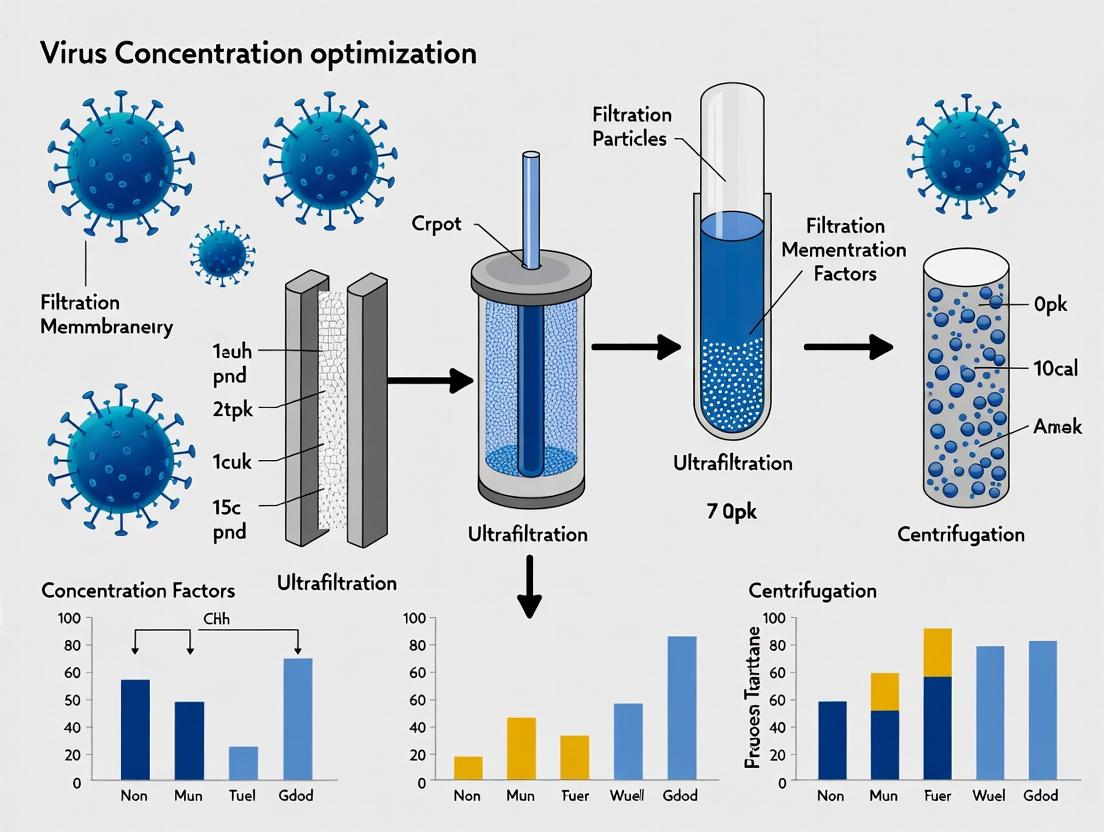
This comprehensive guide explores the critical principles and modern optimization strategies for virus concentration via filtration.
Advanced Virus Concentration Techniques: Optimization Strategies for Filtration Methods in Research & Drug Development
Abstract
This comprehensive guide explores the critical principles and modern optimization strategies for virus concentration via filtration. Targeted at researchers, scientists, and drug development professionals, we cover foundational concepts, state-of-the-art methodological applications, troubleshooting protocols, and comparative validation approaches. Learn to enhance recovery yields, purity, and throughput for virology studies, vaccine development, and therapeutic discovery.
Virus Concentration 101: Understanding Core Filtration Principles and Goals
Why Concentrate Viruses? Key Applications in Diagnostics, Research & Therapeutics
Technical Support Center: Troubleshooting Virus Concentration by Filtration
FAQs & Troubleshooting Guides
Q1: My post-filtration sample recovery volume is too low (<100 µL). What could be the cause? A: Low recovery is often due to membrane drying or excessive hold-up volume. Ensure the membrane does not dry completely after filtration. For tangential flow filtration (TFF), check the retentate line for blockages. Use a final "flush" with a small volume (e.g., 0.5-1 mL) of elution buffer (like glycine-NaOH, pH 9.5) to recover residual virus. For centrifugal devices, do not exceed the recommended RCF or time.
Q2: I observe a significant loss (>50%) of viral infectivity post-concentration. How can I mitigate this? A: Infectivity loss stems from shear stress, adsorption, or pH imbalance. Switch to low-protein-binding membrane materials (e.g., PES over cellulose acetate). Pre-treat the membrane with a proteinaceous buffer (e.g., 1% BSA or fetal bovine serum) to block non-specific binding. For shear-sensitive viruses (e.g., coronaviruses, HSV), prefer low-speed centrifugation (e.g., <10,000 x g) or gentle TFF over high-speed ultracentrifugation. Always titer immediately post-concentration.
Q3: My concentrated sample is contaminated with host cell proteins/debris, interfering with downstream assays. A: Implement a pre-filtration or clarification step. Prior to virus concentration, pass the crude sample through a 0.45 µm or 0.8 µm pore-size syringe filter to remove large debris. For ultracentrifugation, use a sucrose cushion (e.g., 20% w/v) instead of a pellet method. Consider using size-exclusion chromatography (SEC) post-concentration as a polishing step.
Q4: The concentration factor achieved is consistently lower than calculated. A: This indicates virus penetration through the membrane or binding to apparatus. Verify the nominal pore size rating is appropriate for your virus size (typically use a pore size 1/3 to 1/5 of the virus diameter). For hollow fiber filters, check for fiber integrity leaks. Quantify input and output viral load via qPCR to determine if loss is due to penetration or inactivation.
Q5: How do I choose between Ultrafiltration (UF), Tangential Flow Filtration (TFF), and Ultracentrifugation? A: Refer to the decision table below.
Data Presentation: Comparison of Virus Concentration Methods
| Method | Typical Concentration Factor | Avg. Infectivity Recovery (%) | Processing Time | Best For | Key Limitation |
|---|---|---|---|---|---|
| Ultracentrifugation | 10³ - 10⁴ | 40-70% | 2-6 hours | Research, high-purity prep; all virus types | High shear stress, requires specialized equipment |
| Ultrafiltration (Centrifugal) | 10² - 10³ | 50-80% | 30-90 mins | Diagnostics, rapid small-vol. samples; <100 mL | Membrane fouling, potential for high loss |
| Tangential Flow Filtration (TFF) | 10³ - 10⁵ | 60-85% | 1-3 hours | Large-vol. therapeutics/vaccine production; >1 L | High initial cost, complex setup |
| Precipitation (e.g., PEG) | 10² - 10³ | 30-60% | Overnight | Low-cost bulk concentration; non-enveloped viruses | Co-precipitation of contaminants, requires cleanup |
Experimental Protocols
Protocol 1: Virus Concentration from Cell Culture Supernatant using 100kDa Ultrafiltration Spin Columns Objective: Concentrate retrovirus (~100-120 nm) from 10 mL clarified supernatant.
- Clarification: Centrifuge raw supernatant at 2000 x g for 10 min at 4°C. Filter through a 0.45 µm PES syringe filter.
- Device Prep: Pre-rinse the 100kDa MWCO centrifugal device with 5 mL of PBS or appropriate buffer by centrifugation at manufacturer's recommended g-force.
- Loading: Add clarified supernatant to the device reservoir. Centrifuge at 4000 x g at 4°C until retentate volume is ~150 µL (~20-30 min).
- Elution: To recover virus, pipette the retentate up and down. Perform a membrane flush: add 100 µL of elution buffer (50 mM Tris, 100 mM NaCl, pH 7.4) to the reservoir, gently swirl, and centrifuge at 1000 x g for 2 min. Combine with retentate.
- Storage: Aliquot concentrated virus and store at -80°C. Avoid repeated freeze-thaw cycles.
Protocol 2: Concentration of Enterovirus from Environmental Water using PEG Precipitation Objective: Concentrate enterovirus from 1L of surface water for molecular detection.
- Pre-treatment: Adjust water sample pH to 7.0-7.4. Add MgCl₂ to a final concentration of 25 mM.
- Precipitation: Add PEG 8000 to a final concentration of 8% (w/v) and NaCl to 0.3 M. Stir slowly at 4°C for 2 hours, then incubate statically overnight at 4°C.
- Pellet: Centrifuge at 10,000 x g for 90 min at 4°C. Carefully decant supernatant.
- Resuspension: Resuspend the pellet in 1-2 mL of 0.15 M Na₂HPO₄ buffer (pH 9.0-9.5) for 1-2 hours on ice with intermittent vortexing.
- Cleanup: Centrifuge at 12,000 x g for 30 min to remove debris. The supernatant contains concentrated virus, ready for RNA extraction.
Mandatory Visualizations
Virus Concentration Workflow for Large Volumes
Key Applications of Concentrated Virus Stocks
The Scientist's Toolkit: Research Reagent Solutions
| Item | Function | Example/Note |
|---|---|---|
| Ultrafiltration Devices | Size-based concentration using membranes with specific MWCO (e.g., 10kDa, 100kDa). | Amicon Ultra Centrifugal Filters (Merck), Vivaspin (Sartorius). Choose MWCO 1/3 of virus size. |
| Tangential Flow Filtration (TFF) System | For gentle, scalable concentration of large volumes with reduced fouling. | KrosFlo systems (Repligen), Pellicon Cassettes (Merck). Hollow fiber modules for shear-sensitive viruses. |
| Density Gradient Media | For purification during ultracentrifugation; separates virus from contaminants. | Iodixanol (OptiPrep), Sucrose, Cesium Chloride. Provides high purity for structural biology. |
| Virus Precipitation Reagents | Polyethylene glycol (PEG) for bulk, low-cost concentration from large volumes. | PEG 8000, NaCl, MgCl₂. Ideal for environmental virology or pre-enrichment. |
| Elution/Resuspension Buffers | To efficiently recover virus from filters or pellets while preserving infectivity. | Glycine-NaOH (pH 9-10.5), Tris-NaCl (pH 7.4), Alkaline buffers often improve recovery. |
| Nuclease Inhibitors | Prevent degradation of viral nucleic acids during prolonged concentration steps. | RNaseOUT for RNA viruses, Benzonase to digest host nucleic acid contaminants. |
| Protein Stabilizers/Blockers | Reduce non-specific binding to surfaces and stabilize viral envelope/proteins. | BSA (1%), Fetal Bovine Serum (2-5%), Pluronic F-68 (0.01%). |
Technical Support Center
Troubleshooting Guides & FAQs
Q1: After ultrafiltration, my target virus recovery is consistently below 20%. What could be the primary cause and how can I troubleshoot this? A: Low recovery is often due to non-specific adsorption to the filter membrane or inappropriate cut-off selection.
- Troubleshooting Steps:
- Check Cut-Off: Verify that the filter pore size (e.g., 100 kDa, 50 nm) is not too close to or smaller than the target virus size (see Table 1). A size ratio (pore size/virus diameter) of <5x can lead to high retention losses.
- Pre-Treatment: Pre-treat the filter by flushing with a blocking agent (e.g., 1% Bovine Serum Albumin (BSA) or 0.1% Tween-80 in buffer) to saturate non-specific binding sites before sample addition.
- Buffer Optimization: Increase ionic strength (e.g., add 100-500 mM NaCl) or adjust pH away from the virus's isoelectric point to reduce electrostatic adsorption.
- Control Experiment: Spike a known quantity of a similar model virus (e.g., PhiX174 for ~28 nm non-enveloped) into your buffer and process it to isolate method-related loss from sample-specific issues.
Q2: My filtration system is clogging rapidly before the desired volume is processed. How can I mitigate this? A: Rapid clogging indicates high particulate or aggregate load exceeding the filter capacity.
- Troubleshooting Steps:
- Prefiltration: Implement a cascade prefiltration step using a larger pore size filter (e.g., 0.45 µm or 0.8 µm) to remove gross particulates before the final ultrafiltration step.
- Sample Clarification: Centrifuge the raw sample at 5,000-10,000 x g for 10-20 minutes to pellet debris prior to any filtration.
- Tangential Flow Filtration (TFF): Consider switching from dead-end (NFF) to TFF for large-volume or challenging samples. TFF continuously sweeps the membrane surface, reducing cake formation and fouling (see Workflow Diagram).
- Dilution: Diluting the sample with buffer can sometimes reduce viscosity and aggregate interactions, slowing the clogging rate.
Q3: How do I choose between a size-based (nominal pore size) and a molecular weight cut-off (MWCO) filter for virus concentration? A: The choice depends on the virus type and the goal.
- Use Nominal Pore Size (e.g., 50 nm, 100 nm) filters when working with large or enveloped viruses (e.g., Coronaviruses, Influenza). These filters physically sieve based on particle diameter and are less affected by matrix effects on charge.
- Use MWCO (e.g., 100 kDa, 300 kDa) filters when concentrating small, non-enveloped viruses (e.g., Parvoviruses, Enteroviruses) or viral vectors (AAV). MWCO is based on the effective size of globular proteins; viruses behave as large "macromolecules." Ensure the MWCO is at least 3-5 times smaller than the viral particle's effective molecular weight (≈ mass of protein + nucleic acid).
Q4: I need to separate two similar-sized viruses from a clinical sample. Can filtration achieve this? A: Yes, but with limited resolution. Filtration is best for gross size differences (>2-3x diameter).
- Strategy: Use a multi-stage cascade filtration protocol. For example, to isolate a ~100 nm virus from a background of ~50 nm viruses:
- First, use a 0.22 µm filter to remove bacteria and large debris.
- Second, use a 200 nm pore filter. The ~100 nm virus will pass through (filtrate), while larger particles are retained.
- Third, concentrate the filtrate using a 50 nm pore or 300 kDa MWCO filter. The ~100 nm target virus is retained (retentate), while the ~50 nm virus and soluble proteins pass through.
- Note: Yield and purity trade-offs are significant. Chromatography or gradient centrifugation may be required for high-purity separation.
Table 1: Representative Virus Sizes and Recommended Filtration Cut-Offs
| Virus Family | Example Virus | Approx. Diameter (nm) | Envelope | Recommended Initial Cut-Off (for retention) | Rationale |
|---|---|---|---|---|---|
| Parvoviridae | Porcine Parvovirus (PPV) | 18-26 | No | 100 kDa MWCO / 20 nm pore | MWCO ~1/50th of particle mass; pore size near physical diameter. |
| Picornaviridae | Poliovirus | 28-30 | No | 100 kDa MWCO / 30 nm pore | Particle is tight, stable. Use MWCO or pore size just below diameter. |
| Caliciviridae | Norovirus | 35-40 | No | 300 kDa MWCO / 50 nm pore | Slightly larger than picornaviruses; provides margin for recovery. |
| Togaviridae | Sindbis Virus | 60-70 | Yes | 0.1 µm (100 nm) pore | Envelope is deformable. Use pore size 1.5x nominal diameter to avoid damage. |
| Retroviridae | HIV-1 | 100-120 | Yes | 0.22 µm pore | Large and pleomorphic. Use large pore for initial clarification/concentration. |
| Coronaviridae | SARS-CoV-2 | 80-120 (Spike) | Yes | 0.1 µm or 0.22 µm pore | Size varies; use gentler, larger pore to preserve envelope integrity. |
| Mimiviridae | Mimivirus | 400-800 | No | 0.45 µm or 0.8 µm pore | Giant virus; requires pre-filtration or low-speed centrifugation methods. |
Table 2: Common Filter Types & Applications in Virology
| Filter Type | Typical Cut-Off Range | Mode | Primary Application in Virus Research | Key Advantage | Potential Pitfall |
|---|---|---|---|---|---|
| Ultrafiltration (UF) Centrifugal | 10 kDa - 1000 kDa MWCO | Dead-end (NFF) | Rapid concentration/purification of small volumes (<30 mL). | Speed, convenience, minimal setup. | Membrane fouling, concentration polarization. |
| Tangential Flow (TFF) | 10 kDa - 0.1 µm | Tangential | Processing large volumes (mL to L) of cell culture supernatant or environmental water. | Handles high particulates, scalable, consistent performance. | Complex setup, higher initial sample/reagent volume. |
| Hollow Fiber | 70 kDa - 0.2 µm | Tangential | Gentle concentration of labile, enveloped viruses from large volumes. | Low shear stress, high surface area. | Difficult to clean, risk of fiber breakage. |
| Depth Filters | 0.1 µm - 5 µm nominal | Dead-end (NFF) | Sample clarification; removal of cells and large debris prior to UF/TFF. | High dirt-holding capacity, inexpensive. | May absorb proteins/viruses nonspecifically. |
Detailed Experimental Protocols
Protocol 1: Concentrating Enterovirus from Cell Culture Supernatant Using Centrifugal Ultrafiltration Objective: Concentrate a ~30 nm non-enveloped enterovirus 100-fold from clarified cell culture supernatant. Materials: See "Research Reagent Solutions" table. Procedure:
- Clarification: Centrifuge the harvested cell culture supernatant at 3,000 x g for 30 minutes at 4°C to remove cell debris.
- Prefiltration: Pass the supernatant through a sterile 0.45 µm PES syringe filter to remove remaining particulates.
- Device Preparation: Load a centrifugal ultrafiltration device (100 kDa MWCO, regenerated cellulose) with 15 mL of PBS-BSA-Tween (PBT) buffer. Centrifuge at 4,000 x g for 10 minutes at 4°C to pre-wet and block the membrane. Discard the flow-through.
- Sample Loading: Load up to 15 mL of the pre-filtered supernatant into the device. Centrifuge at 4,000 x g at 4°C until the retentate volume is ~150 µL (time varies; monitor). Save the flow-through if analysis is needed.
- Diafiltration (Optional for Purification): Add 14 mL of fresh cold PBS to the retentate (~150 µL). Centrifuge again to 150 µL. Repeat this wash step twice.
- Recovery: Invert the device into a fresh collection tube. Centrifuge at 1,000 x g for 2 minutes to recover the concentrated virus (~150 µL).
- Titer Analysis: Determine viral titer via plaque assay or qPCR on both the initial supernatant and the final retentate to calculate recovery efficiency.
Protocol 2: Large-Volume Concentration of Enveloped Virus Using Tangential Flow Filtration (TFF) Objective: Process 2 liters of infectious culture waste containing an enveloped virus (e.g., Influenza, ~100 nm) for safe disposal or analysis. Materials: TFF system with peristaltic pump, 0.22 µm pore size cassette (PES or cellulose), pressure gauges, tubing, waste container. Procedure:
- System Setup & Sanitization: Assemble the TFF system according to the manufacturer's instructions. Circulate 1 L of 0.5 M NaOH through the system for 30-60 minutes for sanitization. Rinse extensively with sterile, particle-free water until the effluent pH is neutral.
- Equilibration: Circulate 500 mL of PBS-BSA-Tween (PBT) buffer for 20 minutes to condition the membrane. Drain the buffer.
- Process Sample: Place the sample reservoir in a cold room or ice bath. Start the pump at a low cross-flow rate (as per cassette specs). Gradually increase the flow to achieve a stable transmembrane pressure (TMP). The permeate will be collected as sterile filtrate. The virus is retained in the retentate loop.
- Diafiltration: Once the initial volume is reduced to ~100 mL, begin diafiltration. Continuously add fresh PBT buffer to the retentate reservoir at the same rate as permeate is generated. Perform 5-10 volume exchanges to wash away soluble contaminants.
- Final Concentration: Stop buffer addition and continue filtration until the retentate reaches the desired final volume (e.g., 20 mL).
- System Recovery & Flush: Gently pump the retentate out for collection. Immediately flush the system with 0.5 M NaOH, followed by water, to inactivate and clean the system.
Mandatory Visualizations
Virus Concentration & Filtration Workflow
Low Virus Recovery Troubleshooting Decision Tree
The Scientist's Toolkit: Research Reagent Solutions
Table 3: Essential Materials for Virus Filtration Experiments
| Item | Function & Rationale | Example/Detail |
|---|---|---|
| Ultrafiltration Devices | Physical separation based on size/MWCO. Centrifugal types are for small volumes; TFF cassettes for scalability. | Amicon Ultra (Merck), Centricon (Merck), Vivaflow (Sartorius). |
| Membrane Blocking Agents | Reduce nonspecific adsorption of viral particles to filter membranes, improving recovery. | 1% Bovine Serum Albumin (BSA), 0.1% Tween-20/Tween-80, 0.5% Peptone. |
| Buffer Additives | Modify solution properties to enhance virus stability and reduce aggregation/adsorption. | 50-500 mM NaCl (ionic strength), 1-5% Sucrose/Trehalose (stabilizer), 1 mM EDTA (chelator). |
| Sterile Syringe Filters | For rapid clarification and pre-filtration steps to protect primary ultrafiltration membranes. | 0.45 µm and 0.22 µm Pore Size, Polyethersulfone (PES) or Cellulose Acetate. |
| Model Virus Standards | Control particles to validate filtration efficiency and calculate recovery rates for new protocols. | PhiX174 (28 nm), MS2 (26 nm) for small non-enveloped; PR772 (70 nm) for medium-sized. |
| Concentration & Titer Assay Kits | Quantify viral nucleic acid or protein before/after filtration to calculate recovery. | qPCR/RTPCR kits, ELISA kits for specific viruses, dsDNA/RNA fluorescence assays (Qubit). |
Technical Support Center
Troubleshooting Guides & FAQs
Q1: During Tangential Flow Filtration (TFF) for virus concentration, I am observing a rapid and irreversible increase in transmembrane pressure (TMP). What are the causes and solutions? A: A sharp TMP rise indicates membrane fouling or concentration polarization.
- Primary Cause: Aggregate formation or excessive host cell protein/DNA loading.
- Immediate Action: Reduce the feed flow rate by 25-30% and increase the crossflow rate. Perform a cleaning-in-place (CIP) cycle with 0.1-0.5M NaOH for 30-60 minutes, followed by a rinse with buffer (e.g., PBS, Tris-HCl).
- Preventive Protocol: Pre-filter the harvest through a 0.45µm or 0.8µm depth filter. Implement a diafiltration step early in the process to remove small molecular weight contaminants. Maintain a shear rate (calculated as crossflow rate / channel height) above 4,000 s⁻¹.
Q2: My ultrafiltration (UF) step is yielding low virus recovery (<40%). What factors should I investigate? A: Low recovery often stems from non-specific adsorption to the membrane or device.
- Investigation & Solution Table:
| Factor | Investigation | Solution |
|---|---|---|
| Membrane Adsorption | Flush a new membrane with buffer and assay for target material in flush. | Pre-treat membrane with a blocking agent (e.g., 1% BSA or 0.1% Tween 20 in buffer) for 30 min. Rinse before use. |
| Ionic Strength | Check buffer conductivity. | Increase salt concentration (e.g., 100-250mM NaCl) to shield electrostatic interactions. |
| Elution Efficiency | Perform a second, more stringent elution (e.g., high salt, pH shift). | Optimize elution buffer. For adsorption methods, use a stepped pH elution (e.g., from pH 7.4 to 9.5 or down to 4.5). |
Q3: For adsorption-based methods (e.g., membrane chromatography), my viral target is not binding efficiently. How can I optimize binding capacity? A: Optimize loading conditions by modulating electrostatic interactions.
- Detailed Protocol:
- Equilibration: Ensure the membrane is equilibrated with at least 5 column volumes (CV) of binding buffer (e.g., 50mM Tris, pH 7.5).
- Load Conditioning: Adjust the pH of your clarified harvest to be at least 1 pH unit below (for anion exchange) or above (for cation exchange) the isoelectric point (pI) of your target virus.
- Conductivity Test: Perform a breakthrough curve at different conductivities (e.g., 5, 10, 15 mS/cm). Load sample spiked with a known virus titer and measure flow-through.
- Optimization Goal: Select the highest conductivity that maintains >95% binding capacity to reduce co-adsorption of impurities.
Q4: How do I choose between 100 kDa and 300 kDa molecular weight cut-off (MWCO) UF membranes for concentrating a ~100 nm enveloped virus? A: The choice balances recovery versus impurity removal. See the quantitative comparison below.
| MWCO | Virus Recovery* | Host Protein (HCP) Clearance* | Best Use Case |
|---|---|---|---|
| 100 kDa | 60-75% | High (2-3 log reduction) | Final concentration/polishing, where purity is critical. |
| 300 kDa | 85-95% | Moderate (1-2 log reduction) | Initial volume reduction from clarified harvest. |
*Representative data from published virus concentration studies. Actual values depend on virus and feed composition.
The Scientist's Toolkit: Key Research Reagent Solutions
| Item | Function in Virus Concentration |
|---|---|
| TFF Cassette (300 kDa PES) | Primary workhorse for gentle volume reduction and buffer exchange via diafiltration. |
| Ultrafiltration Spin Concentrator (100 kDa) | Bench-scale final concentration and buffer exchange for small-volume validation studies. |
| Anion Exchange Membrane Adsorber | Flow-through or bind-elute step for impurity removal (DNA, HCP) or virus capture. |
| Nuclease (e.g., Benzonase) | Digests host cell nucleic acids to reduce viscosity and fouling potential in TFF/UF. |
| Pluronic F-68 | Non-ionic surfactant used in buffers (0.01-0.1%) to minimize virus adsorption to surfaces. |
| pH/Conductivity Standards | Critical for accurate calibration when optimizing adsorption-based filtration steps. |
Experimental Protocol: Integrated TFF with Membrane Adsorption for Virus Concentration
Title: Integrated Virus Concentration & Purification Workflow
Objective: Concentrate and partially purify an enveloped virus from cell culture supernatant.
Methodology:
- Clarification: Centrifuge harvest at 4,000 x g for 30 min. Filter supernatant through a 0.8µm polyethersulfone (PES) depth filter.
- Nuclease Treatment: Add nuclease (e.g., 50 U/mL Benzonase) to filtered harvest. Incubate at room temperature for 60 min with gentle agitation.
- Tangential Flow Filtration (TFF):
- Use a 300 kDa MWCO PES cassette.
- Set crossflow rate to achieve a shear rate of >4,000 s⁻¹.
- Concentrate to 1/20th of the original volume.
- Perform diafiltration with 5 volumes of Binding Buffer (20mM Tris, 50mM NaCl, pH 8.0).
- Membrane Adsorption Chromatography:
- Load the TFF retentate onto a pre-equilibrated anion exchange membrane (e.g., Sartobind Q).
- Collect flow-through (virus is in flow-through for most enveloped viruses at pH 8.0).
- Wash with 5 CV of Binding Buffer.
- Pool virus-containing fractions.
- Final Concentration: Apply pool to a 100 kDa MWCO UF spin concentrator. Centrifuge per manufacturer's instructions to achieve desired final titer.
Visualization: Process Optimization Decision Pathway
Title: Virus Concentration Method Selection Flowchart
Visualization: Key Filtration Interactions & Outcomes
Title: Filtration Toolkit Sequential Workflow
Troubleshooting Guides & FAQs
FAQ 1: My recovery yield is consistently low (<50%). What are the primary causes and solutions?
- Answer: Low recovery yield typically indicates significant virus loss during the filtration/concentration process. Common causes and fixes are:
- Virus Adsorption to Hardware: Non-specific binding to filter membranes, tubing, or collection vessels. Solution: Pre-treat all surfaces with a passivation agent (e.g., 1% Bovine Serum Albumin (BSA) or 0.1% Pluronic F-68 in buffer) for 15-30 minutes before processing.
- Filter Clogging: Leads to high pressure, shear force damage, and trapping. Solution: Pre-filter the sample through a 0.8 µm or 5 µm filter to remove large debris. Use tangential flow filtration (TFF) instead of dead-end filtration for viscous or high-particulate samples.
- Elution/Flushing Inefficiency: The retained virus is not fully recovered from the filter. Solution: For centrifugal filters, perform a reverse spin step (place the filter upside-down in a fresh tube). For TFF, increase the diafiltration volume from 3x to 5x of the retentate volume.
FAQ 2: How can I improve the purity of my concentrated virus sample, specifically reducing host cell protein (HCP) contamination?
- Answer: Purity is compromised when contaminants co-concentrate with the target virus.
- Issue: Similar size contaminants pass through initial steps. Solution: Implement a purification cascade. Use a size-exclusion (gel filtration) or anion-exchange chromatography step after concentration to separate viruses from similarly sized proteins.
- Issue: Media components like fetal bovine serum (FBS) are concentrated. Solution: If possible, prior to concentration, exchange the sample into a simple, defined buffer (e.g., PBS or Tris) using dialysis or buffer exchange columns.
- Issue: Nucleic acid contamination. Solution: Add a nuclease digestion step (e.g., Benzonase) during the initial clarification phase to digest free DNA/RNA, which will not be retained by subsequent filtration steps.
FAQ 3: My concentration factor is lower than calculated. What could be wrong with my protocol?
- Answer: An inaccurate concentration factor (CF) usually stems from volume measurement errors or process losses.
- Cause: Inaccurate final retentate volume measurement. Solution: Use a calibrated micropipette for small volumes (<100 µL). For larger volumes, use a graduated cylinder. Account for residual liquid in the filter device or tubing by performing a system flush into the final product pool.
- Cause: Leaks in the filtration system (especially TFF). Solution: Perform a pressure-hold test on the TFF system before processing. Ensure all fittings and O-rings are properly seated and lubricated.
- Cause: Excessive sample retention in dead volumes of the apparatus. Solution: Calculate and minimize system dead volume. Flush the system with buffer at the end of processing and combine the flush with the retentate.
Table 1: Comparative Performance of Virus Concentration Methods (Hypothetical Data for Lentivirus)
| Method | Typical Recovery Yield (%) | Achievable Concentration Factor | Key Purity Challenge | Best Use Case |
|---|---|---|---|---|
| Ultracentrifugation | 60-80 | 100x - 1000x | Co-pelleting of debris & proteins | Large-volume research prep |
| Tangential Flow Filtration (TFF) | 70-90 | 10x - 200x | Concentration of media components | Scalable process development |
| Centrifugal Ultrafiltration | 50-80 | 10x - 100x | Membrane adsorption losses | Small-volume, high-speed concentration |
| Precipitation (e.g., PEG) | 30-70 | 10x - 50x | High contaminant carryover & aggregation | Crude initial concentration |
Experimental Protocol: Optimized TFF for Virus Concentration
Objective: Concentrate and diafilter enveloped virus (e.g., lentivirus) from 1L of cell culture supernatant to 10mL with high recovery and purity.
- System Setup: Install a 100kDa MWCO hollow fiber or cassette TFF module. Sanitize with 0.5M NaOH, then rinse with sterile water and equilibrate with PBS.
- Sample Clarification: Pre-filter supernatant through a 0.45 µm dead-end filter to remove large cell debris.
- Concentration: Pump clarified supernatant through the TFF system at a shear rate of 3000-4000 s⁻¹. Maintain constant transmembrane pressure (TMP) in the optimized range for the module (typically 1-5 psi). Concentrate until the retentate volume is ~50mL.
- Diafiltration (Buffer Exchange): Initiate diafiltration by adding fresh, chilled diafiltration buffer (e.g., formulation buffer) to the feed reservoir at the same rate permeate is generated. Perform a 5-volume exchange (add 250mL total).
- Final Concentration & Recovery: Continue concentration to the target final retentate volume of 10mL. Use a peristaltic pump to recirculate the retentate while flushing the system lines with 5mL of diafiltration buffer. Combine flush with retentate. Sterilize by 0.45 µm filtration.
- Analysis: Titrate for infectious units, quantify total protein (e.g., BCA assay) for purity assessment, and measure final volume to calculate Recovery Yield and Concentration Factor.
Visualization of Workflow
Title: TFF Virus Concentration & Buffer Exchange Workflow
Title: Logical Relationship of Key Virus Metrics
The Scientist's Toolkit: Research Reagent Solutions
Table 2: Essential Materials for Optimized Virus Concentration
| Item | Function | Key Consideration |
|---|---|---|
| Ultrafiltration Membranes (100kDa MWCO) | Size-based retention of virus particles; allows passage of small proteins/salts. | Material (PES vs. RC) affects binding & flux; choose low-protein-binding. |
| Pluronic F-68 or BSA | Passivation agent to block non-specific virus adsorption to surfaces. | Use at low concentration (0.01-0.1%) to avoid interfering with assays. |
| Benzonase Nuclease | Degrades free nucleic acids, reducing viscosity and improving purity. | Requires Mg²⁺; must be inactivated post-digestion if necessary. |
| PEG Virus Precipitation Kit | Chemical precipitation for initial volume reduction from large, dilute samples. | Can cause aggregation; requires careful resuspension & further purification. |
| Sterile, Low-Protein-Binding Filters (0.45/0.22 µm) | Sterilization and clarification without significant virus loss. | Always pre-wet with buffer to minimize absorption. |
| Formulation/Diafiltration Buffer | Provides stable ionic & pH environment for concentrated virus. | Must be optimized for virus stability (e.g., sucrose, buffers, cations). |
| Quantitative PCR (qPCR) Assay | Measures viral genome copies for physical titer & recovery calculation. | Targets a conserved region; requires a standard curve. |
| BCA or Bradford Protein Assay | Quantifies total protein contamination to assess purity. | Compatible with formulation buffer components (sucrose, salts). |
Troubleshooting Guides & FAQs
FAQ 1: Why has my filtration flow rate dropped precipitously during viral concentration from a complex biological fluid (e.g., wastewater)?
- Answer: A sudden drop in flow rate is most commonly due to membrane fouling or pore clogging, exacerbated by the sample matrix. High concentrations of proteins, lipids, or particulate matter in the sample can rapidly form a gel layer on the membrane surface. To mitigate, always pre-filter the sample through a 0.8 µm or 5 µm pre-filter to remove large debris. Implement a gradient pressure protocol (see Experimental Protocol 1) and consider diluting viscous samples with a compatible buffer.
FAQ 2: How do I determine the optimal transmembrane pressure (TMP) for a new sample type to maximize virus recovery?
- Answer: Optimal TMP is a balance between throughput and recovery. Excessive pressure can force viral particles into membrane pores (adsorptive loss) or even damage enveloped viruses. Conduct a TMP screening experiment (see Experimental Protocol 2). Start with a low pressure (e.g., 5-10 psi) and incrementally increase, measuring the recovery of a process control virus (e.g., bacteriophage PP7) at each step. The pressure yielding the highest recovery without significant flow decay is optimal.
FAQ 3: My virus recovery is inconsistent between different sample matrices (serum vs. cell culture media). What is the primary factor?
- Answer: Sample matrix effects are profound. Serum proteins can non-specifically bind to viruses and the membrane, reducing recovery. Cell culture media often contain surfactants (e.g., Pluronic F-68) that can prevent adsorption. The key is to condition the membrane and adjust the buffer. For protein-rich matrices, add a surfactant like Tween 20 (0.01%) to the equilibration and sample buffer to minimize non-specific binding. Always use a matrix-matched control.
FAQ 4: What does it mean if my process control recovery is high, but my target virus recovery is low?
- Answer: This indicates a virus-specific interaction, not a general process failure. The target virus may be more sensitive to shear force (related to high flow rate), may aggregate in the specific buffer, or may have stronger interactions with the membrane chemistry. Review the isoelectric point (pI) of your target virus relative to the buffer pH. Adjust the buffer pH to ensure the virus and membrane carry the same net charge for electrostatic repulsion. Switch to a more hydrophilic membrane material.
FAQ 5: How can I increase the processing speed for large volume samples without compromising recovery?
- Answer: Do not simply increase pressure. Instead, optimize the filtration stack. Use a larger diameter membrane to increase surface area, allowing a higher total flow rate at the same, safe TMP. Alternatively, employ a tangential flow filtration (TFF) setup, where flow across the membrane surface minimizes fouling. Always validate recovery with the new configuration.
Experimental Protocols
Experimental Protocol 1: Gradient Pressure Protocol for Fouling-Prone Samples
Objective: To process complex samples without rapid flow decay.
- Sample Prep: Pre-filter sample through a 5 µm then 0.8 µm syringe filter.
- Setup: Assemble dead-end filtration unit with desired ultrafiltration membrane (e.g., 100 kDa MWCO).
- Condition: Pre-wet and equilibrate membrane with 10 mL of equilibration buffer (PBS with 0.01% Tween 20, pH adjusted).
- Filtration:
- Phase 1: Load sample and apply low starting pressure (5 psi). Maintain for first 20% of volume.
- Phase 2: Gradually increase pressure to target TMP (e.g., 10 psi) over the next 30% of volume.
- Phase 3: Maintain target TMP for the remainder.
- Elution: Perform retentate recovery by back-flushing with 1-2 mL of elution buffer (e.g., Glycine-NaOH, pH 9.5).
Experimental Protocol 2: Transmembrane Pressure (TMP) Screening for Recovery Optimization
Objective: To identify the TMP that maximizes recovery of a target virus.
- Spiking: Aliquot identical volumes of a standardized sample matrix. Spike each with a known titer of a process control virus (e.g., PP7).
- Filtration: Using identical membrane lots, filter each aliquot under a constant but different TMP. Test a range (e.g., 5, 10, 15, 20 psi). Record the time to process each aliquot.
- Quantification: Quantify the process control virus in the initial spiked sample and in the final retentate using plaque assay or qPCR.
- Calculation: Calculate percent recovery for each pressure:
(Retentate Titer / Initial Titer) * 100. - Analysis: Plot % Recovery vs. TMP. The peak of the curve indicates the optimal pressure.
Data Presentation
Table 1: Virus Recovery (%) as a Function of Transmembrane Pressure (TMP) and Sample Matrix
| Target Virus | Membrane Type | TMP (psi) | Matrix: PBS | Matrix: Serum | Matrix: Wastewater |
|---|---|---|---|---|---|
| PP7 (Control) | 100 kDa PES | 5 | 98 ± 3 | 95 ± 4 | 92 ± 5 |
| PP7 (Control) | 100 kDa PES | 15 | 96 ± 2 | 90 ± 6 | 85 ± 8 |
| PP7 (Control) | 100 kDa PES | 25 | 91 ± 4 | 82 ± 7 | 70 ± 10 |
| Enveloped Virus X | 100 kDa PES | 5 | 95 ± 3 | 60 ± 8 | 75 ± 6 |
| Enveloped Virus X | 100 kDa PES | 15 | 92 ± 4 | 55 ± 9 | 65 ± 12 |
| Enveloped Virus X | 100 kDa PES | 25 | 80 ± 6 | 40 ± 10 | 45 ± 15 |
Table 2: Impact of Buffer Additives on Virus Recovery from Protein-Rich Matrix
| Additive | Concentration | Recovery of Virus X in 10% Serum | Effect on Flow Rate |
|---|---|---|---|
| None (PBS only) | N/A | 42 ± 9% | Baseline |
| Tween 20 | 0.01% | 68 ± 7% | Slight decrease |
| EDTA | 1 mM | 58 ± 6% | No change |
| Tween 20 + EDTA | 0.01% + 1mM | 75 ± 5% | Slight decrease |
| Bovine Serum Albumin | 0.1% | 50 ± 8% | Significant decrease |
Diagrams
Gradient Pressure Filtration Workflow for Complex Samples
Interaction of Critical Factors Leading to Low Recovery
The Scientist's Toolkit: Key Research Reagent Solutions
| Item | Function in Virus Concentration Filtration |
|---|---|
| Ultrafiltration Membranes (PES, RC) | Selective barrier based on molecular weight cutoff (MWCO); retains viruses while allowing water and salts to pass. |
| Pre-filters (5 µm, 0.8 µm) | Removes large particulate matter to prevent rapid clogging of the primary ultrafiltration membrane. |
| Non-Ionic Surfactant (e.g., Tween 20) | Reduces non-specific binding of viruses and proteins to the membrane surface, improving recovery. |
| Process Control Virus (e.g., Bacteriophage PP7, MS2) | Spiked into sample to monitor and quantify the efficiency of the filtration process independently of the target virus. |
| Plaque Assay or qPCR Reagents | For quantifying infectious virus titer or viral genome copies before and after filtration to calculate recovery. |
| pH-adjusted Elution Buffers (e.g., Glycine-NaOH) | Disrupts electrostatic interactions between virus and membrane to facilitate efficient retentate recovery via back-flushing. |
| Chelating Agent (e.g., EDTA) | Binds divalent cations that can act as bridges between viruses/membranes or stabilize aggregates. |
Step-by-Step Protocols: Modern Filtration Methods for Optimal Virus Recovery
Tangential Flow Filtration (TFF) for Large-Volume Processing
Technical Support Center
Troubleshooting Guides
Issue 1: Rapid Transmembrane Pressure (TMP) Increase and Flux Decline
- Problem: During concentration of a viral vector from a large-volume cell culture harvest, the TMP rises quickly and the permeate flux drops to unacceptable levels within the first hour.
- Potential Causes & Solutions:
- Membrane Fouling: Cellular debris and host cell proteins are forming a cake layer. Solution: Implement a more stringent harvest clarification protocol. Use a depth filter (e.g., 1.2/0.2 µm) or increase centrifugation force prior to TFF. Introduce a mid-process buffer flush with a high-salt or mild alkaline solution (e.g., 0.1M NaOH) if product stability allows.
- Concentration Factor (CF) Too High: The target CF is causing excessive solute concentration at the membrane surface. Solution: Reduce the target CF and use a diafiltration (DF) strategy earlier in the process to remove small molecules, then complete the final concentration.
Issue 2: Low Product Recovery Yield
- Problem: Post-process analysis indicates >20% loss of infectious viral titer after TFF concentration and buffer exchange.
- Potential Causes & Solutions:
- Non-Specific Adsorption: Viral particles are adsorbing to the membrane material or system tubing. Solution: Pre-treat the system with a blocking agent (e.g., 1% Bovine Serum Albumin or Pluronic F-68) in buffer. Ensure the buffer formulation includes an ionic strength modifier (e.g., 100-150 mM NaCl).
- Shear Damage: Excessive shear from pump speed or retentate valve is damaging viral integrity. Solution: Reduce the cross-flow rate to the minimum required to maintain flux. Switch to a peristaltic pump if using a diaphragm pump. Ensure all fittings are smooth-bore to minimize turbulence.
Issue 3: Inefficient Buffer Exchange (Diafiltration)
- Problem: After 5 diavolumes, the conductivity/pH of the retentate has not reached the target buffer specification.
- Potential Causes & Solutions:
- Incorrect Diafiltration Mode: Constant volume diafiltration (CVDF) was not properly maintained. Solution: Use a scale to accurately balance feed and permeate pumps to maintain constant retentate volume. Automate with pump controllers if available.
- Concentration Polarization: High solute concentration hinders small ion exchange. Solution: Perform diafiltration at a lower concentration. Dilute the retentate 20% with new buffer before starting DF to reduce viscosity.
Frequently Asked Questions (FAQs)
Q1: How do I select the appropriate Molecular Weight Cut-Off (MWCO) for my virus? A: The rule of thumb is to select a MWCO that is 3-5 times smaller than the size of your target virus. For example, for an adenovirus (~90 nm, ~150 MDa), a 300-500 kDa MWCO hollow fiber or flat sheet PES membrane is typical. This ensures retention while allowing impurities (host cell proteins, DNA) to pass through.
Q2: What is a critical performance parameter to monitor, and why? A: Normalized Water Permeance (NWP) is critical. It measures the membrane's cleanliness and performance over time. A drop >20% from the initial clean membrane NWP indicates significant fouling or improper cleaning. It is calculated as: (Permeate Flux) / (TMP), measured with purified water at a standard temperature (e.g., 25°C).
Q3: How do I optimize the Cross-Flow Rate (CFR) for my process? A: Start with the manufacturer's recommendation. Perform a flux-TMP curve experiment at your target concentration. Operate in the "pressure-controlled" (TMP-limited) region where flux increases linearly with TMP, not the "mass-transfer controlled" region where flux plateaus. This minimizes fouling.
Q4: How should I clean and store my TFF cassettes/hollow fibers after a run? A: Follow this sequence immediately after processing: 1) Buffer rinse to recover product, 2) Clean-in-Place (CIP) with 0.5-1.0 M NaOH for 30-60 minutes, 3) Rinse with water until neutral pH, 4) Perform an NWP test, 5) Sanitize with 0.1-0.5 M NaOH and store at 4-25°C, or rinse with 20% ethanol for storage.
Table 1: Performance Comparison of MWCO Membranes for Common Viruses
| Virus (Approx. Size) | Recommended MWCO | Typical Starting Flux (LMH) | Max Achievable Concentration Factor | Typical Yield (%) |
|---|---|---|---|---|
| AAV (~25 nm) | 100 kDa | 30-50 | 50x | 60-75 |
| Lentivirus (~80-100 nm) | 300 kDa | 40-70 | 100x | 65-80 |
| Adenovirus (~90 nm) | 500 kDa | 50-90 | 200x | 70-85 |
| Influenza (~100 nm) | 750 kDa | 60-100 | 150x | 75-90 |
Table 2: Troubleshooting Parameters and Target Ranges
| Parameter | Symbol | Ideal Range | Alarm Point | Corrective Action |
|---|---|---|---|---|
| Transmembrane Pressure | TMP | 1-5 psi (low CF) 5-15 psi (high CF) | >20 psi | Reduce CF or increase CFR |
| Cross-Flow Rate | CFR | 0.5 - 2 L/min per cassette | <0.3 L/min | Check for pump/pressure issues |
| Concentration Factor | CF | Per protocol, often <200x | Calculated | Initiate DF or stop process |
| Retentate Viscosity | - | <5 cP (approx.) | Visual flow change | Dilute retentate |
Experimental Protocols
Protocol 1: Determining the Flux-TMP Relationship for Process Optimization
- Equipment & Reagent Setup: Install and wet a new TFF membrane per instructions. Use a standard buffer (e.g., PBS).
- Baseline Measurement: Measure NWP with purified water at 25°C.
- Experimental Run: Fill system with buffer. Set CFR to a fixed initial value (e.g., 1 L/min).
- Data Collection: Gradually increase the retentate valve pressure to increase TMP in 0.5-1 psi increments. Record the stable permeate flux at each TMP. Repeat for 2-3 different CFRs.
- Analysis: Plot Flux vs. TMP for each CFR. Identify the "knee" of the curve where flux becomes TMP-independent. Set your operational TMP just below this point.
Protocol 2: Standardized Cleaning and Sanitization for Recovery Studies
- Post-Processing Rinse: Rinse system with 2-3 diavolumes of formulation buffer to recover product.
- Chemical Clean: Recirculate 0.5 M NaOH (or manufacturer-recommended cleaner) for 45 minutes at 25-40°C.
- Rinse: Rinse with water for injection (WFI) until permeate pH is neutral (<1 pH unit difference from feed water).
- NWP Check: Measure and record NWP. It should be ≥80% of the initial new membrane NWP.
- Storage Sanitization: Recirculate 0.1 M NaOH for 30 minutes. Leave system stored in this solution, or rinse and store in 20% ethanol.
Visualizations
Title: TFF Process Optimization & Monitoring Workflow
Title: TFF Low Flux Troubleshooting Decision Tree
The Scientist's Toolkit: Research Reagent Solutions
Table 3: Essential Materials for Virus Concentration TFF
| Item | Function | Example/Notes |
|---|---|---|
| PES Membrane Cassette | The core filtration unit. Polyethersulfone offers low protein binding and high flux. | 100-500 kDa MWCO, 0.1 m² surface area. |
| Variable-Speed Peristaltic Pump | Drives cross-flow. Gentler on shear-sensitive viruses than diaphragm pumps. | Must provide stable flow rates from 0.2-3 L/min. |
| Pressure Transducers | Monitor inlet and outlet pressures to calculate TMP in real-time. | Digital gauges with data logging capability. |
| Formulation Buffer | Provides stable ionic and pH environment to prevent viral aggregation/adhesion. | Often includes salts (NaCl), sugars (sucrose), and buffers (Tris, Hepes). |
| Blocking Agent | Pre-saturates non-specific binding sites on membrane and system. | 1% BSA or 0.1% Pluronic F-68 in buffer. |
| Clean-in-Place (CIP) Solution | Removes foulants and restores membrane performance. | 0.5-1.0 M Sodium Hydroxide (NaOH). |
| Sanitization/Storage Solution | Inhibits microbial growth during storage. | 0.1 M NaOH or 20% Ethanol. |
| Conductivity/pH Meter | Verifies buffer exchange efficiency during diafiltration. | In-line probe for real-time monitoring is ideal. |
Technical Support & Troubleshooting Center
FAQs & Troubleshooting Guides
Q1: My target virus recovery is low. Did I choose the wrong Molecular Weight Cut-Off (MWCO)? A: This is a common issue. The MWCO should be 3-5 times smaller than the molecular weight of your target virus to ensure retention. For example, for adenovirus (~150 MDa), a 100 kDa MWCO membrane is appropriate, while for smaller viruses like parvovirus (25 nm, ~5 MDa), a 30-50 kDa membrane is recommended. Low recovery can also indicate membrane adsorption. Pre-treatment with a passivation agent (e.g., 1% BSA or Tween 20) can minimize non-specific binding.
Q2: The filtration device is clogging rapidly, slowing or halting the process. What should I do? A: Rapid clogging indicates a high particulate load or protein concentration exceeding the membrane's capacity.
- Pre-filtration: Use a 0.45 µm or 0.8 µm syringe filter on your sample prior to UF centrifugation.
- Sample Dilution: Dilute viscous samples (e.g., cell culture lysate) with an appropriate buffer.
- Centrifugation Parameters: Use lower centrifugal force and intermittent spinning (e.g., 2-5 min cycles with brief pauses) to allow molecules to diffuse away from the membrane surface.
- Choose a Different Membrane Type: Switch from a conventional membrane to a "low-protein-binding" or "high-recovery" membrane material.
Q3: How do I choose between PES, RC, and PVDF membranes for my virus concentration? A: Membrane material impacts flow rate, recovery, and binding characteristics.
- Polyethersulfone (PES): High flow rates and low protein binding; preferred for most virus concentration applications.
- Regenerated Cellulose (RC): Very low protein binding, excellent recovery for sensitive viruses; recommended for final purification/concentration steps.
- Polyvinylidene Fluoride (PVDF): High chemical compatibility; used with organic solvents.
Q4: My concentrated virus loses infectivity. Could the membrane or process be damaging the virion? A: Yes. Mechanical shear force and interfacial surface tension at the membrane can disrupt viral envelopes or capsids.
- Optimize Centrifugation Force: Do not exceed the manufacturer's recommended RCF. Use a refrigerated centrifuge to mitigate heat generation.
- Use Stabilizing Buffers: Always use a buffer with appropriate pH and ionic strength (e.g., PBS, Tris-HCl with 1 mM MgCl₂). Consider adding stabilizers like sucrose (5%) or human serum albumin (0.1%).
- Recovery Technique: For the final retentate, do not scrape the membrane. Instead, gently pipette the concentrate, or invert the device and spin briefly (1-2 min at 1000 x g) into a fresh collection tube.
Data Presentation: MWCO Selection Guide for Common Viral Targets
Table 1: Recommended MWCO for Virus Concentration via Ultrafiltration Centrifugation
| Virus Family | Example Virus | Approx. Size (nm) / MW (MDa) | Recommended MWCO (kDa) | Key Buffer Consideration |
|---|---|---|---|---|
| Parvoviridae | Adeno-associated virus (AAV) | 25 / ~3.8 | 30 - 50 | Low-binding membrane (RC), +0.001% Pluronic F-68 |
| Adenoviridae | Human Adenovirus (HAdV) | 90 / ~150 | 100 | Standard PES membrane, Tris-HCl with 2 mM MgCl₂ |
| Retroviridae | Lentivirus | 80-100 / N/A | 100 | Low-speed spins, PES or RC, +5% sucrose |
| Coronaviridae | SARS-CoV-2 | 80-120 / N/A | 100 - 300 | BSL-3 precautions, PES membrane, +0.1% HSA |
| Picornaviridae | Poliovirus | 30 / ~8.5 | 50 - 100 | Standard PES membrane |
Experimental Protocols
Protocol 1: Standard Virus Concentration & Buffer Exchange via UF Centrifugation This protocol is optimized for concentrating enveloped viruses (e.g., lentivirus) from cell culture supernatant.
- Equipment: Refrigerated centrifuge, fixed-angle rotor, 100 kDa MWCO PES UF device (e.g., 15 mL Amicon Ultra).
- Sample Prep: Clarify supernatant by centrifugation at 2000 x g for 10 min at 4°C. Pre-filter using a 0.45 µm PES syringe filter.
- Device Prep: If concerned about recovery, passivate membrane by loading with 1 mL of 1% BSA in buffer, incubating for 10 min, and centrifuging to dryness (do not let dry completely).
- Loading: Add up to 14 mL of clarified supernatant to the device. Balance with PBS.
- Centrifugation: Centrifuge at 4°C at 3000 x g for 15-30 minute intervals. Check volume between spins until desired concentration factor (e.g., 100x) is achieved.
- Buffer Exchange (Optional): Add desired buffer (e.g., formulation buffer) to the retentate chamber to original sample volume. Centrifuge again to desired final volume. Repeat 2x.
- Recovery: Place device upside-down in a fresh collection tube. Centrifuge at 1000 x g for 2 min to harvest concentrated virus. Aliquot and store at -80°C.
Protocol 2: High-Recovery Concentration of AAV Vectors Using Regenerated Cellulose Membranes
- Equipment: Refrigerated centrifuge, swinging-bucket rotor, 50 kDa MWCO RC UF device.
- Buffer: Use a low-binding buffer: DPBS with 0.001% Pluronic F-68.
- Centrifugation: Load clarified and 0.8 µm-filtered lysate. Centrifuge at 2000 x g at 4°C. Use shorter spin intervals (5-10 min) to prevent cake formation.
- Final Concentration: Concentrate to 1/100th of the starting volume.
- Recovery: Use the "inverted spin" method as in Protocol 1. Do not pipette or scrape the membrane surface. Titer immediately.
Mandatory Visualization
Diagram 1: Workflow for Selecting UF Membranes for Virus Concentration
Diagram 2: Key Factors Influencing Virus Recovery in UF Centrifugation
The Scientist's Toolkit
Table 2: Essential Research Reagent Solutions for UF-based Virus Concentration
| Item | Function & Rationale |
|---|---|
| Ultrafiltration Devices (e.g., Amicon Ultra, Centricon) | Centrifugal concentrators with defined MWCO membranes; the core hardware for size-based separation and volume reduction. |
| Regenerated Cellulose (RC) Membrane | Membrane material offering extremely low protein/virus binding, maximizing recovery of sensitive or precious viral samples. |
| Polyethersulfone (PES) Membrane | Membrane material providing high flow rates and chemical stability; good for initial concentration steps or robust viruses. |
| Pluronic F-68 (0.001-0.01%) | Non-ionic surfactant used to passivate membrane and tubing surfaces, reducing adsorption of viral particles and maintaining infectivity. |
| Sucrose (5-10%) or Trehalose | Stabilizing agent added to buffers to protect viral integrity (especially enveloped viruses) from osmotic and mechanical stress during concentration. |
| Magnesium Chloride (1-2 mM) | Divalent cation often included in buffers for non-enveloped viruses (e.g., adenovirus) to stabilize the capsid structure. |
| Human Serum Albumin (HSA, 0.1%) | Protein additive used as a stabilizing agent and to block non-specific binding sites in final formulation buffers. |
| Low-Protein-Binding Syringe Filters (0.45/0.8 µm PES) | For essential pre-filtration of samples to remove large debris and prevent premature clogging of the UF membrane. |
| Phosphate-Buffered Saline (PBS) w/ Ca²⁺/Mg²⁺ | Common physiological buffer for maintaining viral stability during processing. Calcium and magnesium can be critical for some viruses. |
Electropositive/Virocap Adsorption Filters for Low-Titer Samples
Technical Support Center
Troubleshooting Guide
Issue 1: Low Viral Recovery After Filtration
- Problem: Inadequate concentration of target virus from low-titer input sample.
- Solution Flowchart: See Diagram 1: "Low Recovery Troubleshooting Logic".
- Detailed Steps:
- Check Filter Priming: Ensure the filter was correctly pre-wet with a low-ionic-strength buffer (e.g., 0.5 mM MgCl₂, pH 3.5-4.0) for at least 15 minutes to activate adsorption sites.
- Verify Sample Pre-treatment: Confirm the sample was acidified to the optimal pH (typically 3.5-4.5) before loading to ensure proper virion protonation and electrostatic attraction to the positively charged filter matrix.
- Assess Flow Rate: For low-titer samples, do not exceed a flow rate of 1-2 mL/min. Excessive pressure can shear virions or reduce contact time with the filter.
- Review Elution Protocol: Use a high-pH, high-ionic-strength elution buffer (e.g., 3% Beef Extract, pH 9.5, or 1.5M NaCl, pH 9.0). Recirculate or let the eluent sit on the filter for 10-15 minutes before collection.
Issue 2: Excessive Filter Clogging
- Problem: Sample flow ceases prematurely due to filter blockage.
- Solution Flowchart: See Diagram 2: "Clogging Mitigation Workflow".
- Detailed Steps:
- Pre-filtration: Clarify the low-titer sample by pre-filtering through a 0.8/0.45 µm polyethersulfone (PES) membrane to remove large particulate matter.
- Dilution: If the sample has high organic content, dilute it 1:1 or 1:2 with the acidification buffer. This can reduce particle aggregation without significantly impacting virus adsorption from low-titer stocks.
- Use a Pre-filter Layer: Employ a filter cartridge with a built-in depth pre-filter or stack a separate pre-filter upstream of the electropositive filter.
Issue 3: High Contaminant Co-Elution
- Problem: Eluate contains excessive non-target proteins or nucleic acids, interfering with downstream assays.
- Solution Steps:
- Post-Elution Wash: After sample loading, perform a wash step with a mild acidic buffer (e.g., 0.1 mM H₂SO₄, pH 3.0) containing 5-10% ethanol to remove weakly bound contaminants before the final elution.
- Optimize Elution Volume: Minimize elution buffer volume (e.g., 2-5 mL) to concentrate the virus while leaving some contaminants behind. A secondary concentration step (e.g., ultracentrifugation) may be needed.
- Filter Selection: Consider hybrid "Virocap" filters that combine electropositive charge with hydrophilic affinity to improve specificity for enveloped viruses.
Frequently Asked Questions (FAQs)
Q1: What is the minimum effective sample volume for these filters when concentrating low-titer viruses? A: While volumes up to 100L can be processed in theory, for research-scale low-titer samples (e.g., <10⁴ PFU/mL), a practical starting volume is 1-10 liters. The key is not volume, but the total viral load. Protocols must ensure sufficient contact time; therefore, processing 1 liter at 1-2 mL/min takes ~8-17 hours.
Q2: Can these filters capture all virus types from low-titer environmental or clinical samples? A: No. Performance varies by virion surface charge and structure. See Table 1 for recovery efficiency data.
Q3: How do I choose between a standard electropositive filter (e.g., 1MDS) and an advanced Virocap filter? A: Base your choice on target virus and sample purity. See Table 2 for a comparative analysis.
Q4: What is the typical shelf life and storage condition for unused filters? A: Store unopened filters in a cool, dry place at 4-25°C. Do not freeze. Shelf life is typically 3 years from manufacture. Always prime and use filters at room temperature.
Data Presentation
Table 1: Recovery Efficiency of Select Viruses from Low-Titer Samples (≤10³ PFU/mL) Using Electropositive Filters
| Virus Type (Model) | Envelope | Isoelectric Point (pI) | Initial Titer (PFU/mL) | Sample Volume (L) | Avg. Recovery % (±SD) | Key Condition |
|---|---|---|---|---|---|---|
| MS2 Bacteriophage | No | ~3.9 | 1.0 x 10³ | 1 | 85 (± 6.5) | pH 3.5, 1 mM MgCl₂ |
| Poliovirus 1 | No | ~6.6 | 5.0 x 10² | 10 | 72 (± 8.1) | pH 3.5, 0.5 mM AlCl₃ |
| Influenza A | Yes | ~5.5-6.0 | 2.5 x 10² | 5 | 45 (± 12.3) | pH 4.0, 0.01% Tween 80 |
| SARS-CoV-2 Surrogate | Yes | ~6.0-7.0 | 8.0 x 10² | 2 | 65 (± 9.7) | pH 4.2, 1.5 mM CaCl₂ |
Table 2: Comparison of Filter Types for Low-Titer Virus Concentration
| Parameter | Standard Electropositive Filter (e.g., 1MDS) | Modified "Virocap" Filter (e.g., NanoCeram/ViroSorb) |
|---|---|---|
| Primary Mechanism | Electrostatic (Positively charged alumina fibers) | Mixed-Mode (Electropositivity + Hydrophilic/Hydrophobic affinity) |
| Best For | Non-enveloped, low pI viruses (e.g., Enteroviruses) | Enveloped viruses, complex matrices (e.g., wastewater) |
| Typical pH Range | Narrow (3.0 - 4.5) | Broader (3.5 - 7.0) |
| Resistance to Clogging | Low-Moderate | High (due to macro-porous structure) |
| Cost per Unit | Low | Moderate-High |
| Optimal Elution Buffer | High-pH Glycine/Beef Extract | High-pH Tris-EDTA with Surfactants |
Experimental Protocols
Protocol 1: Primary Concentration of Enterovirus from Low-Titer Surface Water
Objective: Concentrate poliovirus (or similar) from 10 liters of sample with an expected titer of <500 PFU/mL. Materials: See "The Scientist's Toolkit" below. Method:
- Sample Pre-treatment: Adjust 10L of pre-clarified (0.45 µm filtered) sample to pH 3.5 using 1N HCl under constant stirring. Add AlCl₃ to a final concentration of 0.5 mM.
- Filter Priming: Flush the electropositive filter cartridge (47mm diameter) with 100 mL of 0.1 mM H₂SO₄ (pH 3.0) at a flow rate of 5 mL/min.
- Sample Filtration: Pass the acidified sample through the filter using a peristaltic pump at a controlled flow rate of 1.5 mL/min (approx. 111 hours total).
- Post-Filtration Wash: Rinse the filter with 50 mL of 0.1 mM H₂SO₃ (pH 3.0) containing 10% ethanol to remove weakly bound organics.
- Virus Elution: Elute bound virions by passing 5 mL of 3% Beef Extract, pH 9.5, through the filter. Collect the eluate in a tube containing 50 µL of 2M H₂SO₄ to neutralize the pH to ~7.0 immediately.
- Secondary Concentration (Optional): Further concentrate the 5 mL eluate to 200 µL using centrifugal ultrafiltration (100 kDa MWCO).
- Assay: Quantify viral titer by plaque assay or RT-qPCR.
Protocol 2: Evaluation of Viral Recovery Efficiency (Bench-scale)
Objective: Determine the percent recovery of a model virus spiked into a complex matrix. Method:
- Spike Preparation: Create a low-titer working stock (~10³ PFU/mL) of your target virus in the matrix of interest (e.g., PBS, treated wastewater).
- Control Titer: Assay 1 mL of the pre-filtered spiked sample immediately to determine the initial concentration (Cᵢ).
- Test Filtration: Subject 100 mL of the spiked sample to the optimized filtration and elution protocol (scaled down from Protocol 1).
- Eluate Titer: Assay the entire final eluate (or a representative aliquot) to determine the final recovered concentration (C_f), accounting for all volume changes.
- Calculation: Recovery % = [(Cf * Vf) / (Cᵢ * Vᵢ)] * 100, where V is volume.
Mandatory Visualization
Diagram 1 Title: Low Recovery Troubleshooting Logic
Diagram 2 Title: Clogging Mitigation Workflow
The Scientist's Toolkit: Research Reagent Solutions
| Item | Function in Protocol |
|---|---|
| 1MDS or NanoCeram Filter Cartridge (47mm) | Core electropositive/virocap media for virus adsorption. |
| Peristaltic Pump & Silicone Tubing | Provides precise, low-shear flow control for sample loading. |
| 0.5 mM MgCl₂ or 0.5 mM AlCl₃ Solution | Divalent cation solution used to condition sample, enhancing virus adsorption to filter. |
| 1N HCl / 1N NaOH | For precise adjustment of sample and buffer pH. |
| 0.1 mM H₂SO₄ Wash Buffer (pH 3.0) | Low-ionic-strength acid wash to remove contaminants post-adsorption. |
| 3% Beef Extract Elution Buffer (pH 9.5) | High-protein, high-pH solution to disrupt electrostatic bonds and elute viruses. |
| Centrifugal Ultrafilters (100 kDa MWCO) | For secondary concentration of primary eluate to a small volume for assay. |
| Plaque Assay Kit or RT-qPCR Master Mix | Downstream quantification of infectious titer or genome copies. |
Technical Support Center
Troubleshooting Guides
Problem: Rapid Clogging of Primary Virus Concentration Filter
- Symptoms: High backpressure, drastically reduced flow rate within the first few milliliters of sample processing.
- Potential Causes: High concentration of particulate matter (e.g., cell debris, fibers, aggregates) or viscous substances in the starting sample.
- Diagnostic Steps:
- Visually inspect the sample for turbidity. Centrifuge a 1mL aliquot at 500 x g for 2 minutes. Observe pellet size.
- Perform a simple gravity flow test through a coarse 5-10 µm syringe filter.
- Solutions:
- Apply Pre-filtration: Implement a syringe-driven 5 µm pore-size polyethersulfone (PES) pre-filter for small volumes (<50 mL). For larger volumes, use a peristaltic pump with a 0.45 µm capsule filter holder in line before the primary ultrafiltration device.
- Sample Pre-treatment: For viscous samples, consider enzymatic treatment (e.g., low-dose DNase/RNase, mucolytic agents) in combination with pre-filtration. Always validate enzyme compatibility with your target virus.
- Centrifugation: Clarify sample via low-speed centrifugation (2,000 - 5,000 x g for 10-15 min) prior to any filtration step.
Problem: Low Viral Recovery Post Pre-filtration
- Symptoms: High yield of contaminants is removed, but subsequent quantification shows significant loss of target virions.
- Potential Causes: Pre-filter pore size is too small, or filter material non-specifically binds the virus.
- Diagnostic Steps: Quantify viral load (via qPCR, plaque assay, or TCID50) in the sample before and after the pre-filtration step.
- Solutions:
- Optimize Pore Size: Use the largest pore size that still provides effective clarification. For most enveloped viruses >80 nm, start with 0.8 µm. For smaller viruses, 0.45 µm may be necessary, but validate recovery.
- Minimize Binding: Pre-wet/condition the pre-filter with a buffer containing a blocking agent (e.g., 1% BSA, 0.1% Tween-20 in buffer). Use low-protein-binding membrane materials like PES or PVDF.
- Include a Wash Step: After sample loading, flush the pre-filter with a small volume of wash buffer to recover any retained virions.
Frequently Asked Questions (FAQs)
Q1: What is the optimal pore size for a pre-filter when concentrating influenza virus from cell culture supernatant? A: For influenza virus (approx. 80-120 nm), a 0.45 µm pore size pre-filter is standard. It effectively removes cell debris and most aggregates without significant virion loss. For highly disrupted cell cultures, a two-stage pre-filtration (5 µm → 0.8 µm) may improve throughput.
Q2: How does pre-filtration impact the performance of tangential flow filtration (TFF) systems? A: Pre-filtration is critical for TFF. It prevents fouling of the cassette's inlet screen and membrane surface, maintaining a consistent flux and extending the system's operational lifespan. It reduces the frequency of necessary cleaning-in-place (CIP) cycles.
Q3: Can pre-filtration be used for environmental water samples, and what are the key considerations? A: Yes, it is essential. Water samples contain vast particulates. Serial pre-filtration through glass fiber filters (1-2 µm nominal) followed by 0.45 µm membranes is common. Consider adding a chelating agent (e.g., EDTA) to the buffer to prevent mineral scaling on filters.
Q4: Does pre-filtration remove extracellular vesicles (EVs), which could interfere with analysis? A: This depends on size. Most small EVs (exosomes, 30-150 nm) will pass through a 0.45 µm or even 0.2 µm filter. Specific removal of EVs often requires optimized ultracentrifugation or immunoaffinity methods, not standard pre-filtration.
Data Presentation: Pre-filtration Efficacy
Table 1: Impact of 0.45 µm PES Pre-filtration on Primary Ultrafiltration Performance
| Sample Type | Volume Processed | Time to Clog (No Pre-filter) | Time to Clog (With Pre-filter) | Final Viral Recovery (%) |
|---|---|---|---|---|
| Cell Culture Supernatant (Vero) | 100 mL | 12 min | 45 min | 98.5 ± 2.1 |
| Clarified River Water | 1 L | 8 min | >120 min | 95.7 ± 3.4 |
| Homogenized Tissue Lysate | 10 mL | <2 min | 20 min | 85.2 ± 5.8* |
| *Recovery lower due to residual lipid/vesicle binding; improved with surfactant addition. |
Table 2: Viral Recovery Across Different Pre-filter Pore Sizes
| Target Virus (Approx. Size) | 5.0 µm Recovery | 0.8 µm Recovery | 0.45 µm Recovery | Recommended Pore Size |
|---|---|---|---|---|
| Vaccinia Virus (~200x300 nm) | 99% | 98% | 95% | 0.8 µm |
| Influenza A (~120 nm) | 99% | 98% | 97% | 0.45 µm |
| Enterovirus (~30 nm) | 99% | 98% | 91% | 0.8 µm |
| Bacteriophage MS2 (~27 nm) | 99% | 97% | 85% | 0.8 µm |
Experimental Protocols
Protocol 1: Standardized Pre-filtration for Cell Culture-Derived Viruses Objective: To clarify samples without significant viral loss. Materials: See Scientist's Toolkit below. Method:
- Harvest cell culture supernatant and perform an initial low-speed centrifugation (2,000 x g, 10 min, 4°C).
- Collect supernatant. Pre-wet a 0.45 µm PES syringe filter with 5 mL of ice-cold, protein-stabilized buffer (e.g., PBS with 0.1% BSA).
- Using a peristaltic pump or syringe, pass the supernatant through the pre-filter. Apply constant, low pressure (<5 psi).
- Rinse the filter with 5 mL of cold buffer to recover residual virions, combining with the filtrate.
- Immediately process the clarified filtrate through the primary virus concentration device (e.g., 100kDa ultrafiltration unit).
- Quantify viral titer in the pre-filtered sample and the final concentrate. Compare to an unfiltered control aliquot.
Protocol 2: Evaluation of Pre-filter Material Binding Affinity Objective: To select a pre-filter with minimal viral adsorption. Method:
- Prepare a standardized stock of your target virus in a relevant buffer.
- Divide into equal aliquots.
- Pass each aliquot through a different pre-filter material (e.g., PES, PVDF, cellulose acetate) of the same pore size (e.g., 0.45 µm), using consistent pressure/flow.
- Collect the filtrate. Flush each filter with an identical volume of elution buffer (e.g., buffer with 0.5% Triton X-100*).
- Quantify the viral titer in the initial filtrate and the eluate for each filter type.
- Calculate total recovery:
(Filtrate Titer + Eluate Titer) / Initial Stock Titer * 100%. - Select the material with the highest recovery in the initial filtrate, indicating low binding. *Note: Detergent use must be validated for virus integrity if infectivity is required.
Visualizations
Title: Virus Concentration Workflow with Integrated Pre-filtration
Title: Pre-filtration Troubleshooting Decision Tree
The Scientist's Toolkit: Research Reagent Solutions
Table 3: Essential Materials for Pre-filtration in Virus Concentration
| Item | Function & Key Characteristics |
|---|---|
| Polyethersulfone (PES) Syringe Filters, 0.45 µm & 0.8 µm | Low protein binding, high flow rate pre-filters for small-volume clarification. Sterile, non-pyrogenic. |
| 0.45 µm PES Capsule Filters | For larger volume pre-filtration (50 mL - 20 L). Compatible with peristaltic pumps. High dirt-holding capacity. |
| Glass Fiber Pre-filters (1-2 µm nominal) | Used for environmental samples to trap coarse particulates and protect downstream membranes. |
| Low-Protein-Binding Surfactant (e.g., Tween-20) | Added to buffers (0.01-0.1%) to minimize non-specific viral adhesion to filter surfaces. |
| Bovine Serum Albumin (BSA), Fraction V | Used as a blocking agent (0.1-1%) in pre-wet buffers to saturate non-specific binding sites on filters. |
| Peristaltic Pump with Silicone Tubing | Provides gentle, consistent pressure for pre-filtration of moderate to large volumes, preventing shear stress. |
| Sterile Collection Reservoirs | To hold clarified filtrate prior to primary concentration. Often integrated into TFF systems. |
| Pressure Gauge (0-15 psi) | Monitors pressure pre- and post-filter to detect clogging in real-time during processing. |
Troubleshooting & FAQs
Q1: During tangential flow filtration (TFF) concentration, my enveloped virus (e.g., Influenza) recovery is unexpectedly low. What could be the cause? A: Low recovery of enveloped viruses during TFF is often due to shear stress disrupting the fragile lipid envelope. Verify your operational parameters:
- Shear Stress: Reduce the cross-flow rate or transmembrane pressure (TMP). Use a larger pore-size filter (e.g., 300kDa MWCO vs. 100kDa) to lower pressure requirements.
- Buffer: Ensure the buffer contains stabilizers like sucrose (5-10%), SPG (sucrose-phosphate-glutamate), or human serum albumin (HSA 0.5-1%) to protect envelope integrity.
- Hardware: Check for tight seals or kinks in tubing that create high localized shear.
Q2: My concentrated non-enveloped virus (e.g., Adenovirus) sample shows high aggregate formation after ultrafiltration. How can I minimize this? A: Aggregation is common with non-enveloped viruses at high concentrations. Implement these steps:
- Buffer Optimization: Increase ionic strength (e.g., 150-500 mM NaCl) and include non-ionic detergents (e.g., 0.01% Tween 80) or chelators (e.g., 1-5 mM EDTA) in the formulation buffer.
- Process Modification: Introduce a brief, low-speed centrifugation (e.g., 2,000 x g, 5 min) post-concentration to pellet aggregates. Alternatively, include a size-exclusion chromatography (SEC) polishing step after concentration.
- Filter Interaction: Pre-treat the ultrafiltration membrane with a passivation agent like 1% BSA or pluronic F-68 to reduce non-specific binding.
Q3: When using polyethylene glycol (PEG) precipitation, how do I optimize the protocol for different virus types? A: PEG precipitation efficiency is highly dependent on virus size and surface properties. See the optimized parameters below.
Q4: Viral titer decreases significantly after concentration via ultracentrifugation through a sucrose cushion. Is this due to particle damage? A: Yes, especially for enveloped viruses. The high g-forces and pellet impact can disrupt structures. Consider:
- Gradient over Cushion: Switch to a continuous density gradient (e.g., 20-60% sucrose) and band the virus instead of pelleting it.
- Reduced Force & Time: Use the minimum speed and time required. For sensitive enveloped viruses (e.g., HIV, HCV), avoid forces >70,000 x g; for robust non-enveloped viruses (e.g., Poliovirus), 100,000 x g is often tolerable.
- Re-suspension Protocol: Allow the pellet to re-suspend passively overnight at 4°C in an appropriate buffer with gentle agitation.
Q5: What is the best method to concentrate a mixture of enveloped and non-enveloped viruses from a large volume of cell culture supernatant? A: A two-step, orthogonal approach is recommended to preserve both virus types:
- Initial Volume Reduction: Use gentle TFF with a 300kDa MWCO membrane at low TMP to ~1/50th volume.
- Secondary Concentration/Purification: Apply the retentate to an iodixanol density gradient ultracentrifugation. This will separate virus types by density, minimize aggregation, and preserve infectivity for both classes.
Table 1: Comparative Recovery Efficiencies of Common Concentration Methods
| Method | Typical Recovery - Enveloped Viruses (e.g., Influenza) | Typical Recovery - Non-Enveloped Viruses (e.g., Adenovirus) | Key Advantage | Primary Risk |
|---|---|---|---|---|
| Ultracentrifugation (Pellet) | 20-50% | 60-90% | Simple, no sample dilution | High shear, aggregation, particle damage |
| Ultracentrifugation (Gradient) | 60-80% | 70-95% | Good purity, preserves infectivity | Time-consuming, scale limitations |
| Tangential Flow Filtration | 40-70%* | 60-85% | Scalable, gentle if optimized | Shear stress, membrane fouling |
| Polyethylene Glycol Precipitation | 30-60% | 50-80% | Low-cost, processes large volumes | Co-precipitation of impurities, requires optimization |
| Ultrafiltration (Centrifugal) | 25-55% | 40-75% | Rapid, simple for small volumes | Concentration polarization, filter adsorption |
*Highly dependent on shear stress control and buffer formulation.
Table 2: Optimized PEG Precipitation Parameters for Different Virus Classes
| Virus Type | PEG (avg. MW) | Final PEG Concentration | Salt (NaCl) Concentration | Incubation Time/Temp | Reference Virus Example |
|---|---|---|---|---|---|
| Large Enveloped | 8000 | 8-10% | 0.5 M | Overnight @ 4°C | Herpes Simplex Virus |
| Small Enveloped | 6000 | 10-12% | 0.4 M | 2-4 hrs @ 4°C | Sindbis Virus |
| Large Non-Enveloped | 8000 | 8-9% | 0.15 M | Overnight @ 4°C | Adenovirus |
| Small Non-Enveloped | 8000 | 12-15% | 0.3 M | Overnight @ 4°C | Poliovirus |
Experimental Protocols
Protocol 1: Optimized TFF for Enveloped Virus Concentration
Objective: Concentrate VSV-G pseudotyped lentivirus from 1L of clarified supernatant to 10mL with >60% recovery.
- System Setup: Install a 300kDa MWCO polyethersulfone (PES) hollow fiber module. Flush with 1L PBS.
- Conditioning: Recirculate 100mL of formulation buffer (PBS, 5% sucrose, 0.5% HSA, pH 7.4) for 10 mins.
- Clarification: Load supernatant and perform diafiltration with 2 volumes of formulation buffer at a low TMP (<5 psi) and cross-flow rate of ~200 mL/min.
- Concentration: Once diafiltered, continue processing in concentration mode until the retentate volume reaches 10mL.
- Recovery: Gently flush the retentate loop with 5mL of formulation buffer. Pool with retentate.
- Analysis: Titer via qPCR or infectivity assay. Store aliquots at -80°C.
Protocol 2: Dual-Step Concentration for Mixed Virus Samples
Objective: Concentrate and separate a mixture of Influenza (enveloped) and AAV2 (non-enveloped) from 500mL.
- Initial TFF: Concentrate the 500mL mixture to 10mL using a 100kDa MWCO cassette under gentle conditions (TMP <8 psi). Use a Tris-buffered saline (TBS) with 0.001% pluronic F-68.
- Density Gradient Ultracentrifugation:
- Prepare a discontinuous iodixanol gradient (15%, 25%, 40%, 60%) in a 13.2 mL ultracentrifuge tube.
- Layer the 10mL TFF retentate gently on top of the gradient.
- Centrifuge at 200,000 x g for 3 hours at 4°C in a swinging bucket rotor (e.g., SW41 Ti).
- Harvest the opalescent bands: AAV2 typically at ~40% iodixanol, Influenza at the 25-40% interface.
- Desalting: Pass each harvested band through a pre-equilibrated SEC column (e.g., Sepharose 4FF) or a centrifugal desalting column into the final storage buffer.
Visualizations
Title: Workflow for Concentrating Different Virus Types
Title: Troubleshooting Low Virus Recovery
The Scientist's Toolkit: Key Research Reagent Solutions
| Item | Function in Concentration | Example Product/Brand |
|---|---|---|
| Ultrafiltration Membranes (TFF/UF) | Size-based separation and concentration of viral particles based on MWCO. | Pellicon Cassettes (Merck), Amicon Ultra Centrifugal Filters (Merck) |
| Density Gradient Media | Forms gradient for ultracentrifugation, separating viruses by buoyant density with minimal damage. | OptiPrep (Iodixanol), Sucrose (Ultra Pure) |
| Polyethylene Glycol (PEG) | Induces virus precipitation by excluding volume and reducing solubility. | PEG 6000, PEG 8000 (Molecular Biology Grade) |
| Buffer Stabilizers | Protects viral integrity (esp. envelopes) from shear, osmotic, and surface stresses. | Sucrose, Trehalose, Human Serum Albumin (HSA), Pluronic F-68 |
| Nuclease Enzymes | Degrades free nucleic acid to reduce viscosity and background in downstream assays. | Benzonase Nuclease, DNase I (RNase-free) |
| Protease Inhibitors | Preserves viral protein structures and prevents degradation during processing. | EDTA-free Protease Inhibitor Cocktail |
| Sterile Filtration Units | Final sterilization of buffers and media to prevent contamination. | 0.22 µm PVPF Syringe Filters |
Solving Common Pitfalls: Expert Tips to Maximize Yield and Minimize Loss
Diagnosing and Preventing Membrane Fouling and Clogging
Welcome to the Technical Support Center for Membrane Filtration Optimization in Virus Concentration Research. This resource provides targeted troubleshooting and FAQs to address common experimental challenges.
Troubleshooting Guides & FAQs
Q1: My tangential flow filtration (TFF) system for concentrating lentivirus shows a rapid, irreversible pressure increase. What is the cause and solution? A: This indicates severe membrane fouling, typically due to aggregation of viral proteins and host cell debris.
- Immediate Action: Stop the process. Do not force filtration.
- Diagnosis: Perform a post-mortem membrane analysis. Rinse with DI water and inspect for a gel-like layer. A water flux recovery of <50% after rinsing confirms irreversible fouling.
- Solution: Implement a pre-filtration step (e.g., 0.45 µm depth filter) to remove aggregates. Optimize buffer conditions (e.g., add 50-100 mM NaCl or 5% glycerol) to reduce protein-membrane adhesion. For this run, a gentle chemical clean-in-place (CIP) with 0.1M NaOH for 30-60 minutes may recover partial flux.
Q2: During dead-end microfiltration of cell culture harvest for adenovirus, flux declines precipitously. How can I differentiate between clogging and fouling? A: Clogging is the physical blockage of pores by particles larger than the pore size, while fouling involves adsorption and cake formation.
- Diagnostic Protocol:
- Measure initial pure water flux (Jw1).
- Perform your virus filtration run.
- Rinse the membrane gently with buffer and measure buffer flux (Jb).
- Perform a standardized chemical clean (e.g., 0.5% w/v NaOCl for 20 min).
- Measure final pure water flux (Jw2).
- Interpretation: Low Jb indicates reversible cake fouling. If (Jw2/Jw1) < 0.8, you have irreversible adsorption fouling. If flux drops immediately and Jb is near zero, it suggests pore clogging by large aggregates.
Q3: What are the best practices for preventing fouling during ultracentrifugation-based virus concentration when using centrifugal filter units? A: Centrifugal concentrators are prone to concentration polarization and gel layer formation.
- Preventive Protocol:
- Pre-treatment: Clarify lysate through a 0.8 µm syringe filter followed by a 0.45 µm low-protein-binding filter.
- Centrifugation Parameters: Use lower centrifugal force (e.g., 2000 x g vs. 10,000 x g) for longer time. This reduces compactive force on the polarization layer.
- Intermittent Operation: Centrifuge for 10-minute intervals, pausing to gently resuspend the retentate by pipetting or inverting the device every interval.
- Additive Use: Include low concentrations of non-ionic surfactants (e.g., 0.01% Pluronic F-68) in the buffer to reduce hydrophobic adsorption.
Table 1: Impact of Pre-filtration on Viral Titer Recovery and Flux Decline
| Pre-filtration Step | Mean Particle Recovery (%) | Final Flux (% of Initial) | Primary Fouling Mechanism |
|---|---|---|---|
| None (0.22 µm direct) | 72 ± 8 | 22 ± 6 | Pore clogging & adsorption |
| 0.45 µm Depth Filter | 91 ± 5 | 45 ± 7 | Cake formation |
| 1.2 µm Glass Fiber Filter | 95 ± 3 | 68 ± 5 | Moderate adsorption |
Table 2: Efficacy of Cleaning Agents for Flux Recovery
| Cleaning Agent | Concentration | Exposure Time | Avg. Flux Recovery (%) | Risk to Membrane Integrity |
|---|---|---|---|---|
| NaOH | 0.1 M | 60 min | 85 ± 4 | Low |
| NaOCl | 0.5% w/v | 20 min | 92 ± 3 | High (degrades PES) |
| Citric Acid | 0.1 M | 30 min | 65 ± 7 | Very Low |
| SDS | 0.1% w/v | 40 min | 78 ± 5 | Moderate (hard to rinse) |
Experimental Protocol: Fouling Potential Assessment
Title: Standardized Test for Membrane Fouling Propensity in Viral Lysates
Objective: To quantitatively compare the fouling potential of different clarified viral feedstocks.
Materials:
- Sterile, 25 mm diameter membrane discs (e.g., Polyethersulfone, 100 kDa MWCO).
- Stirred cell filtration unit (10 mL capacity).
- Pressure source (nitrogen tank) and regulator.
- Digital balance for gravimetric flux measurement.
- Test buffers and viral lysate samples.
Methodology:
- Hydration: Pre-wet the membrane with DI water for 30 minutes.
- Initial Water Flux (Jw1): Apply 10 psi (0.69 bar) transmembrane pressure (TMP) and collect permeate for 2 minutes. Calculate Jw1 (L/m²/h).
- Sample Filtration: Replace water with 10 mL of pre-clarified viral lysate. Filter at constant 10 psi TMP, recording the mass of permeate every 15 seconds.
- Buffer Rinse Flux (Jb): Discard retentate, add 10 mL of standard assay buffer (e.g., PBS), and measure flux at 10 psi TMP.
- Chemical Clean & Final Flux (Jw2): Soak membrane in 0.1M NaOH for 30 min. Rinse thoroughly with DI water. Re-measure pure water flux (Jw2) as in step 2.
- Calculation: Determine Fouling Index: FI = [1 - (Jb/Jw1)]. Determine Reversibility Index: RI = (Jw2/Jw1).
Visualization: Diagnostic & Prevention Workflow
Diagram Title: Membrane Issue Diagnostic & Mitigation Protocol
The Scientist's Toolkit: Key Research Reagent Solutions
Table 3: Essential Materials for Fouling Prevention in Virus Filtration
| Item | Function & Rationale |
|---|---|
| Low-Protein-Binding Membranes (e.g., Modified PES, Cellulose Acetate) | Surface chemistry reduces nonspecific adsorption of viral envelope proteins and host cell contaminants. |
| Depth Pre-filters (1.2 μm & 0.45 μm glass fiber) | Removes aggregates and debris via depth retention, protecting the final sterilizing-grade membrane. |
| Buffer Additives: Pluronic F-68 (0.01-0.1%) | Non-ionic surfactant blocks hydrophobic adsorption sites on membrane and particles. |
| Buffer Additives: NaCl (50-100 mM) or Glycerol (2-5%) | Modifies ionic strength or solution viscosity to reduce protein-protein interactions and aggregation. |
| Cleaning-in-Place (CIP) Solutions: 0.1M NaOH | Effectively solubilizes biological foulants (proteins, lipids) with low risk to most polymer membranes. |
| Syringe-Driven Filter Units (e.g., 0.22 μm PVDF) | For small-scale feasibility studies to test fouling propensity of different lysate preparations. |
| Stirred or Tangential Flow Filtration Cells | Enables control of shear force at membrane surface, disrupting cake formation during concentration. |
Technical Support Center: Troubleshooting & FAQs
This support center addresses common buffer-related issues encountered during the optimization of filtration methods for virus concentration research. Effective buffer chemistry is critical for maintaining viral integrity, maximizing recovery, and ensuring reliable downstream analysis.
Frequently Asked Questions (FAQs)
Q1: During tangential flow filtration (TFF) for virus concentration, my recovery yield is consistently low. Could my buffer chemistry be at fault? A: Yes. Low recovery often stems from non-optimal pH or ionic strength, leading to viral particle adsorption to the filter membrane.
- Primary Cause: A buffer pH near the viral isoelectric point (pI) reduces surface charge, promoting aggregation and membrane adhesion.
- Solution: Adjust buffer pH to be at least 1-2 units away from the presumed pI of your target virus (typically acidic for enveloped viruses). Increase ionic strength (e.g., 100-150 mM NaCl) to shield electrostatic interactions. Refer to Table 1 for guideline data.
Q2: My concentrated viral sample shows a significant loss of infectivity post-ultrafiltration. What buffer additives can help preserve viral function? A: Infectivity loss indicates damage to viral surface proteins or the lipid envelope (if present).
- Primary Cause: Shear forces, oxidation, or proteolytic degradation during concentration.
- Solution: Incorporate stabilizing additives:
- Sugars (e.g., 1-5% sucrose or trehalose): Act as cryo- and lyo-protectants, stabilizing protein structures.
- Cations (e.g., 1-5 mM MgCl₂): Stabilize viral capsids, particularly for non-enveloped viruses.
- Serum Albumin (0.1% BSA) or Pluronic F-68 (0.001-0.01%): Block non-specific binding and reduce interfacial shear stress.
- Antioxidants (e.g., 0.1-1 mM reduced glutathione): Prevent oxidation of sensitive residues.
Q3: How does buffer ionic strength specifically impact virus filtration efficiency? A: Ionic strength modulates electrostatic interactions between the virus, impurities, and the filter material.
- Low Ionic Strength (<50 mM): Can enhance unwanted binding of viruses to charged membranes but may improve the removal of host cell proteins via ion-exchange mechanisms.
- Moderate Ionic Strength (100-200 mM): Often optimal. It provides sufficient charge shielding to minimize virus-membrane adhesion while maintaining the solubility of most viral particles.
- High Ionic Strength (>500 mM): May promote hydrophobic interactions or salting-out, leading to aggregation and filter fouling. Data is summarized in Table 1.
Q4: I am observing rapid fouling and pressure increase during virus filtration. Can buffer optimization mitigate this? A: Absolutely. Fouling is frequently caused by the precipitation of host cell contaminants (HCPs, DNA).
- Primary Cause: Buffer pH or conductivity that brings contaminant proteins to their pI or reduces their solubility.
- Solution:
- Pre-filtration Adjustment: Condition your clarified lysate with additives before the concentration step.
- Use Additives: Include nuclease enzymes (e.g., Benzonase) to digest viscous DNA. Consider mild detergents (e.g., 0.01% Tween 80) or amino acids like L-arginine (0.5 M) to keep aggregates in solution.
- Optimize pH: Ensure the buffer pH is away from the pI of major contaminant proteins (often ~pH 4.5-5.5 for many mammalian cell proteins).
Data Presentation: Buffer Optimization Parameters
Table 1: Impact of Buffer Parameters on Virus Filtration Recovery Data synthesized from recent literature on lentivirus and adenovirus concentration.
| Parameter | Typical Range Tested | Observed Effect on Virus Recovery | Recommended Starting Point for Optimization |
|---|---|---|---|
| pH | 6.0 - 8.5 | Recovery peaks 1-2 pH units from viral pI; low pH (<6) can damage envelopes. | pH 7.4 for most cell culture-derived viruses. pH 8.0 for stability of some retro/lentiviruses. |
| Ionic Strength (NaCl) | 0 - 300 mM | Low (<50 mM): High adsorption loss. Moderate (100-150 mM): Optimal recovery. Very High (>250 mM): Potential aggregation. | 100-150 mM NaCl (or equivalent KCl). |
| Additive: Sugars | 1 - 10% w/v | 1-5% sucrose/trehalose significantly improves post-filtration infectivity and storage stability. | 5% Sucrose for process buffer; can be increased in final formulation. |
| Additive: Cations | 1 - 10 mM Mg²⁺/Ca²⁺ | Stabilizes capsid integrity; critical for non-enveloped viruses (e.g., AAV, Adenovirus). Can cause precipitation with phosphates. | 1-2 mM MgCl₂ in buffered saline (ensure no phosphate conflict). |
| Additive: Surfactant | 0.001 - 0.1% v/v | Reduces surface adsorption and shear stress (Pluronic F-68). Tween 80 stabilizes enveloped viruses. | 0.001% Pluronic F-68 in TFF feed buffer. 0.01% Tween 80 in final formulation. |
Experimental Protocols
Protocol 1: Systematic Buffer Screening for Viral TFF Objective: To identify the optimal buffer composition (pH, ionic strength, additives) for maximizing infectious titer recovery after tangential flow filtration.
Materials: See "The Scientist's Toolkit" below. Method:
- Prepare Buffer Matrix: Create a set of 10-12 candidate buffers varying pH (e.g., 7.0, 7.4, 8.0) and NaCl concentration (e.g., 50, 100, 150 mM) in a constant base buffer (e.g., 20 mM Tris or HEPES).
- Additive Supplementation: Split each buffer condition and supplement with either (a) 5% sucrose, (b) 1 mM MgCl₂, (c) 0.001% Pluronic F-68, or (d) a combination.
- Pre-conditioning: Dilute a standardized volume of pre-clarified viral harvest 1:1 with each candidate buffer.
- TFF Process: Perform concentration (e.g., 100x) using a standardized TFF cassette (e.g., 300 kDa PES) for each conditioned sample, keeping transmembrane pressure and feed flow rate constant.
- Analysis: Measure for each retentate:
- Total Recovery: Viral genome copies (qPCR/dPCR).
- Functional Recovery: Infectious titer (TCID₅₀ or plaque assay).
- Purity: Ratio of infectious units to total particles (IU:VP), host cell protein (HCP) level.
Protocol 2: Evaluating Additives to Minimize Filter Fouling Objective: To assess the efficacy of nuclease and arginine in maintaining filter flux during virus concentration.
Method:
- Sample Preparation: Divide clarified cell lysate containing virus into 4 aliquots.
- Treatment: Pre-treat aliquots for 30 min at room temperature with:
- Control: Buffer only.
- +Nuclease: 50 U/mL Benzonase + 2 mM MgCl₂.
- +Arginine: 0.5 M L-Arginine-HCl.
- +Combination: Both additives.
- Dead-End Filtration Test: Using a small-scale syringe filter (0.45 µm PVDF), filter a fixed volume of each treated sample.
- Measurement: Record the time to filter the entire volume and the final pressure. Calculate normalized flux (volume/time/pressure).
- Downstream Analysis: Pass the filtrate through a subsequent virus-retentive filter (e.g., 100 kDa) and measure viral recovery as in Protocol 1.
Visualizations
Diagram 1: Buffer Chemistry Optimization Workflow
Diagram 2: Mechanisms of Buffer Additives in Virus Stabilization
The Scientist's Toolkit: Key Research Reagent Solutions
| Reagent / Material | Primary Function in Virus Buffer Optimization |
|---|---|
| HEPES Buffer (1M stock, pH 7.0-8.5) | A zwitterionic, cell culture-friendly buffer with excellent pH stability during filtration processes. |
| Tris-HCl Buffer (1M stock, pH 7.0-9.0) | A common, low-cost buffering agent; note its significant temperature dependence. |
| Sucrose (Ultra-pure, RNase/DNase-free) | A non-reducing sugar used as a stabilizer to protect viral integrity against osmotic and shear stress. |
| Pluronic F-68 (10% stock solution) | A non-ionic, shear-protective surfactant used to reduce virus adsorption to surfaces and interfaces. |
| Magnesium Chloride (MgCl₂, 1M stock) | Divalent cation critical for stabilizing the structure of many viral capsids and genomes. |
| L-Arginine Hydrochloride (Powder) | An amino acid used to suppress protein aggregation and minimize filter fouling by host cell impurities. |
| Benzonase Nuclease (≥250 U/µL) | A genetically engineered endonuclease that degrades contaminating DNA and RNA to reduce viscosity. |
| Tween 80 (Polysorbate 80) | A surfactant used in final formulation buffers to stabilize enveloped viruses against surface-induced denaturation. |
| Regenerated Cellulose (RC) or PES Membranes | Low-protein-binding ultrafiltration membranes (MWCO 100-300 kDa) for TFF/virus concentration. |
Mitigating Virus Adhesion to Equipment and Non-Target Surfaces
Technical Support Center
Troubleshooting Guide: Common Issues in Filtration-Based Virus Concentration
Issue 1: Low Viral Recovery Post-Filtration
- Q: I am using tangential flow filtration (TFF) to concentrate my viral sample, but my post-concentration viral titer is unexpectedly low. What could be causing this?
- A: Low recovery is often due to non-specific virus adhesion to the filtration system surfaces (membranes, tubing, cassettes). This is exacerbated by electrostatic interactions, hydrophobic surfaces, and low ionic strength buffers.
- Solution:
- Pre-treatment (Passivation): Flush the entire system with a passivation buffer before introducing your sample. A common protocol uses 1% Bovine Serum Albumin (BSA) or 0.1% Pluronic F-68 in your operational buffer for 30-60 minutes.
- Buffer Optimization: Increase ionic strength. Add NaCl to your filtration buffer to a final concentration of 50-150 mM. This shields electrostatic charges that cause adhesion.
- Add Blocking Agents: Include low concentrations (0.01-0.1%) of non-ionic surfactants like Tween 20 or Triton X-100 in your buffer. See Table 1 for efficacy data.
- Elution Step: After concentration, perform a "wash-elution" with a high-pH buffer (e.g., 50 mM glycine, pH 9.5) or a solution containing a competitive agent like heparin (for enveloped viruses) to displace adhered virions.
Issue 2: Inconsistent Filtration Rates and Clogging
- Q: My filtration flow rate drops rapidly, suggesting membrane clogging, even with pre-clarified samples. How can I mitigate this?
- A: Clogging can be caused by viral aggregation and adhesion to the membrane pores, not just by particulate debris.
- Solution:
- Aggregation Prevention: Ensure your sample buffer contains at least 1 mM MgCl₂ or CaCl₂ to maintain virion stability, but avoid excessive salt which may cause precipitation.
- Dynamic Coating: Use a recirculating coating buffer during the early stages of filtration. A solution of 0.1% polyethylene glycol (PEG, 10 kDa) can create a hydrophilic, non-adhesive layer on the membrane.
- Membrane Selection: Switch to a membrane material with low protein/virus binding properties. Polyethersulfone (PES) often shows lower adhesion than cellulose acetate for many viruses.
Issue 3: Background Contamination in Downstream PCR
- Q: After concentrating environmental samples using ultrafiltration, my negative controls show PCR amplification, suggesting carryover contamination or non-target binding.
- A: This indicates that non-viral, nucleic acid-containing material (e.g., free DNA, broken cells) is adhering to your equipment and is not being fully washed away, co-eluting with your target virus.
- Solution:
- DNase/RNase Pretreatment: Treat the sample with a rigorous benchtop DNase/RNase before concentration to degrade free nucleic acids.
- Stringent Wash Protocol: After sample loading, implement a series of two wash steps with a buffer containing 80-100 mM NaCl and 0.001% Tween 20. The surfactant reduces hydrophobic binding of contaminants.
- Dedicated Equipment: Use disposable tubing and capsules where possible. If reusing hardware, implement a decontamination soak in 0.5% sodium hypochlorite (followed by thorough rinsing with nuclease-free water) between runs.
Frequently Asked Questions (FAQs)
Q1: What is the single most effective additive to prevent virus adhesion in filtration systems? A: There is no universal solution, but empirical data (see Table 1) shows that Pluronic F-68 often provides the best balance of recovery improvement and low interference across diverse virus types (enveloped and non-enveloped) due to its strong hydrophilic surface modification.
Q2: Can I use silicone-based tubing for my peristaltic pump? It's very flexible. A: Avoid it if possible. Silicone is highly hydrophobic and prone to adsorbing viruses. Use PharMed BPT or other virus-inert, platinum-cured silicone if flexibility is needed. Prefer perfluoroalkoxy (PFA) or Teflon tubing for critical applications.
Q3: How do I validate that my mitigation strategy is working? A: Conduct a spiked recovery experiment. Spike a known quantity of a cultivable control virus (e.g., Phi6 for enveloped, MS2 for non-enveloped) into your sample matrix. Process it through your full protocol with and without the anti-adhesion measures. Compare the output titer to the input using plaque assay or TCID₅₀. Target recovery should be >50%.
Q4: Are there any commercial products designed for this problem? A: Yes. Several companies offer "low-binding" or "high-recovery" filter capsules (e.g., Amicon Ultra, Centricon alternatives) pre-treated with proprietary hydrophilic polymers. For TFF, you can purchase cartridges pre-passivated with proprietary coatings like SureCoat.
Experimental Data & Protocols
Table 1: Efficacy of Common Anti-Adhesion Agents in Virus Filtration Recovery Data compiled from recent literature on lentivirus and coronavirus concentration.
| Anti-Adhesion Agent | Typical Working Concentration | Mechanism of Action | Avg. % Recovery Increase (vs. PBS control) | Potential Interference |
|---|---|---|---|---|
| Pluronic F-68 | 0.1% (w/v) | Forms hydrophilic steric barrier on surfaces | +45% | Very low; safe for cell viability. |
| BSA | 1% (w/v) | Blocks hydrophobic & charged sites via adsorption | +35% | High; can interfere with downstream MS or ELISAs. |
| Tween 20 | 0.01% (v/v) | Reduces hydrophobic interactions | +25% | Moderate; can disrupt lipid envelopes at high conc. |
| Heparin | 5 µg/mL | Competes for heparan sulfate binding sites | +40% (enveloped only) | High; specific to heparan-binding viruses only. |
| PEG 10,000 | 0.1% (w/v) | Increases solution viscosity & surface hydration | +20% | Low; may increase viscosity affecting flow rates. |
Detailed Protocol: System Passivation for High-Recovery TFF
Objective: To coat all wetted surfaces of a TFF system to minimize virus adhesion during concentration. Materials:
- TFF system with appropriate molecular weight cut-off (MWCO) cartridge
- Peristaltic pump and tubing
- Passivation Buffer: 0.1% Pluronic F-68, 100 mM NaCl in Tris-buffered saline (TBS), pH 7.4
- Sample Buffer: TBS with 50 mM NaCl and 0.001% Tween 20
- Viral sample
Methodology:
- System Setup & Rinse: Assemble the TFF system with the filter cartridge. Rinse thoroughly with ≥ 1 L of nuclease-free water to remove storage solutions.
- Passivation: Recirculate the Passivation Buffer through the entire system (both retentate and permeate lines closed) at a low cross-flow rate for 60 minutes at room temperature.
- Buffer Exchange: Drain the passivation buffer. Flush the system with 500 mL of your prepared Sample Buffer to equilibrate and remove excess Pluronic that could interfere with the sample.
- Sample Processing: Introduce your viral sample and begin the concentration/diafiltration process as per your standard protocol, using the Sample Buffer as your diafiltration medium.
- Elution (Optional but Recommended): After the desired volume reduction, stop the process. Replace the retentate with a small volume of elution buffer (e.g., 50 mM Glycine, 100 mM NaCl, pH 9.5). Recirculate for 10 minutes before final recovery.
The Scientist's Toolkit
Research Reagent Solutions for Virus Adhesion Mitigation
| Item | Function in Mitigating Adhesion |
|---|---|
| Pluronic F-68 | Non-ionic, triblock copolymer surfactant. Its PEO blocks adsorb to surfaces, creating a dense, hydrophilic, steric barrier that repels biomolecules and viruses. |
| Recombinant Albumin | Protein-based blocking agent. Provides a consistent, animal-component-free alternative to BSA for saturating non-specific binding sites on plastics and membranes. |
| Heparin Sodium Salt | Sulfated glycosaminoglycan. Used as a competitive eluting agent or buffer additive to specifically displace viruses that adhere via heparan sulfate proteoglycan interactions. |
| PEGylated Phospholipids | (e.g., DSPE-PEG2000). Can be added to buffers to form liposomes or micelles that compete for hydrophobic binding sites, particularly useful for enveloped viruses. |
| Low-Binding Surfactant (e.g., Tween 20) | Reduces surface tension and hydrophobic interactions between virions and equipment surfaces. Used at very low concentrations to avoid virion disruption. |
| High Ionic Strength Buffer (e.g., PBS with 150mM NaCl) | Shields the negative charges on both virion surfaces and typical equipment (plastics, glass), reducing electrostatic-driven adhesion. |
Visualizations
Troubleshooting Virus Adhesion Pathway
TFF System Passivation Protocol Workflow
Strategies for Recovering Aggregated or Fragile Virions
Technical Support Center
Troubleshooting Guides & FAQs
Q1: My post-filtration viral titer is unexpectedly low, even though the filter integrity is confirmed. Could virion aggregation or fragility during filtration be the cause? A: Yes, this is a common issue. Aggregation can cause virions to be retained on the filter surface despite being smaller than the pore size, while shear forces or surface interactions can disrupt fragile envelopes. First, quantify the loss by comparing pre- and post-filtration titers via plaque assay or TCID50. Check for aggregation using dynamic light scattering (DLS) of your pre-filtrate. To mitigate, consider pre-treating the sample with a mild detergent (e.g., 0.1% Tween 80) or an additive like human serum albumin (HSA, 0.1-1%) to reduce surface adsorption. Switching to a low-protein-binding, hydrophilic filter membrane material (e.g., cellulose acetate over PES) can also improve recovery.
Q2: How can I dissociate virion aggregates that have formed on a filter membrane without destroying the virions? A: A gentle, sequential elution protocol is recommended. Do not let the filter dry.
- Rinse with Stabilizing Buffer: Pass through 1-2 mL of a compatible isotonic buffer (e.g., PBS with 1% HSA or 0.5M NaCl) to displace loosely bound particles.
- Apply a Mild Chaotropic Agent: Flush the filter in the reverse direction with 1 mL of 0.5-1.0 M Arginine hydrochloride (Arg-HCl) or 0.1-0.5 M MgCl₂. These disrupt protein-protein interactions aiding aggregation.
- Apply a Surfactant Wash: A final, slow elution with 1 mL of PBS containing a non-ionic surfactant (e.g., 0.01% Pluronic F-68) can recover remaining virions. Immediately concentrate the eluate via ultracentrifugation (see Protocol 1).
Q3: For fragile enveloped viruses (e.g., HIV, HSV, coronaviruses), what filtration strategies minimize structural damage? A: The key is to minimize shear stress and hydrophobic interactions.
- Use Low Shear: Employ vacuum- or gravity-driven filtration; avoid high-pressure peristaltic pumps.
- Optimize Pressure: Do not exceed the manufacturer's recommended pressure differential. For tangential flow filtration (TFF), maintain a low trans-membrane pressure (TMP < 5 psi).
- Membrane Selection: Use hydrophilic, low-protein-binding membranes. For primary clarification, use larger pre-filters (0.8/0.45 µm) to remove debris before the final virus-retentive filter (e.g., 100 kDa or 0.1 µm).
- Buffer Conditioning: Add stabilizers like 5% sucrose or 1% HSA to the sample and all filtration buffers.
Experimental Protocols
Protocol 1: Recovery of Aggregated Virions from a Filter Membrane Objective: To elute and concentrate aggregated virus particles from a dead-end filtration capsule. Materials: Used virus-retentive filter, peristaltic pump or syringe, elution buffers (see Q2), ultracentrifuge, appropriate centrifuge tubes. Method:
- Disconnect the filter from the original system.
- Attach the outlet port to a collection tube via tubing. Connect a syringe pump to the inlet port.
- In reverse flow direction (outlet to inlet), sequentially infuse 2 mL of each elution buffer at a slow rate (1 mL/min): (i) High-salt buffer (0.5M NaCl, 0.01% Pluronic F-68), (ii) Arg-HCl buffer (0.75 M, pH 7.4), (iii) Standard formulation buffer.
- Collect all eluates (total ~6 mL) in a single tube.
- Concentrate the eluate by ultracentrifugation (e.g., 100,000 x g, 2 hours, 4°C). Resuspend the pellet in a small volume (e.g., 100 µL) of appropriate storage buffer.
Protocol 2: Evaluating Virion Fragility During Tangential Flow Filtration (TFF) Objective: To assess the impact of TMP on the recovery and integrity of fragile enveloped virions. Materials: TFF system with 300 kDa MWCO cassette, pressure gauges, sample of enveloped virus, infectivity assay (TCID50), qPCR kit. Method:
- Set up the TFF system per manufacturer instructions. Prime with stabilization buffer (PBS + 1% Sucrose).
- Load the virus sample into the retentate reservoir.
- Conduct the experiment at three different TMP setpoints (e.g., 2, 5, and 10 psi). For each condition:
- Record the permeate flux rate.
- Collect samples from the retentate and permeate streams at time points T=0, 30, 60 min.
- Immediately assay samples for infectious titer (TCID50) and total viral genome copies (qPCR).
- Calculate the recovery of infectious virus and the ratio of infectious-to-genomic particles (I:G ratio) for each condition.
Data Presentation
Table 1: Impact of Filtration Conditions on Recovery of a Model Fragile Virus (Hypothetical Data)
| Condition | TMP (psi) | Additive | Infectious Titer Recovery (%) | I:G Ratio (Post-Filt) | Aggregate Size (nm, DLS) |
|---|---|---|---|---|---|
| Control (Unfiltered) | N/A | None | 100 | 1:500 | 120 ± 15 |
| PES, 0.1 µm | 10 | None | 25 | 1:2500 | N/D |
| CA, 0.1 µm | 5 | None | 65 | 1:800 | 150 ± 40 |
| CA, 0.1 µm | 2 | 0.1% HSA | 92 | 1:550 | 125 ± 20 |
| TFF, 300 kDa | 5 | 1% Sucrose | 88 | 1:600 | 130 ± 25 |
Table 2: Efficacy of Elution Buffers for Recovering Aggregated Virus from a Filter
| Elution Buffer (Reverse Flush) | Total Protein Recovery (%) | Infectious Virus Recovery (%) | Note |
|---|---|---|---|
| PBS (Control) | 15 | 10 | Baseline |
| PBS + 0.5M NaCl | 28 | 22 | Disrupts ionic bonds |
| 0.75 M Arg-HCl | 45 | 38 | Disrupts hydrophobic interactions |
| 0.01% Pluronic F-68 | 35 | 31 | Surfactant action |
| Sequential (NaCl→Arg→Pluronic) | 72 | 65 | Most effective |
Visualizations
Troubleshooting Low Viral Recovery Post-Filtration
Sequential Elution Protocol for Aggregated Virions
The Scientist's Toolkit: Research Reagent Solutions
| Item | Function & Rationale |
|---|---|
| Arg-HCl (0.5-1.0 M) | Chaotropic agent used in elution buffers to disrupt protein-protein interactions and solubilize aggregates without denaturing most viral proteins. |
| Pluronic F-68 (0.01-0.1%) | Non-ionic, low-foaming surfactant. Reduces surface adsorption and shear stress, protecting fragile membranes during filtration and elution. |
| Human Serum Albumin (HSA, 0.1-1%) | Blocking agent. Coats filter surfaces and virions to prevent non-specific adsorption, significantly improving recovery of low-concentration samples. |
| Sucrose/Trehalose (5-10%) | Osmoprotectant and stabilizer. Maintains envelope integrity of fragile virions by reducing osmotic shock and providing a protective cryo-/lyo-shell. |
| Low-Protein-Binding Filters (Cellulose Acetate) | Membrane material with reduced hydrophobic interaction vs. PES or PVDF, minimizing virion adhesion and aggregation on the filter surface. |
| Tangential Flow Filtration (TFF) Cassette (300 kDa) | Enables gentle concentration with lower shear stress than dead-end filtration, as flow is parallel to the membrane surface. |
Troubleshooting Guides & FAQs for Viral Filtration Optimization
Q1: During tangential flow filtration (TFF) scale-up for virus concentration, my product recovery yield drops significantly compared to benchtop results. What are the primary causes? A: The drop in recovery is often due to increased non-specific adsorption or shear stress. At process-scale, the larger membrane surface area can lead to greater loss of viral particles through adsorption. Ensure you have optimized your conditioning buffer (e.g., including 0.1% pluronic F-68 or human serum albumin) to block non-specific sites. Additionally, confirm that the cross-flow velocity and transmembrane pressure (TMP) are scaled appropriately—excessive shear at higher flow rates can damage viral envelopes or capsids.
Q2: My hollow fiber TFF module is experiencing rapid pressure increase (fouling) during concentration of lentiviral vectors. How can I mitigate this? A: Rapid fouling indicates accumulation of host cell proteins and DNA. Implement a pretreatment step.
- Benzonase Treatment: Incubate your clarified lysate with 50 U/mL Benzonase for 30-45 minutes at room temperature to digest nucleic acids.
- Depth Filtration: Pass the treated lysate through a 0.5/0.2 µm graded depth filter before the TFF system. This removes larger aggregates.
- Optimized Flux: Operate in a constant-pressure mode, initiating the concentration phase at 75-80% of the critical flux to minimize fouling.
Q3: When switching from a 100 kDa benchtop cassette to a process-scale cartridge for adeno-associated virus (AAV) concentration, the purity decreased. What step did I likely miss? A: You likely missed the diafiltration optimization step. At benchtop, buffer exchange may be efficient with 5 diavolumes. At process-scale, due to concentration polarization and unequal flow distribution, you may need 8-10 diavolumes to achieve the same purity. Monitor conductivity of the permeate to confirm complete buffer exchange.
Q4: How do I scale TFF operating parameters from a small-scale study? A: The key is to maintain critical scaling parameters constant, not the absolute values.
| Parameter | Scaling Principle | Benchtop Example (100 cm²) | Process-Scale Example (1 m²) |
|---|---|---|---|
| Cross-Flow Velocity | Maintain constant (m/s or L/min per channel) | 1.0 L/min | Scale channel geometry: 10 L/min to maintain same linear velocity |
| Transmembrane Pressure (TMP) | Maintain constant (psi or bar) | 5 psi | 5 psi |
| Flux | Maintain constant (LMH) | 30 LMH | 30 LMH |
| Concentration Factor | Maintain constant (VCF) | 10X | 10X |
| Diafiltration Volumes | Maintain constant | 8 DV | 8 DV |
Q5: My final viral titer after large-scale ultrafiltration is inconsistent. What are the main variables to control? A: The main variables are:
- Feed Temperature: Maintain consistent temperature (±2°C) to ensure consistent viscosity and diffusion rates.
- Retentate Pooling: Ensure complete flushing of the retentate line and membrane lumen. Use a flush volume equal to 150-200% of the retentate line dead volume.
- Hold Times: Minimize hold times post-concentration, especially if no stabilizer is present. Perform titer assays immediately.
Experimental Protocol: Optimized TFF for Lentivirus Concentration
Objective: Concentrate and diafilter lentiviral vectors from clarified cell culture supernatant with >70% recovery of infectious titer.
Materials:
- Clarified lentiviral supernatant (0.45 µm filtered)
- TFF system with 300 kDa MWCO hollow fiber module (polysulfone)
| Reagent Solution | Function |
|---|---|
| Equilibration Buffer: DPBS + 0.1% Pluronic F-68 | Blocks non-specific adsorption to membrane and tubing. |
| Diafiltration Buffer: DPBS + 1% HSA + 5mM HEPES | Formulation buffer; HSA stabilizes viral particles. |
| Benzonase Nuclease (≥250 U/µL) | Degrades nucleic acids to reduce viscosity and fouling. |
| Post-Run Storage Buffer: 0.1M NaOH | For immediate cleaning and sanitization post-use. |
| Sucrose (20% w/v in DPBS) | Optional stabilizer for final concentrated virus if not used immediately. |
Protocol:
- Pretreatment: Add Benzonase to clarified supernatant to a final concentration of 50 U/mL. Incubate at 25°C for 45 minutes with gentle agitation.
- System Setup & Equilibration: Install and wet the TFF module according to the manufacturer's instructions. Recirculate 500 mL of Equilibration Buffer for 10 minutes at the target cross-flow rate. Drain the buffer.
- Loading & Concentration: Load the treated supernatant into the feed reservoir. Start the pump and peristaltic pump for retentate control. Immediately set the system to maintain a constant TMP of 4-5 psi. Concentrate until the volume is reduced to the desired concentration factor (e.g., 20X). Monitor permeate flux every 15 minutes.
- Diafiltration: Once the target retentate volume is reached, initiate diafiltration. Maintain the retentate volume constant by adding Diafiltration Buffer at the same rate as permeate generation. Perform 8 complete diavolumes.
- Final Recovery: Upon completion, slowly reduce the cross-flow rate by 50%. Harvest the retentate. Perform a membrane flush by introducing 150% of the retentate line volume of Diafiltration Buffer and adding it to the product pool.
- System Cleaning: Immediately after harvest, recirculate 0.1M NaOH for 30 minutes at 25°C, followed by a water-for-injection rinse. Store the module in 0.1M NaOH.
Visualizations
Benchmarking Performance: How to Validate and Compare Filtration Efficiency
Troubleshooting Guides & FAQs
Plaque Assay
Q1: My plaques are too small or indistinct to count accurately. What could be the cause? A: This is often due to an overly viscous overlay medium (e.g., methylcellulose) or insufficient incubation time. Ensure the overlay is properly diluted and warmed before use. Extend incubation by 24-48 hours if the viral cytopathic effect (CPE) is slow. Also, verify the concentration of your neutral red or crystal violet stain; too high a concentration can stain living cells, reducing contrast.
Q2: I observe a "lawn" of complete cell death with no distinct plaques. How do I fix this? A: This indicates an excessive viral inoculum. Perform a serial dilution (e.g., 10-fold dilutions) of your virus stock and repeat the assay. The optimal dilution should yield 20-100 discrete plaques per well of a 6-well plate for reliable counting.
Q3: The cell monolayer detaches during staining or washing. A: This suggests poor cell adherence or overly harsh washing. Ensure cells are properly confluent and adhered before infection. Use a gentler fixation step (e.g., 10% formalin for 1-2 hours at room temperature before staining) and avoid direct, high-pressure pipetting onto the monolayer when washing.
TCID50 Assay
Q4: My endpoint is inconsistent between replicates. What are the key variables to control? A: Inconsistent endpoints typically stem from poor cell seeding density or uneven viral adsorption. Ensure a uniform, confluent cell monolayer in every well. During the 1-2 hour adsorption period, gently rock the plate every 15-20 minutes to distribute the inoculum evenly. Maintain consistent incubation conditions (temperature, CO2).
Q5: How do I interpret the assay when some wells show partial CPE? A: Standard TCID50 calculation methods (Reed & Muench or Spearman-Kärber) require a binary readout (positive/negative for CPE). Establish and consistently apply a clear threshold (e.g., >50% of the monolayer affected = positive). Train multiple observers to minimize subjectivity.
Q6: The calculated titer seems abnormally low after a filtration concentration step. A: In the context of filtration optimization, this may indicate viral adhesion to the filter membrane or device tubing. Include a bovine serum albumin (BSA) or carrier protein pre-rinse of the filtration system to minimize non-specific binding. Elute with a high-pH glycine buffer or a surfactant-containing buffer (e.g., with 0.01% Triton X-100) to recover adherent virus.
qPCR for Quantification
Q7: My qPCR standard curve has low efficiency or poor linearity. A: This often results from inaccurate serial dilution of the standard or degradation of the standard DNA. Prepare standard dilutions in a carrier nucleic acid (e.g., 10 ng/µL yeast tRNA) to prevent adhesion to tube walls. Aliquot and store standards at -80°C to avoid freeze-thaw degradation. Re-run dilutions in triplicate.
Q8: The qPCR titer is significantly higher than the infectious titer from plaque/TCID50. A: This is expected, as qPCR detects both infectious and non-infectious (damaged, incomplete) viral genomes. This discrepancy is crucial in filtration studies, as it can reveal filter-induced viral damage. Always report both genomic and infectious titers to calculate a particle-to-PFU ratio, a key metric for filtration integrity.
Q9: I suspect PCR inhibition from my concentrated viral sample. A: Concentrated samples from ultrafiltration can contain inhibitors like salts or polymers. Dilute the template nucleic acid extract 1:10 and re-run the reaction. Alternatively, purify the extracted nucleic acids using silica-column based kits designed to remove PCR inhibitors. Include an internal positive control (IPC) in your qPCR reaction to detect inhibition.
Comparison of Gold-Standard Quantification Assays
| Assay | What it Measures | Units | Time to Result | Key Advantage | Key Limitation | Optimal Use Case in Filtration Research |
|---|---|---|---|---|---|---|
| Plaque Assay | Infectious virus (Plaque-Forming Units) | PFU/mL | 3-7 days | Direct, visual measure of infectivity; highly quantitative. | Labor-intensive; slow; requires susceptible cell line. | Definitive measurement of infectious virus recovery post-filtration. |
| TCID50 | Infectious virus (Tissue Culture Infectious Dose) | TCID50/mL (log10) | 3-7 days | Broader host range applicability; less subjective than plaque counting. | Less precise than plaque assay; statistical endpoint. | High-throughput screening of multiple filtration conditions for infectivity loss. |
| qPCR | Viral genome copies (infectious & non-infectious) | Copies/mL or Genome Equivalents/mL | 4-6 hours | Rapid, highly sensitive, and reproducible. | Does not discriminate infectivity; requires a reliable standard curve. | Quantifying total viral genome recovery and assessing filter-induced genome damage/retention. |
Critical Metrics for Filtration Optimization
| Metric | Formula | Interpretation |
|---|---|---|
| Log10 Reduction Value (LRV) | LRV = log10(Pre-filtration Titer / Post-filtration Titer) | Standard measure of filter removal efficiency. An LRV of 4 indicates 99.99% removal. |
| Percent Recovery | % Recovery = (Post-filtration Titer / Pre-filtration Titer) * 100 | Direct measure of yield, critical for concentration protocols. |
| Particle-to-PFU Ratio | Ratio = (Genome Copies per mL from qPCR) / (PFU per mL from Plaque Assay) | Indicator of viral preparation quality and filter-induced damage. A rising ratio post-filtration suggests increased inactivation. |
Experimental Protocols
Protocol 1: Plaque Assay for Enveloped Viruses (e.g., SARS-CoV-2)
Principle: Serial dilutions of virus are added to confluent cell monolayers, overlayed with a viscous medium to limit diffusion, and stained after incubation to visualize clear zones of lytic infection (plaques).
Methodology:
- Cell Seeding: Seed Vero E6 cells in 12-well plates to achieve 100% confluence within 24 hours.
- Virus Inoculation: Aspirate growth media. Infect cells with 200 µL of serial 10-fold virus dilutions (e.g., 10^-1 to 10^-6) in infection medium. Incubate at 37°C, 5% CO2 for 1 hour with gentle rocking every 15 minutes.
- Overlay Addition: Prepare a 1:1 mix of 2% methylcellulose and 2X Eagle's Minimum Essential Medium (EMEM) with 4% FBS. After adsorption, add 1 mL of overlay per well without disturbing the monolayer.
- Incubation: Incubate plates for 3-5 days at 37°C, 5% CO2 until plaques are visible.
- Fixation & Staining: Aspirate overlay. Fix cells with 10% formalin for 2 hours. Remove formalin and stain with 0.1% crystal violet in 20% ethanol for 20 minutes. Rinse with water to reveal clear plaques against a purple background.
- Calculation: Count plaques in wells with 20-100 plaques. Titer (PFU/mL) = (Number of plaques) / (Dilution factor * Volume of inoculum in mL).
Protocol 2: TCID50 Assay for Quantification of Viral Infectivity
Principle: Serial dilutions of virus are used to infect multiple replicate cell cultures. After incubation, the presence or absence of CPE is scored to statistically determine the dilution that infects 50% of the cultures.
Methodology:
- Cell Preparation: Seed cells (e.g., MDCK for influenza) in a 96-well plate to achieve confluence (e.g., 1x10^4 cells/well) 24 hours prior.
- Virus Dilution: Prepare 8 serial 1:10 dilutions of the virus sample in cell culture medium.
- Infection: Remove medium from 96-well plate. Add 100 µL of each virus dilution to 8-10 replicate wells. Include cell-only control wells (medium only).
- Incubation & Observation: Incubate plate at 37°C, 5% CO2 for 5-7 days. Score each well daily for CPE under a microscope. Record wells as positive (+) or negative (-) for CPE.
- Calculation: Use the Reed & Muench method to calculate the TCID50/mL. Example: If the dilution that infects 50% of wells is 10^-5.7, then TCID50/mL = 10^(5.7) * (1 / 0.1 mL) = 10^6.7 TCID50/mL.
Protocol 3: One-Step RT-qPCR for Viral Genome Quantification
Principle: Viral RNA is extracted, reverse transcribed, and amplified in a single tube. Fluorescence is measured in real-time, and the cycle threshold (Ct) is compared to a known standard curve to determine the starting copy number.
Methodology:
- RNA Extraction: Use a silica-membrane based kit (e.g., QIAamp Viral RNA Mini Kit) to extract RNA from 140 µL of viral sample. Include a known positive control and a negative (nuclease-free water) control.
- Standard Curve Preparation: Prepare a 10-fold serial dilution series (e.g., 10^1 to 10^7 copies/µL) of a synthetic RNA standard containing the target amplicon sequence.
- qPCR Reaction Setup: For a 20 µL reaction: 5 µL RNA template, 10 µL 2X one-step RT-qPCR master mix, 1 µL primer/probe mix, 0.5 µL reverse transcriptase, 3.5 µL nuclease-free water. Run standards and samples in triplicate.
- Cycling Conditions: 50°C for 15 min (RT); 95°C for 2 min; 40 cycles of [95°C for 15 sec, 60°C for 1 min (acquire fluorescence)].
- Analysis: The instrument software plots Ct vs. log10 standard concentration to generate a linear standard curve. Use the curve to interpolate the genome copy number in unknown samples from their average Ct value.
Visualization Diagrams
Plaque Assay Workflow
Integrated Assay Analysis for Filtration
Viral Lifecycle & Assay Detection Points
The Scientist's Toolkit: Key Research Reagent Solutions
| Item | Function in Assay | Key Consideration for Filtration Studies |
|---|---|---|
| Ultracentrifugation Filters (e.g., Amicon) | Concentrate dilute virus samples pre-assay. | Membrane material (PES, RC) can adsorb viruses; pre-rinse with carrier protein. |
| Cell Culture Media with Serum | Maintain cell health during plaque/TCID50 assays. | Serum can interfere with virus adsorption; use serum-free medium during infection step. |
| Methylcellulose or Avicel Overlay | Restrict virus diffusion to form discrete plaques. | Viscosity must be optimized; can trap virions, potentially lowering counted PFU. |
| Crystal Violet or Neutral Red Stain | Visualize live cells to contrast against clear plaques. | Staining sensitivity can vary; validate against a known virus control. |
| One-Step RT-qPCR Master Mix | Amplify and detect viral RNA in a single tube. | Contains reverse transcriptase and polymerase; sensitive to inhibitors from concentrated samples. |
| Synthetic RNA Standard | Generate absolute standard curve for qPCR. | Must be sequence-identical to target; aliquot to avoid degradation; critical for accurate copy number. |
| Trypsin-EDTA (for某些 viruses) | Cleave viral surface proteins to enable multiple infection cycles. | Required for assays with viruses like influenza; concentration must be standardized. |
| PCR Inhibitor Removal Kit | Purify nucleic acids from complex matrices post-filtration. | Essential when concentrating from environmental or clinical samples with high inhibitor loads. |
Technical Support Center
Frequently Asked Questions (FAQs) & Troubleshooting Guides
Q1: During TFF, my filter membrane clogs rapidly, leading to a drastic drop in flux. What could be the cause and how can I mitigate this? A: Rapid clogging is often due to high initial particle load or excessive shear forces causing aggregation.
- Troubleshooting Steps:
- Prefiltration: Use a 0.45 µm or 5 µm pre-filter on your harvest feed to remove large cellular debris.
- Optimize Load Density: Reduce the cell culture density or volume at harvest if possible.
- Adjust Hydrodynamics: Lower the cross-flow rate initially to reduce shear, then gradually increase. Ensure your transmembrane pressure (TMP) is within the manufacturer's recommended range.
- Implement Diafiltration: Start diafiltration earlier to dilute and wash away contaminants that contribute to fouling.
Q2: After ultracentrifugation, my virus pellet is often invisible or difficult to resuspend without significant loss. How can I improve recovery? A: Invisible pellets are common with low-titer samples. Poor resuspension is typically due to pellet over-compaction or denaturation.
- Troubleshooting Steps:
- Use a Carrier: Add a dense, inert medium like iodixanol or sucrose (e.g., 20% w/v) at the bottom of the centrifuge tube before layering your sample. This creates a visible cushion and prevents over-pelleting.
- Optimize Centrifugation: Reduce centrifugation time or g-force if possible (e.g., 70,000 x g for 2h vs 100,000 x g for 3h). Use a swing-out rotor for a looser pellet.
- Gentle Resuspension: Let the pellet sit in a small volume of appropriate buffer (PBS, Tris, culture medium) for 30-60 minutes at 4°C. Gently pipette up and down along the side of the tube—do not vortex.
Q3: My precipitation method (e.g., with PEG) results in low viral recovery and co-precipitation of excessive contaminants. How can I refine this? A: This indicates suboptimal precipitation conditions or insufficient purification.
- Troubleshooting Steps:
- Optimize PEG Conditions: Systematically vary PEG concentration (typically 8-12% w/v) and incubation time (1-16 hours) at 4°C. Higher PEG and longer times increase yield but also contaminant carryover.
- Adjust pH and Ionic Strength: Ensure the pH of the mixture is at or near the virus's isoelectric point for maximal precipitation. Slightly increase NaCl concentration (e.g., 0.5 M) to improve specificity.
- Incorporate a Wash Step: After the initial precipitation and low-speed spin, gently resuspend the pellet in a small volume of buffer containing a lower PEG concentration (e.g., 5%) to wash out soluble proteins, then re-pellet.
Q4: I am concerned about the loss of viral infectivity during concentration. Which method is gentlest on enveloped viruses? A: Tangential Flow Filtration (TFF) is generally considered the gentlest for enveloped viruses, as it avoids the high shear stresses of pelleting and the chemical stressors of precipitation.
- Troubleshooting Steps for TFF with Enveloped Viruses:
- Membrane Selection: Use a low-protein-binding, hydrophilic membrane (e.g., modified PES) with a pore size 2-3 times the nominal virus size (e.g., 300-500kDa MWCO for ~100nm virus).
- Minimize Shear: Operate at the lowest cross-flow rate that maintains flux. Use a peristaltic pump instead of a diaphragm pump for smoother flow.
- Control Temperature: Perform the entire process at 4°C to maintain viral membrane integrity.
Table 1: Quantitative and Qualitative Comparison of Virus Concentration Methods
| Parameter | Tangential Flow Filtration (TFF) | Ultracentrifugation (UC) | Chemical Precipitation (e.g., PEG) |
|---|---|---|---|
| Typical Concentration Factor | 10- to 200-fold | 100- to 1000-fold | 10- to 50-fold |
| Sample Start Volume | High-Volume Friendly (mL to 100s of L) | Volume Limited (µL to ~1 L) | Moderate Volume (mL to ~1 L) |
| Processing Time | ~2-6 hours | ~3-8 hours (incl. tube prep/cleanup) | ~2-24 hours (incubation time varies) |
| Estimated Infectivity Recovery* | High (60-90%) | Moderate to Low (30-70%) - shear during pelleting | Variable (10-80%) - chemical stress |
| Contaminant Removal (Purity) | Moderate (size-based separation) | High (with gradient) / Low (pellet only) | Low (co-precipitation is common) |
| Scalability | Excellent (linear scale-up) | Poor (rotor dependent) | Moderate (mixing challenges at large scale) |
| Key Equipment Cost | High (system, cartridges) | High (ultracentrifuge, rotors) | Very Low (centrifuge, magnetic stirrer) |
| Automation Potential | High (inline process) | Low | Low |
| Primary Risk Factor | Membrane fouling/clogging | Loss of infectivity, difficult resuspension | Co-precipitation of impurities, residual chemicals |
*Recovery is highly virus- and protocol-dependent.
Experimental Protocols
Protocol 1: Virus Concentration via Tangential Flow Filtration (TFF) Objective: Concentrate and diafilter virus harvest from cell culture.
- System Setup: Install a 500 kDa MWCO hollow fiber or flat-sheet cassette. Flush with WFI (Water for Injection) followed with equilibration buffer (e.g., PBS, pH 7.4).
- Loading: Circulate clarified virus harvest (0.5 L) through the system at a low cross-flow rate (e.g., 200 mL/min) and low TMP (<5 psi). Collect permeate.
- Concentration: Continue until the retentate volume is reduced to 50 mL (10x concentration).
- Diafiltration: Add fresh diafiltration buffer (PBS) to the feed reservoir at the same rate as permeate generation. Exchange 5-10 retentate volumes.
- Recovery: Flush the retentate line with buffer to recover the final concentrated virus. Store at 4°C or -80°C.
Protocol 2: Virus Concentration via Density Gradient Ultracentrifugation Objective: Purify and concentrate virus using an iodixanol step gradient.
- Gradient Preparation: In an ultracentrifuge tube (e.g., Beckman SW 32 Ti), underlay 2 mL of 40% (w/v) iodixanol with a syringe and long needle.
- Layer: Gently layer 3 mL of 25% iodixanol, then 3 mL of 15% iodixanol on top.
- Sample Loading: Carefully load up to 10 mL of pre-cleared (0.45 µm filtered) virus supernatant on top of the gradient.
- Centrifugation: Centrifuge at 120,000 x g, 4°C, for 2 hours in a swing-out rotor with no brake.
- Collection: The virus typically bands at the 15%/25% or 25%/40% interface. Puncture the tube side and collect the opalescent band with a syringe. Dilute in buffer and pellet if further concentration is needed.
Protocol 3: Virus Concentration via Polyethylene Glycol (PEG) Precipitation Objective: Precipitate virus from clarified supernatant.
- Solution Prep: Prepare a 50% (w/v) stock solution of PEG 8000 in distilled water. Prepare a 5 M NaCl stock.
- Precipitation: To 100 mL of virus supernatant (on ice), add NaCl to a final concentration of 0.5 M and PEG 8000 to a final concentration of 10% (w/v). Mix by gentle inversion.
- Incubation: Incubate overnight (12-16 hours) at 4°C with gentle stirring or rocking.
- Pellet Collection: Centrifuge at 10,000 x g for 60 minutes at 4°C. Decant supernatant carefully.
- Resuspension: Let the pellet drain and resuspend in 1-2 mL of desired buffer (e.g., TNE buffer: 50 mM Tris, 100 mM NaCl, 0.1 mM EDTA, pH 7.4). Allow to dissolve for several hours at 4°C before aliquoting.
Visualizations
Diagram 1: Virus Concentration Method Selection Workflow
Diagram 2: TFF System Process Flow
The Scientist's Toolkit: Essential Research Reagents & Materials
Table 2: Key Reagent Solutions for Virus Concentration Research
| Item | Function in Virus Concentration | Example/Notes |
|---|---|---|
| TFF Cassette (500 kDa MWCO) | Size-based retention of viral particles while allowing smaller proteins and solutes to pass. | Polyethersulfone (PES) or Hydrosart membrane; low protein binding is critical. |
| Iodixanol (OptiPrep) | Isosmotic, inert density gradient medium for ultracentrifugation; minimizes osmotic stress on viruses. | Used to create step or continuous gradients for high-purity virus banding. |
| Polyethylene Glycol 8000 (PEG 8000) | Macromolecular crowding agent that precipitates virus particles out of solution. | Concentration, incubation time, pH, and salt concentration must be optimized. |
| Benzonase Nuclease | Degrades residual nucleic acids (host cell DNA/RNA) to reduce viscosity and downstream contaminants. | Often added during TFF or before UC to improve purity and processing. |
| Sterile, Low-Protein-Binding Filters (0.45/0.22 µm) | Clarification and sterile filtration of feed stocks or final concentrated products. | PES or PVDF membrane recommended to prevent virus loss by adsorption. |
| Tris or Phosphate Buffered Saline (PBS) | Standard diafiltration and resuspension buffers to maintain pH and ionic strength. | May require supplementation with stabilizers (e.g., human serum albumin, sugars). |
Troubleshooting Guides and FAQs
Q1: After ultrafiltration concentration, my NGS library shows high host background and low viral read counts. What could be the cause and how can I fix it? A: This is commonly due to carryover of host nucleic acids or degradation of viral genomes. First, verify the filtration molecular weight cutoff (MWCO) is appropriate for your target virus. For small viruses (<100 nm), a 50-100 kDa MWCO is typical. Implement a nuclease treatment (e.g., Benzonase) post-concentration to digest unprotected host DNA/RNA. Pre-filtration (e.g., 0.8 µm) of the initial sample can remove large cellular debris. If using centrifugal filters, avoid over-concentration to dryness, which increases contaminant co-concentration. For RNA viruses, always include RNase inhibitors during and after concentration.
Q2: TEM images of my concentrated sample show aggregated virus particles and proteinaceous debris. How can I improve particle dispersion and purity? A: Aggregation is often caused by oversaturation during the final stages of ultrafiltration. Optimize the concentration factor; do not concentrate to a minimal volume. Consider adding a mild detergent (e.g., 0.01% Tween 80) to the final resuspension buffer to disperse aggregates. A density gradient ultracentrifugation (e.g., sucrose cushion) step post-filtration can effectively separate virions from soluble proteins. Ensure your buffer is at a physiological pH and salt concentration to prevent particle clumping due to charge neutralization.
Q3: My infectivity assays show a significant drop in titer after concentration via ultrafiltration. How do I preserve viral infectivity? A: Infectivity loss can stem from shear stress, surface adsorption, or buffer incompatibility. Use low-protein-binding membrane materials (e.g., regenerated cellulose over polyethersulfone). Pre-treat the filter device with a buffer containing 1% bovine serum albumin (BSA) or the viral growth medium to block non-specific binding. Perform concentration at 4°C to maintain stability. Avoid repeated centrifugation cycles; use a single, optimized spin time. Elute/resuspend the concentrated virus in a compatible medium (e.g., cell culture medium with stabilizers like 1% sucrose or 0.5% gelatin) immediately after processing.
Q4: How do I split a single concentrated sample for parallel NGS, TEM, and infectivity analysis without introducing bias? A: The key is thorough homogenization before aliquoting. After the final resuspension, vortex the concentrated sample at medium speed for 30 seconds. Perform brief, low-power sonication in a water bath (3x 10-second pulses, on ice) to disaggregate particles. Aliquot immediately for infectivity assays (most sensitive). For NGS, add the appropriate nucleic acid preservation reagent (e.g., RNAstable or DNA/RNA Shield) to the aliquot. For TEM, fix an aliquot with 2–4% glutaraldehyde. Always note the volume reduction factor for accurate back-calculation to original titers or copies.
Q5: My negative staining for TEM reveals high salt crystals obscuring viral particles. How can I remove these artifacts from my concentrated sample? A: Salt crystals form from the buffer used during ultrafiltration. Perform a buffer exchange post-concentration using a desalting column (e.g., PD-10) or dialysis into volatile ammonium acetate buffer (e.g., 50-100 mM). Alternatively, for grid preparation, you can perform on-grid washing: Apply the sample, wait 1 minute, wick away, then apply a drop of deionized water, wick away immediately, and then stain. This washes salts away before staining.
Experimental Protocols
Protocol 1: Integrated Workflow for Concentration and Tripartite Analysis Objective: Concentrate virus from a large-volume culture supernatant and prepare compatible aliquots for NGS, TEM, and infectivity assays.
- Clarification: Centrifuge raw sample at 5,000 x g for 15 min at 4°C. Filter supernatant through a 0.8 µm PES membrane filter.
- Ultrafiltration: Load clarified supernatant onto a 100 kDa MWCO centrifugal concentrator (pre-rinsed with PBS). Centrifuge at 4,000 x g at 4°C until desired volume reduction (e.g., 100x) is achieved.
- Nuclease Treatment: Add Benzonase nuclease (50 U/mL final concentration) to the retentate. Incubate at 37°C for 30 min to digest free nucleic acids.
- Recovery & Homogenization: Invert the device and centrifuge at 1,000 x g for 2 min to recover concentrated virus. Vortex for 30 sec, then pulse sonicate on ice (3x 10 sec pulses).
- Aliquoting:
- Infectivity: Immediately aliquot 20% of volume into cryovials with pre-chilled medium. Store at -80°C or plaque assay immediately.
- NGS: Mix 30% of volume with an equal volume of DNA/RNA Shield. Store at -80°C.
- TEM: Fix 10% of volume with an equal volume of 4% glutaraldehyde. Hold at 4°C for grid preparation.
- Archive: Remainder stored at -80°C.
Protocol 2: Negative Staining TEM for Concentrated Viral Samples
- Grid Preparation: Glow-discharge a carbon-coated Formvar grid for 30 seconds.
- Sample Application: Apply 5 µL of the fixed TEM aliquot to the grid. Let adsorb for 1 minute.
- Washing: Wick away liquid with filter paper. Apply a drop of 50 mM ammonium acetate, then immediately wick away.
- Staining: Apply a drop of 2% uranyl acetate solution. Stain for 45 seconds.
- Drying: Wick away excess stain completely. Air-dry the grid for 5 minutes before loading into the TEM.
Protocol 3: Infectivity Plaque Assay Post-Concentration
- Prepare 10-fold serial dilutions of the infectivity aliquot in serum-free maintenance medium.
- Infect confluent cell monolayers in 6-well plates with 200 µL of each dilution. Adsorb for 1 hour at 37°C with gentle rocking every 15 minutes.
- Overlay with agarose/nutrient medium mixture.
- Incubate plates for the appropriate duration (virus-dependent).
- Fix cells with 10% formaldehyde, remove overlay, and stain with 0.1% crystal violet to visualize plaques. Calculate PFU/mL, adjusting for the concentration factor.
Data Presentation
Table 1: Comparison of Downstream Assay Outcomes Following Different Concentration Methods
| Concentration Method | Avg. Viral Recovery (Infectivity) | Avg. Host DNA Reduction | NGS Library Prep Success Rate | TEM Sample Quality (Particle Clarity) | Suitability for High-Throughput |
|---|---|---|---|---|---|
| 100kDa Ultrafiltration | 65% ± 12% | 90% ± 5% | 95% | Moderate (some aggregation) | High |
| PEG Precipitation | 45% ± 20% | 70% ± 15% | 80% | Poor (high debris) | Medium |
| Ultracentrifugation | 80% ± 10% | 95% ± 3% | 90% | Excellent | Low |
Table 2: Impact of Post-Concentration Treatments on Assay Compatibility
| Post-Concentration Treatment | Effect on Infectivity Titer | Effect on NGS Viral Reads | Effect on TEM Morphology | Recommended Use Case |
|---|---|---|---|---|
| Benzonase Digest | No significant impact | Increase of 40-60% | No impact | Samples with high host cell background |
| Sucrose Cushion Purification | Increase of 10-20% | Slight increase (removes inhibitors) | Major improvement (reduced debris) | Critical morphology studies |
| Buffer Exchange to PBS | Variable (may decrease) | Slight decrease | Can cause aggregation | Required for certain immunoassays |
| Aliquoting + Snap-Freeze | Best preservation | Best preservation | N/A | Long-term sample archiving |
Visualizations
Integrated Downstream Analysis Workflow
Downstream Compatibility Assessment Logic
The Scientist's Toolkit
Table 3: Essential Research Reagents and Materials for Viral Concentration & Analysis
| Item | Function in Workflow | Key Consideration |
|---|---|---|
| 100 kDa MWCO Centrifugal Concentrators (PES or RC) | Primary virus concentration device. Retains midsize/large viruses while passing contaminants. | Low-protein-binding regenerated cellulose (RC) is preferred for infectivity preservation. |
| Benzonase Nuclease | Digests free host and fragmented nucleic acids post-concentration to improve NGS specificity. | Must be removed via filtration or inactivation before NGS library prep. |
| Uranyl Acetate (2%) | Negative stain for TEM; provides high contrast for visualizing viral morphology. | Light-sensitive; prepare fresh or store aliquots in the dark. Hazardous material. |
| Ammonium Acetate (50-100 mM) | Volatile buffer for TEM grid washing; removes salts without leaving crystalline artifacts. | Use analytical grade and prepare with HPLC-grade water. |
| DNA/RNA Shield (or similar) | Commercial nucleic acid stabilizer; inactivates nucleases for reliable NGS from aliquot. | Allows stable storage of NGS aliquot at 4°C for weeks or -80°C for years. |
| Sucrose (20-60% w/v) | For creating density cushions/gradients to further purify virions post-concentration for TEM. | Opti-prep or iodixanol can be used as non-ionic alternatives for sensitive enveloped viruses. |
| Tween 80 (0.01%) | Mild non-ionic detergent added to resuspension buffer to minimize viral particle aggregation. | Test at low concentration to avoid disrupting envelope integrity for infectivity. |
FAQs & Troubleshooting: Virus Concentration Filtration Methods
Q1: My tangential flow filtration (TFF) system is showing a rapid increase in transmembrane pressure (TMP). What could be causing this, and how can I resolve it?
A: A rapid TMP increase typically indicates membrane fouling or concentration polarization. This reduces throughput and increases processing time. To resolve:
- Immediate Action: Reduce the feed flow rate by 20-30% to lower shear stress.
- Process Adjustment: Implement a periodic diafiltration step with a low-ionic-strength buffer (e.g., PBS pH 7.4) to displace adsorbed particles.
- Prevention Protocol: Always pre-filter your clarified lysate through a 0.8/0.45 µm depth filter before TFF. For cell culture supernatants, ensure efficient clarification via centrifugation (e.g., 10,000 x g, 30 min, 4°C).
Q2: When using ultrafiltration (UF) centrifugal devices, my virus recovery yield is low (<30%). What are the critical factors to optimize?
A: Low recovery in UF centrifugation is often due to non-specific adsorption to the membrane and excessive pelleting. Optimize using this protocol:
- Membrane Pre-treatment: Prior to sample addition, block the membrane by spinning through 1 mL of a blocking agent (e.g., 1% Bovine Serum Albumin or 0.1% Tween-20 in Tris buffer) for 10 min at the manufacturer's recommended g-force. Discard the flow-through.
- Centrifugation Parameters: Do not exceed the device's maximum RCF. Use lower g-forces for longer durations (e.g., 3,000 x g for 30-40 min vs. 10,000 x g for 10 min) to prevent forcing viruses through the pores or creating a dense, irrecoverable pellet.
- Elution Method: For devices with a retentate cup, perform a "reverse spin" (placing the device upside-down in the rotor) at 500 x g for 5 min to recover the concentrated sample.
Q3: How do I choose between dead-end filtration (e.g., charged membranes) and tangential flow filtration for large-volume environmental samples?
A: The choice hinges on the trade-off between time/resource input and throughput/quality of output.
- Dead-End Filtration (Negatively Charged Membranes): Best for low-resource, low-throughput scenarios. Ideal for processing 1-10 L samples where the priority is simplicity and minimal equipment. It is slower for large volumes due to clogging but requires less hardware.
- Tangential Flow Filtration (TFF): Best for high-resource, high-throughput scenarios. Essential for processing 10-1000 L volumes. It requires a pump, tubing, and a pressure gauge (higher initial resource cost) but maintains a constant flow rate, preventing rapid clogging and significantly reducing processing time per liter.
Table 1: Cost-Benefit Analysis of Common Virus Concentration Filtration Methods
| Method | Typical Sample Volume | Avg. Processing Time | Approx. Cost per Run (Consumables) | Key Equipment Needed | Estimated Virus Recovery Yield* | Best Use Case |
|---|---|---|---|---|---|---|
| Dead-End UF Centrifugation | 1 mL - 50 mL | 30 - 90 min | $15 - $50 | Centrifuge, devices | 40 - 70% | Small-volume lab samples, final concentration step |
| Negatively Charged Membrane Filtration | 1 L - 50 L | 2 - 8 hours | $50 - $200 | Peristaltic pump, holder | 30 - 60% | Environmental water sampling, low-resource setting |
| Tangential Flow Filtration (TFF) | 10 L - 1000 L+ | 2 - 6 hours | $300 - $2000+ | Pump system, reservoir, gauge | 50 - 80% | Large-scale process development, vaccine production |
*Yield is highly dependent on virus type and sample matrix. Values represent a generalized range from current literature.
Experimental Protocol: Bench-Scale TFF for Virus Concentration
Objective: Concentrate enveloped viruses (e.g., Influenza) from 10L of cell culture supernatant to 100mL.
Materials:
- Pellicon 2 or similar TFF cassette, 100 kDa MWCO.
- Peristaltic or diaphragm pump system.
- Pressure gauges (feed and retentate).
- Reservoir (sterile, 10-20L).
- Chiller to maintain sample at 4°C.
- Conductivity/pH meter.
Method:
- System Preparation & Equilibration: Flush the TFF system with 1L of PBS, pH 7.4. Recirculate for 10 minutes. Ensure all connections are tight to prevent aerosol generation.
- Initial Concentration: Pump the pre-clarified supernatant (0.45 µm filtered) into the reservoir. Set the pump to achieve a cross-flow rate of ~1 L/min. Adjust the retentate valve to maintain a TMP of 5-10 psi. Collect permeate until the retentate volume reaches ~1L.
- Diafiltration (Buffer Exchange): Maintain the retentate volume at 1L. Begin adding diafiltration buffer (e.g., Tris-HCl, pH 8.0) to the reservoir at the same rate as permeate is generated. Continue until 5-10 volume exchanges have occurred (monitor permeate conductivity to match buffer).
- Final Concentration & Recovery: Close the permeate line. Continue recirculation while slowly reducing the retentate volume to the target 100mL. Flush the retentate line with 20mL of final formulation buffer to recover system hold-up volume. Sterile-filter (0.22 µm) the final concentrate and aliquot.
The Scientist's Toolkit: Key Research Reagent Solutions
Table 2: Essential Materials for Virus Concentration Filtration
| Item | Function in Virus Concentration |
|---|---|
| Ultrafiltration Centrifugal Devices (100 kDa MWCO) | Size-based concentration and buffer exchange of small-volume samples. |
| Negatively Charged Filters (e.g., Zeta Plus) | Electrostatic adsorption of viruses from large, dilute volumes for subsequent elution. |
| TFF Cassette (PES Membrane, 100-300 kDa MWCO) | Scalable, gentle concentration of viruses from large volumes with minimal fouling. |
| Depth Filters (0.8/0.45 µm pore size) | Essential pre-filtration step to remove debris and protect final concentration membranes. |
| Polyethylene Glycol (PEG) 8000 | A precipitating agent used as an alternative or adjunct to filtration for virus concentration. |
| Nuclease Enzyme (e.g., Benzonase) | Added to lysates to digest host nucleic acids, reducing sample viscosity and membrane clogging. |
| Pluronic F-68 or Bovine Serum Albumin (BSA) | Used as a blocking agent to pre-treat membranes and minimize non-specific virus adsorption. |
Visualizations
Diagram 1: Decision Workflow for Filtration Method Selection
Diagram 2: Tangential Flow Filtration (TFF) System Workflow
Technical Support Center for Filtration Optimization
Troubleshooting Guides
Issue: Low Viral Recovery Rate with New Nanofiber Membrane
- Problem: Post-filtration elution shows significantly lower viral titer than expected.
- Diagnostic Steps:
- Check Membrane Compatibility: Verify the buffer pH. Novel sulfonated polyether sulfone (SPES) membranes require a slightly acidic elution buffer (pH 6.0-6.5) for efficient virion release. Using a standard pH 7.4 PBS buffer can cause strong ionic retention.
- Inspect for Clogging: High concentration factors can prematurely clog nanofiber mats. Calculate the Volumetric Throughput Capacity (VTC) for your sample type (see Table 1). If your sample volume exceeds 80% of the VTC, use sequential filtration with a larger pre-filter area.
- Validate Assay Interference: Some membrane materials (e.g., graphene oxide-doped filters) can leach absorptive compounds. Always include a "matrix spike" control where a known virus titer is spiked into your elution buffer post-filtration to test for PCR/inhibition.
- Protocol for Recovery Optimization:
- Pre-wet the SPES membrane with 5 mL of acidic stabilization buffer (0.1 M MES, pH 6.0).
- Load sample at a controlled rate of 2-5 mL/min using a peristaltic pump.
- For elution, apply 1 mL of elution buffer (0.1 M Glycine-HCl, pH 2.5), incubate on-membrane for 2 minutes, then draw through.
- Immediately neutralize the eluate with 50 µL of 1 M Tris-HCl, pH 9.0.
Issue: Automated Skid System (e.g., TangenX SIUS) Pressure Spike Fault
- Problem: The automated filtration skid halts with a "Pressure Limit Exceeded" error during a run.
- Diagnostic Steps:
- Immediate Pause: Acknowledge the alarm and pause the protocol.
- Check Fluidic Path: Manually inspect the entire upstream path for kinks or obstructions in tubing.
- Review Protocol Parameters: Cross-reference the set pressure limit (e.g., 30 psi) with the manufacturer's specification for the installed cassette membrane type (e.g., 100 kDa PES). Ensure the decay constant for the pressure feedback loop is not set too aggressively.
- Examine Waste Line: A blocked or pinched waste line is a common cause of back-pressure buildup.
- Reset and Recovery Protocol:
- Enter manual override mode and vent the system pressure.
- Bypass the main filter cassette by connecting the sample line directly to the waste line via a spare connector.
- Run a "System Prime" protocol with DI water. If the pressure spike reoccurs, the fault is in the skid's pump or sensors. If it runs clean, the fault is with the filter cassette or sample.
- Replace the cassette, re-prime with buffer, and restart the automated protocol from the last saved step.
Frequently Asked Questions (FAQs)
Q1: We are transitioning from traditional ultracentrifugation to automated tangential flow filtration (TFF). What is the key performance metric we should use for comparison? A: The primary metric is Volumetric Throughput Capacity (VTC), defined as the maximum volume of a specific sample matrix (e.g., cell culture supernatant) that can be processed per unit membrane area before fouling reduces flux by >50%. It directly correlates with cost and time efficiency. See Table 1 for a comparison.
Q2: Our lab is evaluating electropositive (e.g., nanoalumina) versus electronegative (e.g., sulfonated PES) membranes for enveloped virus concentration. Which is better? A: The choice is target-dependent. Electropositive membranes adsorb viruses via electrostatic interactions and are excellent for low-ionic-strength environmental waters. Electronegative, charge-modified membranes like SPES are superior for complex biological fluids (serum, supernatant) as they reduce non-specific protein binding, leading to higher purity. See the "Membrane Selection Pathway" diagram.
Q3: How do I prevent biofilm formation in the tubing lines of an automated recirculating concentration system? A: Implement a strict cleaning-in-place (CIP) protocol post-run: 1. Recirculate 0.5 M NaOH for 30 minutes. 2. Flush with 5 system volumes of Pyrogen-Free Water. 3. Recirculate 70% Ethanol for 20 minutes for sterilization. 4. Purge the system with sterile air or N₂ and store dry. Always use sanitary, diaphragm-style pumps that tolerate CIP agents.
Q4: What is the recommended method to validate the integrity of a graphene oxide-composite membrane after a virus concentration run? A: Perform a post-use forward flow integrity test if your system supports it. Apply a low pressure (e.g., 5 psi) of sterile air upstream and monitor the downstream flow of air bubbles into a water seal. A sudden increase in flow indicates a breach. Alternatively, process a solution of known-size fluorescent nanoparticles (e.g., 50 nm) and measure break-through in the filtrate via fluorescence spectroscopy.
Data Presentation
Table 1: Comparison of Novel Filtration Materials for Virus Concentration
| Material Type | Example Product | Avg. Pore Size (nm) | Viral Recovery (%) - Model Virus (Enveloped) | Viral Recovery (%) - Model Virus (Non-Enveloped) | Volumetric Throughput Capacity (L/m²) | Key Advantage |
|---|---|---|---|---|---|---|
| Sulfonated PES Nanofiber | VirCap S-PES | 35 | >90% (MuLV) | 85% (MS2) | 120 | High flow rate, low protein binding |
| Graphene Oxide Layer | GraVir Filter | 20 | 80% (VSV) | 95% (PhiX174) | 85 | Exceptional size exclusion, mechanical strength |
| Electropositive Nanoalumina | NanoCeram-V | 25 | 75% (Influenza) | >99% (Adeno) | 200 | Excellent for low-ionic-strength water |
| Cellulose Acetate w/ ZIF-8 | CA-MOF Composite | 15 | 95% (SARS-CoV-2 PsV) | 70% (PP7) | 65 | Tunable surface chemistry, high specificity |
Experimental Protocols
Protocol: Benchmarking Filtration Media Using a Spike-and-Recovery Model Objective: To quantitatively compare the viral recovery efficiency and sample throughput of different novel filtration membranes. Materials: See "The Scientist's Toolkit" below. Method:
- Spike Preparation: In triplicate, spike 1 L of sterile, virus-free cell culture supernatant (simulating your sample matrix) with ( 1 \times 10^6 ) PFU/mL of your target enveloped virus (e.g., Murine Leukemia Virus - MuLV) and a non-enveloped control (e.g., MS2 bacteriophage).
- Filtration Setup: Assemble each test membrane in identical flat-sheet filter holders with a 100 cm² effective area. Connect to a peristaltic pump.
- Concentration: At a constant transmembrane pressure of 10 psi, filter the 1 L sample. Record the time to process the entire volume.
- Elution: Flush the membrane with 10 mL of air. Perform a back-elution with 5 mL of a tailored elution buffer (e.g., 3% Beef Extract, 0.05 M Glycine, pH 9.5) by drawing it slowly backwards through the membrane.
- Titration: Quantify viral titers in the initial spike solution, the flow-through (waste), and the final eluate using plaque assay or RT-qPCR. Calculate recovery:
(Titer_Eluate / Titer_Initial) * 100. - Throughput Analysis: Plot flux (mL/min/m²) versus volume processed. The VTC is the volume at which the flux drops to 50% of its initial value.
Visualizations
Title: Membrane Selection Pathway for Virus Concentration
Title: Automated TFF System Workflow
The Scientist's Toolkit: Research Reagent Solutions
| Item | Function in Filtration Optimization |
|---|---|
| Sulfonated Polyether Sulfone (SPES) Flat Sheet | Novel nanofiber membrane providing high flow rates and reduced non-specific binding for cleaner concentrates from biological samples. |
| Tangential Flow Filtration (TFF) Automated Skid | System for automated, scalable concentration and diafiltration with precise control of pressure and flux, enabling reproducible processing. |
| Model Viruses (MuLV, MS2, PhiX174) | Surrogate viruses used to spike samples and quantitatively measure recovery efficiency across different membrane types and protocols. |
| Charge-Modified Elution Buffers (e.g., Glycine, Beef Extract) | Solutions tailored to disrupt electrostatic or hydrophobic interactions between the virus and membrane, maximizing elution yield. |
| Forward Flow Integrity Test Kit | Validates membrane integrity post-use to ensure no breaches occurred that could compromise concentration efficiency. |
| Fluorescent Nanoparticle Tracers (50nm, 100nm) | Used to characterize membrane pore size distribution and check for integrity failures via break-through analysis. |
Conclusion
Optimizing virus concentration by filtration requires a holistic understanding spanning foundational virology, precise methodology, proactive troubleshooting, and rigorous validation. The choice of method must balance recovery yield, bioactivity preservation, scalability, and downstream application needs. Future directions point toward smart membranes with tailored surface chemistries, integrated microfluidic systems for rapid processing, and AI-driven optimization of parameters. Mastery of these techniques is paramount for advancing virology research, next-generation vaccine platforms, and the rapid development of antiviral therapies.