AI and Machine Learning in Viral Genomics: From Sequencing to Generative Design
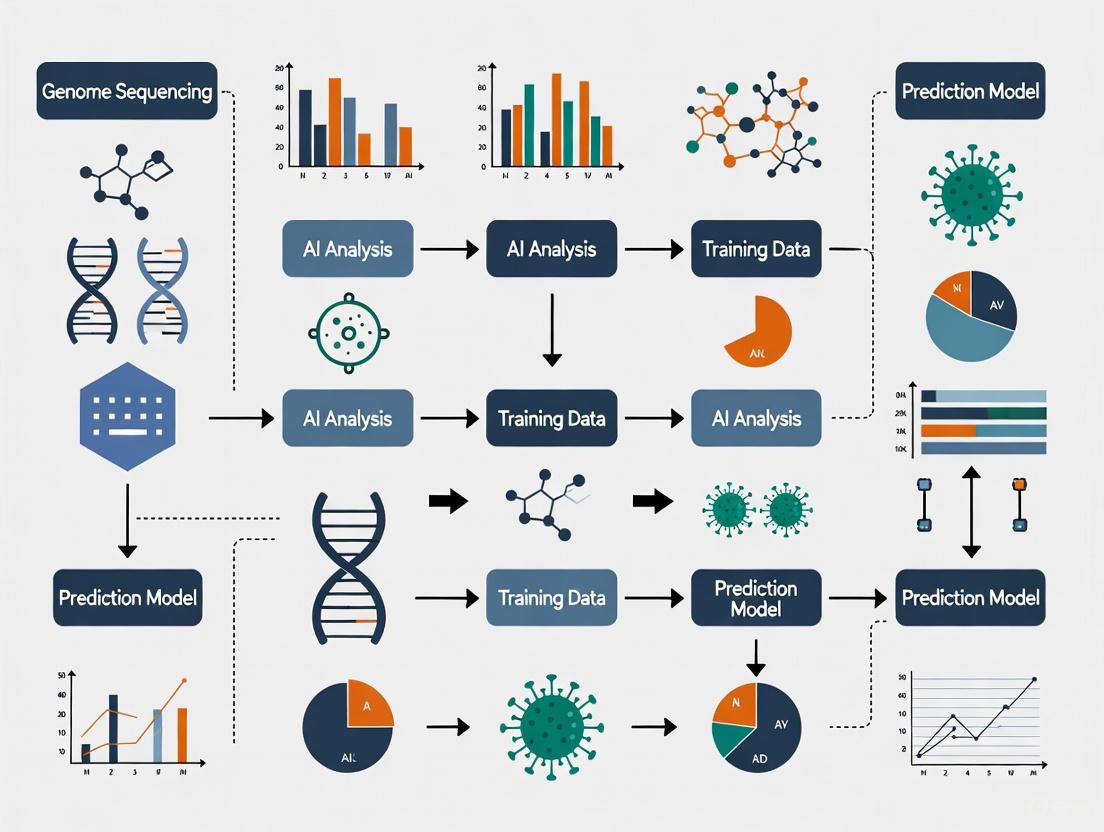
This article explores the transformative role of Artificial Intelligence (AI) and Machine Learning (ML) in viral genomics, addressing a critical need for researchers, scientists, and drug development professionals.
AI and Machine Learning in Viral Genomics: From Sequencing to Generative Design
Abstract
This article explores the transformative role of Artificial Intelligence (AI) and Machine Learning (ML) in viral genomics, addressing a critical need for researchers, scientists, and drug development professionals. We cover the foundational shift from traditional sequencing to AI-powered analysis, detailing specific methodologies like generative models and ensemble frameworks for antiviral discovery. The content provides insights into troubleshooting data and model challenges and offers a comparative analysis of AI tools for validation. Finally, we examine the future trajectory of the field, including the creation of novel therapeutics and the pressing ethical and safety considerations surrounding AI-designed viral genomes.
The New Paradigm: How AI is Decoding the Language of Viral Genomes
The landscape of viral genomics has been fundamentally reshaped by successive technological revolutions, beginning with the advent of first-generation Sanger sequencing and progressing to the high-throughput capabilities of next-generation sequencing (NGS), now further amplified by artificial intelligence (AI) [1]. This evolution has transformed our capacity to detect, characterize, and track viral pathogens with unprecedented speed and precision. Where traditional methods like Sanger sequencing provided accurate but low-throughput snapshots of viral sequences, NGS enables massively parallel sequencing, offering a comprehensive view of viral populations and their genetic diversity [2] [3]. The latest integration of AI and machine learning into NGS workflows is now pushing the boundaries further, automating complex bioinformatic analyses, enhancing the accuracy of variant calling, and unlocking predictive insights from vast genomic datasets [4]. This application note details the key methodologies and protocols that underpin this evolution, providing researchers with a structured framework for implementing advanced AI-powered viral genome sequencing in their research and drug development programs.
The Shift from Sanger to Next-Generation Sequencing
The transition from Sanger to NGS technologies marks a pivotal shift in viral sequencing capabilities. Sanger sequencing, known for its gold-standard accuracy for short reads, operates on the chain-termination principle using dideoxynucleotides (ddNTPs) and is ideal for confirming individual variants or sequencing single genes [3] [1]. In contrast, NGS is a massively parallel sequencing approach that can simultaneously sequence millions of DNA fragments, providing unparalleled throughput and discovery power for applications like detecting low-frequency variants and characterizing entire viral populations [2] [1].
Table 1: Key Comparative Characteristics of Sanger and NGS Technologies
| Feature | Sanger Sequencing | Next-Generation Sequencing (NGS) |
|---|---|---|
| Throughput | Low; sequences a single DNA fragment per reaction [2] | High; sequences millions of fragments simultaneously per run [2] [3] |
| Read Length | Up to ~1,000 base pairs [3] | Short-read: 36-300 bp (e.g., Illumina); Long-read: 10,000-30,000 bp (e.g., PacBio, Nanopore) [1] |
| Primary Applications in Virology | Targeted confirmation of known variants, sequencing specific amplicons [3] | Discovery of novel viruses, genomic epidemiology, detecting low-frequency variants, studying viral quasispecies [2] [5] |
| Cost-Effectiveness | Cost-effective for interrogating a small number of targets (e.g., <20) [2] | Cost-effective for screening large numbers of samples or targets; higher upfront instrument costs [2] [3] |
| Limit of Detection (Sensitivity) | ~15-20% [2] | High sensitivity; can detect variants down to 1% frequency with sufficient depth [2] |
| Data Analysis Complexity | Minimal bioinformatics required; relatively simple analysis [3] | Complex; requires sophisticated bioinformatics pipelines and expertise [3] [4] |
The choice between these methods is application-dependent. Sanger remains the preferred method for targeted, low-throughput applications, such as validating a specific mutation identified in an NGS screen. However, for broad, discovery-based viral genomics—including outbreak surveillance, viral evolution studies, and metagenomic pathogen detection—NGS is the unequivocal choice due to its comprehensive coverage and ability to detect the full spectrum of genetic variation within a viral population [2] [3].
Foundational NGS Wet-Lab Workflow for Viral Sequencing
The standard NGS workflow consists of four critical steps that transform a raw biological sample into interpretable genomic data. The following protocol outlines this process for viral genomes.
Protocol: Standard NGS Workflow for Viral Genome Sequencing
Principle: This protocol describes the process to convert viral nucleic acids from a clinical or environmental sample into a sequence-ready library and perform sequencing on an Illumina-based platform, which utilizes sequencing-by-synthesis (SBS) chemistry with reversible dye-terminators [6] [7].
Table 2: Essential Research Reagent Solutions for NGS Library Preparation
| Reagent/Material | Function | Key Considerations |
|---|---|---|
| Nucleic Acid Extraction Kit | Isolates DNA or RNA from sample matrices (e.g., swabs, tissue, biofluids) [6] [7]. | For RNA viruses, ensure kits include RNA stabilization. For FFPE samples, use specialized kits for degraded nucleic acids [7]. |
| Reverse Transcriptase (for RNA viruses) | Converts viral RNA into complementary DNA (cDNA) for library preparation [8]. | Use high-fidelity enzymes to minimize incorporation errors. |
| Fragmentation Enzymes/System | Shears genomic DNA or cDNA into short, random fragments of a defined size (e.g., 200-500 bp) [7]. | Size distribution impacts sequencing efficiency and assembly; optimize for your application. |
| Library Preparation Kit | A master mix containing enzymes and buffers for end-repair, A-tailing, and adapter ligation [7] [8]. | Select kits compatible with your sequencing platform (e.g., Illumina, PacBio). |
| Platform-Specific Adapters | Short, double-stranded oligonucleotides containing sequences complementary to the flow cell primers [7]. | Essential for cluster generation and initiating the sequencing reaction. |
| Index (Barcode) Oligos | Unique short sequences ligated to each sample's DNA fragments [8]. | Enables multiplexing of multiple samples in a single sequencing lane. |
| DNA Clean-up Beads | Purifies nucleic acids between enzymatic steps (e.g., post-fragmentation, post-ligation) [7]. | Magnetic beads are standard for efficient and automated size selection and purification. |
Procedure:
Nucleic Acid Extraction
- Extract total nucleic acids from the sample (e.g., viral transport media, infected tissue) using a commercial kit. The integrity, purity, and quantity of the input material are critical for success [7] [8].
- Quality Control (QC): Assess DNA/RNA purity using UV spectrophotometry (A260/A280 ratio ~1.8-2.0). Quantify using fluorometric methods for higher accuracy. For RNA, assess integrity via methods like the RNA Integrity Number (RIN) [6] [7].
Library Preparation
- Fragmentation: Fragment the purified gDNA or cDNA to an optimal size (e.g., 200-600 bp) via enzymatic or acoustic shearing [7].
- Adapter Ligation: Repair the ends of the DNA fragments, add an 'A' base to the 3' ends, and ligate platform-specific adapters (e.g., P5 and P7 for Illumina). Include unique dual-index barcodes if multiplexing [7] [8].
- Library Amplification: Perform a limited-cycle PCR to enrich for adapter-ligated fragments and amplify the final library [7].
- QC: Quantify the final library using qPCR for highest accuracy, as it measures amplifiable fragments. Assess size distribution using a bioanalyzer or gel electrophoresis [7].
Clonal Amplification & Sequencing
- Denature the library into single strands and load it onto a flow cell. Fragments bind to complementary lawn oligos.
- Cluster Generation: On an Illumina platform, bound fragments undergo bridge amplification to create millions of clonal clusters, each derived from a single library molecule [7] [8].
- Sequencing by Synthesis: The flow cell is placed in the sequencer. Cycles of fluorescently labeled, reversibly terminated nucleotides are added. After each incorporation, the flow cell is imaged, the base is identified by its fluorescence, and the terminator is cleaved to allow the next cycle. This process is repeated for the desired read length [7] [8].
The AI-Enhanced Bioinformatics Pipeline
The massive datasets generated by NGS necessitate robust bioinformatics. The integration of AI and machine learning is now revolutionizing this phase, moving beyond traditional heuristic methods to models that can learn complex patterns and improve accuracy [4].
Protocol: AI-Powered Bioinformatics Analysis for Viral Detection and SNP Discovery
Principle: This protocol processes raw NGS reads to identify viral sequences and characterize single nucleotide polymorphisms (SNPs) within viral populations. It integrates state-of-the-art bioinformatics tools with AI models to enhance accuracy and sensitivity, as demonstrated in a 2024 study [5].
Input: Paired-end FASTQ files from the NGS sequencer. Software Requirements: Cutadapt, SAMtools, MegaHit, BLAST+, Minimap2, pandas, Biopython, and custom Python scripts for AI-enhanced analysis [5].
Procedure:
Quality Control and Adapter Trimming
- Use Cutadapt to remove adapter sequences and perform quality-based trimming.
- Command Parameters: Set a minimum quality score threshold (e.g., Q20) and discard reads shorter than 50 bp after trimming [5].
Host Sequence Depletion
- Align the trimmed reads to the host reference genome (e.g., human, citrus) using an aligner like Minimap2.
- Use SAMtools to separate unmapped reads (which contain potential viral and other non-host sequences) from mapped host reads for downstream viral analysis [5].
Viral Sequence Identification
- Alignment-Based Detection: Map the unmapped reads to a database of known viral reference sequences using BLASTn or BLASTx to identify known viruses [5].
- De Novo Assembly for Novel Viruses: Assemble the unmapped reads de novo using an assembler like MegaHit. The resulting contigs can be queried against databases using BLAST to reveal novel viral sequences or genetic elements not present in reference databases [5].
AI-Enhanced SNP Discovery
- Map the high-quality reads to the identified viral reference genome.
- Use a custom Python script (utilizing the
pandasandpysamlibraries) to compare the entire population of sequenced viral reads to the reference genome base-by-base. - AI Integration: Implement frequency-based filtering and heuristic rules to distinguish true low-frequency SNPs from sequencing errors. More advanced pipelines can employ deep learning models like DeepVariant, which uses a convolutional neural network (CNN) to call genetic variants more accurately than traditional methods, thereby improving the overview of viral genetic diversity [5] [4].
Integrating AI Across the Entire NGS Workflow
The application of AI in viral genomics extends far beyond variant calling, creating a synergistic relationship that enhances every phase of the NGS workflow, from experimental planning to data interpretation [4].
- Pre-Wet-Lab Phase (Experimental Design): AI tools like Benchling and DeepGene assist in strategic planning, predicting experimental outcomes, and optimizing protocols before wet-lab work begins. This includes guiding the design of CRISPR guides for functional viral genomics studies [4] [9].
- Wet-Lab Phase (Automation): AI-driven laboratory automation systems (e.g., Tecan Fluent, Opentrons OT-2) streamline labor-intensive procedures like NGS library preparation. Integrated AI models provide real-time quality control, detecting errors like missing pipette tips or incorrect liquid volumes [4].
- Post-Wet-Lab Phase (Data Analysis): This is where AI has the most profound impact. Cloud-based platforms like Illumina BaseSpace and DNAnexus are incorporating AI/ML tools to make complex analyses accessible without advanced programming skills. Deep learning models excel at identifying subtle patterns in sequencing data, predicting biological functions, and suggesting mechanistic hypotheses for viral pathogenesis and host interactions [4].
Table 3: AI Applications in the Viral NGS Workflow
| NGS Workflow Phase | AI Integration | Impact on Viral Research |
|---|---|---|
| Pre-Wet-Lab (Design) | AI-powered design tools (e.g., Benchling, DeepGene) [4] | Optimizes sequencing panel design and predicts outcomes for viral target enrichment. |
| Wet-Lab (Library Prep) | AI-driven liquid handlers and real-time QC (e.g., Opentrons OT-2 with YOLOv8 model) [4] | Automates and improves reproducibility of library prep from diverse sample types (e.g., FFPE, biofluids). |
| Post-Wet-Lab (Analysis) | Deep learning-based variant callers (e.g., DeepVariant) [4] | Increases accuracy of identifying true low-frequency viral variants within a quasispecies. |
| Post-Wet-Lab (Analysis) | Custom Python scripts for SNP analysis and ML-based annotation [5] | Provides a comprehensive view of viral genetic diversity and identifies dominant variants. |
The journey from Sanger sequencing to AI-powered NGS represents a monumental leap in our ability to understand and combat viral pathogens. The foundational NGS workflows provide the high-throughput data generation capacity necessary for detailed viral surveillance and discovery. The emerging layer of AI integration is now refining this process, introducing unprecedented levels of automation, accuracy, and predictive insight. By implementing the detailed protocols for both wet-lab and bioinformatic analyses outlined in this application note, researchers and drug developers can fully leverage these technological synergies. This powerful combination accelerates the pace of viral genomic research, fuels the discovery of novel therapeutics, and enhances our preparedness for emerging viral threats.
Application Notes: AI-Driven Advances in Virology
The integration of artificial intelligence (AI) is fundamentally transforming virology research, enabling tasks from de novo viral design and sensitive diagnostics to the large-scale classification of viral sequences. The table below summarizes the core applications and performance metrics of these technologies.
Table 1: Performance Metrics of Core AI Technologies in Virology
| AI Technology | Application | Reported Performance / Outcome | Key Advantage |
|---|---|---|---|
| Large Language Models (LLMs) | Design of viral nanobodies | Creation of 92 novel nanobodies; two with improved binding to recent SARS-CoV-2 variants [10]. | Enables sophisticated, interdisciplinary research planning [10]. |
| Deep Learning (CNN) | Prediction of CRISPR diagnostic activity (ADAPT) | auROC = 0.866; accurately predicted diagnostic sensitivity across viral variation [11]. | Optimizes diagnostic sensitivity across the full spectrum of a virus's genomic variation [11]. |
| Deep Learning (Hybrid CNN-BiLSTM) | Identification of viral sequences from metagenomes (DETIRE) | Outperformed other deep learning methods (DeepVirFinder, PPR-Meta, CHEER) in identifying short sequences (<1,000 bp) [12]. | Effectively extracts both spatial and sequential features from short sequences for improved identification [12]. |
| Machine Learning (Random Forest) | Alignment-free viral sequence classification | Achieved 97.8% accuracy classifying 297,186 SARS-CoV-2 sequences into 3,502 distinct lineages [13]. | Enables rapid classification at scale using modest computational resources [13]. |
| Lempel-Ziv Parsing (LZ-ANI) | Viral genome clustering (Vclust) | Mean Absolute Error (MAE) of 0.3% for tANI estimation; >40,000x faster than VIRIDIC [14]. | Provides high-accuracy, alignment-based clustering for millions of genomes [14]. |
Experimental Protocols
Protocol: AI-Driven Design of Viral Nanobodies Using a Virtual Lab
Purpose: To design novel nanobodies against specific viral antigens using a multi-agent LLM system [10].
Experimental Workflow:
Procedure:
- Research Initialization: The human researcher provides high-level feedback and the objective to the Virtual Lab, which consists of an LLM acting as a Principal Investigator guiding a team of LLM scientist agents [10].
- Pipeline Creation: The Virtual Lab agents create a computational nanobody design pipeline. This pipeline incorporates specialized tools:
- Protein Language Model (ESM): Used for understanding protein sequences [10].
- Protein Folding Model (AlphaFold-Multimer): Predicts the 3D structure of the designed nanobodies bound to the viral antigen (e.g., SARS-CoV-2 spike protein) [10].
- Computational Biology Software (Rosetta): Used for energy-based scoring and assessing the stability of the designed nanobodies [10].
- Design and In Silico Analysis: The pipeline designs and scores 92 novel nanobody candidates. The LLM agents discuss results and select promising candidates for experimental testing [10].
- Validation: The selected nanobodies are synthesized and tested experimentally using methods like ELISA to validate binding affinity and specificity against the target viral variants [10].
Protocol: Designing Sensitive Viral Diagnostics with Machine Learning (ADAPT)
Purpose: To design highly sensitive nucleic acid-based diagnostics that are effective across a virus's genomic diversity using a deep learning model [11].
Experimental Workflow:
Procedure:
- Data Generation for Model Training:
- Design a library of 19,209 unique guide RNA–target pairs for a CRISPR-based diagnostic (e.g., using LwaCas13a) [11].
- Measure the fluorescence readout (activity) of each pair using a high-throughput platform like CARMEN (Combinatorial Arrayed Reactions for Multiplexed Evaluation of Nucleic acids) [11].
- Define "activity" as the logarithm of the fluorescence growth rate, which correlates with diagnostic sensitivity [11].
- Model Training:
- Train a Convolutional Neural Network (CNN) using a two-step "hurdle model." The model first classifies guide-target pairs as "active" or "inactive," then performs regression to predict the activity level of active pairs [11].
- Diagnostic Design with ADAPT:
- Input the complete genomic variation of a target virus into the ADAPT system [11].
- ADAPT uses the trained CNN model, combined with combinatorial optimization, to select diagnostic assay targets that maximize the predicted sensitivity across the entire spectrum of the virus's known genomic diversity [11].
- Validation: Experimentally test the designed assays against synthetic targets representing known viral variants to confirm sensitivity and specificity [11].
The Scientist's Toolkit: Research Reagent Solutions
Table 2: Key Research Reagents and Computational Tools for AI Virology
| Item / Tool Name | Function / Application | Specific Example / Note |
|---|---|---|
| Virtual Lab | An AI-human collaboration platform for interdisciplinary research. | Uses an LLM Principal Investigator to guide a team of specialist AI agents through research cycles [10]. |
| AlphaFold-Multimer | Predicts 3D structures of protein complexes. | Used to model the interaction between a designed nanobody and a viral antigen protein [10]. |
| Rosetta | A suite for computational macromolecular modeling and design. | Used for energy-based scoring and refining designed protein structures (e.g., nanobodies) [10]. |
| ADAPT | A system for automated design of sensitive viral diagnostics. | Combines a deep learning model with combinatorial optimization; designs for 1,933 viral species within hours [11]. |
| CRISPR-Cas13a | An enzyme for RNA-guided RNA targeting used in diagnostics. | The model in ADAPT was trained on data from LwaCas13a guide-target pairs [11]. |
| DETIRE | A hybrid deep learning model for identifying viral sequences from metagenomes. | Combines CNN and BiLSTM to extract spatial and sequential features from short sequences [12]. |
| Vclust | A tool for ultrafast and accurate clustering of viral genomes. | Uses LZ-ANI for alignment and calculates Average Nucleotide Identity (ANI) for taxonomy [14]. |
| CRISPR-GPT | An LLM-based copilot for designing CRISPR gene-editing experiments. | Trained on 11 years of expert discussions and papers; assists in design and predicts off-target effects [15]. |
The field of viral genomics is undergoing a transformative shift, moving from simply reading and writing DNA to actively designing it using artificial intelligence (AI). This progression represents a new chapter in our ability to engineer biology at its foundational level [16]. AI models, particularly large language models adapted for genomic sequences, are now capable of generating functional viral genomes by learning the complex "grammar" and "syntax" that govern genetic functionality and evolutionary fitness. These models capture evolutionary constraints well enough to design genomes that not only function but also incorporate substantial novelty beyond what natural evolution has sampled [16]. This capability is proving crucial for addressing pressing global health challenges, including the development of novel antiviral therapies and overcoming bacterial resistance, by providing a systematic approach for staying ahead of pathogen evolution [17] [16].
Core Computational Methodologies
Foundation Model Architecture and Training
The process begins with building genomic foundation models, such as the Evo series, which are trained on massive datasets of natural genetic sequences. These models learn the statistical patterns and biological constraints present in viral genomes, enabling them to generate novel, coherent sequences that maintain biological functionality.
Training Data Curation:
- Base Models: Trained on over two million phage genomes to learn general principles of viral genome organization [16].
- Specialized Fine-Tuning: Continued training on curated, non-redundant datasets specific to the target viral family (e.g., 14,466 Microviridae sequences clustered at 99% identity for bacteriophage ΦX174 design) [16].
- Data Accessibility: Cloud-based genomic platforms now connect over 800 institutions globally, with more than 350,000 genomic profiles uploaded annually, providing vast data resources for training these algorithms [18].
Specialized Fine-Tuning for Genome Generation
While base models possess general sequence generation capabilities, they lack the controllability needed for specific genome design. This is achieved through supervised fine-tuning, a process that specializes the model on sequence variation closely related to a specific design template.
Key Fine-Tuning Strategies:
- Template-Based Design: Using a well-characterized virus (e.g., bacteriophage ΦX174) as a design template provides clear design criteria and sits at a practical limit for DNA synthesis costs [16].
- Prompt Engineering: Developing precise sequence prompts and sampling parameters to guide the model to generate sequences that phylogenetically resemble the template while allowing for substantial evolutionary divergence [16].
- Overlapping Gene Handling: Custom annotation pipelines are developed to handle complex gene architectures, such as overlapping reading frames, which confound standard gene prediction tools [16].
Quality Control and Filtering Pipelines
Evaluating thousands of AI-generated sequences requires robust multi-stage filtering to select candidates for experimental validation.
Table 1: Key Filters for AI-Generated Genome Selection
| Filter Category | Criteria | Validation Method |
|---|---|---|
| Sequence Quality | Retention of core genetic toolkit; prediction of at least 7 of 11 natural ΦX174 proteins via custom annotation pipeline [16]. | Homology searches against phage protein databases; ORF finding strategies. |
| Host Specificity | Conservation of key host-range determinants (e.g., spike protein for ΦX174) to ensure infection of target bacteria (E. coli C) [16]. | Sequence alignment and motif conservation analysis. |
| Evolutionary Novelty | Allowing 67–392 novel mutations compared to nearest natural genome; incorporation of sequences not found in nature [16]. | Phylogenetic analysis and BLAST against genomic databases. |
Experimental Validation Protocol
High-Throughput Functional Screening
A critical phase is the experimental testing of AI-designed genomes to separate functional sequences from non-functional ones. This requires rethinking traditional workflows for high-throughput efficiency [16].
Protocol 3.1: Growth Inhibition Assay for Synthetic Phages
- Objective: To rapidly identify functional phage genomes from hundreds of AI-generated designs based on their lytic activity.
Materials:
- Synthesized and assembled AI-generated phage genomes.
- Competent E. coli C culture (non-pathogenic host strain).
- 96-well plates for high-throughput culturing.
- Spectrophotometer for measuring optical density at 600 nm (OD₆₀₀).
Method:
- Genome Assembly: AI-designed genomic sequences are chemically synthesized and assembled into complete genomes via Gibson assembly [16].
- Transformation: Assembled genomes are transformed into competent E. coli C cells [16].
- Growth Monitoring: Transformed cultures are monitored for growth inhibition in a 96-well format. Successful phage infection and replication cause host cell lysis, leading to a characteristic rapid decline in OD₆₀₀ within 2–3 hours [16].
- Candidate Selection: Cultures showing significant growth inhibition are selected as potential functional phage candidates for further verification.
Sequence Verification and Characterization
Protocol 3.2: Validation of Functional Phages
- Objective: To confirm the sequence and characterize the basic biology of AI-generated phages that pass the initial screen.
- Method:
- Sequence Verification: Functional phage candidates are propagated, and their genomic DNA is sequenced to confirm it matches the AI-designed sequence and to identify any unintended mutations [16].
- Host Range Determination: The specificity of validated phages is tested against a panel of bacterial strains (e.g., E. coli C, E. coli W, and six other related strains) to ensure host specificity has been maintained [16].
- Structural Analysis: For phages with novel protein incorporations (e.g., the J protein from distantly related phage G4), techniques like cryo-electron microscopy (cryo-EM) can be used to reveal how these novel proteins integrate into the viral structure [16].
Advanced Application: Overcoming Bacterial Resistance
Protocol 3.3: Phage Cocktail Evolution Assay
- Objective: To leverage AI-generated phage diversity to overcome evolved bacterial resistance.
- Method:
- Resistance Induction: Generate ΦX174-resistant E. coli strains (e.g., with mutations in the waa operon affecting bacterial surface receptors) [16].
- Cocktail Challenge: Expose the resistant bacteria to a cocktail containing multiple distinct AI-generated phage designs.
- Serial Passage: Perform 1-5 serial passages of the phage cocktail on the resistant bacterial strain.
- Isolation and Sequencing: Isolate phages that successfully overcome the resistance and sequence their genomes. The breakthrough phages are often mosaic genomes derived from recombination between multiple AI designs, with mutations concentrated in surface-exposed regions that interact with bacterial receptors [16].
Essential Data Analysis and Machine Learning Frameworks
Beyond de novo genome design, AI and machine learning (ML) play a crucial role in analyzing viral sequences for drug discovery. Ensemble frameworks that integrate compound structural data with viral genome sequences can identify both virus-selective and broad-spectrum pan-antiviral agents [17].
Table 2: Performance Metrics of Antiviral Prediction Models
| Model Type | Machine Learning Algorithm | Key Performance Metrics | Application |
|---|---|---|---|
| Virus-Selective | Random Forest (RF) | AUC-ROC = 0.83 ± 0.02, Balanced Accuracy (BA) = 0.76 ± 0.02, MCC = 0.44 ± 0.04 [17]. | Predicts active compounds for a specific virus. |
| Virus-Selective | eXtreme Gradient Boosting (XGB) | AUC-ROC = 0.80 ± 0.01, BA = 0.74 ± 0.01, MCC = 0.39 ± 0.02 [17]. | Predicts active compounds for a specific virus. |
| Pan-Antiviral | Random Forest (RF) | AUC-ROC = 0.84 ± 0.02, BA = 0.79 ± 0.02, MCC = 0.59 ± 0.04 [17]. | Predicts broad-spectrum antiviral activity. |
| Pan-Antiviral | Support Vector Machine (SVM) | AUC-ROC = 0.83 ± 0.03, BA = 0.79 ± 0.03, MCC = 0.58 ± 0.05 [17]. | Predicts broad-spectrum antiviral activity. |
Input Features for Models:
- Compounds: Represented as 1024-bit ECFP4 fingerprints [17].
- Viral Genomes: Represented as 100-dimension vectors derived from complete genome assemblies [17].
Table 3: Essential Materials for AI-Driven Viral Genomics Research
| Item | Function / Application | Example / Specification |
|---|---|---|
| AI Model (Evo) | Genomic foundation model for generating viral genome sequences [16]. | Pre-trained on millions of viral sequences; requires fine-tuning on target data. |
| Bacteriophage Template | Well-characterized template for genome design projects [16]. | ΦX174 (5,386 nt), historically significant and practical for synthesis. |
| Non-Pathogenic Bacterial Host | Safe host for functional testing of synthetic phages [16]. | E. coli C or other common laboratory strains. |
| Custom Gene Annotation Pipeline | Identifies genes in complex genomes, especially those with overlapping reading frames [16]. | Combines ORF-finding with homology searches. |
| Approved/Investigational Antiviral Drugs (AIADs) | Curated dataset for training machine learning models for antiviral discovery [17]. | 303 compounds from sources like DrugBank. |
| Cloud-Based Genomic Platform | Provides computational power and data integration for AI analysis [18]. | Illumina Connected Analytics, AWS HealthOmics. |
| High-Throughput Synthesis & Assembly | Chemical synthesis and assembly of AI-designed genomes for testing [16]. | Gibson assembly in 96-well format. |
Workflow Visualization
The following diagram illustrates the integrated computational and experimental workflow for generating and validating AI-designed viral genomes:
Application Note 1: AI-Enhanced Genomic Diagnostics and Variant Characterization
Artificial intelligence significantly augments the diagnostic process for viral pathogens by enabling the rapid identification and functional characterization of genomic variants from sequencing data. Traditional methods, which rely on manual curation and reference-based alignment, struggle with the volume and complexity of data generated by modern sequencing technologies. AI models, particularly deep learning, automate the variant calling process with superior accuracy, distinguish between significant mutations and benign variations, and predict the potential impact of these variants on viral transmissibility, virulence, and immune evasion [19] [20]. For instance, tools like DeepVariant employ deep learning to transform sequencing data into image-like representations, enabling highly accurate identification of insertions, deletions, and single-nucleotide polymorphisms (SNPs) that might be missed by conventional methods [19].
Key Experimental Protocols
Protocol: AI-Assisted Functional Characterization of Novel Variants
Objective: To identify and prioritize mutations in a viral genome (e.g., SARS-CoV-2) that may confer functional advantages, such as enhanced binding affinity or antibody escape.
Methodology:
- Data Acquisition and Preprocessing:
- Obtain a dataset of viral genome sequences, typically in FASTA format, from public repositories like GISAID, NCBI, or EBI [17].
- Perform multiple sequence alignment against a reference genome (e.g., NC_045512.2 for SARS-CoV-2) to identify mutations.
- Annotate mutations based on their genomic location (e.g., Spike protein, RdRp).
Feature Engineering:
- Encode genomic sequences into numerical feature vectors suitable for machine learning. Common techniques include:
- k-mer frequency counts: Fragment sequences into overlapping k-mers (e.g., 3-mers, 4-mers) and count their occurrence.
- One-hot encoding: Represent each nucleotide (A, C, G, T, U) as a binary vector.
- Integrate structural features if available, such as changes in protein stability or solvent accessibility predicted by tools like AlphaFold [9] [20].
- Encode genomic sequences into numerical feature vectors suitable for machine learning. Common techniques include:
Model Training and Prediction:
- Train a machine learning model, such as a Random Forest (RF) or eXtreme Gradient Boosting (XGB) classifier, on a curated dataset of known functional and neutral variants [17].
- Input features include the encoded genomic data and associated structural features.
- The model outputs a probability score predicting the functional impact of a novel variant (e.g., high, medium, low risk).
Validation:
- Validate predictions using in vitro assays, such as:
- Pseudovirus Entry Assay: To confirm the impact of Spike protein mutations on viral infectivity and cell entry [17].
- Plaque Reduction Neutralization Test (PRNT): To assess the variant's resistance to neutralizing antibodies from convalescent or vaccinated sera.
- Validate predictions using in vitro assays, such as:
Table 1: Representative AI Models for Genomic Analysis
| Model/Tool | AI Methodology | Primary Application | Reported Performance (AUC-ROC) | Key Advantage |
|---|---|---|---|---|
| DeepVariant | Deep Learning (CNN) | Variant Calling from NGS data | >0.99 [19] | High accuracy in differentiating sequencing errors from true variants. |
| Virus-Selective Model | Ensemble Random Forest | Identifying antiviral agents for specific viruses | 0.83 ± 0.02 [17] | Integrates viral genome sequences with compound structures. |
| Pan-Antiviral Model | Random Forest / SVM | Identifying broad-spectrum antiviral agents | 0.84 ± 0.02 / 0.83 ± 0.03 [17] | Predicts activity across multiple virus families. |
AI-Driven Variant Analysis Workflow: This diagram outlines the key steps from sample to functional insight, highlighting AI-driven components.
The Scientist's Toolkit: Research Reagent Solutions
Table 2: Essential Reagents for AI-Guided Genomic Studies
| Reagent/Material | Function | Example Application in Protocol |
|---|---|---|
| Next-Generation Sequencing (NGS) Kits | Generate unbiased sequencing data from viral RNA. | Amplicon sequencing (e.g., COVIDSeq) for whole viral genome coverage [21]. |
| Variant Calling Software | Base algorithm for initial variant identification. | Provides raw data for subsequent AI-based refinement and analysis [19]. |
| Curated Genomic Databases | Provide labeled data for model training and benchmarking. | Sources like GISAID are used to train models to recognize significant mutations [17]. |
| Pseudovirus System | Safe, non-replicating viral particles for functional testing. | Validates the impact of Spike protein mutations on cell entry predicted by AI models [17]. |
| Protein Structure Prediction Tools | Computationally model 3D protein structures from sequences. | AlphaFold is used to predict how mutations alter protein structure and function [9] [20]. |
Application Note 2: AI-Powered Genomic Surveillance and Outbreak Tracking
The integration of AI with viral genome sequencing has revolutionized the field of epidemic intelligence, transforming it from a reactive to a proactive discipline. AI systems can process vast volumes of disparate data—including genomic sequences from platforms like Illumina, clinical reports, and unstructured data from news sources and social media—in near real-time [22] [23]. This allows for the early detection of emerging outbreaks, the tracking of pathogen spread across regions, and the reconstruction of transmission chains with high resolution. Systems like HealthMap and EPIWATCH demonstrated this capability by flagging the initial COVID-19 outbreak ahead of official announcements, while the VISTA project uses AI to rank the spillover and pandemic potential of viruses from animal reservoirs [22] [24].
Key Experimental Protocols
Protocol: Real-Time Phylodynamic Analysis for Outbreak Investigation
Objective: To reconstruct the transmission dynamics and geographic spread of a viral outbreak using genomic data and machine learning.
Methodology:
- Genomic Data Collection and Curation:
- Continuously aggregate viral genome sequences from local, national, and international surveillance efforts (e.g., wastewater surveillance, clinical testing) [21].
- Annotate each sequence with rich metadata, including sample collection date, geographical location, and patient clinical outcomes.
Phylogenetic Inference:
- Perform multiple sequence alignment of the collected genomes.
- Construct a phylogenetic tree using maximum-likelihood or Bayesian methods to visualize the evolutionary relationships between viral samples.
AI-Enhanced Spatio-Temporal Analysis:
- Employ machine learning models, such as EpiLLM or other spatio-temporal architectures, that integrate the phylogenetic data with mobility patterns and epidemiological data [23].
- These models identify clusters of genetically similar viruses and infer the direction and rate of spread between geographic hubs.
Resource Optimization:
- Use the outputs of the phylodynamic model to inform reinforcement learning algorithms, which can optimize the allocation of public health resources, such as testing kits and vaccines, to areas at highest risk of importation or exponential growth [25].
Table 3: AI-Driven Surveillance Platforms and Their Functions
| Platform/System | Core AI Technology | Primary Function | Data Sources |
|---|---|---|---|
| HealthMap | Natural Language Processing (NLP), Machine Learning | Automated global outbreak detection | Online news, social media, official reports [22] |
| VISTA/BEACON | Large Language Models (LLMs), Expert Curation | Ranking virus spillover and pandemic potential | Open-source data, viral genomic databases, expert opinion [24] |
| EDS-HAT | Machine Learning | Detecting hospital-borne infection outbreaks | Electronic Health Records (EHRs), Whole Genome Sequencing (WGS) [22] |
| EpiLLM | Multi-modal LLM, Spatio-temporal modeling | Localized prediction of disease spread | Genomic data, mobility data, epidemic trends [23] |
AI-Powered Genomic Surveillance System: This diagram illustrates how AI synthesizes diverse data streams to generate actionable public health intelligence.
Application Note 3: Understanding Viral Evolution and Informing Countermeasures
AI provides a powerful framework for modeling the evolutionary trajectory of viruses and accelerating the development of countermeasures, such as antiviral drugs and vaccines. By analyzing patterns across vast datasets of viral sequences and compound structures, machine learning models can predict the emergence of drug-resistant strains and identify novel, broad-spectrum antiviral candidates in silico before they are tested in the lab [17]. This approach dramatically compresses the drug discovery timeline, which is critical during a pandemic. Furthermore, AI models like AlphaFold have revolutionized structural biology by accurately predicting the 3D structures of viral proteins, thereby illuminating potential drug targets and the mechanistic impact of evolutionary mutations [9] [20].
Key Experimental Protocols
Protocol: Machine Learning-Based Virtual Screening for Antiviral Discovery
Objective: To rapidly identify potential antiviral compounds against a novel or evolving virus using quantitative structure-activity relationship (QSAR) models.
Methodology:
- Dataset Curation:
- Active Compounds: Compile a list of approved and investigational antiviral drugs (AIADs) from databases like DrugBank [17].
- Inactive Compounds: Select a set of non-cytotoxic pharmaceutical compounds (NCPCs) with no known antiviral activity to serve as negative controls [17].
- Viral Genomes: Gather complete genome assemblies of the target virus and related viruses.
Molecular Representation:
- Encode the chemical structures of all compounds into numerical fingerprints, such as 1024-bit ECFP4 (Extended Connectivity Fingerprint) fingerprints, which capture molecular features [17].
- Encode viral genome sequences into numerical descriptors.
Model Training and Validation:
- For virus-selective models, train an ensemble model (e.g., Random Forest) using both compound fingerprints and viral genome descriptors as input features. The model learns to predict activity for a specific virus [17].
- For pan-antiviral models, train a QSAR model (e.g., SVM or RF) using only compound fingerprints to identify broad-spectrum antiviral activity [17].
- Validate model performance using cross-validation, with metrics like AUC-ROC, Balanced Accuracy (BA), and Matthews Correlation Coefficient (MCC).
Virtual Screening and Experimental Confirmation:
- Apply the trained models to screen large virtual compound libraries (e.g., ~360,000 compounds) [17].
- Select top-ranking compounds for in vitro testing in assays such as a pseudotyped particle (PP) entry assay and an RNA-dependent RNA polymerase (RdRp) assay to confirm antiviral activity and potency [17].
AI-Driven Antiviral Discovery Pipeline: This workflow shows the process from model training based on known compounds to the experimental validation of AI-prioritized candidates.
From Data to Discovery: Practical AI Methods for Genome Analysis and Antiviral Development
The escalating global threat of antimicrobial resistance (AMR) has intensified the search for alternatives to conventional antibiotics, with bacteriophage (phage) therapy emerging as a particularly promising candidate [26]. However, the natural diversity of phages and their bacterial hosts presents a significant challenge for developing standardized, effective therapies. The nascent convergence of synthetic biology, artificial intelligence (AI), and viral genomics is forging a new path to address this challenge. This Application Note details how generative AI models, specifically genome language models like Evo, are being used to design novel, functional bacteriophage genomes de novo. This approach represents a paradigm shift from simply discovering phages in nature to actively engineering them, enabling the creation of phages with tailored properties for therapeutic and research applications [16] [27]. By providing detailed protocols and frameworks, this document serves as a guide for researchers aiming to leverage AI for advanced viral genome design within a broader research context of AI and machine learning for viral genome sequencing.
Generative AI for Phage Genome Design: Core Concepts and Workflow
Generative AI for genome design involves using large language models (LLMs) trained on vast datasets of biological sequences to create novel, coherent genetic sequences. Unlike traditional genetic engineering, which modifies existing templates, this approach can generate entirely new genomes that remain functional while incorporating significant evolutionary novelty [27]. The Evo model series exemplifies this technology. Evo is a foundational genome language model pretrained on a massive corpus of over 9.3 trillion nucleotides from 128,000 diverse organisms, allowing it to learn the complex "syntax" and "grammar" of DNA [16] [27].
A critical challenge in whole-genome design is orchestrating multiple interacting genes and regulatory elements while maintaining functional balance. This is particularly stringent in phages like ΦX174, which feature overlapping genes where a single nucleotide can be part of multiple protein-coding sequences [16]. The workflow for generating viable phage genomes involves a multi-stage computational and experimental process, summarized in the diagram below.
Figure 1: End-to-end workflow for AI-driven design and validation of novel bacteriophage genomes, illustrating the sequence from model training to experimental confirmation.
Model Training and Sequence Generation
The base Evo model requires specialization to generate viable, family-specific phage genomes. This is achieved through supervised fine-tuning on a curated dataset of target phage family sequences. For ΦX174-like phages, researchers used 14,466 Microviridae genomes, clustered at 99% identity to reduce redundancy [16]. This process specializes the model's knowledge, enabling it to generate sequences that are phylogenetically related to the template without being mere replicas. Sequence generation is typically initiated through a prompting strategy, where a conserved "seed" sequence from a well-characterized phage (e.g., ΦX174) is provided, and the model is instructed to generate the remainder of the genome [27]. This approach balances creative generation with the constraint of essential functional elements.
Computational Filtering and Quality Control
Thousands of AI-generated sequences must be computationally filtered to eliminate non-viable candidates before costly synthesis. This requires developing custom annotation pipelines, especially for phages with overlapping genes that confound standard gene prediction tools [16]. Key filtering criteria include:
- Sequence Length: Filtering for genomes within a practical size range (e.g., 4,000–6,000 bases for ΦX174-like phages) [27].
- Gene Content: Requiring a minimum number of predicted essential genes (e.g., at least 7 of the 11 genes in ΦX174) [16].
- Host Specificity: Ensuring the presence of critical elements for host infection, such as a conserved spike protein sequence that determines host range [16].
- Novelty Assessment: Using tools like
fastANIandEzAAIto calculate Average Nucleotide Identity (ANI) and Average Amino acid Identity (AAI) against natural genomes to quantify evolutionary novelty [28].
Quantitative Data on AI-Designed Phages
The following tables consolidate key quantitative findings from recent breakthrough studies on AI-generated bacteriophages, highlighting the performance of the models and the characteristics of their functional outputs.
Table 1: Performance of Generative AI Workflow for ΦX174-like Phage Design
| Workflow Stage | Input/Metric | Value | Context |
|---|---|---|---|
| Sequence Generation | Initial candidate genomes generated | 302 | Distinct candidates after initial filtering [27] |
| In vitro Synthesis | Genomes successfully assembled | 285 | Out of 302 designed, via chemical synthesis and Gibson assembly [27] |
| In vivo Validation | Viable, replicating phages | 16 | 5.6% success rate from assembled genomes [27] |
| Evolutionary Novelty | Novel mutations in viable phages | 67 - 392 | Compared to nearest natural genome [16] |
| Minimum ANI of viable phage | 93.0% (Evo-Φ2147) | Qualifies as a new species under some thresholds [16] |
Table 2: Characteristics of Select AI-Designed ΦX174 Phages
| Phage Name | Key Feature | Experimental Performance & Notes |
|---|---|---|
| Evo-Φ36 | Gene J swapped from distant phage G4 | Viable despite previous rational engineering failures; cryo-EM showed distinct capsid protein orientation [16]. |
| Evo-Φ69 | Not specified | Outcompeted wild-type ΦX174, increasing to 65x its starting level in a co-culture experiment [27]. |
| Evo-Φ2147 | 392 novel mutations | 93.0% ANI to nearest natural phage (NC51), potentially a new species [16]. |
Experimental Protocol: Validation of AI-Designed Phage Genomes
This protocol details the experimental steps for synthesizing and validating AI-generated phage genomes, based on the high-throughput methods used to test hundreds of designs [16].
Computational Design andIn SilicoFiltering
- Generate Candidates: Use a fine-tuned Evo model to generate candidate phage genomes by providing a conserved seed sequence from a template phage (e.g., ΦX174).
- Annotate Genomes: Run generated sequences through a custom annotation pipeline (e.g., combining ORF-finding with homology searches against a phage protein database) to identify all essential genes, especially in overlapping reading frames [16].
- Apply Filters: Filter sequences based on:
- Length (e.g., 4,000–6,000 nucleotides).
- Presence of a minimum number of essential genes (e.g., ≥7 for ΦX174).
- Conservation of critical host-range determinants (e.g., spike protein for E. coli C tropism).
- Use
geNomadto confirm viral sequence characteristics [27].
Chemical Synthesis and Genome Assembly
- DNA Synthesis: Send the final list of candidate genome sequences (e.g., 285 designs) to a commercial vendor for chemical synthesis as multiple, overlapping DNA fragments.
- Gibson Assembly: Assemble the full-length genome from the synthesized fragments using Gibson assembly [27], a method that simultaneously joins multiple DNA fragments in a single, isothermal reaction.
- Purification: Purify the assembled linear DNA product to remove assembly reagents.
Transformation andIn VivoBoot-up
- Prepare Competent Cells: Make electrocompetent E. coli C cells, the non-pathogenic host strain for ΦX174.
- Transform: Electroporate approximately 100-200 ng of the purified, assembled phage genome into 50 µL of competent E. coli C cells.
- Recover and Incubate: Immediately add 1 mL of pre-warmed Lysogeny Broth (LB) to the cells after electroporation. Incubate for 3 hours at 37°C with shaking to allow for phage replication and host cell lysis [27].
Functional Validation and Characterization
- Plaque Assay: Centrifuge the culture to pellet cell debris. Serially dilute the supernatant and mix with an early-log-phase culture of E. coli C. Add the mixture to molten soft agar and pour onto a pre-warmed LB agar plate. Incubate overnight at 37°C.
- Identify Viable Phages: Look for clear plaques (zones of lysis) in the bacterial lawn after 16-24 hours. The presence of plaques indicates a viable, lytic phage.
- Sequence Verification: Pick a plaque from each viable design and amplify it. Isolate the phage DNA and sequence it to confirm the genome matches the AI-designed sequence without errors introduced during synthesis or replication.
- Growth Inhibition Assay (High-Throughput): For rapid functional screening, use a 96-well plate growth inhibition assay [16].
- Inoculate E. coli C in TSB to ~1x10⁶ CFU/mL.
- Mix with the candidate phage lysate at a high multiplicity of infection (MOI) (e.g., MOI 20, 2x10⁸ PFU/mL).
- Incubate in a microplate reader at 37°C with agitation, monitoring OD₆₀₀ every 10 min for 6 hours.
- A significant decline in OD₆₀₀ within 2-3 hours indicates successful infection and lysis.
- Characterization: For viable phages, proceed with further characterization, including host range determination, one-step growth curves to assess burst size and latent period, and competitive fitness assays against the wild-type phage [27].
Application in Therapeutic Development
A primary application of AI-designed phages is to overcome the challenge of bacterial resistance. A significant demonstration showed that cocktails of AI-generated phages can overcome resistant bacteria in vitro. In one study, researchers evolved three ΦX174-resistant E. coli strains. While the wild-type ΦX174 failed to inhibit these strains, a cocktail of AI-generated phages overcame resistance in all three strains within 1-5 passages. The breakthrough phages were mosaic genomes derived from multiple AI designs through recombination, with mutations concentrated in surface-exposed regions that interact with bacterial receptors. This highlights a key advantage: AI can generate a diverse population of phages that collectively present multiple targets, making it harder for bacteria to develop comprehensive resistance [16].
Machine learning is also being applied to predict phage-host interactions at the strain level, which is crucial for selecting the right phage for a given bacterial infection. Models trained on protein-protein interaction (PPI) data and host-range datasets have achieved prediction accuracies of 78% to 94% for Salmonella and E. coli phages [28]. Furthermore, AI-driven tools like PhagePromoter are being integrated into pipelines for engineering phages with enhanced therapeutic payloads. These tools use support vector machines (SVM) and artificial neural networks (ANNs) to predict promoter strength, allowing researchers to strategically insert antimicrobial genes into phage genomes at loci that optimize expression timing and level, thereby enhancing therapeutic efficacy [29].
The Scientist's Toolkit: Research Reagent Solutions
Table 3: Essential Research Reagents and Resources for AI-Driven Phage Genome Design and Validation
| Reagent/Resource | Function/Description | Example Tools/Organisms |
|---|---|---|
| Generative Genome Language Model | Core AI model for de novo genome sequence generation. Requires fine-tuning for specific phage families. | Evo, Evo 2 (Arc Institute) [16] [27] |
| Computational Annotation Pipeline | Identifies genes, especially in overlapping reading frames, and regulatory elements in generated sequences. | Custom ORF-finder + homology search (e.g., against PHROG database) [16] |
| Host Organism | Non-pathogenic bacterial strain used to "boot up" and propagate synthetic phage genomes. | Escherichia coli C, E. coli W [16] |
| DNA Synthesis & Assembly Method | Reagents and protocols for chemically synthesizing DNA fragments and assembling them into a full genome. | Commercial synthesis + Gibson Assembly [27] |
| High-Throughput Screening Assay | Automated, multi-well method to rapidly test many synthetic genomes for lytic activity. | 96-well plate growth inhibition assay, monitoring OD₆₀₀ [16] |
| Phage-Host Interaction Predictor | Machine learning model that predicts the infectivity of a phage for a given bacterial host genome. | Strain-specific PPI-based ML models [28] [26] |
| Promoter Prediction Tool | ML-based software to identify optimal insertion sites for genetic payloads in phage genomes. | PhagePromoter (SVM & ANN-based) [29] |
The integration of generative AI into viral genome design marks a transformative leap from reading and writing DNA to actively designing it. The successful creation of functional bacteriophages with significant evolutionary novelty using models like Evo provides a blueprint for addressing the antimicrobial resistance crisis through bespoke, engineered phage therapies [16] [27]. The detailed protocols and data frameworks presented in this Application Note offer researchers a foundation to build upon, emphasizing a closed-loop cycle of computational design, high-throughput experimental validation, and model refinement. As these technologies mature, they promise to unlock a new era of synthetic biology where generative AI enables the systematic exploration of genomic possibilities far beyond the reach of natural evolution, paving the way for next-generation biomedical solutions.
Application Notes
The integration of machine learning (ML) with quantitative structure-activity relationship (QSAR) modeling and ensemble learning represents a paradigm shift in antiviral drug discovery. This approach enables the rapid virtual screening of vast chemical libraries against viral targets, significantly accelerating the identification of lead compounds. These computational strategies are particularly powerful when applied within a broader research context that leverages viral genome sequencing data to understand and target the molecular basis of viral pathogenesis [17] [20].
A key application is the development of models that can predict both virus-selective and broad-spectrum (pan-) antiviral agents. For instance, one study combined viral genome sequence data with structural information from approved and investigational antiviral drugs to build predictive models. The top-performing ensemble models, based on Random Forest (RF) and eXtreme Gradient Boosting (XGB) algorithms, demonstrated robust performance in identifying virus-selective candidates, with area under the receiver operating characteristic curve (AUC-ROC) values of 0.83 and 0.80, respectively [17]. This illustrates the potential of ML to tailor therapeutics to specific viral pathogens.
Concurrently, QSAR models built solely on compound structures (represented as molecular fingerprints) have shown exceptional efficacy in identifying pan-antiviral compounds. These models achieved high predictive accuracy (AUC-ROC > 0.79), allowing researchers to virtually screen massive compound libraries—comprising hundreds of thousands of molecules—for broad-spectrum antiviral activity [17]. The subsequent experimental validation of top-scoring compounds in antiviral assays has yielded hit rates as high as 37% in some cases, underscoring the practical utility of this methodology [17].
The deployment of multimodal feature extraction and ensemble learning frameworks addresses significant challenges in the field, such as the limited availability of experimentally validated active compounds. For example, the MFE-ACVP framework for identifying anti-coronavirus peptides integrates features from sequences, structures, evolution, and topology. By employing an ensemble of traditional ML models and deep neural networks, it achieved an accuracy (ACC) of 77.62% and a Matthew's correlation coefficient (MCC) of 65.19% on an independent validation set, outperforming existing models [30].
These computational approaches are being stress-tested and validated in real-world, collaborative settings. The recent ASAP-Polaris-OpenADMET blind challenge, a community effort focused on pan-coronavirus drug discovery, demonstrated that top-performing AI models can predict molecular potency with near-lab-level precision [31]. Such initiatives provide a crucial benchmark for the field and establish a template for the integration of open science and AI in the rapid development of countermeasures against emerging viral threats.
Quantitative Performance of Representative ML Models in Antiviral Discovery
The table below summarizes the performance metrics of various machine learning models as reported in recent studies for antiviral discovery tasks.
Table 1: Performance Metrics of Machine Learning Models for Antiviral Discovery
| Model/Tool Name | Viral Target | Model Type | Key Metric 1 | Key Metric 2 | Key Metric 3 | Citation |
|---|---|---|---|---|---|---|
| Virus-Selective Model (RF) | Multiple Viruses (e.g., SARS-CoV-2, HCV) | Ensemble (Viral Genome + Compound Structure) | AUC-ROC: 0.83 ± 0.02 | Balanced Accuracy (BA): 0.76 ± 0.02 | MCC: 0.44 ± 0.04 | [17] |
| Virus-Selective Model (XGB) | Multiple Viruses (e.g., SARS-CoV-2, HCV) | Ensemble (Viral Genome + Compound Structure) | AUC-ROC: 0.80 ± 0.01 | BA: 0.74 ± 0.01 | MCC: 0.39 ± 0.02 | [17] |
| Pan-Antiviral Model (RF) | Broad-Spectrum | QSAR (Compound Structure) | AUC-ROC: 0.84 ± 0.02 | BA: 0.79 ± 0.02 | MCC: 0.59 ± 0.04 | [17] |
| i-DENV (SVM for NS3) | Dengue Virus (NS3 Protease) | QSAR Regression | Pearson CC (Training): 0.857 | Pearson CC (Independent Validation): 0.870 | - | [32] |
| i-DENV (ANN for NS5) | Dengue Virus (NS5 Polymerase) | QSAR Regression | Pearson CC (Training): 0.964 | Pearson CC (Independent Validation): 0.977 | - | [32] |
| MFE-ACVP | Coronaviruses (Peptides) | Ensemble (Multimodal Features) | Accuracy (ACC): 77.62% | AUC: 86.37% | MCC: 65.19% | [30] |
Experimental Validation of ML-Predicted Antiviral Compounds
The ultimate test for in silico predictions is in vitro validation. The following table details experimental results from testing compounds identified through machine learning-based virtual screening.
Table 2: In Vitro Assay Results for Compounds Identified by ML Virtual Screening
| Study / Model | Number of Compounds Tested | Assay Type 1 (Hit Rate) | Assay Type 2 (Hit Rate) | Noteworthy Potent Compounds | Citation |
|---|---|---|---|---|---|
| Ensemble Model for SARS-CoV-2 | 346 | Pseudotyped Particle (PP) Entry Assay: 9.4% (24/256) | RNA-dependent RNA Polymerase (RdRp) Assay: 37% (47/128) | Top compounds showed potencies around 1 µM | [17] |
| i-DENV (Virtual Screening) | N/A (Computational prioritization for repurposing) | In silico docking confirmed strong binding affinities | - | Top hits: Micafungin, Oritavancin, Cangrelor, Baloxavir marboxil | [32] |
Protocols
Protocol 1: Building an Ensemble QSAR Model for Pan-Antiviral Prediction
This protocol outlines the procedure for developing a robust QSAR model to identify small molecules with broad-spectrum antiviral activity.
Materials and Data Preparation
- Active Compound Set: Curate a collection of known antiviral drugs. For example, the study cited used 303 approved and investigational antiviral drugs (AIADs) from sources like the NCATS in-house collection and DrugBank [17].
- Inactive/Decoy Compound Set: Assemble a set of confirmed inactive or non-cytotoxic compounds to serve as negative controls. The cited study used 385 non-cytotoxic pharmaceutical compounds (NCPCs) from the Tox21 program [17].
- Chemical Structure Standardization: Process all compound structures using a toolkit like RDKit to remove salts, neutralize charges, and generate canonical SMILES strings.
- Molecular Descriptor/Fingerprint Calculation: Encode the chemical structures into a numerical format. The 1024-bit ECFP4 (Extended Connectivity Fingerprint) is a widely used and effective choice for this purpose [17].
Procedure
Data Labeling and Splitting:
- Label all active compounds as 1 and inactive compounds as 0.
- Split the entire dataset into a training set (70%) and a test set (30%), ensuring that all replicates of the same molecule are contained within a single set to prevent data leakage [17].
Model Training with Multiple Algorithms:
- Train multiple machine learning classifiers using the molecular fingerprints as input features. It is recommended to use a diverse set of algorithms, including:
- Optimize the hyperparameters for each algorithm using a technique like ten-fold cross-validation on the training set [32].
Model Validation and Ensemble Construction:
- Evaluate the performance of each trained model on the held-out test set using metrics such as AUC-ROC, Balanced Accuracy (BA), and Matthew's Correlation Coefficient (MCC).
- Select the top-performing models (e.g., the two with the highest AUC-ROC) to form an ensemble. Predictions can be aggregated through averaging or majority voting [17] [30].
Virtual Screening:
- Apply the final ensemble model to screen large, virtual chemical libraries (e.g., ~360,000 compounds [17]).
- Rank compounds based on their predicted probability of being active.
Workflow Diagram
The following diagram visualizes the key steps and decision points in the protocol for building a pan-antiviral QSAR model.
Protocol 2: Developing a Virus-Selective Inhibitor Model Using Viral Genomes
This protocol describes a method for creating predictive models that identify inhibitors for specific viruses by integrating chemical and genomic information.
Materials and Data Preparation
- Viral Genome Sequences: Obtain complete genome assemblies for the target viruses and their strains/variants from databases such as GISAID, EBI, and NCBI [17].
- Drug-Virus Interaction Data: Compile a list of known drug-virus pairs, where a pair is labeled 1 if the drug is known to inhibit the virus, and 0 otherwise. The cited study used 378 such positive pairs [17].
- Compound Structures: Gather the structural information for all drugs in the dataset and encode them as ECFP4 fingerprints.
- Viral Genome Feature Extraction: Convert the raw genome sequences (FASTA format) into numerical feature vectors. This can be achieved using natural language processing-inspired techniques or other sequence encoding methods to create 100-dimensional vectors [17].
Procedure
Create a Comprehensive Interaction Matrix:
- Construct a dataset where each sample is a unique drug-virus pair, labeled as active (1) or inactive (0). This will result in a large number of possible combinations (e.g., 3030 from 303 drugs and 10 viruses) [17].
Feature Integration and Selection:
- For each drug-virus pair, concatenate the compound fingerprint and the viral genome feature vector to create a unified input feature set.
- Perform feature selection to reduce dimensionality and minimize noise. Methods like Fisher's exact test and t-test (for RF) or built-in feature importance (for XGB) can be used [17].
Model Training and Optimization:
- Train multiple machine learning models (e.g., RF, XGB, SVM) on the integrated feature set.
- Address class imbalance in the dataset (many more negatives than positives) using techniques like up-sampling the minority class [17].
- Optimize model parameters via cross-validation.
Model Application:
- Use the trained model to predict the activity of new, uncharacterized drug-virus pairs.
- Prioritize drug candidates that show high predicted activity against a specific virus of interest.
Workflow Diagram
The following diagram illustrates the process of integrating chemical and genomic data to build a virus-selective inhibitor model.
The Scientist's Toolkit: Research Reagent Solutions
The table below catalogs key computational and data resources essential for implementing the machine learning protocols described in this document.
Table 3: Essential Resources for ML-Based Antiviral Discovery
| Resource Name / Type | Specific Example / Format | Function in Research | Citation / Source |
|---|---|---|---|
| Chemical Compound Databases | NCATS In-house Collection, DrugBank, ChEMBL | Provides structural information and bioactivity data for known active and inactive compounds to train and validate ML models. | [17] [32] |
| Viral Genome Databases | GISAID, EBI, NCBI (FASTA files) | Source of genomic sequences for target viruses, enabling the integration of viral genetic information into predictive models. | [17] |
| Molecular Fingerprints | 1024-bit ECFP4 | Converts chemical structures into a numerical bit-string representation, capturing key structural features for machine learning. | [17] |
| Machine Learning Algorithms | Random Forest (RF), XGBoost (XGB), Support Vector Machine (SVM), Deep Neural Networks (DNN) | Core computational engines for building classification and regression models to predict antiviral activity. | [17] [30] [32] |
| Model Validation Metrics | AUC-ROC, Balanced Accuracy (BA), Matthew's Correlation Coefficient (MCC), Pearson Correlation Coefficient (PCC) | Quantitative measures to assess the performance, robustness, and predictive power of trained models. | [17] [32] |
| In Vitro Validation Assays | Pseudotyped Particle (PP) Entry Assay, RNA-dependent RNA Polymerase (RdRp) Assay | Biological experiments used to confirm the antiviral activity of compounds identified through virtual screening. | [17] |
The rapid and accurate detection of viruses and the discovery of single nucleotide polymorphisms (SNPs) are critical for effective disease management, understanding viral evolution, and developing targeted treatments [33]. Next-generation sequencing (NGS) technologies have revolutionized genomics by enabling the sequencing of millions of DNA fragments simultaneously, making them thousands of times faster and cheaper than traditional methods [34]. However, the massive volume and complexity of data generated by NGS platforms present significant challenges for analysis using traditional computational approaches [4].
The integration of Artificial Intelligence (AI), particularly machine learning (ML) and deep learning (DL), with bioinformatics pipelines has created a powerful synergy that addresses these challenges [4] [35]. AI-enhanced pipelines can process raw sequencing data to identify viral sequences with high accuracy and sensitivity, discover novel pathogens, and characterize genetic variations such as SNPs that play crucial roles in disease susceptibility, drug response, and evolutionary adaptation [33] [35]. This integration has transformed virology research, enabling unprecedented capabilities in outbreak surveillance, personalized medicine, and pandemic preparedness [36].
AI-Enhanced Bioinformatics Workflow for Viral Analysis
The automated pipeline for virus detection and SNP discovery from NGS data follows a systematic workflow that integrates state-of-the-art bioinformatics tools with AI algorithms. This comprehensive process transforms raw sequencing data into biologically meaningful insights through multiple computational stages.
Workflow Visualization
AI-Powered Viral Detection and SNP Discovery Workflow. This diagram illustrates the comprehensive pipeline from raw NGS data processing to final biological insights, highlighting the integration of AI components at critical analytical stages [33].
Stage 1: Data Preparation and Quality Control
The initial stage processes raw sequencing data to ensure data integrity and quality for downstream analysis:
- Input Data: Raw paired-end sequencing data in compressed FASTQ format containing forward and reverse reads [33]
- Adapter Trimming: Removal of adapter sequences using Cutadapt tool with minimum quality score threshold of 20 and discarding reads shorter than 50 base pairs after trimming [33]
- Quality Filtering: Application of Phred quality score (Q = -10 × log₁₀P, where P represents the probability of incorrect base call) to exclude low-quality reads [33]
- Read Pairing: Reconstruction of original paired-end reads by aligning forward and reverse reads based on sequence identifiers [33]
Stage 2: Host Genome Filtration and Viral Enrichment
To enhance viral detection sensitivity, host-derived sequences are removed:
- Reference Genome Mapping: Processed reads are aligned to the host reference genome (e.g., Citrus sinensis for plant virology) using Minimap2 aligner [33]
- Alignment Scoring: Minimap2 employs an index-based approach with alignment score calculated as: Match Score × Number of Matches - Mismatch Penalty × Number of Mismatches [33]
- Unmapped Read Collection: Successfully mapped reads (host genome) are discarded, while unmapped reads are preserved for subsequent viral analysis [33]
Stage 3: De Novo Assembly and Viral Detection
This critical stage identifies viral sequences from the filtered data:
- De Novo Assembly: Unmapped reads are subjected to assembly using MegaHit software (version 1.2.9) to reconstruct longer contiguous sequences (contigs) without reference bias [33]
- Viral Sequence Identification: Assembled contigs are compared against viral genome databases using BLAST+ to identify known viral sequences and potentially novel viruses [33]
- AI-Enhanced Classification: Machine learning models can be implemented to improve viral sequence identification, particularly for divergent or novel viruses [35]
Stage 4: SNP Discovery and Analysis
The final analytical stage characterizes genetic variations in detected viruses:
- Variant Calling: A custom Python script compares the entire population of sequenced viral reads to a reference genome to identify SNPs [33]
- Population Genetic Analysis: The approach provides a comprehensive overview of viral genetic diversity, identifying dominant variants and a spectrum of genetic variations [33]
- Functional Impact Assessment: AI tools predict the functional consequences of identified SNPs on viral proteins, pathogenicity, and drug resistance [35]
Performance Metrics and Validation
The effectiveness of AI-powered pipelines is demonstrated through rigorous validation and performance benchmarking:
Quantitative Performance of AI Models in Virology
Table 1: Performance metrics of machine learning models for antiviral discovery and viral sequence analysis
| Model Type | Algorithm | AUC-ROC | Balanced Accuracy | MCC | Application |
|---|---|---|---|---|---|
| Virus-Selective | Random Forest | 0.83 ± 0.02 | 0.76 ± 0.02 | 0.44 ± 0.04 | Identifying virus-specific antiviral compounds [17] |
| Virus-Selective | XGBoost | 0.80 ± 0.01 | 0.74 ± 0.01 | 0.39 ± 0.02 | Identifying virus-specific antiviral compounds [17] |
| Pan-Antiviral | Random Forest | 0.84 ± 0.02 | 0.79 ± 0.02 | 0.59 ± 0.04 | Identifying broad-spectrum antiviral agents [17] |
| Pan-Antiviral | SVM | 0.83 ± 0.03 | 0.79 ± 0.03 | 0.58 ± 0.05 | Identifying broad-spectrum antiviral agents [17] |
| Deep Learning | DeepVariant | >0.99 | N/A | N/A | Variant calling from NGS data [4] |
Experimental Validation Framework
Robust validation is essential to confirm pipeline accuracy and reliability:
- In Vitro Validation: Potential antiviral compounds identified through AI models are validated using pseudotyped particle (PP) entry assays and RNA-dependent RNA polymerase (RdRp) assays, with reported hit rates of 9.4% (24/256) and 37% (47/128) respectively [17]
- Cross-Platform Verification: Results are verified using multiple sequencing technologies (Illumina short-read and Oxford Nanopore long-read) to minimize platform-specific biases [36]
- Benchmarking: Performance comparison against traditional methods (PCR, serological assays) demonstrates superior sensitivity and specificity of AI-powered approaches [33]
Essential Research Reagents and Computational Tools
Successful implementation of AI-powered viral genomics requires specific reagents and computational resources:
The Scientist's Toolkit
Table 2: Essential research reagents and computational tools for AI-powered viral genomics
| Category | Item | Specification/Version | Application |
|---|---|---|---|
| Wet-Lab Reagents | Nucleic Acid Extraction Kits | DNA-free RNA protocols | Extraction of viral RNA/DNA from diverse sample types [36] |
| Library Preparation Kits | Illumina-compatible | NGS library construction with unique dual indices [36] | |
| Host Depletion Reagents | RNase H-based | Enrichment of viral sequences by removing host nucleic acids [36] | |
| Bioinformatics Tools | Cutadapt | Version 4.0+ | Adapter trimming and quality filtering of raw reads [33] |
| Minimap2 | Version 2.24+ | Alignment of sequencing reads to reference genomes [33] | |
| MegaHit | Version 1.2.9 | De novo assembly of unmapped reads for novel virus discovery [33] | |
| BLAST+ | Version 2.15+ | Taxonomic classification of assembled contigs [33] | |
| AI/ML Frameworks | DeepVariant | Latest | Deep learning-based variant caller for SNP discovery [4] |
| Scikit-learn | Version 1.3+ | Machine learning algorithms for predictive modeling [17] | |
| TensorFlow/PyTorch | Version 2.12+ | Deep learning model development and training [35] |
Advanced Machine Learning Applications in Virology
Machine learning approaches applied to viral genome analysis encompass diverse methodologies and data types:
ML Framework for Viral Research
ML Framework for Viral Genome Analysis. This diagram outlines the comprehensive machine learning pipeline from diverse input data sources through feature extraction and modeling to practical virology applications [17] [35].
Implementation Protocols
Detailed methodologies for implementing AI-powered viral analysis:
Protocol for Virus-Selective Antiviral Prediction
- Data Compilation: Collect complete genome assemblies of target virus strains/variants from GISAID, EBI, and NCBI databases [17]
- Compound Curation: Compile approved and investigational antiviral drugs from NCATS in-house collection and DrugBank database [17]
- Feature Representation: Represent compound structures as 1024-bit ECFP4 fingerprints and viral genome sequences as 100-dimension vectors [17]
- Model Training: Implement multiple machine learning algorithms (Random Forest, XGBoost, SVM) with 70/30 training/test split based on unique compounds [17]
- Model Optimization: Apply feature selection (Fisher's exact test, t-test with significance threshold 0.01) and data rebalancing (up-sampling method) [17]
Protocol for De Novo Viral Sequence Discovery
- Sample Processing: Begin with RNA/DNA extraction from clinical or environmental samples, implementing host depletion strategies to enrich viral content [36]
- Library Preparation: Use Illumina-compatible kits for library construction, incorporating unique dual indices to enable sample multiplexing [36]
- Sequencing: Perform paired-end sequencing (2×150 bp) on Illumina platforms, targeting minimum 10 million reads per sample for adequate coverage [33]
- Bioinformatic Analysis: Execute the automated pipeline as detailed in Section 2, with particular emphasis on the de novo assembly step using MegaHit [33]
- Validation: Confirm novel viral sequences through PCR amplification and Sanger sequencing of specific regions [33]
AI-powered bioinformatics pipelines represent a transformative approach to virus detection and genetic variation analysis from NGS data. By integrating state-of-the-art machine learning algorithms with established bioinformatics tools, these automated workflows significantly enhance the accuracy, sensitivity, and efficiency of viral genomics research. The methodologies and protocols outlined in this application note provide researchers with a comprehensive framework for implementing these advanced analytical capabilities in their virology studies, ultimately accelerating pathogen discovery, outbreak response, and therapeutic development.
The rapid evolution of viral pathogens poses a significant challenge to global public health, often undermining the effectiveness of vaccines and therapeutics. Historically, strategies to combat viral evolution have been largely reactive, responding to emerging variants only after they are detected in the population. Artificial intelligence (AI) is now enabling a paradigm shift toward proactive forecasting of viral evolution, permitting the design of countermeasures before dangerous variants become widespread [37]. This approach is particularly crucial for RNA viruses like SARS-CoV-2, influenza, and HIV, which exhibit high mutation rates and can quickly adapt to selective pressures, including those exerted by the human immune system [38].
The EVEscape tool represents a landmark in this field. It is a modular computational framework that combines evolutionary models with detailed biological and structural information to predict which viral mutations are likely to occur and cause immune escape [39]. Its performance is notable; a retrospective study demonstrated that had EVEscape been deployed at the start of the COVID-19 pandemic, it would have accurately predicted the most frequent and concerning mutations for SARS-CoV-2 [39]. This capability provides a critical head start for public health responses, potentially shaving months off the development cycle for updated vaccines and therapies.
EVEscape operates on the principle that for a viral mutation to succeed, it must achieve two primary objectives: maintain viral fitness and enable immune evasion. The tool elegantly integrates these requirements into a single predictive framework by combining a deep generative model of evolutionary sequences with biophysical and structural constraints [38].
Core Computational Framework
The probability that a mutation will lead to immune escape is expressed in EVEscape as the product of three key probabilities [38]:
- Fitness Term (EVE): This component uses a deep generative model—a variational autoencoder trained on millions of evolutionarily related protein sequences from before the pandemic—to predict whether a mutation will maintain viral fitness. It assesses the mutation's impact on the virus's ability to replicate, bind to host receptors, and perform other essential functions. This model learns the complex constraints and dependencies (epistasis) across different positions in the viral protein [38].
- Accessibility Term: This term identifies mutations occurring in regions of the viral protein that are accessible to antibodies. It is computed from available 3D protein structures (without antibodies) using the negative weighted residue-contact number, which quantifies a residue's protrusion from the core structure and its conformational flexibility [38].
- Dissimilarity Term: This term estimates a mutation's potential to disrupt antibody binding. It is calculated using differences in key biophysical properties—specifically hydrophobicity and charge—which are known to critically influence protein-protein interactions [38].
Table 1: Core Components of the EVEscape Framework
| Component Name | Primary Function | Data Sources |
|---|---|---|
| Fitness (EVE Model) | Predicts impact of mutation on viral fitness and functionality | Broad evolutionary sequences from viral protein families (pre-pandemic) |
| Accessibility | Identifies mutations in antibody-accessible regions | 3D structural data of viral proteins (e.g., Spike protein) |
| Dissimilarity | Estimates potential for mutation to disrupt antibody binding | Biophysical properties (hydrophobicity, charge) |
Performance and Quantitative Validation
The predictive power of EVEscape has been rigorously validated through retrospective analyses and comparisons with experimental data. Its performance is benchmarked against real-world pandemic data and high-throughput laboratory experiments.
Validation Against SARS-CoV-2 Pandemic Data
In a key study, researchers "turned back the clock" to January 2020, using only data available before the pandemic to train EVEscape. They then evaluated its predictions against the SARS-CoV-2 variants that actually emerged [39] [38]. The results were striking:
- Fifty percent of the top-ranked EVEscape predictions for the SARS-CoV-2 receptor-binding domain (RBD) were observed in the pandemic by May 2023 [38].
- The tool showed a strong bias toward predicting mutations in key antigenic regions, such as the RBD and the N-terminal domain (NTD) of the Spike protein, which were indeed the primary sites of immune-evasive mutations during the pandemic [38].
- EVEscape's predictions were as accurate as high-throughput experimental scans in anticipating pandemic variation, but with the crucial advantage of being available much earlier, as it does not require physical antibodies or sera for testing [38].
Performance Across Diverse Viruses
EVEscape's framework is designed to be generalizable. Beyond SARS-CoV-2, it has demonstrated accurate predictions for other viruses with pandemic potential, including influenza, HIV, Lassa, and Nipah viruses [39] [38]. This broad applicability makes it a powerful tool for pandemic preparedness against a wide range of known threats.
Table 2: EVEscape Performance Metrics Across Different Viruses
| Virus | Validation Metric | Performance Outcome |
|---|---|---|
| SARS-CoV-2 | Prediction of observed RBD mutations (by May 2023) | 50% of top predictions observed [38] |
| SARS-CoV-2 | Correlation with experimental fitness measures (e.g., receptor binding) | Spearman's ρ = 0.26 - 0.45 [38] |
| Influenza | Correlation with viral replication fitness data | Spearman's ρ = 0.53 [38] |
| HIV | Correlation with viral replication fitness data | Spearman's ρ = 0.48 [38] |
Application Notes and Protocols
This section provides detailed methodologies for employing EVEscape in a research setting, from initial setup to downstream experimental validation of its predictions.
Protocol 1: Utilizing EVEscape for Viral Variant Forecasting
Objective: To use the EVEscape framework to generate escape scores for mutations in a viral protein of interest and identify high-risk future variants.
Materials and Computational Resources:
- Access to EVEscape: The tool is accessible via a web interface (evescape.org) or its underlying code can be implemented in a computational environment [38].
- Input Data:
- Sequence Data: Multiple sequence alignment (MSA) of historical viral protein sequences (pre-pandemic/outbreak for a novel pathogen).
- Structural Data: PDB file(s) of the viral protein(s) of interest (e.g., Spike glycoprotein).
- Software: Python environment with necessary libraries (e.g., PyTorch).
Procedure:
- Data Preparation (Pre-Wet-Lab Phase):
- Compile a comprehensive MSA for the target viral protein from public databases (e.g., GISAID, GenBank) containing sequences from a broad range of related viruses and historical isolates [40].
- Obtain or generate a high-quality 3D structure of the target protein. Resources like the Protein Data Bank (PDB) or AI-based structure prediction tools like AlphaFold2 can be used [4].
Model Configuration and Execution:
- The EVEscape framework integrates its three components (fitness, accessibility, dissimilarity).
- For each possible amino acid substitution in the viral protein, EVEscape computes a standardized escape score.
- The model is executed, processing all possible mutations across the entire protein sequence.
Output and Analysis:
- EVEscape generates a ranked list of mutations based on their predicted escape potential.
- Researchers can filter and prioritize mutations occurring in known antigenic sites (e.g., receptor-binding motif).
- The output can be integrated with real-time genomic surveillance data (e.g., from GISAID) to monitor the emergence of predicted high-risk variants.
Downstream Application:
- The ranked list of high-risk mutations informs the design of pre-emptive vaccine candidates that include these variants to elicit a broader immune response.
- The predictions can guide the development of antibody cocktails targeting more conserved regions less prone to escape, thereby increasing the therapeutic's durability.
Protocol 2: Experimental Validation of Predicted Escape Variants
Objective: To experimentally verify the immune evasion properties and retained fitness of variants predicted by EVEscape using pseudovirus neutralization assays.
Materials:
- Plasmids: For generating pseudotyped viruses (e.g., lentiviral backbone, viral glycoprotein plasmid).
- Cell Lines: HEK293T cells for pseudovirus production, and susceptible cell lines (e.g., Vero E6) for titration/infection.
- Site-Directed Mutagenesis Kit: To introduce the specific high-priority mutations predicted by EVEscape into the viral glycoprotein expression plasmid.
- Sera/Therapeutics: Convalescent patient sera, vaccinee sera, or monoclonal antibodies for neutralization testing.
- Lab Equipment: Cell culture facility, biosafety cabinet, incubator, flow cytometer or luminometer.
Procedure:
- Variant Generation:
- Select top-ranking escape mutations from the EVEscape output.
- Use site-directed mutagenesis to engineer these mutations into a plasmid encoding the viral glycoprotein (e.g., SARS-CoV-2 Spike).
Pseudovirus Production:
- Co-transfect HEK293T cells with the lentiviral backbone (e.g., pNL4-3.Luc.R-E-) and the wild-type or mutant glycoprotein plasmid.
- Harvest the pseudovirus-containing supernatant after 48-72 hours, clarify by centrifugation, and aliquot for storage at -80°C.
- Titrate the pseudovirus stock to determine the infectious titer.
Neutralization Assay:
- Serially dilute the serum or monoclonal antibody in a cell culture plate.
- Mix a standardized amount of pseudovirus (e.g., 200-500 µl) with each dilution of the antibody/sera and incubate for 1 hour at 37°C.
- Add the mixture to susceptible cells (e.g., Vero E6) and incubate for 48-72 hours.
- Measure the reporter gene activity (e.g., luciferase luminescence) to quantify infection.
Data Analysis:
- Calculate the percentage neutralization for each serum/antibody dilution against the wild-type and mutant pseudoviruses.
- Determine the 50% inhibitory dilution (ID~50~) or concentration (IC~50~) for each variant.
- A significant reduction (e.g., >2-4 fold) in neutralization potency (increased IC~50~) against the mutant pseudovirus compared to the wild-type confirms the immune escape phenotype predicted by EVEscape.
EVEscape Validation Workflow
Integration with the Broader AI in Genomics Landscape
EVEscape is a prominent example of a broader trend where AI is revolutionizing genomics and virology. Its core fitness model, EVE (Evolutionary Model of Variant Effect), was originally developed to predict the pathogenicity of human gene mutations, demonstrating how AI models can be repurposed across biological domains [38]. The integration of AI into next-generation sequencing (NGS) workflows is creating a powerful synergy, enhancing data analysis from experimental design to variant calling and interpretation [4].
Other generative AI tools are also emerging. Evo 2, for instance, is a large-scale generative model trained on the genomes of all known living species. It can autocomplete gene sequences, potentially generating novel functional sequences that have not been observed in nature, which can be tested using gene-editing technologies like CRISPR [41]. These tools, alongside structure prediction systems like AlphaFold, which accurately predicts protein structures from amino acid sequences, are providing an increasingly complete toolkit for understanding and engineering biological systems [9] [4]. The convergence of these technologies promises to accelerate the design of mutation-resistant vaccines and therapeutics, moving us from a reactive to a proactive stance in the ongoing battle against viral evolution.
Table 3: Key Research Reagents and Computational Tools for Viral Forecasting
| Item Name | Type | Function/Application |
|---|---|---|
| EVEscape | Computational Tool | Predicts high-risk immune escape mutations using evolutionary and structural data [39] [38]. |
| Evo 2 | Generative AI Model | Autocompletes gene sequences and predicts function; useful for designing novel sequences and understanding genetic constraints [41]. |
| AlphaFold | Protein Structure Tool | Provides accurate 3D protein structures, which are critical for the accessibility component of EVEscape and for epitope mapping [9]. |
| DeepVariant | AI-Powered Bioinformatics Tool | Uses a deep neural network for more accurate variant calling from next-generation sequencing data [4]. |
| Pseudovirus Systems | Laboratory Reagent | Enables safe study of neutralizing antibodies against high-risk viral variants in BSL-2 labs [38]. |
| GISAID / GenBank | Genomic Database | Primary sources for viral sequence data required for training models and monitoring variant emergence in real-time [40]. |
The rapid increase in nucleotide sequence data generated by next-generation sequencing (NGS) technologies has created an urgent need for efficient computational tools that can process enormous volumes of genomic data. Traditional alignment-based methods, such as BLAST, while accurate, are computationally intensive and struggle with the scale of contemporary datasets, particularly during public health emergencies requiring rapid viral genotyping. Alignment-free (AF) sequence classification has emerged as a scalable and rapid alternative, leveraging machine learning to transform biological sequences into numeric feature vectors for efficient analysis [13] [42].
These methods are particularly valuable for viral pathogen surveillance, where high mutation rates and frequent recombination events often violate the sequence collinearity assumptions required by alignment-based tools. The application of AF methods enables researchers to classify viral sequences into distinct lineages with high accuracy while using modest computational resources, making them ideal for real-time genomic surveillance and outbreak response [13]. This protocol focuses specifically on the implementation of alignment-free techniques, examining their performance across different viral pathogens including SARS-CoV-2, dengue, and HIV.
Key Principles of Alignment-Free Methods
Alignment-free techniques circumvent the need for base-to-base alignment by transforming sequences into numerical feature representations that capture essential biological patterns. Most AF methods fall into several methodological categories: oligomeric/word-based approaches that rely on frequencies of subsequences of a specific length; information theory-based methods; techniques based on matching word lengths or common substrings; and other unique approaches including chaos game representations and digital signal processing [13].
These methods effectively convert viral genomes into feature vectors that serve as input for machine learning classifiers, such as Random Forests. The transformation allows for efficient computation of pairwise dissimilarity scores and enables the construction of phylogenetic models without the computational overhead of multiple sequence alignment. The practical advantages of AF techniques include significantly faster processing compared to alignment-based methods, with some studies demonstrating the ability to process hundreds of thousands of sequences using standard computational resources [13] [42].
Table 1: Categories of Alignment-Free Sequence Comparison Techniques
| Method Category | Core Principle | Representative Techniques |
|---|---|---|
| Word-Based Methods | Frequency analysis of fixed-length subsequences (k-mers) | k-mer counting, Spaced Word Frequencies (SWF) |
| Information Theory | Quantifying sequence complexity using entropy measures | Return Time Distribution (RTD) |
| Geometric Representations | Mapping sequences to numerical coordinates | Frequency Chaos Game Representation (FCGR) |
| Signal Processing | Treating sequences as digital signals | Genomic Signal Processing (GSP) |
| Sketching Algorithms | Creating compact sequence fingerprints | Mash |
Performance Benchmarking of AF Methods
Comparative Accuracy Across Viral Pathogens
Comprehensive evaluation of AF methods reveals varying performance across different viral pathogens. In a large-scale assessment using 297,186 SARS-CoV-2 nucleotide sequences categorized into 3,502 distinct lineages, AF classifiers achieved 97.8% accuracy on the test set. Performance was even higher for dengue sequences (99.8% accuracy) and moderately high for HIV sequences (89.1% accuracy) [13]. The discrepancy in performance across viruses reflects their differing evolutionary rates, genomic diversity, and the number of classification targets in each dataset.
The exceptional performance for dengue classification at the genotypic level, where most methods achieved near-perfect classification, indicates a strong suitability of AF techniques for this pathogen. In contrast, the lower but still substantial accuracy for HIV classification suggests that the models struggled more with minority classes in this dataset, as evidenced by the larger discrepancy between accuracy scores and Macro F1 scores [13].
Table 2: Performance Metrics of AF Methods Across Viral Pathogens
| Virus | Dataset Size | Classification Targets | Best Performing Method | Accuracy | Macro F1 Score |
|---|---|---|---|---|---|
| SARS-CoV-2 | 297,186 sequences | 3,502 lineages | k-mers, FCGR, SWF | 97.8% | 0.945 |
| Dengue | Not specified | Genotypic level | FCGR, SWF, k-mers, RTD, Mash | 99.8% | 0.986 |
| HIV | Not specified | Not specified | Mash | 89.1% | 0.793 |
Method-Specific Performance Analysis
Among the six established AF techniques evaluated in recent studies, word-based methods generally demonstrated superior performance across multiple viral datasets. The k-mer counting approach, which involves breaking sequences into overlapping subsequences of length k, consistently achieved high accuracy while maintaining computational efficiency. Similarly, Frequency Chaos Game Representation (FCGR) and Spaced Word Frequencies (SWF) performed exceptionally well, particularly for SARS-CoV-2 and dengue classification tasks [13].
The Mash algorithm, which uses MinHash sketching to create compact sequence fingerprints, achieved the highest accuracy (89.1%) for HIV classification, suggesting particular utility for highly variable viruses. Return Time Distribution (RTD), an information-theoretic approach, also performed competitively across multiple datasets. Genomic Signal Processing (GSP), which treats nucleic acid sequences as digital signals, showed reasonable performance but was generally outmatched by word-based methods in classification accuracy [13].
Experimental Protocols for AF Viral Genotyping
Feature Extraction and Preprocessing
Protocol 1: k-mer Frequency Feature Extraction
- Sequence Preprocessing: Obtain viral genome sequences in FASTA format from databases such as GISAID or NCBI. Perform quality control to remove sequences with excessive ambiguous nucleotides.
- k-mer Generation: For each sequence, extract all possible subsequences of length k (typically k=3-8 for viral genomes) using a sliding window approach.
- Frequency Vector Construction: Count the occurrence of each possible k-mer and normalize by the total number of k-mers in the sequence to create a frequency vector.
- Dimensionality Reduction: Apply principal component analysis (PCA) or use feature selection methods to reduce the dimensionality of the feature space, particularly for large k values.
- Feature Matrix Assembly: Combine all sequence vectors into a feature matrix where rows represent sequences and columns represent k-mer frequencies [13].
Protocol 2: Frequency Chaos Game Representation (FCGR)
- Sequence Preparation: Similar to Protocol 1, begin with quality-controlled viral sequences.
- Chaos Game Algorithm: Map each sequence to a 2^k × 2^k matrix representation by recursively partitioning the sequence space according to nucleotide composition.
- Matrix Generation: For k-mer size selection, compute the frequency of each k-mer within the corresponding grid cell of the FCGR matrix.
- Vectorization: Flatten the 2D FCGR matrix into a 1D feature vector for machine learning applications.
- Normalization: Apply min-max scaling or other normalization techniques to standardize the feature values across sequences [13].
Machine Learning Model Training
Protocol 3: Random Forest Classifier Implementation
- Data Partitioning: Split the feature matrix and corresponding lineage labels into training (70-80%), validation (10-15%), and test sets (10-15%), ensuring balanced class representation in each split.
- Model Initialization: Implement a Random Forest classifier with an initial estimate of 100-500 decision trees, using scikit-learn or similar machine learning libraries.
- Hyperparameter Tuning: Optimize critical parameters including the number of trees, maximum depth, minimum samples per leaf, and the number of features considered for each split using grid search or random search with cross-validation.
- Model Training: Fit the Random Forest model to the training data, employing techniques such as class weighting or stratified sampling to address class imbalance.
- Performance Validation: Evaluate the trained model on the held-out test set using accuracy, macro F1 score, and Matthews Correlation Coefficient (MCC) as performance metrics [13].
Protocol 4: Cross-Virus Model Validation
- Model Application: Apply a model trained on one viral pathogen (e.g., SARS-CoV-2) to a different but related virus (e.g., dengue or HIV) to assess generalizability.
- Feature Space Alignment: Ensure consistent feature representation across different viruses by using the same k-mer dictionary or FCGR parameters.
- Transfer Learning: Fine-tune pre-trained models on smaller datasets from novel viruses to accelerate classifier development for emerging pathogens.
- Performance Benchmarking: Compare cross-virus performance with pathogen-specific models to determine the trade-offs between specialization and generalizability [13].
Workflow Visualization
Alignment-Free Viral Genotyping Workflow
Table 3: Key Research Reagents and Computational Resources for AF Viral Genotyping
| Resource Category | Specific Tool/Resource | Function in AF Viral Genotyping |
|---|---|---|
| Sequence Databases | GISAID, NCBI Virus, NVDB | Provide reference viral sequences and annotated genomes for model training and validation |
| AF Feature Extraction | k-mer counters, FCGR generators, Mash | Transform raw nucleotide sequences into numerical feature vectors for machine learning |
| ML Libraries | scikit-learn, XGBoost, TensorFlow | Implement Random Forest and other classifiers for viral genotype prediction |
| Computational Infrastructure | Cloud computing platforms, HPC clusters | Process large-scale sequence datasets (100,000+ sequences) efficiently |
| Benchmarking Tools | AFproject, custom evaluation scripts | Standardized performance assessment using accuracy, F1 score, and MCC metrics |
| Visualization Packages | Matplotlib, Seaborn, ggplot2 | Generate publication-quality figures of classification results and feature spaces |
Implementation Considerations and Best Practices
Parameter Optimization Strategies
The performance of alignment-free methods depends heavily on parameter selection, particularly for k-mer-based approaches. For viral genome classification, optimal k-mer lengths typically range from 3 to 8 nucleotides, balancing discriminative power with computational feasibility. Longer k-values provide greater specificity but exponentially increase the feature space dimensionality, potentially leading to the curse of dimensionality in machine learning models [13].
For handling degenerate nucleotides commonly found in viral sequencing data, established strategies include either removing sequences with excessive ambiguity codes or implementing probabilistic approaches that distribute k-mer counts across all possible canonical nucleotide interpretations. The optimal parameter configurations should be determined through systematic grid search with cross-validation, evaluating performance on a held-out validation set before final testing [13].
Scalability and Computational Efficiency
Alignment-free methods offer significant computational advantages over traditional alignment-based approaches, particularly as dataset sizes increase. In comparative studies, AF techniques demonstrated the ability to process hundreds of thousands of sequences using modest computational resources, with processing times orders of magnitude faster than BLAST and similar alignment tools [13] [42].
For implementation at scale, recommended practices include employing distributed computing frameworks for feature extraction, utilizing compressed data representations for k-mer frequency storage, and implementing incremental learning approaches for model training when dealing with streaming sequence data from ongoing surveillance efforts. These strategies enable real-time viral genotyping even as new sequences are continuously generated during outbreak situations.
Alignment-free classification methods represent a transformative approach to viral genotyping, offering scalability, speed, and accuracy comparable to or exceeding traditional alignment-based methods. The successful application of these techniques to large-scale SARS-CoV-2 datasets comprising hundreds of thousands of sequences demonstrates their practical utility for contemporary genomic epidemiology [13].
Future development in this field will likely focus on hybrid approaches that combine the strengths of multiple AF techniques, deep learning architectures that automatically learn optimal feature representations from raw sequences, and transfer learning frameworks that enable rapid adaptation to emerging viral threats. As sequencing technologies continue to evolve and generate ever-larger datasets, alignment-free methods will play an increasingly crucial role in enabling rapid, accurate viral genotyping for public health response and precision infectious disease medicine.
Navigating Challenges: Data, Model, and Workflow Optimization in AI-Driven Virology
Addressing Data Scarcity and Bias in Viral Genome Datasets
The application of artificial intelligence (AI) and machine learning (ML) to viral genome sequencing research has transformed our capacity to track outbreaks, develop diagnostics, and understand viral evolution. However, the performance and reliability of these computational models are fundamentally constrained by two interconnected challenges: data scarcity and inherent biases within viral genomic datasets [43] [44]. Data scarcity is particularly acute for newly discovered viruses, understudied viral families, and biologically constrained genomic contexts, where the number of available unique sequences is insufficient for robust model training [44]. Concurrently, pervasive strand-specific substitution biases in viral genomes can mislead evolutionary models and phylogenetic inferences if not properly accounted for [45] [46]. This application note provides a structured framework and detailed protocols to identify, quantify, and mitigate these issues, enabling more reliable AI-driven viral genomics research.
The selection of an appropriate sequencing platform is a critical first step in data generation, as it directly influences data quality, read length, and potential biases. The table below compares the key characteristics of common sequencing methodologies used in viral genomics.
Table 1: Comparison of Sequencing Methodologies for Viral Genomics
| Platform (Technology) | Maximum Read Length | Raw Read Accuracy | Key Advantages for Viral Genomics | Primary Limitations |
|---|---|---|---|---|
| SMRT-seq (Third-Gen) | ~100 kb [47] | >99.87% (HiFi reads) [47] | HiFi reads; detects some base modifications [47] | Higher input requirements [47] |
| Nanopore (Third-Gen) | >4 Mb [47] | <99.5% (simplex) [47] | Portability; direct RNA sequencing; real-time analysis [47] | Lower raw read accuracy than SMRT-seq [47] |
| Illumina NGS (Second-Gen) | 2x300 bp [47] | 99.9% [47] | Low cost-per-base; high throughput [47] | Short reads complicate de novo assembly [47] |
| Chain Termination (First-Gen) | ~1,000 bp [47] | 99.99% [47] | Low library prep cost; suitable for targeted sequencing [47] | Low throughput; not scalable for large genomes [47] |
Assessing and Modeling Nucleotide Substitution Bias
A significant source of bias in viral genome analysis stems from non-reversible, strand-specific nucleotide substitutions. Conventional phylogenetic models often assume time-reversible substitution processes, an assumption frequently violated in viral genomes due to asymmetrical mutational processes [45] [46].
Protocol: Evaluating Strand-Specific Substitution Bias
Objective: To determine the best-fitting nucleotide substitution model for a given viral genome dataset and quantify the degree of non-reversibility.
Materials:
- Computational Tool: IQ-TREE (v1.6.12 or higher), which supports non-reversible models [45].
- Input Data: A multiple sequence alignment (FASTA format) of viral genomes.
- Model Set: General Time Reversible (GTR), NREV6 (6-rate non-reversible), and NREV12 (12-rate non-reversible) models, all with among-site rate heterogeneity (+G) [45] [46].
Procedure:
- Model Testing: Execute IQ-TREE with the
-m TESToption including GTR+G, NREV6+G, and NREV12+G. - Goodness-of-Fit Analysis: From the output, extract the Akaike Information Criterion (AICc) weights for each model. The model with the highest AICc weight provides the best fit to the data [45].
- Bias Quantification: Calculate the Degree of Non-Reversibility (DNR) by comparing the estimated rates for complementary substitutions (e.g., A→G vs. C→T) from the NREV6 model, or all 12 rates in the NREV12 model. Significant differences indicate strand-specific bias [45].
Interpretation:
- dsDNA/dsRNA Viruses: NREV6 is often expected, but NREV12 frequently provides a superior fit, indicating unanticipated strand asymmetry [45] [46].
- ssRNA/ssDNA Viruses: NREV12 is expected to be the best-fitting model due to the inherent asymmetry of single-stranded genomes [45] [46].
The following workflow diagram outlines the key decision points in this analytical process.
Overcoming Data Scarcity with Strategic Data Augmentation
For AI model training, the limited availability of unique viral genome sequences is a major obstacle. Data augmentation creates artificial training samples, improving model generalization and preventing overfitting [44].
Protocol: Sliding Window Augmentation for Nucleotide Sequences
Objective: To artificially expand a dataset of viral genome sequences for deep learning applications without altering nucleotide identity.
Materials:
- Input Data: Viral genome sequences in FASTA format.
- Computational Environment: Python (v3.7+) with Biopython.
Procedure:
- Parameter Definition: Set the k-mer length (e.g., 40 nucleotides) and a variable overlap range (e.g., 5-20 nucleotides) [44].
- Sequence Decomposition: For each original sequence, generate all possible overlapping k-mers using a sliding window.
- Conservation Control: Ensure each generated k-mer shares a minimum number of consecutive nucleotides (e.g., 15) with at least one other k-mer. This preserves conserved regions while introducing variation at the fragment ends [44].
- Dataset Expansion: This process can generate hundreds of subsequences from a single original sequence, dramatically increasing dataset size for model training [44].
Table 2: Data Augmentation Strategies for Viral Genome Sequences
| Strategy | Mechanism | Best-Suited For | Considerations |
|---|---|---|---|
| Sliding Window | Generates overlapping subsequences [44] | CNNs, RNNs, LSTM networks [44] | Preserves sequence integrity; controls for conserved regions [44] |
| K-mer Based (Unlabeled) | Breaks sequences into k-mers for unsupervised analysis [44] | Feature discovery, clustering | Alters sequence continuity; useful for tokenization |
| Synthetic Data Generation | AI models (e.g., GANs) generate entirely new sequences [48] | Extremely data-poor scenarios | Risk of learning and amplifying existing dataset biases |
The Scientist's Toolkit: Research Reagent Solutions
Table 3: Essential Research Reagents and Resources for Viral Genomics and AI-Driven Analysis
| Reagent / Resource | Function / Description | Example Use Case |
|---|---|---|
| LwaCas13a Reagents | CRISPR-based enzymatic system for nucleic acid detection [11] | Training machine learning models (e.g., ADAPT) for highly sensitive diagnostic activity prediction [11] |
| CARMEN Platform | A droplet-based platform for multiplexed evaluation of nucleic acids [11] | High-throughput screening of guide-target pairs to generate training data for diagnostic AI models [11] |
| ADAPT System | (Activity-informed Design with All-inclusive Patrolling of Targets) An automated system for designing sensitive viral diagnostics [11] | Generating maximally sensitive and species-specific diagnostic assays for vertebrate-infecting viruses using ML and optimization [11] |
| SRA / GISAID Access | Public sequencing archives (Sequence Read Archive, Global Initiative on Sharing All Influenza Data) [43] [49] | Data-driven virus discovery (DDVD) and sourcing genomic data for model training and variant monitoring [43] |
| Non-Reversible Evolutionary Models (NREV6, NREV12) | Phylogenetic models that account for strand-specific substitution biases [45] [46] | Accurately modeling viral evolution and mutational processes in maximum likelihood phylogenies [45] |
Integrated Workflow for Robust AI-Driven Viral Research
The following diagram synthesizes the protocols and strategies outlined in this document into a cohesive workflow for managing data scarcity and bias in a viral genomics AI project.
By systematically implementing these protocols and leveraging the outlined toolkit, researchers can significantly enhance the quality of their viral genomic datasets and the robustness of the AI models built upon them, leading to more reliable insights into viral evolution, pathogen surveillance, and therapeutic development.
In the field of viral genomics research, the advent of high-throughput sequencing has led to an era of unprecedented data generation, with projects like the SARS-CoV-2 sequencing effort producing over 16 million sequences publicly available as of April 2024 [35]. This deluge of data presents both remarkable opportunities and significant challenges for AI and machine learning applications. Feature selection and engineering have emerged as critical preprocessing steps to handle the statistical challenges inherent to genomic data, particularly the "p >> n" problem where the number of features (e.g., nucleotides, genes, variants) vastly exceeds the number of samples [50]. Within viral research, effective feature selection enables more accurate prediction of viral phenotypes, drug resistance, and evolutionary trajectories, ultimately accelerating therapeutic development for emerging viral threats.
The fundamental challenge in genomic data analysis stems from its ultra-high-dimensional nature. Whole-genome sequencing datasets can contain millions to billions of features, including single nucleotide polymorphisms (SNPs), structural variants, and other genomic elements [50] [51]. Without proper feature selection, machine learning models risk overfitting, reduced interpretability, and excessive computational demands. This application note provides a comprehensive framework for feature selection and engineering methodologies specifically tailored to genomic data within viral research contexts, complete with practical protocols and implementation guidelines.
Core Concepts and Quantitative Comparisons
The Feature Selection Landscape in Genomics
Feature selection (FS) methods are broadly classified into three categories: filter methods that select features based on statistical measures, wrapper methods that use model performance to select features, and embedded methods where feature selection occurs naturally during the model training process [52] [50]. For genomic data, the choice of FS method significantly impacts downstream analysis quality, computational efficiency, and biological interpretability.
Recent benchmarking studies have revealed critical insights into FS performance across genomic datasets. A 2025 analysis of 13 environmental metabarcoding datasets demonstrated that while optimal FS approaches depend on dataset characteristics, feature selection is more likely to impair model performance than to improve it for tree ensemble models like Random Forests [53]. This finding underscores the importance of matching FS strategies to both data characteristics and analytical goals.
Quantitative Comparison of Feature Selection Algorithms
Table 1: Performance comparison of feature selection methods on whole-genome sequencing data
| FS Method | Original Features | Selected Features | Reduction Rate | Compute Time | Classification F1-Score |
|---|---|---|---|---|---|
| SNP-tagging (LD pruning) | 11,915,233 | 773,069 | 93.51% | 74 minutes | 86.87% |
| 1D-SRA (LMM-based) | 11,915,233 | 4,392,322 | 63.14% | 46 hours 30 minutes | 96.81% |
| MD-SRA (multidimensional clustering) | 11,915,233 | 3,886,351 | 67.39% | 2 hours 40 minutes | 95.12% |
Data adapted from comparative analysis of FS methods for breed classification [50].
The comparative analysis reveals significant trade-offs between computational efficiency and classification performance. SNP-tagging offers rapid processing but yields the least satisfactory classification results, while the 1D-SRA approach achieves the highest accuracy at the cost of substantial computational resources [50]. The MD-SRA method provides an optimal balance, delivering near-top performance with dramatically reduced computation time (17× faster than 1D-SRA) and storage requirements [50].
Table 2: Performance of LLM-based feature engineering for soybean trait prediction
| Trait Type | Trait Name | FE-WDNA (LLM) | SoyDNGP | DeepGS | DNNGP |
|---|---|---|---|---|---|
| Quantitative | Flowering Time | 0.004 (MSE) | 0.02 (MSE) | 0.02 (MSE) | 0.02 (MSE) |
| Quantitative | Maturity Time | 0.003 (MSE) | 0.08 (MSE) | 0.08 (MSE) | 0.08 (MSE) |
| Quantitative | Protein Content | 0.008 (MSE) | 0.01 (MSE) | 0.02 (MSE) | 0.03 (MSE) |
| Qualitative | Flower Color | 92.3% (Accuracy) | 91.5% (Accuracy) | 89.7% (Accuracy) | 88.2% (Accuracy) |
| Qualitative | Stem Termination | 90.7% (Accuracy) | 89.8% (Accuracy) | 87.3% (Accuracy) | 86.5% (Accuracy) |
Performance metrics for plant trait prediction using different feature engineering methods (MSE = Mean Squared Error, lower is better for quantitative traits). FE-WDNA utilizes a large language model (HyenaDNA) for whole-genome feature construction [51].
Methodologies and Experimental Protocols
Protocol 1: Ensemble Feature Selection for Viral Genomic Data
Principle: This protocol employs a supervised rank aggregation approach to identify features most relevant for classification tasks, such as predicting viral phenotypes or drug resistance based on genomic sequences [50].
Applications: Identification of genetic determinants of antiviral drug resistance; prediction of viral host range or pathogenicity; classification of viral subtypes based on genomic features.
Materials:
- Viral genome sequences (FASTA format)
- Phenotypic data (e.g., drug resistance, host specificity)
- Computational resources (high-performance computing recommended for large datasets)
Procedure:
Data Preparation and Preprocessing
- Compile viral genome sequences from databases such as GISAID, GenBank, or BVBRC [35].
- Perform multiple sequence alignment to ensure positional homology.
- Encode sequences as feature matrices using appropriate representations (e.g., one-hot encoding, k-mer frequencies, physicochemical properties).
Feature Importance Scoring
- Implement multiple feature selection algorithms in parallel (e.g., Random Forest, SVM, XGBoost) [17].
- For each algorithm, generate reduced models with different feature subsets.
- Record feature importance scores and model performance metrics for each reduced model.
Rank Aggregation
- Apply a rank aggregation method to combine importance scores across all models.
- Use statistical approaches such as Linear Mixed Models (LMM) to account for correlations between features [50].
- Generate a unified ranking of features based on aggregated scores.
Feature Subset Selection
- Determine optimal cutoff threshold for feature selection using cross-validation performance.
- Select final feature subset based on the aggregated rankings.
- Validate selected features using biological knowledge and pathway analysis.
Model Training and Validation
- Train final classification or regression model using selected features.
- Evaluate model performance on held-out test data using appropriate metrics (AUC-ROC, precision, recall).
- Perform permutation tests to assess feature significance.
Troubleshooting:
- If feature selection is unstable across different data subsets, consider increasing the number of algorithms in the ensemble.
- If computational requirements are prohibitive, implement the MD-SRA approach instead of 1D-SRA for better efficiency [50].
- If biological interpretability is low, incorporate domain knowledge to filter feature subsets.
Protocol 2: LLM-Based Feature Engineering for Whole Viral Genomes
Principle: This protocol leverages large language models (LLMs) specifically designed for genomic sequences to create informative feature representations that capture long-range dependencies and contextual information across entire viral genomes [54] [51].
Applications: Prediction of antiviral drug efficacy from viral genome sequences; design of novel viral inhibitors; functional annotation of viral genes.
Materials:
- Whole viral genome sequences
- Pre-trained genomic LLM (e.g., HyenaDNA, Evo)
- Fine-tuning dataset with associated phenotypic measurements
Procedure:
Model Selection and Setup
- Select an appropriate genomic LLM based on sequence length requirements. HyenaDNA supports context windows up to 1 million tokens, suitable for most viral genomes [51].
- For shorter viral genomes (<10kb), DNABERT or similar transformer models may be adequate.
- Access pre-trained model weights from published sources or repositories.
Data Preparation and Tokenization
- Compile viral genome sequences in FASTA format.
- For large genomes, segment sequences into overlapping windows matching the model's context length.
- Tokenize sequences according to model specifications (single-nucleotide or k-mer tokenization).
Model Fine-Tuning
- Fine-tune the pre-trained model on viral sequences using self-supervised learning (masked language modeling).
- Optional: Further fine-tune on task-specific data if available (e.g., drug resistance associations).
- Monitor training loss to avoid overfitting, using early stopping if necessary.
Feature Extraction
- Pass viral genome sequences through the fine-tuned model.
- Extract hidden layer representations as feature vectors.
- For whole genomes, implement strategic pooling (e.g., attention pooling, mean pooling) to create unified representations.
Downstream Model Application
- Use extracted feature vectors as input to prediction models (e.g., regression for drug response, classification for phenotype).
- Compare performance against traditional feature engineering approaches.
- Perform feature attribution analysis to identify genomic regions contributing to predictions.
Troubleshooting:
- If model training requires excessive memory, reduce batch size or sequence length.
- If feature representations show poor discriminative power, experiment with different layers for feature extraction.
- For multimodal integration, concatenate LLM-based features with structural or clinical features before downstream modeling.
Workflow Visualization
Figure 1: Integrated workflow for genomic feature selection and engineering
Figure 2: ML workflow for antiviral discovery using genomic features
The Scientist's Toolkit: Research Reagent Solutions
Table 3: Essential computational tools for genomic feature selection and engineering
| Tool/Category | Specific Examples | Primary Function | Application Context |
|---|---|---|---|
| Feature Selection Algorithms | Random Forest, XGBoost, SVM | Identify most predictive features from high-dimensional data | Virus-selective antiviral prediction [17] |
| Genomic Language Models | Evo, HyenaDNA, DNABERT | Learn contextual representations of genomic sequences | Semantic design of novel genes [54]; whole-genome feature engineering [51] |
| Bioinformatics Frameworks | Bioconductor, Galaxy | Provide specialized tools for genomic data analysis | Integration of AI algorithms with genomic data [55] |
| Ensemble Feature Selection | TMGWO, ISSA, BBPSO | Hybrid optimization algorithms for feature selection | High-dimensional data classification [52] |
| Genomic Databases | GISAID, GenBank, BVBRC | Source of viral sequences for training and validation | Training ML models on viral genome sequences [35] |
Advanced Applications in Viral Research
Case Study: Predicting Antiviral Compounds from Viral Genomes
A 2025 study demonstrated the power of integrating viral genome sequences with compound structural data to identify selective antiviral agents [17]. Researchers compiled complete genome assemblies of 32 strains/variants from ten different viruses alongside 303 approved and investigational antiviral drugs. By representing compound structures as 1024-bit ECFP4 fingerprints and viral genome sequences as 100-dimension vectors, they built machine learning models that achieved robust predictive performance (AUC-ROC >0.72 for virus-selective and >0.79 for pan-antiviral predictions) [17].
The virtual screening of approximately 360,000 compounds using these models identified 346 candidates for experimental testing. Remarkably, these computationally selected compounds showed hit rates of 9.4% in pseudotyped particle entry assays and 37% in RNA-dependent RNA polymerase assays, with top compounds demonstrating potencies around 1 µM [17]. This approach provides a framework for rapid response to emerging viral threats by enabling computational prioritization of therapeutic candidates.
Semantic Design of Novel Antiviral Proteins
The Evo genomic language model has enabled a novel approach called "semantic design" for creating functional biological sequences [54]. By learning the distributional semantics of prokaryotic genes—where functionally related genes often cluster together in genomes—Evo can perform a genomic "autocomplete" that generates novel sequences enriched for targeted functions.
Researchers applied this approach to design novel anti-CRISPR proteins and toxin-antitoxin systems, including de novo genes with no significant sequence similarity to natural proteins [54]. The generated sequences achieved robust activity in experimental validation, demonstrating that semantic design can access novel regions of functional sequence space beyond natural evolutionary constraints. This methodology has profound implications for developing novel antiviral therapeutics against rapidly evolving viral pathogens that quickly develop resistance to conventional treatments.
Feature selection and engineering represent foundational steps in maximizing the utility of AI and machine learning for viral genomic research. As the field advances, the integration of large language models and sophisticated ensemble methods continues to push the boundaries of what's possible in predicting viral behavior and designing novel interventions. The protocols and methodologies outlined in this application note provide researchers with practical frameworks for implementing these powerful approaches in their viral genomics workflows, ultimately accelerating the development of therapeutics for emerging viral threats.
Balancing Model Complexity with Interpretability for Biological Insight
The integration of artificial intelligence (AI) and machine learning (ML) into viral genome sequencing research has created a powerful paradigm for accelerating discovery. Deep learning models, in particular, have demonstrated a remarkable capacity to identify complex, non-linear patterns within high-dimensional genomic data, enabling breakthroughs in predicting gene function, identifying disease-causing mutations, and modeling protein structures [20]. However, this predictive power often comes at the cost of interpretability. The "black box" nature of complex models like deep neural networks obscures the reasoning behind their predictions, which is a significant barrier to generating novel biological insight and building trust among researchers and clinicians [56]. In the context of viral research, where understanding the mechanistic basis of viral pathogenicity, immune evasion, and drug resistance is paramount, this lack of transparency can limit the utility of AI. This application note provides a structured framework and detailed protocols for developing AI models that successfully balance sophisticated predictive performance with the interpretability necessary to drive scientific discovery in virology.
The Interpretability-Complexity Spectrum in AI Models
The choice of an AI model inherently involves a trade-off between complexity and interpretability. Simpler, traditional models are inherently transparent but may lack the capacity to model intricate genomic interactions. Conversely, highly complex models offer greater predictive power but are notoriously difficult to interpret. Table 1 summarizes the key characteristics of models across this spectrum, highlighting their applicability to genomic data.
Table 1: The Spectrum of AI/ML Models for Genomic Research
| Model Type | Representative Algorithms | Interpretability | Model Complexity | Best-Suited for Genomic Tasks |
|---|---|---|---|---|
| Traditional/Linear Models | Logistic Regression, Linear Regression, Generalized Linear Models (GLMs) | High: Model parameters and predictions are directly explainable. | Low | Initial feature association studies, identifying strong linear effects. |
| Tree-Based & Ensemble Models | Decision Trees, Random Forests, Gradient Boosted Machines (e.g., XGBoost) | Medium: Feature importance is readily available; single trees are interpretable, though ensembles are more complex. | Low to Medium | Classifying viral subtypes, ranking genomic features by importance, handling mixed data types. |
| Deep Learning Models | Convolutional Neural Networks (CNNs), Recurrent Neural Networks (RNNs), Transformers | Low (initially): High predictive performance but inherently opaque "black boxes." | High | Predicting protein structures (e.g., AlphaFold [20]), sequence-to-function mapping, identifying complex regulatory elements. |
| Explainable AI (XAI) Enhanced Models | Any deep learning model combined with SHAP, LIME, or integrated attention mechanisms | Medium to High: Post-hoc explanations and built-in interpretability features reveal the rationale behind predictions. | High | The focus of this protocol: Uncovering intricate patterns in viral sequences while maintaining the ability to explain which genomic regions drove the prediction. |
The central challenge in modern computational biology is no longer just achieving high accuracy but extracting meaningful insights from powerful models. As noted, explaining AI models can increase trust in AI-driven diagnoses by up to 30%, a critical factor for adoption in clinical and research settings [56]. The following sections provide a practical pathway to achieving this balance.
Application Protocol: An Explainable AI Workflow for Viral Variant Impact Prediction
This protocol outlines a method for predicting the functional impact of mutations in a viral genome using a deep learning model enhanced with Explainable AI (XAI) techniques. The goal is not only to achieve accurate classification but also to identify which specific nucleotide or amino acid positions contribute most significantly to the prediction.
Background and Rationale {6a}
Understanding how mutations in a viral genome affect transmissibility, virulence, and antigenicity is a cornerstone of public health surveillance and drug design. While deep learning models like CNNs and transformers have shown superior performance in classifying viral variants of concern, their complexity masks the causal features. This protocol integrates a CNN model with SHapley Additive exPlanations (SHAP) to provide both state-of-the-art predictive performance and biological interpretability, enabling researchers to move from prediction to mechanism.
Experimental Materials and Software
Table 2: Research Reagent Solutions & Computational Tools
| Item Name | Function/Description | Example Source / Catalog Number |
|---|---|---|
| Viral Genomic Sequences | The raw input data (DNA/RNA). Requires aligned and annotated sequences. | GISAID, NCBI Virus |
| Functional Annotation Labels | Phenotypic labels for model training (e.g., "Increased Transmissibility," "Antibody Escape"). | Literature-derived, in vitro assay results. |
| Python 3.8+ | Core programming language for executing the analysis. | Python Software Foundation |
| TensorFlow/PyTorch | Deep learning frameworks for building and training the CNN model. | TensorFlow.org, PyTorch.org |
| SHAP Library | A game theory-based library to explain the output of any ML model. | SHAP GitHub Repository |
| BioPython | For parsing and manipulating biological sequence data. | Biopython.org |
Step-by-Step Computational Procedure {11a}
The following workflow diagram outlines the major stages of the protocol, from data preparation to biological insight generation.
1. Data Preparation and Preprocessing
- Sequence Retrieval and Alignment: Obtain a curated dataset of viral genome sequences (e.g., SARS-CoV-2 Spike protein sequences) from a trusted repository like GISAID. Perform multiple sequence alignment to ensure all sequences are positionally homologous.
- Labeling: Annotate each sequence with a functional label based on experimental evidence or established variant classifications (e.g., Alpha, Beta, Delta).
- Encoding: Convert the aligned nucleotide or amino acid sequences into a numerical matrix suitable for model input using one-hot encoding or other biologically relevant embeddings.
- Data Splitting: Split the encoded dataset into training (70%), validation (15%), and hold-out test (15%) sets, ensuring balanced class representation in each split.
2. Model Training and Interpretation
- CNN Model Architecture: Construct a 1D CNN model. The architecture should include:
- An input layer matching the sequence length and alphabet size.
- One or more 1D convolutional layers with ReLU activation to detect local sequence motifs.
- A max-pooling layer to reduce dimensionality.
- A flattening layer followed by one or more fully connected (dense) layers.
- A final output layer with a softmax activation for classification.
- Model Training: Compile the model with a categorical cross-entropy loss function and the Adam optimizer. Train the model on the training set, using the validation set for early stopping to prevent overfitting.
- SHAP Analysis: Once the model is trained and evaluated on the test set, use the SHAP library to explain its predictions.
- Create a SHAP explainer object (e.g.,
shap.GradientExplainer) for the trained CNN model. - Calculate SHAP values for a representative subset of the test set. SHAP values represent the marginal contribution of each input feature (each nucleotide position) to the final prediction for a given sample.
- Create a SHAP explainer object (e.g.,
- Visualization and Interpretation:
- Generate a SHAP summary plot to show the global feature importance across all explained samples, highlighting the sequence positions with the largest impact on model output.
- For specific variant predictions, generate SHAP force plots to illustrate how each sequence position pushed the model's prediction from the base value towards a particular class (e.g., "Delta variant").
Validation of Protocol {13}
The validity of this protocol is measured by its ability to produce both accurate and interpretable results.
- Predictive Accuracy: The trained CNN model should achieve high accuracy, precision, and recall on the held-out test set, demonstrating its capability to distinguish between viral variants.
- Biological Plausibility: The SHAP analysis must identify genomic positions that are known biomarkers for the variant in question. For instance, when applied to SARS-CoV-2, the model should correctly highlight positions like 484 and 501 in the receptor-binding domain (RBD) as critical for classifying certain Variants of Concern. This alignment with established biological knowledge validates the interpretability output.
- Novel Insight Generation: A successful application of this protocol may also highlight positions of previously unknown or underestimated functional importance, leading to new, testable biological hypotheses.
Data Presentation and Visualization Best Practices
Effective communication of AI-driven findings is critical for collaboration and peer review. Adhering to data visualization best practices ensures that complex results are accessible and unambiguous.
- Maximize the Data-Ink Ratio: Remove any non-data ink and redundant chart elements. Eliminate heavy gridlines, background shading, and 3D effects that create "chartjunk" and distract from the core message [57] [58]. The focus should be solely on the data.
- Use Color Strategically and Accessibly: Color should be used to encode information, not for mere decoration. Use a sequential color palette to show magnitude (e.g., low to high SHAP values) and a diverging palette to show negative/positive impact. Always choose palettes that are accessible to viewers with color vision deficiencies, avoiding problematic combinations like red-green [57] [59]. Tools like ColorBrewer are recommended for selecting accessible color schemes [60].
- Provide Clear Context and Labels: Every visualization must be self-explanatory. Use descriptive titles (e.g., "SHAP Summary Plot for Omicron Variant Classification") and clear axis labels. Annotate key findings directly on the figure, such as circling a known mutation site on a SHAP plot, to guide the audience's interpretation [58].
The following diagram illustrates the logical relationship between model complexity, interpretability, and the recommended strategy for achieving biological insight, adhering to the color and contrast rules specified.
The field of viral genomics is undergoing a paradigm shift, driven by the unprecedented data volume generated by next-generation sequencing (NGS) technologies. Traditional computational tools increasingly struggle with the complexity, scale, and inherent noise of these datasets, creating a critical bottleneck in research and clinical pipelines [4]. The integration of Artificial Intelligence (AI), particularly machine learning (ML) and deep learning (DL), presents a transformative solution. This integration enables the modeling of nonlinear patterns, automated feature extraction, and a significant enhancement in the interpretability of large-scale genomic data [4]. For viral genome sequencing research, this synergy is unlocking new frontiers in tracking viral evolution, identifying pathogenicity markers, and accelerating the development of targeted therapeutics and diagnostics. This document outlines detailed application notes and protocols for the effective integration of traditional bioinformatics tools with modern AI pipelines, specifically within the context of viral genomics.
Application Notes: The AI-Enhanced Genomics Workflow
The integration of AI occurs across the entire lifecycle of a genomic experiment. The following notes detail its role in a typical viral sequencing project.
Pre-Wet-Lab Phase: AI-Guided Experimental Design
The pre-wet-lab phase has evolved from a manual, experience-driven process to a computationally strategic one. AI-driven tools now assist researchers in predicting outcomes, optimizing sequencing protocols, and anticipating potential challenges before laboratory work begins [4].
Key Applications:
- Primer and Probe Design: AI models can predict the efficiency and specificity of primers and probes for viral targets, considering factors like secondary structure and potential for off-target binding.
- Resource Optimization: AI can simulate different sequencing depths and strategies, helping to determine the most cost-effective approach to achieve sufficient coverage for downstream variant calling or assembly.
- Virtual Experiments: Platforms like Labster provide interactive virtual labs that simulate experimental setups, enabling researchers to visualize outcomes and troubleshoot potential failures in a risk-free environment [4].
Wet-Lab Phase: Automation and Real-Time Quality Control
In the wet-lab phase, AI's impact is realized through automation and real-time monitoring. AI-driven automation technologies streamline traditionally labor-intensive procedures like NGS library preparation, significantly improving reproducibility, scalability, and data quality [4].
Key Applications:
- Laboratory Automation: Systems like the Tecan Fluent automate plate-based assays, including PCR and NGS library preparation, using AI algorithms to detect worktable and pipetting errors [4].
- Real-Time QC: A recent advancement integrates the AI-powered YOLOv8 model with liquid handling robots like the Opentrons OT-2. This system provides real-time, precise detection of pipette tips and liquid volumes, offering immediate feedback to correct errors and ensure experimental accuracy [4].
Post-Wet-Lab Phase: AI-Powered Bioinformatics Analysis
The post-wet-lab phase is where AI integration has the most pronounced impact. AI dramatically accelerates and enhances the analysis of complex genomic datasets.
Key Applications for Viral Genomics:
- Variant Calling: Tools like DeepVariant apply deep neural networks to improve the accuracy of identifying single nucleotide polymorphisms (SNPs) and insertions/deletions (indels) in viral populations, surpassing traditional heuristic-based methods [4]. This is crucial for tracking low-frequency variants within a host or across a population.
- Genome Assembly and Annotation: DL models can assist in the de novo assembly of novel viral genomes from complex metagenomic samples and improve the functional annotation of viral genes.
- Viral Host Prediction: ML models can be trained on genomic features to predict the host tropism of newly discovered viruses.
- CRISPR-Based Analysis: For research involving CRISPR-based genomic engineering, AI-enhanced tools like DeepCRISPR and CRISPResso2 are used to predict guide RNA (gRNA) efficiency, minimize off-target effects, and analyze editing outcomes [4].
Table 1: Comparison of Traditional versus AI-Enhanced Tools for Viral Genome Analysis
| Analysis Task | Traditional Tool Example | AI-Enhanced Tool Example | Key AI Advantage |
|---|---|---|---|
| Variant Calling | GATK HaplotypeCaller | DeepVariant [4] | Higher accuracy in calling indels and low-frequency variants; better handles sequencing errors. |
| gRNA Design (for CRISPR) | Basic sequence alignment tools | DeepCRISPR [4], R-CRISPR [4] | Predicts on- and off-target activity with high precision using CNNs and RNNs. |
| Viral Host Prediction | BLAST-based homology | Custom Random Forest or CNN models | Integrates multiple genomic features for more accurate and nuanced predictions. |
| Transcriptomics | DESeq2, edgeR | BigRNA [61] | Foundation model predicts RNA expression at sub-gene resolution across tissues and species. |
Experimental Protocols
Protocol 1: AI-Assisted Variant Analysis of Viral Quasispecies
Objective: To accurately identify and characterize minor variants within a viral quasispecies population from NGS data.
Materials:
- Input Data: Paired-end Illumina sequencing data (FASTQ files) from viral samples.
- Computing Resources: High-performance computing cluster or cloud instance with GPU acceleration recommended.
- Software:
- Traditional Tools: BBDuk (for adapter trimming), BWA-MEM (for alignment), SAMtools (for file processing).
- AI Tool: DeepVariant (for variant calling).
Methodology:
- Data Preprocessing:
- Remove sequencing adapters and low-quality bases using a tool like BBDuk.
- Quality Control: Assess read quality using FastQC.
Read Alignment:
- Align the cleaned reads to a reference viral genome using BWA-MEM.
- Sort and index the resulting BAM file using SAMtools.
- AI Integration Point: The aligned BAM file is the primary input for DeepVariant.
AI-Powered Variant Calling:
- Run DeepVariant on the sorted BAM file to generate a VCF file.
- Command example:
sudo docker run -v "/path/to/input":"/input" -v "/path/to/output":"/output" google/deepvariant:latest /opt/deepvariant/bin/run_deepvariant --model_type=WGS --ref=/input/reference.fa --reads=/input/aligned.bam --output_vcf=/output/output.vcf.gz - DeepVariant uses a convolutional neural network (CNN) to examine pileup images of the aligned reads, making base calls in a manner inspired by how a human expert would interpret the data [4].
Post-Calling Filtration and Annotation:
- Use tools like SnpEff or bcftools to annotate the predicted variants with functional consequences.
- Apply custom filters (e.g., read depth, strand bias) to generate a final high-confidence variant set.
Protocol 2: AI-Guided Design of CRISPR Diagnostics for Viral Targets
Objective: To design highly specific and efficient gRNAs for a CRISPR-based viral detection assay.
Materials:
- Input Data: Target viral genome sequence (FASTA format).
- Software:
Methodology:
- Target Identification:
- Identify conserved regions within the viral genome suitable for gRNA targeting.
AI-Guided gRNA Selection:
- Input the target genomic sequence into the DeepCRISPR or R-CRISPR platform.
- The AI model (a hybrid CNN-RNN in the case of R-CRISPR) will score potential gRNAs based on predicted on-target efficiency and off-target effects, including mismatches and indels [4].
- Select the top-ranked gRNAs with the highest on-target and lowest off-target scores.
Experimental Validation:
- Synthesize the selected gRNAs and validate their activity and specificity in a cell-free or cellular system (e.g., using a reporter assay).
- Use NGS to empirically confirm the absence of off-target effects, employing analysis tools like CRISPResso2 [4].
Workflow Visualization
The following diagrams, generated using Graphviz DOT language, illustrate the integrated computational workflows.
AI-Enhanced Viral Genomics Pipeline
AI-Powered Variant Analysis Subprocess
The Scientist's Toolkit: Research Reagent Solutions
Table 2: Essential Computational and Experimental Reagents for AI-Integrated Viral Genomics
| Item / Platform | Category | Function in Workflow |
|---|---|---|
| Illumina BaseSpace Sequence Hub | Bioinformatics Platform | Cloud-based environment with integrated AI/ML tools for analyzing genomic data without advanced programming skills [4]. |
| DeepVariant | AI Software | Open-source deep learning-based variant caller that converts NGS data into image tensors for highly accurate SNP and indel calling [4]. |
| DeepCRISPR / R-CRISPR | AI Software | AI-powered platforms for designing CRISPR gRNAs, predicting on-target efficiency, and identifying potential off-target effects using deep neural networks [4]. |
| BigRNA | AI Foundation Model | A foundational model for predicting RNA expression at sub-gene resolution, useful for target identification and designing RNA therapeutics against viral targets [61]. |
| Tecan Fluent System | Laboratory Automation | AI-driven liquid handling workstation that automates NGS library preparation and other plate-based assays, improving reproducibility and scalability [4]. |
| CRISPResso2 | Analysis Software | A computational tool for quantifying genome editing outcomes from NGS data, commonly used after AI-guided gRNA design and experimentation [4]. |
The integration of artificial intelligence (AI) in genomics represents a paradigm shift in viral genome sequencing research. AI models, particularly large language models trained on biological sequences, can now propose novel, functional viral genomes de novo [62]. While this capability accelerates the design of novel therapeutics, such as bacteriophages for combating bacterial infections, it simultaneously introduces profound biosafety and ethical challenges [63] [64]. A primary risk is the potential for AI, whether intentionally or accidentally, to design pathogens with enhanced virulence or transmissibility [62] [65]. Furthermore, the increasing accessibility of these powerful tools raises concerns about their potential misuse by less-skilled actors [63]. This document outlines detailed application notes and protocols for researchers and drug development professionals to safely and ethically conduct research involving AI-generated genomes, ensuring scientific progress does not outpace our commitment to safety and security.
Application Notes
Key Risk Categories and Mitigation Strategies
Table 1: Biosafety and Biosecurity Risk Framework for AI-Generated Genomes
| Risk Category | Specific Threat | Proposed Mitigation Strategy | Relevant Stakeholders |
|---|---|---|---|
| Pathogen Engineering | Design of novel pathogens or toxin genes; enhancement of virulence/transmissibility [62] [65]. | - Preferential use of non-pathogenic systems (e.g., bacteriophages) [62].- AI training exclusion from human pathogen data [62].- Rigorous pre-synthesis screening [66] [64]. | Researchers, AI Developers, Institutional Biosafety Committees (IBCs). |
| Dual-Use Dilemma | Technology with beneficial applications being misused for bioweapon development [63]. | - "Functional risk tiering" for genetic sequences [64].- Development of "Sleeper Agent" AI evaluations to detect malicious backdoors [65]. | Government Agencies (e.g., CAISI, NIST), Frontier AI Companies, Biosecurity Experts [65]. |
| Biosecurity Screening Gaps | Synthesis of "Sequences of Concern" (SoCs); split-ordering to evade detection [65] [64]. | - Mandatory nucleic acid synthesis screening with customer verification for federally funded research [65].- Data-sharing mechanisms between synthesis providers to detect split orders [65]. | DNA Synthesis Providers, Government, Research Institutions. |
| Ethical and Societal Harm | Unauthorized use of genetic data; algorithmic bias exacerbating health disparities; heritable human genome editing [67] [19] [68]. | - Robust data protection frameworks and informed consent processes [19] [68].- Development of inclusive and diverse genomic datasets [19].- Strict legal and regulatory prohibitions on heritable human genome editing [67]. | Researchers, Ethicists, Policymakers, Public. |
Experimental Validation Protocol for AI-Designed Viral Genomes
This protocol provides a methodology for the in vitro validation of AI-generated viral genomes, based on a successful study involving AI-designed bacteriophages [62]. The goal is to confirm genomic functionality and host interaction in a controlled and safe laboratory setting.
Workflow Overview:
Materials and Reagents:
- AI-Generated Genome Sequences: Selected from a generative model (e.g., Evo) trained on a database of bacteriophage genomes [62].
- Host Organism: A suitable bacterial strain (e.g., E. coli) for phage propagation.
- Chemical DNA Synthesis Kit: For in vitro synthesis of the proposed DNA strands.
- Cell Culture Materials: Sterile petri dishes, appropriate liquid growth medium, and agar.
- Fixation and Staining Solutions: (e.g., glutaraldehyde, crystal violet) for plaque assays.
Step-by-Step Procedure:
In Silico Design and Biosafety Screening:
- Input: Use an AI model (e.g., Evo) to generate candidate viral genome sequences.
- Action: Screen all AI-proposed sequences against a database of Sequences of Concern (SoCs) before synthesis, as recommended by the U.S. Framework for Nucleic Acid Synthesis Screening [65] [64].
- Output: A set of sequence files for genomes approved for synthesis.
DNA Synthesis and Cloning:
- Input: The approved genome sequences.
- Action: Chemically synthesize the designed genomes in vitro.
- Output: Purified DNA strands corresponding to the AI-designed genomes [62].
Cell Culture and Transformation:
- Input: Synthetic DNA and the host bacteria.
- Action: Mix the synthetic DNA strands with competent host bacteria (e.g., E. coli) in a transformation protocol [62].
- Output: Transformed bacterial culture.
Functional Phenotypic Assay (Plaque Assay):
- Input: Transformed bacterial culture.
- Action:
- Plate the transformed culture on agar plates and incubate.
- Monitor for the formation of plaques (clear zones) indicating bacterial lysis and successful viral replication.
- Output: Plates showing plaques, which are primary evidence of functional, replicating viral particles [62].
Validation and Characterization:
- Input: Plaques from the assay.
- Action: Isolate viral particles from plaques for further characterization. This can include imaging via electron microscopy to confirm virion structure and sequencing to confirm the genomic sequence of the replicating virus [62].
- Output: Validated, functional AI-generated viruses.
Computational Screening and Governance Protocol
A robust computational screening protocol is critical for preventing the synthesis of potentially hazardous AI-generated sequences. This protocol should be integrated into the DNA ordering process.
Workflow Overview:
Key Research Reagent Solutions:
Table 2: Essential Tools for AI-Driven Genomics and Biosafety
| Item | Function/Description | Application Note |
|---|---|---|
| Generative Genome AI (e.g., Evo, Evo2) | AI model trained on biological sequence data to propose novel, functional genomes [62] [63]. | For de novo design of viral genomes. Requires careful governance of training data to exclude human pathogens [62]. |
| Specialized AI Assistant (e.g., CRISPR-GPT) | A large language model fine-tuned on scientific literature to help plan and troubleshoot gene-editing experiments [15]. | Accelerates research while incorporating ethical safeguards (e.g., refuses requests to design edits on human embryos) [15]. |
| Nucleic Acid Synthesis Screening Software | Software to screen DNA orders against a database of Sequences of Concern (SoCs) [66] [65]. | Mandatory for compliance with U.S. policy for federally funded research. Critical for intercepting AI-designed hazardous sequences [65] [64]. |
| Centralized SOC Database | A proposed third-party database to receive and analyze reports of potential split-orders of SoCs [65]. | A key future tool to close a critical biosecurity gap. Would allow synthesis providers to check if a customer's order is part of a larger, dangerous sequence split across multiple vendors [65]. |
The power of AI to generate functional genomes is no longer theoretical. As these technologies mature and become more accessible, the scientific community's commitment to proactive and rigorous risk mitigation must be unwavering. The protocols and frameworks outlined here—encompassing robust experimental validation, mandatory computational screening, and thoughtful ethical governance—provide a foundational toolkit for researchers. Success hinges on a collaborative effort among scientists, AI developers, commercial DNA synthesis providers, and policymakers. By embedding biosafety and ethics at the core of AI-driven genomics research, we can responsibly harness its transformative potential for drug development and viral research while safeguarding against catastrophic misuse.
Benchmarking Success: Validating and Comparing AI Tools in Real-World Scenarios
The integration of artificial intelligence (AI) into virology represents a paradigm shift, enabling the generative design of viral genomes and accelerating the development of novel therapeutic agents. This application note details the experimental protocols and validation strategies for translating AI-designed viral genomes into functional entities, with a specific focus on a groundbreaking study that created bacteriophages capable of killing resistant E. coli strains [48] [62]. This process, which moves from in silico designs to in vitro and in vivo validation, is critical for advancing applications in phage therapy, gene therapy, and fundamental viral research.
Framed within a broader thesis on AI and machine learning for viral genome sequencing, this document provides a detailed roadmap for researchers. It underscores how AI models, particularly large language models (LLMs) trained on biological sequences, can learn the complex "grammar" of virology to propose novel, functional genetic constructs [62]. The subsequent rigorous laboratory validation is essential to confirm that these AI-generated designs not only replicate but also perform their intended functions within biological systems.
Key Research Reagent Solutions
The following table catalogs the essential materials and reagents required to replicate the process of generating and validating AI-designed viruses.
Table 1: Essential Research Reagents and Materials for AI-Driven Viral Design and Validation
| Reagent/Material | Function/Application | Example/Specification |
|---|---|---|
| AI Model (Evo) [62] | Generative AI trained on viral genomes to propose novel, coherent viral DNA sequences. | A large language model (LLM) trained on ~2 million bacteriophage genomes. |
| Viral Genome Template [62] | A known, simple viral genome used as a reference or starting point for AI design. | PhiX174 bacteriophage (11 genes, ~5,000 DNA letters). |
| DNA Synthesis Equipment | To physically print the AI-proposed genome sequences as double-stranded DNA. | Chemical DNA synthesis platforms for large-scale DNA printing. |
| Host Cells/Model Organism | To "boot up" and replicate the synthesized viral genomes. | Escherichia coli (E. coli) bacteria for bacteriophage propagation [62]. |
| Cell Culture Reagents | To maintain and grow the host cells under controlled conditions. | Standard bacterial growth media (e.g., LB Broth) and cultureware. |
| Transcriptomic Profiling Tools | To generate and analyze gene expression data for functional validation (e.g., IVIVE). | Open TG-GATEs database; Robust Multi-array Average (RMA) normalization; S1500+ gene set [69]. |
Case Study & Quantitative Outcomes: AI-Designed Bacteriophages
A seminal study from the Arc Institute and Stanford University successfully demonstrated the first functional viruses with AI-designed genomes [48] [62]. The researchers trained an AI model, Evo, on the genomes of approximately two million bacteriophages. The AI was then tasked with generating novel variants of the phiX174 bacteriophage.
The team chemically synthesized 302 of the AI-proposed genomes and transfected them into E. coli cultures. This process yielded 16 viable bacteriophages that successfully replicated and lysed the bacteria, evidenced by plaques (clear zones) in the bacterial lawns [62]. The quantitative outcomes of this experiment are summarized below.
Table 2: Quantitative Results from AI-Generated Bacteriophage Study [62]
| Metric | Result | Implication/Significance |
|---|---|---|
| AI-Generated Designs | 302 genomes | The scale of initial AI design proposals. |
| Functional Viruses | 16 viruses | A 5.3% success rate for initial boot-up from synthetic DNA. |
| Success Rate | 5.3% | Demonstrates the feasibility of the generative approach. |
| Genome Size | ~5,000 DNA letters | Based on the phiX174 template; indicates manageable complexity. |
| Phenotypic Validation | Bacterial cell lysis (plaques) | Confirmed the virus's primary biological function: to infect, replicate, and kill host cells. |
Detailed Experimental Protocols
Protocol 1:In VitroBoot-up and Functional Plaque Assay
This protocol describes the process for transitioning from an AI-designed DNA sequence to initial proof-of-function in a bacterial host [62].
Materials:
- Chemically synthesized dsDNA of the AI-designed viral genome.
- Relevant host bacteria (e.g., E. coli strain).
- LB Broth and LB Agar plates.
- Sterile culture tubes, spreaders, and incubator.
Procedure:
- DNA Synthesis: Using commercial services or in-house platforms, synthesize the full-length double-stranded DNA genome as proposed by the AI model.
- Host Cell Preparation: Grow the host bacteria (E. coli) in LB broth to mid-log phase (OD600 ~0.5).
- Transfection: Mix the synthesized DNA with prepared competent E. coli cells using a standard transformation protocol (e.g., heat shock or electroporation).
- Plaque Assay:
- Immediately after transfection, add the cell-DNA mixture to molten soft agar and pour onto a pre-warmed LB agar plate.
- Allow the agar to solidify and incub the plate upside down at 37°C for 12-24 hours.
- Analysis: Examine plates for the formation of plaques (clear zones), which indicate successful viral infection, replication, and lysis of the bacterial lawn. The presence of plaques confirms the in vitro functionality of the AI-designed virus.
Protocol 2: Validation via Transcriptomic Profiling and IVIVE
For more complex functional assessment, particularly when moving from cell-based systems to predictions of in vivo activity, transcriptomic profiling and AI-aided extrapolation can be employed, as demonstrated by the AIVIVE framework [69].
Materials:
- In vitro cell culture system (e.g., primary rat hepatocytes).
- RNA extraction kit (e.g., Qiagen RNeasy).
- Microarray or RNA-Seq platform.
- AIVIVE or similar computational framework [69].
Procedure:
- Treatment & RNA Isolation: Treat in vitro cell cultures with the virus or viral components. Extract total RNA at designated time points (e.g., 2, 8, 24 hours) following established protocols [69].
- Transcriptomic Data Generation: Process the RNA samples for gene expression analysis using microarray (e.g., Affymetrix platforms) or RNA-Seq. Normalize the raw data using a method like the Robust Multi-array Average (RMA) [69].
- AI-Powered IVIVE:
- Input the normalized in vitro transcriptomic profile into the AIVIVE framework.
- AIVIVE uses a Generative Adversarial Network (GAN)-based translator to convert the in vitro profile into a predicted in vivo profile.
- A local optimizer then refines the predictions for biologically relevant gene modules (e.g., Cytochrome P450 enzymes) to enhance accuracy [69].
- Validation: Compare the AIVIVE-predicted in vivo profile to actual in vivo data (if available). Evaluate the prediction using metrics like Cosine Similarity, Root Mean Squared Error (RMSE), and Mean Absolute Percentage Error (MAPE) to quantify the biological fidelity of the synthetic profile [69].
Workflow Visualization
The following diagram illustrates the complete integrated workflow, from AI design to laboratory validation, as described in the protocols above.
The reconstruction of evolutionary relationships, particularly for viral genomes, is a cornerstone of modern biological research, informing everything from outbreak tracking to therapeutic design. For decades, this field has been dominated by traditional phylogenetic methods that rely on computationally intensive multiple sequence alignment (MSA) and probabilistic models. However, the exponential growth of genomic data, especially during viral pandemics, has strained these traditional approaches, creating a pressing need for faster, more scalable solutions [70]. The integration of Artificial Intelligence (AI), particularly deep learning (DL), is now challenging the status quo, offering a new paradigm for phylogenetic inference [4] [19]. This Application Note provides a detailed comparative analysis of AI-based and traditional phylogenetic methods. Framed within viral genome sequencing research, it offers structured performance data, detailed experimental protocols, and practical tool recommendations to guide researchers and drug development professionals in selecting and implementing the most effective strategies for their work.
Performance Comparison at a Glance
The table below summarizes the key performance characteristics of AI-based and traditional phylogenetic methods, synthesizing findings from current literature.
Table 1: Comparative Performance of AI vs. Traditional Phylogenetic Methods
| Feature | AI/Deep Learning Methods | Traditional Methods (ML, BI) |
|---|---|---|
| Computational Speed | Significantly faster after model training; rapid analysis during pandemics [70] | Computationally intensive; slower due to heuristic tree searches and bootstrap analyses [70] [71] |
| Scalability with Data Size | Performance may improve with larger datasets; efficient on GPU architectures [70] [4] | Struggle with very large datasets due to super-exponential increase in computational demand [71] |
| Topological Accuracy | Competitive on small trees (e.g., 4-taxon); can struggle with accuracy on larger, more complex topologies [70] [72] | High accuracy, considered the gold standard, but sensitive to model choice and dataset size [70] [71] |
| Handling of Complex Models | Can learn complex patterns directly from data; less reliant on explicit evolutionary models [70] [4] | Model misspecification can lead to inaccurate trees; relies on user-selected substitution models [70] |
| Data Requirements & Training | Require large training datasets, often simulated, which may not reflect biological complexity [70] [71] | Do not require pre-training; analyze input data directly using statistical principles |
| Branch Length Estimation | Enabled by some architectures (e.g., Suvorov et al.); Phyloformer proficient in estimating evolutionary distances [70] | A core output of methods like Maximum Likelihood and Bayesian Inference |
| Alignment Dependency | Can be alignment-free (e.g., using k-mer encoding [73]) or use encoded alignments as input [70] | Almost universally require a multiple sequence alignment as a starting point |
Detailed Experimental Protocols
Protocol 1: AI-Assisted Phylogeny Update Using a DNA Language Model
This protocol describes the use of PhyloTune, a method that leverages a pre-trained DNA language model to efficiently integrate new viral sequences into an existing reference phylogeny [71].
Research Reagent Solutions
Table 2: Essential Materials for PhyloTune Protocol
| Item | Function |
|---|---|
| Pre-trained DNA Language Model (e.g., DNABERT) | Provides foundational understanding of genomic sequence patterns for fine-tuning [71]. |
| Curated Reference Phylogenetic Tree | The existing tree to be updated; must include taxonomic hierarchy information for fine-tuning [71]. |
| MAFFT Software | Standard tool for performing multiple sequence alignment on the identified subtree [71]. |
| RAxML-NG Software | Software used to perform maximum likelihood phylogenetic inference on the aligned subtree [71]. |
| High-Attention Region Sequences | Shortlisted, informative sequence regions identified by the model's attention mechanism to speed up analysis [71]. |
Step-by-Step Procedure
- Model Fine-tuning: Fine-tune the pre-trained DNA language model (e.g., DNABERT) using the taxonomic hierarchy information associated with the reference phylogenetic tree. This step specializes the model for the specific taxonomic group of the new sequences [71].
- Smallest Taxonomic Unit Identification:
- Input the new viral sequence (e.g., a novel SARS-CoV-2 variant genome) into the fine-tuned model.
- The model uses a Hierarchical Linear Probe (HLP) to identify the "smallest taxonomic unit" (e.g., a specific clade or lineage) within the reference tree to which the new sequence belongs. This automatically determines which subtree requires updating [71].
- High-Attention Region Extraction:
- For all sequences within the identified subtree, use the model's self-attention scores from the final transformer layer to identify the most informative genomic regions.
- Divide each sequence into K regions and score them based on attention weights.
- Employ a voting mechanism to select the top M (M < K) high-attention regions for subsequent analysis. This reduces sequence length and computational burden without significant loss of phylogenetic signal [71].
- Subtree Alignment and Reconstruction:
- Extract the high-attention regions for the new sequence and all sequences in the identified subtree.
- Align these truncated sequences using MAFFT.
- Reconstruct a new, updated phylogeny for the subtree using RAxML-NG on the alignment.
- Tree Integration: Replace the original subtree in the reference phylogeny with the newly reconstructed, updated subtree to generate the final, comprehensive phylogeny [71].
The following workflow diagram illustrates the PhyloTune process:
Protocol 2: Traditional Maximum Likelihood Phylogenetics
This protocol outlines the standard workflow for constructing a phylogeny using a traditional maximum likelihood approach, which remains a benchmark for accuracy [71].
Research Reagent Solutions
Table 3: Essential Materials for Traditional ML Protocol
| Item | Function |
|---|---|
| Multiple Sequence Alignment (MSA) Tool (e.g., MAFFT, MUSCLE) | Generates the critical MSA from input sequences, establishing hypotheses of homology between bases [71]. |
| Model Selection Tool (e.g., ModelTest-NG) | Statistically selects the best-fit nucleotide substitution model to avoid model misspecification [70]. |
| ML Phylogenetic Software (e.g., RAxML-NG, IQ-TREE) | Performs the core heuristic tree search under the maximum likelihood criterion to find the best tree topology and branch lengths [71]. |
| Bootstrap Support Analysis | Assesses the statistical confidence of inferred phylogenetic branches through resampling [74]. |
Step-by-Step Procedure
- Sequence Alignment:
- Input all viral genomic sequences (e.g., from a public database like GISAID).
- Perform a multiple sequence alignment using a tool like MAFFT to create the MSA file. This is a critical and often computationally demanding step.
- Evolutionary Model Selection:
- Feed the MSA into a model selection tool like ModelTest-NG.
- The tool evaluates different nucleotide substitution models (e.g., GTR+I+G) and identifies the model that best fits the data using statistical criteria (e.g., AIC, BIC).
- Tree Search and Optimization:
- Input the MSA and the selected best-fit model into an ML software like RAxML-NG.
- Execute a heuristic tree search algorithm. This involves starting from a initial tree (e.g., parsimony-based) and iteratively rearranging it to find the topology with the highest log-likelihood score.
- The software simultaneously optimizes branch lengths for the candidate trees.
- Branch Support Assessment:
- Perform a non-parametric bootstrap analysis (e.g., 1000 replicates) using the same software.
- This generates a consensus tree where branches are annotated with bootstrap support values, representing the percentage of replicates that support a given bipartition.
The traditional Maximum Likelihood workflow is summarized below:
Discussion & Strategic Implementation
Contextualizing Performance in Viral Research
The choice between AI and traditional methods is not a simple matter of one being superior. Instead, it is context-dependent and should be guided by the specific goals and constraints of the research project [70].
- Speed vs. Accuracy Trade-off: AI methods like PhyloTune and Phyloformer offer dramatic speed-ups, which is critical during the early stages of a viral outbreak when rapid assessment is essential [70] [71]. However, for final, authoritative phylogenetic analyses—such as those used in peer-reviewed publications or to guide definitive therapeutic decisions—the high accuracy and robust branch support measures of traditional Maximum Likelihood methods often make them the preferred choice [70].
- Scalability for Large-Scale Surveillance: As the number of available viral genomes grows into the millions, the computational burden of traditional methods becomes prohibitive. AI-based alignment-free methods (e.g., those using k-mer encodings) and subtree update strategies demonstrate a clear advantage for large-scale genomic surveillance and real-time tracking of virus evolution [71] [73].
- Robustness to Model Misspecification: Traditional methods are sensitive to the choice of evolutionary model. AI models, by learning directly from data, can potentially capture complex, non-linear evolutionary patterns that are not easily described by standard parametric models, potentially leading to more robust inferences under complex evolutionary scenarios [70] [4].
The Scientist's Toolkit: Key Software Solutions
The table below catalogs essential software tools for implementing the protocols discussed in this note.
Table 4: Key Software Tools for Phylogenetic Analysis
| Tool Name | Category | Primary Function | Key Application |
|---|---|---|---|
| PhyloTune [71] | AI / Language Model | Efficient phylogenetic tree updating using DNA language models. | Integrating new sequences into large existing trees. |
| PEAFOWL [73] | AI / Alignment-Free | Maximum likelihood phylogeny from k-mer presence/absence. | Ultra-fast tree building without alignment. |
| DNABERT [71] | AI / Language Model | General-purpose DNA sequence understanding. | Fine-tuning for taxonomic classification. |
| RAxML-NG [71] | Traditional / ML | Highly optimized maximum likelihood tree inference. | Gold-standard accuracy for final trees. |
| MAFFT [71] | Traditional / Alignment | Generating multiple sequence alignments. | Foundational step for alignment-based methods. |
| ModelTest-NG | Traditional / Model Selection | Selecting the best-fit nucleotide substitution model. | Avoiding model misspecification in traditional ML. |
The integration of AI into phylogenetics represents a significant shift, offering complementary strengths to traditional methodologies. While established maximum likelihood and Bayesian methods continue to provide a benchmark for accuracy, AI-driven approaches excel in speed, scalability, and adaptability to very large datasets [70] [4]. For viral genome research, this translates to the potential for near real-time outbreak phylogenetics and the ability to manage the data deluge from modern surveillance efforts.
The future lies in hybrid approaches that leverage the strengths of both paradigms. For instance, using AI for rapid screening and hypothesis generation, followed by traditional methods for rigorous confirmation, can create a powerful, efficient workflow. Furthermore, ongoing research into making AI models more interpretable and better able to handle the complexities of real-world evolutionary data will be crucial for their widespread adoption and trust within the scientific community [70] [19]. As these technologies mature, they will undoubtedly become indispensable tools in the fight against viral pathogens.
Antimicrobial resistance (AMR) presents a critical global health threat, directly causing an estimated 1.27 million deaths annually and demanding research into non-antibiotic therapies [75] [76]. Bacteriophages (phages), viruses that specifically infect and lyse bacteria, have re-emerged as promising therapeutic agents due to their unique ability to target multidrug-resistant pathogens, disrupt biofilms, and self-amplify at infection sites [75] [76]. However, the traditional development and deployment of phage therapies face significant challenges, including narrow phage-host specificity, the rapid evolution of bacterial resistance, and the complexity of selecting effective phages from vast natural diversity [75] [76].
Artificial intelligence (AI) and machine learning (ML) are now revolutionizing this field, offering tools to overcome these obstacles by predicting phage-host interactions, designing novel phage genomes, and optimizing personalized treatment cocktails [75]. This case study examines the application of AI for designing and developing bacteriophages, evaluating their efficacy against antibiotic-resistant bacteria, and detailing the experimental protocols that underpin this innovative approach.
AI-Driven Phage Design and Discovery: Mechanisms and Workflows
Key AI Applications in Phage Therapy
Table 1: Machine Learning Applications in Phage Therapy Development
| AI/ML Application | Primary Function | Key Algorithms Used | Reported Performance/Outcome |
|---|---|---|---|
| Predicting Phage-Host Interactions [75] | Integrates genomic and proteomic data to predict which phages can infect specific bacterial strains. | Gradient boosting classifiers, Convolutional Neural Networks (CNNs), Random Forests | 81.8% ROC AUC in strain-level predictions for Klebsiella species [75] |
| Phage Library Curation [75] | Organizes characterized phages and predicts their therapeutic utility (e.g., lytic vs. temperate). | Natural Language Processing (NLP), clustering algorithms, ensemble classifiers | Enables high-throughput screening of phage genomes for safety and efficacy [75] |
| Personalized Cocktail Formulation [75] | Models multi-dimensional interactions to optimize phage-antibiotic combinations for individual patients. | Support Vector Machines, Reinforcement Learning, Gradient-Boosted Decision Trees | Successfully predicted synergistic combinations in in vivo P. aeruginosa wound models [75] |
| AI-Based Genome Design [48] | Generates coherent, functional viral genomes de novo to create novel bacteriophages. | Not specified in search results | Creation of the world's first AI-designed bacteriophages capable of killing resistant E. coli strains [48] |
| Detection of Treatment Resistance [75] | Monitors bacterial populations in real-time for emerging resistance to phages. | Time-series analysis, anomaly detection, Recurrent Neural Networks | Enables adaptive therapy protocols to counter resistance development [75] |
Workflow for AI-Assisted Phage Development
The following diagram illustrates the integrated workflow for developing therapeutic phages using artificial intelligence, from genomic input to clinical application.
Experimental Protocols for AI-Designed Phage Validation
Protocol 1: In Vitro Efficacy and Host Range Determination
Objective: To validate the lytic efficacy and host range of AI-designed phages against a panel of antibiotic-resistant bacterial strains.
Bacterial Strains and Culture:
- Obtain target bacterial strains (e.g., multidrug-resistant Klebsiella pneumoniae, Pseudomonas aeruginosa, Escherichia coli) from clinical repositories or the ATCC.
- Culture strains overnight in appropriate liquid media (e.g., Lysogeny Broth - LB) at 37°C with shaking.
Phage Propagation:
- Prepare high-titer phage lysates (>10^8 PFU/mL) using the double-layer agar method [77].
- Purify phages via polyethylene glycol (PEG) precipitation and subsequent cesium chloride density gradient centrifugation.
- Determine the final phage titer by plaque assay.
Host Range Determination (Spot Assay):
- Seed 100 µL of log-phase bacterial culture (OD600 ~0.4) in 4 mL of soft agar (0.5% agar) and pour onto a base agar plate.
- After solidification, spot 5 µL of purified phage lysate onto the bacterial lawn.
- Dry the spots and incub the plates overnight at 37°C.
- Record the results as confluent lysis (++), individual plaques (+), or no lysis (-).
Quantification of Lytic Activity (Plaque Assay and One-Step Growth Curve):
- Perform standard plaque assays to determine the Efficiency of Plating (EOP). EOP is calculated as (Phage titer on test strain / Phage titer on host strain).
- For one-step growth curves, infect a bacterial culture at a high multiplicity of infection (MOI). After an adsorption period, remove unabsorbed phages by centrifugation and resuspend the cells in fresh media. Sample periodically over 60 minutes to titrate progeny phages and determine the latent period and burst size.
Protocol 2: Experimental Evolution for Expanding Host Range
Objective: To "train" phages to overcome bacterial resistance and expand their host range through directed evolution [77].
Setup of Co-culture:
- Inoculate a flask containing fresh media with a target antibiotic-resistant bacterial strain (e.g., extensively drug-resistant K. pneumoniae).
- Introduce the initial ("ancestral") phage population at a low MOI (e.g., 0.1).
Serial Passaging:
- Incubate the co-culture with shaking at 37°C for 24 hours.
- Every 24 hours, transfer a small aliquot (e.g., 1%) of the culture to a new flask containing fresh media and the same bacterial strain. This transfers the phage population that has successfully replicated.
- Continue this passaging process for a pre-determined period (e.g., 30 days) [77].
Monitoring and Isolation:
- Periodically sample the culture to monitor bacterial density (OD600) and phage titer.
- After the final passage, isolate evolved phages by plating on the bacterial host.
- Sequence the genomes of the evolved phages to identify mutations, particularly in genes encoding tail fibers and other receptor-binding proteins [77].
Protocol 3: In Vivo Efficacy in an Animal Model
Objective: To evaluate the therapeutic efficacy of AI-designed or evolved phages in a live organism.
Infection Model Establishment:
- Use an appropriate animal model (e.g., mouse, wax moth larva - Galleria mellonella).
- For a murine model, induce a localized infection (e.g., thigh abscess, pneumonia) by injecting a predetermined lethal dose of the target antibiotic-resistant bacterium.
Treatment Regimen:
- Randomly assign animals to treatment groups: 1) Untreated control, 2) Antibiotic control, 3) Phage monotherapy, 4) Phage-Antibiotic combination.
- Administer the first dose of the therapeutic agent (phage, antibiotic, or both) via a relevant route (e.g., intraperitoneal, intranasal) 1-2 hours post-infection.
- Continue treatment with multiple doses over 24-48 hours.
Outcome Assessment:
- Monitor animal survival for 5-7 days post-infection.
- At specified endpoints, euthanize a subset of animals to quantify bacterial load in the target organ (e.g., CFU per gram of tissue or per mL of homogenate).
- Collect blood and tissue samples for analysis of inflammatory markers (e.g., cytokines) to assess the host immune response.
Quantitative Data and Efficacy Outcomes
Table 2: Summary of Efficacy Data for AI-Guided and Evolved Phage Therapies
| Study Type / Target Pathogen | Intervention / AI Method | Key Efficacy Metrics and Outcomes |
|---|---|---|
| AI-Designed Phages (King et al., 2025) [48] | De novo AI-generated phage genomes synthesized into viable bacteriophages. | Phages demonstrated successful infection and lysis of resistant E. coli strains [48]. |
| Experimentally Evolved Phages (Ghatbale et al., 2025) targeting Klebsiella pneumoniae [77] | Directed evolution of phages via 30-day co-culture with target bacteria. | Evolved phages showed expanded host range, including activity against multidrug-resistant and extensively drug-resistant strains. Evolved phages also demonstrated enhanced suppression of bacterial growth over extended periods [77]. |
| Personalized Phage Therapy (Pirnay et al., 2024) in 100 patients [78] | Personalized selection of phages from a library, based on in vitro susceptibility. | 77.2% of infections showed clinical improvement. 61.3% achieved eradication of the targeted bacteria. Eradication was 70% less probable when no concomitant antibiotics were used (Odds Ratio = 0.3) [78]. |
| ML-Predicted Synergy (Kim et al.) targeting Pseudomonas aeruginosa [75] | Gradient-boosted decision trees and logistic regression to predict phage-antibiotic synergy. | ML models successfully predicted synergistic combinations, later validated in an in vivo wound model, leading to improved bacterial clearance [75]. |
The Scientist's Toolkit: Research Reagent Solutions
Table 3: Essential Research Reagents and Materials for AI-Driven Phage Therapy Development
| Item / Solution | Function / Application | Specific Examples / Notes |
|---|---|---|
| Curated Phage Biobanks / Libraries | Centralized collections of characterized phages for rapid therapeutic selection and discovery. | Belgian national phage bank; Library containing phages targeting Achromobacter, Klebsiella, Staphylococcus, etc. [76] |
| Defined Bacteriophage Cocktails | Pre-mixed formulations of multiple phages to broaden host range and mitigate resistance. | PyoPhage, IntestiPhage (Eliava Institute); Custom cocktails designed via ML optimization [75] [78] |
| Bacterial Production Hosts | Well-characterized, safe bacterial strains for the GMP-compliant amplification of therapeutic phages. | Essential for manufacturing phage API (Active Pharmaceutical Ingredient) per regulatory monographs [78] |
| AI/ML Software Platforms | For predicting phage-host interactions, classifying phage lifestyles, and designing novel genomes. | Gradient boosting classifiers (e.g., XGBoost); Convolutional Neural Networks (CNNs); NLP for literature mining [75] |
| Standardized Bioinformatic Pipelines | For genomic analysis of phage and bacterial strains, including identification of virulence and resistance genes. | Tools for genome annotation; DeepVariant for mutation calling; Phylogenetic analysis software [79] |
Analysis of Bacterial Resistance and Immune Response
A critical component of therapy is monitoring and managing bacterial resistance to phages. The following diagram outlines the primary defense mechanisms bacteria employ and the subsequent consequences, including the potential for re-sensitization to antibiotics.
Furthermore, the host immune system plays a dual role. In acute infections, phages can act before a significant adaptive immune response develops. However, in chronic infections requiring long-term therapy, phage-specific neutralizing antibodies (IgM and IgG) can develop, potentially reducing treatment efficacy over time [76]. Phage-induced lysis can also trigger an inflammatory response due to the release of bacterial components like endotoxins [76].
The rapid evolution of SARS-CoV-2 has presented a monumental challenge to global public health, with variants of concern (VOCs) repeatedly undermining immunity from prior infection and vaccination. Anticipating the evolutionary trajectories of viruses is therefore critical for proactive pandemic preparedness. EVEscape has emerged as a transformative computational framework that addresses this need by forecasting viral immune escape using pre-pandemic data, enabling early warning of high-risk variants [38] [80].
This application note provides a detailed analysis of EVEscape's predictive accuracy for SARS-CoV-2 variants. We present quantitative performance data, detailed experimental validation protocols, and resource guidance to assist researchers in leveraging this tool for vaccine design and therapeutic development.
EVEscape is a modular framework that integrates evolutionary sequence information with biophysical and structural constraints to predict the immune escape potential of viral mutations. Its predictive power stems from combining three distinct components, each quantifying a different biological constraint necessary for successful viral escape [38].
Table 1: Core Components of the EVEscape Framework
| Component | Data Source | Biological Function | Computational Method |
|---|---|---|---|
| Fitness (EVE) | Broad evolutionary sequences from viral protein families | Maintains viral protein function, folding, and replicative capacity | Deep variational autoencoder trained on historical sequences |
| Accessibility | 3D protein structures | Identifies antibody-accessible regions on viral surface | Negative weighted residue-contact number measuring protrusion and flexibility |
| Dissimilarity | Biochemical properties | Disrupts antibody binding through altered interactions | Difference in hydrophobicity and charge between wild-type and mutant residues |
The framework operates on a fundamental premise: a mutation capable of evading immunity must maintain viral fitness (quantified by the EVE model), occur in an antibody-accessible region, and introduce sufficient biochemical dissimilarity to disrupt antibody recognition [38]. The integration of these components allows EVEscape to make accurate predictions even before specific immune responses to a novel pathogen are characterized.
Quantitative Predictive Performance
SARS-CoV-2 Retrospective Validation
In a critical retrospective validation, EVEscape was trained exclusively on coronavirus sequences available before January 2020 and subsequently evaluated against SARS-CoV-2 variants that emerged during the pandemic. This temporal restriction demonstrated its capacity for genuine prediction rather than post hoc explanation [38].
Table 2: EVEscape Predictive Accuracy for SARS-CoV-2 Pandemic Variation
| Validation Metric | Performance Outcome | Comparative Benchmark |
|---|---|---|
| RBD Mutation Prediction | 50% of top predictions observed by May 2023 | Surpasses fitness-only model (EVE) for high-frequency variants |
| High-Frequency Mutations | 66% of common mutations (≥1,000 occurrences) identified in top predictions | Better identifies immune-advantaged mutations than frequency-based approaches |
| VOC Mutation Capture | Effectively identified key immune-evasive mutations in Alpha, Beta, Gamma, and Omicron VOCs | Outperforms methods relying solely on current strain prevalence |
| Experimental Correlation | As accurate as high-throughput experimental deep mutational scanning (DMS) | Provides predictions without requiring host antibodies or serum samples |
| Domain Specificity | Top predictions strongly biased toward receptor-binding domain (RBD) and N-terminal domain (NTD) | Correctly identifies immunodominant regions without prior antibody data |
The model demonstrated particularly strong performance for mutations that eventually reached high frequency, with 66% of substitutions observed more than 1,000 times in GISAID sequences appearing among its top predictions [38]. This suggests EVEscape effectively identifies mutations that confer selective advantages in immune populations.
Comparative Method Performance
EVEscape outperforms alternative computational approaches for predicting viral evolution. Unlike methods that rely heavily on current strain prevalence or phylogenetic relationships, EVEscape's foundation in evolutionary principles and structural constraints enables genuine forecasting of novel variants [38].
Notably, models based solely on grammaticality and semantic change derived from protein language models have shown limited predictive value for immune escape. One systematic evaluation found that neither grammaticality nor semantic change effectively discriminated escape mutations from other viable mutations in high-throughput experimental datasets [81].
Experimental Validation Protocols
Retrospective Predictive Accuracy Assessment
Objective: Quantify EVEscape's ability to predict SARS-CoV-2 variants that emerged during the pandemic using only pre-pandemic data.
Materials:
- EVEscape framework installation
- Pre-pandemic coronavirus sequence database (up to January 2020)
- GISAID variant occurrence data (post-2020)
- Deep mutational scanning datasets for Spike protein
Procedure:
- Model Training: Train EVEscape on broad coronavirus sequences (sarbecoviruses to seasonal coronaviruses) available before January 2020 [38]
- Prediction Generation: Calculate escape scores for all possible single-point mutations across the Spike protein
- Variant Comparison: Compile observed SARS-CoV-2 mutations from GISAID, tracking frequency and emergence timeline
- Performance Calculation:
- Determine the proportion of top-ranked EVEscape predictions observed as actual variants
- Calculate precision for high-frequency mutations (≥1,000 occurrences)
- Compare against experimental DMS measurements of antibody escape
- Control Analysis: Compare against fitness-only predictions (EVE model) and frequency-based baselines
Validation Notes: This protocol mirrors the approach used in the foundational Nature study, where EVEscape successfully identified 50% of eventual RBD mutations and 66% of high-frequency variants [38].
Vaccine and Therapeutic Assessment Protocol
Objective: Proactively evaluate vaccine and therapeutic efficacy against potential future variants.
Materials:
- EVEscape escape score rankings
- Structural models of therapeutic antibodies or vaccine targets
- Pseudovirus neutralization assay components
Procedure:
- Variant Selection: Prioritize high-scoring EVEscape mutations not yet widely circulating
- Strain Construction: Generate pseudoviruses incorporating predicted escape mutations
- Neutralization Testing:
- Incubate pseudoviruses with serum from vaccinated or convalescent individuals
- Measure reduction in neutralization potency compared to reference strain
- Test therapeutic monoclonal antibodies against predicted escape variants
- Design Iteration: Modify vaccine immunogens or antibody cocktails to include coverage of predicted escape variants
Application: This proactive approach contrasts with traditional reactive methods, potentially enabling "future-proofed" medical countermeasures [80].
Research Reagent Solutions
Table 3: Essential Research Materials for EVEscape Validation and Application
| Reagent/Category | Specification/Example | Research Function |
|---|---|---|
| Sequence Databases | GISAID, NCBI Virus, LANL Coronavirus Database | Source of evolutionary sequences for training and variant occurrence for validation |
| Structure Prediction | AlphaFold2, ESMFold | Generate 3D protein models for accessibility calculations when experimental structures are unavailable [82] |
| Deep Mutational Scanning | Starr et al. (2020) RBD DMS data | Experimental benchmarking for fitness and escape predictions [38] |
| Pseudovirus Systems | HIV-1-based pseudovirus with SARS-CoV-2 Spike | Safe testing of predicted escape mutations for neutralization studies [83] |
| Neutralization Assays | Live virus or pseudovirus microneutralization | Quantitative measurement of immune escape for predicted mutations |
| Biophysical Property Tools | Bio2Byte suite (disorder, flexibility, aggregation) | Complementary biophysical characterization of variants [82] |
Implementation Guidelines
Data Requirements and Preparation
Successful implementation of EVEscape requires careful data curation:
- Evolutionary Sequences: Collect diverse viral protein sequences from public databases, ensuring broad phylogenetic representation
- Structural Data: Obtain or generate high-quality 3D structures for accessibility calculations
- Variant Surveillance Data: Compile contemporary variant frequencies for model validation
Computational Infrastructure
EVEscape leverages deep learning models that benefit from GPU acceleration. The framework is modular, allowing researchers to customize individual components based on available data and specific research questions [38].
EVEscape represents a paradigm shift in forecasting viral evolution, moving from reactive characterization to proactive prediction. By combining evolutionary models with structural and biophysical constraints, it achieves remarkable accuracy in anticipating SARS-CoV-2 variants of concern using only pre-pandemic data. The experimental protocols and resources outlined in this application note provide researchers with a roadmap for validating and implementing this powerful tool in vaccine design and therapeutic development.
The accelerated discovery of antiviral agents is a critical component of global health preparedness. Traditional drug discovery pipelines, often slow and costly, are increasingly augmented by machine learning (ML) models that can rapidly identify promising therapeutic candidates from vast chemical libraries. A significant challenge, however, lies in robustly evaluating the predictive power and real-world applicability of these models before committing to expensive laboratory experiments. This application note details the essential methodologies for assessing the robustness of ML-driven antiviral discovery, focusing on the foundational role of rigorous cross-validation and the critical endpoint of experimental hit rates. Adherence to the protocols outlined herein provides researchers with a standardized framework for building reliable and predictive models, thereby de-risking the transition from in silico prediction to in vitro validation.
Performance Metrics and Validation in Recent Antiviral ML Studies
The robustness of a machine learning model is not determined by a single metric but by a suite of validation techniques spanning computational and experimental domains. The table below summarizes key performance indicators from recent antiviral discovery studies.
Table 1: Key Performance Metrics from Recent Antiviral ML Studies
| Virus Target | ML Model(s) | Cross-Val / Internal Test AUC-ROC | Experimental Assay Type | Hit Rate (Positive Predictive Value) | Citation |
|---|---|---|---|---|---|
| SARS-CoV-2 | Ensemble (RF, XGB) | 0.72 - 0.83 (Test) | Pseudotyped Particle Entry | 9.4% (24/256) | [17] |
| SARS-CoV-2 | Ensemble (RF, XGB) | 0.72 - 0.83 (Test) | RdRp Assay | 37% (47/128) | [17] |
| SARS-CoV-2 | Biological Activity-Based Model (BABM) | >0.8 (Test) | Cell Culture Live Virus | 32% (>100/311) | [84] |
| H1N1 | H1N1-SMCseeker (CNN with Attention) | N/R (Primary metric: PPV) | Cell Protection Assay | 70.65% (PPV on experiment) | [85] |
| Zika (ZIKV) | Biological Activity-Based Model (BABM) | >0.8 (Test) | NS1 Assay | ~40-50% (PPV) | [84] |
| Ebola (EBOV) | Biological Activity-Based Model (BABM) | >0.8 (Test) | EBOV-eGFP Infection | ~80% (PPV) | [84] |
| Yellow Fever (YFV) | Bayesian Model (Assay Central) | 5-Fold Cross-Val | Cell-Based Antiviral Assay | 20% (1/5 prioritized compounds) | [86] |
Abbreviations: RF: Random Forest; XGB: eXtreme Gradient Boosting; AUC-ROC: Area Under the Receiver Operating Characteristic Curve; RdRp: RNA-dependent RNA Polymerase; PPV: Positive Predictive Value; N/R: Not Reported as primary metric.
Core Experimental Protocols
Protocol 1: Building a Robust ML Model with Cross-Validation
This protocol outlines the steps for developing an ML model for antiviral prediction, integrating best practices for cross-validation to ensure generalizability.
1. Data Curation & Featurization:
- Compound Representation: Encode chemical structures using established descriptors.
- ECFP4 Fingerprints (1024-bit): A topological fingerprint representing molecular substructures. Function: Captures key functional groups and molecular patterns associated with antiviral activity [17] [86].
- Molecular Descriptors (1D/2D/3D): Calculate physicochemical properties (e.g., molecular weight, logP, polar surface area) using software like PaDEL or RDKit. Function: Provides quantitative information on properties influencing absorption, distribution, and target binding [87].
- Viral Information (for virus-selective models): Encode viral genome sequences as feature vectors (e.g., 100-dimension vectors) to model virus-compound interactions [17].
2. Model Training with k-Fold Cross-Validation:
- Procedure: Split the curated dataset into training and test sets (e.g., 70%/30%) based on unique compounds to prevent data leakage [17].
- k-Fold Process: Partition the training set into 'k' subsets (folds). Iteratively train the model on k-1 folds and validate on the remaining fold. Repeat this process until each fold has served as the validation set once.
- Hyperparameter Tuning: Use the cross-validation process to optimize model parameters (e.g., number of trees in a random forest, learning rate in boosting) and perform feature selection to reduce overfitting [17] [88].
- Algorithm Selection: Implement and compare multiple algorithms (e.g., Support Vector Machine, Random Forest, XGBoost, Neural Networks) to create a consensus or ensemble model, which often outperforms single-algorithm approaches [17] [84].
3. Final Model Evaluation:
- Hold-out Test Set: Evaluate the final model, trained on the entire training set, on the untouched test set to obtain an unbiased estimate of its performance using metrics like AUC-ROC, accuracy, and Matthews Correlation Coefficient (MCC) [17] [86].
Protocol 2: Experimental Validation of Virtual Hits
This protocol describes the standard in vitro assays used to confirm the antiviral activity of ML-predicted compounds, thereby determining the critical hit rate.
1. Cell Viability / Cytotoxicity Assay:
- Purpose: To ensure that any observed antiviral effect is not due to general cytotoxicity. This identifies and filters out non-specifically toxic compounds [84] [85].
- Procedure: Plate susceptible host cells (e.g., Vero E6, Huh-7) in a 96-well plate. Treat with a dilution series of the candidate compounds for a set duration (e.g., 48-72 hours). Measure cell viability using reagents like MTT, MTS, or CellTiter-Glo, which quantify metabolic activity as a proxy for live cells.
2. Antiviral Activity Assays:
- Pseudotyped Particle (PP) Entry Assay:
- Purpose: To specifically identify compounds that inhibit viral entry. Useful for high-throughput screening as it does not require live, highly pathogenic virus [17].
- Procedure: Incubate target cells with viral pseudoparticles (bearing the viral glycoprotein of interest, e.g., SARS-CoV-2 Spike) in the presence or absence of test compounds. After a set time, quantify infection by measuring luminescence or fluorescence from a reporter gene (e.g., luciferase) encoded in the pseudogenome.
- Cell-Based Live Virus Assay (CPE Reduction or Reporter-Based):
- Purpose: To confirm broad-spectrum antiviral activity in a live virus system, which tests all stages of the viral lifecycle [84].
- Procedure: Infect cells with a live virus (e.g., SARS-CoV-2, H1N1) at a low multiplicity of infection (MOI). Simultaneously treat with test compounds. After a period (e.g., 48-72 hours), quantify antiviral effect either by:
- Visual Inspection/Staining: For cytopathic effect (CPE) reduction.
- Reporter Signal: If using a reporter virus (e.g., EBOV-eGFP [84]).
- qRT-PCR: To measure viral RNA copies in the supernatant.
- Plaque Assay: To quantify infectious viral titers.
- Enzyme Inhibition Assay:
- Purpose: To determine if a compound directly inhibits a specific viral enzyme (e.g., RdRp, protease) [17].
- Procedure: Incubate the purified viral enzyme with its substrate in the presence of the test compound. Measure the generation of the reaction product over time (e.g., via fluorescence or luminescence) to determine the compound's inhibitory potency (IC50).
3. Hit Rate Calculation:
- Formula: Hit Rate (Positive Predictive Value) = (Number of Experimentally Confirmed Active Compounds / Total Number of Tested Compounds) × 100%.
- Interpretation: This is the most direct measure of an ML model's practical utility. A high hit rate indicates the model successfully enriches for true actives, dramatically improving screening efficiency over random screening [17] [84] [85].
The Scientist's Toolkit: Essential Research Reagents & Materials
Table 2: Key Reagents and Software for Antiviral ML and Validation
| Category | Item / Software | Brief Function / Explanation | Example Use Case |
|---|---|---|---|
| Cheminformatics | RDKit | Open-source toolkit for cheminformatics and ML. Used for calculating molecular descriptors, generating fingerprints, and handling chemical data. | Generating ECFP4 fingerprints for model training [86]. |
| PaDEL-Descriptor | Software to calculate molecular descriptors and fingerprints. Can generate 1D, 2D, and 3D descriptors for QSAR modeling. | Calculating 17,968 molecular descriptors for "Anti-Dengue" model [87]. | |
| Machine Learning | Scikit-learn (sklearn) | Python ML library containing a wide array of algorithms (SVM, RF, etc.) and tools for model evaluation and feature selection. | Building and comparing SVM, RF, and other models with k-fold cross-validation [86] [89]. |
| XGBoost | Optimized distributed gradient boosting library. Highly effective for structured/tabular data, often used in ensemble models. | One of the top-performing models for virus-selective antiviral prediction [17]. | |
| Experimental Assays | CellTiter-Glo, MTS/MTT | Assay kits to quantify cell viability and proliferation by measuring metabolic activity. Critical for cytotoxicity screening. | Determining the CC50 (cytotoxic concentration 50) of predicted compounds [85]. |
| Luciferase-based Reporter Systems | Engineered viruses or pseudoparticles containing a luciferase gene. Infection inhibition is measured as a reduction in luminescence. | High-throughput screening of viral entry inhibitors using pseudotyped particles [17]. | |
| Data Resources | ChEMBL | Manually curated database of bioactive molecules with drug-like properties. A primary source for bioactivity data for model training. | Acquiring compounds and bioactivity data for respiratory virus targets [90]. |
| DrugBank / DrugRepV | Database containing comprehensive information on drugs and drug targets, useful for repurposing studies. | Sourcing FDA-approved drugs and their targets for training and repurposing predictions [87] [89]. |
The integration of rigorous cross-validation during model development and the objective assessment of experimental hit rates form the cornerstone of robust AI-driven antiviral discovery. As evidenced by recent studies, models validated through these stringent protocols can achieve experimental hit rates of 10% to over 70%, representing a monumental enrichment over random screening. The standardized protocols and toolkit provided here offer a clear roadmap for researchers to build predictive models that reliably translate computational predictions into biologically active antiviral candidates, thereby accelerating the development of novel therapeutics against emerging viral threats.
Conclusion
The integration of AI and machine learning into viral genomics marks a revolutionary shift from observational analysis to proactive design and prediction. The field has demonstrated tangible success, from creating the first AI-designed functional viral genomes to predicting viral evolution and accelerating antiviral drug discovery. As validated by in vitro studies, these tools offer unprecedented speed and capability. Looking forward, the trajectory points toward the design of more complex genomes and bespoke viral therapies, pushing the boundaries of synthetic biology. However, this power necessitates rigorous ethical frameworks and robust safety protocols to prevent misuse. For researchers and drug developers, mastering these AI tools will be crucial for leading the next wave of biomedical innovation, promising more effective, personalized, and proactive responses to viral threats.
References
- 1. Next-Generation Sequencing Technology: Current Trends ... [https://pmc.ncbi.nlm.nih.gov/articles/PMC10376292/]
- 2. NGS vs Sanger Sequencing [https://www.illumina.com/science/technology/next-generation-sequencing/beginners/advantages/ngs-vs-sanger.html]
- 3. Next-Generation Sequencing (NGS) vs. Sanger ... [https://www.labmanager.com/next-generation-sequencing-ngs-vs-sanger-sequencing-which-dna-sequencing-method-is-right-for-you-33659]
- 4. Integrating Artificial Intelligence in Next-Generation Sequencing [https://pmc.ncbi.nlm.nih.gov/articles/PMC12191491/]
- 5. AI-enabled pipeline for virus detection, validation, and SNP ... [https://pmc.ncbi.nlm.nih.gov/articles/PMC11586335/]
- 6. NGS Workflow Steps - Next-Generation Sequencing [https://www.illumina.com/science/technology/next-generation-sequencing/beginners/ngs-workflow.html]
- 7. Next-Generation Sequencing Illumina Workflow–4 Key Steps [https://www.thermofisher.com/us/en/home/life-science/cloning/cloning-learning-center/invitrogen-school-of-molecular-biology/next-generation-sequencing/illumina-workflow.html]
- 8. NGS overview: from sample to sequencer to results [https://irepertoire.com/ngs-overview-from-sample-to-sequencer-to-results/]
- 9. Harnessing artificial intelligence to advance CRISPR ... [https://www.nature.com/articles/s41576-025-00907-1]
- 10. The Virtual Lab of AI agents designs new SARS-CoV-2 ... [https://www.nature.com/articles/s41586-025-09442-9]
- 11. Designing sensitive viral diagnostics with machine learning [https://pmc.ncbi.nlm.nih.gov/articles/PMC9287178/]
- 12. DETIRE: a hybrid deep learning model for identifying viral ... [https://www.frontiersin.org/journals/microbiology/articles/10.3389/fmicb.2023.1169791/full]
- 13. Alignment-free viral sequence classification at scale [https://bmcgenomics.biomedcentral.com/articles/10.1186/s12864-025-11554-5]
- 14. Ultrafast and accurate sequence alignment and clustering ... [https://www.nature.com/articles/s41592-025-02701-7]
- 15. AI-powered CRISPR could lead to faster gene therapies ... [https://med.stanford.edu/news/all-news/2025/09/ai-crispr-gene-therapy.html]
- 16. How We Built the First AI-Generated Genomes [https://arcinstitute.org/news/hie-king-first-synthetic-phage]
- 17. Leveraging viral genome sequences and machine learning ... [https://www.nature.com/articles/s42004-025-01583-2]
- 18. The 2025 Bioinformatics Toolkit: From Sample Prep to AI- ... [https://blog.omni-inc.com/blog/the-2025-bioinformatics-toolkit-from-sample-prep-to-ai-driven-analysis]
- 19. The transformative role of Artificial Intelligence in genomics [https://www.sciencedirect.com/science/article/abs/pii/S2452014425001876]
- 20. AI and Machine Learning in Biology: From Genes to Proteins [https://pmc.ncbi.nlm.nih.gov/articles/PMC12562255/]
- 21. Coronavirus Sequencing | NGS for COVID-19 (SARS-CoV- ... [https://www.illumina.com/areas-of-interest/microbiology/public-health-surveillance/coronavirus-sequencing.html]
- 22. Infectious Disease Surveillance Using Artificial Intelligence (AI ... [https://pmc.ncbi.nlm.nih.gov/articles/PMC10240961/]
- 23. AI-driven epidemic intelligence: the future of outbreak ... [https://www.frontiersin.org/journals/artificial-intelligence/articles/10.3389/frai.2025.1645467/full]
- 24. New global collaboration uses UC Davis experts and AI to ... [https://health.ucdavis.edu/news/headlines/new-global-collaboration-uses-uc-davis-experts-and-ai-to-spot-the-next-pandemic/2025/09]
- 25. AI-driven techniques for detection and mitigation of SARS ... [https://pmc.ncbi.nlm.nih.gov/articles/PMC12167255/]
- 26. Optimizing phage therapy with artificial intelligence [https://pmc.ncbi.nlm.nih.gov/articles/PMC12149144/]
- 27. AI-Designed Phages - by Niko McCarty [https://www.asimov.press/p/ai-phages]
- 28. A machine learning approach to predict strain-specific ... [https://www.nature.com/articles/s41598-025-22075-2]
- 29. Computational Pipeline for Targeted Integration and ... [https://pmc.ncbi.nlm.nih.gov/articles/PMC12538581/]
- 30. MFE-ACVP: anti-coronavirus peptide prediction based on ... [https://pubmed.ncbi.nlm.nih.gov/41259417/]
- 31. Pan-Coronavirus Drug Discovery Gets a Boost from ... [https://globalbiodefense.com/2025/07/28/pan-coronavirus-ai-drug-discovery-blind-challenge-results/]
- 32. i-DENV: development of QSAR based regression models ... [https://www.frontiersin.org/journals/pharmacology/articles/10.3389/fphar.2025.1605722/full]
- 33. AI-enabled pipeline for virus detection, validation, and SNP ... [https://www.frontiersin.org/journals/genetics/articles/10.3389/fgene.2024.1492752/full]
- 34. Next-generation sequencing: 2025 Revolution [https://lifebit.ai/blog/next-generation-sequencing/]
- 35. Unveiling the ghost: machine learning's impact on ... [https://pmc.ncbi.nlm.nih.gov/articles/PMC12451627/]
- 36. Viral Metagenomic Next-Generation Sequencing for One ... [https://www.mdpi.com/1422-0067/26/19/9831]
- 37. Predicting pathogen evolution and immune evasion in the ... [https://www.sciencedirect.com/science/article/pii/S2001037025001138]
- 38. Learning from prepandemic data to forecast viral escape [https://www.nature.com/articles/s41586-023-06617-0]
- 39. An AI Tool That Can Help Forecast Viral Variants [https://hms.harvard.edu/news/ai-tool-can-help-forecast-viral-outbreaks]
- 40. Concepts and Methods for Predicting Viral Evolution [https://link.springer.com/protocol/10.1007/978-1-0716-4326-6_14]
- 41. Generative AI tool marks a milestone in biology | Stanford Report [https://news.stanford.edu/stories/2025/02/generative-ai-tool-marks-a-milestone-in-biology-and-accelerates-the-future-of-life-sciences]
- 42. Alignment-Free Viral Sequence Classification at Scale - PubMed [https://pubmed.ncbi.nlm.nih.gov/39713356/]
- 43. Opportunities and Challenges of Data-Driven Virus Discovery [https://pmc.ncbi.nlm.nih.gov/articles/PMC9406072/]
- 44. Innovative data augmentation strategy for deep learning on ... [https://www.nature.com/articles/s41598-025-12796-9]
- 45. Viral genome sequence datasets display pervasive ... [https://elifesciences.org/articles/87361]
- 46. Viral genome sequence datasets display pervasive evidence ... [https://pubmed.ncbi.nlm.nih.gov/41025330/]
- 47. Viral genome sequencing methods: benefits and pitfalls ... - PMC [https://pmc.ncbi.nlm.nih.gov/articles/PMC11346438/]
- 48. World's first AI-designed viruses a step towards AI- ... [https://www.nature.com/articles/d41586-025-03055-y]
- 49. Genome sequencing, drug development and vaccine discovery [https://pmc.ncbi.nlm.nih.gov/articles/PMC8767913/]
- 50. Feature Selection Strategies for Deep Learning-Based ... [https://www.mdpi.com/1422-0067/26/16/7961]
- 51. A Feature Engineering Method for Whole-Genome DNA ... [https://pmc.ncbi.nlm.nih.gov/articles/PMC11899767/]
- 52. Optimizing high dimensional data classification with a ... [https://www.nature.com/articles/s41598-025-08699-4]
- 53. A benchmark analysis of feature selection and machine ... [https://www.sciencedirect.com/science/article/pii/S2001037025001382]
- 54. Semantic design of functional de novo genes from a ... [https://www.nature.com/articles/s41586-025-09749-7]
- 55. AI in Genomic Data Processing 2025 [https://www.rapidinnovation.io/post/ai-agents-for-genomic-data-processing]
- 56. Mastering Explainable AI in 2025: A Beginner's Guide to ... [https://superagi.com/mastering-explainable-ai-in-2025-a-beginners-guide-to-transparent-and-interpretable-models/]
- 57. 10 Essential Data Visualization Best Practices for 2025 [https://www.timetackle.com/data-visualization-best-practices/]
- 58. 8 Data Visualization Best Practices for 2025 [https://www.flowgenius.ai/post/8-data-visualization-best-practices-for-2025]
- 59. has minimum Text | ACT contrast | WAI | W3C Rule [https://www.w3.org/WAI/standards-guidelines/act/rules/afw4f7/]
- 60. 10 Data Visualization Best Practices for 2025 [https://frozencrow.com/data-visualization-best-practices/]
- 61. AI Platform [https://www.deepgenomics.com/AI-Platform/]
- 62. AI-designed viruses are here and already killing bacteria [https://www.technologyreview.com/2025/09/17/1123801/ai-virus-bacteriophage-life/]
- 63. Governance strategies for biological AI: beyond the dual- ... [https://www.sciencedirect.com/science/article/abs/pii/S016777992500397X]
- 64. Why implementation gaps could undermine synthetic nucleic ... [https://pmc.ncbi.nlm.nih.gov/articles/PMC12602429/]
- 65. Biosecurity Guide to the AI Action Plan [https://centerforhealthsecurity.org/our-work/aixbio/biosecurity-guide-to-the-ai-action-plan]
- 66. Biothreat hunters catch dangerous DNA before it gets made [https://www.nature.com/articles/d41586-025-03230-1]
- 67. South Africa amended its research guidelines to allow for heritable... [https://churchandstate.org.uk/2025/09/south-africa-amended-its-research-guidelines-to-allow-for-heritable-human-genome-editing/]
- 68. Frontiers | Advancing artificial intelligence ethics in health and... [https://www.frontiersin.org/journals/genetics/articles/10.3389/fgene.2025.1563544/full]
- 69. AIVIVE: a novel AI framework for enhanced in vitro to in ... [https://pmc.ncbi.nlm.nih.gov/articles/PMC12469192/]
- 70. Phylogenetic Methods Meet Deep Learning - PMC [https://pmc.ncbi.nlm.nih.gov/articles/PMC12514720/]
- 71. PhyloTune: An efficient method to accelerate phylogenetic ... [https://www.nature.com/articles/s41467-025-61684-3]
- 72. Machine learning can be as good as maximum likelihood ... [https://www.sciencedirect.com/science/article/pii/S1055790324001738]
- 73. An alignment-free method for phylogeny estimation using ... [https://pubmed.ncbi.nlm.nih.gov/40055594/]
- 74. Contemporary Challenges in Large-Scale Sequence ... [https://www.imsi.institute/activities/contemporary-challenges-in-large-scale-sequence-alignments-and-phylogenies/]
- 75. Smart Phages: Leveraging Artificial Intelligence to Tackle ... [https://pmc.ncbi.nlm.nih.gov/articles/PMC12466338/]
- 76. Current status of bacteriophage therapy for severe ... [https://pmc.ncbi.nlm.nih.gov/articles/PMC11529433/]
- 77. Researchers develop new method to combat antibiotic ... [https://www.news-medical.net/news/20251119/Researchers-develop-new-method-to-combat-antibiotic-resistant-bacteria-using-bacteriophages.aspx]
- 78. Personalized bacteriophage therapy outcomes for 100 ... [https://www.nature.com/articles/s41564-024-01705-x]
- 79. Application of machine learning based genome sequence ... [https://pmc.ncbi.nlm.nih.gov/articles/PMC11480060/]
- 80. Unsupervised viral antibody escape prediction for future- ... [https://www.broadinstitute.org/talks/using-past-predict-future-unsupervised-early-warning-viral-antibody-escape-design-and-testing]
- 81. A systematic evaluation of the language-of-viral-escape ... [https://pmc.ncbi.nlm.nih.gov/articles/PMC12040448/]
- 82. Structure-based prediction of SARS-CoV-2 variant properties ... [https://pmc.ncbi.nlm.nih.gov/articles/PMC12452091/]
- 83. A predictive language model for SARS-CoV-2 evolution [https://www.nature.com/articles/s41392-024-02066-x]
- 84. Biological activity-based modeling identifies antiviral leads ... [https://pmc.ncbi.nlm.nih.gov/articles/PMC9843700/]
- 85. An attentive virtual screening model for antiviral discovery [https://pmc.ncbi.nlm.nih.gov/articles/PMC12496183/]
- 86. Development of Machine Learning Models and the Discovery ... [https://pmc.ncbi.nlm.nih.gov/articles/PMC8574157/]
- 87. Anti-Dengue: A Machine Learning-Assisted Prediction of ... [https://www.mdpi.com/1999-4915/16/1/45]
- 88. Better understanding and prediction of antiviral peptides ... [https://www.nature.com/articles/s41598-020-76161-8]
- 89. Machine learning prediction of antiviral-HPV protein ... [https://www.nature.com/articles/s41598-021-03000-9]
- 90. Machine learning-driven antiviral libraries targeting respiratory ... [https://pubs.rsc.org/en/content/articlehtml/2025/dd/d5dd00037h]