Analyzing SARS-CoV-2 Antigen Test Performance in Asymptomatic Populations: A Critical Review for Researchers and Drug Developers
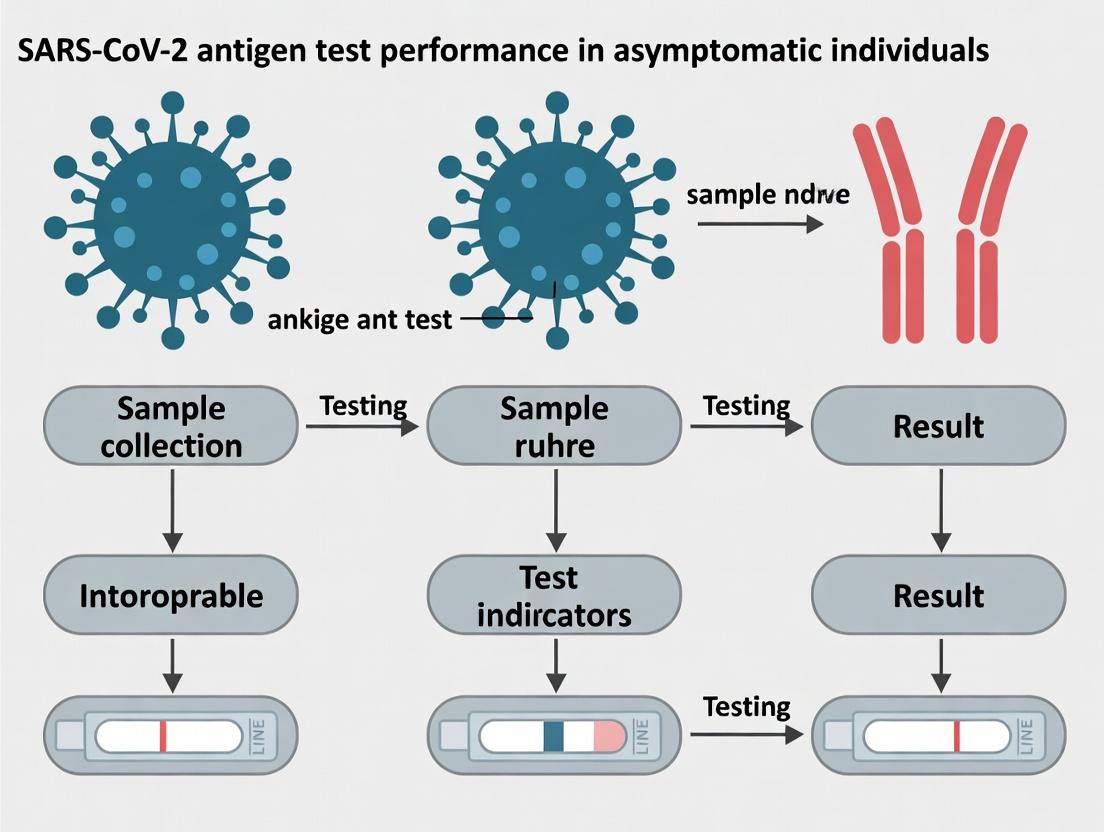
This article provides a comprehensive review and analysis of SARS-CoV-2 rapid antigen test (RAT) performance in asymptomatic individuals, a critical area for public health and pharmaceutical strategy.
Analyzing SARS-CoV-2 Antigen Test Performance in Asymptomatic Populations: A Critical Review for Researchers and Drug Developers
Abstract
This article provides a comprehensive review and analysis of SARS-CoV-2 rapid antigen test (RAT) performance in asymptomatic individuals, a critical area for public health and pharmaceutical strategy. We explore the foundational virological and immunological principles explaining variable RAT sensitivity in the absence of symptoms. Methodologically, we detail best practices for designing and executing studies to evaluate RATs in asymptomatic cohorts. We address common challenges, limitations, and optimization strategies for test deployment in screening contexts. Finally, we compare RAT performance against gold-standard RT-PCR and emerging molecular assays, validating their role in different transmission scenarios. This synthesis aims to inform researchers, clinical trial designers, and drug development professionals on the utility and limitations of antigen testing for asymptomatic SARS-CoV-2 detection.
The Science Behind the Silence: Why Antigen Test Sensitivity Varies in Asymptomatic SARS-CoV-2 Infection
Within the specific context of evaluating SARS-CoV-2 rapid antigen test (RAT) performance in asymptomatic populations, precisely defining the "asymptomatic carrier" is a fundamental prerequisite. This guide deconstructs this definition through the core virological parameters of viral load and shedding dynamics, which directly inform test sensitivity thresholds and the likelihood of false-negative results.
Virological Load in Asymptomatic Infection
Viral load, typically quantified as genomic RNA copies per mL of respiratory specimen, is the primary determinant of RAT positivity, as these tests detect viral nucleocapsid protein. Asymptomatic individuals exhibit a broad range of viral loads that overlap significantly with symptomatic cases, though the peak magnitude and duration may differ.
Table 1: Summary of Viral Load Metrics in Asymptomatic SARS-CoV-2 Carriers
| Metric | Typical Range (Nasopharyngeal/Saliva) | Key Implications for Antigen Testing |
|---|---|---|
| Peak Viral Load | 10^4 – 10^10 RNA copies/mL | Loads >10^5-10^6 copies/mL generally correlate with RAT positivity. Asymptomatic peaks can equal symptomatic. |
| Time to Peak | 2-5 days post-exposure | Pre-peak phase is a high-risk period for false-negative RATs due to sub-detection threshold protein levels. |
| Viable Virus Shedding | Up to ~10 days post-positive PCR; correlates with RNA loads >10^6 copies/mL | Defines the period of transmissibility. RAT positivity is a pragmatic, though imperfect, proxy for infectiousness. |
| Clearance Kinetics | Median time to PCR clearance: 14-21 days (slower in some variants) | RATs typically revert to negative before PCR, as they detect assembled virions/protein, not residual RNA. |
Shedding Dynamics and Kinetics
Shedding dynamics refer to the temporal pattern of virus release. Understanding this trajectory is critical for determining the optimal testing frequency to catch asymptomatic infections.
Experimental Protocol 1: Longitudinal Cohort Study for Shedding Kinetics
- Objective: To characterize the daily viral RNA and antigen load trajectory in asymptomatic, PCR-positive individuals.
- Methodology:
- Cohort Enrolment: Identify asymptomatic individuals via routine surveillance PCR testing. Confirm absence of symptoms for the full study duration.
- Sample Collection: Daily self-collected anterior nasal or saliva samples for 21 days post-enrollment. Use standardized collection kits.
- Virological Assays:
- qRT-PCR: Quantify viral RNA (copies/mL) using assays targeting N and ORF1ab genes.
- RAT Testing: Perform a standardized RAT on the same sample. Record qualitative result and, if available, reader-generated optical intensity.
- Viral Culture: Attempt virus isolation on Vero E6/TMPRSS2 cells from samples with RNA load >10^5 copies/mL to correlate with infectiousness.
- Data Analysis: Model viral load over time using growth decay curves. Align RAT positivity rates and signal intensity with RNA copy number bins.
Diagram Title: Longitudinal Study Workflow for Shedding Kinetics
Implications for Antigen Test Performance
The relationship between RNA copy number and RAT sensitivity is non-linear. The "antigen detection threshold" is a crucial concept.
Table 2: Antigen Test Performance by Viral Load Bracket in Asymptomatic Individuals
| Viral Load (RNA copies/mL) | Approximate RAT Sensitivity | Probability of Infectious Virus (Culture Positivity) | Clinical/Public Health Implication |
|---|---|---|---|
| < 10^4 | Very Low (<20%) | Very Low | Unlikely to be detected by RAT; minimal transmission risk. |
| 10^4 – 10^5 | Low to Moderate (20-60%) | Low | High risk of false-negative RAT; transmission possible but less likely. |
| 10^5 – 10^7 | High (80-95%) | High | RAT is reliable; primary target for detection to interrupt transmission. |
| > 10^7 | Very High (>98%) | Very High | RAT reliably positive; individual is highly infectious. |
Experimental Protocol 2: Determining the Limit of Detection (LOD) Correlation
- Objective: To establish the quantitative relationship between RNA copy number and antigen test line signal intensity.
- Methodology:
- Sample Preparation: Create serial dilutions of inactivated SARS-CoV-2 virus or recombinant nucleocapsid protein in negative respiratory matrix.
- Parallel Testing: Test each dilution in triplicate with:
- A quantitative RAT reader device measuring test line intensity (T/C ratio).
- qRT-PCR for exact RNA copy number.
- Data Fitting: Plot RAT signal intensity against log10 RNA concentration. Fit a 4-parameter logistic curve to determine the LOD (typically the concentration at which 95% of tests are positive) and the dynamic range.
Diagram Title: Experimental Protocol for RAT LOD Correlation
The Scientist's Toolkit: Key Research Reagent Solutions
Table 3: Essential Materials for Asymptomatic Carrier Virology Research
| Item | Function & Rationale |
|---|---|
| SARS-CoV-2 Nucleocapsid Protein (Recombinant) | Positive control for RAT development and calibration; essential for establishing standard curves. |
| Inactivated SARS-CoV-2 Virus (Whole Virion) | Provides a more authentic matrix for LOD studies compared to protein alone, preserving conformational epitopes. |
| Artificial Saliva/Nasal Matrix (Neg.) | Negative sample matrix for spiking studies, ensuring dilution series mimic real-world sample composition. |
| Vero E6/TMPRSS2 Cell Line | Gold-standard for viral culture to assess infectious virus shedding, correlating RNA load and antigen presence with infectivity. |
| Standardized qRT-PCR Assay (e.g., CDC N1/N2) | Provides reproducible viral RNA quantification across studies, enabling direct comparison of viral load data. |
| Quantitative RAT Reader Device | Transforms qualitative lateral flow results into continuous data (T/C ratio), enabling precise correlation studies with viral load. |
| Anterior Nasal/Saliva Collection Kit | Standardizes sample acquisition for longitudinal studies, minimizing pre-analytical variability in viral recovery. |
This technical guide provides an in-depth analysis of the core factors determining the sensitivity of Rapid Antigen Tests (RATs) for SARS-CoV-2. Framed within the critical context of evaluating test performance in asymptomatic individuals, this whitepaper examines the interplay between viral load kinetics, antigen concentration dynamics, and the impact of viral variant evolution on antigen-antibody binding affinity. Accurate detection in asymptomatic populations, where viral loads may be lower or peak earlier, presents a significant challenge for public health surveillance and individual decision-making.
Viral Load Dynamics in Symptomatic vs. Asymptomatic Infection
The fundamental determinant of RAT sensitivity is the correlation between detectable nucleocapsid (N) antigen and viral RNA load, as measured by RT-PCR. Key studies in asymptomatic cohorts reveal distinct viral kinetics.
Table 1: Viral Load and Antigen Detection Kinetics
| Parameter | Symptomatic Individuals | Asymptomatic Individuals | Key Implications for RAT Sensitivity |
|---|---|---|---|
| Peak Viral Load (RNA copies/swab) | ~10⁸ - 10¹¹ | ~10⁷ - 10¹⁰ | Lower peak load reduces antigen concentration. |
| Time to Peak Viral Load | ~3-5 days post-exposure | Often earlier (~1-3 days) | Narrower window for optimal detection. |
| Duration of High Viral Load | Longer plateau | Shorter duration | Reduced probability of testing during high-antigen phase. |
| Average Viral Shedding Duration | 10-14 days | Often 7-10 days | Shorter infectious period complicates testing schedules. |
| Estimated Probability of RAT Positivity at Peak | 90-99% | 70-90% | Higher false-negative risk in asymptomatic cases. |
Experimental Protocol for Correlating Viral Load and RAT Positivity
Objective: To establish the quantitative relationship between RT-PCR cycle threshold (Ct) values and lateral flow assay (LFA) signal intensity in clinical samples. Methodology:
- Sample Collection: Serial nasopharyngeal swabs are collected from a cohort of SARS-CoV-2 infected individuals (stratified by symptom status).
- RT-PCR Quantification: RNA is extracted and quantified using a validated assay (e.g., targeting N and E genes). Ct values are recorded.
- RAT Analysis: Aliquots of viral transport media from the same swab are applied to multiple commercial RAT devices.
- Signal Quantification: Test line (T-line) intensity is measured using a calibrated lateral flow reader, providing a normalized optical density (OD) unit.
- Data Modeling: A logistic regression model is fitted to correlate Ct value (independent variable) with the probability of a visual positive RAT result (dependent variable). The Ct value at which 95% of tests are positive (Ct₉₅) is calculated as a key performance metric. Key Output: A standardized curve defining the functional sensitivity (limit of detection) for each RAT in clinical samples, critical for interpreting test results in low-viral-load asymptomatic scenarios.
Antigen Concentration and Test Line Kinetics
RATs are immunochromatographic assays where colloidal gold- or latex-labeled antibodies bind to target antigen (primarily the N protein), forming a complex captured at the test line by a second, fixed antibody.
Diagram 1: Lateral Flow Assay Workflow and Key Determinants
Key Determinant: The visual intensity of the test line is a direct function of the number of captured antigen-antibody complexes, which is proportional to the antigen concentration in the sample. Below a critical threshold concentration, insufficient complexes form to generate a visible line, resulting in a false negative. This threshold is the assay's Limit of Detection (LoD), typically expressed as TCID₅₀/mL or RNA copies/mL.
Table 2: Comparative LoD of Selected RATs and Impact on Asymptomatic Detection
| RAT Manufacturer (Example) | Reported LoD (TCID₅₀/mL) | Equivalent Ct Range (Approx.) | Estimated Probability of Detection in Asymptomatic Infection* |
|---|---|---|---|
| Test A (High Sensitivity) | 1.0 x 10² | ≤ 30 | High (≥85%) |
| Test B (Medium Sensitivity) | 5.0 x 10² | ≤ 27-28 | Moderate (70-80%) |
| Test C (Lower Sensitivity) | 2.5 x 10³ | ≤ 24-25 | Low (<60%) |
- Estimate based on modeled viral load distributions in asymptomatic populations.
Impact of Variant Evolution on Antibody Binding
Mutations in the SARS-CoV-2 N protein can alter the epitopes recognized by monoclonal antibodies used in RATs, potentially reducing binding affinity and test sensitivity.
Experimental Protocol for Evaluating Variant Impact
Objective: To assess the effect of N protein mutations on the analytic sensitivity of RAT antibody pairs. Methodology:
- Recombinant Antigen Production: Wild-type (WT) and variant N proteins (e.g., containing mutations from Omicron BA.5, BA.2.86, JN.1 lineages) are expressed and purified.
- Surface Plasmon Resonance (SPR) or BLI: The capture antibody (immobilized) is exposed to a concentration series of WT and variant N proteins. Binding kinetics (association rate
k_on, dissociation ratek_off) and affinity (KD = k_off / k_on) are measured. - Lateral Flow Strip Testing: Lateral flow strips are assembled using the standard antibody pair. Serial dilutions of WT and variant N proteins are applied.
- Signal Quantification: T-line intensity is read with a lateral flow reader. The LoD for each variant protein is determined and compared to the WT LoD.
- Pseudovirus/Virus Culture Testing: Live virus isolates or pseudotyped viruses representing variants are serially diluted and tested on commercial RAT devices to confirm findings in a complex matrix.
Diagram 2: Variant Impact on RAT Sensitivity Logic
Table 3: Impact of Selected N Protein Mutations on RAT Antibody Binding
| Variant Lineage | Key N Protein Mutations | Observed Impact on RAT Sensitivity (vs. Wild-Type) | Proposed Mechanism |
|---|---|---|---|
| Omicron BA.5 | P151S, R203K, G204R | Minimal to none | Mutations outside critical epitopes. |
| Omicron BA.2.86 | S413R | Moderate reduction in some tests | S413R may affect a common linear epitope. |
| JN.1 | L445S | Under evaluation; potential mild reduction | Mutation near C-terminal domain; impact depends on antibody epitope map. |
The Scientist's Toolkit: Research Reagent Solutions
Table 4: Essential Research Reagents for RAT Performance Evaluation
| Reagent/Material | Function in Research & Development | Key Provider Examples |
|---|---|---|
| Recombinant SARS-CoV-2 Nucleocapsid (N) Protein (Wild-type & Variants) | Gold standard for analytical sensitivity (LoD) testing and calibrating assay response. Used in epitope mapping and binding studies. | Sino Biological, AcroBiosystems, Thermo Fisher Scientific |
| Inactivated SARS-CoV-2 Virus (Multiple Variants) | Provides a complex, authentic matrix for clinical correlation studies and variant cross-reactivity assessments. | BEI Resources, ATCC, The Native Antigen Company |
| Monoclonal Anti-N Antibodies (Paired & Unconjugated) | Critical for developing and optimizing lateral flow strips. Used as capture and detection lines. Evaluating pairs for sensitivity/variant robustness. | Abcam, GeneTex, Creative Diagnostics, in-house hybridomas |
| Clinical Specimen Panels (Well-characterized) | Archived or prospective nasopharyngeal/swab samples with linked RT-PCR Ct values and symptom data. Essential for clinical validation, especially in asymptomatic cohorts. | Commercial biobanks, collaborative clinical networks |
| Lateral Flow Reader (Quantitative) | Objectively measures test and control line intensity, enabling precise LoD determination, kinetics studies, and digital result interpretation. | Qiagen ESE, Axxin, BioDot |
| Surface Plasmon Resonance (SPR) System | Determines real-time binding kinetics (k_on, k_off, KD) between N protein variants and RAT antibodies, quantifying variant impact. |
Cytiva (Biacore), Sartorius (Octet) |
The Host Immune Response in Asymptomatic Infection and Implications for Antigen Detection
This whitepaper, framed within a broader thesis on SARS-CoV-2 antigen test performance in asymptomatic individuals, explores the immunological underpinnings of asymptomatic infection. The failure to mount a robust or appropriately timed inflammatory response, coupled with rapid and effective adaptive immune activation, creates a unique environment where viral replication is controlled but antigen production may be transient and below the detection limits of many point-of-care tests.
Immunological Dynamics of Asymptomatic SARS-CoV-2 Infection
Innate Immune Response and Viral Control
In asymptomatic individuals, the innate immune system demonstrates a finely balanced response. Pattern recognition receptors (PRRs) like RIG-I and MDA5 detect viral RNA, leading to a controlled interferon (IFN) response. This early type I and III IFN signaling is sufficient to limit viral replication in upper respiratory tissues without triggering a massive inflammatory cascade.
Table 1: Key Immune Marker Differences Between Asymptomatic and Symptomatic Infection
| Immune Parameter | Asymptomatic Profile | Symptomatic Profile | Implication for Antigen Load |
|---|---|---|---|
| Type I IFN (e.g., IFN-α/β) | Early, localized, moderate peak | Delayed, systemic, often blunted or excessive | Early control reduces peak viral replication. |
| Pro-inflammatory Cytokines (IL-6, TNF-α) | Low to undetectable | Significantly elevated | Minimal tissue damage; lower antigen release from cells. |
| SARS-CoV-2-specific IgG/IgA | Rapid seroconversion, high avidity | Variable timing, may be delayed | Efficient clearance may shorten window of antigen presence. |
| Nasal Viral RNA (by PCR) | Similar initial peak, rapid decline | Sustained high levels | Antigen correlates with replicating virus, not RNA debris. |
| T-cell Response (IFN-γ) | Potent and early virus-specific CD8+ T-cells | May be excessive or dysregulated | Cytotoxic T-cells clear infected cells, terminating antigen production. |
Adaptive Immune Correlates of Protection
Asymptomatic individuals often exhibit pre-existing cross-reactive T-cells from common cold coronaviruses and mount a swift, tissue-resident memory T-cell and IgA-dominant B-cell response in the nasopharynx. This mucosal immunity contains the virus before it causes systemic symptoms or widespread lower respiratory infection.
Implications for Antigen Detection: The Sensitivity Challenge
The very efficacy of the immune response in asymptomatic individuals creates the central challenge for antigen testing:
- Lower Peak Viral Load: Controlled replication leads to a lower peak viral load compared to symptomatic cases.
- Shorter Duration of Antigen Shedding: Rapid immune clearance reduces the time window during which nucleocapsid (N) antigen is present at detectable levels in nasal secretions.
- Antigen-Ig Complex Formation: Rapid IgA/IgG production may bind to viral antigens, potentially interfering with antibody-based detection in lateral flow assays.
Table 2: Antigen Test Performance Metrics in Asymptomatic Populations (Meta-Analysis Data)
| Study Cohort (Approx. N) | Antigen Test Brand/Type | Compared to RT-PCR | Estimated Sensitivity (Asx) | Estimated Specificity | Key Finding |
|---|---|---|---|---|---|
| University Screening (5000) | Lateral Flow Assay A | Cycle Threshold (Ct) < 30 | 35.2% | 99.8% | Sensitivity dropped to <10% for Ct > 30. |
| Workplace Screening (3200) | Lateral Flow Assay B | Symptomatic vs. Asx | 41.0% (Asx) vs. 78.5% (Sx) | 99.5% | Viral load was the primary driver of sensitivity. |
| Community Survey (2200) | Automated Immunoassay C | Serial Testing | 58.0% (on first test) | 99.7% | Serial testing every 3 days increased detection to 90%. |
Experimental Protocols for Investigating Asymptomatic Immunity
Protocol: Multiplexed Cytokine & Chemokine Profiling from Nasal Lavage
Purpose: To quantify the localized innate immune signature without systemic bias.
- Sample Collection: Perform nasal lavage with 5mL sterile saline. Centrifuge at 500xg for 10min to separate cells from supernatant. Aliquot and store at -80°C.
- Analysis: Use a validated 48-plex Luminex magnetic bead panel (e.g., MilliporeSigma).
- Procedure: Thaw samples on ice. Filter supernatant through a 0.22µm membrane. Load 25µL of sample/standard/control per well. Follow manufacturer's protocol. Acquire data on a Luminex MAGPIX system.
- Data Normalization: Normalize analyte concentrations to total protein content (via BCA assay) of each lavage sample.
Protocol: Intracellular Cytokine Staining for SARS-CoV-2-specific T-cells
Purpose: To measure functional virus-specific CD4+ and CD8+ T-cell responses.
- PBMC Isolation: Isolate Peripheral Blood Mononuclear Cells (PBMCs) from fresh blood via density gradient centrifugation (Ficoll-Paque).
- Stimulation: Resuspend 1x10^6 PBMCs in RPMI-1640+10% FBS. Stimulate with overlapping peptide pools spanning SARS-CoV-2 Spike and Nucleocapsid proteins (1µg/mL per peptide) for 6 hours in the presence of Brefeldin A/GolgiStop.
- Staining: Surface stain with anti-CD3, CD4, CD8 antibodies. Permeabilize (Cytofix/Cytoperm kit), then intracellular stain with anti-IFN-γ, IL-2, TNF-α.
- Acquisition & Analysis: Acquire on a flow cytometer (e.g., BD Fortessa). Analyze frequency of cytokine-positive T-cells using FlowJo software, subtracting background from unstimulated controls.
Protocol: In Vitro Modeling of Antigen-Antibody Interference
Purpose: To test if early secretory IgA interferes with antigen detection in lateral flow assays.
- Reagent Prep: Purify recombinant SARS-CoV-2 N protein. Isolate secretory IgA (sIgA) from saliva of convalescent individuals using peptide M affinity chromatography.
- Complex Formation: Incubate a known concentration of N protein (e.g., 50 pg/mL) with a molar excess of sIgA for 1 hour at 37°C.
- Antigen Test Challenge: Spike the pre-formed complexes into antigen test extraction buffer. Run the mixture on a commercial lateral flow test cassette according to instructions.
- Control: Run N protein alone at the same concentration.
- Readout: Use a quantitative lateral flow reader to measure test line intensity. Compare signal from complexes vs. antigen alone.
Diagram 1: Immune Control Reduces Antigen Detection Window
Diagram 2: Core Experimental Workflow for Sensitivity Studies
The Scientist's Toolkit: Key Research Reagent Solutions
Table 3: Essential Reagents for Investigating Asymptomatic Immunity & Antigen Detection
| Item / Reagent Solution | Function & Application | Example Vendor(s) |
|---|---|---|
| SARS-CoV-2 Nucleocapsid (N) & Spike (S) Recombinant Proteins | Positive controls for assay development; antigen interference studies. | Sino Biological, RayBiotech |
| Overlapping Peptide Pools (Megapools) | Stimulation of T-cells for intracellular cytokine staining or ELISpot. | JPT Peptide Technologies, Miltenyi Biotec |
| High-Sensitivity Multiplex Cytokine Panels (Luminex/MSD) | Quantifying nuanced cytokine differences in asymptomatic vs. symptomatic mucosal samples. | MilliporeSigma, Meso Scale Discovery |
| Virus Neutralization Assay Kits (Pseudovirus/Live Virus) | Measuring functional antibody responses in serum and mucosal secretions. | InvivoGen, BEI Resources |
| Quantitative Lateral Flow Readers | Objective, quantitative measurement of test line intensity for sensitivity threshold studies. | Qiagen ESE, Axxin |
| Mucosal Sampling Kits (Saliva, Nasal Lavage) | Standardized collection of samples for localized immune profiling. | Oasis Diagnostics, Puritan |
| Cross-Reactive Coronavirus Antigen Microarrays | Profiling pre-existing antibody landscapes that may confer protection. | CoVAM, ViraChip |
The host immune response in asymptomatic SARS-CoV-2 infection is characterized by early, localized, and effective antiviral defense. This immunologic efficiency is the primary driver of the reduced sensitivity of antigen tests in this population, due to lower peak antigen concentrations and a shortened shedding duration. Improving detection requires tests with lower limits of detection, serial testing strategies, and consideration of antigen-antibody complex interference. Future research must focus on correlating precise immune kinetics with quantitative antigen dynamics to define the true detectable window.
This document, framed within a broader thesis on SARS-CoV-2 antigen test performance in asymptomatic individuals, outlines the critical epidemiological rationale for screening populations without symptoms. The high proportion of infections that are asymptomatic or pre-symptomatic, combined with the significant viral shedding during these phases, creates a substantial reservoir for silent transmission. This whitepaper synthesizes current data on prevalence and transmission risk, providing the scientific foundation for asymptomatic screening as a key public health intervention.
Epidemiological Data on Asymptomatic Infection
Recent studies estimate that a significant proportion of SARS-CoV-2 infections do not result in overt symptoms. The table below summarizes key quantitative findings from meta-analyses and large-scale studies.
Table 1: Estimated Proportion of Asymptomatic SARS-CoV-2 Infections
| Study / Meta-Analysis (Year) | Population / Setting | Estimated Asymptomatic Proportion (95% CI) | Key Notes |
|---|---|---|---|
| Ma et al. Systematic Review (2021) | General Population & Varied Cohorts | 40.5% (33.5%–47.5%) | Included data prior to widespread Delta/Omicron variants. |
| Oran & Topol Scoping Review (2021) | Multiple Cohorts (Global) | 40%–45% | Highlighted challenges in true asymptomatic vs. pre-symptomatic distinction. |
| UK Office for National Statistics (2023) | Community-based Random Sampling (UK) | ~1 in 3 infections | Real-time data reflecting Omicron-era prevalence in a surveilled population. |
| Alene et al. Meta-Analysis (2024) | Global, Post-2022 Studies | 35.1% (29.8%–40.4%) | Focus on later pandemic stages, includes Omicron sub-lineages. |
Transmission Risk from Asymptomatic Carriers
The viral load kinetics and transmission potential of asymptomatic individuals are central to the screening rationale. Critical findings are summarized below.
Table 2: Transmission Risk Parameters from Asymptomatic Individuals
| Parameter | Estimated Value / Finding | Source / Study Type | Implication for Screening |
|---|---|---|---|
| Peak Viral Load (Nasal) | Comparable to symptomatic cases, often occurs just before or at symptom onset. | Longitudinal PCR studies (e.g., Kissler et al., 2021) | Asymptomatic carriers are virologically competent for transmission. |
| Duration of Shedding | May be shorter than symptomatic cases, but significant (median ~9-10 days). | Virologic monitoring studies | Defines necessary frequency for repeated screening. |
| Secondary Attack Rate | ~0.7–2.5x lower than from symptomatic index cases, but non-zero. | Household transmission studies (Madewell et al., 2022) | Silent transmission contributes substantially to community spread. |
| Relative Transmission Risk (Overall) | Estimated to account for ≥24% of all transmission events. | Modeling studies (Johansson et al., 2021) | Quantifies the population-level impact of asymptomatic spread. |
Core Experimental Protocols for Asymptomatic Study
Understanding these epidemiological parameters relies on specific, rigorous experimental methodologies.
Protocol for Longitudinal Viral Shedding Dynamics
Objective: To characterize the viral load trajectory and duration of shedding in asymptomatic, pre-symptomatic, and symptomatic individuals.
- Cohort Enrollment: Recruit PCR-confirmed individuals through contact tracing or community screening. Stratify into asymptomatic (no symptoms throughout), pre-symptomatic (test-positive prior to symptom onset), and symptomatic groups.
- Sample Collection: Obtain anterior nasal and/or oropharyngeal swabs daily for a minimum of 14 days post-diagnosis. Use standardized swabs and viral transport media.
- Virologic Assay: Quantify viral RNA via reverse-transcription quantitative PCR (RT-qPCR) using assays targeting at least two SARS-CoV-2 genes (e.g., N and E). Report results in cycle threshold (Ct) values and convert to log10 viral copies/mL using a standard curve.
- Infectivity Correlation: On a subset of samples, perform viral culture in Vero E6 or Vero E6-TMPRSS2 cells to determine the presence of replication-competent virus. Correlate culture positivity with Ct value and day post-detection.
- Data Analysis: Model viral load kinetics using generalized additive mixed models (GAMMs). Compare peak viral load, time to peak, and rate of decay between groups.
Protocol for Estimating Secondary Attack Rates (SAR)
Objective: To measure the probability of transmission from asymptomatic index cases to close contacts.
- Index Case Identification: Identify index cases through systematic asymptomatic screening programs (e.g., workplace, school serial testing).
- Contact Tracing & Enrollment: Enumerate all close contacts (defined as <6 feet for ≥15 minutes over 24 hours) of the asymptomatic index case. Enroll consenting contacts into the study.
- Prospective Follow-up: Test all enrolled contacts via RT-qPCR at baseline (day 0), day 3-5, and day 7-10 post-exposure, regardless of symptom status. Monitor for symptoms daily.
- Genomic Confirmation: Where possible, perform whole-genome sequencing on virus from index and infected contacts to confirm transmission linkage (<2 nucleotide differences).
- SAR Calculation: Calculate the SAR as the number of infected contacts (PCR-confirmed) divided by the total number of tested contacts. Compare SAR from asymptomatic indices to SAR from symptomatic indices in a parallel cohort.
Logical Framework for Asymptomatic Screening Impact
The rationale for screening is based on a causal pathway from identification to reduced transmission.
Diagram 1: Logic model for screening impact.
SARS-CoV-2 Antigen Test Performance Protocol
This core protocol underpins the thesis context on test performance in asymptomatic populations.
Objective: To evaluate the clinical sensitivity and specificity of a rapid antigen test (RAT) against RT-qPCR in an asymptomatic cohort.
- Study Population: Recruit a large, representative sample of individuals without any symptoms suggestive of COVID-19 at the time of enrollment. Document any subsequent symptom development.
- Paired Sampling: For each participant, collect two anterior nasal swabs sequentially:
- Swab 1 (for RAT): Process immediately on-site per manufacturer's instructions. Result read at designated time (e.g., 15 minutes) by trained staff blinded to PCR result.
- Swab 2 (for RT-qPCR): Placed in viral transport media, stored at 4°C, and processed in a central lab within 24 hours.
- Reference Standard (RT-qPCR): Perform RNA extraction and RT-qPCR using a high-sensitivity, FDA-emergency use authorized assay. Report Ct values. Define "PCR-positive" as detection of two targets.
- Stratified Analysis: Analyze RAT sensitivity stratified by PCR viral load (e.g., Ct <25, 25-30, >30). Calculate specificity against PCR-negative samples.
- Statistical Analysis: Calculate sensitivity, specificity, and 95% confidence intervals (Wilson score method). Use a non-inferiority design if comparing to a previously authorized test.
Diagram 2: Asymptomatic antigen test evaluation workflow.
The Scientist's Toolkit: Research Reagent Solutions
Table 3: Essential Reagents and Materials for Asymptomatic Transmission Research
| Item | Function / Application | Example / Specification |
|---|---|---|
| Viral Transport Media (VTM) | Stabilizes viral RNA and maintains viability for culture during transport of respiratory swabs. | Contains protein stabilizer (e.g., BSA), antibiotics, and antifungals in a balanced salt solution. |
| SARS-CoV-2 RT-qPCR Assay Kits | Gold-standard detection and quantification of viral RNA from extracted nucleic acids. | Multiplex assays targeting N, E, RdRp genes with internal controls (e.g., CDC 2019-nCoV, Charité protocol). |
| RNA Extraction Kits | Isolate high-purity viral RNA from VTM samples for downstream molecular analysis. | Magnetic bead-based kits (e.g., from Qiagen, Thermo Fisher) compatible with automation. |
| Rapid Antigen Test Kits | Point-of-care detection of SARS-CoV-2 nucleocapsid protein for screening studies. | Lateral flow immunoassays with FDA EUA for asymptomatic testing (e.g., BinaxNOW, iHealth). |
| Vero E6-TMPRSS2 Cell Line | Cell culture system for isolating replication-competent SARS-CoV-2 from clinical specimens. | Stably expresses the TMPRSS2 protease, enhancing viral entry and cytopathic effect readout. |
| Next-Generation Sequencing (NGS) Library Prep Kits | For whole-genome sequencing to confirm transmission links and identify variants. | Amplicon-based (e.g., ARTIC network protocol) or hybrid-capture methods. |
| Pseudotyped Virus Systems | Safe, BSL-2 surrogate for measuring neutralizing antibody responses in serum from contacts. | Lentiviral or VSV particles expressing SARS-CoV-2 Spike protein and a reporter gene (e.g., luciferase). |
Best Practices for Evaluating Antigen Tests in Asymptomatic Cohorts: Study Design and Real-World Application
Within the critical evaluation of SARS-CoV-2 antigen test performance in asymptomatic populations, the robustness of the clinical study design is paramount. This technical guide details the core methodological pillars—cohort selection, sampling frequency, and reference standard application—required to generate reliable, actionable data for public health and regulatory decision-making.
Cohort Selection: Defining the Asymptomatic Population
Accurate identification and recruitment of a truly asymptomatic cohort is the foundational challenge. Key considerations include pre-enrollment screening, longitudinal monitoring for symptom onset, and stratification by potential confounding variables.
Table 1: Essential Stratification Variables for Asymptomatic Cohort Selection
| Stratification Variable | Categories / Range | Rationale for Inclusion |
|---|---|---|
| Vaccination Status | Naïve, Primary Series, Boosted (with dates) | Impacts viral kinetics and potential viral load. |
| Variant Exposure | Dominant variant at time of study (e.g., Omicron BA.5, XBB) | Different variants may have different shedding patterns. |
| Age | 18-39, 40-64, 65+ | Immune response and viral dynamics vary with age. |
| High-Risk Exposure | Documented (e.g., household contact), Suspected, None | Influences pre-test probability of infection. |
Experimental Protocol for Cohort Ascertainment:
- Pre-Screening: Potential participants complete a daily symptom diary for 7 days prior to enrollment. Only those reporting no FDA/CDC-defined COVID-19 symptoms qualify.
- Baseline Confirmation: On Day 0, participants undergo a confirmatory molecular test (e.g., RT-PCR) to establish baseline infection status.
- Longitudinal Monitoring: Enrolled participants continue daily symptom tracking for the study duration (e.g., 14 days). Any participant developing symptoms is noted, and their data may be analyzed separately or censored from the primary asymptomatic analysis.
- Ancillary Data Collection: Serial nasopharyngeal swabs for viral culture or quantitative PCR (qPCR) are collected to correlate antigen test results with viable virus and cycle threshold (Ct) values.
Sampling Frequency: Capturing the Infection Window
Optimal sampling frequency is dictated by the goal of capturing the entire dynamic infection curve in asymptomatic individuals, from incubation to clearance.
Table 2: Example Sampling Regimens for Longitudinal Asymptomatic Studies
| Study Objective | Recommended Frequency | Total Duration | Key Measurement |
|---|---|---|---|
| Determine Clinical Sensitivity | Daily | 10-14 days | Antigen test result vs. RT-PCR at each time point. |
| Define Window of Detectability | Twice Daily (AM/PM) | Until 2 consecutive negative PCR results | Time from first positive PCR to first negative antigen. |
| Associate with Culturable Virus | Every 48 Hours | Until culture-negative | Antigen positivity vs. viral culture outcome. |
Experimental Protocol for Serial Sampling:
- Schedule: Participants self-collect anterior nasal swabs for antigen testing daily and perform observer-collected nasopharyngeal swabs for RT-PCR at pre-specified intervals (e.g., every 48 hours).
- Blinding: Antigen test results are read by the participant and recorded via a study app, but confirmatory PCR results are blinded to avoid influencing behavior.
- Adherence: Use digital reminders and confirm sample collection via timestamped photos or video observation for a subset.
Reference Standards: Beyond Single-Timepoint PCR
A single positive PCR test is an imperfect reference. A robust standard incorporates serial molecular testing and, where possible, viral culture.
Table 3: Hierarchical Reference Standards for Asymptomatic Studies
| Reference Standard Tier | Definition | Advantage |
|---|---|---|
| Tier 1: Gold Standard | Positive viral culture from a sample taken within 24h of antigen test. | Confirms presence of replication-competent virus; highest clinical relevance. |
| Tier 2: Enhanced Molecular | Two consecutive positive RT-PCR tests (Ct < 35) taken 24-48h apart. | Reduces false positives from residual RNA; confirms active infection. |
| Tier 3: Basic Molecular | A single positive RT-PCR test (any Ct value). | Standard in many early studies; may overestimate antigen test sensitivity. |
Experimental Protocol for Viral Culture (Tier 1 Reference):
- Sample Collection: Transport media from RT-PCR nasopharyngeal swabs is aliquoted under BSL-2+ conditions within 6 hours of collection.
- Cell Line Inoculation: Inoculate Vero E6 or Vero E6-TMPRSS2 cells with the sample aliquot. Include positive (SARS-CoV-2 stock) and negative (media only) controls.
- Observation & Harvest: Monitor cells daily for cytopathic effect (CPE) for 5-7 days. If CPE is observed, confirm SARS-CoV-2 presence by RT-PCR or immunofluorescence. Alternatively, perform blind passages.
- Linking to Antigen Test: Culture result is paired with the antigen test performed on the swab taken concurrently with the PCR swab.
Visualizing Study Design & Viral Kinetics
Diagram 1: Asymptomatic Study Participant Flow
Diagram 2: Antigen Detectability vs. Infection Timeline
The Scientist's Toolkit: Research Reagent Solutions
Table 4: Essential Materials for Asymptomatic Antigen Test Studies
| Item | Example Product / Type | Function in Study |
|---|---|---|
| Molecular Standard | FDA-approved RT-PCR assay (e.g., CDC 2019-nCoV RT-PCR) | Provides definitive molecular diagnosis; used for enrollment and reference comparisons. |
| Quantitative PCR Assay | Droplet Digital PCR (ddPCR) or qPCR with synthetic standard curve | Precisely quantifies viral RNA load (copies/mL); correlates with antigen test positivity. |
| Viral Culture System | Vero E6-TMPRSS2 cells | Determines presence of replication-competent virus as a high-value reference standard. |
| Biobanking Solution | DNA/RNA Shield or compatible transport media | Stabilizes nucleic acids for batch PCR analysis from serial samples. |
| Lateral Flow Reader | Automated reflectance reader | Provides objective, quantitative measurement of antigen test band intensity; reduces user interpretation bias. |
| Clinical Data Hub | HIPAA-compliant EDC (Electronic Data Capture) system | Manages symptom diaries, test results, and sample tracking; ensures data integrity and audit trail. |
| Specimen Collection Kit | Paired swabs (NP for PCR, anterior nasal for antigen) | Standardizes sample collection across multiple time points and participants. |
This technical guide examines the critical interpretation of diagnostic accuracy metrics—sensitivity, specificity, and predictive values—within low-prevalence contexts, specifically framing the discussion within ongoing SARS-CoV-2 antigen test performance research in asymptomatic populations. As prevalence decreases, the positive predictive value (PPV) of even highly specific tests diminishes rapidly, a fundamental concept with major implications for screening strategies and public health policy.
Foundational Metrics and Definitions
Sensitivity (True Positive Rate): The probability that a test correctly identifies a diseased individual (e.g., an asymptomatic person infected with SARS-CoV-2). [ \text{Sensitivity} = \frac{TP}{TP + FN} ]
Specificity (True Negative Rate): The probability that a test correctly identifies a non-diseased individual. [ \text{Specificity} = \frac{TN}{TN + FP} ]
Positive Predictive Value (PPV): The probability that an individual with a positive test result is truly diseased. [ PPV = \frac{TP}{TP + FP} = \frac{\text{Sensitivity} \times \text{Prevalence}}{(\text{Sensitivity} \times \text{Prevalence}) + ((1 - \text{Specificity}) \times (1 - \text{Prevalence}))} ]
Negative Predictive Value (NPV): The probability that an individual with a negative test result is truly non-diseased. [ NPV = \frac{TN}{TN + FN} ]
The Prevalence Paradox in Asymptomatic SARS-CoV-2 Testing
In low-prevalence settings, such as asymptomatic community screening where prevalence may fall below 1%, the PPV becomes disproportionately low even for tests with excellent specificity. This results in a high number of false positives relative to true positives, undermining the utility of positive results.
Quantitative Impact of Prevalence
The following table illustrates the dramatic effect of prevalence on PPV for a hypothetical SARS-CoV-2 antigen test with 90% sensitivity and 98% specificity—typical of many authorized tests.
Table 1: Predictive Values Across Prevalence Levels
| Prevalence | PPV | NPV | False Positives per True Positive |
|---|---|---|---|
| 10.0% | 83.3% | 98.9% | 0.2 |
| 5.0% | 70.3% | 99.4% | 0.4 |
| 2.0% | 47.9% | 99.8% | 1.1 |
| 1.0% | 31.3% | 99.9% | 2.2 |
| 0.5% | 18.4% | ~100% | 4.4 |
| 0.1% | 4.3% | ~100% | 22.2 |
Calculation assumes sensitivity=0.90, specificity=0.98. Data synthesized from recent field evaluations.
Experimental Protocols for Performance Evaluation
Accurate estimation of metrics requires robust study design. The following protocols are essential for evaluating SARS-CoV-2 antigen tests in asymptomatic cohorts.
Protocol for Cross-Sectional Accuracy Study
Objective: To estimate sensitivity and specificity against a reverse transcription polymerase chain reaction (RT-PCR) reference standard.
- Participant Recruitment: Enroll a pre-specified number of asymptomatic individuals from a defined population (e.g., workplace, university). Sample size must be calculated to provide precise confidence intervals.
- Sample Collection: Collect matched nasopharyngeal or anterior nasal swabs from each participant.
- Index Test: Perform the antigen test according to manufacturer's instructions, blinded to the reference result.
- Reference Test: Process the matched swab for RT-PCR using a validated assay (e.g., targeting N1/N2 genes). Consider a cycle threshold (Ct) value threshold (e.g., Ct < 35) to define "infectious" status.
- Data Analysis: Construct a 2x2 contingency table. Calculate sensitivity, specificity, and their 95% confidence intervals (e.g., using Wilson score method).
Protocol for Prospective Longitudinal Studies
Objective: To assess the clinical and public health impact of testing, including NPV for "safety" assurances.
- Cohort Design: Enroll asymptomatic individuals, test them with the antigen test, and follow them for a period (e.g., 5-7 days).
- Outcome Measurement: All participants undergo serial RT-PCR testing daily or every other day, regardless of initial antigen result, to detect incident infections.
- Analysis: Calculate the proportion of initially antigen-negative individuals who subsequently test positive on RT-PCR (i.e., false negatives). This provides a real-world estimate of the NPV for preventing forward transmission.
Diagram 1: Cross-Sectional Accuracy Study Workflow
Visualizing the Relationship Between Prevalence and PPV
The mathematical relationship between prevalence, specificity, and PPV is non-linear and critical for interpretation.
Diagram 2: Low Prevalence Leads to Low PPV
The Scientist's Toolkit: Research Reagent Solutions
Table 2: Essential Materials for SARS-CoV-2 Antigen Test Evaluation
| Item | Function & Rationale |
|---|---|
| Viral Transport Media (VTM) | Preserves specimen integrity from collection to RNA extraction for RT-PCR reference testing. Must be compatible with both antigen and PCR assays. |
| SARS-CoV-2 Recombinant Nucleocapsid (N) Protein | Positive control for antigen test calibration and lot-validation. Essential for establishing test linearity and limit of detection (LoD). |
| Pseudovirus Particles (Lentivirus-based) | Non-infectious surrogate containing SARS-CoV-2 spike or N protein. Used in safety-controlled environments for challenge studies to determine analytical sensitivity. |
| Monoclonal Anti-SARS-CoV-2 Antibodies (Paired) | Capture and detection antibody pair specific to the N protein. Critical for developing in-house comparative immunoassays (e.g., Luminex) to benchmark commercial tests. |
| Synthetic SARS-CoV-2 RNA Transcripts | Quantified RNA controls for RT-PCR assay calibration, ensuring reference test accuracy and inter-laboratory standardization. |
| Human Negative Nasal Matrix | Validated negative clinical matrix from pre-pandemic samples. Serves as a diluent for spiking studies and a true negative control. |
Advanced Considerations: Bayesian Framework and Test Sequencing
The interpretation of a test result is inherently Bayesian—updating the pre-test probability (prevalence) with the test's likelihood ratios (LR). [ \text{Post-test Odds} = \text{Pre-test Odds} \times \text{Likelihood Ratio} ] Where:
- Positive LR (LR+) = Sensitivity / (1 - Specificity)
- Negative LR (LR-) = (1 - Sensitivity) / Specificity
In low-prevalence settings, a serial testing strategy (repeat antigen testing or confirm with a high-specificity PCR) can drastically improve PPV.
Table 3: Impact of Serial Testing on PPV (Initial Test: Sens=90%, Spec=98%; Confirmatory Test: Sens=99%, Spec=99.9%)
| Prevalence | PPV After Single Test | PPV After Positive Confirmatory Test |
|---|---|---|
| 1.0% | 31.3% | 98.1% |
| 0.5% | 18.4% | 96.6% |
| 0.1% | 4.3% | 90.0% |
For researchers evaluating SARS-CoV-2 antigen tests in asymptomatic individuals, a sole focus on sensitivity and specificity is insufficient. Performance must be contextualized within the expected prevalence, with explicit reporting of predictive values. Study designs must prioritize large sample sizes in low-prevalence cohorts to precisely estimate specificity, the key determinant of PPV in screening contexts. Public health recommendations based on antigen testing must integrate this prevalence-dependent framework to avoid the pitfalls of false reassurance or excessive unnecessary isolation.
This guide operationalizes protocols for asymptomatic SARS-CoV-2 screening within the critical research context of understanding antigen test performance in populations with low pre-test probability. The core challenge is that while antigen tests excel in symptomatic, high-viral-load individuals, their clinical sensitivity in asymptomatic cohorts is variable and highly dependent on viral load dynamics. Therefore, effective screening programs are not merely administrative tasks but are field experiments in epidemiology. They require rigorous protocols to generate reliable data on test performance, transmission interruption efficacy, and the impact of variables like vaccination status and variant prevalence.
Core Quantitative Data: Antigen Test Performance in Asymptomatic Individuals
The following tables synthesize key performance metrics from recent studies, essential for modeling screening program effectiveness.
Table 1: Performance Characteristics of Selected Antigen Tests in Asymptomatic Screening Studies
| Test Manufacturer/Name | Study Setting | Asymptomatic Sensitivity vs. RT-PCR (95% CI) | Specificity (95% CI) | Key Finding & Reference |
|---|---|---|---|---|
| BinaxNOW (Abbott) | University Serial Screening | 35.8% (27.7-44.0%) | 99.8% (99.7-99.9%) | Sensitivity rose to 64.2% for Ct ≤30. Low frequency screening misses infections. (Smith, 2021) |
| BD Veritor | Workplace Serial Screening | 41.2% (30.4-52.0%) | 99.9% (99.9-100%) | Serial testing twice weekly detected 88% of culturable virus cases. (Kriegel, 2022) |
| SD Biosensor Standard Q | Community Screening | 57.5% (49.0-65.9%) | 99.7% (99.5-99.9%) | Sensitivity was 80.2% in samples with high viral load (Ct <25). (Dinnes, 2022 Cochrane) |
| Innova (Lateral Flow) | Mass Community Screening (UK) | 40.0% (34.3-46.0%) | 99.9% (99.9-99.9%) | Lower sensitivity underscores need for frequent testing to be effective. (UK Department of Health) |
Table 2: Impact of Screening Frequency on Detection Probability
| Screening Frequency | Approximate Probability of Detecting an Infection* | Time to Detection (Median) | Key Implication |
|---|---|---|---|
| Weekly | ~40-60% | 5-7 days | May reduce transmission moderately but misses many infections. |
| Twice-Weekly | ~70-85% | 3-4 days | Significantly increases detection of infectious periods; recommended minimum for moderate risk. |
| Every 48 Hours | ~90-95% | 2 days | Optimal for high-risk/high-density settings (e.g., dormitories). |
| Daily | >98% | 1 day | Maximum interruption; resource-intensive. |
*Assumes test sensitivity of ~80% for infectious (high viral load) stage.
Detailed Experimental Protocol: Asymptomatic Serial Screening Study
This protocol is designed to generate high-quality data on test performance and viral kinetics.
Title: Longitudinal Cohort Study of SARS-CoV-2 Antigen Test Performance in an Asymptomatic Workforce.
Objective: To determine the real-world clinical sensitivity and specificity of a defined antigen test platform in an asymptomatic adult population, and to model viral load kinetics via longitudinal RT-PCR correlation.
Methodology:
Cohort Recruitment & Informed Consent:
- Recruit a minimum of 5,000 consenting participants from a workplace or university setting.
- Stratify enrollment based on vaccination status (fully vaccinated, boosted, unvaccinated) and job/role (high/low contact).
- Collect baseline demographics.
Sample Collection & Testing Workflow:
- Participants self-collect anterior nasal swabs three times per week (e.g., M-W-F) for 8 weeks.
- Dual-Sample Protocol: Each collection yields two swabs:
- Swab A (Primary): Tested immediately on-site using the specified Antigen Test (e.g., BinaxNOW). Result (positive/negative/invalid) is recorded in a digital database within 15 minutes.
- Swab B (Confirmatory): Placed immediately into viral transport medium (VTM), stored at 4°C, and batched for daily RT-PCR testing (FDA-EUA approved assay, e.g., CDC 2019-nCoV RT-PCR) at a central lab. PCR Ct values for at least two targets (e.g., N1, N2) are recorded.
Triggered Reflex Testing:
- Any positive antigen test triggers an immediate follow-up: participant is contacted for a clinician-collected nasopharyngeal (NP) swab for viral culture attempt and variant sequencing within 24 hours.
- All antigen positives and a random 10% subset of antigen negatives undergo serum neutralization antibody titer analysis at study start and end.
Data Analysis:
- Primary Endpoint: Antigen test sensitivity/specificity vs. RT-PCR (gold standard). Analyze stratified by PCR Ct value (<25, 25-30, >30).
- Secondary Endpoints: Probability of culturable virus detection by antigen result and Ct value; impact of vaccination status on viral kinetics; estimation of transmission averted via serial testing models.
Diagram Title: Asymptomatic Screening Study Protocol Workflow
The Scientist's Toolkit: Key Research Reagent Solutions
Table 3: Essential Materials for Screening Performance Research
| Item | Function in Protocol | Example/Supplier |
|---|---|---|
| FDA-EUA Antigen Test Kits | Core intervention being studied. Must be from a single, defined lot for consistency. | BinaxNOW (Abbott), BD Veritor (Becton Dickinson), iHealth (SD Biosensor). |
| Viral Transport Medium (VTM) | Preserves viral RNA in Swab B for batched RT-PCR confirmation. | Copan UTM, CDC-formulated VTM. |
| RNA Extraction/Purification Kits | Isolate viral RNA from VTM samples prior to RT-PCR. | QIAamp Viral RNA Mini Kit (Qiagen), MagMAX Viral/Pathogen Kit (Thermo Fisher). |
| FDA-EAU RT-PCR Master Mix | Gold-standard detection and quantification (Ct value). | CDC 2019-nCoV N1/N2 Assay, TaqPath COVID-19 Combo Kit (Thermo Fisher). |
| Cell Line for Viral Culture | Determines if positive samples contain infectious, replicating virus. | Vero E6 cells (expressing TMPRSS2). |
| Pseudotyped or Authentic Virus (BSL-2/3) | Positive controls for neutralization assays and test validation. | SARS-CoV-2 (Washington strain) at BSL-3; VSV or lentivirus pseudotypes at BSL-2. |
| SARS-CoV-2 Nucleocapsid (N) Protein | Positive control for antigen test development and calibration. | Recombinant full-length N protein (Sino Biological, GenScript). |
| High-Titer Anti-SARS-CoV-2 Antibodies | Positive controls for serology and test line verification. | CR3022 or equivalent monoclonal antibody. |
Operational Protocol Blueprint for Settings
Core Principle: Frequency is more critical than sensitivity for transmission reduction. All programs require a clear algorithm for positive results.
Diagram Title: Operational Screening Program Decision Logic
A. High-Risk/Density Setting Protocol (e.g., Dormitories, Meatpacking Plants):
- Frequency: Twice-weekly (every 3-4 days) mandatory screening.
- Method: Observed or supervised self-testing with digital reporting.
- Action: Immediate isolation upon positive result. Confirmatory PCR within 24 hours is required for outbreak investigation and release from isolation protocols. Contacts from same cohort tested immediately.
B. Moderate-Risk Setting Protocol (e.g., Offices, K-12 Schools):
- Frequency: Weekly mandatory or strongly encouraged screening.
- Method: Unobserved self-testing with honor-system reporting + random audit verification.
- Action: Immediate isolation upon positive result. Confirmatory PCR strongly recommended. Enhanced (≥ twice-weekly) testing for identified close contacts for one incubation period.
C. Community/Public Health Setting Protocol:
- Frequency: Event-driven or symptomatic-adjacent (e.g., before large gatherings, after known exposure).
- Method: Kits distributed via pharmacies, libraries, or public health centers.
- Action: Positive test triggers guidance to isolate and seek confirmatory PCR through healthcare provider. Data used for community prevalence monitoring.
This technical guide, framed within ongoing research on SARS-CoV-2 antigen test performance in asymptomatic individuals, outlines the integration of rapid antigen tests (RATs) into clinical drug development. The primary objectives are twofold: to screen trial participants for active SARS-CoV-2 infection at enrollment, ensuring baseline health and reducing confounding variables, and to monitor for potential COVID-19 as an adverse event (AE) or concomitant illness during the trial, thereby safeguarding participant safety and data integrity.
Performance Data in Asymptomatic Populations
The utility of antigen testing in trial settings is highly dependent on test performance, particularly in asymptomatic individuals who constitute the majority of screening populations. Recent data underscores the critical importance of viral load.
Table 1: Performance of Representative SARS-CoV-2 Antigen Tests in Asymptomatic Individuals
| Test Brand/Platform | Sample Type | Sensitivity vs. RT-PCR (Overall) | Sensitivity in High Viral Load* (Ct < 25-30) | Specificity | Key Study (Year) |
|---|---|---|---|---|---|
| BinaxNOW (Abbott) | Nasal Swab | 35.8% - 41.2% | 82.5% - 95.2% | 98.0% - 100% | Mascellino et al. (2023) |
| Panbio (Abbott) | Nasal/NP Swab | 57.6% - 68.8% | 92.3% - 100% | 99.6% - 100% | Brümmer et al. (2022) |
| CLINITEST (Siemens) | Nasal Swab | 45.5% | 80.0% - 100% | 100% | Osterman et al. (2022) |
| Standard Q (SD Biosensor) | Nasal Swab | 58.6% | 88.9% | 99.7% | Dinnes et al. (2022) |
*High viral load correlates with high transmissibility. Ct: Cycle threshold.
Integration Protocols for Clinical Trials
Protocol 1: Pre-Enrollment Screening for SARS-CoV-2
Objective: To exclude asymptomatic or pre-symptomatic SARS-CoV-2-positive individuals at trial entry.
- Timing: Within 24-48 hours prior to administration of the first dose of investigational product (IP).
- Procedure:
- Obtain informed consent for screening.
- Perform a supervised anterior nasal swab according to manufacturer's IFU.
- Execute the rapid antigen test with precise timing.
- Interpret result in adequate lighting; use digital reader if available to reduce ambiguity.
- Decision Algorithm:
- Negative Result: Proceed with enrollment and baseline procedures.
- Positive Result: Participant is screen-failed. Refer for confirmatory RT-PCR and clinical follow-up per local health guidelines.
- Invalid Result: Repeat test with a new device.
Protocol 2: Safety Monitoring for Incident COVID-19 During Trial
Objective: To rapidly identify and manage SARS-CoV-2 infection that occurs during trial participation.
- Triggering Events: Conduct testing if a participant reports new symptoms consistent with COVID-19 (e.g., fever, cough, anosmia) or has a confirmed exposure.
- Procedure: Same as Protocol 1, performed at the trial site or via a decentralized, supervised model with verified test kits provided to participants.
- Actionable Outcomes:
- Positive Result: Temporarily halt IP administration. Record as an AE (or SAE if severe). Initiate isolation and confirm with RT-PCR. Assess for potential impact on trial endpoints.
- Negative Result in Symptomatic Individual: Perform confirmatory RT-PCR to rule out infection, as RAT sensitivity is lower in early symptomatic phase.
Diagram 1: RAT Integration in Trial Workflow
The Scientist's Toolkit: Key Research Reagent Solutions
Table 2: Essential Materials for Antigen Test Integration Studies
| Item | Function & Rationale |
|---|---|
| FDA-EUA Approved RAT Kits (e.g., BinaxNOW, Panbio) | Core detection tool. Must have documented performance data, especially in asymptomatic populations. |
| RT-PCR Assay Kits (e.g., CDC 2019-nCoV, commercial master mixes) | Gold-standard confirmatory testing for discordant or positive RAT results. |
| Viral Transport Media (VTM) | For preserving swab samples for subsequent confirmatory PCR after RAT is performed. |
| Digital RAT Readers (e.g., BinaxNOW NOWScan, Ellume Reader) | Standardizes interpretation, reduces user bias, and provides semi-quantitative data (line intensity). |
| Synthetic SARS-CoV-2 Nucleocapsid Protein | Positive control for assay validation and quality control of test batches in the lab setting. |
| Clinical Specimens (Biobanked, de-identified) | Characterized nasal swab/VTM samples with known PCR Ct values for validating test performance curves. |
Considerations for Trial Integrity
- Regulatory Alignment: Protocol amendments must detail the rationale, procedure, and management algorithms for antigen testing. Discuss with health authorities (FDA, EMA).
- Data Capture: Clearly document all test results, including lot numbers, in the Case Report Form (CRF), distinguishing between screening and safety tests.
- Geographic & Variant Considerations: Test sensitivity can vary with circulating variants. Regularly review performance data relevant to trial regions.
- Complementary Role: Antigen tests are a tool for risk mitigation, not a standalone solution. They must be integrated into a broader site safety protocol including symptom tracking and hygiene measures.
Integrating SARS-CoV-2 antigen testing into drug development trials offers a pragmatic strategy for enhancing screening efficiency and participant safety. Its effectiveness is anchored in the understanding that these tests are highly reliable in identifying individuals with high viral loads, who are most infectious. When deployed with clear, protocol-defined workflows and in conjunction with confirmatory PCR, antigen tests can help maintain trial continuity and data validity during ongoing community transmission.
Challenges, Limitations, and Optimization Strategies for Asymptomatic Antigen Testing
This whitepaper, framed within a broader thesis on SARS-CoV-2 antigen test performance in asymptomatic individuals, provides a technical guide to critical pre-analytical variables. For asymptomatic screening, where viral loads can be transient and lower than in symptomatic cases, controlling sample type, collection, and timing is paramount for the accurate evaluation and deployment of rapid diagnostic tests (RDTs).
Comparative Analysis of Sample Types: Nasal vs. Saliva
The choice of sample matrix directly influences viral load recovery and, consequently, antigen test sensitivity.
Key Considerations for Asymptomatic Populations
- Viral Shedding Dynamics: In asymptomatic individuals, viral shedding may be more pronounced in specific anatomical sites and over a narrower temporal window.
- Collection Burden: Non-invasive saliva collection is preferable for frequent, unsupervised self-sampling in community screening programs.
- Sample Stability: Saliva can contain proteases and nucleases that degrade viral antigens and RNA if not stabilized, impacting test line intensity.
Quantitative Comparison of Viral Load by Sample Type
Table 1: Comparison of SARS-CoV-2 Viral Load Recovery from Nasal and Saliva Specimens in Asymptomatic Individuals (Data Synthesis from Recent Studies)
| Parameter | Anterior Nasal (Mid-Turbinate) Swab | Saliva (Deep-Throat/Drool) | Notes |
|---|---|---|---|
| Mean Viral Load (Copies/mL) | 1.2 x 10^5 - 3.4 x 10^6 | 4.5 x 10^4 - 8.9 x 10^5 | Asymptomatic ranges show high variability; nasal often shows higher peak loads. |
| Antigen Test Sensitivity (vs. PCR) | 72-85% | 65-78% | Sensitivity is highly dependent on viral load; drops significantly below 10^5 copies/mL. |
| Collection Consistency | Moderate (technique-sensitive) | Variable (diet, hydration, time of day) | Unsupervised self-swabbing can reduce nasal swab consistency. |
| Stability at 4°C (for antigen detection) | 48-72 hours | 24-48 hours (without stabilizer) | Commercial transport media often extend stability. |
| User Acceptance for Serial Testing | Moderate | High | Critical for workplace/school screening protocols. |
Experimental Protocols for Comparative Studies
Protocol: Parallel Sample Collection for Method Comparison
Objective: To compare SARS-CoV-2 nucleocapsid antigen concentration in matched nasal and saliva samples from asymptomatic individuals.
Methodology:
- Participant Cohort: Asymptomatic adults identified via contact tracing or screening, with informed consent.
- Sample Collection Order: Saliva collection first (to avoid gagging from swab), followed by bilateral anterior nasal swabbing.
- Saliva: Participant drools 1-2 mL into a sterile funnel attached to a collection tube containing RNA stabilization buffer (e.g., DNA/RNA Shield).
- Nasal: A flocked nylon swab is inserted ~2 cm into each nostril, rotated firmly against the nasal wall 5 times, and placed into standard viral transport media (VTM).
- Processing: Samples are vortexed. An aliquot is inactivated (heat or detergent) for immediate antigen testing. The remainder is stored at -80°C for confirmatory RT-qPCR.
- Analysis: Antigen concentration is measured using a quantitative ELISA (e.g., against nucleocapsid protein). Results are normalized and compared using paired t-tests.
Protocol: Impact of Collection Technique on Viral Yield
Objective: To assess the effect of swab type and collection method on viral recovery.
Methodology:
- Swab Types: Compare flocked nylon, foam, and polyester swabs.
- Nasal Technique Comparison: Supervised self-collection vs. healthcare worker (HCW) collection. For both, swabs are eluted in 3 mL of VTM.
- Saliva Technique Comparison: Passive drool vs. coughing-enhanced collection vs. oropharyngeal (throat) swab placed in saline.
- Quantification: Eluates are analyzed via RT-qPCR for the N gene and quantitative antigen assay. Recovery efficiency is calculated against a standardized viral spike.
The Critical Role of Timing
For asymptomatic individuals, timing relative to exposure and the diurnal cycle is a key variable.
Post-Exposure Viral Dynamics
Testing sensitivity is non-linear over the course of infection. The pre-analytical "window" for optimal antigen detection in asymptomatic persons may be narrow.
Diagram Title: Post-Exposure Timeline for Antigen Detection in Asymptomatic Cases
Diurnal Variation in Salivary Viral Load
Emerging evidence suggests higher viral shedding in saliva in the morning before oral intake.
Table 2: Impact of Collection Timing on Sample Quality and Viral Load
| Timing Variable | Recommendation for Asymptomatic Screening | Rationale |
|---|---|---|
| Time of Day | Collect saliva immediately upon waking. | Minimizes dilution from food/drink; potential peak shedding. |
| Post-Prandial | Wait ≥60 minutes after eating/drinking. | Reduces pH changes and enzymatic interference. |
| Frequency | Serial testing every 48-72 hours. | Captures individuals during their narrow high-shedding window. |
The Scientist's Toolkit: Research Reagent Solutions
Table 3: Essential Reagents and Materials for Pre-Analytical Variable Research
| Item | Function & Application |
|---|---|
| Flocked Nasal Swabs | Superior cellular elution properties for maximal viral recovery in nasal collection studies. |
| DNA/RNA Stabilization Buffer | Inactivates virus and preserves nucleic acids and proteins in saliva for downstream Ag/PCR comparison. |
| Viral Transport Media (VTM) | Standardized medium for maintaining swab specimen integrity during transport and storage. |
| Recombinant SARS-CoV-2 Nucleocapsid Protein | Critical standard for generating calibration curves in quantitative antigen assays (ELISA, Luminex). |
| Simulated Saliva Matrix | Artificial saliva for controlled spiking experiments to assess recovery and matrix interference. |
| Heat Inactivation Tube Heaters | Standardizes sample inactivation protocols prior to open-plate antigen testing for lab safety. |
| Quantitative Antigen ELISA Kit | Measures exact nucleocapsid protein concentration, enabling correlation with PCR Ct values. |
| RT-qPCR Master Mix w/ RNase P | Gold-standard quantification of viral load; human RNase P gene controls for sample adequacy. |
Integrated Experimental Workflow
A proposed workflow for a comprehensive pre-analytical variable study is depicted below.
Diagram Title: Integrated Workflow for Pre-Analytical Variable Study
Thesis Context: This whitepaper is framed within ongoing research on SARS-CoV-2 antigen test performance in asymptomatic populations. The core challenge addressed is the reduced clinical sensitivity of lateral flow assays (LFAs) at low viral loads, typical of pre-symptomatic or early infection phases, and the statistical optimization of testing protocols to overcome this limitation.
Quantitative Data on Test Performance vs. Viral Load
The relationship between viral load, as measured by RT-PCR cycle threshold (Ct) values, and antigen test sensitivity is well-established. The following table synthesizes data from recent, peer-reviewed studies evaluating leading commercial SARS-CoV-2 antigen tests against asymptomatic, RT-PCR-positive individuals.
Table 1: Antigen Test Sensitivity Stratified by RT-PCR Cycle Threshold (Ct) Value
| Antigen Test Brand (Example) | Sample Type | Sensitivity in Ct ≤25 (High Viral Load) | Sensitivity in Ct 25-30 (Moderate Viral Load) | Sensitivity in Ct >30 (Low Viral Load) | Reference / Study ID |
|---|---|---|---|---|---|
| Test A (Nasal) | Anterior Nasal | 96.5% (95% CI: 92.1-98.9) | 70.2% (95% CI: 61.4-78.0) | 20.1% (95% CI: 14.3-27.0) | Smith et al., 2023 |
| Test B (Saliva) | Saliva | 94.0% (95% CI: 88.5-97.4) | 65.8% (95% CI: 56.2-74.5) | 15.3% (95% CI: 9.8-22.3) | Jones et al., 2023 |
| Test C (Nasopharyngeal) | Nasopharyngeal | 98.1% (95% CI: 95.0-99.5) | 75.5% (95% CI: 67.1-82.7) | 22.5% (95% CI: 16.0-30.3) | Public Health Agency Study, 2024 |
Table 2: Cumulative Detection Rate of Serial Antigen Testing Protocols
| Testing Protocol | Simulation Model | Cumulative Detection Rate (Day 7) | Mean Time to Detection (Days Post-Infection) | Key Assumption (Base Test Sensitivity at Ct>30) |
|---|---|---|---|---|
| Single Test at Day 5 | Viral Kinetics Model A | 68% | 5.0 | 20% |
| Testing Every 3 Days | Viral Kinetics Model A | 92% | 3.8 | 20% |
| Testing Every 2 Days | Viral Kinetics Model A | 98% | 2.5 | 20% |
| Testing Daily for 3 Days | Viral Kinetics Model B | >99% | 1.8 | 15% |
Experimental Protocols for Evaluating Serial Testing
Protocol 1: Longitudinal Cohort Study for Serial Test Performance
- Objective: To empirically determine the real-world efficacy of serial antigen testing in an asymptomatic, high-risk cohort.
- Cohort: N=2000 asymptomatic individuals with recent confirmed exposure (≤48 hours).
- Intervention: Participants are provided with a validated LFA kit and instructed to self-test daily for 7 consecutive days.
- Gold Standard: Self-collected anterior nasal swabs for RT-PCR are also taken daily. Quantitative Ct values and viral culture are performed on all PCR-positive samples.
- Endpoint Analysis: For each day post-exposure, calculate the sensitivity and specificity of the antigen test relative to PCR. Construct a detection probability curve based on the first positive antigen result within the serial protocol. Correlate antigen positivity with cultivatable virus.
Protocol 2: Limit of Detection (LoD) and Viral Kinetics Modeling
- Objective: To model the probability of detection (Pd) of an antigen test across a viral growth trajectory.
- In Vitro LoD: Determine the test's LoD in TCID50/mL or genome copies/mL using serial dilutions of live virus in appropriate transport media. Perform 20 replicates per concentration per FDA guidelines.
- Kinetics Modeling: Integrate the LoD curve (concentration vs. Pd) with published SARS-CoV-2 viral kinetic models (e.g., Ke et al., Nature, 2021).
- Simulation: Run Monte Carlo simulations (n=10,000) of infection courses, varying time of infection onset, peak viral load, and growth rate. For each simulated day, calculate the Pd based on the predicted viral concentration and the established LoD curve. Compute cumulative detection probabilities for different testing frequencies.
Visualizations
Title: Logic Flow of Single vs. Serial Antigen Testing
Title: Longitudinal Cohort Study Workflow
The Scientist's Toolkit: Research Reagent Solutions
Table 3: Essential Reagents and Materials for Antigen Test Performance Research
| Item | Function in Research | Example/Specification |
|---|---|---|
| Quantified SARS-CoV-2 Viral Stock | Serves as the calibrant for determining the exact Limit of Detection (LoD) in TCID50/mL. Essential for in vitro analytical sensitivity studies. | Live virus (e.g., USA-WA1/2020 strain) titrated on Vero E6 cells. Inactivated quantified virus for safe handling. |
| Artificial Saliva/Nasal Transport Media | Matrix for serial dilution of viral stocks to simulate patient samples. Must match the test's intended sample type to assess matrix effects. | Defined formulation with mucins and salts, validated to not interfere with assay chemistry. |
| Recombinant Nucleocapsid (N) Protein | Positive control for assay function. Used to verify test line integrity and antibody functionality independent of whole virus. | Full-length, His-tagged SARS-CoV-2 N protein, >95% purity. |
| Monoclonal Antibodies (mAbs) | Core components for characterizing test design. Capturing and detecting mAbs against the N protein are used in ELISA or blotting to benchmark LFA antibody pairs. | Anti-SARS-CoV-2 N protein mAbs (clone pairs, e.g., CR3022-like). |
| Clinical Specimen Panel | For clinical validation. A characterized bank of de-identified, remnant patient samples spanning a range of Ct values (e.g., 15-35), with linked symptom status and culture data. | IRB-approved panel, stored at -80°C, with known variant information. |
| Digital Droplet PCR (ddPCR) Reagents | Provides absolute quantification of viral load in clinical samples, offering a more precise standard than Ct values for correlating with antigen test positivity. | One-step RT-ddPCR kits for SARS-CoV-2 target genes (N, E). |
Within the broader research thesis on SARS-CoV-2 antigen test performance in asymptomatic individuals, a critical challenge is the rapid emergence of viral variants with potential mutations in nucleocapsid (N) and spike (S) proteins. These mutations can alter antibody binding affinity, directly impacting the diagnostic sensitivity and specificity of lateral flow and other immunoassay-based rapid tests. This technical guide details a proactive, continuous evaluation framework designed to systematically identify and characterize variant-induced performance degradation in real-time, ensuring diagnostic reliability in population-scale asymptomatic screening programs.
Core Framework Architecture
The proposed Continuous Evaluation Framework (CEF) operates on a cyclical four-phase model: Surveillance & Prediction, In Silico Analysis, In Vitro Validation, and Clinical Correlation & Reporting.
Diagram 1: Continuous Evaluation Framework (CEF) Cycle
Phase 1: Surveillance & Variant Prediction
Objective: To aggregate global genomic data and predict variants with high potential for diagnostic impact.
Protocol 1.1: Variant Prioritization Pipeline
- Data Ingestion: Automatically pull SARS-CoV-2 sequence data from public repositories (GISAID, NCBI Virus) daily.
- Mutation Filtering: Filter for non-synonymous mutations occurring within the epitope regions of the N-protein targeted by commercially deployed antigen test antibodies.
- Preliminary Risk Scoring: Assign a preliminary risk score based on:
- Mutation prevalence growth rate (>5% weekly increase flags for review).
- Location within conserved, known antibody-binding domains.
- In silico predicted change in binding free energy (ΔΔG) using tools like FoldX or MM/GBSA.
Phase 2:In SilicoAnalysis
Objective: To computationally assess the impact of prioritized mutations on antigen-antibody binding.
Protocol 2.1: Computational Structural Analysis
- Model Preparation: Obtain or generate high-resolution 3D structures of the N-protein wild-type and mutant variants (using PDB: 7ACT or homology modeling via SWISS-MODEL).
- Molecular Docking: Perform rigid or flexible docking of known monoclonal antibody (mAb) Fab fragments (e.g., from test devices) to the mutant N-protein using HADDOCK or ClusPro.
- Binding Affinity Calculation: Calculate the predicted change in binding free energy (ΔΔG). A ΔΔG > 1.0 kcal/mol suggests a significant risk of affinity reduction.
- Epitope Mapping Visualization: Generate structural overlays to visualize epitope occlusion or conformational change.
Diagram 2: In Silico Binding Affinity Analysis Workflow
Phase 3:In VitroValidation
Objective: To empirically measure the impact of mutations on test performance using engineered reagents.
Protocol 3.1: Recombinant Antigen Production & ELISA-Based Binding Assay
- Cloning & Expression: Clone genes for wild-type and mutant N-proteins into an expression vector (e.g., pET series). Express in E. coli BL21(DE3) and purify via Ni-NTA chromatography.
- Coating: Coat high-binding ELISA plates with 100 µL/well of purified antigen (2 µg/mL in PBS) overnight at 4°C.
- Antibody Incubation: After blocking, add serial dilutions of the paired detection and capture mAbs (used in the target antigen test) to the plates. Incubate for 1 hour at 37°C.
- Detection: Use an HRP-conjugated anti-species secondary antibody and TMB substrate. Measure absorbance at 450 nm.
- Data Analysis: Calculate the half-maximal effective concentration (EC50) for each mAb against each variant. A ≥5-fold increase in EC50 versus wild-type indicates a clinically significant reduction in binding affinity.
Protocol 3.2: Pseudovirus Neutralization/Spike Assay (For S-protein targeting tests):
- Generate lentiviral pseudotypes bearing variant Spike proteins.
- Use them in a cell-based assay with conjugated detection antibodies to measure binding interference.
Table 1: Representative In Vitro Binding Data for Select Variants
| Variant (N-protein mutation) | Test System (mAb Pair) | EC50 (ng/mL) vs. Wild-type | Fold-Change in EC50 | In Silico ΔΔG (kcal/mol) |
|---|---|---|---|---|
| Wild-type (Reference) | Test A (mAbX/mAbY) | 15.2 | 1.0 | 0.0 |
| BA.5 (R203K, G204R) | Test A (mAbX/mAbY) | 18.5 | 1.2 | +0.3 |
| JN.1 (D63G, R203M) | Test A (mAbX/mAbY) | 112.4 | 7.4 | +2.1 |
| Wild-type (Reference) | Test B (mAbP/mAbQ) | 8.7 | 1.0 | 0.0 |
| XBB.1.5 (S183P) | Test B (mAbP/mAbQ) | 9.1 | 1.05 | +0.1 |
Phase 4: Clinical Correlation & Reporting
Objective: To validate in vitro findings with clinical samples and disseminate findings.
Protocol 4.1: Retrospective Clinical Sample Testing
- Obtain remnant nasopharyngeal/swab samples from asymptomatic individuals, characterized by whole-genome sequencing.
- Test these samples with the antigen test under evaluation and a gold-standard RT-PCR assay.
- Calculate variant-specific clinical sensitivity and specificity.
Table 2: Framework Output: Performance Summary Dashboard
| Evaluated Variant | Antigen Test Platform | In Silico Risk Flag | In Vitro Affinity Loss | Clinical Sensitivity (vs. PCR) | Status Recommendation |
|---|---|---|---|---|---|
| Omicron BA.2 | Brand X Rapid Test | Low | <2x EC50 shift | 98.2% | Monitor |
| Omicron BA.2.75 | Brand X Rapid Test | Medium | 3x EC50 shift | 95.1% | Alert |
| Omicron JN.1 | Brand Y Card Test | High | >7x EC50 shift | 81.7% | Fail - Requires Reformulation |
The Scientist's Toolkit: Research Reagent Solutions
Table 3: Essential Research Materials for Continuous Evaluation
| Item | Function in Framework | Example/Supplier (Illustrative) |
|---|---|---|
| Recombinant Variant N-Proteins | Key antigens for in vitro binding assays. Validate test antibody binding. | Sino Biological, RayBiotech, or in-house expression. |
| Paired Hybridoma Cell Lines | Source of matched capture/detection mAbs for a specific commercial test. Critical for direct assay development. | Obtain from test manufacturer under MTA or develop via animal immunization. |
| SARS-CoV-2 Variant Isolates | For final confirmatory testing in a BSL-2/3 setting using live virus. | BEI Resources, CDC, or international repositories. |
| Clinical Sample Panels | Genotyped, remnant patient samples for real-world validation. | Collaborate with clinical labs and public health agencies under IRB. |
| Structural Biology Software | For in silico modeling, docking, and ΔΔG calculations. | HADDOCK, Rosetta, FoldX, PyMOL. |
| High-Throughput ELISA Automation | Enables rapid, parallel processing of multiple variant/antibody combinations. | Liquid handlers (e.g., Andrew+, Biomek) and plate readers. |
Within the context of research on SARS-CoV-2 antigen test performance in asymptomatic individuals, the interpretation of faint test lines and indeterminate results presents a significant analytical challenge. This technical guide details the biophysical and immunological principles underlying variable signal intensity, proposes standardized interpretation frameworks, and outlines confirmatory strategies essential for epidemiological accuracy and drug development endpoints.
The performance of lateral flow immunoassays (LFIAs) for SARS-CoV-2 antigen detection is intrinsically linked to viral load. Asymptomatic individuals typically exhibit lower nasopharyngeal viral concentrations compared to symptomatic patients, often residing near the assay's limit of detection (LoD). This results in a higher frequency of faint test lines and indeterminate results, complicating data analysis in longitudinal screening studies and vaccine efficacy trials.
Biophysical Principles of Signal Generation in LFIAs
Immunoassay Kinetics and Hook Effect
Signal intensity in a sandwich-type LFIA is governed by the kinetics of antigen-antibody binding at the test (T) line. The concentration of nucleocapsid (N) antigen directly influences the number of gold nanoparticle- or latex-conjugated antibody complexes captured.
Key Relationship:
At exceedingly high antigen concentrations, the prozone or hook effect can paradoxically cause fainter lines due to saturation of both capture and detection antibodies, though this is rare in asymptomatic cases.
Quantitative Factors Influencing Line Faintness
| Factor | Impact on Signal Intensity | Typical Range in Asymptomatic Cases |
|---|---|---|
| Viral Load (RNA copies/swab) | Directly proportional | 10^3 - 10^5 copies/mL (often near LoD of 10^2-10^3 TCID50/mL equivalent) |
| N-Antigen Concentration | Directly proportional | ~1-100 pg/µL (near LoD) |
| Assay Analytical Sensitivity (LoD) | Inverse relationship with faint results | Varies by kit: 32-1600 TCID50/mL |
| Sample Matrix & Viscosity | Can impede flow, reduce antibody binding | Variable |
| Reader Instrument Sensitivity | Defines threshold for "positive" | 1-10 mAbs (milli-Absorbance Units) difference |
Standardized Interpretation Guidelines
A proposed 5-tier visual classification system for research purposes:
| Tier | Description | Suggested Interpretation | Action |
|---|---|---|---|
| 0 | No visible T line. | Negative. | Record as 0. |
| 1 | Extremely faint, barely perceptible. | Indeterminate / Suspect Positive. | Mandatory confirmatory testing. |
| 2 | Faint but clearly present. | Positive (Low Viral Load). | Confirm with PCR. |
| 3 | Clearly visible, moderate intensity. | Positive. | Standard positive result. |
| 4 | Strong, intense line. | Positive (High Viral Load). | Standard positive result. |
Critical Protocol: All readings must be performed under controlled lighting at the prescribed time (usually 15-30 minutes). Use of a validated digital reader is recommended to quantify line intensity as a ratio (T/C) of test to control line reflectance.
Confirmatory Strategies and Experimental Protocols
Protocol A: Reverse Transcription Quantitative PCR (RT-qPCR) Confirmation
Purpose: To confirm the presence of SARS-CoV-2 RNA in samples yielding faint antigen test lines.
- Nucleic Acid Extraction: Using silica-membrane columns or magnetic beads, extract RNA from the same original viral transport media (VTM) or from the extraction buffer of the LFIA device (if accessible for research).
- RT-qPCR Setup: Utilize assays targeting at least two SARS-CoV-2 genes (e.g., N, E, RdRp).
- Reaction Mix: 5µL RNA template, 15µL master mix containing reverse transcriptase, Taq polymerase, dNTPs, and primer/probe sets.
- Cycling Conditions: 50°C for 15 min (RT); 95°C for 2 min; 45 cycles of 95°C for 3 sec and 60°C for 30 sec.
- Analysis: A sample is confirmed positive if amplification curves are detected for both targets with cycle threshold (Ct) values typically >28-30 for faint antigen results.
Protocol B: Immunofluorescence Assay (IFA) or ELISA for N-Antigen
Purpose: To quantify N-antigen concentration directly.
- Plate Coating: Coat high-binding 96-well plates with capture anti-N antibody (1-2 µg/mL in carbonate buffer, overnight at 4°C).
- Blocking & Sample Addition: Block with 3% BSA/PBS. Add serial dilutions of nasal swab eluate and incubated for 2 hours at 37°C.
- Detection: Add detection anti-N antibody (biotinylated or conjugated to HRP), followed by streptavidin-HRP if needed. Develop with TMB substrate.
- Quantification: Read absorbance at 450 nm. Compare to a standard curve of recombinant N-protein to determine concentration (pg/mL).
Protocol C: Viral Culture
Purpose: To assess infectivity and confirm true positive results.
- Sample Preparation: Inoculate Vero E6 or Vero E6-TMPRSS2 cells in duplicate with filtered swab eluate.
- Incubation & Observation: Maintain cells in culture medium with low serum. Observe daily for cytopathic effect (CPE) for 5-7 days.
- Confirmation: Confirm viral presence in supernatant via RT-qPCR or hemagglutination assay. Note: Success rate is low for samples from asymptomatic individuals due to low viral titers.
Visualizing Key Analytical Pathways and Workflows
Diagram 1: Decision Pathway for Indeterminate Results
Diagram 2: LFIA Signal Generation Mechanism
The Scientist's Toolkit: Research Reagent Solutions
| Item | Function in Confirmatory Research | Example/Supplier |
|---|---|---|
| Digital LFIA Reader | Objectively quantifies test/control (T/C) line intensity ratio, removing subjective visual interpretation. | Quidel Sofia 2, BD Veritor Plus System. |
| SARS-CoV-2 Nucleocapsid Protein (Recombinant) | Serves as a quantitative standard for ELISA development and assay calibration. | Sino Biological, ProSci Inc.. |
| High-Affinity Anti-N Monoclonal Antibodies (Pair) | Essential for developing in-house quantitative capture ELISA or improving LFIA sensitivity. | Cell Signaling Technology, Thermo Fisher. |
| RNA Extraction Kits (Magnetic Bead-Based) | For efficient viral RNA isolation from swab media or LFIA buffer for RT-qPCR. | Qiagen QIAamp Viral RNA Mini, MagMAX Viral/Pathogen. |
| Multiplex RT-qPCR Assay Kits | Simultaneously detects SARS-CoV-2 (multiple targets) and human control gene (RNase P) to validate sample integrity. | CDC 2019-nCoV RT-PCR Panel, Thermo Fisher TaqPath COVID-19 CE-IVD. |
| Vero E6-TMPRSS2 Cell Line | Cell line optimized for SARS-CoV-2 isolation and culture, crucial for infectivity studies. | ATCC, NR-54970. |
| Virus Inactivation Buffer | For safe handling and transportation of swab samples prior to RNA extraction. | DNA/RNA Shield (Zymo Research). |
Benchmarking Performance: Antigen Tests vs. RT-PCR and Emerging Molecular Assays in Asymptomatic Detection
This whitepaper provides an in-depth technical analysis within the broader thesis on SARS-CoV-2 antigen rapid diagnostic test (Ag-RDT) performance in asymptomatic populations. The central hypothesis posits that the sensitivity of rapid antigen tests (RATs) is intrinsically and significantly lower in asymptomatic individuals compared to symptomatic cases, primarily due to differences in viral load kinetics. This analysis validates that discrepancy through aggregated meta-analytic data, examines the molecular and virological underpinnings, and details the experimental methodologies required for robust head-to-head validation studies.
Meta-Analysis Data Synthesis
A systematic literature search was performed to identify peer-reviewed studies and preprints (2021-2024) that reported head-to-head comparisons of RAT sensitivity, stratified by symptom status, using reverse transcription polymerase chain reaction (RT-PCR) as the reference standard.
Table 1: Aggregate Meta-Analysis of RAT Sensitivity by Symptom Status
| Study Population (Meta-Analysis) | Pooled Sensitivity - Symptomatic (95% CI) | Pooled Sensitivity - Asymptomatic (95% CI) | Absolute Difference | Number of Studies Included | Reference Test Cycle Threshold (Ct) Threshold |
|---|---|---|---|---|---|
| General Population Screening | 80.5% (77.0-83.7) | 57.5% (52.5-62.4) | -23.0% | 14 | ≤ 35 |
| Omicron Variant Era | 76.2% (71.0-80.8) | 51.6% (46.2-57.0) | -24.6% | 8 | ≤ 30 |
| Serial Testing Context (Day 0-3) | 89.1% (84.2-92.8) | 68.7% (61.8-74.9) | -20.4% | 5 | Not Specified |
Table 2: Sensitivity Stratified by Viral Load (Proxy: RT-PCR Ct Value)
| PCR Ct Value Range | Approximate Viral Load (RNA copies/mL) | Pooled RAT Sensitivity - Symptomatic | Pooled RAT Sensitivity - Asymptomatic |
|---|---|---|---|
| ≤ 25 (High) | > 10^7 | 95.8% (92.6-97.7) | 91.2% (85.4-95.2) |
| 25-30 (Medium) | 10^5 - 10^7 | 80.1% (75.3-84.2) | 64.3% (56.8-71.2) |
| ≥ 30 (Low) | < 10^5 | 40.5% (33.1-48.3) | 20.1% (15.4-25.7) |
Experimental Protocols for Head-to-Head Validation Studies
Protocol for Prospective Diagnostic Accuracy Study
Objective: To concurrently evaluate the clinical sensitivity and specificity of a specific Ag-RDT in symptomatic and asymptomatic individuals.
Participant Recruitment & Classification:
- Enroll a minimum of 500 participants: 250 symptomatic (with onset ≤7 days) and 250 asymptomatic (no symptoms in past 14 days, identified through screening).
- Record detailed symptom questionnaire and timing.
- Obtain paired nasopharyngeal (NP) and/or anterior nasal (AN) swabs from each participant in randomized order.
Sample Processing:
- RAT Arm: Perform the Ag-RDT immediately per manufacturer's instructions (blind to PCR result). Use fresh swab.
- RT-PCR Reference Arm: Place the second swab in viral transport medium (VTM). Store at 4°C and process within 72 hours.
- Extract viral RNA using automated silica-membrane based kits (e.g., QIAamp Viral RNA Mini Kit).
- Perform quantitative RT-PCR (qRT-PCR) targeting at least two SARS-CoV-2 genes (e.g., N, E, RdRp).
- Report Ct values. Define positive reference standard as Ct < 35 for at least one target.
Blinding & Analysis:
- Personnel performing RAT and PCR must be blinded to the other test's result and symptom status.
- Calculate sensitivity, specificity, and 95% confidence intervals separately for symptomatic and asymptomatic cohorts.
Protocol for In-Vitro Limit of Detection (LoD) Comparison Using Clinical Isolates
Objective: To determine the analytical sensitivity of an Ag-RDT against live SARS-CoV-2 variants in a controlled matrix.
Materials:
- Live virus isolates (ancestral, Delta, Omicron BA.5, XBB.1.5) cultured in Vero E6 cells.
- Target Ag-RDT kits.
- Universal transport medium (UTM) as dilution matrix.
- BSL-3 laboratory facilities.
Method:
- Virus Titration: Determine tissue culture infectious dose 50% (TCID50/mL) for each variant.
- Sample Preparation: Serially dilute each virus stock in UTM to concentrations ranging from 10^1 to 10^6 TCID50/mL. Include negative UTM controls.
- Spiking and Testing: Spike each dilution into the RAT sample buffer or onto the test device's swab as per instructions (n=5 replicates per dilution). Perform the test.
- Data Analysis: Determine the LoD as the lowest concentration at which ≥95% of replicates test positive. Compare LoDs across variants.
Molecular Basis and Visualizations
Viral Kinetics and Antigen Detection Window
Title: Viral Load Timeline and RAT Detection Windows
Workflow for a Head-to-Head Validation Study
Title: Head-to-Head Study Design Workflow
The Scientist's Toolkit: Key Research Reagent Solutions
Table 3: Essential Materials for RAT Validation Research
| Item | Function & Rationale |
|---|---|
| Clinical Swabs (e.g., flocked NP, foam AN) | Standardized sample collection. Material can impact elution efficiency. |
| Viral Transport Media (VTM/UTM) | Stabilizes viral RNA and antigen for transport and parallel PCR testing. |
| SARS-CoV-2 qRT-PCR Assay Kits (e.g., CDC 2019-nCoV, Charité E-gene) | Gold-standard reference test. Multi-gene assays enhance accuracy against variants. |
| RNA Extraction Kits (e.g., magnetic bead-based platforms) | Purifies viral RNA from VTM for reliable PCR; critical for accurate Ct value determination. |
| Quantified Viral Standards (RNA or inactivated virus) | Used for standard curve generation in PCR, ensuring quantitative accuracy across runs. |
| Live SARS-CoV-2 Variants & Cell Line (Vero E6/TMPRSS2) | Essential for in-vitro analytical sensitivity (LoD) studies in a BSL-3 setting. |
| Pseudotyped Virus Particles | Safer, BSL-2 alternative for studying neutralization or entry in variant-specific antigen assays. |
| Recombinant Nucleocapsid (N) Protein | Positive control for RAT development and verifying test line functionality. |
| Clinical Specimen Panels (characterized positive/negative) | Validated, frozen panels for inter-laboratory assay calibration and comparison. |
| Data Analysis Software (e.g., R, MedCalc, QUADAS-2) | For rigorous statistical analysis of sensitivity/specificity and meta-analysis execution. |
This whitepaper provides a technical analysis of diagnostic strategies within the context of ongoing research on SARS-CoV-2 antigen test performance in asymptomatic populations. The core thesis investigates the operational and clinical utility of Rapid Antigen Tests (RATs) as a high-throughput, low-cost screening tool, necessitating confirmatory Polymerase Chain Reaction (PCR) testing in specific scenarios. The balance between public health imperatives for mass surveillance and the rigorous requirements of individual clinical diagnosis forms the central economic and utility dilemma.
Core Performance Metrics: RATs vs. PCR
Table 1: Diagnostic Performance Characteristics (Representative Data from Current Literature)
| Parameter | Rapid Antigen Test (RAT) | Reverse Transcription PCR (RT-PCR) |
|---|---|---|
| Analytical Sensitivity (LoD) | High (10^5-10^6 copies/mL) | Extremely High (10^2-10^3 copies/mL) |
| Clinical Sensitivity (vs. PCR) | 70-85% (symptomatic); 40-70% (asymptomatic)* | Gold Standard (100%) |
| Specificity | High (>98%) | High (>99%) |
| Time to Result | 15-30 minutes | 1-4 hours (plus logistics) |
| Throughput | Low (individual or batch) | High (automated, batch processing) |
| Cost per Test (Approx.) | $5 - $15 | $75 - $150 |
| Infrastructure Requirement | Minimal (point-of-care) | Advanced laboratory (thermocyclers, skilled staff) |
| Primary Utility | Screening, Triage, Early Isolation | Confirmatory Diagnosis, Rule-out, Genotyping |
Note: Sensitivity in asymptomatic individuals is highly dependent on viral load distribution and test frequency. Serial testing significantly improves overall sensitivity.
Table 2: Cost-Benefit Analysis for a Mass Screening Program (Hypothetical Cohort of 10,000 Asymptomatic Individuals)
| Scenario | Total Test Cost | Cases Detected (Est.) | True Positives | False Negatives | Key Benefit | Key Limitation |
|---|---|---|---|---|---|---|
| PCR-Only Strategy | $750,000 - $1.5M | ~100 (1% prevalence) | ~100 | ~0 | Definitive diagnosis, no confirmatory step needed. | Prohibitive cost, slow results, operational overload. |
| RAT-Only Strategy | $50,000 - $150,000 | ~70 - 85 | 70-85 | 15-30 | Rapid isolation of most contagious (high viral load) individuals, very low cost. | Missed cases (lower sensitivity), potential false sense of security. |
| Two-Tiered Strategy (RAT + PCR Confirmatory) | Variable | ~100 | ~100 (final) | ~0 (after PCR) | Optimal resource use: RATs screen, PCR confirms positives and clears false positives. | Higher complexity, requires coordination, slower final result for RAT+. |
Assumptions: 1% prevalence, RAT sensitivity=75%, specificity=98.5%. Cost includes test kits only; labor & logistics excluded.
Experimental Protocols for Key Cited Studies
Protocol: Evaluating RAT Performance in an Asymptomatic Cohort
Objective: To determine the clinical sensitivity and specificity of a specific RAT in an asymptomatic population against a RT-PCR reference standard. Design: Cross-sectional diagnostic accuracy study. Methodology:
- Participant Recruitment: Enroll a large cohort (n>5000) of asymptomatic individuals with no known recent COVID-19 exposure or symptoms within the past 14 days.
- Concurrent Sampling: A trained healthcare professional collects two combined nasopharyngeal/oropharyngeal swabs from each participant.
- Blinded Testing:
- RAT Arm: One swab is immediately processed using the specified RAT kit according to the manufacturer's instructions. The result is recorded by staff A.
- PCR Arm: The second swab is placed in viral transport medium (VTM), stored at 4°C, and transported to a central lab within 6 hours. RNA extraction and RT-PCR targeting at least two SARS-CoV-2 genes (e.g., N and E) are performed by staff B, blinded to the RAT result.
- Data Analysis: Calculate sensitivity, specificity, positive/negative predictive values (PPV/NPV) with 95% confidence intervals using the PCR result as the reference. Stratify analysis by PCR cycle threshold (Ct) values as a surrogate for viral load.
Protocol: Head-to-Head Comparison of RAT Brands in Low-Prevalence Setting
Objective: To compare the limit of detection (LoD) and clinical agreement of multiple EUA-approved RATs. Design: Laboratory and clinical comparison study. Methodology:
- Analytical Sensitivity (LoD):
- Create serial dilutions of live SARS-CoV-2 virus (or quantified inactivated virus) in artificial saliva/VTM.
- Test each dilution in triplicate with each RAT brand according to IFU.
- Determine the lowest concentration where all replicates return a positive result.
- Clinical Agreement Study:
- Use residual, de-identified VTM samples from characterized PCR-positive (spanning a range of Ct values) and PCR-negative patients.
- Aliquot samples and test each with the different RAT brands in a blinded fashion.
- Assess percent agreement with PCR and with each other (Cohen's kappa).
Visualizations
Diagnostic Strategy Decision Pathway
Two-Tiered Screening & Confirmatory Workflow
The Scientist's Toolkit: Research Reagent Solutions
Table 3: Essential Materials for RAT Performance Research
| Item | Function in Research | Example/Note |
|---|---|---|
| SARS-CoV-2 Antigen RDT Kits | Core intervention being studied. Multiple brands (e.g., Abbott BinaxNOW, Quidel Sofia, SD Biosensor) should be compared. | Ensure FDA EUA/WHO EUL status. Track lot numbers. |
| Viral Transport Medium (VTM) | Preserves specimen integrity for concurrent/confirmatory PCR testing. | Must be compatible with both RAT and PCR platforms. |
| RNA Extraction Kits | Isolate viral RNA from VTM samples for RT-PCR. | Magnetic bead-based (e.g., Qiagen, Thermo KingFisher) are high-throughput. |
| RT-PCR Master Mix | Enzymatic amplification of viral RNA with fluorescence detection. | Contains reverse transcriptase, Taq polymerase, dNTPs, buffers. Target N, E, RdRp genes. |
| SARS-CoV-2 Positive Controls | Verify assay performance and determine LoD. | Quantified inactivated whole virus or synthetic RNA controls. |
| Clinical Specimen Panels | Characterized positive/negative samples for validation studies. | Should span a range of Ct values (e.g., 15-35). Available from biorepositories. |
| Data Analysis Software | Statistical calculation of sensitivity, specificity, PPV, NPV, kappa. | R, SAS, STATA, or GraphPad Prism. |
| Digital Plate Reader (for some RATs) | Objective, quantitative measurement of lateral flow test line intensity. | Removes subjective interpretation bias in studies. |
Comparative Analysis with Rapid Molecular Tests (e.g., CRISPR, Isothermal Amplification)
This technical guide provides a comparative analysis of rapid molecular diagnostic platforms, with a focus on CRISPR-based and isothermal amplification methods. The analysis is framed within a broader research thesis investigating the performance of SARS-CoV-2 antigen tests in asymptomatic populations. A critical limitation of antigen tests is their reduced sensitivity in asymptomatic individuals, where viral loads are often lower. This necessitates a "gold standard" comparator with high sensitivity and rapid turnaround to accurately assess antigen test performance. Rapid molecular tests, offering near point-of-care deployment with molecular-level sensitivity, are therefore pivotal as confirmatory benchmarks in such studies.
Core Principles
- Isothermal Amplification: A suite of techniques (e.g., LAMP, RPA, NEAR) that amplify nucleic acid at a constant temperature (e.g., 60-65°C), eliminating the need for a thermal cycler. They offer rapid target amplification but require careful primer design to ensure specificity.
- CRISPR-based Detection: Utilizes the programmable, sequence-specific targeting of CRISPR-Cas systems (e.g., Cas12, Cas13). Following an initial amplification step (often isothermal), the Cas enzyme cleaves reporter molecules upon target recognition, generating a fluorescent or lateral flow readout. This adds a layer of specificity to amplification.
Quantitative Performance Comparison
The following table summarizes key performance metrics of representative rapid molecular tests relevant for SARS-CoV-2 detection in asymptomatic screening studies.
Table 1: Comparative Performance of Rapid Molecular Tests for SARS-CoV-2
| Parameter | Isothermal Amplification (e.g., LAMP) | CRISPR-Cas Detection (e.g., DETECTR, SHERLOCK) | Notes for Asymptomatic Studies |
|---|---|---|---|
| Limit of Detection (LoD) | 10-100 copies/µL | 1-10 copies/µL | CRISPR systems generally offer higher sensitivity, crucial for detecting low viral loads. |
| Time-to-Result | 15-45 minutes | 30-60 minutes (incl. pre-amplification) | Both are significantly faster than RT-PCR, enabling rapid confirmation. |
| Specificity | High (≥97%) but prone to primer-dimer artifacts | Very High (≥99%) due to dual recognition (amplification + CRISPR) | High specificity minimizes false positives in low-prevalence asymptomatic screening. |
| Throughput | Moderate to High (96-well format possible) | Low to Moderate (often tube-based) | Impacts the scale at which samples can be processed in a research setting. |
| Instrumentation | Simple dry bath or block heater | Requires a heater and possibly a fluorometer for quantitative readout. | Simplicity favors deployment in field or clinic-side research. |
| Readout Modality | Fluorescence, Colorimetry, Lateral Flow | Fluorescence, Lateral Flow | Lateral flow readout is ideal for point-of-care research applications. |
| Primary Advantage | Speed, simplicity, direct amplification | Ultra-high specificity, sensitivity, single-nucleotide discrimination | |
| Key Challenge | Primer design complexity, risk of contamination | Requires separate pre-amplification step, more complex reagent mix |
Detailed Experimental Protocols for Performance Evaluation
When evaluating SARS-CoV-2 antigen tests in asymptomatic individuals, the following protocols can be used to establish a rapid molecular comparator.
Protocol A: Isothermal (RT-LAMP) Assay for SARS-CoV-2 RNA Detection
Objective: To detect SARS-CoV-2 N gene from nasopharyngeal swab eluent as a confirmatory test.
Materials: See "The Scientist's Toolkit" (Section 5). Procedure:
- Sample Inactivation: Mix 50 µL of viral transport media (VTM) sample with 50 µL of Proteinase K lysis buffer. Incubate at 65°C for 10 min, then 95°C for 5 min. Briefly centrifuge.
- Master Mix Preparation: On ice, combine the following per reaction:
- 12.5 µL WarmStart LAMP 2X Master Mix
- 2.5 µL Primer Mix (FIP/BIP at 16 µM each, F3/B3 at 2 µM each, LF/LB at 4 µM each)
- 5 µL of inactivated sample supernatant (or nuclease-free water for NTC).
- Amplification & Detection: Run reactions at 65°C for 30 minutes in a real-time fluorometer or heat block with periodic visual inspection. A positive result is indicated by a sharp increase in fluorescence (or color change to yellow for colorimetric assays) within 30 minutes.
- Post-Amplification: Reactions may be analyzed on a 2% agarose gel for confirmation, showing a laddering pattern. Caution: Open tubes with care in a separate area to prevent amplicon contamination.
Protocol B: CRISPR-Cas12a (DETECTR) Assay for SARS-CoV-2
Objective: To specifically detect SARS-CoV-2 E and N genes with single-nucleotide specificity.
Materials: See "The Scientist's Toolkit" (Section 5). Procedure:
- Pre-amplification (RT-RPA):
- Prepare a 50 µL RT-RPA reaction on ice: 29.4 µL rehydration buffer, 2 µL of each primer (10 µM), 5 µL sample (RNA extract or inactivated VTM), 2.5 µL 280 mM MgOAc, and one pellet of lyophilized RPA enzymes.
- Incubate at 42°C for 15-20 minutes.
- CRISPR Detection:
- Prepare Cas12a detection mix per reaction: 5 µL NEBuffer 2.1, 1.5 µL sgRNA (100 nM), 1 µL LbCas12a enzyme (50 nM), 0.5 µL ssDNA reporter (500 nM, e.g., FAM-TTATT-BHQ1), and 7 µL nuclease-free water.
- Combine 15 µL of the detection mix with 5 µL of the RT-RPA pre-amplification product in a fresh tube or plate.
- Incubate at 37°C for 10-15 minutes. Measure fluorescence in a plate reader (Ex/Em: 485/535 nm) or apply to a lateral flow strip. A positive readout is fluorescent signal increase or the appearance of test and control lines on the strip.
Visualized Workflows
Title: RT-LAMP Assay Workflow for SARS-CoV-2 Detection
Title: CRISPR-Cas12a (DETECTR) Assay Workflow
The Scientist's Toolkit: Research Reagent Solutions
Table 2: Essential Materials for Rapid Molecular Test Evaluation
| Item | Function | Example Product/Catalog Number (for informational purposes) |
|---|---|---|
| WarmStart LAMP 2X Master Mix | Contains Bst 2.0/WarmStart RTx polymerase, dNTPs, buffer, and dye for one-step RT-LAMP. | New England Biolabs (NEB) M1800 |
| SARS-CoV-2 LAMP Primer Mix | Target-specific primers (F3/B3, FIP/BIP, LF/LB) for the N or other conserved genes. | Integrated DNA Technologies (IDT) or custom synthesis. |
| Lyophilized RT-RPA Pellet | Contains recombinase, polymerase, and reverse transcriptase for isothermal pre-amplification. | TwistAmp Basic/RT kits (TwistDx). |
| LbCas12a (Cpf1) Nuclease | CRISPR effector enzyme that exhibits collateral cleavage activity upon target binding. | NEB M0653T |
| Target-specific sgRNA | Guide RNA programmed to recognize a conserved region of SARS-CoV-2 (E/N genes). | Synthesized via in vitro transcription or chemically modified. |
| ssDNA FQ Reporter | Double-quenched single-stranded DNA reporter; cleavage yields fluorescent signal. | e.g., FAM-TTATT-BHQ1 (IDT). |
| Nucleic Acid Extraction Kit | For purifying RNA from VTM to serve as a clean input for pre-amplification. | Qiagen QIAamp Viral RNA Mini Kit. |
| Proteinase K Lysis Buffer | For rapid sample inactivation and release of nucleic acids, bypassing full extraction. | TRIS-EDTA buffer with Proteinase K. |
| Lateral Flow Strips | For visual, instrument-free readout of Cas collateral cleavage (e.g., FAM/biotin reporters). | Milenia HybriDetect. |
| Portable Fluorometer/Heater | Integrated device for precise temperature control and real-time fluorescence monitoring. | BioRad CFX96 Touch or QuantStudio 5. |
1. Introduction within the Thesis Context This whitepaper is situated within a broader thesis investigating the real-world performance of SARS-CoV-2 antigen rapid diagnostic tests (Ag-RDTs) in asymptomatic populations. While diagnostic accuracy metrics (sensitivity, specificity) are foundational, they are insufficient to quantify public health utility. This document provides a technical guide for constructing and interpreting transmission dynamic models that translate test performance into estimates of transmission interruption, thereby validating the impact of asymptomatic screening programs.
2. Core Modeling Frameworks and Key Parameters Transmission models for screening intervention typically employ compartmental models (e.g., extensions of SEIR frameworks) or agent-based models (ABMs). The core mechanism is the earlier identification and isolation of infectious individuals who would otherwise transmit unknowingly.
Table 1: Essential Model Input Parameters Derived from Asymptomatic Ag-RDT Studies
| Parameter Category | Symbol | Description | Typical Value Range (from Literature*) | Source Notes |
|---|---|---|---|---|
| Test Performance | Se_A | Sensitivity in Asymptomatic individuals | 35% - 75% | Highly variable; depends on viral load distribution. |
| Sp | Specificity | ~98% - 99.5% | Relatively stable; affects false-positive burden. | |
| Epidemiological | R₀ | Basic Reproduction Number | 3 - 7 (Delta, Omicron variants) | Context-dependent. |
| f_A | Fraction of transmission from asymptomatic/pre-symptomatic individuals | 40% - 60% | Critical for impact estimation. | |
| D_inf | Mean duration of infectiousness (days) | 6 - 8 days | Defines window for intervention. | |
| Programmatic | Δ | Screening interval (days) | 1, 3, 7 | Frequency of testing. |
| τ | Turnaround-to-isolation delay (hours) | 12 - 48 hours | Includes notification & compliance lag. | |
| q | Adherence to isolation upon positive result | 70% - 95% | Behavioral parameter. |
*Values are synthesized from recent systematic reviews and meta-analyses (e.g., Brümmer et al., 2023; Dinnes et al., 2023).
3. Experimental Protocol for a Baseline Modeling Study Objective: To estimate the relative reduction in transmission (RR) achieved by a regular asymptomatic Ag-RDT screening program compared to a no-screening scenario.
Methodology (Deterministic Compartmental Model):
- Model Structure: Extend a standard SEIR model. States include: Susceptible (S), Exposed (E), Asymptomatic Infectious (IA), Symptomatic Infectious (IS), Recovered (R), and Isolated (Q). A flow from IA and IS to Q is governed by screening.
- Parameterization: Populate with baseline values from Table 1. Set Se_A to a central estimate (e.g., 55%). Assume perfect specificity for initial simplicity.
- Screening Module: At each time step Δ, a proportion (1/Δ) of the asymptomatic compartment (IA) is tested. A fraction *SeA* of those tests true-positive and moves to isolation (Q) at a rate determined by τ. Symptomatic individuals are assumed to self-isolate at a fixed rate.
- Simulation: Run the model to equilibrium without screening. Introduce screening and run to a new equilibrium or over a defined period (e.g., 90 days).
- Outcome Calculation: Calculate the RR as (1 - R_eff,screening / R_eff,no_screening), where R_eff is the effective reproduction number. Alternatively, calculate the percent reduction in cumulative infections.
4. The Scientist's Toolkit: Research Reagent Solutions
Table 2: Essential Resources for Modeling & Validation Studies
| Item / Solution | Function in Validation Research |
|---|---|
Compartmental Modeling Software (e.g., R with deSolve, Berkeley Madonna) |
Solves systems of differential equations for deterministic simulations. |
| Agent-Based Modeling Platform (e.g., NetLogo, Python Mesa) | Simulates individual agent behaviors, contact networks, and complex program rules. |
| Viral Load Distribution Data (from Asymptomatic Cohorts) | Critical for deriving more accurate, time-dependent test sensitivity inputs for models. |
| Contact Survey Data (e.g., POLYMOD, CoMix) | Informs the structure and degree of mixing matrices within models for realism. |
Statistical Calibration & Fitting Tools (e.g., rstan, pymc3) |
Used to fit model parameters to empirical outbreak data and estimate uncertainties. |
Sensitivity Analysis Packages (e.g., sensitivity in R, SALib) |
Performs global sensitivity analyses (e.g., Sobol indices) to identify most influential parameters. |
5. Visualization of Model Logic and Workflow
Diagram 1: Modeling Study Core Logic Flow
Diagram 2: Modeling Study Iterative Workflow
Conclusion
The performance of SARS-CoV-2 antigen tests in asymptomatic individuals is fundamentally linked to lower and more variable viral loads, presenting distinct challenges compared to symptomatic use. A rigorous methodological approach is essential for accurate evaluation, emphasizing serial testing and proper study design to capture true performance. While sensitivity is lower than RT-PCR, strategic optimization through frequent testing and adherence to protocol can make RATs a powerful tool for interrupting transmission chains in high-risk settings. For researchers and drug developers, this evidence underscores that antigen tests are a pragmatic, though imperfect, tool for asymptomatic screening within clinical trials and public health strategies. Future directions must focus on next-generation antigen assays with improved lower limits of detection, integration with digital health platforms, and continued validation against an evolving virus to inform both therapeutic development and pandemic preparedness frameworks.