Antigen vs. Nucleic Acid Tests: A Performance Analysis for Diagnostic and Therapeutic Development
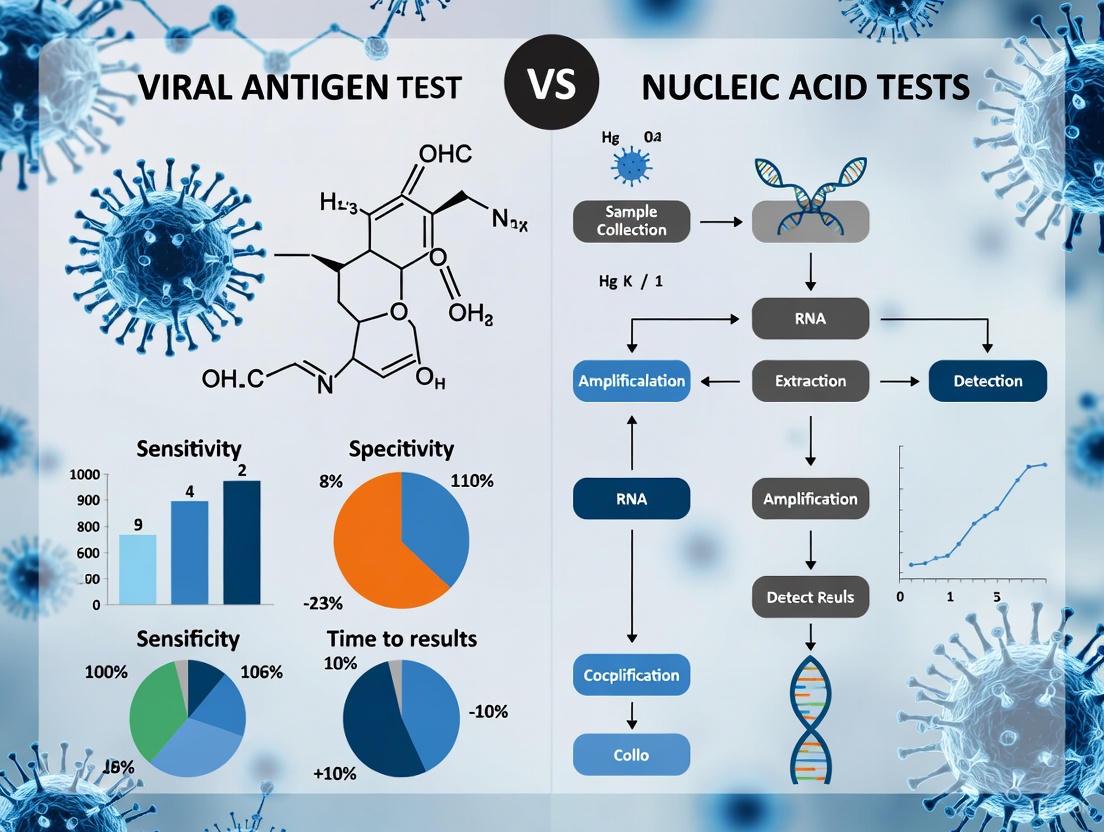
This article provides a comprehensive analysis for researchers and drug development professionals on the performance characteristics, appropriate applications, and limitations of viral antigen tests and nucleic acid amplification tests (NAATs).
Antigen vs. Nucleic Acid Tests: A Performance Analysis for Diagnostic and Therapeutic Development
Abstract
This article provides a comprehensive analysis for researchers and drug development professionals on the performance characteristics, appropriate applications, and limitations of viral antigen tests and nucleic acid amplification tests (NAATs). Covering foundational principles, methodological workflows, and troubleshooting, it synthesizes current data on sensitivity, specificity, and operational metrics. A core focus is the comparative validation of these assays across different viruses, including SARS-CoV-2 and influenza, highlighting how test selection impacts clinical decision-making, public health surveillance, and therapeutic development. The conclusion synthesizes key performance trade-offs and outlines future directions for test innovation in biomedical research.
Core Principles: Understanding the Fundamental Differences in Test Targets and Mechanisms
The core of viral diagnostics lies in the fundamental choice of the analyte: the structural proteins of the virus or its genetic material. Viral antigen tests detect specific proteins, such as the nucleocapsid (N) or spike (S) proteins, that make up the viral particle [1] [2]. In contrast, nucleic acid amplification tests (NAATs) detect the virus's genetic blueprint—be it RNA or DNA—and amplify it to detectable levels [3] [2]. This primary difference in the target analyte dictates every subsequent aspect of test performance, from analytical sensitivity and specificity to workflow complexity, time-to-result, and appropriate use cases. This guide provides an objective, data-driven comparison of these two foundational approaches for researchers and drug development professionals, framing the discussion within the broader context of performance research.
Performance Data: A Quantitative Comparison
Extensive clinical and analytical studies have systematically characterized the performance profiles of antigen and nucleic acid tests. The following tables summarize key quantitative findings.
Table 1: Overall Diagnostic Performance Characteristics
| Test Characteristic | Rapid Antigen Test (Ag-RDT) | Nucleic Acid Amplification Test (NAAT) |
|---|---|---|
| Overall Sensitivity | 67.1% (95% CI not provided) [4]; 47% (vs. RT-PCR) [5] | 92.7% (qPCR) to 94.1% (dPCR) [3] |
| Overall Specificity | >97% [1] [4] | >92% [3] |
| Positive Predictive Value (PPV) | 97.7% [4] | Not commonly reported (inherently high) |
| Negative Predictive Value (NPV) | 95.2% [4] | Not commonly reported (inherently high) |
| Limit of Detection (LoD) | Higher (less sensitive) [6] | Lower (more sensitive) [6] |
Table 2: Performance Based on Viral Load and Symptoms
| Scenario | Antigen Test Sensitivity | Nucleic Acid Test Sensitivity |
|---|---|---|
| High Viral Load (Ct < 25) | 93.6% [7] | >99.7% (for Ct ≤32) [8] |
| Low Viral Load (Ct > 30) | Significantly decreased [7] | 92.5% (for Ct >32) [8] |
| Symptomatic Individuals | 56% (vs. RT-PCR) [5] | Consistently high (>92%) [3] |
| Asymptomatic Individuals | 18% (vs. RT-PCR) [5] | Consistently high (>92%) [3] |
| During Fever | 77% (vs. RT-PCR) [5] | Data not specific to symptoms |
Analytical Specificity: Cross-Reactivity and Primer/Probe Design
The specificity of a diagnostic test is determined by the unique interaction between the detection reagents and the target analyte.
Antigen Test Specificity: This is achieved through antibodies that are developed to bind with high affinity to specific epitopes on viral structural proteins, such as the nucleocapsid (N) protein [1]. This design generally results in high specificity, as shown in Table 1. However, a key consideration is the potential for cross-reactivity with other viruses or coronaviruses that share similar protein structures, which requires careful antibody selection and validation.
NAAT Specificity: Specificity in NAATs is conferred by short oligonucleotide primers and probes that are designed to bind to unique, conserved sequences within the viral genome [1] [3]. Common targets for SARS-CoV-2, for example, include the ORF1ab, N, and E genes [3] [8]. The high specificity of NAATs is evidenced by the low false-positive rates observed in external quality assessments [8]. The choice of primer-probe set and target gene can significantly influence test performance, with some combinations yielding higher accuracy [3].
Detailed Experimental Protocols
To ensure reproducibility and critical evaluation of the data, this section outlines the standard methodologies used to generate the performance metrics cited above.
Protocol for Antigen Test Performance Evaluation
The following protocol is typical of studies evaluating Ag-RDTs against a reference NAAT [1] [5]:
- Sample Collection: Paired nasopharyngeal swabs are collected from study participants (both symptomatic and asymptomatic). One swab is used for the rapid antigen test, and the other is placed in viral transport medium (VTM) for RT-PCR testing.
- Rapid Antigen Testing:
- The swab is immersed into an extraction buffer tube for a specified time (e.g., 5 minutes) [1].
- The buffer is applied to the sample well of a lateral flow immunochromatographic test device.
- The result is interpreted visually after a set time (e.g., 15-30 minutes), with the appearance of both control and test lines indicating a positive result.
- Reference NAAT Testing:
- RNA is extracted from the VTM sample using automated or manual extraction systems (e.g., spin columns, magnetic beads) [1] [8].
- The extracted RNA is amplified via RT-PCR using kits targeting specific genes (e.g., ORF1ab, N) [1].
- A sample is considered positive if the amplification curve crosses the threshold within a predefined cycle threshold (Cq) value (e.g., Cq ≤ 38) [1].
- Data Analysis: The sensitivity and specificity of the antigen test are calculated using the RT-PCR result as the reference standard. Analysis is often stratified by symptom status and Cq values as a proxy for viral load.
Protocol for Comparative NAAT Evaluation
Meta-analyses and systematic reviews have compared different NAAT platforms using standardized methodologies [3]:
- Study and Data Selection: A systematic search of literature databases (e.g., PubMed, BioRxiv) is conducted for studies that report true-positive, true-negative, false-positive, and false-negative values for dPCR, qPCR, and LAMP tests, using Emergency Use Authorization-approved PCR assays as a comparator.
- Data Extraction and Pooling: Data from eligible studies are extracted into a standardized form. Pooled estimates of sensitivity and specificity for each NAAT type (dPCR, qPCR, LAMP) are computed using bivariate random-effects and/or latent class models.
- Subgroup Analysis: The impact of experimental variables on test accuracy is assessed by analyzing subgroups based on specimen type (pharyngeal swab, saliva, sputum), RNA extraction method (with vs. without extraction), and primer-probe set used (e.g., ORF1ab vs. N gene).
Visualizing Diagnostic Pathways and Workflows
The fundamental differences in the analytes and their detection pathways are illustrated below.
The Scientist's Toolkit: Essential Research Reagents
The evaluation and development of these diagnostic platforms rely on a suite of critical reagents and materials.
Table 3: Key Reagent Solutions for Diagnostic Test Development & Evaluation
| Research Reagent / Material | Function / Application | Example Use Case |
|---|---|---|
| Monoclonal Antibodies | Target capture and detection in immunoassays; key for Ag-RDT specificity [1]. | Developing lines on a lateral flow test strip. |
| Primers & Probes | Specific amplification and detection of viral nucleic acid sequences in NAATs [1] [3]. | Targeting the ORF1ab or N gene in a SARS-CoV-2 RT-PCR assay. |
| Reference Standard | Calibrates and allows cross-comparison of different Ag-RDT and NAAT assays [6]. | BPL-inactivated virus with a unitage assigned by dPCR for LoD studies. |
| Viral Transport Medium (VTM) | Preserves viral integrity and nucleic acids during sample transport and storage [1] [5]. | Storing nasopharyngeal swabs for batch RT-PCR testing. |
| Digital PCR (dPCR) | Absolute quantification of viral load without a standard curve; used for value assignment [3] [6]. | Determining the precise copy number in a reference material. |
The choice between viral antigen and nucleic acid tests is not a matter of one being universally superior, but rather of strategic application based on the clinical or research question. NAATs, with their superior sensitivity and lower LoD, remain the undisputed gold standard for confirming active infection, especially in low-viral-load scenarios and asymptomatic individuals [3] [5] [8]. Their robustness is further enhanced by automated test systems, which have been shown to provide higher sensitivity in external quality assessments [8]. However, the landscape of NAATs is evolving beyond traditional RT-PCR, with technologies like digital PCR (dPCR) offering even higher sensitivity and isothermal amplification (e.g., LAMP) paving the way for rapid, point-of-care molecular diagnostics [3] [2].
Conversely, Ag-RDTs excel as a public health tool for rapidly identifying individuals with high viral loads, who are most likely to be infectious [5]. Their high specificity and positive predictive value make a positive result highly reliable in areas with moderate to high prevalence [4]. The ongoing development of a universal standard for both antigens and nucleic acids is a critical step toward harmonizing performance evaluation across platforms and ensuring reliable test performance in the field [6]. For researchers and drug developers, this comparative analysis underscores that the definition of the analyte is the first and most critical step in designing a diagnostic strategy, as it fundamentally directs the technology, workflow, and ultimate utility of the testing solution.
The accurate and timely detection of pathogens represents a cornerstone of modern clinical diagnostics and therapeutic development. Two fundamentally distinct technological approaches have emerged as pillars in this field: immunoassays, which detect the protein "clothes" of a pathogen (antigens and antibodies), and nucleic acid amplification tests (NAATs), which target the genetic material (DNA or RNA) of the infectious agent. Each paradigm operates on different biochemical principles, offering complementary strengths and limitations in sensitivity, specificity, speed, and applicability. This guide provides an objective comparison of these technologies, framing their performance within viral detection research to inform scientists, researchers, and drug development professionals.
Immunoassays leverage the specific binding interaction between an antibody and its target antigen—a structural protein on the pathogen's surface. This binding event is then converted into a measurable signal, typically through colorimetric, fluorescent, or chemiluminescent reporters [9]. In contrast, NAATs, such as polymerase chain reaction (PCR) and isothermal amplification methods, work by enzymatically amplifying a specific sequence of the pathogen's genome from a few copies to billions, enabling the detection of exceptionally low levels of genetic material [10] [11]. The core distinction lies in the target: immunoassays identify the presence of the pathogen itself via its structural components, while NAATs identify the presence of the pathogen's blueprint by amplifying its unique genetic code.
Comparative Performance Analysis
Extensive clinical studies have systematically compared the performance of these two detection paradigms, particularly in the context of respiratory viruses like SARS-CoV-2 and Influenza.
Table 1: Comparative Performance of Immunoassays (RAT) and NAATs for Viral Detection
| Performance Metric | Rapid Antigen Test (Immunoassay) | Rapid Nucleic Acid Test (NAAT) | Supporting Clinical Evidence |
|---|---|---|---|
| Sensitivity | Lower | Significantly Higher | In a study of 453 patients, rapid NAAT-positive but RAT-negative cases were significantly more frequent (P < 0.001) [10] [12]. |
| Specificity | Generally High | Very High to Ultra-High | Both methods demonstrated high specificity, with good agreement (Cohen's κ = 0.750) between them, though the disagreement was systematic due to sensitivity differences [12]. |
| Limit of Detection | Moderate (e.g., ng/mL to pg/mL for proteins) [13] | Very High (e.g., aM level for nucleic acids) [14] | NAATs can detect attomolar (aM) concentrations or lower, bridging a critical sensitivity gap for low viral loads [15] [14]. |
| Turnaround Time | Very Rapid (15-30 minutes) | Rapid (e.g., ~1 hour for rapid NAAT platforms) | Automated, high-throughput NAAT systems like the Panther (Hologic) can process samples with minimal hands-on time (24-25 min) [16]. |
| Throughput & Automation | Low; primarily manual, single tests | High; capable of full automation and batch processing [16] [11] | Digital Microfluidics (DMF) platforms can complete the entire NAAT workflow automatically in a miniaturized format [11]. |
| Best Application | Rapid screening, point-of-care testing, resource-limited settings | Confirmatory testing, early infection detection, quantifying viral load | Rapid NAAT is suggested as a more suitable tool for emergency departments to avoid false negatives and enable timely treatment [10]. |
The data indicates a clear trade-off. While rapid antigen tests (a form of immunoassay) offer superior speed and operational simplicity, they do so at the cost of analytical sensitivity. This makes them highly effective for rapid screening during the peak of infection when viral loads are high. Conversely, NAATs provide a definitive result with exceptional sensitivity, making them the gold standard for confirming infections, including during the early or late stages when the antigen may be present at levels below the detection threshold of standard immunoassays [10].
Experimental Protocols and Workflows
Immunoassay Workflow: The Sandwich ELISA
The sandwich ELISA is a common and robust format for antigen detection. Its workflow involves several precise steps to ensure specificity and signal generation.
Protocol Details:
- Coating: A microtiter plate is coated with a capture antibody specific to the target antigen [9].
- Blocking: The plate is treated with a blocking buffer (e.g., BSA or SuperBlock) to cover any unsaturated binding sites and prevent non-specific binding in subsequent steps [13].
- Sample Incubation: The clinical sample (e.g., serum, nasopharyngeal extract) is added. If present, the target antigen binds to the immobilized capture antibody.
- Washing: The plate is washed to remove all unbound components from the sample, a critical step for reducing background noise [17] [13].
- Detection Antibody Incubation: A second, enzyme-linked detection antibody, which recognizes a different epitope on the target antigen, is added. This forms an "antibody-antigen-antibody" sandwich [9].
- Washing: Another wash removes any unbound detection antibody.
- Signal Detection: A substrate for the enzyme is added. The enzyme converts the substrate into a colored, fluorescent, or luminescent product. The intensity of the signal is proportional to the amount of captured antigen [13] [9].
Nucleic Acid Amplification Workflow: RT-PCR and Isothermal Methods
The workflow for NAATs is focused on liberating, amplifying, and detecting genetic material. Reverse Transcription-Polymerase Chain Reaction (RT-PCR) is a foundational method.
Protocol Details:
- Nucleic Acid Extraction: The sample undergoes cell lysis, often using chemical buffers, to release nucleic acids. The DNA/RNA is then purified from other cellular components using methods like silica-membrane binding or magnetic beads [16] [11].
- Reverse Transcription (for RNA viruses): The purified RNA is converted into complementary DNA (cDNA) using the enzyme reverse transcriptase [11].
- Amplification:
- PCR: The cDNA (or genomic DNA) is mixed with sequence-specific primers, DNA polymerase, and nucleotides. The mixture undergoes repeated thermal cycles (denaturation, annealing, extension) in a thermocycler to exponentially amplify the target sequence [11].
- Isothermal Amplification (e.g., RPA, LAMP): As an alternative, techniques like Recombinase Polymerase Amplification (RPA) or Loop-Mediated Isothermal Amplification (LAMP) amplify DNA at a constant temperature (37-42°C for RPA, 60-65°C for LAMP), simplifying instrumentation and speeding up the process [15] [11].
- Detection: In real-time PCR, the amplification is monitored cycle-by-cycle using fluorescent probes (e.g., TaqMan) that cleave upon amplification, releasing a fluorescent signal. The cycle threshold (Ct) at which the signal crosses a background level is inversely proportional to the starting amount of target nucleic acid [16].
Advanced and Emerging Technologies
Hybrid and Next-Generation Platforms
The boundaries between immunoassays and NAATs are blurring with the development of advanced hybrid technologies and novel detection systems.
- Immuno-PCR (I-PCR): This technique marries the specificity of immunoassays with the exponential amplification power of PCR. In I-PCR, the detection antibody is conjugated to a DNA molecule rather than an enzyme. After the antibody binds to its target, the DNA tag is amplified by PCR, providing a massive signal amplification that can push detection limits to the femtogram level, significantly surpassing conventional ELISA [17].
- CRISPR-Cas Based Diagnostics: CRISPR systems have been repurposed for highly specific nucleic acid detection. Platforms like SHERLOCK (Cas13) and DETECTR (Cas12) utilize a Cas enzyme that, upon recognizing its target DNA/RNA sequence via a guide RNA, unleashes a "collateral" cleavage activity that cuts nearby reporter molecules. This creates a detectable signal. These systems are often coupled with isothermal amplification (e.g., RPA) for extreme sensitivity (attomolar range) and single-nucleotide specificity, making them powerful tools for point-of-care pathogen detection and strain differentiation [15] [14]. A key innovation is the development of "one-pot" assays using spatial or temporal separation strategies to contain both amplification and CRISPR detection in a single tube, reducing contamination and simplifying workflows [15].
- Digital Microfluidics (DMF) for NAATs: DMF is a next-generation platform that manipulates discrete droplets on an array of electrodes. This technology enables the miniaturization and full automation of the entire NAAT workflow—from sample preparation and nucleic acid extraction to amplification and detection—on a single, compact chip with minimal human intervention, promising a new generation of point-of-care molecular diagnostics [11].
Essential Research Reagent Solutions
The successful implementation of these detection mechanisms relies on a suite of critical reagents and tools.
Table 2: Key Research Reagents and Materials
| Reagent / Material | Function | Application in Immunoassays | Application in NAATs |
|---|---|---|---|
| Specific Antibodies | High-affinity binding to target epitopes | Capture and detection of antigens in ELISA, lateral flow [18] [9]. | Not directly applicable. |
| DNA Polymerase / Reverse Transcriptase | Enzymatic amplification of nucleic acids | Not directly applicable. | Amplifies target DNA (PCR) or synthesizes cDNA from RNA (RT) [16] [11]. |
| Primers & Probes | Sequence-specific recognition of genetic targets | Not directly applicable. | Primers initiate amplification; probes (e.g., TaqMan) enable real-time detection in NAATs [16]. |
| Guide RNA (crRNA) | Programs Cas nuclease to a specific nucleic acid sequence | Not directly applicable. | Provides specificity in CRISPR-Cas diagnostic systems (e.g., SHERLOCK, DETECTR) [15] [14]. |
| Solid Supports | Immobilize capture molecules | Microplates (ELISA), magnetic beads, lateral flow membranes [17] [9]. | Magnetic beads for nucleic acid extraction [11]. |
| Signal Reporters | Generate measurable output | Enzymes (HRP, AP), fluorophores (FAM, Tb complexes), luminescent compounds [13] [9]. | Intercalating dyes (SYBR Green), fluorescent probes (TaqMan), ssDNA reporters for Cas12/13 [15] [14]. |
The choice between immunoassays and nucleic acid amplification tests is not a matter of one being universally superior to the other, but rather a strategic decision based on the clinical or research question at hand. Immunoassays provide a direct, rapid, and cost-effective measure of pathogenic proteins, ideal for high-throughput screening and point-of-care applications where speed and simplicity are paramount. NAATs, with their unparalleled sensitivity and specificity for genetic targets, remain the gold standard for confirmatory diagnostics, early detection, and quantifying viral load.
The future of pathogen detection lies in the convergence and refinement of these technologies. Emerging trends point toward:
- Integrated Platforms: Technologies like digital microfluidics (DMF) are working to consolidate complex NAAT workflows into automated, sample-to-answer devices [11].
- Ultra-Sensitive Hybrid Assays: Techniques like Immuno-PCR and CRISPR-mediated detection are breaking traditional sensitivity barriers, enabling the detection of targets at previously inaccessible concentrations [15] [17].
- Point-of-Care Molecular Diagnostics: The integration of isothermal amplification with CRISPR and lateral flow readouts is making laboratory-level molecular sensitivity accessible in decentralized, resource-limited settings [15] [14].
For researchers and drug developers, this evolving landscape offers a powerful and expanding toolkit. The selection of a detection mechanism must be guided by a clear understanding of the required sensitivity, specificity, turnaround time, and operational context to effectively combat existing and emerging infectious diseases.
In the field of infectious disease diagnostics, a fundamental performance gap exists between nucleic acid amplification tests (NAATs) and rapid antigen tests (RATs). While both serve to detect current infections, their underlying mechanisms—molecular amplification versus immunoassay-based protein detection—dictate vastly different sensitivity profiles. NAATs, including polymerase chain reaction (PCR) and isothermal amplification methods, establish the gold standard by amplifying and detecting specific viral RNA or DNA sequences with exceptional sensitivity. In contrast, RATs detect surface proteins without amplification, making them inherently less sensitive but valuable for specific use cases where speed and cost are prioritized. This guide objectively compares the performance characteristics of these testing methodologies through experimental data, providing researchers and drug development professionals with evidence-based insights for diagnostic selection and development.
Methodological Comparison: NAAT vs. Antigen Testing
Fundamental Detection Mechanisms
The critical difference between these testing platforms lies in their detection targets and methodologies:
NAAT Methodology: NAATs detect pathogen-specific genomic sequences (RNA or DNA). The process involves: (1) nucleic acid extraction from the specimen, (2) amplification of target sequences using enzymatic reactions (e.g., polymerase chain reaction), and (3) detection of amplified products. This amplification process allows NAATs to detect extremely low levels of viral material that would otherwise be undetectable [19] [20]. Common formats include reverse transcription PCR (RT-PCR), transcription-mediated amplification (TMA), and isothermal methods like loop-mediated isothermal amplification (LAMP) and recombinase polymerase amplification (RPA) [21] [11].
RAT Methodology: Rapid antigen tests are immunoassays that detect the presence of specific viral proteins (antigens). They utilize lab-made antibodies immobilized on a test strip that bind to viral antigens if present in the specimen. This binding produces a visual or detectable signal without amplification, meaning sufficient viral protein must be present for detection [19] [20]. This fundamental difference—amplification versus direct detection—explains the significant sensitivity disparity between the methodologies.
Experimental Workflow Comparison
The experimental pathways for NAAT and antigen testing differ significantly in complexity and resource requirements, as illustrated in the following workflow:
Comparative Performance Data: Analytical and Clinical Studies
SARS-CoV-2 Test Performance Comparison
Table 1: Comparative Performance of NAAT vs. Antigen Tests for SARS-CoV-2 Detection
| Test Type | Specific Platform | Sensitivity (%) | Specificity (%) | PPA with NAAT Reference (%) | Key Performance Limitation |
|---|---|---|---|---|---|
| NAAT | Hologic Aptima SARS-CoV-2 Assay | 95.6 | 100 | 100 (vs. cobas) | Prolonged RNA detection after infection [21] |
| NAAT | Roche cobas SARS-CoV-2 | Reference | 100 | 100 | Complex equipment requirements [21] |
| RAT | BD Veritor System | 45.2-47.3 | 100 | 45.2-47.3 | Sensitivity drops sharply with Ct >20 [21] |
| RAT | Abbott BinaxNOW | 47.0 | 100 | 47.0 | Sensitivity drops sharply with Ct >25 [21] |
| RAT | PCL Spit Rapid Antigen | 67.0 | 75.0 | 67.0 | Variable by viral load [22] |
| RAT | mö-screen Corona Antigen | 100 | 100 | 100 | Optimal performance with combined oro/nasopharyngeal sampling [23] |
Influenza Test Performance Comparison
A 2025 prospective comparative study in an emergency department setting evaluated a rapid NAAT (ID NOW Influenza A&B) versus a RAT (BD Veritor System) using 453 patients with suspected influenza. The study found:
- Influenza Detection: 166 (36.6%) patients tested positive for influenza
- Discordant Results: Rapid NAAT-positive but RAT-negative cases were significantly more frequent (P < 0.001)
- Statistical Agreement: Cohen's kappa coefficient between tests was 0.750 (95% CI 0.685-0.815, P < 0.001), indicating good but imperfect agreement
- Early Infection Detection: Among patients tested within 48 hours of symptom onset, discordance remained significant (P < 0.001), with NAAT detecting more positive cases [12]
This demonstrates that for influenza diagnosis, NAAT maintains superior sensitivity compared to antigen testing, particularly important for guiding timely antiviral treatment decisions.
Impact of Viral Load on Test Performance
The relationship between viral load and test performance represents a critical differentiator between NAAT and RAT platforms. Viral load is typically measured in NAAT testing through Cycle Threshold (Ct) values, with lower Ct values indicating higher viral loads.
Table 2: SARS-CoV-2 Rapid Antigen Test Sensitivity Stratified by Viral Load (Ct Values)
| Ct Value Range | Viral Load Category | RAT Sensitivity (%) | NAAT Sensitivity (%) |
|---|---|---|---|
| Ct ≤20 | High | 100 | ~100 |
| Ct 21-25 | Moderate | 63 | ~100 |
| Ct >26 | Low | 22 | ~100 |
| Ct >30 | Very Low | <10 | ~100 [21] [22] |
The relationship between viral load and detection capability can be visualized as follows:
Advanced NAAT Technologies and Methodological Considerations
DNA-Based vs. RNA-Based NAATs
Beyond the basic NAAT vs. RAT distinction, important differences exist within NAAT methodologies themselves. A 2023 analytical comparison of DNA-based and RNA-based NAATs for reproductive tract infection pathogens revealed distinct performance characteristics:
DNA-Based NAATs: Typically target genomic DNA with detection limits ranging from 38-1,480 copies/mL for Chlamydia trachomatis, 94-20,011 copies/mL for Neisseria gonorrhoeae, and 132-2,011 copies/mL for Ureaplasma urealyticum [24]
RNA-Based NAATs: Target ribosomal RNA (rRNA) which is present in much higher copy numbers (approximately 100-10,000 times) than genomic DNA in bacteria. RNA-based tests could detect pathogens at RNA concentrations of approximately 3,000 copies/mL [24]
The clinical significance lies in the association between rRNA detection and bacterial metabolic activity. RNA-based NAATs may be more suitable for detecting active infection and recovery phases, while DNA-based NAATs are more suitable for detection in the early stage of infection [24]. This distinction highlights the importance of selecting the appropriate NAAT methodology based on the clinical or research question.
Emerging Platforms: Digital Microfluidics for NAAT
Recent advances in digital microfluidics (DMF) promise to bridge the gap between laboratory-based NAAT testing and point-of-care applications. DMF technology manipulates discrete droplets on a matrix of planar electrodes, enabling complete NAAT workflows in a miniaturized, automated format [11]. Key advantages include:
- Automation: Multiple processes (sample preparation, amplification, detection) can be performed simultaneously with minimal human intervention
- Flexibility: Capable of handling various sample types (urine, blood, saliva) and amplification strategies (thermal cycling, isothermal)
- Integration: Can incorporate heating elements, biosensors, and imaging systems for multiplexed analysis
- Portability: Compact systems suitable for remote or resource-limited settings [11]
This technology represents the next generation of point-of-care NAAT platforms, potentially combining the sensitivity of traditional laboratory-based NAATs with the convenience and speed typically associated with RATs.
Essential Research Reagent Solutions
Table 3: Key Research Reagents and Platforms for NAAT and Antigen Test Development
| Reagent/Platform Category | Specific Examples | Research Application | Performance Considerations |
|---|---|---|---|
| NAAT Extraction Kits | QIAamp DNA Mini Kit, Qiagen RNeasy RNA Kit, Tianlong automatic nucleic acid extraction system | Nucleic acid purification from clinical specimens | Extraction efficiency impacts overall test sensitivity; automated systems improve reproducibility [24] |
| NAAT Amplification Enzymes | Polymerases for PCR, reverse transcriptase for RT-PCR, recombinase for RPA, Bst polymerase for LAMP | Target amplification with various methodologies | Enzyme fidelity and processivity affect amplification efficiency and false-positive rates [11] |
| NAAT Detection Chemistries | Fluorescent probes (TaqMan), intercalating dyes (SYBR Green), electrochemical sensors | Signal generation from amplified products | Probe chemistry impacts specificity; detection method affects quantitative capabilities [11] |
| Antigen Test Components | SARS-CoV-2 nucleocapsid-specific antibodies, colloidal gold conjugates, nitrocellulose membranes | Immunoassay development for protein detection | Antibody affinity and specificity critically determine antigen test performance [21] [22] |
| Sample Collection Media | Viral transport media (VTM), viral nucleic acid transport (vNAT) medium, lysis buffers | Sample preservation and processing | Transport media composition affects nucleic acid and antigen stability [25] [23] |
| Automated Testing Platforms | Roche cobas 6800, Hologic Panther, Abbott ID NOW | High-throughput and point-of-care test implementation | Platform integration reduces manual steps and variability [12] [21] |
The experimental data comprehensively establish NAAT as the unequivocal gold standard for diagnostic sensitivity in infectious disease testing. The fundamental advantage of NAAT lies in its ability to amplify low quantities of target nucleic acids, enabling detection of pathogens across the entire infection continuum—from early presymptomatic phases through recovery. This sensitivity profile makes NAAT indispensable for clinical scenarios requiring high diagnostic accuracy, treatment monitoring, and public health surveillance.
Rapid antigen tests, while significantly less sensitive, maintain clinical utility in specific contexts where high viral loads are present and rapid results impact immediate clinical decision-making. The performance characteristics of each platform dictate their appropriate application: NAAT for maximum sensitivity and diagnostic accuracy, RAT for speed, convenience, and cost-effectiveness in high-prevalence settings. For researchers and drug development professionals, these performance differentials must guide test selection, assay development, and the interpretation of experimental results across the diagnostic development pipeline.
In the field of in vitro diagnostics, particularly within viral test research, sensitivity, specificity, and limit of detection (LoD) form the foundational triad for evaluating test performance. These metrics provide researchers and drug development professionals with critical data to objectively compare diagnostic products, select appropriate testing methodologies, and interpret experimental results accurately. Sensitivity measures a test's ability to correctly identify individuals with a disease (true positive rate), while specificity quantifies its ability to correctly identify those without the disease (true negative rate) [26] [27]. The LoD represents the lowest concentration of an analyte that can be reliably detected by an assay, defining the boundary of its detection capabilities [28].
Understanding the interplay between these metrics is crucial for designing robust testing strategies, especially when comparing different testing methodologies such as rapid antigen tests and nucleic acid amplification tests (NAATs). These metrics are prevalence-independent, meaning their values are intrinsic to the test itself and do not depend on how common the disease is in the population of interest [27]. This characteristic makes them particularly valuable for researchers conducting head-to-head product comparisons under controlled conditions.
Defining the Core Metrics
Sensitivity
Sensitivity, also called the true positive rate, is the probability that a test returns a positive result when the target condition is truly present. Mathematically, it is defined as the proportion of true positives correctly identified by the test [26] [27]:
Sensitivity = True Positives / (True Positives + False Negatives)
A test with high sensitivity minimizes false negatives, making it particularly valuable for screening purposes and when diagnosing conditions where missing a case would have serious consequences. In infectious disease testing, highly sensitive tests help prevent disease transmission by correctly identifying infected individuals [27]. For example, a sensitivity of 98.73% means the test correctly identified 98.73% of actually infected individuals [29].
Specificity
Specificity, or the true negative rate, is the probability that a test returns a negative result when the target condition is truly absent. It measures a test's ability to correctly exclude individuals without the condition [26] [27]:
Specificity = True Negatives / (True Negatives + False Positives)
A test with high specificity minimizes false positives, which is crucial when a positive result may lead to unnecessary treatments, additional invasive testing, or psychological distress [27]. In the context of antimicrobial resistance testing, high specificity ensures correct identification of resistance mutations, guiding appropriate treatment decisions [30].
Limit of Detection (LoD)
The Limit of Detection (LoD) is the lowest concentration of an analyte that an analytical method can reliably detect, though not necessarily precisely quantify [28]. According to the International Conference on Harmonization (ICH), it represents "the lowest amount of the substance analyzed detectable by the method, without necessarily providing the exact value" [28]. In contrast, the Limit of Quantification (LoQ) is the lowest concentration that can be measured with acceptable precision and accuracy, representing the threshold beyond which the bioanalytical procedure can guarantee reliable results [28].
Table 1: Key Differences Between LoD and LoQ
| Parameter | Definition | Purpose | Requirement |
|---|---|---|---|
| Limit of Detection (LoD) | Lowest concentration that can be detected | Identify the presence of an analyte | Detection without precise quantification |
| Limit of Quantification (LoQ) | Lowest concentration that can be measured | Precisely measure the analyte concentration | Acceptable precision and accuracy |
Comparative Performance: Antigen Tests vs. Nucleic Acid Tests
The performance disparity between rapid antigen tests and nucleic acid amplification tests (NAATs) represents a critical case study in the application of sensitivity, specificity, and LoD metrics. Research consistently demonstrates that these methodologies offer different advantages suited to distinct testing scenarios.
Sensitivity Comparisons
Multiple studies have established that NAATs generally demonstrate superior analytical sensitivity compared to antigen tests. A prospective comparative study of influenza testing in emergency department patients found that rapid NAAT-positive but rapid antigen test-negative cases occurred significantly more frequently (P < 0.001), supporting the higher sensitivity of rapid NAATs [10]. The kappa coefficient between tests was 0.750, indicating good agreement but systematic differences in sensitivity rather than random disagreement.
During the COVID-19 pandemic, the sensitivity differences became particularly evident. According to CDC research conducted between November 2022-May 2023, the overall sensitivity of SARS-CoV-2 antigen tests was 47% (95% CI = 44%-50%) when using RT-PCR as a reference, and 80% (95% CI = 76%-85%) when using viral culture as a reference [5]. This highlights how sensitivity values depend on the reference method used for comparison.
Table 2: SARS-CoV-2 Test Performance Characteristics [5]
| Test Type | Sensitivity vs RT-PCR | Sensitivity vs Viral Culture | Specificity |
|---|---|---|---|
| Rapid Antigen Test | 47% (44%-50%) | 80% (76%-85%) | Generally High* |
| RT-PCR | 100% (Reference) | 83% (Peak) | Generally High* |
*Specificity for both test types is generally high but varies by specific test and study conditions.
Impact of Timing and Symptoms on Sensitivity
The sensitivity of antigen tests varies significantly based on timing relative to symptom onset and the presence of symptoms. Antigen test sensitivity peaks around the time of highest viral shedding. For SARS-CoV-2, the highest percentage of positive antigen test results (59.0%) occurred 3 days after symptom onset, compared to 83.0% for RT-PCR at the same timepoint [5].
Symptom status dramatically affects antigen test performance. When stratified by symptoms, antigen test sensitivity compared to RT-PCR increased from 18% on days with no symptoms to 56% on days with any COVID-19 symptoms, and peaked at 77% on days when fever was reported [5]. This pattern underscores the importance of context when interpreting sensitivity data.
Specificity Comparisons
Both antigen tests and NAATs typically demonstrate high specificity when properly designed and validated. For instance, the NeuMoDx SARS-CoV-2 Assay demonstrated 100% specificity (95% CI: 98.65-100.00) in one validation study [29]. This high specificity is common for both methodologies because they are based on molecular recognition (antigen-antibody or primer-template binding), which can be engineered for high target specificity.
The clinical implication of high specificity is that positive results can be trusted for "ruling in" disease. As the CDC notes, "antigen tests continue to detect potentially transmissible infection" despite their lower sensitivity [5]. This makes them valuable tools in situations where rapid identification of contagious individuals is needed for infection control.
Experimental Protocols for Metric Determination
Determining Sensitivity and Specificity
Establishing valid sensitivity and specificity values requires carefully designed studies with appropriate reference standards. The Clinical and Laboratory Standards Institute (CLSI) EP12-A2 guideline recommends specific sample requirements [30]:
- Minimum sample requirements: At least 50 positive specimens and 50 negative specimens as determined by the reference method
- Preferred sample size: At least 100 specimens, adjusting the ratio of positives to negatives according to the estimated prevalence
- Reference standard: Comparison to an established "gold standard" method or diagnostic criteria
The choice of reference technique directly impacts the resulting sensitivity and specificity metrics. Comparing a rapid test to a highly sensitive molecular test will show different results than comparing it to another rapid test or to clinical diagnostic criteria [30]. This underscores the importance of understanding the reference standard when interpreting published performance data.
Determining Limit of Detection
The LoD can be established through several methodological approaches. The classical strategy relies on statistical concepts based on parameters of the calibration curve, but this approach may provide underestimated values [28]. More contemporary approaches include:
- Uncertainty Profile: An innovative validation approach based on the tolerance interval and measurement uncertainty that provides a graphical decision-making tool [28]
- Accuracy Profile: A graphical method that uses tolerance intervals for the total error to assess the validity domain of a method
These graphical strategies are considered more reliable than classical statistical approaches as they provide realistic assessments of LoD and LoQ [28]. The process involves testing multiple replicates at low analyte concentrations and determining the lowest concentration where detection is reliable, often defined as the concentration where 95% of positive samples are detected (LOD₉₅) [31].
Determining Limit of Detection (LoD)
Relationships and Trade-Offs Between Metrics
Inverse Relationship: Sensitivity vs. Specificity
Sensitivity and specificity typically have an inverse relationship; as sensitivity increases, specificity tends to decrease, and vice versa [26] [27]. This trade-off can be visualized as a continuum where test cutoff points can be adjusted to optimize for either metric based on clinical or research needs.
This relationship has important implications for test design and application. Highly sensitive tests are preferred for screening and ruling out disease, while highly specific tests are valuable for confirmatory testing and ruling in disease [27]. Understanding this balance helps researchers select appropriate tests for specific applications.
LoD and Sensitivity Relationship
The LoD directly influences a test's sensitivity, particularly at low analyte concentrations. Tests with lower LoD can detect smaller amounts of the target analyte, resulting in higher overall sensitivity. For example, BillionToOne's Northstar Select liquid biopsy assay achieves an unprecedented LOD₉₅ of 0.15% variant allele frequency for single nucleotide variants, enabling it to detect 51% more pathogenic variants than other available tests [31]. This enhanced detection capability directly translates to improved clinical sensitivity for identifying actionable cancer mutations.
Interplay Between Key Metrics
Essential Research Reagents and Materials
The accurate determination of sensitivity, specificity, and LoD requires specific research reagents and materials tailored to the assay technology. The selection of appropriate materials directly impacts the reliability and reproducibility of performance metrics.
Table 3: Essential Research Reagents for Test Validation
| Reagent/Material | Function | Considerations |
|---|---|---|
| Reference Standard | Serves as "gold standard" for comparison | Should be widely accepted and validated; affects all performance metrics [30] |
| Well-Characterized Clinical Samples | Determine clinical sensitivity/specificity | Must include confirmed positive and negative samples; sample type affects performance [30] |
| Calibrators/Analyte Standards | Establish analytical sensitivity and LoD | Concentration must be traceable to reference materials; purity critical for accurate LoD determination [28] |
| Sample Collection Devices | Standardize sample acquisition | Material composition can impact analyte recovery and stability [29] |
| Nucleic Acid Extraction Kits | Isolate target molecules for NAATs | Extraction efficiency significantly impacts sensitivity and LoD [30] |
| Amplification Reagents | Enable target detection in NAATs | Enzyme fidelity and reaction efficiency affect sensitivity and specificity [10] |
Sensitivity, specificity, and limit of detection provide the fundamental framework for evaluating diagnostic test performance in research settings. The comparative data clearly demonstrates the performance trade-offs between different testing methodologies, with NAATs generally offering superior sensitivity and lower LoD, while both platforms can achieve high specificity. These metrics guide researchers in selecting appropriate tests based on application requirements—whether prioritizing maximum sensitivity for early detection or high specificity for confirmatory testing.
When comparing commercial tests, professionals should consider not only the published metrics but also the experimental conditions under which they were determined, including reference standards, sample types, and study population characteristics. As diagnostic technologies evolve, the precise measurement and understanding of these key performance metrics remains essential for advancing viral detection capabilities and improving patient care through evidence-based test selection.
From Bench to Bedside: Test Workflows, Platforms, and Strategic Application
Nucleic Acid Amplification Tests (NAATs) have revolutionized molecular diagnostics, offering superior sensitivity and specificity for detecting pathogens in clinical, research, and point-of-care settings. Framed within the broader research context of viral antigen test versus nucleic acid test performance, this guide objectively compares NAAT methodologies and their operational workflows. Unlike antigen tests which detect viral proteins, NAATs identify pathogenic DNA or RNA sequences, enabling earlier detection of active infection even at low viral loads. The complete NAAT workflow encompasses sample collection, nucleic acid extraction, target amplification, and detection, with emerging technologies like digital microfluidics (DMF) and artificial intelligence (AI) now automating these processes into compact, sample-to-answer systems [32] [33].
NAAT Workflow: Core Components and Technologies
The NAAT process consists of several integrated technical stages, each with different methodological approaches that influence test performance, complexity, and suitability for different settings.
Sample Collection and Preparation
Sample collection typically involves obtaining nasopharyngeal, oropharyngeal, or vaginal swabs, though the specific sample type depends on the target pathogen [34] [35]. Proper collection is critical for test accuracy, as inadequate samples may yield false-negative results. Following collection, samples are transported in appropriate media to preserve nucleic acid integrity until processing.
For RNA viruses, preservation is particularly crucial due to RNA's susceptibility to degradation. Some advanced protocols are developing extraction-free sample preparation methods that use enzymatic reactions to lyse cells and degrade contaminating DNA, significantly simplifying the workflow for resource-limited settings [36].
Nucleic Acid Extraction
Extraction isolates and purifies target nucleic acids (DNA or RNA) from the sample matrix, removing inhibitors that could compromise amplification efficiency. Traditional methods include:
- Column-based extraction: Utilizes silica membranes to bind nucleic acids under specific buffer conditions
- Magnetic bead-based separation: Uses magnetic particles with surface chemistry that binds nucleic acids
Both methods require multiple processing steps and specialized equipment. However, fully automated systems like the cobas 5800/6800/8800 family can integrate extraction into a seamless workflow, processing up to 1,056 samples in an 8-hour shift [37].
Amplification Technologies
Amplification methodologies represent the core differentiation point among NAAT platforms, primarily divided between thermal cycling and isothermal approaches:
Thermal Cycling Methods:
- Polymerase Chain Reaction (PCR): The gold standard involving 30-40 cycles of denaturation (95°C), annealing (50-65°C), and extension (72°C)
- Reverse Transcription PCR (RT-PCR): For RNA targets, incorporating an initial reverse transcription step
- Digital PCR (dPCR): Partitions samples into thousands of nanoreactions for absolute quantification of target sequences [32] [38]
Isothermal Amplification Methods:
- Loop-Mediated Isothermal Amplification (LAMP): Uses 4-6 primers and strand-displacing DNA polymerase at 60-65°C, producing up to a billion copies in <1 hour [32]
- Recombinase Polymerase Amplification (RPA): Operates at 37-42°C using recombinase enzymes, achieving amplification in 20-40 minutes - the fastest available method [32] [36]
- Nucleic Acid Sequence-Based Amplification (NASBA): Specifically designed for RNA amplification
Table 1: Comparison of Major NAAT Amplification Technologies
| Method | Temperature Profile | Time | Key Features | Best Applications |
|---|---|---|---|---|
| PCR/RTPCR | Thermal cycling: 95°C, 50-65°C, 72°C | 1-2 hours | Gold standard, high sensitivity | Centralized labs, quantitative analysis |
| LAMP | Isothermal: 60-65°C | <1 hour | High specificity with multiple primers, tolerant to inhibitors | Point-of-care, resource-limited settings |
| RPA | Isothermal: 37-42°C | 20-40 minutes | Rapid, simple primer design, minimal equipment | Extreme point-of-care, field use |
| dPCR | Thermal cycling with partitioning | 2-3 hours | Absolute quantification without standards | Research, low abundance targets |
Detection Methods
Following amplification, detection systems identify and sometimes quantify the amplified products:
- Fluorescence detection: Real-time monitoring of amplification using intercalating dyes or sequence-specific probes
- Colorimetry: Visual readouts using color changes, often coupled with lateral flow strips
- Electrochemistry: Detection of electrochemical signals generated by amplified products
- Turbidity: Monitoring precipitate formation in LAMP reactions [32]
More advanced systems incorporate CRISPR/Cas technology for highly specific sequence recognition, often coupled with RPA for rapid, sensitive detection [32].
Performance Comparison: NAAT vs. Rapid Antigen Tests
Clinical studies consistently demonstrate the superior sensitivity of NAAT platforms compared to rapid antigen tests (RATs), particularly at lower viral concentrations.
Influenza Detection Comparison
A prospective comparative study of 453 patients in an emergency department setting found that while rapid NAAT and RAT demonstrated good agreement (Cohen's kappa = 0.750), cases positive by rapid NAAT but negative by RAT were significantly more frequent (P < 0.001) [10] [12]. This systematic difference in sensitivity highlights NAAT's clinical advantage in avoiding false negatives and enabling timely antiviral treatment within critical windows [10].
SARS-CoV-2 Detection Comparison
Research on SARS-CoV-2 testing demonstrates that antigen test positivity strongly correlates with higher nucleic acid titers, with sensitivity dramatically declining at higher cycle threshold (Ct) values [34]. One study comparing two commercial RATs found:
- For samples with Ct values ≤25 (high viral load): Sensitivity was 95-96%
- For samples with Ct values 25-30 (moderate viral load): Sensitivity dropped to 19%
- For samples with Ct values ≥30 (low viral load): Sensitivity was only 2-6% [34]
This pattern confirms that while RATs perform well at high viral loads, their sensitivity decreases substantially at lower pathogen concentrations where NAATs maintain detection capability.
Table 2: Clinical Performance Comparison of Diagnostic Platforms
| Test Characteristic | Rapid NAAT | Rapid Antigen Test | Traditional Lab PCR |
|---|---|---|---|
| Sensitivity | 91-100% [10] [37] | 65-67% (overall); >95% only at low Ct [34] | >99% |
| Specificity | >98% [37] | >99% [34] | >99% |
| Turnaround Time | 20 min - 2 hours [10] [35] | 15-30 minutes | 4-24 hours |
| Throughput | Medium (varies by system) | High | High (batch testing) |
| Equipment Requirements | Moderate | Minimal | Extensive |
| Approximate Cost | Moderate-High | Low | High |
| Ideal Setting | Emergency departments, urgent care, clinics | Mass screening, home testing | Centralized laboratories |
Emerging Technologies and Methodologies
Digital Microfluidics (DMF)
DMF represents a paradigm shift in NAAT automation, manipulating discrete droplets on a matrix of electrodes using electrowetting-on-dielectric (EWOD) principles [32]. This technology enables:
- Miniaturization: Completing entire NAAT workflows in compact devices
- Automation: Programmable, simultaneous processing with minimal intervention
- Integration: Incorporation of heating elements, biosensors, and imaging systems
- Flexibility: Accommodation of various sample types and amplification protocols
Closed-configuration DMF devices are particularly suited for NAAT applications, as they minimize evaporation and contamination risks during thermal cycling steps [32].
Artificial Intelligence Integration
AI and machine learning are transforming dNAAT in several key areas:
- Image analysis: Classical classifiers to modern deep learning models interpret complex fluorescence signals in digital PCR [33]
- Workflow optimization: Structured frameworks redefine dNAAT into Sample Preparation, Partition, Amplification, Detection, and Analysis stages [33]
- Result interpretation: Foundation models (e.g., SAM, ViT, GPT-4o) enhance analytical precision and automate quantification [33]
Standardization Approaches
The establishment of universal standards for both antigen and nucleic acid detection based on digital PCR addresses critical challenges in assay comparability [38]. By using β-propiolactone (BPL)-inactivated viral materials quantified through multi-laboratory dPCR, researchers can directly compare limits of detection (LoDs) between NAATs and Ag-RDTs using common units [38].
Experimental Protocols
Extraction-Free RT-RPA for HPV mRNA Detection
A recently developed protocol for detecting HPV16, HPV18, and HPV45 mRNA demonstrates streamlined point-of-care NAAT methodology [36]:
Sample Preparation:
- Collect exfoliated cervical cells using standard swabs
- Prepare crude lysate using enzymatic reaction to lyse cells
- Degrade contaminating DNA enzymatically (critical for DNA viruses like HPV)
- Use treated lysate directly in amplification without RNA extraction
RT-RPA Amplification:
- Primers/Probes: Target HPV E7 mRNA sequences (see supplementary table in [36])
- Reaction Composition: 420nM primers, 120nM probe, 1x reaction buffer, 14mM magnesium acetate, 140mM additional dNTPs, Omniscript reverse transcriptase
- Conditions: 42°C for 15 minutes with real-time fluorescence monitoring
- Detection Threshold: 500 RFU/min slope for positivity determination
Performance Characteristics:
- LoD: 100 copies per reaction, comparable to FDA-approved Aptima HPV test
- Specificity: 100% agreement with RT-qPCR in clinical samples
- Clinical Validation: 100% agreement in 11 prospectively collected cervicovaginal samples [36]
Digital PCR for Universal Standardization
A multi-laboratory protocol for assigning reference values to SARS-CoV-2 standards [38]:
Value Assignment:
- Prepare BPL-inactivated SARS-CoV-2 candidate material (Omicron BA.1 strain)
- Extract RNA in duplicate using standardized methods
- Perform one-step RT-dPCR across multiple platforms (TD-1, Naica, OsciDrop Flex, Starry 10K, MicroDrop-100)
- Assign concentration based on consensus value from all participants
- Validate standard with serial dilution for LoD determination of commercial assays
Inactivation Comparison:
- Both BPL and heat inactivation maintain comparable nucleic acid titers
- BPL inactivation demonstrates superior antigen preservation
- No significant impact of inactivation method on sequencing quality [38]
The Scientist's Toolkit: Essential Research Reagents
Table 3: Key Reagents and Materials for NAAT Development and Implementation
| Reagent/Material | Function | Example Applications |
|---|---|---|
| Omniscript Reverse Transcriptase | cDNA synthesis from RNA templates | RT-RPA, RT-PCR [36] |
| Recombinase enzymes (e.g., T4 uvsX) | Facilitates primer annealing to template without denaturation | RPA [32] [36] |
| Strand-displacing DNA polymerase | Enables isothermal amplification | LAMP [32] |
| -propiolactone (BPL) | Viral inactivation while preserving antigenicity | Reference standard preparation [38] |
| Primers/Probes targeting conserved regions | Specific sequence recognition | All amplification methods [32] [36] |
| Microfluidic partitioning chips | Digital analysis through nanoreaction creation | Digital PCR [33] [38] |
| Silicon or glass DMF substrates | Electrode arrays for droplet manipulation | Digital microfluidics systems [32] |
| Fluorescent intercalating dyes (e.g., SYTO-9) | Real-time amplification monitoring | Real-time PCR, RPA, LAMP [32] [36] |
Workflow and Signaling Pathway Visualizations
Complete NAAT Workflow Integration
NAAT Detection Signaling Pathways
The NAAT workflow represents a sophisticated integration of sample preparation, nucleic acid extraction, amplification, and detection technologies that collectively deliver superior diagnostic sensitivity compared to antigen-based testing. While traditional PCR remains the gold standard for sensitivity and quantification, isothermal methods like LAMP and RPA offer compelling alternatives for point-of-care applications where speed and minimal equipment are prioritized.
Emerging technologies—particularly digital microfluidics, artificial intelligence, and extraction-free protocols—are addressing key challenges in scalability, throughput, and accessibility. These advancements promise to expand NAAT implementation beyond centralized laboratories to remote and resource-limited settings, potentially bridging the performance gap between laboratory-based testing and rapid diagnostics.
For researchers and drug development professionals, selection of appropriate NAAT methodologies requires careful consideration of performance requirements, operational constraints, and intended application settings. The experimental data and protocols presented here provide a foundation for evidence-based platform selection and implementation strategy development.
Rapid antigen tests represent a significant segment of diagnostic immunoassays designed for the quick detection of viral pathogens through identification of specific protein antigens. These tests, primarily utilizing lateral flow immunoassay technology, provide results in approximately 15-30 minutes, making them invaluable for rapid screening and initial infection identification [39] [40]. Within the broader context of viral detection methodologies, antigen tests occupy a distinct position between molecular methods like nucleic acid amplification tests (NAATs) and traditional laboratory-based immunoassays, offering a unique balance of speed, convenience, and diagnostic capability.
The fundamental principle underlying antigen tests involves the use of antibodies that specifically recognize and bind to target viral antigens, typically the nucleocapsid protein in the case of SARS-CoV-2 [41]. This binding event generates a visual signal, usually a colored line, indicating a positive result. Unlike molecular tests that detect viral genetic material, antigen tests directly detect the presence of viral proteins, which has important implications for their performance characteristics and optimal use scenarios [42] [41].
Fundamental Principles of Antigen Immunoassays
Immunoassay Classifications and Mechanisms
Rapid antigen tests belong to the broader category of lateral flow immunoassays, which operate on the principles of antibody-antigen recognition. These tests can be classified according to their reaction methodology:
- Non-competitive immunoassays: Feature excess antibody binding sites that produce a signal directly proportional to the amount of analyte in the sample [9]
- Sandwich immunoassay format: Commonly used in antigen detection, where the target antigen binds between a capture antibody immobilized on the test strip and a detection antibody conjugated to colored particles [9]
The typical COVID-19 antigen test cassette contains two key regions: the control line (C) and test line (T). The control line contains antibodies that bind the detection conjugate, validating test functionality. The test line contains SARS-CoV-2-specific antibodies that capture the detection conjugate only when viral antigens are present in the sample, generating a visual signal [40].
Detection Methodologies and Signaling
Antigen tests employ various detection strategies, with chromogenic detection being most common for point-of-care and home testing. This method utilizes enzyme-antibody complexes that produce colorimetric changes visible to the naked eye [9]. The simplicity of this detection system enables rapid interpretation without specialized equipment, though it also imposes limitations on sensitivity compared to fluorescence- or luminescence-based detection systems used in laboratory settings [9].
Antigen Test Workflow: From Sample Collection to Interpretation
Procedural Steps
The standard antigen testing workflow follows a consistent sequence:
Sample Collection → Sample Preparation → Test Application → Incubation → Result Interpretation
The sample collection typically involves nasopharyngeal, nasal, or anterior nasal swabbing, with specific techniques varying by test manufacturer [41]. For example, the Abbott BinaxNOW COVID-19 Ag Card uses nasal swabs inserted less than one inch into each nostril, while other tests may require different collection methodologies [41].
Following collection, the sample is prepared according to manufacturer specifications, often involving placement into a reagent solution that disrupts the virus and exposes the target antigens. This solution is then applied to the test device, where capillary action draws the sample across the test strip containing the immobilized antibodies [41]. The test then undergoes an incubation period, typically 15-30 minutes, during which the antibody-antigen binding occurs [40].
Interpretation Guidelines
Interpretation of antigen test results follows specific criteria:
- Positive Result: Colored lines appear in both Control (C) and Test (T) regions, indicating detection of SARS-CoV-2 antigens [40] [43]
- Negative Result: A colored line appears only in the Control (C) region, indicating no detection of SARS-CoV-2 antigens above the test's detection threshold [40] [43]
- Invalid Result: No line appears in the Control (C) region, regardless of Test (T) line appearance, indicating improper test performance [40]
Critical interpretation notes include that faint test lines should still be considered positive, and results should only be read within the manufacturer-specified time window (typically 15-30 minutes), as results read later may be inaccurate [40].
Visual summary of the antigen testing workflow from sample collection to result interpretation
Performance Comparison: Antigen Tests vs. Nucleic Acid Amplification Tests
Sensitivity and Specificity Profiles
The performance characteristics of antigen tests must be understood in relation to the gold-standard NAATs, particularly regarding their sensitivity and specificity across different clinical scenarios.
Table 1: Comparative Performance Metrics of Antigen Tests vs. NAATs
| Performance Parameter | Rapid Antigen Tests | Rapid NAATs | Laboratory PCR |
|---|---|---|---|
| Overall Sensitivity | 59% (56-62%) [44] | Higher than antigen tests [12] | Gold standard |
| Overall Specificity | 99% (98-99%) [44] | High [12] | Gold standard |
| Detection Method | Viral protein antigens | Viral genetic material | Viral genetic material |
| Turnaround Time | 15-30 minutes [40] | Varies; some point-of-care systems under 30 minutes [42] [12] | 1-3 days [42] |
| Optimal Detection Timing | Highest sensitivity in first 5-7 days of symptoms [43] | Can detect infection earlier and longer than antigen tests [42] | Throughout infection course |
| Cost & Complexity | Lower cost, minimal equipment [41] | Moderate cost, some require equipment [12] | Higher cost, specialized equipment required [42] |
Viral Load Dependence and Clinical Implications
A critical factor influencing antigen test performance is viral load, typically measured through PCR cycle threshold (Ct) values. Antigen test sensitivity shows strong dependence on viral load:
- High viral load (Ct < 20): 90.85% agreement with PCR [44]
- Low viral load (Ct ≥ 33): 5.59% agreement with PCR [44]
This relationship explains the reduced sensitivity of antigen tests in asymptomatic individuals or during early/late infection stages when viral loads may be below the detection threshold of approximately 10^5-10^6 copies/mL [45]. This fundamental limitation necessitates different testing strategies depending on clinical context.
Table 2: Antigen Test Performance Across Viral Load Ranges
| Viral Load Category | PCR Ct Range | Antigen Test Sensitivity | Recommended Use Case |
|---|---|---|---|
| High | < 20 | 90.85% [44] | Highly reliable for infection detection |
| Medium | 20-28 | 39.5% of positive samples fall in this range [44] | Variable detection |
| Low | 29-32 | 8.9% of positive samples [44] | Poor detection |
| Very Low | ≥ 33 | 5.59% [44] | Not reliable |
Experimental Protocols and Validation Methodologies
Laboratory Performance Assessment
Comprehensive evaluation of antigen tests involves rigorous laboratory characterization alongside clinical validation. Recent methodologies combine:
- Quantitative evaluation of test signal response to concentrations of target protein and inactivated virus [45]
- Statistical characterization of the limit of detection (LoD) using observers' visual acuity of the test band [45]
- Calibration of gold-standard methods (qRT-PCR cycles) against virus concentration [45]
This approach enables prediction of positive percent agreement (PPA) as a function of viral load variables like qRT-PCR Ct values before large clinical trials [45]. The characterization typically involves generating dilution series of target recombinant protein or inactivated virus, measuring signal intensity response, and fitting the data using adsorption models like the Langmuir-Freundlich equation [45].
Real-World Clinical Validation
Real-world performance assessment requires testing in intended use populations. The study by Lee et al. comparing rapid NAATs and antigen tests for influenza in the emergency department provides a methodological framework [12]:
- Design: Prospective comparative study
- Population: 453 patients with suspected influenza
- Testing: Paired nasopharyngeal swabs tested as point-of-care tests
- Analysis: Evaluation of discordant results and agreement between tests
This methodology revealed that rapid NAAT-positive but antigen test-negative cases were significantly more frequent (P < 0.001), supporting the higher sensitivity of rapid NAATs [12]. The kappa coefficient of 0.750 indicated good but imperfect agreement, with systematic differences in sensitivity rather than random disagreement [12].
Essential Research Reagents and Materials
Table 3: Key Research Reagent Solutions for Antigen Test Development and Validation
| Reagent/Material | Function | Application Examples |
|---|---|---|
| Recombinant Viral Proteins | Serve as standardized antigens for assay calibration and optimization | Target recombinant protein (e.g., nucleocapsid protein) dilution series for signal response characterization [45] |
| Inactivated Virus Preparations | Mimic native viral structure while ensuring safety | Heat-inactivated SARS-CoV-2 with known concentration for limit of detection studies [45] |
| Antibody Pairs | Recognize distinct epitopes on target antigen for sandwich immunoassays | SARS-CoV-2 antibodies coated on test line and conjugated to detector particles [41] |
| Signal Detection Systems | Generate measurable output from antibody-antigen binding | Chromogenic, fluorescent, or luminescent labels conjugated to detection antibodies [9] |
| Clinical Specimen Panels | Provide real-world samples for performance validation | Human nasopharyngeal swabs with paired RT-PCR results for clinical sensitivity/specificity determination [44] |
Interpretation in Clinical Context and Public Health Implementation
Test Result Guidance Across Scenarios
Appropriate interpretation of antigen test results requires consideration of clinical and epidemiological context:
- Symptomatic individuals with positive result: High probability of true infection; initiate isolation and clinical management [43]
- Symptomatic individuals with negative result: Should confirm with PCR test due to potential false negative; isolate while awaiting confirmatory result [43]
- Asymptomatic individuals with known exposure and negative result: Should still quarantine if unvaccinated; test again after 48 hours [46] [43]
- Asymptomatic individuals without exposure and positive result: Should confirm with PCR due to potential false positive; isolate until confirmation [43]
The CDC recommends serial testing strategies for antigen tests due to their lower sensitivity: for those with symptoms, test at least twice 48 hours apart; for those without symptoms, test at least three times over five days [42] [46].
Optimal Use Case Scenarios
Based on their performance characteristics, antigen tests are optimally deployed in specific scenarios:
- Rapid identification of potentially infectious individuals in high-prevalence settings [41]
- Situations requiring immediate results for clinical or public health decisions [39]
- Settings where molecular testing is inaccessible or turnaround times are prohibitive [41]
- Serial testing programs to identify infections during peak infectiousness [42] [46]
Decision pathway for antigen test utilization and interpretation in different clinical scenarios
Rapid antigen tests represent a vital component of the diagnostic ecosystem, offering unparalleled speed and accessibility for identifying infectious individuals. Their appropriate utilization requires acknowledgment of their performance limitations relative to NAATs, particularly their reduced sensitivity in low viral load scenarios. The strategic deployment of antigen tests—emphasizing serial testing in appropriate clinical contexts and confirmatory NAAT testing when necessary—ensures their maximal public health benefit while mitigating the risks of false results. Future developments in immunoassay technology, including digital ELISA and bead-based multiplexing, promise enhanced sensitivity and multiplexing capabilities that may further bridge the performance gap between rapid tests and laboratory-based methodologies [9].
The accurate and timely diagnosis of infectious diseases, exemplified by the global response to the COVID-19 pandemic, relies on a diverse arsenal of testing platforms. These platforms, primarily categorized as laboratory-based nucleic acid amplification tests (NAATs), point-of-care (POC) NAATs, and rapid lateral flow tests (antigen or antibody), form the backbone of modern diagnostic strategies. Each platform offers a distinct balance of performance characteristics, including sensitivity, specificity, speed, cost, and operational complexity, making them suitable for different clinical and public health scenarios. This guide provides an objective comparison of these technologies, framing their performance within the broader research context of viral antigen tests versus nucleic acid tests. Designed for researchers, scientists, and drug development professionals, this article synthesizes current performance data, detailed experimental methodologies, and key reagent solutions to inform research and development efforts and diagnostic decision-making.
Performance Comparison at a Glance
The following table summarizes the core performance characteristics of the three main diagnostic platforms, synthesizing data from systematic reviews, meta-analyses, and direct comparative studies.
Table 1: Overall Performance Comparison of Major Diagnostic Platforms
| Platform Category | Example Assays/Systems | Sensitivity (Range) | Specificity (Range) | Turnaround Time | Key Advantages | Key Limitations |
|---|---|---|---|---|---|---|
| Laboratory-Based NAAT | Roche cobas SARS-CoV-2, Hologic Aptima, Altona Diagnostics RealStar [47] [21] [48] | ~95-100% [21] | ~100% [21] | Several hours to >24 hours | Gold standard sensitivity and specificity; high-throughput capability [48] | Requires centralized lab, trained personnel, and complex equipment; longer turnaround time [47] |
| Point-of-Care (POC) NAAT | QuantuMDx Q-POC, Abbott ID NOW [10] [49] | 92.8% - 96.9%* [50] [49] | 97.6% - 100% [50] [49] | ~30 minutes | Rapid, high sensitivity; enables same-day clinical decisions without lab infrastructure [49] | Higher cost per test than antigen tests; requires dedicated, albeit portable, instrumentation [51] |
| Rapid Lateral Flow Test (Antigen) | BD Veritor, Abbott BinaxNOW, Standard F Covid19 Ag FIA [47] [21] [48] | 47.6% - 89.6% (highly variable with viral load) [50] [47] [21] | 97.0% - 99.0% [50] [48] | 15-30 minutes | Low cost, rapid, simple to use; ideal for widespread, frequent screening [50] [47] | Significantly lower sensitivity, especially in asymptomatic individuals or low viral loads [50] [48] |
*Sensitivity of POC NAATs is high but can depend on the cycle threshold (Ct) cut-off value used for the reference method. For instance, the Q-POC test showed 96.88% sensitivity at a reference Ct of 35, but 80.00% at a reference Ct of 40 [49].
The performance of these tests, particularly sensitivity, is heavily influenced by viral load, which can be approximated by the cycle threshold (Ct) value from RT-PCR assays. The following table details how sensitivity changes with this parameter.
Table 2: Impact of Viral Load on Rapid Antigen Test Sensitivity
| Reference Test Ct Value (Proxy for Viral Load) | Sensitivity of Antigen Tests | Study Context |
|---|---|---|
| Ct < 20 (High Viral Load) | Antigen tests generally show high detection rates [21] | Direct comparison of BD Veritor/BinaxNOW with RT-PCR [21] |
| Ct 20-25 (Moderate Viral Load) | Sensitivity begins to decline noticeably [21] | Direct comparison of BD Veritor/BinaxNOW with RT-PCR [21] |
| Ct > 25 (Low Viral Load) | Significant drop in sensitivity; many false negatives occur [21] | Direct comparison of BD Veritor/BinaxNOW with RT-PCR [21] |
| Ct > 30 (Very Low Viral Load) | Sensitivity is substantially reduced [48] | Evaluation of the Standard F Covid19 Ag FIA test [48] |
Detailed Experimental Protocols and Performance Data
To ensure the replicability of findings and provide a deeper understanding of the data, this section outlines the key methodologies from several pivotal studies cited in this guide.
Protocol 1: Direct Comparison of NAATs and Antigen Tests
This study provided a head-to-head comparison of two NAATs and two rapid antigen tests using a common set of patient samples [21].
- Objective: To evaluate the clinical performance of two rapid antigen assays (BD Veritor and Abbott BinaxNOW) and one NAAT (Hologic Aptima) against the initial test of record (Roche cobas SARS-CoV-2 assay).
- Sample Collection and Storage: A retrospective study used 300 remnant upper respiratory swab specimens (250 positive, 50 negative) from individuals with suspected SARS-CoV-2 infections. Specimens were collected in viral transport medium (VTM), tested on the cobas assay within 24 hours, and then aliquots were frozen at -80°C until comparator testing [21].
- Testing Procedure: Frozen aliquots were tested using the Aptima and Veritor assays; a subset was tested with BinaxNOW. Although the antigen tests are indicated for use with direct nasal swabs, for this comparative study, swabs were saturated with the VTM specimens to enable testing [21].
- Data Analysis: Positive Percent Agreement (PPA), Negative Percent Agreement (NPA), and Overall Percent Agreement (OPA) with 95% confidence intervals were calculated with cobas or Aptima serving as the reference method [21].
- Key Results: The PPA between the cobas and Aptima NAATs was 95.6%. Agreement was much lower for antigen tests, with a PPA of 45.2%/47.3% for Veritor and 47.0%/47.0% for Binax compared to cobas/Aptima. Discrepancies occurred when cobas Ct values were >20 for Veritor and >25 for Binax. The NPA was 100% for all assays [21].
Protocol 2: Real-World Performance of a Lateral Flow Antigen Test
This study evaluated the real-life performance of an antigen test when used by non-laboratory personnel at the point-of-care in a hospital setting [48].
- Objective: To assess the real-world performance of the Standard F Covid19 Ag FIA lateral flow device compared to laboratory-based NAATs.
- Study Population and Design: A retrospective, monocentric analysis of prospectively collected data from a university hospital between June and November 2020. The study included 3,630 antigen tests, of which 3,110 had a concomitant NAAT result generated within 24 hours [48].
- Testing Procedure: Swabs for AgPOCT and NAAT were usually taken simultaneously, primarily as oropharyngeal swabs. The antigen test (Biosensor) used a dedicated fluorescence reader, with a Cut-off-Index (COI) ≥1 defined as positive. NAATs were performed in the central laboratory using Roche cobas 6800, Hologic Panther, or other systems [48].
- Data Analysis: Diagnostic sensitivity, specificity, negative predictive value (NPV), and positive predictive value (PPV) were calculated. ROC curve analysis was performed to evaluate different COI thresholds. Subgroup analyses were conducted for symptomatic vs. asymptomatic patients [48].
- Key Results: Overall sensitivity was 59.4% and specificity was 99.0%. Sensitivity and PPV were lower in asymptomatic patients (47.6% and 44.4%, respectively) compared to symptomatic patients (66.7% and 85.0%). ROC analysis suggested a slightly optimal COI cut-off of 0.9, improving the Area Under the Curve (AUC) to 0.66 [48].
Protocol 3: Evaluation of a Novel POC NAAT System
This study provides an example of a performance evaluation for a new, rapid POC molecular diagnostic device [49].
- Objective: To conduct a preliminary prospective performance evaluation of the QuantuMDx Q-POC SARS-CoV-2 RT-PCR assay.
- Sample Collection: The study used two sample sets: 1) longitudinal combined nose/throat (NT) swabs from 29 hospitalized patients with confirmed COVID-19, and 2) mid-nasal (MN) swabs from 101 healthy volunteers [49].
- Testing Procedure: For the Q-POC test, a swab was placed in 3 ml of transport medium, and a 400 µl aliquot was pipetted into a single-use test cassette. The cassette was inserted into the Q-POC device, which automatically performed sample processing, reverse transcription, and rapid PCR using a shuttle flow method, providing a result in approximately 30 minutes [49].
- Reference Testing: An aliquot of the same swab sample was used for RNA extraction followed by a laboratory-based RT-PCR assay (QuantuMDx CE IVD-marked test), which served as the gold standard [49].
- Data Analysis: The sensitivity and specificity of the Q-POC test were calculated against the reference test using its standard Ct cut-off of 40, and a more clinically relevant Ct cut-off of 35 [49].
- Key Results: Compared to the reference test, the overall sensitivity of the Q-POC test was 80.00% at the reference Ct cut-off of 40, but increased to 96.88% when the reference Ct cut-off was set to 35. Specificity was 100% in both scenarios [49].
Technology Workflows and Signaling Pathways
The fundamental difference between nucleic acid and antigen detection tests lies in their underlying detection mechanism. The following diagram illustrates the core signaling pathways for these two approaches.
Diagram 1: Core Detection Pathways for NAAT and Antigen Tests
The operational workflow, from sample collection to result, varies significantly between centralized laboratory tests and point-of-care tests. The next diagram contrasts these processes.
Diagram 2: Laboratory-Based vs. Point-of-Care Testing Workflows
The Scientist's Toolkit: Key Research Reagent Solutions
The development and execution of these diagnostic assays rely on a suite of critical reagents and materials. The following table catalogues essential components used in the featured experiments and the broader field.
Table 3: Essential Reagents and Materials for Diagnostic Test Development
| Reagent/Material | Function | Example Use Cases |
|---|---|---|
| Viral Transport Medium (VTM) | Preserves viral integrity (both RNA and protein) during sample storage and transport. | Used for sample collection and storage in studies validating NAATs and antigen tests from swabs [21] [49]. |
| RNA Extraction Kits | Purifies and concentrates viral RNA from patient samples, removing inhibitors that can affect downstream amplification. | A critical pre-processing step for laboratory-based RT-PCR [47] [49]; often integrated into automated POC NAAT systems [49]. |
| Primers & Probes | Primers bind to specific target sequences for amplification. Probes (e.g., TaqMan) provide sequence-specific fluorescent detection. | Target SARS-CoV-2 genes like ORF1ab, Envelope (E), Nucleocapsid (N), and Spike (S) in RT-PCR assays [47] [49]. |
| Reverse Transcriptase & Polymerase | Enzymes that convert viral RNA to complementary DNA (cDNA) and then amplify the cDNA, respectively. | Essential components of every NAAT, including RT-PCR and isothermal methods [51]. |
| Monoclonal Antibodies | Bind with high specificity to target viral antigens (e.g., SARS-CoV-2 nucleocapsid protein). | The core detection element in lateral flow immunoassays; typically used as conjugated detector antibodies and immobilized capture antibodies [47] [48]. |
| Lyophilized Reagent Pellets | Stable, pre-mixed reagents for amplification reactions, enabling room-temperature storage and ease of use. | Used in POC NAAT devices like the Q-POC for simplified, single-step assay setup and extended shelf-life [49]. |
| Microfluidic Cassettes | Integrated, single-use devices that automate and miniaturize complex processes like sample preparation, amplification, and detection. | The core disposable component in advanced POC NAAT systems (e.g., Q-POC), enabling "sample-to-answer" functionality in a portable format [51] [49]. |
The selection of appropriate diagnostic tests for viral infections is a critical determinant in the success of clinical management, public health surveillance, and infection control strategies. The ongoing evolution of pathogen detection technologies has primarily centered on two fundamental approaches: nucleic acid tests (NATs), which identify viral genetic material through amplification techniques, and antigen tests, which detect specific viral proteins. While often discussed in terms of simple sensitivity and specificity comparisons, the practical application of these tests requires a more nuanced understanding of their performance characteristics across different use cases. The overarching thesis of viral antigen test versus nucleic acid test performance research reveals that contextual factors—including viral load dynamics, operational constraints, and clinical objectives—are paramount in guiding test selection. This guide provides a systematic comparison of these technologies, underpinned by experimental data and structured to inform researchers, scientists, and drug development professionals in making evidence-based decisions aligned with specific application requirements.
Performance Comparison: Nucleic Acid Tests vs. Antigen Tests
Analytical Sensitivity and Viral Load Dependence
The diagnostic sensitivity of viral tests exhibits a fundamental relationship with the viral load present in the patient sample. Nucleic acid amplification tests (NAATs), such as PCR, demonstrate consistently high sensitivity across a broad spectrum of viral concentrations by amplifying target genetic sequences to detectable levels. In contrast, antigen tests display a marked dependency on viral load, directly influencing their detection probability.
Research on SARS-CoV-2 testing reveals a logarithmic relationship between antigen detection probability and viral load, as quantified by PCR cycle threshold (Ct) values. A study analyzing 41,065 paired tests found that each unit increase in Ct value (indicating lower viral load) was associated with an odds ratio of approximately 0.76 for antigen test positivity [52]. This translates to a significantly decreased likelihood of antigen detection as viral load diminishes. The same study established that antigen detection probability exceeds 90% at Ct values less than 23 but declines precipitously as Ct values increase beyond 28 [52].
A prospective comparative study in an emergency department setting demonstrated that while rapid NAAT and antigen tests showed good agreement (Cohen's kappa = 0.750), discordant results with NAAT-positive/antigen-negative findings occurred significantly more frequently (P < 0.001) [10]. This systematic difference in sensitivity rather than random disagreement underscores the fundamental analytical disparity between these technologies.
Table 1: Comprehensive Performance Characteristics of Diagnostic Tests
| Performance Characteristic | Nucleic Acid Tests (NAATs) | Rapid Antigen Tests |
|---|---|---|
| Overall Sensitivity | High (>95% in most studies) [10] | Variable (47%-87% across studies) [44] [52] |
| Overall Specificity | High (>98%) | High (>98% in most studies) [44] |
| Viral Load Dependence | Detects across full spectrum | Strong correlation with high viral loads (low Ct values) [44] [52] |
| Time-to-Result | Hours to days (1-24 hours for rapid NAATs) [10] | Minutes (15-30 minutes) [44] |
| Infrastructure Requirements | Specialized equipment, trained personnel | Minimal, suitable for point-of-care |
| Approximate Cost | Higher | Lower [53] |
| Optimal Use Case | Confirmatory diagnosis, low prevalence settings | High prevalence settings, symptomatic individuals, mass screening |
Real-World Performance and Population Variability
Real-world performance data reveals substantial variability in antigen test accuracy across different populations and testing conditions. A comprehensive Brazilian study of 2,882 symptomatic individuals reported an overall antigen test sensitivity of 59% (56%-62% CI) compared to RT-qPCR, with specificity of 99% (98%-99% CI) [44]. This performance, however, varied significantly between manufacturers, with one test showing 70% sensitivity compared to another at 49% sensitivity—highlighting substantial inter-product variability [44].
Notably, antigen test performance showed minimal variation across demographic factors such as sex, age, and vaccination status in the Brazilian study [44]. However, other research has identified decreased detection probabilities in young children (ages 0-4) compared to adults, with odds ratios of 0.63-0.70, potentially reflecting differences in viral shedding patterns or sample collection challenges [52].
Table 2: Antigen Test Performance Across Viral Load Categories
| Viral Load Category | PCR Ct Value Range | Antigen Test Sensitivity | Appropriate Use Case |
|---|---|---|---|
| High Viral Load | Ct < 20 | 90.85% [44] | Infectious case identification, outbreak control |
| Moderate Viral Load | Ct 20-25 | ~80% [52] | Early symptomatic testing, treatment initiation |
| Low Viral Load | Ct 26-32 | Declining progressively (~59% overall) [44] [52] | Limited utility for rule-out purposes |
| Very Low Viral Load | Ct ≥ 33 | 5.59% [44] | Not recommended |
Application-Based Selection Guidelines
Clinical Diagnosis
In clinical settings where diagnostic accuracy directly impacts therapeutic decisions, test selection requires careful consideration of the trade-offs between speed and sensitivity. Rapid NAATs demonstrate particular utility in emergency departments and inpatient settings, where their combination of reasonable turnaround times (approximately 15-80 minutes) and high sensitivity proves valuable for guiding patient management [10].
The evidence supports implementing rapid NAATs as first-line tests in clinical environments serving high-risk populations or when clinical suspicion contradicts a negative antigen test result. The significantly higher frequency of NAAT-positive/antigen-negative cases (P < 0.001) supports this approach, particularly when timely antiviral treatment initiation is critical [10].
Mass Screening
Mass screening scenarios prioritize tests with operational efficiency, rapid turnaround, and cost-effectiveness—attributes where antigen tests demonstrate clear advantages. Their minimal infrastructure requirements, low cost, and rapid results make them particularly suitable for testing large populations, especially in resource-limited settings.
A cost-effectiveness analysis of SARS-CoV-2 testing in Cameroon and Kenya demonstrated that a "test-all" model using antigen tests was more cost-effective than a "screen-and-test" model, with cost per client tested at US$7.66 versus US$25.02 in Cameroon, and US$13.04 versus US$125.00 in Kenya, respectively [53]. This economic advantage, combined with the ability to identify infectious individuals (those with high viral loads), positions antigen tests as the preferred option for broad surveillance purposes.
For mass screening applications, the selection framework should prioritize antigen tests when the primary objective is identifying currently infectious individuals to interrupt transmission chains, particularly in high-prevalence settings or populations with significant asymptomatic spread.
Infection Control
Infection control applications demand a strategic approach that balances rapid identification of infectious individuals with the need to prevent facility outbreaks. Antigen tests provide the immediate results necessary for effective point-of-entry screening, while NAATs serve as valuable confirmatory tools.
Successful infection control programs, such as the one implemented at Queen Elizabeth Hospital in Hong Kong, incorporate a multipronged approach emphasizing: (1) clear communication protocols, (2) early case detection through systematic screening, (3) prudent patient placement, (4) staff safety measures, and (5) comprehensive education [54]. This integrated strategy effectively prevented healthcare-associated COVID-19 transmission despite managing 147 confirmed cases.
The diagram below illustrates how different test types integrate within a comprehensive infection control strategy:
Experimental Protocols and Methodologies
Paired Testing Study Design
The comparative performance data presented in this guide primarily derives from paired testing studies where individuals simultaneously undergo both antigen and nucleic acid testing from the same specimen or concurrent collections. The fundamental protocol involves:
Sample Collection: Paired nasopharyngeal swabs collected from participants presenting with symptoms suggestive of infection [44]. One swab is placed in viral transport medium for NAAT analysis, while the other is used immediately for antigen testing.
Antigen Testing Procedure: The lateral-flow antigen test is performed according to manufacturer instructions, typically involving:
NAAT Reference Testing: The second swab is stored at -80°C until processing. RNA extraction is performed using automated systems, followed by RT-qPCR amplification using approved protocols (e.g., CDC 2019-nCoV Real-Time RT-PCR Diagnostic Panel) [44].
Statistical Analysis: Sensitivity, specificity, positive predictive value (PPV), and negative predictive value (NPV) are calculated with NAAT as the reference standard. Logistic regression models evaluate the relationship between Ct values and antigen detection probability [55] [52].
Framework for Standardized Performance Assessment
The inherent variability in viral load distributions across study populations complicates direct comparison of antigen test performance. A proposed statistical methodology addresses this challenge through:
PPA Function Modeling: Modeling percent positive agreement (PPA) as a function of qRT-PCR Ct values using logistic regression on paired test results [55].
Reference Distribution Application: Applying the PPA function to a standardized reference Ct distribution to calculate adjusted sensitivity estimates, correcting for viral load variability [55].
Bias Reduction: This distribution-aware framework reduces sampling bias and enables more accurate comparisons of test performance across different manufacturers and study conditions [55].
Essential Research Reagents and Materials
Table 3: Essential Research Reagents for Diagnostic Test Evaluation
| Reagent/Material | Specification | Research Application |
|---|---|---|
| Nasopharyngeal Swabs | Synthetic tip with plastic or wire shaft | Standardized specimen collection for paired testing [44] |
| Viral Transport Medium (VTM) | Contains protein stabilizer, antimicrobial agents | Preservation of viral integrity for NAAT testing [44] |
| RNA Extraction Kits | Magnetic bead-based systems (e.g., Loccus Biotecnologia MVXA-P096FAST) | Nucleic acid purification for downstream molecular analysis [44] |
| RT-PCR Master Mix | One-step reaction mixes (e.g., GoTaq Probe 1-Step RT-qPCR System) | Amplification and detection of viral RNA targets [44] |
| Antigen Test Kits | Lateral flow devices with proprietary antibodies | Point-of-care detection of viral antigens [44] [52] |
| Quantitative PCR Instruments | Real-time PCR systems (e.g., QuantStudio 5) | Amplification and fluorescence detection for Ct determination [44] |
| Digital Image Analysis Software | Custom software for test line intensity quantification | Objective measurement of antigen test signal strength [45] |
The application-based selection of viral detection tests requires moving beyond oversimplified sensitivity comparisons to embrace a multidimensional decision framework. The evidence consistently demonstrates that rapid nucleic acid tests provide the superior sensitivity required for definitive clinical diagnosis, particularly in situations where false negatives would carry significant consequences. Conversely, antigen tests offer distinct advantages for mass screening and infection control applications where speed, cost-effectiveness, and operational simplicity are paramount for identifying infectious individuals.
Future test development and implementation strategies should focus on optimizing the complementary strengths of these technologies rather than positioning them as competing alternatives. For researchers and drug development professionals, this entails designing diagnostic pathways that strategically deploy each test modality according to specific clinical and public health objectives, ultimately creating more resilient and responsive healthcare systems capable of addressing emerging infectious disease threats.
Navigating Limitations: Sources of Error, Confirmatory Strategies, and Protocol Optimization
The performance of diagnostic tests, particularly the comparison between viral antigen tests and nucleic acid tests, remains a critical area of research for managing respiratory pathogens like SARS-CoV-2. A fundamental challenge in this domain is the false negative result, a phenomenon primarily governed by two interrelated factors: the window period of infection and the viral load in the patient sample. Antigen tests (Ag-RDTs), which detect specific viral proteins, offer advantages of speed and convenience but are inherently limited by their requirement for sufficient antigen concentration to produce a visible result [44] [56]. In contrast, molecular methods such as quantitative Reverse Transcription Polymerase Chain Reaction (RT-qPCR) amplify and detect viral RNA, granting them a superior ability to identify infections with lower viral loads [44] [55]. This guide objectively compares the performance of these testing methodologies, supported by experimental data, and details the experimental protocols that reveal the mechanisms behind false negatives.
Performance Data: Antigen Tests vs. Nucleic Acid Tests
Clinical studies consistently demonstrate that the sensitivity of rapid antigen tests is highly dependent on viral load, which is inversely related to the RT-qPCR Cycle threshold (Ct) value. The following tables synthesize quantitative data from real-world evaluations.
Table 1: Overall Performance Characteristics of Antigen Tests vs. RT-qPCR
| Test Metric | Antigen Test Performance | Nucleic Acid Test (RT-qPCR) Notes |
|---|---|---|
| Overall Sensitivity | 59% (Range: 49%-70%, varies by manufacturer) [44] | Considered the gold standard; high sensitivity for detecting viral RNA [44] [56]. |
| Overall Specificity | >99% [44] | High specificity [56]. |
| Accuracy | 82% [44] | High accuracy. |
| Positive Predictive Value (PPV) | 97% [44] | - |
| Negative Predictive Value (NPV) | 78% [44] | - |
| Turnaround Time | ~15 minutes [44] | Several hours to days; requires specialized lab equipment [44] [56]. |
Table 2: Antigen Test Sensitivity as a Function of Viral Load (Ct Value)
| Ct Value Range | Viral Load Context | Antigen Test Sensitivity | Study |
|---|---|---|---|
| < 20 | High Viral Load | 90.85% - 100% | Toledo, Brazil (n=2882) [44]; Lahore, Pakistan [22] |
| 21 - 25 | Medium Viral Load | 63% | Lahore, Pakistan [22] |
| 26 - 28 | Low Viral Load | Data not available in results | - |
| 29 - 32 | Low Viral Load | Data not available in results | - |
| ≥ 33 | Very Low Viral Load | 5.59% [44] | Toledo, Brazil (n=2882) [44] |
| > 26 | Low Viral Load | 22% [22] | Lahore, Pakistan [22] |
Table 3: Impact of Timing and Test Manufacturer on Performance
| Factor | Impact on Antigen Test Sensitivity | References |
|---|---|---|
| Days Post-Symptom Onset | No statistically significant difference found for periods 0-2 days (59%), 3-5 days (62%), 6-9 days (48%) [44]. | Toledo, Brazil Study [44] |
| Test Manufacturer | Significant differences observed: IBMP kit sensitivity 70% vs. Bio-Manguinhos kit 49% [44]. | Toledo, Brazil Study [44] |
| Vaccination Status | No statistically significant difference (Vaccinated: 59% vs. Non-vaccinated: 52%) [44]. | Toledo, Brazil Study [44] |
Experimental Protocols for Performance Evaluation
To generate the comparative data presented above, researchers employ rigorous experimental protocols. The following methodology is typical of studies evaluating antigen test performance against the gold standard of RT-qPCR.
Study Design and Sample Collection
- Design: Cross-sectional studies are commonly used, involving participants who present with symptoms suggestive of COVID-19 [44] [22].
- Population: Studies often recruit thousands of participants to ensure statistical power. For example, one study in Brazil included 2882 symptomatic individuals [44], while another in Pakistan analyzed 320 samples [22].
- Sample Collection: Two nasopharyngeal swabs are collected simultaneously from each participant. One swab is used for immediate antigen testing, and the other is placed in Viral Transport Medium (VTM) and stored at -80°C for subsequent RT-qPCR analysis [44]. Some studies also use saliva samples for antigen testing [22].
Antigen Test Protocol
- Procedure: The swab for the antigen test is processed according to the manufacturer's instructions. It is typically immersed in an extraction buffer, and the solution is applied to the test cassette.
- Interpretation: Results are read visually after 15 minutes. A positive result is indicated by the appearance of a colored test band alongside a control band [22]. To minimize interpretation bias, some studies use digital photography and software analysis to standardize the reading of test band intensities [57].
RT-qPCR Reference Test Protocol
- RNA Extraction: Viral RNA is extracted from the VTM-stored samples using automated nucleic acid extraction systems and commercial kits, such as the Viral RNA and DNA Kit [44].
- PCR Amplification: The extracted RNA is amplified using real-time RT-PCR. One common protocol uses the CDC's diagnostic panel for SARS-CoV-2 on instruments like the QuantStudio 5 with the GoTaq Probe 1-Step RT-qPCR system [44]. Another study used the Bosphore Novel Coronavirus Detection Kit on an Anatolia Montania 4896 thermal cycler [22].
- Cycle Threshold (Ct): The Ct value, which indicates the number of amplification cycles required for the target signal to exceed a background threshold, is recorded. A lower Ct value corresponds to a higher viral load. Samples with Ct values below a predetermined cutoff (e.g., 36) are considered positive [22].
Statistical Analysis
- Performance Metrics: Sensitivity, specificity, accuracy, positive predictive value (PPV), and negative predictive value (NPV) are calculated using 2x2 contingency tables comparing antigen test results to RT-qPCR results [44] [22].
- Advanced Modeling: To account for sampling bias in viral load distribution, some studies employ logistic regression to model the percent positive agreement (PPA) as a function of Ct values. This model is then applied to a standardized reference Ct distribution to produce a bias-corrected sensitivity estimate, allowing for fairer comparisons across different test brands and studies [55].
Visualizing the Relationship Between Viral Load and Test Sensitivity
The relationship between viral load (as measured by Ct value) and the probability of detection by an antigen test is a fundamental concept. The following diagram models this relationship, which is central to understanding false negatives.
This workflow illustrates the parallel processing of a patient sample through both nucleic acid (RT-qPCR) and antigen testing pathways. The RT-qPCR test quantifies viral load, producing a Ct value. The antigen test result is directly dependent on this viral load; high viral loads (low Ct values) typically lead to positive antigen results with high sensitivity, while low viral loads (high Ct values) often result in false negatives due to insufficient antigen concentration for detection.
The Scientist's Toolkit: Key Research Reagents and Materials
The following table details essential reagents, kits, and instruments used in the cited experiments for the evaluation of SARS-CoV-2 diagnostic tests.
Table 4: Key Research Reagent Solutions for COVID-19 Test Performance Studies
| Item Name | Function / Role | Specific Example / Manufacturer |
|---|---|---|
| Antigen Test Kits | Immunochromatographic detection of SARS-CoV-2 nucleocapsid protein. | TR DPP COVID-19 – Ag (Bio-Manguinhos/Fiocruz, Brazil) [44]; IBMP TR Covid Ag kit (Instituto de Biologia Molecular do Paraná, Brazil) [44]; PCL Spit Rapid Antigen Test Kit (Germany) [22]. |
| RNA Extraction Kit | Purification of viral RNA from patient samples for RT-qPCR. | Viral RNA and DNA Kit (Loccus Biotecnologia, Brazil) [44]; GF-1 Viral Nucleic Acid Extraction Kit [22]. |
| RT-qPCR Test Kit | Amplification and detection of SARS-CoV-2 RNA; the gold standard. | CDC 2019-nCoV RT-PCR Diagnostic Panel [44]; Bosphore Novel Coronavirus Detection Kit [22]. |
| Viral Transport Medium (VTM) | Preservation of virus in swab samples for transport and storage. | Used in swab collection and storage at -80°C [44]. |
| Real-time PCR Instrument | Instrument for performing thermal cycling and fluorescence detection in RT-qPCR. | QuantStudio 5 (Applied Biosystems) [44]; Anatolia Montania 4896 Real-time thermal cycler [22]. |
| Automated Nucleic Acid Extractor | Automated system for high-throughput and consistent RNA extraction. | Extracta 32 (Loccus Biotecnologia, Brazil) [44]. |
The data and methodologies presented confirm that the sensitivity of viral antigen tests is not a fixed value but is intrinsically linked to viral load, which varies during the infection window period. Antigen tests demonstrate high sensitivity (>>90%) during the peak viral load phase, making them a valuable tool for rapid identification of contagious individuals. However, their performance drops significantly as viral load decreases, leading to a high rate of false negatives in later stages of infection or in asymptomatic cases [44] [22]. Nucleic acid amplification tests like RT-qPCR remain the superior choice for diagnostic certainty due to their higher analytical sensitivity across a wide range of viral loads. For researchers and drug development professionals, these findings underscore the importance of considering the context of use and the limitations of rapid diagnostics. Mitigation strategies, such as serial testing as recommended by the FDA [58], and advanced statistical modeling to correct for viral load distribution biases [55], are crucial for the accurate application and evaluation of antigen tests in both clinical and public health settings.
In the landscape of viral diagnostics, Nucleic Acid Amplification Tests (NAATs) have established themselves as the "gold standard" for detecting pathogens like SARS-CoV-2 and influenza viruses due to their superior sensitivity [59]. Unlike qualitative antigen tests, NAATs provide not just a positive or negative result but also a quantitative measurement known as the Cycle Threshold (Ct) value, which represents the number of amplification cycles required for the target signal to exceed background levels [60]. Lower Ct values indicate higher concentrations of viral nucleic acid in the original specimen, while higher Ct values correspond to lower viral loads.
The interpretation of Ct values has become critically important for clinical and public health decision-making, particularly in assessing patient infectivity and transmission risk. While rapid antigen tests offer advantages in speed and logistics, they demonstrate significantly lower sensitivity (60.5-72.1%) compared to NAATs, especially in specimens with higher Ct values (indicating lower viral loads) [61]. This technical review examines the correlation between Ct values and viral infectivity, compares methodological approaches for determining this relationship, and provides evidence-based guidance for implementing these concepts in research and clinical practice.
The Fundamental Relationship Between Ct Values and Viral Load
Technical Principles of Ct Value Interpretation
The Ct value is an inverse logarithmic measure of viral nucleic acid concentration in a clinical sample, with each 3.3-cycle difference generally representing approximately a 10-fold difference in viral RNA concentration [60]. The precise relationship between Ct values and viral infectivity has been a subject of extensive research, with studies consistently demonstrating that lower Ct values (typically <25-30) correlate strongly with the presence of replication-competent virus [62] [61].
Critical to proper interpretation is understanding that Ct value thresholds for infectivity vary based on multiple factors, including specimen type, sample collection method, nucleic acid extraction efficiency, and amplification assay characteristics. Research indicates that specimens with Ct values >30-35 rarely yield replication-competent virus in culture, suggesting limited infectious potential [60] [62]. This relationship provides a scientific foundation for using Ct values as a proxy for infectivity in both clinical and public health settings.
Table 1: Relationship Between SARS-CoV-2 Ct Values and Laboratory Markers of Infectivity
| Ct Value Range | Viral Culture Positivity | N Antigen Positivity | Probability of Infectious Virus |
|---|---|---|---|
| <25 | High (>90%) | High (>95%) | Very High |
| 25-30 | Moderate (50-90%) | Moderate-High (80-95%) | Moderate-High |
| 30-35 | Low (10-50%) | Low-Moderate (50-80%) | Low-Moderate |
| >35 | Very Low (<10%) | Very Low (<50%) | Very Low |
Comparative Dynamics of Diagnostic Markers During Infection
Longitudinal studies tracking multiple biomarkers during acute infection reveal important temporal relationships between Ct values, antigen detection, and culturable virus. Research on SARS-CoV-2 demonstrates that the median time from symptom onset to first negative test result varies significantly by detection method: 9 days for spike antigen, 13 days for nucleocapsid antigen, 11 days for viral culture, and >19 days for viral RNA detection via RT-PCR [62]. This pattern confirms that while NAATs remain positive for extended periods due to their ability to detect non-replicating viral RNA, the window of detectable infectious virus is substantially shorter.
Between 6-10 days post-symptom onset, the presence of nucleocapsid antigen shows a strong association with culture positivity (Relative Risk=7.61, 95% CI: 3.01-19.22), whereas neither viral RNA detection nor symptoms alone reliably predicted the presence of culturable virus during this period [62]. This finding underscores the clinical value of antigen testing and Ct value interpretation as biomarkers for infectiousness, particularly when making isolation discontinuation decisions.
Figure 1: Temporal Relationship Between Viral Load, Diagnostic Test Results, and Infectivity. The probability of detecting infectious virus decreases as viral load declines, with antigen tests and viral culture becoming negative before NAAT tests due to their lower sensitivity for detecting non-infectious viral material.
Methodological Approaches for Correlating Ct Values with Infectivity
Viral Culture as the Reference Standard for Infectivity
The definitive method for establishing the relationship between Ct values and infectivity involves parallel viral culture studies that directly assess the presence of replication-competent virus. In one longitudinal cohort study of non-hospitalized adults with acute SARS-CoV-2 infection, researchers performed serial measurements of COVID-19 symptoms, nasal swab viral RNA, nucleocapsid and spike antigens, and replication-competent SARS-CoV-2 using viral growth in culture [62]. This comprehensive approach allowed for direct comparison between NAAT results (including Ct values) and the actual presence of culturable virus.
The experimental protocol typically involves:
- Sample Collection: Serial nasopharyngeal or anterior nasal swabs collected from participants during acute infection and convalescence
- NAAT Testing: RT-PCR analysis with recording of Ct values for target genes
- Viral Culture: Inoculation of susceptible cell lines (e.g., Vero E6 cells) with patient specimens
- Culture Monitoring: Observation for cytopathic effects and/or detection of viral subgenomic RNA
- Statistical Analysis: Determination of correlation between Ct values and culture positivity using regression models
This methodology revealed that beyond two weeks post-symptom onset, virus growth and N antigen titers were rarely positive, while viral RNA remained detectable in approximately half (26/51) of participants tested 21-30 days after symptom onset [62].
Comparative Limits of Detection Across Testing Modalities
Understanding the analytical sensitivity of different testing platforms is crucial for interpreting their relationship with infectivity. Rapid NAAT systems like the Abbott ID NOW Influenza A&B demonstrate higher sensitivity compared to rapid antigen tests (e.g., BD Veritor System), with significantly fewer false-negative results (P < 0.001) in emergency department settings [10]. The improved detection capability of rapid NAATs enhances their utility for identifying potentially infectious individuals during the critical early window for antiviral treatment.
Table 2: Comparison of SARS-CoV-2 Testing Modalities and Their Correlation with Infectivity
| Test Type | Limit of Detection | Time to Result | Correlation with Culture Positivity | Key Advantages | Key Limitations |
|---|---|---|---|---|---|
| RT-PCR (Lab-based) | ~400 copies/mL [63] | 3-24 hours | Strong association with Ct<30 [62] | High sensitivity, quantitative Ct values | Longer turnaround time, complex instrumentation |
| Rapid NAAT | Varies by platform | <60 minutes [59] | Moderate correlation | Fast results, point-of-care use | Generally higher LOD than lab-based PCR |
| Rapid Antigen Test | ~10^5-10^6 copies/mL | 15-30 minutes | Strong when positive [62] | Low cost, rapid, simple to perform | Lower sensitivity, especially high Ct values |
| Viral Culture | Requires viable virus | 3-7 days | Gold standard for infectivity | Direct measure of replicating virus | Prolonged turnaround, specialized facilities |
Experimental Evidence: Ct Value Thresholds for Infectious SARS-CoV-2
Ct Value Thresholds from Clinical Studies
Multiple clinical studies have attempted to define specific Ct value thresholds that correlate with the presence of culturable virus. Analysis of the Quidel Sofia 2 SARS Antigen FIA test performance found that antigen test sensitivity increased significantly in specimens with lower Ct values, reaching 90.7% for Ct values ≤25 [61]. This threshold (Ct≈25) consistently emerges across studies as a critical value below which infectious virus is frequently detected.
The relationship between Ct values and antigen test positivity provides an indirect method for assessing infectiousness when viral culture results are unavailable. During the 14 days following symptom onset, the presence of N antigen remained strongly associated (adjusted relative risk=7.66, 95% CI: 3.96-14.82) with culture positivity, regardless of COVID-19 symptoms [62]. This finding supports the use of antigen testing as a practical tool for identifying potentially infectious individuals, particularly in settings where NAAT with Ct value reporting is unavailable.
Impact of SARS-CoV-2 Variants and Vaccination Status
While the fundamental relationship between Ct values and infectivity remains consistent across SARS-CoV-2 variants, it is important to note that most studies correlating Ct values with culture positivity were conducted before the emergence of the Omicron variant and in predominantly unvaccinated populations [59]. The IDSA guidelines highlight that data are limited regarding the performance of NAATs in "immunocompromised or vaccinated individuals, in those who have had prior SARS-CoV-2 infection, in children, and in patients infected with newer SARS-CoV-2 variants" [59].
This evidence gap underscores the need for continued research to validate Ct value thresholds against viral culture across different populations and emerging variants. Researchers should interpret absolute Ct value thresholds with appropriate caution when studying novel variants or special populations.
Research Implementation and Practical Applications
Standardized Protocols for Ct Value Studies
For researchers designing studies to evaluate the relationship between Ct values and infectivity, standardized protocols are essential for generating comparable data. Key methodological considerations include:
Sample Processing Methodology:
- Nucleic Acid Extraction: Use validated extraction methods with appropriate controls
- Amplification Conditions: Follow manufacturer specifications for thermal cycling conditions
- Target Genes: Report specific viral targets amplified (e.g., N, E, ORF1ab genes)
- Calibration: Use standardized calibrators to enable cross-platform comparisons
Culture Methodology:
- Cell Lines: Specify cell lines used (e.g., Vero E6, Vero E6-TMPRSS2)
- Inoculum Preparation: Standardize volume and processing of clinical specimens
- Endpoint Determination: Define criteria for culture positivity (cytopathic effect, subgenomic RNA)
- Biosafety: Implement appropriate biosafety level (BSL-3) precautions
The EasyNAT CT/NG assay protocol for detecting Chlamydia trachomatis and Neisseria gonorrhoeae provides an example of a standardized approach, utilizing "cross-priming amplification (CPA) technique for the rapid and simultaneous detection" with defined limits of detection (400 copies/mL) and internal controls to ensure reliability [63]. Similar rigorous approaches should be applied to SARS-CoV-2 infectivity studies.
The Researcher's Toolkit: Essential Reagents and Materials
Table 3: Essential Research Reagents for Ct Value and Infectivity Correlation Studies
| Reagent/Material | Specification | Research Function | Example Sources/References |
|---|---|---|---|
| Viral Transport Medium | Validated for RNA stability | Preserve specimen integrity during transport | CDC guidelines, commercial manufacturers |
| Nucleic Acid Extraction Kits | Magnetic bead or column-based | Isolate viral RNA for NAAT testing | Various commercial suppliers |
| PCR Master Mix | One-step RT-PCR formulation | Amplify viral targets with consistent efficiency | FDA-EUA approved reagents |
| Positive Control Material | Quantified RNA transcripts or inactivated virus | Calibrate Ct value measurements | Commercial standards, NIST reference materials |
| Cell Culture Lines | SARS-CoV-2 susceptible (Vero E6) | Viral culture as infectivity reference standard | ATCC, commercial biotechnology suppliers |
| Culture Media | Cell line-specific formulations | Maintain cell viability for culture experiments | Various commercial suppliers |
| Ct Value Reference Panel | Samples with predefined Ct values | Inter-laboratory standardization | Collaborative study materials |
Cycle Threshold values provide valuable semi-quantitative information that correlates with viral load and potential infectivity, particularly when interpreted alongside clinical symptoms and time since symptom onset. The strong association between low Ct values (<25-30) and viral culture positivity supports their use in transmission risk assessment, with research indicating that antigen tests may serve as a practical surrogate for infectivity in many settings [62] [61].
However, Ct values should not be interpreted in isolation due to multiple technical and biological factors that influence their absolute values. No single SARS-CoV-2 testing algorithm is likely to be optimal across all settings, requiring researchers and clinicians to consider prevalence, resources, and programmatic priorities when implementing testing strategies [64]. Future research should focus on validating Ct value thresholds against viral culture across emerging variants, vaccinated populations, and special patient groups to refine their utility in both clinical and public health practice.
As rapid NAAT technologies continue to evolve and become more accessible, the integration of Ct value interpretation into point-of-care testing platforms holds promise for further enhancing their utility in real-time patient management and infection control decisions.
Rapid Antigen Detection Tests (Ag-RDTs) are invaluable tools for the initial diagnosis of respiratory viruses like SARS-CoV-2 and influenza, offering benefits such as low cost, simple operation, and rapid results within 15-30 minutes [65] [66]. However, their variable and often moderate sensitivity, particularly in specimens with low viral load, necessitates confirmatory testing strategies using more sensitive Nucleic Acid Amplification Tests (NAATs) to avoid false-negative results and their associated clinical and public health consequences [65] [44] [67]. This guide objectively compares the performance of antigen tests and NAATs, framing the discussion within the broader context of viral antigen test versus nucleic acid test performance research. It is designed to provide researchers, scientists, and drug development professionals with a detailed overview of confirmatory testing algorithms, supported by experimental data and procedural workflows.
The fundamental difference in technology underpins the performance gap: antigen tests detect surface proteins of the virus using immunoassays, while NAATs, including PCR-based methods, detect and amplify viral nucleic acid, making them inherently more sensitive [65] [67]. The U.S. Centers for Disease Control and Prevention (CDC) and the Infectious Diseases Society of America (IDSA) explicitly recommend that negative antigen test results be considered presumptive and confirmed with a NAAT when clinical suspicion of infection is high [65] [67]. This article will summarize the quantitative data justifying this approach, detail the experimental methodologies used for validation, and outline structured algorithms for verifying results.
Performance Comparison: Antigen Tests vs. NAATs
Extensive comparative studies consistently demonstrate that NAATs possess significantly higher sensitivity than rapid antigen tests, although both show very high specificity.
SARS-CoV-2 Test Performance
Real-world studies highlight the sensitivity challenges of antigen tests for SARS-CoV-2. A large cross-sectional study in Brazil involving 2,882 symptomatic individuals found the overall sensitivity of Ag-RDTs compared to RT-qPCR was 59% (95% CI: 56%-62%), with a specificity of 99% (95% CI: 98%-99%) [44]. Performance was highly dependent on viral load, with sensitivity rising to 90.85% for samples with a cycle quantification (Cq) value < 20 (high viral load) but plummeting to 5.59% for samples with Cq ≥ 33 (low viral load) [44]. A 2025 prospective study evaluating a combined antigen test for SARS-CoV-2, influenza, and RSV reported a sensitivity of 60% for SARS-CoV-2 and RSV, and 54.3% for influenza A/B, against a molecular standard (Xpert Xpress) [66]. Crucially, for all three viruses, sensitivity reached 100% in samples with high viral loads (Cq ≤ 25), reinforcing the concept that antigen tests are most reliable when viral burden is high [66].
Table 1: Diagnostic Performance of SARS-CoV-2 Antigen Tests vs. NAAT (RT-PCR)
| Study & Population | Antigen Test Sensitivity | Antigen Test Specificity | Key Influencing Factor |
|---|---|---|---|
| Symptomatic individuals in Brazil (n=2,882) [44] | 59% (95% CI: 56%-62%) | 99% (95% CI: 98%-99%) | Viral load (Cq value) |
| Samples with Cq < 20 [44] | 90.85% | Not Specified | High viral load |
| Samples with Cq ≥ 33 [44] | 5.59% | Not Specified | Low viral load |
| Symptomatic patients, tertiary care (n=100) [66] | 60.0% (95% CI: 43.4%-74.7%) | 100% | Viral load / Multiplex testing |
| ELISA-based Antigen Test [68] | 100% (for Cq ≤ 31) | 98.84% | Test platform / Cq cut-off |
Influenza Test Performance
The performance pattern is similar for influenza. A prospective comparative study in an emergency department setting compared a rapid NAAT (ID NOW Influenza A&B) with a rapid antigen test (BD Veritor System). The study found that cases which were positive by the rapid NAAT but negative by the antigen test were significantly more frequent (P < 0.001), indicating the superior sensitivity of the rapid NAAT [10] [12]. The agreement between the tests, measured by Cohen's kappa coefficient, was 0.750 (95% CI: 0.685–0.815), indicating good but not perfect agreement, with the differences being systematic rather than random [10]. This higher sensitivity is critical in a clinical setting as it enables timely antiviral treatment within the critical window [10].
Impact on Clinical Decision-Making
The choice of test has direct, real-world consequences for patient care and antimicrobial stewardship. A retrospective analysis of over 120 million patient records from the U.S. compared the clinical utility of rapid NAATs versus antigen tests for influenza-like illness in outpatient settings [69]. The study found that antigen tests were used in about 75% of cases for flu and COVID-19. More importantly, patients tested with antigen tests were significantly more likely to receive antibiotics, especially when test results were negative, suggesting that the lower sensitivity of antigen tests leads to more empirical treatment [69]. In contrast, NAAT testing showed a higher positivity rate for flu and COVID-19 (10.4% vs. ~5.7% for antigen), contributing to more confident clinical decisions and reduced unnecessary antibiotic prescriptions [69].
Experimental Protocols for Performance Validation
To generate the comparative data cited above, researchers employ rigorous experimental methodologies. The following outlines a standard protocol for validating antigen test performance against a NAAT gold standard.
Specimen Collection and Handling
Study Population and Specimen Type: Studies typically enroll symptomatic individuals presenting with acute respiratory infections, defined by the presence of at least one respiratory symptom (e.g., cough, sore throat) and one systemic symptom (e.g., fever, myalgia) [66]. Paired nasopharyngeal or naso-oropharyngeal swabs are collected from each participant [44] [66].
Specimen Processing: One swab is used immediately or stored at 4°C for rapid antigen testing, typically performed within 24 hours of collection [66]. The paired swab is placed in Viral Transport Medium (VTM) and stored at -80°C for subsequent NAAT analysis [44]. This process ensures both tests are evaluating equivalent sample material.
Reference NAAT Testing
RNA Extraction and Amplification: RNA is extracted from the VTM samples using automated nucleic acid extractors and commercial kits (e.g., Loccus Biotecnologia, QIAgen RNeasy Plus Mini) [44] [68]. The extracted RNA is then analyzed using FDA-approved or WHO-emergency-use-listed RT-PCR tests, such as the CDC 2019-nCoV RT-PCR protocol or the EURORealTime SARS-CoV-2 test [44] [68]. These tests target conserved viral genes (e.g., ORF1ab, N-gene). The cycle threshold (Ct) value, which inversely correlates with viral load, is recorded for each positive sample. Samples with Ct values below a predefined cut-off (e.g., Ct ≤ 31 or Ct ≤ 35) are considered positive [44] [68].
Antigen Test Evaluation
Test Execution: Antigen tests are performed strictly according to the manufacturer's instructions for use (IFU) [66] [70]. This includes adhering to specified sample volume, buffer ratio, and development time. For laboratory-based antigen tests like ELISAs, the process can be automated using systems like the Analyzer I-2P, with results read spectrophotometrically [68].
Result Interpretation: Results are typically read visually by multiple technicians who are blinded to the RT-PCR results to minimize bias [66] [70]. For research purposes, digital imaging and software analysis (e.g., using normalized pixel intensity in regions of interest) can provide quantitative, operator-independent signal data [45]. The binary outcomes (positive/negative) from the antigen test are then compared against the NAAT results to calculate sensitivity, specificity, and predictive values.
Table 2: Key Research Reagent Solutions and Materials
| Item | Function / Application | Example Products / Methods |
|---|---|---|
| Nasopharyngeal Swab & VTM | Specimen collection, preservation, and transport for NAAT testing. | Copan UTM (Universal Transport Medium) [66] |
| RNA Extraction Kit | Purification of viral nucleic acid from clinical samples prior to NAAT. | RNeasy Plus Mini Kit (Qiagen), Viral RNA and DNA Kit (Loccus Biotecnologia) [44] [68] |
| RT-PCR Master Mix | Enzymatic amplification and detection of target viral RNA sequences. | GoTaq Probe 1-Step RT-qPCR System (Promega), EURORealTime SARS-CoV-2 Kit [44] [68] |
| Rapid Antigen Test Kit | Immunoassay for detection of specific viral surface antigens. | AllTest SARS-CoV-2/IV-A+B/RSV Combo Test, Espline SARS-CoV-2, STANDARD Q COVID-19 Ag Test [66] [70] |
| Lysis Buffer | Used in antigen tests to rupture the virus and expose internal nucleocapsid proteins for detection. | Supplied with antigen test kits (e.g., EUROIMMUN SARS-CoV-2 Antigen ELISA) [68] |
The experimental workflow for a typical comparative study is summarized in the diagram below.
Confirmatory Testing Algorithms
Based on the documented performance characteristics of antigen tests, health authorities like the CDC and IDSA have established clear algorithms for confirmatory testing with NAATs. These algorithms are designed to maximize the benefits of rapid antigen testing while mitigating the risk of false negatives.
Algorithm for Symptomatic Individuals
For a symptomatic individual suspected of having COVID-19, the IDSA strongly recommends a single antigen test over no test [65]. The subsequent confirmatory pathway depends on the initial antigen result:
- Positive Antigen Result: Given the high specificity (≥99%) of most authorized antigen tests, a positive result is highly reliable and can be used to guide treatment and isolation decisions without NAAT confirmation [65] [67].
- Negative Antigen Result: This result is considered presumptive. If clinical suspicion for COVID-19 remains high, a negative antigen result must be confirmed with a laboratory-based NAAT [65] [67]. The CDC recommends this confirmatory NAAT be performed as soon as possible, and no longer than 48 hours after the initial antigen test [67].
This algorithm, which prioritizes the superior sensitivity of NAATs for ruling out infection, is illustrated below.
The Role of Serial Antigen Testing
An alternative to immediate NAAT confirmation is serial antigen testing. The FDA and CDC have recommended repeat testing after an initial negative antigen result to improve overall detection sensitivity, as viral loads may rise in the very early stages of infection [65]. Modeling studies suggest this strategy increases effective sensitivity [45]. However, the IDSA guidelines note that this recommendation was based on a preprint and that no empirical data from clinical trials or observational studies were identified to directly inform this question at the time of their literature review (through April 2022) [65]. Therefore, for definitive diagnosis in a clinical or research setting, especially where timely decision-making is critical, confirmatory NAAT remains the preferred and more reliable strategy following a negative antigen test.
The body of evidence unequivocally demonstrates that while rapid antigen tests are highly specific and excellent for rapid identification of infectious individuals with high viral loads, their sensitivity is inferior to NAATs. This performance gap is most pronounced in asymptomatic individuals or during the later stages of symptomatic infection when viral load decreases, leading to a significant rate of false-negative results [65] [44].
Therefore, confirmatory testing algorithms are not merely a recommendation but a necessity for robust diagnostic protocols. Verifying a negative antigen test result with a NAAT when clinical suspicion is high is a critical step to ensure accurate diagnosis, guide appropriate patient management and antiviral therapy, implement effective infection control measures, and support the integrity of public health data [10] [67]. For researchers and developers, these findings underscore the importance of continued innovation to improve the sensitivity of rapid diagnostics while maintaining their speed and accessibility.
The comparative evaluation of viral antigen tests and nucleic acid amplification tests (NAATs) is a cornerstone of modern clinical virology. The core of this comparison lies in understanding and optimizing two pivotal metrics: sensitivity, the test's ability to correctly identify infected individuals, and specificity, its ability to correctly identify those without infection. While NAATs, such as reverse transcription polymerase chain reaction (RT-PCR), are widely recognized as the gold standard for sensitivity, rapid antigen detection tests (Ag-RDTs) offer unparalleled speed and operational simplicity [48] [71]. The diagnostic performance of both platforms is not merely a function of their inherent design but is profoundly influenced by pre-analytical and analytical factors. These include the integrity of specimen collection, the timing of the test relative to symptom onset, and the handling of samples [48] [72]. This guide provides an objective comparison of test performance, supported by experimental data, and outlines the essential protocols and reagents required to achieve optimal specificity and sensitivity in viral diagnostics.
Comparative Test Performance: Antigen vs. Nucleic Acid Amplification
Direct comparisons in clinical and laboratory settings consistently demonstrate a significant performance gap in sensitivity between NAATs and antigen tests, while both can achieve high specificity.
SARS-CoV-2 Test Performance
A large, real-life retrospective study of 3,110 paired tests compared a lateral flow antigen device to NAATs for SARS-CoV-2 diagnosis. The findings revealed an overall sensitivity of 59.4% for the antigen test, well below manufacturer specifications. The performance varied markedly between symptomatic and asymptomatic individuals. The specificity, however, remained high across cohorts [48].
Table 1: Real-World Performance of SARS-CoV-2 Antigen Test vs. NAATs
| Patient Cohort | Sensitivity | Specificity | Positive Predictive Value (PPV) | Negative Predictive Value (NPV) |
|---|---|---|---|---|
| Overall | 59.4% | 99.0% | 64.8% | 98.7% |
| Symptomatic | 66.7% | 98.9% | 85.0% | 97.7% |
| Asymptomatic | 47.6% | 99.0% | 44.4% | 99.0% |
This study also highlighted that some samples with high viral loads (indicated by a low cycle threshold value) were not detected by the antigen test, and 31 false positive results occurred. The authors concluded that the use of such lateral-flow antigen tests for detecting individual infected patients should be discouraged, though they remain useful for large-scale screening programs [48].
Influenza Virus Test Performance
Similar performance trends are observed in influenza diagnostics. A recent prospective study in an emergency department setting compared a rapid NAAT (ID NOW) with a rapid antigen test (BD Veritor System). Of 453 patients, influenza was detected in 166. The study found that rapid NAAT-positive but RAT-negative cases were significantly more frequent, underscoring the higher sensitivity of rapid NAATs. The agreement between the tests was good, but the discordance was systematic, favoring the NAAT's ability to detect more true positives [12] [10].
Another comparative study of influenza detection assays evaluated two RAD tests and two rapid NAATs against a reference RT-PCR method. The NAATs achieved perfect agreement (kappa coefficient of 1.00) with the reference method, while the antigen tests showed lower agreement. The sensitivity of the antigen tests was highly dependent on the time since symptom onset, being as low as 41.7%-50.0% within 6 hours of onset, but reaching 100% between 24-48 hours after onset when viral loads are typically highest [73].
Table 2: Comparative Performance of Influenza Detection Tests
| Test Method | Test Name | Kappa (κ) Coefficient vs. Reference | Key Performance Findings |
|---|---|---|---|
| Rapid NAAT | Xpert Xpress Flu/RSV | 1.00 (for IAV/IBV) | Comparable analytical performance; highly useful. |
| Rapid NAAT | cobas Influenza A/B & RSV | 1.00 (for IAV/IBV) | Comparable analytical performance; highly useful. |
| Conventional RAD | Quick Chaser Flu A, B | 0.71 - 0.77 (for IAV/IBV) | Frequent false negatives in early infection/low viral load. |
| Silver Amplified RAD | Quick Chaser Auto Flu A, B | 0.87 - 0.89 (for IAV/IBV) | Higher sensitivity than conventional RAD; still misses early cases. |
Essential Protocols for Optimal Results
The accuracy of any diagnostic test is contingent upon rigorous adherence to standardized protocols from sample collection to analysis.
Sample Collection and Handling
Proper specimen collection is the first and most critical step for accurate test results. Inadequate patient preparation, specimen collection, or handling are primary sources of error [72].
- Patient Preparation: For tests where diet may influence results, patients should be instructed to fast for 12-14 hours prior to blood collection to avoid lipemic (cloudy) serum or plasma, which can interfere with testing [72].
- Sample Collection: For respiratory viruses like SARS-CoV-2 and influenza, nasopharyngeal swabs are commonly recommended. Swabs should be placed immediately into appropriate transport media. The collection container must be labeled with at least two patient identifiers at the time of collection [72] [74].
- Sample Storage and Transport: Samples must be stored and transported under conditions that maintain analyte stability. This typically means refrigeration or freezing soon after collection. The chain of custody must be maintained, and shipments should use dry ice or wet ice packs as required. Temperature data loggers are recommended for long-duration shipments [74].
Test Repetition and Analysis
Test repetition serves as a crucial method for verifying results and estimating test performance, even in the absence of a gold standard.
- Replicated Measurements: Equations have been derived that relate the unknown sensitivity and specificity of a test to data frequencies based on replicate measurements. This method allows for the estimation of these accuracy parameters, as well as the incidence rate and predictive values, when an external gold standard is unavailable [75].
- Internal Validity Checks: The use of repeated or dominant choice tasks as internal validity tests has been explored in research settings. However, evidence suggests they can be unreliable screening tests and poor indicators of response quality. Likelihood-based statistical validity tests often provide a more reliable alternative for assessing data quality [76].
Standardization and Analytical Evaluation
A significant challenge in comparing Ag-RDTs and NAATs has been the lack of a universal standard for viral antigens, unlike nucleic acids which can be precisely quantified in copies per milliliter.
- Establishing a Universal Standard: A recent innovation is the development of a universal national standard for SARS-CoV-2, based on a β-propiolactone (BPL)-inactivated Omicron BA.1 strain. Its concentration was assigned via a multi-laboratory digital PCR (dPCR) study as 1.04 × 10^8 Unit/mL. This standard is designed for both antigen and nucleic acid detection, enabling direct cross-format comparison of the Limit of Detection (LoD) [71].
- Impact of Inactivation Methods: The study found that while both heat and BPL inactivation maintained comparable nucleic acid titers, BPL inactivation preserved antigen activity much more effectively. This is a critical consideration for developing controls and standards for antigen tests [71].
- Direct Performance Comparison: Using this universal standard, researchers can now analytically evaluate commercial Ag-RDTs and NAATs using a common unitage. Studies using this approach confirm that NAATs exhibit lower LoDs (higher sensitivity) than Ag-RDTs, though the sensitivity of some Ag-RDTs can approach that of NAATs [71].
The Scientist's Toolkit: Key Research Reagent Solutions
The following table details essential materials and reagents used in the evaluation and execution of viral diagnostic tests, as cited in the featured research.
Table 3: Essential Research Reagents and Materials
| Item | Function / Application | Example Products / Methods |
|---|---|---|
| Universal Viral Standard | Provides a standardized material for cross-assay comparison of LoD and sensitivity for both antigen and NAAT tests. | BPL-inactivated SARS-CoV-2 standard [71]. |
| Digital PCR (dPCR) Systems | Used for precise absolute quantification of viral copy number in standards and clinical samples; enables value assignment of reference materials. | TD-1 system (TargetingOne), Naica system (Stilla Technologies) [71]. |
| NAAT Assays | Gold-standard molecular tests for detecting viral RNA/DNA with high sensitivity. | cobas SARS-CoV-2 (Roche), Aptima SARS-CoV-2 (Hologic), Xpert Xpress Flu/RSV (Cepheid) [48] [73]. |
| Antigen Tests | Immunoassays for rapid detection of viral proteins; offer speed and ease-of-use at the cost of lower sensitivity. | Standard F Covid19 Ag FIA (Biosensor), Quick Chaser Flu A, B (Mizuho Medy) [48] [73]. |
| Viral RNA Extraction Kits | Isolate and purify viral nucleic acids from clinical swab samples prior to NAAT testing. | QIAamp Viral RNA Mini Kit (Qiagen) [71]. |
| Beta-Propiolactone (BPL) | A chemical inactivation method that preserves viral architecture and antigenicity for creating safe reference standards. | Used in the preparation of national standard candidates [71]. |
Workflow and Logical Relationships
The following diagram illustrates the critical decision points and workflow for optimizing specificity and sensitivity in viral diagnostics, from sample collection to final interpretation.
Optimizing Diagnostic Test Workflow
The choice between viral antigen tests and NAATs involves a direct trade-off between speed and analytical sensitivity. The experimental data clearly shows that NAATs are the more sensitive and reliable tool for definitive diagnosis in a clinical setting, particularly for individual patient management. Conversely, antigen tests, while less sensitive, provide a valuable tool for rapid screening and situations where immediate results are critical for public health interventions, provided their limitations are understood. Optimizing the performance of either platform is not possible without stringent attention to the entire pre-analytical chain, from proper specimen collection to controlled storage and transport. The ongoing development of universal standards, as demonstrated for SARS-CoV-2, promises to further refine these performance assessments and guide the effective deployment of both diagnostic strategies.
Data-Driven Comparison: Quantitative Analysis of Clinical Performance Across Pathogens
The effective management of the COVID-19 pandemic has relied heavily on rapid and accurate diagnostic testing to guide patient care and public health interventions. Two primary diagnostic modalities have emerged: Nucleic Acid Amplification Tests (NAATs), including reverse transcription polymerase chain reaction (RT-PCR), and rapid antigen tests (Ag-RDTs). While both aim to detect active SARS-CoV-2 infection, they differ fundamentally in their technology, performance characteristics, and intended use cases. NAATs are recognized for their high sensitivity and are often considered the "gold standard," whereas antigen tests offer advantages in speed, cost, and deployment at the point-of-care but generally demonstrate reduced sensitivity [64] [19]. This comparative analysis synthesizes recent experimental data and real-world evidence to provide a comprehensive evaluation of the performance profiles of NAATs and antigen tests across diverse clinical and community settings, framed within the broader research context of viral antigen test versus nucleic acid test performance.
The core difference between these tests lies in their respective sensitivities, which is the ability to correctly identify infected individuals. The following table summarizes key performance metrics derived from recent studies.
Table 1: Comparative Performance of SARS-CoV-2 NAAT and Antigen Tests
| Performance Metric | NAAT (e.g., RT-PCR) | Rapid Antigen Test (Ag-RDT) | Context & Notes |
|---|---|---|---|
| Overall Sensitivity | High (Often >95% in laboratory settings) [77] | Variable; generally lower (59% overall in one large study) [44] | Sensitivity is highly dependent on viral load and symptom status. |
| Sensitivity in Symptomatic Individuals | Remains high [64] | 80% (modeled estimate) [64] | Performance is best early in symptom course. |
| Sensitivity in Asymptomatic Individuals | Remains high [64] | 55% (modeled estimate) [64] | Lower sensitivity increases risk of false negatives. |
| Specificity | High (Approaching 100%) [64] [23] | High (99% in one large study) [44] | Both tests are highly specific, making false positives rare. |
| Impact of Viral Load | Detects very low viral loads (high Cycle threshold (Ct) values) [44] | Performance drops significantly at low viral loads (e.g., sensitivity <30% at high Ct values) [77] | Antigen tests are most reliable when viral load is high (Ct < 25-30) [44] [78]. |
| Time to Result | 1-3 days for lab-based; 15 min for rapid NAAT [19] | ~15 minutes [19] [79] | Rapid NAATs bridge the speed gap but are less commonly available. |
| Approximate Cost per Test | ~$75-$100 [19] | ~$5-$50 [19] | Antigen tests are more cost-effective for large-scale or repeated screening. |
A 2025 real-world study in Brazil involving 2,882 symptomatic individuals further quantified antigen test performance, reporting an overall sensitivity of 59%, a specificity of 99%, and a resulting diagnostic accuracy of 82%. The study highlighted that test agreement with RT-PCR was high (90.85%) for samples with a high viral load (Cq < 20) but dropped significantly to 5.59% for samples with lower viral loads (Cq ≥ 33) [44]. This underscores the critical relationship between viral load and antigen test reliability.
Experimental Protocols and Methodologies
To ensure the validity and reproducibility of comparative studies, researchers adhere to structured experimental protocols. Key methodological components include participant recruitment, sample collection, and laboratory analysis.
Study Population and Sample Collection
Most comparative studies enroll participants presenting with symptoms suggestive of COVID-19 at outpatient clinics, emergency departments, or community testing centers [44] [23]. A common and crucial feature of these studies is the collection of paired samples. During a single visit, healthcare workers collect two nasopharyngeal, oropharyngeal, or saliva specimens from each participant [44] [25] [23].
- Sample A is immediately processed using a rapid antigen test.
- Sample B is placed in viral transport media (VTM) and sent for NAAT testing, typically RT-PCR, which serves as the reference "gold standard" [44] [23].
This paired design eliminates patient variability and allows for a direct, head-to-head comparison of the two diagnostic methods on the same biological material.
Laboratory Analysis and Comparison
In the laboratory, RT-PCR testing involves automated RNA extraction followed by amplification of specific SARS-CoV-2 genes (e.g., N, ORF1a, E). The result is expressed as a Cycle threshold (Ct) value, which inversely correlates with viral load—a lower Ct indicates a higher viral load [44] [25]. Researchers then compare the qualitative result (positive/negative) of the antigen test to the RT-PCR result to calculate sensitivity, specificity, and predictive values. Statistical analyses often include correlating antigen test results (sometimes semi-quantified by band intensity) with Ct values to determine the viral load threshold for reliable antigen detection [23].
The workflow below illustrates the standard protocol for a head-to-head comparison study.
The Scientist's Toolkit: Key Research Reagents and Materials
The execution of these comparative studies relies on a suite of specialized reagents and materials. The following table details essential components of the research toolkit for SARS-CoV-2 test evaluation.
Table 2: Essential Research Reagents and Materials for Test Comparison Studies
| Item | Function/Description | Example Product/Citation |
|---|---|---|
| Paired Swab Kits | Allows simultaneous collection of two samples from the same anatomical site for paired analysis. | FLOQSwabs [23]; cobas PCR Media Dual Swab Sample Kit [25] |
| Viral Transport Media (VTM) | Preserves viral RNA integrity during transport and storage for subsequent NAAT testing. | Various commercial VTM solutions [44] |
| RNA Extraction Kits | Isolates and purifies viral RNA from the patient sample prior to RT-PCR. | Viral RNA and DNA Kit (Loccus Biotecnologia) [44] |
| RT-PCR Master Mix | Contains enzymes, primers, and probes necessary for the reverse transcription and amplification of target viral genes. | GoTaq Probe 1-Step RT-qPCR System (Promega) [44]; Biospeedy SARS-CoV-2 RT-PCR test [23] |
| Reference Antigen Tests | The antigen tests being evaluated against the gold standard NAAT. | TR DPP COVID-19 Ag; IBMP TR Covid Ag kit [44]; mö-screen Corona Antigen Test [23] |
| Automated Analyzers | Instruments for high-throughput, automated processing of samples for RT-PCR or advanced antigen tests. | cobas 6800/8000 systems (Roche) [25]; QuantStudio 5 (Applied Biosystems) [44] |
Broader Implications for Clinical and Public Health Practice
The performance differences between NAATs and antigen tests have direct, real-world consequences beyond analytical sensitivity. A significant body of evidence indicates that the choice of diagnostic test can directly influence patient management and public health outcomes.
Impact on Antimicrobial Stewardship
The lower sensitivity of antigen tests can lead to diagnostic uncertainty, which in turn affects treatment decisions. A 2025 retrospective analysis of over 120 million patient records found that for patients presenting with influenza-like illness, antibiotic prescribing was significantly higher when an antigen test was used compared to a rapid NAAT, especially when test results were negative. This suggests that the lower sensitivity of antigen tests leads clinicians to empirically treat for bacterial infections, potentially contributing to antimicrobial resistance [80]. In test-negative populations, the reliance on antigen tests was associated with a higher burden of unnecessary antibiotic use, highlighting a key stewardship advantage of more accurate NAATs.
Utility in Genomic Surveillance
Viral genomic surveillance is critical for tracking the emergence and spread of new variants. Traditionally, this has relied on residual material from NAAT samples. However, as testing patterns shift toward widespread antigen test use, surveillance strategies must adapt. Research has demonstrated that swabs from positive antigen tests (e.g., BinaxNOW cards) are a viable and comparable source for viral genome sequencing when contrasted with traditional nasopharyngeal swabs [78]. This finding is crucial for public health, as it allows genomic surveillance to expand into outpatient and community settings where antigen tests are predominantly used, ensuring a more representative picture of circulating viruses.
The head-to-head comparison between NAAT and antigen tests for SARS-CoV-2 reveals a clear trade-off: NAATs, particularly RT-PCR, offer superior diagnostic sensitivity and are the undisputed gold standard for confirming infection, especially in low-prevalence settings or for asymptomatic individuals. In contrast, antigen tests provide a rapid, cost-effective, and accessible tool that performs best in symptomatic individuals with high viral loads, making them highly valuable for rapid screening and early isolation during outbreaks.
The choice between these tests is not a matter of which is universally "better," but rather which is most appropriate for a specific context, balancing the need for speed, accuracy, resource constraints, and programmatic goals [64]. For clinical diagnostics where accuracy is paramount to guide treatment and prevent antibiotic misuse, NAATs are preferred. For public health screening and rapid case identification in high-prevalence settings, antigen tests are an effective tool. Future diagnostic strategies will likely involve integrated algorithms that leverage the strengths of both technologies, such as using antigen tests for initial screening followed by NAAT confirmation of negative results in high-risk or symptomatic individuals. Furthermore, the validation of antigen test swabs for genomic sequencing ensures that public health surveillance can remain robust even as testing modalities evolve.
Influenza remains a significant global health burden, causing an estimated 1 billion cases and 290,000-650,000 respiratory deaths annually worldwide [81]. Effective management relies on rapid and accurate diagnosis to guide appropriate antiviral treatment and infection control measures. This comparison guide objectively analyzes the performance characteristics of two principal point-of-care testing methodologies: rapid nucleic acid amplification tests (NAATs) and rapid antigen tests (RATs). Within the broader context of viral antigen test versus nucleic acid test performance research, understanding the concordance and discordance between these platforms is essential for researchers, scientists, and drug development professionals seeking to optimize diagnostic strategies and develop novel detection technologies.
The fundamental difference between these methodologies lies in their detection mechanisms. RATs identify the presence of influenza viral proteins (antigens), while rapid NAATs detect and amplify viral genetic material through techniques such as polymerase chain reaction (PCR) or isothermal amplification [82]. This distinction in technological approach creates predictable differences in sensitivity, specificity, and operational characteristics that must be thoroughly understood for appropriate application in both clinical and research settings.
Comparative Performance Data
A recent prospective comparative study conducted in an emergency department setting provides robust head-to-head performance data for these testing modalities. The study, analyzing 453 patients between December 2023 and February 2025, directly evaluated the rapid NAAT (ID NOW Influenza A&B, Abbott) against the RAT (BD Veritor System for Rapid Detection of Flu A+B, BD) using paired nasopharyngeal swabs [12] [10]. Influenza was detected in 166 patients (36.6%), with the following key findings:
Table 1: Key Findings from Comparative Study (Lee et al., 2025)
| Performance Metric | Rapid NAAT | Rapid Antigen Test (RAT) | Statistical Significance |
|---|---|---|---|
| Detection Rate | Significantly higher | Lower | P < 0.001 |
| Cases: Positive NAAT/Negative RAT | Frequent | Infrequent | P < 0.001 |
| Cohen's Kappa Coefficient | 0.750 (95% CI 0.685-0.815) | - | P < 0.001 |
| Discordance within 48h of symptom onset | Remained significant | Remained significant | P < 0.001 |
The consistency of test agreement was measured using Cohen's kappa coefficient, which was 0.750 (95% CI 0.685-0.815, P < 0.001) [12] [10]. This value indicates "good" agreement according to conventional interpretation scales, but more importantly, the pattern of discordant results was systematic rather than random. The significant number of rapid NAAT-positive/RAT-negative cases supports the conclusion that the differences stem primarily from the higher analytical sensitivity of the rapid NAAT platform [12].
The performance limitations of RATs identified in this recent study align with historical data. Earlier investigations found RAT sensitivity could be as low as 0-15.7% for influenza A and 0-33.3% for influenza B compared to NAAT methods, despite maintaining high specificity (98.2-100%) [83]. This established variability underscores the importance of understanding the performance characteristics of each platform within specific clinical and research contexts.
Table 2: Overall Performance Profile of Influenza Detection Methods
| Characteristic | Rapid NAAT | Rapid Antigen Test (RAT) | Traditional Viral Culture |
|---|---|---|---|
| Detection Target | Viral RNA | Viral surface proteins | Whole infectious virus |
| Theoretical Sensitivity | High (near 100% for some platforms) [84] | Moderate (Type A: 80-95%; Type B: 60-85%) [84] | High (Specificity: 100%) [82] |
| Turnaround Time | Rapid (minutes to <1 hour) [12] | Very rapid (5-15 minutes) [84] | Slow (1-10 days) [82] |
| Throughput | Moderate | High | Low |
| Equipment Needs | Moderate to High | Low | High (BSL-2 lab) |
| Primary Application | Acute diagnosis, confirmation | Rapid screening, point-of-care | Strain characterization, research |
Experimental Protocols and Methodologies
Prospective Comparative Study Design
The recent 2025 comparative study employed a rigorous methodological approach to ensure valid head-to-head performance assessment [12] [10]. The protocol involved:
Patient Population and Setting: 453 patients presenting with suspected influenza to the emergency department during seasonal influenza activity (December 2023 to February 2025). The mean age was 50.6 ± 20.6 years, with 52.8% male participants. The mean time from symptom onset to testing was 32.4 ± 62.1 hours [12].
Sample Collection: Paired nasopharyngeal swabs were collected from each participant to ensure identical sample quality for both testing platforms. This approach eliminates sample variability as a confounding factor in performance assessment [12] [10].
Testing Procedures: Both tests were performed as point-of-care tests according to manufacturer specifications. The rapid NAAT was performed using the ID NOW Influenza A&B platform (Abbott), while the RAT utilized the BD Veritor System for Rapid Detection of Flu A+B (BD) [10].
Analysis of Discordant Results: The protocol specifically evaluated discordant results where samples tested positive by one method but negative by the other. This analysis is crucial for understanding the practical implications of test selection in clinical settings [12].
Reference Standards and Verification Methods
In diagnostic test comparison studies, the choice of reference standard significantly impacts performance estimates. While viral culture has historically been considered the gold standard for influenza detection, with 100% specificity [82], nucleic acid amplification tests (NAAT) are increasingly used as the reference method due to their superior sensitivity and faster turnaround time [83]. The 2025 study used the comparative agreement approach with statistical analysis of discordant results rather than a single reference standard [12].
For earlier studies comparing RIDT with NAAT, the NAAT test (Simplexa Flu A/B & RSV assay) served as the gold standard. Sensitivity was calculated as TP/(TP+FN) and specificity as TN/(TN+FP), where TP=true positive, TN=true negative, FP=false positive, and FN=false negative [83].
Technological Basis and Signaling Pathways
The fundamental difference in detection technologies between NAATs and antigen tests explains their divergent performance characteristics. Understanding the underlying biological principles and detection methodologies is crucial for proper test selection and interpretation in both research and clinical contexts.
Nucleic Acid Amplification Test (NAAT) Technology
Rapid NAATs target and amplify specific sequences of the influenza virus's genetic material (RNA). The ID NOW platform utilizes isothermal amplification, which does not require the thermal cycling of traditional PCR [12]. The process involves:
Target Identification: Primers designed to complement conserved regions of the influenza genome specifically bind to viral RNA sequences, enabling precise virus identification and typing.
Amplification Process: Using enzymatic processes, the target RNA sequences are amplified exponentially, creating millions to billions of copies. This amplification enables detection of even minimal amounts of viral material present in early infection or low viral shedding.
Detection Mechanism: Fluorescent probes or other detection molecules bind to the amplified genetic material, generating a measurable signal proportional to the amount of target sequence present in the original sample.
Antigen Detection Technology
Rapid influenza diagnostic tests (RIDTs) employ immunochromatographic methods to detect viral surface proteins, primarily hemagglutinin and neuraminidase [85] [84]. The process involves:
Antigen-Antibody Interaction: Labeled antibodies specific to influenza antigens bind to viral proteins if present in the sample. This complex then migrates along a test strip via capillary action.
Capture and Signal Generation: At the test line, immobilized capture antibodies trap the complex, concentrating the labeled antibodies to produce a visible line. The appearance of this line indicates a positive result.
Inherent Limitation: Unlike NAATs, RATs lack an amplification step. Detection depends on the direct binding of antibodies to viral proteins present in sufficient quantities to exceed the test's detection threshold, typically requiring higher viral loads for positivity [81].
The Scientist's Toolkit: Research Reagent Solutions
For researchers designing studies to evaluate influenza detection methods or develop novel diagnostics, specific reagent systems and platforms are essential tools. The following table details key research solutions referenced in the cited literature:
Table 3: Essential Research Reagents and Platforms
| Reagent/Platform | Manufacturer | Function in Research | Key Characteristics |
|---|---|---|---|
| ID NOW Influenza A&B | Abbott | Rapid molecular detection platform | Isothermal NAAT, rapid turnaround (~15 minutes), point-of-care suitable [12] |
| BD Veritor System | BD Diagnostics | Rapid antigen detection system | Immunochromatographic, detects Flu A+B, digital reader option [12] [83] |
| Simplexa Flu A/B & RSV | Focus Diagnostics | Conventional NAAT testing | RT-PCR platform, high sensitivity/specificity, used as reference standard [83] |
| Directigen EZ Flu A+B | BD Diagnostics | Early generation RIDT | Membrane-based immunoassay, visual result reading [83] |
| Shell Vial Cultures | Various | Viral culture amplification | Combines cell culture with immunofluorescence, faster than traditional culture (1-2 days) [82] |
| Neuraminidase Substrate | Research-grade | Novel sensor development | Enzyme activity detection, used in experimental taste-based sensors [85] |
Discussion and Research Implications
The documented discordance between rapid NAATs and antigen assays has substantial implications for both clinical practice and research directions. The significantly higher rate of rapid NAAT-positive/RAT-negative results (P < 0.001) demonstrates that test selection directly impacts case identification, particularly during the critical early treatment window when antiviral therapy is most effective [12] [10].
From a research perspective, these findings highlight several critical considerations:
Diagnostic Test Development: The evolution toward novel detection technologies, including CRISPR-based systems, biosensors, and even experimental taste-based sensors that release flavor molecules upon viral enzyme detection [82] [85], represents promising avenues for overcoming current limitations.
Strain Variation Considerations: The TGA emphasizes that antigenic variation in circulating strains can significantly impact RAT performance, potentially increasing false-negative results [81]. This variability necessitates ongoing performance monitoring as influenza strains evolve.
Public Health Surveillance: The limitations of RATs, particularly their variable sensitivity, have implications for surveillance data quality. Reliance on RATs alone may underestimate true disease prevalence and hinder accurate tracking of emerging variants, such as the recently identified H3N2 subclade K [86].
The kappa coefficient of 0.750 between testing platforms indicates good agreement, but the systematic pattern of discordance reveals fundamental differences in detection capabilities rather than random variation [12] [10]. This understanding should guide future research into optimizing diagnostic algorithms that leverage the strengths of both platforms while mitigating their respective weaknesses.
The concordance and discordance between rapid NAATs and antigen assays for influenza detection stem from fundamental differences in their technological approaches. Rapid NAATs demonstrate superior sensitivity, making them particularly valuable in settings where false-negative results carry significant clinical consequences, such as emergency departments and inpatient settings [12] [10]. Conversely, RATs offer advantages in speed, cost, and operational simplicity that maintain their relevance in specific use cases, despite recognized sensitivity limitations [84] [81].
For the research community, these findings underscore the importance of matching detection platform capabilities to specific application requirements. As influenza diagnostics continue to evolve, with emerging technologies promising improved performance and novel detection modalities, understanding the performance characteristics and limitations of current platforms provides a crucial foundation for future innovation. The optimal diagnostic strategy will likely continue to involve a multimodal approach that balances sensitivity, speed, cost, and operational feasibility based on specific clinical or research objectives.
Within clinical and research settings, the selection of a diagnostic platform for viral detection hinges on a clear understanding of operational characteristics. The choice between viral antigen tests and nucleic acid tests (NAATs) often involves a trade-off between speed and analytical sensitivity. While antigen tests offer rapid results, NAATs, including polymerase chain reaction (PCR), are considered the gold standard for their superior sensitivity and specificity [87]. This guide provides an objective, data-driven comparison of these technologies, focusing on the key operational parameters of turnaround time, cost, throughput, and ease of use. The analysis is framed within the broader context of performance research, providing scientists and drug development professionals with the evidence needed to select the appropriate tool for specific applications, from point-of-care diagnosis to pandemic response.
Performance Metrics and Operational Data
The core difference between these tests lies in what they detect: antigen tests identify specific viral proteins, while NAATs amplify and detect unique genetic sequences [88] [87]. This fundamental distinction drives their operational performance.
The following table summarizes the direct comparison of key operational metrics between rapid antigen tests and nucleic acid amplification tests.
Table 1: Operational Comparison of Viral Antigen Tests and Nucleic Acid Amplification Tests (NAATs)
| Operational Parameter | Rapid Antigen Test (RAT) | Rapid Nucleic Acid Amplification Test (NAAT) | Traditional Laboratory PCR |
|---|---|---|---|
| Target Analyte | Viral proteins (antigens) [87] | Viral RNA or DNA [87] | Viral RNA or DNA [51] |
| Turnaround Time | 15–30 minutes [12] [87] | ~15 minutes to <1 hour [51] [89] [90] | Several hours to a few days [87] |
| Throughput | Low to moderate (individual tests) [91] | Low (single or batch testing on dedicated systems) [89] [90] | High (batch testing in centralized labs) [51] |
| Relative Cost | Low [12] [88] | Moderate [90] | Moderate to high [90] |
| Ease of Use / Complexity | Relatively easy; suitable for point-of-care and home use [88] [91] | Integrated systems with minimal hands-on steps; some are CLIA-waived [90] | High complexity; requires skilled personnel and laboratory setting [90] |
| Sensitivity | Lower; high in samples with high viral load [12] [92] | High; comparable to lab-based PCR [12] | High (gold standard) [51] [87] |
| Specificity | Generally high [91] | High [12] | High [87] |
Key Insights from Comparative Studies
- Sensitivity and Clinical Utility: A 2025 prospective comparative study of 453 patients in an emergency department found that rapid NAATs detected significantly more influenza cases than rapid antigen tests. The good agreement (Cohen's kappa = 0.750) but higher frequency of NAAT-positive/RAT-negative cases underscores the higher sensitivity of NAATs, making them more suitable for avoiding false negatives in clinical settings [12].
- Correlation with Infectivity: Antigen test positivity strongly correlates with positive viral culture results, a surrogate for patient infectivity. One study demonstrated that antigen tests showed high sensitivity (90% for a microfluidics assay) for detecting culture-positive samples, which typically have high viral loads [92].
- The Multiplexing Advantage: Modern rapid NAAT systems, such as the BIOFIRE SPOTFIRE and FILMARRAY systems, use multiplex PCR to test for numerous pathogens simultaneously with a turnaround time of about 15-45 minutes. This syndromic testing approach is invaluable for differential diagnosis when symptoms overlap [87].
Detailed Experimental Protocols and Data
To ensure the replicability of findings and provide a clear view of how comparative data is generated, this section outlines the methodologies from key cited studies.
Protocol 1: Comparison of Rapid NAAT and Antigen Tests for Influenza
Objective: To prospectively compare the performance of a rapid NAAT (ID NOW Influenza A&B) and a rapid antigen test (BD Veritor System) for detecting influenza in an emergency department population [12].
Methodology:
- Study Design: Prospective comparative study.
- Sample Population: 453 patients with suspected influenza enrolled from December 2023 to February 2025.
- Sample Type: Paired nasopharyngeal swabs collected from each patient.
- Testing Procedure: Both swabs were tested as point-of-care tests. The rapid NAAT and the rapid antigen test were performed according to their respective manufacturers' instructions.
- Analysis: Results were compared to determine concordance and discordance. Statistical analysis, including Cohen's kappa coefficient for agreement, was performed. Discordant samples were analyzed to determine if differences were systematic [12].
Protocol 2: Comparison of a POCT-NAAT and Antigen Test for SARS-CoV-2 with Viral Culture
Objective: To compare a point-of-care NAAT (POCT-NAAT) with a rapid antigen test and assess their results against viral load quantification and viral culture to determine residual infectivity [89] [92].
Methodology:
- Sample Collection: Nasopharyngeal swabs were collected from 46 symptomatic COVID-19 patients, stored in universal transport medium, and processed in a BSL-3 laboratory.
- POCT-NAAT: The 2019-nCoV kit on the iPonatic Portable Molecule Workstation was used, with a processing time of approximately 40 minutes [89].
- Antigen Testing: The STANDARD F COVID-19 Ag FIA immunofluorescence assay was used, with results read in 30 minutes [89].
- Reference Testing: Viral load was quantified using a CDC-approved RT-qPCR assay targeting the N gene. Residual infectivity was functionally assessed by inoculating filtered swab samples onto Vero E6 cells and monitoring for cytopathic effect and viral replication over 7 days [89].
Technology Workflows and Signaling Pathways
The operational differences between antigen tests and NAATs are rooted in their underlying biochemical principles. The following diagrams illustrate the fundamental workflows for each technology.
Lateral Flow Immunoassay Workflow (Antigen Test)
Figure 1: Antigen Test Workflow. This diagram illustrates the lateral flow immunoassay process, where the sample moves by capillary action to generate a visual result.
Nucleic Acid Amplification Test (NAAT) Workflow
Figure 2: NAAT Workflow. This diagram shows the core steps of a NAAT, which involves extracting and amplifying the viral genetic material before detection.
The Scientist's Toolkit: Key Research Reagents and Materials
Successful implementation and evaluation of these diagnostic tests require specific reagents and materials. The following table details essential components and their functions in a research or validation context.
Table 2: Essential Research Reagents and Materials for Diagnostic Test Evaluation
| Reagent / Material | Function in Research & Development | Example Context |
|---|---|---|
| Nasopharyngeal/Oropharyngeal Swabs | Standardized sample collection from the upper respiratory tract to ensure consistent analyte recovery. | Used in clinical comparisons between test methods [12] [89] [91]. |
| Universal Transport Media (UTM) | Preserves viral integrity and nucleic acids during storage and transport from collection site to laboratory. | Essential for studies where batch testing or validation with a reference standard is required [89]. |
| Monoclonal Antibodies | Key binding reagents in antigen tests; specific for target viral epitopes. Critical for assay development and optimization. | Form the core of the conjugate and test lines in lateral flow immunoassays [88]. |
| Primers and Probes | Short, specific nucleic acid sequences that bind to and enable amplification/detection of the target viral genome in NAATs. | Used in PCR and isothermal amplification assays; design is crucial for specificity [51] [89]. |
| Polymerase Enzymes | Enzymes (e.g., Taq polymerase, reverse transcriptase) that catalyze the amplification of nucleic acid targets in NAATs. | A core component of master mixes for PCR and other amplification techniques [51]. |
| Cell Lines (e.g., Vero E6) | Used in viral culture studies to functionally assess patient infectivity, providing a biological correlate for test results. | Served as the gold standard for determining residual infectivity in SARS-CoV-2 studies [89] [92]. |
| Internal & External Quality Controls | Validate test performance, monitor for procedural errors, and ensure reagent integrity in each test run. | Recommended by ECDC for independent evaluations of antigen tests before implementation [91]. |
The operational comparison between viral antigen tests and nucleic acid tests reveals a clear landscape defined by competing priorities. Rapid antigen tests are the superior tool for scenarios demanding extreme speed, low cost, and decentralized use, particularly when the clinical question is the presence of a high viral load associated with acute infectivity [92] [87]. In contrast, NAATs, especially rapid and multiplexed platforms, offer a powerful combination of high sensitivity, specificity, and comprehensive pathogen identification within a clinically actionable timeframe [12] [87]. The choice is not which technology is universally better, but which is optimal for a specific context. For ongoing and future research, as well as for clinical and public health strategies, the trend is toward leveraging the strengths of both—using rapid antigens for widespread screening and rapid NAATs for confirmatory and syndromic diagnosis—to build resilient and effective diagnostic ecosystems.
The COVID-19 pandemic created an unprecedented global testing environment that functioned as a large-scale, real-world laboratory for comparing diagnostic technologies. This experience crystallized a fundamental trade-off in viral detection: the balance between speed and accessibility offered by rapid antigen tests (Ag-RDTs) versus the superior sensitivity and early detection capabilities of nucleic acid amplification tests (NAATs). While much attention has focused on SARS-CoV-2, this framework extends critically to other viral pathogens including influenza, human immunodeficiency virus (HIV), and beyond.
The core thesis of this comparison guide is that diagnostic technology selection must be pathogen-specific and context-dependent, with performance characteristics weighed against clinical and public health requirements. Research conducted between 2020-2025 has generated substantial comparative data across multiple viral pathogens, revealing consistent patterns in test performance while highlighting pathogen-specific considerations. This guide synthesizes experimental data and performance metrics from peer-reviewed studies to provide researchers, scientists, and drug development professionals with an evidence-based framework for test selection and development.
Comparative Performance Metrics Across Viral Pathogens
Influenza: NAAT Demonstrates Superior Sensitivity in Clinical Settings
A prospective comparative study conducted in emergency department settings between December 2023 and February 2025 provides compelling evidence for the superior sensitivity of rapid NAAT over rapid antigen tests for influenza detection. The study analyzed 453 patients with suspected influenza, with a mean age of 50.6±20.6 years and 52.8% male participants. Influenza was detected in 166 patients (36.6%) with a mean time from symptom onset to testing of 32.4±62.1 hours [10] [12].
Table 1: Performance Comparison of Rapid NAAT vs. RAT for Influenza Detection
| Performance Metric | Rapid NAAT | Rapid Antigen Test | Statistical Significance |
|---|---|---|---|
| Overall detection rate | Reference standard | Significantly lower | P < 0.001 |
| Discordant cases (NAAT+/RAT-) | Frequent | Infrequent | P < 0.001 |
| Agreement between methods | κ = 0.750 (95% CI: 0.685-0.815) | κ = 0.750 (95% CI: 0.685-0.815) | P < 0.001 |
| Performance within 48h of symptom onset | Maintained high sensitivity | Significant discordance persisted | P < 0.001 |
The Cohen's kappa coefficient of 0.750 indicates good agreement between the two testing methodologies, but the significant asymmetry in discordant cases (with NAAT-positive/RAT-negative cases being substantially more frequent) suggests systematic differences in sensitivity rather than random disagreement [10]. This performance advantage held even among patients tested within 48 hours of symptom onset, supporting the use of rapid NAAT in emergency department settings where false negatives could delay timely antiviral treatment and impair clinical decision-making during the critical treatment window [12].
HIV: Complex Diagnostic Landscape with Evolving Standards
HIV diagnosis presents unique challenges due to the extended seroconversion window and the critical importance of early detection. Recent research has focused on improving early diagnosis through various technological approaches.
Table 2: HIV Diagnostic Technologies Performance Comparison
| Technology | Sensitivity | Specificity | Key Advantages | Limitations |
|---|---|---|---|---|
| LiCA HIV Ag/Ab Combo Assay | 100.00% | 99.85% | Detects HIV Ag/Ab with differentiated S/Co values; early detection (5.73 days earlier than previous benchmarks) | Requires specialized equipment |
| Architect HIV Ag/Ab Combo Assay | 99.65% | 99.81% | Well-established platform | Later detection compared to LiCA |
| Fourth-generation ELISA | Variable | Variable | Widely available | False-positive rate ~0.4% in general population |
| Western Blot | Gold standard | Gold standard | Confirmatory testing | Time-consuming; 10-20% indeterminate results |
The 2025 evaluation of the LiCA HIV Ag/Ab test demonstrated impressive performance characteristics, with 100% sensitivity and 99.85% specificity across 21,042 clinical patient samples. The test detected reactive results on average 5.73 days (95% CI: 3.42-8.04) earlier than previous benchmarks, highlighting the value of advanced chemiluminescent assays for early HIV detection [93].
However, HIV diagnosis faces emerging challenges in the context of coexisting pandemics. A 2023 study revealed that false-positive HIV ELISA results increased to 1.8% (95% CI: 0.91-3.06) among individuals with detectable IgG SARS-CoV-2 antibodies, significantly higher than the expected 0.4% false-positive rate in the general population. This cross-reactivity underscores the importance of confirmatory testing and the potential for diagnostic interference between viral pathogens [94].
The diagnostic significance of low viral load values during acute HIV infection (AHI) remains particularly challenging. Analysis of the Beijing PRIMO prospective cohort (2006-2013) revealed that among 347 participants at high risk for HIV infection, 4 cases (1.15%) had viral load <1,000 copies/mL prior to confirmed positive antibody results. Lowering the viral load threshold from 5,000 to 1,000 copies/mL significantly increased the HIV positivity rate from 89.87% to 97.46% (P=0.009), supporting recent guideline changes but highlighting persistent diagnostic gaps at very low viral loads [95].
SARS-CoV-2: Standardization Enables Direct Comparison
Research on SARS-CoV-2 testing has facilitated unprecedented methodological advances in standardizing comparison frameworks between antigen and nucleic acid tests. The establishment of a universal national standard for both SARS-CoV-2 antigen and nucleic acid based on an Omicron BA.1 strain represents a significant breakthrough, enabling direct cross-format comparison of limits of detection (LoDs) [6].
Table 3: SARS-CoV-2 Ag-RDT vs. NAAT Performance in Self-Testing Context
| Performance Metric | Self-Testing/Self-Sampling with Ag-RDT | Professional-Use Ag-RDT | NAAT Reference Standard |
|---|---|---|---|
| Pooled sensitivity | 70.5% (95% CI: 64.3-76.0) | Similar range | Gold standard |
| Pooled specificity | 99.4% (95% CI: 99.1-99.6) | Similar range | Gold standard |
| Sensitivity at Ct <25 | 93.6% (95% CI: 90.4-96.8) | High | Reference |
| Concordance with professional Ag-RDT | κ = 0.91 (95% CI: 0.88-0.94) | Reference | N/A |
A comprehensive meta-analysis of 43 studies through November 2022 demonstrated that COVID-19 self-testing/self-sampling exhibits high concordance with professional-use Ag-RDTs (kappa 0.91). However, the pooled sensitivity of 70.5% against NAAT reference standards highlights the significant sensitivity gap between antigen and molecular tests, particularly important in contexts where false negatives carry substantial public health consequences [7].
Real-world performance modeling of COVID-19 antigen tests has revealed the critical importance of viral load dynamics. Test performance closely tracks viral load, with sensitivity exceeding 90% at lower cycle threshold (Ct) values (<25) corresponding to higher viral loads, but declining substantially at higher Ct values. This relationship underscores the limitation of Ag-RDTs in detecting pre-symptomatic and late-stage infections while explaining their utility in identifying transmission-risk cases [45].
Experimental Protocols and Methodologies
Standardized Framework for Test Comparison
The establishment of a universal standard for SARS-CoV-2 antigen and nucleic acid detection represents a methodological advance with implications extending beyond COVID-19. The protocol involves [6]:
Virus Culture and Inactivation: SARS-CoV-2 Omicron BA.1 strain is cultured with Vero cells (ATCC CCL-81) at 37°C in 5% CO₂. Supernatants are collected after centrifugation at 3,000 rpm for 5 minutes at 4°C, then inactivated with β-propiolactone (BPL) at a final volume ratio of 1:4000 for 48 hours at 4°C.
Standard Preparation: Inactivated virus stocks are diluted to approximately 1×10⁸ copies/mL in universal buffer (10 mM PBS buffer pH 7.5, 1% human serum albumin, 0.1% trehalose) and lyophilized in 3 mL vials.
Value Assignment: Multi-laboratory digital PCR (dPCR) is performed using multiple platforms (TD-1 system, Naica system, OsciDrop Flex system, Starry 10 K system, MicroDrop-100 system) to assign reference concentration of 1.04×10⁸ Unit/mL (standard uncertainty: 3.48×10⁶ Unit/mL).
LoD Determination: The quantified reference standard is serially diluted and applied to antigen and nucleic acid diagnostic assays with probit regression analysis to determine 95% hit rates.
This standardized approach enables direct comparison between Ag-RDTs and NAATs using a common unitage, addressing a longstanding challenge in diagnostic test evaluation.
Comparative Study Design for Influenza Testing
The emergency department study comparing rapid NAAT and antigen tests for influenza employed the following methodology [10] [12]:
Study Design: Prospective comparative study conducted in emergency department settings.
Tests Evaluated: Rapid NAAT (ID NOW Influenza A&B, Abbott) versus RAT (BD Veritor System for Rapid Detection of Flu A+B, BD).
Sample Collection: Paired nasopharyngeal swabs collected and tested as point-of-care tests.
Statistical Analysis: Discordant results analyzed using Cohen's kappa coefficient with 95% confidence intervals, with significance testing for asymmetry in discordant pairs.
This paired design controls for patient-specific variables and timing of sample collection, providing robust comparative data.
HIV Test Evaluation Protocol
The evaluation of the LiCA HIV Ag/Ab test followed a comprehensive protocol [93]:
Sample Types: Banked samples, national reference controls, seroconversion panels (13 panels), and clinical patient samples (21,042 specimens).
Comparison Method: Architect HIV Ag/Ab combo assay as the well-established comparator.
Confirmatory Testing: Screening-reactive results confirmed by Western blotting and nucleic acid testing.
Statistical Analysis: Sensitivity, specificity, positive predictive value (PPV), negative predictive value (NPV) calculated with 95% confidence intervals.
This multi-faceted approach assesses both analytical and clinical performance across diverse sample types and stages of infection.
Visualization of Diagnostic Pathways and Technologies
Diagnostic Decision Pathway for Viral Detection
Figure 1: Diagnostic Decision Pathway for Viral Pathogen Detection
Technology Comparison Framework
Figure 2: Viral Detection Technology Comparison Framework
Essential Research Reagent Solutions
Table 4: Key Research Reagent Solutions for Viral Detection Studies
| Reagent/Material | Function/Application | Example Specifications |
|---|---|---|
| Universal Viral Standard | Enables direct comparison between Ag-RDTs and NAATs | β-propiolactone inactivated SARS-CoV-2 Omicron BA.1 strain; 1.04×10⁸ Unit/mL [6] |
| Digital PCR Systems | Precise quantification for standard assignment | TD-1 system (TargetingOne); Naica system (Stilla Technologies); OsciDrop Flex system (Maccura) [6] |
| Reference Panels | Analytical performance assessment | National reference controls; seroconversion panels; characterized banked samples [93] |
| Viral Transport Media | Sample preservation and compatibility | 2-3 mL VTM; maintains sample integrity during transport [91] |
| Cell Culture Systems | Virus propagation and assay development | Vero cells (ATCC CCL-81); 37°C with 5% CO₂ [6] |
| Automated Extraction Systems | Nucleic acid purification for NAAT | BG-Abot-96 Nucleic Acid Extraction System; QIAamp Viral RNA Mini Kits [95] [6] |
The extended comparison between antigen and nucleic acid testing technologies across multiple viral pathogens reveals both consistent patterns and important pathogen-specific considerations. The sensitivity gap between NAAT and Ag-RDT remains consistent across pathogens, but the clinical significance of this gap varies substantially based on transmission dynamics, treatment windows, and available interventions.
For influenza, the demonstrated superiority of rapid NAAT in emergency department settings supports its use when clinical decision-making for antiviral treatment depends on accurate diagnosis [10] [12]. For HIV, the exceptional sensitivity of fourth-generation antigen/antibody combo assays like LiCA (100% sensitivity, 99.85% specificity) makes them appropriate for screening, while NAAT remains critical for resolving indeterminate results and detecting acute infection [93] [95]. For SARS-CoV-2, the well-characterized relationship between viral load and Ag-RDT sensitivity supports their use in transmission control while highlighting limitations in certain clinical contexts [7] [45].
Emerging challenges including cross-reactivity between viral pathogens [94] and the need for standardized performance comparisons [6] will continue to shape test development and implementation strategies. Future diagnostic platforms must balance multiple competing priorities: sensitivity versus speed, complexity versus accessibility, and cost versus performance. The comprehensive comparative framework presented here provides researchers and developers with evidence-based guidance for optimizing test selection and development across the spectrum of viral pathogens.
Conclusion
The choice between antigen and nucleic acid tests is not a matter of one being superior, but rather a strategic decision based on the specific clinical or public health objective. NAATs, with their high sensitivity and role as the gold standard, are indispensable for definitive diagnosis and detecting early or low-viral-load infections. Antigen tests offer an unmatched advantage in speed, cost, and decentralization, making them powerful tools for rapid screening and infectivity assessment during peak viral shedding. Future directions for biomedical research include the development of more sensitive, multiplexed point-of-care NAATs, the refinement of antigen assays for emerging variants, and the integration of both testing modalities into cohesive, data-driven diagnostic algorithms for personalized medicine and outbreak management.
References
- 1. Diagnostic Performance of SARS-CoV-2 Rapid Antigen Test ... [https://pmc.ncbi.nlm.nih.gov/articles/PMC9113911/]
- 2. Next-Generation Nucleic Acid-Based Diagnostics for Viral ... [https://www.mdpi.com/2076-2607/13/8/1905]
- 3. Diagnostic performances of common nucleic acid tests for ... [https://pmc.ncbi.nlm.nih.gov/articles/PMC8510644/]
- 4. Comparison of diagnostic accuracy of rapid antigen tests ... [https://pubmed.ncbi.nlm.nih.gov/39188132/]
- 5. SARS-CoV-2 Viral Shedding and Rapid Antigen Test ... [https://www.cdc.gov/mmwr/volumes/73/wr/mm7316a2.htm]
- 6. The establishment of a universal standard for both viral ... [https://pmc.ncbi.nlm.nih.gov/articles/PMC12523171/]
- 7. Comparing SARS-CoV-2 antigen-detection rapid ... [https://www.nature.com/articles/s41598-023-48892-x]
- 8. Performance of SARS-CoV-2 nucleic acid amplification ... [https://www.sciencedirect.com/science/article/pii/S2666524723002860]
- 9. Types Of Immunoassay - And When To Use Them [https://www.quanterix.com/immunoassay-technologies-past-present-and-future/]
- 10. Comparison of rapid nucleic acid amplification tests and ... [https://www.sciencedirect.com/science/article/pii/S0735675725006333]
- 11. Nucleic acid amplification tests in digital microfluidics [https://www.nature.com/articles/s41378-025-00977-5]
- 12. Comparison of rapid nucleic acid amplification tests and ... [https://pubmed.ncbi.nlm.nih.gov/40967122/]
- 13. The pros and cons of nucleic acid-amplified immunoassays ... [https://link.springer.com/article/10.1007/s00216-024-05357-y]
- 14. CRISPR‐driven diagnostics: Molecular mechanisms, clinical ... [https://pmc.ncbi.nlm.nih.gov/articles/PMC12464570/]
- 15. Recent Advances and Applications in Integrating Nucleic ... [https://www.sciencedirect.com/science/article/abs/pii/S0165993625003243]
- 16. Comparison of performance between three SARS‐CoV‐2 ... [https://pmc.ncbi.nlm.nih.gov/articles/PMC9088664/]
- 17. Review Immuno-PCR: Advancements, and applications for ... [https://www.sciencedirect.com/science/article/abs/pii/S0009898125002888]
- 18. Immunoassays and Mass Spectrometry for Determination ... [https://pmc.ncbi.nlm.nih.gov/articles/PMC11046482/]
- 19. Overview of Testing for SARS-CoV-2 | COVID-19 [https://www.cdc.gov/covid/hcp/clinical-care/overview-testing-sars-cov-2.html]
- 20. What's the difference between a PCR and antigen COVID ... [https://www.umassmed.edu/news/news-archives/2021/11/whats-the-difference-between-a-pcr-and-antigen-covid-19-test/]
- 21. Comparison of two nucleic acid amplification tests (NAATs ... [https://pmc.ncbi.nlm.nih.gov/articles/PMC8019354/]
- 22. Comparison of Rapid Antigen Test with RT-PCR for COVID ... [https://romj.org/2024-0210]
- 23. Comparison of a Commercial SARS-CoV-2 Rapid Antigen ... [https://www.idcmjournal.org/sars-cov-2-rapid-antigen-vs-pcr]
- 24. Comparison of analytical sensitivity of DNA-based and ... [https://pmc.ncbi.nlm.nih.gov/articles/PMC10581061/]
- 25. Diagnostic accuracy of non-invasive SARS-CoV-2 ... [https://pmc.ncbi.nlm.nih.gov/articles/PMC12096796/]
- 26. Diagnostic Testing Accuracy: Sensitivity, Specificity, Predictive ... [https://www.ncbi.nlm.nih.gov/books/NBK557491/]
- 27. Sensitivity and specificity [https://en.wikipedia.org/wiki/Sensitivity_and_specificity]
- 28. Comparison of approaches for assessing detection and ... [https://www.nature.com/articles/s41598-024-83474-5]
- 29. Comparison of the clinical sensitivity and specificity of two ... [https://pmc.ncbi.nlm.nih.gov/articles/PMC8863925/]
- 30. How to compare sensitivity and specificity in in vitro diagnostic ... [https://operondx.com/how-to-compare-sensitivity-and-specificity-in-in-vitro-diagnostic-tests/]
- 31. BillionToOne's Northstar Select® Demonstrates Superior ... [https://www.billiontoone.com/news-media/billiontoones-northstar-select-r-demonstrates-superior-sensitivity-in-prospective-head-to-head-validation-study-publication]
- 32. Nucleic acid amplification tests in digital microfluidics [https://pmc.ncbi.nlm.nih.gov/articles/PMC12361400/]
- 33. From droplets to diagnosis: AI-driven imaging and system ... [https://www.sciencedirect.com/science/article/pii/S0956566325006177]
- 34. the COVid-19 AntiGen (COVAG) extension study [https://www.frontiersin.org/journals/medicine/articles/10.3389/fmed.2024.1352633/full]
- 35. Evaluation of the user experience for a point of care molecular ... [https://bmcinfectdis.biomedcentral.com/articles/10.1186/s12879-025-11304-8]
- 36. Extraction-free RT-RPA assay for detection of HPV16 ... [https://www.nature.com/articles/s41598-025-13583-2]
- 37. Evaluation of a high-throughput Candidozyma auris assay for ... [https://pmc.ncbi.nlm.nih.gov/articles/PMC12211074/]
- 38. The establishment of a universal standard for both viral ... [https://virologyj.biomedcentral.com/articles/10.1186/s12985-025-02954-w]
- 39. Rapid Immunoassay (ELISA and Lateral Flow) [https://www.thermofisher.com/id/en/home/clinical/clinical-microbiology/clinical-microbial-identification/rapid-enzyme-immunoassay.html]
- 40. How to interpret COVID-19 Antigen Rapid Test Results [https://www.aurorabiomed.com/interpret-results-covid-19-rapid-antigen-test/?srsltid=AfmBOopGO84sfuNlpieBq-HZIjuyYm97xpB8zhwhTAvmtwN_8ebIq9I2]
- 41. How the SARS-CoV-2 EUA Antigen Tests Work [https://asm.org/articles/2020/august/how-the-sars-cov-2-eua-antigen-tests-work]
- 42. Testing for COVID-19 [https://www.cdc.gov/covid/testing/index.html]
- 43. How to Interpret Your Take Home Antigen Test Kit Results [https://coronavirus.delaware.gov/how-to-interpret-your-take-home-antigen-test-kit-results/]
- 44. Real-world accuracy of SARS-CoV-2 antigen detection ... [https://pmc.ncbi.nlm.nih.gov/articles/PMC12036026/]
- 45. Real-World Performance of COVID-19 Antigen Tests [https://xmed.jmir.org/2025/1/e68376]
- 46. Understanding At-Home OTC COVID-19 Antigen ... [https://www.fda.gov/medical-devices/coronavirus-covid-19-and-medical-devices/understanding-home-otc-covid-19-antigen-diagnostic-test-results]
- 47. Laboratory and Point-of-Care Testing for COVID-19 [https://pmc.ncbi.nlm.nih.gov/articles/PMC9517582/]
- 48. Performance of antigen testing for diagnosis of COVID-19 [https://bmcinfectdis.biomedcentral.com/articles/10.1186/s12879-021-06524-7]
- 49. The QuantuMDx Q-POC SARS-CoV-2 RT-PCR assay for ... [https://www.nature.com/articles/s41598-023-35479-9]
- 50. Performance of point-of care molecular and antigen-based ... [https://pmc.ncbi.nlm.nih.gov/articles/PMC9660861/]
- 51. Towards practical point-of-care quick, ubiquitous ... [https://www.nature.com/articles/s41378-025-01057-4]
- 52. Public health-focused use of COVID-19 rapid antigen and ... [https://www.nature.com/articles/s41598-023-50533-2]
- 53. Micro-costing analysis of integrating SARS-CoV-2 antigen ... [https://pmc.ncbi.nlm.nih.gov/articles/PMC12542743/]
- 54. Hospital infection control best practice: Five essential ... [https://pmc.ncbi.nlm.nih.gov/articles/PMC7837126/]
- 55. Estimating Antigen Test Sensitivity via Target Distribution ... [https://pmc.ncbi.nlm.nih.gov/articles/PMC12536919/]
- 56. COVID-19 Testing FAQs [https://asm.org/articles/2020/april/covid-19-testing-faqs]
- 57. Predictive Modeling and Laboratory-Based Validation [https://pmc.ncbi.nlm.nih.gov/articles/PMC12500247/]
- 58. At-Home COVID-19 Diagnostic Tests: Frequently Asked ... [https://www.fda.gov/medical-devices/coronavirus-covid-19-and-medical-devices/home-covid-19-diagnostic-tests-frequently-asked-questions]
- 59. IDSA Guidelines on the Diagnosis of COVID-19 [https://www.idsociety.org/practice-guideline/covid-19-guideline-diagnostics/]
- 60. Frontiers | A calibration of nucleic (PCR) by antibody (IgG) acid ... tests [https://www.frontiersin.org/journals/epidemiology/articles/10.3389/fepid.2025.1592629/full]
- 61. Diagnostic Performance of an Antigen Test with RT-PCR ... [https://www.cdc.gov/mmwr/volumes/70/wr/mm7019a3.htm]
- 62. Duration of viral infectiousness and correlation with ... [https://www.sciencedirect.com/science/article/pii/S1386653223000422]
- 63. Rapid and simple detection of Chlamydia trachomatis and ... [https://pmc.ncbi.nlm.nih.gov/articles/PMC12484371/]
- 64. Quantitative comparison of SARS-CoV-2 nucleic acid ... [https://pmc.ncbi.nlm.nih.gov/articles/PMC8756411/]
- 65. COVID-19 Guideline, Part 5: Antigen Testing [https://www.idsociety.org/practice-guideline/covid-19-guideline-antigen-testing/]
- 66. Diagnostic Performance of a Combined Rapid Antigen Test for ... [https://pmc.ncbi.nlm.nih.gov/articles/PMC12265398/]
- 67. Considerations for SARS-CoV-2 Antigen Testing ... [https://archive.cdc.gov/www_cdc_gov/coronavirus/2019-ncov/lab/resources/antigen-tests-guidelines.html]
- 68. Validation of the test for detecting SARS--CoV-2 antigens in ... [https://pmc.ncbi.nlm.nih.gov/articles/PMC9115593/]
- 69. Why Test Type Matters: PCR vs. Antigen in Outpatient ... [https://www.cepheid.com/content/www-cepheid-com/en-NZ/insights/insight-hub/respiratory-health/2025/11/why-test-type-matters-pcr-vs-antigen-in-outpatient-respiratory-care.html]
- 70. Analysis of diagnostic performance and factors causing ... [https://www.sciencedirect.com/science/article/abs/pii/S1341321X22002902]
- 71. The establishment of a universal standard for both viral and... antigen [https://link.springer.com/article/10.1186/s12985-025-02954-w]
- 72. Introduction to Specimen Collection [https://www.labcorp.com/test-menu/resources/introduction-to-specimen-collection]
- 73. Comparative study of rapid antigen and two testing ... nucleic acid [https://pubmed.ncbi.nlm.nih.gov/35428574/]
- 74. Sample Management: Recommendation for Best Practices ... [https://pmc.ncbi.nlm.nih.gov/articles/PMC4779093/]
- 75. Sensitivity and specificity of a diagnostic test determined by ... [https://pubmed.ncbi.nlm.nih.gov/1789861/]
- 76. The Sensitivity and Specificity of Repeated and Dominant ... [https://www.sciencedirect.com/science/article/pii/S1098301522000912]
- 77. Antigen testing vs PCR: less haste, more speed please [https://www.cepheid.com/en-US/insights/insight-hub/respiratory-health/2025/09/antigen-testing-vs-pcr-less-haste-more-speed-please.html]
- 78. Antigen test swabs are comparable to nasopharyngeal ... [https://www.nature.com/articles/s41598-023-37893-5]
- 79. PCR vs. rapid COVID-19 test: What's the difference? [https://www.osfhealthcare.org/blog/pcr-vs-rapid-covid-19-test-whats-the-difference]
- 80. Why Test Type Matters: PCR vs. Antigen in Outpatient ... [https://www.cepheid.com/en-US/insights/insight-hub/respiratory-health/2025/11/why-test-type-matters-pcr-vs-antigen-in-outpatient-respiratory-care.html]
- 81. Evaluating seasonal influenza rapid antigen tests [https://www.tga.gov.au/resources/guidance/evaluating-seasonal-influenza-rapid-antigen-tests-clinical-performance-and-risk-mitigation]
- 82. Advances in Diagnostic Techniques for Influenza Virus ... [https://pmc.ncbi.nlm.nih.gov/articles/PMC12197469/]
- 83. Are Rapid Influenza Antigen Tests Still Clinically Useful in ... [https://pmc.ncbi.nlm.nih.gov/articles/PMC6137576/]
- 84. Comparison of Influenza Test Types - メモブログ [https://ryomemoblog.com/comparison-of-influenza-test-types-differences-between-rapid-antigen-pcr-and-immunochromatography-and-usage-in-2025/]
- 85. A step toward diagnosing the flu with your tongue [https://www.acs.org/pressroom/presspacs/2025/october/a-step-toward-diagnosing-the-flu-with-your-tongue.html]
- 86. With an absent CDC and mismatched 'subclade K' flu strain ... [https://www.cidrap.umn.edu/influenza-vaccines/absent-cdc-and-mismatched-subclade-k-flu-strain-experts-face-upcoming-season]
- 87. PCR Testing vs. Antigen Testing | bioMérieux - bioMerieux [https://www.biomerieux.com/us/en/blog/diagnostic-digest/pcr-vs-antigen-testing.html]
- 88. The evolution of rapid antigen detection systems and their ... [https://pmc.ncbi.nlm.nih.gov/articles/PMC8234251/]
- 89. Comparison between nucleic acid amplification tests ... [https://pmc.ncbi.nlm.nih.gov/articles/PMC9022615/]
- 90. Current State of Commercial Point-of-Care Nucleic Acid Tests ... [https://pmc.ncbi.nlm.nih.gov/articles/PMC8139840/]
- 91. Diagnostic performance and user-friendliness of five rapid ... [https://jlpm.amegroups.org/article/view/10318/html]
- 92. Sars-Cov-2 antigen tests predict infectivity based on viral ... [https://www.sciencedirect.com/science/article/pii/S1198743X22003743]
- 93. Evaluation of a new human immunodeficiency virus ... [https://pubmed.ncbi.nlm.nih.gov/39958931/]
- 94. Increased risk of false-positive HIV ELISA results after ... [https://pmc.ncbi.nlm.nih.gov/articles/PMC10089928/]
- 95. The performance of low HIV viral load values for the diagnosis ... [https://bmcinfectdis.biomedcentral.com/articles/10.1186/s12879-025-11698-5]