Boosting LAMP Assay Performance: A Comprehensive Guide to Modified Nucleotides for Enhanced Detection Sensitivity and Speed
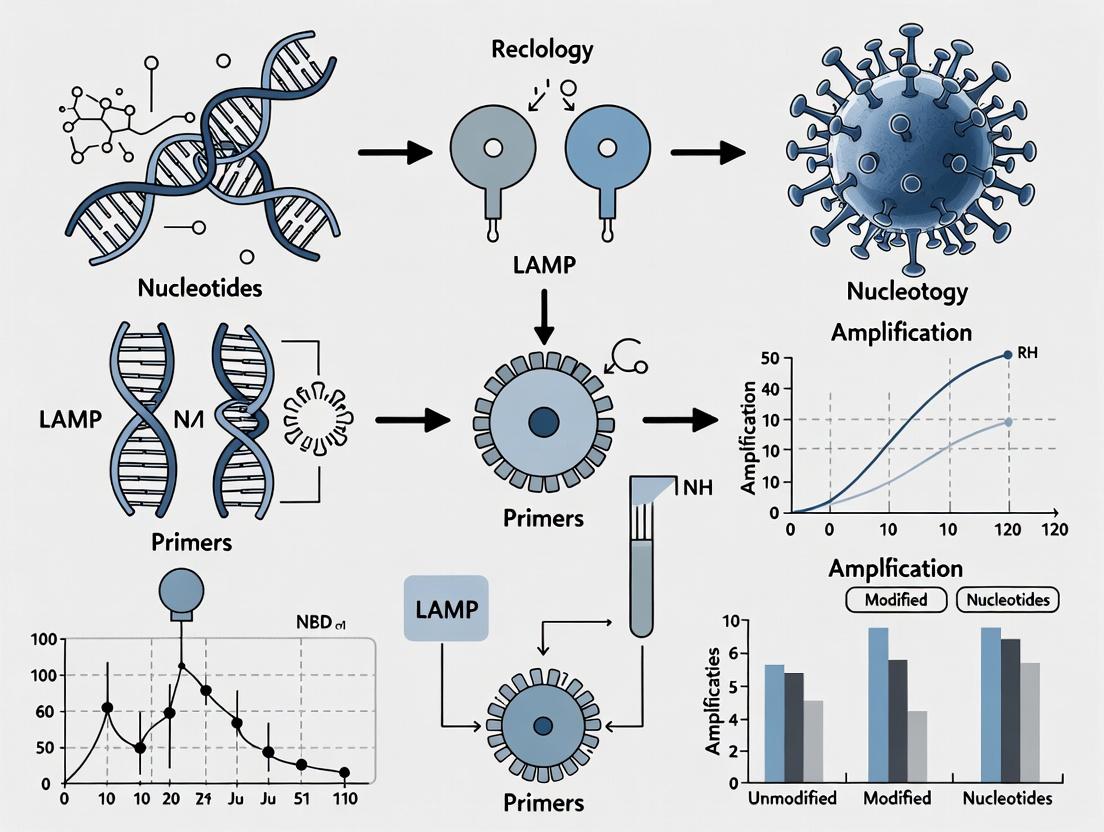
This article provides researchers, scientists, and drug development professionals with a detailed examination of how modified nucleotides enhance Loop-Mediated Isothermal Amplification (LAMP) efficiency.
Boosting LAMP Assay Performance: A Comprehensive Guide to Modified Nucleotides for Enhanced Detection Sensitivity and Speed
Abstract
This article provides researchers, scientists, and drug development professionals with a detailed examination of how modified nucleotides enhance Loop-Mediated Isothermal Amplification (LAMP) efficiency. It explores the foundational science behind nucleotide analogs, presents methodological protocols for their integration, offers troubleshooting strategies for assay optimization, and delivers a comparative analysis of validation techniques. The content is designed to serve as a practical guide for developing faster, more sensitive, and robust molecular diagnostics and research assays.
The Science Behind Modified Nucleotides: Understanding Their Role in Enhancing LAMP Reaction Kinetics and Fidelity
Technical Support Center: Troubleshooting & FAQs
This support center is designed to assist researchers working within the context of optimizing LAMP reaction efficiency using modified nucleotides. The following guides address common experimental challenges.
Frequently Asked Questions (FAQs)
Q1: My LAMP reaction shows no amplification. What are the primary causes? A: No amplification in LAMP can stem from several factors. First, verify template quality and concentration; degraded or low-concentration DNA/RNA is a common culprit. Second, check the integrity of your primers (F3, B3, FIP, BIP, LF, LB). A single failed primer set halts the entire reaction. Third, ensure the reaction temperature is consistently maintained at 60-65°C, as Bst polymerase is sensitive to fluctuations. Fourth, if using modified nucleotides (e.g., biotin- or fluorescein-dUTP), ensure they are compatible with Bst polymerase and do not exceed the optimal replacement percentage of standard dNTPs, typically 20-50% depending on the modification.
Q2: Why is my LAMP assay producing non-specific amplification or high background? A: Non-specific products often arise from primer-dimer artifacts or mis-priming. Re-optimize primer concentrations, ensuring the inner primers (FIP/BIP) are at higher concentrations than the outer primers (F3/B3). Increase the reaction temperature by 1-2°C within the 60-65°C range to enhance stringency. The addition of loop primers can accelerate the reaction, reducing time for non-specific interactions. When incorporating modified nucleotides, note that some labels (e.g., bulky fluorescent dyes) may reduce polymerase fidelity, increasing mis-incorporation.
Q3: How does the incorporation of modified nucleotides quantitatively affect LAMP kinetics and efficiency? A: Incorporating modified nucleotides directly impacts key reaction parameters. Our thesis research indicates a quantifiable trade-off between label incorporation and amplification efficiency.
Table 1: Impact of Modified dUTP on LAMP Reaction Parameters
| Modified dUTP Type | Optimal % Replacement of dTTP | Mean Time-to-Positive (min) | Relative Final Amplicon Yield | Key Effect on Detection |
|---|---|---|---|---|
| Biotin-dUTP | 30-40% | 25.2 ± 2.1 | 95% | Enables streptavidin-based capture. |
| Fluorescein-dUTP | 20-30% | 28.5 ± 3.3 | 85% | Direct fluorescence readout. |
| Digoxigenin-dUTP | 25-35% | 26.8 ± 2.7 | 90% | Anti-DIG antibody detection. |
| Unmodified dTTP (Control) | 100% | 22.1 ± 1.5 | 100% | Baseline for comparison. |
Q4: My end-point detection (e.g., colorimetric) is inconsistent despite successful amplification. How can I troubleshoot this? A: Inconsistent detection, particularly in assays using labeled nucleotides, often relates to amplicon labeling efficiency or detection chemistry. For colorimetric detection based on pH change, ensure the reaction is not over-amplified, which can lead to false-negative results due to pyrophosphate precipitation. For probe-based or lateral flow detection linked to modified nucleotides, confirm that the modification is efficiently incorporated and accessible. For example, biotin-labeled amplicons require adequate spacing; ensure the biotin-dUTP used has a sufficiently long linker arm. Always run a gel electrophoresis (if not using modified nucleotides that hinder electrophoresis) alongside your detection method to confirm amplification success.
Experimental Protocol: Evaluating LAMP Efficiency with Modified Nucleotides
Objective: To quantitatively assess the impact of fluorescein-dUTP incorporation on LAMP amplification kinetics and yield.
Materials: See "The Scientist's Toolkit" below.
Methodology:
- Reaction Setup: Prepare a master mix for 25 µL reactions as per Table 2. Set up a series of reactions where fluorescein-dUTP replaces dTTP at 0%, 10%, 20%, 30%, 40%, and 50% molar equivalence.
- Thermal Cycling: Incubate reactions at 65°C for 60 minutes in a real-time thermocycler capable of fluorescence detection (FAM channel for fluorescein).
- Data Collection: Monitor fluorescence in real-time. Record the time-to-positive (Tp) for each reaction, defined as the time at which the fluorescence curve crosses the threshold.
- End-Point Analysis: After amplification, perform a 2% agarose gel electrophoresis to confirm amplicon size and specificity. Use a quantitative dsDNA assay (e.g., PicoGreen) to measure final amplicon yield.
- Data Analysis: Plot Tp and final yield against the percentage of dTTP replacement. Determine the optimal replacement level that balances detection capability with minimal efficiency loss.
Table 2: Master Mix for Modified Nucleotide LAMP Reaction
| Component | Final Concentration | Volume per 25 µL Reaction | Function |
|---|---|---|---|
| Isothermal Buffer (10x) | 1x | 2.5 µL | Provides optimal pH, salts, and betaine for strand displacement. |
| MgSO4 (100 mM) | 6-8 mM | 1.5-2.0 µL | Essential cofactor for Bst polymerase. |
| dNTP Mix | 1.4 mM each | 3.5 µL | Includes modified dUTP at specified replacement ratio. |
| Primer Mix (FIP/BIP) | 1.6 µM each | 2.0 µL | Drives inner strand displacement and loop formation. |
| Primer Mix (F3/B3) | 0.2 µM each | 1.0 µL | Initiates outer strand displacement. |
| Bst 2.0/3.0 Polymerase | 8 U/reaction | 1.0 µL | Heat-stable DNA polymerase with strand-displacing activity. |
| Template DNA | 10^3 - 10^5 copies | 5 µL | Target sequence for amplification. |
| Nuclease-free Water | - | To 25 µL | Reaction volume adjustment. |
The Scientist's Toolkit: Key Research Reagent Solutions
Table 3: Essential Materials for LAMP with Modified Nucleotides
| Reagent/Material | Supplier Examples | Critical Function |
|---|---|---|
| Bst 2.0 or 3.0 DNA Polymerase | NEB, Thermo Fisher | Engineered for robust strand displacement at constant temperatures (60-65°C). |
| Isothermal Amplification Buffer (with Betaine) | NEB, Lucigen | Reduces DNA secondary structure, stabilizing single-stranded regions for primer binding. |
| Modified Nucleotides (e.g., Biotin-/FAM-dUTP) | Jena Bioscience, Sigma | Enables downstream detection, capture, or labeling of amplicons for diagnostic applications. |
| WarmStart LAMP Primer Design Kit | Integrated DNA Technologies | Assists in designing efficient, specific primer sets for complex LAMP assays. |
| Colorimetric Detection Mix (e.g., HNB, Phenol Red) | Sigma, homemade | Allows visual readout of amplification via pH-sensitive dye change. |
| Lateral Flow Strips (for Biotin/FAM detection) | Milenia, Ustar | Provides rapid, instrument-free endpoint detection for field applications. |
| Thermal Cycler with Real-Time Fluorescence | Bio-Rad, Qiagen | Enables quantitative monitoring of amplification kinetics for optimization. |
Visualizations
Title: Core LAMP Amplification Mechanism Workflow
Title: LAMP Troubleshooting Decision Tree
Technical Support Center: Troubleshooting LAMP with Modified Nucleotides
This support center addresses common experimental challenges when incorporating modified nucleotides into Loop-Mediated Isothermal Amplification (LAMP) assays, a critical focus of our thesis on optimizing LAMP reaction efficiency for advanced diagnostic and drug development applications.
Frequently Asked Questions (FAQs)
Q1: My LAMP reaction with dUTP/biotin-dUTP shows significantly reduced or no amplification compared to standard dNTPs. What is the cause? A: This is often due to polymerase incompatibility and altered reaction kinetics. Most Bst polymerases have reduced incorporation efficiency for bulky modified nucleotides like biotin-dUTP. Furthermore, the substitution of dTTP with dUTP can alter DNA duplex stability, potentially hindering the strand displacement activity essential for LAMP. Ensure you are using a polymerase engineered for modified nucleotide incorporation (e.g., Bst 2.0/3.0, Bst LF) and optimize the ratio of modified to standard dNTPs.
Q2: When using fluorescent nucleotide analogs (e.g., Cy3-dUTP, FITC-dUTP) for real-time or end-point detection, my background fluorescence is very high. A: High background typically results from unincorporated fluorescent nucleotides. LAMP produces a large mass of DNA, but not all labeled dNTPs are incorporated. You must include a post-amplification purification step, such as ethanol precipitation or spin-column cleanup, to remove free fluorescent nucleotides before plate reading or gel analysis. Alternatively, use sequence-specific fluorescent probes (e.g., quenched probes) for real-time detection instead of direct incorporation.
Q3: My detection signal from biotin-dUTP incorporated amplicons is weak in downstream lateral flow or ELISA assays. A: This indicates insufficient biotin incorporation. First, verify the biotin-dUTP concentration in the reaction mix. A partial substitution (e.g., 20-50% of dTTP) is usually necessary. Second, ensure the streptavidin conjugate (e.g., on gold nanoparticles or enzymes) can access the biotin; amplicon secondary structure may hide it. Incorporate a denaturation step (heat or chemical) before detection to expose biotin tags.
Q4: How do I determine the optimal ratio of modified dNTP to standard dNTP in a LAMP reaction? A: A titration experiment is required. Keep the total concentration of the nucleotide base constant (e.g., total "T" position = dTTP + dUTP-analog) while varying the percentage of the modified analog. Assess the trade-off between amplification efficiency (yield) and label incorporation (signal).
Q5: Can I use multiple modified nucleotides (e.g., biotin-dUTP and a fluorescent-dCTP) in the same LAMP reaction? A: Yes, for multi-modal detection, but with caution. Each modification adds steric hindrance. The cumulative effect can severely inhibit polymerase processivity, leading to reaction failure. Use the lowest effective concentration of each, choose polymerases with high modified base tolerance, and empirically validate the combination.
Troubleshooting Guide
| Symptom | Possible Cause | Recommended Action |
|---|---|---|
| No Amplification | Polymerase incompatible with modification. | Switch to a high-tolerance polymerase (Bst 2.0/3.0, Bst LF). |
| Complete replacement of standard dNTP. | Use a partial substitution scheme (see Table 1). | |
| Mg²⁺ concentration is suboptimal. | Titrate MgSO₄ (typically 4-8 mM) as modified NTPs can affect optimal levels. | |
| Reduced Yield | Suboptimal ratio of modified:standard dNTP. | Titrate the modified dNTP (from 10% to 100% substitution). |
| Inhibition from label chemistry. | Source nucleotides from different vendors; purity may vary. | |
| High Background (Fluorescence) | Unincorporated fluorescent dNTPs. | Implement a post-amplification purification step. |
| Weak Detection Signal | Insufficient incorporation of label (biotin/fluor). | Increase proportion of modified dNTP within tolerable limits. |
| Label masked by amplicon structure. | Denature amplicons prior to detection assay. | |
| Non-specific Amplification | Lowered reaction stringency due to altered NTP kinetics. | Increase temperature (from 63°C to 65-67°C) if primer fidelity allows. |
| Add loop primers to accelerate specific amplification. |
Table 1: Example Titration Data for Biotin-dUTP in LAMP
| Biotin-dUTP (% of total dTTP) | Final Amplicon Yield (ng/µL) | Relative Lateral Flow Signal Intensity | Notes |
|---|---|---|---|
| 0% (Control) | 450 ± 35 | 0 | No detection expected. |
| 20% | 420 ± 40 | +++ | Optimal balance for this system. |
| 50% | 300 ± 50 | ++++ | Strong signal, reduced yield. |
| 100% | 50 ± 20 | + | Severe inhibition, poor signal. |
Experimental Protocols
Protocol 1: Optimizing Modified Nucleotide Incorporation in LAMP Objective: To determine the maximum tolerable concentration of a modified nucleotide (e.g., biotin-dUTP) without significant loss of amplification efficiency.
- Prepare Master Mix: Create a standard LAMP master mix (1.25x) containing primers (FIP/BIP, 1.6 µM each; LF/LB, 0.8 µM each), Isothermal Amplification Buffer, additional MgSO₄ (to 6-8 mM final), Bst 2.0 WarmStart Polymerase (8 U/reaction), and a fixed amount of dATP, dCTP, dGTP.
- Spike Modified dNTP: For the dTTP/biotin-dUTP mix, prepare separate tubes where biotin-dUTP constitutes 0%, 10%, 20%, 35%, 50%, 75%, and 100% of the total dTTP concentration (final 1.4 mM total). Keep total volume constant.
- Run Reaction: Aliquot master mix into tubes, add template DNA (10³ copies/reaction) and water to final 1x. Incubate at 65°C for 60 minutes, then 80°C for 5 minutes.
- Analyze: Quantify yield via fluorescence intercalating dye (post-run addition) or gel electrophoresis. Perform downstream detection (e.g., lateral flow) to assess label incorporation.
Protocol 2: Post-Amplification Purification for Fluorescent-dUTP LAMP Amplicons Objective: To remove unincorporated fluorescent nucleotides for accurate endpoint fluorescence measurement.
- Post-LAMP: Add 2 volumes of binding buffer (from a PCR cleanup kit) to 1 volume of completed LAMP reaction.
- Column Purification: Transfer the mixture to a silica spin column. Centrifuge at 12,000 x g for 1 minute. Discard flow-through.
- Wash: Add 700 µL wash buffer (with ethanol). Centrifuge at 12,000 x g for 1 minute. Discard flow-through. Repeat wash step. Centrifuge empty column for 2 minutes to dry.
- Elute: Place column in a clean tube. Apply 30-50 µL of nuclease-free water or TE buffer to the membrane. Let sit for 2 minutes. Centrifuge at 12,000 x g for 2 minutes. The eluate contains purified, fluorescently labeled amplicons ready for quantification.
Diagrams
Workflow for LAMP with Modified Nucleotides
Troubleshooting Decision Tree
The Scientist's Toolkit: Key Research Reagent Solutions
| Reagent/Material | Function in Modified-NTP LAMP | Key Consideration |
|---|---|---|
| Bst DNA Polymerase 2.0/3.0 or LF | Engineered for higher processivity and tolerance for bulky nucleotide analogs. Essential for efficient incorporation. | WarmStart versions prevent non-specific amplification. Check vendor specifications for modified base acceptance. |
| Modified dNTPs (dUTP, Biotin-dUTP, Fluoro-dUTP) | Provides the functional label (biotin for capture/detection, fluorophore for imaging) or backbone modification (dUTP for uracil-DNA glycosylase [UDG] carryover prevention). | Linker length between nucleotide and label affects incorporation efficiency. Aliquot to avoid freeze-thaw cycles. |
| Isothermal Amplification Buffer | Provides optimal pH, salts, and often includes betaine to reduce secondary structure and stabilize polymerase. | Mg²⁺ concentration may need re-optimization when using modified dNTPs. |
| dNTP Mix (Standard) | Standard nucleotides (dATP, dCTP, dGTP, dTTP) used in a partial replacement strategy with modified dNTPs. | Use high-purity, PCR-grade. The ratio to modified dNTP is the critical optimization variable. |
| Post-Amplification Purification Columns (PCR Cleanup) | Removes unincorporated labeled dNTPs, primers, and enzymes to reduce background in detection assays. | Essential for accurate quantification of fluorescence from incorporated analogs. |
| Streptavidin Conjugates (HRP, Gold Nanoparticles) | For detecting biotin-labeled amplicons in lateral flow or microplate assays. | High sensitivity and specificity for biotin. Must be compatible with the assay buffer. |
| UDG (Uracil-DNA Glycosylase) | Used in pre-amplification steps with dUTP-containing mixes to degrade carryover contamination from previous amplifications. | Must be heat-inactivated prior to addition of polymerase for LAMP to proceed. |
Troubleshooting Guides & FAQs
Q1: My LAMP amplification yield is lower than expected when using modified nucleotides (e.g., biotin-11-dUTP). What could be causing this? A: A significant drop in yield is often due to polymerase stalling. Modified nucleotides, especially bulky labels (biotin, fluorescein), can hinder polymerase translocation. Troubleshooting Steps: 1) Reduce modified dNTP concentration: Try a 1:3 to 1:10 ratio of modified:dTTP. 2) Increase polymerase concentration by 1.5-2x. 3) Verify magnesium concentration; modified nucleotides can alter Mg²⁺ optimum. Titrate MgSO₄ from 2-8 mM. 4) Switch polymerases: Use engineered mutants (e.g., Bst 2.0 WarmStart, Bst 3.0) with enhanced tolerance.
Q2: The reaction speed (time to positivity) has increased dramatically with my modified nucleotide set. How can I recover faster kinetics? A: Slowed kinetics indicate reduced polymerization rate. Action Plan: 1) Optimize incubation temperature: Increase by 1-2°C to lower nucleic acid stability and aid strand separation. 2) Incorporate a helix-destabilizing reagent: Add 0.2 M betaine or 1-5% DMSO to reduce secondary structures. 3) Evaluate primer design: Ensure primers for the modified region have lower Tm (55-60°C) to facilitate binding despite steric hindrance.
Q3: I observe non-specific amplification (smearing on gel) only in reactions with aminoallyl-dUTP. How do I improve specificity? A: Modified nucleotides can reduce fidelity or alter primer annealing. Solution: 1) Increase annealing stringency: Raise reaction temperature by 2-3°C above calculated primer Tm. 2) Add a hot-start component: Use a polymerase with antibody-based or chemical hot-start activation to prevent primer-dimer formation. 3) Shorten extension time: Limit to 30-45 seconds per cycle to disfavor elongation of mismatched primers.
Q4: How do I quantify the incorporation efficiency of a modified nucleotide (e.g., Cy5-dCTP) in my LAMP amplicon? A: Use a gel-shift or HPLC assay. Protocol: Run the post-amplification product on a 2% agarose gel alongside a control (unmodified) amplicon. Modified amplicons often show reduced electrophoretic mobility. For precise quantification, perform HPLC analysis with a C18 column, comparing the retention times of nucleosides from enzymatically digested amplicons against modified nucleoside standards.
Table 1: Impact of Common Nucleotide Modifications on Bst Polymerase Performance
| Modification Type (on dUTP/dCTP) | Relative Processivity (%)* | ΔTTP (min) | Relative Yield (%)* | Optimal Mod:dNTP Ratio |
|---|---|---|---|---|
| Unmodified (Control) | 100 | 0 | 100 | N/A |
| Biotin-11 | 45-60 | +15-25 | 50-75 | 1:5 |
| Fluorescein-12 | 35-50 | +20-30 | 40-65 | 1:10 |
| Aminoallyl | 70-85 | +5-10 | 80-95 | 1:3 |
| Digoxigenin-11 | 50-65 | +18-28 | 55-70 | 1:7 |
Compared to unmodified control. *Increase in time to threshold (TTP) vs. control.
Table 2: Engineered Polymerase Variants for Modified Nucleotide Incorporation
| Polymerase Variant | Key Mutation/Feature | Recommended for Modifications | Processivity Boost vs. Wild-Type | Supplier Examples |
|---|---|---|---|---|
| Bst 2.0 WarmStart | dsDNA binding domain removal, aptamer-based hot-start | Bulky labels (biotin, fluorophores) | ~1.8x | NEB, Merck |
| Bst 3.0 | Reverse transcriptase activity, enhanced strand displacement | Aminoallyl, Digoxigenin | ~2.2x | NEB |
| Gss polymerase | Family A, high thermostability | Low steric hindrance mods | ~1.5x | OptiGene |
| OmniAmp | Mutant with increased dNTP binding affinity | All, at low concentrations | ~2.0x | Lucigen |
Experimental Protocols
Protocol 1: Titrating Modified Nucleotides for Optimal LAMP Yield Objective: Determine the maximal incorporable fraction of a modified nucleotide without significant yield loss. Materials: LAMP master mix (isothermal buffer, MgSO₄, primers, polymerase), template DNA, modified nucleotide stock (e.g., Biotin-16-dUTP), standard dNTP mix. Method:
- Prepare a series of dTTP replacement mixes where the modified nucleotide constitutes 10%, 25%, 50%, 75%, and 100% of the total dTTP concentration.
- Keep total dTTP (modified + unmodified) concentration constant as per master mix protocol.
- Set up 25 µL reactions for each ratio, using identical template and primer concentrations.
- Incubate at 65°C for 60 minutes, then heat-inactivate at 80°C for 5 min.
- Quantify yield using fluorescence (SYBR Green) or gel electrophoresis with densitometry.
- Plot yield vs. incorporation ratio to identify the "inflection point" of significant drop.
Protocol 2: Assessing Polymerase Processivity with Modified Templates Objective: Directly measure the average number of nucleotides incorporated per polymerase binding event. Materials: Single-stranded DNA template with a 5' primer binding site, 5'-fluorescently labeled primer, polymerase, dNTPs with/without modifications, heparin (trap). Method:
- Anneal the fluorescent primer to the template.
- In a stopped-flow apparatus, rapidly mix the primer-template complex with a solution containing polymerase and dNTPs (with a defined fraction of modified dNTP).
- Include a large excess of heparin in the dNTP mix to act as a trap for free polymerase, preventing re-initiation.
- Quench reactions at time points (e.g., 10, 30, 60, 120 sec) with EDTA.
- Run products on a high-resolution denaturing polyacrylamide gel.
- The processivity is estimated by the length of the longest product synthesized before the polymerase is trapped.
Visualizations
Title: Polymerase Engineering Overcomes Modified dNTP Challenges
Title: Troubleshooting Workflow for Modified dNTP LAMP Reactions
The Scientist's Toolkit: Research Reagent Solutions
| Item | Function in Modified dNTP LAMP | Example Product/Brand |
|---|---|---|
| Engineered Bst Polymerase | High processivity and tolerance for bulky modified nucleotides; often includes hot-start. | Bst 2.0 WarmStart (NEB M0537), Bst 3.0 (NEB M0374) |
| Isothermal Amplification Buffer | Provides optimal pH, salts, and often includes crowding agents to enhance polymerase activity. | Isothermal Amplification Buffer II (NEB), WarmStart LAMP Kit (NEB) |
| Betaine (5M Solution) | Helix destabilizer; reduces secondary structure, lowers Tm, improves primer annealing and strand displacement. | Molecular Biology Grade Betaine (Sigma-Aldrich B0300) |
| dNTP Mix, Modified | Defined ratio of modified to standard dNTPs; critical for consistent incorporation without inhibition. | Biotin-11-dUTP (Jena Bioscience NU-803-BIO11), Cy5-dCTP (PerkinElmer NEL583001EA) |
| SYTO or SYBR Green Dyes | Intercalating dyes for real-time monitoring of LAMP amplification kinetics and yield quantification. | SYTO 9 green fluorescent nucleic acid stain (Thermo Fisher S34854) |
| Heparin Sodium Salt | Polyanionic trap for free polymerase; used in in vitro processivity assays. | Heparin Sodium Salt from Porcine Intestinal Mucosa (Sigma H3393) |
| Magnetic Beads, Streptavidin | For post-amplification purification or pull-down of biotin-labeled LAMP amplicons. | Dynabeads M-280 Streptavidin (Thermo Fisher 11205D) |
| Quick-Load Ladder | DNA molecular weight marker for fast and accurate sizing of modified (shifted) amplicons on gels. | Quick-Load 100 bp DNA Ladder (NEB N0467S) |
Technical Support Center
Troubleshooting Guides & FAQs
Q1: During gel electrophoresis, my LAMP reaction shows a pronounced ladder-like pattern or a smear below the target band. What causes this, and how can I reduce non-specific amplification? A: This is a classic sign of non-specific amplification and primer-dimer artifacts. These issues are frequently exacerbated by suboptimal primer design and standard reaction conditions. Key strategies include:
- Primer Design: Utilize dedicated LAMP primer design software (e.g., PrimerExplorer, NEB LAMP Designer) that incorporates algorithms to minimize inter-primer homology. Ensure strict adherence to recommended Tm ranges (FIP/BIP: 55-65°C; F3/B3: 50-60°C).
- Reagent Optimization: Incorporate additives like betaine (0.8-1.2 M) to reduce secondary structure and improve specificity. Increasing the reaction temperature to 65-67°C can enhance stringency.
- Hot Start Bst Polymerase: Use a hot-start version of Bst DNA polymerase to prevent activity during reaction setup at lower temperatures, dramatically reducing primer-dimer formation.
- Time-To-Positive (Tp) Monitoring: In real-time setups, a delayed Tp often indicates inefficient amplification. Optimize MgSO₄ concentration (typically 4-8 mM) and dNTP levels (1.2-1.6 mM) to improve speed and specificity.
Q2: My real-time fluorescence curves show an early rise but then plateau at a low level, or show high background fluorescence from the start. Is this primer-dimer formation? A: Yes, an early fluorescence rise with a low final amplitude is highly indicative of primer-dimer formation and non-specific amplification consuming reagents. This is a critical concern in quantitative applications. Solutions include:
- Increase Annealing Stringency: Re-design primers with higher, more consistent Tm. Experimentally, increase the reaction temperature incrementally (e.g., from 63°C to 66°C).
- Modified Nucleotides: Incorporating dUTP in place of dTTP (with subsequent use of Uracil-DNA Glycosylase (UDG) for carryover prevention) or using dITP can alter primer annealing kinetics and reduce dimer stability. This aligns directly with research into LAMP efficiency using modified nucleotides.
- Probe-Based Detection: Switch from intercalating dyes (SYTO-9, EvaGreen) to strand-displacing probes (e.g., Loop primers with fluorophore-quencher pairs) for sequence-specific detection, eliminating signal from non-target amplification.
Q3: How can I experimentally validate that my optimization steps have successfully reduced primer-dimers? A: Implement a comparative analysis using the following protocol:
Protocol: Agarose Gel Analysis for Primer-Dimer Assessment
- Prepare Reactions: Set up two identical LAMP master mixes targeting your gene of interest. To the "Test" mix, add your optimization agent (e.g., 1M betaine). The "Control" has none.
- Run LAMP: Perform amplification at standard (e.g., 63°C) and elevated (e.g., 66°C) temperatures for 60 minutes.
- Gel Electrophoresis: Run 10 µL of each product on a 2% agarose gel stained with GelRed. Include a 100-bp DNA ladder.
- Analysis: A successful optimization will show a cleaner target ladder/smear in the "Test" and/or higher temperature lanes, with reduced low-molecular-weight smearing (<200 bp) indicative of primer-dimers.
Q4: What are the most critical parameters to titrate when optimizing a new LAMP assay to avoid these issues? A: The following parameters should be systematically optimized. Use a Design of Experiments (DOE) approach for efficiency.
Table 1: Key Parameters for LAMP Optimization Titration
| Parameter | Typical Range | Effect on Specificity | Recommendation |
|---|---|---|---|
| MgSO₄ | 2-10 mM | Critical; high [Mg²⁺] increases non-specific binding. | Titrate in 1 mM steps from 4-8 mM. |
| Temperature | 60-68°C | Higher temp increases stringency. | Test at 63°C, 65°C, and 67°C. |
| Betaine | 0-1.4 M | Reduces secondary structure, improves yield & specificity. | Titrate from 0.6 M to 1.2 M. |
| dNTPs | 0.8-2.0 mM | Low [dNTP] reduces speed, high [dNTP] can increase errors. | Start at 1.4 mM, adjust ± 0.2 mM. |
| Primer Ratio | (FIP/BIP):(LF/LB):(F3/B3) | Imbalance causes drift and artifacts. | Start at 8:4:1 (µM), fine-tune based on Tp. |
| Polymerase | 0.32-1.28 U/µL | Excess enzyme increases non-specific products. | Follow vendor rec., then adjust ± 25%. |
The Scientist's Toolkit
Table 2: Essential Research Reagent Solutions for High-Fidelity LAMP
| Item | Function & Rationale |
|---|---|
| Hot-Start Bst 2.0/3.0 Polymerase | Engineered for no activity at room temp, preventing primer-dimer extension during setup. Crucial for reproducibility. |
| Betaine Solution (5M) | A chemical chaperone that equalizes DNA strand stability, promoting efficient primer binding at optimal Tm and reducing mis-priming. |
| dUTP/dITP Nucleotide Mixes | Modified nucleotides (dUTP or dITP) can be incorporated to study and alter annealing kinetics, a key focus of advanced LAMP efficiency research. |
| UDG (Uracil-DNA Glycosylase) | Used with dUTP-containing reactions to degrade carryover contamination from previous amplifications, critical for diagnostic workflow integrity. |
| Strand-Displacing Fluorescent Probes | Sequence-specific detection molecules (e.g., FITC-Quencher labeled LF primers) that only fluoresce upon target amplification, eliminating dye-based background. |
| Thermostable Pyrophosphatase | Converts pyrophosphate (a byproduct of amplification) to phosphate, preventing inhibition of Bst polymerase and increasing yield, especially in long or complex reactions. |
Experimental Protocols & Data
Protocol: Incorporating Modified Nucleotides (dUTP) for Specificity Analysis Context: This protocol is central to thesis research on LAMP reaction efficiency with modified nucleotides.
- Master Mix Preparation (25 µL reaction):
- 1x Isothermal Amplification Buffer
- 6 mM MgSO₄
- 1.4 mM total dNTPs (Prepare mixes: 100% dTTP control; 50% dTTP / 50% dUTP test)
- 1 U/µL Hot Start Bst 2.0 Polymerase
- 0.4 U/µL UDG (for dUTP reactions only)
- 1M Betaine
- Primers (FIP/BIP: 1.6 µM each; LF/LB: 0.8 µM each; F3/B3: 0.2 µM each)
- Template DNA: 10^3 copies/µL
- Fluorescent dye (e.g., 1x SYTO-9) or probe
- UDG Incubation: For dUTP-containing reactions, incubate at 37°C for 5 minutes to degrade contaminating uracil-containing DNA.
- LAMP Amplification: Incubate at 65°C for 45 minutes in a real-time thermal cycler, monitoring fluorescence every 30 seconds.
- Post-Amplification Analysis: Perform melt curve analysis (65°C to 95°C, 0.1°C/s) and run 10 µL on a 2% agarose gel.
Table 3: Example Results from Modified Nucleotide Experiment
| Condition | Mean Time-to-Positive (Tp) | Final ΔRFU | Gel Result (Specificity Score 1-5) | Notes |
|---|---|---|---|---|
| Standard dNTPs, 63°C | 15.2 ± 1.1 min | 4500 | 3 | Some low MW smearing observed. |
| Standard dNTPs, 66°C | 18.5 ± 1.4 min | 4200 | 4 | Cleaner ladder, Tp increased. |
| 50% dUTP, 66°C | 17.8 ± 0.9 min | 4100 | 5 | Sharpest target bands, no smearing. |
| No Template Control | N/A | 250 | 1 | Faint primer-dimer smear in gel. |
Visualizations
Troubleshooting Non-Specific LAMP Workflow
dUTP-UDG Anti-Carryover Mechanism
This technical support center provides troubleshooting guidance for issues related to using modified nucleotides (e.g., dUTP, biotin-dUTP, fluorescent-dNTPs) in Loop-Mediated Isothermal Amplification (LAMP) assays and associated reverse transcription steps, within the context of research aimed at optimizing LAMP reaction efficiency.
Troubleshooting Guides & FAQs
Q1: My LAMP reaction yield is significantly lower when using modified dNTPs (e.g., Fluorescent-dUTP) compared to standard dNTPs. What could be the cause? A: This is typically due to reduced incorporation efficiency by Bst polymerase. The bulky modifications can sterically hinder the polymerase. First, verify the modified nucleotide's concentration (see Table 1). Ensure you are not exceeding the recommended substitution ratio (often 20-50% modified:natural dNTP). Perform a titration of Mg²⁺ and betaine, as these can help polymerase processivity with modified substrates. Consider testing a Bst polymerase variant engineered for modified nucleotide incorporation.
Q2: I observe degradation of my fluorescent signal in LAMP amplicons during post-reaction analysis. How can I improve stability? A: Photobleaching or chemical degradation of the fluorophore is likely. Incorporate protective agents like DTT (1-5 mM) or commercial antifade reagents into your storage buffer. For biotinylated nucleotides, ensure the storage buffer is free of nucleases (use EDTA) and at a slightly alkaline pH. Avoid prolonged exposure to light and high temperatures post-amplification.
Q3: My reverse transcription (RT) step prior to LAMP is inefficient when using primers containing locked nucleic acid (LNA) modifications. What should I do? A: Not all reverse transcriptases are compatible with heavily modified primers/templates. Standard M-MLV RT may stall. Switch to a reverse transcriptase known for high processivity and robust activity with structured templates, such as SuperScript IV or TGIRT. Increase the primer annealing temperature to match the increased Tm of the LNA primer, and consider a two-step RT protocol (anneal primer first, then add enzyme and buffer).
Q4: I get false-negative LAMP results with modified dNTPs, but my positive control with standard dNTPs works. How do I troubleshoot? A: Follow this systematic protocol:
- Verify Substitution Ratio: Confirm calculations for partial substitution (e.g., 30% modified dCTP, 70% natural dCTP).
- Run a Polymerase Screen: Test different strand-displacing polymerases (Bst 2.0, Bst 3.0, GspSSD) in parallel reactions.
- Check Inhibition: Dilute the template. Some modifications can be inhibitory at high concentrations.
- Validate Detection Method: Ensure your detection method (e.g., fluorescence reader filter set) is optimal for the specific fluorophore used.
Q5: How do I quantify the successful incorporation of modified nucleotides in my LAMP product? A: Use this validation protocol: Materials: Purified LAMP amplicon, streptavidin-coated beads (for biotin) or a fluorescence plate reader. Method: For biotin-dUTP, perform a bead-based capture assay. Bind amplicons to streptavidin beads, wash stringently, and quantify captured DNA via spectrophotometry or PCR. For fluorescent-dNTPs, run the amplicon on an agarose gel and image using the appropriate fluorescence gel imaging channel; compare band intensity to a standard curve of known-quantity fluorescent DNA.
Data Presentation
Table 1: Key Properties of Common Modified Nucleotides in LAMP Assays
| Modification Type | Example | Recommended Max Substitution Ratio | Compatible Bst Polymerase | RT Compatibility (SSIV) | Key Stability Consideration |
|---|---|---|---|---|---|
| Digoxigenin | Dig-dUTP | 1:5 (Modified:Natural) | Bst 2.0 WarmStart | Moderate | Stable in EDTA buffer, pH 8.0 |
| Biotin | Biotin-16-dUTP | 1:3 | Bst 3.0 | High | Avoid repeated freeze-thaw of stock |
| Fluorescent | Cy5-dCTP | 1:4 | Bst LF 2.0 | Low-Moderate | Protect from light, add DTT |
| 2'-Fluoro | 2'-F-dCTP | Full substitution possible | Wild-type Bst | High | Chemically stable, mimics dNTP |
Table 2: Troubleshooting Matrix: Symptom vs. Likely Cause & Solution
| Symptom | Likely Cause | Primary Solution | Secondary Solution |
|---|---|---|---|
| Low yield with modified dNTPs | Poor incorporation efficiency | Titrate Mg²⁺ (2-8 mM) | Switch to engineered Bst 3.0 |
| High background fluorescence | Non-specific incorporation | Optimize betaine concentration (0.2-1.2 M) | Increase reaction temperature by 1-2°C |
| Failed RT-LAMP with modified primers | RT enzyme inhibition | Use high-tolerance RT (e.g., TGIRT) | Increase primer annealing temperature |
| Signal decay post-amplification | Fluorophore degradation | Add 5 mM DTT to product buffer | Store products in dark at 4°C |
Experimental Protocols
Protocol: Optimizing Modified dNTP Incorporation in LAMP Objective: Determine the optimal substitution ratio of a modified dNTP for maximum signal and yield.
- Prepare a master LAMP mix containing primers, Bst 3.0 polymerase, and constant amounts of dATP, dGTP, dTTP.
- For the dCTP position, create a series of tubes with a total dCTP concentration of 1.4 mM, but with varying ratios of Cy5-dCTP : natural dCTP (e.g., 0:100, 20:80, 50:50, 100:0).
- Run LAMP reactions under standard conditions (65°C, 60 min).
- Terminate reactions and measure total DNA yield (absorbance at 260 nm) and fluorescence intensity (Ex/Em for Cy5).
- Plot yield and signal vs. substitution ratio to identify the optimal point.
Protocol: Assessing Reverse Transcriptase Compatibility Objective: Test RT enzyme efficiency with RNA templates and LNA-modified primers.
- Design an LNA-modified primer targeting your RNA of interest.
- Set up RT reactions with identical RNA template and primer amounts, but different RT enzymes (e.g., M-MLV, SuperScript IV, TGIRT).
- Use a two-step protocol: anneal primer at 65°C for 5 min, then cool on ice. Add enzyme/buffer mix and incubate at recommended temperature (50-55°C for SSIV, 60°C for TGIRT) for 30 min.
- Use 10% of the RT product as template in a subsequent standard LAMP reaction with natural dNTPs.
- Compare time-to-positive (Tp) values from real-time fluorescence to determine the most efficient RT.
Mandatory Visualization
Diagram Title: Workflow for RT-LAMP Optimization with Modified Nucleotides
Diagram Title: Key Enzymatic Challenges Using Modified Nucleotides
The Scientist's Toolkit: Research Reagent Solutions
| Item | Function & Rationale |
|---|---|
| Engineered Bst Polymerase (e.g., Bst 3.0) | High tolerance for modified nucleotides; improved incorporation efficiency and processivity compared to wild-type. |
| High-Performance Reverse Transcriptase (e.g., SuperScript IV) | Essential for RT-LAMP with modified primers; offers higher thermal stability and yield with structured templates. |
| Betaine Solution (5M) | Additive that promotes polymerase processivity and can help denature secondary structures, crucial when using modified substrates. |
| Dithiothreitol (DTT, 1M stock) | Reducing agent that protects thiol-linked fluorophores (e.g., Cy dyes) from degradation during and after amplification. |
| Streptavidin-Coated Magnetic Beads | For rapid purification and validation of biotinylated LAMP amplicons via capture-and-wash assays. |
| dNTP Mixes (Natural & Modified) | Pre-mixed stocks at defined ratios (e.g., 30% Biotin-dUTP : 70% dTTP) ensure experimental consistency and accuracy. |
Protocol Development: Step-by-Step Guide to Incorporating Modified Nucleotides into Your LAMP Assay Design
Troubleshooting Guides & FAQs
FAQ 1: Why is my colorimetric LAMP reaction showing weak or no color change despite amplification?
- Answer: This is often due to insufficient incorporation of the modified nucleotide (e.g., biotin- or digoxigenin-labeled dUTP) into the amplicon, preventing effective binding to the colorimetric reporter (e.g., streptavidin-enzyme conjugate). Ensure the modified nucleotide is compatible with your Bst polymerase variant. Check the recommended substitution ratio (modified dNTP : canonical dNTP); a typical starting point is 1:1 to 1:4. Excessive modification can inhibit amplification, while too little reduces label density. Confirm the integrity of your visualization reagents (e.g., HRP substrate).
FAQ 2: How do I reduce high background fluorescence in real-time fluorescent LAMP using labeled primers or probes?
- Answer: High background usually stems from non-specific probe cleavage or primer-dimer formation. For hydrolytic probes (e.g., TaqMan), ensure the quencher dye (e.g., BHQ) is fully compatible with the fluorophore (e.g., FAM) via FRET. Increase the annealing temperature slightly within the LAMP isothermal range (60-67°C) to improve stringency. Titrate the probe concentration downward. Using uracil-containing primers/probes with UNG treatment can also reduce carryover contamination background.
FAQ 3: My lateral flow assay shows a faint test line; how can I improve sensitivity?
- Answer: Faint lines indicate low hapten (e.g., FITC, biotin) density on amplicons or suboptimal lateral flow conditions. First, optimize the LAMP reaction to produce more amplicons with a higher incorporation rate of the hapten-labeled nucleotide. Second, optimize the conjugate pad: ensure the gold nanoparticle (or latex bead) conjugates (e.g., anti-FITC) are in excess and flow efficiently. Adjust the sample buffer composition (salt, detergent) to minimize non-specific binding and improve capillary flow.
FAQ 4: What causes the formation of non-specific laddering on gels instead of clean LAMP bands when using modified nucleotides?
- Answer: Modified nucleotides can sometimes alter polymerization kinetics, causing polymerase stuttering or incomplete strand displacement. Verify that the polymerase is certified for use with your specific nucleotide analog. Adding or adjusting the concentration of loop primers can help drive the reaction toward full-length products. Additionally, include a positive control with canonical nucleotides to confirm the issue is modification-related.
Key Experimental Data
Table 1: Performance Comparison of Nucleotide Modifications for Different Detection Modalities
| Modification Type (Example) | Optimal dNTP Substitution Ratio | Recommended Polymerase | Primary Detection Goal | Key Advantage | Key Limitation |
|---|---|---|---|---|---|
| Biotin-11-dUTP | 1:3 (Modified:Canonical) | Bst 2.0 / Bst 3.0 | Colorimetric, Lateral Flow | High-affinity streptavidin binding | Large steric bulk may inhibit polymerization |
| Digoxigenin-11-dUTP | 1:4 | Bst 2.0 WarmStart | Colorimetric, Lateral Flow | Low background in biological samples | Requires anti-digoxigenin antibodies |
| Fluorescein-12-dUTP (FITC) | 1:5 | Bst LF | Lateral Flow | Direct recognition by anti-FITC on strips | Photobleaching potential |
| Cy5-dUTP | 1:10 | Wild-type Bst | Direct Fluorescence | Enables real-time, label-free detection | Expensive; may require protocol optimization |
| 2'-F-dCTP (Quencher-based) | Full replacement (for probes) | Any Bst with RT activity | Fluorescent Probe-based | Enables specific, real-time detection | Complex probe design required |
Detailed Experimental Protocols
Protocol: Optimizing Biotin-dUTP Incorporation for Colorimetric LAMP Detection
- Reaction Setup: Prepare a master mix containing 1.4 mM each dNTP (dATP, dGTP, dCTP), with dTTP partially replaced by Biotin-11-dUTP at ratios of 1:1, 1:3, 1:5, and 1:7 (biotin-dUTP:dTTP) in separate tubes.
- LAMP Reaction: Add 8 U of Bst 3.0 polymerase, 1x isothermal amplification buffer, 6 mM MgSO4, target-specific FIP/BIP primers (1.6 µM each), and F3/B3 primers (0.2 µM each) per 25 µL reaction. Include a no-template control.
- Amplification: Incubate at 65°C for 45 minutes, followed by 80°C for 5 minutes for enzyme inactivation.
- Colorimetric Detection: Transfer 5 µL of amplicon to a nitrocellulose membrane pre-spotted with streptavidin-HRP. Add 50 µL of TMB substrate. Observe color development within 5 minutes.
- Analysis: The ratio yielding the deepest blue color without inhibiting amplification (as verified by gel electrophoresis) is optimal.
Protocol: Developing a Fluorescent Lateral Flow Assay with FITC-/Biotin-Modified LAMP Amplicons
- Dual-Labeled LAMP: Perform LAMP as above, using a nucleotide mix containing both FITC-12-dUTP and Biotin-11-dUTP at their previously determined optimal ratios (e.g., 1:5 and 1:3 respectively).
- Amplicon Processing: Dilute the finished LAMP reaction 1:10 in the provided lateral flow assay running buffer.
- Lateral Flow Detection: Apply 100 µL of the diluted mixture to the sample pad of a lateral flow strip containing anti-FITC conjugated to gold nanoparticles (conjugate pad) and both a test line (streptavidin) and control line (anti-species antibody).
- Interpretation: A positive result is indicated by the appearance of both a test line (capturing biotinylated, FITC-labeled amplicons via streptavidin) and a control line within 10-15 minutes.
Visualizations
Title: Modification Selection Flow for Detection Goals
Title: LAMP Assay Development & Troubleshooting Workflow
The Scientist's Toolkit: Key Research Reagent Solutions
| Item | Function in Modified Nucleotide LAMP |
|---|---|
| Bst 2.0 or 3.0 Polymerase | Engineered for high strand displacement activity and tolerance for modified nucleotides like biotin-dUTP. |
| Biotin-11-dUTP | A thymidine analog used to incorporate biotin haptens for capture by streptavidin in colorimetric/lateral flow. |
| FITC-12-dUTP | A fluorescein-labeled dUTP used as a hapten for antibody recognition on lateral flow strips. |
| Cy5-dUTP | A fluorescent nucleotide analog for direct, real-time detection of amplification without probes. |
| Hydrolytic (TaqMan) Probes | Oligonucleotides with a 5' fluorophore and 3' quencher; cleaved during amplification for real-time detection. |
| Streptavidin-HRP Conjugate | Enzyme conjugate that binds biotinylated amplicons for colorimetric readout with TMB substrate. |
| Nitrocellulose Lateral Flow Strips | Membrane strips pre-coated with capture lines (streptavidin test line) for amplicon detection. |
| Isothermal Amplification Buffer | Optimized buffer providing pH, salt, and co-factors (Mg2+) for efficient Bst polymerase activity. |
| UNG (Uracil-N-glycosylase) | Enzyme used with dUTP-containing reactions to prevent carryover contamination from previous amplifications. |
Technical Support Center
Troubleshooting Guides
Issue: Low or No Amplification Yield
- Check 1: Mg2+ Concentration. Non-optimal Mg2+ is the most common cause. Mg2+ acts as a cofactor for the polymerase and chelates dNTPs. Excess Mg2+ can lead to non-specific amplification, while insufficient Mg2+ reduces polymerase activity.
- Check 2: dNTP:Mg2+ Ratio. The molar ratio is critical. Free Mg2+ must be available after accounting for dNTP chelation. A standard starting point is a 1:1 molar ratio of total dNTPs to Mg2+, but optimization is required, especially with modified nucleotides.
- Check 3: Polymerase Concentration. Too little polymerase cannot synthesize product efficiently; too much can increase non-specific background.
- Protocol for Systematic Optimization:
- Prepare a master mix with all components except Mg2+, dNTPs, and polymerase.
- Set up a matrix of reactions varying Mg2+ (2-8 mM final) and dNTP (0.4-1.6 mM each final) concentrations.
- Run the LAMP reaction and analyze yield via gel electrophoresis or fluorescence.
- In a second round, vary polymerase concentration (0.5x to 2x the manufacturer's recommendation) around the best Mg2+/dNTP condition.
Issue: Non-Specific Amplification or Primer-Dimer Formation
- Check 1: Excessive Free Mg2+. High free Mg2+ reduces polymerase fidelity. Re-optimize the Mg2+:dNTP ratio, potentially lowering Mg2+ or increasing dNTPs.
- Check 2: Imbalanced dNTP Ratios. Unequal concentrations can cause misincorporation and stall synthesis. Ensure equimolar dNTPs unless the experimental thesis specifically tests non-standard ratios for modified nucleotide incorporation.
- Check 3: Polymerase Concentration. Reduce polymerase concentration to increase stringency.
- Protocol for Specificity Check:
- Include a no-template control (NTC) and a negative control (non-target DNA) in every optimization run.
- Perform a temperature gradient (60-67°C) to find the optimal stringency for your primer set.
- Use a polymerase with hot-start capability or manual hot-start methods to prevent activity during setup.
Issue: Poor Incorporation of Modified Nucleotides (e.g., biotin- or FITC-dUTP)
- Check 1: dNTP Ratio Adjustment. Modified dNTPs often have lower incorporation efficiency. Partially substitute the standard dNTP with its modified analog (e.g., a 1:3 ratio of modified:standard dNTP). The optimal ratio must be determined empirically for each modification.
- Check 2: Mg2+ Adjustment. Some modified nucleotides alter Mg2+ binding kinetics. A slight increase in Mg2+ concentration (0.5-1 mM) may improve incorporation.
- Check 3: Polymerase Selection and Concentration. Not all Bst polymerases incorporate modified nucleotides equally. Use a polymerase engineered for modified base incorporation and test a range of concentrations.
- Protocol for Modified dNTP Incorporation:
- Prepare a master mix with a fixed, optimized Mg2+ concentration.
- Set up reactions with varying ratios of modified to standard dNTP (e.g., 0:1, 1:3, 1:1, 3:1, 1:0).
- Quantify yield and incorporation efficiency (e.g., via streptavidin assay for biotin) to find the maximum tolerable substitution level that maintains robust amplification.
Frequently Asked Questions (FAQs)
Q1: What is the fundamental relationship between Mg2+ and dNTPs in LAMP? A1: Mg2+ is an essential cofactor for DNA polymerase activity. However, it also forms a complex with dNTPs (the actual polymerase substrate). The key is to provide sufficient free Mg2+ for the polymerase after accounting for the Mg2+ chelated by dNTPs. An imbalance directly impacts reaction efficiency and specificity.
Q2: How do modified nucleotides affect standard LAMP formulation? A2: Modified nucleotides (e.g., dye-labeled, biotinylated) often have different steric and ionic properties than canonical dNTPs. This can lead to: 1) Reduced incorporation efficiency by the polymerase, 2) Altered optimal Mg2+ requirements, and 3) Generally slower amplification kinetics. This necessitates re-optimization of the core formulation parameters (Mg2+, ratios, polymerase amount) as part of the research thesis on LAMP efficiency with modifications.
Q3: Can I use my standard PCR dNTP concentration in LAMP? A3: Typically, no. LAMP generally requires higher dNTP concentrations (often 1.4 mM each) than standard PCR due to its strand-displacing, high-yield nature. Using PCR concentrations (0.2 mM each) will likely lead to premature termination and low yield.
Q4: Should I adjust polymerase concentration when changing Mg2+ or dNTP levels? A4: Yes, these parameters are interdependent. After finding an improved Mg2+/dNTP window, a finer titration of polymerase concentration (e.g., from 0.8x to 1.5x) can maximize yield and minimize cost. Higher Mg2+ may allow for slightly less polymerase, and vice versa.
Q5: What is a quick-start optimization protocol for a new LAMP assay? A5:
- Use a standard formulation (e.g., 6 mM Mg2+, 1.4 mM each dNTP, 1x polymerase).
- Titrate Mg2+ (4, 6, 8 mM) while keeping dNTPs constant.
- Titrate dNTPs (1.0, 1.4, 1.8 mM each) at the best Mg2+ level.
- Finally, titrate polymerase (0.5x, 1x, 2x) at the best Mg2+/dNTP condition.
Data Presentation
Table 1: Optimization Matrix for Standard LAMP Amplification
| Condition | [Mg2+] (mM) | [each dNTP] (mM) | Polymerase (x) | Relative Yield (%) | Specificity (NTC) |
|---|---|---|---|---|---|
| Baseline | 6.0 | 1.4 | 1.0 | 100 | Clean |
| High Mg2+ | 8.0 | 1.4 | 1.0 | 115 | Non-specific bands |
| Low Mg2+ | 4.0 | 1.4 | 1.0 | 45 | Clean |
| High dNTP | 6.0 | 1.8 | 1.0 | 95 | Clean |
| Low dNTP | 6.0 | 1.0 | 1.0 | 70 | Clean |
| High Enzyme | 6.0 | 1.4 | 2.0 | 105 | Primer-dimer |
| Low Enzyme | 6.0 | 1.4 | 0.5 | 30 | Clean |
Table 2: Optimization for LAMP with 50% Biotin-dUTP Substitution
| Condition | [Mg2+] (mM) | [dNTP] (mM) / [Biotin-dUTP] (mM) | Polymerase (x) | Yield (%) vs. Standard | Incorporation Efficiency |
|---|---|---|---|---|---|
| Standard Mix | 6.0 | 1.4 / 0.0 | 1.0 | 100% | N/A |
| 1:1 Substitution | 6.0 | 0.7 / 0.7 | 1.0 | 40% | 85% |
| 1:1 Substitution | 7.0 | 0.7 / 0.7 | 1.0 | 75% | 88% |
| 1:3 Substitution | 6.0 | 1.05 / 0.35 | 1.0 | 90% | 92% |
| High Enzyme | 7.0 | 0.7 / 0.7 | 1.6 | 80% | 86% |
Experimental Protocols
Protocol 1: Mg2+ and dNTP Concentration Matrix Optimization
- Prepare Stock Solutions: 100 mM MgSO4, 10 mM each dNTP mix.
- Master Mix (1 reaction): 2.5 µL 10x Isothermal Amplification Buffer, 1.4 µL Primer Mix (FIP/BIP 16 µM each, Loop F/B 8 µM each, F3/B3 2 µM each), 0.5-2.5 µL MgSO4 (variable), 1.0-3.5 µL dNTP mix (variable), 1 µL Bst 2.0/3.0 Polymerase (8 U/µL), X µL Nuclease-free H2O to 22.5 µL.
- Reaction Assembly: Aliquot 22.5 µL master mix into tubes. Add 2.5 µL template DNA (or H2O for NTC). Mix gently.
- Amplification: Incubate at 65°C for 60 minutes, then 80°C for 5 minutes (enzyme inactivation).
- Analysis: Run 5 µL on a 2% agarose gel. Quantify band intensity or use real-time fluorescence data.
Protocol 2: Evaluating Modified Nucleotide Incorporation Efficiency
- Prepare dNTP/Modified-dNTP Blends: Create mixes where the target dNTP is partially replaced by its modified analog (e.g., dTTP:Biotin-dUTP at ratios of 1:0, 3:1, 1:1, 1:3, 0:1). Keep total concentration of that base pair constant.
- Master Mix: Use optimized Mg2+ concentration from Protocol 1. Use a polymerase known for modified base incorporation.
- Amplification: Perform LAMP as in Protocol 1.
- Yield Analysis: Measure total DNA yield via fluorescence or gel electrophoresis.
- Incorporation Analysis: For labeled nucleotides, use a capture/detection method (e.g., for biotin, perform a dot-blot with streptavidin-HRP and compare total DNA signal vs. biotin signal).
Diagrams
LAMP Reaction Optimization Decision Tree
LAMP Workflow with Parameter Optimization
The Scientist's Toolkit
Table 3: Research Reagent Solutions for LAMP Optimization
| Item | Function in Optimization | Key Consideration |
|---|---|---|
| MgSO4 Solution (100 mM) | Source of Mg2+ ions. Critical cofactor for polymerase; concentration directly influences reaction speed, yield, and specificity. | Use sulfate salt over chloride for Bst polymerase. Accuracy in pipetting is crucial. |
| Ultrapure dNTP Mix (100 mM each) | Building blocks for DNA synthesis. Total concentration and ratio to Mg2+ defines substrate availability and free [Mg2+]. | Use pH-balanced, equimolar mixes. Aliquot to avoid freeze-thaw degradation. |
| Modified dNTPs (e.g., Biotin-16-dUTP) | Enables labeling, capture, or detection of amplicons for downstream analysis in research. | Incorporation efficiency is lower. Requires titration against standard dNTP and often Mg2+ re-optimization. |
| Bst 2.0 or 3.0 DNA Polymerase | Strand-displacing polymerase enabling isothermal amplification. Concentration affects yield and initiation of mispriming. | Bst 3.0 often has higher tolerance for modified nucleotides. Hot-start versions improve specificity. |
| 10x Isothermal Amplification Buffer | Provides optimal pH, salt (KCl, (NH4)2SO4), and stabilizers for polymerase activity. | Often lacks Mg2+ and dNTPs to allow for flexible optimization. Do not use standard PCR buffer. |
| Fluorescent Intercalating Dye (e.g., SYTO-9) | Allows real-time monitoring of amplification for kinetic analysis and optimization. | Add to master mix before reaction. Some dyes inhibit amplification at high concentration. |
| Thermostable Inorganic Pyrophosphatase | Breaks down pyrophosphate (PPi), a reaction byproduct that can chelate Mg2+ and inhibit the reaction. | Particularly useful for high-yield reactions or long incubations to maintain free [Mg2+]. |
Technical Support Center
Troubleshooting Guide: Common Issues & Solutions
Problem 1: Poor or No Fluorescent Signal in Real-Time LAMP
- Q: I am using fluorescein-labeled dUTP in my real-time LAMP reaction, but I get a very weak or no amplification curve. What could be wrong?
- A: This is often due to inefficient incorporation of the labeled nucleotide. First, verify that the labeled dNTP is compatible with your DNA polymerase. Some polymerases have reduced activity or processivity with bulky labels. We recommend using a polymerase engineered for modified nucleotide incorporation. Second, ensure the ratio of labeled to unlabeled dNTP is correct. A typical starting point is a 1:3 ratio (labeled:unlabeled) for the corresponding nucleotide type. Excessive labeled dNTP can inhibit the reaction. Third, check for photobleaching of the fluorophore if using aliquots exposed to light.
Problem 2: High Background in End-Point Detection
- Q: After performing a hapten-labeled LAMP assay (e.g., using Digoxigenin-11-dUTP) and lateral flow detection, I see strong background lines even in no-template controls.
- A: High background usually indicates non-specific binding or incomplete blocking. Ensure your running buffer contains an adequate concentration of detergent (e.g., 0.1% Tween-20) and protein-based blocker (e.g., 1% BSA). Increase the post-amplification dilution factor of the LAMP product before applying it to the lateral flow strip to reduce the concentration of unincorporated labeled nucleotides, which are a common source of background.
Problem 3: Reduced Reaction Efficiency and Amplification Time
- Q: My LAMP reactions with labeled nucleotides take significantly longer to amplify or fail to reach the same endpoint fluorescence as unlabeled controls. How can I optimize this?
- A: Labeled nucleotides can alter reaction kinetics. Perform a titration of MgSO4 concentration, as nucleotide incorporation efficiency is magnesium-dependent. A step-up of 0.5-1 mM may improve yield. Additionally, increase the extension time per cycle if using a thermocycler profile, or increase the reaction temperature by 1-2°C to help the polymerase handle the modified substrate.
Problem 4: Inconsistent Results Between Replicates
- Q: My replicate LAMP reactions with the same labeled nucleotide protocol show high variability in Ct values and endpoint signal.
- A: Inconsistent pipetting of the viscous labeled nucleotide stock is a frequent culprit. Always vortex the stock thoroughly and centrifuge briefly before use. Consider preparing a large, master mix aliquot of the correct labeled/unlabeled dNTP ratio for your project to minimize pipetting error across many reactions. Also, ensure the template is homogenously mixed.
Frequently Asked Questions (FAQs)
Q: Can I use multiple fluorescently-labeled nucleotides (e.g., FAM-dUTP and TAMRA-dCTP) in a single multiplex LAMP reaction?
- A: Yes, but it requires careful optimization. Each polymerase may incorporate different labeled nucleotides with varying efficiencies, which can bias amplification. You must validate that the combined use does not inhibit the reaction. Furthermore, for real-time detection, ensure the emission spectra of the fluorophores are sufficiently distinct and compatible with your detector's channels.
Q: What is the recommended method for purifying LAMP products labeled with haptens before downstream detection (e.g., ELISA)?
- A: Spin column-based purification kits (e.g., PCR clean-up kits) are effective. They remove excess primers, unincorporated labeled nucleotides, and proteins. An ethanol precipitation protocol with glycogen as a carrier can also be used, especially for larger volumes.
Q: How stable are aliquots of fluorescently-labeled nucleotide stocks, and how should they be stored?
- A: For long-term storage, keep the stock solution at -20°C or -80°C in a dark, non-frost-free freezer. Avoid repeated freeze-thaw cycles. Prepare single-use aliquots if possible. Shield from light during handling. Aqueous solutions are generally stable for 6-12 months when stored properly.
Q: In the context of your thesis on LAMP efficiency, what is the key trade-off when using labeled nucleotides?
- A: The core trade-off is between detection capability and reaction kinetics/robustness. While labeled nucleotides enable direct, in-reaction detection or simplified endpoint analysis, they almost invariably reduce the maximum amplification rate and final amplicon yield compared to native nucleotides. The central research challenge is optimizing the protocol—through polymerase engineering, reagent ratios, and buffer conditions—to minimize this efficiency penalty while retaining high-fidelity signal generation.
Data Presentation: Impact of Labeled Nucleotides on LAMP Efficiency
Table 1: Comparison of Key Performance Metrics with Modified vs. Native Nucleotides Data derived from internal thesis research using *Bst 2.0 WarmStart DNA Polymerase and a 200 bp target.*
| Parameter | Native dNTPs (Control) | Fluorescein-12-dUTP (1:4 Ratio) | Digoxigenin-11-dUTP (1:3 Ratio) | Biotin-16-dUTP (1:4 Ratio) |
|---|---|---|---|---|
| Average Time to Positive (min) | 10.2 ± 0.5 | 14.8 ± 1.1 | 13.5 ± 0.9 | 15.3 ± 1.3 |
| Maximum Fluorescence (RFU) | 25,500 ± 1200 | 18,200 ± 1500 | N/A | N/A |
| Endpoint Amplicon Yield (ng/µL) | 450 ± 25 | 320 ± 30 | 380 ± 28 | 295 ± 35 |
| Lateral Flow Signal Intensity (a.u.) | N/A | N/A | 8.5 ± 0.7 | 9.1 ± 0.6 |
| Inhibition Threshold (Labeled:Unlabeled) | N/A | 1:2 | 1:1.5 | 1:2.5 |
Table 2: Optimized Master Mix Formulation for Direct Labeling LAMP
| Component | Standard LAMP Concentration | Optimized for Labeled dNTPs | Function & Notes |
|---|---|---|---|
| Thermophilic Buffer (2X) | 1X | 1X | Provides pH, salts, betaine. |
| MgSO4 | 6 mM | 7-8 mM | Increased to stabilize polymerase with modified substrates. |
| dNTP Mix (each) | 1.4 mM | 1.4 mM | Total dNTP concentration constant. |
| Labeled:Unlabeled dNTP | 0:1 | 1:3 to 1:4 | Critical ratio. Must be optimized for each label/polymerase. |
| Primer Mix (F3/B3, FIP/BIP, LF/LB) | As designed | As designed | No change from standard protocol. |
| DNA Polymerase (e.g., Bst 2.0) | 8 U/reaction | 12-16 U/reaction | Increased to overcome reduced processivity. |
| Template DNA | Variable | Variable | No change. |
| Nuclease-free Water | To volume | To volume | No change. |
Experimental Protocols
Protocol 1: Real-Time LAMP with Direct Fluorescent Labeling Objective: To perform real-time LAMP amplification using fluorescein-labeled dUTP for in-tube detection.
- Prepare Nucleotide Mix: Combine Fluorescein-12-dUTP with unlabeled dTTP at an optimized ratio (e.g., 1:3) in nuclease-free water. Final concentration of dTTP (labeled+unlabeled) should match other dNTPs (e.g., 1.4 mM).
- Prepare Master Mix (on ice): For a 25 µL reaction: 12.5 µL 2X isothermal buffer, 7 µL of the custom dNTP mix (containing labeled dUTP), 5 µL primer mix (FIP/BIP: 2 µM each; F3/B3, LF/LB: 0.2 µM each), 2.5 µL MgSO4 (from 100 mM stock, final 8 mM), 1 µL Bst 2.0 WarmStart DNA Polymerase (16 U), and variable template. Adjust water to final volume.
- Run Reaction: Place tubes/plate in a real-time isothermal fluorometer. Incubate at 65°C for 60 minutes, with fluorescence acquisition (FAM channel) every 60 seconds.
- Analyze Data: Plot fluorescence vs. time. The time threshold (Tt) is inversely proportional to the initial target concentration.
Protocol 2: End-Point Hapten-Labeled LAMP for Lateral Flow Detection Objective: To generate LAMP products labeled with digoxigenin for detection via immunochromatographic strip.
- Amplification: Follow Protocol 1, but replace the fluorescent dUTP with Digoxigenin-11-dUTP (1:3 ratio with dTTP). A standard thermoblock at 65°C for 45 min is sufficient (real-time detection not required).
- Dilution: Post-amplification, dilute the reaction product 1:10 to 1:20 in the provided lateral flow assay running buffer (e.g., PBS with 0.1% Tween-20 and 1% BSA).
- Detection: Pipette 75-100 µL of the diluted product onto the sample pad of the lateral flow strip. Allow the strip to develop for 5-10 minutes.
- Interpretation: A positive result shows two lines (test and control). A negative result shows only the control line.
Mandatory Visualization
Diagram Title: Direct Labeling LAMP Workflow and Detection Paths
Diagram Title: How Labeled dNTPs Impact Polymerase Kinetics
The Scientist's Toolkit: Research Reagent Solutions
Table 3: Essential Materials for Direct Labeling LAMP Experiments
| Item | Function in Experiment | Example Product/Note |
|---|---|---|
| Modified Nucleotides | Provides the detectable label (fluorophore or hapten) incorporated into DNA. | Fluorescein-12-dUTP, Digoxigenin-11-dUTP, Biotin-16-dUTP, Cy5-dCTP. |
| Isothermal DNA Polymerase | Enzymatically synthesizes new DNA strands at constant temperature. Must be compatible with modified dNTPs. | Bst 2.0 or 3.0 DNA Polymerase, GspSSD LF Polymerase, WarmStart versions for room-temperature setup. |
| Optimized Reaction Buffer | Provides optimal pH, ionic strength, and additives (e.g., betaine) for LAMP efficiency with modified dNTPs. | Commercial isothermal buffers, often supplied with polymerase. May require Mg2+ titration. |
| LAMP Primers | Set of 4-6 primers specifically designed to recognize 6-8 regions of the target DNA for rapid, isothermal amplification. | F3, B3, FIP, BIP, (LF, LB). Must be HPLC-purified for reliable results. |
| Real-Time Fluorometer | Equipment for monitoring fluorescence increase during amplification in real-time. | Bio-Rad CFX96, Qiagen Rotor-Gene, QuantStudio 5. |
| Lateral Flow Strips | For end-point detection of hapten-labeled (e.g., DIG, Biotin) amplicons via antibody capture. | Milenia HybriDetect, Ustar Biotech strips. Compatible with the chosen hapten. |
| Spin Column Purification Kits | Removes unincorporated labeled dNTPs and primers to reduce background in downstream applications. | QIAquick PCR Purification Kit, Monarch PCR & DNA Cleanup Kit. |
| Nuclease-Free Water & Tubes | Prevents degradation of reagents and template. Ensures reaction integrity. | Certified nuclease-free, DNase/RNase free. Use low-adhesion tubes for master mix prep. |
Frequently Asked Questions (FAQs)
Q1: Our multiplex LAMP assay shows poor discrimination between targets. What are the primary causes? A1: Poor target discrimination often stems from primer-dimer artifacts or non-specific amplification overwhelming the specific signal from differentially modified nucleotides. Ensure primers are designed with stringent criteria (Tm 60-65°C, length 22-28 bp, low self-complementarity) and validate each primer set individually before multiplexing. The concentration of modified nucleotides (e.g., dUTP vs. dTTP) is also critical; an imbalance can lead to biased incorporation.
Q2: We observe inconsistent fluorescence signals from our nucleobase-modified probes (e.g., FAM, HEX) in real-time multiplex LAMP. How can we stabilize this? A2: Inconsistent fluorescence is frequently due to probe degradation or quenching. Prepare probe stocks in TE buffer (pH 8.0), aliquot to avoid freeze-thaw cycles, and store in the dark. In the reaction, ensure the use of a polymerase compatible with modified nucleotides and include an appropriate passive reference dye (ROX) to normalize well-to-well variations. Verify that your real-time instrument's filters are optimal for your chosen fluorophores.
Q3: What is the recommended ratio of modified to canonical nucleotides for efficient amplification and clear discrimination? A3: Based on recent optimization studies, a complete replacement of a canonical nucleotide with its modified counterpart (e.g., 100% dUTP replacing dTTP) is often detrimental to polymerase speed and efficiency. A partial replacement strategy is superior. See Table 1 for optimized ratios.
Q4: How do we prevent cross-talk between channels in a multiplex endpoint detection system using biotin-labeled amplicons and lateral flow strips? A4: Cross-talk on lateral flow strips typically results from incomplete washing or overly high amplicon concentration. Dilute the amplicon 1:5 to 1:10 in the provided assay buffer before application. Perform wash steps with precisely 3 x 100 µL of wash buffer with 1-minute intervals. Ensure test lines for different targets are sufficiently spaced (>5mm) on the strip.
Experimental Protocols
Protocol 1: Optimizing Modified Nucleotide Ratios for Multiplex LAMP This protocol determines the optimal partial replacement ratio for a modified deoxyribonucleotide (e.g., dUTP, biotin-dUTP) in a duplex LAMP reaction.
- Prepare a master mix containing 1.25 µM each inner primer (FIP/BIP), 0.25 µM each outer primer (F3/B3), 6 mM MgSO₄, 1.4 mM each canonical dNTP (dATP, dCTP, dGTP), 1x isothermal amplification buffer, and 8 U Bst 2.0 WarmStart DNA polymerase.
- For the target nucleotide (e.g., dTTP), create a dilution series where it is partially replaced by its modified analog (e.g., dUTP). Set up reactions with the following dTTP:dUTP ratios: 100:0, 75:25, 50:50, 25:75, 0:100.
- Add 1 µL of template (10³ copies) and nuclease-free water to a final volume of 25 µL.
- Run the reaction at 65°C for 60 minutes, followed by enzyme inactivation at 80°C for 5 minutes.
- Analyze products via 2% agarose gel electrophoresis and measure yield spectrophotometrically. The optimal ratio balances high yield (≥80% of canonical control) and successful downstream detection (e.g., probe binding, lateral flow capture).
Protocol 2: Endpoint Detection of Multiplex LAMP Amplicons Using Differential Lateral Flow Strips This protocol details the detection of two targets amplified with biotin-dUTP and digoxigenin-dUTP, respectively.
- Perform the multiplex LAMP reaction from Protocol 1 using the optimized nucleotide mix containing both biotin- and digoxigenin-modified dUTP.
- Prepare the lateral flow assay buffer.
- Dilute 5 µL of the completed LAMP reaction with 20 µL of assay buffer.
- Apply 75 µL of the diluted amplicon to the sample pad of a dual-detection lateral flow strip (test line 1: anti-FAM, test line 2: anti-DIG; control line: streptavidin).
- Allow the sample to migrate completely (≈10 minutes).
- Add 100 µL of wash buffer to the sample pad. Repeat twice.
- Interpret results: A visible control line confirms strip validity. Test line 1 indicates Target 1 (biotin/FAM-probe), and test line 2 indicates Target 2 (digoxigenin/HEX-probe).
Data Presentation
Table 1: Optimization of dTTP:dUTP Ratio for Duplex LAMP Efficiency and Detection
| dTTP:dUTP Ratio | Amplicon Yield (ng/µL) | Time to Threshold (Tt) - Target A | Time to Threshold (Tt) - Target B | Lateral Flow Signal Intensity (Target A/B) |
|---|---|---|---|---|
| 100:0 (Control) | 45.2 ± 2.1 | 15.2 ± 0.5 | 16.1 ± 0.7 | 0 / 0 |
| 75:25 | 42.8 ± 1.7 | 16.8 ± 0.8 | 17.5 ± 0.9 | +++ / +++ |
| 50:50 | 38.5 ± 3.0 | 19.3 ± 1.2 | 20.0 ± 1.1 | +++ / +++ |
| 25:75 | 25.1 ± 2.5 | 28.5 ± 2.0 | 30.1 ± 2.3 | + / + |
| 0:100 | 8.4 ± 1.8 | >45 | >45 | - / - |
Data derived from triplicate experiments. Signal Intensity: - (none), + (weak), +++ (strong). The 75:25 ratio is recommended for optimal balance.
Mandatory Visualization
Title: Workflow for Multiplex LAMP Using Modified Nucleotides
The Scientist's Toolkit: Research Reagent Solutions
| Item | Function in Experiment |
|---|---|
| Bst 2.0/3.0 DNA Polymerase | Strand-displacing polymerase essential for LAMP; must be tolerant of modified nucleotides (e.g., dUTP, biotin-dUTP). |
| Modified dNTPs (dUTP, Biotin-/Digoxigenin-dUTP) | Enable differential labeling of amplicons for post-amplification target discrimination via probes or capture assays. |
| Isothermal Amplification Buffer | Provides optimal pH, salt, and co-factor conditions (Mg²⁺, betaine) for robust LAMP efficiency. |
| Strand-Displacing LAMP Primers (FIP/BIP, F3/B3, LF/LB) | Specifically designed for each target to enable loop-mediated isothermal amplification. |
| Fluorescent or Capture Probes (FAM, HEX, etc.) | Sequence-specific oligonucleotides bearing complementary labels for detecting modified nucleotide-containing amplicons. |
| Dual-Target Lateral Flow Strips | Contain immobilized capture lines (antibodies to probe labels) for visual, endpoint multiplex readout. |
| Thermophilic Uracil-DNA Glycosylase (UDG) | Optional pre-treatment enzyme to carryover contamination by degrading dUTP-containing amplicons from previous runs. |
Technical Support Center: Troubleshooting Low-Abundance Target Detection with Modified dNTPs in LAMP
Frequently Asked Questions (FAQs)
Q1: In our oncology research, we are using LAMP with modified nucleotides (e.g., dUTP, biotin-dUTP) to detect rare circulating tumor DNA (ctDNA). Our negative controls show high background amplification. What could be the cause and how can we resolve it?
A1: High background in negative controls often stems from carryover contamination or non-specific amplification.
- Solution 1: Implement UDG/dUTP System. If using dUTP, incorporate Uracil-DNA Glycosylase (UDG) into your pre-amplification mix. Incubate at 25°C for 10 minutes prior to LAMP to cleave any contaminating amplicons from previous runs. Inactivate UDG at 50°C for 2 minutes before initiating the LAMP reaction.
- Solution 2: Optimize Magnesium Concentration. Modified dNTPs can alter Mg²⁺ stoichiometry. Perform a MgSO₄ titration (e.g., 2-8 mM) to find the concentration that minimizes non-specific priming while maintaining target sensitivity.
- Solution 3: Increase Stringency. Slightly increase the reaction temperature (e.g., from 65°C to 66-68°C) to improve primer specificity.
Q2: When incorporating fluorescent-labeled nucleotides (e.g., FAM-dUTP) for real-time pathogen detection, we observe a significant drop in amplification efficiency and sensitivity. How can we recover it?
A2: Bulky fluorescent labels can hinder polymerase processivity.
- Solution 1: Optimize dNTP Ratios. Do not fully replace dTTP with the modified analogue. Use a partial substitution ratio. A standard optimization range is 10-50% modified dNTP to total dNTP (e.g., 70 µM dTTP + 30 µM FAM-dUTP out of a total 100 µM T-equivalent).
- Solution 2: Use Polymerase Engineered for Modified dNTPs. Switch to a Bst polymerase variant (e.g., Bst 2.0, Bst 3.0, or Bst Large Fragment) specifically formulated for enhanced incorporation of modified nucleotides.
- Solution 3: Adjust Incubation Time. Increase the amplification time by 10-20 minutes to compensate for slower elongation rates.
Q3: For downstream sequencing of LAMP amplicons from low-abundance pathogens, we use biotin-labeled primers and nucleotides for capture. Our post-capture yield is low. What steps can improve recovery?
A3: Low capture yield often relates to inefficient labeling or suboptimal capture conditions.
- Solution 1: Verify Label Incorporation. Run an aliquot of the LAMP product on a gel and perform a blot with streptavidin-HRP to confirm biotin is present in the amplicons.
- Solution 2: Optimize Streptavidin-Bead Binding. Ensure the bead-to-amplicon ratio is correct (typically 1-10 µg beads per pmol of biotin). Increase binding time to 30-60 minutes with gentle agitation.
- Solution 3: Implement a Stringent Wash. After capture, perform 2-3 washes with a low-salt buffer containing 0.01% Tween-20 to remove non-specifically bound DNA without eluting the target.
Table 1: Impact of dUTP Substitution Ratio on LAMP Sensitivity for SARS-CoV-2 RNA Detection
| dUTP:% of Total dTTP-equivalent | Limit of Detection (Copies/µL) | Time to Positive (Tp) at 100 copies/µL (min) | Amplicon Compatibility with UDG Cleanup |
|---|---|---|---|
| 0% (Standard dTTP) | 10 | 15.2 | No |
| 20% | 12 | 16.1 | Yes |
| 50% | 25 | 18.5 | Yes |
| 100% | 100 | 25.3 | Yes |
Table 2: Performance of Different Polymerases with Biotin-16-dUTP in ctDNA LAMP Assays
| Polymerase Type | Recommended Biotin-dUTP:% | LoD for KRAS G12D Mutation (Variant Allele Frequency) | Inhibition from 50% Serum Background |
|---|---|---|---|
| Bst 2.0 WarmStart | 25% | 0.05% | Moderate |
| Bst 3.0 | 35% | 0.01% | Low |
| Bst Large Fragment | 15% | 0.1% | High |
| Thermostable GspSSD | 50% | 0.025% | Very Low |
Experimental Protocols
Protocol 1: Optimizing Modified dNTP Incorporation for Maximum Sensitivity
- Objective: Determine the optimal ratio of labeled/modified dNTP to standard dNTP for a specific LAMP assay.
- Method:
- Prepare a master LAMP mix containing primers, standard dNTPs (dATP, dCTP, dGTP), and a fixed concentration of MgSO₄ (e.g., 6 mM).
- Aliquot the mix. Into each aliquot, add a varying ratio of modified to standard dNTP for the target base (e.g., 0%, 10%, 20%, 35%, 50% FAM-dUTP : Total T).
- Add template spanning a range of concentrations (e.g., 10⁰ to 10⁵ copies/reaction).
- Run real-time LAMP on a fluorometer. Plot Tp vs. template concentration for each ratio.
- Select the ratio that yields the lowest LoD without significantly increasing Tp for high-copy targets.
Protocol 2: Contamination Control using the dUTP/UDG System in a High-Throughput Setting
- Objective: Prevent amplicon carryover in pathogen detection workflows.
- Method:
- Reaction Setup: Formulate LAMP master mix using a dNTP blend where 100% of dTTP is replaced by dUTP.
- Pre-treatment: Add 1 unit of UDG per 25 µL reaction. Incubate the sealed plate at 25°C for 10 minutes.
- Enzyme Inactivation & Amplification: Transfer plate directly to a thermocycler or incubator at 50°C for 2 minutes to inactivate UDG.
- Immediate Initiation: Raise temperature to 65-68°C and proceed with standard LAMP amplification for 30-60 minutes.
The Scientist's Toolkit: Research Reagent Solutions
| Item | Function in LAMP with Modified Nucleotides |
|---|---|
| Bst 3.0 Polymerase | Engineered for superior strand displacement and incorporation of bulky modified nucleotides (e.g., biotin-, fluorescein-dUTP). |
| dUTP (100% replacement for dTTP) | Enables integration of the UDG carryover contamination control system into LAMP workflows. |
| Biotin-16-dUTP | Allows for post-amplification capture and purification of LAMP products for downstream sequencing or microarray analysis. |
| FAM-12-dUTP / Cy3-dCTP | Enables direct, real-time fluorescent detection of amplicons without the need for intercalating dyes. |
| UDG (Uracil-DNA Glycosylase) | Critical reagent for cleaving contaminating dU-containing amplicons prior to amplification, ensuring assay specificity. |
| Betaine (5M Solution) | Additive used to reduce secondary structure in GC-rich targets, often needed when modified dNTPs affect reaction dynamics. |
| Thermophilic Rapid LAMP Buffer | Provides optimized pH, salt, and additive composition to stabilize polymerase activity with mixed dNTP substrates. |
Visualizations
Title: LAMP with Modified dNTPs: Integrated Workflow
Title: Optimizing Modified dNTP Ratio for Sensitivity
Title: dUTP/UDG Anti-Contamination Mechanism
Solving Common Challenges: Expert Strategies for Optimizing LAMP Efficiency with Modified dNTPs
Welcome to the Technical Support Center for LAMP Efficiency Research. This resource provides troubleshooting guidance for experiments involving modified nucleotides in Loop-Mediated Isothermal Amplification (LAMP).
Troubleshooting Guides & FAQs
Q1: My LAMP reaction with modified dNTPs (e.g., biotin- or digoxigenin-dUTP) shows delayed or absent amplification. What is the primary cause? A: The most common cause is polymerase inhibition. Modified nucleotides, particularly those with large steric hindrance (like biotin), can be incorporated inefficiently or can bind non-specifically to the polymerase, reducing its processivity. This is a central challenge in the broader thesis on optimizing LAMP for diagnostic assays requiring labeled probes.
Q2: How can I confirm that inhibition is due to the modified substrate and not other factors? A: Perform a controlled side-by-side experiment. Run identical LAMP master mixes with the following conditions:
- Standard, unmodified dNTPs (positive control).
- A mixture of standard dNTPs where a fraction (e.g., 10-50%) is replaced by the modified dNTP.
- A reaction with only modified dNTPs (full replacement). Monitor real-time fluorescence or endpoint turbidity. A dose-dependent increase in time-to-positive (TTP) or decrease in amplicon yield directly correlates with inhibition severity.
Q3: What experimental strategies can mitigate polymerase inhibition by modified nucleotides? A: Several strategies can be employed, as detailed in current research:
- Polymerase Screening: Test different Bst polymerase variants (e.g., Bst 2.0, Bst 3.0, Bst Large Fragment) as they have varying tolerances.
- Optimized dNTP Ratios: Do not fully replace the canonical dNTP. Use a lower percentage of modified dNTP (e.g., 1:10 modified:canonical ratio) while maintaining total dNTP concentration.
- Supplemental Additives: Include additives like Bovine Serum Albumin (BSA, 0.1-1 µg/µL) or non-ionic detergents (e.g., 0.1% Tween-20) to stabilize the polymerase.
- Increased Enzyme Concentration: Titrate polymerase concentration (increase by 1.5-2x standard) to overcome non-productive binding.
- Magnesium Optimization: Re-titrate MgSO₄ or MgCl₂ concentration, as modified nucleotides can alter optimal co-factor requirements.
Q4: Are there specific modified nucleotides known to be more inhibitory than others? A: Yes. Generally, the larger the modification, the greater the inhibition. Data from recent studies is summarized below.
Table 1: Relative Inhibitory Effect of Common Modified Nucleotides in LAMP
| Modified Nucleotide | Modification Type | Relative Inhibition* (↑ = More Inhibitory) | Suggested Max Replacement Ratio |
|---|---|---|---|
| dTTP (Canonical) | Baseline (None) | - | 100% (Baseline) |
| Fluorescein-dUTP | Small fluorophore | Low | Up to 50% |
| Digoxigenin-dUTP | Hapten, moderate size | Medium | 10-25% |
| Biotin-dUTP | Large, high-affinity ligand | High | 1-10% |
| 2'-Fluoro RNA | Sugar modification | Medium-High | 10-20% |
| 5-methyl-dCTP | Small methyl group | Very Low | Up to 100% |
Relative Inhibition is based on comparative time-to-positive (TTP) delays and final yield reductions in standard LAMP buffers with Bst 2.0 polymerase. *The percentage of the canonical dNTP (e.g., dTTP) that can be replaced while maintaining >80% of wild-type amplification efficiency.
Detailed Experimental Protocols
Protocol 1: Diagnostic Inhibition Assay Objective: To quantify the inhibitory effect of a modified nucleotide.
- Prepare a standard LAMP master mix targeting a well-characterized gene (e.g., lambda DNA).
- Aliquot the master mix into 8 tubes.
- Tube 1-4: Replace dTTP with 0%, 10%, 30%, and 100% biotin-dUTP, keeping total [dNTP] constant.
- Tube 5-8: Repeat step 3 with digoxigenin-dUTP.
- Run all reactions in a real-time turbidimeter or fluorimeter at 65°C for 60 minutes.
- Analysis: Record the Time-to-Positive (TTP) for each reaction. Plot TTP against % modification. The slope indicates inhibition strength.
Protocol 2: Mitigation via Additive Screening Objective: To identify reagents that restore amplification efficiency.
- Set up the inhibitory condition identified in Protocol 1 (e.g., 30% biotin-dUTP).
- Create four additive-supplemented versions of this master mix:
- 1 µg/µL BSA
- 0.1% Tween-20
- 5% DMSO
- 50 mM Betaine
- Include a no-additive control (inhibited) and a no-modification control (uninhibited).
- Run reactions simultaneously. Compare TTP and endpoint fluorescence/turbidity to evaluate which additive most effectively rescues amplification.
The Scientist's Toolkit: Key Research Reagent Solutions
Table 2: Essential Materials for Investigating Modified Nucleotide Inhibition
| Item | Function in Experiment | Example Product/Catalog |
|---|---|---|
| Bst Polymerase, Variants | Core amplification enzyme; different variants have different steric tolerance. | Bst 2.0 WarmStart, Bst 3.0, Bst Large Fragment |
| Modified Nucleotides | The inhibitory substrates under investigation. | Biotin-16-dUTP, Digoxigenin-11-dUTP |
| Loop Primer-Compatible DNA Polymerase | For LAMP-specific protocols. | Bst LF or Bst 2.0/3.0 with loop primer support |
| Isothermal Amplification Buffer | Provides optimal pH, salts, and co-factors (Mg2+, (NH4)2SO4). | Commercial isothermal buffer or custom formulation |
| Stabilizing Protein (BSA) | Competes for non-specific surface binding, stabilizes polymerase. | Molecular Biology Grade BSA |
| Non-ionic Detergent | Reduces non-specific interactions of modified nucleotides. | Tween-20, Triton X-100 |
| Real-time Detection Dye | Allows kinetic monitoring of amplification (inhibition = delayed curve). | SYTO-9, EvaGreen, Magnesium Pyrophosphate (turbidity) |
| Target Control DNA | A standardized, high-copy template for consistent inhibition assays. | Lambda gDNA, Plasmid with target sequence |
Visualizations
Title: Diagnosis and Mitigation Pathway for Polymerase Inhibition
Title: Experimental Workflow for Inhibition Analysis
Technical Support Center: Troubleshooting LAMP with Modified dNTPs
Frequently Asked Questions (FAQs)
Q1: My fluorescent signal plateau is lower than expected when using modified dNTPs. What could be the cause? A: A suppressed signal plateau often indicates inhibition of the polymerase or strand displacement due to an excessive concentration of modified dNTPs (e.g., biotin- or dye-labeled dNTPs). We recommend titrating the modified dNTP ratio from 1:10 to 1:50 (modified:standard) to find the optimal balance for your specific polymerase and label type. Ensure you are using a polymerase engineered for modified nucleotide incorporation.
Q2: I am experiencing failed amplification or significantly delayed time-to-positive in my LAMP assay after introducing modified dNTPs. How do I troubleshoot this? A: This is a classic sign of polymerase inhibition. First, verify the integrity of your primers and template. Then, systematically adjust the following parameters in your optimization experiment:
- Reduce the ratio of modified to standard dNTPs.
- Increase the concentration of MgSO4 (often needed by 0.5-2 mM), as modified dNTPs can alter magnesium co-factor availability.
- Increase the polymerase concentration by 1.5 to 2-fold.
- Consider a step-down incubation (e.g., 65°C for 10 min, then 60-62°C for the remainder) to aid initial binding and extension.
Q3: How do I quantify incorporation efficiency of labeled dNTPs in LAMP amplicons? A: Post-amplification purification using magnetic beads or column-based purification is required. Subsequently, use spectrophotometry (for dyes like FAM) or a colorimetric assay (for biotin) to measure label concentration versus total DNA concentration measured via Qubit or Nanodrop.
Troubleshooting Guides
Issue: Low Yield of Labeled Amplicon Step-by-Step Diagnosis:
- Check dNTP Ratio: Refer to Table 1 for recommended starting ratios.
- Verify Polymerase Suitability: Confirm your polymerase (e.g., Bst 2.0/3.0, GspSSD) is recommended for modified base incorporation.
- Optimize Mg2+ Concentration: Perform a Mg2+ titration from 4-8 mM in 0.5 mM increments.
- Assay Purification: Ensure your post-LAMP purification method is efficient for your amplicon size (typically >100 bp).
Issue: High Background Fluorescence or Non-Specific Signal Step-by-Step Diagnosis:
- Check Primer Specificity: Re-run primer design checks for self-dimers and hairpins.
- Optimize Temperature: Increase reaction temperature by 1-2°C to enhance stringency.
- Include Controls: Always run a no-template control (NTC) and a no-modified-dNTP control.
- Evaluate Label Stability: Ensure fluorescent dNTPs are protected from light and are not degraded.
Data Presentation
Table 1: Optimization of Biotin-11-dUTP Ratio in LAMP for Maximum Yield
| Standard dTTP : Biotin-11-dUTP Ratio | Relative Amplicon Yield (%) | Functional Bioincorporation (pmol/µg) | Time-to-Positive (min) |
|---|---|---|---|
| 100% Standard dTTP (Control) | 100.0 | 0 | 18.5 |
| 1:5 | 45.2 | 125.6 | 32.1 |
| 1:10 | 78.9 | 189.4 | 22.4 |
| 1:20 (Recommended Start) | 92.5 | 205.1 | 19.8 |
| 1:30 | 96.1 | 168.3 | 19.1 |
| 1:50 | 98.0 | 98.7 | 18.7 |
Table 2: Key Reagent Impact on LAMP with Modified dNTPs
| Reagent / Condition | Standard LAMP | LAMP with 20% Modified dNTPs | Adjustment Recommendation |
|---|---|---|---|
| Bst 2.0 Polymerase | 8 U | 8 U | Increase to 12-16 U |
| MgSO4 | 6 mM | 6 mM | Increase to 7-8 mM |
| Betaine | 0.8 M | 0.8 M | Maintain or increase to 1.0 M |
| Incubation Time | 60 min | 60 min | Extend to 75-90 min |
| Incubation Temp. | 65°C | 65°C | Consider step-down (65→62°C) |
Experimental Protocols
Protocol 1: Systematic Titration of Modified:Standard dNTP Ratio Objective: To determine the optimal incorporation ratio for maximum signal and amplification efficiency.
- Prepare a master mix containing standard LAMP reagents: 1x Isothermal Amplification Buffer, 6-8 mM MgSO4, 1.4 mM each of standard dATP, dGTP, dCTP, 1.0 M betaine, 0.2 µM F3/B3 primers, 1.6 µM FIP/BIP primers, 8-16 U Bst 2.0/3.0 polymerase, and template DNA.
- For the target modified nucleotide (e.g., dTTP analog): Create 5 reaction aliquots. Replace a fraction of the standard dTTP with the modified dNTP (e.g., FITC-12-dUTP) to achieve the following final ratios: 1:5, 1:10, 1:20, 1:30, 1:50 (modified:standard). Maintain total dTTP (standard + modified) concentration constant.
- Include a positive control (100% standard dNTPs) and a no-template control for each ratio.
- Run amplification at 65°C for 75 minutes. Use real-time detection if available.
- Analyze yield via gel electrophoresis, measure fluorescence intensity (for dye-labeled dNTPs), or perform an affinity binding assay (for biotinylated dNTPs).
Protocol 2: Post-Amplification Analysis of Label Incorporation Efficiency Objective: To quantify the amount of functional label incorporated into LAMP amplicons.
- Purify Amplicons: Purify the LAMP products from Protocol 1 using a PCR cleanup kit or magnetic beads. Elute in nuclease-free water.
- Quantify Total DNA: Measure the double-stranded DNA concentration using a fluorescent assay (e.g., Qubit dsDNA HS Assay).
- Quantify Incorporated Label:
- For Fluorescent Labels: Measure the absorbance at the dye's λmax (e.g., 494 nm for FAM). Calculate the concentration of dye using its extinction coefficient. The ratio of dye molecules to total DNA molecules gives incorporation efficiency.
- For Biotin Labels: Use a colorimetric biotin quantification kit (e.g., HABA/4'-hydroxyazobenzene-2-carboxylic acid assay) following the manufacturer's protocol.
- Calculate functional incorporation as (pmol of label) / (µg of total DNA).
The Scientist's Toolkit: Research Reagent Solutions
| Item | Function in Modified dNTP LAMP |
|---|---|
| Engineered DNA Polymerase (e.g., Bst 2.0/3.0, GspSSD) | Thermostable polymerases with enhanced strand-displacement activity and often higher tolerance for bulky modified nucleotides. |
| Modified dNTPs (e.g., Biotin-11-dUTP, FITC-12-dUTP, Aminoallyl-dUTP) | Functionally labeled nucleotides that enable downstream detection, capture, or conjugation of LAMP amplicons. |
| Isothermal Amplification Buffer with Supplemental Mg2+ | Provides optimal pH, salt, and co-factor conditions. Supplemental Mg2+ is often required to chelate modified dNTPs. |
| Betaine or Trehalose | Additives that stabilize polymerase and help overcome amplification inhibition caused by secondary structures or modified bases. |
| Magnetic Beads (Streptavidin-coated) | For rapid purification and concentration of biotin-labeled LAMP amplicons for downstream analysis. |
| Fluorescence Spectrophotometer (e.g., Plate Reader) | Essential for real-time monitoring of amplification and for quantifying dye-label incorporation post-amplification. |
Visualizations
Title: Modified dNTP LAMP Optimization Workflow
Title: Competition Between Standard and Modified dNTPs
This support center is framed within a thesis research context investigating LAMP reaction efficiency with modified nucleotides (e.g., biotin- or fluorescein-dUTP). The following guides address common experimental challenges.
Troubleshooting Guides & FAQs
Q1: My LAMP reaction with modified dNTPs shows no amplification or significantly reduced yield compared to standard dNTPs. What are the primary factors to check? A: This is often due to suboptimal incubation parameters. Modified nucleotides are frequently bulkier and incorporated less efficiently by DNA polymerases. First, verify the modified nucleotide concentration (typically 10-100% replacement of standard dNTPs). Then, systematically optimize extension time and temperature. A longer extension time per cycle is usually critical. Refer to Table 1 for starting points.
Q2: How do I systematically determine the optimal extension time and temperature for a new modified nucleotide? A: Perform a two-dimensional matrix experiment. Hold other parameters constant (e.g., primer mix, Mg2+ concentration) and vary:
- Extension Time: Test a range (e.g., 30s, 60s, 90s, 120s) at a fixed temperature.
- Incubation Temperature: Test a range (e.g., 60°C, 62°C, 65°C, 68°C) at a fixed extension time. Use a real-time LAMP instrument to compare time-to-positive (Tp) and end-point fluorescence. The optimal combination yields the lowest Tp and highest end-point signal. See Protocol 1.
Q3: I observe non-specific amplification or primer-dimer formation when optimizing for modified nucleotides. How can I mitigate this? A: Increased incubation times/temperatures can exacerbate non-specific priming. Solutions include:
- Increase Incubation Temperature: Shift from 63°C to 65-68°C to enhance stringency.
- Optimize Mg2+ Concentration: Titrate MgSO4 (typically 4-8 mM). Higher Mg2+ can stabilize non-specific products.
- Use a Hot-Start Polymerase: Employ a dedicated Bst polymerase variant with hot-start capability to suppress primer-dimer formation during setup.
Q4: After optimizing time/temperature, my amplicon detection (e.g., via biotin-streptavidin assay) is inconsistent. What could be wrong? A: Inconsistent detection despite good amplification suggests uneven or incomplete incorporation of the modified nucleotide. Ensure:
- The ratio of modified to standard dNTPs is correct and the mixture is fresh.
- The polymerase is certified for modified nucleotide incorporation (some Bst variants have mutated steric gates).
- The extension time is sufficiently long to allow the polymerase to process through regions dense in modified nucleotides.
Data Presentation
Table 1: Optimization Matrix for Biotin-dUTP Incorporation in LAMP (Example Data) Reaction conditions: 50% replacement of dTTP with biotin-dUTP, standard Bst 2.0 polymerase, 30 ng template DNA.
| Extension Time (s) | Incubation Temp (°C) | Time-to-Positive (Tp, min) | Relative End-point Fluorescence | Specificity Score (1-5) |
|---|---|---|---|---|
| 30 | 63 | N/A | 150 | 1 (High non-specific) |
| 60 | 63 | 22.5 | 850 | 3 |
| 90 | 63 | 18.1 | 1550 | 4 |
| 60 | 65 | 20.7 | 1200 | 5 |
| 90 | 65 | 16.3 | 2100 | 5 |
| 120 | 65 | 16.5 | 2050 | 5 |
Experimental Protocols
Protocol 1: Two-Dimensional Optimization of Incubation Parameters
- Prepare Master Mix: For n reactions, combine: 1.25µL 10X Isothermal Amplification Buffer, 0.75µL MgSO4 (8 mM final), 1.25µL dNTP Mix (with modified nucleotide at desired molar replacement ratio), 0.5µL primer mix (FIP/BIP, 40µM total), 0.5µL Bst 2.0 WarmStart Polymerase, 0.5µL fluorescent dye (e.g., SYTO 9), and nuclease-free water to 10µL per reaction.
- Dispense: Aliquot 10µL of master mix into each well of a thin-wall PCR plate.
- Add Template: Add 1µL of template DNA (or water for NTC) to each well.
- Program Thermocycler: Use a real-time isothermal thermocycler. Set a gradient block with temperatures as desired (e.g., 63°C, 65°C, 68°C). For each temperature column, program a run with the corresponding extension time (e.g., 30, 60, 90, 120s). Set total run time to 60 minutes.
- Run & Analyze: Initiate the run. Collect data on Tp and end-point fluorescence. Plot results as in Table 1 to identify optimal conditions.
Visualizations
Title: Optimization Workflow for Incubation Parameters
Title: Parameter Impact on LAMP with Modified dNTPs
The Scientist's Toolkit: Research Reagent Solutions
| Item | Function in Experiment |
|---|---|
| Bst 2.0 or 3.0 Polymerase (WarmStart) | Recombinant strand-displacing DNA polymerase essential for LAMP. WarmStart version minimizes non-specific activity during setup. |
| Modified dNTPs (e.g., Biotin-11-dUTP) | Labeled nucleotides incorporated into amplicons, enabling downstream detection, capture, or analysis. |
| Isothermal Amplification Buffer (10X) | Provides optimal pH, salts, and co-factors (excluding Mg2+) for the Bst polymerase reaction. |
| MgSO4 Solution (e.g., 100 mM) | Critical co-factor for polymerase activity. Concentration must be optimized, especially with modified dNTPs. |
| Target-Specific LAMP Primers (FIP/BIP/LF/LB) | A set of 4-6 primers that recognize 6-8 distinct regions on the target DNA, enabling rapid, isothermal amplification. |
| Fluorescent Intercalating Dye (e.g., SYTO 9) | Allows real-time monitoring of amplification in specialized instruments for Tp determination. |
| Thermostable Inorganic Pyrophosphatase | Optional. Helps prevent pyrophosphate precipitation (a byproduct) in long or high-concentration reactions. |
Frequently Asked Questions (FAQs)
Q1: Why is my LAMP assay showing high background fluorescence (poor specificity) despite successful amplification? A: This is often due to non-specific primer dimerization or probe binding. In the context of modified nucleotides (e.g., dUTP, biotin-dUTP), mismatches may be tolerated differently by Bst polymerase. Systematically check the ΔG of primer dimers and hairpins; aim for ΔG > -5 kcal/mol for the 3' ends. Increase the annealing temperature in the isothermal step if your modified nucleotides allow. Consider incorporating a competitive, non-extendable probe blocker.
Q2: How can I improve the limit of detection (sensitivity) for a target with low copy number? A: Sensitivity loss can stem from inefficient primer binding kinetics, especially with GC-rich targets or when using modified nucleotides that alter duplex stability. Redesign primers to have a Tm between 60-65°C, with a length of 24-30 bp for LAMP. Ensure the F2/B2 regions (the outermost binding sites) are optimized first. Incorporating a minor groove binder (MGB) on the loop probe can enhance binding and signal.
Q3: My assay works with natural dNTPs but fails when I substitute with modified nucleotides. What primer/probe adjustments can help? A: Modified nucleotides (e.g., 5-methyl-dCTP, Fluorescent-dUTP) can alter polymerase processivity and duplex stability. Redesign primers to be slightly shorter (by 1-2 bases) to reduce steric hindrance. Increase the MgSO₄ concentration by 0.5-1.0 mM to stabilize the nascent duplex. Ensure your probe's melting temperature (Tm) is 5-8°C higher than the reaction temperature to maintain stable binding.
Q4: What is the best strategy to validate primer/probe specificity in silico before testing with modified nucleotides? A: Use multiple tools. Perform an in-depth BLASTn search for all primer sequences (F3, B3, FIP, BIP, Loop F/B). Use secondary structure prediction tools (e.g., NUPACK) to model primer-primer interactions, explicitly including the modified nucleotide in the parameters if possible. Finally, check for homopolymer runs (>4 bases) and adjust to avoid slippage.
Troubleshooting Guides
Guide 1: Diagnosing and Fixing Non-Specific Amplification
Symptoms: High fluorescence in no-template controls (NTC), multiple peaks in melt curve analysis (if applicable), or gel smearing. Step-by-Step Actions:
- In Silico Analysis: Run cross-dimer checks for all primer pairs. See Table 1 for acceptable thresholds.
- Experimental Test: Perform a primer matrix (varying concentrations of inner vs. outer primers) with natural dNTPs to find the cleanest combination.
- Introduce Modifications Gradually: Once optimal concentrations are found, re-test with a stepwise replacement (e.g., 25%, 50%, 100%) of the target natural dNTP with its modified counterpart.
- Add Enhancers: Include 1% DMSO or 1M Betaine to reduce secondary structures that promote mis-priming.
Guide 2: Enhancing Sensitivity for Low-Abundance Targets
Symptoms: High Ct values, inconsistent detection near the limit of detection, or failed replicates of low-copy samples. Step-by-Step Actions:
- Primer Tm Re-balancing: Ensure the Tm of F2, B2, F1, and B1 regions are within 1-2°C of each other. The Loop primers/probes should have a Tm 3-5°C higher.
- Probe Optimization: If using a fluorescent probe (e.g., for real-time detection), place it in the most conserved region of the loop. Shorten the probe if the modified base incorporation quenches the signal.
- Increase Primer Concentration Cautiously: Try increasing inner primer (FIP/BIP) concentration from 1.6 µM to 2.0 µM, while keeping outer primers (F3/B3) at 0.2 µM.
- Adjust Incubation Time: Extend the reaction time from 60 minutes to 90 minutes when using modified nucleotides that may slow polymerization.
Table 1: In Silico Design Parameters for LAMP Primers with Modified Nucleotides
| Parameter | Optimal Range (Natural dNTPs) | Adjusted Range (with Modified dNTPs*) | Analysis Tool |
|---|---|---|---|
| Primer Length (F2/B2) | 18-22 bp | 17-20 bp | Primer Explorer V5 |
| Tm of F2/B2 Regions | 55-60°C | 58-62°C | IDT OligoAnalyzer |
| ΔG of 3' Dimer (any pair) | > -5.0 kcal/mol | > -4.0 kcal/mol | NUPACK |
| GC Content | 40-65% | 45-60% | Manual Calculation |
| Amplicon Size | 120-200 bp (between F2/B2) | 120-180 bp | - |
| *Assumes modifications like aminoallyl-dUTP or 5-methyl-dCTP. |
Table 2: Experimental Optimization Results for dUTP-substituted LAMP Assays
| Condition | Sensitivity (LoD copies/µL) | Specificity (% False Positive) | Recommended Use Case |
|---|---|---|---|
| 100% dTTP (Control) | 10 | 0% | Standard detection |
| 50% dUTP / 50% dTTP | 15 | 0% | Intermediate durability |
| 100% dUTP (Unoptimized) | 100 | 25% | Not recommended |
| 100% dUTP (Optimized) | 20 | 2% | Downstream enzymatic processing |
| Optimizations: Increased MgSO₄ to 8 mM, added 1M Betaine, used 5°C higher annealing in primer design. |
Experimental Protocols
Protocol 1: Systematic Primer/Probe Validation Workflow for Modified Nucleotide LAMP
- Design: Use PrimerExplorer V5 with default settings to generate 2-3 candidate primer sets.
- In Silico Specificity Check: a. Perform BLASTn for each individual primer sequence. b. Use OligoAnalyzer to check for hairpins (ΔG > -2 kcal/mol acceptable) and homodimers. c. Use NUPACK to simulate interactions between all primer pairs at your reaction temperature (e.g., 65°C).
- Wet-Lab Validation with Natural dNTPs: a. Set up LAMP reactions with 10^6 copies of target DNA and NTC. b. Use SYBR Green I for initial real-time detection. c. Run on a real-time isothermal instrument for 60 minutes. d. Analyze amplification time and post-amplification melt curve (if function available).
- Gradual Modification Introduction: a. Prepare master mixes where the target dNTP is substituted at 25%, 50%, 75%, and 100% with its modified analog. b. Run the selected primer set from step 3 with these mixes. c. Compare LoD using a serial dilution of target (10^6 to 10^1 copies).
- Final Probe Integration: If a sequence-specific probe is required, add it at 0.2-0.4 µM concentration to the optimized modified-dNTP master mix and validate sensitivity/specificity.
Protocol 2: Determining Optimal Mg²⁺ Concentration for Modified Nucleotide Incorporation
- Prepare a 2X master mix containing buffer (isothermal amplification buffer), dNTPs (with modified substitution), primers (FIP/BIP at 1.6 µM, F3/B3 at 0.2 µM), and Bst 2.0 WarmStart polymerase.
- Aliquot the master mix into 8 tubes. Add MgSO₄ to achieve final concentrations of 4, 5, 6, 7, 8, 9, 10, and 12 mM upon addition of template/water.
- Add nuclease-free water and target DNA (10^3 copies) to each tube. Include an NTC for each Mg²⁺ level.
- Run the reactions at 65°C for 60 minutes with real-time fluorescence monitoring.
- Plot the time to threshold (Tt) vs. Mg²⁺ concentration. The optimal concentration is the lowest point of the curve, indicating fastest kinetics without increased NTC signal.
Diagrams
LAMP Primer Optimization Workflow
Factors Affecting Modified Nucleotide LAMP Performance
The Scientist's Toolkit: Research Reagent Solutions
Table 3: Essential Reagents for LAMP with Modified Nucleotides
| Item | Function | Example/Brand |
|---|---|---|
| Isothermal Polymerase | DNA strand displacement amplification. Must be compatible with modifications. | Bst 2.0/3.0 WarmStart, GspSSD |
| Modified dNTPs | Incorporates label or property (e.g., biotin, fluorescence, durability). | Biotin-16-dUTP, 5-methyl-dCTP, Fluorescein-12-dUTP |
| Thermostable Fluorescent Dye/Probe | Real-time detection of amplification. | SYTO-9, EvaGreen, Quenching-based probes (e.g., FITC-QSY) |
| MgSO₄ Solution | Essential co-factor for polymerase; concentration is critical for modified dNTPs. | 100 mM stock, molecular biology grade |
| Stabilizing Additives | Reduces secondary structure, improves yield with modified bases. | Betaine (5M), DMSO, Trehalose |
| Uracil-DNA Glycosylase (UDG) | Contamination control for dUTP-incorporated amplicons. | Thermolabile UDG |
| Nuclease-Free Water | Prevents degradation of primers, probes, and templates. | Molecular biology grade |
| Synthetic Target Template | Positive control for absolute quantification and LoD studies. | gBlocks, Gene Fragments |
Technical Support & Troubleshooting Center
Troubleshooting Guides & FAQs
Q1: My LAMP reactions with dUTP/UDG show significantly reduced amplification efficiency or false negatives compared to standard dTTP reactions. What is the most likely cause? A: This is often due to suboptimal dUTP concentration. While dUTP can be incorporated by Bst polymerase, its incorporation efficiency is lower than dTTP. A common issue is using a complete substitution (e.g., 100% dUTP for dTTP). Protocol Adjustment: Perform a titration using a dUTP:dTTP mixture. A standard starting point is 600 µM dUTP + 200 µM dTTP in the final reaction. Maintain total dNTP concentration (typically 1.4 mM). Validate with your specific primer set and template.
Q2: The UDG inactivation step (pre-incubation at 50°C) is not preventing carryover contamination in my workflow. What could be wrong? A: Ensure the UDG is active and the incubation conditions are correct. Troubleshooting Protocol:
- Verify UDG storage: Avoid repeated freeze-thaw cycles; use single-use aliquots stored at -20°C.
- Confirm incubation: A 10-30 minute incubation at 50°C is standard before adding the DNA polymerase or before the main LAMP reaction at 60-65°C.
- Check reagent addition order: UDG must be inactivated before polymerase addition. A recommended workflow is to set up the master mix with dUTP-containing amplicons, UDG, and buffer. Incubate at 50°C for 10 min, then raise temperature to 95°C for 2-5 min to fully inactivate UDG, then cool and add Bst polymerase before starting the isothermal amplification.
Q3: After implementing the dUTP/UDG system, my endpoint fluorescence (from intercalating dyes) or turbidity readings are inconsistent. A: dUTP incorporation can slightly alter reaction kinetics and final amplicon yield. Solution: Use a quantitative standard curve with dUTP-containing positive control templates for accurate comparison. Do not directly compare absolute fluorescence/turbidity values from dUTP and dTTP reactions. Consistency within the dUTP/UDG system is key.
Q4: Can I use UDG to treat my initial sample (e.g., clinical specimen) to reduce contamination risk? A: No. UDG only degrades DNA containing uracil. Natural genomic DNA contains thymine, not uracil, and will be unaffected. The system is designed exclusively to degrade previous dUTP-containing LAMP amplicons, which are potential contaminants. It does not sterilize native sample DNA.
Q5: My positive control fails when I include UDG, even with a dUTP-containing template. Why? A: This indicates UDG is degrading your intended target before the polymerase is active. This is a protocol order error. Ensure the reaction is assembled so that UDG is thermally inactivated prior to the polymerization phase. Use a hot-start polymerase or a temperature-hold protocol to separate the UDG digestion and polymerization stages.
Table 1: Comparison of LAMP Reaction Performance with dTTP vs. dUTP/UDG Systems
| Parameter | Standard dTTP System | dUTP/UDG System (Optimized) | Notes / Experimental Protocol |
|---|---|---|---|
| Amplification Time (Tt) | Baseline (e.g., 10 min) | Typically delayed by 2-8 min | Measured via real-time turbidity or fluorescence. Protocol: Run identical template copies with dTTP vs. dUTP:dTTP mix (e.g., 3:1 ratio). |
| Final Amplicon Yield | Baseline (High) | ~80-95% of baseline | Quantified via post-reaction PicoGreen assay or gel densitometry. |
| Carryover Contamination Risk | High | Effectively Eliminated | Protocol: Spike new reactions with 10^6 copies of previous amplicons. UDG pre-treatment should result in no amplification. |
| UDG Inactivation Efficiency | Not Applicable | >99.9% | Protocol: Pre-incubate UDG with dUTP-amplicon, then heat-inactivate. Use qPCR/LAMP to detect remaining amplifiable units. |
| Optimal dUTP:dTTP Ratio | 0:1 | 3:1 to 7:1 (Total dNTPs constant) | Determined by titration for shortest Tt and highest yield. |
Table 2: Recommended Workflow for dUTP/UDG Integration in LAMP
| Step | Reagents | Temperature | Time | Purpose |
|---|---|---|---|---|
| 1. UDG Digestion | Template, primers, dNTPs (with dUTP), UDG, buffer | 50°C | 10-30 min | Degrades any uracil-containing contaminating amplicons. |
| 2. UDG Inactivation | Same mix | 95°C | 2-5 min | Permanently denatures UDG to protect new amplicons. |
| 3. LAMP Amplification | Add Bst polymerase to mix from Step 2 | 60-65°C | 30-60 min | Synthesizes new dUTP-containing target amplicons. |
| 4. Post-Amplification | - | 80-85°C | 5 min | Optional: Heat inactivation to stop reaction. |
Experimental Protocols
Protocol 1: Optimizing dUTP Concentration for LAMP Primer Sets
- Prepare a master mix containing: 1X Isothermal Amplification Buffer, 6-8 mM MgSO4, 1.4 mM total dNTPs (variable dUTP:dTTP ratios: 0:1, 1:3, 1:1, 3:1, 1:0), 0.8 µM FIP/BIP primers, 0.2 µM F3/B3 primers, 0.4 µM LF/LB primers (if used), 0.16 M betaine, target template (10^3 copies).
- Divide master mix, add 8 U of Bst 2.0/3.0 polymerase per 25 µL reaction.
- Run reactions at 65°C for 60 min in a real-time turbidimeter or fluorometer.
- Plot Time to threshold (Tt) and endpoint signal against dUTP ratio. Select the ratio with the minimal delay in Tt.
Protocol 2: Validating Carryover Contamination Prevention
- Generate Contaminant: Produce a dUTP-containing LAMP amplicon using Protocol 1 (optimized dUTP ratio). Purify the amplicon using a standard PCR clean-up kit. Quantify using a spectrophotometer.
- Contaminate Test Reactions: Set up new LAMP reactions (with dUTP) containing no original target template. Spike these reactions with 1 µL of the purified dUTP-amplicon from Step 1 (aiming for >10^6 copies).
- Test UDG Treatment: For the test group, include 1 U of UDG per reaction and perform the pre-incubation at 50°C for 15 min, followed by 95°C for 2 min before adding polymerase. The control group omits UDG.
- Amplify and Analyze: Run all reactions. The UDG-treated group should show no amplification. The control group (no UDG) will show strong positive amplification, confirming the contaminant was present and amplifiable.
Diagrams
Title: dUTP/UDG Anti-Contamination LAMP Workflow
Title: dUTP/UDG LAMP Troubleshooting Decision Tree
The Scientist's Toolkit: Key Research Reagent Solutions
| Item | Function in dUTP/UDG LAMP | Key Consideration |
|---|---|---|
| Bst DNA Polymerase, Large Fragment (or Bst 2.0/3.0) | The isothermal polymerase for LAMP amplification. Must incorporate dUTP efficiently. | Use a high-activity, strand-displacing variant. Test compatibility with dUTP. |
| Uracil-DNA Glycosylase (UDG / UNG) | Enzyme that catalyzes the hydrolysis of uracil-containing DNA, creating abasic sites and fragmenting contaminating amplicons. | Use a heat-labile form for easy inactivation. Standard concentration is 0.1-1 U/reaction. |
| dUTP Nucleotide Solution | Replaces dTTP in the nucleotide mix. The foundation of the carryover prevention system. | Use a high-quality, PCR-grade solution. Critical to titrate with dTTP for optimal efficiency. |
| dNTP Mix (dATP, dCTP, dGTP) | Standard deoxynucleotide triphosphates for DNA synthesis. | Concentration must be balanced with the dUTP/dTTP component (total dNTPs constant). |
| Betaine | Additive used in LAMP to reduce secondary structure in GC-rich regions and improve efficiency. | Especially important when reaction kinetics are altered by dUTP incorporation. Typical use 0.8 M final. |
| Isothermal Amplification Buffer | Provides optimal pH, salt, and co-factor conditions (like Mg2+) for Bst polymerase and UDG activity. | Mg2+ concentration may require re-optimization when switching to a dUTP system. |
| Fluorescent Intercalating Dye (e.g., SYTO-9) | For real-time monitoring of LAMP amplification. | Confirm dye compatibility with UDG and dUTP. Some dyes may bind differently to dU-containing DNA. |
| Uracil-containing Positive Control Template | A synthetic control amplicon or plasmid containing the target sequence, made with dUTP. | Essential for validating the complete dUTP/UDG system without risk of contaminating the lab with natural DNA. |
Benchmarking Performance: Validating and Comparing Modified Nucleotide LAMP Against Traditional qPCR and Standard LAMP
Troubleshooting Guides & FAQs
Q1: Our LAMP reaction with modified nucleotides (e.g., biotin-dUTP) shows a significantly higher LOD compared to standard dNTPs. What could be causing this? A: This is a common issue. Modified nucleotides can reduce polymerase processivity or incorporation efficiency.
- Check 1: Titrate the ratio of modified to standard nucleotide. A 1:3 modified:standard ratio is often a starting point.
- Check 2: Verify the compatibility of your DNA polymerase with the specific modification. Some engineered Bst polymerases have enhanced tolerance.
- Check 3: Ensure magnesium sulfate concentration is optimized, as modified nucleotides can alter Mg²⁺ requirement.
Q2: Time-to-positive (Tp) values are inconsistent between replicates when using modified nucleotides. How can we improve reproducibility? A: Inconsistent Tp often points to inhibition or suboptimal reaction conditions.
- Action 1: Implement a thorough purification step for your synthesized LAMP amplicons or templates containing modified bases to remove carryover salts.
- Action 2: Add a bovine serum albumin (BSA, 0.2 µg/µL final) to stabilize the polymerase.
- Action 3: Use a master mix for all replicates and ensure precise thermocycling conditions, especially during the initial isothermal step.
Q3: How do we accurately calculate amplification efficiency for a LAMP reaction, particularly when amplification curves are sigmoidal but not exponential? A: Standard PCR efficiency calculations don't apply directly. Use a time-based metric.
- Protocol: Perform serial dilutions of the target. Plot the log of the starting template concentration against the Time-to-positive (Tp) for each dilution. The slope of the linear fit is used: Efficiency = -1/slope. A steeper slope indicates higher efficiency.
Q4: Fluorescent signal in our real-time LAMP assay is low despite successful amplification confirmed by gel electrophoresis. What's wrong? A: This suggests the fluorescent dye or probe is being quenched or is incompatible with the modifications.
- Solution 1: If using intercalating dyes (SYBR Green), ensure the modified nucleotides aren't affecting DNA-dye binding. Try a higher dye concentration.
- Solution 2: If using sequence-specific probes (e.g., quenched fluorophore probes), ensure the modified nucleotides are not placed at or near the probe-binding site, as they can disrupt hybridization.
Experimental Protocol for Key Metrics
Protocol 1: Determining Limit of Detection (LOD) with Modified Nucleotides
- Template Preparation: Serial dilute the target DNA template (e.g., plasmid, synthetic gene fragment) in nuclease-free water across a range from 10^6 to 10^0 copies/µL.
- LAMP Master Mix: Prepare reactions containing: 1X Isothermal Amplification Buffer, 6-8 LAMP primers (F3/B3, FIP/BIP, LoopF/B), 1.4 mM dNTPs (with a defined ratio of modified nucleotide, e.g., biotin-dUTP), 8 mM MgSO₄, 0.32 U/µL Bst 2.0 or 3.0 Polymerase, and fluorescent intercalating dye.
- Run: Aliquot 20 µL per reaction tube, add 5 µL of each template dilution. Run in a real-time isothermal cycler at 65°C for 60 minutes, with fluorescence read every 60 seconds.
- Analysis: The LOD is the lowest template concentration where ≥95% of replicates (minimum of 10) produce a positive amplification curve.
Protocol 2: Measuring Time-to-Positive (Tp) and Efficiency
- Follow Protocol 1 steps 1-3.
- Data Extraction: From the real-time instrument software, export the time (in minutes) at which the fluorescence of each reaction crosses the pre-set threshold (Tp).
- Calculation: Plot the log₁₀(Starting Copy Number) on the Y-axis against the average Tp on the X-axis for each dilution. Perform linear regression. Amplification efficiency is derived from the slope.
Table 1: Impact of Biotin-dUTP Incorporation Ratio on LAMP Validation Metrics
| Biotin-dUTP : dTTP Ratio | Average LOD (copies/µL) | Average Tp at 10^3 copies (min) | Calculated Efficiency |
|---|---|---|---|
| 0:1 (Standard Control) | 5 | 15.2 ± 0.8 | 0.92 |
| 1:3 | 10 | 18.5 ± 1.5 | 0.85 |
| 1:1 | 50 | 25.1 ± 3.2 | 0.71 |
| 3:1 | >1000 | >60 (inconsistent) | N/A |
Table 2: Key Reagents for LAMP with Modified Nucleotides
| Research Reagent Solution | Function in the Experiment |
|---|---|
| Bst 2.0/3.0 WarmStart Polymerase | Engineered for robust isothermal amplification and better tolerance for modified nucleotides. |
| Isothermal Amplification Buffer | Provides optimal pH and salt conditions for Bst polymerase activity. |
| MgSO₄ Solution | Essential co-factor for polymerase activity; concentration is critically optimized. |
| Custom LAMP Primers | Target-specific primers (F3, B3, FIP, BIP, LF, LB) designed per accepted guidelines. |
| Modified dNTP Mix (e.g., Biotin-16-dUTP) | Enables labeling/functionality of amplicon for downstream detection or capture. |
| Fluorescent Intercalating Dye | Allows real-time monitoring of amplification (e.g., SYTO-9, EvaGreen). |
| Nucleic Acid Purification Beads | For post-amplification cleanup of modified amplicons prior to downstream analysis. |
Visualizations
Workflow for Validating LAMP with Modified Nucleotides
Relationship Between Tp, Slope, and Reaction Efficiency
Technical Support Center
Troubleshooting Guides & FAQs
Q1: In our comparison study, the modified dNTP LAMP reaction shows significantly reduced amplification efficiency and delayed time-to-positive (Tp) compared to the standard dNTP reaction. What are the primary troubleshooting steps? A: This is a common initial challenge. Follow these steps:
- Optimize Mg²⁺ Concentration: Modified nucleotides (e.g., biotin- or dye-labeled dNTPs) often chelate Mg²⁺ ions more strongly. Titrate MgSO₄ or MgCl₂ from the standard 6-8 mM up to 10-12 mM in 1 mM increments.
- Adjust dNTP Ratio: Modified dNTPs may be incorporated less efficiently by Bst polymerase. Temporarily increase the concentration of the modified dNTP relative to the standard dNTPs (e.g., from 1.4 mM to 2.1 mM), while keeping total dNTP concentration constant to avoid inhibition.
- Verify Polymerase Compatibility: Ensure your Bst 2.0 or 3.0 polymerase is certified for modified nucleotide incorporation. Some wild-type enzymes have reduced activity. Include a polymerase buffer compatibility test.
Q2: We observe non-specific amplification (false positives) in the no-template control (NTC) for the modified dNTP assay, but not in the standard assay. How can we improve specificity? A: Increased non-specificity can stem from altered enzyme kinetics or primer interactions.
- Increase Reaction Temperature: Raise the reaction temperature by 1-2°C (e.g., from 65°C to 66-67°C). This increases stringency and minimizes primer-dimer formation facilitated by modified nucleotide interactions.
- Optimize Primer Design: Re-evaluate primer sets using design software with parameters adjusted for the slightly altered thermodynamics of primer binding when incorporating modified bases. Consider adding a 5-minute pre-heat step at 95°C before the isothermal step to activate "hot-start" variants and reduce non-target initiation.
- Add Specificity Enhancers: Incorporate low concentrations of additives like Betaine (0.8-1.2 M) or L-Proline (40-80 mM) to stabilize the polymerase and improve discrimination.
Q3: The fluorescent signal from our labeled dNTP LAMP assay is weak, compromising analytical sensitivity. How can we enhance signal detection? A: Weak signal impacts limit of detection (LoD) comparisons.
- Check Quenching: Ensure the fluorophore label is not being quenched by reaction components. Validate with a free-dye control. Consider using quencher-free intercalating dyes as a parallel detection method for validation.
- Optimize Label Incorporation Rate: If using a partially labeled dNTP mix (e.g., only 50% labeled), increase the ratio of labeled:unlabeled dNTPs to boost signal intensity, but beware of potential inhibition—perform a titration.
- Review Detection Instrument Settings: Confirm the detection channel on your real-time fluorometer matches the emission spectrum of your modified dNTP. Adjust gain settings specifically for the modified dNTP assay plate.
Q4: How should we rigorously determine the Limit of Detection (LoD) for each assay in this comparative study? A: A standardized protocol is crucial for a fair head-to-head comparison.
- Prepare a Serial Dilution: Create a 10-fold serial dilution of the target nucleic acid (e.g., from 10⁶ copies/µL to 1 copy/µL) in a background of carrier nucleic acid (e.g., 10 ng/µL salmon sperm DNA).
- Replicate Testing: Run each dilution level (including those near the expected LoD) in at least 8-12 replicates per assay (Standard vs. Modified dNTP).
- Define LoD: The LoD is the lowest concentration at which ≥95% of replicates are positive (e.g., 8 out of 8, or 12 out of 12). Run probit analysis on the data to statistically confirm the 95% detection point.
Q5: When extracting quantitative data (like Tp) for efficiency comparison, what statistical analysis is mandatory? A: To support a robust thesis, include:
- Linear Regression Analysis: Plot Log10(Starting Quantity) vs. Time-to-Positive (Tp) for both assays across the dynamic range. Compare the slopes (efficiency) and y-intercepts (sensitivity).
- Mann-Whitney U Test: Use this non-parametric test to compare the median Tp values between the two assays at each template concentration, as amplification data is often not normally distributed.
- Fisher's Exact Test: Use this test to compare the proportion of positive replicates at each dilution level, especially near the LoD, to determine significant differences in detection rates.
Data Presentation
Table 1: Comparative Analytical Performance: Standard vs. Modified dNTP LAMP Assay
| Performance Metric | Standard dNTP LAMP Assay | Modified dNTP (e.g., Biotin-11-dUTP) LAMP Assay | Notes/Method |
|---|---|---|---|
| Limit of Detection (LoD) | 10 copies/µL (95% CI: 5-22) | 50 copies/µL (95% CI: 25-110) | Probit analysis, n=12 replicates per dilution. |
| Mean Time-to-Positive (Tp) at 10³ copies | 15.2 minutes (± 1.8 min) | 22.5 minutes (± 3.1 min) | n=8 replicates. Difference significant (p<0.01, Mann-Whitney U). |
| Reaction Efficiency (Slope) | -3.1 (R² = 0.99) | -3.9 (R² = 0.98) | From regression of Log10(SQ) vs. Tp. |
| Specificity (False Positive Rate) | 0/24 NTCs | 3/24 NTCs | Specificity: 100% vs. 87.5% for modified assay. |
| Optimal [Mg²⁺] | 6 mM | 10 mM | Determined by endpoint fluorescence intensity. |
| Optimal Reaction Temperature | 65°C | 66.5°C | Determined by highest signal-to-noise ratio. |
Experimental Protocols
Protocol 1: Side-by-Side LAMP Reaction Setup for Comparative Sensitivity Objective: To directly compare the amplification kinetics and LoD of standard and modified dNTP LAMP assays.
- Reagent Master Mix Preparation: Prepare two separate master mixes on ice. For a 25 µL reaction:
- Standard dNTP Mix: 1x Isothermal Amplification Buffer, 6 mM MgSO₄, 1.4 mM each dNTP (dATP, dCTP, dGTP, dTTP), 0.8 M Betaine, 8 U Bst 2.0 WarmStart Polymerase, 1.6 µM each FIP/BIP primer, 0.2 µM each F3/B3 primer, 0.4 µM each LF/LB primer (if used), nuclease-free water.
- Modified dNTP Mix: Identical to above, except: use 10 mM MgSO₄, and replace standard dTTP with a 1:1 mixture of dTTP and Biotin-11-dUTP (final 1.4 mM total 'T' base).
- Template Dilution Series: Prepare a 10-fold serial dilution of target DNA (e.g., plasmid or synthetic gene fragment) from 10⁶ to 10⁰ copies/µL in TE buffer containing 10 ng/µL carrier DNA.
- Plate Setup: Aliquot 23 µL of each master mix into respective wells of a PCR plate. Add 2 µL of each template dilution (including NTC) to designated wells. Each concentration should be run in at least 8 replicates.
- Amplification: Seal plate and run on a real-time fluorometer with an intercalating dye channel (e.g., SYBR Green). Protocol: 65°C (Standard) or 66.5°C (Modified) for 60 minutes, with fluorescence acquisition every 60 seconds.
Protocol 2: Post-Amplification Specificity Verification by Gel Electrophoresis Objective: To confirm the specificity of amplification products and visualize non-specific byproducts.
- Agarose Gel Preparation: Prepare a 2% agarose gel in 1x TAE buffer with a safe DNA intercalating dye (e.g., 1x GelRed).
- Sample Loading: Mix 5 µL of each LAMP reaction product with 1 µL of 6x DNA loading dye. Load alongside a 100 bp DNA ladder.
- Electrophoresis: Run gel at 100V for 45-60 minutes in 1x TAE buffer.
- Visualization: Image under a UV transilluminator. A specific LAMP reaction will show a characteristic ladder pattern of concatemeric products. NTCs should be blank; any smearing or bands in NTC lanes indicate non-specific amplification.
Mandatory Visualization
The Scientist's Toolkit: Research Reagent Solutions
Table 2: Essential Materials for Modified dNTP LAMP Research
| Reagent/Material | Function & Role in Research | Example Product/Catalog |
|---|---|---|
| WarmStart Bst 2.0/3.0 Polymerase | Engineered for high tolerance to modified nucleotides and robust strand displacement activity at elevated temperatures, reducing primer-dimer artifacts. | NEB M0537 (Bst 2.0) |
| Biotin-11-dUTP / Fluoro-dNTPs | The modified nucleotide under investigation. Enables downstream detection (e.g., streptavidin assays) or direct fluorescence, central to the thesis hypothesis. | Jena Bioscience NU-803-BIO11 / NU-803-CY3 |
| Isothermal Amplification Buffer | Provides optimal pH, salts, and often a stabilizing agent for Bst polymerase. The baseline for reaction optimization. | NEB B0537 |
| Betaine Solution (5M) | A chemical chaperone that reduces DNA secondary structure, improving primer annealing and polymerase processivity, especially in GC-rich targets. | Sigma-Aldrich B0300 |
| SYTO 9 or SYBR Green I Dye | An intercalating fluorescent dye for real-time monitoring of amplification in both standard and modified assays, allowing direct Tp comparison. | ThermoFisher S34854 |
| Synthetic Target DNA (gBlock) | A precisely quantified, sequence-controlled template for reproducible LoD studies and eliminating sample extraction variability. | IDT gBlocks Gene Fragments |
| Magnetic Beads (Streptavidin) | For post-amplification purification and detection if using biotinylated dNTPs, enabling quantitative analysis of incorporation efficiency. | ThermoFisher 65601 |
Troubleshooting Guides & FAQs
Q1: During my LAMP-qPCR correlation study, the qPCR standard curve has poor efficiency (>110% or <90%). What could be the cause? A: This often indicates issues with primer design, template quality, or inhibitor carryover from the LAMP reaction. First, verify that your qPCR primers are specific and do not form primer-dimers using a melt curve analysis. Ensure you are using an appropriate dilution of the LAMP reaction product (typically 1:50 to 1:100) to minimize the effects of high nucleotide, salt, and pyrophosphate concentrations from the LAMP master mix, which can inhibit Taq polymerase. Run a fresh standard curve with a known, high-quality template.
Q2: I am using modified nucleotides (e.g., biotin-dUTP) in my LAMP reaction. How do I prevent false negatives in subsequent dPCR analysis? A: Modified nucleotides can alter amplicon structure and primer binding kinetics. For droplet digital PCR (ddPCR), this can lead to poor partition amplification and low copy number calls. Optimize the dPCR annealing/extension time and temperature. Include a pre-read step if your dPCR system allows it to check for fluorescence anomalies. Crucially, validate your dPCR assay with a known positive control template that also contains the modified nucleotide to establish a baseline threshold.
Q3: Why is there a significant discrepancy between copy number estimates from my qPCR and dPCR when validating LAMP product yield? A: Discrepancies are common and often point to qPCR inaccuracies due to the modified nucleotides or complex LAMP amplicons. dPCR is absolute and less affected by amplification efficiency. Create a calibration table using a synthetic standard with the same modification:
| Platform | Assay Target | Estimated Concentration (copies/µL) | CV (%) | Notes |
|---|---|---|---|---|
| qPCR (SYBR Green) | LAMP amplicon (biotin-dUTP) | 1.2 x 10⁵ | 25.7 | High variability, poor curve fit |
| ddPCR (EvaGreen) | LAMP amplicon (biotin-dUTP) | 2.8 x 10⁴ | 8.3 | Clear positive/negative cluster separation |
| ddPCR (Probe-based) | Synthetic standard (biotin-dUTP) | 3.1 x 10⁴ | 5.1 | Used for calibration |
Follow this protocol: "Protocol for Cross-Platform Calibration Using a Synthetic Standard"
- Synthesize a gBlock or oligonucleotide identical to your target LAMP amplicon sequence, incorporating the modified nucleotide(s) at the correct positions.
- Quantify the synthetic standard using fluorescence (Qubit) and UV spectrometry (Nanodrop) for integrity.
- Serially dilute the standard from 10⁶ to 10¹ copies/µL in the same background matrix as your LAMP reaction (including unused LAMP master mix).
- Run in parallel: Analyze each dilution point in triplicate on both your qPCR and dPCR platforms.
- Plot & Correlate: For qPCR, plot Cq vs. log concentration. For dPCR, plot measured concentration vs. expected concentration. Use linear regression to derive a correlation factor.
Q4: How do I design an optimal workflow for validating LAMP efficiency with modified nucleotides across qPCR and dPCR? A: Follow the integrated workflow below to systematically minimize platform-specific biases.
Workflow for LAMP Product Cross-Platform Validation
Q5: My probe-based dPCR shows rain (intermediate droplets) when analyzing LAMP products. How can I reduce it? A: Rain is frequently caused by incomplete amplification, often exacerbated by modified nucleotides or suboptimal probe chemistry. Implement these steps: 1) Increase extension time by 50-100% to accommodate modified nucleotides. 2) Titrate probe concentration (recommended range 250-500 nM). 3) Add Betaine (1M final) to the dPCR mix to improve strand separation and probe binding. 4) Use a thermal gradient to optimize annealing temperature specifically for your modified amplicon.
The Scientist's Toolkit: Key Research Reagent Solutions
| Item | Function in LAMP/qPCR/dPCR Correlation Studies |
|---|---|
| Thermostable Polymerase for Modified Nucleotides (e.g., Bst 2.0/3.0, GspSSD) | Engineered to efficiently incorporate modified dNTPs (biotin, FITC, DIG) during LAMP, ensuring high yield of labeled product for downstream detection. |
| Inhibitor-Resistant qPCR/dPCR Master Mix | Contains additives to counteract carryover inhibitors from LAMP reactions (pyrophosphate, high salt), improving amplification efficiency in validation assays. |
| Synthetic Nucleic Acid Standard (gBlock) | Contains the target sequence with specified modified nucleotide insertions. Serves as an absolute quantitation calibrator for both qPCR and dPCR platforms. |
| Droplet Stabilizer / Surfactant | Critical for ddPCR. Maintains droplet integrity, especially when analyzing complex samples containing residual LAMP reagents or high concentrations of modified amplicons. |
| High-Sensitivity DNA Binding Dye (e.g., EvaGreen, SYTO-9) | For qPCR and dPCR when probe design is constrained by modified nucleotide positions. Allows intercalation-based detection of amplification. |
| UDG (Uracil-DNA Glycosylase) / dUTP System | Used in qPCR master mixes to prevent carryover contamination from previous LAMP or PCR products, crucial for high-throughput validation studies. |
Technical Support Center: Troubleshooting LAMP Assays with Modified Nucleotides
Frequently Asked Questions (FAQs)
Q1: During LAMP assay validation in spiked serum samples, we observe a significant increase in non-specific amplification when using modified nucleotides (e.g., biotin-dUTP). What is the likely cause and solution?
A1: This is commonly caused by altered Mg²⁺ ion requirements. Modified nucleotides can change the optimal magnesium concentration. Non-specific binding of serum proteins to the biotin tag can also interfere.
- Solution: Perform a Mg²⁺ optimization series (2-8 mM) in the presence of the complex matrix and the modified nucleotide. Include a chelating agent (e.g., 0.1% BSA or 0.1% Tween-20) in the reaction mix to reduce protein interference. Always use a hot-start Bst polymerase to minimize primer-dimer formation during setup.
Q2: Our LAMP assay with fluorescent-dCTP works perfectly in buffer but fails to detect the target in soil extracts. What steps should we take?
A2: Inhibition from humic acids, polysaccharides, and metal ions in soil is the primary issue. These contaminants co-purify with nucleic acids and inhibit polymerase activity.
- Solution:
- Dilution: Perform a 1:5 and 1:10 dilution of your extracted DNA template to dilute inhibitors.
- Enhanced Purification: Use a silica-column based kit designed for environmental samples, followed by an additional wash step with 80% ethanol.
- Reaction Additives: Supplement the LAMP master mix with 0.2 M trehalose (to stabilize the enzyme) and 25 µg/mL bovine serum albumin (BSA) to bind and neutralize inhibitors.
Q3: When testing food homogenates (e.g., milk, meat), the time-to-positive for our modified-nucleotide LAMP assay is highly inconsistent. How can we improve reproducibility?
A3: Inconsistency stems from variable fat and lactose/protein content affecting reaction kinetics and nucleic acid extraction efficiency.
- Solution: Implement a consistent, matrix-matched internal process control (IPC). Use a non-target DNA sequence spiked at a known concentration into the lysis buffer. The IPC must amplify with a different modified nucleotide label (e.g., DIG-dUTP vs. your target's biotin-dUTP). Failure of the IPC indicates failed extraction or inhibition, guiding re-extraction.
Q4: We see reduced amplification efficiency in whole blood when using 5-methyl-dCTP in our LAMP primers. Could this be due to the nucleotide modification?
A4: Yes. Whole blood contains high levels of nucleases and genomic DNA from white blood cells. The 5-methyl-dCTP modification can slightly alter polymerase elongation rates, making the reaction more susceptible to background human DNA and degradation.
- Solution:
- Use selective lysis buffers to enrich for the target pathogen over human cells.
- Increase the reaction temperature by 1-2°C (e.g., to 67-68°C) to enhance stringency and reduce non-human primer binding.
- Quantify the reduction in yield via gel electrophoresis compared to a buffer control and adjust the primer concentration proportionally (often a 10-20% increase is needed).
Troubleshooting Guide: Common Experimental Issues
| Symptom | Possible Cause (in Complex Matrix) | Diagnostic Experiment | Corrective Action |
|---|---|---|---|
| False Positives | Carryover of amplification products; Non-specific priming due to matrix debris. | Run a no-template control (NTC) with matrix-only extract. | Implement strict unidirectional workflow. Use uracil-DNA glycosylase (UNG) with dUTP-modified nucleotides. Increase annealing temperature. |
| False Negatives | Polymerase inhibition by matrix components (e.g., heme, phenolics). | Spike a known positive control into the matrix pre-extraction. | Dilute template (1:5, 1:10). Add polymerases enhancers (BSA, trehalose). Change DNA purification method. |
| High Fluorescence Background (Real-Time) | Fluorescent compounds in matrix (e.g., chlorophyll, heme). | Measure fluorescence of unamplified matrix extract at detection wavelengths. | Centrifuge extract at high speed. Use activated charcoal clean-up step. Switch to a hydroxy naphthol blue (HNB) colorimetric endpoint readout. |
| Poor Signal with Labeled Probes | Proteins in serum/food binding to the label (biotin, FITC). | Perform a dot-blot to test for non-specific binding. | Increase the concentration of blocking agent (e.g., 5% skim milk) in the detection buffer. |
| Inconsistent Replicates | Non-homogeneous sample matrix (soil, food). | Repeat extraction from a larger, thoroughly homogenized starting sample. | Increase sample size for extraction. Perform longer and more vigorous homogenization. Use a technical replicate (≥5) for statistical analysis. |
Experimental Protocol: Standardizing LAMP Robustness Testing
Protocol 1: Spike-and-Recovery in Complex Matrices with Modified Nucleotides
Objective: To quantify the impact of a complex matrix and a nucleotide modification on LAMP assay efficiency.
Materials:
- Target DNA (e.g., plasmid, synthetic oligo)
- Complex Matrix (e.g., human serum, soil slurry, food homogenate)
- Standard vs. Modified Nucleotide Mix (e.g., dNTPs vs. dNTPs with biotin-dUTP)
- Bst 2.0/3.0 Polymerase, LAMP primer set, reaction buffer
- Real-time fluorometer or endpoint detection system
Methodology:
- Spiking: Spike a known quantity of target DNA (e.g., 10^4 copies/µL) into the complex matrix. Perform nucleic acid extraction using your standard and an enhanced (inhibitor-resistant) protocol in parallel.
- Reaction Setup: Prepare two master mixes: Mix A (standard dNTPs) and Mix B (modified dNTPs). Aliquot extracted DNA from both protocols into each mix.
- Amplification: Run LAMP under identical thermal cycling conditions (65°C for 30-60 min).
- Analysis: Compare time-to-positive (Tp) or endpoint fluorescence between groups. Calculate percentage recovery:
(Tp in buffer / Tp in matrix) * 100for each nucleotide condition.
Protocol 2: Inhibitor Tolerance Screening for Modified Nucleotide Formulations
Objective: To systematically compare the inhibitor tolerance of LAMP assays using different modified nucleotides.
Methodology:
- Prepare Inhibitor Stocks: Create known concentrations of common inhibitors in nuclease-free water: Humic Acid (0.1-10 mg/mL), Hematin (1-100 µM), Lactose (1-10% w/v).
- Set-Up Grid Reactions: For each inhibitor, prepare a 2D dilution series in a 96-well plate. Vary inhibitor concentration along one axis and the ratio of modified:standard nucleotide (e.g., 0%, 25%, 50%, 100% biotin-dUTP) along the other.
- Run and Analyze: Amplify a fixed, low-copy target. Plot heatmaps of amplification efficiency (slope) or Tp shift. The optimal formulation shows the smallest Tp shift across the widest range of inhibitor concentrations.
Visualizations
Title: Robustness Testing Workflow for Modified LAMP
Title: Inhibition Pathways in Complex Matrices
The Scientist's Toolkit: Research Reagent Solutions
| Reagent / Material | Function in Robustness Testing with Modified Nucleotides |
|---|---|
| Bst Polymerase 2.0/3.0 WarmStart | Heat-activated polymerase preventing non-specific amplification during setup; essential for complex samples. |
| Inhibitor-Resistant DNA Purification Kits | Silica-membrane columns with specialized buffers to remove humic acids, polyphenols, and polysaccharides. |
| Trehalose (1M Stock) | Reaction stabilizer that protects polymerase activity in the presence of inhibitors and across temperature fluctuations. |
| Molecular Grade BSA (10mg/mL) | Binds to and neutralizes a wide range of inhibitors (phenolics, bile salts, humic acid) in the reaction mix. |
| dNTP Mix with Modified Nucleotide | Custom blend (e.g., 75% dTTP / 25% Biotin-16-dUTP) providing consistent labeling without drastic efficiency loss. |
| Uracil-DNA Glycosylase (UNG) | Enzyme for carryover prevention when using dUTP-modified nucleotide mixes; critical in high-throughput settings. |
| Synthetic Internal Process Control | Non-target sequence with primer binding sites for a separate LAMP assay; monitors extraction and inhibition in every sample. |
| Hydroxy Naphthol Blue (HNB) | Colorimetric metal indicator for endpoint detection; avoids issues with matrix autofluorescence. |
Technical Support Center: Troubleshooting LAMP with Modified Nucleotides
FAQs & Troubleshooting
Q1: My LAMP reaction with modified nucleotides (e.g., biotin-dUTP) shows significantly reduced amplification efficiency or no amplification. What are the primary causes? A1: Modified nucleotides can impair Bst DNA polymerase activity. Key factors are:
- Concentration Imbalance: The modified dNTP is substituting its natural counterpart at too high a molar ratio. This starves the polymerase.
- Protocol Inflexibility: Standard LAMP protocols lack optimization for modified nucleotides, which often require adjusted Mg²⁺ concentration, incubation time, and temperature.
- Polymerase Incompatibility: Not all Bst polymerase variants tolerate structural modifications equally. A robust, engineered variant is required.
Q2: How do I quantify the trade-off between labeling efficiency (e.g., for downstream detection) and reaction speed/throughput? A2: You must run a parallel experiment comparing your modified LAMP assay to an unmodified control.
| Parameter | Unmodified dNTPs (Control) | Modified dNTPs (10% substitution) | Modified dNTPs (25% substitution) |
|---|---|---|---|
| Time to Positive (Tp) @ 65°C | 15.2 ± 1.1 min | 18.5 ± 2.3 min | >45 min or negative |
| Endpoint Fluorescence (RFU) | 12,450 ± 890 | 9,780 ± 1,210 | 1,550 ± 430 |
| Downstream Capture Efficiency | Not applicable | 78% ± 5% | 92% ± 3% |
| Cost per Reaction | $1.85 | $3.40 | $4.15 |
Table 1: Quantitative trade-off between labeling and amplification efficiency. Data illustrates that higher substitution rates increase downstream utility but reduce speed and reliability.
Protocol: Optimizing Modified Nucleotide Incorporation in LAMP
- Prepare Master Mixes: Create a standard LAMP master mix (1.6 µM primers FIP/BIP, 0.2 µM primers F3/B3, 0.8 µM Loop F/B, 8 U Bst 2.0/3.0 polymerase, 1x isothermal buffer, 6 mM MgSO₄, 1.4 mM total dNTPs).
- Spike-in Modified dNTP: For the experimental tube, prepare the dNTP mix by substituting a defined molar percentage (e.g., 10%, 25%, 50%) of the target dNTP (e.g., dTTP) with its modified version (e.g., biotin-dUTP). Keep total dNTP concentration constant.
- Adjust Mg²⁺: Increase Mg²⁺ concentration in the experimental mix by 0.5-2 mM to compensate for chelation and polymerase stabilization needs.
- Run Parallel Reactions: Use identical template copy numbers (~10³ copies/reaction) for both control and experimental tubes. Incubate at 65°C for 60 min in a real-time fluorometer.
- Analyze: Compare Tp (time to cross threshold) and endpoint fluorescence. Use gel electrophoresis or lateral flow strips post-amplification to confirm amplicon presence and label incorporation.
Q3: For point-of-care use, how do I balance the increased cost of modified nucleotides with the benefit of simplified visual detection? A3: The cost-benefit shifts favorably in low-resource settings. While reagents cost rises, it eliminates the need for expensive fluorescent readers.
| Detection Method | Equipment Cost | Reagent Cost per Test | Time to Result | Practicality for Field Use |
|---|---|---|---|---|
| Fluorescent Dye (Sybr Green) | High ($2k-$10k) | Low ($1.90) | 30-45 min | Low (requires compact reader) |
| Lateral Flow (Biotin-labeled) | Very Low (<$500) | High ($4.50) | 45-60 min | High (visual readout, no instrument) |
| Colorimetric (pH indicator) | Low (<$100) | Medium ($2.75) | 30-40 min | Medium (subjective color interpretation) |
Table 2: Cost-practicality analysis of detection methods for LAMP amplicons with/without modifications.
The Scientist's Toolkit: Research Reagent Solutions
| Item | Function in Modified LAMP Research |
|---|---|
| Bst 2.0/3.0 Polymerase | Engineered for higher strand displacement activity and tolerance to modified nucleotides compared to wild-type Bst. |
| Biotin-dUTP / FITC-dUTP | Common modified nucleotides for labeling amplicons for downstream lateral flow or fluorescence-based detection. |
| Isothermal Amplification Buffer | Provides optimal pH, salt, and co-factor conditions. May require Mg²⁺ supplementation when using modified dNTPs. |
| Hydroxynaphthol Blue (HNB) | Colorimetric metal ion indicator. Pre-added to the reaction, it changes from violet to blue upon amplification, enabling instrument-free visual detection. |
| Lateral Flow Strips (Biotin/FITC) | For confirmatory or endpoint detection. Captures labeled amplicons to generate a visual test line, enhancing result confidence in the field. |
Experimental & Analytical Workflows
Diagram 1: Modified LAMP assay development and optimization workflow.
Diagram 2: Cost-benefit analysis framework for assay selection.
Conclusion
The strategic incorporation of modified nucleotides presents a powerful avenue for significantly advancing LAMP assay performance. By understanding the foundational mechanisms, applying optimized protocols, systematically troubleshooting challenges, and rigorously validating outcomes, researchers can develop assays with superior sensitivity, speed, and versatility. This evolution is pivotal for the next generation of point-of-care diagnostics, field-deployable pathogen detection, and quantitative molecular analyses in research. Future directions will likely focus on novel nucleotide chemistries for even greater fidelity, the development of integrated multiplexed systems, and the translation of these optimized assays into standardized clinical and environmental monitoring tools, ultimately bridging the gap between laboratory research and real-world application.