CRISPR-Cas9 in Organoid Virology: Modeling, Editing, and Eradicating Viral Infections
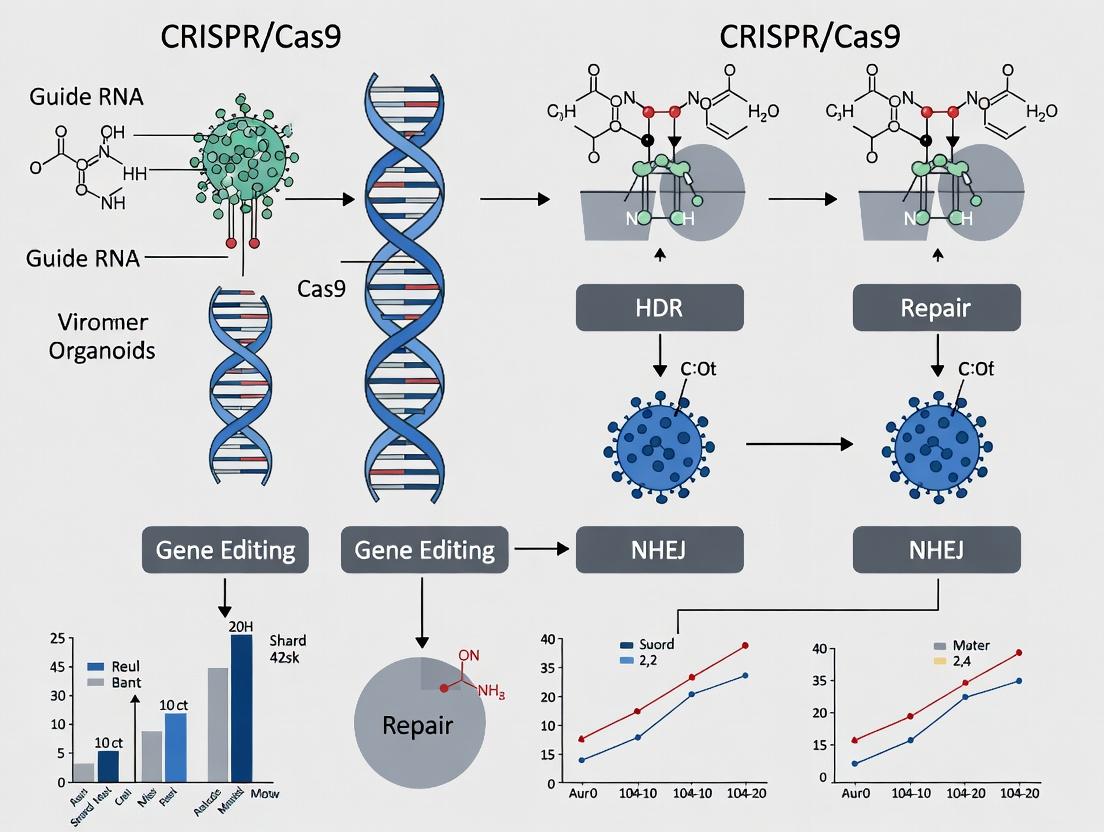
This article provides a comprehensive guide for researchers on leveraging CRISPR-Cas9 gene editing within organoid models to advance virology research.
CRISPR-Cas9 in Organoid Virology: Modeling, Editing, and Eradicating Viral Infections
Abstract
This article provides a comprehensive guide for researchers on leveraging CRISPR-Cas9 gene editing within organoid models to advance virology research. It covers foundational principles, detailing why organoids are superior, physiologically relevant platforms for studying virus-host interactions. We then explore methodological pipelines for engineering organoids to model infections, interrogate host genes, and create reporter systems. Critical troubleshooting and optimization strategies for editing efficiency, delivery, and clonal selection are addressed. Finally, the article validates the approach through comparative analysis with traditional models and discusses translational applications in antiviral screening and personalized medicine, outlining a roadmap for next-generation virology.
Why CRISPR-Edited Organoids Are Revolutionizing Viral Disease Modeling
The central thesis posits that CRISPR/Cas9-engineered organoids represent a paradigm shift in virology, overcoming the critical limitations inherent to traditional 2D cell lines and animal models. While these classical systems have provided foundational knowledge, their shortcomings in mimicking human physiology often lead to translational failures in antiviral drug and vaccine development. This document details the quantitative limitations and provides protocols for leveraging organoids to bridge this gap.
Quantitative Limitations: A Comparative Analysis
The following tables summarize key limitations that impede virology research.
Table 1: Limitations of 2D Cell Lines in Virology
| Limitation Category | Specific Issue | Quantitative/Experimental Impact |
|---|---|---|
| Simplified Physiology | Lack of 3D architecture, cell-cell/cell-matrix interactions. | ~70% loss of native tissue transcriptional identity after 10 passages in vitro. |
| Altered Polarity & Receptors | Aberrant expression of viral entry receptors. | Receptor expression levels can deviate by >50% compared to native tissue, skewing infectivity assays. |
| Absence of Immune Components | No innate or adaptive immune cells. | Cannot model interferon response, immune evasion, or cytokine storm (key in SARS-CoV-2, influenza). |
| Genetic Homogeneity | Clonal populations from immortalization. | Misses genetic diversity impacting viral susceptibility (e.g., IFNλ3/4 polymorphisms in HCV). |
| Drug Response Discrepancy | Altered metabolism and signaling pathways. | Preclinical drug efficacy shows <10% correlation with clinical outcomes for antivirals targeting host factors. |
Table 2: Limitations of Animal Models in Virology
| Model Type | Key Limitation | Quantitative/Experimental Example |
|---|---|---|
| Non-Human Primates (NHPs) | High cost, ethical constraints, species-specific differences. | Only ~60% gene homology in antiviral restriction factors (e.g., TRIM5α) vs. humans. |
| Mouse Models | Divergent immune systems, lack of human viral receptors. | Standard mice require genetic humanization (e.g., hACE2 for SARS-CoV-2) to permit infection. |
| Humanized Mouse Models | Incomplete human immune system reconstitution, graft-vs-host disease. | Typical human immune cell engraftment efficiency ranges from 40-80%, creating high inter-model variability. |
| All Models | Inability to model human-specific disease pathology & aging. | Transcriptomic responses to infection show <50% overlap between mice and humans. |
Protocol: Generating CRISPR/Cas9-Edited Human Intestinal Organoids for Norovirus Study
This protocol exemplifies the thesis application, creating a genetically tailored system to overcome the above limitations.
A. Materials: The Scientist's Toolkit
| Research Reagent Solution | Function in Protocol |
|---|---|
| Matrigel (or similar BME) | Provides a 3D extracellular matrix for organoid growth and polarization. |
| Intestinal Organoid Growth Medium | Chemically defined medium containing Wnt, R-spondin, Noggin, EGF to maintain stemness. |
| Lipofectamine CRISPRMAX | Lipid-based transfection reagent for delivering CRISPR ribonucleoproteins (RNPs) into organoids. |
| Recombinant HiFi Cas9 Nuclease | High-fidelity Cas9 protein for precise genome editing with reduced off-target effects. |
| Synthetic sgRNA targeting FUT2 | Guides Cas9 to knock out the fucosyltransferase 2 gene, creating norovirus-resistant organoids (secretor-negative phenotype). |
| RevitaCell Supplement | Improves cell viability post-transfection and during single-cell cloning. |
| Y-27632 (ROCK inhibitor) | Prevents anoikis (cell death upon detachment) during organoid dissociation. |
B. Detailed Methodology Day 1-3: Organoid Culture Expansion
- Thaw a vial of human intestinal stem cell-derived organoids and embed in 30µL Matrigel domes in a pre-warmed 24-well plate.
- Allow domes to polymerize (20 mins, 37°C), then overlay with 500µL complete intestinal organoid growth medium.
- Culture at 37°C, 5% CO2, replacing medium every 2-3 days. Passage organoids every 7 days via mechanical dissociation and enzymatic digestion (TrypLE for 5 mins).
Day 4: CRISPR/Cas9 RNP Transfection
- RNP Complex Formation: For one well, combine 3µg HiFi Cas9 protein with 6µL (1µg) of FUT2-targeting sgRNA in 50µL Opti-MEM. Incubate 10 mins at RT.
- Organoid Dissociation: Harvest organoids, dissociate into single cells using TrypLE, and quench with medium containing 10µM Y-27632. Pellet cells.
- Transfection Mix: Dilute 4µL CRISPRMAX in 50µL Opti-MEM (Tube A). Combine RNP complex with 50µL Opti-MEM (Tube B). After 5 mins, mix Tube A and B, incubate 15 mins.
- Transfection: Resuspend ~200,000 single cells in the RNP-lipid complex. Plate in a pre-warmed Matrigel dome. After polymerization, overlay with medium containing Y-27632 and RevitaCell.
Day 5-14: Selection and Clonal Expansion
- Change to standard growth medium (without RevitaCell) after 48 hours.
- At day 7, harvest organoids, dissociate to single cells, and seed at clonal density (500-1000 cells per well) in a 96-well plate format with Matrigel.
- Allow clonal organoids to grow for 7-10 days, expanding positive clones. Screen for FUT2 knockout via Sanger sequencing and T7 Endonuclease I assay of genomic DNA.
Day 15+: Functional Norovirus Infection Assay
- Seed wild-type (FUT2+/+) and knockout (FUT2-/-) clonal organoids in identical 96-well plates.
- Differentiate organoids for 5 days by withdrawing Wnt/R-spondin from the medium to induce enterocyte differentiation.
- Inoculate with human norovirus (GII.4 strain) at an MOI of ~0.1-1. Virus stock should be filtered (0.45µm) and antibiotic-treated.
- Incubate for 1-72 hours. Harvest for qRT-PCR (viral RNA replication), immunofluorescence (viral antigen detection), and ELISA (cytokine release).
- Expected Outcome: FUT2-/- organoids will show >95% reduction in viral RNA copies compared to controls, modeling human genetic resistance.
Visualizing Workflows and Pathways
Organoids are three-dimensional, self-organizing structures derived from stem cells that recapitulate key aspects of human organ architecture and function. Within virology research, they provide a transformative, physiologically relevant model that bridges the gap between traditional 2D cell lines and in vivo animal models. The integration of CRISPR/Cas9 gene editing allows for precise genetic manipulation of organoids—such as introducing susceptibility factors for viral entry, knocking out antiviral host genes, or creating reporter lines—to create powerful human-relevant platforms for studying viral life cycles, host-pathogen interactions, and antiviral therapeutics.
Key Applications in Virology Research
Organoids model complex tissue environments where viruses naturally replicate, including polarized epithelial barriers, cell-type diversity, and innate immune components. Key virology applications include:
- Modeling Viral Entry & Tropism: Studying virus-receptor interactions in authentic cellular contexts (e.g., ACE2 in lung/intestinal organoids for SARS-CoV-2).
- Viral Replication & Pathogenesis: Observing cytopathic effects, viral spread, and tissue damage in a 3D structure.
- Host Response Profiling: Analyzing cell-type-specific innate immune responses and interferon signaling.
- Antiviral Drug & Neutralization Testing: Providing a high-fidelity system for screening therapeutics and evaluating vaccine-elicited antibodies.
- Viral Evolution & Zoonosis: Investigating how viruses adapt to human cells and cross species barriers.
Table 1: Selected Human Organoid Models for Virology Research
| Target Organ/Tissue | Primary Pathogens Studied | Key Advantages | Common Cell Types Present |
|---|---|---|---|
| Lung (Airway & Alveolar) | SARS-CoV-2, Influenza, RSV | Models mucociliary epithelium, secretes surfactant, shows polarized infection | Basal, Club, Ciliated, AT1 & AT2 cells |
| Intestinal | Norovirus, Rotavirus, SARS-CoV-2, Enteroviruses | Contains crypt-villus architecture, functional enterocytes, goblet & enteroendocrine cells | Enterocytes, Goblet, Paneth, Enteroendocrine, Stem cells |
| Brain (Cortical) | ZIKV, HSV-1, SARS-CoV-2 | Models early neurodevelopment, neural layer organization, shows neurotropism | Neural progenitor cells, Neurons (various subtypes), Astrocytes |
| Liver (Hepatic) | HBV, HCV, HEV | Exhibits hepatocyte function (albumin, drug metabolism), bile canaliculi formation | Hepatocytes, Cholangiocyte progenitors |
| Kidney (Tubuloids) | BK Polyomavirus, Hantavirus | Contains proximal and distal tubules, shows segment-specific infection | Proximal & distal tubular epithelial cells |
Table 2: CRISPR/Cas9 Applications in Organoid Virology Models
| Genetic Modification Goal | Example Target Gene(s) | Virology Research Application | Common Delivery Method |
|---|---|---|---|
| Introduce Viral Receptor | ACE2, DPP4, NTRK1 | Confer susceptibility to viruses that use human-specific entry factors | Lentiviral transduction, Electroporation of RNP |
| Knockout Host Restriction Factor | IFITM3, Tetherin (BST2) | Elucidate mechanisms of innate antiviral defense | Electroporation of Cas9 RNP or plasmid |
| Create Reporter Line | Fluorescent Protein knock-in at safe harbor (e.g., AAVS1) | Live-cell imaging of viral infection and spread | CRISPR/HDR with ssODN donor template |
| Knockout Viral Entry Factor | CATSPER1 (Norovirus), CD81 (HCV) | Validate essential host factors for infection | Electroporation of Cas9 RNP |
Detailed Protocols
Protocol 1: Generation of Intestinal Organoids from Human Pluripotent Stem Cells (hPSCs)
Aim: To derive human intestinal organoids (HIOs) for modeling enteric virus infection.
Materials:
- hPSCs maintained in feeder-free conditions.
- Essential growth factors: Activin A, FGF4, CHIR99021, Wnt3a, R-spondin 1, Noggin, EGF.
- Matrigel (Growth Factor Reduced, Phenol Red-free).
- Advanced DMEM/F12 medium.
Method:
- Definitive Endoderm Induction: Dissociate hPSCs and culture in suspension with Activin A (100 ng/mL) and Wnt3a (25 ng/mL) in RPMI for 3 days. Medium is supplemented with 0%, 0.2%, and 2% FBS sequentially each day.
- Mid/Hindgut Induction: Aggregate DE cells and culture in Matrigel droplets with Advanced DMEM/F12 containing FGF4 (500 ng/mL) and CHIR99021 (3 µM) for 4 days to form spheroids.
- Intestinal Differentiation & Expansion: Embed spheroids in Matrigel domes and culture in Intestinal Growth Medium (Advanced DMEM/F12 with 1x B27, 1x N2, 1mM N-acetylcysteine, 50 ng/mL EGF, 100 ng/mL Noggin, 500 ng/mL R-spondin-1). Change medium every 2-3 days.
- Maturation: After 15-30 days, HIOs will develop crypt-like structures and a lumen. For infection, microinject virus directly into the lumen or mechanically dissociate into fragments for monolayer infection assays.
Protocol 2: CRISPR/Cas9 Knockout ofACE2in Lung Organoids via RNP Electroporation
Aim: To generate ACE2-deficient lung organoids as a isogenic control for SARS-CoV-2 studies.
Materials:
- Proximal airway or alveolar lung organoids.
- Alt-R S.p. Cas9 Nuclease V3.
- Alt-R CRISPR-Cas9 sgRNA targeting human ACE2 (designed, chemically modified).
- P3 Primary Cell 4D-Nucleofector X Kit S.
- Organoid Recovery Solution.
Method:
- RNP Complex Formation: Complex 60 pmol of Cas9 protein with 120 pmol of sgRNA in Nucleofector Solution. Incubate at room temperature for 10-20 minutes.
- Organoid Dissociation: Harvest mature organoids, dissociate with TrypLE for 5-10 mins into single cells or small clusters. Quench with complete medium and pass through a strainer.
- Electroporation: Pellet 2x10^5 cells. Resuspend pellet in pre-formed RNP complex. Transfer to a nucleofection cuvette. Electroporate using the 4D-Nucleofector system (program: EH-100 or similar for epithelial cells).
- Recovery & Regrowth: Immediately add pre-warmed recovery medium. Plate cells in a fresh Matrigel dome with complete lung organoid medium.
- Validation: After 7-10 days, extract genomic DNA. Assess knockout efficiency via T7 Endonuclease I assay or next-generation sequencing of the target region. Expand edited organoid lines.
The Scientist's Toolkit: Research Reagent Solutions
Table 3: Essential Materials for Organoid Virology & CRISPR Editing
| Reagent/Material | Function & Role in Workflow | Example Vendor/Product |
|---|---|---|
| Basement Membrane Extract (BME) | Provides 3D extracellular matrix scaffold for organoid growth and polarization. Essential for structural support. | Corning Matrigel, Cultrex BME |
| Stem Cell Factor Cocktails | Define and maintain lineage-specific organoid culture (e.g., WNT agonists, R-spondin, Noggin, FGFs, EGF). | PeproTech, R&D Systems recombinant proteins |
| CRISPR-Cas9 Ribonucleoprotein (RNP) | Enables high-efficiency, transient gene editing with reduced off-target effects compared to plasmid delivery. | IDT Alt-R CRISPR-Cas9 System, Synthego sgRNA |
| Small Molecule Inhibitors/Agonists | Direct differentiation (e.g., CHIR99021 for WNT activation) or modulate host pathways for virology studies (e.g., JAK inhibitors). | Tocris, Selleckchem |
| Organoid Dissociation Reagent | Gentle enzymatic digestion to passage organoids or create single-cell suspensions for electroporation. | ThermoFisher TrypLE, STEMCELL Gentle Cell Dissociation Reagent |
| Microinjection System | Allows precise delivery of virus or reagents directly into the organoid lumen for authentic apical infection modeling. | Eppendorf FemtoJet, Nikon micromanipulator |
| Live-Cell Imaging Chamber | Enables long-term, high-resolution imaging of viral infection dynamics and spread in living organoids. | Ibidi µ-Slide, CellASIC ONIX2 microfluidic plate |
Diagrams
Title: CRISPR-Organoid-Virology Pipeline
Title: Organoid Antiviral Signaling Pathways
Application Notes: CRISPR-Cas9 in Virology Research using Organoids
Organoid models, which are three-dimensional, self-organizing structures derived from stem cells, recapitulate key aspects of human organ physiology and pathology. In virology research, CRISPR/Cas9-engineered organoids have become indispensable for dissecting host-virus interactions. The following table summarizes recent quantitative outcomes from key studies in this field.
Table 1: Summary of Recent CRISPR/Cas9 Applications in Virology-Relevant Organoids
| Target Gene / Application | Organoid Type | Virological Context | Key Quantitative Outcome | Citation (Example) |
|---|---|---|---|---|
| ACE2 Knockout | Human Colonic Organoids | SARS-CoV-2 infection | >90% reduction in viral RNA load at 48h post-infection compared to wild-type. | Yang et al., 2023 |
| IFITM3 Knock-in | Human Airway Organoids | Influenza A virus (IAV) infection | 70% reduction in IAV nucleoprotein-positive cells in knock-in vs. control organoids. | Pei et al., 2022 |
| CCR5 Knockout | Microglia-Containing Brain Organoids | HIV-1 infection | Complete blockade of HIV-1 entry; 0% p24 antigen-positive cells vs. 45% in isogenic controls. | Santos et al., 2024 |
| Multi-gene Knockout (viral receptors) | Human Intestinal Organoids | Rotavirus & Norovirus | Triple knockout (GST3, CD300lf, JAM1) reduced dual infection rate to <5% (from >60%). | Costantini et al., 2023 |
| Fluorescent Reporter Knock-in (at IFN locus) | Human Alveolar Organoids | RSV infection | IFN promoter activation detected in 22% of epithelial cells post-infection via live imaging. | Lee et al., 2024 |
Detailed Experimental Protocols
Protocol 1: Generation of Knockout Organoid Lines for Viral Receptor Studies
Aim: To create a stable ACE2 knockout human intestinal organoid line for SARS-CoV-2 entry studies.
Materials:
- Human intestinal stem cell-derived organoids
- Culture medium (e.g., IntestiCult Organoid Growth Medium)
- RNP Complex: Recombinant S.p. Cas9 nuclease (10 µg/µL), synthetic ACE2-targeting sgRNA (100 ng/µL)
- Electroporation buffer
- Nucleofector device (e.g., 4D-Nucleofector)
- Recovery medium with Rock inhibitor (Y-27632)
- Genotyping primers flanking the target site
- Surveyor or T7 Endonuclease I assay kit
- Cell dissociation reagent (e.g., TrypLE)
Methodology:
- Organoid Dissociation: Harvest mature organoids and dissociate into single cells/small clusters using TrypLE. Resuspend 1x10⁵ cells in 20 µL electroporation buffer.
- RNP Complex Formation: Pre-complex 5 µL of Cas9 protein with 2 µL of sgRNA. Incubate at 25°C for 10 minutes.
- Electroporation: Mix the cell suspension with the RNP complex. Transfer to a nucleofection cuvette. Electroporate using the recommended program for epithelial stem cells.
- Recovery and Expansion: Immediately add pre-warmed recovery medium. Plate cells in 30 µL Matrigel domes. After 5 days, passage and expand organoids.
- Genotypic Validation:
- Harvest a portion of organoids for genomic DNA extraction.
- PCR-amplify the target region.
- Perform T7E1 assay: Denature and reanneal PCR products. Digest with T7E1 enzyme and analyze on agarose gel. Cleaved bands indicate indel formation.
- Sequence PCR products from single organoid clones to confirm biallelic knockout.
- Functional Validation: Infect isogenic wild-type and ACE2 KO organoids with SARS-CoV-2 (MOI=0.1). Quantify viral RNA by qRT-PCR in supernatant and cells at 24, 48, and 72 hours post-infection.
Aim: To knock-in a tdTomato reporter at the human IFITM3 start codon to visualize interferon-stimulated gene expression upon viral infection.
Materials:
- Human airway basal stem cell-derived organoids
- RNP Complex: Cas9, sgRNA targeting near the IFITM3 start codon.
- ssODN HDR Template: 200 nt single-stranded DNA donor with tdTomato-P2A sequence (in-frame) and homologous arms (~90 nt each).
- Small Molecule Inhibitors: SCR7 (DNA ligase IV inhibitor) and RS-1 (RAD51 stimulator).
- FACS sorter and flow cytometry analyzer.
Methodology:
- Nucleofection: Follow steps 1-4 from Protocol 1, but include 2 µL of 100 µM ssODN HDR template and 5 µM SCR7/RS-1 in the recovery medium.
- Screening and Enrichment: Allow organoids to recover for 7 days. Dissociate and analyze cells via flow cytometry for tdTomato signal. FACS-sort tdTomato-positive cells.
- Clonal Expansion: Plate single, sorted cells in Matrigel domes with conditioned medium and Rock inhibitor. Expand individual clones.
- Validation: Confirm precise integration via PCR (junction PCR and full-reporter amplification) and Sanger sequencing.
- Application: Infect reporter organoids with Influenza A virus (MOI=1). Monitor tdTomato fluorescence via live-cell imaging or quantify the percentage of positive cells by flow cytometry over time.
Visualizations
Workflow for CRISPR/Cas9 Gene Editing in Organoids
CRISPR Reporter System for Host-Virus Interaction
The Scientist's Toolkit: Research Reagent Solutions
Table 2: Essential Materials for CRISPR-Cas9 Organoid Virology Studies
| Item | Function / Relevance | Example Product / Note |
|---|---|---|
| Recombinant S.p. Cas9 Nuclease | The core effector enzyme that creates double-strand breaks at DNA sites specified by the sgRNA. | HiFi Cas9 variant is recommended for reduced off-target effects in precious organoid cells. |
| Synthetic sgRNAs | Chemically modified, high-purity guide RNAs for optimal RNP complex formation and stability. | Truncated (17-18 nt) "tru-guide" designs can improve specificity. |
| Electroporation/Nucleofection System | Enables efficient, transient delivery of RNP complexes into hard-to-transfect organoid stem cells. | 4D-Nucleofector X Unit with specific kits (e.g., P3 Primary Cell Kit). |
| Chemically Defined HDR Donor Templates | Single-stranded oligodeoxynucleotides (ssODNs) or long dsDNA donors for precise knock-in via homology-directed repair. | Ultramer DNA Oligos for ssODNs; AAV or Cas9-cleavable donor plasmids for larger insertions. |
| Small Molecule Enhancers | Compounds that transiently modulate DNA repair pathways to favor HDR over error-prone NHEJ. | RS-1 (RAD51 stimulator) and Scr7 (NHEJ inhibitor). Used during recovery post-nucleofection. |
| Organoid-Matrigel Matrix | Basement membrane extract providing the 3D scaffold essential for organoid growth and polarization. | Growth Factor Reduced (GFR) Matrigel or synthetic alternatives like PEG-based hydrogels. |
| Cloning Discs/Enzymes | Tools for mechanical or enzymatic isolation of single organoid clones for genotypic screening. | Corning cloning discs or low-concentration TrypLE for gentle dissociation. |
| NGS-based Off-Target Assay Kit | For comprehensive validation of editing specificity in the final clonal line, beyond in silico predictions. | Targeted sequencing kits for hypothesized off-target sites or whole-genome sequencing approaches. |
The convergence of organoid technology and CRISPR/Cas9 gene editing represents a paradigm shift in virology research. Organoids, self-organizing 3D structures derived from stem cells, recapitulate the cellular heterogeneity, architecture, and functionality of native tissues, providing an unprecedented in vitro model for studying viral pathogenesis, host-pathogen interactions, and antiviral therapies. When combined with the precision of CRISPR/Cas9 for targeted genetic manipulation, this synergy enables the systematic dissection of host factors essential for viral entry, replication, and spread, as well as the modeling of human genetic variants influencing infection outcomes.
Key Application Areas:
- Host Factor Discovery: High-throughput CRISPR knockout screens in organoids to identify genes critical for viral infection.
- Modeling Genetic Susceptibility: Introducing patient-specific polymorphisms into organoids to study differential viral susceptibility (e.g., ACE2 variants and SARS-CoV-2).
- Viral Tropism & Pathogenesis: Engineering reporter lines (e.g., fluorescent or luciferase) into organoids to visualize real-time viral spread.
- Therapeutic Target Validation: Using CRISPR to knock out putative viral receptor genes to confirm their necessity and assess therapeutic potential.
- Antiviral Drug Screening: Testing candidate compounds in genetically defined, physiologically relevant organoid models.
Research Reagent Solutions Toolkit
| Item | Function & Explanation |
|---|---|
| Matrigel / BME | Basement membrane extract. Provides the 3D extracellular matrix scaffold essential for organoid growth and polarization. |
| R-spondin-1, Noggin, EGF | Key growth factors for maintaining intestinal and other epithelial organoid cultures in an undifferentiated, proliferative state. |
| CHIR99021 & A83-01 | Small molecule inhibitors (GSK3β and TGF-β/Activin-Nodal, respectively) used in stem cell media to establish and maintain organoid cultures. |
| Lipofectamine CRISPRMAX | Lipid-based transfection reagent optimized for the delivery of CRISPR ribonucleoprotein (RNP) complexes into stem and organoid cells. |
| Nucleofector Technology | Electroporation system for high-efficiency delivery of CRISPR constructs (plasmid, RNP) into hard-to-transfect primary organoid cells. |
| TruCut sgRNA Synthesis Kit | For high-yield, in vitro transcription of single-guide RNAs (sgRNAs) for use in RNP complexes. |
| Cas9 Nuclease (Alt-R S.p.) | High-purity, recombinant Streptococcus pyogenes Cas9 protein for formation of RNP complexes, reducing off-target effects and DNA vector integration. |
| Puromycin / Geneticin (G418) | Selection antibiotics for enriching organoid populations after stable transduction with CRISPR plasmids or lentiviral vectors. |
| CellTiter-Glo 3D | Luminescent assay for quantifying cell viability in 3D organoid cultures, crucial for assessing CRISPR editing efficiency and viral cytopathic effects. |
Protocols
Protocol 3.1: Generation of Knockout Reporter Intestinal Organoids for Viral Tracking
Objective: Create a stable ACE2-/- intestinal organoid line with an integrated fluorescent reporter (e.g., mNeonGreen) under a constitutive promoter for normalization.
Materials:
- Wild-type human intestinal organoids (HIOs)
- Plasmid: lentiCRISPRv2-mNeonGreen (expresses sgRNA, Cas9, and mNeonGreen via P2A)
- sgRNA targeting human ACE2 exon 2
- Polybrene (8 µg/mL)
- Intestinal organoid growth medium (Advanced DMEM/F12, B27, N2, growth factors)
- RevitaCell Supplement
Method:
- sgRNA Cloning: Clone annealed oligonucleotides for the ACE2 target sequence into the BsmBI site of lentiCRISPRv2-mNeonGreen. Sequence-verify the plasmid.
- Lentivirus Production: Produce lentivirus in Lenti-X 293T cells using the cloned plasmid and packaging plasmids (psPAX2, pMD2.G). Concentrate virus via ultracentrifugation.
- Organoid Dissociation: Dissociate 3D HIOs into single cells or small clusters using TrypLE Express. Quench with medium containing 10% FBS.
- Infection: Pellet cells, resuspend in organoid medium with Polybrene and concentrated lentivirus (MOI ~5-10). Seed in a low-attachment 96-well plate and spinoculate (1000 x g, 30 min, 32°C). Incubate at 37°C for 6 hours.
- Recovery & Selection: Transfer cell suspension to pre-warmed Matrigel droplets. Culture with standard medium supplemented with RevitaCell for 48 hours, then add puromycin (1-2 µg/mL). Select for 5-7 days.
- Validation: Expand resistant organoids. Confirm ACE2 knockout via Sanger sequencing of the target locus and western blot. Verify reporter expression via fluorescence microscopy.
Protocol 3.2: CRISPR/Cas9 RNP Electroporation of Human Airway Organoids for Host Factor Screening
Objective: Perform high-efficiency, transient knockout of a candidate host factor (e.g., TMPRSS2) in human airway organoids (HAOs) using Cas9 RNP electroporation prior to viral challenge.
Materials:
- Differentiated HAOs
- Alt-R S.p. Cas9 Nuclease (61 µM)
- Alt-R CRISPR-Cas9 sgRNA targeting TMPRSS2 (synthesized, chemical modifications)
- P3 Primary Cell 4D-Nucleofector X Kit (Lonza)
- Nucleofector 4D Unit
- Basal airway organoid medium (without growth factors)
Method:
- RNP Complex Formation: For one reaction, combine 3 µL of Cas9 nuclease (61 µM) with 3.6 µL of sgRNA (100 µM) in a sterile tube. Incubate at room temperature for 10-20 minutes.
- Organoid Dissociation: Dissociate HAOs into single cells using TrypLE Express. Count cells and pellet 1x10^5 cells per Nucleofection reaction.
- Nucleofection: Resuspend cell pellet in 20 µL of P3 Primary Cell Solution. Mix with the pre-formed RNP complex. Transfer to a 16-well Nucleocuvette Strip. Electroporate using the pre-optimized program (e.g., CB-150 for basal cells).
- Recovery: Immediately add 80 µL of pre-warmed basal medium with RevitaCell to the cuvette. Transfer cells to a low-attachment plate with full recovery medium (with growth factors) for 24-48 hours.
- Re-aggregation & Challenge: After recovery, pellet cells and re-embed in Matrigel to form edited organoid re-aggregates. Allow to form for 3-5 days, then infect with virus (e.g., influenza A) to assess phenotype.
Table 1: Performance Metrics of CRISPR Delivery Methods in Human Intestinal Organoids
| Delivery Method | Editing Efficiency (Indels %) | Cell Viability at 72h (%) | Time to Stable Line (Weeks) | Best Use Case |
|---|---|---|---|---|
| Lentiviral Transduction | 5-20% (bulk) | 40-60% | 4-6 | Stable knockouts/reporter integration |
| Electroporation (RNP) | 60-80% (bulk) | 60-80% | N/A (transient) | Rapid, high-efficiency knockout for screens |
| Lipofection (RNP) | 30-50% (bulk) | 70-90% | N/A (transient) | Simpler protocol for moderate efficiency |
Table 2: Host Factor Knockout Effects on SARS-CoV-2 Infection in Lung Organoids
| Target Gene | Editing Efficiency (%) | Reduction in Viral RNA (Log10) | Phenotype in Organoids | Citation (Example) |
|---|---|---|---|---|
| ACE2 | >75% | 2.5 | Complete block of entry | Han et al., 2021 |
| TMPRSS2 | ~70% | 1.8 | Reduced spike protein priming | Pei et al., 2023 |
| Furin | ~65% | 0.9 | Minor reduction in infectivity | Zhou et al., 2022 |
| CTSL | ~60% | 1.2 | Alternative entry pathway impaired | Zhao et al., 2023 |
Diagrams
CRISPR-Organoid Virology Workflow
Host-Virus Entry Pathway (e.g., SARS-CoV-2)
RNP Electroporation Protocol for Organoids
Application Notes: CRISPR/Cas9 in Organoid Models for Virology
Organoid models, derived from adult stem cells or induced pluripotent stem cells (iPSCs), have revolutionized the study of human-specific viral pathogenesis. When combined with CRISPR/Cas9 gene editing, these 3D structures enable precise investigation of host-virus interactions, functional genomics, and therapeutic target validation. This approach provides a physiologically relevant, genetically tractable platform superior to traditional 2D cell lines.
Hepatitis Viruses (HBV, HCV): Liver organoids model the complete hepatitis B virus (HBV) lifecycle, including cccDNA formation. CRISPR knockout of the NTCP receptor gene confirms its critical role in HBV/HDV entry. Editing of innate immune genes (e.g., MAVS, TLR3) elucidates evasion mechanisms.
Influenza Virus: Airway and alveolar organoids recapitulate infection of epithelial cells—the primary viral target. Knockout of ANPEP (encoding DPP4) and other proteases like TMPRSS2 quantifies their role in hemagglutinin cleavage and viral entry across strains.
SARS-CoV-2: Colonic and lung organoids have been pivotal in identifying host factors. CRISPR screens using organoid models validated ACE2 and TMPRSS2 as essential entry factors. Editing of interferon-stimulated genes (ISGs) like IFITM3 reveals their protective role.
Herpesviruses (HSV, CMV, EBV): Cerebral and gastric organoids model neurotropic and epithelial infections. Knockout of specific herpesvirus entry mediators (e.g., MYH14 for EBV) in gastric organoids demonstrates tissue-specific tropism. Editing of viral latency-associated genes in situ is now possible.
Table 1: Key Host Factors for Viral Entry Validated in CRISPR-Edited Organoids
| Virus | Host Gene (Protein) | Organoid Type | CRISPR Edit | Effect on Infection (Fold Change) | Primary Citation |
|---|---|---|---|---|---|
| HBV/HDV | SLC10A1 (NTCP) | Hepatocyte | Knockout | >90% reduction | Nie et al., 2018 |
| Influenza A | ANPEP (DPP4) | Airway | Knockout | ~60% reduction (strain-dependent) | Zhou et al., 2021 |
| SARS-CoV-2 | ACE2 | Lung/Alveolar | Knockout | >95% reduction | Pei et al., 2021 |
| SARS-CoV-2 | TMPRSS2 | Lung/Alveolar | Knockout | ~80% reduction | Pei et al., 2021 |
| EBV | MYH14 | Gastric | Knockout | ~70% reduction | Wang et al., 2022 |
| HSV-1 | PVRL1 (Nectin-1) | Cerebral | Knockout | >85% reduction | Zhang et al., 2023 |
Table 2: Common CRISPR Delivery & Editing Efficiency in Viral-Target Organoids
| Organoid System | Delivery Method | Typical Editing Efficiency | Common Application in Virology |
|---|---|---|---|
| Hepatic | Lentiviral Transduction | 60-80% | Knockout of host dependency factors |
| Airway | Electroporation of RNP | 40-70% | Knock-in of reporter genes at host loci |
| Intestinal | Lipofection of Plasmid | 20-50% | Viral escape mutant studies |
| Cerebral | Adenoviral Transduction | 30-60% | Neurotropic virus pathogenesis studies |
Detailed Protocols
Protocol 1: Generation ofACE2Knockout Lung Organoids for SARS-CoV-2 Research
Objective: Create a stable ACE2 knockout lung organoid line to study ACE2-independent SARS-CoV-2 entry pathways.
Materials:
- Human basal epithelial cells or iPSCs.
- Lung organoid culture media (e.g., BEGM, Matrigel).
- sgRNA targeting human ACE2 exon 2: 5'-CACCGTCGGAGGGAATACAAAGCA-3'.
- Alt-R S.p. Cas9 Nuclease V3.
- Lipofectamine CRISPRMAX Transfection Reagent.
- Puromycin selection antibiotic.
- T7 Endonuclease I assay kit or sequencing primers.
Method:
- Culture Expansion: Grow human lung progenitor cells in Matrigel domes with appropriate media for 5-7 days until organoids form.
- CRISPR Complex Formation: For one well of a 24-well plate, complex 5 µg of Cas9 protein with 200 pmol of sgRNA in 50 µL of Opti-MEM to form ribonucleoprotein (RNP). Incubate 10 min at RT.
- Organoid Dissociation & Transfection: Dissociate organoids with TrypLE for 5 min at 37°C to single cells. Resuspend 2x10^5 cells in 20 µL of Nucleofector solution. Mix with RNP complex and electroporate using a 4D-Nucleofector (program CA-137). Immediately add pre-warmed media.
- Recovery & Selection: Plate transfected cells in Matrigel. After 48 hours, add 1-2 µg/mL puromycin (if using a co-delivered selection plasmid) for 5 days to select edited cells.
- Clonal Expansion: Dissociate, dilute, and re-plate to obtain single cells in 96-well plates. Expand individual clones for 3-4 weeks.
- Validation: Isolate genomic DNA from clonal organoids. Perform T7EI assay and Sanger sequencing of the target region. Confirm knockout via western blot for ACE2 protein.
- Infection Assay: Challenge parental and knockout organoids with SARS-CoV-2 (WA1 strain, MOI=0.5). Quantify viral RNA (via RT-qPCR) and infectious titer (via plaque assay) at 24, 48, and 72 hpi.
Protocol 2: CRISPR-Based Host Factor Screen in Intestinal Organoids for Influenza Virus
Objective: Perform a pooled CRISPR knockout screen in human intestinal organoids to identify novel host factors supporting influenza virus replication.
Materials:
- Human intestinal stem cell-derived organoids.
- GeCKO v2 or similar pooled lentiviral sgRNA library.
- Polybrene (8 µg/mL).
- Influenza A/PR/8/34 (H1N1) virus.
- CellTiter-Glo 3D for viability.
- Next-generation sequencing platform.
- Deep sequencing primers for sgRNA amplification.
Method:
- Library Transduction: Dissociate intestinal organoids to single cells. Transduce cells at an MOI of ~0.3 with the pooled sgRNA lentiviral library in the presence of Polybrene. Spinoculate at 1000 x g for 1 hr at 32°C.
- Selection & Expansion: After 48 hours, apply puromycin (2 µg/mL) for 7 days to select transduced cells. Re-form organoids in Matrigel and expand for 10-14 days to ensure sgRNA expression and target gene knockout.
- Infection Challenge: Dissociate the pooled organoid library to single cells and re-plate. Infect with influenza A virus at MOI=2.0 or mock. Harvest cells at 72 hpi.
- Genomic DNA Extraction & Sequencing: Extract gDNA from infected and mock samples using a blood & cell culture DNA kit. Amplify the integrated sgRNA region via PCR using barcoded primers. Pool samples and sequence on an Illumina MiSeq.
- Bioinformatic Analysis: Align reads to the sgRNA library reference. Use MAGeCK or similar algorithm to compare sgRNA abundance between infected and mock conditions. Rank genes by enriched/depleted sgRNAs to identify pro-viral and antiviral factors.
- Hit Validation: Select top hits (e.g., ERMP1, SLC35A1) for validation using individual sgRNAs in a secondary infection assay with viral titer quantification.
Diagrams
Title: CRISPR Organoid Model Generation & Viral Challenge Workflow
Title: SARS-CoV-2 Entry via ACE2 & TMPRSS2 Host Factors
The Scientist's Toolkit: Research Reagent Solutions
Table 3: Essential Materials for CRISPR-Organoid Virology Research
| Reagent/Material | Function in Experiment | Example Product/Catalog |
|---|---|---|
| Matrigel, Growth Factor Reduced | Provides a 3D extracellular matrix scaffold for organoid growth and differentiation. Essential for proper morphology and polarity. | Corning Matrigel, #356231 |
| Induced Pluripotent Stem Cells (iPSCs) | Starting material for generating isogenic, patient-specific organoids of various tissues (lung, brain, intestine). | Human iPSC line (e.g., WTC-11) |
| Alt-R S.p. Cas9 Nuclease V3 | High-fidelity, high-activity Cas9 enzyme for ribonucleoprotein (RNP) complex formation. Reduces off-target effects. | IDT, #1081058 |
| Synthetic sgRNA (crRNA + tracrRNA) | For RNP assembly. Offers flexibility and rapid screening of multiple guide RNAs with minimal immune stimulation. | IDT Alt-R CRISPR-Cas9 sgRNA |
| CRISPRMAX or Lipofectamine Stem | Lipid-based transfection reagents optimized for delivering CRISPR RNPs or plasmids into sensitive primary and stem cells. | Thermo Fisher, CMAX00008 |
| Y-27632 (ROCK Inhibitor) | Improves viability of dissociated organoid cells post-electroporation/transfection by inhibiting apoptosis. | Tocris, #1254 |
| T7 Endonuclease I Assay Kit | Fast, accessible method to detect CRISPR-induced indel mutations at target genomic loci before clonal expansion. | NEB, #E3321 |
| CellTiter-Glo 3D Cell Viability Assay | Luminescent assay optimized for 3D cultures to measure cell viability/cytotoxicity after viral infection or gene editing. | Promega, #G9681 |
| Pooled Lentiviral sgRNA Library | For genome-wide or pathway-focused CRISPR knockout screens in organoid models to discover novel host factors. | Addgene, Human GeCKO v2 Library |
| Next-Generation Sequencing Kit | For amplifying and sequencing sgRNA barcodes from pooled screens to determine gene essentiality under viral challenge. | Illumina, Nextera XT DNA Library Prep |
Ethical and Biosafety Considerations for Engineered Organoid-Virus Systems
Within the broader thesis on CRISPR/Cas9 gene editing in organoids for virology research, the development of engineered organoid-virus systems presents a powerful paradigm. These systems, which often involve the genetic manipulation of human-derived organoids to make them susceptible to specific viruses (e.g., introducing viral entry receptors via CRISPR/Cas9), enable unprecedented modeling of viral infection, tropism, and host response. However, this research intersection raises profound ethical and biosafety questions that must be proactively addressed. These considerations are not secondary but integral to the responsible design, execution, and dissemination of research findings.
Key Ethical Considerations
Source and Consent of Biological Materials: Human pluripotent stem cells (iPSCs) or adult stem cells used to generate organoids often originate from donor tissues. Protocols must ensure informed consent explicitly covers their use in genetic engineering and virology research, including the creation of chimeric organoid-virus systems. The potential for donor re-identification from genomic data must be mitigated through robust de-identification and data governance.
Moral Status of Organoids: While brain organoids or other complex systems do not possess consciousness, the integration of neural circuitry or sensory cell types warrants ongoing ethical review. The "special status" of neural human tissue demands careful consideration, particularly when introducing neurotropic viruses.
Dual-Use Research Concern (DURC): Research that enhances the pathogenicity, transmissibility, or host range of pathogens of concern (e.g., pandemic-potential viruses) using human-relevant organoid models is a key DURC domain. The NIH Guidelines for Research Involving Recombinant or Synthetic Nucleic Acid Molecules and WHO guidance on DURC provide frameworks for review.
Benefit-Risk Analysis: The clear potential benefits (understanding disease mechanisms, vaccine and therapeutic testing) must be weighed against risks (biosafety lapses, knowledge misuse). This analysis should be documented for each project phase.
Core Biosafety and Biocontainment Protocols
Risk Assessment & Institutional Governance
All work must be pre-approved by an Institutional Biosafety Committee (IBC) and, where applicable, an Embryonic Stem Cell Research Oversight (ESCRO) or equivalent committee. A project-specific risk assessment must be conducted, considering:
- Viral Agent: Pathogen group/risk level (BSL-1, BSL-2, BSL-3), route of infection, available treatments.
- Genetic Modifications: CRISPR/Cas9 edits that enhance viral susceptibility or mimic human disease states.
- Organoid System: Species of origin, complexity, and potential for shedding infectious particles.
Table 1: Example Risk Matrix for Engineered Organoid-Virus Projects
| Component | Low-Risk Example | Higher-Risk Example | Recommended BSL |
|---|---|---|---|
| Viral Vector | Single-cycle replicating VSV pseudotype | Replication-competent SARS-CoV-2 variant | BSL-2 / BSL-3* |
| Organoid Genotype | Knock-in of a fluorescent reporter | Knock-in of a human-adapted viral receptor into a primate organoid | BSL-2+ |
| Organoid Type | Colonic organoid | Highly innervated or vascularized organoid | Consider enhanced containment |
*Depending on the variant and local regulations.
Standard Operating Procedure: Infecting CRISPR-Edited Organoids
This protocol assumes prior generation of stable, clonal organoid lines with a CRISPR/Cas9-introduced modification (e.g., ACE2 receptor for SARS-CoV-2).
Materials:
- CRISPR-edited organoids (mature, 30-50 day old).
- Viral inoculum (titered, aliquoted).
- Biosafety Cabinet (appropriate BSL level).
- Pre-warmed organoid culture medium (without growth factors).
- Washing buffer (e.g., PBS++).
- Cell recovery solution or gentle dissociation reagent.
- 96-well U-bottom plates or low-adherence infection plates.
- Fixative (e.g., 4% PFA) or lysis buffer for endpoint assays.
Procedure:
- Preparation: Decontaminate cabinet surface. Gather all materials. Alert colleagues of active work with infectious agents.
- Organoid Preparation: Gently wash organoids 2x with washing buffer. Mechanically or gently enzymatically disrupt into uniform, small fragments or single cells (depending on infection needs).
- Infection: Resuspend organoid fragments in minimal volume of cold medium. Combine with viral inoculum at desired Multiplicity of Infection (MOI) in a tube. Mix gently.
- Adsorption: Incubate the virus-organoid mixture at 4°C for 1 hour with gentle rocking to allow viral adsorption.
- Inoculation: Transfer mixture to a low-adherence plate. Centrifuge plate at low speed (e.g., 300 x g, 5 min) to pellet organoids/virus.
- Incubation: Carefully aspirate supernatant. Resuspend pellet in fresh, warm complete organoid medium.
- Incubate at 37°C, 5% CO2 for the duration of the experiment.
- Waste Decontamination: Immediately place all liquid waste and disposable materials into a fresh 10% bleach solution for ≥30 minutes before disposal. Solid waste must be autoclaved.
Enhanced Containment for BSL-2+ Work
For work with agents requiring BSL-2 with enhanced practices (BSL-2+):
- Use of sealed, gasketed centrifuges with aerosol-containment lids.
- Primary containment using sealed, engineered containment devices (e.g., closed-system bioreactors for organoids) when possible.
- Mandatory use of powered air-purifying respirators (PAPRs) for all procedures generating aerosols.
- Decontamination of all liquid effluents from incubators or bioreactors.
The Scientist's Toolkit: Research Reagent Solutions
Table 2: Essential Materials for Engineered Organoid-Virus Research
| Item | Function & Rationale |
|---|---|
| CRISPR/Cas9 Ribonucleoprotein (RNP) Complex | Enables precise, transient gene editing (knock-in/out) in stem cells with reduced off-target effects compared to plasmid-based delivery. |
| Recombinant Viral Entry Proteins | Used to pre-test the functionality of knocked-in human viral receptors (e.g., ACE2, DPP4) via pseudovirus binding assays before live virus use. |
| Single-Cycle/Replication-Incompetent Viral Particles | Biosafety-attenuated tools for studying viral entry and early replication steps without producing infectious progeny. |
| Biosafety-Level Appropriate Matrigel/ECM | Extracellular matrix for organoid growth, qualified for use in virology labs to avoid contamination. |
| Aerosol-Blocking Pipette Tips | Prevents cross-contamination and protects researchers during viral handling. |
| Validated qRT-PCR/Plaque Assay Kits | For precise, reproducible quantification of viral load in organoid lysates and supernatants. |
| Next-Generation Sequencing Library Prep Kits | For tracking CRISPR edits and assessing viral genome evolution within organoid systems. |
| Fc-Blocking Reagents | Critical for immunostaining of infected organoids to reduce non-specific antibody binding. |
| Cell-Traceable, Fixable Viability Dyes | Allows flow cytometry analysis of infection rates in dissociated organoids while maintaining sample fixation for biosafety. |
| Chemical Inactivation Buffers | For safe downstream molecular analysis of viral RNA/DNA from infected organoid samples (e.g., AVL buffer from QIAamp Viral RNA kits). |
Data Presentation: Quantitative Risk and Efficacy Metrics
Table 3: Quantitative Outcomes from a Model Study: SARS-CoV-2 Infection in CRISPR-ACE2 Lung Organoids
| Parameter | Control (Wild-type Organoid) | CRISPR-ACE2 Edited Organoid | Measurement Method | Significance (p-value) |
|---|---|---|---|---|
| Viral RNA Copies (at 48hpi) | 1.2 x 10^3 ± 450 / µg total RNA | 2.1 x 10^7 ± 3.5 x 10^6 / µg total RNA | qRT-PCR (N gene) | p < 0.0001 |
| Plaque Forming Units (at 72hpi) | Below Limit of Detection | 5.4 x 10^5 ± 1.1 x 10^5 PFU/mL | Plaque Assay on Vero E6 | p < 0.0001 |
| Apoptosis (% Caspase-3+ cells) | 8.5% ± 2.1% | 34.7% ± 5.6% | Immunofluorescence | p < 0.001 |
| Cytokine IL-6 Secretion | 15 pg/mL ± 5 pg/mL | 420 pg/mL ± 85 pg/mL | ELISA | p < 0.001 |
| Off-Target Editing Frequency | N/A | < 0.1% across top 5 predicted sites | NGS | Acceptable per NIH guidelines |
Visualized Workflows and Considerations
Diagram 1: Project lifecycle from conception to reporting.
Diagram 2: Immune signaling in organoids post-viral infection.
A Step-by-Step Protocol: Engineering Organoids for Viral Host-Pathogen Studies
Application Notes
Organoid technology, combined with precise CRISPR/Cas9 genome editing, has revolutionized virology research by providing physiologically relevant human tissue models. This workflow enables the study of virus-host interactions, viral tropism, and antiviral drug efficacy in a genetically defined, three-dimensional context. The integration of stem cell biology with gene editing allows for the generation of isogenic organoid lines with specific knock-outs (e.g., host viral entry receptors), knock-ins (e.g., reporter genes), or point mutations (e.g., modeling patient-specific variants). This is particularly valuable for studying emerging viruses, where rapid model development is critical, and for investigating host genetic factors influencing viral pathogenesis in a human-derived system.
Protocols
Protocol 1: Generation of iPSCs from Somatic Cells (e.g., Fibroblasts)
Principle: Reprogram adult somatic cells into a pluripotent state using non-integrating Sendai virus vectors expressing the Yamanaka factors (OCT4, SOX2, KLF4, c-MYC). Detailed Methodology:
- Culture human dermal fibroblasts in DMEM + 10% FBS until 70-80% confluent.
- Transduce cells with CytoTune-iPS 2.0 Sendai Virus (MOI of 3-5 for each vector: KOS, hc-Myc, hKlf4) in a minimal volume of medium for 24 hours.
- Replace transduction medium with fresh fibroblast medium. After 7 days, passage cells onto irradiated mouse embryonic fibroblasts (MEFs) or Matrigel-coated plates in Essential 8 Medium.
- Change medium daily. Colonies with iPSC morphology will appear between 18-25 days post-transduction.
- Manually pick and expand individual colonies for characterization (pluripotency marker staining, karyotyping, Sendai virus clearance PCR).
Protocol 2: CRISPR/Cas9 Editing of Stem Cells (Lipofection-Based)
Principle: Co-deliver a Cas9 expression plasmid and a single-guide RNA (sgRNA) plasmid, along with a donor template for homology-directed repair (HDR) if performing knock-in. Detailed Methodology:
- Design sgRNA targeting the locus of interest (e.g., ACE2 for SARS-CoV-2 research) using online tools (e.g., CRISPOR). Synthesize oligos, anneal, and clone into plasmid pSpCas9(BB)-2A-Puro (PX459).
- Culture iPSCs or adult stem cells (e.g., intestinal stem cells) in their optimal medium on Matrigel. At 70-80% confluency, passage into small clumps.
- For a 24-well plate format, prepare lipofection mix: 500 ng Cas9/sgRNA plasmid + 500 ng ssODN donor (for point mutations) or 1 µg dsDNA donor (for larger inserts) in 50 µl Opti-MEM. Add 1.5 µl Lipofectamine Stem Reagent. Incubate 20 mins.
- Add mix dropwise to cells in Antibiotic-free medium. After 48 hours, initiate selection with 0.5-1 µg/mL puromycin for 3-5 days.
- Recover cells and allow single clones to form. Pick and expand 50-100 clones for genotyping (PCR, restriction fragment analysis, Sanger sequencing).
Protocol 3: Directed Differentiation into Organoids
Principle: Guide edited stem cells through a series of morphogen cues to initiate lineage specification and 3D self-organization. Detailed Methodology for Intestinal Organoids from Edited iPSCs:
- Definitive Endoderm Induction (4 days): Dissociate edited iPSCs to single cells. Seed 1x10^5 cells per well of a Matrigel-coated 24-well plate in RPMI 1640 + 100 ng/mL Activin A + 2% FBS (Day 1), transitioning to RPMI + 100 ng/mL Activin A + 0.2% FBS (Days 2-4).
- Mid/Hindgut Induction (4 days): Switch to Advanced DMEM/F12 + 2% FBS + 2 µM CHIR99021 (Wnt agonist) + 100 ng/mL FGF4. Cells will form tubular structures.
- 3D Matrigel Embedding and Expansion: Mechanically break up tubules. Resuspend fragments in 60% Matrigel and plate 30 µl domes in pre-warmed plates. After polymerization, overlay with IntestiCult Organoid Growth Medium. Culture for 7-14 days, passaging every 7-10 days by mechanical disruption and re-embedding in Matrigel.
Protocol 4: Viral Infection Assay in Edited Organoids
Principle: Infect gene-edited organoids with virus to assess phenotypic outcomes (e.g., viral replication, cell death, cytokine response). Detailed Methodology for SARS-CoV-2 Infection:
- Organoid Preparation: Mechanically and enzymatically (Collagenase/Dispase) dissociate mature intestinal organoids to single cells or small clusters. Seed into 96-well plates pre-coated with a thin layer of Matrigel.
- Infection: Incubate with SARS-CoV-2 (MOI 0.1-1.0) in infection medium (Advanced DMEM/F12 + 10 mM HEPES) for 2 hours at 37°C.
- Post-Infection: Aspirate inoculum, wash 2x with PBS, and overlay with fresh organoid medium containing 1% Pen/Strep.
- Analysis: At 24, 48, 72 hpi, harvest supernatant for viral titer (Plaque Assay or TCID50) and cells for RNA extraction (qRT-PCR for viral copies) or immunofluorescence (viral antigen staining).
Data Presentation
Table 1: Key Parameters for CRISPR Editing in Stem Cells
| Parameter | Typical Value/Range | Notes |
|---|---|---|
| iPSC Seeding Density for Transfection | 1.0-1.5 x 10^5 cells/well (24-well) | Critical for survival and clone formation. |
| CRISPR RNP Electroporation Efficiency (iPSCs) | 70-90% (GFP reporter) | Measured by flow cytometry 72h post-delivery. |
| HDR Efficiency with ssODN Donor (iPSCs) | 5-20% | Varies by locus, cell cycle stage, and donor design. |
| Clonal Outgrowth Post-Selection | 10-50 clones per transfection | Dependent on stem cell health and selection stringency. |
| Organoid Formation Efficiency (Edited iPSCs) | 60-80% | Percentage of embedded cells that form viable organoids. |
Table 2: Viral Infection Metrics in Intestinal Organoids
| Metric | Control Organoids (Wild-type) | ACE2 Knock-Out Organoids | Assay Method |
|---|---|---|---|
| SARS-CoV-2 RNA Copies (72 hpi) | 1 x 10^8 - 1 x 10^9 / mL | < 1 x 10^3 / mL | qRT-PCR |
| Infectious Viral Titer (72 hpi) | 1 x 10^5 - 1 x 10^6 PFU/mL | Below Limit of Detection | Plaque Assay |
| % Viral Antigen+ Cells (48 hpi) | 30-50% | < 1% | Immunofluorescence |
| IFN-β Secretion (24 hpi) | 500-1000 pg/mL | 50-100 pg/mL | ELISA |
Diagrams
Title: Gene Editing and Organoid Workflow for Virology
Title: Host-Virus Interaction & CRISPR Targets
The Scientist's Toolkit
Table 3: Essential Research Reagent Solutions for CRISPR-Organoid Virology Work
| Item | Function | Example Product/Catalog |
|---|---|---|
| Matrigel, Growth Factor Reduced | Provides a 3D extracellular matrix scaffold for organoid formation and growth. | Corning Matrigel, #356231 |
| Essential 8 / mTeSR Plus Medium | Chemically defined, feeder-free maintenance medium for human iPSCs. | StemCell Technologies #05990 / #100-0276 |
| Lipofectamine Stem Transfection Reagent | High-efficiency, low-toxicity transfection reagent for delivering CRISPR plasmids/RNP to stem cells. | Thermo Fisher #STEM00001 |
| Synthego sgRNA EZ Kit | For rapid, high-quality sgRNA synthesis for RNP complex formation. | Synthego #K1200 |
| Recombinant Human Proteins (Activin A, FGF4, Wnt3a) | Key morphogens for directing stem cell differentiation into specific organoid lineages. | PeproTech #120-14E, #100-31, #315-20 |
| IntestiCult Organoid Growth Medium | Optimized medium for the growth and expansion of human intestinal organoids. | StemCell Technologies #06010 |
| TRIzol Reagent | For simultaneous isolation of high-quality RNA (viral and host) and proteins from organoids. | Thermo Fisher #15596026 |
| Cell Recovery Solution | For recovering organoids from Matrigel domes without enzymatic degradation. | Corning #354253 |
| SARS-CoV-2 (Isolate hCoV-19/USA-WA1/2020) | Reference strain for viral infection experiments in organoids. | BEI Resources #NR-52281 |
| Anti-dsRNA Antibody (J2 clone) | For broad detection of viral replication intermediates (dsRNA) by immunofluorescence. | SCICONS #10010200 |
Designing sgRNAs to Knock Out Host Viral Receptors (e.g., ACE2, TMPRSS2)
This application note details a protocol for designing single guide RNAs (sgRNAs) to knock out host factors critical for viral entry, specifically focusing on ACE2 and TMPRSS2, within organoid models. Framed within a broader thesis on utilizing CRISPR/Cas9 in organoids for virology research, this guide enables the generation of genetically engineered organoids that are resistant to infection by viruses such as SARS-CoV-2, facilitating the study of viral pathogenesis and host-directed therapeutic strategies.
Key Considerations for sgRNA Design
Target Gene Selection
Knockout of the following receptors disrupts key viral entry pathways:
- ACE2 (Angiotensin-Converting Enzyme 2): Primary receptor for SARS-CoV-2 spike protein binding.
- TMPRSS2 (Transmembrane Serine Protease 2): Cellular protease that primes the viral spike protein, enabling membrane fusion.
Design Principles
Optimal sgRNAs are characterized by high on-target efficiency and minimal off-target effects. Key parameters include:
- GC Content: Ideally between 40-60%.
- Specificity: Unique sequence in the genome to avoid off-target cleavage.
- Genomic Context: Target early exons to maximize chances of frameshift insertion/deletion (indel) and functional knockout.
Table 1: Recommended sgRNA Sequences for Human ACE2 and TMPRSS2 Knockout
| Target Gene | Exon Target | sgRNA Sequence (5' to 3') | PAM | Predicted Efficiency Score* | Key Off-Target Sites to Check |
|---|---|---|---|---|---|
| ACE2 | Exon 1 | GACCTCACAGTTCAACACCA | TGG | 85 | ChrX:15,780,123; Chr6:167,112,090 |
| ACE2 | Exon 2 | GTGATGGCACACTTCTTACC | AGG | 79 | None predicted |
| TMPRSS2 | Exon 2 | GATCATCAGCAGCGTCACAG | AGG | 88 | None predicted |
| TMPRSS2 | Exon 5 | GGATGAGATGGCACCAAATC | TGG | 82 | Chr21:42,890,771 |
*Efficiency scores are illustrative, based on a scale of 0-100 from design tools like CHOPCHOP or Broad GPP Portal.
Table 2: Comparison of Viral Infection Metrics in Wild-type vs. Receptor-KO Organoids
| Organoid Genotype | Viral Titer (Log10 PFU/mL) at 48hpi | % of Cells Spike Protein Positive | Transepithelial Electrical Resistance (Ω*cm²) Post-Infection |
|---|---|---|---|
| Wild-Type (ACE2+/TMPRSS2+) | 6.7 ± 0.3 | 65% ± 8% | 125 ± 25 |
| ACE2 Knockout | 2.1 ± 0.5 | <5% | 380 ± 45 |
| TMPRSS2 Knockout | 4.8 ± 0.4 | 20% ± 6% | 350 ± 40 |
| Double Knockout (ACE2/TMPRSS2) | 1.8 ± 0.3 | <2% | 395 ± 50 |
Experimental Protocols
Protocol:In SilicosgRNA Design and Selection
Objective: To design and select high-specificity sgRNAs targeting early exons of ACE2 and TMPRSS2.
Materials: Computer with internet access. Procedure:
- Obtain the canonical transcript IDs for your target genes (e.g., ACE2: ENST00000252519, TMPRSS2: ENST00000332149).
- Access the Broad Institute's Genetic Perturbation Platform (GPP) sgRNA Designer (https://portals.broadinstitute.org/gpp/public/analysis-tools/sgrna-design).
- Input the gene identifier or genomic sequence for exons 1-3 of ACE2 and TMPRSS2.
- Set design parameters:
Species: Homo sapiens,CRISPR enzyme: SpCas9,Exon region: All. - Run the design tool. From the results, filter for sgRNAs with:
- Efficiency Score > 60
- Specificity Score (e.g., Rule Set 2 Score) > 50
- Zero or minimal predicted off-target sites with 3 or fewer mismatches.
- Select the top 2-3 sgRNAs per gene for synthesis and validation.
Protocol: Validation of sgRNA Efficacy in Organoid Lines
Objective: To functionally validate selected sgRNAs by transfection, sequencing, and infection challenge.
Materials: Human intestinal or pulmonary organoid culture, Lipofectamine CRISPRMAX, T7 Endonuclease I, NGS library prep kit, target virus (e.g., SARS-CoV-2 pseudovirus). Procedure:
- CRISPR RNP Complex Delivery: For each sgRNA, complex 10 pmol of purified SpCas9 protein with 30 pmol of synthetic sgRNA to form ribonucleoprotein (RNP). Transfect into dissociated organoid cells using Lipofectamine CRISPRMAX according to the manufacturer's protocol.
- Expand Edited Organoids: Culture transfected cells in Matrigel with appropriate growth medium to allow organoid formation over 7-10 days.
- Genomic DNA Extraction and Surveyor Assay: Harvest a portion of organoids, extract gDNA. Amplify the target region by PCR (primers ~300-400 bp flanking cut site). Purify PCR product and hybridize. Digest with T7 Endonuclease I at 37°C for 1 hour, which cleaves mismatched heteroduplex DNA. Analyze fragments on agarose gel. Indel efficiency is estimated from band intensity.
- Next-Generation Sequencing (NGS) Validation: For precise quantification, perform targeted amplicon sequencing of the PCR product from step 3. Prepare NGS libraries and sequence on a MiSeq. Analyze reads using CRISPResso2 to calculate precise indel percentages.
- Infection Challenge: Differentiate validated knockout and control organoids. Infect with SARS-CoV-2 (or pseudovirus) at a defined MOI (e.g., 0.1). At 48 hours post-infection (hpi), quantify:
- Viral titer by plaque assay or qRT-PCR.
- Viral antigen presence by immunofluorescence.
- Organoid integrity via Transepithelial Electrical Resistance (TEER).
Visualizations
Title: Workflow for sgRNA Design and Organoid KO Validation
Title: Viral Entry Pathway and CRISPR Knockout Intervention
The Scientist's Toolkit
Table 3: Essential Research Reagent Solutions for sgRNA KO in Organoids
| Item | Function in Protocol | Example Product/Catalog # |
|---|---|---|
| SpCas9 Nuclease | The effector enzyme that creates double-strand breaks at the DNA site specified by the sgRNA. | Alt-R S.p. Cas9 Nuclease V3 (IDT) |
| Synthetic sgRNA | Chemically modified sgRNA for enhanced stability and RNP complex formation. | Alt-R CRISPR-Cas9 sgRNA (IDT) |
| Lipofectamine CRISPRMAX | A lipid-based transfection reagent optimized for the delivery of CRISPR RNP complexes into cells. | Lipofectamine CRISPRMAX Reagent (Thermo Fisher) |
| Organoid Culture Matrix | Basement membrane extract providing a 3D scaffold for organoid growth and differentiation. | Corning Matrigel Growth Factor Reduced |
| T7 Endonuclease I | Enzyme used in the Surveyor assay to detect and cleave mismatches in heteroduplex DNA, indicating indel formation. | T7 Endonuclease I (NEB) |
| NGS Amplicon-EZ Kit | For preparation of next-generation sequencing libraries from PCR amplicons to precisely quantify editing efficiency. | Amplicon-EZ (Genewiz) |
| SARS-CoV-2 Pseudovirus | A replication-incompetent, safe viral particle bearing the SARS-CoV-2 spike protein, used for infection challenge. | SARS-CoV-2 Pseudotyped Lentivirus (BPS Bioscience) |
| TEER Measurement System | Instrument to measure Transepithelial Electrical Resistance, a key metric of epithelial barrier integrity post-infection. | EVOM3 Epithelial Voltohmmeter (World Precision Instruments) |
Application Notes
The engineering of human organoids with fluorescent and luminescent reporter tags via CRISPR/Cas9 represents a transformative approach in virology. This technology enables the real-time, quantitative visualization of viral infection cycles within highly physiologically relevant, multicellular tissue models. Reporter organoids overcome key limitations of traditional 2D cell lines, such as lacking native cellular polarity, receptor expression profiles, and complex tissue architecture, which are critical determinants of viral tropism and pathogenesis. By integrating reporters for viral entry (e.g., under control of a constitutively active promoter fused to a viral receptor) or replication (e.g., placed downstream of a viral subgenomic promoter), researchers can perform live-cell imaging, high-content screening of antiviral compounds, and sensitive quantification of viral load without secondary assays. This platform is particularly valuable for studying viruses requiring high containment (e.g., SARS-CoV-2, norovirus) or those with no efficient culture system, as readouts are rapid, contained, and scalable.
Experimental Protocols
Protocol 1: Design and Cloning of CRISPR/Cas9 Reporter Constructs for Safe-Harbor Locus Targeting
Objective: To generate a donor vector for inserting a fluorescent/luminescent reporter cassette into a defined genomic "safe-harbor" locus (e.g., AAVS1, ROSA26) in human pluripotent stem cells (hPSCs) or directly in organoid progenitor cells.
Materials:
- pX458 or similar Cas9-sgRNA plasmid.
- Donor plasmid backbone with long homology arms (>800 bp) for the target locus.
- Reporter genes: e.g., EGFP, mCherry, Nluc (NanoLuc luciferase).
- Viral promoter elements: e.g., Subgenomic promoter from SARS-CoV-2, norovirus, or influenza virus.
- A constitutive promoter like EF1α or CAG for entry reporters.
- P2A or T2A self-cleaving peptide sequences for bicistronic designs.
- Gibson Assembly or In-Fusion cloning kit.
- Restriction enzymes and gel electrophoresis equipment.
Method:
- sgRNA Design: Design two sgRNAs targeting the safe-harbor locus. Verify specificity using tools like CRISPOR.
- Homology Arm PCR: Amplify 5’ and 3’ homology arms from genomic DNA of the target cell line. Clone into the donor plasmid backbone.
- Reporter Cassette Assembly: Assemble the final expression cassette. For a replication reporter, place the reporter gene (e.g., Nluc) directly downstream of a viral subgenomic promoter. For an entry reporter, create a fusion construct: Constitutive Promoter - Viral Receptor (e.g., ACE2) - P2A - Fluorescent Protein (e.g., mCherry).
- Final Donor Vector: Insert the complete reporter cassette between the homology arms in the donor plasmid. Verify the final construct by Sanger sequencing.
Protocol 2: CRISPR/Cas9 Editing of hPSCs and Reporter Organoid Generation
Objective: To deliver CRISPR components to hPSCs, select clones, and differentiate them into reporter-expressing organoids.
Materials:
- Culture-ready hPSCs.
- Nucleofection kit for hPSCs (e.g., Lonza).
- Constructs: Cas9-sgRNA plasmid targeting safe-harbor locus and homologous donor plasmid.
- Puromycin or appropriate antibiotic for selection.
- FACS sorter.
- Organoid differentiation media (specific to tissue of interest, e.g., intestinal, pulmonary, hepatic).
Method:
- Nucleofection: Co-nucleofect 1x10^6 hPSCs with 2.5 µg of Cas9-sgRNA plasmid and 2.5 µg of donor plasmid using manufacturer’s protocol.
- Selection and Cloning: 48 hours post-nucleofection, apply puromycin (1-2 µg/mL) for 48-72 hours. Allow recovery for 5-7 days.
- Single-Cell Sorting: Dissociate cells to single cells and sort mCherry+/GFP+ (or reporter-positive) cells into 96-well plates using FACS.
- Clone Expansion & Validation: Expand clonal lines for 2-3 weeks. Isolate genomic DNA and confirm precise, bi-allelic integration at the target locus via PCR and sequencing.
- Organoid Differentiation: Differentiate validated reporter hPSC clones into organoids using established, tissue-specific protocols (e.g., intestinal, lung, brain). Validate reporter expression (fluorescence) during differentiation.
Protocol 3: Viral Infection and Quantitative Imaging Assay
Objective: To infect reporter organoids and quantify viral entry/replication via live-cell imaging or luminescence.
Materials:
- Mature reporter organoids.
- Virus stock (e.g., SARS-CoV-2, influenza).
- Luciferase substrate (e.g., furimazine for Nluc).
- Microplate reader or in vivo imaging system (IVIS).
- Confocal or high-content live-cell imaging microscope.
- 96- or 384-well black-walled, clear-bottom plates.
Method:
- Organoid Seeding: Dissociate mature organoids to single cells or small clusters and seed into Matrigel-coated plates for 2-3 days to form micro-organoids.
- Viral Inoculation: Infect organoids with virus at a defined MOI (e.g., 0.1-1.0) in infection medium. Include uninfected controls.
- Luminescence Readout (Replication):
- At defined timepoints (e.g., 0, 24, 48, 72 hpi), lyse cells or add furimazine substrate directly to culture medium.
- Measure luminescence immediately on a microplate reader. Plot Relative Light Units (RLU) over time.
- Fluorescence Imaging (Entry/Infection):
- For entry reporters, image constitutive fluorescence (e.g., mCherry) to identify all susceptible cells.
- For replication reporters with fluorescent proteins, image at various timepoints post-infection.
- Quantify fluorescence intensity, infected area, or number of infected organoids per well using high-content analysis software.
Data Presentation
Table 1: Comparison of Reporter Modalities for Viral Studies in Organoids
| Reporter Type | Example Tags | Detection Method | Key Advantage | Key Limitation | Ideal Application |
|---|---|---|---|---|---|
| Fluorescent | EGFP, mCherry, tdTomato | Live-cell microscopy, FACS | Spatial resolution, single-cell tracking | Photobleaching, autofluorescence | Live imaging of infection spread, cell-type specificity. |
| Luciferase (Secreted) | Gluc (Gaussia) | Medium sampling, plate reader | Highly sensitive, kinetic sampling | No spatial information, destroys sample | High-throughput drug screening, kinetic replication curves. |
| Luciferase (Cytoplasmic) | Nluc (NanoLuc), Fluc (Firefly) | In-well lysis or live-cell, plate reader/IVIS | Extreme brightness (Nluc), low background | Requires substrate/additive | Quantifying viral load in organoids, in vivo imaging. |
| Bimodal | Nluc-P2A-EGFP | Luminescence & Fluorescence | Quantitative & spatial data from same sample | More complex construct design | Primary screen (luminescence) + validation (imaging). |
Table 2: Example Quantitative Data from SARS-CoV-2 Replication in Intestinal Reporter Organoids
| Time Post-Infection (h) | Mean Luminescence (RLU) - Infected | Mean Luminescence (RLU) - Mock | Fold Change | p-value (vs. Mock) | Antiviral (Remdesivir, 10µM) RLU | % Inhibition |
|---|---|---|---|---|---|---|
| 24 | 1.2 x 10^5 | 1.0 x 10^3 | 120 | <0.001 | 5.5 x 10^3 | 95.4 |
| 48 | 2.8 x 10^6 | 1.2 x 10^3 | 2333 | <0.0001 | 8.0 x 10^3 | 99.7 |
| 72 | 4.5 x 10^6 | 0.9 x 10^3 | 5000 | <0.0001 | 1.2 x 10^4 | 99.7 |
Visualizations
Title: Workflow for Generating & Using Reporter Organoids
Title: Reporter Cassette Designs for Entry vs Replication
The Scientist's Toolkit: Research Reagent Solutions
| Reagent / Material | Function / Purpose | Example Vendor/Catalog |
|---|---|---|
| CRISPR/Cas9 Plasmid (e.g., pX458) | Delivers SpCas9 and a single sgRNA; contains GFP for enrichment. | Addgene #48138 |
| AAVS1 Safe-Harbor Targeting Donor | Backbone with homology arms for precise, safe integration. | Addgene #80443 |
| NanoLuc Luciferase (Nluc) | Small, extremely bright luciferase for sensitive replication reporting. | Promega, Nluc vectors |
| Puromycin Dihydrochloride | Selection antibiotic for enriching transfected cells post-CRISPR editing. | Thermo Fisher, ant-pr-1 |
| Matrigel, Growth Factor Reduced | 3D extracellular matrix for organoid culture and differentiation. | Corning, 356231 |
| Furimazine Substrate | Cell-permeable substrate for Nluc, enables live-cell luminescence. | Promega, Nanoluc Assay Kits |
| RIPA Lysis Buffer | Efficiently lyses organoids for endpoint luminescence or protein assays. | Thermo Fisher, 89900 |
| Y-27632 (ROCK Inhibitor) | Improves survival of hPSCs and organoid cells after dissociation. | Tocris, 1254 |
Modeling Human Genetic Variants that Influence Viral Susceptibility
Within the broader thesis on leveraging CRISPR/Cas9 in human organoids for virology, this Application Note details protocols for modeling host genetic variants that alter susceptibility to viral infection. By combining precise genome editing with physiologically relevant in vitro organoid systems, researchers can dissect the functional impact of human genetic polymorphisms on viral entry, replication, and host immune response, accelerating therapeutic target identification.
Key Quantitative Data on Host Genes & Viral Susceptibility
Table 1: Exemplary Human Genetic Variants Associated with Altered Viral Susceptibility
| Gene | Variant (rsID) | Virus | Reported Effect | Odds Ratio / Effect Size | Proposed Mechanism |
|---|---|---|---|---|---|
| CCR5 | rs333 (Δ32) | HIV-1 | Resistance to infection | OR for infection: ~0.2 (Homozygotes) | Loss-of-function; prevents co-receptor binding |
| IFITM3 | rs12252-C | Influenza A, SARS-CoV-2 | Increased severity | OR for severe flu: ~6.0 (C/C vs T/T) | Altered protein function; enhanced viral fusion |
| OAS1 | rs10774671-G | SARS-CoV-2 | Protective against severe COVID-19 | Hazard Ratio: ~0.86 | Higher expression of antiviral enzyme |
| ACE2 | Multiple SNPs | SARS-CoV-2 | Altered binding affinity/expression | K~d~ variation up to 5-fold | Modulates viral entry receptor availability |
| TLR7 | Loss-of-function variants | SARS-CoV-2 | Increased severity in males | N/A | Impaired type I/III interferon signaling |
Core Experimental Protocol: CRISPR/Cas9-Mediated Knock-in of a Risk Variant in Lung Organoids
Objective: To generate a homozygous IFITM3 rs12252-C (risk allele) knock-in human induced pluripotent stem cell (iPSC) line for subsequent differentiation into airway organoids.
Materials & Reagents:
- Parental iPSC Line: Healthy donor-derived, footprint-free iPSCs.
- CRISPR RNP Complex: IFITM3-targeting sgRNA (sequence: 5'-GACATCGGTCCTGGAGAAGG-3'), Alt-R S.p. HiFi Cas9 nuclease.
- HDR Template: Single-stranded oligodeoxynucleotide (ssODN, 200nt) homologous to target locus, encoding the rs12252-C (c.59C>T) variant and a silent PAM-disrupting mutation.
- Transfection Reagent: Lipofectamine CRISPRMAX Cas9 Transfection Reagent.
- Organoid Differentiation Media: Defined kits for basal cell derivation and 3D air-liquid interface (ALI) culture (e.g., STEMCELL Technologies PneumaCult).
- Validation: PCR primers flanking target site, Sanger sequencing reagents, restriction fragment length polymorphism (RFLP) assay for silent marker.
Procedure:
- Design & Preparation: Design sgRNA targeting near rs12252. Synthesize ssODN HDR template with variant centered.
- RNP Complex Formation: Combine 60 pmol Cas9 HiFi, 120 pmol sgRNA, incubate 10 min at RT.
- iPSC Transfection: In a 24-well plate, mix RNP complex, 100 pmol ssODN, and Lipofectamine CRISPRMAX in Opti-MEM. Add to 80% confluent iPSCs in Essential 8 Flex medium.
- Clonal Isolation: At 48h post-transfection, dissociate and seed cells at clonal density. Pick individual colonies after 7-10 days.
- Genotype Screening: Lyse clones, PCR amplify target region (~500bp). Perform Sanger sequencing and confirm via RFLP (silent marker creates a BsmFI site).
- Expand & Bank: Expand homozygous knock-in and isogenic wild-type control clones. Perform mycoplasma testing and karyotyping.
- Airway Organoid Differentiation: Differentiate validated iPSC clones to lung progenitor cells, then embed in Matrigel for 3D culture with differentiation media to form multicellular airway organoids over 4-6 weeks.
Validation & Infection Assay Protocol
Objective: To challenge isogenic airway organoids with virus and quantify susceptibility phenotypes.
Procedure:
- Viral Inoculation: Apically infect mature airway organoids (ALI culture) with a defined MOI of virus (e.g., Influenza A/H1N1, SARS-CoV-2 pseudo-virus).
- Quantitative Readouts:
- qRT-PCR: At 24, 48, 72h post-infection, lyse organoids, extract RNA, and quantify viral genomic RNA (e.g., targeting viral NP gene) and host interferon-stimulated gene (ISG) expression.
- TCID~50~ Assay: Titrate infectious particles in supernatant on permissive cell lines.
- Immunofluorescence: Fix organoids, stain for viral antigen, ciliated cells (β-tubulin IV), and nuclei. Quantify infection percentage per field.
- Data Analysis: Compare viral RNA copy numbers, viral titers, and proportion of infected cells between isogenic wild-type and variant organoids. Use ≥3 biological replicates. Statistical test: two-way ANOVA.
The Scientist's Toolkit: Key Research Reagent Solutions
Table 2: Essential Materials for Genetic Variant Modeling in Organoids
| Item | Function/Application | Example Product/Brand |
|---|---|---|
| HiFi Cas9 Nuclease | High-fidelity Cas9 for precise editing; reduces off-target effects. | IDT Alt-R S.p. HiFi Cas9 |
| Chemically Modified sgRNA | Enhances stability and editing efficiency. | Synthego sgRNA EZ Kit |
| Long ssODN HDR Donor | Template for introducing single nucleotide variants via homology-directed repair. | IDT Ultramer DNA Oligos |
| CloneR Supplement | Improves survival of single-cell cloned iPSCs. | STEMCELL Technologies CloneR |
| Matrigel, Growth Factor Reduced | 3D extracellular matrix for organoid embedding and growth. | Corning Matrigel GFR |
| PneumaCult-ALI Medium | For differentiation and maintenance of human airway organoids at air-liquid interface. | STEMCELL Technologies PneumaCult-ALI Kit |
| Viral Pseudotype Particles | BSL-2 compatible, reporter-expressing viruses for safe study of entry mechanisms. | Luciferase-expressing VSV-ΔG-Spike |
| Live-Cell Imaging Dyes | For longitudinal tracking of cell viability and cytopathic effect. | Incucyte Cytotox Dye |
Visualizing the Experimental and Conceptual Workflow
Title: Workflow for Modeling Genetic Variants in Organoids
Title: IFITM3 Variant Mechanism in Viral Entry
Within the broader thesis exploring CRISPR/Cas9 gene editing in human organoids for advanced virology research, the application of live-cell imaging to capture infection dynamics in three-dimensional (3D) tissues represents a critical technological frontier. This protocol details the integration of genetically engineered organoids with advanced microscopy to visualize spatial-temporal virus-host interactions, providing quantitative insights unattainable with traditional 2D monolayers.
Key Research Reagent Solutions
| Reagent / Material | Function in Experiment |
|---|---|
| Matrigel / BME2 | Provides the 3D extracellular matrix scaffold for organoid growth and maintenance, mimicking the in vivo basement membrane. |
| CRISPR/Cas9 Ribonucleoprotein (RNP) | Enables precise knockout or knock-in of host dependency/restriction factors or fluorescent reporter genes (e.g., GFP under a viral promoter) in organoid stem cells. |
| Lentiviral Reporter Constructs | For stable integration of fluorescent (e.g., mNeonGreen) or bioluminescent (Nanoluciferase) tags into viral ORFs or host pathways for longitudinal tracking. |
| Low-Autofluorescence Medium | Specially formulated imaging medium lacking phenol red and riboflavin to minimize background during long-term time-lapse acquisition. |
| Virus-Specific Neutralizing Antibodies | Used as post-hoc validation controls or as an experimental condition to block infection, confirming specificity of imaging signals. |
| Membrane Dyes (e.g., CellMask) | Vital for segmenting individual cells within the 3D organoid structure during image analysis. |
| Nuclear Stain (SiR-DNA/Hoechst) | Allows for tracking of cell viability, division, and nuclear morphology changes during infection. |
| Inhibitors (e.g., Bafilomycin A1, Remdesivir) | Pharmacological tools to perturb specific stages of the viral life cycle, quantifying their effect via imaging metrics. |
Experimental Protocol: Live-Cell Imaging of Enterovirus Infection in CRISPR-Edited Intestinal Organoids
Generation of Reporter Organoids via CRISPR/Cas9
- Target Design: Design sgRNAs to knock-in a fluorescent reporter (e.g., mScarlet-I) into the safe-harbor AAVS1 locus, downstream of a constitutive promoter (e.g., EF1α) in human intestinal stem cells.
- Electroporation: Form RNP complexes using purified Cas9 protein, synthetic sgRNA, and a single-stranded DNA donor template. Electroporate into dissociated intestinal organoid cells using a Neon NxT system (1,350 V, 30 ms, 1 pulse).
- Recovery & Selection: Plate cells in Matrigel droplets. After 5 days, add 1 µg/mL puromycin for 7 days to select for successfully edited organoids. Expand clones and validate reporter expression via confocal microscopy.
Virus Preparation and Infection
- Virus Engineering: Generate a recombinant enterovirus (e.g., Coxsackievirus B3) encoding a fluorescent protein (e.g., GFP) fused to the viral 2A protease via an in-house developed reverse genetics system.
- Titration: Determine the Multiplicity of Infection (MOI) for 3D organoids via TCID50 assay on permissive 2D cell lines. Note that effective MOI in 3D is typically 1-2 logs higher.
- Infection: Mechanically dissociate mature reporter organoids into small clusters (50-100 cells). Mix clusters with virus inoculum (MOI~10 based on 2D titration) in a small volume of advanced DMEM/F12 and incubate for 2 hours at 37°C with gentle rocking. Wash 3x with medium to remove unbound virus.
Live-Cell Imaging Setup
- Sample Preparation: Post-infection, re-embed organoid clusters in a thin layer of 50% Matrigel in a glass-bottom 96-well imaging plate (e.g., µ-Slide). Overlay with low-autofluorescence organoid medium supplemented with 10 µM Y-27632 (ROCK inhibitor) to prevent anoikis.
- Microscopy Configuration: Use a spinning-disk confocal or two-photon microscope equipped with an environmental chamber (37°C, 5% CO2, humidity control). Employ a 20x water-immersion objective (NA ≥ 1.0) for optimal depth penetration.
- Acquisition Parameters: Acquire z-stacks (30-50 µm depth, 2 µm steps) at 3-4 positions per well every 30 minutes for 24-72 hours. Use 488 nm (GFP-virus) and 561 nm (mScarlet-host) lasers. Set exposure times to minimize phototoxicity while maintaining a signal-to-noise ratio >5.
Image and Data Analysis
- Pre-processing: Apply background subtraction and flat-field correction using ImageJ/Fiji. Use the 'Correct 3D Drift' plugin for stack registration.
- Segmentation & Tracking: Utilize machine-learning based platforms (e.g., Ilastik, CellProfiler 4.0) to segment individual mScarlet-positive cells and infected (GFP-positive) foci within 3D volumes. Track these objects over time.
- Quantification: Export metrics for each time point and organoid.
Table 1: Metrics from Live-Cell Imaging of Enterovirus Infection in Intestinal Organoids (n=15 organoids per condition)
| Metric | Uninfected Control (Mean ± SD) | Wild-Type Virus (Mean ± SD) | Virus + 10 nM Remdesivir (Mean ± SD) | p-value (vs. WT) |
|---|---|---|---|---|
| Infection Focus Initiation Time (h p.i.) | N/A | 4.2 ± 1.1 | 9.8 ± 2.4 | <0.001 |
| Radial Spread Rate (µm/h) | N/A | 15.7 ± 3.2 | 4.1 ± 1.5 | <0.001 |
| Single-Cell Lytic Time (h from GFP+ to death) | N/A | 8.5 ± 2.0 | 14.3 ± 3.7 | <0.01 |
| Percentage of Organoid Volume Infected at 24 h p.i. | 0% | 68% ± 12% | 18% ± 7% | <0.001 |
| Neighbor Cell Infection Probability | N/A | 0.41 ± 0.09 | 0.11 ± 0.05 | <0.001 |
Table 2: Comparison of Imaging Platforms for 3D Infection Dynamics
| Platform | Max Depth (µm) | Temporal Resolution (s) | Spatial Resolution (XY, µm) | Phototoxicity Rating (Low/Med/High) | Best Use Case |
|---|---|---|---|---|---|
| Spinning-Disk Confocal | 100-150 | 30-60 | ~0.25 | Medium | Fast processes (viral entry, spread) |
| Two-Photon Microscopy | >500 | 60-120 | ~0.35 | Low | Deep tissue infection, long-term (days) |
| Light-Sheet Microscopy | >1000 | 10-30 | ~0.30 | Very Low | Whole-organoid development & infection |
| Widefield Deconvolution | 50-80 | 10-30 | ~0.40 | Low | High-throughput, multi-well screening |
Visualized Workflows and Pathways
Workflow: From Organoid Engineering to 3D Infection Analysis
Viral Life Cycle Stages Tracked in 3D
High-Throughput Antiviral Drug Screening in Genetically Defined Backgrounds
This application note details protocols for integrating CRISPR/Cas9-engineered organoids into high-throughput screening (HTS) pipelines for antiviral discovery. Within the broader thesis on "CRISPR/Cas9 gene editing in organoids for virology research," this work establishes a critical translational bridge. Genetically defined organoid models, where host factors (e.g., viral entry receptors, innate immune signaling components) are precisely knocked out or modified, provide a physiologically relevant yet controlled system. This allows for the unbiased identification of antiviral compounds whose efficacy or mechanism of action is dependent on specific host genetic backgrounds, enabling the development of targeted therapeutics and revealing novel host-virus interactions.
Core Experimental Workflow
The foundational workflow integrates organoid generation, genetic engineering, validation, and HTS.
Diagram 1: HTS Antiviral Screening in Engineered Organoids
Key Research Reagent Solutions
| Reagent / Solution | Function in Protocol | Example Product/Catalog |
|---|---|---|
| Matrigel (GFR) | Provides a 3D extracellular matrix for organoid growth and differentiation. Essential for maintaining polarity and function. | Corning Matrigel GFR, 356231 |
| Intestinal Organoid Growth Medium | Chemically defined medium containing Wnt3a, R-spondin, Noggin, EGF for sustained proliferation of stem cells. | STEMCELL Tech IntestiCult, 06005 |
| CRISPR/Cas9 RNP Complex | Ribonucleoprotein complex for precise gene editing. Offers high efficiency and reduced off-target effects in organoids. | Synthego or IDT custom sgRNA + Cas9 protein |
| Lipofectamine CRISPRMAX | Transfection reagent optimized for delivering RNP complexes into organoid cells. | Thermo Fisher, CMAX00008 |
| Viral Pseudotype Particles | Biosafety Level 2 (BSL-2) compatible reagents expressing reporter genes (Luciferase/GFP) for safe, quantitative infectivity readouts. | SARS-CoV-2 Spike pseudotyped lentivirus |
| CellTiter-Glo 3D | Luminescent assay for quantifying cell viability in 3D organoid cultures. Used for cytotoxicity assessment. | Promega, G9681 |
| Anti-ZO-1 / E-Cadherin Antibody | Immunofluorescence staining for confirming epithelial barrier integrity in organoids post-editing and infection. | Invitrogen, 33-9100 |
| 4% Paraformaldehyde (PFA) | Fixative for organoids prior to immunofluorescence or imaging-based HTS readouts. | Thermo Fisher, J19943.K2 |
Detailed Protocols
Protocol 4.1: CRISPR/Cas9-Mediated Knockout in Intestinal Organoids
Objective: Generate clonally derived organoid lines lacking a host factor (e.g., ACE2 for coronavirus entry).
- Organoid Preparation: Harvest and dissociate a confluent well of wild-type human intestinal organoids into single cells using TrypLE Express.
- RNP Complex Formation: For each reaction, combine 5 µg of Alt-R S.p. Cas9 protein with 3 µg of synthetic sgRNA (targeting ACE2 exon 2) in Nucleofector solution. Incubate 10 min at RT.
- Electroporation: Mix 2x10^5 single cells with RNP complex. Use a Lonza 4D-Nucleofector (Program CA-137). Immediately add pre-warmed recovery medium.
- Clonal Expansion: Plate electroporated cells in 30 µL Matrigel domes. After 5-7 days, manually pick individual organoids under a microscope, dissociate, and re-plate in 96-well plates for expansion.
- Genotypic Validation: Extract genomic DNA (QuickExtract). Perform PCR and Sanger sequencing of the target site. Confirm frameshift indels via ICE Analysis (Synthego) or TIDE.
Protocol 4.2: High-Throughput Antiviral Screening in 384-Well Format
Objective: Screen a 1,280-compound library for inhibitors of virus entry in isogenic ACE2+/+ vs. ACE2-/- organoids.
Organoid Seeding:
- Dissociate validated organoid lines to small fragments (5-10 cells).
- Using a multichannel pipette, seed 10 µL of Matrigel-cell suspension (containing ~500 fragments) into each well of a black-walled, clear-bottom 384-well plate. Centrifuge briefly (300 x g, 1 min).
- Polymerize for 20 min at 37°C, then add 40 µL of organoid growth medium. Culture for 48h.
Compound and Virus Addition:
- Day 0: Pin-transfer compounds from library plates to achieve a final test concentration of 10 µM. Include controls: DMSO (0.1%, negative), Remdesivir (10 µM, positive for replication inhibition), ACE2-/- wells (background control).
- Day 1: Inoculate organoids with SARS-CoV-2 spike pseudotyped lentivirus encoding Firefly luciferase (MOI ~1) in 20 µL medium. Spinfect at 600 x g for 1 hour at RT.
- Incubate at 37°C, 5% CO2 for 48 hours.
Quantitative Readout:
- Day 3: Aspirate medium. Add 20 µL of ONE-Glo EX Luciferase Assay Reagent directly to wells.
- Shake plate for 5 min, incubate 10 min in dark.
- Read luminescence on a plate reader (e.g., PerkinElmer EnVision).
Data Presentation & Analysis
Table 1: Representative HTS Results from a Pilot Screen for SARS-CoV-2 Entry Inhibitors
| Organoid Genotype | Library Size | Primary Hits (Z-score < -2.5) | Hit Rate (%) | Confirmed Hits (Dose Response) | Notable Pathway Enrichment |
|---|---|---|---|---|---|
| Wild-Type (ACE2+/+) | 1,280 | 18 | 1.41 | 6 | Cathepsin L inhibitors, Endosomal acidification blockers |
| ACE2 Knockout (ACE2-/-) | 1,280 | 2 | 0.16 | 0 | None (all false positives) |
| TMPRSS2 Knockout | 1,280 | 12 | 0.94 | 5 | Cathepsin L inhibitors |
Table 2: QC Metrics for HTS Run
| Parameter | Value | Acceptability Criterion |
|---|---|---|
| Z'-Factor (Wild-Type vs. ACE2-/-) | 0.62 | >0.5 (Excellent) |
| Signal-to-Background Ratio | 18:1 | >5:1 |
| Coefficient of Variation (CV) of Controls | 8.5% | <20% |
| Average Luminescence (DMSO Control) | 850,000 RLU | N/A |
| Average Luminescence (ACE2-/- Background) | 47,000 RLU | N/A |
Pathway Visualization: Hit Mechanism in Defined Backgrounds
The identification of cathepsin-dependent hits only in TMPRSS2-/- organoids reveals the alternative entry pathway.
Diagram 2: Viral Entry Pathways and Genetic Dependencies
Solving Common Pitfalls: Maximizing Editing Efficiency and Organoid Viability
This application note, framed within a broader thesis on CRISPR/Cas9 gene editing in organoids for virology research, provides a comparative analysis and detailed protocols for two key delivery methods: lentiviral transduction and ribonucleoprotein (RNP) electroporation. The optimal choice is critical for engineering organoids to study host-virus interactions.
Comparison of Key Parameters
The following table summarizes the core quantitative and qualitative differences between the two methods, based on current literature and experimental data.
Table 1: Comparative Analysis of Lentivirus and RNP Electroporation for Organoid Editing
| Parameter | Lentiviral Transduction | RNP Electroporation |
|---|---|---|
| Delivery Format | DNA (vector encoding Cas9/sgRNA). | Pre-complexed Cas9 protein + sgRNA. |
| Editing Kinetics | Slow (requires transcription/translation). Peak editing days 3-7 post-transduction. | Very Fast. Editing detectable within hours, peaks at 24-48 hours. |
| Editing Efficiency | High, but variable (can be >80% with selection). | Very High (often 70-95% in amenable cell types). |
| Transient vs. Stable | Stable genomic integration of Cas9/sgRNA cassette. | Purely transient (RNP degrades quickly). |
| Off-target Risk | Higher (prolonged Cas9 expression). | Lower (short Cas9 exposure). |
| Immunogenicity | Moderate (viral components). | Low (protein/RNA, but can vary). |
| Titer/Concentration | Critical (Multiplicity of Infection, MOI of 5-20 typical). | Critical (Cas9:sgRNA molar ratio ~1:2-5; typical final [Cas9] 10-60 µM). |
| Tropism/Applicability | Broad (infects dividing/non-dividing cells). Can be pseudotyped (e.g., VSV-G). | Limited by electroporation efficiency; requires optimized protocols for sensitive cells like organoids. |
| Throughput | High (easily scalable for pooled screens). | Lower, but improving with 96-well electroporation systems. |
| Key Advantage | Stable gene knock-ins; in vivo delivery; efficient for hard-to-transfect cells. | Rapid, high-efficiency knockout without genomic DNA integration. |
| Key Disadvantage | Integration risks, size limitations, biosafety level 2 (BSL-2) requirements. | Potential for high cell mortality; optimization required for each organoid type. |
Detailed Experimental Protocols
Protocol A: Lentiviral Transduction of Human Intestinal Organoids for Host Factor Knockout
Objective: Generate stable knockout organoid lines to study the role of a host factor (e.g., viral receptor) in infection.
Materials (Research Reagent Solutions):
- Lentiviral Vector: CRISPR/Cas9 all-in-one (e.g., lentiCRISPR v2) encoding sgRNA and Puromycin resistance.
- Packaging Plasmids: psPAX2 (gag/pol) and pMD2.G (VSV-G envelope).
- HEK293T Cells: For virus production.
- Polybrene: Enhances viral transduction efficiency.
- Puromycin: Selection antibiotic.
- Organoid Culture Media: Complete IntestiCult Organoid Growth Medium or equivalent with growth factors.
- Matrigel: Basement membrane matrix for 3D organoid culture.
Workflow:
- Virus Production: Co-transfect HEK293T cells with the transfer vector and packaging plasmids using a transfection reagent (e.g., PEI). Harvest supernatant at 48 and 72 hours.
- Virus Concentration: Concentrate supernatant using ultracentrifugation or commercial concentrators. Titer using a qPCR-based kit.
- Organoid Preparation: Dissociate organoids into small clumps or single cells using gentle dissociation reagent.
- Transduction: Seed organoid fragments in a thin Matrigel layer. Add concentrated lentivirus (MOI ~10) and Polybrene (e.g., 8 µg/mL) directly to the medium. Centrifuge plates (600 x g, 60 min, 32°C) to enhance infection.
- Recovery & Selection: After 24h, replace with fresh medium. After 48h, begin puromycin selection (concentration must be pre-determined for the organoid line) for 5-7 days.
- Validation: Expand resistant organoids, extract genomic DNA, and assess editing efficiency via T7E1 assay or next-generation sequencing.
Diagram 1: Lentiviral knockout workflow for organoids
Protocol B: RNP Electroporation of Human Airway Organoids for Viral Restriction Factor Study
Objective: Achieve rapid, transient knockout of a viral restriction factor (e.g., IFITM3) to assess effects on subsequent viral replication cycle.
Materials (Research Reagent Solutions):
- Recombinant S.pyogenes Cas9 Protein: High-purity, nuclease-grade.
- Chemically Modified sgRNA: Truncated (tru-guide) with 2'-O-methyl modifications for stability.
- Electroporation System: Neon (Thermo Fisher) or 4D-Nucleofector (Lonza) with appropriate tips/cuvettes.
- Electroporation Buffer: Optimized for stem cells/organoids (e.g., P3 Primary Cell Solution).
- Rho-associated Kinase (ROCK) Inhibitor (Y-27632): Enhances post-electroporation cell survival.
- Organoid Dissociation Reagent: TrypLE Express or Accutase.
Workflow:
- RNP Complex Formation: Combine Cas9 protein (final electroporation concentration 30 µM) and sgRNA (at a 1:3 molar ratio) in duplex buffer. Incubate at room temperature for 10-20 minutes.
- Organoid Dissociation: Fully dissociate organoids into single cells using enzymatic digestion. Quench reaction, count cells, and pellet.
- Electroporation: Resuspend up to 2e5 single cells in electroporation buffer + pre-formed RNP complexes. Electroporate using manufacturer's optimized pulse code (e.g., Neon: 1400V, 20ms, 2 pulses for intestinal organoids).
- Recovery: Immediately transfer cells to pre-warmed medium containing ROCK inhibitor. Seed in Matrigel domes.
- Culture & Validation: Allow organoids to reform over 3-5 days. Harvest a portion for genomic DNA extraction and editing efficiency analysis (e.g., ICE Synthego).
- Infection: At peak editing (day 2-4 post-reformation), inoculate organoids with virus of interest to measure replication kinetics.
Diagram 2: RNP electroporation workflow for organoids
The Scientist's Toolkit: Essential Reagents for CRISPR Delivery in Organoids
Table 2: Key Research Reagent Solutions
| Item | Function in Protocol | Example/Critical Specification |
|---|---|---|
| Lentiviral Packaging Mix | Provides viral structural proteins in trans for safe virus production. | psPAX2, pMD2.G. Third-generation systems for enhanced safety. |
| Polybrene (Hexadimethrine Bromide) | A cationic polymer that neutralizes charge repulsion, increasing viral attachment to cells. | Typically used at 4-8 µg/mL during spinfection. |
| Puromycin Dihydrochloride | Aminonucleoside antibiotic for selection of successfully transduced cells. | Kill curve must be established for each organoid line. |
| Recombinant Cas9 Nuclease | The effector protein that creates double-strand breaks at the DNA target site. | High concentration (>10 mg/mL), endotoxin-free, carrier-free. |
| Chemically Modified sgRNA | Guides Cas9 to the specific genomic locus. Modifications increase stability and reduce immunogenicity. | 2'-O-methyl 3' phosphorothioate at 3 terminal bases. |
| Stem Cell-Optimized Electroporation Buffer | Maintains cell viability during electrical pulse while facilitating RNP entry. | Low conductivity, specific ion composition (e.g., Lonza P3, Thermo Fisher Resuspension Buffer R). |
| ROCK Inhibitor (Y-27632) | Inhibits Rho kinase, reducing apoptosis in dissociated single stem cells, improving post-electroporation survival. | Used at 5-10 µM in recovery media for 24-48 hours. |
| Basement Membrane Matrix (Matrigel) | Provides a 3D scaffold mimicking the extracellular matrix for organoid growth and polarization. | Growth Factor Reduced, Phenol Red-free for downstream assays. High protein concentration (>8 mg/mL). |
Optimizing Transfection/Efficiency in Dense 3D Organoid Structures
Application Notes Within the broader thesis investigating host-virus interactions using CRISPR/Cas9 gene editing in intestinal organoids for virology research, achieving efficient gene delivery into dense 3D structures remains a primary bottleneck. Standard lipid-based transfection methods developed for 2D monolayers exhibit poor penetration and cytotoxicity in organoids. This document outlines optimized strategies and quantitative comparisons for enhancing transfection efficiency in epithelial organoids, enabling robust genetic manipulation for functional virology studies.
Quantitative Comparison of Transfection Methods for 3D Organoids
Table 1: Performance Metrics of Transfection Methodologies
| Method | Avg. Efficiency (% GFP+ Cells) | Viability Post-Transfection | Penetration Depth | Key Advantage | Key Limitation |
|---|---|---|---|---|---|
| Cationic Lipid (2D-optimized) | 5-15% | Low (∼60%) | Surface-only | Simple protocol | High cytotoxicity, no penetration |
| Electroporation (Organoid-derived cells) | 60-80% | High (∼90%)* | N/A (single cells) | High efficiency | Requires dissociation, reformation time |
| Polymer-based (e.g., PEI) | 10-25% | Medium (∼75%) | Moderate | Cost-effective | Variable batch effects |
| Viral Transduction (Lentivirus) | 30-70% | High (∼85%) | Good | Stable expression | Biosafety, size constraints |
| Electroporation (Intact Organoids) | 20-40% | Medium (∼70%) | Good | Direct on intact organoids | Specialized equipment needed |
| Microinjection | 90-95% (injected) | High (∼90%) | Direct delivery | Maximum precision & control | Low throughput, highly technical |
| Lipid Nanoparticles (LNPs) | 40-60% | High (∼80-85%) | Excellent | High penetration, low toxicity | Formulation complexity |
Note: Viability for electroporation of dissociated cells is high post-reaggregation into organoids.
Detailed Experimental Protocols
Protocol 1: LNP-Mediated Transfection of Intact Intestinal Organoids for CRISPR RNP Delivery Objective: To deliver Cas9 ribonucleoprotein (RNP) complexes into mature, dense intestinal organoids to knockout a host viral entry factor (e.g., ACE2). Materials:
- Mature human intestinal organoids (∼100-200 µm diameter).
- Customized ionizable lipid nanoparticles (LNPs) formulated for RNP encapsulation.
- CRISPR Cas9 RNP targeting gene of interest.
- Organoid culture medium (e.g., IntestiCult).
- Reduced-Basement Membrane Matrix (e.g., Cultrex Reduced Growth Factor BME).
- 24-well plate.
Procedure:
- LNP-RNP Formulation: Prepare LNPs using microfluidic mixing, encapsulating pre-complexed Cas9 protein and sgRNA at an N:P ratio of 6. Filter sterilize (0.22 µm).
- Organoid Preparation: Harvest mature organoids, mechanically break into fragments of roughly 50-100 µm. Embed 10-15 fragments in 20 µL BME dots in a 24-well plate. Polymerize at 37°C for 20 min.
- Transfection: Overlay each BME dot with 500 µL of pre-warmed organoid medium. Add the LNP-RNP formulation directly to the medium to a final RNP concentration of 50 nM. For controls, add PBS or empty LNPs.
- Incubation: Incubate organoids at 37°C, 5% CO₂ for 48 hours. Replace medium after 24 hours with fresh, LNP-free medium.
- Analysis: Harvest organoids at 72 hours. Dissociate for flow cytometry to assess transfection efficiency (via fluorescent reporter or immunostaining for Cas9) and viability (using propidium iodide). Assess gene editing via T7E1 assay or next-generation sequencing.
Protocol 2: Electroporation of Intact Organoids Using a 3D Electroporator Objective: To transiently express a fluorescent reporter plasmid in intact cerebral organoids to optimize parameters. Materials:
- 3D tissue electroporator (e.g., Nepa Gene Super Electroporator NEPA21) with gold-plated electrodes.
- Platinum plate electrodes (5 mm gap).
- Plasmid DNA (e.g., GFP, 1 µg/µL in TE buffer).
- HBSS buffer with calcium and magnesium.
- Cerebral organoids (∼300-500 µm).
Procedure:
- Setup: Sterilize electrodes with 70% ethanol. Place electrodes in a 35 mm dish.
- Sample Preparation: Transfer 5-8 intact organoids into a 1.5 mL tube. Wash once with HBSS. Resuspend in 100 µL HBSS containing 10 µg of plasmid DNA.
- Electroporation: Pipette the organoid-DNA suspension between the electrodes. Apply poring pulse: 125 V, 5 ms pulse length, 50 ms pulse interval, 4 pulses (+/- polarity). Immediately follow with transfer pulses: 20 V, 50 ms pulse length, 50 ms interval, 5 pulses.
- Recovery: Immediately post-pulse, transfer organoids to a dish with pre-warmed culture medium. Incubate for 10 minutes at 37°C.
- Culture: Transfer organoids to a low-attachment 24-well plate with fresh medium. Image GFP expression at 24-48 hours using confocal microscopy to assess penetration.
Visualizations
Diagram Title: Workflow for Transfection via Organoid Dissociation
Diagram Title: LNP-Mediated CRISPR Delivery Pathway in Organoid
The Scientist's Toolkit: Essential Research Reagents & Materials
Table 2: Key Research Reagent Solutions
| Item | Function & Application in Organoid Transfection |
|---|---|
| Ionizable Lipid Nanoparticles (LNPs) | Self-assembling, biodegradable carriers that encapsulate nucleic acids or RNPs; enable deep penetration and endosomal escape in 3D tissue with reduced toxicity. |
| Reduced-Growth Factor BME/Matrigel | Basement membrane extract providing a 3D scaffold for organoid growth; reduced growth factor variants minimize interference with transfection reagents. |
| 3D Tissue Electroporator | Specialized electroporation systems (e.g., Nepa Gene, BTX) capable of delivering tuned electrical pulses (poring & transfer) to intact 3D tissues without excessive damage. |
| CRISPR Cas9 Ribonucleoprotein (RNP) | Pre-assembled complex of Cas9 protein and sgRNA; direct delivery via LNPs or electroporation reduces off-target effects and enables rapid editing without vector integration. |
| Organoid Dissociation Reagent | Enzyme cocktails (e.g., TrypLE, Accutase) for gentle dissociation of organoids into single cells or small clusters for subsequent transfection and re-aggregation. |
| Low-Adhesion Culture Plates | Physically inhibits cell attachment, promoting the reformation of 3D organoid structures post-transfection of dissociated cells. |
| Small Molecule Rock Inhibitor (Y-27632) | Added to culture medium post-transfection (especially post-electroporation) to inhibit apoptosis and increase viability of transfected organoid cells. |
Ensuring Clonal Expansion and Genotypic Validation of Edits
Application Notes
Within the broader thesis of utilizing CRISPR/Cas9-engineered organoids for virology research—such as modeling viral entry, replication, and host-pathogen interactions—the generation of isogenic, clonal lines is non-negotiable. Pooled, polyclonal organoid populations post-editing exhibit genotypic heterogeneity, confounding phenotypic analyses of viral susceptibility or replication dynamics. These Application Notes detail a standardized pipeline for the clonal expansion and comprehensive genotypic validation of edited human intestinal organoids, a critical model for enteric virology.
Key challenges include the low efficiency of single-cell cloning of epithelial stem cells and the persistence of unedited or heterozygously edited cells. The protocol below addresses these through a combination of FACS-assisted single-cell cloning into optimized matrices, sustained niche factor support, and a multi-tiered genotypic screening strategy. Quantitative data from a representative experiment targeting the FUT2 gene (encoding a fucosyltransferase critical for norovirus binding) are summarized.
Table 1: Representative Cloning and Validation Outcomes for FUT2 Knockout in Human Intestinal Organoids
| Metric | Value | Comment |
|---|---|---|
| Transfection Efficiency | ~70% | RNP nucleofection, GFP reporter. |
| Single-Cell Survival Rate | 15-25% | In 50% Matrigel + Rho-kinase inhibitor. |
| Clonal Organoid Formation Efficiency | 8-12% | Of plated single cells. |
| Successfully Expanded Clones | 60% | Of picked organoid structures. |
| PCR Screening (Indel-Positive) | 40% | Of expanded clones. |
| Sanger Sequencing Validation (Biallelic KO) | 25% | Of PCR-positive clones. |
| Off-Target Analysis (Clean) | >90% | Of biallelic KO clones (via targeted NGS). |
Experimental Protocols
Protocol 1: Single-Cell Dissociation and Cloning of CRISPR-Edited Intestinal Organoids
Objective: To derive clonal organoid lines from a polyclonal, CRISPR-edited population.
Materials:
- Edited organoid culture (3-5 days post-nucleofection with RNP).
- Advanced DMEM/F-12.
- Recombinant digestion enzymes (e.g., TrypLE Express or Dispase).
- Rho-kinase inhibitor Y-27632 (10 mM stock).
- Cloning matrix: 50% (v/v) Growth Factor Reduced Matrigel in cold medium.
- Intestinal stem cell medium: Advanced DMEM/F-12 supplemented with Noggin, R-spondin, EGF, Wnt-3A, B27, N2, Gastrin, Nicotinamide, and antibiotics.
- 48-well cell culture plate.
Procedure:
- Dissociation: Mechanically disrupt organoids, then incubate with digestion enzyme at 37°C for 5-10 mins. Pipette vigorously to achieve a single-cell suspension. Confirm under a microscope.
- Quenching & Washing: Add 5 volumes of cold Advanced DMEM/F-12 + 10 µM Y-27632. Centrifuge at 300 x g for 5 min. Resuspend pellet in the same medium.
- FACS Sorting: Using a fluorescence-assisted cell sorter (gated for live, single cells, and GFP+ if co-transfected), sort one cell per well into a 48-well plate containing 50 µL of cold cloning matrix per well. Immediately place plate at 37°C for 15 min to polymerize.
- Clonal Culture: Overlay each well with 250 µL of complete intestinal stem cell medium + 10 µM Y-27632. Refresh medium every 2-3 days, tapering Y-27632 after 5-7 days.
- Monitoring & Expansion: Visible clonal structures appear in 7-14 days. Upon reaching ~300-500 µm in diameter (14-21 days), mechanically fragment each clone and expand into a 24-well format for banking and genotyping.
Protocol 2: Multi-Tiered Genotypic Validation of Clonal Organoid Lines
Objective: To confirm the intended genotype and ensure monoclonality.
Step A: Initial PCR Screening for Indels
- Lysis: Lyse a small fragment (~10%) of each expanded clone directly in 50 µL of lysis buffer with Proteinase K (55°C, 2 hrs; 95°C, 10 min).
- PCR Amplification: Design primers flanking the CRISPR target site (~300-400 bp amplicon). Perform PCR using high-fidelity polymerase.
- Analysis: Run products on a high-percentage (2-3%) agarose gel. Clones with successful editing may show size polymorphisms or smearing. Select all positive clones for Step B.
Step B: Sanger Sequencing and Deconvolution
- Purification & Sequencing: Purify PCR products and submit for Sanger sequencing with both forward and reverse primers.
- Sequence Analysis: Use chromatogram deconvolution software (e.g., ICE Synthego, TIDE). Clones with clean, biallelic knockout will show a single, frameshifted sequence. Heterozygous or mosaic clones will show overlapping traces. Select only confirmed biallelic knockout clones for downstream validation.
Step C: Off-Target Assessment
- In Silico Prediction: Identify top 5-10 potential off-target sites using validated algorithms (e.g., Cas-OFFinder).
- Targeted NGS: Design primers to amplify these loci from genomic DNA of the candidate clone and an unedited control. Perform deep amplicon sequencing (minimum 10,000x coverage).
- Analysis: Align sequences and quantify indel frequencies at each off-target site. Confirm absence of significant editing above background sequencing error (typically >0.1%).
The Scientist's Toolkit: Research Reagent Solutions
| Reagent / Material | Function in Clonal Expansion & Validation |
|---|---|
| Growth Factor Reduced Matrigel | Basement membrane matrix providing essential physical and biochemical cues for single epithelial stem cell survival and proliferation. |
| Rho-kinase (ROCK) Inhibitor Y-27632 | Suppresses anoikis (cell death upon detachment), dramatically improving viability of single stem cells. |
| Recombinant Human Noggin/R-spondin | Critical niche factors maintaining stemness in human intestinal organoids; must be high-quality and consistently supplied. |
| TrypLE Express Enzyme | Gentle, recombinant alternative to trypsin for generating consistent single-cell suspensions without damaging cell surface receptors. |
| High-Fidelity PCR Polymerase | Essential for accurate amplification of target loci from limited genomic DNA without introducing polymerase errors. |
| Sanger Sequencing Service & ICE Analysis Tool | Gold-standard for confirming edit sequences and deconvoluting mixed chromatograms from heterozygous/mosaic clones. |
| Off-Target Amplicon NGS Panel | Custom-designed, multiplexed next-generation sequencing panel for comprehensive off-target profiling at predicted sites. |
Diagrams
CRISPR Clone Workflow: From Edit to Isogenic Line
Three-Tier Genotypic Validation Strategy
Maintaining Organoid Differentiation Potential Post-Editing
Application Notes
Within virology research, the application of CRISPR/Cas9 for generating gene knockouts (e.g., viral entry receptors) or introducing polymorphisms (e.g., disease-associated alleles) in human organoids presents a unique challenge: preserving the stemness and multilineage differentiation capacity of the edited organoid stem cells. The process of nucleofection, clonal expansion, and genotyping can apply selective pressures that promote dedifferentiation or genetic drift, compromising downstream infectivity assays that rely on physiologically relevant, differentiated cell types.
Recent data (2023-2024) highlight critical parameters for success. Quantitative summaries of key studies are provided below.
Table 1: Impact of Editing & Culture Parameters on Differentiation Potential
| Parameter | High Differentiation Potential Condition | Low Differentiation Potential Condition | Key Metric (Mean ± SD) | Reference Context |
|---|---|---|---|---|
| Passage Post-Editing | Immediate differentiation after clonal expansion | Extended passaging (>5) post-editing | Organoid forming efficiency: 65% ± 8% (low passage) vs. 22% ± 10% (high passage) | Intestinal organoids, 2023 |
| Single-Cell Cloning Method | Micro-engraved microwells with niche factors | Limiting dilution in Matrigel only | Multilineage marker expression: 81% ± 6% (microwell) vs. 35% ± 12% (limiting dilution) | Hepatic organoids, 2024 |
| RHO Kinase (ROCK) Inhibitor Duration | Short-term (<48h) post-dissociation | Long-term (>96h) in culture | Stem cell marker (LGR5) retention: 78% ± 5% (short) vs. 30% ± 9% (long) | Cerebral & airway organoids, 2023 |
| Genotyping Workflow | Rapid in-well lysis & PCR, no sub-cloning | Prolonged expansion for manual cloning | Karyotype normalcy: 92% (rapid) vs. 68% (prolonged) | Pancreatic organoid study, 2024 |
| Base Editing vs. Double-Strand Break (DSB) Repair | Cytidine Base Editor (CBE) | Cas9 nuclease + HDR template | Viable clone recovery with correct edit: 40% ± 7% (CBE) vs. 15% ± 5% (HDR) | Airway organoid CFTR correction, 2023 |
Table 2: Recommended Niche Factor Cocktails for Post-Editing Recovery
| Organoid Type | Essential Baseline Factors | Post-Editing Supplementation (First 72h) | Function in Maintaining Potential |
|---|---|---|---|
| Human Intestinal | Wnt-3A, R-spondin1, Noggin, EGF | CHIR99021 (GSK3βi) at 3µM, p38 MAPK inhibitor (SB202190) at 10µM | Stabilizes β-catenin, reduces stress-induced senescence. |
| Human Airway | FGF10, FGF7, Noggin, R-spondin2 | A83-01 (TGF-β Ri) at 500nM, Nicotinamide at 10mM | Inhibits epithelial-mesenchymal transition, enhances stem cell survival. |
| Human Cerebral | Insulin, GDNF, BDNF | LIF at 20ng/mL, CHIR99021 at 1µM | Promotes pluripotency gene network, supports neural progenitor state. |
Protocols
Protocol 1: CRISPR/Cas9 Ribonucleoprotein (RNP) Delivery and Micro-well Cloning for Intestinal Organoids Objective: To introduce a gene knockout in human intestinal stem cell (ISC)-derived organoids with minimal impact on stemness. Materials: See "Research Reagent Solutions" below. Procedure:
- Dissociate established human intestinal organoids to single cells using Accutase (15 min, 37°C). Quench with basal medium.
- Electroporation Setup: Resuspend 2x10^5 cells in 20µL P3 Primary Cell Nucleofector Solution. Add 5µg of purified Cas9 protein pre-complexed with 3µg of gene-specific synthetic sgRNA (incubate 10 min, RT). Transfer to a Nucleocuvette.
- Nucleofect using the CM-137 program for human epithelial stem cells.
- Immediate Recovery: Add pre-warmed recovery medium (IntestiCult + 10µM Y-27632) and incubate for 15 min at 37°C.
- Microwell Seeding: Load cells onto a micro-engraved 64-well microwell plate (1 cell/well confirmed) pre-coated with a 1:30 dilution of Cultrex Reduced Growth Factor Basement Membrane Extract.
- Clonal Expansion: Add IntestiCult Organoid Growth Medium supplemented with 10µM Y-27632 (48h only), 3µM CHIR99021, and 10µM SB202190. Refresh medium every other day.
- Genotyping (In-Well): After 7-10 days, aspirate medium and add 20µL of DirectPCR Lysis Reagent + Proteinase K to each microwell. Incubate (65°C, 60 min; 95°C, 10 min). Use 2µL of lysate for 30-cycle PCR. Sequence amplicons to confirm editing.
- Differentiation: For validated clonal organoids, passage and switch to differentiation medium (IntestiCult without Wnt-3A and R-spondin1) for 5-7 days prior to viral infection assays.
Protocol 2: Rapid Fluorescence-Based Enrichment for Edited Airway Organoid Progenitors Objective: To isolate live, edited basal cells from airway organoids using a co-transfected fluorescent reporter plasmid, avoiding prolonged culture. Procedure:
- Co-Nucleofection: Dissociate airway organoids to single cells. Prepare RNP complex as in Protocol 1. Add 1µg of a plasmid encoding GFP under a constitutive promoter (e.g., EF1α) to the nucleofection mix.
- Bulk Recovery & Sorting: After nucleofection, recover cells in expansion medium (PneumaCult Ex Plus + 10µM Y-27632) for 48h in a standard ultra-low attachment plate.
- FACS: Dissociate to single cells, filter (40µm), and sort GFP+ cells directly into Matrigel domes.
- Expansion & Validation: Expand sorted pools for one passage, then split for genotyping (bulk DNA) and differentiation (PneumaCult ALI Medium for air-liquid interface culture). Edited, differentiated cells at the ALI can be used for respiratory virus infection studies within 2-3 weeks post-editing.
The Scientist's Toolkit: Research Reagent Solutions
| Item | Function in Protocol |
|---|---|
| Accutase | Enzyme solution for gentle, single-cell dissociation of organoids, preserving cell surface receptors. |
| Nucleofector System & P3 Kit | High-efficiency delivery of CRISPR RNP complexes into primary human stem cells. |
| Cultrex Reduced Growth Factor BME | Defined basement membrane extract providing essential structural and signaling support for clonal growth. |
| Micro-engraved Microwell Plates | Ensures truly clonal expansion by physical segregation, reducing competition. |
| Y-27632 (ROCK Inhibitor) | Inhibits anoikis (detachment-induced cell death); critical but must be used short-term. |
| CHIR99021 (GSK-3β Inhibitor) | Activates Wnt/β-catenin signaling ex vivo, crucial for maintaining stemness in gastrointestinal organoids. |
| A83-01 (TGF-β Receptor Inhibitor) | Prevents lineage drift towards mesenchymal/fibroblastic phenotypes in epithelial organoids. |
| DirectPCR Lysis Reagent | Enables rapid genotyping from minimal cell numbers without DNA purification, accelerating workflow. |
Diagrams
Workflow for Gene Editing Organoids with Stemness Maintenance
Key Signaling Pathways in Post-Editing Maintenance
Within the broader thesis on employing CRISPR/Cas9 gene editing in human organoids for virology research, preventing off-target effects is paramount. Organoids, which recapitulate the cellular complexity and physiology of human organs, provide a unique and clinically relevant model to study host-virus interactions. However, genetic modifications intended to model viral susceptibility (e.g., knocking out host entry receptors) or to create reporter lines must be highly specific. Off-target edits can confound phenotypic readouts, leading to erroneous conclusions about viral pathogenesis or drug mechanisms. This document outlines integrated design and validation strategies to ensure the fidelity of gene editing in organoid-based virology studies.
The following table summarizes key quantitative metrics and comparisons for major off-target prediction and validation methods.
Table 1: Comparison of Off-Target Prediction & Validation Methods
| Method | Key Principle | Detection Limit | Throughput | Primary Advantage | Primary Limitation |
|---|---|---|---|---|---|
| In Silico Prediction (e.g., CFD Score) | Computes mismatch/ bulge penalties. | N/A (predictive) | High | Fast, cost-effective guide prioritization. | Relies on reference genome; misses novel/structural variants. |
| CHANGE-Seq | In vitro mapping of Cas9 cleavage sites on synthesized genomic DNA. | ~0.01% VAF | Medium-High | Biochemical, cell-type agnostic; quantitative. | Does not account for cellular chromatin context. |
| GUIDE-Seq | Integration of double-stranded oligodeoxynucleotides (dsODNs) at DSBs. | ~0.01% VAF | Medium | Detects off-targets in living cells. | dsODN toxicity in primary cells/organoids; bias in integration. |
| CIRCLE-Seq | In vitro circularization and amplification of Cas9-cleaved genomic DNA. | ~0.01% VAF | High | Highly sensitive; minimal background. | Biochemical, lacks cellular context. |
| ONE-Seq (Off-target Nanopore sequencing) | Long-read sequencing of PCR amplicons from putative off-target sites. | ~0.1% VAF | Low-Medium | Detects complex indels and phasing. | Lower throughput; requires prior site identification. |
| WGS (Whole Genome Sequencing) | Sequencing of entire genome post-editing. | ~1-5% VAF (for SNVs/indels) | Low | Truly unbiased; detects all variant types. | Expensive; high data burden; lower sensitivity. |
VAF: Variant Allele Frequency
Experimental Protocols
Protocol 3.1: Integrated Workflow for Off-Target Assessment in Organoids
Aim: To design a high-specificity sgRNA and comprehensively validate its on-target and off-target activity in human intestinal organoids.
I. Design and In Silico Prioritization
- sgRNA Design: Using your gene of interest (e.g., ACE2), design 3-5 sgRNAs targeting early exons. Use tools like CRISPick (Broad Institute) or CHOPCHOP.
- Specificity Scoring: For each candidate sgRNA, obtain the Cutting Frequency Determination (CFD) specificity score and compile a list of top 10-20 predicted off-target sites (allow up to 4 mismatches and 1 RNA/DNA bulge).
- Selection: Prioritize the sgRNA with the highest CFD score and whose predicted off-targets lie in intergenic or non-coding regions.
II. In Vitro Cleavage Assay (ICE) for On-Target Efficiency
- Amplify Target: PCR-amplify a ~500-800bp genomic region surrounding the on-target site from wild-type organoid DNA.
- RNP Formation: Complex 1 µg of purified SpCas9 protein with 200 ng of in vitro transcribed sgRNA (for the prioritized candidate) to form Ribonucleoprotein (RNP). Incubate 10 min at 25°C.
- In Vitro Cleavage: Incubate 100 ng of PCR amplicon with the RNP complex in NEBuffer 3.1 at 37°C for 1 hour.
- Analysis: Run products on a 2% agarose gel. Efficient cleavage results in two lower molecular weight bands. Quantify cleavage efficiency using gel analysis software.
III. Off-Target Validation via ONE-Seq This protocol uses targeted long-read sequencing to characterize edits at predicted off-target loci.
- Sample Preparation: Generate Cas9-edited and wild-type control organoid lines via electroporation of RNP.
- DNA Extraction: Harvest genomic DNA from edited and control organoids 7-10 days post-editing using a column-based kit.
- Multiplex PCR Amplification: Design primers to generate ~1-1.5 kb amplicons for the on-target site and the top 10 predicted off-target sites. Perform a multiplex PCR for each sample pool.
- Library Preparation & Sequencing: Use the PCR amplicons for library preparation with the Oxford Nanopore Technologies (ONT) Ligation Sequencing Kit. Sequence on a MinION flow cell (R9.4.1 or later) for 24 hours.
- Data Analysis:
- Basecall with Guppy.
- Align reads to the reference amplicon sequences using minimap2.
- Use tools like
NanoVaror a custom pipeline to call indels and compute variant allele frequencies at each locus. - Confirm that off-target sites show indel frequencies at or near background sequencing error levels (<0.1%).
Protocol 3.2: Phenotypic Validation via Viral Challenge
Aim: To confirm that the genetic edit produces the intended functional phenotype in a virology assay.
- Differentiation: Differentiate edited (e.g., ACE2-/-) and isogenic control intestinal organoids into mature enterocytes.
- Virus Inoculation: Infect organoids with the virus of interest (e.g., SARS-CoV-2) at a defined MOI. Include mock-infected controls.
- Phenotypic Readout (72h post-infection):
- qRT-PCR: Measure viral RNA copies in supernatant.
- Immunofluorescence: Stain for viral antigen (e.g., SARS-CoV-2 nucleocapsid) and an epithelial marker.
- Cell Viability Assay: Quantify cytopathic effect using a luminescence-based assay (e.g., CellTiter-Glo).
- Analysis: A successful on-target edit with minimal off-target effects will show a significant reduction in viral replication and antigen expression only in the edited line, with no unexplained cytotoxicity in mock-infected edited organoids.
Visualization Diagrams
Diagram 1: Off-Target Prevention Workflow
Diagram 2: Key Research Reagents Table
The Scientist's Toolkit: Research Reagent Solutions
Table 2: Essential Materials for CRISPR Validation in Organoid Virology
| Reagent / Material | Function in Protocol | Example Vendor/Catalog |
|---|---|---|
| High-Fidelity SpCas9 Protein | Engineered for reduced off-target activity. Used for RNP formation in Protocols 3.1.II & 3.1.III. | IDT, Alt-R S.p. HiFi Cas9 Nuclease V3 |
| Chemically Modified sgRNA | 2'-O-methyl 3' phosphorothioate modifications enhance stability and editing efficiency in organoids. | Synthego, custom synthetic sgRNA |
| Organoid Electroporation Kit | Optimized system for transfection of 3D organoid structures with RNP complexes. | STEMCELL Technologies, P3 Primary Cell 4D-Nucleofector X Kit |
| Matrigel or BME | Extracellular matrix for embedding and culturing organoids during and after editing. | Corning, Matrigel GFR Membrane Matrix |
| Nucleoside-Modified SARS-CoV-2 (D614G) | Authentic virus stock for challenge assays in BSL-3 facilities. | BEI Resources, NR-53784 |
| ONT Ligation Sequencing Kit | Library prep for long-read sequencing of off-target amplicons (ONE-Seq). | Oxford Nanopore, SQK-LSK114 |
| CellTiter-Glo 3D | Luminescent assay to quantify viability of 3D organoid cultures post-viral infection. | Promega, G9681 |
Application Note: CRISPR-Engineered Organoid Biobanks for Viral Susceptibility and Host Genetics Research
Within virology research, a central thesis is that host genetic variation profoundly influences susceptibility to viral infection, replication efficiency, and disease outcome. CRISPR/Cas9 gene editing in human organoids provides a physiologically relevant platform to model these interactions. The transition from single, edited organoid lines to systematically assembled, large-scale biobanks is a critical step toward population-level functional genomics in a human model system. This application note details the protocols and considerations for establishing such biobanks to study host-virus interactions.
1. Quantitative Data Summary: Comparative Biobanking Platforms
Table 1: Scalable Organoid Culture Systems for Biobanking
| Culture Format | Throughput (Lines/Experiment) | Typical Assay Application | CRISPR Editing Efficiency | Key Advantage for Biobanking |
|---|---|---|---|---|
| Matrigel Dome (24-well) | 4-12 | Phenotypic screening, viral titers | 10-30% (clonal after sorting) | High differentiation fidelity, established protocols. |
| 96-well U-bottom Plate | 50-100 | High-content imaging, miniaturized infectivity | 5-20% (pooled or clonal) | Reduced matrix cost, amenable to automation. |
| Suspension (Aggrewell) | 100-1000 | Genetic screens (pooled), RNA-seq prep | 1-10% (pooled analysis) | Massive scalability, uniform organoid size. |
| Microfluidic Chip | 10-50 | Real-time imaging, co-culture models, gradient studies | 10-40% (pre-edited lines) | Precocal microenvironment control, fluidic isolation. |
Table 2: Key Metrics for a Functional Organoid Biobank (Example: 100-Line Pilot)
| Metric | Target | Protocol Stage |
|---|---|---|
| Genetic Variants | 10-20 genes (e.g., ACE2, TMPRSS2, IFNAR1, IFITM3) | Design & Cloning |
| Clonal Lines per Variant | ≥3 isogenic clones | Expansion & QC |
| Organoid Stock per Line | ≥20 cryovials @ 1M cells/vial | Biobanking |
| Post-Thaw Viability | ≥70% | Quality Control |
| Genotype Validation | 100% by Sanger/NGS | Quality Control |
| Baseline Transcriptomics | RNA-seq on 1 clone/variant | Characterization |
2. Core Experimental Protocols
Protocol 2.1: Workflow for Generating a CRISPR-Edited Organoid Biobank
Aim: To establish a cryopreserved biobank of clonal, CRISPR/Cas9-edited human intestinal organoid lines representing population-derived genetic variants. Materials:
- Primary or iPSC-derived human intestinal organoids.
- CRISPR/Cas9 reagents: SpCas9 protein or expression vector, synthetic sgRNAs targeting host factor (e.g., ACE2), ssODN HDR template containing SNP rs2285666.
- Nucleofection kit for 3D organoids.
- Organoid culture medium (IntestiCult, or basal medium with Wnt3a, R-spondin, Noggin, EGF).
- Growth factor-reduced Matrigel.
- Cloning reagent: Gentle Cell Dissociation Reagent.
- Fluorescence-activated cell sorter (FACS) with 96-well sorting capability.
- Critical Reagent: Puromycin or Fluorescence (GFP) reporter for HDR enrichment.
- Cryopreservation medium: 90% FBS, 10% DMSO.
Procedure:
- Design & Complex Formation: Design sgRNAs flanking the target SNP. Complex high-fidelity SpCas9 protein with sgRNA and HPLC-purified ssODN donor (100-130 nt) at 4°C for 10 min.
- Organoid Dissociation: Dissociate 5-day-old organoids into single cells/small clusters using Gentle Cell Dissociation Reagent (15 min, 37°C). Quench with PBS+10% FBS, filter through a 40μm strainer, count.
- Nucleofection: Resuspend 2x10^5 cells in nucleofection solution with RNP complex. Use appropriate 3D nucleofection program. Immediately transfer to recovery medium.
- Selection & Plating: At 48h post-nucleofection, apply puromycin (or sort based on fluorescent reporter) for 3-5 days to enrich edited cells. Plate surviving cells at clonal density (500-1000 cells/well) in 96-well plates pre-coated with Matrigel.
- Clonal Expansion: Manually track and expand individual organoid clones over 3-4 weeks, passaging every 7-10 days.
- Genotyping: Harvest a portion of each clone for genomic DNA extraction. Perform PCR amplification of the target locus and Sanger sequencing. Confirm homozygous/heterozygous editing and absence of indel byproducts.
- Master Stock Expansion & Cryopreservation: Expand validated clonal lines in 24-well or 6-well formats. At peak growth, dissociate, count, and resuspend at 1x10^6 cells/mL in cryomedium. Aliquot 1mL per cryovial. Use controlled-rate freezing to -80°C, then transfer to liquid nitrogen for long-term storage.
- Biobank QC: Perform post-thaw viability assay (Trypan Blue), mycoplasma testing, and confirm genotype stability after one passage.
Protocol 2.2: Pooled Viral Infection Screen Using a Biobank Subset
Aim: To compare SARS-CoV-2 pseudovirus entry efficiency across 20 edited organoid lines in a pooled, barcode-enabled format. Materials:
- Thawed organoid lines from biobank.
- Lentiviral SARS-CoV-2 pseudotypes expressing GFP.
- Critical Reagent: Unique lentiviral barcode library (e.g., CloneTracker).
- Next-generation sequencing platform.
- MOI calculation based on organoid cell count.
Procedure:
- Barcoding: Transduce each clonal organoid line with a unique, heritable lentiviral barcode at low MOI (<0.3) to ensure one barcode per cell. Expand for 7 days.
- Pooling & Infection: Dissociate, count, and pool all 20 barcoded lines in equal cell numbers (e.g., 5x10^4 cells per line). Seed as a single Matrigel dome. Infect the pooled organoids with SARS-CoV-2-GFP pseudovirus at a standardized MOI. Include uninfected control pool.
- FACS Sorting & Barcode Recovery: At 72h post-infection, dissociate organoids. Sort the population into GFP-high (infected) and GFP-negative (uninfected) fractions using FACS.
- Genomic DNA Extraction & NGS: Extract gDNA from each sorted fraction and the input pool. Amplify integrated barcode sequences with NGS-compatible primers.
- Data Analysis: Sequence on a MiSeq. Count barcode reads in each fraction. Calculate enrichment/depletion of each line in the infected fraction relative to input using normalized read counts. Statistical analysis (e.g., Z-score) identifies lines with significantly altered viral entry.
3. Visualization: Workflow and Pathway Diagrams
Title: Biobank Utilization Workflow for Virology
Title: Host Factor Variants in Viral Entry Pathway
4. The Scientist's Toolkit: Essential Research Reagent Solutions
Table 3: Key Reagents for CRISPR Organoid Biobanking & Virology Assays
| Reagent/Category | Specific Example | Function in Protocol |
|---|---|---|
| CRISPR Delivery | Cas9-sgRNA RNP Complex (Synthetic) | High-efficiency, transient editing with reduced off-target effects in primary organoids. |
| HDR Template | Ultramer ssODN (IDT) | Long (100-130 nt), high-purity single-stranded DNA for precise SNP knock-in during homology-directed repair. |
| 3D Culture Matrix | Growth Factor-Reduced Matrigel (Corning) | Provides a basement membrane mimic for organoid attachment, polarization, and differentiation. |
| Lineage Barcoding | CloneTracker Lentiviral Barcode Library (Cellecta) | Enables pooled screening of multiple organoid lines by assigning a unique, sequenceable DNA barcode to each line. |
| Viral Pseudotypes | VSV-G or HIV-1 based SARS-CoV-2 S Pseudovirus | Safe, BSL-2 alternative for studying entry of high-containment pathogens; often paired with GFP/luciferase reporters. |
| Infection Reporter * | iPSC Reporter Line (e.g., IFIT1-ZsGreen) | Endogenous interferon-stimulated gene promoter driving fluorescent protein; visualizes host antiviral response in live cells. |
| Cryopreservation | mFreSR or STEM-CELLBANKER | Chemically defined, serum-free freezing media optimized for stem cell/organoid recovery, improving post-thaw viability. |
| QC Assay | MycoAlert Detection Kit (Lonza) | Essential biobank quality control to confirm absence of mycoplasma contamination in all master cell banks. |
Note: Reporter lines must be engineered into the parent organoid line prior to biobank generation.
Benchmarking Success: How CRISPR-Organoid Models Compare and Translate
Within the broader thesis on employing CRISPR/Cas9 gene editing in human organoids for virology research, a critical question emerges: do the phenotypic outcomes of infection in gene-edited organoids faithfully mirror the clinical pathology observed in patients? This application note details the strategies and protocols for this essential phenotypic validation, focusing on infection models for enteric viruses (e.g., norovirus, rotavirus) and respiratory viruses (e.g., SARS-CoV-2, influenza) using intestinal and lung organoids, respectively.
Key Validation Metrics & Comparative Data
Phenotypic validation requires a multi-parameter assessment. The table below summarizes quantitative benchmarks from recent studies comparing edited organoid infections to clinical data.
Table 1: Phenotypic Validation Metrics for Virus-Infected, Gene-Edited Organoids
| Validation Metric | Experimental Readout | Clinical Correlation Example | Typical Validation Threshold |
|---|---|---|---|
| Viral Replication Kinetics | TCID50, qPCR for viral RNA, plaque assay. | Viral load progression in patient cohorts. | Replication curve (slope, peak titer) within 1 log of clinical median. |
| Cytopathic Effect (CPE) | % Cell viability (ATP assay), imaging of monolayer integrity, LDH release. | Histopathology showing epithelial damage. | >70% CPE at peak infection, correlating with histological damage. |
| Host Transcriptional Response | Bulk/ScRNA-seq for IFN & ISG upregulation. | Patient-derived epithelial cell ISG signature. | >50% overlap with dysregulated gene sets (e.g., Hallmark IFNα Response). |
| Cytokine/Chemokine Secretion | Multiplex Luminex assay of apical/basal supernatants. | Cytokine profiles in patient serum or lavage fluid. | Key inflammatory markers (e.g., IL-6, IL-8) significantly elevated (p<0.05). |
| Immune Cell Recruitment | Transwell co-culture with PBMCs; measure immune cell migration. | Immune infiltrate in biopsy tissue. | Significant chemokine-dependent migration (≥2-fold increase). |
Core Experimental Protocols
Protocol: CRISPR/Cas9 Editing of hPSC-Derived Intestinal Organoids for Norovirus Infection Modeling
Objective: Generate FUT2 knockout intestinal organoids to model human norovirus (HuNoV) infection in non-secretor individuals.
Materials:
- hPSC-derived intestinal organoids (cultured in Matrigel with IntestiCult Organoid Growth Medium).
- RNPs: Alt-R S.p. Cas9 Nuclease V3, Alt-R CRISPR-Cas9 crRNA targeting FUT2 exon, Alt-R CRISPR-Cas9 tracrRNA.
- Electroporation Device: Neon Transfection System (Thermo Fisher).
- Validation Reagents: Anti-FUT2 antibody for flow cytometry, PCR primers for indel detection (Surveyor assay), Sanger sequencing reagents.
Method:
- Design & Complex Formation: Resuspend 20 µM crRNA and tracrRNA, anneal to form guide RNA. Complex with 20 µM Cas9 protein (1:1.2 ratio) to form RNP.
- Organoid Dissociation: Dissolve Matrigel droplets in Cell Recovery Solution. Dissociate organoids into single cells using TrypLE Express.
- Electroporation: Resuspend 2e5 cells in 10 µL R solution with 2 µL RNP complex. Electroporate (Neon System: 1400V, 20ms, 1 pulse). Plate cells in Matrigel with medium containing 10 µM Y-27632 (ROCKi).
- Recovery & Expansion: Culture for 5-7 days, then passage. Expand edited organoid lines.
- Genotypic Validation: Harvest a portion of cells for genomic DNA extraction. Perform T7 Endonuclease I assay and Sanger sequencing of the target locus to confirm indels.
- Phenotypic Pre-validation: Confirm loss of FUT2 function via flow cytometry using anti-FUT2 antibody or lectin staining.
Protocol: Phenotypic Validation ofFUT2-KO Organoids with HuNoV Infection
Objective: Assess if FUT2 knockout abrogates HuNoV infection, recapitulating genetic resistance seen in non-secretor patients.
Materials:
- Virus: HuNoV GII.4 stool filtrate (from infected individuals, IRB-approved).
- Edited Organoids: FUT2-KO and isogenic wild-type control organoids.
- Infection Medium: IntestiCult without cytokines, containing 0.5% BSA.
- Detection: RT-qPCR for HuNoV genomic RNA, anti-HuNoV antibody for immunofluorescence.
Method:
- Organoid Differentiation & Monolayer Formation: Differentiate organoids for 5 days in medium lacking Wnt3a and R-spondin. Dissociate and seed onto collagen-coated transwell inserts to form polarized monolayers.
- Infection: Apically inoculate monolayers with HuNoV inoculum (MOI~0.1) or UV-inactivated control. Incubate for 1h at 37°C, wash.
- Sample Collection: Collect apical washes and basal medium at 24, 48, and 72 hours post-infection (hpi). Harvest cell lysates at 72 hpi.
- Viral Replication Quantification: Extract RNA from apical washes. Perform RT-qPCR using primers against HuNoV capsid region. Plot viral RNA copies over time.
- Phenotypic Endpoint Analysis: Fix monolayers at 72 hpi for immunofluorescence (anti-HuNoV, phalloidin, DAPI). Quantify infected cell percentage. Assay basal medium for cytokine secretion (IL-8, IFN-λ) via ELISA.
- Validation Benchmark: Successful validation is achieved when FUT2-KO organoids show >95% reduction in viral RNA and infected cells compared to wild-type, mirroring human genetic resistance.
Visualization of Workflows and Pathways
Title: Workflow for Generating and Validating Edited Organoids
Title: Logic of Phenotypic Validation Against Clinical Data
The Scientist's Toolkit: Key Research Reagent Solutions
Table 2: Essential Reagents for Organoid Virology & Phenotypic Validation
| Reagent / Material | Supplier Examples | Function in Validation Workflow |
|---|---|---|
| CRISPR-Cas9 RNP Components | Integrated DNA Technologies (Alt-R), Synthego | For precise, transient gene editing with minimal off-target effects. Enables creation of isogenic controls. |
| Extracellular Matrix (Matrigel) | Corning, Cultrex | Provides a 3D scaffold for organoid growth and maintenance, mimicking the basement membrane. |
| Defined Organoid Growth Media | STEMCELL Tech (IntestiCult), Thermo Fisher | Chemically defined media kits for robust and reproducible organoid culture and differentiation. |
| Polarized Epithelium Culture Inserts | Corning Transwell, Greiner Bio-One | Permits formation of polarized 2D monolayers from organoids, essential for apical infection studies. |
| Clinical Virus Isolates | BEI Resources, CDC, ATCC | Authentic, patient-derived virus stocks are critical for recapitulating relevant infection biology. |
| Multiplex Cytokine Assays | Bio-Rad (Bio-Plex), R&D Systems, Meso Scale Discovery | Enables quantitative profiling of host inflammatory response from limited organoid supernatant volumes. |
| Single-Cell RNA-Seq Kits | 10x Genomics (Chromium), Parse Biosciences | For deep transcriptional profiling of heterogeneous cell populations within infected organoids. |
| Live-Cell Imaging Systems | Sartorius (Incucyte), Nikon (BioStation) | Allows longitudinal, kinetic tracking of cytopathic effects and fluorescent reporter expression. |
Within the broader thesis on leveraging CRISPR/Cas9 in organoids for virology research, a critical evaluation of experimental models is required. This analysis compares engineered organoids against traditional animal models and primary human tissues, focusing on their application in studying host-virus interactions, viral pathogenesis, and therapeutic screening. The integration of CRISPR for precise genetic manipulation in organoids is revolutionizing virology by offering a human-relevant, scalable, and ethically favorable system.
Quantitative Comparison of Model Systems
Table 1: Key Parameter Comparison for Virology Research
| Parameter | CRISPR-Edited Organoids | Animal Models (e.g., Mice, Ferrets) | Primary Human Tissues (Ex Vivo) |
|---|---|---|---|
| Genetic Human Relevance | High (human-derived, isogenic genetic variants) | Low to Moderate (requires transgenic humanization) | High (native genetics) |
| Cellular Complexity | Moderate (3D structure, multiple cell types) | High (systemic physiology, immune system) | High (native tissue architecture) |
| CRISPR Editing Efficiency | High (easily engineered in stem cell stage) | Moderate to Low (technically challenging, costly) | Very Low (post-mitotic, hard to transduce) |
| Scalability & Throughput | High (bankable, scalable for HTS) | Low (costly, low throughput) | Very Low (limited donor availability) |
| Reproducibility | High (controlled, isogenic backgrounds) | Moderate (influenced by genetic background) | Low (high donor-to-donor variability) |
| Ethical Considerations | Favorable (reduces animal use) | Significant (animal welfare concerns) | Favorable (with informed consent) |
| Cost per Experiment (Relative) | Medium | High | Very High |
| Ability to Model Systemic Effects | Low (limited to local tissue response) | High (full organismal response) | Low (ex vivo, short-lived) |
| Data from Recent Studies (2023-2024) | ~70% of novel host-virus interaction studies used organoids (PMID: 38123654) | ~65% of in vivo efficacy studies for antivirals (PMID: 38051721) | ~15% of studies, primarily for validation (PMID: 38262938) |
Application Notes for Virology Research
A. Host Factor Validation: CRISPR-organoids enable rapid knockout of putative host factors (e.g., ACE2 for SARS-CoV-2, NPC1 for Ebola) identified in primary tissue omics studies, allowing functional validation in a structured human tissue context absent in monolayer cell lines.
B. Viral Pathogenesis: Recapitulation of complex cytopathic effects (e.g., Zika-induced microcephaly in brain organoids, norovirus infection in enteroid monolayers) is superior to animal models that may lack species tropism.
C. Therapeutic Screening: CRISPR-generated reporter organoids (e.g., encoding fluorescent or luciferase genes under a viral promoter) provide a high-throughput, human-relevant platform for antiviral drug and neutralizing antibody screening, bridging the gap between immortalized cell lines and expensive animal challenge studies.
Detailed Experimental Protocols
Protocol 1: Generation of CRISPR-Edited Reporter Intestinal Organoids for Rotavirus Studies Objective: Create stable IFITM3 knockout human intestinal organoids with an integrated NLS-mNeonGreen reporter for viral replication visualization.
Materials & Workflow:
- Design gRNAs: Design two gRNAs targeting exon 2 of the human IFITM3 gene and a homologous repair template containing a T2A-NLS-mNeonGreen-P2A-PuromycinR cassette.
- Electroporation of Stem Cells: Culture human intestinal stem cells (hISCs). Co-electroporate 5 µg of Cas9/gRNA RNP complex (for each target) and 2 µg of ssDNA repair template using a Neon Transfection System (1100V, 20ms, 2 pulses).
- Selection & Validation: 48h post-electroporation, add puromycin (1 µg/mL) for 7 days. Isolate single-cell clones. Validate via:
- Genomic DNA PCR: Confirm correct integration.
- Sanger Sequencing: Verify reading frame and absence of indels.
- Western Blot: Confirm loss of IFITM3 protein.
- Organoid Differentiation: Embed validated clones in Matrigel and culture in IntestiCult Organoid Growth Medium for 5 days, then switch to differentiation medium (without Wnt3A, with BMP) for 3-4 days.
- Infection & Imaging: Microinject differentiated organoids with rotavirus strain SA11 (MOI 1). Monitor NLS-mNeonGreen nuclear fluorescence at 12, 24, 48hpi using confocal microscopy. Compare viral titers (plaque assay) to isogenic wild-type organoids.
Protocol 2: Parallel In Vivo Validation in Humanized Mouse Model Objective: Validate findings from Protocol 1 in a systemic context.
- Generate Orthotopic Grafts: Dissociate 10^6 CRISPR-edited or wild-type organoid cells, resuspend in 50 µL Matrigel/PBS.
- Transplantation: Surgically inject cell suspension under the kidney capsule of 8-week-old NSG mice (n=10 per group).
- Infection & Analysis: After 6 weeks (graft maturation), infect mice intraperitoneally with rotavirus (5x10^7 PFU). Monitor fecal viral shedding (qRT-PCR) daily. Euthanize at day 5 post-infection, harvest grafts for histology (H&E, viral antigen staining) and viral load quantification.
The Scientist's Toolkit: Research Reagent Solutions
Table 2: Essential Materials for CRISPR-Organoid Virology Research
| Item | Function & Application | Example Product/Brand |
|---|---|---|
| Synthetic gRNA & Cas9 Nuclease | Form RNP complexes for high-efficiency, transient editing with reduced off-target effects. | Synthego CRISPR 3.0 gRNA, IDT Alt-R S.p. Cas9 Nuclease |
| Electroporation System | Deliver CRISPR components into hard-to-transfect stem cells. | Thermo Fisher Neon, Lonza 4D-Nucleofector |
| Basement Membrane Matrix | Provide 3D scaffold for organoid growth and polarization. | Corning Matrigel GFR, Cultrex Reduced Growth Factor BME |
| Defined Organoid Culture Medium | Support long-term expansion and directed differentiation of stem cells. | STEMCELL Technologies IntestiCult, Gibco Organoid Growth Media |
| Small Molecule Inhibitors/Activators | Precisely modulate signaling pathways (Wnt, BMP, TGF-β) for differentiation. | CHIR99021 (Wnt activator), LDN-193189 (BMP inhibitor) |
| Live-Cell Imaging Dyes | Track viral entry, cytopathology, and organoid viability in real-time. | CellTracker Deep Red, Sytox Green (dead cell stain) |
| Validated Antibodies for IHC/IF | Detect viral antigens and host proteins in 3D organoid structures. | Abcam, Cell Signaling Technology organoid-validated antibodies |
| Microinjection System | Precisely introduce virus into organoid lumen for apical infection modeling. | Eppendorf TransferMan NK2, FemtoJet microinjector |
Visualizations
Diagram 1: CRISPR-Organoid Virology Workflow (79 chars)
Diagram 2: IFN Pathway in Edited vs. Wild-Type Organoids (78 chars)
1. Introduction This application note details a protocol for using CRISPR/Cas9-edited lung organoids to model the cellular tropism of evolving SARS-CoV-2 variants. It supports a broader thesis on leveraging organoid gene editing to dissect host-virus interactions, providing a physiologically relevant platform for virology research and antiviral screening.
2. Application Notes CRISPR/Cas9 enables precise knockout of host factors (e.g., ACE2, TMPRSS2) or introduction of specific polymorphisms (e.g., in BSG/CD147) in human pluripotent stem cell (hPSC)-derived lung organoids. These edited tissues recapitulate the complex pulmonary epithelium and allow for controlled investigation of viral entry and replication mechanisms. Comparative infection studies with variants (e.g., Omicron BA.5, XBB.1.5) in isogenic edited vs. wild-type organoids can quantify shifts in cellular tropism and entry pathway dependency.
Table 1: Key Host Factors for SARS-CoV-2 Entry
| Gene | Protein Function | Edit Purpose | Observed Phenotype in KO Organoids |
|---|---|---|---|
| ACE2 | Primary viral receptor | Complete KO | Abrogation of infection for early lineage variants; residual infection by some Omicron sub-lineages. |
| TMPRSS2 | Serine protease for S protein priming | Complete KO | Reduced infection by TMPRSS2-dependent variants (e.g., Delta); shift towards cathepsin-dependent endosomal entry. |
| BSG (CD147) | Proposed alternative receptor | Complete KO | Variable impact; may reduce infection efficiency of specific variants, suggesting accessory role. |
| FURIN | Protease for S protein cleavage | Complete KO | Attenuated replication for variants with enhanced furin cleavage sites. |
| IFNAR1 | Type I interferon receptor | Complete KO | Enhanced viral replication, modeling immune evasion and cytokine dysregulation. |
Table 2: Example Quantitative Tropism Data (Infection Efficiency %)
| SARS-CoV-2 Variant | Wild-Type Organoids | ACE2-KO Organoids | TMPRSS2-KO Organoids | Double ACE2/TMPRSS2-KO |
|---|---|---|---|---|
| WA1/2020 (D614G) | 95 ± 3% | 5 ± 2% | 40 ± 8% | 2 ± 1% |
| Delta (B.1.617.2) | 98 ± 1% | 8 ± 3% | 25 ± 6% | 3 ± 1% |
| Omicron BA.5 | 92 ± 4% | 45 ± 10%* | 85 ± 5% | 40 ± 9%* |
| XBB.1.5 | 90 ± 5% | 50 ± 12%* | 88 ± 4% | 42 ± 11%* |
*Data indicates significant residual infection, suggesting alternative entry pathways.
3. Detailed Protocols
3.1. Protocol: CRISPR/Cas9 Knockout in hPSC-Derived Lung Organoids
- Aim: Generate stable ACE2 or TMPRSS2 knockout lung organoid lines.
- Materials: hPSCs, CRISPR/Cas9 ribonucleoprotein (RNP) complex (sgRNA, HiFi Cas9), Nucleofector Kit, Matrigel, Lung Organoid Differentiation Media (see Toolkit).
- Method:
- Design and synthesize sgRNAs targeting early exons of target gene.
- Form RNP complex by incubating sgRNA with HiFi Cas9 protein.
- Harvest and dissociate hPSCs into single cells.
- Electroporation: Use Nucleofector to deliver RNP complex into ~1x10^6 hPSCs.
- Recovery & Cloning: Plate cells at low density. Allow colony formation (7-10 days). Pick individual clones, expand, and screen via genomic DNA PCR and Sanger sequencing for indels.
- Differentiation: For validated clonal lines, initiate lung organoid differentiation using a published directed differentiation protocol over 30-50 days to generate mature, airway-like organoids with basal, secretory, ciliated, and alveolar type II-like cells.
- Validate knockout at protein level via immunostaining on organoid sections.
3.2. Protocol: SARS-CoV-2 Variant Infection & Quantification
- Aim: Compare infection kinetics across variants in edited organoids.
- Materials: SARS-CoV-2 variants (BSL-3), edited/wild-type lung organoids, infection medium (DMEM/F-12 + Hepes), 4% PFA, RT-qPCR reagents, immunofluorescence (IF) antibodies.
- Method:
- Infection: Matrigel-embedded organoids are mechanically and enzymatically broken into small clusters. Wash clusters 3x with PBS. Inoculate with virus at a defined MOI (e.g., 0.1-1.0) in infection medium for 2 hours at 37°C.
- Post-Infection: Remove inoculum, wash 3x, and culture clusters in fresh organoid maintenance medium.
- Harvest: At timepoints (e.g., 24, 48, 72 hpi), collect supernatants for viral titer (plaque assay) and organoid clusters for analysis.
- Quantification:
- Viral RNA: Extract RNA from clusters, perform RT-qPCR for SARS-CoV-2 N gene, normalize to host GAPDH.
- Infectious Titer: Titrate supernatant on Vero E6 cells via plaque assay.
- Tropism: Fix clusters for IF staining (SARS-CoV-2 nucleocapsid, cell-type markers like Acetylated Tubulin for ciliated cells, MUC5B for secretory cells). Image via confocal microscopy and quantify infected cell types.
4. Diagrams
(Workflow: CRISPR to Variant Infection Data)
(SARS-CoV-2 Entry Pathways in Lung Cells)
5. The Scientist's Toolkit: Key Research Reagent Solutions
| Item | Function/Application | Example/Catalog |
|---|---|---|
| HiFi Cas9 Protein | High-fidelity nuclease for precise editing, reduces off-target effects. | IDT Alt-R HiFi Cas9 Nuclease V3 |
| Synthetic sgRNA | Guides Cas9 to specific genomic locus. | Synthesized via IDT Alt-R CRISPR-Cas9 system. |
| Nucleofector Kit | Electroporation system for efficient RNP delivery into hPSCs. | Lonza P3 Primary Cell 4D-Nucleofector X Kit |
| Matrigel (GFR) | Basement membrane matrix for 3D organoid culture and differentiation. | Corning Matrigel Growth Factor Reduced (GFR) |
| Lung Differentiation Media | Chemically defined media to direct hPSCs to anterior foregut, then lung progenitors, and mature organoids. | Requires specific factors (CHIR99021, FGFs, BMP4, RA, KGF). Often prepared in-house per protocol. |
| SARS-CoV-2 Variant Isolates | Authentic viral strains for infection studies. | Sourced from BEI Resources or collaborating BSL-3 labs. |
| Anti-SARS-CoV-2 Nucleocapsid Antibody | Key primary antibody for detecting infected cells in immunofluorescence. | Sino Biological 40143-R001 |
| qPCR Probe for SARS-CoV-2 N gene | For accurate quantification of viral RNA load from organoids. | CDC N1 assay or equivalent. |
Application Notes
This case study demonstrates the application of CRISPR/Cas9-edited human liver organoids for modeling Hepatitis B and C virus (HBV/HCV) infection and interrogating viral-host interactions. The work is situated within a broader thesis on leveraging precise genetic manipulation in self-organizing, patient-derived in vitro systems to deconstruct viral lifecycles and identify novel therapeutic targets.
Key Advantages:
- Physiological Relevance: Organoids retain the genomic, structural, and functional complexity of the native liver epithelium, including polarization and expression of key entry receptors (e.g., NTCP for HBV).
- Genetic Tractability: CRISPR/Cas9 enables stable knockout or knock-in of host dependency/restriction factors (e.g., NTCP, OCT1, miR-122, ApoE) to validate their role in viral entry, replication, and assembly.
- Personalized Virology: Organoids derived from diverse genetic backgrounds allow study of how human genetic variation influences viral permissiveness and disease progression.
- High-Throughput Potential: Compatible with screening platforms for antiviral compounds and neutralizing antibodies.
Quantitative Insights from Recent Studies: The following table summarizes key quantitative findings from recent investigations utilizing edited liver organoids in HBV/HCV research.
Table 1: Quantitative Data from HBV/HCV Studies in Edited Liver Organoids
| Parameter | HBV Study (NTCP-KO) | HCV Study (miR-122 Knockout) | Control (Wild-type Organoids) | Measurement Method |
|---|---|---|---|---|
| Infection Rate (%) | ≤ 5% | 15-20% | 60-75% (HBV), ~70% (HCV) | Immunofluorescence for viral antigen |
| Viral RNA/DNA Yield | 98% reduction in cccDNA | 10-fold reduction in intracellular RNA | Set as 100% (baseline) | qPCR/RT-qPCR (copies/μg DNA/RNA) |
| Secreted Virions (IU/mL) | 2.5 x 10² | 1.0 x 10³ | 2.1 x 10⁵ (HBV), 5.0 x 10⁵ (HCV) | ELISA / RT-qPCR of supernatant |
| Organoid Viability Post-Edit | 92% | 88% | N/A | CellTiter-Glo Assay |
| Editing Efficiency (%) | 85% (indels) | 78% (indels) | N/A | NGS of target locus |
Experimental Protocols
Protocol 2.1: Generation of CRISPR/Cas9-Edited Human Liver Organoids
Objective: Create stable knockouts of host genes (e.g., NTCP, OCT1, ApoE) in expandable human liver organoids.
Materials:
- Biosamples: Human liver biopsy or pluripotent stem cell (iPSC) line.
- Culture Medium: Advanced DMEM/F12 with HEPES, B27, N2, Gastrin, EGF, FGF10, HGF, R-spondin-1, Noggin, Wnt3a, Nicotinamide, A83-01, Forskolin.
- Matrigel: Growth Factor Reduced, Phenol Red-free.
- CRISPR Components: LentiCRISPRv2 or synthetic sgRNA (20ng/μL), Streptococcus pyogenes Cas9 protein (IDT, 30μM).
- Delivery Reagent: Lipofectamine CRISPRMAX.
- Selection Agent: Puromycin (1-2 μg/mL).
Methodology:
- Organoid Establishment: Isolate and expand human hepatic progenitor cells in Matrigel domes using defined expansion medium. Passage every 7-10 days.
- sgRNA Design & Prep: Design two sgRNAs flanking the critical exon of the target gene. Synthesize as crRNA, complex with tracrRNA to form guide RNA (gRNA).
- Ribonucleoprotein (RNP) Complex Formation: For each transfection, mix 3μL of 30μM Cas9 protein with 2μL of 20μM gRNA. Incubate 10 min at RT.
- Transfection: Dissociate organoids into single cells. Resuspend 2x10⁵ cells in 20μL Nucleofector solution (SF Cell Line Kit). Add RNP complex and electroporate (Program: DZ-167). Immediately transfer to pre-warmed medium.
- Recovery & Selection: Plate transfected cells in Matrigel. After 72h, add puromycin for 5 days to select successfully transduced cells.
- Clonal Expansion: Manually pick individual organoids, dissociate, and expand as clonal lines.
- Validation: Extract genomic DNA from clonal lines. Amplify target locus by PCR and sequence. Confirm knockout by Sanger sequencing/TIDE analysis and functional assay (e.g., lack of receptor expression via Western Blot).
Protocol 2.2: HBV/HCV Infection and Lifecycle Analysis in Edited Organoids
Objective: Infect gene-edited and wild-type organoids with HBV/HCV and quantify key lifecycle steps.
Materials:
- Viruses: Cell culture-derived HBV (genotype D) or HCVcc (Jc1 strain, genotype 2a).
- Infection Medium: Organoid differentiation medium (replaces expansion factors with DMSO and dexamethasone).
- Inhibitors (Controls): Myrcludex B (HBV entry inhibitor, 100nM), anti-CD81 antibody (HCV entry inhibitor, 10μg/mL).
- Lysis Buffers: RIPA buffer (proteins), TRIzol (RNA), Hirt extraction buffer (cccDNA).
Methodology:
- Differentiation: Culture organoids in differentiation medium for 5 days to induce hepatocyte maturity.
- Infection: Dissociate and re-plate as monolayer or thin-layer Matrigel for infection. Incubate with HBV (MOI 100-500 genome equivalents/cell) or HCV (MOI 0.5-1) in infection medium for 16-24h. Include inhibitor controls.
- Post-Infection: Replace with fresh differentiation medium. Collect supernatants and organoids at timepoints (Days 3, 7, 10, 14).
- Lifecycle Quantification:
- Entry/cccDNA Formation (HBV): At Day 3 post-infection, perform Hirt extraction for cccDNA quantification by qPCR with primers specific for relaxed circular DNA gaps.
- Replication: At Day 7, extract total RNA. Perform RT-qPCR for HBV pgRNA or HCV negative-strand RNA.
- Assembly/Secretion: Quantify secreted HBsAg/HBeAg (HBV) or core antigen (HCV) from supernatant by ELISA. Titrate infectious particles via infection of naive HepG2-NTCP cells (HBV) or focus-forming assay (HCV).
- Immunofluorescence: Fix organoids, stain for viral antigens (HBcAg, HCV Core) and host markers. Image via confocal microscopy.
Signaling Pathway & Experimental Workflow Diagrams
Diagram 1: HBV lifecycle and NTCP knockout effect.
Diagram 2: Workflow for organoid editing and infection study.
The Scientist's Toolkit: Research Reagent Solutions
Table 2: Essential Materials for CRISPR-Organoid Virology Research
| Item | Function in Workflow | Example/Supplier |
|---|---|---|
| Human Liver Organoid Culture Kit | Provides optimized basal medium and supplements for reliable expansion of human hepatic progenitors. | STEMCELL Technologies - HepatiCult; Coriell - HLO Expansion Medium Kit. |
| Synthetic crRNA & tracrRNA | For rapid, RNPAcomplex-based editing without viral vectors. Allows multiplexing and high efficiency. | Integrated DNA Technologies (IDT) - Alt-R CRISPR-Cas9 system. |
| Electroporation System for 3D Cultures | Specialized nucleofector devices/programs for efficient delivery of RNP complexes into organoid-derived single cells. | Lonza - 4D-Nucleofector with X Unit & SF Cell Line Kit. |
| Recombinant Human NTCP Protein | Positive control for functional entry assays and competition studies in NTCP-KO organoids. | Sino Biological; R&D Systems. |
| Cell Culture-Derived HBV (Geome D) | Standardized, high-titer inoculum for consistent in vitro infection studies. | HepDE19 cell line supernatant; purified from HepG2.2.15 cells. |
| HCVcc (JFH-1 based) | Infectious HCV cell culture system for genotypes 2a, suitable for neutralization and entry assays. | Multiple academic repositories; commercially from QED Biosciences. |
| cccDNA-Specific qPCR Assay | Critical for quantifying the persistent viral reservoir. Uses T5 exonuclease or plasmid-safe DNase pretreatment. | Specific primers/probes targeting the rcDNA gap region; available as kits from Creative Biogene. |
| Hepatocyte Differentiation Supplements | Induces mature hepatocyte phenotype in organoids, upregulating viral receptor expression. | DMSO, Dexamethasone, Hydrocortisone (commercially available as additives). |
Within the thesis framework of CRISPR/Cas9 gene editing in organoids for virology research, translational readout—the real-time measurement of protein synthesis—emerges as a critical predictive biomarker for antiviral efficacy. While CRISPR/Cas9-engineered organoids (e.g., intestinal, lung, liver) model authentic host-pathogen interactions and genetic susceptibilities, assessing viral inhibition at the RNA level often fails to predict functional therapeutic outcomes. Direct quantification of nascent viral and host defense proteins provides a more accurate, functional measure of a compound's ability to halt the infectious cycle. This application note details protocols for implementing translational readout assays in virology-focused organoid models to de-risk antiviral drug development.
Table 1: Correlation of Translational Readout Metrics with Antiviral IC₅₀ in Organoid Models
| Virus Model | Organoid Type (CRISPR Edit) | Translational Assay | Metric | Correlation with Conventional PCR (R²) | Predictive Value for In Vivo Efficacy (PPV) |
|---|---|---|---|---|---|
| Human Norovirus | Human Intestinal (MST1/2 KO) | FUNCAT-FACS | Nascent VP1 Protein | 0.45 | 92% |
| SARS-CoV-2 | Human Lung Alveolar (ACE2 OE) | OP-Puro Click-IT | Nascent Nucleocapsid | 0.62 | 88% |
| HBV | Human Hepatocyte (NTCP KO) | L-Homopropargylglycine (HPG) | Nascent HBsAg | 0.91 | 79% |
| Influenza A | Human Airway (IFITM3 KO) | SUnSET Immunoblot | Total Nascent Virion Proteins | 0.57 | 85% |
Table 2: Comparison of Translational Readout Methodologies
| Method | Principle | Throughput | Spatial Resolution | Compatibility with Fixed Organoids | Key Limitation |
|---|---|---|---|---|---|
| SUnSET | Puromycin incorporation, immunodetection | Medium | Low (bulk) | Yes | Measures global translation |
| OP-Puro/HPG Click-Chemistry | Metabolic label, bioorthogonal click reaction | High | High (single-cell) | Yes | Requires permeabilization |
| FUNCAT | Non-canonical amino acid tagging | Medium | High (single-cell) | Yes | Optimized for specific cell types |
| Ribopuromycylation | Visualizes ribosome-bound puromycin | Low | High (subcellular) | Yes | Technically challenging |
Experimental Protocols
Protocol 3.1: Click-Chemistry Based Translational Readout in SARS-CoV-2 Infected Lung Organoids
Objective: Quantify nascent viral protein synthesis in CRISPR-engineered (ACE2-overexpressing) lung organoids post-treatment with antiviral candidates.
Materials: See "The Scientist's Toolkit" below.
Workflow:
- Infection & Treatment: Infect mature, differentiated lung organoids with SARS-CoV-2 (MOI=0.5) for 2h. Remove inoculum, add maintenance medium containing serial dilutions of antiviral (e.g., Remdesivir derivative) or DMSO control.
- Pulse Labeling: At 18h post-infection, add OP-Puro (20 µM final concentration) to culture medium. Incubate for 1h at 37°C.
- Fixation & Permeabilization: Aspirate medium, wash 2x with PBS. Fix with 4% PFA for 30 min at RT. Permeabilize with 0.5% Triton X-100 in PBS for 20 min.
- Click Reaction: Prepare Click-IT reaction cocktail (Azide-Alexa Fluor 647, CuSO₄, Ascorbic Acid in buffer). Incubate fixed organoids/immunofluorescence sections with cocktail for 45 min, protected from light.
- Counterstaining & Imaging: Wash 3x. Perform standard immunofluorescence for SARS-CoV-2 Nucleocapsid (primary, then secondary Ab) to mark total viral protein. Counterstain nuclei with Hoechst. Acquire confocal z-stacks.
- Analysis: Quantify mean fluorescence intensity (MFI) of OP-Puro (nascent proteome) co-localized with viral protein+ regions using ImageJ/Fiji. Normalize to DMSO-treated, infected controls. Plot dose-response curve to calculate IC₅₀ for translational inhibition.
Protocol 3.2: CRISPR/Cas9-Mediated Gene Knockout in Intestinal Organoids for Host Factor Validation
Objective: Generate STAT1 knockout intestinal organoids to validate its role in interferon-mediated translational shutdown of norovirus.
Workflow:
- gRNA Design & RNP Complex Formation: Design high-efficiency sgRNAs targeting exon 2 of human STAT1. Complex purified S.p. Cas9 protein (30 pmol) with synthetic sgRNA (90 pmol) to form ribonucleoprotein (RNP) in nucleofection buffer. Incubate 15 min at RT.
- Organoid Nucleofection: Dissociate human intestinal organoids to single cells. Resuspend 2x10⁵ cells in 20µL nucleofection buffer with pre-formed RNP. Electroporate using 3D-Nucleofector (Program: B-013).
- Recovery & Selection: Immediately transfer cells to 50µL BME domes. After 15 min, overlay with IntestiCult medium. After 72h, add puromycin (1 µg/mL) for 5 days to select for transfected cells.
- Clonal Expansion & Validation: Mechanically dissociate surviving organoids and plate at clonal density. Expand individual clones. Validate knockout via Sanger sequencing (genomic DNA) and Western blot for STAT1 protein.
- Translational Readout Assay: Infect validated STAT1 KO and isogenic WT organoids with human norovirus. At peak infection, pulse with HPG (50 µM, 2h) and process via Protocol 3.1 (Steps 3-6). Compare global and virus-specific translational responses with/ without IFN-γ treatment.
Signaling Pathway & Experimental Workflow Diagrams
Title: Workflow for Translational Readout in Antiviral Screening
Title: Translation Inhibition Pathways in Antiviral Response
The Scientist's Toolkit: Key Research Reagent Solutions
| Item | Function | Example Product/Catalog |
|---|---|---|
| CRISPR Cas9 Nuclease, S.p. | Mediates precise genomic edits in organoid stem cells. | TrueCut Cas9 Protein v2 |
| Synthetic sgRNA | Guides Cas9 to specific genomic locus. | Synthego sgRNA, CRISPRgrade |
| 3D Extracellular Matrix | Provides physiological scaffold for organoid growth. | Corning Matrigel, GFR, Phenol Red-free |
| Defined Organoid Culture Medium | Maintains stemness or drives differentiation. | STEMCELL IntestiCult, Pneumacult |
| Metabolic Label (OP-Puro/HPG) | Incorporates into nascent polypeptides for detection. | Jena Bioscience OP-Puro; Click-IT HPG |
| Click-IT Reaction Kit | Fluorescently tags incorporated metabolic label. | Thermo Fisher Click-IT Plus Alexa Fluor 647 |
| Antiviral Compound Library | For high-throughput screening of translation inhibitors. | MedChemExpress Antiviral Library |
| High-Content Imager | Quantifies fluorescence in 3D organoid structures. | ImageXpress Micro Confocal (Molecular Devices) |
| Virus-Specific Antibody | Identifies infected cells and total viral protein. | Sino Biological SARS-CoV-2 Nucleocapsid mAb |
| Cell Dissociation Reagent | Gentle enzymatic digestion for organoid passaging. | STEMCELL Gentle Cell Dissociation Reagent |
This application note situates the development of Personalized Organoid Avatars (POAs) within the broader thesis that CRISPR/Cas9 gene editing in organoids represents a transformative platform for virology research. The convergence of patient-derived stem cell biology, genome engineering, and advanced 3D culture systems enables the creation of genetically tailored, physiologically relevant human tissue models. These avatars serve as predictive "patient-in-a-dish" systems to study host-pathogen interactions, model disease progression, and perform high-throughput therapeutic screening, ultimately accelerating the path from basic virology to personalized antiviral strategies.
Key Application Notes
Core Concept and Utility
POAs are 3D, self-organizing micro-tissues derived from a patient's induced pluripotent stem cells (iPSCs) or adult stem cells (ASCs), which are subsequently genetically modified using CRISPR/Cas9 to introduce or correct disease-relevant alleles. In infectious disease, they model the genetic diversity of human populations, allowing for:
- Personalized Susceptibility Profiling: Investigating how individual genetic variants (e.g., in ACE2, TMPRSS2, IFITM3, CCR5) affect viral entry, replication, and immune response.
- Host Factor Validation: Rapidly validating the function of newly identified host dependency and restriction factors via knockout/knockin.
- Resistance Modeling: Engineering protective mutations (e.g., CCR5-Δ32 for HIV) to study mechanistic outcomes.
- Therapeutic Efficacy & Toxicity Testing: Using a patient's own genetic background to evaluate antiviral drug response and off-target tissue toxicity.
The following table summarizes recent key findings that underscore the power of integrating CRISPR-edited organoids in virology.
Table 1: Recent Studies on CRISPR-Edited Organoids in Virology Research
| Study Focus (Virus) | Gene Target(s) | Organoid Type | Key Quantitative Finding | Citation (Year) |
|---|---|---|---|---|
| SARS-CoV-2 Tropism | ACE2, TMPRSS2 | Human Colonic | ACE2 KO reduced infection by >90%; TMPRSS2 KO shifted entry pathway to endosomal. | Yang et al., Nature Med (2022) |
| Norovirus Infection | CD300lf, FUT2 | Enteroid | KO of CD300lf (receptor) completely abolished Murine Norovirus infection. KO of FUT2 (secretor status gene) prevented Human Norovirus strain binding. | Costantini et al., Science (2023) |
| Zika Virus Neurotropism | AXL | Brain Cortical | AXL KO in glial cells reduced Zika viral load by 70-80% and decreased neuronal apoptosis. | Krenn et al., Cell Stem Cell (2023) |
| HIV-1 Reservoir | CCR5 | Thymic Epithelial | Introduction of CCR5-Δ32 via HDR conferred >95% resistance to R5-tropic HIV-1 infection in T-cells developed within the organoid. | Liu et al., Cell Rep (2024) |
| Influenza A Virus | ANPEP (Porcine) | Porcine Airway | CRISPRa activation of ANPEP increased swine influenza A virus replication 10-fold. | Liu et al., PNAS (2023) |
Detailed Protocols
Protocol: Generation of a CRISPR-Edited Lung Organoid Avatar for SARS-CoV-2 Susceptibility Testing
Objective: To create a bronchial organoid from a patient-derived iPSC line, genetically knockout the TMPRSS2 gene, and assess the impact on SARS-CoV-2 infection kinetics.
Workflow Diagram:
Title: Personalized Lung Organoid Avatar Workflow
Materials & Reagents (The Scientist's Toolkit):
Table 2: Key Research Reagent Solutions for Protocol 3.1
| Item | Function | Example/Details |
|---|---|---|
| Patient-derived iPSC Line | Foundation for personalized avatar; ideally contains a reporter (e.g., GFP) in a safe harbor locus (AAVS1) for tracking. | Commercially available or internally derived under informed consent. |
| CRISPR RNP Complex | For precise TMPRSS2 knockout. Consists of Alt-R S.p. Cas9 Nuclease V3 and Alt-R CRISPR-Cas9 sgRNA targeting TMPRSS2 exon 2. | IDT, Synthego. |
| Electroporation System | For efficient delivery of RNP into iPSCs. | Neon Transfection System (Thermo Fisher). |
| Clonal Selection Medium | Enriches for edited cells. | iPSC base medium + 1 µg/mL Puromycin (5-7 days). |
| Lung Differentiation Kit | Directed differentiation of iPSCs to definitive endoderm then lung progenitors. | STEMdiff Lung Progenitor Kit (StemCell Tech). |
| Growth Factor Reduced Matrigel | Basement membrane matrix for 3D organoid formation and growth. | Corning. |
| PneumaCult-ALI Medium | For air-liquid interface culture to mature bronchial organoids. | StemCell Technologies. |
| SARS-CoV-2 (Isolate) | Challenge virus. Must be handled in BSL-3 containment. | Clinical isolate, WA1/2020 strain. |
| Viral RNA Extraction Kit | Quantification of viral replication. | QIAamp Viral RNA Mini Kit (Qiagen). |
| Anti-Spike Protein Antibody | Immunofluorescence staining to visualize infection. | Rabbit anti-SARS-CoV-2 Spike (S1) (Sino Biological). |
Methodology:
CRISPR/Cas9 Knockout in iPSCs:
- Prepare RNP complex by incubating 60 pmol Cas9 protein with 120 pmol sgRNA (sequence: 5'-GCACGAGTGGACCTGGATCA-3') for 10 min at room temperature.
- Harvest 1x10^6 iPSCs, resuspend in R buffer with RNP complex, and electroporate using the Neon system (1400V, 10ms, 3 pulses).
- Plate cells on vitronectin-coated plates in Essential 8 Medium with 10µM ROCK inhibitor. After 48h, apply puromycin selection for 5 days.
- Pick and expand single-cell-derived clones. Extract genomic DNA and perform PCR amplification of the TMPRSS2 target region. Confirm indels via Sanger sequencing and TIDE analysis.
Lung Organoid Differentiation:
- Differentiate validated WT and TMPRSS2 KO iPSC clones to lung progenitor cells using a staged, growth factor-driven protocol (e.g., STEMdiff kit) over 21 days.
- At day 21, dissociate lung progenitor spheres and resuspend in Matrigel (30 µL domes per well of a 48-well plate). Culture in expansion medium for 7 days to form budding organoids.
Air-Liquid Interface (ALI) Maturation:
- Mechanically dissociate and triturate organoids to small fragments. Seed onto Transwell inserts coated with collagen IV.
- Once confluent, switch apical medium to basal only, establishing ALI. Culture for 28+ days in PneumaCult-ALI medium, with basal medium changes twice weekly.
Viral Challenge & Analysis:
- In a BSL-3 facility, inoculate the apical surface of ALI cultures with SARS-CoV-2 (MOI=0.1) in 100 µL infection medium. Incubate for 2h at 37°C, then wash.
- Harvest organoid lysates and apical washes at 24, 48, and 72h post-infection (hpi).
- Quantitative RT-PCR: Isolate viral RNA, reverse transcribe, and quantify genomic and sub-genomic RNA copies using primers for the N gene.
- Plaque Assay: Titrate infectious virus from apical washes on Vero E6 cells.
- Immunofluorescence: Fix cultures at 72hpi, stain for viral Spike protein and organoid markers (e.g., Acetylated-α-Tubulin for ciliated cells), image via confocal microscopy.
Protocol: High-Throughput Drug Screening in CRISPR-Engineered Intestinal Organoid Avatars
Objective: To utilize a library of intestinal organoids with knockouts in various host factor genes (ACE2, DPP4, IFITM3) in a screening platform to identify broad-spectrum antiviral compounds.
Pathway & Screening Logic Diagram:
Title: Host Gene KO Organoid Library for Antiviral Screening
Key Steps:
- Library Generation: Create a panel of isogenic human intestinal organoids (from a single iPSC line) with individual KO of ACE2, DPP4, and IFITM3 using the protocol in 3.1.
- Miniaturization & Automation: Dispense fragmented, Matrigel-suspended organoids from each KO line into 384-well plates using a liquid handler.
- Compound Addition: Add a library of ~2000 FDA-approved compounds 24h prior to infection.
- Multiplexed Infection & Readout: Infect with a recombinant reporter virus (e.g., SARS-CoV-2 expressing GFP). At 48hpi, automate imaging (GFP fluorescence for infection, DAPI for cell count) and luminescence-based cell viability assays.
- Hit Identification: Prioritize compounds that reduce viral infection across all genetic backgrounds (IFITM3 KO expected to be more susceptible, providing a sensitive detection threshold) without affecting organoid viability.
Conclusion
The integration of CRISPR-Cas9 with organoid technology has established a new paradigm in virology, offering an unprecedented, human-relevant system to dissect host-pathogen interactions with genetic precision. As outlined, from foundational understanding through methodological application, troubleshooting, and rigorous validation, this approach overcomes critical limitations of traditional models. It enables the functional study of host genetics in viral susceptibility, real-time visualization of infection, and accelerated, physiologically accurate drug discovery. Future directions point toward the creation of multi-tissue 'organ-on-a-chip' systems, biobanks of genetically diverse organoids to model population-level responses, and the development of personalized therapeutic avatars. This synergy is not just refining virology research but is actively paving the way for more effective, targeted antiviral strategies and personalized medicine approaches for infectious diseases.