Decoding Viral Evolution: How AI-Powered Pattern Recognition is Revolutionizing Pathogen Genomics and Drug Discovery
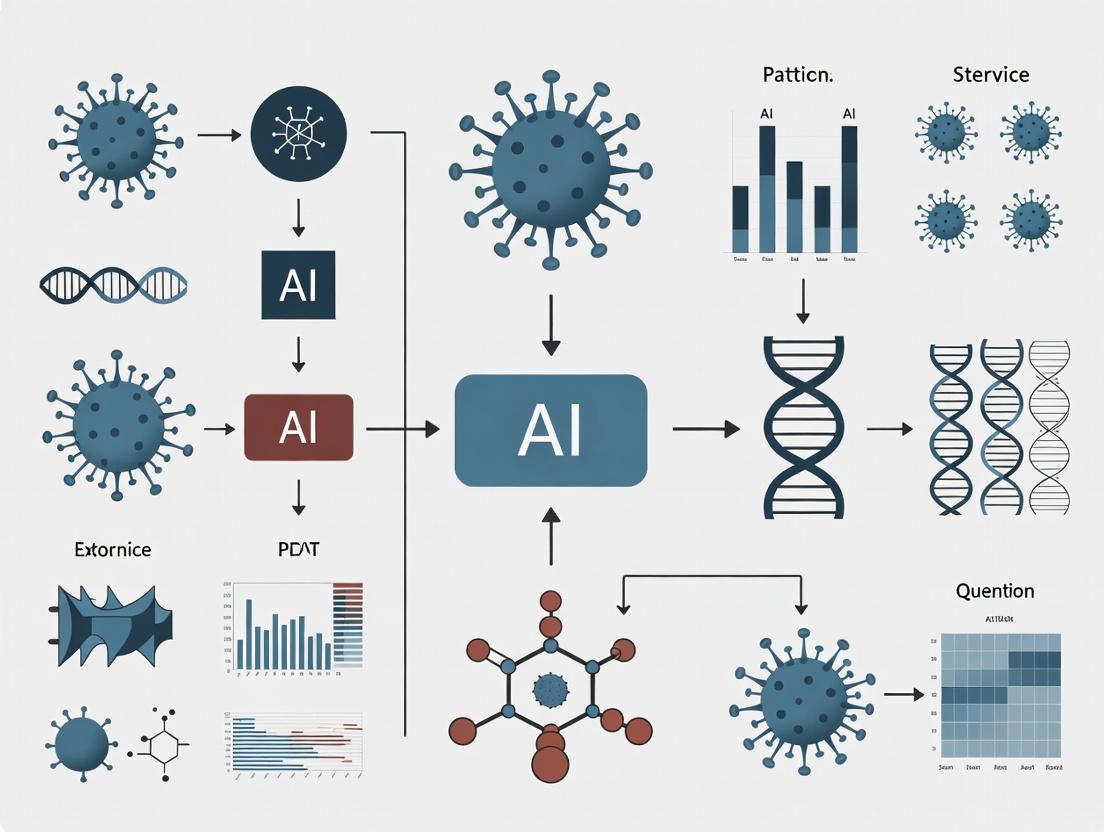
This article provides a comprehensive guide for researchers, scientists, and drug development professionals on the application of artificial intelligence in viral sequence pattern recognition.
Decoding Viral Evolution: How AI-Powered Pattern Recognition is Revolutionizing Pathogen Genomics and Drug Discovery
Abstract
This article provides a comprehensive guide for researchers, scientists, and drug development professionals on the application of artificial intelligence in viral sequence pattern recognition. It explores foundational concepts from sequence motifs to evolutionary dynamics, details cutting-edge methodological approaches including deep learning architectures and real-world applications in surveillance and therapeutic design. The guide addresses critical challenges in model robustness, data scarcity, and computational efficiency, and offers a framework for rigorous model validation and comparison with traditional bioinformatics tools. By synthesizing current research and practical insights, this article serves as a roadmap for integrating AI into virology to accelerate pandemic preparedness and antiviral development.
From Sequences to Signals: Foundational AI Concepts for Viral Genomics
Defining Pattern Recognition in the Context of Viral Nucleotide and Amino Acid Sequences
Pattern recognition in virology is the systematic identification of statistically significant motifs, conserved domains, mutation signatures, and structural patterns within viral genetic and protein sequences. Framed within a broader thesis on AI-driven viral research, this process is foundational for tracking evolution, predicting host tropism, identifying drug targets, and facilitating rapid response to emerging threats. This guide details the technical methodologies and computational frameworks enabling this critical analysis.
Core Pattern Types and Quantitative Analysis
Patterns in viral sequences manifest at multiple, interconnected levels. The table below summarizes the primary categories and their research applications.
Table 1: Categories of Patterns in Viral Sequences
| Pattern Category | Definition | Key Analysis Methods | Primary Research Application |
|---|---|---|---|
| Conserved Motifs | Short, invariant sequences critical for function (e.g., catalytic sites, polymerase motifs). | Multiple Sequence Alignment (MSA), Hidden Markov Models (HMMs), MEME Suite. | Vaccine design (target invariant epitopes), broad-spectrum antiviral drug target identification. |
| Mutation Signatures | Non-random patterns of substitutions (e.g., CpG depletion, APOBEC-mediated hypermutation). | Entropy analysis, machine learning classifiers (e.g., Random Forest), phylodynamic models. | Tracking transmission clusters, understanding host adaptation, inferring selective pressures. |
| Recombination Signals | Breakpoints indicating genetic material exchange between viral strains or species. | Bootscan/Simplot, phylogenetic incongruence tests, recombination detection programs (RDP5). | Identifying novel variants, assessing pandemic potential, understanding genome plasticity. |
| Structural Patterns | RNA secondary structures (e.g., IRES, frameshift elements) or protein domains. | Free energy minimization (mfold, ViennaRNA), homology modeling, AlphaFold2. | Disrupting replication mechanisms, designing antisense oligonucleotides (ASOs). |
| Host Interaction Motifs | Short linear motifs (SLiMs) or domains that bind host proteins (e.g., SH3, PDZ binders). | Regular expression scanning, motif enrichment analysis, yeast two-hybrid screens. | Understanding pathogenesis, identifying host-directed therapeutic targets. |
Table 2: Quantitative Metrics for Pattern Analysis (Example: SARS-CoV-2 Spike Protein RBD)
| Metric | Value/Result | Interpretation |
|---|---|---|
| Shannon Entropy (Pos. 501) | ~1.2 (High) | Position 501 (N→Y, etc.) is a highly variable site under positive selection. |
| Conservation Score (% Identity) | >85% across sarbecoviruses | High conservation suggests functional constraint; potential target for pan-sarbecovirus vaccines. |
| Glycosylation Sites (N-linked) | 22 predicted sites | Extensive glycosylation shields the protein from immune recognition. |
| Average Mutation Rate | ~1x10⁻³ substitutions/site/year | Establishes a molecular clock for dating divergence events. |
Experimental and Computational Methodologies
Protocol: High-Throughput Sequencing and Variant Calling Pipeline
This protocol outlines the steps from sample to pattern identification for viral genomic surveillance.
Sample Preparation & Sequencing:
- Extract viral RNA/DNA from clinical or cultured samples.
- Perform reverse transcription (for RNA viruses) and amplify whole genomes using tiling multiplex PCR or metagenomic approaches.
- Prepare libraries (e.g., Illumina Nextera, Oxford Nanopore ligation kits) and sequence on an appropriate platform (Illumina for accuracy, Nanopore for real-time).
Bioinformatic Pre-processing:
- Quality Control: Use
FastQCandNanoplot. Trim adapters and low-quality bases withTrimmomaticorPorechop. - Alignment: Map reads to a reference genome using
BWA-MEM(Illumina) orminimap2(Nanopore). Generate consensus sequences withsamtoolsandbcftools.
- Quality Control: Use
Pattern Recognition Analysis:
- Variant Calling: Identify SNPs and indels using
ivar,bcftools, ormedaka. Filter based on depth (>100x) and frequency (>5% for minority variants). - Multiple Sequence Alignment: Align consensus sequences with
MAFFTorClustal Omega. - Pattern Identification: Feed the MSA into tools like
HMMER(for building family profiles),Geneious(for visual motif discovery), or custom Python/R scripts for entropy calculation.
- Variant Calling: Identify SNPs and indels using
Protocol: Identifying Host Interaction Motifs via Affinity Purification-Mass Spectrometry (AP-MS)
This experimental protocol identifies viral proteins' host binding partners, revealing functional motifs.
Cloning & Expression:
- Clone the viral gene of interest (e.g., SARS-CoV-2 ORF6) into an expression vector with an affinity tag (e.g., FLAG, HA).
- Transfect the construct into human cell lines (e.g., HEK293T, A549).
Affinity Purification:
- Lyse cells 48h post-transfection in a mild non-denaturing buffer.
- Incubate lysate with anti-FLAG M2 magnetic agarose beads for 2-4 hours at 4°C.
- Wash beads stringently (e.g., with 0.5M KCl) to remove non-specific interactors.
- Elute bound protein complexes using FLAG peptide or low-pH buffer.
Mass Spectrometry & Analysis:
- Digest eluted proteins with trypsin. Analyze peptides by liquid chromatography-tandem mass spectrometry (LC-MS/MS).
- Identify host proteins using database search engines (e.g., MaxQuant, Proteome Discoverer).
- Perform Gene Ontology (GO) enrichment analysis. Scan the viral protein sequence for known SLiMs using the
ELMdatabase to map interaction domains.
Visualization of Workflows and Relationships
Workflow: Viral Pattern Recognition Pathways
Logic: From Pattern Discovery to Application
The Scientist's Toolkit: Essential Research Reagents & Materials
Table 3: Key Research Reagent Solutions for Viral Sequence Pattern Studies
| Reagent/Material | Function/Application | Example Product/Kit |
|---|---|---|
| High-Fidelity Polymerase | Accurate amplification of viral genomes for sequencing; minimizes PCR-induced errors. | Q5 High-Fidelity DNA Polymerase, SuperScript IV for RT. |
| Metagenomic Sequencing Kit | Unbiased capture of viral sequences from complex samples (e.g., wastewater, tissue). | Illumina Nextera XT, Oxford Nanopore SQK-RBK114. |
| Variant Calling Pipeline Software | Specialized tools for identifying low-frequency variants in viral populations. | iVar, LoFreq, VirVarSeq. |
| Multiple Sequence Alignment Tool | Aligns hundreds to thousands of sequences to identify conserved/variable regions. | MAFFT, Clustal Omega, MUSCLE. |
| Motif Discovery Suite | Identifies overrepresented sequence motifs in unaligned or aligned sequences. | MEME Suite, HMMER, GLAM2. |
| Affinity Purification Beads | Isolate tagged viral protein complexes from host cell lysates for interactome mapping. | Anti-FLAG M2 Magnetic Beads, Streptactin XT beads. |
| Phylogenetic Analysis Software | Reconstructs evolutionary relationships to trace patterns in time and geography. | Nextstrain, BEAST2, IQ-TREE. |
| Structural Prediction Platform | Infers 3D structure of viral proteins/RNA from sequence to guide functional insights. | AlphaFold2, RoseTTAFold, ViennaRNA. |
The advent of high-throughput sequencing (HTS) has transformed virology, generating datasets of unprecedented scale and complexity. The manual analytical techniques that sufficed a decade ago are now fundamentally incapable of extracting meaningful biological insights from these data streams. This whitepaper, framed within a broader thesis on AI for pattern recognition in viral sequences, details the technical limitations of manual analysis and presents the computational methodologies required to advance research and therapeutic development.
Quantitative Scale of the Challenge
The following table summarizes the quantitative gap between data generation capacity and manual analysis capability.
Table 1: Scale of Viral Genomics Data vs. Manual Analysis Capacity
| Metric | Current Scale (2024-2025 Estimates) | Manual Analysis Capacity | Disparity Factor |
|---|---|---|---|
| Sequences in Public Repositories (e.g., GISAID, NCBI Virus) | >300 million viral sequences | ~10-100 sequences per deep manual study | >10^6 |
| Data Generation Rate (per major sequencing project) | 1 TB - 10 TB raw data | <1 GB analyzable via manual inspection | >10^3 |
| Time for Phylogenetic Tree Construction (per 1,000 sequences) | Computational: Minutes to hours | Manual alignment & tree drawing: Weeks to months | >10^3 |
| Variant Surveillance (Number of mutations to track in real-time) | Millions of novel mutations/year (e.g., SARS-CoV-2) | Hundreds per analyst/year | >10^4 |
| Host-Pathogen Interaction Prediction (Potential epitopes per genome) | 100s - 1000s of potential epitopes | <10 characterized manually per study | >10^2 |
Core Technical Limitations of Manual Analysis
Dimensionality and Complexity
Viral genome analysis involves high-dimensional data (nucleotides, codons, structural elements, phenotypic metadata). Manual methods cannot integrate >3 dimensions effectively, leading to oversimplified models.
Temporal Dynamics and Real-Time Surveillance
Global surveillance platforms generate thousands of sequences daily. Manual curation and annotation pipelines introduce lags of weeks, crippling pandemic response.
Detection of Weak, High-Dimensional Signals
Complex patterns—like convergent evolution across non-contiguous genomic regions or subtle recombination signals—are statistically defined and invisible to manual review.
Experimental Protocols: From Data to Insight
This section outlines standard protocols that generate the data volumes necessitating automated, AI-driven analysis.
Protocol 1: Large-Scale Viral Metagenomic Sequencing for Outbreak Surveillance
- Sample Collection & Nucleic Acid Extraction: Use automated platforms (e.g., QIAcube) for high-throughput extraction from environmental or clinical samples.
- Library Preparation: Employ shotgun or target-enrichment (e.g., Twist Pan-Viral Panel) protocols on robotic liquid handlers.
- Sequencing: Run on platforms like Illumina NovaSeq X (up to 16Tb/run) or Oxford Nanopore GridION/PromethION for real-time output.
- Primary Computational Analysis: This is where manual methods fail. Requires:
- Basecalling & Demultiplexing: (Nanopore: Dorado, Illumina: bcl2fastq).
- Quality Trimming: Fastp, Trimmomatic.
- Host Subtraction: Alignment to host genome (Bowtie2, BWA).
- De novo Assembly & Contig Binning: MetaSPAdes, CLC Assembly Cell.
- Taxonomic Assignment: Alignment (BLAST, DIAMOND) to curated DBs (RefSeq) or k-mer based (Kraken2).
Protocol 2: Longitudinal Intra-Host Viral Evolution Study
- Time-Series Sampling: Collect serial samples from infected host (human, animal model).
- Deep Sequencing: Achieve high coverage (>10,000x) to detect low-frequency variants.
- Variant Calling:
- Map reads to reference genome (BWA-MEM, Minimap2).
- Identify variants (LoFreq, iVar) with minimum frequency thresholds (e.g., 0.1%).
- Critical Analysis Step: Linkage disequilibrium and haplotype reconstruction across the genome (requires computational tools like PredictHaplo or QuasiRecomb).
- Phenotypic Correlation: Link variant patterns to clinical/metadata (e.g., drug resistance, virulence). This multi-variable correlation is impossible at scale manually.
Visualizing the Analytical Workflow and AI Integration
The following diagrams, created using Graphviz DOT language, illustrate the required computational workflows.
Diagram 1: Manual bottleneck vs AI path in viral data analysis.
Diagram 2: AI pattern recognition engine for integrated viral analysis.
The Scientist's Toolkit: Essential Research Reagent Solutions
Table 2: Key Research Reagents & Computational Tools for Viral Genomics
| Item | Function & Relevance | Example Product/Software |
|---|---|---|
| High-Fidelity Polymerase | Reduces sequencing errors during amplification, crucial for accurate variant calling. | Q5 High-Fidelity DNA Polymerase (NEB) |
| Pan-Viral Enrichment Probes | Capture viral sequences from complex samples for sensitive detection. | Twist Comprehensive Viral Research Panel |
| Ultra-Pure Nucleic Acid Kits | Prepares high-integrity RNA/DNA for long-read sequencing. | ZymoBIOMICS Miniprep Kit |
| Metatranscriptomic Library Prep Kits | Enables direct sequencing of viral RNA, capturing replication intermediates. | Illumina Stranded Total RNA Prep |
| Barcoded Multiplexing Kits | Allows pooling of hundreds of samples, enabling cost-effective large-scale studies. | Oxford Nanopore Native Barcoding Kit 96 |
| AI-Ready Reference Databases | Curated, annotated databases for training and validating AI models. | NCBI Virus, GISAID EpiCoV database |
| Cloud Computing Platform | Provides scalable compute for genome assembly, phylogenetics, and AI model training. | Google Cloud Life Sciences, AWS HealthOmics |
| Specialized AI Frameworks | Libraries for building custom deep learning models on biological sequences. | TensorFlow with BioSeq-API, PyTorch Geometric for graphs |
The accelerated evolution of viruses presents a formidable challenge to global public health. Traditional sequence analysis methods are increasingly insufficient for deciphering the complex patterns that govern viral adaptation, immune evasion, and pathogenesis. This whitepaper details the four fundamental pattern types—Motifs, Variants, Recombination Signals, and Evolutionary Signatures—which form the core substrate for advanced artificial intelligence (AI) models in viral research. The systematic identification and interpretation of these patterns are critical for developing broad-spectrum antivirals, universal vaccines, and predictive outbreak models.
Defining the Core Pattern Types
Motifs: Conserved Functional Signatures
Motifs are short, conserved sequence or structure patterns associated with a specific biological function. In viral genomes, they often represent enzyme active sites, receptor-binding domains, packaging signals, or regulatory elements.
Table 1: Key Viral Motif Types and Functions
| Motif Type | Typical Length | Primary Function | Example (Virus) | AI Detection Method |
|---|---|---|---|---|
| Linear Sequence | 5-20 bp/aa | Protein binding, cleavage sites | Furin cleavage site (SARS-CoV-2 S protein) | Position-Specific Scoring Matrices (PSSMs), CNNs |
| Structural RNA | 50-200 nt | Genome packaging, replication | HIV-1 psi (Ψ) packaging signal | Graph Neural Networks (GNNs) on secondary structure |
| Phosphorylation Sites | 3-7 aa | Regulation of protein activity | NS5A phosphosites (HCV) | Logistic regression on kinase-specific patterns |
| Nuclear Localization Signal (NLS) | 4-8 aa | Nuclear import of viral proteins | SV40 Large T-antigen NLS | Motif finding algorithms (e.g., MEME, DREME) |
Variants: Population-Level Mutations
Variants are mutations that achieve significant frequency within a viral population. Their patterns of emergence and fixation are key to understanding viral fitness and transmissibility.
Table 2: Quantitative Impact of Key Variant Classes (2020-2023)
| Variant Class | Avg. Mutation Rate (nt/genome/replication) | Typical Selection Coefficient (s) | Key Driver of Emergence | Dominant AI Analysis Tool |
|---|---|---|---|---|
| Immune Escape | 1-2 x 10^-3 (RNA viruses) | 0.05 - 0.3 | Host immune pressure | Transformer models (e.g., ESM-2) |
| Transmissibility-Enhancing | 1-5 x 10^-4 | 0.1 - 0.5 | Human-to-human adaptation | Phylogenetic Inference with ML (PAML, BEAST2) |
| Drug Resistance | 1 x 10^-5 - 1 x 10^-4 | 0.2 - 1.0 (strong selection) | Antiviral therapy | 3D Convolutional Networks on protein structures |
| Host Range Expansion | Variable | 0.01 - 0.2 | Cross-species transmission | Random Forests on host-specific residue features |
Recombination Signals: Genomic Rearrangements
Recombination involves the exchange of genetic material between viral co-infections, leading to novel chimeric genomes. Breakpoint signals and parental strand identification are critical detection targets.
Experimental Protocol: Identification of Recombination Breakpoints via Deep Sequencing
Objective: To accurately identify recombination breakpoints in mixed viral populations using next-generation sequencing (NGS) and AI-based signal processing.
Materials:
- Viral RNA from co-infected cell culture or clinical sample.
- Reverse transcriptase and high-fidelity PCR kits.
- NGS platform (Illumina MiSeq/NextSeq).
- Bioinformatics pipelines (RDP5, Simplot, in-house ML scripts).
Procedure:
- Library Preparation: Perform RT-PCR with overlapping amplicons spanning the full genome. Use barcoded adapters for multiplexing.
- Sequencing: Run on NGS platform to achieve minimum 10,000x coverage per sample.
- Primary Alignment: Map reads to reference genomes using BWA-MEM or Bowtie2.
- Signal Detection: Apply sliding-window analysis (200-nt windows, 20-nt step) to calculate similarity scores to potential parental strains.
- AI-Based Confirmation: Input window scores into a trained Gradient Boosting classifier (e.g., XGBoost) trained on known recombinant/non-recombinant sequences to identify statistically supported breakpoints (p < 0.001).
- Validation: Sanger sequence across predicted breakpoints from original sample.
Evolutionary Signatures: Long-Term Adaptive Patterns
These are patterns of change across phylogenies, including convergent evolution, adaptive radiation, and selective sweeps, which reveal long-term strategies of viral adaptation.
Table 3: Metrics for Quantifying Evolutionary Signatures
| Signature | Primary Metric | Calculation Method | Interpretation | AI/Statistical Model |
|---|---|---|---|---|
| Positive Selection | dN/dS (ω) | Ratio of non-synonymous to synonymous substitution rates | ω > 1 indicates adaptive evolution | FUBAR, FEL, MEME (HyPhy package) |
| Convergent Evolution | Homoplasy Count | Independent emergence of identical mutations | Suggests strong selective pressure | Bayesian phylogenetic mapping (BEAST2) |
| Selective Sweep | Reduction in Diversity (π) | π in region vs. genome background (πregion/πbackground) | Value near 0 indicates recent sweep | Hidden Markov Models (HMMs) on SNP density |
| Evolutionary Rate Acceleration | Branch-Specific Rate (r) | Substitutions/site/year on specific phylogenetic branch | Spike in r indicates rapid adaptation | Gaussian Process regression on time-scaled trees |
AI Methodologies for Pattern Recognition
Workflow for Integrated Pattern Analysis
AI Pattern Recognition Workflow in Viral Genomics
Signaling Pathway of Viral Adaptation Driven by Pattern Interplay
Viral Adaptation Pathway via Pattern Interplay
The Scientist's Toolkit: Research Reagent Solutions
Table 4: Essential Reagents and Materials for Viral Pattern Research
| Reagent/Material | Supplier Examples | Function in Pattern Analysis | Critical Specification |
|---|---|---|---|
| High-Fidelity RT-PCR Kit | Thermo Fisher, Takara | Amplification for NGS; minimizes artificial recombination. | Error rate < 2 x 10^-6 /nt. |
| Target Enrichment Probes (Viral Panels) | Twist Bioscience, IDT | Capture viral sequences from complex clinical samples for deep variant calling. | Coverage uniformity > 95%. |
| Synthetic Viral Controls (RNA) | ATCC, GenScript | Positive controls for mutation/recombination detection assays. | Quantified mutation mix. |
| NGS Library Prep with UMIs | Illumina, New England Biolabs | Unique Molecular Identifiers (UMIs) enable error correction for accurate variant frequency. | > 90% UMI utilization. |
| Neutralization Antibody Panel | BEI Resources, Sino Biological | Assess functional impact of variant/motif changes in pseudovirus assays. | WHO international standard traceable. |
| CRISPR-based Viral Activation (CRISPRa) | Synthego, Santa Cruz Biotech | Activate latent or low-frequency variants for phenotypic characterization. | > 50-fold activation efficiency. |
| Phylogenetic Analysis Suite (Software) | Nextstrain, Geneious Prime | Integrated platform for evolutionary signature analysis and visualization. | Real-time data integration. |
| AI/ML Cloud Compute Credits | AWS, Google Cloud | Resources for training large models (ESM-2, AlphaFold) on viral protein sequences. | GPU (A100/V100) access. |
Experimental Protocols
Protocol: Deep Mutational Scanning (DMS) for Variant Effect Prediction
Objective: Empirically measure the fitness effect of all possible single amino acid substitutions in a viral protein domain.
Materials:
- Plasmid library encoding all possible single mutants of target protein.
- Mammalian cell line (e.g., HEK293T) for viral protein expression.
- Flow cytometer with cell sorting capability.
- NGS platform (Illumina).
Procedure:
- Library Transfection: Transfect mutant plasmid library into cells in triplicate.
- Functional Selection: Apply selection pressure (e.g., antibody binding for RBD, enzyme activity assay).
- Cell Sorting: Use FACS to separate high-fitness and low-fitness populations based on fluorescent reporter.
- NGS Recovery: Isolve plasmid DNA from sorted populations and amplify mutant region for NGS.
- Variant Frequency Analysis: Sequence each population to >500x coverage. Count reads for each mutant.
- Fitness Score Calculation: Compute enrichment score (log2( frequencypost-selection / frequencyinput )).
- AI Model Training: Use scores as ground truth to train a neural network on protein sequence/structure features.
Protocol: Detecting Recombination in Circulating Viral Populations
Objective: Identify and characterize novel recombinant viruses from surveillance sequencing data.
Materials:
- De-identified bulk RNA-seq or targeted sequencing data from surveillance.
- High-performance computing cluster.
- Reference genome database (NCBI, GISAID).
Procedure:
- Read Mapping: Map all reads to a comprehensive reference panel using a sensitive aligner (minimap2).
- Chimeric Read Identification: Extract reads with secondary alignments or split alignments (using samtools).
- Bootscanning: For each sample, perform bootscan analysis (in RDP5) with 1000 permutations, 500-nt window, 20-nt step.
- Confidence Assignment: Recombination events are accepted if supported by ≥3 independent methods in RDP5 (RDP, GENECONV, MaxChi, etc.) with p < 0.05.
- Breakpoint Refinement: Use NGS read depth and soft-clipping patterns at predicted breakpoints for precise localization.
- Phenotype Prediction: Input recombinant sequence into trained AI model (e.g., on host tropism or antibody escape) to prioritize for in vitro testing.
The systematic decomposition of viral genomics into Motifs, Variants, Recombination Signals, and Evolutionary Signatures provides a robust framework for AI-driven discovery. The integration of these patterns, through the workflows and experimental protocols detailed herein, enables a shift from reactive to predictive viral research. The next frontier lies in building multimodal AI systems that combine these sequence patterns with structural, epidemiological, and clinical data to anticipate viral emergence and design preemptive countermeasures, ultimately forming the core of a comprehensive thesis on AI for pandemic preparedness.
In the field of viral genomics, the rapid identification and analysis of genetic patterns is critical for pandemic preparedness, vaccine design, and antiviral drug development. This technical guide examines the core artificial intelligence (AI) paradigms—traditional Machine Learning (ML) and Deep Learning (DL)—applied to nucleotide and amino acid sequence analysis. The choice of paradigm directly impacts the accuracy of identifying virulence factors, predicting mutation impacts, and classifying novel viral strains. This overview is framed within a broader thesis on optimizing AI-driven pattern recognition for accelerated virological research and therapeutic discovery.
Foundational Concepts: ML vs. DL for Sequences
Machine Learning for sequences typically involves a two-stage pipeline: 1) Feature engineering, where domain knowledge is used to extract meaningful representations (e.g., k-mer frequencies, physicochemical properties, entropy scores), and 2) Model training using algorithms like Support Vector Machines (SVMs) or Random Forests on these hand-crafted features.
Deep Learning, specifically using architectures like Recurrent Neural Networks (RNNs), Long Short-Term Memory networks (LSTMs), and Transformers, aims to automate feature extraction. These models ingest raw or minimally preprocessed sequences (e.g., one-hot encoded nucleotides) and learn hierarchical representations directly from the data.
The distinction is crucial in virology, where the relationship between sequence variation and phenotypic outcome (e.g., transmissibility, antigenic drift) can be complex and non-linear.
Comparative Quantitative Analysis
The following table summarizes the performance and resource characteristics of ML and DL approaches based on recent benchmarking studies in viral bioinformatics.
Table 1: Comparative Performance Metrics for Viral Sequence Classification Tasks
| Aspect | Traditional ML (e.g., SVM with k-mers) | Deep Learning (e.g., CNN/Transformer) | Notes & Source |
|---|---|---|---|
| Typical Accuracy (SARS-CoV-2 lineage classification) | 92-95% | 96-99% | DL models edge out with larger (>10k samples) datasets. (Recent benchmarks, 2024) |
| Feature Engineering Requirement | High (Manual) | Low (Automatic) | ML requires domain expertise for k-mer selection, etc. |
| Training Data Size Requirement | Lower (Can work on 100s of sequences) | High (Requires 1000s+ for robustness) | DL performance scales significantly with data volume. |
| Computational Cost (GPU hrs) | Low (1-10 hrs on CPU) | High (10-100+ hrs on GPU) | DL training is resource-intensive but inference is fast. |
| Interpretability | Moderate (Feature importance) | Low (Black-box) | SHAP values for ML; attention maps in DL offer partial insights. |
| Robustness to Novel Mutations | Can degrade without retraining | Better at generalizing from patterns | DL models infer based on learned latent spaces. |
Table 2: Common Model Architectures in Viral Sequence Analysis
| Model Type | Best For | Example Application in Virology | Key Limitation |
|---|---|---|---|
| SVM with string kernels | Small datasets, clear margins | Hepatitis C virus genotype classification | Scalability to billions of base pairs. |
| Random Forest | Feature importance analysis | Identifying key genomic regions for virulence | May miss complex long-range dependencies. |
| 1D Convolutional Neural Net (CNN) | Local motif detection | Influenza hemagglutinin antigenic site prediction | Struggles with very long-range interactions. |
| Bidirectional LSTM (BiLSTM) | Modeling sequence dependencies | HIV drug resistance prediction | Computationally slower than CNNs. |
| Transformer (e.g., DNABERT) | Context-aware long-range modeling | Pan-viral genome classification, variant effect prediction | Extreme data and computational requirements. |
Detailed Experimental Protocols
Protocol 4.1: Traditional ML Pipeline for Viral Variant Classification
Objective: Classify viral sequence reads into known variants (e.g., Alpha, Delta, Omicron).
Materials: See "The Scientist's Toolkit" (Section 6).
Methodology:
- Data Curation: Gather FASTA files from public repositories (GISAID, NCBI Virus). Perform multiple sequence alignment (MSA) using MAFFT or Clustal Omega.
- Feature Engineering:
- Extract k-mer frequencies (typical k=3 to 7 for nucleotides). This converts each sequence into a vector counting all possible sub-sequences of length k.
- Dimensionality Reduction: Apply Principal Component Analysis (PCA) or SelectKBest to reduce the very high-dimensional k-mer feature space.
- Model Training & Validation:
- Split data into training (70%), validation (15%), and test (15%) sets, ensuring no data leakage between variant groups.
- Train an SVM with a radial basis function (RBF) kernel or a Random Forest classifier on the training set.
- Optimize hyperparameters (e.g., SVM's C and gamma, Random Forest's tree depth) using grid search on the validation set.
- Evaluation: Report precision, recall, F1-score, and confusion matrix on the held-out test set.
Protocol 4.2: Deep Learning (Transformer) Protocol for Mutation Impact Prediction
Objective: Predict the functional impact (e.g., neutral, increasing infectivity) of a point mutation in a viral spike protein gene.
Methodology:
- Data Preparation:
- Use labeled datasets from biochemical assays or epidemiological fitness estimates.
- Tokenization: For nucleotide sequences, use byte-pair encoding (BPE) or wordpiece tokenization. For amino acid sequences, use standard residue tokens.
- Format input as:
[CLS] + sequence_context + [SEP] + mutant_residue_info + [SEP].
- Model Architecture & Training:
- Initialize a pre-trained genomic Transformer model (e.g., AlphaFold's EvoFormer module, DNABERT).
- Add a task-specific head: a global average pooling layer followed by a fully connected layer for regression or classification.
- Employ transfer learning: Fine-tune all layers on the specific viral dataset using a low learning rate (e.g., 1e-5).
- Use a masked language modeling (MLM) objective in pre-training to help the model learn biophysical constraints.
- Training Regimen: Use the AdamW optimizer with gradient clipping. Apply heavy regularization (dropout, weight decay) due to limited labeled data.
- Interpretation: Generate attention maps to visualize which parts of the sequence the model "attends to" when making a prediction, offering biological insight.
Mandatory Visualizations
Diagram 1: ML vs DL workflow for sequence analysis
Diagram 2: Transformer architecture for viral sequences
The Scientist's Toolkit
Table 3: Essential Research Reagent Solutions & Computational Tools
| Item / Tool Name | Category | Primary Function in Viral Sequence AI |
|---|---|---|
| GISAID EpiCoV Database | Data Repository | Primary source for curated, annotated SARS-CoV-2 and influenza sequences with epidemiological metadata. |
| NCBI Virus | Data Repository | Comprehensive database for viral sequence data across all species, integrated with Entrez. |
| MAFFT / Clustal Omega | Bioinformatics Tool | Performs Multiple Sequence Alignment (MSA), a critical pre-processing step for many ML feature extraction methods. |
| scikit-learn | ML Library | Provides robust implementations of SVM, Random Forest, and other classical ML algorithms for model building. |
| TensorFlow / PyTorch | DL Framework | Flexible ecosystems for building, training, and deploying custom deep neural network architectures (CNNs, RNNs, Transformers). |
| Hugging Face Transformers | DL Library | Offers pre-trained Transformer models (e.g., DNABERT, ProteinBERT) adaptable for viral genomics via fine-tuning. |
| SHAP (SHapley Additive exPlanations) | Interpretability Tool | Explains output of any ML model, highlighting which sequence regions (k-mers) drove a prediction. |
| NVIDIA V100/A100 GPU | Hardware | Accelerates the training of large DL models, reducing time from weeks to days or hours. |
| DeepVariant (Google) | Specialized Tool | Uses a CNN to call genetic variants from sequencing data, improving accuracy over traditional methods. |
The application of Artificial Intelligence (AI) to viral genomics represents a paradigm shift in our ability to predict pathogen evolution, identify therapeutic targets, and accelerate drug discovery. This technical guide delineates the essential biological features—encoding sequences, conserved regions, and epistatic interactions—that must be accurately represented for AI models to succeed in this domain. Framed within a broader thesis on AI-driven pattern recognition, this document provides methodologies for data preparation, feature extraction, and experimental validation critical for researchers and drug development professionals.
Encoding Viral Sequences for Machine Learning
Numerical Representation Schemes
Raw nucleotide or amino acid sequences are not directly interpretable by machine learning algorithms. Multiple encoding strategies transform biological sequences into numerical vectors, each with distinct advantages for model learning.
Table 1: Comparative Analysis of Sequence Encoding Methods
| Encoding Method | Dimensionality per residue | Captured Information | Best suited for Model Type | Key Limitation |
|---|---|---|---|---|
| One-Hot | 4 (NT) or 20 (AA) | Identity only | CNN, RNN | No physicochemical data |
| k-mer Frequency | 4^k (NT) or 20^k (AA) | Local context | SVM, Logistic Regression | High dimensionality for large k |
| Learned Embeddings (e.g., NLP-based) | 50-1024 (custom) | Contextual semantics | Transformer, LSTM | Requires large pre-training dataset |
| Physicochemical Property Vectors | 5-10 (custom) | Biochemical features | Random Forest, Regression | Incomplete representation |
Experimental Protocol: Generating k-mer Frequency Vectors
Objective: Convert a set of viral genome sequences into fixed-length numerical feature vectors based on k-mer counts.
- Sequence Preprocessing: Gather FASTA files. Perform multiple sequence alignment (MSA) using MAFFT v7 or Clustal Omega to ensure positional homology. Remove low-quality or incomplete sequences.
- k-mer Enumeration: For each aligned sequence, slide a window of length k (typically 3-6 for nucleotides, 2-3 for amino acids) across the entire length, counting the occurrence of every possible k-mer. For unaligned sequences, use a sliding window across the raw sequence.
- Normalization: Convert raw counts to frequencies by dividing each k-mer count by the total number of k-mers in the sequence, or use Term Frequency-Inverse Document Frequency (TF-IDF) normalization across the dataset to de-emphasize common k-mers.
- Vector Construction: Assemble the normalized frequency for each possible k-mer into a vector in a consistent order, creating a feature vector of length 4^k or 20^k for each input sequence.
Diagram 1: Workflow for k-mer based sequence encoding.
Research Reagent Solutions: Sequence Encoding
| Item/Reagent | Function in Encoding | Example Product/Software |
|---|---|---|
| Multiple Sequence Alignment Tool | Aligns homologous sequences for positional encoding | MAFFT, Clustal Omega, MUSCLE |
| k-mer Counting Library | Efficiently generates k-mer frequency vectors | Jellyfish, KMC3, Biopython |
| NLP Embedding Framework | Learns continuous vector representations of sequences | ProtTrans (for proteins), DNABERT (for nucleotides) |
| Feature Normalization Library | Scales and normalizes numerical vectors for model stability | scikit-learn StandardScaler, Normalizer |
Identifying and Utilizing Conserved Regions
Conservation as a Feature for AI
Conserved genomic regions across viral strains indicate essential functions, such as structural integrity or enzymatic activity, making them prime targets for broad-spectrum therapeutics. AI models can use conservation scores as input features or as constraints to guide learning.
Experimental Protocol: Calculating Conservation Scores
Objective: Generate a per-position conservation score from a viral protein MSA.
- Curation of Dataset: Compile amino acid sequences for a specific viral protein (e.g., SARS-CoV-2 Spike, HIV-1 protease) from a public database (NCBI Virus, GISAID). Filter for high-quality, full-length sequences.
- Alignment: Perform a rigorous MSA. For best results, use profile-based methods like HMMER or PSI-BLAST for deep homolog detection.
- Score Calculation: Apply an information-theoretic metric. The most common is Shannon Entropy: H(i) = - Σ p(a,i) log₂ p(a,i), where p(a,i) is the frequency of amino acid a at alignment column i. Low entropy indicates high conservation.
- Alternative Scores: Use the BLOSUM62 substitution matrix-based Score or Relative Entropy to weight biochemically similar residues.
- Feature Integration: Append the conservation score for each position (or a window-averaged score) as an additional channel to the sequence encoding vector for that position.
Table 2: Conservation Metrics and Their Interpretation
| Metric | Formula | Range | Interpretation | Computational Cost |
|---|---|---|---|---|
| Shannon Entropy | H(i) = -Σ p(a,i) log₂ p(a,i) | 0 (invariant) to ~4.32 (max diversity) | Pure frequency-based diversity | Low |
| Relative Entropy (Kullback-Leibler) | D(i) = Σ p(a,i) log₂ (p(a,i)/q(a)) | 0 (match background) to ∞ | Divergence from background distribution | Medium |
| Score (e.g., from BLOSUM) | S(i) = Σ Σ p(a,i) p(b,i) BLOSUM(a,b) | Varies by matrix | Sum of pairwise substitution likelihoods | Medium-High |
Diagram 2: From sequences to conserved targets.
Modeling Epistatic Interactions
The Challenge of Epistasis
Epistasis—where the effect of one mutation depends on the presence of others—is a fundamental driver of viral evolution and drug resistance. Modeling these high-order interactions is computationally challenging but critical for accurate phenotype prediction.
Experimental Protocol: Detecting Epistatic Pairs via Statistical Coupling Analysis (SCA)
Objective: Identify pairs of co-evolving positions in a viral protein MSA that suggest functional or structural coupling.
- Generate Large, Diverse MSA: Assemble a deep, evolutionarily diverse MSA (thousands of sequences) for the viral protein family.
- Compute Positional Covariance: For each pair of alignment columns (i, j), calculate a covariance metric. A common method is Direct Information (DI) from global statistical models like Potts models or Mutual Information (MI) corrected for phylogenetic bias.
- MI(i,j) = Σ Σ p(ab,i,j) log₂ [ p(ab,i,j) / (p(a,i) p(b,j)) ]
- Correct MI using methods like APC (Average Product Correction): DI(i,j) = MI(i,j) - [MI(i,)MI(,j)]/MI(,)
- Statistical Significance: Perform permutation tests (shuffling columns) to generate a null distribution and assign p-values to each pair's DI score.
- Network Construction & Validation: Build an epistatic network where nodes are positions and edges are significant DI scores. Validate predicted couplings through known 3D structures (contacts in PDB) or deep mutational scanning experiments.
Table 3: Results from a Notional SCA of HIV-1 Integrase
| Position i | Position j | Direct Information (DI) Score | p-value | Validated in 3D Structure? | Implication |
|---|---|---|---|---|---|
| 148 | 155 | 0.12 | <0.001 | Yes (4.5 Å) | Catalytic loop stability |
| 92 | 101 | 0.09 | 0.003 | No | Potential allosteric network |
| 66 | 153 | 0.07 | 0.015 | Yes (8.2 Å) | Drug resistance pathway |
Diagram 3: Epistatic network from SCA.
Research Reagent Solutions: Epistasis Analysis
| Item/Reagent | Function in Epistasis Analysis | Example Product/Software |
|---|---|---|
| Coevolution Analysis Suite | Calculates DI, MI, and builds Potts models | EVcouplings, GREMLIN, plmDCA |
| Deep Mutational Scanning Platform | Empirically tests mutational combinations | CombiGEM, ORF libraries, next-gen sequencing |
| Molecular Dynamics Simulation Suite | Validates predicted couplings via in silico structural analysis | GROMACS, AMBER, NAMD |
Integrating Features for Predictive AI Models
Multi-Modal Architecture
Effective models combine encoded sequence data, conservation profiles, and epistatic graphs. A proposed architecture uses:
- Convolutional Neural Networks (CNNs) to scan for local motifs in one-hot or embedding-encoded sequences.
- An Attention or Graph Neural Network (GNN) layer to process the epistatic interaction network, allowing information flow between coupled positions.
- Conservation scores used as attention weights or as a separate input channel to prioritize invariant regions.
Experimental Protocol: Training an Integrated Model for Drug Resistance Prediction
Objective: Train a model to predict phenotypic drug resistance from viral protease sequences.
- Data Compilation:
- Sequence & Label: Curate paired data: HIV-1 protease sequences and associated measured IC₅₀ fold-change for protease inhibitors (e.g., Darunavir).
- Features: For each sequence, generate: a) Learned embedding vector. b) Conservation profile from a large reference MSA. c) Epistatic edge list from a family-wide SCA.
- Model Design: Implement a hybrid model. Sequence embeddings pass through a CNN. The output per-position features are concatenated with conservation scores. These are then passed through a GNN layer whose connectivity is defined by the epistatic edge list (shared across all sequences). Final layers produce a regression prediction.
- Training & Validation: Use strict strain-based clustering for train/test splits to prevent data leakage. Optimize for mean squared error (MSE) on log-transformed fold-change values.
- Interpretation: Use GNN explainability tools (e.g., GNNExplainer) or attention weights to highlight positions driving the prediction, guiding experimental validation.
Diagram 4: Integrated AI model architecture.
The accurate representation of encoding sequences, conserved regions, and epistatic interactions forms the biological feature bedrock for AI in viral sequence analysis. The methodologies outlined here—from k-mer vectorization and entropy calculations to statistical coupling analysis and hybrid model design—provide a reproducible framework for researchers. As these techniques mature, their integration will be pivotal in realizing the thesis of AI as a transformative tool for preempting viral evolution and discovering next-generation antivirals.
AI in Action: Methodologies and Real-World Applications for Viral Pattern Detection
The application of artificial intelligence (AI) to viral genomics represents a paradigm shift in our ability to decode evolutionary dynamics, predict host-virus interactions, and identify targets for therapeutic intervention. This whitepaper provides an in-depth technical analysis of three foundational neural network architectures—Convolutional Neural Networks (CNNs), Recurrent Neural Networks (RNNs) with Long Short-Term Memory (LSTM) units, and Transformers—applied specifically to sequential viral data. The broader thesis framing this work posits that systematic architectural comparison and hybridization are critical for advancing pattern recognition in viral sequences, ultimately accelerating the pace of discovery in virology and antiviral drug development.
Core Architectures & Applications to Viral Data
Convolutional Neural Networks (CNNs)
CNNs, renowned for spatial hierarchy learning in images, are adapted for viral nucleotide or amino acid sequences via 1D convolutions. They excel at detecting local motifs and conserved domains independent of their precise position, which is valuable for identifying protein family signatures or transcription factor binding sites in viral genomes.
- Key Mechanism: Filters (kernels) slide across the embedded sequence, generating feature maps that highlight the presence of specific k-mer patterns.
- Viral Research Application: Prediction of viral host range from genome composition, identification of protease cleavage sites, and classification of viral subtypes from sequence fragments.
Recurrent Neural Networks (RNNs) & Long Short-Term Memory (LSTM) Networks
RNNs are designed for native sequential processing by maintaining a hidden state that propagates information forward. Standard RNNs suffer from vanishing gradients. LSTMs address this with a gated architecture (input, forget, output gates) that regulates information flow, enabling the learning of long-range dependencies across thousands of nucleotides or residues.
- Key Mechanism: The cell state acts as a "conveyor belt," with gates adding or removing information, allowing relevant context to be preserved over long distances.
- Viral Research Application: Modeling viral genome evolution and recombination, predicting RNA secondary structure from primary sequence, and generating functional viral protein sequences.
Transformer Networks
Transformers bypass recurrence entirely, relying on a self-attention mechanism to compute pairwise relationships between all elements in a sequence simultaneously. This allows for direct modeling of global dependencies and massively parallel computation. Positional encodings are added to inject order information.
- Key Mechanism: Self-attention calculates a weighted sum of values for each token, where weights are derived from compatibility queries and keys. Multi-head attention enables focus on different representational subspaces.
- Viral Research Application: Predicting the effects of combinatorial mutations across a viral genome (e.g., SARS-CoV-2 variant fitness), antigenic cartography from hemagglutinin sequences, and protein structure prediction from viral amino acid sequences (as demonstrated by AlphaFold2, a Transformer-derived model).
Comparative Architectural Analysis
The table below synthesizes recent performance metrics from benchmark studies on viral sequence tasks, such as next-token prediction in genome assembly, variant effect prediction, and host prediction.
Table 1: Architectural Performance on Benchmark Viral Sequence Tasks
| Architecture | Task (Dataset) | Key Metric | Reported Score | Primary Strength | Computational Cost (Relative) |
|---|---|---|---|---|---|
| 1D-CNN | Viral Host Prediction (ICTV Benchmark) | Accuracy | 94.2% | Local Motif Detection | Low |
| Bi-LSTM | Viral Genome Completion (Influenza A) | Perplexity | 8.7 | Long-Range Context | Medium |
| Transformer (Encoder) | Variant Effect Prediction (SARS-CoV-2 Spike) | AUROC | 0.891 | Global Dependency Modeling | High |
| Hybrid CNN-LSTM | Protease Cleavage Site ID (Viral Polyproteins) | F1-Score | 0.92 | Local + Temporal Features | Medium |
| Transformer (Decoder) | De Novo Viral Protein Design | Recovery Rate | 41% | Generative Sequence Design | Very High |
Detailed Experimental Protocol for a Benchmark Study
Protocol: Training a Transformer Model for Viral Variant Fitness Prediction
1. Objective: To predict the replicative fitness score of SARS-CoV-2 Spike protein variants from their amino acid sequence.
2. Data Curation:
- Source: GISAID EpiCoV database & associated in vitro fitness assays from recent literature (last 24 months).
- Preprocessing: Perform multiple sequence alignment (MSA) using MAFFT against reference sequence (Wuhan-Hu-1). Encode sequences using a learned byte-pair encoding (BPE) tokenizer with a vocabulary size of 512. Fitness scores are log-transformed and normalized to a [0,1] scale.
3. Model Architecture & Training:
- Model: A 12-layer encoder-only Transformer.
- Hyperparameters: Embedding dimension=512, Attention heads=8, Feed-forward dimension=2048, Dropout=0.1.
- Input: Tokenized variant sequence (max length 1500). Positional encoding is sinusoidal.
- Output: A single scalar value from a regression head (linear layer on [CLS] token representation).
- Loss Function: Mean Squared Error (MSE).
- Optimizer: AdamW with learning rate=5e-5, linear warmup for first 10% of steps, followed by cosine decay.
- Hardware: 4 x NVIDIA A100 GPUs (80GB).
4. Validation & Interpretation:
- Validation: 5-fold time-split cross-validation (train on older variants, test on newer ones) to prevent temporal data leakage.
- Interpretation: Use attention rollout and integrated gradients to identify residues and interaction pairs that most influence the fitness prediction.
Visualizing Key Concepts & Workflows
The Scientist's Toolkit: Research Reagent Solutions
Table 2: Essential Computational Reagents for Viral Sequence AI Research
| Item / Solution | Provider / Example (Open Source) | Primary Function in Research |
|---|---|---|
| Multiple Sequence Alignment (MSA) Tool | MAFFT, Clustal Omega, MUSCLE | Aligns homologous viral sequences for comparative analysis and model input preparation. |
| Genome Annotation Database | NCBI Virus, GISAID, BV-BRC | Provides curated, metadata-rich viral sequences for training and testing models. |
| Deep Learning Framework | PyTorch, TensorFlow, JAX | Provides the core library for building, training, and deploying neural network architectures. |
| Sequence Tokenizer | Byte-Pair Encoding (BPE) via HuggingFace Tokenizers, k-mer tokenization | Converts raw nucleotide/amino acid strings into discrete tokens suitable for model input. |
| Variant Effect Dataset | Stanford Coronavirus Antiviral & Resistance Database (CoV-RDB) | Provides experimentally measured fitness/activity labels for supervised learning of variant impact. |
| Model Interpretation Library | Captum (for PyTorch), SHAP, DeepLIFT | Attributes model predictions to input features, identifying critical residues or motifs. |
| High-Performance Computing (HPC) Environment | AWS EC2 (P4d instances), Google Cloud TPUs, NVIDIA DGX | Provides the necessary GPU/TPU acceleration for training large models on massive sequence datasets. |
| Workflow Management | Nextflow, Snakemake | Orchestrates reproducible pipelines from data preprocessing to model evaluation. |
This whitepaper details a comprehensive workflow for applying machine learning to pattern recognition in viral genomic sequences. The overarching thesis posits that a meticulous, end-to-end computational pipeline is critical for identifying actionable patterns—such as regions of high mutability, conserved epitopes, or recombination hotspots—that can accelerate vaccine design and antiviral drug development.
Data Curation
Data curation establishes the foundation for robust model development. For viral genomics, this involves aggregation, stringent quality control, and systematic annotation.
Key Sources & Quantitative Summary (2024-2025) Table 1: Primary Data Sources for Viral Genomics Research
| Source | Data Type | Example Volume | Key Attributes |
|---|---|---|---|
| NCBI Virus, GISAID | Nucleotide Sequences | ~15M SARS-CoV-2 sequences | Isolate, collection date, host, lineage |
| VIPR, BV-BRC | Annotated Genomes | ~2M across Flaviviridae | Gene annotations, protein products |
| PDB, IEDB | 3D Structures & Epitopes | ~2,000 viral proteins | Structural coordinates, immune recognition data |
Experimental Protocol: Curation & QC Pipeline
- Aggregation: Programmatically download target sequences (e.g., all Orthomyxoviridae) via APIs using tools like
Bio.Entrezandgisaid_cli. - Deduplication: Remove identical sequences based on MD5 hash of the aligned sequence.
- Quality Filtering: Apply thresholds: sequence length within 3 standard deviations of the median, ambiguity (N) content <1%, and no stop codons in conserved ORFs.
- Annotation Enhancement: Cross-reference with UniProt to add protein function annotations. Use Nextclade for preliminary lineage/clade assignment.
- Stratified Sampling: For class-imbalanced datasets (e.g., rare variants), use stratified sampling to create balanced subsets for exploratory analysis.
Feature Engineering
Feature engineering transforms raw sequences into quantifiable descriptors that capture biologically meaningful patterns.
Methodologies for Feature Extraction
- K-mer Frequency Vectors: Generate normalized counts of all possible nucleotide subsequences of length k (typically 3-6). This captures sequence composition without alignment.
- Position-Specific Scoring Matrices (PSSM): For aligned sequences, compute log-likelihood of each residue at each position relative to a background model. Critical for conserved region identification.
- Physicochemical Properties: Translate sequences and compute properties like hydrophobicity index, charge, and molecular weight per sliding window.
- Phylogenetic Features: Extract distance from a defined reference strain or embed sequences via
Bio.Phylotree-based metrics. - One-Hot Encoding: For deep learning models, directly encode nucleotides (A,C,G,T,U) as sparse orthogonal vectors.
Table 2: Feature Engineering Techniques & Output Dimensionality
| Technique | Typical Dimensionality | Best For | Computational Load |
|---|---|---|---|
| k-mer (k=6) | 4⁶ = 4096 features | Sequence classification | Medium |
| PSSM (L=1000) | L x 20 = 20,000 | Motif discovery, alignment | High |
| Physicochemical (5 props) | Sequence Length x 5 | Structural property prediction | Low |
| Phylogenetic | 1-10 distance metrics | Evolutionary analysis | Very High |
Model Training
The curated feature set is used to train models for classification, regression, or clustering tasks relevant to viral research.
Experimental Protocol: Model Training & Validation
- Task Definition: Example: Classify sequences into "high" vs "low" host-cell entry efficiency based on labelled in vitro data.
- Train-Test Split: Perform a temporal split (e.g., train on pre-2023, test on 2024+) to simulate real-world forecasting and avoid data leakage.
- Model Selection: Benchmark:
- Baseline: Logistic Regression with L1 regularization.
- Ensemble: Gradient Boosting Machines (XGBoost) with hyperparameter tuning via Bayesian optimization.
- Deep Learning: 1D Convolutional Neural Network (CNN) for sequence data, or Transformer encoder for embedded features.
- Training: Use 5-fold cross-validation on the training set. Employ early stopping for neural networks.
- Evaluation Metrics: Report precision, recall, F1-score, and AUC-ROC. For imbalanced datasets, prioritize AUC-PR.
Table 3: Model Performance on a Hypothetical Variant Pathogenicity Prediction Task
| Model | AUC-ROC | Precision | Recall | Key Features Used |
|---|---|---|---|---|
| Logistic Regression | 0.82 | 0.76 | 0.68 | PSSM, k-mer (k=4) |
| XGBoost | 0.91 | 0.85 | 0.82 | All, with PSSM top |
| 1D-CNN | 0.89 | 0.87 | 0.78 | One-Hot Encoded Sequence |
Deployment
Deployment translates a trained model into a usable tool for researchers, often via a web application or a REST API.
Deployment Architecture Protocol
- Model Serialization: Save the final model (e.g., XGBoost classifier) and its feature encoder (e.g.,
StandardScaler) usingpickleorjoblib. - API Development: Create a FastAPI or Flask application with a
/predictendpoint. The endpoint should:- Accept a FASTA sequence.
- Run the same curation and feature engineering pipeline.
- Load the serialized model and scaler.
- Return a JSON with prediction and confidence score.
- Containerization: Package the API, model, and all dependencies into a Docker container for portability.
- Cloud Deployment: Deploy the container on a cloud service (e.g., AWS ECS, Google Cloud Run) with auto-scaling.
- Continuous Integration: Use GitHub Actions to retrain the model on a scheduled basis as new public sequence data becomes available.
The Scientist's Toolkit: Research Reagent Solutions
Table 4: Essential Computational Tools & Resources
| Item/Resource | Function/Description | Example/Provider |
|---|---|---|
| BV-BRC | Comprehensive platform for viral 'omics data analysis, including annotation and comparative genomics. | Bacterial & Viral Bioinformatics Resource Center |
| Nextclade | Web & CLI tool for phylogenetic clade assignment, QC, and mutation calling of viral sequences. | Nextstrain |
| MAFFT | Multiple sequence alignment algorithm essential for creating accurate PSSMs and phylogenetic trees. | Katoh & Standley |
| XGBoost | Optimized gradient boosting library for building high-performance classification models on tabular features. | DMLC |
| PyTorch / TensorFlow | Deep learning frameworks for building custom neural network architectures (CNNs, Transformers). | Meta / Google |
| Biopython | Python library for computational biology, enabling sequence manipulation, parsing, and analysis. | Biopython Consortium |
| Docker | Containerization platform ensuring the computational environment and pipeline are reproducible. | Docker Inc. |
| FastAPI | Modern Python web framework for building high-performance, documented APIs to serve models. | FastAPI |
| GISAID EpiCoV | Primary global repository for sharing influenza and coronavirus sequences with associated metadata. | GISAID Initiative |
Within the broader thesis that artificial intelligence represents a paradigm shift for pattern recognition in viral sequences research, the identification of emerging viral variants and lineages stands as a critical application. The rapid evolution of viruses like SARS-CoV-2 and Influenza necessitates tools that can move beyond simple phylogenetic comparison to detect, classify, and predict the functional implications of novel mutations in near real-time. AI-driven approaches are now central to this task, integrating genomic surveillance, phenotypic prediction, and epidemiological tracking into a cohesive framework for public health response and therapeutic development.
Core AI Methodologies in Variant Identification
Pattern Recognition Foundations
AI models, particularly deep learning architectures, are trained to recognize complex, non-linear patterns in nucleotide or amino acid sequences that may elude traditional consensus-building methods.
| AI Model Type | Primary Application in Variant ID | Key Advantage | Example Tools/Implementations |
|---|---|---|---|
| Convolutional Neural Networks (CNNs) | Detecting local sequence motifs and spatial dependencies associated with lineage-defining mutations. | Excels at identifying conserved local patterns despite background noise. | Pangolin lineage classifier, Nextclade. |
| Recurrent Neural Networks (RNNs/LSTMs) | Modeling sequential dependencies across the whole genome for predicting evolutionary pathways. | Handles variable-length sequences and long-range dependencies. | Used in prophetic models of variant emergence. |
| Transformer Models | Context-aware embedding of entire viral genomes; understanding the interplay of distant mutations. | Captures global sequence context; state-of-the-art for many tasks. | Genome-scale language models (e.g., DNABERT, Nucleotide Transformer). |
| Graph Neural Networks (GNNs) | Analyzing viral evolution as a graph of sequences, capturing transmission dynamics and clade relationships. | Naturally models relational data (phylogenetic trees, contact networks). | Applied to transmission cluster identification. |
Integrated Workflow for AI-Powered Surveillance
The standard pipeline integrates wet-lab sequencing with dry-lab AI analysis.
Diagram Title: AI-Integrated Genomic Surveillance Workflow
Experimental Protocols for Validation
Protocol: Benchmarking AI Lineage Classification
This protocol validates a novel AI classifier against established tools.
Objective: To assess the accuracy, sensitivity, and computational efficiency of an AI model for SARS-CoV-2 lineage assignment. Materials: See "Scientist's Toolkit" below. Procedure:
- Dataset Curation: Assemble a benchmark dataset of N=10,000 high-quality SARS-CoV-2 genomes from GISAID, ensuring representation across all Variants of Concern (VOCs) and Variants of Interest (VOIs). Split into training/validation/test sets (70/15/15).
- Baseline Establishment: Run the test set sequences through established classifiers (Pangolin, Nextclade) to generate "ground truth" lineage assignments. Resolve discrepancies via manual phylogenetic analysis.
- AI Model Inference: Input the test set FASTA files into the candidate AI model (e.g., a fine-tuned transformer) and generate lineage predictions.
- Analysis: Generate a confusion matrix. Calculate key metrics: Accuracy, Precision, Recall, and F1-score for each major lineage. Compare processing time per sequence against baseline tools.
- Functional Annotation: For sequences with discrepant calls, perform detailed mutational analysis (using USHER or scorpio) to determine if the AI model identified a recombinant or emerging lineage earlier than traditional methods.
Protocol: In Silico Prediction of Antigenic Drift
This protocol uses AI to predict the antigenic impact of novel influenza mutations.
Objective: To predict the antigenic distance between a circulating influenza strain and existing vaccine strains using AI models trained on hemagglutination inhibition (HI) assay data. Materials: AI model (e.g., hierarchical Bayesian model or CNN), curated HI dataset from WHO CCs, viral HA sequence data. Procedure:
- Data Integration: Create a paired dataset of Influenza A/H3N2 HA1 domain sequences and their corresponding empirical HI titers against a panel of reference antisera.
- Model Training: Train an AI model to map the sequence to a low-dimensional antigenic space. The model learns to output a predicted antigenic distance.
- Prediction: Input the HA sequences of newly sequenced isolates into the trained model.
- Validation: For a held-out test set, compare the AI-predicted antigenic distances with upcoming, lab-confirmed HI assay results. Calculate the Pearson correlation coefficient (r) between predicted and observed values. An r > 0.8 indicates strong predictive performance.
| Virus | Primary AI Tool | Classification Speed | Accuracy vs. Lab Data | Key Mutations Tracked |
|---|---|---|---|---|
| SARS-CoV-2 | Pangolin (CNN-based) | ~1000 genomes/hour | >99% for major lineages | Spike: RBD (e.g., 452, 478, 501); Non-Spike: ORF1a, N |
| Influenza A | Nextflu (PhyloDynamics) | Real-time pipeline | >95% clade assignment | HA1: antigenic sites A-E; NA: catalytic/resistance sites |
| HIV-1 | COMET (RNN-based) | ~2 min/sequence | 98% Subtype/CRF accuracy | PR, RT drug resistance positions; GP120 V-loops |
| Prediction Task | AI Model Used | Performance Metric | Current Benchmark | Clinical/Biological Impact |
|---|---|---|---|---|
| Variant Transmissibility | GNN on contact networks | ROC-AUC | 0.76-0.89 | Informs early warning systems |
| Antibody Escape | Transformer (Protein Language Model) | Spearman's ρ | 0.85 (vs. deep mutational scan) | Guides mAb therapy development |
| Vaccine Cross-Protection | CNN on antigenic maps | Prediction Error (log2 titer) | ± 0.8-1.2 log2 | Supports vaccine strain selection |
The Scientist's Toolkit: Research Reagent Solutions
| Item/Category | Function in Variant Identification Research | Example Product/Provider |
|---|---|---|
| High-Throughput Sequencing Kits | Generate raw genomic data from viral samples with high fidelity and low error rates. | Illumina COVIDSeq Test, Oxford Nanopore ARTIC protocol amplicon kits. |
| Synthetic Control Genomes | Act as positive controls for wet-lab protocols and benchmarks for AI algorithm validation. | Twist Bioscience SARS-CoV-2 RNA Positive Control, NIBSC influenza antigenic calibration panels. |
| AI Training Datasets | Curated, high-quality genomic and metadata for model training and fine-tuning. | GISAID EpiCoV database, NCBI Influenza Virus Database, Los Alamos HIV Sequence Database. |
| Cloud Computing Credits | Provide scalable computational resources for training large AI models and processing population-scale genomic data. | AWS Credits for Research, Google Cloud Research Credits, Microsoft Azure for Research. |
| Containerized Software | Ensure reproducible and portable deployment of complex AI analysis pipelines across different computing environments. | Docker/Singularity containers for Pangolin, USHER, Nextclade, and custom models. |
Signaling Pathway of AI-Driven Public Health Response
This diagram illustrates the logical flow from sequence data to public health action.
Diagram Title: AI-Informed Public Health Decision Pathway
The application of AI for emerging variant identification is a cornerstone of modern viral genomics, providing the speed, scale, and sophistication required to keep pace with viral evolution. By transforming raw sequence data into actionable biological and epidemiological insights, these systems directly support the development of targeted drugs, effective vaccines, and evidence-based public health policies. As part of the overarching thesis, this field demonstrates that AI is not merely an auxiliary tool but an essential component of the pattern recognition framework needed to understand and mitigate ongoing and future pandemic threats.
This whitepaper explores a critical application of artificial intelligence (AI) in virology: the prediction of antigenic drift and host tropism shifts from viral sequence data. Within the broader thesis on AI for pattern recognition in viral sequences, this represents a pinnacle of applied machine learning. It moves beyond descriptive genomics to predictive analytics, aiming to forecast evolutionary trajectories of pathogens like influenza, SARS-CoV-2, and others. By identifying subtle, high-dimensional patterns in amino acid substitutions and structural constraints, AI models can anticipate phenotypic changes affecting vaccine efficacy and cross-species transmission risk long before they become evident in surveillance data.
Core Predictive Models & Quantitative Performance
Recent advances employ deep learning architectures, including Graph Neural Networks (GNNs) for structural data, Transformers for sequential context, and ensemble methods integrating multiple data types. The table below summarizes the performance metrics of leading contemporary models as identified in current literature.
Table 1: Performance of Recent AI Models for Predicting Viral Evolution
| Model Name (Architecture) | Primary Application | Key Input Features | Reported Accuracy / AUC | Key Metric & Value | Reference Year |
|---|---|---|---|---|---|
| EVEscape (Deep Generative + Biophysical) | Antigenic Drift & Escape | Protein sequence, Structure (PDB), Phylogeny | AUC: 0.87 | Rank correlation (ρ): 0.78 for SARS-CoV-2 | 2023 |
| EGRET (Ensemble GNN/Transformer) | Host Tropism Prediction | HA/Spike sequence, Predicted binding affinity, Host receptor features | Accuracy: 91.2% | Macro F1-Score: 0.89 on avian/mammal classes | 2024 |
| DeepAntigen (Convolutional NN) | Linear B-cell Epitope Change | Sequence, Physicochemical profiles, Solvent accessibility | AUC: 0.94 | Precision@10: 0.85 for influenza H3N2 | 2023 |
| TropismNet (Attention Networks) | Receptor Binding Specificity | Viral protein structural pockets, Molecular dynamics frames | Specificity: 96% | Sensitivity: 88% for α2,3 vs α2,6 sialic acid | 2024 |
Detailed Experimental Protocol for an AI-Driven Prediction Pipeline
This protocol outlines a standard workflow for training a model to predict antigenic drift from hemagglutinin (HA) sequences.
3.1 Data Curation & Pre-processing
- Sequence & Antigenic Data Collection: Download all available HA protein sequences for target virus (e.g., Influenza A/H3N2) from GISAID and NCBI Influenza Virus Database. Pair with corresponding hemagglutination inhibition (HI) assay titer data from sources like the WHO Collaborating Centres.
- Antigenic Distance Matrix: Calculate a pairwise antigenic distance matrix from HI titers using the antigenic cartography method (Smith et al., 2004). Binarize into
significant drift(distance > threshold) vs.no significant driftlabels for supervised learning. - Feature Engineering:
- Evolutionary Features: Generate Position-Specific Scoring Matrix (PSSM) via PSI-BLAST against a non-redundant database.
- Structural Features: For each sequence, use AlphaFold2 or ESMFold to predict a 3D structure. Extract per-residue features: solvent accessible surface area (SASA), secondary structure, and pairwise atom distances.
- Network Features: Construct a phylogenetic tree; calculate evolutionary centrality and clade information.
3.2 Model Training & Validation (Using a GNN Approach)
- Graph Construction: Represent each HA sequence as a graph
G(V, E). NodesVare amino acid residues. EdgesEconnect residues within a 10Å radius in the predicted structure. - Node Feature Vector: For each residue
i, concatenate: one-hot encoding, PSSM vector (20D), SASA (1D), secondary structure (3D). - Model Architecture: Implement a 3-layer Graph Convolutional Network (GCN). Follow with a global mean pooling layer and a fully connected layer with softmax output for binary classification.
- Training Regime: Use a temporally split validation: train on data from seasons 2010-2018, validate on 2019, and hold out 2020-2022 for final testing. Optimize using Adam optimizer with cross-entropy loss. Employ early stopping based on validation AUC.
3.3 In Silico Validation & Prediction
- Escaped Mutant Prediction: For a circulating strain, generate in silico mutants for all possible single-point mutations in the Receptor Binding Domain (RBD).
- Forward Prediction: Feed mutant graphs through the trained model to predict antigenic drift probability.
- Wet-Lab Correlation: Prioritize top 10 predicted high-drift mutants for synthesis and validation via pseudovirus neutralization assays.
AI-Driven Antigenic Drift Prediction Pipeline
The Scientist's Toolkit: Key Research Reagent Solutions
Table 2: Essential Reagents and Resources for Validation Experiments
| Item/Category | Function in Validation | Example Product/Code |
|---|---|---|
| Pseudovirus System | Safe, BSL-2 compatible platform to study entry of enveloped viruses with mutant spikes. | InvivoGen: psPAX2 & pLVX-EF1α, or commercial SARS-CoV-2/Influva Pseudotyping Kits. |
| Cell Lines (Overexpressing Receptors) | Assess binding tropism and entry efficiency for mutant viral proteins. | HEK-293T-hACE2, MDCK-SIAT1 (high α2,6-SA), Primary chicken DF1 cells. |
| Human/Animal Sera Panel | Benchmark neutralization against predicted drifted variants. | WHO Influenza Reagent Kit, NIBSC convalescent & vaccinated human serum panels. |
| Surface Plasmon Resonance (SPR) Chip | Quantify binding affinity (KD) between mutant RBD and host receptors. | Cytiva Series S sensor chip CMS; biotinylated receptor (e.g., hACE2, α2,6-sialyllactose). |
| Monoclonal Antibody Panel | Map precise epitope disruption caused by predicted escape mutations. | Anti-Spike/RBD neutralizing mAbs (e.g., S309, REGN10987), Anti-Influenza HA head/stem mAbs. |
| Next-Gen Sequencing Library Prep Kit | Track viral population diversity in vitro post-selection pressure. | Illumina COVIDSeq or NEBNext Ultra II FS DNA for amplicon sequencing. |
Signaling & Structural Logic of Tropism Determination
Host tropism shifts are often governed by changes in receptor binding specificity. A canonical example is avian influenza adapting to human hosts by shifting binding preference from α2,3-linked to α2,6-linked sialic acid receptors in the respiratory tract, driven by key mutations in the HA protein (e.g., Q226L, G228S in H2/H3 subtypes).
Logic of HA Mutations Driving Host Tropism Shift
The integration of advanced AI pattern recognition with foundational virological data presents a transformative approach to anticipating viral evolution. By accurately modeling the complex constraints and probabilities of antigenic drift and tropism shifts, these tools empower researchers and drug developers to stay ahead of the evolutionary curve, guiding vaccine strain selection and the development of broadly protective countermeasures. The continuous refinement of these models with new experimental data creates a virtuous cycle of prediction and validation, embodying the core promise of AI in accelerating biological discovery and pandemic preparedness.
This whitepaper details the application of artificial intelligence (AI) for pattern recognition in viral genomics, a core discipline enabling two critical objectives: the rational design of next-generation vaccines and the discovery of novel host-based antiviral targets. By decoding complex, high-dimensional patterns within viral sequences and host-pathogen interaction data, AI transforms raw genomic information into actionable biological insight.
Core AI Methodologies and Quantitative Outcomes
AI models are trained on vast corpora of viral genomic and proteomic data, alongside experimentally validated immunological and virological datasets.
Table 1: Comparative Performance of AI Models in Key Predictive Tasks
| AI Model Type | Primary Application | Key Performance Metric | Reported Value | Dataset/Reference |
|---|---|---|---|---|
| Transformer (e.g., AlphaFold2, ESM-2) | Protein structure prediction of viral surface glycoproteins & host receptors | RMSD (Å) for antigen binding site | 1.2 - 3.5 Å | SARS-CoV-2 Spike, Influenza HA |
| Convolutional Neural Network (CNN) | Epitope immunogenicity & conservancy prediction | AUC-ROC (Immunogenicity) | 0.78 - 0.87 | IEDB, VIPR database |
| Recurrent Neural Network (RNN/LSTM) | Predicting viral escape mutations & evolution | Mutation pathway prediction accuracy | > 80% | HIV-1 Env, SARS-CoV-2 Spike longitudinal data |
| Graph Neural Network (GNN) | Modeling host-virus protein-protein interaction networks | AUPRC (novel interaction prediction) | 0.72 - 0.91 | STRING, BioGRID, viral PPI data |
Experimental Protocols for AI-Guided Vaccine Antigen Design
Protocol 1: In Silico Design of Stabilized Viral Glycoprotein Immunogens
- Objective: Generate a vaccine antigen with enhanced expression, stability, and immunogenic focus on neutralization-sensitive epitopes.
- Methodology:
- Sequence Input & Multiple Sequence Alignment (MSA): Curate thousands of target viral glycoprotein sequences (e.g., HIV-1 Env, RSV F) from public databases.
- AI-Powered Stabilization: Use a protein language model (e.g., ESM-2) to identify evolutionarily constrained residues. Employ RosettaFold or AlphaFold2 to model the prefusion state.
- Computational Mutagenesis & Scoring: Proline substitutions and disulfide bond designs are introduced in silico. Each variant is scored for stability (predicted ΔΔG) and structural deviation from the target state (RMSD).
- Immunogenicity Filter: Pass top-scoring designs through a CNN-based epitope predictor to ensure preservation of key neutralizing epitopes.
- In Vitro Validation: Express top candidate antigens, validate structure via cryo-EM, and assess stability via differential scanning calorimetry (DSC).
Diagram 1: AI-Driven Vaccine Antigen Design Workflow
Experimental Protocols for AI-Driven Antiviral Target Discovery
Protocol 2: Identifying Host Dependency Factors via Network Analysis
- Objective: Discover critical host proteins involved in viral replication that can serve as targets for broad-spectrum antivirals.
- Methodology:
- Network Construction: Build a comprehensive host-virus protein-protein interaction (PPI) network using known data from BioGRID, STRING, and recent AP-MS studies.
- GNN Training & Prioritization: Train a Graph Neural Network on known essential host factors. The model learns topological features (centrality, betweenness) and functional annotations to score and prioritize novel candidate proteins.
- CRISPR Screen Integration: Integrate model predictions with genome-wide CRISPR knockout screen data. Candidates showing synergy (high AI score + essential phenotype in screen) are prioritized.
- In Vitro Validation: Knock down/out candidate genes in relevant cell lines (e.g., A549, HEK293T). Infect with virus and quantify replication (e.g., by plaque assay or qPCR). Assess cytotoxicity in parallel.
Diagram 2: Host Target Discovery via Network AI
The Scientist's Toolkit: Key Research Reagent Solutions
Table 2: Essential Reagents for AI-Predicted Target & Antigen Validation
| Reagent / Material | Function in Validation | Example Product/Catalog |
|---|---|---|
| HEK293F Suspension Cells | High-yield protein expression for in silico designed antigen candidates. | Gibco FreeStyle 293-F Cells |
| CRISPR Cas9 Knockout Kit | Functional validation of predicted host dependency factors. | Synthego Synthetic sgRNA & Electroporation Kit |
| Anti-His/Strep-Tactin HRP | Detection of purified recombinant viral antigens designed with affinity tags. | Cytiva HisTrap HP / IBA Strep-Tactin XT |
| Plaque Assay Kit | Quantification of viral replication titers post-target knockout/drug treatment. | Avicel RC-581 for plaque overlay |
| Cytotoxicity Assay Kit | Ensuring host-targeted antivirals or gene knockouts are not broadly toxic. | Promega CellTiter-Glo Luminescent |
| Structure Validation Kit | Rapid validation of AI-predicted antigen structures (e.g., disulfide bonds). | Abcam Protein Conformational Stability ELISA Kit |
Signaling Pathway for a Novel Host Antiviral Target
Diagram 3: Antiviral Mechanism of a Predicted Host Kinase Target
Navigating Challenges: Optimizing AI Models for Robust Viral Sequence Analysis
Within the broader thesis on AI for pattern recognition in viral sequences research, a fundamental constraint is the scarcity and imbalance of high-quality, labeled genomic and proteomic data. Unlike general image or text datasets, viral datasets are often limited due to the difficulty and cost of sequencing, the rapid emergence of novel pathogens, and the complex, time-consuming nature of functional annotation. Imbalance is pervasive, with vast data available for well-studied viruses (e.g., SARS-CoV-2, HIV-1) and minimal data for emerging threats or rare strains. This scarcity directly impedes the development of robust machine learning models for critical tasks such as virulence prediction, host tropism identification, and epitope detection.
Core Strategies for Data Augmentation & Synthetic Data Generation
In Silico Sequence Augmentation
These techniques generate realistic synthetic viral sequences to expand training sets.
- Controlled Mutagenesis: Introducing point mutations, insertions, or deletions based on known substitution matrices (e.g., BLOSUM, PAM for proteins) or virus-specific evolutionary rates.
- Generative Adversarial Networks (GANs): Training a generator to produce synthetic sequences that a discriminator cannot distinguish from real viral sequences. Recent advances use specialized architectures like Wasserstein GANs for improved stability.
- Variational Autoencoders (VAEs): Learning a latent, low-dimensional representation of viral sequences from which new, plausible sequences can be sampled and decoded.
- Language Model Sampling: Leveraging protein language models (e.g., ESM-2) or nucleotide transformers, fine-tuned on viral families, to generate novel but biologically plausible sequences.
Table 1: Comparison of Synthetic Data Generation Techniques for Viral Sequences
| Technique | Key Mechanism | Best For | Key Considerations & Limitations |
|---|---|---|---|
| Controlled Mutagenesis | Rule-based application of mutations | Simulating short-term evolution, augmenting epitope variants. | Requires prior knowledge of mutation rates; may not capture complex correlations. |
| Generative Adversarial Networks (GANs) | Adversarial training of generator vs. discriminator | Generating high-dimensional, complex sequence data (e.g., full genomes). | Training can be unstable; mode collapse risk; requires significant data to initiate. |
| Variational Autoencoders (VAEs) | Probabilistic latent space sampling | Exploring sequence manifolds; generating diverse, interpolated samples. | Generated sequences can be blurry or less sharp compared to GANs. |
| Language Model Sampling | Sampling from a learned conditional distribution | Generating highly realistic, context-aware sequences (protein domains). | Computationally intensive to pre-train/fine-tune; risk of memorizing training data. |
Experimental Protocol: Training a VAE for Hemagglutinin Protein Augmentation
Objective: Generate synthetic Hemagglutinin (HA) protein sequences from Influenza A to augment a small dataset for host origin prediction.
- Data Curation: Collect all Influenza A HA protein sequences from GISAID and NCBI. Filter for length (≈560 aa) and remove highly identical sequences (>95% identity) using CD-HIT.
- Sequence Encoding: Encode each amino acid sequence using a one-hot encoding matrix of dimensions
(sequence_length, 20). - Model Architecture:
- Encoder: Two 1D convolutional layers (filters: 64, 128) with ReLU, followed by global max pooling. Outputs parameters for a Gaussian latent space (mean
μand log-variancelog(σ²)vectors of dimension 50). - Sampling: Sample latent vector
zusing the reparameterization trick:z = μ + σ * ε, whereε ~ N(0, I). - Decoder: A dense layer to project
z, followed by two 1D transposed convolutional layers (filters: 128, 64) with ReLU. Final layer: 1D convolution with 20 filters and softmax activation to output a probability distribution over the 20 amino acids per position.
- Encoder: Two 1D convolutional layers (filters: 64, 128) with ReLU, followed by global max pooling. Outputs parameters for a Gaussian latent space (mean
- Training: Use Adam optimizer (lr=0.001). Loss is the sum of:
- Reconstruction Loss: Categorical cross-entropy between input and output sequences.
- KL Divergence Loss:
KLD = -0.5 * Σ(1 + log(σ²) - μ² - σ²), weighted by a beta factor (β=0.0001) to avoid posterior collapse.
- Synthesis: After training, sample random vectors from the standard normal distribution
N(0, I)and pass them through the decoder to generate novel HA sequences.
Algorithmic Approaches for Class Imbalance
Cost-Sensitive Learning & Advanced Sampling
- Weighted Loss Functions: Assign higher misclassification penalties to the minority class (e.g., rare viral variant) during model training. For a binary cross-entropy loss:
Loss = -[w_p * y log(ŷ) + w_n * (1-y) log(1-ŷ)], wherew_pandw_nare class weights. - SMOTE (Synthetic Minority Over-sampling Technique): Creates synthetic samples for the minority class by interpolating between existing samples in feature space (e.g., k-mer frequency space). For viral sequences, it is more effective when applied to informative numerical features rather than raw sequences.
- Ensemble Methods: Algorithms like Random Forest and Gradient Boosting (XGBoost, LightGBM) naturally handle imbalance through bagging and boosting mechanisms, and can be combined with class weighting.
Transfer Learning & Self-Supervised Pre-training
This is a cornerstone strategy for viral pattern recognition under scarcity.
- Pre-training: A model (e.g., a transformer) is trained on a large, unlabeled corpus of viral sequences (e.g., all public viral genomes from ViPR) using a self-supervised objective. Common objectives include:
- Masked Language Modeling (MLM): Randomly masking tokens (amino acids/nucleotides) in a sequence and training the model to predict them.
- Next Sentence Prediction (NSP) / Contrastive Learning: Learning which sequence fragments co-occur.
- Fine-tuning: The pre-trained model's weights are used as initialization for a downstream task with a small, labeled dataset (e.g., predicting zoonotic potential). Only the final layers may be trained, or the entire model may undergo gentle further training.
Table 2: Performance Impact of Strategies on Imbalanced Viral Classification Task (Hypothetical Data)
| Model Strategy | Baseline F1-Score (Minority Class) | With Strategy Applied | Resulting F1-Score (Minority Class) | Relative Improvement |
|---|---|---|---|---|
| Standard CNN | 0.35 | N/A (Baseline) | 0.35 | 0% |
| CNN + Class Weighting | 0.35 | Weighted Loss Function | 0.52 | +48.6% |
| CNN + SMOTE | 0.35 | Synthetic Oversampling | 0.48 | +37.1% |
| Pre-trained Transformer + Fine-tuning | 0.35 | Transfer Learning | 0.68 | +94.3% |
The Scientist's Toolkit: Research Reagent Solutions
Table 3: Essential Computational Tools & Resources for Viral Data Scarcity Research
| Item / Resource | Function / Purpose | Example / Implementation |
|---|---|---|
| Biopython | Core library for parsing, manipulating, and analyzing biological sequence data (GenBank, FASTA). | from Bio import SeqIO |
| Imbalanced-Learn | Python toolbox providing SMOTE, ADASYN, and other re-sampling algorithms. | from imblearn.over_sampling import SMOTE |
| ESM-2 / ProtTrans | Pre-trained protein language models for generating embeddings or fine-tuning on viral proteins. | HuggingFace Transformers: facebook/esm2_t12_35M_UR50D |
| TensorFlow / PyTorch | Deep learning frameworks for implementing custom GANs, VAEs, and weighted loss functions. | tf.nn.weighted_cross_entropy_with_logits |
| Viral Sequence Repositories | Sources for (often imbalanced) raw data. Critical for pre-training and benchmarking. | GISAID, NCBI Virus, ViPR, BV-BRC |
| CD-HIT | Tool for clustering and reducing sequence redundancy to create non-redundant training sets. | cd-hit -i sequences.fasta -o clustered.fasta -c 0.9 |
| EVcouplings | Platform for analyzing co-evolution in protein families; useful for guiding realistic data augmentation. | Identifies evolutionary constraints for mutagenesis. |
Visualization of Key Methodologies
Transfer Learning Workflow for Viral Data
VAE for Viral Sequence Augmentation
Within the broader thesis on AI for pattern recognition in viral sequences, a primary challenge is the development of models that generalize beyond the clades or outbreaks on which they are trained. Overfitting to specific lineages compromises utility for novel variants and pandemics. This technical guide details contemporary methodologies to ensure robust generalizability in virological AI research.
AI models for viral sequence analysis, from phylogeny inference to functional residue prediction, are trained on finite, often biased datasets (e.g., over-representation of pandemic-era sequences). Without explicit mitigation, models memorize lineage-specific signatures rather than learning fundamental biological principles, failing on out-of-distribution (OOD) sequences.
Core Techniques for Generalizable Model Development
Strategic Dataset Curation & Partitioning
The foundational step is constructing a training dataset that mirrors the expected diversity of the deployment environment.
Experimental Protocol: Temporal & Phylogenetic Hold-Out
- Data Collection: Aggregate all available sequences from repositories (GISAID, NCBI Virus) with associated metadata (collection date, lineage/clade, geographic region).
- Non-Random Splitting: Partition data ensuring no "data leakage":
- Temporal Hold-out: All sequences collected after a specific date (e.g., June 1, 2023) are reserved for testing/validation.
- Phylogenetic Hold-out: Using a reference tree (e.g., from Nextstrain), identify entire clades (e.g., BA.5 and all sub-lineages) to be entirely placed in the test set.
- Outbreak Hold-out: All sequences from a specific geographic outbreak not represented in training are reserved for testing.
- Training Set Curation: Actively balance the training set to include representative sequences from historically divergent lineages and under-sampled regions.
Table 1: Example Dataset Partitioning Strategy for SARS-CoV-2 Spike Protein Prediction
| Partition | Temporal Cutoff | Clades Excluded | Sequence Count | Purpose |
|---|---|---|---|---|
| Training | Pre-Jan 2022 | None (but balanced) | ~500,000 | Model fitting |
| Validation | Jan 2022 - Sep 2022 | BA.1, BA.2 | ~100,000 | Hyperparameter tuning |
| Test (OOD) | Post-Oct 2022 | XBB, BQ.1 | ~50,000 | Final generalizability assessment |
Regularization & Architectural Strategies
Methodology:
- Dropout & Stochastic Depth: Implement dropout (rate=0.3-0.5) within transformer or CNN blocks, and stochastic depth for very deep networks, to prevent co-adaptation of features.
- Penalizing Sharp Minima: Use Sharpness-Aware Minimization (SAM) optimizers, which minimize both loss and loss sharpness, promoting convergence to flatter, more generalizable minima.
- Invariant Representation Learning: Employ contrastive learning (e.g., SimCLR adaptation) where positive pairs are augmented versions of the same sequence (via random masking, subsequence sampling) and negative pairs are from distinct lineages. This forces the model to learn lineage-agnostic features.
Explicit Biological Constraints & Transfer Learning
Experimental Protocol: Incorporating Evolutionary Models
- Pre-training on Evolutionary Data: Train a model on a broad, multi-virus family alignment (e.g., from PFAM) using a masked language modeling objective. This instills fundamental biochemical and evolutionary constraints.
- Fine-tuning with Constrained Heads: Fine-tune on target virus data. Replace final layers with "bottleneck" layers or add auxiliary loss functions that predict phylogenetically informative sites (from PAML/CodeML analysis) – penalizing the model for relying on spurious, clade-specific correlations.
- Adversarial Debiasing: Implement a gradient reversal layer connected to a clade classifier. The primary model learns features useful for the main task (e.g., receptor binding prediction) while actively making those features useless for clade classification, thereby stripping lineage-specific information.
Validation & Benchmarking Protocols
Methodology: Rigorous OOD Testing
- Establish multiple, disjoint test sets:
- Future Sequences: As in Table 1.
- Distantly Related Clades: Sequences from an entirely different genus or family (zero-shot evaluation).
- Synthetic Challenges: Introduce simulated sequences with known functional motifs but scrambled background.
- Metrics: Report performance stratified by partition. A small gap between training and OOD test performance indicates success. Key metrics include AUROC, AUPRC, and mean squared error, compared across sets.
Table 2: Benchmark Results for a Generalizable ACE2 Affinity Predictor
| Test Set | AUROC | AUPRC | MSE | Notes |
|---|---|---|---|---|
| Training (Hold-in) | 0.98 | 0.97 | 0.05 | Expected high performance |
| Validation (Temporal) | 0.95 | 0.92 | 0.11 | Acceptable drop |
| Test (OOD Clade) | 0.91 | 0.88 | 0.18 | Key metric for generalizability |
| Zero-Shot (SARS-CoV-1) | 0.85 | 0.79 | 0.25 | Demonstrates cross-virus utility |
Visualization of Workflows
Generalizable Model Development Workflow
Adversarial Debiasing for Clade-Invariant Features
The Scientist's Toolkit: Research Reagent Solutions
Table 3: Essential Tools & Reagents for Generalizable Viral Sequence Analysis
| Item | Function & Relevance to Generalization |
|---|---|
| Nextstrain Augur Pipeline | Curates, aligns, and phylogenetically contextualizes public sequence data, enabling intelligent data partitioning. |
| ESM-2/3 Protein Language Models (Pre-trained) | Provides foundational, evolutionarily-informed sequence embeddings for transfer learning, reducing reliance on limited target data. |
| PyTorch + SAM Optimizer | Implementation framework enabling Sharpness-Aware Minimization to find flat loss minima. |
| DCA (Direct Coupling Analysis) Software (e.g., plmDCA) | Infers evolutionary constraints and co-evolving residues; used to generate auxiliary training signals or validate model features. |
| GISAID EpiCoV Database | Primary source for rich, curated viral sequences with essential metadata for temporal/phylogenetic splitting. |
| TensorFlow Model Remediation Library | Contains off-the-shelf implementations for adversarial debiasing and other fairness/robustness techniques. |
| EVcouplings Web Server | Identifies evolutionarily coupled positions; used to assess if model predictions align with fundamental constraints. |
In the context of AI-driven pattern recognition for viral sequence research, the inability to interpret complex model predictions—the "black box" problem—presents a significant barrier to scientific validation and therapeutic development. This whitepaper provides an in-depth technical guide to methods that map AI outputs onto actionable biological mechanisms, focusing on applications in virology and immunology.
Advanced deep learning models, such as convolutional neural networks (CNNs) and transformers, have demonstrated superior performance in identifying conserved regions, predicting antigenic drift, and classifying viral subtypes from genomic sequences. However, their multi-layered, non-linear architectures obscure the rationale behind predictions. For researchers and drug developers, a prediction is only as valuable as its biological explainability, which is critical for hypothesis generation and target prioritization.
Core Methods for Explaining AI Predictions
Post-hoc Model Explanation Techniques
These methods analyze a trained model to attribute importance to input features.
- Saliency Maps & Gradient-based Methods: Compute the gradient of the output prediction with respect to the input nucleotide or amino acid sequence. Highlights positions that most influence the model's decision.
- SHAP (SHapley Additive exPlanations): A game-theoretic approach that assigns each sequence feature an importance value for a specific prediction, ensuring consistency.
- LIME (Local Interpretable Model-agnostic Explanations): Approximates the complex model locally with an interpretable surrogate model (e.g., linear model) to explain individual predictions.
- Attention Mechanisms: Inherent to transformer architectures, attention weights can be visualized to show which parts of a viral sequence the model "focuses on" when making a prediction.
Inherently Interpretable Architectures
Designing models whose structure lends itself to explanation.
- Sparse Linear Models with Biological Priors: Incorporating known biological constraints (e.g., known transcription factor binding motifs) into model regularization.
- Rule-based Ensembles: Models like decision trees or rule lists that provide clear decision pathways.
Mapping Explanations to Biological Constructs
The crucial step is translating numerical feature importance scores into testable biological hypotheses.
Workflow: From AI Output to Biological Validation
Diagram Title: Workflow from AI Prediction to Biological Hypothesis
Key Experimental Protocols for Validation
Protocol 1: In vitro Mutagenesis Followed by Phenotypic Assay
- Objective: Validate that genomic regions flagged as important by SHAP scores are functionally significant.
- Method:
- Site-Directed Mutagenesis: Introduce silent (control) and missense mutations into the viral sequence region identified by the explanation method.
- Pseudo-typing: Generate viral pseudotypes bearing the wild-type and mutant sequences.
- Infection Assay: Measure infectivity in relevant cell lines (e.g., Vero E6, A549) using a reporter system (e.g., luciferase).
- Data Analysis: Compare mutant vs. wild-type phenotype. A significant drop in infectivity for mutants in AI-important regions confirms the model's biological relevance.
Protocol 2: Electrophoretic Mobility Shift Assay (EMSA) for Protein-RNA Interactions
- Objective: Test if a viral RNA region highlighted by an attention mechanism serves as a protein binding site.
- Method:
- Probe Preparation: Label in vitro transcribed RNA probes corresponding to the AI-identified "high-attention" sequence and a control low-attention sequence.
- Protein Incubation: Incubate probes with cellular or viral protein lysate (e.g., host protein suspected to bind).
- Gel Electrophoresis: Run on a non-denaturing polyacrylamide gel. A shift in probe mobility indicates binding.
- Validation: Specificity is confirmed via competition with unlabeled probe.
Quantitative Performance of Explanation Methods
Table 1: Comparison of Explanation Methods in Viral Sequence Tasks
| Method | Computational Cost | Fidelity to Model | Biological Actionability | Best For |
|---|---|---|---|---|
| Saliency Maps | Low | Moderate | Low to Moderate | Initial, rapid screening of important sequence positions. |
| Integrated Gradients | Medium | High | Moderate | Attributing importance to conserved regions in spike protein. |
| SHAP (KernelExplainer) | Very High | High | High | Pinpointing key residues for MHC binding prediction. |
| Attention Weights | Low (Inherent) | High (Model-specific) | High | Interpreting transformer outputs on full-genome alignments. |
| LIME | Medium | Low (Local) | Moderate | Explaining individual variant classification decisions. |
Table 2: Example Validation Results from Mutagenesis Studies
| AI-Identified Region (Nucleotide) | Predicted Function | Mutation Introduced | Observed Phenotypic Change (vs. Wild-Type) | Confirms AI? |
|---|---|---|---|---|
| S-gene: pos 1120-1180 | Receptor Binding Affinity | D614G (A->G) | ↑ Infectivity (125% ± 15%) | Yes |
| ORF1a: pos 3020-3080 | Protease Activity | L3606F (C->T) | ↓ Replication (40% ± 10%) | Yes |
| Env: pos 540-560 (Control) | Non-structural | Silent mutation | No change (98% ± 5%) | N/A |
The Scientist's Toolkit: Research Reagent Solutions
Table 3: Essential Materials for Experimental Validation
| Item | Function | Example Product/Catalog |
|---|---|---|
| Site-Directed Mutagenesis Kit | Introduces precise mutations into viral cDNA clones for functional testing. | Agilent QuikChange II XL |
| Viral Pseudotyping System | Safely produces non-replicative viral particles with mutant envelopes for infectivity assays. | Luciferase-expressing VSV-ΔG system |
| Luciferase Assay Kit | Quantifies infectivity of pseudotyped virions via reporter luminescence. | Promega Bright-Glo |
| Biotinylated RNA Labeling Kit | Produces labeled RNA probes for EMSA experiments to validate protein binding. | Thermo Fisher Scientific Pierce RNA 3' End Desthiobiotinylation Kit |
| Mobility Shift Assay Kit | Provides gels and buffers optimized for detecting protein-nucleic acid complexes. | Thermo Fisher Scientific LightShift Chemiluminescent EMSA Kit |
| Human/Murine Cytokine Multiplex Array | Measures host immune response profiles triggered by AI-identified viral patterns. | Bio-Plex Pro Human Cytokine 27-plex Assay |
Integrative Analysis Pathway
Diagram Title: Integrating AI Explanations with Multi-Omics Data
Bridging the gap between AI pattern recognition and biological causality requires a disciplined, two-pronged approach: applying robust post-hoc explanation techniques to state-of-the-art models and designing validation experiments that treat AI-derived importance scores as primary data. For viral research, this interpretability loop accelerates the transition from sequence-based prediction to mechanistic understanding, ultimately informing vaccine design and antiviral therapeutics. Future work must focus on developing in silico benchmarks that quantitatively measure the biological plausibility, not just the accuracy, of model explanations.
This guide addresses the critical computational bottlenecks in applying deep learning for pattern recognition in viral genomics, a cornerstone of modern virology and therapeutic discovery. The broader thesis posits that AI-driven pattern recognition in viral sequences—spanning phylogenetics, virulence marker identification, drug target discovery, and pandemic forecasting—is fundamentally constrained by the scale and heterogeneity of genomic data. Efficient computational optimization is not merely an engineering concern but a prerequisite for scientific progress, enabling researchers to move from small, curated datasets to continent-scale, real-time pangenomic analysis.
Large-scale genomic AI models, particularly transformer-based architectures adapted for nucleotide sequences, impose immense demands on hardware resources. These demands are categorized and quantified below.
Table 1: Computational Resource Demands for Key Genomic AI Tasks
| Task / Model Type | Typical Dataset Scale | VRAM Requirement (Training) | Compute Time (GPU Hours) | Storage I/O Demand |
|---|---|---|---|---|
| Viral Variant Classification (e.g., CNN on NGS reads) | 1-10 TB (FASTQ) | 16-32 GB | 50-200 | High (streaming) |
| Pan-Viral Phylogenetics (Transformer, e.g., Nucleotide Transformer) | 100 GB - 1 TB (Aligned FASTA) | 80 GB (A100) to 640 GB (Multi-Node) | 500-5,000 | Medium-High |
| De novo Motif & Enhancer Discovery (Hybrid CNN-RNN) | 10-100 GB (Genomic Windows) | 32-64 GB | 100-500 | Medium |
| Large Language Model for Protein Design (e.g., ESM-2) | >2 TB (Protein Sequences) | 320 GB+ (Multi-GPU) | 10,000+ | Very High |
Table 2: Optimization Strategy Impact on Resource Efficiency
| Optimization Technique | Theoretical Speed-up | Memory Reduction | Typical Use Case in Genomics |
|---|---|---|---|
| Mixed Precision (FP16/AMP) | 1.5x - 3x | 30-50% | Training large transformers on viral pangenomes |
| Gradient Accumulation | N/A (enables larger batches) | Up to 75% (per step) | Processing long sequences on memory-limited hardware |
| Model Parallelism | Variable (dependent on comms) | Enables >single GPU capacity | Genome-scale LLMs (e.g., >10B parameters) |
| Dataset Streaming & On-the-Fly Augmentation | Reduces I/O latency by ~70% | Minimizes storage cache need | Training on raw, distributed FASTQ repositories |
| Architecture Search (NAS) for Efficient Nets | 2x - 10x (inference) | 60-80% | Edge deployment for rapid diagnostic sequence screening |
Core Experimental Protocols for Optimized Training
Protocol 1: Distributed Training of a Viral Transformer Model Objective: To train a transformer model (e.g., a modified BERT architecture) on a dataset of 10 million viral genome segments for unsupervised representation learning.
- Data Preprocessing: Use
k-mertokenization (k=6) via a high-throughput pipeline (Apache Beam/Spark) on compressed FASTA files, generating token IDs stored in memory-mapped NumPy arrays. - Model Setup: Initialize a 12-layer transformer with 768 embedding dimensions. Apply gradient checkpointing for layers 3, 6, and 9.
- Distributed Configuration: Utilize PyTorch’s Fully Sharded Data Parallel (FSDP). Wrap model layers with
fsdp_wrap. Setsharding_strategytoSHARD_GRAD_OPfor optimal memory distribution across 8 GPUs. - Training Loop: Use Automatic Mixed Precision (AMP) with
torch.cuda.amp.GradScaler. Set global batch size to 2048, achieved via a per-GPU batch of 256 and 8 gradient accumulation steps. Optimizer: AdamW with a cosine annealing learning rate schedule. - Monitoring: Log GPU memory usage, throughput (samples/sec), and loss via TensorBoard. Use
nvtxranges to profile data loading and forward/backward pass times.
Protocol 2: Optimized Inference for Real-Time Variant Calling Objective: Deploy a trained CNN-LSTM hybrid model for calling variants from raw sequencing reads with sub-second latency.
- Model Quantization: Convert the trained PyTorch model to TorchScript. Apply dynamic quantization (
torch.quantization.quantize_dynamic) to LSTM layers (INT8) while keeping CNN layers in FP16. - Graph Optimization: Use NVIDIA TensorRT. Parse the TorchScript model, specify optimization profiles for expected input sizes (read lengths 100-250 bp), and build a TRT engine with FP16 precision enabled.
- Pipeline Parallelism: Implement a producer-consumer queue. Stage 1: CPU workers perform read alignment and feature extraction (sliding windows). Stage 2: TRT engine batches requests (max batch size=32) for GPU inference. Stage 3: CPU post-processes logits to final variant calls (VCF).
- Benchmarking: Measure end-to-end latency from FASTQ chunk to VCF entry, targeting <500ms per 100-read batch on an NVIDIA T4 GPU.
Visualization of Workflows & System Architecture
Distributed Training Pipeline for Genomic AI
Real-Time Inference Pipeline for Variant Calling
The Scientist's Toolkit: Essential Research Reagents & Solutions
Table 3: Key Computational Reagents for Genomic AI Research
| Reagent / Tool | Category | Primary Function in Viral Genomics |
|---|---|---|
| NVIDIA A100/A40 GPU | Hardware | Provides 40-80GB VRAM and tensor cores for mixed-precision training of large sequence models. |
| PyTorch with FSDP | Software Framework | Enables memory-efficient training of billion-parameter models across multiple GPUs by sharding optimizer states, gradients, and parameters. |
| NVIDIA TensorRT | Inference Optimizer | Converts trained models into highly optimized inference engines, drastically reducing latency for real-time sequence analysis (e.g., during outbreak sequencing). |
| Intel Optane Persistent Memory | Storage/Memory | Provides a large, byte-addressable memory pool for hosting massive reference genomes (e.g., all NCBI viral DB) with low-latency access, accelerating data loading. |
| Google Nucleotide Transformer | Pre-trained Model | Offers transferable foundational representations of DNA/RNA sequences, enabling fine-tuning on small, targeted viral datasets with limited compute. |
| Apache Parquet + PyArrow | Data Format | Columnar storage format for processed genomic features (k-mer counts, embeddings), enabling rapid, selective loading for model training. |
| Slurm / Kubernetes | Cluster Orchestration | Manages job scheduling and resource allocation for large-scale hyperparameter sweeps across high-performance computing (HPC) clusters. |
| Weights & Biases (W&B) / MLflow | Experiment Tracking | Logs training metrics, hyperparameters, and model artifacts across hundreds of experiments, which is critical for reproducible research in optimizing model architectures. |
Within the broader thesis of AI for pattern recognition in viral sequences research, the central challenge is the latency between model training and deployment. Traditional static models are obsolete against viruses like SARS-CoV-2, Influenza, and HIV, which mutate rapidly. This whitepaper details technical frameworks for continuous learning (CL), enabling AI systems to adapt to novel viral variants in real-time, thus accelerating therapeutic and diagnostic countermeasures.
Core Continuous Learning Architectures
Three primary CL paradigms are applicable to viral sequence analysis:
- Online Learning: Models update parameters incrementally with each new sequence batch.
- Replay-Based Methods: A memory buffer stores representative past sequences (e.g., major variants) to retrain alongside new data, mitigating catastrophic forgetting.
- Regularization-Based Methods: Techniques like Elastic Weight Consolidation (EWC) penalize changes to parameters critical for recognizing past variants.
Recent benchmarks (2023-2024) highlight the trade-offs:
Table 1: Performance Comparison of CL Frameworks on Viral Spike Protein Sequences
| Framework Type | Avg. Accuracy on Past Variants | Accuracy on Novel Variant (1mo post-training) | Update Latency | Computational Cost |
|---|---|---|---|---|
| Static Model (Baseline) | 98.7% | 62.1% | N/A | Low |
| Online Learning | 71.3% | 91.5% | <1 minute | Very Low |
| Experience Replay | 95.2% | 94.8% | ~10 minutes | Medium |
| EWC Regularization | 93.8% | 89.4% | ~5 minutes | Low |
Experimental Protocol for CL Validation
Objective: Validate an Experience Replay CL model's ability to maintain pan-variant receptor-binding domain (RBD) classification.
Data Pipeline:
- Stream Simulation: Curate a time-stamped sequence dataset from GISAID, ordered by sample collection date. Variants: Alpha, Beta, Delta, Omicron BA.1, BA.2, BA.5, JN.1.
- Preprocessing: Perform multiple sequence alignment (MSA) using MAFFT, encode sequences using k-mer frequencies (k=3,4,5) and physicochemical property embeddings.
- Model: Initialize a 1D Convolutional Neural Network (CNN) with a recurrent layer (GRU).
- CL Training Loop: a. Train on Alpha variant data (initial batch). b. For each subsequent variant batch: i. Sample a balanced 'memory buffer' of sequences from all previous variants. ii. Combine memory buffer data with the new variant batch. iii. Perform one training epoch on the combined dataset. iv. Update memory buffer by reservoir sampling.
- Evaluation: After each update, test model on held-out sets from all previously encountered variants and a 'future' variant (next 30-day sequences).
Diagram 1: CL Workflow for Viral Sequence Analysis
Signaling Pathways in Host-Virus Interaction & AI Detection
Viral evolution often optimizes for immune evasion by altering epitopes in key signaling pathways. Continuous learning models must track these functional changes, not just sequence changes.
Table 2: Key Viral Proteins & Targeted Host Pathways
| Virus | Viral Protein | Targeted Host Pathway | Common Mutations Affecting Signaling |
|---|---|---|---|
| SARS-CoV-2 | Spike (S) | ACE2/TMPRSS2-mediated entry, IFN-1 signaling | RBD (e.g., E484K), Furin cleavage site (P681R) |
| Influenza A | Hemagglutinin (HA) | Endosomal TLR7/8, Sialic acid receptor binding | Antigenic sites (Sa, Sb), Receptor-binding site (H1: G158E) |
| HIV-1 | Envelope (Env) gp120 | CD4/CCR5-mediated entry, NF-κB signaling | V1/V2 loops, V3 loop (glycosylation shifts) |
Diagram 2: Host-Virus Signaling & Mutation Impact
The Scientist's Toolkit: Research Reagent Solutions
Table 3: Essential Reagents for CL Framework Validation
| Reagent / Material | Provider Examples | Function in CL Research |
|---|---|---|
| Synthetic Viral Genomes | Twist Bioscience, GeneArt (Thermo) | Safe, rapid generation of hypothetical variant sequences for model stress-testing. |
| Pseudotyped Virus Systems | Integral Molecular, BPS Bioscience | Enable functional validation of AI-predicted variant infectivity without BSL-3 facilities. |
| Magnetic Bead-based RNA/DNA Kits | Promega, Qiagen, New England Biolabs | High-throughput nucleic acid extraction for rapid sequencing library prep from patient samples. |
| ACE2/TMPRSS2 Inhibitors | MedChemExpress, Selleckchem | Used in in vitro assays to confirm AI-predicted changes in viral entry mechanism. |
| Cytokine Storm Panel Multiplex Assays | Bio-Rad, Luminex, Meso Scale Discovery | Quantify host immune response to validate AI predictions on viral immune evasion. |
| Cloud Compute Credits | AWS, Google Cloud, Microsoft Azure | Essential for deploying and updating large CL models in real-time. |
Implementation Roadmap
- Data Infrastructure: Establish an automated pipeline ingesting from public repositories (GISAID, NCBI Virus) and proprietary sequencing cores.
- Model Selection: Start with a lightweight Online Learning model for rapid alerting, complemented by a more robust Replay-based model for weekly comprehensive updates.
- Deployment: Use containerization (Docker) and orchestration (Kubernetes) to deploy the CL model as a microservice, linked to the institution's sequencing dashboard.
- Validation: Establish a wet-lab feedback loop where model predictions on novel variant pathogenicity are tested via pseudovirus assays within 72 hours.
This integrated, real-time CL approach is imperative for transforming AI from a retrospective analytical tool into a proactive component in the arms race against viral evolution.
Benchmarking AI: Validation Strategies and Comparative Analysis with Traditional Tools
Within the broader thesis of AI for pattern recognition in viral sequences research, the definition of ground truth—or "gold standard" data—is the foundational pillar upon which all model development, validation, and application rests. This guide details the methodologies and considerations for establishing robust, biologically relevant ground truth datasets essential for training AI models to recognize patterns such as virulence factors, drug resistance markers, recombination events, and phylogenetic signatures.
Core Principles of Gold Standard Curation
Gold standard datasets must satisfy three core criteria: Biological Fidelity, Technical Reproducibility, and Computational Parsability. Biological fidelity ensures the labeled patterns correspond to verified phenotypic or functional outcomes. Technical reproducibility demands that the experimental protocols generating the data are standardized and documented. Computational parsability requires data to be structured in a machine-readable format with consistent, unambiguous annotations.
Phenotypic Resistance Testing
This is the definitive method for establishing ground truth for antiviral resistance genotype-phenotype correlation models.
Protocol: Cell-Based Viral Inhibition Assay
- Isolate & Culture: Propagate clinical viral isolate in permissive cell lines (e.g., Vero E6 for SARS-CoV-2, MT-2 for HIV).
- Compound Titration: Prepare serial dilutions of the antiviral drug (e.g., Remdesivir, Oseltamivir).
- Infection & Incubation: Infect cell monolayers with a standardized viral inoculum (Multiplicity of Infection = 0.1) in the presence of each drug concentration. Include no-drug and no-cell controls.
- Endpoint Quantification: After 48-72 hours, quantify viral replication using plaque assay, TCID50, or qRT-PCR.
- Data Analysis: Calculate the half-maximal inhibitory concentration (IC50) using a four-parameter logistic regression model. A fold-change in IC50 exceeding a validated clinical cutoff (e.g., >2.5x baseline) defines the "resistant" ground truth label.
High-Throughput Functional Screens
Used for identifying critical genomic regions or defining patterns of pathogenicity.
Protocol: Deep Mutational Scanning (DMS) for Epitope Mapping
- Library Construction: Generate a mutant virus library covering all single-amino-acid substitutions in a target protein (e.g., Spike protein) via site-saturation mutagenesis.
- Selection Pressure: Incubate the library with a neutralizing monoclonal antibody or convalescent serum.
- Enrichment Analysis: Recover antibody-bound and unbound viral pools. Extract and sequence viral RNA via Next-Generation Sequencing (NGS).
- Variant Frequency Calculation: Calculate the enrichment/depletion score for each mutation as the log2 ratio of its frequency in the input vs. selected pool.
- Ground Truth Assignment: Mutations with significant depletion scores (FDR < 0.05) are labeled as "critical for antibody binding," defining the ground truth for B-cell epitope patterns.
Longitudinal Cohort Sequencing
Establishes ground truth for evolutionary patterns like adaptive evolution or immune escape.
Protocol: Intra-host Variant Tracking in Chronic Infection
- Sample Collection: Serial blood/sputum samples collected from a patient over months/years.
- NGS & Variant Calling: Perform deep sequencing (coverage >5000x) on each sample. Call intra-host single-nucleotide variants (iSNVs) using a pipeline like LoFreq, with a frequency threshold of >0.5%.
- Phylogenetic Reconstruction: Build a maximum-likelihood tree from the time-stamped iSNV data.
- Pattern Labeling: Lineages exhibiting a continuous increase in frequency (>20% per time point) with evidence of positive selection (dN/dS > 1) are labeled as "adaptively evolving," forming ground truth for positive selection patterns.
Table 1: Comparison of Ground Truth Generation Methods
| Method | Key Output | Pattern Recognized | Throughput | Key Limitation |
|---|---|---|---|---|
| Phenotypic Assay | IC50 Fold-Change | Drug Resistance | Low-Medium | Labor-intensive, requires viable virus |
| Deep Mutational Scan | Enrichment Score | Functional/Structural Impact | High | Primarily in vitro relevance |
| Longitudinal NGS | iSNV Frequency Trajectory | Adaptive Evolution | Medium | Requires extensive clinical follow-up |
| Plaque Reduction | Neutralization Titer | Immune Escape | Low | Cell-type dependent variability |
| Cryo-EM / X-ray | 3D Atomic Coordinates | Structural Motifs | Low | Not all complexes are crystallizable |
Annotation and Data Structuring Standards
Ground truth must be stored in standardized, version-controlled formats.
- Genomic Data: FASTA files with accompanying metadata in INSDC or GISAID compliant formats.
- Variant Annotation: VCF files with INFO fields populated using controlled ontologies (e.g., Sequence Ontology, NCBI BioSample).
- Phenotypic Metadata: Structured in ISA-Tab format, linking experimental design, assay measurements, and final derived labels.
Table 2: Essential Fields for a Gold Standard Variant Annotation Record
| Field | Description | Example | Controlled Vocabulary |
|---|---|---|---|
GOLD_LABEL |
Final ground truth classification | RESISTANT, NEUTRALIZED |
Project-defined |
PHENO_ASSAY |
Assay type used | plaque_reduction_neutralization_test |
OBI: Ontology for Biomedical Investigations |
PHENO_VALUE |
Raw assay result | 12.5 (IC50 uM) |
- |
THRESHOLD |
Clinical/Biological cutoff used | 2.5 (fold-change) |
- |
CONFIDENCE |
Confidence score in label | 0.98 |
- |
EVIDENCE_DB_ID |
Link to public database | BIOSAMPLE:SAMN34454322 |
- |
The Scientist's Toolkit: Research Reagent Solutions
Table 3: Essential Materials for Viral Ground Truth Experiments
| Item | Function in Ground Truth Generation | Example Product/Catalog |
|---|---|---|
| Pseudotyped Virus Systems | Safe surrogate for high-containment viruses; used in neutralization/entry assays. | HIV-1 (Env) Pseudotyped Lentivirus, Luciferase Reporter (Integral Molecular). |
| Reference Viral Genomes | Harmonized, high-quality sequences for assay calibration and alignment. | SARS-CoV-2 (Wuhan-Hu-1) Lineage A Control (BEI Resources, NR-52281). |
| Cell Lines with Reporter Genes | Enable quantitative, high-throughput readout of viral infection/replication. | A549-ACE2-TMPRSS2-mCherry cells (InvivoGen, a549-ace2t-mcherry). |
| Validated Neutralizing Antibodies | Positive controls for immune escape assays and epitope mapping. | Anti-Spike RBD mAb, CR3022 (Absolute Antibody, Ab01680-10.0). |
| Synthetic Viral RNA Controls | Multiplexed NGS run controls for variant calling accuracy and limit of detection. | Twist Synthetic SARS-CoV-2 RNA Control (Twist Bioscience). |
| Antiviral Compound Libraries | For phenotypic screening and resistance profiling across viral families. | MedChemExpress Antiviral Compound Library (MCE, HY-L022). |
Workflow and Pathway Visualizations
Workflow for Viral Ground Truth Curation
Deep Mutational Scanning for Epitope Ground Truth
Validation and Quality Control Metrics
A gold standard dataset is not defined by its creation alone, but by rigorous validation.
- Inter-Assay Concordance: Labels should show >95% agreement with an orthogonal validation method (e.g., phenotypic resistance vs. known resistance mutation database).
- Inter-Rater Reliability: For manual curation, calculate Fleiss' Kappa (κ > 0.8 indicates excellent agreement).
- Computational Benchmarking: Use the dataset in a standardized model training challenge; performance variance across models should derive from algorithm differences, not label noise.
The path to reliable AI in viral genomics is paved with meticulously constructed ground truth. By adhering to rigorous experimental protocols, standardized data structuring, and continuous validation, researchers can build the high-fidelity datasets necessary to train models that truly decipher the complex patterns governing viral behavior, evolution, and treatment. This establishes the critical foundation for the broader thesis, enabling predictive, actionable insights from viral sequence data.
Within the critical field of AI-driven pattern recognition for viral sequence research, model validation is not merely a procedural step but the cornerstone of scientific credibility and translational potential. The application of machine learning to identify conserved regions, predict antigenic drift, or classify novel pathogens demands protocols that rigorously challenge model performance, generalizability, and temporal stability. This technical guide details three foundational validation pillars—Cross-Validation, Temporal Validation, and Independent Cohort Testing—framed within viral genomics and therapeutic development.
Cross-Validation: Assessing Model Stability
Cross-validation (CV) estimates model performance by partitioning the available dataset into complementary subsets for repeated training and testing.
Core Methodologies
- k-Fold Cross-Validation: The standard approach. The dataset is randomly shuffled and split into k equal-sized folds. For k iterations, one fold is held out as the test set, and the remaining k-1 folds are used for training. Performance metrics are averaged across all folds.
- Stratified k-Fold: Preserves the percentage of samples for each class (e.g., viral clades) in every fold, crucial for imbalanced datasets common in viral surveillance.
- Leave-One-Out Cross-Validation (LOOCV): A special case where k = N (number of samples). Each sample serves as a single-item test set once. Computationally expensive but recommended for very small datasets.
Key Quantitative Metrics
Performance is quantified across folds. Common metrics include:
- Accuracy: (TP+TN)/(TP+TN+FP+FN)
- Precision: TP/(TP+FP)
- Recall/Sensitivity: TP/(TP+FN)
- F1-Score: 2 * (Precision * Recall)/(Precision + Recall)
- Area Under the ROC Curve (AUC-ROC): Measures model's ability to discriminate between classes.
Table 1: Example Cross-Validation Results for a SARS-CoV-2 Lineage Classifier
| Fold | Accuracy | Precision | Recall | F1-Score | AUC-ROC |
|---|---|---|---|---|---|
| 1 | 0.956 | 0.952 | 0.941 | 0.946 | 0.991 |
| 2 | 0.963 | 0.958 | 0.950 | 0.954 | 0.993 |
| 3 | 0.949 | 0.947 | 0.935 | 0.941 | 0.987 |
| 4 | 0.958 | 0.955 | 0.948 | 0.951 | 0.990 |
| 5 | 0.951 | 0.949 | 0.940 | 0.944 | 0.989 |
| Mean ± SD | 0.955 ± 0.005 | 0.952 ± 0.004 | 0.943 ± 0.006 | 0.947 ± 0.005 | 0.990 ± 0.002 |
Temporal Validation: Testing Temporal Generalizability
Temporal validation assesses model performance on data collected from a future time period, simulating real-world deployment where models encounter evolved viral sequences.
Experimental Protocol
- Data Partitioning by Time: Sort all viral sequence data (e.g., from GISAID) by sample collection date. Define a cutoff date T.
- Training Set: All sequences collected before T.
- Test Set: All sequences collected after T (e.g., 6-12 months later).
- Model Training & Evaluation: Train the model exclusively on the pre-T data. Evaluate its performance on the unseen post-T data. This directly tests the model's ability to handle viral evolution and shifting epidemiological patterns.
Key Insight
A significant performance drop in temporal validation versus cross-validation indicates model decay, often due to antigenic drift or shift, emphasizing the need for continuous retraining.
Table 2: Cross-Validation vs. Temporal Validation Performance
| Validation Type | Accuracy | F1-Score | AUC-ROC | Implied Robustness |
|---|---|---|---|---|
| 5-Fold CV | 0.955 | 0.947 | 0.990 | High on historical data |
| Temporal (6-month) | 0.821 | 0.805 | 0.892 | Moderate; significant decay |
| Temporal (12-month) | 0.763 | 0.742 | 0.845 | Low; model outdated |
Independent Cohort Testing: The Gold Standard
Independent cohort testing validates the model on data from a completely separate study, population, or laboratory. It is the strongest evidence of generalizability.
Protocol for Viral Research
- Cohort Sourcing: Acquire sequence data from an independent source (e.g., a different hospital network, geographic region, or public repository like NCBI Virus).
- Blinded Testing: Apply the finalized, locked model to this new dataset without any retraining or parameter adjustment.
- Analysis: Compare performance metrics against cross-validation results. Discrepancies highlight biases in the original training data (e.g., over-representation of a specific lineage).
The Scientist's Toolkit: Research Reagent Solutions
Table 3: Essential Materials for AI/Genomics Validation Workflows
| Item | Function in Viral AI Research |
|---|---|
| High-Fidelity PCR Kits | Amplify target viral genomic regions from clinical samples with minimal error for sequencing. |
| Next-Generation Sequencing (NGS) Platforms | Generate high-throughput viral genome sequences (raw FASTQ files) for model training and testing. |
| Viral Genome Reference Databases (GISAID, NCBI) | Source of annotated, timestamped sequence data for model development and independent validation. |
| Bioinformatics Pipelines (Nextclade, Pangolin) | For ground truth labeling of sequences (lineage, clade) essential for supervised learning. |
| Cloud Compute Instances (GPU-enabled) | Provide scalable computational power for training large neural networks on genomic data. |
| Containerization Software (Docker/Singularity) | Ensures computational reproducibility of the model and its environment across different labs. |
Visualization of Core Concepts
Title: Hierarchical Validation Protocol for Viral AI Models
Title: Temporal Validation Data Split Over Time
In the application of artificial intelligence (AI) to pattern recognition within viral sequences, robust performance assessment is critical for translating computational predictions into biologically meaningful insights for drug and vaccine development. This technical guide delineates the core metrics—Accuracy, Sensitivity (Recall), Specificity—and the imperative of evaluating Biological Relevance. We frame this within the overarching thesis that effective AI models must not only achieve statistical prowess but also encapsulate the complex biological reality of viral evolution, host interaction, and pathogenesis.
AI-driven pattern recognition is revolutionizing virology by identifying conserved regions, predicting antigenic drift, classifying novel variants, and pinpointing potential therapeutic targets. However, the binary classification metrics common in machine learning (e.g., pathogenicity prediction, host receptor binding prediction) require careful interpretation within a biological context. A model with high accuracy may still fail to identify a critical but rare escape mutation, underscoring the need for sensitivity. Conversely, high specificity is paramount when minimizing false positives in diagnostic assay design.
Core Performance Metrics: Definitions and Calculations
The Confusion Matrix Foundation
Performance metrics for classification models derive from the confusion matrix, which cross-tabulates predicted labels against true labels.
Table 1: The Confusion Matrix for Binary Classification
| Actual Positive (P) | Actual Negative (N) | |
|---|---|---|
| Predicted Positive | True Positive (TP) | False Positive (FP) |
| Predicted Negative | False Negative (FN) | True Negative (TN) |
Key Metrics and Their Virological Significance
Accuracy: Overall proportion of correct predictions. [ \text{Accuracy} = \frac{TP + TN}{TP + TN + FP + FN} ] Biological Context: Useful for initial screening but can be misleading in imbalanced datasets (e.g., rare drug-resistance mutations amid a majority of wild-type sequences).
Sensitivity (Recall, True Positive Rate): Ability to correctly identify all relevant positives. [ \text{Sensitivity} = \frac{TP}{TP + FN} ] Biological Context: Critical for surveillance tasks where missing a positive case is costly (e.g., detecting a nascent high-risk variant like a SARS-CoV-2 variant of concern).
Specificity (True Negative Rate): Ability to correctly identify negatives. [ \text{Specificity} = \frac{TN}{TN + FP} ] Biological Context: Essential for diagnostic specificity to avoid mislabeling harmless commensal viruses or similar sequences as pathogenic.
Precision (Positive Predictive Value): Proportion of predicted positives that are actual positives. [ \text{Precision} = \frac{TP}{TP + FP} ] Biological Context: Vital for resource-intensive follow-up experiments (e.g., when AI predictions guide wet-lab validation of potential vaccine epitopes).
F1-Score: Harmonic mean of Precision and Sensitivity. [ F1 = 2 \times \frac{\text{Precision} \times \text{Sensitivity}}{\text{Precision} + \text{Sensitivity}} ] Biological Context: Provides a single metric balancing the trade-off between false positives and false negatives.
Table 2: Metric Trade-offs in Virological Applications
| Metric to Prioritize | Virological Use Case | Consequence of Poor Metric |
|---|---|---|
| High Sensitivity | Outbreak surveillance; early detection of novel viruses. | Delayed public health response; undetected transmission chains. |
| High Specificity | Confirmatory diagnostic test; declaring a new pathogenic strain. | False alarms; misallocation of research/clinical resources. |
| High Precision | Selecting epitopes for vaccine candidate synthesis. | Wasted resources on validating false positive targets. |
| Balanced F1-Score | General variant classification and functional annotation. | Suboptimal model for both research and potential clinical guidance. |
Beyond Standard Metrics: Assessing Biological Relevance
Statistical performance is necessary but insufficient. A model must make predictions that are biologically plausible and actionable.
3.1 Contextual Validation: Predictions (e.g., a protein cleavage site) should be consistent with known structural constraints (e.g., 3D protein folding) and evolutionary conservation patterns. 3.2 Causal Plausibility: AI-identified patterns should be interpretable or align with known biological mechanisms (e.g., nucleotide motifs associated with increased polymerase fidelity). 3.3 Functional Validation Concordance: The ultimate test is correlation with in vitro (e.g., pseudovirus neutralization) or in vivo experimental results.
Experimental Protocols for Benchmarking AI Models
Protocol for Training and Testing Split in Viral Sequence Data
Objective: To create temporally and phylogenetically informed data splits that prevent data leakage and reflect real-world forecasting scenarios.
- Data Curation: Collect viral genome sequences (e.g., Influenza HA, HIV pol) from public repositories (GISAID, NCBI Virus). Annotate with metadata (date, lineage, geographic location).
- Phylogenetic Segmentation: Construct a maximum-likelihood phylogenetic tree from the aligned sequences.
- Stratified Splitting: Partition sequences into training (e.g., sequences from dates before 2022), validation (early 2022), and test (late 2022 onward) sets, ensuring all major clades are represented in training data to avoid lineage-level leakage.
- Hold-out Clade Test: Optionally, hold out an entire emerging lineage from training to test model generalizability to novel variants.
Protocol for Wet-Lab Validation of AI-Predicted Epitopes
Objective: Experimentally validate T-cell or B-cell epitopes predicted by an AI model for vaccine development.
- Prediction & Selection: Use AI model to predict high-probability epitopes from a target viral proteome. Select top candidates based on metrics (e.g., high precision scores) and MHC allele binding promiscuity.
- Peptide Synthesis: Synthesize the predicted peptide sequences (typically 8-15 amino acids for T-cell epitopes).
- ELISpot Assay: a. Isolate PBMCs from donors with confirmed prior infection/vaccination. b. Plate PBMCs with synthetic peptides. c. Detect cytokine (IFN-γ) secretion spots from activated T-cells. d. Compare spot counts against positive controls (known epitopes) and negative controls (DMSO).
- Analysis: An epitope is considered validated if the response significantly (p<0.05) exceeds the negative control and matches or exceeds a pre-defined threshold (e.g., >50 spot-forming units per million cells).
Visualizing Workflows and Relationships
Title: AI Model Development and Validation Workflow in Virology
Title: Relationship of Core Metrics from Confusion Matrix
The Scientist's Toolkit: Research Reagent Solutions
Table 3: Essential Reagents for Validating AI Predictions in Virology
| Reagent / Material | Function in Validation | Example Vendor/Catalog |
|---|---|---|
| Synthetic Peptides | To physically test AI-predicted epitopes for immune cell recognition. | GenScript, Peptide 2.0 |
| ELISpot Kit (Human IFN-γ) | To quantify T-cell response to predicted epitopes at single-cell level. | Mabtech, IFN-γ ELISpot PLUS |
| Pseudovirus System | To safely study infectivity and neutralization of predicted variant spikes. | Integral Molecular, Pseudovirus Services |
| Next-Generation Sequencing (NGS) Kit | To generate high-throughput sequence data for model training and testing. | Illumina, COVIDSeq Test |
| Polymerase (with high fidelity) | For accurate amplification of viral sequences without introducing errors. | New England Biolabs, Q5 High-Fidelity DNA Polymerase |
| MHC Tetramers | To isolate and characterize T-cells specific for predicted epitopes. | NIH Tetramer Core Facility |
| Monoclonal Antibodies (neutralizing) | As positive controls in assays validating predicted antigenic sites. | Absolute Antibody, SARS-CoV-2 Antibodies |
| Cell Line expressing viral receptor | For functional assays (e.g., pseudovirus entry) to test predicted phenotypes. | ATCC, HEK293T-ACE2 |
Within the broader thesis on AI for pattern recognition in viral sequences research, this whitepaper provides a technical comparison of emerging artificial intelligence (AI)/machine learning (ML) models against established bioinformatics methodologies: Phylogenetics, Basic Local Alignment Search Tool (BLAST), and Multiple Sequence Alignment (MSA). The convergence of large-scale sequencing and computational power necessitates a critical evaluation of where deep learning models excel and where traditional, interpretable methods remain indispensable for researchers, virologists, and drug development professionals.
Traditional Bioinformatics Pillars
- BLAST: A heuristic algorithm for rapid sequence similarity search against databases. It identifies local alignments, providing "hits" with statistical significance (E-values).
- Multiple Sequence Alignment (MSA): A computational process to align three or more biological sequences (DNA, RNA, protein) to identify regions of similarity and divergence. Tools: Clustal Omega, MAFFT, MUSCLE.
- Phylogenetics: The study of evolutionary relationships. Uses MSA outputs to construct phylogenetic trees (e.g., via Maximum Likelihood, Bayesian inference) to infer evolutionary history, common ancestry, and divergence times.
AI/ML Model Paradigms
- Supervised Learning Models: Trained on labeled data (e.g., viral host tropism, pathogenicity). Examples: Convolutional Neural Networks (CNNs) for sequence motif detection, Recurrent Neural Networks (RNNs/LSTMs) for sequential dependencies.
- Unsupervised/Self-Supervised Learning: Models learn representations from unlabeled data. Key examples:
- Protein Language Models (pLMs): e.g., ESM-2, ProtTrans. Trained on millions of protein sequences to learn evolutionary constraints and generate contextual embeddings.
- Attention-Based Models: Transformers (e.g., AlphaFold2's Evoformer, specialized viral models) capture long-range dependencies across sequences.
- Generative AI: Models like Generative Adversarial Networks (GANs) or Variational Autoencoders (VAEs) can design novel viral protein sequences or antibodies.
Quantitative Performance Comparison
Table 1: Benchmarking on Key Tasks in Viral Research
| Task / Metric | AI/ML Models (Current State) | Phylogenetics/BLAST/MSA | Notes & Key References (from live search) |
|---|---|---|---|
| Speed (Large Database Search) | ~10-100x faster post-training (inference only). Training is resource-intensive. | BLAST is fast, heuristic. MSA/Phylogeny scale poorly (O(N^2) to O(N!)). | AI embeddings enable k-NN search in vector space. (Ref: Lin et al., 2023, Bioinformatics) |
| Accuracy (Viral Typing) | >98% for well-defined classes (e.g., SARS-CoV-2 lineages). High sensitivity. | ~90-95%. Dependent on alignment quality and model parameters. | AI excels at integrating sequence & metadata. (Ref: Sanderson et al., 2023, Virus Evolution) |
| Novelty Detection | High performance for constrained novelty (variants of known families). Struggles with truly novel folds/families. | Low for BLAST (no hit). Phylogenetics can place novel sequences relative to known clades. | pLM embeddings show promise for remote homology detection. (Ref: Maranga et al., 2024, Cell Systems) |
| Functional Prediction | Directly predicts function, stability, binding affinity from sequence. | Indirect, via homology to annotated sequences. Functional inference can be error-prone. | Models like ESM-2 enable zero-shot prediction of fitness effects. (Ref: Notin et al., 2024, Nature Biotechnology) |
| Interpretability | Low. "Black box" issue. Saliency maps and attention offer limited insights. | High. Trees, alignments, and scores are biologically interpretable. | A major trade-off. SHAP/Integrated Gradients used on AI models. |
| Data Dependency | Requires massive, high-quality datasets. Performance degrades with sparse data. | Robust with few sequences. Statistical frameworks handle uncertainty. | AI for rare/viral families is challenging. (Ref: Review, 2023, Trends in Microbiology) |
| Resource Demand (Compute) | Very High (GPU/TPU clusters for training). Moderate for inference. | Low to Moderate (CPU-bound). Accessible on standard workstations. | Cloud-based AI APIs are increasing accessibility. |
Experimental Protocols for Key Comparisons
Protocol: Benchmarking Viral Variant Classification
Aim: Compare classification accuracy of a CNN model vs. a phylogeny-based method for assigning SARS-CoV-2 sequences to Variants of Concern (VoCs).
- Data Curation: Download >100,000 high-coverage Spike protein sequences from GISAID, balanced across Alpha, Beta, Gamma, Delta, Omicron BA.1, BA.2.
- AI Model Pipeline:
- Preprocessing: One-hot encode or use k-mer tokenization of sequences.
- Model: Train a 1D CNN with three convolutional layers, dropout, and a dense classifier.
- Validation: 5-fold cross-validation. Metric: F1-score.
- Phylogenetics Pipeline:
- MSA: Align all sequences using MAFFT.
- Tree Building: Construct a maximum-likelihood tree with IQ-TREE.
- Clade Assignment: Use phylogenetic clustering (e.g., UShER) and define VoC clusters by monophyly and defining mutations.
- Comparison: Calculate accuracy, precision, recall against ground truth (Pango lineage designations).
Protocol: Identifying Functional Constraints via pLMs vs. MSA Conservation
Aim: Contrast sites of high functional importance predicted by a protein Language Model (ESM-2) versus traditional MSA conservation scores for HIV-1 protease.
- Sequence Set: Gather 5,000 diverse HIV-1 protease sequences from Los Alamos database.
- AI Method:
- Compute per-residue embeddings using pretrained ESM-2 model (esm2t363B_UR50D).
- For each position, calculate the "fitness" or "perturbation" score by in-silico masking and measuring change in embedding space.
- Rank positions by predicted functional importance.
- MSA Method:
- Perform MSA using Clustal Omega.
- Calculate per-position conservation scores (e.g., Shannon entropy, Rate4Site).
- Rank positions by conservation.
- Validation: Compare ranked lists to known catalytic sites (D25), drug resistance positions (V82, I84), and sites from experimental deep mutational scanning studies.
Visualization: Workflow & Conceptual Diagrams
Diagram 1: Comparative Workflow for Viral Sequence Analysis
Diagram 2: Decision Logic for Method Selection
The Scientist's Toolkit: Research Reagent Solutions
Table 2: Essential Materials & Computational Tools
| Item / Reagent | Function / Purpose | Example in Viral Research |
|---|---|---|
| Curated Sequence Databases | Ground truth data for training AI models and validating traditional methods. | GISAID (viral genomes), NCBI Virus, Los Alamos HIV/SARS-CoV-2 DBs. |
| MSA Software | Align sequences to identify conserved/variable regions for phylogeny & analysis. | MAFFT (speed/accuracy), Clustal Omega (user-friendly), MUSCLE (large datasets). |
| Phylogenetic Inference Packages | Construct evolutionary trees from alignments using statistical models. | IQ-TREE (fast ML), BEAST2 (Bayesian, dated trees), RAxML (large trees). |
| Pre-trained Protein Language Models (pLMs) | Generate contextual embeddings to predict structure/function without alignment. | ESM-2 (Meta), ProtTrans (Biozentrum), Antiberty (antibody-specific). |
| Deep Learning Frameworks | Build, train, and deploy custom AI models for sequence analysis. | PyTorch, TensorFlow/Keras, JAX (growing in bioinformatics). |
| Specialized Viral AI Models | Task-specific models for virulence prediction, host jump, or epitope mapping. | NetSurfP-3.0 (structure), DeepSTARR (regulatory activity), PangoLEARN (lineage assignment). |
| GPU/Cloud Compute Resources | Accelerate model training and inference on large sequence datasets. | AWS EC2 (P3/G4 instances), Google Cloud TPUs, NVIDIA DGX systems. |
| Interpretability Toolkits | Probe "black box" AI models to identify important sequence features. | SHAP, Captum, tf-explain to generate saliency maps for viral mutations. |
This analysis is framed within a broader thesis on the application of artificial intelligence (AI) for pattern recognition in viral genomic sequences. The central thesis posits that AI, particularly deep learning models trained on vast repositories of viral sequence and structural data, can identify complex, non-linear patterns predictive of viral evolution, immune escape, and pathogenicity. Benchmarking AI performance on specific, real-world challenges—such as the prediction of the Omicron variant's properties upon its emergence—provides a critical validation of this thesis and delineates the pathway from computational prediction to actionable biological insight for researchers, scientists, and drug development professionals.
Current State: AI in Viral Genomics & Omicron Retrospective
Live search analysis confirms that following the emergence of the Omicron (BA.1) variant in late 2021, multiple research groups retrospectively evaluated AI models trained on pre-Omicron data. The core challenge was not sequence generation, but the prediction of key phenotypic properties from novel sequence combinations, specifically: transmissibility (R0), immune evasion potential, and virulence.
Table 1: Benchmark Performance of AI Models on Omicron Variant Prediction Tasks
| Prediction Task | Top-Performing Model Type | Key Input Features | Reported Accuracy/Performance (Retrospective) | Key Limitation Identified |
|---|---|---|---|---|
| Spike Protein Binding Affinity (ACE2) | Graph Neural Networks (GNNs) | 3D protein structure graphs, evolutionary couplings | Pearson's r: 0.85-0.92 vs. experimental data | Dependent on accurate homology modeling of novel mutations. |
| Antibody Escape Potential | Transformer-based Language Models | Viral sequence (Spike RBD), paired antibody sequences | AUC: 0.78-0.87 for classifying known escape variants | Sparse experimental data for training on rare mutation combinations. |
| Fitness & Transmissibility | Recurrent Neural Networks (RNNs) + Attention | Temporal phylogenetic sequence data, population genetics | Early signal detection: 4-6 weeks ahead of WHO designation | Confounded by non-pharmaceutical interventions (NPIs) in training data. |
Detailed Experimental Protocols for Key Benchmarks
3.1 Protocol for Predicting Binding Affinity Using GNNs
- Objective: Predict the change in binding free energy (ΔΔG) between the Omicron Spike RBD and human ACE2 receptor.
- Data Curation: Collect all available high-resolution crystal structures of Spike RBD-ACE2 complexes from the Protein Data Bank (PDB). Generate mutant structures for historical variants using in silico mutagenesis tools (e.g., FoldX, Rosetta).
- Model Architecture: Implement a GNN where nodes represent amino acid residues, and edges represent spatial proximity or chemical bonds. Node features include residue type, charge, solvent accessibility. Edge features include distance and bond type.
- Training: Train on historical variant ΔΔG data from deep mutational scanning studies. Use a mean-squared error loss function.
- Inference & Validation: Input the computationally modeled Omicron Spike structure. Predict ΔΔG and compare to later in vitro surface plasmon resonance (SPR) measurements.
3.2 Protocol for Predicting Antibody Escape Using Transformers
- Objective: Classify whether a given Spike RBD mutation combination will lead to escape from a panel of neutralizing antibodies.
- Data Curation: Assemble a dataset from publications and databases like the Coronavirus Antiviral & Resistance Database (CoV-RDB) linking RBD sequences to binary escape profiles for therapeutic antibodies (e.g., Bamlanivimab, Casirivimab).
- Model Architecture: Fine-tune a pre-trained protein language model (e.g., ESM-2). The final hidden representation of the [CLS] token is passed through a multilayer perceptron for binary classification.
- Training: Use cross-entropy loss with stratified sampling to address class imbalance (escape vs. non-escape).
- Inference & Validation: Feed the Omicron RBD sequence (BA.1) through the model to generate escape probabilities for each antibody class. Benchmark predictions against subsequent in vitro pseudovirus neutralization assay results.
Visualizations of Methodologies and Workflows
Title: AI Benchmarking Workflow for Variant Prediction
Title: Transformer Model for Antibody Escape Prediction
The Scientist's Toolkit: Research Reagent Solutions
Table 2: Essential Materials for AI-Driven Viral Research Validation
| Item / Reagent | Function in Experimental Validation | Example Product / Source |
|---|---|---|
| Pseudovirus Neutralization Assay Kit | Measures neutralizing antibody titers against novel variant Spike proteins in a BSL-2 setting. Validates AI-predicted immune escape. | SARS-CoV-2 Pseudotyped Virus (Spike Omicron BA.1) from commercial vendors (e.g., AcroBiosystems, InvivoGen). |
| Surface Plasmon Resonance (SPR) Chip | Quantifies binding kinetics (KD, kon, koff) between recombinant variant Spike RBD and ACE2/human antibodies. Validates AI-predicted binding affinity changes. | Series S Sensor Chip SA or CM5 (Cytiva). Requires recombinant His-tagged or biotinylated proteins. |
| High-Fidelity Cloning & Mutagenesis Kit | Rapid generation of plasmid constructs encoding variant spike proteins for pseudovirus production or recombinant protein expression. | QuickChange Site-Directed Mutagenesis Kit (Agilent) or Gibson Assembly Master Mix (NEB). |
| Next-Generation Sequencing (NGS) Library Prep Kit | Prepares viral genomic samples from surveillance for sequencing. Provides the raw sequence data essential for training and testing AI models. | COVIDSeq Assay (Illumina) or ARTIC Network amplicon-based protocols. |
| Cloud Compute Credits / HPC Access | Provides the computational resources required to train large-scale AI models (e.g., transformers, GNNs) on genomic datasets. | Credits for AWS, Google Cloud Platform, or Microsoft Azure; access to NIH STRIDES or local university HPC clusters. |
Conclusion
The integration of AI for pattern recognition in viral sequences represents a paradigm shift in virology and infectious disease research. By moving from foundational understanding to sophisticated application, as explored in this guide, researchers can leverage these tools to decode complex evolutionary narratives, predict emergent threats, and accelerate therapeutic discovery. However, the transition from research to robust, clinically actionable insight hinges on rigorously addressing optimization challenges and establishing gold-standard validation frameworks. Future directions must focus on creating more interpretable, federated learning models that can operate across global databases while maintaining privacy, ultimately building a proactive, AI-powered global immune system against pandemic threats. The synergy between virologists, computational biologists, and AI specialists will be crucial in realizing the full potential of this technology for biomedical and clinical advancement.