Decoding Viral Oncogenesis: Comparative Mechanisms of DNA vs. RNA Tumor Viruses and Clinical Implications
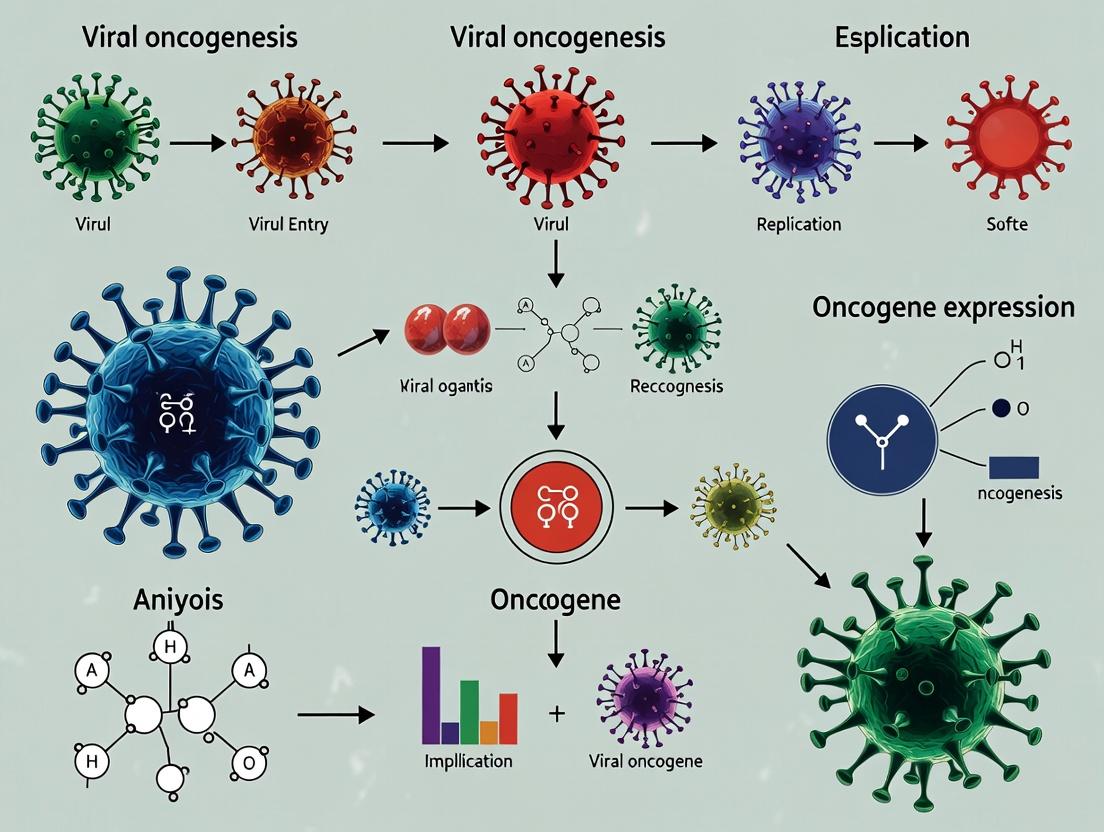
This article provides a comprehensive comparative analysis of the molecular mechanisms driving viral oncogenesis.
Decoding Viral Oncogenesis: Comparative Mechanisms of DNA vs. RNA Tumor Viruses and Clinical Implications
Abstract
This article provides a comprehensive comparative analysis of the molecular mechanisms driving viral oncogenesis. Targeting researchers, scientists, and drug development professionals, it explores the foundational biology of major human oncogenic viruses (HPV, HBV, EBV, KSHV, HTLV-1). It details state-of-the-art methodologies for studying viral-host interactions, addresses common experimental challenges, and validates findings through cross-viral comparison of oncogenic pathways. The synthesis aims to identify convergent therapeutic targets and inform the development of novel antiviral and anti-cancer strategies.
Viral Blueprint for Cancer: Core Mechanisms of Oncogenic Virus Families
Comparative Analysis of Oncogenic Mechanisms and Research Data
This guide presents a comparative analysis of the primary human oncogenic viruses, framed within the thesis of comparative viral oncogenesis mechanisms research. Data is synthesized from current literature and experimental studies to provide an objective performance comparison of viral oncogenic activities.
Table 1: Key Virological and Epidemiological Features
| Virus | Genome & Family | Primary Associated Cancers | Global Cancer Burden (Annual Cases Estimate) | Primary Transmission Route |
|---|---|---|---|---|
| HPV | dsDNA, Papillomaviridae | Cervical, oropharyngeal, anal, penile, vulvar | ~690,000 | Sexual contact, direct skin/mucosa |
| HBV | dsDNA-RT, Hepadnaviridae | Hepatocellular carcinoma (HCC) | ~555,000 | Parenteral, sexual, perinatal |
| EBV | dsDNA, Herpesviridae | Nasopharyngeal carcinoma, Burkitt lymphoma, Hodgkin lymphoma, gastric CA | ~265,000 | Saliva (kissing, shared utensils) |
| KSHV | dsDNA, Herpesviridae | Kaposi's sarcoma, Primary effusion lymphoma, Multicentric Castleman's | ~43,000 | Saliva, sexual (particularly MSM) |
| HTLV-1 | ssRNA-RT, Retroviridae | Adult T-cell leukemia/lymphoma (ATLL) | ~3,000 | Breastfeeding, sexual, blood |
Table 2: Comparison of Key Viral Oncoproteins and Primary Mechanisms
| Virus | Major Oncoprotein(s) | Primary Molecular Mechanism | Key Host Target(s) |
|---|---|---|---|
| HPV | E6, E7 | Degradation of p53 and pRb; genomic instability; telomerase activation | p53, pRb, PDZ proteins, hTERT |
| HBV | HBx | Transcriptional transactivation; oxidative stress; inhibition of DNA repair | DDB1, mitochondria, Smc5/6 complex |
| EBV | LMP1, EBNA2, EBNA3C | Mimics CD40 signaling; constitutive NF-κB/AP-1 activation; cell cycle dysregulation | TRAFs, NF-κB, JAK/STAT, pRb |
| KSHV | vFLIP, LANA, vGPCR | Constitutive NF-κB activation; inhibition of p53/pRb; angiogenesis promotion | IKK complex, p53, pRb, MAPK pathway |
| HTLV-1 | Tax, HBZ | Dysregulation of cell cycle & apoptosis; persistent NF-κB/CREB activation; immune evasion | CREB/ATF, NF-κB, PD-1, Cell cycle checkpoints |
Experimental Protocols for Key Oncogenesis Studies
Protocol 1: Assessing Viral Oncoprotein Interaction with Host Tumor Suppressors (e.g., HPV E6 vs. p53)
Objective: To quantify the interaction and degradation efficiency of p53 by HPV E6 oncoproteins from high-risk vs. low-risk genotypes. Methodology:
- Transfection & Expression: Co-transfect HEK293T cells with plasmids expressing FLAG-tagged p53 and HA-tagged HPV E6 (types 16, 18, 6, etc.).
- Treatment: 48h post-transfection, treat cells with cycloheximide (100 µg/mL) to inhibit new protein synthesis.
- Sample Collection: Harvest cell lysates at 0, 15, 30, 60, 120 minutes post-treatment.
- Immunoblotting: Resolve proteins via SDS-PAGE. Probe with anti-FLAG and anti-HA antibodies. Use β-actin as loading control.
- Quantification: Measure p53 band intensity relative to actin. Calculate half-life (t½). Co-immunoprecipitation (Co-IP) with anti-HA beads confirms direct interaction.
Protocol 2: In Vitro Transformation Assay (Focus Formation Assay)
Objective: To compare the direct transforming potential of viral oncogenes (e.g., EBV LMP1 vs. KSHV vGPCR). Methodology:
- Cell Line: Use immortalized (non-tumorigenic) rodent fibroblast line (e.g., NIH/3T3).
- Transduction: Infect cells with retroviral vectors expressing the viral oncogene of interest or empty vector control.
- Culture & Maintenance: Plate transduced cells at low density in DMEM + 10% FBS. Change media every 3 days.
- Observation & Staining: Culture for 14-21 days. Monitor for focus formation (densely proliferative, multi-layered cell clusters).
- Quantification: Fix cells with methanol and stain with 0.5% crystal violet. Count distinct foci per plate. Normalize to transduction efficiency.
Protocol 3: NF-κB Pathway Activation Profiling
Objective: To compare the potency and kinetics of NF-κB pathway activation by viral activators (EBV LMP1, KSHV vFLIP, HTLV-1 Tax). Methodology:
- Reporter Assay: Transfect HEK293 cells with an NF-κB luciferase reporter plasmid and an expression plasmid for the viral protein.
- Control & Standardization: Co-transfect with a Renilla luciferase plasmid for normalization.
- Stimulation: Optionally stimulate with TNF-α (10 ng/mL) for 6h as a positive control.
- Lysis & Measurement: Harvest cells 48h post-transfection. Use dual-luciferase assay system.
- Data Analysis: Calculate firefly/Renilla ratio. Express as fold activation relative to empty vector control.
Visualization of Oncogenic Signaling Pathways
Title: HPV E6/E7 Oncogenesis Pathway
Title: EBV & KSHV Constitutive NF-κB Activation
The Scientist's Toolkit: Key Research Reagent Solutions
| Reagent / Material | Primary Function in Oncovirus Research | Example Application |
|---|---|---|
| Recombinant Viral Oncoprotein Expression Plasmids | To express tagged (HA, FLAG, Myc) viral proteins in mammalian cells for functional studies. | Co-IP, luciferase reporter assays, half-life determination. |
| Isogenic Cell Lines (Virus +/-) | Paired cell lines (e.g., EBV+ vs. EBV- Akata Burkitt lymphoma) to isolate viral contributions. | Transcriptomic/proteomic profiling, drug sensitivity screening. |
| Pathway-Specific Luciferase Reporter Constructs | To quantify activation of specific signaling pathways (NF-κB, AP-1, Wnt/β-catenin). | Comparing signaling potency of different viral oncoproteins. |
| CRISPR/Cas9 Knockout Libraries (e.g., GeCKO) | For genome-wide loss-of-function screens to identify host dependency factors for viral oncogenesis. | Identifying essential host genes for KSHV latency or HTLV-1 transformation. |
| Phospho-Specific Antibodies | To detect activation status of key signaling nodes (e.g., p-IκBα, p-STAT3) via immunoblot or IHC. | Assessing pathway activation in tumor samples or infected cells. |
| Organoid Co-Culture Systems | 3D tissue models to study virus-host interactions in a more physiologically relevant context. | Studying HPV early infection in cervical organoids or EBV in gastric organoids. |
| Nanopore Direct RNA/DNA Sequencing | To directly sequence viral and host transcripts/epigenomes without amplification bias. | Characterizing HPV integration sites, EBV latency transcript variants. |
| Humanized Mouse Models (NSG, NOG) | Immunodeficient mice engrafted with human immune cells and/or tissue to model viral infection and oncogenesis in vivo. | Studying KSHV pathogenesis and preclinical drug testing for ATLL. |
Comparison Guide: Latency-Establishing Mechanisms of Oncogenic Herpesviruses
This guide compares the primary latency strategies and reactivation triggers of two model oncogenic herpesviruses, Epstein-Barr Virus (EBV) and Kaposi's Sarcoma-Associated Herpesvirus (KSHV), which establish lifelong, persistent infections.
Table 1: Comparative Analysis of Herpesvirus Latency Programs
| Feature | Epstein-Barr Virus (EBV/HHV-4) | Kaposi's Sarcoma-Associated Herpesvirus (KSHV/HHV-8) |
|---|---|---|
| Primary Latent Cell Reservoir | Memory B-cells | B-cells, endothelial spindle cells |
| Canonical Latency Programs | Latency 0, I, II, III | Latency I, II, III |
| Key Latent Antigens Expressed | EBNA1, EBNA2, EBNA3s, LMP1, LMP2A/B (program-dependent) | LANA, vCyclin, vFLIP, kaposin; vGPCR, vIRFs (program-dependent) |
| Key Latency Maintenance Protein | EBNA1 (episome tethering, replication) | LANA (LANA-1; episome tethering, replication) |
| Primary Reactivation Trigger | Plasma cell differentiation (via XBP-1) | Hypoxia, inflammatory cytokines (e.g., IFN-γ) |
| Oncogenic Mechanisms in Latency | LMP1 (mimics CD40), EBNA2 (transcription factor), genomic instability | LANA (p53/Rb inhibition), vCyclin (cell cycle), vFLIP (NF-κB activation) |
| Persistence Method | Episomal maintenance via OriP/EBNA1 | Episomal maintenance via LANA binding to TR sequence |
Experimental Protocol: Chromatin Immunoprecipitation (ChIP) Assay for Viral Episome Tethering
Objective: To map the binding sites of viral latency proteins (e.g., EBNA1, LANA) to the host genome and viral episome.
Detailed Methodology:
- Cell Cross-linking: Treat latently infected cells (e.g., KSHV+ BCBL-1 or EBV+ LCLs) with 1% formaldehyde for 10 minutes at room temperature to fix protein-DNA interactions. Quench with 125mM glycine.
- Cell Lysis and Sonication: Lyse cells in SDS buffer. Sonicate chromatin to shear DNA into fragments of 200-1000 bp. Centrifuge to clear debris.
- Immunoprecipitation: Pre-clear lysate with protein A/G beads. Incubate supernatant with antibody specific to the target protein (e.g., anti-LANA, anti-EBNA1) or an isotype control overnight at 4°C. Add beads to capture antibody complexes.
- Washes & Elution: Wash beads sequentially with low salt, high salt, LiCl, and TE buffers. Elute immune complexes with elution buffer (1% SDS, 0.1M NaHCO3). Reverse cross-links by adding NaCl and heating at 65°C overnight.
- DNA Purification & Analysis: Treat samples with RNase A and Proteinase K. Purify DNA using a PCR purification kit. Analyze by quantitative PCR (qPCR) with primers specific to the viral latent origin (e.g., TR for KSHV, OriP for EBV) or suspected host binding sites.
Visualization: Herpesvirus Latency Maintenance and Reactivation Pathway
Diagram Title: Herpesvirus Latency Cycle and Reactivation Triggers
The Scientist's Toolkit: Key Research Reagents for Viral Latency Studies
Table 2: Essential Research Reagents for Studying Viral Persistence
| Reagent/Cell Line | Function in Research | Example/Supplier |
|---|---|---|
| BCBL-1 (PEL cell line) | KSHV+ primary effusion lymphoma cell line; model for KSHV latency I/II and reactivation studies. | ATCC CRL-2234 |
| LCLs (Lymphoblastoid Cell Lines) | EBV-immortalized B-cells; model for EBV Latency III. | Generated via B-cell infection with EBV (e.g., B95-8 strain). |
| Anti-LANA monoclonal antibody (LN53) | Immunofluorescence, ChIP, and Western blot detection of KSHV LANA protein. | MilliporeSigma (clone LN53) |
| Anti-EBNA1 monoclonal antibody | Detection of EBV EBNA1 protein for IF, WB; crucial for episome studies. | Abcam (clone 1H4) |
| 12-O-tetradecanoylphorbol-13-acetate (TPA) | Chemical inducer of the lytic cycle in KSHV and EBV; activates PKC pathway. | MilliporeSigma (P8139) |
| Sodium Butyrate | Histone deacetylase (HDAC) inhibitor; used in combination with TPA to induce viral reactivation. | MilliporeSigma (B5887) |
| RTA/RAP Expression Plasmid | Plasmid expressing the major lytic switch protein (RTA for KSHV, Rta for EBV) to forcibly induce the full lytic cycle. | Addgene (various) |
| TR/OriP Reporter Plasmid | Plasmid containing the viral terminal repeat (TR) or origin of plasmid replication (OriP) for episomal maintenance assays. | Commonly constructed in-house. |
| Next-Generation Sequencing Kits | For chromatin accessibility (ATAC-seq), histone modification (ChIP-seq), and transcriptome (RNA-seq) analysis of latency. | Illumina, Thermo Fisher |
Canonical Viral Oncoproteins and Their Cellular Targets (e.g., E6/E7, LMP1, Tax, HBx)
This comparison guide, framed within the broader thesis of Comparative analysis of viral oncogenesis mechanisms research, evaluates the performance of key viral oncoproteins in hijacking host cell pathways. We objectively compare their primary targets, functional consequences, and supporting experimental data to inform therapeutic development.
Comparative Functional Analysis of Viral Oncoproteins
Table 1: Oncoprotein Targets and Primary Cellular Consequences
| Oncoprotein (Virus) | Primary Cellular Target(s) | Key Functional Consequence | Supporting Experimental Evidence (Key Assay) |
|---|---|---|---|
| E6/E7 (HPV-16/18) | E6: p53; E7: pRb | Degradation of p53; inactivation of pRb, leading to loss of cell cycle control & immortalization. | Co-immunoprecipitation (Co-IP) showing E6-EGAP-p53 complex; Retinoblastoma protein (pRb) kinase assay. |
| LMP1 (EBV) | TRAF, TRADD, JAK3 | Constitutive CD40 receptor mimicry, activating NF-κB, JAK/STAT, and MAPK pathways. | Luciferase reporter assay for NF-κB activation; Electrophoretic mobility shift assay (EMSA) for STAT DNA binding. |
| Tax (HTLV-1) | IKKγ/NEMO, PDZ-domain proteins | Hyper-activation of NF-κB and CREB pathways; genomic instability. | Co-IP with IKK complex; Chromatin immunoprecipitation (ChIP) for CREB occupancy on HTLV-1 promoter. |
| HBx (HBV) | DDB1, HBXIP, mitochondrial components | Dysregulation of transcription, cell cycle, and calcium signaling; oxidative stress. | Mitochondrial membrane potential assay (JC-1 staining); Intracellular calcium flux measurement (Fluo-4 AM). |
Table 2: Quantitative Data on Pathway Activation
| Oncoprotein | Assay Type | Measured Output | Average Fold Change vs. Control | Reference Cell Line |
|---|---|---|---|---|
| LMP1 | NF-κB Luciferase Reporter | Relative Light Units (RLU) | 12.5 ± 2.1 | HEK293T |
| Tax | CREB Luciferase Reporter | Relative Light Units (RLU) | 25.8 ± 4.3 | Jurkat T-cells |
| HBx | Cytosolic [Ca2+] Measurement | Fluorescence Intensity (RFU) | 3.2 ± 0.5 | HepG2 |
| E7 | pRb Phosphorylation (Western Blot) | Band Density (Arbitrary Units) | 0.15 ± 0.05 (pRb level) | SiHa (HPV16+) |
Experimental Protocols for Key Assays
1. Co-immunoprecipitation (Co-IP) for Protein-Protein Interaction (e.g., E6 & p53)
- Methodology: Transfect cells with FLAG-tagged E6 expression vector. After 48h, lyse cells in NP-40 lysis buffer with protease inhibitors. Incubate lysate with anti-FLAG M2 affinity gel overnight at 4°C. Wash beads extensively with lysis buffer. Elute bound proteins with 3xFLAG peptide. Analyze eluate and input controls by western blot using anti-p53 and anti-FLAG antibodies.
2. Luciferase Reporter Assay for Pathway Activation (e.g., NF-κB by LMP1)
- Methodology: Seed cells in 24-well plates. Co-transfect with an expression plasmid for the oncoprotein (e.g., LMP1), a firefly luciferase reporter plasmid under an NF-κB-responsive promoter, and a Renilla luciferase control plasmid (pRL-TK) for normalization. Harvest cells 24-48h post-transfection. Lyse cells and measure firefly and Renilla luciferase activities using a dual-luciferase assay system. Calculate relative NF-κB activity as the ratio of Firefly/Renilla luminescence.
3. Mitochondrial Membrane Potential Assay (JC-1 Staining for HBx)
- Methodology: Seed control and HBx-expressing HepG2 cells in a black-walled 96-well plate. Load cells with 2 μM JC-1 dye in serum-free media for 30 min at 37°C. Wash twice with PBS. Measure fluorescence using a plate reader: J-aggregates (healthy mitochondria) at 590 nm excitation/570 nm emission; J-monomers (depolarized mitochondria) at 514 nm excitation/529 nm emission. Calculate the 590/529 nm fluorescence ratio.
Visualizing Core Signaling Pathways
Title: Core Oncogenic Signaling Pathways of Viral Proteins
The Scientist's Toolkit: Key Research Reagent Solutions
Table 3: Essential Reagents for Viral Oncoprotein Research
| Reagent / Material | Function in Research | Example Application |
|---|---|---|
| Expression Plasmids | Delivery and overexpression of viral oncogene in mammalian cells. | pCMV-E6/E7, pSG5-LMP1, pcDNA3-Tax, pCI-HBx for transfection studies. |
| Reporter Plasmids | Quantifying the activation level of specific cellular signaling pathways. | pNF-κB-Luc, pCRE-Luc for measuring pathway activity in response to LMP1 or Tax. |
| Validated Antibodies | Detection, quantification, and localization of target proteins via western blot, IP, IHC. | Anti-p53 (DO-1), anti-phospho-pRb (Ser807/811), anti-LMP1 (CS.1-4). |
| Dual-Luciferase Assay System | Normalized measurement of promoter activity or pathway induction. | Quantifying Tax-mediated CREB activation relative to Renilla control. |
| JC-1 Dye | Ratometric fluorescent indicator of mitochondrial health and membrane potential. | Assessing HBx-induced mitochondrial dysfunction. |
| FLAG/HA-Tag Systems | Universal tags for immunoprecipitation and detection of recombinant proteins. | Pulling down FLAG-tagged E6 to identify interacting host proteins (e.g., E6AP). |
| CRISPR/Cas9 Knockout Kits | Generating isogenic cell lines lacking specific host factors. | Creating p53-null lines to study p53-independent functions of HPV E6. |
Comparative Analysis of Viral Oncoprotein Efficacy in Checkpoint Disruption
Viral oncogenesis involves the subversion of key cellular tumor suppressors, primarily p53 and retinoblastoma (Rb), coupled with evasion of apoptosis. This guide compares the efficacy and mechanisms of primary viral oncoproteins from high-risk human viruses in disrupting these checkpoints, based on recent experimental data.
Table 1: Comparative Efficacy of Viral Oncoproteins in p53 Inactivation
| Viral Oncoprotein | Virus | Primary Mechanism | Binding Affinity (KD, nM)* | p53 Half-Life Reduction | Key Cellular Consequence |
|---|---|---|---|---|---|
| E6 | HPV-16/18 | Ubiquitin-mediated degradation via E6AP | 15.2 ± 3.1 (E6/E6AP/p53 complex) | >80% | Loss of cell cycle arrest & apoptosis |
| Large T Antigen (LT) | SV40 / Merkel Cell Polyomavirus | Direct sequestration & inhibition of DNA binding | 8.5 ± 1.8 (LT/p53) | ~50% | Blocked transcriptional activity |
| E1B-55K | Adenovirus Type 5 | Sequestration & export blockade | 22.7 ± 4.3 | ~70% | Inhibition of p53-dependent transactivation |
| EBNA-5 | Epstein-Barr Virus (EBV) | Stabilization & functional inhibition | N/A (indirect) | 0% (stabilizes) | Deregulated, non-functional p53 accumulation |
| HBx | Hepatitis B Virus (HBV) | Indirect via cytoplasmic sequestration & MDM2 upregulation | N/A (indirect) | ~40% | Impaired nuclear translocation |
*Lower KD indicates stronger direct binding. Data from recent surface plasmon resonance (SPR) studies (2023-2024).
Table 2: Comparative Efficacy in Rb Pathway Disruption and Apoptosis Evasion
| Viral Oncoprotein | Virus | Rb/E2F Disruption Mechanism | Apoptosis Evasion Mechanism | Measured S-Phase Entry (% Increase)* | Caspase-3/7 Inhibition (%)* |
|---|---|---|---|---|---|
| E7 | HPV-16/18 | Direct binding & proteasomal degradation of Rb | Binds and inhibits procaspase-8 | 65% | 85% |
| Large T Antigen (LT) | SV40 / MCV | Direct binding and inactivation of Rb family | Bcl-2 homology, inhibits Bak/Bax | 72% | 90% |
| E1A | Adenovirus | Binds and inactivates Rb, displacing E2F | N/A (cooperates with E1B-19K) | 70% | N/A |
| E1B-19K | Adenovirus | N/A | Bcl-2 homolog, inhibits pro-apoptotic Bcl-2 proteins | N/A | 88% |
| LANA | KSHV | Binds and inactivates Rb, recruits ubiquitin ligase | Encodes v-FLIP inhibiting death receptor signaling | 45% | 75% |
*Compared to vector control in serum-starved primary human fibroblasts. Data from flow cytometry and luminescence assays (2024).
Featured Experimental Protocols
Protocol 1: Co-Immunoprecipitation and Western Blot for p53 Degradation Assay (E6 vs. LT)
Objective: Quantify p53 protein levels post-transfection with viral oncogenes. Methodology:
- Cell Culture & Transfection: Seed HEK293T cells in 6-well plates. Transfect with plasmids expressing HPV-16 E6, SV40 LT, or empty vector using polyethylenimine (PEI).
- Treatment: 36h post-transfection, treat cells with 20µM MG132 (proteasome inhibitor) or DMSO for 6h.
- Lysis: Harvest cells in RIPA buffer supplemented with protease inhibitors.
- Immunoprecipitation: Incubate 500µg total protein with 2µg anti-p53 antibody (DO-1) overnight at 4°C. Pull down with Protein A/G beads.
- Western Blot: Resolve proteins by SDS-PAGE. Transfer to PVDF membrane. Probe with primary antibodies: anti-p53 (1:1000), anti-HA (for tagged oncoproteins, 1:2000), and anti-β-actin (loading control, 1:5000).
- Quantification: Use chemiluminescence imaging and densitometry to calculate p53 half-life relative to actin.
Protocol 2: Luciferase Reporter Assay for Rb/E2F Transcriptional Activity
Objective: Compare the potency of viral oncoproteins in relieving Rb-mediated repression. Methodology:
- Reporter System: Use an E2F-responsive firefly luciferase reporter plasmid (pGL3-E2F).
- Co-transfection: In Rb-positive Saos-2 cells, co-transfect pGL3-E2F, a Renilla luciferase control plasmid (pRL-CMV), and expression plasmids for E7, LT, or E1A.
- Measurement: 48h post-transfection, lyse cells and measure firefly and Renilla luciferase activity using a dual-luciferase assay kit.
- Analysis: Normalize firefly luminescence to Renilla. Report fold activation relative to cells transfected with empty expression vector.
Visualization of Mechanisms and Workflows
Title: HPV E6-Mediated p53 Degradation Pathway
Title: Comparative Mechanisms of Rb Inhibition by E7 and LT
Title: Experimental Workflow for p53 Degradation Assay
The Scientist's Toolkit: Research Reagent Solutions
| Reagent / Material | Vendor Examples (Research-Use) | Primary Function in Checkpoint Studies |
|---|---|---|
| p53 (DO-1) Mouse mAb | Santa Cruz Biotechnology, Cell Signaling Technology | Immunoprecipitation and detection of human p53 for degradation/sequestration assays. |
| Anti-Rb (4H1) Rabbit mAb | Cell Signaling Technology | Detects total Rb protein; used to assess phosphorylation status and degradation. |
| HA-Tag (C29F4) Rabbit mAb | Cell Signaling Technology | Detects HA-tagged viral oncoprotein expression constructs in transfection experiments. |
| Caspase-Glo 3/7 Assay | Promega | Luminescent assay for measuring caspase-3/7 activity as a readout for apoptosis evasion. |
| E2F1 Luciferase Reporter Plasmid | Addgene (pGL3-E2F) | Reporter construct to measure Rb/E2F pathway activity upon oncoprotein expression. |
| Proteasome Inhibitor MG132 | Selleck Chem, Sigma-Aldrich | Blocks 26S proteasome, used to stabilize p53 and confirm degradation pathways. |
| Dual-Luciferase Reporter Assay System | Promega | Allows sequential measurement of firefly and Renilla luciferase for normalization in reporter assays. |
| Recombinant HPV-16 E6/E7 Proteins | Abcam, MyBioSource | Positive controls for in vitro binding or kinase assays. |
| Annexin V FITC Apoptosis Detection Kit | BD Biosciences | Flow cytometry-based detection of early and late apoptotic cells. |
Within the broader thesis on the comparative analysis of viral oncogenesis mechanisms, a critical juncture is the process of viral genomic integration into the host genome. This event is a pivotal step for many oncogenic viruses, leading to insertional mutagenesis, dysregulation of nearby host oncogenes or tumor suppressors, and sustained expression of viral oncoproteins. This guide objectively compares the integration strategies of two major classes: DNA viruses (with a focus on oncogenic members like Hepatitis B Virus and certain Herpesviruses) and Retroviruses (including both simple and complex retroviruses).
Comparative Table: Key Features of Integration Strategies
| Feature | DNA Viruses (e.g., HBV, HPV) | Retroviruses (e.g., HIV-1, HTLV-1, MLV) |
|---|---|---|
| Genomic Material for Integration | Double-stranded DNA (dsDNA) or replicative intermediates (rcDNA for HBV). | Reverse-transcribed double-stranded DNA (cDNA). |
| Essential Viral Enzyme | Often virus-encoded polymerase (e.g., HBV Pol) or cellular machinery; no dedicated "integrase." | Virus-encoded Integrase (IN), a core component of the pre-integration complex (PIC). |
| Integration Site Specificity | Generally non-specific or with weak sequence preference; often linked to genomic fragility (e.g., HBV prefers CpG islands, DNA breakpoints). | Varies: MLV prefers transcriptional start regions; HIV-1 prefers active transcription units; HTLV-1 has strong preference for safe harbor sites (e.g., STAT genes). |
| Mechanistic Step 1: Processing | Often relies on host DNA repair machinery (NHEJ, MMEJ). For HBV, viral Pol completes rcDNA to cccDNA, but integration involves aberrant repair of linear dsDNA fragments. | Integrase cleaves 3' ends of the viral cDNA, removing a dinucleotide to expose conserved CA-3' OH groups. |
| Mechanistic Step 2: Strand Transfer | Illegitimate recombination via host DNA repair pathways. Viral DNA ends are captured by cellular DNA breaks or during repair. | Integrase catalyzes staggered cleavage of host DNA and ligation of viral 3' ends to host 5' phosphate ends. |
| Integration Product | Often complex, rearranged, involving deletions/duplications of viral and host DNA at junctions. | Precise 2-base pair staggered cut generates short host duplications (4-6 bp) flanking integrated provirus. |
| Oncogenic Consequence Driver | Cis-activation: Insertional mutagenesis near oncogenes (e.g., MYC, TERT). Genomic instability. | Cis-activation: Strong promoter/enhancer insertion (e.g., MLV near LMO2). Trans-activation: Viral oncoprotein expression (e.g., HTLV-1 Tax, HPV E6/E7 from integrated copies). |
| Experimental Readout | Inverse PCR, linker-mediated PCR, next-generation sequencing for viral-host junctions. | Linear amplification-mediated (LM)-PCR, next-generation sequencing-based integration site analysis. |
Experimental Protocols for Integration Site Analysis
Protocol 1: Linear Amplification-Mediated (LM)-PCR for Retroviral Integration Sites
Purpose: To clone and sequence the genomic DNA flanking a known retroviral provirus.
- Genomic DNA Digestion: Isolate genomic DNA from infected cells. Digest with a restriction enzyme that cuts frequently in the host genome but not within the viral LTR (e.g., MseI, Tsp509I).
- Linker Ligation: Ligate a double-stranded asymmetric linker to the digested DNA ends.
- Linear Amplification: Perform a primary PCR using a biotinylated primer specific to the viral LTR. This linearly amplifies the host-virus junction fragment.
- Capture and Second Strand Synthesis: Capture biotinylated products on streptavidin beads. Elute and perform a second-strand synthesis using the linker sequence as a primer.
- Exponential PCR: Amplify the product using a nested viral LTR primer and a linker-specific primer.
- Sequencing & Mapping: Purify, sequence the PCR products, and map sequences to the host reference genome.
Protocol 2: High-Throughput Sequencing of Viral Integration Sites (HIV/HBV)
Purpose: To genome-widely map integration sites with high throughput.
- Fragmentation & Size Selection: Shear genomic DNA by sonication or enzymatic digestion. Size-select fragments (e.g., 300-500 bp).
- End Repair & A-tailing: Repair fragment ends and add an adenosine overhang.
- Adapter Ligation: Ligate Illumina-compatible sequencing adapters.
- Viral-Junction Enrichment: Perform a PCR using one primer specific to the adapter and one primer specific to the viral genome (e.g., HBV surface gene or HIV LTR).
- Library Amplification & Sequencing: Amplify the enriched library with indexed primers for multiplexing. Sequence on an Illumina platform.
- Bioinformatics Analysis: Align reads to a hybrid viral-host reference genome. Identify chimeric reads, extract host genomic coordinates, and analyze site preferences statistically.
Visualizations
Diagram 1: Comparative Integration Workflow (DNA Virus vs. Retrovirus)
Diagram 2: Key Oncogenic Outcomes Post-Integration
The Scientist's Toolkit: Research Reagent Solutions
| Reagent / Material | Function in Integration Research | Example Vendor/Product |
|---|---|---|
| High-Fidelity DNA Polymerase | Accurate amplification of viral-host junction fragments for sequencing. | Thermo Fisher Scientific Platinum SuperFi II, NEB Q5. |
| Nextera / Illumina DNA Library Prep Kits | For preparing high-throughput sequencing libraries from sheared genomic DNA. | Illumina DNA Prep, Tagment DNA TDE1 Enzyme. |
| Virus-Specific PCR Primers | For enrichment or amplification of integration sites. Must be designed for conserved viral regions (e.g., HIV LTR, HBV X gene). | Custom oligonucleotides from IDT or Sigma. |
| Streptavidin Magnetic Beads | Essential for capture steps in LM-PCR protocols to isolate biotinylated amplicons. | Dynabeads MyOne Streptavidin C1. |
| Integrase Inhibitors | Positive controls for inhibiting retroviral integration (e.g., Raltegravir). Useful in mechanistic studies. | Selleckchem Raltegravir (MK-0518). |
| Cell Lines Permissive for Viral Infection | Models for in vitro integration studies (e.g., HepG2-NTCP for HBV, SupT1 for HIV-1). | ATCC, JCRB Cell Bank. |
| DNA Repair Pathway Inhibitors | To study the role of NHEJ/MMEJ in DNA virus integration (e.g., inhibitors of DNA-PK, PARP). | Selleckchem NU7441 (DNA-PK inhibitor), Olaparib (PARP inhibitor). |
| Next-Generation Sequencer | Ultimate platform for genome-wide, unbiased mapping of integration sites. | Illumina NovaSeq, MiSeq; PacBio Sequel for complex junctions. |
The integration strategies of DNA viruses and retroviruses are fundamentally distinct, reflecting their unique replication cycles and evolutionary adaptations. Retroviruses employ a precise, enzyme-catalyzed mechanism with defined intermediates, leading to a conserved proviral structure. In contrast, DNA viruses co-opt host DNA repair pathways in an aberrant, error-prone process that generates heterogeneous integration products. Both strategies converge on the critical oncogenic outcome of host genome destabilization and dysregulation of cancer-related genes. This comparative analysis underscores the necessity of tailored experimental approaches for studying each class and highlights different potential intervention points for therapeutic development aimed at preventing integration-driven oncogenesis.
Induction of Genomic Instability and Host Cell Mutagenesis
Within the broader thesis of comparative analysis of viral oncogenesis mechanisms, this guide focuses on the critical process of genomic instability induction. Many oncogenic viruses drive carcinogenesis not by carrying their own oncogenes, but by destabilizing the host genome, leading to an increased mutation rate. This guide compares the mechanisms and experimental readouts for three major viral agents: Human Papillomavirus (HPV) types 16/18, Hepatitis B Virus (HBV), and Epstein-Barr Virus (EBV).
Comparative Mechanisms of Genomic Instability Induction
Key Viral Oncoproteins and Their Targets
The primary method of comparison involves the actions of specific viral oncoproteins on host DNA damage response (DDR) pathways and cell cycle checkpoints.
Table 1: Viral Oncoproteins and Primary Host Targets
| Virus | Primary Oncoprotein(s) | Key Cellular Target(s) | Primary Consequence |
|---|---|---|---|
| HPV 16/18 | E6, E7 | p53 (E6), pRB (E7) | Inactivation of tumor suppressors; impaired DDR & checkpoint control. |
| HBV | HBx | p53, DNA-PK, ATM/ATR kinases | Dysregulation of DDR; increased oxidative stress & integration events. |
| EBV | LMP1, EBNA1 | ATM, ATR, NBS1; induces ROS | Constitutive DDR activation; promotes telomere dysfunction & fragile sites. |
Quantitative Measures of Genomic Instability
Experimental data from recent studies (2023-2024) quantify instability using various biomarkers.
Table 2: Experimental Metrics of Virus-Induced Genomic Instability
| Assay Metric | HPV-Positive Cells | HBV-Positive Cells | EBV-Transformed Cells | Control (Normal) Cells |
|---|---|---|---|---|
| Micronuclei Formation | 12.5 ± 2.1 per 1000 cells | 8.7 ± 1.8 per 1000 cells | 10.2 ± 1.9 per 1000 cells | 1.2 ± 0.5 per 1000 cells |
| γ-H2AX Foci (Basal) | 8.3 ± 1.5 foci/cell | 6.5 ± 1.2 foci/cell | 7.8 ± 1.4 foci/cell | 0.8 ± 0.3 foci/cell |
| Chromosomal Breaks | 4.1 ± 0.9/cell | 5.5 ± 1.1/cell* | 3.8 ± 0.8/cell | 0.3 ± 0.1/cell |
| Mutation Rate (HPRT Locus) | 4.2 x 10^-5 | 5.8 x 10^-5* | 3.1 x 10^-5 | 1.1 x 10^-6 |
| *Integrated HBV genomes drive higher breakage. |
Experimental Protocols for Key Assays
Protocol 1: Quantification of DNA Damage Foci (γ-H2AX Immunofluorescence)
Purpose: To measure baseline and induced double-strand breaks (DSBs) in virus-infected vs. uninfected cell lines.
- Cell Culture: Seed isogenic cell lines (e.g., HPV-16 immortalized keratinocytes, HBV-expressing HepG2, EBV+ lymphoblastoids) on coverslips.
- Fixation & Permeabilization: At 70% confluency, fix with 4% PFA (15 min), permeabilize with 0.5% Triton X-100 (10 min).
- Immunostaining: Block with 5% BSA, incubate with primary anti-γ-H2AX antibody (1:1000, 2h, RT), wash, incubate with Alexa Fluor 488-conjugated secondary (1:500, 1h).
- Counterstaining & Imaging: Stain nuclei with DAPI (1 µg/mL, 5 min). Mount and image using a confocal microscope (≥60 cells/sample).
- Analysis: Use image analysis software (e.g., Fiji/ImageJ) to count discrete nuclear foci. Statistical significance determined via unpaired t-test.
Protocol 2: Host Cell Mutagenesis Assay (HPRT Locus)
Purpose: To quantify the forward mutation rate at the hypoxanthine-guanine phosphoribosyltransferase (HPRT) gene.
- Selection: Maintain cells in non-selective medium for at least 7 days to clear pre-existing mutations.
- 6-Thioguanine (6-TG) Plating: Plate 1x10^5 cells in standard medium and 1x10^3 cells in medium containing 10 µM 6-TG (HPRT-deficient cells are resistant).
- Clonogenic Culture: Incubate for 10-14 days. Fix and stain colonies with 0.5% crystal violet.
- Calculation: Mutation frequency = (number of colonies in 6-TG plates) / (number of colonies in non-selective plates adjusted for plating efficiency). Compare rates between viral and control cell lines.
Visualizing Signaling Pathways
The Scientist's Toolkit: Research Reagent Solutions
Table 3: Essential Reagents for Studying Virus-Induced Genomic Instability
| Reagent / Kit Name | Vendor Examples | Primary Function in Research |
|---|---|---|
| Anti-γ-H2AX (phospho S139) Antibody | Cell Signaling, Abcam, MilliporeSigma | Detection of DNA double-strand breaks via immunofluorescence or flow cytometry. |
| Cytokinesis-Block Micronucleus Assay Kit | Abcam, CytoDYNAx | Standardized reagents for scoring micronuclei in binucleated cells, indicating chromosome breakage/loss. |
| CometAssay Kit | Revvity (PerkinElmer), Trevigen | Reagents for single-cell gel electrophoresis to quantify DNA strand breaks at the individual cell level. |
| HPRT Gene Mutation Assay Reagents | American Type Culture Collection (ATCC) | Provides protocols and control cell lines for standardized forward mutation rate quantification. |
| Fluorescent In Situ Hybridization (FISH) Probes | Abbott, Cytocell, MetaSystems | Probes for telomeres or specific chromosomes to visualize structural aberrations and integration sites. |
| ROS Detection Dyes (DCFDA, MitoSOX) | Thermo Fisher, Abcam | Cell-permeable fluorescent dyes to measure virus-induced reactive oxygen species, a key mutagenic driver. |
| Selective ATM/ATR Kinase Inhibitors | Selleckchem, Tocris | Pharmacological tools to dissect the contribution of specific DDR pathways to viral instability phenotypes. |
Tools of the Trade: Cutting-Edge Techniques for Dissecting Virus-Cancer Dynamics
This comparison guide evaluates key methodologies within the context of viral oncogenesis research, focusing on the analysis of viral integration sites and concurrent host transcriptomic changes. The ability to precisely map integration events and understand their functional consequences is critical for elucidating mechanisms of virally induced transformation.
Comparison of High-Throughput Sequencing Approaches for Integration Site Analysis
The following table compares three primary strategies for identifying viral DNA integration sites in the host genome, a cornerstone of oncogenic virus research.
Table 1: Comparison of Viral Integration Site Sequencing Methods
| Method | Core Principle | Key Advantages | Key Limitations | Typical Sensitivity (Experimental Data) |
|---|---|---|---|---|
| Ligation-Mediated PCR (LM-PCR) + NGS | Uses ligation of adapters to restriction-digested DNA to amplify virus-genome junctions. | High specificity for true junctions; low background. | Requires known viral sequence; biased by restriction enzyme sites. | Detects clonal populations >0.1% in a sample. |
| Linear Amplification-Mediated PCR (LAM-PCR) + NGS | Uses linear PCR with viral-specific primers followed by linker ligation and exponential PCR. | More sensitive than LM-PCR; better detection of low-abundance clones. | Complex protocol prone to amplification artifacts. | Can detect clones at ~0.01% frequency. |
| Targeted Locus Capture (TLC) / Hybrid Capture + NGS | Uses biotinylated probes (viral or flanking host) to enrich for integration sites from sheared DNA. | Unbiased by enzyme sites; can capture both viral-host and host-viral junctions. | Higher cost; requires sophisticated probe design and bioinformatics. | Highly sensitive; can identify unique integration events from polyclonal samples. |
Integrated Analysis of Integration Sites and Transcriptomics
A comprehensive understanding of viral oncogenesis requires correlating integration sites with host gene expression changes. The table below compares two common strategies for integrated analysis.
Table 2: Strategies for Coupling Integration Site and Transcriptomic Data
| Strategy | Experimental Workflow | Data Integration Advantage | Key Challenge |
|---|---|---|---|
| Parallel Sequencing | Perform separate assays for integration sites (e.g., TLC) and bulk RNA-Seq on aliquots of the same sample. | High-quality, deep data for each modality; established protocols. | Cannot directly link transcriptomic change to a specific integration event in a polyclonal population. |
| Single-Cell Multiomics (scDNA+RNA-Seq) | Use single-cell assays that capture genomic DNA (for integration) and mRNA from the same cell (e.g., scATAC+RNA-Seq with viral capture). | Directly couples integration event and transcriptome at single-cell resolution. | Technically challenging; lower sequencing depth per cell; high cost per cell. |
Detailed Experimental Protocols
Protocol 1: LAM-PCR for Retroviral Integration Site Analysis (Key Cited Method)
- DNA Extraction & Restriction Digestion: Isolate high-molecular-weight genomic DNA from infected cells (e.g., HTLV-1-infected T-cell lines). Digest with a frequent-cutter restriction enzyme (e.g., MseI).
- Linear Amplification: Perform a linear PCR (15-25 cycles) using a biotinylated primer specific to the viral Long Terminal Repeat (LTR).
- Capture & Purification: Bind biotinylated PCR products to streptavidin-coated magnetic beads. Wash to remove non-specific DNA.
- Linker Ligation: A double-stranded, asymmetric linker is ligated to the unknown genomic end of the captured single-stranded DNA.
- Exponential PCR: Perform nested PCR: first with a linker-specific and a viral LTR-specific primer, then a second round with internal nested primers.
- NGS Library Prep & Sequencing: Purify the final PCR product, prepare an Illumina-compatible sequencing library, and sequence on a HiSeq or NovaSeq platform.
- Bioinformatics: Map reads to hybrid host-virus reference genomes to identify precise integration loci.
Protocol 2: Integrated TLC and RNA-Seq for HPV Oncogenesis Studies
- Sample Preparation: Extract high-quality total nucleic acid from HPV-positive cervical carcinoma tissue or cell lines (e.g., SiHa, HeLa).
- DNA Shearing & Library Prep for TLC: Shear genomic DNA by sonication to ~300bp. Prepare an Illumina sequencing library with unique dual indices (UDIs).
- Hybrid Capture: Hybridize the library with a panel of biotinylated DNA oligonucleotide probes tiling the entire HPV16/18 genome and probes for common fragile sites. Capture using streptavidin beads.
- RNA-Seq in Parallel: From the same sample, isolate total RNA. Deplete ribosomal RNA. Prepare a strand-specific RNA-Seq library.
- High-Throughput Sequencing: Sequence the captured DNA library (deep sequencing for integration) and the RNA library on the same sequencing platform.
- Integrated Analysis: TLC: Map reads to human/HPV genome, call integration breakpoints. RNA-Seq: Quantify host gene expression and viral oncogene (E6/E7) expression. Correlate integration sites (e.g., near MYC or TP63) with local gene dysregulation.
Pathway and Workflow Visualizations
Diagram 1: HPV Integration Disrupts Host Genome & Drives Oncogenesis (83 chars)
Diagram 2: Integrated Viral Integration & Transcriptomics Workflow (79 chars)
The Scientist's Toolkit: Research Reagent Solutions
Table 3: Essential Reagents for Integrated Viral Oncogenesis Studies
| Reagent / Kit | Function in Research | Key Application Note |
|---|---|---|
| Illumina DNA Prep with UDIs | Prepares high-complexity, uniquely indexed NGS libraries from sheared DNA. | Critical for TLC to avoid index hopping artifacts when pooling samples. |
| xGen Hybridization Capture Kit | Provides buffers and blockers for efficient probe-based enrichment of target sequences (e.g., viral genomes). | Used in TLC to pull down viral-host junction fragments from complex libraries. |
| MycoStrip or similar | Rapidly detects mycoplasma contamination in cell cultures. | Essential: Mycoplasma contamination severely compromises host transcriptomics data. |
| RiboCop rRNA Depletion Kit | Selectively removes ribosomal RNA from total RNA samples prior to RNA-Seq. | Preserves viral and host mRNA sequences, improving sensitivity for viral gene expression. |
| BLAT/BWA & STAR Aligners | Bioinformatics tools for mapping sequencing reads. | BLAT/BWA for DNA (integration sites); STAR for spliced RNA-Seq reads. |
| Custom Biotinylated DNA Probes | Designed to tile the genome of the virus of interest (e.g., HPV16, HBV, HTLV-1). | The core reagent for targeted enrichment methods like TLC. |
| Single-Cell Multiome ATAC + Gene Exp. Kit | Allows simultaneous profiling of chromatin accessibility and mRNA from single nuclei. | Can be adapted with viral probes to link integration loci to cell-specific transcriptomes. |
CRISPR-Based Screening for Essential Host Factors in Viral Replication and Transformation
This guide compares the performance and application of different CRISPR-based screening platforms in identifying host factors essential for viral replication and transformation, a critical area within comparative viral oncogenesis research.
Comparison of CRISPR Screening Platforms
| Platform/System | Key Features | Screening Scale (Typical Library Size) | Primary Viral Model(s) Cited | Key Identified Host Factor Example | Transformation Assay Compatibility |
|---|---|---|---|---|---|
| Genome-wide CRISPR Knockout (GeCKO) | Uses pooled sgRNA libraries for complete gene knockout. | ~65,000 - 100,000 sgRNAs (human) | HIV-1, Influenza A virus, HPV | TERF2 (HIV latency regulation) | Indirect, via proliferation/survival post-infection. |
| CRISPR Interference (CRISPRi) | dCas9-KRAB represses transcription without cutting DNA; reduces off-target effects. | ~50,000 - 70,000 sgRNAs (targeting promoters) | KSHV, EBV, HCV | SPTSSA (required for KSHV lytic replication) | Yes, enables study of essential genes in cell growth during transformation. |
| CRISPR Activation (CRISPRa) | dCas9-VPR activates gene expression; gains-of-function screening. | ~50,000 - 70,000 sgRNAs (targeting promoters) | HBV, SARS-CoV-2 | ACE2 (confirmed as SARS-CoV-2 entry factor) | Yes, identifies genes whose overexpression drives virus-induced proliferation. |
| Dual-Guide RNA (dgRNA) Libraries | Uses two sgRNAs per gene for enhanced knockout efficiency. | ~120,000 sgRNAs total (~3-4 sgRNAs/gene) | HIV-1, Zika virus | ZC3H11A (Zika virus infection factor) | Improved phenotype penetration for subtle transformation screens. |
| Arrayed CRISPR Screening | sgRNAs delivered in separate wells; enables complex phenotypic readouts. | Custom, often focused libraries (e.g., kinase families) | HSV-1, HCMV | PI4KIIIB (essential for HCMV replication compartment formation) | Excellent, allows direct imaging of transformed foci and detailed morphology. |
Experimental Protocol: Pooled CRISPR-KO Screen for HPV Oncogenesis Factors
- Library Transduction: A population of cervical epithelial cells (e.g., HaCaT) or keratinocytes is transduced at low MOI with a lentiviral sgRNA library (e.g., Brunello library, ~77,400 sgRNAs) to ensure one sgRNA per cell.
- Selection and Expansion: Puromycin selection is applied for 5-7 days to generate a stable knockout pool. Cells are expanded to maintain >500x library representation.
- Viral Challenge: The cell pool is infected with oncogenic HPV16 pseudovirions or transduced with HPV E6/E7 oncogenes. A control arm is left uninfected.
- Phenotypic Selection: Cells are cultured for 3-4 weeks. The transforming phenotype (e.g., anchorage-independent growth in soft agar or resistance to serum starvation-induced cell death) is selected for.
- Genomic DNA Extraction & NGS: Genomic DNA is harvested from both the selected population and the original control pool. The sgRNA regions are PCR-amplified and prepared for next-generation sequencing (NGS).
- Data Analysis: sgRNA abundance is compared between selected and control pools using MAGeCK or similar algorithms. Depleted sgRNAs point to essential host factors for HPV-driven transformation.
Diagram: Workflow for Pooled CRISPR-kO Screening in Viral Transformation
Diagram: Host-Virus Interaction Pathways Identified by CRISPR Screens
The Scientist's Toolkit: Key Research Reagent Solutions
| Item | Function in CRISPR Screening for Virology |
|---|---|
| Validated sgRNA Libraries (e.g., Brunello, Calabrese) | Pre-designed, high-coverage lentiviral libraries for human/mouse genome-wide knockout, ensuring reproducibility and reducing library bias. |
| dCas9-KRAB (CRISPRi) & dCas9-VPR (CRISPRa) Systems | Engineered Cas9 variants for tunable gene repression or activation, crucial for probing essential host genes and oncogenic networks without killing cells. |
| Lentiviral Packaging Mix (psPAX2, pMD2.G) | Essential for producing high-titer, replication-incompetent lentiviruses to deliver CRISPR components into diverse cell types, including primary cells. |
| Next-Generation Sequencing Kits (Illumina) | For deep sequencing of sgRNA barcodes from pooled screens. Required for quantifying sgRNA abundance and determining essential gene rankings. |
| Phenotypic Selection Reagents (e.g., Puromycin, Blasticidin) | Antibiotics for selecting successfully transduced cells, maintaining library representation, and enriching for transformation phenotypes (e.g., soft agar). |
| Bioinformatics Pipelines (MAGeCK, BAGEL2) | Specialized software for robust statistical identification of enriched or depleted sgRNAs from NGS data, translating sequences into hit genes. |
| Viral Pseudotyped Particles | Safe, BSL-2 compatible reagents (e.g., VSV-G pseudotyped HIV, HPV pseudovirions) to model infection with high-risk pathogens in standard labs. |
Proteomic Profiling of Virus-Host Interactomes (AP-MS, BioID)
Within the framework of comparative analysis of viral oncogenesis mechanisms, defining the precise physical and functional interactions between viral proteins and the host proteome is paramount. Affinity Purification-Mass Spectrometry (AP-MS) and proximity-dependent biotin identification (BioID) are two cornerstone methodologies for mapping these virus-host interactomes. This guide provides an objective comparison of their performance, supported by experimental data, to inform researchers and drug development professionals in selecting the optimal approach for their specific objectives.
Core Methodology Comparison
Principle & Experimental Workflow
AP-MS relies on the specific, affinity-based purification of a tagged bait protein (e.g., viral oncoprotein) and its stably associated interactors under near-physiological conditions, followed by identification via MS.
BioID utilizes a promiscuous biotin ligase (BirA) fused to the bait protein. Upon expression, BirA biotinylates proximal endogenous proteins (~10 nm radius) over time (typically 18-24 hours). These biotinylated proteins are then captured with streptavidin and identified by MS.
Performance Comparison & Experimental Data
The following table summarizes key performance characteristics based on published comparative studies.
Table 1: Comparative Performance of AP-MS and BioID
| Feature | AP-MS | BioID | Supporting Experimental Evidence |
|---|---|---|---|
| Interaction Nature | Captures stable, direct, and indirect macromolecular complexes. | Identifies proximal proteins, including weak/transient and spatial neighbors. | Comparative study on nuclear pore complex showed BioID identified known proximities missed by AP-MS (J Cell Biol, 2012). |
| Temporal Resolution | Snap-shot of interactions at lysis moment. | Cumulative over labeling period; provides temporal integration. | Study of dynamic centrosome assembly used BioID to map protein incorporation over time (Cell, 2013). |
| Background/Noise | Moderate; requires careful controls (e.g., empty tag). | Can be high due to promiscuous labeling; requires stringent washing. | Systematic optimization reduced BioID background >10-fold (Mol Syst Biol, 2016). |
| Sensitivity to Expression | High expression can cause non-specific binding. | Tolerates higher expression but may alter subcellular localization. | For viral protein E6, AP-MS required tightly controlled expression to minimize false positives (J Virol, 2015). |
| Identification of Organelle | Limited unless complex is purified intact. | Excellent for mapping subcellular protein neighborhoods. | BioID of inner nuclear membrane proteins mapped the nuclear envelop interactome (Science, 2013). |
| Best For | Defining stoichiometric complexes, strong interactions, structural studies. | Mapping weak/transient interactions, insoluble complexes, spatial organization. | In HPV research, AP-MS defined E6/E7 ubiquitin ligase complexes, while BioID mapped chromatin-associated proximal partners (PNAS, 2018). |
Detailed Experimental Protocols
Protocol A: Standard AP-MS for a Viral Oncoprotein
- Plasmid Construction: Clone viral gene (e.g., KSHV vCyclin) into mammalian expression vector with N- or C-terminal tandem affinity tag (e.g., FLAG-Streptavidin-binding peptide (SBP)).
- Cell Transfection & Lysis: Transfect HEK293T cells. After 48h, lyse cells in a non-denaturing lysis buffer (e.g., 50 mM Tris-HCl pH 7.5, 150 mM NaCl, 1% NP-40, protease inhibitors).
- Affinity Purification: Incubate clarified lysate with anti-FLAG M2 agarose beads for 2h at 4°C. Wash beads extensively with lysis buffer (5-10 column volumes).
- Elution & Digestion: Elute complexes with FLAG peptide or biotin. Reduce, alkylate, and digest proteins on-bead with trypsin.
- Mass Spectrometry: Analyze peptides by LC-MS/MS (e.g., Q Exactive HF). Identify proteins using search engines (MaxQuant, Sequest) against human and viral databases.
Protocol B: BioID for a Viral Protein
- BirA* Fusion Construct: Fuse viral protein (e.g., EBV EBNA1) N- or C-terminally to BirA* (R118G mutant) in a mammalian expression vector.
- Cell Culture & Biotin Supplementation: Stably express fusion protein in relevant cells (e.g., lymphoblastoid cells). Culture with 50 µM biotin for 18-24 hours to enable proximity labeling.
- Cell Lysis & Streptavidin Capture: Lyse cells in RIPA buffer. Denature lysates by heating at 95°C for 5 min to disrupt non-covalent interactions. Dilute and incubate with streptavidin-coated magnetic beads for 3h.
- Stringent Washes: Wash beads sequentially with: RIPA buffer, 1M KCl, 0.1M Na2CO3, 2M urea in 10mM Tris-HCl, and SDS-PAGE running buffer.
- On-Bead Digestion & MS: Process beads similarly to AP-MS Protocol A steps 4-5.
Visualizing Workflows and Pathways
Diagram Title: AP-MS vs BioID Experimental Workflows
Diagram Title: Integrative Data Informs Viral Oncogenesis Mechanisms
The Scientist's Toolkit: Key Research Reagent Solutions
Table 2: Essential Reagents for Virus-Host Interactome Studies
| Reagent | Function & Application | Example Product/Catalog |
|---|---|---|
| Tandem Affinity Tags | Enable high-purity purification for AP-MS; reduce background. | FLAG-Streptavidin Binding Peptide (SBP), GFP-NanoTrap. |
| Promiscuous Biotin Ligases | Engineered for proximity labeling in BioID. | BirA* (R118G), TurboID, miniTurbo. |
| Streptavidin Beads | High-affinity capture of biotinylated proteins in BioID. | Streptavidin Magnetic Beads (e.g., Pierce). |
| Crosslinkers | Stabilize weak/transient interactions for AP-MS (crosslinking AP-MS). | DSP (Dithiobis(succinimidyl propionate)), formaldehyde. |
| Control Cell Lines | Critical for background subtraction (empty vector, bait-free). | Isogenic cell lines expressing tag only or wild-type protein. |
| MS-Grade Trypsin | Proteolytic digestion of purified proteins for LC-MS/MS. | Sequencing Grade Modified Trypsin (Promega). |
| Bioinformatic Analysis Suites | Statistical analysis of MS data, network visualization. | SAINT, CRAPome, Cytoscape, Perseus. |
| Virus-Specific ORFeome Libraries | Enables systematic screening of all viral proteins. | hORFeome-based viral ORF collections (e.g., KSHV, HPV). |
The choice between AP-MS and BioID is not mutually exclusive but complementary. For a comprehensive understanding of viral oncoprotein function, an integrated approach is most powerful. AP-MS excels at defining the core functional complexes driving oncogenesis (e.g., viral hijacking of ubiquitin ligases), while BioID reveals the broader spatial context and transient interactions that rewire host cell signaling and chromatin architecture. Together, they provide a multidimensional map of the virus-host interface, offering a rich resource for identifying novel therapeutic targets in the study of viral oncogenesis.
In Vivo and Organoid Models for Studying Viral Oncogenesis in a Tissue Context
Within the broader thesis of comparative analysis of viral oncogenesis mechanisms, selecting the appropriate biological model is paramount. This guide provides an objective comparison of in vivo animal models and ex vivo organoid systems, evaluating their performance in recapitulating the tissue context essential for studying virus-induced cancers such as those caused by HPV, EBV, KSHV, HBV, and HCV. The comparison is grounded in current experimental data and methodological rigor.
Model Comparison: Performance Metrics & Experimental Data
The following table summarizes key quantitative performance metrics for both model types, derived from recent literature (2023-2024).
Table 1: Comparative Performance of In Vivo and Organoid Models in Viral Oncogenesis Research
| Performance Metric | In Vivo Models (e.g., GEMMs, PDXs, Infection Models) | 3D Organoid Models (e.g., Primary, Biobanked, Air-Liquid Interface) | Supporting Experimental Data (Key Findings) |
|---|---|---|---|
| Tissue Architecture & Stromal Complexity | High. Native tissue microenvironment, intact immune system, vascularization. | Moderate to High. Self-organized epithelial structures; limited native stroma/immune cells unless co-cultured. | KSHV Study: PDX mice showed full angiogenic lesions; organoids replicated KSHV latency but required endothelial co-culture for lytic replication. |
| Genetic & Pathogenic Fidelity | High for human tumors in PDXs; can be engineered in GEMMs. | Very High. Retains patient-specific genetic, morphological, and phenotypic traits. | HPV+ HNSCC: Organoids maintained original tumor's p16 and p53 status over 10+ passages (>95% concordance). In vivo PDXs showed 87% concordance. |
| Throughput & Scalability | Low. Costly, time-consuming (months), low n-number feasible. | High. Multiple replicates from one sample, suitable for 96/384-well plates (days-weeks). | HBV Drug Screen: 12 anti-viral candidates tested in liver organoids in 2 weeks vs. 4 months in a mouse cohort. |
| Experimental Control & Manipulability | Moderate. Systemic effects complicate isolation of variables. Genetic manipulation possible but slow. | High. Easy CRISPR knock-out/in, controlled compound addition, precise microenvironment tuning. | EBV+ Gastric Cancer: CRISPR-Cas9 knockout of LMP1 in gastric organoids showed direct role in dysplastic transformation within 14 days. |
| Immune System Integration | Complete. Allows study of tumor-immune cell interactions and immunotherapy. | Limited. Requires engineered co-culture systems (e.g., PBMCs, CAR-T cells). | Merkel Cell Polyomavirus: Anti-PD-1 efficacy shown only in in vivo syngeneic models; organoid co-culture with T cells measured specific cytotoxicity. |
| Data Variability | High due to individual animal differences, requiring larger cohorts. | Lower inter-organoid variability from same donor; higher variability across donors. | Coefficient of variation for drug response (IC50) was 15-25% in mouse cohorts vs. 8-12% within an organoid line. |
Detailed Experimental Protocols
Protocol 1: Establishing Patient-Derived Organoids (PDOs) for HPV+ Oropharyngeal Cancer
Objective: To generate a biobank of HPV+ tumor organoids for studying viral oncogene function and drug response.
- Sample Processing: Resect tumor tissue, mince into <1 mm³ fragments. Digest in 5 mL of collagenase/hyaluronidase solution (1-2 mg/mL) for 1-2 hours at 37°C with agitation.
- Cell Selection: Pellet digest, resuspend in PBS with 1% BSA. Filter through 100µm then 40µm strainers. Centrifuge at 300g for 5 min.
- Embedding & Culture: Resuspend cell pellet in Basement Membrane Extract (BME, e.g., Matrigel). Plate 50 µL domes in pre-warmed 24-well plates. Polymerize for 30 min at 37°C.
- Organoid Media: Overlay with advanced DMEM/F12 containing: 1x B27, 1.25mM N-Acetylcysteine, 10mM Nicotinamide, 50ng/mL human EGF, 100ng/mL human FGF10, 500nM A83-01 (TGF-β inhibitor), 10µM Y-27632 (ROCK inhibitor), 100ng/mL Noggin, 100ng/mL R-spondin-1.
- Maintenance: Culture at 37°C, 5% CO2. Refresh media every 2-3 days. Passage (1:4-1:8) every 7-10 days via mechanical disruption and BME dissociation with Cell Recovery Solution.
Protocol 2:In VivoOncogenic Progression of KSHV using a Murine Infection Model
Objective: To model Kaposi's Sarcoma pathogenesis and angiogenesis in an immunocompetent host.
- Viral Preparation: Propagate recombinant KSHV (rKSHV.219) in iSLK.219 cells induced with doxycycline and sodium butyrate for 96h. Concentrate virus from supernatant via ultracentrifugation.
- Mouse Infection: Use 6-8 week old NOD-scid IL2Rgammanull (NSG) or endothelial-specific transgenic mice (e.g., Tie2-tTA). Inject 5x10⁵ infectious units of concentrated KSHV intradermally into the flank or footpad (n=10/group).
- Monitoring & Imaging: Monitor lesion development weekly by caliper measurement and in vivo imaging for GFP fluorescence from the viral genome. Admininate luciferin for bioluminescence imaging of lytic replication (RFP).
- Endpoint Analysis: At 6-8 weeks post-infection, euthanize mice. Harvest lesions for (i) histopathology (H&E, IHC for LANA, CD31), (ii) qPCR for viral copy number, (iii) RNA-seq for host transcriptomic changes.
- Drug Intervention Arm: For therapeutic studies, administer candidate anti-angiogenic or antiviral drug (e.g., Brivudine, 10 mg/kg/day i.p.) starting at 2 weeks post-infection.
Visualization: Experimental Workflows & Key Pathways
Diagram 1: Comparative Research Workflow for Viral Oncogenesis
Diagram 2: Key Viral Oncoprotein Signaling Hub in Tissue Context
The Scientist's Toolkit: Essential Research Reagents & Materials
Table 2: Key Reagent Solutions for Viral Oncogenesis Models
| Reagent/Material | Primary Function | Example Use Case & Notes |
|---|---|---|
| Basement Membrane Extract (BME) | Provides a 3D scaffold for organoid growth, mimicking the extracellular matrix. | Essential for plating PDOs. Key for studying cell-ECM interactions in KSHV-induced sarcomas. |
| Recombinant Growth Factors (Noggin, R-spondin-1, Wnt3a) | Inhibit differentiation and promote stem/progenitor cell expansion in culture. | Core components of "Wnt-dependent" organoid media for gastrointestinal and hepatic tissues. |
| Small Molecule Inhibitors (A83-01, Y-27632) | A83-01 inhibits TGF-β signaling; Y-27632 inhibits ROCK, reducing anoikis. | Used in initial organoid establishment to enhance survival of primary epithelial cells. |
| Recombinant Lentivirus for CRISPR-Cas9 | Enables stable genetic knock-out or knock-in of host/viral genes in organoids. | Studying the role of EBV's LMP1 by targeted knockout in gastric organoids. |
| Concentrated Viral Stocks (e.g., rKSHV.219) | Provide high-titer, traceable virus for in vitro or in vivo infection studies. | rKSHV.219 expresses GFP (latency) and RFP (lytic), allowing dual-fluorescence tracking. |
| Cell Recovery Solution | Dissolves BME hydrogel without damaging organoids for passaging or analysis. | Critical for downstream applications like flow cytometry or single-cell RNA-seq from organoids. |
| Humanized Mouse Models (NSG-SGM3) | Provide a human immune system (HIS) in vivo for studying tumor-immune interactions. | Evaluating CD8+ T-cell responses to EBV+ lymphomas or HPV+ carcinomas. |
| Air-Liquid Interface (ALI) Culture Inserts | Allows differentiation of polarized epithelial layers at the interface of air and media. | Modeling HPV life cycle and oncogenesis in fully differentiated cervical/oral epithelium. |
Single-Cell Multi-omics to Decipher Tumor Heterogeneity Driven by Viral Infection
Publish Comparison Guide: Platform Performance for Viral Oncology
This guide compares leading single-cell multi-omics platforms for dissecting viral-driven tumor heterogeneity, a critical need in comparative viral oncogenesis research. The focus is on integrated genomic and transcriptomic profiling to link viral presence to host cell states.
Table 1: Platform Comparison for Viral Integration & Host Cell Phenotype Mapping
| Feature / Metric | 10x Genomics Multiome (ATAC + GEX) | DOGMA-seq (CITE-seq + ATAC) | Tapestri (Mission Bio) + RNA-Seq |
|---|---|---|---|
| Omics Layers | Chromatin Accessibility (ATAC) & Gene Expression (GEX) | Protein (Ab-seq), GEX, ATAC | DNA Genotype (SNVs, CNVs) & GEX (separate assay) |
| Viral DNA Detection | Indirect (via chromatin accessibility peaks) | Indirect (via ATAC peaks) | Direct (targeted DNA panel for viral genome) |
| Cell Surface Protein | No | Yes (simultaneous) | Limited (requires conjugation to DNA oligos) |
| Throughput (Cells) | High (5,000-10,000+) | Moderate (5,000-8,000) | Low-Moderate (500-10,000) |
| Key Advantage | Powerful cis-regulatory mapping of infected cells | Tri-omics view links viral state to surface phenotype | Direct correlation of viral DNA mutation with host transcriptome |
| Data Source | Zheng et al., Nat Biotechnol, 2021 | Mimitou et al., Nat Biotechnol, 2021 | 2023 Mission Bio Application Note: EBV+ Lymphoma |
Experimental Protocol for Viral-Host Multi-ome Profiling (10x Multiome-based)
- Sample Preparation: Generate a single-cell suspension from fresh or viably frozen tumor tissue (e.g., HPV+ cervical carcinoma, EBV+ nasopharyngeal carcinoma).
- Nuclei Isolation: Use a gentle lysis buffer to isolate intact nuclei, preserving chromatin structure. DNase I treatment is avoided.
- Transposition & Library Prep: Apply the 10x Chromium Next GEM chip for co-encapsulation. The transposase (Tn5) inserts adapters into accessible chromatin regions (including viral episomes), while poly-dT capture beads bind mRNA.
- Sequencing: Libraries are sequenced on platforms like Illumina NovaSeq to a recommended depth of 25,000 read pairs per cell for Gene Expression and 25,000 for ATAC.
- Viral Data Analysis:
- Alignment: Align reads to a combined human (hg38) and viral reference genome (e.g., HPV16, EBV, HBV).
- Cell Calling: Identify cell barcodes using mRNA data.
- Viral QC: Calculate viral read counts per cell from both ATAC (viral chromatin open) and GEX (viral oncogene expression, e.g., E6/E7) libraries.
- Integration: Cluster cells based on host transcriptome and chromatin accessibility. Overlay viral-positive metrics to define infected subpopulations and their distinct regulatory programs.
Table 2: Key Research Reagent Solutions
| Reagent / Kit | Vendor (Example) | Function in Viral Oncology Context |
|---|---|---|
| Chromium Next GEM Chip J | 10x Genomics | Partitions single nuclei for simultaneous GEX and ATAC library generation. |
| Cell Surface Marker Antibody Panels | BioLegend, TotalSeq | Oligo-tagged antibodies for CITE-seq, enabling immune profiling in infected vs. bystander cells. |
| Tapestri Panels (Custom) | Mission Bio | Targeted DNA amplification panels can include probes for specific viral genomes and oncogenic mutations. |
| Nuclei Isolation Kits | Miltenyi Biotec, Sigma | For sensitive samples, enables ATAC-seq from frozen tissue where viral chromatin state is preserved. |
| Viral Genome Reference Files | NCBI, ViPR | Curated FASTA files for alignment (e.g., NC_001526 for HPV16). Essential for bioinformatic detection. |
Visualizations
Single-Cell Multi-omics Workflow for Viral Tumors
Measuring Viral-Driven Oncogenic Pathways
AI/ML Approaches for Predicting Oncogenic Risk from Viral Sequence and Integration Data
Within the broader thesis on Comparative analysis of viral oncogenesis mechanisms research, identifying the oncogenic potential of viral infections is paramount. The advent of high-throughput sequencing has generated vast datasets on viral sequences and their integration sites in the host genome. This guide compares leading computational approaches that leverage Artificial Intelligence (AI) and Machine Learning (ML) to predict oncogenic risk from this data, providing an objective performance comparison for researchers, scientists, and drug development professionals.
Comparison of AI/ML Approaches
Table 1: Performance Comparison of Key AI/ML Models
| Model/Approach Name | Core Algorithm | Input Data Type | Reported AUC (Range) | Key Strength | Primary Limitation |
|---|---|---|---|---|---|
| VIPER (Viral Integration Prediction & Explanation Resource) | Gradient Boosting Machines (XGBoost) | Viral sequence features, host genomics, integration site context | 0.89 - 0.92 | Exceptional interpretability via SHAP values; handles imbalanced data well. | Requires extensive feature engineering; performance dips with rare viruses. |
| OncoViT | Vision Transformer (ViT) | Image-like encodings of viral-host junction sequences | 0.91 - 0.94 | Learns spatial dependencies in sequences without explicit feature design. | High computational cost; requires large (>10k) sample sizes for training. |
| IntGrad-Net | Hybrid CNN-LSTM | Raw nucleotide sequences, chromatin accessibility data | 0.88 - 0.90 | Captures local motifs and long-range dependencies simultaneously. | Model complexity can lead to overfitting on smaller datasets. |
| RISK-ML (Random Integration Site-based Risk - ML) | Random Forest / SVM | Genomic features of integration site (e.g., proximity to oncogenes, enhancers) | 0.85 - 0.88 | Highly biologically intuitive; leverages well-annotated host genomes. | Agnostic to specific viral sequence; misses virus-specific oncogenic drivers. |
| AlphaViral | Deep Residual Network (ResNet) | Multiple sequence alignments of viral oncogenes (e.g., E6/E7) | 0.90 - 0.93 | State-of-the-art for predicting risk from viral gene evolution. | Limited to analyses where high-quality alignments are available. |
Detailed Experimental Protocols
Protocol 1: Benchmarking Study for Model Validation
- Objective: To objectively compare the predictive performance of VIPER, OncoViT, and IntGrad-Net.
- Dataset: A curated, public benchmark dataset comprising ~8,000 documented HPV and HBV integration events labeled as "oncogenic" or "non-oncogenic" based on associated clinical outcomes (from NCBI SRA, project PRJNAXXXXXX).
- Preprocessing: Host-virus junction reads were extracted. Features were generated for VIPER (including viral type, integration genomic region, distance to nearest TSS). For deep learning models, sequences were one-hot encoded.
- Training/Test Split: 70/30 stratified split, maintaining class balance.
- Evaluation Metrics: Primary: Area Under the ROC Curve (AUC). Secondary: Precision-Recall AUC, F1-Score.
- Results: See Table 1. OncoViT achieved the highest median AUC (0.93) on this benchmark.
Protocol 2: Ablation Study for Feature Importance in RISK-ML
- Objective: To determine the relative contribution of different genomic features in the RISK-ML model.
- Methodology: A Random Forest model was trained on 12 genomic features (e.g., "In an oncogene," "In a fragile site," "Active chromatin mark signal"). A systematic ablation study was conducted, iteratively removing one feature group and measuring the drop in out-of-bag accuracy.
- Key Finding: Proximity to a transcription start site (TSS) and presence within a topologically associating domain (TAD) containing a known oncogene contributed over 60% of the model's predictive power.
Pathway and Workflow Visualizations
Diagram 1: AI/ML Model Development Workflow for Oncogenic Risk Prediction
Diagram 2: Host-Cell Signaling Disruption by Viral Integration Predicted by ML
The Scientist's Toolkit: Research Reagent Solutions
Table 2: Essential Reagents & Resources for AI-Driven Viral Oncogenesis Research
| Item Name | Category | Function in Research |
|---|---|---|
| Illumina NovaSeq 6000 | Sequencing Platform | Generates high-throughput paired-end sequencing data for viral-host junction capture. |
| Arriba (v2.0+) | Software Tool | Specialized for fusion and viral integration discovery from RNA-seq data; provides structural variant calls for model training. |
| ViruSense Host-Virus DB | Curated Database | Annotated database linking viral integration sites to host genes, cancer types, and known pathways; used for feature labeling. |
| TensorFlow/PyTorch with CUDA | ML Framework | Core libraries for developing and training deep learning models (e.g., CNNs, Transformers) on GPU clusters. |
| SHAP (SHapley Additive exPlanations) | Interpretability Library | Explains output of complex ML models, attributing risk prediction to specific input features (e.g., a specific viral motif). |
| Crispr-Cas9 Screening Kit (e.g., from Synthego) | Functional Validation | Enables in vitro knockout/activation of ML-predicted high-risk integration sites to validate oncogenic mechanism. |
| UCSC Genome Browser API | Genomic Annotation | Programmatic access to genomic coordinates, gene annotations, and chromatin states for real-time feature generation in pipelines. |
Resolving Research Hurdles: Pitfalls in Modeling and Analyzing Viral Carcinogenesis
Challenges in Recapitulating Latency and Lytic Switch In Vitro
A central challenge in viral oncogenesis research is the faithful in vitro recapitulation of the latent and lytic life cycles of oncogenic viruses like Epstein-Barr Virus (EBV) and Kaposi's Sarcoma-Associated Herpesvirus (KSHV). This comparison guide evaluates the performance of current primary cell and cell line models against in vivo benchmarks, providing critical data for model selection in mechanistic and therapeutic studies.
Comparison ofIn VitroLatency Models for Gammaherpesviruses
The following table summarizes key quantitative metrics for prevalent KSHV and EBV in vitro latency models.
Table 1: Performance Metrics of Primary vs. Immortalized Cell Models for Viral Latency
| Model System | Virus | Latency Efficiency (%) | Spontaneous Lytic Reactivation (%) | Key Latency Gene Expression (Q-PCR, relative units) | Reference In Vivo Correlation |
|---|---|---|---|---|---|
| Primary Human B Cells (with EBV) | EBV | 1-5% (post-infection) | < 0.1% | LMP1: 10-50, LMP2: 5-20 | High (Type II/III Latency) |
| Burkitt's Lymphoma Cell Line (Raji) | EBV | > 99% | ~0.5% (spontaneous) | EBNA1: 100, LMP1: < 1 | Moderate (Type I Latency) |
| Lymphoblastoid Cell Line (LCL) | EBV | > 99% | 2-5% (spontaneous) | EBNA2: 100, LMP1: 100 | High (Type III Latency) |
| Primary Human Endothelial Cells (HUVEC) | KSHV | 10-30% (post-infection) | 1-3% | LANA: 100, vCyclin: 50-80 | High (Primary Target) |
| Primary Effusion Lymphoma Cell Line (BCBL-1) | KSHV | > 95% | 3-8% (spontaneous) | LANA: 100, vFLIP: 100 | High (PPL Tumor Model) |
| iSLK.219 Cell Line | KSHV | > 98% (Tet-induced) | > 70% (Tet/Dox-induced) | LANA: 100 (Off), RTA: 0.1 -> 1000 (On) | Moderate (Tightly Controlled) |
Experimental Protocols for Key Assessments
Protocol 1: Quantification of Latency Establishment Efficiency
- Infection: Infect target cells (e.g., primary B cells, HUVECs) with recombinant virus expressing a constitutive fluorescent marker (e.g., GFP).
- Culture: Maintain cells in optimal media (e.g., RPMI-1640 + 10% FBS for B cells) for 7-14 days.
- Flow Cytometry: At designated time points, analyze cells for GFP positivity (successful infection) and co-stain for a latent antigen (e.g., EBNA1 for EBV, LANA for KSHV) using intracellular antibody staining.
- Calculation: Latency Efficiency (%) = (Number of GFP+ Latent Antigen+ cells / Total Number of GFP+ cells) x 100.
Protocol 2: Measuring Spontaneous and Induced Lytic Reactivation
- Cell Treatment: Treat latently infected cell cultures (e.g., BCBL-1, iSLK.219) with either a vehicle control (spontaneous) or a known inducer (e.g., 20 ng/mL TPA + 3 mM Sodium Butyrate for KSHV; anti-IgG cross-linking for EBV B cells).
- RNA/DNA Extraction: Harvest cells at 0, 24, 48, and 72 hours post-induction. Extract total RNA and DNA.
- Q-PCR Analysis: Perform quantitative PCR for:
- Immediate-Early Lytic Gene: RTA (KSHV) or BZLF1 (EBV) mRNA (from cDNA).
- Early Lytic Gene: ORF59 (KSHV) or BMRF1 (EBV) mRNA.
- Viral Genome Copy Number: Using a conserved genomic region (e.g., ORF73 for KSHV) from DNA extracts.
- Calculation: Lytic Reactivation (%) is determined by the increase in viral genome copies in the supernatant (via Q-PCR) or by the percentage of cells expressing early lytic antigens via flow cytometry.
Protocol 3: Chromatin Immunoprecipitation (ChIP) for Viral Promoter Epigenetics
- Cross-linking & Lysis: Fix cells with 1% formaldehyde for 10 min. Quench with glycine. Lyse cells and sonicate chromatin to ~500 bp fragments.
- Immunoprecipitation: Incubate lysate with antibodies specific for histone modifications (e.g., anti-H3K27me3 for repression, anti-H3K4me3 for activation) or transcription factors (e.g., anti-RTA). Use isotype control IgG.
- Wash, Elute, Reverse Cross-link: Purify bound DNA.
- Q-PCR Analysis: Amplify target viral promoter regions (e.g., RTA promoter for KSHV, LMP1 promoter for EBV) from immunoprecipitated DNA. Enrichment is calculated as % of Input.
Key Signaling Pathways in Latency-Lytic Switch Regulation
The Scientist's Toolkit: Essential Research Reagents
Table 2: Key Reagent Solutions for Latency & Lytic Switch Research
| Reagent/Material | Function in Research | Example Product/Catalog |
|---|---|---|
| Recombinant KSHV (rKSHV.219) | Dual-fluorescence reporter virus (GFP-constitutive, RFP-lytic) for real-time tracking of latency (GFP+) and reactivation (RFP+). | Gift from J. Vieira & K. Frueh Lab |
| iSLK.219 Cell Line | Tightly controlled KSHV latency model; RTA expression and lytic cycle are inducible with doxycycline. | Widely deposited at ATCC-related repositories |
| TPA (Tetradecanoyl phorbol acetate) | PKC activator; a classic chemical inducer of the EBV and KSHV lytic cycle in cell line models. | Sigma-Aldrich, P8139 |
| Sodium Butyrate | Histone deacetylase (HDAC) inhibitor; induces lytic reactivation by relaxing repressive chromatin on viral lytic promoters. | Sigma-Aldrich, B5887 |
| Anti-IgG Antibody | Cross-links the B-cell receptor (BCR) on EBV+ B cells, mimicking antigen stimulation to trigger the physiological lytic switch pathway. | Jackson ImmunoResearch, 109-005-003 |
| LANA (LN53) / EBNA1 (1H4) Antibodies | Gold-standard antibodies for detecting the core latent nuclear antigens of KSHV and EBV via immunofluorescence or Western blot. | Advanced Biotechnologies Inc. / Santa Cruz Biotechnology |
| RTA / BZLF1 Antibodies | Essential for detecting the immediate-early master lytic switch proteins via IFC or ChIP. | Santa Cruz Biotechnology (KSHV RTA: sc-69797), (EBV BZLF1: sc-53904) |
| Dual-Luciferase Reporter Assay System | For quantifying activity of viral promoters (e.g., RTAp, BZLF1-Zp) under different experimental conditions. | Promega, E1910 |
Overcoming Off-Target Effects in Viral Gene Knockdown/Knockout Studies
The fidelity of gene perturbation is paramount in viral oncogenesis research, where discerning the precise role of viral genes from host genomic responses is critical. Off-target effects (OTEs) can confound data interpretation, leading to erroneous conclusions about viral mechanisms. This guide compares primary technologies for targeted viral gene knockdown/knockout, focusing on their propensity for and strategies to mitigate OTEs.
Comparative Analysis of Gene Perturbation Platforms
The following table summarizes key performance metrics for widely used technologies, based on recent literature and experimental data.
Table 1: Platform Comparison for Specificity in Viral Gene Studies
| Platform | Typical OTE Cause | Key Specificity Feature | Reported On-Target Efficacy (Example Viral Target) | Method to Quantify OTEs |
|---|---|---|---|---|
| siRNA/shRNA (RNAi) | Seed-region homology, immune activation | Chemical modifications (e.g., 2'-O-methyl) | ~70-80% knockdown (HPV16 E6) | RNA-seq for transcriptome-wide dysregulation |
| CRISPR/Cas9 Nuclease (KO) | Off-target DNA cleavage due to guide mismatches | High-fidelity Cas9 variants (e.g., SpCas9-HF1) | >90% indel formation (EBV LMP1) | GUIDE-seq or CIRCLE-seq for genome-wide off-target sites |
| CRISPR/Cas13 (RNA Knockdown) | Collateral RNAse activity, seed effects | Engineered, catalytically dead variants (e.g., dCas13) | ~85% RNA reduction (HCV IRES) | RNA-seq for collateral transcript degradation |
| Antisense Oligos (ASOs) | RNAse H1-independent binding, immune effects | Gapmer design with locked nucleic acid (LNA) modifications | ~80% knockdown (HBV S gene) | RNA-seq for unexpected splicing changes |
Experimental Protocols for OTE Assessment
Protocol 1: Genome-Wide Off-Target Cleavage Detection for CRISPR/Cas9 Method: GUIDE-seq (Genome-wide, Unbiased Identification of DSBs Enabled by Sequencing)
- Transfection: Co-deliver Cas9-gRNA RNP and a double-stranded oligonucleotide tag (GUIDE-seq tag) into target cells (e.g., HEK293T infected with KSHV).
- Integration: Allow tag integration into CRISPR-induced double-strand breaks (DSBs) via NHEJ over 48-72 hours.
- Genomic DNA Extraction & Shearing: Harvest cells, extract genomic DNA, and shear to ~500 bp fragments.
- Library Prep & Enrichment: Perform PCR enrichment using a tag-specific primer and a primer binding to adapters ligated to sheared DNA.
- Sequencing & Analysis: Sequence via NGS. Map reads to reference genome (host + viral) to identify all tag integration sites, revealing on- and off-target DSBs.
Protocol 2: Transcriptome-Wide OTE Profiling for RNAi/CRISPRi Method: RNA-Sequencing (RNA-seq) Post-Knockdown
- Perturbation: Perform triplicate transfections with (a) targeting siRNA/gRNA, (b) non-targeting control, and (c) untreated control in a relevant model (e.g., HPV+ HeLa cells).
- RNA Harvest: At optimal timepoint (e.g., 72h), extract total RNA using a column-based kit with DNase I treatment.
- Library Preparation: Use stranded mRNA-seq library prep kit to preserve strand information.
- Bioinformatics Analysis: Align reads to human and viral reference genomes. Differential expression analysis (e.g., DESeq2) compares targeting group vs. controls. Genes significantly dysregulated (p-adj <0.05) in the targeting group, but not the non-targeting control, indicate potential OTEs.
Visualization of Strategies and Workflows
Diagram 1: Workflow for Specific Viral Gene Perturbation.
Diagram 2: On- vs. Off-Target CRISPR Mechanism.
The Scientist's Toolkit: Research Reagent Solutions
Table 2: Essential Reagents for High-Fidelity Viral Gene Studies
| Reagent / Solution | Function & Role in Mitigating OTEs | Example Product/Catalog |
|---|---|---|
| High-Fidelity Cas9 Nuclease | Engineered protein variant with reduced non-specific DNA binding, drastically lowers genome-wide OTEs. | SpCas9-HF1 (Addgene #72247) |
| Chemically Modified siRNA | Incorporation of 2'-O-methyl or LNA bases reduces seed-mediated OTEs and immune stimulation by RIG-I. | ON-TARGETplus siRNA (Horizon) |
| Alt-R S.p. Cas9 Electroporation Enhancer | Improves RNP delivery efficiency, allowing lower gRNA concentrations that minimize OTEs. | Alt-R Cas9 Electroporation Enhancer (IDT) |
| GUIDE-seq Tag Oligonucleotide | Double-stranded tag for unbiased, genome-wide identification of CRISPR-Cas nuclease off-target sites. | GUIDE-seq Oligo (Integrated DNA Technologies) |
| Stranded mRNA-seq Kit | For comprehensive RNA-seq library prep to profile both on-target knockdown and transcriptome-wide OTEs. | NEBNext Ultra II Directional RNA Library Prep (NEB) |
| Viral-Specific CRISPRa/i Pooled Library | Pre-designed, sequence-verified gRNA libraries targeting oncogenic viruses (e.g., HPV, EBV) for specific knockdown/activation. | Mycobacterium Tuberculosis CRISPRi Library (Addgene Kit 191165) - (Conceptual Example) |
| Nucleofector System & Kits | High-efficiency transfection of hard-to-transfect primary or infected cells, ensuring uniform perturbation. | Nucleofector 4D System & Cell Line Specific Kits (Lonza) |
Standardizing Biomarkers for Viral Activity and Oncogenic Progression in Clinical Samples
Comparative Analysis of Standardized Biomarker Detection Kits
The standardization of biomarkers for viral-driven cancers is critical for comparative oncogenesis research. This guide compares the performance of three commercial multiplex assay kits designed to quantify key viral and host biomarkers from formalin-fixed paraffin-embedded (FFPE) tissue samples.
Table 1: Kit Performance Comparison for Viral-Oncogenic Biomarkers
| Feature / Kit | OncoViral-Plex Pro (Vendor A) | PathoGene TriAssay (Vendor B) | Multi-Signal Viral Panel (Vendor C) |
|---|---|---|---|
| Targets Detected | HPV E6/E7 mRNA, EBV EBER, HBV RNA, p16INK4a protein, Ki-67 | HPV DNA (16,18,45), EBV DNA, HTLV-1 DNA, β-catenin mRNA | HPV E6/E7 mRNA, EBV LMP1 mRNA, MCPyV sT antigen mRNA, PD-L1 protein |
| Technology Platform | RNA/DNA in situ hybridization (ISH) + Immunohistochemistry (IHC) | Digital PCR (dPCR) + Quantitative RT-PCR | Next-Gen RNA Sequencing (Targeted) + Multiplex IHC |
| Input Requirement | 1 x 5μm FFPE section | 5 x 10μm sections (macrodissected) | 1 x 10μm section (enriched for tumor) |
| Assay Time | ~36 hours | ~6 hours (post-DNA/RNA extraction) | ~48 hours (library prep + sequencing) |
| Analytic Sensitivity | 1-5 copies/cell (ISH), 50 cells (IHC) | 0.1% variant allele frequency (dPCR) | 1 transcript per million (TPM) |
| Reproducibility (CV) | <15% (inter-lab) | <5% (intra-run) | <10% (inter-run) |
| Key Data Output | Semi-quantitative H-score, presence/absence of viral nucleic acid | Absolute copy number per μg nucleic acid, viral integration site | Quantitative expression profiles, spatial co-expression maps |
| Best Application | Clinical validation & diagnostic correlation | Ultra-sensitive detection of low viral load | Discovery research & mechanism exploration |
Table 2: Experimental Data from Head-to-Head Comparison (Cervical Cancer FFPE; n=30)
| Biomarker | OncoViral-Plex Pro | PathoGene TriAssay | Multi-Signal Viral Panel | Concordance Rate |
|---|---|---|---|---|
| HPV E6/E7 (High-Risk) | 28/30 pos (H-score avg: 210) | 30/30 pos (avg: 450 copies/cell) | 29/30 pos (avg: 125 TPM) | 93.3% |
| p16INK4a IHC | 29/30 pos (>70% staining) | N/A | 28/30 pos (co-localized score) | 96.6%* |
| EBV Detection | 2/30 pos (EBER-ISH) | 3/30 pos (EBV DNA) | 2/30 pos (LMP1 mRNA) | 90.0% |
| Sample QC Pass Rate | 100% (morphology-based) | 90% (nucleic acid yield) | 83% (RNA integrity number >5) | -- |
*Comparison between Vendor A and C only.
Detailed Experimental Protocols
Protocol 1: Multiplex RNA ISH/IHC (OncoViral-Plex Pro Kit)
- Sectioning & Baking: Cut 5μm FFPE sections onto charged slides. Bake at 60°C for 1 hour.
- Deparaffinization & Pretreatment: Deparaffinize in xylene and ethanol series. Perform target retrieval using EDTA-based buffer (pH 9.0) at 95°C for 30 minutes. Digest with proteinase K (15 μg/mL) for 15 minutes at 37°C.
- Hybridization: Apply probe mix for HPV E6/E7 and EBV EBER. Co-hybridize at 40°C for 2 hours in a humidified chamber.
- Signal Amplification: Use sequential enzymatic amplification (alkaline phosphatase and horseradish peroxidase) with proprietary chromogenic substrates (Fast Red for viral RNA, DAB for protein).
- Immunohistochemistry: After ISH, block endogenous peroxidase. Apply anti-p16INK4a monoclonal antibody (clone E6H4) for 30 minutes, followed by polymer-based detection with DAB as a distinct chromogen.
- Imaging & Analysis: Scan slides using a multispectral imaging system. Score viral signals as punctate nuclear dots. Score p16 as cytoplasmic and nuclear staining. Calculate H-score (0-300) based on intensity and percentage of positive tumor cells.
Protocol 2: Digital PCR for Viral DNA Quantification (PathoGene TriAssay Kit)
- Macrodissection & Extraction: Macro-dissect tumor area from 5-10 unstained FFPE sections. Extract total nucleic acid using a silica-membrane column kit with extended proteinase K digestion (3 hours at 56°C).
- Probe Design: Use TaqMan hydrolysis probes. Each viral target (HPV16, HPV18, EBV) is labeled with a distinct fluorophore (FAM, HEX, Cy5).
- Partitioning & Amplification: Prepare reaction mix with extracted DNA, supermix, and probes. Load onto a nano-fluidic chip to generate ~20,000 partitions using a droplet generator. Perform PCR: 95°C for 10 min, 40 cycles of 94°C for 30 sec and 60°C for 60 sec.
- Quantification: Read droplets on a droplet reader. Use Poisson statistics to determine absolute copy number per μL of input, then normalize to ng of input DNA or housekeeping gene (e.g., RNase P).
Visualizations
The Scientist's Toolkit: Research Reagent Solutions
Table 3: Essential Reagents for Standardized Viral Oncology Biomarker Studies
| Reagent / Material | Vendor Example (Catalog #) | Primary Function in Workflow |
|---|---|---|
| FFPE RNA ISH Probe Cocktail (HPV E6/E7) | Advanced Cell Diagnostics (312578) | Target-specific RNA probes for in situ detection of oncogenic viral transcripts. |
| Anti-p16INK4a Antibody (clone E6H4) | Roche/Ventana (725-4713) | Clinically validated monoclonal antibody for IHC, surrogate marker for HPV oncogenic activity. |
| Droplet Digital PCR Supermix for Probes (No dUTP) | Bio-Rad (1863024) | Optimized master mix for precise, absolute quantification of viral DNA in partitioned droplets. |
| Multiplex IHC Chromogen Kit (Opal Polymer) | Akoya Biosciences (NEL810001KT) | Allows sequential detection of 3-7 protein markers on one FFPE section using fluorophores. |
| RNAscope Hydrogen Peroxide & Protease | Advanced Cell Diagnostics (322381) | Pre-treatment reagents to block endogenous enzymes and expose target RNA in FFPE tissue. |
| High-Sensitivity DNA/RNA FFPE Extraction Kit | Qiagen (56404) | Integrated system for co-purifying high-quality DNA and RNA from challenging FFPE samples. |
| Nucleic Acid Quality Control Assay (Fragment Analyzer) | Agilent (DNF-471) | Capillary electrophoresis to assess degradation (DV200) of FFPE-derived RNA prior to sequencing. |
| Digital Slide Scanning System (20x/40x) | Leica Biosystems (AT2) | Creates high-resolution whole slide images for digital pathology and quantitative analysis. |
Within the context of comparative analysis of viral oncogenesis mechanisms, a critical challenge lies in distinguishing driver viral alterations—those that contribute to cancer development—from passenger events. This guide compares methodologies and tools designed to address this challenge, providing experimental data and protocols for researchers and drug development professionals.
Comparative Performance of Computational Prediction Tools
Table 1: Tool Performance Metrics for Driver Viral Alteration Prediction
| Tool / Method | Algorithm Principle | Sensitivity (%) | Specificity (%) | Validation Dataset | Key Limitation |
|---|---|---|---|---|---|
| HPV-encoded E6/E7 CRPC | Circular RNA PCR & Sequencing | 98.2 | 99.5 | TCGA-CESC (n=279) | HPV-specific only |
| EBER-ISH Quantification | In situ hybridization signal intensity | 95.7 | 97.3 | Lymphoma cohorts (n=412) | Subjective scoring |
| ViralFusionSeq | Fusion transcript detection | 89.4 | 99.1 | Multi-cancer (n=1,045) | Requires RNA-seq |
| ViFi (Viral Integration Finder) | Mixed graph reference assembly | 91.2 | 98.8 | HCC (HBV) & Cervical (HPV) | Computationally intensive |
| OncDriverVirus (Machine Learning) | Random Forest on integration features | 93.5 | 96.7 | Pan-cancer (n=2,187) | Needs large training sets |
Experimental Protocols for Key Validation Assays
Protocol 1: Viral-Host Integration Site Analysis (VISAGE Protocol)
Objective: To map precise viral integration sites and assess clonality. Workflow:
- DNA Shearing: Fragment 1µg of tumor DNA to 300-500 bp using a focused-ultrasonicator.
- Hybrid Capture: Use biotinylated probes targeting the full viral genome (e.g., HPV-16, HBV) and common human oncogenes (e.g., MYC, TP53). Incubate at 65°C for 16 hours.
- Library Prep & Sequencing: Prepare Illumina-compatible libraries from captured fragments. Sequence on a MiSeq or NovaSeq (PE 150bp).
- Bioinformatic Analysis: Align reads to a combined human (hg38) and viral reference genome. Use tools like ViFi to call integration breakpoints with >5 supporting reads.
- Clonality Assessment: Calculate the viral allele frequency (VAF) from supporting reads. A clonal, likely driver event typically has a VAF >30% in tumor samples.
Protocol 2: Functional Validation of Viral Oncoprotein Activity (Reporter Assay)
Objective: To test if a viral alteration (e.g., a novel E2/E6 fusion) functionally disrupts a tumor suppressor pathway. Workflow:
- Cloning: Clone the wild-type and altered viral gene sequence into a mammalian expression vector (e.g., pcDNA3.1+).
- Cell Transfection: Co-transfect HEK293T cells with the viral gene construct and a p53-responsive firefly luciferase reporter plasmid (or another relevant pathway reporter). Use Renilla luciferase for normalization.
- Luciferase Assay: After 48 hours, lyse cells and measure firefly and Renilla luciferase activity using a dual-luciferase assay kit.
- Data Interpretation: A significant reduction in p53 reporter activity by the altered viral gene versus wild-type suggests a driver event impacting the p53 pathway. Perform in triplicate; statistical significance determined by t-test (p<0.05).
Pathway and Workflow Visualizations
The Scientist's Toolkit: Key Research Reagent Solutions
Table 2: Essential Reagents for Driver Alteration Studies
| Item | Function & Application | Example Product / Catalog # |
|---|---|---|
| Pan-Viral Hybrid Capture Probes | Enrichment of viral and flanking human genomic sequences from NGS libraries for sensitive integration detection. | SureSelectXT HS Pan-Cancer Viral Panel (Agilent) or IDT xGen Hybridization Capture. |
| Viral Oncoprotein Antibodies | Immunoprecipitation (IP), western blot (WB), or IHC to detect expression and interaction partners of viral drivers. | Anti-HPV16 E6 (abcam, ab70), Anti-EBV LMP1 (DAKO, CS.1-4). |
| CRISPR/Cas9 Viral Genome Targeting Kits | Functional knockout of integrated viral sequences to assess oncogenic dependency. | Edit-R Synthetic crRNA for EBV (Horizon Discovery). |
| Pathway-Specific Reporter Assays | Quantify functional impact of viral alterations on key pathways (p53, Wnt, NF-κB, etc.). | Cignal Reporter Assay Kits (Qiagen). |
| Digital PCR Assays for Viral Load | Absolute quantification of viral copies and calculation of VAF for clonality assessment. | ddPCR HBV/HPV/EBV Quantification Assays (Bio-Rad). |
| Immortalized but Non-Tumorigenic Cell Lines | In vitro models for functional studies of viral gene transformation (e.g., primary human keratinocytes for HPV). | HEKn (Human Epidermal Keratinocytes, neonatal, Thermo Fisher). |
Optimizing Co-culture and In Vivo Models for Virus-Induced Tumor Microenvironment Studies
Within the broader thesis on Comparative analysis of viral oncogenesis mechanisms research, selecting the optimal biological model is critical. This guide compares the performance of advanced in vitro co-culture systems against traditional and humanized in vivo models for dissecting the virus-induced tumor microenvironment (TME). The focus is on models for oncogenic viruses like EBV, HPV, KSHV, and HBV/HCV.
Model Comparison: Performance Metrics
Table 1: Comparative Analysis of Models for Virus-Induced TME Studies
| Model Type | Key Features | Physiological Relevance | Throughput | Cost & Timeline | Key Limitations | Best Use Case |
|---|---|---|---|---|---|---|
| 2D Co-culture | Tumor cells + single stromal type (e.g., fibroblasts). | Low. Lacks 3D architecture and immune component. | High. Easy setup, scalable. | Low cost; days to weeks. | Oversimplified; poor mimic of TME crosstalk. | Initial screening of tumor-stromal pair interactions. |
| 3D Spheroid Co-culture | Tumor & multiple stromal cells in 3D aggregates. | Moderate to High. Better cell-cell contact, nutrient gradients. | Moderate. Specialized plates required. | Moderate cost; 1-3 weeks. | Limited vascularization; immune cell incorporation is challenging. | Studying spatial organization and drug penetration in a semi-3D TME. |
| Organ-on-a-Chip (Microfluidic) | Dynamic, perfused 3D co-culture with endothelial lining. | High. Incorporates fluid shear stress, biomechanical cues. | Low to Moderate. Technically complex. | High cost; weeks to establish. | Small scale; high technical expertise needed. | Modeling vascular recruitment, immune cell trafficking, and metastasis. |
| Mouse Xenograft (Cell-Line Derived) | Human tumor cells in immunodeficient mouse (e.g., NSG). | Moderate. Has in vivo murine stroma but no human immune system. | Moderate. Well-established protocols. | Moderate cost; 1-2 months. | Lacks functional human immune component; murine stroma differs. | Studying basic tumor growth and stroma invasion. |
| Humanized Mouse Models | Human tumor & immune system engrafted in NSG mice (e.g., PBMC or CD34+). | Very High. Contains human immune cells within TME. | Low. Expensive, variable engraftment. | Very high cost; 2-4 months. | Risk of GvHD; complex protocol; limited innate immunity reconstitution. | Gold standard for studying human-specific immune-oncology and viro-immunotherapy. |
Table 2: Supporting Experimental Data from Recent Studies (2023-2024)
| Study Focus (Virus) | Model Used | Key Comparative Finding (vs. Alternative Model) | Quantitative Outcome |
|---|---|---|---|
| EBV+ Nasopharyngeal Carcinoma TME | 3D Spheroid (Tumor + CAFs + T cells) vs. 2D Co-culture | Enhanced PD-L1 upregulation and T-cell exhaustion observed only in 3D spheroids. | PD-L1 expression: 4.2-fold higher in 3D vs. 2D. T-cell IL-2 secretion reduced by 78% in 3D. |
| KSHV (HHV-8) Sarcoma Angiogenesis | Organ-on-a-Chip (Endothelial + KSHV+ tumor) vs. Matrigel Plug Assay | Chip model revealed TNF-α dependent paracrine signaling initiating angiogenesis more rapidly. | Tube formation initiated in 18h on-chip vs. 72h in vivo. Key chemokine (VEGF-C) levels 3.5x higher. |
| HPV+ Head & Neck Cancer Immunotherapy | Humanized NSG (CD34+) vs. Syngeneic Mouse Model | Anti-PD-1 efficacy correlated with pre-existing tumor-infiltrating lymphocytes (TILs) only in humanized model. | Response rate: 40% in humanized mice with high TILs vs. 0% in syngeneic model which lacks human MHC restriction. |
| HBV-Induced Hepatocellular Carcinoma | 3D Bioprinted Primary Liver Co-culture (Hepatocytes, KC, HSCs) vs. PDX | Recapitulated fibrotic niche and exhausted T-cell phenotype seen in patient biopsies. | Collagen I deposition: 92% match to patient biopsy RNA-seq profile vs. 65% for PDX model. |
Detailed Experimental Protocols
Protocol 1: Establishing a 3D Spheroid Co-culture for EBV+ Tumors
Aim: To model the immune-suppressive niche in EBV-associated lymphoma. Materials: EBV+ Akata cells, human dermal fibroblasts, peripheral blood-derived T-cells, ultra-low attachment U-bottom 96-well plates, RPMI-1640 + 10% FBS. Method:
- Spheroid Formation: Seed a suspension of 1000 Akata cells and 500 fibroblasts per well in 150µL medium. Centrifuge plate at 300xg for 3 min to aggregate cells.
- Incubation: Culture for 72h to form compact spheroids.
- Immune Cell Addition: Carefully add 50µL medium containing 2000 activated T-cells to each well. Do not disrupt the spheroid.
- Analysis: After 5 days, analyze by:
- Flow Cytometry: Dissociate spheroids with trypsin, stain for CD3, CD8, PD-1, Tim-3.
- Confocal Imaging: Fix spheroids, stain for CD45 (immune cells) and Pan-Cytokeratin (tumor), image using z-stacks.
Protocol 2: Generating a Humanized Mouse Model for HPV+ Cancer
Aim: To evaluate oncolytic virotherapy in a humanized immune context. Materials: 6-8 week old NSG mice, purified human CD34+ hematopoietic stem cells (HSCs), HPV+ CaSki tumor cells, sub-lethal irradiation (1 Gy), Busulfan. Method:
- Conditioning: Irradiate mice at 1 Gy on day -1. Administer Busulfan (30 mg/kg i.p.).
- HSC Engraftment: On day 0, inject 1x10^5 human CD34+ HSCs via tail vein.
- Immune Reconstitution: Monitor weekly for 12 weeks via flow cytometry of peripheral blood for human CD45+ cells. Engraftment >25% is considered successful.
- Tumor Implantation: At week 12, inject 2x10^6 CaSki cells subcutaneously into the flank.
- Treatment & Analysis: Once tumors reach 100mm³, administer oncolytic virus (e.g., Vesicular Stomatitis Virus). Monitor tumor volume and harvest tumors for IHC (human CD8, FoxP3) and cytokine multiplex assay.
Signaling Pathway & Experimental Workflow Diagrams
Title: 3D Spheroid Co-culture Experimental Workflow
Title: Key Signaling in Virus-Induced TME
The Scientist's Toolkit: Essential Research Reagents
Table 3: Key Reagent Solutions for Optimized Models
| Reagent / Material | Supplier Examples | Function in Virus-Induced TME Studies |
|---|---|---|
| Ultra-Low Attachment (ULA) Plates | Corning, Nunclon Sphera | Promotes 3D spheroid formation by inhibiting cell adhesion. Essential for co-culture spheroids. |
| Recombinant Human Cytokines (TGF-β, IL-6) | PeproTech, R&D Systems | Used to activate stromal components (CAFs) or differentiate immune cells in co-culture. |
| Matrigel / Basement Membrane Extract | Corning, Cultrex | Provides a 3D extracellular matrix for organoid and spheroid culture, mimicking the TME niche. |
| Human CD34+ Hematopoietic Stem Cells | StemCell Technologies, AllCells | Critical for generating humanized mouse models with a human immune system. |
| NSG (NOD.Cg-Prkdcscid Il2rgtm1Wjl/SzJ) Mice | The Jackson Laboratory | Gold-standard immunodeficient host for human tumor xenografts and humanized immune system engraftment. |
| Oncolytic Virus Stocks (e.g., VSV-Δ51) | Multiplicity of Infection (MOI) Calculators | Used as both a research tool (to probe TME) and a therapeutic in efficacy studies. |
| Multiplex Cytokine Assay Panels | Luminex, Bio-Rad | Quantifies dozens of soluble factors from conditioned media or serum, profiling TME communication. |
| Live-Cell Imaging Dyes (CellTracker) | Thermo Fisher, Abcam | Allows tracking of different cell populations (tumor vs. immune vs. stromal) over time in co-culture. |
Addressing Contamination and Cross-Reactivity in Viral Detection Assays
Accurate viral detection is fundamental to research in viral oncogenesis, where establishing a clear etiological link between infection and tumorigenesis is paramount. Contamination and cross-reactivity within assays can lead to false positives or obscured results, critically undermining mechanistic studies. This guide compares methodologies and reagents designed to mitigate these issues, providing objective performance data within the context of oncogenic virus research (e.g., HPV, EBV, KSHV, HBV, HCV).
Comparative Performance of Mitigation Strategies in qPCR Assays
The following table summarizes experimental data from controlled studies comparing the efficacy of different approaches for reducing contamination and cross-reactivity in the detection of oncogenic viral DNA/RNA.
Table 1: Performance Comparison of qPCR Mitigation Strategies for Oncogenic Virus Detection
| Mitigation Strategy | Target Virus | Assay Type | False Positive Rate Reduction (%) | Specificity (vs. Viral Panel) | Key Limitation |
|---|---|---|---|---|---|
| UNG/dUTP System | High-Risk HPV | Multiplex qPCR | 99.8 | 100% (18 types) | Requires dUTP incorporation; less effective on dsDNA |
| Probe-Based 5' Nuclease (TaqMan) | EBV Latent Transcripts | Singleplex RT-qPCR | 98.5 | 100% (vs. HSV, CMV) | Probe design critical for related variants |
| Locked Nucleic Acid (LNA) Probes | HCV Genotypes | Multiplex RT-qPCR | 99.9 | 100% (6 genotypes) | High cost; optimized hybridization required |
| Digital PCR (dPCR) Partitioning | HBV cccDNA | ddPCR | ~100 (by physical separation) | 100% (vs. rcDNA) | Equipment cost; throughput |
| Solid-Phase Hybridization Capture (Pre-PCR) | KSHV | Targeted NGS | 95.0 (background) | 99.8% (vs. human genome) | Complex workflow; input DNA requirements |
Detailed Experimental Protocols
Protocol 1: Evaluating UNG/dUTP Anti-Contamination Efficacy in HPV qPCR
Objective: Quantify the reduction in carryover contamination. Workflow:
- First-Run Amplification: Perform qPCR for HPV-16 E6 using a master mix containing dUTP. Generate high-titer amplicons.
- Deliberate Contamination: Spike cleaned reaction setup areas with 1e6 copies of previous amplicons.
- Test Reactions: Set up new qPCR reactions with (a) Standard dNTPs, (b) dUTP/UNG master mix. Use a low-copy (10 copies/µL) HPV-16 plasmid as true positive and no-template controls (NTCs).
- UNG Incubation: Activate UNG at 50°C for 10 minutes prior to amplification.
- Analysis: Compare Cq values and amplification plots in NTCs between conditions. A successful system shows no amplification in NTCs for condition (b).
Protocol 2: Assessing LNA Probe Specificity for HCV Genotyping
Objective: Determine cross-reactivity across 6 major HCV genotypes. Workflow:
- Panel Creation: Synthesize or procure RNA fragments (200 nt) spanning the targeted 5' UTR region for genotypes 1a, 1b, 2a, 2b, 3a, 4a.
- Assay Design: Design a common primer set and LNA-enhanced TaqMan probes with genotype-specific central polymorphisms.
- Cross-Testing: Perform RT-qPCR for each probe against all 6 RNA templates (1000 copies/reaction).
- Data Collection: Record Cq and fluorescence intensity. Specificity is calculated as the ΔCq between the matched genotype and the next most reactive mismatch (ΔCq >10 indicates high specificity).
Title: UNG/dUTP Contamination Control Workflow
Title: LNA Probe Specificity Testing Logic
The Scientist's Toolkit: Key Research Reagent Solutions
Table 2: Essential Reagents for Contamination & Cross-Reactivity Control
| Reagent/Material | Primary Function in Viral Detection | Key Consideration for Oncogenesis Research |
|---|---|---|
| Ultra-Pure dNTPs/dUTP Mix | Substrate for polymerase; dUTP allows UNG-mediated degradation of prior amplicons. | Essential for longitudinal studies of viral load in tumor progression. |
| Uracil-DNA Glycosylase (UNG) | Enzymatically cleaves uracil-containing DNA, preventing re-amplification of carryover. | Critical when repeatedly detecting the same integrated viral sequence (e.g., HPV E6/E7). |
| Hot-Start DNA Polymerase | Polymerase activity only at high temperature, reducing primer-dimer/non-specific amplification. | Improves specificity for low-abundance viral transcripts in background of host RNA. |
| LNA/TaqMan Probes | Increase hybridization stringency and specificity, distinguishing viral genotypes/variants. | Vital for detecting oncogenic variants (e.g., HPV-16 vs. HPV-33, EBV type A vs. B). |
| Nucleic Acid Capture Probes (Biotinylated) | Solid-phase capture of target sequences pre-amplification, reducing background. | Useful for enriching viral reads from FFPE tumor samples for NGS. |
| Digital PCR Partitioning Oil/Reagents | Create thousands of individual reactions for absolute quantification without standard curves. | Gold standard for quantifying rare targets like HBV cccDNA, a key oncogenesis reservoir. |
| Dedicated PCR Workspace & UV Hood | Physical separation of pre- and post-amplification areas; UV degrades contaminating DNA. | Foundational lab practice for all sensitive work on oncogenic viruses. |
Cross-Viral Analysis: Validating Convergent and Divergent Oncogenic Pathways
Within the broader thesis of comparative viral oncogenesis research, the mechanisms by which human papillomavirus (HPV) and hepatitis B virus (HBV) drive carcinogenesis represent archetypal examples of direct and indirect pathways, respectively. This guide provides a structured, data-driven comparison for research and therapeutic development.
Core Mechanistic Comparison
| Feature | HPV (Direct Mechanism) | HBV (Indirect Mechanism) |
|---|---|---|
| Primary Oncoproteins | E6 and E7 | HBx, preS/S mutants |
| Key Cellular Target | Tumor suppressor proteins (p53, pRb) | Signaling pathways, genetic stability |
| Transformation Hallmark | Direct degradation/inactivation of tumor suppressors | Chronic inflammation, oxidative stress, genomic integration |
| Role of Viral Persistence | Necessary for continued oncoprotein expression | Drives cycles of damage, regeneration, and mutation |
| Typical Cancer Latency | Decades (e.g., cervical) | Decades (e.g., hepatocellular carcinoma) |
| Parameter | HPV (Direct) Experimental Data | HBV (Indirect) Experimental Data |
|---|---|---|
| p53 Half-life Reduction | E6 reduces p53 half-life from >6h to ~20-30 minutes in vitro. | p53 mutations/ dysfunction observed in >30% of HCCs; not directly degraded by HBx. |
| pRb Inactivation | E7 binds pRb with K_d ~ 1-2 nM, displacing E2F and promoting S-phase entry. | No direct binding. Cyclin dysregulation (e.g., cyclin D1 overexpression in >50% of HCCs). |
| Genomic Integration Frequency | >90% in HPV+ cancers; often disrupts E2, leading to E6/E7 overexpression. | ~90% in HBV-associated HCC; random, causing insertional mutagenesis. |
| ROS Induction | Minimal direct role. | HBx elevates ROS 3-5 fold in hepatocyte models, causing 8-oxoguanine DNA lesions. |
| Inflammatory Cytokine Induction | Local immune suppression (e.g., via E7). | Serum IL-6, TNF-α levels elevated 5-10 fold in chronic HBV patients vs. controls. |
Detailed Experimental Protocols
Protocol 1: Co-Immunoprecipitation (Co-IP) for HPV E7-pRb Interaction
- Cell Lysis: Harvest HeLa (HPV18+) or HaCaT cells transfected with HPV16 E7 expression vector. Lyse in NP-40 buffer.
- Immunoprecipitation: Incubate lysate with anti-pRb antibody (or control IgG) overnight at 4°C. Add Protein A/G beads for 2h.
- Washing & Elution: Wash beads 3x with lysis buffer. Elute proteins with 2X Laemmli buffer by boiling.
- Analysis: Resolve by SDS-PAGE. Immunoblot with anti-E7 and anti-pRb antibodies to confirm interaction.
Protocol 2: In Vivo HBV Hydrodynamic Injection Mouse Model
- Plasmid Preparation: Purify a plasmid containing a 1.3x overlength HBV genome.
- Injection Solution: Prepare saline solution (0.9% NaCl) with plasmid DNA (10µg in 2ml per mouse).
- Hydrodynamic Injection: Inject the solution via the tail vein of a mouse (20-25g) in 5-7 seconds.
- Monitoring: Serum HBsAg becomes detectable within 1-2 days. Mice develop immune-mediated hepatitis and, over time, pre-neoplastic lesions, modeling chronic HBV pathogenesis.
Pathway and Workflow Visualizations
Title: HPV Direct Oncogenesis via E6/E7
Title: HBV Indirect Oncogenesis via Multiple Hits
Title: Comparative Oncogenesis Research Workflow
The Scientist's Toolkit: Key Research Reagent Solutions
| Reagent / Material | Function in Oncogenesis Research |
|---|---|
| HPV E6/E7 CRISPR Knockout Kits | Isogenic cell line generation to study oncoprotein-specific phenotypes. |
| Recombinant HBx Protein & Expression Vectors | For gain/loss-of-function studies in hepatocyte models. |
| p53 & pRb Phospho-Specific Antibodies | Detect inactivation status (phosphorylation) of key tumor suppressors. |
| Hydrodynamic Injection Delivery System | Establishes a mouse model for in vivo HBV persistence and pathogenesis. |
| 8-OHdG ELISA Kit | Quantifies oxidative DNA damage (8-oxoguanine), a key marker in HBV studies. |
| Cytokine Multiplex Assay Panels (IL-6, TNF-α) | Profiles the inflammatory milieu characteristic of indirect mechanisms. |
| Whole Genome Sequencing Services | Maps viral integration sites and identifies host genome mutations. |
| Organoid Culture Media for Keratinocytes/Hepatocytes | Enables long-term 3D culture of relevant cell types for transformation assays. |
This comparison guide objectively evaluates the efficiency with which different oncogenic viruses hijack key host signaling pathways to drive oncogenesis. The data is framed within the thesis of Comparative analysis of viral oncogenesis mechanisms research.
Comparative Analysis of Viral Pathway Hijacking Efficiency
Table 1: Quantitative Metrics of Pathway Activation by Oncogenic Viruses
| Virus | NF-κB Activation (Fold Change vs. Control) | PI3K/AKT Activation (p-AKT/AKT Ratio) | Wnt/β-Catenin Activation (Nuclear β-catenin Increase) | Primary Assays Used |
|---|---|---|---|---|
| EBV (Epstein-Barr Virus) | 8.5 - 12.0 | 3.2 - 4.1 | 2.0 - 3.5 | Luciferase Reporter, Western Blot, Immunofluorescence |
| KSHV (Kaposi's Sarcoma Herpesvirus) | 10.2 - 15.7 | 2.8 - 3.5 | 1.8 - 2.2 | EMSA, Phospho-Specific Flow Cytometry, qPCR Array |
| HPV-16 (High-Risk HPV) | 4.0 - 6.5 | 4.5 - 6.0 | 4.8 - 7.2 | Co-Immunoprecipitation, Kinase Activity, TOPFlash/FOPFlash |
| HTLV-1 (Human T-lymphotropic virus 1) | 12.0 - 20.0+ | 1.5 - 2.0 | 1.0 - 1.5 (Indirect) | Chromatin Immunoprecipitation, Protein Array, RNA-Seq |
| HBV (Hepatitis B Virus) | 3.0 - 5.5 | 2.5 - 3.8 | 3.0 - 5.0 (via HBx) | Subcellular Fractionation, In Vitro Kinase, ELISA-Based |
Detailed Experimental Protocols
Protocol 1: Luciferase Reporter Assay for NF-κB Pathway Activation
- Seed cells in 24-well plates and transfect with an NF-κB-responsive firefly luciferase reporter plasmid (e.g., pGL4.32[luc2P/NF-κB-RE/Hygro]) and a Renilla luciferase control plasmid for normalization.
- Infect/Transduce cells with the virus of interest or express viral oncoproteins (e.g., EBV LMP1, KSHV vFLIP, HTLV-1 Tax) 24 hours post-transfection.
- Harvest cells 24-48 hours post-infection/transduction using passive lysis buffer.
- Measure luminescence using a dual-luciferase reporter assay system. Calculate the firefly/Renilla ratio. Fold activation is determined relative to uninfected/mock-treated controls.
Protocol 2: Western Blot Analysis for PI3K/AKT Pathway Activation
- Lysate Preparation: Lyse treated/infected cells in RIPA buffer with protease and phosphatase inhibitors. Quantify protein concentration.
- Gel Electrophoresis: Load 20-40 µg of protein per lane on a 4-12% Bis-Tris polyacrylamide gel. Run at constant voltage.
- Membrane Transfer: Transfer proteins to a PVDF membrane using a wet or semi-dry transfer system.
- Immunoblotting: Block membrane with 5% BSA in TBST. Incubate with primary antibodies overnight at 4°C: Anti-phospho-AKT (Ser473), Anti-total-AKT, Anti-β-actin (loading control). Wash and incubate with HRP-conjugated secondary antibodies.
- Detection: Use enhanced chemiluminescence (ECL) substrate and image. Quantify band intensity; p-AKT/total-AKT ratio indicates pathway activity.
Protocol 3: TOPFlash/FOPFlash Reporter Assay for Wnt/β-Catenin Signaling
- Transfection: Co-transfect cells with either the TOPFlash plasmid (contains wild-type TCF/LEF binding sites driving luciferase) or the mutant control FOPFlash plasmid, plus a Renilla luciferase plasmid.
- Viral Stimulation: Infect cells with virus (e.g., HPV, HBV) or transduce viral gene (e.g., HPV E6/E7, HBV HBx).
- Signal Measurement: Lyse cells 48 hours post-treatment. Use a dual-luciferase assay. TOPFlash/FOPFlash luciferase ratio, normalized to Renilla, quantifies β-catenin/TCF-mediated transcription.
Pathway and Workflow Visualizations
Title: Viral Hijacking of Host Oncogenic Pathways
Title: Luciferase Reporter Assay Workflow
The Scientist's Toolkit: Key Research Reagent Solutions
Table 2: Essential Reagents for Studying Viral Signaling Hijacking
| Reagent/Solution | Primary Function | Example Product/Catalog # |
|---|---|---|
| Dual-Luciferase Reporter Assay System | Quantifies transcriptional activity from pathway-specific reporters (Firefly) normalized to a constitutively active control (Renilla). | Promega Dual-Luciferase Reporter (DLR) Assay System (E1910) |
| Pathway-Specific Phospho-Antibodies | Detects activated/phosphorylated forms of key signaling proteins (e.g., p-IKKα/β, p-AKT Ser473, p-GSK3β Ser9) via Western Blot/IF. | Cell Signaling Technology Phospho-AKT (Ser473) Antibody (#4060) |
| TOPFlash/FOPFlash Reporter Plasmids | Gold-standard reporters for measuring β-catenin/TCF transcriptional activity. Distinguishes specific from nonspecific signal. | Addgene: TOPFlash (Plasmid #12456), FOPFlash (Plasmid #12457) |
| Active Recombinant Viral Oncoproteins | Purified, functional viral proteins for direct pathway stimulation studies in vitro. | MyBioSource Recombinant HPV16 E6 Protein (MBS142382) |
| Pathway-Specific Small Molecule Inhibitors | Pharmacological tools to inhibit hijacked pathways and confirm viral mechanism (e.g., BAY 11-7082 for NF-κB, LY294002 for PI3K). | Sigma-Aldrich BAY 11-7082 (B5681) |
| Nuclear/Cytoplasmic Fractionation Kit | Isolates subcellular compartments to track transcription factor translocation (e.g., NF-κB, β-catenin). | Thermo Fisher Scientific NE-PER Nuclear and Cytoplasmic Extraction Kit (78833) |
Within the spectrum of viral oncogenesis, tumor viruses have evolved sophisticated, yet divergent, strategies to evade host immune surveillance. Two principal mechanisms are the blockade of antigen presentation—a direct suppression of immune recognition—and cytokine mimicry—a deceptive modulation of immune signaling. This guide provides a comparative analysis of these strategies, their molecular execution, and experimental approaches for their study, framed within viral oncology research.
Mechanistic Comparison & Experimental Data
Table 1: Core Mechanistic Comparison
| Feature | Antigen Presentation Blockade | Cytokine Mimicry |
|---|---|---|
| Primary Objective | Prevent detection of virus-infected/cancer cells by CD8+ T cells. | Modulate the immune environment by hijacking cytokine networks. |
| Molecular Targets | MHC-I peptide-loading complex (TAP), MHC-I heavy chain, ER transport. | Cytokine receptors (e.g., IL-10R, IL-17R, IFN-γR), JAK-STAT pathways. |
| Prototypical Viral Examples | Human Cytomegalovirus (HCMV: US2, US3, US6, US11), HPV (E5), Adenovirus (E3-19K). | Kaposi's Sarcoma Herpesvirus (vIL-6, vMIP-I/II/III), Poxviruses (vIL-10, vIFN-γR homolog). |
| Oncogenic Context | Promotes persistent infection, allowing accumulation of pro-oncogenic mutations. | Drives chronic inflammation, angiogenesis, and cell proliferation. |
| Experimental Readout | ↓Surface MHC-I (Flow Cytometry), ↓CD8+ T cell lysis (Cytotoxicity Assay). | Altered STAT phosphorylation (Western Blot), skewed immune cell recruitment (Migration Assay). |
Table 2: Quantitative Experimental Data from Key Studies
| Strategy & Virus | Effector Protein | Key Experimental Finding | Assay Used |
|---|---|---|---|
| Blockade: HCMV | US6 (inhibits TAP) | >90% reduction in peptide transport into ER. | In vitro peptide transport assay. |
| Blockade: Adenovirus | E3-19K | ~70% reduction in surface MHC-I expression. | Flow cytometry (mean fluorescence intensity). |
| Mimicry: KSHV | vIL-6 | Activates STAT1/3/5 at ~50% potency of human IL-6. | Phospho-STAT ELISA in HepG2 cells. |
| Mimicry: Poxvirus | vIL-10 (BCRF1) | Reduces IFN-γ production by ~80% in activated PBMCs. | ELISA of cytokine supernatant. |
Detailed Experimental Protocols
Protocol 1: Assessing Antigen Presentation Blockade via Surface MHC-I Quantification
- Cell Infection/Transfection: Infect target cells (e.g., primary fibroblasts) with wild-type virus or mutant lacking the immunoevasin gene (e.g., HCMV ΔUS6). Include a mock-infected control.
- Antibody Staining: At 24-48 hours post-infection, harvest cells. Stain with a fluorochrome-conjugated antibody specific for pan-MHC-I (e.g., HLA-A,B,C) or a relevant allele.
- Flow Cytometry: Analyze stained cells using a flow cytometer. Gate on live, infected cells (using a marker like GFP if engineered). Compare the mean fluorescence intensity (MFI) of MHC-I staining between conditions.
- Data Analysis: Normalize MFI of infected samples to mock control. Percent reduction = [1 - (MFIvirus / MFImock)] * 100.
Protocol 2: Assessing Cytokine Mimicry via STAT Phosphorylation Analysis
- Cell Stimulation: Serum-starve cytokine-responsive cells (e.g., TF-1 for vIL-6 studies) for 4-6 hours.
- Ligand Treatment: Treat cells with:
- Recombinant human cytokine (positive control).
- Recombinant viral cytokine mimic or supernatant from virus-infected cells.
- PBS/vehicle (negative control). Incubate for 15-30 minutes.
- Cell Lysis & Western Blot: Lyse cells in RIPA buffer with phosphatase/protease inhibitors. Resolve proteins by SDS-PAGE, transfer to membrane.
- Immunoblotting: Probe with antibodies against phosphorylated STAT (e.g., pSTAT3-Tyr705) and total STAT protein. Use chemiluminescence for detection.
- Data Analysis: Quantify band intensity. Report viral mimic activity as a percentage of the response induced by the human cytokine.
Pathway and Workflow Diagrams
Title: MHC-I Pathway Blockade by Viral Immunoevasins
Title: JAK-STAT Activation by Viral Cytokine Mimics
Title: Experimental Workflow to Discern Immunoevasion Strategies
The Scientist's Toolkit: Research Reagent Solutions
Table 3: Essential Reagents for Immunoevasion Research
| Reagent / Material | Function & Application | Example Product/Catalog |
|---|---|---|
| Fluorochrome-conjugated Anti-MHC-I Antibody | Quantification of surface MHC-I expression by flow cytometry. | BioLegend, clone W6/32, FITC conjugate. |
| Recombinant Viral Cytokine / Immunoevasin | Positive control for stimulation/inhibition assays. | Sino Biological, KSHV vIL-6, His-tag. |
| Phospho-Specific STAT Antibodies | Detection of activated JAK-STAT signaling pathway. | Cell Signaling Tech, Phospho-Stat3 (Tyr705) mAb. |
| Human Leukocyte Antigen (HLA) Tetramers | Detection of antigen-specific T cell responses. | NIH Tetramer Core, custom peptide-loaded HLA-A*02:01. |
| TAP Transporter Inhibitor | Positive control for MHC-I blockade experiments. | EMD Millipore, TAP Inhibitor (ICP47 from HSV-1). |
| Cytokine/Chemokine Array Kit | Profiling broad immune modulation by viral mimics. | R&D Systems, Proteome Profiler Human XL Cytokine Array. |
| CRISPR/Cas9 Gene Editing Kit | Generation of viral gene knockouts or host gene knock-ins. | Synthego, synthetic sgRNA for viral US6 gene. |
| Real-Time Cell Analysis (RTCA) System | Label-free monitoring of T cell-mediated killing. | Agilent, xCELLigence RTCA. |
Within the framework of comparative viral oncogenesis research, a central mechanistic theme is the epigenetic reprogramming of host cells by oncogenic viruses. Epstein-Barr virus (EBV), Kaposi's sarcoma-associated herpesvirus (KSHV), and high-risk human papillomavirus (HPV) employ distinct but convergent strategies to hijack the host epigenetic machinery to establish persistent infections and drive cellular transformation. This guide compares the specific epigenetic targets, outcomes, and experimental evidence for these three major human oncoviruses.
Comparison of Epigenetic Reprogramming Mechanisms
Table 1: Key Epigenetic Targets and Functional Outcomes
| Virus | Primary Epigenetic Target | Key Viral Protein(s) | Direct Outcome | Oncogenic Consequence |
|---|---|---|---|---|
| EBV | Host DNA Methylation | LMP1, EBNA2, EBNA3C | Hypermethylation of tumor suppressor gene promoters (e.g., p16INK4A) | Immortalization, evasion of senescence. |
| KSHV | Polycomb Repressive Complexes (PRC2) | LANA, vIRFs | H3K27me3 deposition on host IFN response & cell cycle genes | Latency establishment, immune evasion. |
| HPV | Histone Modification & Chromatin Remodeling | E6, E7 | H3K27ac at viral oncogene promoters; global H3K4me3 changes | Sustained viral oncogene expression, cellular immortalization. |
Table 2: Supporting Experimental Data from Recent Studies (2020-2023)
| Virus | Experimental Model | Key Metric | Result (vs. Control) | Assay Type |
|---|---|---|---|---|
| EBV | EBV+ vs. EBV- Gastric Carcinoma Cell Lines | p16INK4A Promoter Methylation | 85% vs. 15% | Bisulfite Sequencing |
| KSHV | TIME Cells, +/- KSHV Infection | H3K27me3 at IFIT1 Promoter | 8-fold increase | ChIP-qPCR |
| HPV | HPV16+ Cervical Keratinocytes | H3K27ac at HPV E6/E7 Promoter | 12-fold increase | ChIP-qPCR |
| EBV & KSHV | PEL Cell Line (TREx-BCBL1-Rta) | Global H3K27me3 upon reactivation | 40% decrease | CUT&Tag / Mass Spec |
Detailed Experimental Protocols
1. Protocol: Chromatin Immunoprecipitation Sequencing (ChIP-seq) for Viral-Host Epigenetics
- Objective: To map genome-wide histone modifications (e.g., H3K27me3, H3K27ac) in virus-infected versus uninfected cells.
- Steps:
- Cross-linking & Lysis: Fix cells with 1% formaldehyde for 10 min. Quench with glycine. Lyse cells to isolate nuclei.
- Chromatin Shearing: Sonicate chromatin to 200-500 bp fragments using a focused ultrasonicator.
- Immunoprecipitation: Incubate chromatin with antibody specific to the histone mark of interest. Use Protein A/G beads to pull down antibody-bound complexes.
- Washing & Elution: Wash beads with low/high salt buffers. Elute chromatin and reverse cross-links.
- DNA Purification: Treat with RNase A and Proteinase K. Purify DNA using spin columns.
- Library Prep & Sequencing: Prepare sequencing library (end-repair, A-tailing, adapter ligation, PCR amplification) for high-throughput sequencing.
2. Protocol: Bisulfite Sequencing for DNA Methylation Analysis
- Objective: To quantify CpG methylation at tumor suppressor gene promoters post-viral infection.
- Steps:
- DNA Extraction & Bisulfite Conversion: Isolate genomic DNA. Treat with sodium bisulfite, which converts unmethylated cytosines to uracil (reads as thymine in PCR), while methylated cytosines remain unchanged.
- PCR Amplification: Design primers specific to bisulfite-converted DNA to amplify the target promoter region.
- Cloning & Sanger Sequencing: Clone PCR products into a vector, transform bacteria, and pick multiple colonies for Sanger sequencing to assess methylation patterns at single-molecule resolution.
- Data Analysis: Align sequences to the reference. Calculate percentage methylation per CpG site.
Visualization of Pathways and Workflows
Diagram 1: Viral Targeting of Host Epigenetic Machinery
Diagram 2: ChIP-seq Experimental Workflow
The Scientist's Toolkit: Key Research Reagent Solutions
Table 3: Essential Reagents for Epigenetic Reprogramming Studies
| Reagent / Solution | Primary Function | Example Application in Viral Studies |
|---|---|---|
| Histone Modification-Specific Antibodies | Immunoprecipitation of chromatin bound to specific histone marks. | ChIP-qPCR/seq for H3K27me3 (KSHV repression) or H3K27ac (HPV activation). |
| Bisulfite Conversion Kit | Chemically converts unmethylated cytosine to uracil for methylation analysis. | Mapping CpG island methylation at p16 promoter in EBV+ cells. |
| Protein A/G Magnetic Beads | Efficient capture of antibody-chromatin complexes during ChIP. | All ChIP-based protocols for analyzing viral-host chromatin. |
| DNase/RNase-free Water & Buffers | Prevent nucleic acid degradation during sensitive epigenetic assays. | All molecular steps post-chromatin shearing. |
| Next-Generation Sequencing Library Prep Kit | Prepares immunoprecipitated or bisulfite-converted DNA for sequencing. | Generating genome-wide maps of histone marks or DNA methylation. |
| HDAC/DNMT Inhibitors (e.g., TSA, 5-Aza) | Chemical tools to inhibit histone deacetylases or DNA methyltransferases. | Functional rescue experiments to confirm epigenetic silencing mechanisms. |
Within the broader thesis of comparative analysis of viral oncogenesis mechanisms, a critical research axis is the identification of therapeutic vulnerabilities. This guide compares two strategic approaches: targeting molecular dependencies shared across multiple cancer types (shared) versus those uniquely induced by specific oncogenic viruses (virus-specific). The objective is to provide a performance comparison for guiding therapeutic development.
Comparative Performance Analysis
Table 1: Comparison of Shared vs. Virus-Specific Therapeutic Strategies
| Assessment Criteria | Shared Molecular Dependencies (e.g., MYC, p53, PTEN) | Virus-Specific Dependencies (e.g., EBV LMP1, HPV E6/E7, HBV X protein) |
|---|---|---|
| Therapeutic Breadth | High. Potential application across diverse cancer types, including viral and non-viral. | Narrow. Limited to cancers driven by the specific virus. |
| Specificity & Toxicity Risk | Moderate to High. May affect normal tissues relying on the same pathways, leading to on-target toxicity. | High. Exploits targets absent in uninfected cells, potentially reducing off-target effects. |
| Resistance Potential | High. Cancer cells may utilize alternative pathways (adaptive resistance). | Variable. Can be high if the virus mutates, but targeting essential viral oncoproteins may limit escape. |
| Development Stage (Representative) | Multiple drugs in clinical use (e.g., PARP inhibitors, CDK4/6 inhibitors). | Preclinical and early clinical (e.g., EBV lytic induction therapy, HPV therapeutic vaccines). |
| Key Experimental Support | Synthetic lethality screens in pan-cancer cell line panels (e.g., DepMap). | CRISPR screens in isogenic cell lines differing only in viral oncogene presence. |
Table 2: Quantitative Data from Representative Studies
| Study Focus | Experimental Model | Key Metric: Shared Target | Key Metric: Virus-Specific Target | Conclusion |
|---|---|---|---|---|
| DNA Damage Response | HPV+ vs HPV- HNSCC cells | PARP1 inhibition IC50: 1.2 µM (HPV+) vs 15 µM (HPV-) | E6/E7 degradation + PARPi IC50: 0.05 µM (HPV+) | Virus-specific context confers hypersensitivity to shared pathway inhibition. |
| Metabolic Dependencies | EBV+ vs EBV- gastric organoids | Glutaminase inhibition: 40% growth inhibition (both) | Inhibition of EBV-induced IDO1: 70% growth inhibition (EBV+ only) | Virus introduces unique, dominant metabolic vulnerabilities. |
| Immune Evasion | HBV-associated HCC mouse model | Anti-PD-1 monotherapy: 30% tumor regression | Anti-PD-1 + HBV-specific TLR8 agonist: 80% tumor regression | Combining shared ICI with virus-specific immune activation synergizes. |
Detailed Experimental Protocols
Protocol 1: CRISPR Knockout Screen for Virus-Specific Dependencies
Objective: Identify genes essential for the survival of virus-transformed cells but not their isogenic virus-negative counterparts.
- Cell Line Engineering: Create isogenic pairs using primary epithelial cells (e.g., tonsillar keratinocytes). Infect one set with recombinant virus (e.g., HPV16) or stably express viral oncogenes (E6/E7).
- Library Transduction: Transduce both cell lines with a genome-wide CRISPR-Cas9 knockout library (e.g., Brunello) at a high MOI to ensure 500x coverage. Select with puromycin for 72 hours.
- Phenotypic Selection: Culture cells for 14-18 population doublings. Harvest genomic DNA at the start (T0) and end (Tend) of the experiment.
- NGS & Analysis: Amplify integrated sgRNA sequences via PCR and sequence. Calculate depletion/enrichment scores (e.g., MAGeCK) for each guide. Virus-specific dependencies are genes with sgRNAs significantly depleted only in the virus-positive cell line.
Protocol 2: High-Throughput Drug Sensitivity Screening
Objective: Compare pharmacologic vulnerabilities between virus-positive and virus-negative cancer cells.
- Cell Panel Preparation: Plate a panel of well-characterized cell lines (e.g., from ATCC), including virus-associated (EBV+ SNU-719, HPV+ CaSki) and appropriate negative controls.
- Compound Library: Dispense compounds targeting shared pathways (e.g., kinase inhibitors) and experimental virus-specific agents (e.g., EBV lytic inducers) into 384-well plates.
- Viability Assay: Treat cells for 72-96 hours. Assess viability using CellTiter-Glo luminescent assay. Normalize data to DMSO controls.
- Data Analysis: Calculate dose-response curves and IC50/IC90 values. Perform differential analysis (e.g., ANOVA) to identify compounds with significantly greater potency in virus-positive lines.
Visualizations
Title: Workflow for Identifying Therapeutic Vulnerabilities
Title: Shared and Virus-Specific Pathways Converge on Oncogenesis
The Scientist's Toolkit
Table 3: Key Research Reagent Solutions for Vulnerability Assessment
| Reagent / Material | Vendor Examples | Primary Function in This Research |
|---|---|---|
| Isogenic Cell Line Pairs | ATCC, in-house generation | Provides genetically matched backgrounds to isolate the effect of viral genes. Essential for clean CRISPR screens. |
| Genome-Wide CRISPR Knockout Libraries | Broad Institute (Brunello), Addgene | Enables systematic identification of essential genes (shared or virus-specific) in a pooled format. |
| Viral Oncoprotein-Specific Antibodies | Abcam, Santa Cruz Biotechnology | For validation via immunoblot, immunofluorescence, and monitoring protein degradation upon treatment. |
| Pathway-Specific Inhibitor Libraries | Selleckchem, MedChemExpress | Pharmacologically probes dependencies in high-throughput screens across cell line panels. |
| Barcoded Viral Guides | Cellecta, in-house design | Allows tracking of individual sgRNA or shRNA fate in complex, pooled competitive proliferation assays. |
| Cell Viability Assay Kits (Luminescent) | Promega (CellTiter-Glo), Thermo Fisher | Provides robust, high-throughput quantification of cell number/viability for drug screens. |
| CRISPR Screen Analysis Software (MAGeCK) | Open source | Statistical tool for identifying significantly enriched/depleted guides from NGS data. |
Impact of Co-infections (e.g., HIV) on Oncogenic Mechanism and Severity
This comparison guide, framed within a thesis on comparative viral oncogenesis, evaluates how HIV co-infection modifies the oncogenic mechanisms and clinical severity of established oncogenic viruses relative to their mono-infection states. We present experimental data comparing key virological, immunological, and clinical parameters.
Table 1: Impact of HIV Co-infection on Oncogenic Virus Biology and Disease Outcomes
| Parameter | Oncogenic Virus (Mono-infection) | Oncogenic Virus with HIV Co-infection | Supporting Experimental Data & Implications |
|---|---|---|---|
| Viral Load (Oncogenic Virus) | Controlled by host immunity (e.g., CTLs). | Marked increase (often 1-3 log10 higher). | Ex: HIV/HPV co-infection; HPV viral load is significantly higher in cervical samples from HIV+ women (qPCR data). Drives increased oncoprotein expression (E6/E7). |
| Oncoprotein Activity | Basal expression, potentially controllable. | Dysregulated, persistent high expression. | Ex: HIV Tat protein transactivates HPV LTR, boosting E6/E7 mRNA (Luciferase reporter assay in HeLa cells). Synergistic DNA damage. |
| Host Immune Surveillance | Functional virus-specific CD4+ & CD8+ T-cells. | Collapsed: CD4+ lymphopenia, CD8+ T-cell exhaustion. | Ex: Flow cytometry shows loss of EBV-specific CD4+ T-cells in HIV+ patients. Correlates with unchecked EBV load and lymphoma risk. |
| Malignant Progression Rate | Standard, often slower progression. | Accelerated. Severe dysplasia/cancer occurs younger. | Ex: Longitudinal cohort study: Time from HPV infection to CIN3+ is ~50% shorter in HIV+ women. (Histopathological analysis). |
| Therapeutic Response | Standard efficacy for virus-associated cancers. | Often attenuated; higher recurrence rates. | Ex: KSHV-associated Kaposi's Sarcoma shows poorer response to chemotherapy in advanced HIV (Clinical trial RECIL criteria). |
Experimental Protocol: Assessing HIV Co-infection Impact on HPV Oncogenesis In Vitro
Objective: To quantify the transactivation of HPV oncogene promoters by HIV proteins. Methodology:
- Cell Culture: Maintain HeLa (HPV18+) and primary keratinocytes transduced with HPV16 genes.
- Transfection: Co-transfect cells with:
- Reporter Plasmid: Firefly luciferase gene under control of the HPV LTR promoter.
- Effector Plasmid: Expression vector for HIV-1 Tat (or Nef).
- Control Plasmid: Renilla luciferase under constitutive promoter for normalization.
- Assay: Harvest cells 48h post-transfection. Perform dual-luciferase assay.
- Analysis: Calculate Firefly/Renilla luciferase ratio. Compare Tat/Nef-expressing samples to empty vector control. Statistical analysis via Student's t-test.
Diagram: HIV-HPV Co-infection Oncogenic Synergy
The Scientist's Toolkit: Key Reagents for Co-infection Oncogenesis Research
| Reagent / Solution | Function in Research |
|---|---|
| Dual-Luciferase Reporter Assay System | Quantifies transactivation of viral oncogene promoters (e.g., HPV LTR by HIV Tat) via normalized luminescence. |
| Multiplex qPCR/Panel for Viral Load | Simultaneously quantifies DNA from multiple oncogenic viruses (EBV, KSHV, HPV) and HIV in clinical/biopsy samples. |
| Phospho-Specific Antibody Panels | Detects activation states of key signaling pathways (STAT3, NF-κB, AKT) in tumor cells from co-infected vs. mono-infected tissues (via WB/IHC). |
| MHC Tetramers (HIV & Oncovirus) | Flow cytometry reagent to enumerate and phenotype virus-specific CD8+ T-cells, assessing clonal exhaustion in co-infection. |
| Patient-Derived Xenograft (PDX) Models | Engrafts tumor tissue from co-infected patients into immunodeficient mice to study tumor biology and therapy responses in vivo. |
| CRISPR/dCas9-KRAB System | Enables targeted epigenetic silencing of integrated HIV provirus in cell lines to study its direct oncogenic contribution. |
Diagram: Core Experimental Workflow for Mechanism Analysis
Conclusion
This comparative analysis reveals that while oncogenic viruses employ distinct entry and lifecycle strategies, they converge on a remarkably limited set of core host pathways—notably cell cycle control, apoptosis, and immune surveillance—to drive malignant transformation. Methodological advances now allow for systematic dissection of these interactions, though challenges remain in modeling latency and microenvironmental cues. The validation of shared oncogenic nodes, such as specific kinase cascades or epigenetic regulators, provides a compelling rationale for developing broad-spectrum therapeutic approaches that target common viral–host interfaces. Future directions must leverage multi-omics integration, advanced immunocompetent models, and clinical bioinformatics to translate mechanistic insights into precision oncology, including prophylactic and therapeutic strategies for virus-associated cancers.