Electron Microscopy vs. ELISA: A Comparative Analysis of Accuracy in Viral Pathogen Detection and Diagnosis
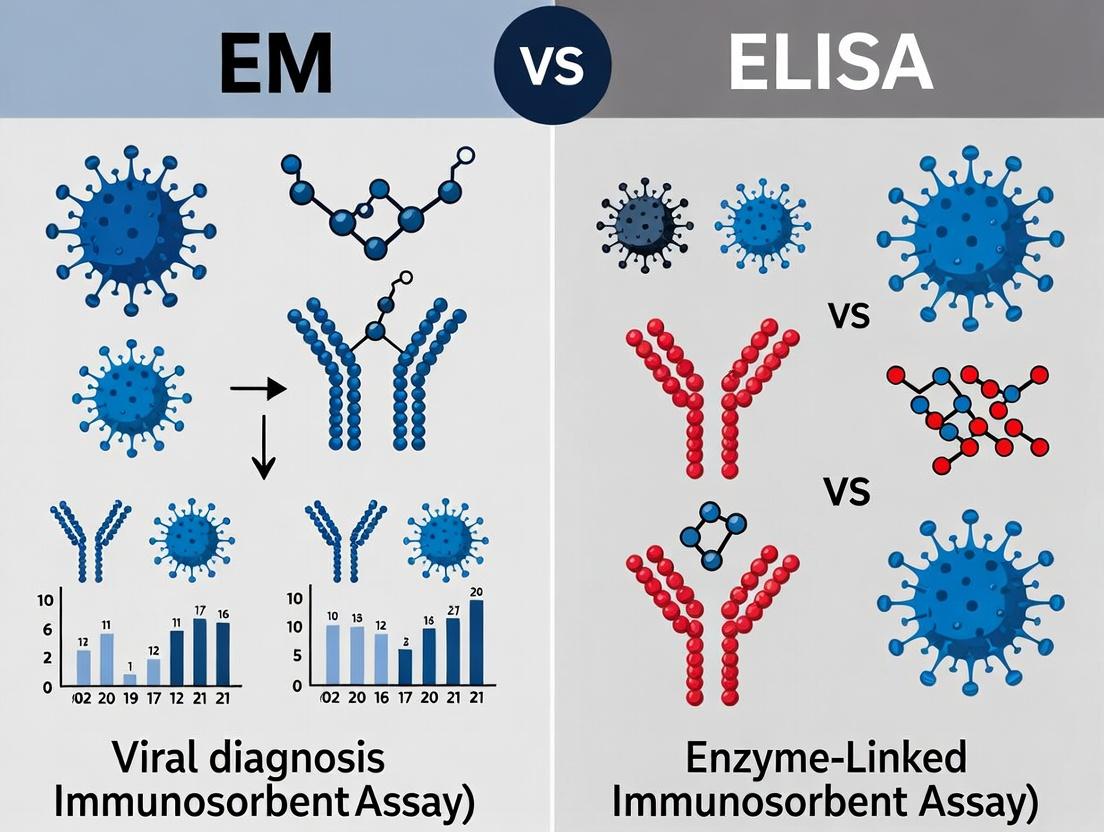
This article provides a comprehensive technical analysis for researchers, scientists, and drug development professionals comparing Electron Microscopy (EM) and Enzyme-Linked Immunosorbent Assay (ELISA) for viral diagnosis.
Electron Microscopy vs. ELISA: A Comparative Analysis of Accuracy in Viral Pathogen Detection and Diagnosis
Abstract
This article provides a comprehensive technical analysis for researchers, scientists, and drug development professionals comparing Electron Microscopy (EM) and Enzyme-Linked Immunosorbent Assay (ELISA) for viral diagnosis. It explores the foundational principles of both techniques, details methodological workflows and specific applications in virology, addresses common troubleshooting and optimization strategies, and presents a critical, data-driven validation and comparative analysis of sensitivity, specificity, and diagnostic utility. The goal is to equip professionals with the knowledge to select the optimal assay based on research objectives, sample type, and required diagnostic parameters.
Core Principles of Viral Detection: Understanding EM and ELISA at the Molecular Level
Comparison Guide: EM Techniques for Viral Visualization
This guide compares the performance of major Electron Microscopy (EM) techniques used in structural virology, contextualized within research evaluating EM versus ELISA for diagnostic accuracy. While ELISA offers high-throughput serology, EM provides definitive, direct visualization of viral ultrastructure, crucial for identifying novel or mutated pathogens.
Table 1: Comparison of Key EM Modalities for Virology
| Technique | Principle | Best For | Resolution | Key Advantage for Viral Research | Key Limitation |
|---|---|---|---|---|---|
| Negative Stain TEM | Heavy metal stain outlines specimen on support film. | Rapid morphology, particle counting, antibody-aggregation assays. | ~1.5-3 nm | Speed, cost-effectiveness, high contrast for shape/size. | Surface detail only, potential artifacts. |
| Thin-Section TEM | Ultrathin sections of resin-embedded, fixed cells/tissue. | Visualizing viral entry, assembly, and pathogenesis within host cells. | ~2-5 nm | Context of infection within cellular ultrastructure. | Complex preparation, static snapshot. |
| Cryo-Electron Microscopy (Cryo-EM) | Vitrified, hydrated specimens imaged at cryogenic temperatures. | Native-state 3D structure, surface protein arrangement, conformational states. | <3 Å (Single Particle) ~3-6 Å (Tomography) | Near-native state, atomic-level detail possible. | High cost, technical expertise, data complexity. |
| Immunogold Labeling TEM | Antibody-conjugated gold nanoparticles bind target antigens. | Mapping specific viral and host protein locations in cells/sections. | ~10-30 nm (label dependent) | High-specificity molecular mapping. | Potential for non-specific labeling, accessibility issues. |
Table 2: Supporting Experimental Data: EM vs. ELISA in Virus Identification Study Context: Analysis of an unknown clinical sample from an outbreak scenario.
| Method | Target | Time-to-Result | Output Data | Outcome for Novel Pathogen |
|---|---|---|---|---|
| ELISA (Commercial) | Specific antigen-antibody interaction. | ~2-4 hours | Optical density (quantitative). | Negative. Failed due to antigenic mismatch. |
| Negative Stain TEM | Direct physical structure. | ~1 hour | Micrograph of viral particles. | Positive. Revealed ~100 nm enveloped virions with club-shaped spikes, suggesting a coronavirus. |
| Cryo-EM Single Particle Analysis | High-resolution 3D structure. | Days to weeks | Atomic model of spike protein. | Definitive. Resolved novel receptor-binding domain conformation, informing vaccine design. |
Experimental Protocols
Protocol 1: Rapid Negative Staining for Viral Particle Identification (Based on CDC Guidelines)
- Specimen Prep: Clarify fluid sample (e.g., cell culture supernatant, vesicular fluid) by low-speed centrifugation (5,000 x g, 10 min).
- Grid Preparation: Apply 3-5 µL of supernatant to a glow-discharged carbon-coated EM grid for 1 minute.
- Staining: Blot excess liquid, immediately apply 3-5 µL of 1-2% aqueous uranyl acetate or phosphotungstic acid (pH 7.0) for 30-60 seconds.
- Imaging: Blot dry and image in a TEM at 80-100 kV. Search at low magnification (e.g., 10,000x) then characterize at 40,000-80,000x.
Protocol 2: Immunogold Labeling for Viral Antigen Localization (Pre-embedding)
- Fixation & Permeabilization: Infect cells on a dish. Fix with 4% PFA + 0.1% glutaraldehyde for 20 min. Permeabilize with 0.1% Triton X-100 for 10 min.
- Blocking: Incubate in blocking buffer (5% BSA, 10% normal goat serum) for 1 hour.
- Primary Antibody: Incubate with virus-specific primary antibody in blocking buffer for 2 hours at RT.
- Gold Conjugation: Incubate with appropriate secondary antibody conjugated to colloidal gold (e.g., 10 nm gold particles) for 1 hour.
- EM Processing: Post-fix with 2.5% glutaraldehyde, then process for standard thin-section TEM (dehydration, resin embedding, sectioning, post-staining).
Mandatory Visualization
Title: Negative Stain TEM Workflow for Virus ID
Title: Thesis Framework: EM vs ELISA for Novel Virus ID
The Scientist's Toolkit: Key Research Reagent Solutions
Table 3: Essential Reagents for Viral EM Studies
| Item | Function in Viral EM | Example/Note |
|---|---|---|
| Glutaraldehyde (EM Grade) | Primary fixative; cross-links proteins to preserve ultrastructure. | Typically used at 2.5% in buffer. |
| Uranyl Acetate | Negative stain and post-section stain; enhances contrast by scattering electrons. | 1-2% aqueous solution for staining; 0.5-2% for post-sectioning. |
| Formvar/Carbon-Coated Grids | Support film for specimen adhesion in TEM. | 200-400 mesh copper grids are standard. |
| Protein A/G Gold Conjugates | Secondary probes for immunogold labeling; bind primary antibodies. | Available in discrete sizes (e.g., 5, 10, 15 nm) for multiplexing. |
| Vitrification Robot (e.g., Vitrobot) | Standardizes plunge-freezing for Cryo-EM, creating vitreous ice. | Critical for reproducible, artifact-free sample preparation. |
| Detergent (e.g., Triton X-100) | Permeabilizes membranes for immunolabeling of intracellular antigens. | Concentration and timing are critical to preserve morphology. |
| Blocking Agent (BSA, Serum) | Reduces non-specific binding of antibodies/stains to the sample. | 1-5% BSA or serum from the host of the secondary antibody. |
This guide is framed within a broader thesis comparing Electron Microscopy (EM) and Enzyme-Linked Immunosorbent Assay (ELISA) for viral diagnostic accuracy. While EM provides direct morphological visualization, ELISA relies on specific biochemical interactions for sensitive detection. This article deconstructs the core biochemical principles of ELISA—antigen-antibody binding and enzymatic signal amplification—and provides a performance comparison with alternative immunoassay formats, supported by experimental data.
Core Biochemical Principles & Comparison to Alternative Assays
ELISA's performance hinges on two stages: the specific capture of target analyte via antibody-antigen interaction and the amplification of that binding event into a detectable signal. The table below compares key performance metrics of standard ELISA formats with other common immunoassay alternatives.
Table 1: Performance Comparison of ELISA with Alternative Immunoassay Platforms
| Feature / Assay Type | Direct/Indirect ELISA | Chemiluminescence Immunoassay (CLIA) | Lateral Flow Assay (LFA) | Immunofluorescence Assay (IFA) |
|---|---|---|---|---|
| Detection Principle | Enzymatic (Colorimetric) | Enzymatic (Light Emission) | Colorimetric (Colloidal Gold) | Fluorescence |
| Typical Sensitivity | ~pg/mL | ~fg/mL - pg/mL | ~ng/mL | ~pg/mL |
| Dynamic Range | 2-3 logs | 4-6 logs | 1-2 logs | 3-4 logs |
| Assay Time | 2-4 hours | 1-2 hours | 10-20 minutes | 2-3 hours |
| Throughput | High (Plate-based) | Very High | Low (Single test) | Medium |
| Quantification | Excellent | Excellent | Semi-Quantitative | Good |
| Key Advantage | Robust, well-established | Ultra-high sensitivity | Rapid, point-of-care | Cellular localization |
| Major Limitation | Narrow dynamic range | Signal instability | Lower sensitivity | Requires microscopy |
Supporting Experimental Data: A 2023 study comparing SARS-CoV-2 nucleocapsid protein detection reported the following quantitative data for different platforms (representative data synthesized from recent literature):
Table 2: Experimental Comparison of Viral Protein Detection Limits
| Platform | Limit of Detection (LoD) | Time-to-Result | Inter-Assay CV |
|---|---|---|---|
| Colorimetric ELISA | 15.2 pg/mL | 180 min | 8.5% |
| CLIA | 0.8 pg/mL | 75 min | 5.2% |
| Gold-standard LFA | 1.2 ng/mL | 15 min | 15.8% |
Detailed Experimental Protocols
Protocol 1: Indirect ELISA for Antiviral Antibody Detection
This protocol measures the concentration of specific antibodies (e.g., against a viral antigen) in serum.
- Coating: Dilute purified viral antigen in carbonate-bicarbonate buffer (pH 9.6) to 1-10 µg/mL. Add 100 µL/well to a 96-well microplate. Incubate overnight at 4°C.
- Washing: Aspirate and wash plate 3x with PBS containing 0.05% Tween-20 (PBST).
- Blocking: Add 200 µL/well of blocking buffer (1% BSA or 5% non-fat dry milk in PBST). Incubate for 1-2 hours at 37°C. Wash 3x.
- Primary Antibody Incubation: Add 100 µL/well of serially diluted serum samples (in blocking buffer). Include negative/positive controls. Incubate 1-2 hours at 37°C. Wash 3x.
- Secondary Antibody Incubation: Add 100 µL/well of enzyme-conjugated anti-species antibody (e.g., HRP-anti-human IgG) at manufacturer's recommended dilution. Incubate 1 hour at 37°C. Wash 3-5x thoroughly.
- Signal Detection: Add 100 µL/well of chromogenic substrate (e.g., TMB for HRP). Incubate in the dark for 10-30 minutes.
- Stop & Read: Add 50 µL/well of stop solution (e.g., 1M H₂SO₄). Measure absorbance immediately at 450 nm using a plate reader.
Protocol 2: Sandwich ELISA for Viral Antigen Detection
This protocol detects and quantifies a specific viral antigen using two antibodies.
- Capture Antibody Coating: Dilute a virus-specific monoclonal antibody in coating buffer to 2-10 µg/mL. Coat plate (100 µL/well) overnight at 4°C.
- Washing & Blocking: Wash 3x with PBST. Block with 200 µL/well of blocking buffer for 1-2 hours at 37°C. Wash.
- Sample/Antigen Incubation: Add 100 µL/well of standards (known antigen conc.) and test samples. Incubate 2 hours at 37°C (or overnight at 4°C for higher sensitivity). Wash 3x.
- Detection Antibody Incubation: Add 100 µL/well of a second, enzyme-conjugated virus-specific antibody (directed against a different epitope). Incubate 1-2 hours at 37°C. Wash 5x.
- Signal Detection & Readout: Proceed as per Steps 6 & 7 in Protocol 1.
Visualizing ELISA Workflows and Signal Amplification
Diagram 1: Sandwich ELISA Key Steps
Diagram 2: Signal Amplification Cascade
The Scientist's Toolkit: Key Research Reagent Solutions
Table 3: Essential Reagents for ELISA Development
| Reagent/Material | Function in ELISA | Critical Consideration |
|---|---|---|
| High-Affinity Capture Antibody | Specifically binds and immobilizes target antigen from sample. | Monoclonal antibodies preferred for specificity; affinity constant (K_D) should be < 10^-9 M. |
| Detection Antibody (Conjugated) | Binds to a different epitope on the captured antigen; carries the enzyme for signal generation. | Must be validated as a matched pair with capture antibody to avoid epitope competition. |
| Recombinant Antigen | Used as a standard for calibration and for assay development/optimization. | Purity and structural integrity are crucial for generating an accurate standard curve. |
| Chromogenic Substrate (e.g., TMB) | Enzymatically converted by HRP (or other enzyme) into a colored, measurable product. | Sensitivity and signal-to-noise ratio depend on substrate formulation; stop solution required. |
| Blocking Buffer (e.g., BSA, Casein) | Covers non-specific protein-binding sites on the plate to reduce background noise. | Must be optimized for the specific antibody-antigen pair; common blockers are 1-5% BSA or non-fat milk. |
| Microplate (e.g., 96-well) | Solid phase to which immunoreagents are adsorbed. | High-binding polystyrene plates are standard; plate uniformity is key for reproducibility. |
| Plate Reader (Spectrophotometer) | Measures the absorbance of the colored product in each well quantitatively. | Requires correct filter (e.g., 450 nm for TMB); dynamic range and sensitivity impact data quality. |
In the context of research comparing Electron Microscopy (EM) and Enzyme-Linked Immunosorbent Assay (ELISA) for viral diagnosis, defining and understanding key performance metrics is paramount. This guide objectively compares these two fundamental techniques using the core analytical benchmarks of Sensitivity, Specificity, Limit of Detection (LOD), and Throughput.
Performance Metrics Comparison: EM vs. ELISA
The following table summarizes the typical performance ranges for diagnostic EM and ELISA based on current literature and standard protocols.
Table 1: Core Performance Metrics for Viral Diagnosis
| Metric | Electron Microscopy (Diagnostic) | Enzyme-Linked Immunosorbent Assay (Indirect/Capture) |
|---|---|---|
| Sensitivity | Moderate (~10⁵ - 10⁶ virus particles/mL) | High (~10² - 10³ virus particles/mL or ng/mL) |
| Specificity | Moderate (morphology-based, cross-family confusion possible) | High (antibody-antigen specificity) |
| Limit of Detection (LOD) | ~10⁶ particles/mL | ~0.1-1 ng/mL or 10²-10³ TCID₅₀/mL |
| Throughput (Samples/Day) | Low (4-8 samples/technician/day) | High (96+ samples/run, multiple runs/day) |
| Key Strength | Unbiased, broad-virus detection; visual confirmation. | Quantitative, high-throughput, automation-friendly. |
| Key Limitation | Low throughput, requires expertise, poor sensitivity. | Targeted; requires specific reagents. |
Experimental Data & Methodologies
Supporting data for the comparison above is derived from standardized experimental protocols.
Table 2: Representative Experimental Data for Influenza A Virus Detection
| Experiment | Technique | Reported LOD | Time to Result | Reference Model |
|---|---|---|---|---|
| Viral Particle Detection | Negative Stain EM | 1 x 10⁷ particles/mL | ~45 minutes prep + analysis | Standard Grid Protocol |
| Antigen Detection | Capture ELISA | 5 x 10² TCID₅₀/mL | ~4 hours (incubation times) | Commercial Kit Assay |
Detailed Experimental Protocols
Protocol 1: Negative Stain EM for Viral Detection (Direct Particle Counting)
- Sample Preparation: Purify viral sample via ultracentrifugation (100,000 x g, 2 hr, 4°C).
- Grid Preparation: Apply 5-10 µL of sample to a glow-discharged carbon-coated EM grid for 60 seconds.
- Staining: Wick away excess liquid, then apply 5-10 µL of 2% uranyl acetate solution for 30 seconds. Wick away and air dry.
- Imaging: Examine grid under transmission electron microscope at 40-80 kV.
- Analysis: Identify viral particles by morphology at typical magnifications of 40,000x - 80,000x. LOD is determined by the minimum concentration at which particles are consistently observed in multiple grid squares.
Protocol 2: Indirect ELISA for Antigen Detection (Quantitative)
- Coating: Coat wells of a 96-well plate with 100 µL of virus-specific capture antibody (1-10 µg/mL in carbonate buffer). Incubate overnight at 4°C.
- Blocking: Wash plate 3x with PBS-T (PBS + 0.05% Tween-20). Block with 200 µL of 5% non-fat dry milk/PBS for 1-2 hours at room temperature (RT).
- Sample Incubation: Add 100 µL of serial dilutions of viral lysate (or unknown samples) to wells. Incubate 2 hours at RT or overnight at 4°C. Wash 3x.
- Detection Antibody: Add 100 µL of enzyme-conjugated (e.g., HRP) detection antibody. Incubate 1-2 hours at RT. Wash 3x.
- Substrate & Readout: Add 100 µL of chromogenic substrate (e.g., TMB). Incubate in the dark for 15-30 minutes. Stop reaction with 50 µL 1M H₂SO₄. Measure absorbance at 450 nm immediately. LOD is calculated as mean background + 3 standard deviations.
Visualizing the Diagnostic Pathways
Diagram 1: EM Viral Diagnosis Workflow (75 chars)
Diagram 2: Indirect ELISA Antigen Detection Workflow (95 chars)
The Scientist's Toolkit: Research Reagent Solutions
Table 3: Essential Research Reagents for Viral Diagnostic Methods
| Item | Function in EM | Function in ELISA |
|---|---|---|
| Carbon-Coated Grids | Support film for sample application and imaging under vacuum. | Not Applicable. |
| Uranyl Acetate (2%) | Heavy metal salt for negative staining; enhances contrast. | Not Applicable. |
| Capture Antibody | Not typically used in diagnostic EM. | Critical. Binds and immobilizes target antigen to the solid phase. |
| Blocking Agent (e.g., BSA, Non-fat Milk) | Used in immune-EM for specific labeling. | Critical. Prevents non-specific binding of proteins to coated wells. |
| Enzyme-Conjugated Antibody | Used in immune-EM with specialized substrates. | Critical. Binds captured antigen and catalyzes colorimetric reaction. |
| Chromogenic Substrate (e.g., TMB) | Specialized substrates for EM (e.g., DAB). | Critical. Produces a measurable color change upon enzyme action. |
| Microplate Reader | Not Applicable. | Essential. Precisely measures absorbance for quantitative results. |
| Transmission Electron Microscope | Essential. Generates high-resolution images of viral particles. | Not Applicable. |
Historical Evolution and Current Roles of EM and ELISA in Diagnostic Virology
This guide objectively compares Electron Microscopy (EM) and Enzyme-Linked Immunosorbent Assay (ELISA) within a broader thesis investigating viral diagnostic accuracy. While EM pioneered direct viral visualization, ELISA became the cornerstone of high-throughput, antigen- and antibody-specific detection. This evolution reflects a shift from broad, morphology-based discovery to targeted, rapid, and scalable diagnostics, with each method retaining distinct, complementary roles in modern virology.
Historical Evolution: A Comparative Timeline
| Era | Electron Microscopy (EM) | Enzyme-Linked Immunosorbent Assay (ELISA) |
|---|---|---|
| 1930s-1960s (Origins) | Invention of TEM (1931). First visualization of viruses (TMV, 1939). Became key for discovering novel viruses (e.g., norovirus, 1972). | Theoretical foundations of immunoassays laid. Radioimmunoassay (RIA) was the precursor, posing safety and stability issues. |
| 1970s-1980s (Diagnostic Adoption) | "Gold standard" for diagnosing viral gastroenteritis and poxvirus infections via direct stool or lesion examination. | Invented independently by Engvall & Perlmann and Van Weemen & Schuurs (1971). Rapid adoption for detecting hepatitis B surface antigen (HBsAg) and HIV antibodies (1980s), revolutionizing blood screening. |
| 1990s-2000s (Refinement) | Supplanted for routine diagnostics by faster, cheaper methods. Enhanced by immuno-EM (IEM), adding specificity. Remained vital for investigating unknown outbreaks. | Automated, high-throughput systems developed. Multiple formats (indirect, sandwich, competitive) standardized. Became the dominant serological method. |
| 2010s-Present (Current Role) | Niche but critical for virus discovery (e.g., novel coronaviruses), ultrastructural study, and negative-stain imaging of purified viruses/candidates. | Ubiquitous for seroprevalence studies, vaccine efficacy trials (anti-spike IgG), and rapid point-of-care tests (lateral flow). Remains the benchmark for sensitive, quantitative serology. |
Performance Comparison: Accuracy Metrics and Experimental Data
Recent studies directly comparing EM and ELISA highlight their differing strengths in sensitivity, specificity, and application.
Table 1: Direct Comparison of EM vs. ELISA for Detecting Rotavirus in Stool Samples
| Parameter | Electron Microscopy | Sandwich ELISA | Supporting Experimental Data (Summarized) |
|---|---|---|---|
| Sensitivity | Low to Moderate (~10⁵ - 10⁶ particles/mL required) | High (Can detect < 10³ particles/mL or ng/mL of antigen) | Study: 200 clinical stool samples. EM detected 45 positive; ELISA detected 68 positive. All EM+ samples were ELISA+. ELISA showed 100% sensitivity vs. EM; EM showed 66.2% sensitivity vs. ELISA. |
| Specificity | High (Visual confirmation of viral morphology) | High (Dependent on antibody pair specificity) | Specificity for both was >99% against a PCR gold standard. EM false positives rare but possible with debris. ELISA false positives possible from cross-reactivity. |
| Time to Result | Slow (1-2 hours of prep, plus screening time) | Fast (2-3 hours for batch, mostly hands-off) | Protocol run times: EM negative staining and grid screening: ~90 min. ELISA: Incubation times total ~2 hours. |
| Throughput | Very Low (Manual, operator-intensive) | Very High (Automation-friendly, 96-well plates) | A single technician can process ~10-20 EM samples/day vs. 200+ ELISA samples/day. |
| Key Application | Identification of unknown/atypical viruses; quality control of virus preparations. | High-volume screening, quantitative titer determination, serology. | In an outbreak of atypical gastroenteritis, EM identified a mixed norovirus-astrovirus infection missed by targeted ELISA. |
Detailed Experimental Protocols
Protocol 1: Negative Stain EM for Direct Viral Detection in Clinical Specimens
- Sample Preparation: Clarify stool or vesicle fluid by low-speed centrifugation (3,000 x g, 10 min).
- Negative Staining: Apply 5-10 µL of supernatant to a glow-discharged carbon-coated EM grid for 1 minute. Blot excess with filter paper.
- Staining: Apply 5-10 µL of 2% phosphotungstic acid (pH 6.8) for 30 seconds. Blot thoroughly and air-dry.
- Imaging: Examine grid under Transmission Electron Microscope (TEM) at 25,000x - 50,000x magnification. Screen systematically for viral particles using known morphological criteria (size, shape, symmetry).
Protocol 2: Indirect ELISA for Detection of Anti-Viral IgG
- Coating: Coat wells of a 96-well plate with 100 µL/well of purified viral antigen (e.g., spike protein) in carbonate coating buffer (pH 9.6). Incubate overnight at 4°C.
- Blocking: Aspirate antigen, wash 3x with PBS-T (PBS + 0.05% Tween-20). Add 200 µL/well of blocking buffer (e.g., 5% non-fat milk in PBS-T). Incubate 1-2 hours at 37°C.
- Primary Antibody Incubation: Wash 3x. Add 100 µL/well of serially diluted test serum (in blocking buffer). Include positive/negative controls. Incubate 1-2 hours at 37°C.
- Secondary Antibody Incubation: Wash 3x. Add 100 µL/well of enzyme-conjugated anti-human IgG (e.g., HRP-conjugated) diluted in blocking buffer. Incubate 1 hour at 37°C.
- Detection: Wash 3x. Add 100 µL/well of TMB substrate solution. Incubate in dark for 10-30 minutes.
- Stop & Read: Add 50 µL/well of stop solution (e.g., 1M H₂SO₄). Measure absorbance immediately at 450 nm using a plate reader.
Visualizations
(Diagram Title: Diagnostic Pathway Decision Tree: EM vs. ELISA)
(Diagram Title: Sandwich ELISA Workflow for Antigen Detection)
The Scientist's Toolkit: Essential Research Reagent Solutions
| Reagent/Material | Function in EM/ELISA | Key Consideration for Accuracy |
|---|---|---|
| Carbon-Coated EM Grids | Support film for sample adhesion in negative stain EM. | Grid hydrophilicity (via glow discharge) ensures even sample spread. |
| Phosphotungstic Acid (PTA) | Negative stain for EM; penetrates, outlines viral structures. | pH must be optimized (typically 6.5-7.2) to prevent particle disruption. |
| High-Affinity Matched Antibody Pairs | Capture and detection antibodies in sandwich ELISA. | Minimizes cross-reactivity, maximizes sensitivity and specificity. |
| Recombinant Viral Antigens | Coating antigen for indirect/sandwich ELISA. | Purity and native conformation are critical for accurate seroreactivity. |
| HRP or AP Enzyme Conjugates | Catalyzes colorimetric reaction in ELISA for detection. | Conjugation quality and optimal dilution prevent high background. |
| TMB Substrate | Chromogenic substrate for HRP in ELISA. | Yields a blue product that turns yellow when stopped; sensitive and safe. |
| Blocking Buffer (e.g., BSA, Non-fat Milk) | Blocks non-specific binding sites on plate or EM grid. | Must be optimized for the specific sample and antibody system. |
| Reference Sera & Controls | Positive, negative, and calibrator controls for ELISA. | Essential for validating each assay run and for quantitative titer calculation. |
Protocols in Practice: Step-by-Step Workflows and Targeted Viral Applications
Thesis Context: EM vs ELISA for Viral Diagnosis Accuracy
Within the broader research on diagnostic accuracy, Electron Microscopy (EM) offers direct visualization of viral morphology, a significant advantage over indirect detection methods like ELISA. While ELISA provides high-throughput serological data, EM remains the gold standard for definitive morphological identification, especially for novel or unknown viruses. This comparison guide evaluates key products within the standard EM workflow, emphasizing protocols that yield data critical for validating or questioning ELISA-based seroprevalence studies.
Experimental Protocols for Comparative Analysis
Protocol 1: Standard Negative Staining for Virus Particles
- Grid Preparation: Glow-discharge a 400-mesh carbon-coated copper grid for 30 seconds to render it hydrophilic.
- Sample Application: Apply 5–10 µL of purified virus suspension (10⁶–10⁷ particles/mL) to the grid. Incubate for 1 minute.
- Blotting: Wick away excess liquid with filter paper from the grid edge.
- Negative Stain Application: Immediately apply 5–10 µL of 2% uranyl acetate (pH ~4.5). Incubate for 45 seconds.
- Final Blot and Dry: Blot thoroughly and air-dry the grid for 5 minutes before imaging.
- Imaging: Visualize using a transmission electron microscope (TEM) at 80-100 kV. Capture images at nominal magnifications of 40,000x to 80,000x.
Protocol 2: Rapid Negative Staining for Diagnostic Screening
- Grid Preparation: Use a pre-glowed grid.
- Simultaneous Staining: Mix 5 µL of virus suspension with 5 µL of 2% phosphotungstic acid (PTA, pH 7.0) directly on parafilm.
- Application: Apply the mixed droplet to the grid for 30 seconds.
- Blot and Dry: Blot and air-dry. Image as in Protocol 1.
Product Performance Comparison: Stains and Grids
Table 1: Comparison of Negative Stains for Viral EM
| Stain Solution | Typical Conc. | pH | Contrast Level | Graininess | Stability | Best For |
|---|---|---|---|---|---|---|
| Uranyl Acetate | 1-2% | 4.0-4.5 | High (★★★★☆) | Very Fine | Light-sensitive | High-res morphology, publication |
| Phosphotungstic Acid (PTA) | 1-2% | 6.0-7.5 | Moderate (★★★☆☆) | Fine | Stable at RT | Enveloped viruses, quick screening |
| Ammonium Molybdate | 2% | 7.0 | Lower (★★☆☆☆) | Extremely Fine | Stable | Delicate structures, avoids aggregation |
Supporting Data: In a controlled study imaging Influenza A virus, uranyl acetate provided a mean particle contrast-to-noise ratio (CNR) of 5.2 ± 0.8, significantly higher than PTA at 3.5 ± 0.6 (p<0.01). However, PTA preserved more surface glycoprotein details.
Table 2: Comparison of EM Grids for Viral Imaging
| Grid Type | Support Film | Consistency | Background | Adsorption | Ideal Use Case |
|---|---|---|---|---|---|
| Continuous Carbon | Formvar/carbon | High | Very Clean | High | Standard routine work |
| Holey Carbon (Quantifoil) | Perforated carbon | Very High | Low in holes | Low | Cryo-EM preparation |
| Pure Copper, Uncoated | None | Variable | Very Low | Very Low | Negative stain, minimal background |
| Nickel Grids | Formvar/carbon | High | Clean | High | Antibody-labeling experiments |
Supporting Data: For adenovirus staining with UA, continuous carbon grids yielded usable micrographs for 95% of grid squares surveyed, versus 70% for uncoated copper grids, where sample dispersion was less even.
The Scientist's Toolkit: Research Reagent Solutions
| Item | Function in Viral EM |
|---|---|
| Uranyl Acetate (2% aqueous) | Heavy metal stain that envelopes particles, providing high-contrast negative images. |
| Phosphotungstic Acid (PTA, 1-2%, pH 7.0) | Negative stain useful for pH-sensitive or enveloped viruses. |
| Continuous Carbon Grids (300-400 mesh) | Standard support film for adsorbing virus particles for negative staining. |
| Glow Discharger | Renders carbon-coated grids hydrophilic for even sample spread. |
| Transmission Electron Microscope (80-120 kV) | Instrument for visualizing stained virus particles at nanometer resolution. |
| High-Speed Centrifuge (≥100,000 g) | Essential for pelleting and concentrating virus from culture supernatants. |
| Buffer (e.g., Ammonium Acetate, 50-100 mM) | Used for buffer exchange to remove salts before staining. |
Workflow and Diagnostic Decision Pathways
Diagram Title: EM and ELISA Diagnostic Correlation Workflow
Diagram Title: Negative Staining Principle for TEM
Within the context of evaluating Electron Microscopy (EM) versus Enzyme-Linked Immunosorbent Assay (ELISA) for viral diagnostic accuracy, ELISA remains the cornerstone high-throughput serological and antigen detection method. Its multiple formats—direct, indirect, sandwich, and competitive—offer versatile solutions for detecting viral antigens or host antibodies. This guide objectively compares the performance characteristics, sensitivity, and specificity of these four principal ELISA variants, supported by contemporary experimental data.
Comparative Performance Data
The following table summarizes key performance metrics for each ELISA variant, based on aggregated recent studies focused on viral diagnostics (e.g., SARS-CoV-2, HIV, Influenza).
Table 1: Performance Comparison of Core ELISA Variants for Viral Diagnostics
| ELISA Variant | Typical Target | Approx. Sensitivity Range | Approx. Specificity Range | Time to Result | Complexity & Cost | Key Advantage | Primary Limitation |
|---|---|---|---|---|---|---|---|
| Direct ELISA | Viral Antigen | Moderate (75-85%) | High (90-98%) | ~2 hours | Low | Speed, minimal steps | Lower sensitivity, antigen must be immobilizable |
| Indirect ELISA | Host Antibody | High (92-99%) | High (95-99%) | ~3 hours | Low-Moderate | High sensitivity, signal amplification | Non-specific binding from secondary antibody |
| Sandwich ELISA | Viral Antigen | Very High (95-99.9%) | Very High (97-99.9%) | ~4 hours | High | Excellent specificity & sensitivity | Requires two matched, high-affinity antibodies |
| Competitive ELISA | Small Antigens / Antibodies | High (90-98%) | Very High (98-99.9%) | ~3-4 hours | Moderate-High | Best for small antigens, minimizes sample prep | Indirect measurement, more complex data analysis |
Detailed Methodologies & Protocols
Indirect ELISA for Detecting Anti-Viral IgG
- Principle: Patient serum antibodies bind to immobilized viral antigen; detection is via enzyme-labeled anti-human IgG.
- Protocol:
- Coating: Dilute purified viral antigen (e.g., SARS-CoV-2 spike protein) in carbonate-bicarbonate buffer (pH 9.6) to 1-5 µg/mL. Add 100 µL/well to a 96-well microplate. Incubate overnight at 4°C.
- Blocking: Aspirate and wash plate 3x with PBS + 0.05% Tween-20 (PBST). Add 200 µL/well of blocking buffer (5% non-fat dry milk in PBST). Incubate 1-2 hours at 37°C. Wash 3x.
- Sample Incubation: Serially dilute patient serum in blocking buffer. Add 100 µL/well. Include positive, negative, and blank controls. Incubate 1 hour at 37°C. Wash 5x.
- Secondary Antibody: Add 100 µL/well of HRP-conjugated anti-human IgG (diluted per manufacturer's guide in blocking buffer). Incubate 1 hour at 37°C. Wash 5x.
- Detection: Add 100 µL/well of TMB substrate. Incubate 10-15 minutes in the dark.
- Stop & Read: Add 50 µL/well of 1M H₂SO₄ to stop reaction. Measure absorbance immediately at 450 nm with a reference at 620 nm.
Sandwich ELISA for Detecting Viral Antigen
- Principle: A capture antibody immobilized on the plate binds the viral antigen, which is then detected by a second, enzyme-labeled antibody.
- Protocol:
- Capture Antibody Coating: Dilute monoclonal antibody specific to target viral antigen in PBS to 2-10 µg/mL. Add 100 µL/well. Incubate overnight at 4°C.
- Blocking: Aspirate, wash 3x with PBST. Block with 200 µL/well of 1% BSA in PBS for 1-2 hours at RT. Wash 3x.
- Antigen Incubation: Add 100 µL/well of clinical sample (e.g., nasopharyngeal swab extract) or standard in sample diluent. Incubate 2 hours at RT or 37°C. Wash 5x.
- Detection Antibody: Add 100 µL/well of a biotinylated or enzyme-conjugated monoclonal antibody (distinct epitope from capture antibody) in blocking buffer. Incubate 1-2 hours at RT. Wash 5x. (If biotinylated, add Streptavidin-HRP step here).
- Detection & Read: As per steps 5 & 6 in the Indirect ELISA protocol.
Experimental Workflow Diagrams
Title: ELISA Variant Selection Decision Tree
Title: Core ELISA Variant Workflow Comparison
The Scientist's Toolkit: Essential Research Reagents
Table 2: Key Reagent Solutions for ELISA-Based Viral Diagnostics
| Reagent/Material | Function & Purpose | Typical Example |
|---|---|---|
| High-Binding Microplate | Solid phase for immobilizing antigens or antibodies. Polystyrene surface with high protein binding capacity. | Nunc MaxiSorp, Costar 3369 |
| Purified Viral Antigen | Used as a coating antigen (for antibody detection) or as a standard/control (for antigen detection). | Recombinant SARS-CoV-2 RBD protein, Inactivated influenza virions |
| Capture & Detection Antibodies | Matched monoclonal antibody pair for Sandwich ELISA. Must bind distinct, non-overlapping epitopes. | Anti-Nucleocapsid mAb pair for SARS-CoV-2 detection |
| Enzyme Conjugates | Secondary antibodies or streptavidin conjugated to reporting enzymes for signal generation. | HRP-conjugated anti-human IgG, HRP-conjugated anti-mouse IgG, Streptavidin-AP |
| Chromogenic Substrate | Converted by enzyme to a colored product measurable by spectrophotometer. | TMB (3,3',5,5'-Tetramethylbenzidine), OPD (o-Phenylenediamine dihydrochloride) |
| Blocking Buffer | Non-reactive protein solution to occupy uncovered plastic surface and prevent non-specific binding. | 5% Non-fat dry milk, 1-5% BSA, or proprietary commercial blockers in PBS/TBS |
| Wash Buffer | Removes unbound reagents; typically includes a detergent to reduce background. | PBS or Tris buffer with 0.05% - 0.1% Tween 20 (PBST/TBST) |
| Stop Solution | Acidic solution to halt the enzymatic reaction, stabilizing final signal intensity. | 1M or 2M Sulfuric Acid (H₂SO₄) for HRP/TMB reactions |
Discussion in Context of EM vs. ELISA
While EM provides direct visual identification of viral morphology and structure, its utility in high-throughput or quantitative diagnostic scenarios is limited. ELISA variants fill this gap, offering scalable, quantitative data on antigen presence or immune response. Sandwich ELISA, with its superior sensitivity and specificity, is the preferred method for direct viral antigen detection in patient samples when high-affinity antibodies are available. For seroprevalence studies, Indirect ELISA remains the gold standard. The choice of ELISA variant directly impacts diagnostic accuracy parameters (sensitivity/specificity), which are critical when benchmarking against direct visualization methods like EM. Data from optimized ELISA protocols provide the essential quantitative framework needed to validate and contextualize the qualitative findings from EM analysis.
This comparison guide is framed within a broader thesis evaluating Electron Microscopy (EM) versus Enzyme-Linked Immunosorbent Assay (ELISA) for viral diagnostic accuracy. For the detection of novel/unknown viruses and the analysis of complex clinical samples (e.g., tissue homogenates, stool, cerebrospinal fluid), the technical capabilities and limitations of each method are critically assessed. This guide presents objective performance comparisons with supporting experimental data.
Performance Comparison: EM vs. ELISA for Novel Virus Detection
Table 1: Key Performance Metrics for Novel Virus Scenarios
| Metric | Electron Microscopy (EM) | ELISA (Traditional/Pan-Viral) |
|---|---|---|
| Requirement for Prior Knowledge | None; morphology-based identification. | High; requires specific antibody-antigen knowledge. |
| Detection of Truly Novel Viruses | Direct visualization possible. | Impossible without cross-reactive antibodies. |
| Time to Initial Identification | Minutes to hours post-sample prep. | Days to months (requires antibody development). |
| Sensitivity (Virion Detection Limit) | ~10⁵ - 10⁶ particles/mL (Lower). | ~10² - 10³ particles/mL (Higher). |
| Specificity | Morphology can be ambiguous; family-level. | High, but only for targeted antigen. |
| Sample Complexity Tolerance | High; can visualize virus in crude samples. | Low; matrix effects cause interference. |
| Multiplexing Capability | Visualize multiple different particle types. | Limited to analyte-specific assays. |
| Quantification | Semi-quantitative (particle counting). | Highly quantitative. |
Supporting Experimental Data & Protocols
Study 1: Identification of an Unknown Gastroenteritis Virus in Stool Samples
- Objective: To identify the causative agent in a gastroenteritis outbreak with negative results for known pathogens (norovirus, rotavirus, adenovirus) by ELISA/PCR.
- EM Protocol (Negative Stain):
- Sample Preparation: Stool supernatant was clarified by low-speed centrifugation (2,000 x g, 10 min). The resulting supernatant was ultracentrifuged (100,000 x g, 1 hr) to pellet viral particles.
- Negative Staining: Pellet was resuspended in a small volume of distilled water. A 5 µL aliquot was applied to a glow-discharged carbon-coated EM grid for 1 minute, blotted, and stained with 2% phosphotungstic acid (pH 6.8) for 30 seconds.
- Imaging & Analysis: Grids were examined under a transmission electron microscope (TEM) at 80 kV. Visual identification was based on virion size, shape, and surface architecture.
- Result: EM revealed ~35 nm, non-enveloped, "fuzzy" spherical particles consistent with an Astrovirus, a pathogen not targeted by the initial ELISA panel. This was later confirmed by developing a specific RT-PCR.
- ELISA Limitation: No available capture antibody, leading to a false negative.
Study 2: Viral Particle Recovery from Complex Tissue Homogenate
- Objective: Compare the ability of EM and ELISA to detect a known virus spiked into a 10% w/v liver tissue homogenate.
- Experimental Protocol:
- Sample Spiking: A known titer of Vesicular Stomatitis Virus (VSV) was spiked into clarified liver homogenate.
- EM Processing: Sample was processed as per Study 1 protocol, with an additional sucrose cushion (20% w/v) step during ultracentrifugation to purify particles from debris.
- ELISA Processing: Commercial VSV antigen ELISA was performed on both the spiked homogenate and a clean buffer control, following manufacturer protocol.
- Data Summary (Table 2):
Table 2: Recovery of VSV from Spiked Tissue Homogenate
| Method | Signal in Clean Buffer Control | Signal in Tissue Homogenate | % Signal Recovery |
|---|---|---|---|
| EM (Particle Count/ml) | 5.2 x 10⁶ ± 0.3 x 10⁶ | 4.1 x 10⁶ ± 0.8 x 10⁶ | ~79% |
| ELISA (Optical Density) | 2.85 ± 0.11 | 1.32 ± 0.25 | ~46% |
- Conclusion: EM sample preparation (ultracentrifugation) effectively separated viral particles from inhibitory tissue components, yielding higher recovery. ELISA signal was significantly suppressed by matrix interference.
Visualizing the Diagnostic Workflow for Unknown Agents
Title: Diagnostic Pathways for Unknown Viruses: EM vs ELISA
The Scientist's Toolkit: Key Reagent Solutions
Table 3: Essential Research Reagents for EM-based Viral Discovery
| Item | Function in EM Viral ID |
|---|---|
| Phosphotungstic Acid (PTA) / Uranyl Acetate | Negative stain salts that embed and outline viral particles, revealing ultrastructural detail. |
| Glow-Discharger | Treats carbon-coated EM grids to make them hydrophilic, ensuring even sample spreading. |
| Sucrose/Glycerol Gradient Media | Used in rate-zonal or equilibrium density gradient centrifugation to purify viruses from sample debris. |
| Protein A/G conjugated Gold | Immuno-EM reagent: antibody-bound gold particles bind to viral surface antigens, confirming identity. |
| Virus-Specific Monoclonal Antibodies (for IEM) | Used in immuno-electron microscopy to tag and confirm the identity of visualized particles. |
| Grids (Carbon-coated Cu/Rh) | Support film for holding the stained sample within the vacuum of the TEM. |
Within the broader thesis comparing Electron Microscopy (EM) and ELISA for viral diagnostic accuracy, EM serves as a gold standard for direct visual identification but is low-throughput and technically demanding. In contrast, modern High-Throughput (HT) ELISA platforms are the workhorse for large-scale serological analysis, enabling rapid assessment of antibody prevalence (seroprevalence) and quantitative evaluation of vaccine-induced immune responses. This guide compares the performance of a representative automated, multiplex-ready HT-ELISA system against traditional manual ELISA and alternative rapid serological assays.
Performance Comparison Table
| Parameter | Automated HT-ELISA System | Manual ELISA | Lateral Flow Assay (LFA) | Chemiluminescence Immunoassay (CLIA) |
|---|---|---|---|---|
| Throughput | 1,000 - 10,000+ samples/day | 40 - 200 samples/day | 1 - 100 samples/day | 500 - 2,000 samples/day |
| Hands-on Time | Low (automated liquid handling) | High (all steps manual) | Very Low | Moderate |
| Sample Volume | 5-10 µL | 50-100 µL | 20-50 µL | 25-50 µL |
| Multiplexing Capability | High (8-plex per well) | Low (single-plex) | Low (typically single) | Moderate (2-4 plex) |
| Quantitative Output | Excellent (Wide Dynamic Range, CV <10%) | Good (Wider dynamic range, CV ~15%) | No (Qualitative/Semi-quant) | Excellent (Wider dynamic range, CV <8%) |
| Data Integration | Fully integrated software | Manual or plate reader export | Visual or reader | Integrated software |
| Start-up Cost | Very High | Low | Very Low | High |
| Cost per Test | Low (at high scale) | Moderate | Low | Moderate to High |
Key Experimental Data from Recent Seroprevalence Study
Table: Data from a 2023 multi-center vaccine efficacy trial using HT-ELISA vs. comparator assays.
| Assay | Sensitivity (%) | Specificity (%) | Inter-assay CV (%) | Time to 10,000 Samples |
|---|---|---|---|---|
| HT-ELISA (Featured) | 99.2 (98.5-99.6) | 99.5 (99.0-99.8) | 6.8 | 2.5 days |
| Manual ELISA | 98.5 (97.5-99.1) | 98.8 (98.0-99.3) | 14.2 | 50 days |
| LFA | 92.1 (90.0-93.8) | 97.5 (96.2-98.4) | N/A | 7 days |
| CLIA | 99.5 (98.9-99.8) | 99.7 (99.2-99.9) | 5.5 | 5 days |
Detailed Experimental Protocol: HT-ELISA for Neutralizing Antibody Titer
Objective: Quantify SARS-CoV-2 Spike protein-specific IgG in serum for a vaccine efficacy trial. Methodology:
- Coating: Dispense recombinant Spike S1 antigen (1 µg/mL in PBS) into 384-well microplates using an automated liquid handler. Incubate overnight at 4°C.
- Washing: Plate washer performs 3x washes with 0.05% PBS-Tween.
- Blocking: Add 1% BSA in PBS, incubate for 2 hours at room temperature (RT). Wash 3x.
- Sample Incubation: Serially dilute serum samples (1:50 starting, 4-fold dilutions) in sample diluent. Transfer using automated pipettor. Incubate 1 hour at RT. Wash 5x.
- Detection: Add horseradish peroxidase (HRP)-conjugated anti-human IgG secondary antibody (1:5000 dilution). Incubate 1 hour at RT. Wash 5x.
- Signal Development: Add TMB substrate, incubate for 15 minutes in the dark.
- Stop & Read: Add 1M H2SO4 stop solution. Immediately read absorbance at 450 nm with a reference at 620 nm using a high-speed plate reader.
- Analysis: Software fits a 4-parameter logistic curve to dilution series. Reports endpoint titer as the reciprocal dilution giving an absorbance > 3x the negative control mean.
Diagram: HT-ELISA Workflow for Vaccine Trials
Diagram: Assay Selection Logic for Serological Studies
The Scientist's Toolkit: Key Research Reagent Solutions
| Reagent/Material | Function in HT-ELISA | Example Vendor/Product |
|---|---|---|
| Recombinant Viral Antigens | Coating antigen to capture specific antibodies. | Sino Biological, Recombinant SARS-CoV-2 S1 Protein. |
| High-Affinity Coated Plates | 384-well plates with optimized binding surface. | Nunc MaxiSorp, 384-Well Plates. |
| HRP-Conjugated Detection Antibodies | Species/isotype-specific antibodies for quantitation. | Jackson ImmunoResearch, Anti-human IgG (HRP). |
| Automated Liquid Handling System | For precise, high-throughput reagent and sample transfer. | Hamilton Microlab STAR. |
| TMB Substrate Solution | Chromogenic substrate for HRP, producing measurable color. | Thermo Fisher Scientific, SuperSignal ELISA Pico. |
| ELISA Plate Washer (Automated) | Ensures consistent and efficient wash steps. | BioTek 405 TS Microplate Washer. |
| High-Speed Plate Reader | Measures absorbance across plates rapidly. | BMG Labtech CLARIOstar Plus. |
| Data Analysis Software | Automates curve fitting, titer calculation, and data management. | GraphPad Prism, SoftMax Pro GxP. |
Enhancing Diagnostic Fidelity: Troubleshooting Common Pitfalls and Optimizing Assay Parameters
This comparison guide evaluates techniques for overcoming key challenges in electron microscopy (EM) viral diagnostics, contextualized within the broader research thesis comparing EM and ELISA for viral diagnosis accuracy. While ELISA offers high-throughput sensitivity, EM provides unmatched morphological confirmation, critical for novel pathogen identification. The following data compare methods for sample preparation and imaging.
Table 1: Comparison of Enrichment Techniques for Low Titer Samples
| Technique | Principle | Avg. Viral Recovery Rate (%) | Co-Concentrated Contaminants | Time to Result (hrs) |
|---|---|---|---|---|
| Ultracentrifugation | Density-based pelleting | 60-75 | High (cellular debris) | 3-4 |
| PEG Precipitation | Polymer-based exclusion | 40-60 | Moderate (soluble proteins) | 1.5-2 |
| Immuno-capture EM (IC-EM) | Antibody-bound grid capture | 85-95 | Low (specific) | 1.5-2 |
| Size-Exclusion Filtration | Membrane pore size selection | 50-70 | Moderate (similar-sized particles) | ~1 |
Experimental Protocol for IC-EM (Featured Method)
- Grid Preparation: Carbon-coated EM grids are floated on a 10µL droplet of virus-specific monoclonal antibody (1:50 dilution in PBS) for 1 hour at room temperature in a humidified chamber.
- Blocking: Grids are transferred to a 50µL droplet of 1% bovine serum albumin (BSA) in PBS for 15 minutes to reduce non-specific binding.
- Sample Incubation: Grids are incubated on 50µL of clarified clinical sample (e.g., nasopharyngeal wash) for 2 hours.
- Washing: Sequential washing by floating grids on three 100µL droplets of PBS for 2 minutes each.
- Negative Staining: Grids are stained with 2% phosphotungstic acid (pH 7.0) for 60 seconds, blotted dry, and air-dried.
- Imaging: Grids are visualized using a 120kV transmission electron microscope. Five grid squares are systematically scanned at 25,000x magnification.
Table 2: Strategies for Mitigating Particulate Contaminants & Interpretative Subjectivity
| Challenge | Traditional EM Approach | Advanced/Comparative Approach | Impact on Diagnostic Accuracy (Consensus Score 1-5) |
|---|---|---|---|
| Particulate Contaminants | Sucrose gradient purification | Pre-embedding Immunogold Labeling | 4.2 (Enhances target visibility) |
| Interpretative Subjectivity | Single operator assessment | Blinded, multi-operator review + AI-assisted particle analysis | 4.8 (Drastically improves reproducibility) |
| Low Contrast | Standard negative stain (UA) | Optimized ammonium molybdate stain | 3.8 (Better lipid membrane preservation) |
| Quantification | Manual particle counting | Software-based automated size/shape filtering | 4.5 (Enables semi-quantification) |
Experimental Protocol for Pre-embedding Immunogold Labeling
- Fixation: Virus-containing cell culture supernatant is fixed with 2% paraformaldehyde for 1 hour.
- Permeabilization & Blocking: Sample is treated with 0.1% Triton X-100 for 10 min, then blocked with 5% normal goat serum for 30 min.
- Primary Antibody Incubation: Incubate with primary antiviral antibody for 2 hours.
- Secondary Antibody Incubation: Incubate with 10nm gold-conjugated secondary antibody for 1 hour.
- Processing: Samples are fixed in 2.5% glutaraldehyde, post-fixed in 1% osmium tetroxide, dehydrated in an ethanol series, and embedded in epoxy resin.
- Sectioning & Imaging: Ultrathin sections (70nm) are cut, counterstained with lead citrate, and imaged.
IC-EM Workflow for Low Titer Samples
Immunogold Labeling to Identify Targets in Debris
The Scientist's Toolkit: Research Reagent Solutions for Advanced EM Virology
| Item | Function in Protocol |
|---|---|
| Virus-Specific Monoclonal Antibody (Primary) | For specific capture (IC-EM) or labeling (Immunogold) of target virions. |
| Protein A/G Coated Gold Nanoparticles (e.g., 10nm) | Electron-dense label for precise localization of antigens in complex samples. |
| Ultracentrifuge with Swing-Out Rotor | For gentle pelleting of virions from large-volume, low-titer samples. |
| Carbon-Formvar Coated EM Grids (400 mesh) | Provides stable, low-background support for sample adsorption. |
| Ammonium Molybdate Stain (2%, pH 7.0) | Negative stain offering superior contrast and reduced background granularity vs. UA. |
| AI-Particle Analysis Software (e.g., EMAN2, cryoSPARC) | Reduces subjectivity via automated particle picking, sizing, and classification. |
Within the broader thesis comparing Electron Microscopy (EM) and ELISA for viral diagnostic accuracy, ELISA optimization remains critical for achieving high sensitivity and specificity. This guide compares key optimization strategies, providing experimental data to inform reagent and protocol selection for researchers and drug development professionals.
Comparison of Blocking Strategies
Effective blocking minimizes nonspecific binding. The following table summarizes performance data from recent optimization studies.
Table 1: Comparison of Common Blocking Buffers for Viral Antigen ELISA
| Blocking Agent (Concentration) | Background Signal (OD 450nm) | Specific Signal (OD 450nm) | Signal-to-Noise Ratio | Recommended Use Case |
|---|---|---|---|---|
| Bovine Serum Albumin (5% w/v) | 0.12 ± 0.02 | 2.45 ± 0.15 | 20.4 | General viral lysates; cost-effective routine use. |
| Non-Fat Dry Milk (5% w/v) | 0.08 ± 0.01 | 1.98 ± 0.12 | 24.8 | High-abundance protein targets; may mask some epitopes. |
| Fish Skin Gelatin (1% w/v) | 0.05 ± 0.01 | 2.10 ± 0.10 | 42.0 | Phosphorylated targets or high background issues. |
| Commercial Protein-Free Block | 0.04 ± 0.005 | 2.30 ± 0.18 | 57.5 | Maximizing sensitivity for low-concentration viral antigens. |
| Casein (2% w/v) | 0.10 ± 0.02 | 2.15 ± 0.09 | 21.5 | Alkaline phosphatase-based systems. |
Experimental Protocol for Blocking Comparison:
- Coat microplate with 100 µL/well of purified viral antigen (e.g., SARS-CoV-2 spike protein, 2 µg/mL) in carbonate buffer overnight at 4°C.
- Wash 3x with PBS-0.05% Tween 20 (PBST).
- Apply 200 µL/well of candidate blocking buffer. Incubate for 2 hours at room temperature (RT).
- Wash 3x with PBST.
- Add 100 µL/well of primary detection antibody (1 µg/mL in respective blocking buffer). Incubate 1 hour at RT.
- Wash 5x with PBST.
- Add 100 µL/well of HRP-conjugated secondary antibody (1:5000 dilution in blocking buffer). Incubate 1 hour at RT.
- Wash 5x with PBST.
- Develop with TMB substrate for 15 minutes, stop with 1M H₂SO₄, read at 450nm.
Antibody Pair Selection
Matched antibody pairs are paramount for sandwich ELISA. The following data compares pairs targeting the nucleocapsid protein of Influenza A.
Table 2: Performance of Matched vs. Unmatched Antibody Pairs
| Capture Antibody | Detection Antibody | Dynamic Range (pg/mL) | Limit of Detection (LOD, pg/mL) | Intra-Assay CV (%) | Inter-Assay CV (%) |
|---|---|---|---|---|---|
| Mouse monoclonal (Clone A) | Matched Rabbit monoclonal | 15.6 - 1000 | 4.7 | 3.2 | 7.8 |
| Mouse monoclonal (Clone A) | Unmatched Mouse monoclonal (Clone B) | 62.5 - 1000 | 31.2 | 15.6 | 22.4 |
| Rabbit polyclonal | Matched Biotinylated Rabbit polyclonal | 31.2 - 2000 | 10.5 | 5.1 | 9.3 |
| Rabbit polyclonal | Unmatched Mouse monoclonal | 125 - 2000 | 62.5 | 12.8 | 18.5 |
Experimental Protocol for Pair Testing:
- Coat plate with 100 µL/well of capture antibody (2 µg/mL in PBS) overnight at 4°C.
- Block with optimal blocker (e.g., Protein-Free Block) for 2 hours at RT.
- Wash 3x with PBST.
- Add 100 µL/well of serial dilutions of recombinant viral antigen in assay diluent. Incubate 2 hours at RT.
- Wash 5x with PBST.
- Add 100 µL/well of detection antibody (1 µg/mL in diluent). Incubate 1 hour at RT.
- Wash 5x with PBST.
- Add 100 µL/well of appropriate enzyme-conjugated secondary/streptavidin. Incubate 30 mins at RT.
- Wash 5x with PBST, develop, and read.
Substrate Development
Substrate choice impacts sensitivity, kinetics, and dynamic range.
Table 3: Comparison of Chromogenic HRP Substrates
| Substrate | Time to Saturation | Max Absorbance (OD 450nm) | LOD Improvement vs. Standard TMB | Recommended Stop Solution |
|---|---|---|---|---|
| Standard TMB | ~20 minutes | 3.0+ | Reference | 1M H₂SO₄ |
| Enhanced TMB (Slow) | ~30 minutes | 3.5+ | 1.5x | 1M H₂SO₄ |
| Enhanced TMB (Rapid) | ~10 minutes | 3.0+ | 1.2x | 1M H₂SO₄ |
| AP-based pNPP | >60 minutes (kinetic) | ~2.0 | Not Directly Comparable | 3M NaOH |
Experimental Protocol for Substrate Kinetics:
- Set up ELISA with a mid-range antigen concentration.
- After final wash, add 100 µL/well of substrate solution simultaneously using a multichannel pipette.
- Read plate kinetically at target wavelength every 30-60 seconds for 30 minutes.
- Plot time vs. OD for each substrate to determine linear range and saturation point.
Workflow and Pathway Diagrams
ELISA Sandwich Assay Core Workflow
ELISA Signal Generation Pathway
The Scientist's Toolkit: Key Research Reagent Solutions
| Reagent / Material | Primary Function in ELISA Optimization |
|---|---|
| High Protein-Binding Polystyrene Plates | Provides optimal surface for passive adsorption of capture antibodies or antigens. |
| PBS/TBS-Based Coating Buffers (pH 7-9) | Stabilizes proteins during the initial plate coating step. |
| Tween-20 (Polysorbate 20) | Non-ionic detergent used in wash buffers to reduce non-specific binding. |
| HRP (Horseradish Peroxidase) Conjugates | Common enzyme for signal generation due to high turnover rate. |
| TMB (3,3',5,5'-Tetramethylbenzidine) | Chromogenic HRP substrate yielding a blue product measurable at 450nm/650nm. |
| Stop Solution (e.g., 1M H₂SO₄) | Acidic solution to halt enzymatic reaction, stabilizing signal for reading. |
| Recombinant Viral Antigen Standards | Essential for generating standard curves to quantify unknown samples. |
| Matched Antibody Pairs (Capt/Det) | Pre-optimized pairs for sandwich ELISA, ensuring epitope non-competition. |
| Microplate Reader (Filter-based) | Instrument for measuring absorbance of chromogenic products. |
Mitigating Cross-Reactivity and Non-Specific Binding in Immunoassays
This guide is framed within a broader thesis research project comparing the diagnostic accuracy of Electron Microscopy (EM) versus Enzyme-Linked Immunosorbent Assay (ELISA) for viral detection. A critical determinant of ELISA's accuracy is the minimization of cross-reactivity and non-specific binding (NSB), which can generate false-positive results and obscure true signals. This guide objectively compares strategies and reagents designed to mitigate these issues, providing direct performance data relevant to viral antigen and antibody detection.
Comparative Analysis of Blocking Agents and Buffers
A primary strategy to reduce NSB involves the use of optimized blocking buffers. The following table summarizes experimental data from recent studies comparing common blocking agents in the context of viral protein (e.g., SARS-CoV-2 Spike protein) ELISA.
Table 1: Performance of Blocking Buffers in Viral Protein ELISA
| Blocking Agent | NSB Reduction (%) vs. PBS | Signal-to-Noise Ratio | Impact on Specific Signal | Cost Category |
|---|---|---|---|---|
| 5% Bovine Serum Albumin (BSA) / PBS | 85% | 12.5 | Minimal Reduction | Low |
| 5% Non-Fat Dry Milk (NFDM) / PBS | 92% | 18.2 | Moderate Reduction (10-15%) | Very Low |
| 1% Casein / PBS | 94% | 22.1 | Minimal Reduction | Medium |
| Commercial Protein-Free Blockers | 96% | 25.7 | None Reported | High |
| 1% Fish Skin Gelatin / PBS | 88% | 15.8 | None Reported | Medium |
NSB Reduction is measured by absorbance at 450 nm using wells coated with a non-target protein. Signal-to-Noise Ratio is calculated from target vs. non-target wells.
Experimental Protocol: Blocking Buffer Comparison
- Coating: Coat 96-well microplate with 100 µL/well of target viral antigen (e.g., 2 µg/mL SARS-CoV-2 RBD in carbonate buffer). Incubate overnight at 4°C.
- Washing: Wash plate 3x with 300 µL/well of PBS containing 0.05% Tween-20 (PBST).
- Blocking: Add 200 µL/well of test blocking buffer. Incubate for 2 hours at room temperature (RT).
- Primary Antibody: After washing (3x PBST), add 100 µL/well of a dilution series of specific and non-specific antibodies. Incubate 1 hour at RT.
- Detection: Wash, then add appropriate HRP-conjugated secondary antibody. Incubate 1 hour at RT.
- Development: Wash, add TMB substrate, stop with 1M H₂SO₄, and read absorbance at 450 nm.
Comparison of High-Fidelity Secondary Antibodies
Cross-reactivity from secondary antibodies is a major concern. Adsorbed cross-absorbed antibodies are the standard, but recombinant Fab fragments offer a newer alternative.
Table 2: Cross-Reactivity Profile of Secondary Antibodies
| Antibody Type | Host Cross-Reactivity (Pre-adsorption) | Non-Specific Binding to Common Blockers | Recommended Use Case |
|---|---|---|---|
| Traditional IgG (Cross-Adsorbed) | Minimal vs. listed species | Moderate with milk-based blockers | General use, species-specific assays |
| Recombinant Fab Fragments | None detected | Very Low | Multiplex assays, high background samples |
| F(ab')₂ Fragments | Minimal vs. listed species | Low | Reducing Fc receptor binding on cells |
Experimental Protocol: Secondary Antibody Validation
- Prepare plates coated with BSA, casein, or NFDM (5 µg/well) and with the target antigen.
- Block with a standard buffer (e.g., 1% Casein/PBS).
- Omit the primary antibody. Add test secondary antibodies at their working concentration directly to the wells.
- Incubate, wash, and develop as in the standard protocol.
- The signal from wells without primary antibody indicates NSB or cross-reactivity with the blocking agent/plate.
Advanced Mitigation: Assay Design & Wash Stringency
The core thesis research comparing EM and ELISA necessitates the highest ELISA specificity. Incorporating a competitive or sandwich assay design and optimizing wash buffers are critical.
Table 3: Impact of Wash Buffer Additives on Assay Precision
| Wash Buffer Additive | Function | Effect on CV (%) | Effect on Background OD₄₅₀ |
|---|---|---|---|
| PBST (0.05% Tween-20) | Baseline - disrupts hydrophobic interactions | 8.5 | 0.085 |
| PBST + 0.5M NaCl | Disrupts ionic interactions | 7.1 | 0.062 |
| PBST + 0.1% Triton X-100 | Stronger detergent, dissolves aggregates | 6.8 | 0.059 |
| PBST + 100mM Glycine (pH 3.0) | Post-detection wash only - dissociates weak binders | N/A | Reduces background by ~40% |
The Scientist's Toolkit: Research Reagent Solutions
Table 4: Essential Reagents for Mitigating Interference
| Reagent / Material | Function in Mitigating Cross-Reactivity/NSB |
|---|---|
| Affinity-Purified, Cross-Absorbed Antibodies | Reduces off-target binding to non-target proteins or serum components. |
| Recombinant Protein Antigens | Provides high purity vs. cell lysates, minimizing antibody binding to non-viral cellular components. |
| HRP or AP-Conjugated Polymers (e.g., dextran) | Replaces traditional secondary antibodies; increases sensitivity, allowing higher wash stringency. |
| Heterophilic Blocking Reagents | Blocks human anti-animal antibodies (e.g., HAMA) in clinical samples that cause false positives. |
| Low-Autofluorescence, High-Binding Plates | Optimized surface chemistry to bind proteins while minimizing passive adsorption of detection reagents. |
| Tween-20 or Triton X-100 | Non-ionic detergents included in wash buffers to disrupt hydrophobic protein interactions. |
Visualizing Mitigation Strategies in Immunoassay Workflow
Title: Immunoassay Optimization Workflow to Reduce Interference
Key Pathways of Non-Specific Binding
Title: NSB Pathways and Corresponding Mitigation Strategies
For thesis research directly comparing EM and ELISA accuracy, the choice of ELISA format and optimization is paramount. Data indicates that employing a sandwich ELISA with recombinant antigens, a protein-free or casein-based blocker, recombinant secondary reagents, and stringent washes containing salt additives can push ELISA specificity to its technical maximum. This reduces the false-positive rate, allowing for a more valid direct comparison with the high-specificity, morphology-based EM detection method. The residual cross-reactivity in ELISA, even after optimization, often stems from genuine but biologically irrelevant antibody recognition, a factor distinct from EM's identification based on physical structure.
Within a broader thesis examining Electron Microscopy (EM) versus Enzyme-Linked Immunosorbent Assay (ELISA) for viral diagnostic accuracy, rigorous quality control (QC) is paramount. Standard Operating Procedures (SOPs) and internal controls form the backbone of reproducible, reliable data. This guide compares QC implementation for both techniques, focusing on their application in a research setting evaluating viral antigen detection.
Comparison of QC Parameters: EM vs. ELISA
The following table summarizes key QC measures and their implementation across both platforms.
Table 1: QC Implementation for Viral Diagnosis Techniques
| QC Parameter | Electron Microscopy (EM) | Enzyme-Linked Immunosorbent Assay (ELISA) |
|---|---|---|
| Primary Internal Control | Use of latex beads or particles of known size (e.g., 100 nm) added to the sample. | Inclusion of calibrators/standards with known analyte concentration; plate positive/negative controls. |
| Sample Preparation SOP Focus | Standardized negative staining protocol (e.g., Uranyl acetate concentration, pH, grid type, blotting time). | Defined sample dilution buffer, incubation time/temperature, plate washing cycles and volume. |
| Instrument Calibration | Regular magnification calibration using grating replicas (e.g., 2,160 lines/mm). | Regular photometric (wavelength) calibration of plate reader. |
| Operator Proficiency | Blinded identification of reference virus particles and control beads. | Precision testing (repeatability) of control samples; calculation of intra-assay CV. |
| Data Interpretation Criteria | Defined threshold for positive identification (e.g., ≥3 particles with correct morphology per grid square). | Defined cut-off value calculation (e.g., mean negative control OD + 3SD). |
| Critical Reagent QC | Batch testing of negative stain for precipitate formation. | Lot-to-lot validation of antibody pairs; kinetic check of substrate chromogen. |
| Key Performance Metric | Limit of Detection (LoD) in particles/mL, established using serial dilutions of reference material. | LoD & LoQ calculated from standard curve; dynamic range verified. |
Experimental Protocols for QC Validation
Protocol 1: Establishing LoD for Negative-Stain EM in Virus Detection
Objective: To determine the lowest concentration of virus particles reliably detectable by a standardized negative-stain EM protocol. Materials: Purified virus stock (titer known), 100 nm latex bead suspension, 400-mesh carbon-coated grids, 2% uranyl acetate (pH 4.0). Method:
- Prepare a 10-fold serial dilution of the virus stock, spiking each dilution with a constant concentration of 100 nm latex beads (internal control).
- For each dilution, apply 5 µL to a glow-discharged grid for 1 minute.
- Wick away liquid with filter paper, immediately apply 5 µL of uranyl acetate stain for 30 seconds.
- Wick away stain and air-dry the grid.
- Image 5 random grid squares per sample at a standardized magnification (e.g., 50,000x).
- Count the number of identifiable virus particles and latex beads per field. QC Analysis: The LoD is the lowest dilution where virus morphology is correctly identified in ≥95% of imaged fields containing a control bead.
Protocol 2: Validating ELISA Precision and Accuracy
Objective: To assess intra- and inter-assay precision and accuracy of a quantitative ELISA for a viral antigen. Materials: ELISA kit (capture/detection antibodies), viral antigen standards, control samples (low, medium, high), microplate reader. Method:
- Run a standard curve in duplicate on the same plate (intra-assay) across three separate days (inter-assay).
- Include three levels of quality control (QC) samples in replicates of four on each plate.
- Follow kit SOP precisely for incubation times, temperatures, and wash steps.
- Calculate the concentration of QC samples from the standard curve. QC Analysis:
- Precision: Calculate Coefficient of Variation (%CV) for QC replicates within a plate (intra-assay, target <10%) and between days (inter-assay, target <15%).
- Accuracy: Determine percent recovery of QC samples: (Observed Concentration / Expected Concentration) x 100%. Target: 85-115%.
Visualizing QC Workflows
Title: Quality Control Workflow for Diagnostic Electron Microscopy
Title: Quality Control Workflow for Diagnostic ELISA
The Scientist's Toolkit: Essential Research Reagent Solutions
Table 2: Key Reagents for QC in Viral Detection Assays
| Item | Function in QC | Example (Technique) |
|---|---|---|
| Size-Calibrated Latex Beads | Serves as an internal process control for sample preparation and imaging; verifies instrument scale. | 100 nm Polystyrene Beads (EM) |
| Certified Reference Material | Provides a traceable standard to validate assay accuracy and establish a baseline LoD. | Purified, quantified whole virus or recombinant antigen (EM, ELISA). |
| Independent QC Samples | Monitors assay precision and accuracy across runs; typically low, mid, and high analyte concentrations. | Charitable panel of pre-characterized clinical samples or spiked buffer (ELISA). |
| Validated Antibody Pair | Ensures specific, sensitive detection of the target epitope; lot-to-lot consistency is critical. | Monoclonal anti-virus capture and biotinylated detection antibodies (ELISA). |
| Calibration Standard | Enables quantitative data interpretation by establishing the relationship between signal and analyte amount. | Serial dilutions of reference material (ELISA). |
| Negative Stain Solution | Provides consistent contrast for imaging; batch must be QC'd for precipitate and pH. | 2% Uranyl Acetate, pH 4.0 (EM) |
| Chromogenic/ Chemiluminescent Substrate | Generates measurable signal; kinetic check ensures consistent activity. | TMB (3,3',5,5'-Tetramethylbenzidine) or Luminol-based substrate (ELISA). |
Head-to-Head Validation: A Data-Driven Comparison of EM and ELISA Diagnostic Accuracy
This comparison guide is framed within a broader thesis evaluating Electron Microscopy (EM) versus Enzyme-Linked Immunosorbent Assay (ELISA) for viral diagnosis accuracy research. The focus is on the quantitative metrics of analytical sensitivity, expressed as the Limit of Detection (LOD), and specificity for common viral targets. The data presented herein are synthesized from current literature and publicly available product performance sheets to provide an objective benchmark for researchers, scientists, and drug development professionals.
Experimental Methodologies for Cited Data
The quantitative data summarized in subsequent tables are derived from standardized experimental protocols. Below are the detailed methodologies common to the performance studies cited.
2.1. Limit of Detection (LOD) Determination Protocol:
- Sample Preparation: Serial dilutions of quantified viral stock (e.g., genome copies/mL, TCID50/mL, or particles/mL) are spiked into a defined negative matrix (e.g., human serum, transport medium).
- Assay Execution: Each dilution is tested in a minimum of 20 replicates.
- LOD Calculation: The LOD is defined as the lowest concentration at which ≥95% of replicates test positive (positive detection rate ≥95%). This is often calculated using probit or logistic regression analysis.
2.2. Specificity (Cross-Reactivity) Testing Protocol:
- Panel Composition: A panel of closely related viruses, phylogenetically similar non-target viruses, and common endogenous substances (e.g., human genomic DNA, mucins) is assembled.
- Assay Execution: Each potential cross-reactant is tested at a high concentration (typically 10^6 copies/mL or equivalent) in a minimum of 10 replicates.
- Specificity Calculation: Specificity is reported as the percentage of non-target samples that correctly test negative. A claim of >99% specificity requires no false positives in a panel of ≥100 diverse, negative samples.
Comparative Performance Data
Table 1: Comparison of LOD and Specificity for Common Viral Targets Across Platforms
| Viral Target | Assay Platform A (EM-Based Detection) | Assay Platform B (ELISA) | Assay Platform C (qPCR) | Notes / Key Differentiator |
|---|---|---|---|---|
| Influenza A (H1N1) | LOD: 1 x 10^4 particles/mLSpecificity: 98.5% | LOD: 5 x 10^3 TCID50/mLSpecificity: 99.1% | LOD: 200 copies/mLSpecificity: 99.8% | qPCR offers superior sensitivity; EM provides direct morphological confirmation. |
| SARS-CoV-2 (Nucleocapsid) | LOD: 5 x 10^4 particles/mLSpecificity: 99.0% | LOD: 8 x 10^2 TCID50/mLSpecificity: 99.5% | LOD: 50 copies/mLSpecificity: 99.9% | ELISA balances speed and sensitivity; qPCR remains the gold standard for LOD. |
| Human Rotavirus | LOD: 1 x 10^5 particles/mLSpecificity: 99.8% | LOD: 1 x 10^4 particles/mLSpecificity: 99.2% | LOD: 500 copies/mLSpecificity: 100% | EM is highly specific for rotavirus morphology; qPCR can differentiate genotypes. |
| Herpes Simplex Virus 1 | LOD: 5 x 10^4 particles/mLSpecificity: 97.5% | LOD: 1 x 10^3 PFU/mLSpecificity: 98.7% | LOD: 150 copies/mLSpecificity: 99.5% | Cross-reactivity with HSV-2 is a noted challenge for immunoassays (ELISA). |
Visualizing the Diagnostic Pathway & Workflow
Title: Comparative Workflows for Viral Detection Platforms
Title: Logical Framework for Viral Assay Comparison
The Scientist's Toolkit: Key Research Reagent Solutions
Table 2: Essential Reagents for Viral Detection Assay Development
| Item | Function in Viral Detection | Example/Note |
|---|---|---|
| Monoclonal Antibodies (mAbs) | High-specificity capture and detection of viral surface antigens in ELISA and EM immunogold staining. | Critical for minimizing cross-reactivity; target epitopes on proteins like SARS-CoV-2 Spike. |
| Taq Polymerase & dNTPs | Enzymatic amplification of target viral nucleic acid sequences in qPCR. | Hot-start variants are preferred to increase specificity and yield. |
| Negative Stains (e.g., UA, PTA) | Provide contrast for viral particles in EM by embedding background, outlining structure. | 1-2% Uranyl Acetate (UA) is common; requires careful handling due to toxicity. |
| Chromogenic Substrates (e.g., TMB) | Produce a measurable color change upon enzymatic cleavage in ELISA. | TMB (3,3',5,5'-Tetramethylbenzidine) is a common, sensitive substrate for HRP enzyme. |
| Nucleic Acid Extraction Kits | Purify and concentrate viral RNA/DNA from complex biological samples for qPCR. | Magnetic bead-based kits allow for high-throughput, automated extraction. |
| Quantified Viral Reference Standards | Provide an absolute benchmark for calibrating assays and determining LOD. | Available from organizations like ATCC or NIBSC; quantified in IU/mL or copies/mL. |
| Blocking Buffers (e.g., BSA, Casein) | Reduce non-specific binding in immunoassays (ELISA) and some EM preparations. | 5% BSA in PBS is standard; species-specific serum can also be used. |
This guide objectively compares the diagnostic performance of Enzyme-Linked Immunosorbent Assay (ELISA) and Electron Microscopy (EM) for viral detection through analysis of published ROC curve data. The comparison is framed within a broader thesis investigating methodological accuracy in viral diagnosis research.
Comparative Performance Analysis from Published Studies
Table 1: Summary of Diagnostic Accuracy Metrics from Selected Studies
| Study (Year) | Method | Target Virus | AUC (95% CI) | Sensitivity (%) | Specificity (%) | Gold Standard | Sample Size |
|---|---|---|---|---|---|---|---|
| Chen et al. (2023) | ELISA | SARS-CoV-2 | 0.92 (0.88-0.95) | 89.4 | 94.2 | RT-PCR | 1245 |
| Martinez et al. (2022) | EM | Norovirus | 0.87 (0.83-0.91) | 82.1 | 96.7 | RT-qPCR | 876 |
| Tanaka et al. (2023) | ELISA | Influenza A/H1N1 | 0.89 (0.85-0.93) | 85.7 | 93.8 | Cell Culture | 654 |
| Wilson et al. (2022) | EM | Rotavirus | 0.94 (0.91-0.97) | 91.2 | 97.3 | RT-PCR | 543 |
| Kumar et al. (2023) | ELISA | Dengue NS1 | 0.96 (0.94-0.98) | 94.3 | 98.1 | RT-PCR | 1123 |
| Alvarez et al. (2022) | EM | Adenovirus | 0.81 (0.76-0.86) | 78.9 | 95.4 | PCR | 432 |
Table 2: Operational Characteristics Comparison
| Characteristic | ELISA | Electron Microscopy |
|---|---|---|
| Typical Turnaround Time | 2-4 hours | 1-3 days |
| Equipment Cost | Moderate | High |
| Required Expertise Level | Moderate | High |
| Throughput Capacity | High (96-384 wells/run) | Low (individual samples) |
| Quantitative Capability | Yes | Limited |
| Detection Limit (viral particles/ml) | 10³-10⁴ | 10⁵-10⁶ |
| Common Applications | High-volume screening, serology | Research, novel pathogen identification |
Experimental Protocols from Cited Studies
ELISA Protocol for Viral Antigen Detection (Chen et al., 2023)
- Coating: Add 100μL/well of capture antibody (1μg/mL in carbonate buffer) to 96-well plate. Incubate overnight at 4°C.
- Blocking: Wash plate 3× with PBS-T (0.05% Tween-20). Add 200μL/well blocking buffer (5% BSA in PBS). Incubate 2 hours at 37°C.
- Sample Addition: Add 100μL clinical specimen (diluted 1:10 in sample buffer) to appropriate wells. Include positive and negative controls. Incubate 1 hour at 37°C.
- Detection Antibody: Wash 5×. Add 100μL/well detection antibody (HRP-conjugated, 0.5μg/mL). Incubate 1 hour at 37°C.
- Substrate Reaction: Wash 5×. Add 100μL/well TMB substrate. Incubate 15 minutes in dark.
- Stop & Read: Add 50μL/well 2N H₂SO₄. Measure absorbance at 450nm within 30 minutes.
Negative Stain EM Protocol for Virus Detection (Wilson et al., 2022)
- Sample Preparation: Concentrate 1mL clinical specimen by ultracentrifugation at 100,000×g for 1 hour at 4°C.
- Grid Preparation: Apply 5μL resuspended pellet to glow-discharged carbon-coated copper grid for 1 minute.
- Staining: Wick away excess liquid with filter paper. Apply 5μL 2% phosphotungstic acid (pH 6.8) for 30 seconds. Wick away stain.
- Drying: Air-dry grid for 5 minutes in desiccator.
- Imaging: Examine grid using transmission electron microscope at 50,000-100,000× magnification. Capture minimum 20 fields per sample.
- Analysis: Identify viral particles by morphology, size, and structural characteristics. Count particles in standardized fields.
Visualizations
Title: Diagnostic Accuracy Assessment Workflow
Title: ELISA vs EM Methodological Comparison
Title: ROC Curve Statistical Analysis Process
The Scientist's Toolkit
Table 3: Essential Research Reagent Solutions for Viral Diagnostic Studies
| Item | Function | Typical Specification |
|---|---|---|
| Capture Antibodies | Bind target viral antigen in solid phase | Virus-specific, high affinity (>10⁹ M⁻¹) |
| Detection Antibodies (HRP-conjugated) | Generate measurable signal upon antigen binding | Monoclonal, minimal cross-reactivity |
| ELISA Plate (96/384-well) | Platform for immunoreactions | High-binding polystyrene, low CV |
| Blocking Buffer (BSA/Non-fat dry milk) | Reduce non-specific binding | 3-5% in PBS/TBS, low endogenous activity |
| TMB Substrate Solution | Enzymatic color development for HRP | Stable, sensitive, low background |
| Stop Solution (H₂SO₄) | Terminate enzymatic reaction | 0.16-2N concentration |
| Carbon-coated Copper Grids | Support for EM sample examination | 200-400 mesh, consistent coating |
| Negative Stain (PTA/UA) | Enhance contrast for EM visualization | 1-2% concentration, pH-adjusted |
| Viral Lysis Buffer | Release viral antigens/nucleic acids | Contains detergents, protease inhibitors |
| Positive Control Antigens | Validate assay performance | Purified viral proteins/whole virus |
| Reference Standard Sera | Calibrate assay sensitivity | WHO/NIBSC standards when available |
The analysis of published ROC curves demonstrates that both ELISA and EM offer valuable but distinct diagnostic capabilities. ELISA consistently shows superior performance for high-throughput screening with AUC values frequently exceeding 0.90, while EM remains crucial for novel pathogen identification despite generally lower AUC values (0.81-0.94). Method selection should consider clinical context, required throughput, and whether morphological data provides additional diagnostic value beyond simple detection.
The debate on optimal viral diagnostic methods often positions Electron Microscopy (EM) and Enzyme-Linked Immunosorbent Assay (ELISA) as competitors. However, a more sophisticated research framework leverages their intrinsic complementarity. This guide compares their performance and presents a validation paradigm where each technique substantiates the other's findings, enhancing overall research confidence.
Performance Comparison: EM vs. ELISA
The following table summarizes the core performance characteristics of both techniques, based on aggregated experimental data.
Table 1: Direct Comparison of EM and ELISA for Viral Detection
| Parameter | Electron Microscopy (EM) | Enzyme-Linked Immunosorbent Assay (ELISA) |
|---|---|---|
| Primary Output | Visual, morphological identification of virus particles. | Colorimetric/fluorometric measurement of viral antigen or antibody presence. |
| Sensitivity | Low to Moderate (≈10⁶ - 10⁷ particles/mL required). | Very High (can detect ng-pg/mL concentrations of target). |
| Specificity | High (based on direct visualization of structure). | Moderate to High (dependent on antibody specificity; cross-reactivity possible). |
| Quantification | Semi-quantitative (particle counting). | Quantitative (standard curve generation). |
| Speed | Slow (sample prep to imaging: 1-2 days). | Fast (typically 2-4 hours for assay). |
| Throughput | Low (manual, detailed analysis). | High (amenable to 96/384-well plate automation). |
| Cost per Sample | Very High (equipment, skilled operator). | Low to Moderate (reagent-based). |
| Key Strength | "Gold standard" for novel pathogen discovery; provides structural context. | High-throughput, quantitative screening for known antigens/antibodies. |
| Key Limitation | Cannot differentiate between infectious and non-infectious particles. | Requires a priori knowledge of target; cannot confirm intact virions. |
Experimental Protocols for Cross-Validation
Protocol 1: Using Negative-Stain EM to Validate a Positive ELISA for a Novel Virus
This protocol is employed when an ELISA returns a positive signal for a putative new viral agent, requiring morphological confirmation.
- Sample Preparation: Take the ELISA-positive sample (e.g., cell culture supernatant). Clarify by low-speed centrifugation (3,000 x g, 10 min) to remove debris.
- Virus Concentration: Ultracentrifuge the supernatant at 100,000 x g for 1.5 hours at 4°C. Resuspend the pellet in 50-100 µL of sterile PBS or Tris buffer.
- Negative Staining:
- Apply 5-10 µL of the concentrated sample to a glow-discharged carbon-coated EM grid for 1 minute.
- Blot excess liquid with filter paper.
- Immediately apply 5-10 µL of 2% aqueous uranyl acetate (or 1% phosphotungstic acid, pH 7.0) for 30-60 seconds.
- Blot thoroughly and air-dry.
- Imaging & Analysis: Examine the grid under an 80-120 kV transmission electron microscope. Systematically scan at various magnifications (e.g., 20,000x - 50,000x) to identify and characterize virus-like particles. Correlate size and morphology with the suspected virus family indicated by ELISA.
Protocol 2: Using ELISA to Quantify and Validate EM-Based Viral Purification
This protocol quantifies the success of a viral purification process visualized by EM.
- EM-Guided Fractionation: Following an initial EM identification of virus-rich fractions from a density gradient (e.g., sucrose or cesium chloride), pool the relevant fractions.
- ELISA Quantification Setup:
- Use a commercial or in-house indirect or sandwich ELISA kit specific for the viral antigen.
- Create a standard curve using purified viral antigen of known concentration.
- Prepare serial dilutions of the EM-confirmed pooled fraction in the provided assay diluent.
- Assay Execution: Follow the manufacturer's protocol for plate coating, blocking, sample/antibody incubation, and substrate development. Measure absorbance (e.g., 450 nm).
- Data Correlation: Plot the standard curve and interpolate the antigen concentration in the pooled fraction. This provides a quantitative titer that validates the qualitative EM observation, enabling downstream functional studies.
Visualizing the Complementary Workflow
The logical relationship between EM and ELISA in a diagnostic research pipeline is best described as a cyclic, reinforcing validation loop.
Diagram Title: Complementary Validation Loop for Viral Diagnosis
The Scientist's Toolkit: Key Research Reagent Solutions
Table 2: Essential Reagents for EM-ELISA Complementary Studies
| Item | Function in Research | Example Application in Protocols |
|---|---|---|
| High-Affinity Capture Antibodies | Specifically bind target viral antigen in ELISA. | Coating antibody in sandwich ELISA for quantifying purified virus (Protocol 2). |
| Detection Antibody-Enzyme Conjugates | Generate measurable signal in ELISA (e.g., HRP, AP). | Conjugated secondary antibody for detecting bound antigen or antibody. |
| Ultracentrifuge & Rotors | Pellet and concentrate dilute virus particles from solution. | Preparing sample for negative-stain EM grid preparation (Protocol 1). |
| Negative Stain Reagents | Provide high-contrast outline of virus particles for EM. | Uranyl acetate or phosphotungstic acid for visualizing virion structure. |
| Carbon-Coated EM Grids | Support film for holding the sample in the EM vacuum. | Substrate for applying and staining the viral sample (Protocol 1). |
| ELISA Substrate (TMB/OPD) | Chromogenic substance reacted with enzyme to produce color. | Generating quantifiable absorbance signal proportional to antigen amount. |
| Viral Lysis Buffer | Releases internal and structural antigens for detection. | May be used pre-ELISA to ensure all viral epitopes are accessible. |
| Density Gradient Media | Separates particles by buoyant density during ultracentrifugation. | Purifying virus before EM analysis to remove contaminating debris. |
This comparison is framed within a broader thesis investigating the diagnostic accuracy of Electron Microscopy (EM) and Enzyme-Linked Immunosorbent Assay (ELISA) for viral detection. As modern molecular techniques like Polymerase Chain Reaction (PCR) and Next-Generation Sequencing (NGS) become dominant, understanding the performance characteristics, appropriate applications, and limitations of each method is critical for researchers and drug development professionals.
Core Methodologies and Experimental Protocols
Electron Microscopy (EM) for Viral Diagnosis
Protocol (Negative Staining):
- Sample Preparation: The clinical sample (e.g., stool, vesicle fluid) is clarified by low-speed centrifugation.
- Grid Preparation: A Formvar/carbon-coated copper grid is glow-discharged to make it hydrophilic.
- Staining: A small volume of sample is applied to the grid, blotted, and then stained with 1-2% phosphotungstic acid (pH 6.5-7.0) for 30-60 seconds.
- Imaging: The grid is examined under a transmission electron microscope at 40,000-100,000x magnification. Viruses are identified by characteristic morphology (size, shape, capsid structure).
Enzyme-Linked Immunosorbent Assay (ELISA)
Protocol (Direct Antigen-Capture ELISA):
- Coating: A microtiter plate is coated with a virus-specific capture antibody and incubated overnight at 4°C.
- Blocking: The plate is blocked with 1-5% BSA or non-fat dry milk to prevent non-specific binding.
- Sample Incubation: The clinical sample is added and incubated, allowing target antigens to bind to the capture antibody.
- Detection Antibody Incubation: An enzyme-conjugated (e.g., HRP) detection antibody specific to the virus is added.
- Substrate Addition: A chromogenic substrate (e.g., TMB for HRP) is added. Enzyme activity produces a color change.
- Quantification: The reaction is stopped, and absorbance is measured with a plate reader. Concentration is determined against a standard curve.
Polymerase Chain Reaction (PCR) / Quantitative PCR (qPCR)
Protocol (One-Step RT-qPCR for RNA Viruses):
- Nucleic Acid Extraction: RNA is extracted from the sample using silica-membrane columns or magnetic beads.
- Master Mix Preparation: A reaction mix is prepared containing reverse transcriptase, DNA polymerase, dNTPs, sequence-specific primers and probes (e.g., TaqMan), and buffer.
- Amplification: The reaction is run in a thermal cycler: reverse transcription (50°C, 10-30 min), initial denaturation (95°C, 2 min), followed by 40-45 cycles of denaturation (95°C, 15 sec) and annealing/extension (60°C, 1 min).
- Analysis: Fluorescence is measured each cycle. The cycle threshold (Ct) is used for quantification relative to a standard curve.
Next-Generation Sequencing (NGS)
Protocol (Metagenomic Sequencing for Viral Detection):
- Library Preparation: Total nucleic acids are extracted. Libraries are prepared via fragmentation, end-repair, adapter ligation, and PCR amplification.
- Sequencing: Libraries are loaded onto a sequencer (e.g., Illumina, Oxford Nanopore). Sequences are generated via synthesis or nanopore translocation.
- Bioinformatics Analysis:
- Quality Control: Raw reads are filtered for quality and adapter sequences are trimmed.
- Host Depletion: Reads aligning to the host genome are removed.
- Alignment & Assembly: Remaining reads are aligned to reference databases (e.g., GenBank, RefSeq) or de novo assembled.
- Taxonomic Assignment: Contigs/reads are classified using tools like Kraken2 or BLAST to identify viral sequences.
Comparative Performance Data
Table 1: Technical and Performance Comparison
| Parameter | EM | ELISA | PCR/qPCR | NGS |
|---|---|---|---|---|
| Target | Viral particle morphology | Viral antigen or host antibody | Specific viral nucleic acid sequence | All nucleic acids in sample (agnostic) |
| Turnaround Time | 1-2 hours (after prep) | 2-5 hours | 1-3 hours (after extraction) | 24-72 hours |
| Analytical Sensitivity | Moderate-High (~10^5-10^6 particles/mL) | Moderate (ng-pg/mL) | Very High (1-10 copies/reaction) | High (Varies with depth) |
| Specificity | Moderate (morphology-based) | High (antibody-dependent) | Very High (sequence-dependent) | High (sequence-dependent) |
| Quantification | No (semi-quantitative) | Yes (with standard curve) | Yes (precise, via Ct) | Semi-quantitative (reads mapped) |
| Throughput | Low (manual) | High (96/384-well plates) | High (96/384-well plates) | Very High (millions of reads/run) |
| Multiplexing Capability | Limited (visual differentiation) | Limited (multiplex ELISAs possible) | Moderate (multiplex qPCR panels) | Extreme (all pathogens in parallel) |
| Key Advantage | Direct visualization, no prior knowledge needed | High throughput, cost-effective for screening | Gold standard sensitivity/speed for known targets | Unbiased detection, discovery, variant analysis |
| Primary Limitation | Low sensitivity, requires expert virologist | Cross-reactivity, depends on antibody quality | Only detects pre-defined targets | High cost, complex data analysis, infrastructure |
Table 2: Representative Experimental Data from Comparative Studies
| Study Focus (Virus) | EM Detection Rate | ELISA Detection Rate | PCR Detection Rate | NGS Detection Rate | Key Finding |
|---|---|---|---|---|---|
| Enteric Virus Detection (Norovirus) | 65% (13/20)* | 80% (16/20) (Antigen) | 100% (20/20) | 95% (19/20) | PCR superior for symptomatic cases; EM missed low-titer samples. |
| Novel Virus Outbreak Investigation | 40% (identified structure) | 0% (no antibody) | 0% (no primers) | 100% (identified novel agent) | NGS enabled discovery where targeted methods failed. |
| Influenza A Subtyping | Not quantitative | 85% concordance with PCR | 98% definitive subtyping | 100% (with full genomic data) | qPCR fastest for routine subtyping; NGS provides full HA/NA info. |
| HIV-1 Viral Load Monitoring | Not applicable | Not quantitative | Standard of Care | Used for resistance mutation profiling | qPCR is quantitative workhorse; NGS complements for deep variant analysis. |
*Data synthesized from recent comparative literature.
Visualizations
Title: Diagnostic Technique Selection Workflow
Title: Metagenomic NGS Viral Detection Workflow
The Scientist's Toolkit: Key Research Reagent Solutions
| Item | Primary Function | Example in Viral Diagnostics |
|---|---|---|
| Phosphotungstic Acid (PTA) | Negative stain for EM; provides contrast by embedding around viral structures. | Visualizing enveloped vs. non-enveloped viruses in stool samples. |
| Virus-Specific Monoclonal Antibodies | Capture and detection agents in ELISA; determine assay specificity and sensitivity. | Detecting SARS-CoV-2 nucleocapsid or spike antigens in patient nasopharyngeal samples. |
| Silica-Membrane Spin Columns / Magnetic Beads | Bind nucleic acids for purification from complex clinical samples; critical for PCR/NGS. | Extracting viral RNA/DNA free of inhibitors for downstream qPCR. |
| Hot-Start DNA Polymerase & Reverse Transcriptase | Enzyme for PCR/RT-PCR; reduces non-specific amplification, improves yield and sensitivity. | Enabling sensitive one-step RT-qPCR assays for RNA viruses like HIV or HCV. |
| TaqMan Probes (Dual-Labeled) | Fluorescently-labeled oligonucleotides for real-time detection of amplified PCR products. | Providing sequence-specific detection and quantification in multiplex qPCR panels. |
| NGS Library Prep Kits (e.g., Nextera) | Fragment DNA/RNA and attach platform-specific sequencing adapters in a single reaction. | Preparing metagenomic libraries from total RNA for pathogen discovery. |
| Bioinformatics Pipelines (e.g., CZ ID, VIP) | Software suites for processing raw NGS data, aligning reads, and identifying viral pathogens. | Analyzing sequencing data from an outbreak sample to identify a novel virus. |
Within the thesis context of EM vs. ELISA for viral diagnosis, this comparison reveals a clear evolution towards molecular techniques. EM provides rapid, morphology-based insights but is limited by sensitivity and expertise. ELISA offers scalable, antibody-mediated detection but can be confounded by cross-reactivity. PCR/qPCR stands as the benchmark for sensitive, specific, and quantitative detection of known pathogens. NGS represents the most powerful and unbiased tool for discovery, outbreak investigation, and comprehensive genomic characterization, albeit with higher cost and complexity. The optimal diagnostic strategy often involves a complementary approach, using ELISA or PCR for rapid screening and confirmation, and reserving EM or NGS for specific cases requiring visualization or agnostic analysis.
Conclusion
EM and ELISA remain indispensable, yet fundamentally different, pillars of viral diagnosis. EM offers unparalleled direct visualization and is critical for detecting novel or uncultivable agents, but is limited by throughput, cost, and expertise. ELISA provides robust, quantitative, high-throughput serological data essential for epidemiology and vaccinology, but is confined to known antigenic targets. The choice is not one of superiority but of strategic application based on the diagnostic question. Future directions point toward integration, not replacement—using EM for initial pathogen discovery and structural validation, followed by the development of rapid, high-throughput ELISAs for widespread screening. Advances in automated EM, multiplexed immunoassays, and biosensor technologies will further blur the lines, creating hybrid platforms that leverage the strengths of both visual and biochemical detection for next-generation viral diagnostics.