From Blurry Blobs to Atomic Maps: The History and Future of Electron Microscopy in Virus Visualization
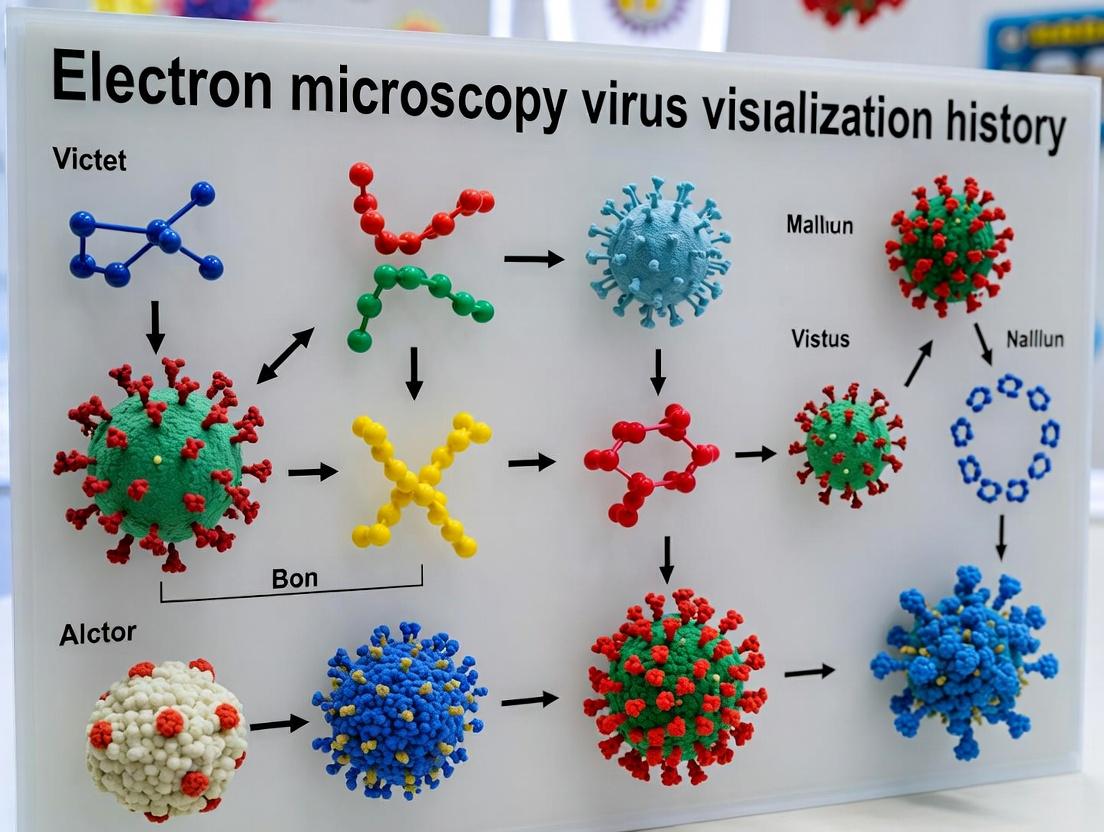
This article chronicles the pivotal role of electron microscopy (EM) in virology, tracing its evolution from the first grainy images to today's near-atomic resolution structures.
From Blurry Blobs to Atomic Maps: The History and Future of Electron Microscopy in Virus Visualization
Abstract
This article chronicles the pivotal role of electron microscopy (EM) in virology, tracing its evolution from the first grainy images to today's near-atomic resolution structures. Targeting researchers and drug development professionals, it covers the foundational discoveries of viral morphology, the methodological advancements in sample preparation (negative staining, cryo-EM) and imaging techniques (TEM, SEM, cryo-ET), common challenges and optimization strategies for imaging delicate viral specimens, and the validation of EM data through complementary techniques like X-ray crystallography. The synthesis provides a roadmap for leveraging cutting-edge EM in structural vaccinology and antiviral drug design.
The Dawn of Viral Vision: How Early Electron Microscopy Revealed a Hidden World
The invention of the Transmission Electron Microscope (TEM) marked a revolutionary leap in microscopy, breaking the diffraction limit of light and enabling visualization of sub-cellular structures and viruses. This development was pivotal for the broader thesis on the history of electron microscopy in virus visualization, as it provided the first direct visual evidence of viral morphology, fundamentally altering virology and drug development.
Key Quantitative Milestones in Early TEM Development
Table 1: Timeline and Specifications of Pioneering TEMs
| Year | Inventor(s) / Group | Instrument Name / Key Development | Theoretical/ Achieved Resolution | Accelerating Voltage | First Biological Sample Visualized (Year) |
|---|---|---|---|---|---|
| 1931 | Max Knoll & Ernst Ruska | First TEM Prototype | ~50 nm | 50-70 kV | N/A (Instrument demonstration) |
| 1933 | Ernst Ruska | Improved Magnetic Lens TEM | ~10 nm | 75 kV | N/A |
| 1938 | Siemens & Halske / Ruska | First Commercial TEM (Siemens Super Microscope) | ~10 nm | 75-100 kV | N/A |
| 1939 | Helmut Ruska (Brother of Ernst) | Application to Biology | ~20-50 nm (biological) | N/A | Vaccinia Virus (1939) |
| 1940 | Ladislaus Laszlo Marton | Early Biological TEM | N/A | N/A | Nitella (Plant) Cells (1934) |
| 1945 | Cecil Hall, James Hillier, et al. | RCA EMB Model | < 5 nm | 50 kV | Various bacteria and viruses |
Table 2: Comparison: Light Microscope vs. Early TEM for Virology
| Parameter | Light Microscope (c. 1930s) | Early Biological TEM (c. 1939-1945) |
|---|---|---|
| Max Useful Magnification | ~1,000x | ~20,000x - 50,000x |
| Practical Resolution Limit | ~200 nm | ~5-20 nm |
| Key Limitation for Virology | Most viruses are below resolution limit (<200 nm) | Viruses become resolvable as distinct particles |
| Sample Preparation | Simple fixation, staining, mounting | Complex: Dehydration, thin-sectioning, metal shadowing |
| Sample State | Hydrated, often living | Dehydrated, high vacuum, non-living |
The First Biological Application: Protocol for Visualizing Vaccinia Virus (1939)
Helmut Ruska's landmark 1939 experiment demonstrated the TEM's power to visualize a virus (vaccinia). The following protocol reconstructs the key methodological steps based on historical accounts.
Application Note 1: Protocol for TEM Visualization of Vaccinia Virus (1939)
Title: Metal Shadowing for Viral Particulate Analysis. Objective: To adsorb, dry, and contrast-enhance vaccinia virus particles from lymph fluid for morphological analysis by TEM.
I. Materials & Reagent Solutions
Table 3: Research Reagent Solutions for Early Viral TEM
| Reagent / Material | Function in Protocol | Historical Composition / Notes |
|---|---|---|
| Vaccinia-infected Lymph | Source of viral particles. | Harvested from infected rabbit skin. Contained virions, cellular debris, proteins. |
| Physiological Saline (0.9% NaCl) | Dilution medium. | Maintains isotonicity during initial preparation to prevent particle aggregation. |
| Collodion (Nitrocellulose) | Form support film for sample. | 1-2% solution in amyl acetate, spread on water surface to create thin films on grids. |
| Fine Metal Wire (e.g., Gold/Palladium) | Source for shadow-casting metal. | Heated in vacuum to evaporate and deposit thin metal layer at an angle. |
| Vacuum Evaporator | Creates thin metal coating. | Early bell jar system with tungsten filament or boat for melting metal. |
| Electron Microscope Grids (Fine Mesh) | Sample support structure. | Early grids were ~100-200 mesh copper or platinum. |
II. Stepwise Protocol
Sample Procurement & Clarification:
- Harvest lymph fluid from vaccinia virus-infected rabbit skin lesions.
- Dilute 1:10 in pre-filtered physiological saline (0.9% NaCl).
- Centrifuge at low speed (≈2,000 x g for 15 min) to pellet large cellular debris. Collect the supernatant.
Grid Preparation (Collodion Film):
- Prepare a 1.5% solution of collodion in amyl acetate.
- Place a clean microscope slide vertically in a clean container. Apply a single drop of the collodion solution to the top, allowing it to run down and form a thin film.
- Score the edges of the dried film and slowly immerse the slide into a dish of distilled water at a 45° angle. The film should float off onto the water surface.
- Place pre-cleaned metal grids onto the floating film.
- Carefully lift the grids with their attached film using a piece of paraffin or filter paper. Air dry.
Sample Adsorption & Drying:
- Apply a small droplet (≈5 µL) of the clarified virus supernatant directly onto the collodion-coated grid.
- Allow to adsorb for 60 seconds.
- Gently wick away excess liquid using the torn edge of a filter paper. Air dry completely. This leaves virus particles and other material adhered to the film.
Metal Shadowing (Directional Evaporation):
- Mount the dried grids onto a holder in a vacuum evaporator.
- Place a short length of fine gold-palladium wire in a tungsten evaporation boat.
- Evacuate the chamber to a high vacuum (at least 10^-4 torr).
- Heat the boat until the metal melts and evaporates. The grid holder is positioned at a 15-30° angle relative to the metal source.
- The metal deposits on the side of particles facing the source, creating a "shadow" region behind them. Terminate evaporation when a thin, visible layer forms on a control glass slide.
TEM Imaging:
- Insert the shadowed grid into the TEM (e.g., Siemens Super Microscope).
- Operate at an accelerating voltage of 60-75 kV.
- Systematically scan the grid at low magnification (≈2,000x) to find areas with suitable particle density.
- Increase magnification to 10,000x - 20,000x to visualize individual virus particles. Record images on photographic plates.
III. Expected Results & Interpretation:
- Vaccinia virus particles will appear as approximately rectangular or brick-shaped objects.
- Metal shadowing creates a bright highlight on one side and a dark shadow on the opposite side, giving a pseudo-3D effect and allowing height estimation.
- Particle dimensions can be measured directly from the photographic plate. Expected size: ~200-300 nm in length.
Visualizing the Experimental Workflow
Diagram Title: 1939 TEM Protocol for Virus Visualization Workflow
Impact & Pathway to Modern Virology
Diagram Title: Historical Pathway from First Viral TEM to Modern Applications
Application Notes
The advent of electron microscopy (EM) in the 1930s provided the first direct visual evidence of viruses, transforming virology from an abstract to a concrete science. This research was framed within the broader thesis of EM's role in defining the physical nature of pathogens, directly influencing subsequent isolation, classification, and drug development strategies. Early instruments, like the 1939 Siemens Übermikroskop, had resolving powers below 10 nm, compared to 200 nm for light microscopes.
Key Quantitative Milestones in Early Virus Visualization
Table 1: Instrument and Specimen Metrics (c. 1939-1942)
| Parameter | Tobacco Mosaic Virus (TMV) | Bacteriophage (T2/T4) | Instrumentation (Typical) |
|---|---|---|---|
| Reported Diameter/Width | 15-18 nm | Head: ~65-80 nm | N/A |
| Reported Length | 300 nm (rod) | Tail: ~100-120 nm x 15-20 nm | N/A |
| Resolving Power Achieved | ~10 nm | ~10 nm | < 10 nm |
| Accelerating Voltage | N/A | N/A | 50-80 kV |
| Magnification Range Used | 10,000x - 40,000x | 10,000x - 40,000x | Up to 200,000x (theoretical) |
| Key Publication Year | 1939 (Kausche, Pfankuch, Ruska) | 1940 (Ruska); 1942 (Luria, Anderson) | 1939 (Commercial Siemens) |
Table 2: Comparative Impact on Virology Concepts
| Concept Pre-EM (1930s) | Evidence from EM Visualization (1939-1942) | Impact on Drug/Treatment Development |
|---|---|---|
| "Filterable infectious agent" (non-cellular) | Discrete, measurable particles with defined shapes. | Defined physical target for chemical or physical inactivation. |
| Assumed spherical morphology for most viruses. | Revealed helical symmetry of TMV; complex, binary structure of phages. | Informed early vaccine purification protocols and particle-based immunogen design. |
| Speculation on replication mechanism. | Phages seen adsorbed to bacteria, confirming particulate, invasive life cycle. | Validated the concept of targeting viral attachment for therapeutic intervention. |
| Unknown structural complexity. | Visualization of head-tail structure in phages, suggesting functional specialization. | Laid groundwork for understanding virus assembly as a potential drug target. |
Experimental Protocols
Protocol 1: Direct Metal Shadowing for Virus Morphology (c. 1940s)
This technique, pioneered by Williams and Wyckoff, enhanced contrast and provided three-dimensional topography of viral particles.
Materials: Purified virus suspension (e.g., TMV or phage lysate), distilled water, collodion or formvar film-coated EM grids, vacuum evaporation unit with tungsten basket or electrode, platinum or gold-palladium wire, desiccator.
Procedure:
- Specimen Preparation: Apply a small droplet (5-10 µL) of purified virus suspension to the filmed grid for 1 minute. Blot excess liquid with filter paper edge.
- Drying: Air-dry the grid in a clean, dust-free environment or a desiccator.
- Shadowing Apparatus Setup: Place the dried grid on a rotating stage inside a bell jar vacuum evaporator. Ensure high vacuum (< 10^-4 torr).
- Metal Evaporation: Wind a fine strand of platinum wire (2-3 cm) around a tungsten electrode. Pass a high current through the electrode to heat and evaporate the metal onto the specimen from a low angle (typically 10-15°). Rotation ensures even deposition.
- Coating Completion: Evaporate until a thin, discontinuous metal film is deposited. Monitor thickness by a nearby white porcelain chip; a light tan color indicates suitable thickness.
- Grid Retrieval: Vent the vacuum chamber slowly. Retrieve the shadowed grid for immediate examination in the EM.
Protocol 2: Early Negative Staining for Bacteriophage Visualization (Adapted from c. 1940s Methods)
Early attempts used phosphotungstate to enhance contrast, preceding the formal negative stain technique.
Materials: Bacteriophage lysate (e.g., T2 grown on E. coli), 1-2% aqueous phosphotungstic acid (PTA), pH adjusted to ~7.0 with KOH, formvar-coated grids, fine-tip pipettes.
Procedure:
- Grid Activation: Briefly expose the formvar-coated grid to a weak glow discharge or UV light to increase hydrophilicity (optional but improves spreading).
- Specimen Application: Mix one drop of phage lysate with one drop of PTA solution on a paraffin film. Immediately touch the grid to the mixed droplet for 5-10 seconds.
- Blotting: Gently blot the grid edge with filter paper to remove excess fluid, leaving a thin film.
- Drying: Allow the grid to air-dry completely. Do not rinse, as the dried PTA forms the embedding "negative" cast.
- EM Observation: Examine at 20,000x - 40,000x magnification. Phage particles appear as electron-lucent structures against a dark, stained background.
The Scientist's Toolkit: Key Research Reagent Solutions
Table 3: Essential Materials for Early Virus EM
| Item | Function/Composition | Rationale for Use |
|---|---|---|
| Collodion (Nitrocellulose) Films | 1-2% solution in amyl acetate. | Created thin, electron-transparent supporting films on copper grids. |
| Phosphotungstic Acid (PTA) | 1-2% aqueous solution, pH 6.5-7.5. | Early electron-dense "negative stain"; penetrated virus structures, revealing shape. |
| Platinum or Gold-Palladium Wire | High-purity metal, 0.1mm diameter. | Metal source for shadowing; provided high electron-scattering power for surface detail. |
| Tungsten Basket/Electrode | V-shaped filament in evaporation unit. | High-melting-point holder for evaporating shadowing metals under vacuum. |
| Purified Virus Suspension | TMV from infected plant sap; phages from lysed bacterial culture. | Required high-titer, partially purified samples to avoid obscuring debris. |
| Formvar | 0.2-0.5% solution of polyvinyl formal in chloroethylene. | Alternative to collodion for creating more stable support films. |
Diagrams
Title: Metal Shadowing Protocol Workflow
Title: EM Visualization Impact on Virology Thesis
Title: Logical Path to First Virus Images
Application Notes: Morphological Classification in Contemporary Virology
Viral taxonomy, historically rooted in morphology as revealed by electron microscopy (EM), remains a cornerstone for initial classification and informs understanding of viral function and pathogenesis. Within the thesis context of electron microscopy's role in virus visualization history, modern techniques now allow for near-atomic resolution, yet the fundamental morphological categories—helical, icosahedral, and complex—endure as primary taxonomic descriptors. This protocol set details methods for determining these structures, integrating historical EM principles with contemporary cryogenic and computational approaches.
Table 1: Quantitative Parameters of Representative Virus Morphologies
| Virus Family (Example) | Morphological Class | Capsid Diameter (nm) | Capsomer Number (T-number) | Envelope Presence | Key Structural Protein(s) |
|---|---|---|---|---|---|
| Tobamovirus (TMV) | Helical | 18 (tube diameter) | N/A (helical symmetry) | No | Coat Protein (CP) |
| Herpesviridae (HSV-1) | Icosahedral (T=16) | ~125 (nucleocapsid) | 162 (pentons & hexons) | Yes | VP5 (major capsid protein) |
| Parvoviridae (AAV2) | Icosahedral (T=1) | ~26 | 60 | No | VP1/VP2/VP3 |
| Poxviridae (Vaccinia) | Complex (Brick-shaped) | ~360 x 270 x 250 | N/A (complex structure) | Yes (modified) | Multiple (core wall, lateral bodies) |
| Myoviridae (T4 phage) | Complex (Tailed) | Head: ~110 x 85 | Capsid T=13 | No (head) | gp23* (major head protein) |
Protocols for Morphological Determination
Protocol 2.1: Negative Stain Transmission Electron Microscopy (NS-TEM) for Rapid Morphotyping
Purpose: Rapid visualization of viral morphology from purified samples for initial classification. Thesis Context: This protocol directly descends from the earliest EM viral taxonomy work of the mid-20th century.
Materials (Research Reagent Solutions):
- Virus Purification Kit (e.g., PEG Precipitation, Ultracentrifugation Kits): For concentrating virus from culture supernatant.
- 2% Uranyl Acetate (pH 4.0) or 2% Phosphotungstic Acid (pH 7.0): Heavy metal stains that provide negative contrast.
- Formvar/Carbon-coated Copper EM Grids (300-400 mesh): Support film for sample application.
- Phosphate Buffered Saline (PBS) or Ammonium Acetate Buffer: For sample dilution and washing.
- Glow Discharge Unit: To render grids hydrophilic for even sample adhesion.
Methodology:
- Grid Preparation: Glow discharge grids for 30 seconds to create a hydrophilic surface.
- Sample Application: Apply 5-10 µL of purified virus suspension (~10^7-10^8 particles/mL) onto the grid. Allow to adsorb for 1 minute.
- Washing: Gently wick away liquid with filter paper. Immediately apply a drop of buffer, then wick away to remove salts.
- Staining: Apply a drop of stain (e.g., Uranyl Acetate) for 30-60 seconds. Wick away excess completely.
- Imaging: Air-dry the grid and image using a TEM at 80-100 kV. Start at low magnification (e.g., 5,000x) to locate particles, then increase to 40,000-100,000x for morphological detail.
Protocol 2.2: Cryo-Electron Microscopy (Cryo-EM) Single Particle Analysis for High-Resolution Structure
Purpose: Determine high-resolution 3D structure of icosahedral and helical viruses to confirm symmetry and classify at atomic detail. Thesis Context: Represents the evolution of EM from 2D qualitative imaging to 3D quantitative structural biology.
Materials (Research Reagent Solutions):
- Quantifoil R 2/2 or 1.2/1.3 Holey Carbon Grids: Grids with a regular array of holes to support vitrified ice.
- Vitrification Robot (e.g., Thermo Fisher Vitrobot): For consistent, automated blotting and plunge-freezing.
- Liquid Ethane Propane Mix: Cryogen for rapid vitrification to prevent crystalline ice formation.
- 300 kV Field-Emission Gun Cryo-TEM: Microscope equipped with direct electron detector and cryo-holder.
- Image Processing Software Suite (e.g., RELION, cryoSPARC): For computational alignment, classification, and 3D reconstruction.
Methodology:
- Grid Preparation: Glow discharge grids immediately before use.
- Vitrification: Apply 3 µL of virus sample to grid. Blot with filter paper for 2-6 seconds in the vitrobot at >95% humidity, then rapidly plunge into liquid ethane cooled by liquid nitrogen.
- Screening & Data Collection: Transfer grid to cryo-TEM. Screen for optimal ice thickness. Collect thousands of movie micrographs at defocus range of -0.5 to -3.0 µm using automated software.
- Image Processing: Motion-correct and dose-weight movies. Pick particles automatically. Perform multiple rounds of 2D classification to discard junk particles. Generate an initial 3D model ab initio, then refine iteratively with 3D classification and high-resolution refinement to obtain the final map.
Diagram Title: Cryo-EM Single Particle Analysis Workflow
Protocol 2.3: Cryo-Electron Tomography (Cryo-ET) for Complex and Pleomorphic Viruses
Purpose: Visualize the 3D architecture of large, complex, or enveloped viruses in a near-native state, often within cellular context. Thesis Context: Extends EM's capability beyond purified particles, capturing viruses in situ, a frontier in historical visualization.
Materials (Research Reagent Solutions):
- Gold Fiducial Markers (10-15 nm): For alignment of tilt series images.
- Cryo-Ultramicrotome or Focused Ion Beam (FIB) Mill: For preparing thin lamellae of vitrified infected cells.
- Specialized Tomography Holder: TEM holder capable of high-tilt angles (typically ±60°).
- Tomography Acquisition Software (e.g., SerialEM, Tomo5): Automates tilt series collection.
- Tomogram Reconstruction & Segmentation Software (e.g., IMOD, Amira): For back-projection and 3D modeling.
Methodology:
- Sample Preparation: Infect cells on EM grids or create thin lamellae from infected cell pellets using FIB-milling under cryo-conditions.
- Fiducial Application: Apply gold bead solution to grid surface as alignment markers.
- Tilt Series Acquisition: Insert grid into cryo-TEM. Collect a series of images at 1-2° increments over a ±60° tilt range at each stage position.
- Reconstruction: Align images using fiducial markers. Reconstruct the 3D volume (tomogram) via weighted back-projection or iterative algorithms.
- Segmentation & Analysis: Manually or semi-automatically segment different viral components (capsid, envelope, tegument) to model the complex architecture.
Diagram Title: Cryo-Electron Tomography Workflow
The Scientist's Toolkit: Essential Research Reagents & Materials
Table 2: Key Reagent Solutions for Viral Morphology Studies
| Item | Function in Protocol | Critical Parameters |
|---|---|---|
| Uranyl Acetate (2%) | Negative stain for NS-TEM. Provides high electron scattering contrast. | pH 4.0; Filter before use (0.22 µm); Light-sensitive. |
| Holey Carbon Grids (Quantifoil) | Support for vitrified ice in cryo-EM. Holes trap thin, uniform ice. | Hole size/spacing (e.g., 2µm/2µm); Hydrophilicity. |
| Liquid Ethane/Propane | Cryogen for plunge-freezing. Achieves vitrification (non-crystalline ice). | Must be maintained below -180°C; High purity. |
| Gold Fiducials (10nm) | Alignment markers for cryo-ET tilt series. High electron density. | Monodisperse size; Stable suspension in buffer. |
| Virus Purification Kit (PEG/Ultracentrifugation) | Concentrates and purifies virus from lysate/culture for EM. | Yield, purity, and particle integrity post-purification. |
| Glow Discharge Unit | Creates hydrophilic surface on EM grids for even sample spread. | Time (15-60s), pressure (0.1-0.3 mbar), gas (air/argon). |
| Direct Electron Detector (e.g., Gatan K3, Falcon 4) | Camera for cryo-EM. Enables high-resolution, dose-fractionated movie collection. | Detective Quantum Efficiency (DQE), frame rate, pixel size. |
Application Notes
Negative staining is a foundational technique in transmission electron microscopy (TEM) for the rapid visualization of biological nanoparticles, including viruses, bacteriophages, and macromolecular complexes. By embedding specimens in a thin, amorphous layer of heavy metal salt, the method creates a negative imprint, where the specimen appears light against a dark background. This dramatically enhances contrast and reveals exquisite surface topographical details with minimal sample preparation.
Within the historical research of virus visualization, negative staining, pioneered by Sydney Brenner and Robert Horne in 1959, marked a paradigm shift. It moved electron microscopy from thin-sectioning of embedded, dehydrated tissues—which often obscured viral surface morphology—to the direct observation of isolated viral particles in a near-native state. This allowed for the first clear classifications of viruses based on capsid symmetry (icosahedral vs. helical), the visualization of surface spikes, and the differentiation of virus families. It became indispensable for the rapid diagnosis of viral infections (e.g., poxvirus, herpesvirus) from clinical specimens and for quality control in vaccine development.
Modern applications leverage high-resolution TEM and automated imaging to use negative staining for single-particle analysis (SPA) at intermediate resolution, antibody epitope mapping via immuno-negative staining, and the initial screening of samples for cryo-EM. The technique remains a first-line, high-throughput tool for assessing sample purity, aggregation state, and structural integrity in both basic virology and drug development pipelines, such as in characterizing viral vector-based gene therapies or vaccine candidates.
Table 1: Common Negative Staining Reagents and Their Properties
| Stain (Chemical Formula) | Typical Concentration (%) | pH | Primary Use & Effect |
|---|---|---|---|
| Uranyl Acetate (UO₂(CH₃COO)₂) | 0.5 - 2.0 | ~4.5 | High-contrast, fine-grain; excellent for most viruses. Slightly fixative. |
| Phosphotungstic Acid (PTA, H₃PW₁₂O₄₀) | 1.0 - 2.0 | Adjustable (6.0-8.0) | Common for surface detail; pH can be adjusted for specific charge interactions. |
| Ammonium Molybdate ((NH₄)₂MoO₄) | 2.0 | 7.0-7.4 | Low affinity for lipids; good for delicate structures and liposomes. |
| Sodium Silicotungstate (Na₄SiW₁₂O₄₀) | 2.0 | Adjustable to 7.0 | Low granularity; useful for high-resolution work and antibody complexes. |
Table 2: Impact of Negative Staining on Virus Visualization (Historical Context)
| Period | Primary EM Technique | Typical Resolution for Viruses | Key Limitation Overcome by Negative Staining |
|---|---|---|---|
| Pre-1959 | Metal Shadowing, Thin Sectioning | 20-30 Å | Poor surface detail, complex preparation, low contrast of isolated particles. |
| Post-1959 | Negative Staining | 15-25 Å | Rapid preparation, high contrast of surface features, preservation of particle integrity. |
| 1980s+ | Cryo-Negative Staining (Vitrification) | ~10-15 Å | Reduced stain artifacts, better preservation of native conformation. |
Experimental Protocols
Protocol 1: Standard Negative Staining for Virus Morphology (Drop-on-Grid Method)
Objective: To rapidly visualize and assess the morphology and concentration of a purified virus sample.
Research Reagent Solutions & Materials:
- Carbon-coated EM grids: 300-400 mesh copper grids with a continuous thin carbon film. Provide support for the sample.
- Virus suspension: Purified in a volatile buffer (e.g., ammonium acetate) or PBS. Low salt concentration is ideal.
- Negative stain solution: 2% Uranyl acetate (aqueous, pH ~4.5) or 1% Phosphotungstic acid (adjusted to pH 7.0 with NaOH).
- Glow discharger: Creates a hydrophilic surface on the carbon film for even sample adhesion.
- Parafilm: Used to create clean droplets for staining steps.
- Filter paper (Whatman No. 1): High-quality, lint-free paper for wicking away excess liquid.
- Fine anti-capillary tweezers: For handling EM grids.
- Biological safety cabinet: For safe handling of potentially infectious viral samples.
Methodology:
- Grid Preparation: Glow discharge carbon-coated grids for 30-60 seconds to render them hydrophilic.
- Sample Application: Place a 5-10 µL droplet of the virus suspension on a strip of Parafilm. Using tweezers, gently place the glow-discharged grid (carbon side down) onto the droplet. Incubate for 60 seconds.
- Washing: Briefly touch the edge of the grid to a droplet of deionized water (or the volatile buffer) for 1-2 seconds to remove excess salt and unbound material. Alternatively, float the grid on the water droplet.
- Staining: Immediately transfer the grid to a 10 µL droplet of the negative stain solution. Incubate for 30-60 seconds.
- Blotting and Drying: Carefully lift the grid and gently blot the edge against filter paper to remove excess stain, leaving a thin film. Allow the grid to air-dry completely in a dust-free environment.
- Imaging: Insert the grid into the TEM. Examine at 40-80 kV. Start at low magnification (e.g., 5,000x) to locate suitable areas, then increase to 40,000-100,000x for detailed imaging.
Protocol 2: Immuno-Negative Staining for Epitope Mapping
Objective: To localize specific antigenic sites on a virus surface using antibody labeling.
Research Reagent Solutions & Materials:
- All items from Protocol 1.
- Primary antibody: Specific monoclonal or polyclonal antibody against the viral surface antigen.
- Protein A/G conjugated to colloidal gold (e.g., 10 nm or 15 nm): Electron-dense probe for visualizing antibody binding sites.
- Blocking buffer: 1% Bovine Serum Albumin (BSA) in PBS. Reduces non-specific binding.
- Wash buffer: 0.1% BSA in PBS.
Methodology:
- Follow steps 1 and 2 from Protocol 1 to adsorb the virus onto the grid.
- Blocking: Transfer the grid to a 20 µL droplet of blocking buffer for 5 minutes.
- Primary Antibody Incubation: Float the grid on a 20 µL droplet of primary antibody diluted in blocking buffer (typically 1:10 to 1:100) for 20 minutes at room temperature.
- Washing: Wash the grid by sequentially floating it on three separate 50 µL droplets of wash buffer for 2 minutes each.
- Gold Conjugate Incubation: Float the grid on a 20 µL droplet of Protein A/G-gold conjugate, diluted per manufacturer's instructions, for 20 minutes.
- Washing: Repeat step 4 with wash buffer, followed by two brief washes on deionized water droplets.
- Staining and Drying: Perform negative staining as in Protocol 1, steps 4-6, using a neutral stain like ammonium molybdate to better preserve the antibody-antigen complex.
Visualizations
Title: Standard Negative Staining Workflow
Title: Immuno-Negative Staining Protocol Steps
Title: Historical Context in Thesis Framework
The Scientist's Toolkit
Table 3: Essential Research Reagent Solutions for Negative Staining
| Item | Function & Rationale |
|---|---|
| Uranyl Acetate (2%, aqueous) | High-density heavy metal salt providing exceptional electron scattering (contrast). The standard for routine virus imaging. |
| Continuous Carbon Film Grids | Provides an amorphous, conductive support film that is robust under the electron beam and allows for even stain distribution. |
| Glow Discharger | Creates a hydrophilic, negatively charged surface on the carbon film, ensuring uniform adsorption of sample and stain. |
| Phosphotungstic Acid (PTA, 1-2%) | A common alternative to uranyl acetate. Contrast can be tuned by adjusting pH, useful for studying surface charge interactions. |
| BSA (1% in PBS) | Used as a blocking agent in immuno-staining to passivate the grid surface and prevent non-specific antibody binding. |
| Protein A/G Colloidal Gold (10nm) | Electron-dense probe that binds specifically to the Fc region of antibodies, allowing precise localization of antigenic sites. |
| Ammonium Acetate (100mM) | A volatile buffer ideal for sample purification before staining; it evaporates completely, leaving no salt crystals. |
| Fine Anti-Capillary Tweezers | Essential for the precise, steady handling of fragile EM grids during multiple fluid exchange steps. |
Application Note: Cryo-Electron Microscopy in Novel Viral Discovery
The integration of advanced electron microscopy (EM), particularly single-particle cryo-electron microscopy (cryo-EM) and cryo-electron tomography (cryo-ET), has fundamentally altered the landscape of virology. Within the historical thesis of EM in virus visualization, these techniques represent the culmination of resolution and structural preservation, enabling the discovery of viruses in previously unexplored ecological niches and the elucidation of viral assembly pathways at near-atomic resolution.
Table 1: Recent Landmark Viral Discoveries Enabled by Advanced EM (2020-2023)
| Virus / Virus Family Name | Sample Source | Key EM Technique | Approximate Size (nm) | Genomic Structure | Significance of Discovery |
|---|---|---|---|---|---|
| Guaico Culex virus (Novel clade) | Mosquitoes (Puerto Rico) | Cryo-EM Reconstruction | 65-70 (capsid) | Segmented (+)ssRNA | Identified a highly prevalent and diverse group of insect-specific viruses, informing arbovirus ecology. |
| Kazan virus ( Kazanviridae ) | Thermophilic archaea (Deep-sea vent) | Cryo-ET & Subtomogram Averaging | ~110 x 80 (pleomorphic) | dsDNA | Revealed a novel viral lineage with a unique capsid architecture and host interaction mechanisms in extreme environments. |
| Sputnik virophage (isolate) | Acanthamoeba castellanii | Cryo-EM & Tomography | 50-60 (icosahedral) | dsDNA | High-resolution structure provided insights into its parasitic relationship with giant viruses (mimiviruses). |
| Novel CRESS-DNA virus | Human cerebrospinal fluid | Negative Stain EM & Sequencing | 25-30 (icosahedral) | Circular ssDNA | Associated with unexplained meningoencephalitis, demonstrating EM's role in pathogen detection in metagenomic samples. |
Protocol 1: Single-Particle Cryo-EM Workflow for Virus Structure Determination
Objective: To determine the high-resolution structure of a purified, icosahedral viral particle.
Materials:
- Purified viral suspension (>0.5 mg/mL, >95% homogeneity).
- Quantifoil or C-flat holey carbon EM grids (300 mesh, Au or Cu).
- Glow discharger.
- Vitrobot Mark IV (or equivalent plunge freezer).
- Liquid ethane.
- 300 kV Cryo-transmission electron microscope (e.g., Titan Krios) equipped with a direct electron detector (e.g., Gatan K3, Falcon 4).
- Image processing software suites (e.g., RELION, cryoSPARC).
Procedure:
- Grid Preparation: Glow discharge EM grid for 30-60 seconds to render it hydrophilic.
- Vitrification: Apply 3 µL of viral sample to the grid. Blot for 3-6 seconds at 100% humidity (4°C or 22°C, optimized) and plunge freeze into liquid ethane cooled by liquid nitrogen. Store grid under liquid nitrogen.
- Data Collection: Load grid into the cryo-EM. Use EPU or SerialEM software for automated data collection. Collect 3,000-10,000 micrographs at a nominal magnification of 81,000x or higher (yielding a pixel size of ~0.8-1.1 Å). Use a defocus range of -0.8 to -2.5 µm. Total exposure dose should be ~40-60 e⁻/Ų, fractionated into 40-50 frames.
- Image Processing:
- Pre-processing: Motion correct frames (e.g., MotionCor2) and estimate contrast transfer function (CTF) parameters (e.g., CTFFIND4, Gctf).
- Particle Picking: Use template-based or neural-net picking (e.g., in cryoSPARC) to extract 100,000+ particle images.
- 2D Classification: Generate class averages to remove non-particle and junk images.
- Initial Model & 3D Refinement: Generate an ab initio model or use a low-resolution model. Perform iterative 3D classification and refinement with imposed icosahedral symmetry.
- Post-processing: Apply Bayesian polishing, CTF refinement, and map sharpening (B-factor application) to yield the final density map.
- Model Building: Fit and refine an atomic model into the map using Coot and Phenix.realspacerefine.
Diagram Title: Cryo-EM Single-Particle Analysis Workflow
Application Note: Visualizing Viral Assembly In Situ
Cryo-ET transcends the limitations of imaging purified particles, allowing researchers to capture viruses in situ within their host cellular context. This has been pivotal for understanding the dynamic, multi-stage process of viral assembly, particularly for large, complex viruses (e.g., herpesviruses, poxviruses) which do not assemble via simple capsid-protein polymerization.
Protocol 2: Cryo-Electron Tomography (Cryo-ET) of Virus-Infected Cells
Objective: To visualize the spatial organization and assembly intermediates of viruses within a frozen-hydrated infected cell.
Materials:
- Virus-infected cell monolayer (optimally 150-300 nm thick).
- Plasma cleaner.
- Cryo-ultramicrotome (for focused ion beam milling, optional) or pre-thinned cellular samples.
- Cryo-TEM with a tomography holder (single or dual-axis).
- Automated tomography acquisition software (e.g., SerialEM, Tomo5).
- Tomogram reconstruction and analysis software (e.g., IMOD, EMAN2, TomoBEAR).
Procedure:
- Sample Thinning: For adherent cells, culture on EM grids and high-pressure freeze. Alternatively, use a focused ion beam scanning electron microscope (FIB-SEM) to mill a ~150-200 nm lamella from a high-pressure frozen pellet of infected cells.
- Tilt Series Acquisition: Insert the sample into a cryo-TEM. Locate a region of interest. Acquire images over a tilt range (typically -60° to +60°) at 1-2° increments using a dose-symmetric scheme. Use a total cumulative dose of <100 e⁻/Ų.
- Tomogram Reconstruction: Align the tilt series images using fiducial gold beads or patch tracking. Reconstruct the 3D volume using weighted back-projection or simultaneous iterative reconstruction technique (SIRT).
- Segmentation & Analysis: Manually or semi-automatically segment features of interest (e.g., viral capsids, membranes, cytoskeleton) to create 3D models. Use subtomogram averaging to enhance the resolution of repeating structures (e.g., glycoprotein spikes).
Diagram Title: Cryo-ET Workflow for Viral Assembly Studies
The Scientist's Toolkit: Key Reagents & Materials
| Item | Function in Viral EM Research |
|---|---|
| Holey Carbon Grids (Quantifoil, C-flat) | Provide a thin, stable support film with holes to suspend frozen-hydrated specimens for optimal imaging. |
| Vitrobot (Plunge Freezer) | Standardizes the blotting and vitrification process, ensuring rapid, reproducible freezing without crystalline ice formation. |
| Direct Electron Detector (DED) (e.g., Gatan K3, Falcon 4) | Captures high-resolution images with exceptional sensitivity and dose efficiency, enabling atomic-resolution reconstruction. |
| Focused Ion Beam (FIB) Mill | Precisely mills thick cellular samples (e.g., infected tissues) into thin lamellae (~200 nm) suitable for cryo-ET. |
| Gold Fiducial Beads (10-15 nm) | Serve as reference points for accurate alignment of tilt-series images during tomogram reconstruction. |
| RELION / cryoSPARC Software | Industry-standard packages for processing cryo-EM data, encompassing particle picking, 2D/3D classification, and high-resolution refinement. |
| IMOD Software Suite | Comprehensive software package for processing, visualizing, modeling, and interpreting 3D electron microscopy data, especially tomograms. |
Beyond the Blob: Advanced EM Techniques Powering Modern Virology and Drug Discovery
The evolution of virus visualization is inextricably linked to advancements in specimen preparation for electron microscopy (EM). Within the broader thesis on EM in virus research, this progression from chemical fixation to cryogenic vitrification represents a paradigm shift. Early negative staining and aldehyde-based chemical fixation provided the first glimpses of viral morphology but introduced artifacts through dehydration and heavy metal contrasting. The development of cryo-electron microscopy (cryo-EM), culminating in the 2017 Nobel Prize in Chemistry, enabled the visualization of viruses in a near-native, hydrated state via vitrification. This application note details the pivotal protocols that have defined this trajectory, enabling high-resolution structural analysis critical for modern virology and antiviral drug development.
Quantitative Comparison of Key Preparation Methods
Table 1: Comparison of Virus Sample Preparation Techniques for EM
| Parameter | Chemical Fixation (Glutaraldehyde) | Negative Staining | Cryo-Vitrification |
|---|---|---|---|
| Nominal Resolution | 20–30 Å | 15–25 Å | <3 Å (current state-of-the-art) |
| Sample State | Dehydrated, resin-embedded | Air-dried, stained | Hydrated, vitrified ice |
| Typical Buffer | Phosphate or cacodylate buffer | Ammonium molybdate, uranyl acetate | Volatile buffers (e.g., Tris, HEPES) |
| Fixation Process | Crosslinking at RT (mins to hrs) | Rapid adsorption & drying (minutes) | Ultra-rapid cooling (>10^6 K/sec) |
| Key Artifacts | Shrinkage, extraction, crosslinking | Flattening, staining granularity | Preferred orientation, ice thickness |
| Primary Use | Morphology, immunolabeling | Rapid screening, initial morphology | High-resolution 3D reconstruction, dynamics |
Detailed Protocols
Protocol 3.1: Chemical Fixation for Conventional TEM of Viral Particles
Objective: To immobilize and preserve virus structure for thin-section EM or negative staining.
Materials:
- Purified virus suspension (>10^7 particles/mL).
- 2–4% Glutaraldehyde in 0.1 M Sodium Cacodylate buffer, pH 7.4.
- 1% Osmium Tetroxide (post-fixation).
- Ethanol series (30%, 50%, 70%, 90%, 100%) or Acetone.
- EPON or LR White resin.
Method:
- Primary Fixation: Mix equal parts virus suspension and 4% glutaraldehyde fixative. Incubate at 4°C for 1–2 hours.
- Pelletting: Centrifuge at 20,000 x g for 45 minutes at 4°C. Discard supernatant carefully.
- Wash: Resuspend pellet in 0.1 M cacodylate buffer (pH 7.4) three times, 10 minutes each.
- Post-fixation (Optional): Resuspend in 1% Osmium Tetroxide in the same buffer. Incubate for 1 hour at 4°C in the dark.
- Dehydration: Transfer through a graded series of ethanol (30%, 50%, 70%, 90%, 100%) for 10 minutes each step.
- Infiltration & Embedding: Infiltrate with a resin:ethanol mixture (1:1, then 2:1) for 1 hour each, followed by pure resin overnight. Polymerize in molds at 60°C for 48 hours.
- Sectioning: Cut 70–90 nm thin sections using an ultramicrotome and collect on copper grids.
Protocol 3.2: Negative Staining for Rapid Virus Assessment
Objective: Rapid visualization of viral morphology and concentration assessment.
Materials:
- 2% Uranyl acetate (pH ~4.5) or 2% Ammonium molybdate (pH 7.0).
- Carbon-coated EM grids (300–400 mesh).
- Glow discharger.
Method:
- Grid Preparation: Glow discharge grids for 30 seconds to render hydrophilic.
- Sample Application: Apply 3–5 µL of virus sample to grid. Incubate for 60 seconds.
- Blotting: Wick away excess liquid with filter paper from the side.
- Staining: Immediately apply 3–5 µL of stain. Incubate for 30–45 seconds.
- Blot & Dry: Wick away stain completely and air-dry for 5 minutes.
- Imaging: Insert grid into TEM. Operate at 80–100 kV.
Protocol 3.3: Vitrification for High-Resolution Cryo-EM
Objective: To embed virus particles in a thin layer of amorphous ice for single-particle analysis.
Materials:
- UltrAuFoil R1.2/1.3 or Quantifoil grids.
- Vitrification device (e.g., Thermo Fisher Vitrobot Mark IV).
- Liquid ethane.
- Filter paper (grade 595).
Method:
- Grid Preparation: Glow discharge grids for 30–45 seconds just before use.
- Sample Conditions: Ensure virus sample is in a low-salt buffer (<200 mM) with no cryoprotectants. Typical concentration: 0.5–3 mg/mL.
- Vitrobot Setup: Set chamber to 100% humidity and 22°C (or 4°C for sensitive samples).
- Blotting Parameters: Set blot time to 3–5 seconds, blot force to 0–5.
- Application & Blotting: a. Apply 3 µL of sample to the grid inside the vitrobot chamber. b. Wait 10–30 seconds for adsorption. c. Initiate automated blotting from both sides to create a thin film.
- Plunging: Immediately after blotting, plunge the grid rapidly into liquid ethane cooled by liquid nitrogen.
- Storage: Transfer grid under liquid nitrogen to a cryo-grid box for storage at liquid nitrogen temperatures.
Visualization of Workflows
Diagram 1: Chemical Fixation & Embedding Workflow
Diagram 2: Negative Staining Protocol Flow
Diagram 3: Cryo-Vitrification Workflow for Cryo-EM
The Scientist's Toolkit: Key Research Reagent Solutions
Table 2: Essential Materials for Virus EM Sample Preparation
| Item | Function & Rationale | Example Product/Note |
|---|---|---|
| Glutaraldehyde (25%) | Primary fixative; crosslinks proteins via amine groups, stabilizing structure. | Electron Microscopy Sciences #16220. Must be fresh, stored cold, under inert gas. |
| Uranyl Acetate | Negative stain and post-stain; provides high electron scattering contrast. | SPI Supplies #02624-AB. Radioactive; handle per regulations. Light-sensitive. |
| Holey Carbon Grids | Support film for cryo-EM; holes trap vitrified ice containing particles. | Quantifoil R1.2/1.3, UltrAuFoil. Gold grids preferred for compatibility. |
| Liquid Ethane | Cryogen for vitrification; cools sample faster than LN2 alone, preventing ice crystals. | >99.5% purity. Generated by bubbling ethane gas through LN2-cooled chamber. |
| Vitrobot/Plunge Freezer | Automated device for reproducible blotting and plunging; controls humidity/temp. | Thermo Fisher Vitrobot Mark IV, Leica EM GP2, Gatan Cryoplunge 3. |
| Cryo-EM Grid Boxes | Secure storage and transport of multiple vitrified grids under LN2. | SPurr Mold #71300-12, Ted Pella #360-100. Compatible with autoloaders. |
| Volatile Buffers | Sample buffer for cryo-EM; minimizes background and salt crystal formation. | Ammonium acetate, ammonium bicarbonate, Tris-HCl. Avoid phosphates, glycerol. |
Within the historical research of virus visualization via electron microscopy, Transmission Electron Microscopy (TEM) stands as a foundational pillar. Its capacity to produce high-resolution two-dimensional (2D) projection images of thin specimens has been instrumental in elucidating viral ultrastructure. The advent of immunogold labeling techniques, which conjugate antibodies to electron-dense colloidal gold particles, transformed TEM into a powerful tool for antigen localization within viral architectures. This application note details contemporary protocols and quantitative considerations for these core methodologies, framed within modern virology and antiviral drug development research.
Quantitative Performance Data: Resolving Viral Architecture
Table 1: TEM Performance Metrics for Key Virus Families
| Virus Family (Example) | Typical Size Range (nm) | Recommended Acceleration Voltage (kV) | Achievable Resolution with Negative Stain (nm) | Minimum Gold Particle for Labeling (nm) |
|---|---|---|---|---|
| Parvoviridae (AAV) | 18-26 | 80-100 | 1.5-2.5 | 5 |
| Picornaviridae (HRV) | 27-30 | 100-120 | 1.0-2.0 | 10 |
| Herpesviridae (HSV-1) | 150-200 (capsid) | 120-200 | 3.0-5.0 (whole particle) | 15 |
| Coronaviridae (SARS-CoV-2) | 80-120 (spike) | 100-200 | 2.0-3.0 | 10 |
| Retroviridae (HIV-1) | 100-120 | 100-120 | 2.5-4.0 | 15 |
Table 2: Immunogold Labeling Efficiency: A Comparative Analysis
| Labeling Strategy (Gold Size) | Penetration Depth in Tokuyasu Cryo-Sections (~100 nm) | Non-Specific Background (Particles/µm²)* | Typical Labeling Density (Gold/µm²) on Target* | Best Suited For |
|---|---|---|---|---|
| Pre-embedding (5 nm) | Limited to surface antigens | 1.2 ± 0.4 | 8.5 ± 2.1 | Surface epitopes on viral membranes |
| Post-embedding on LR White (10 nm) | Accessible to section surface only | 0.8 ± 0.3 | 15.3 ± 3.7 | Intracellular viral factories |
| Tokuyasu Cryo-section (15 nm) | Full section access | 2.1 ± 0.6 | 25.6 ± 5.4 | High-resolution co-localization |
*Hypothetical data for illustration based on published trends. Actual values vary with protocol optimization.
Detailed Protocols
Protocol 3.1: Negative Staining for Rapid 2D Projection of Viral Particles
Objective: To rapidly visualize virus morphology and purity. Materials: Purified virus suspension, 2% uranyl acetate (pH 4.0), Formvar/carbon-coated EM grids, Parafilm, filter paper. Workflow:
- Grid Preparation: Glow-discharge grid for 30 seconds to render hydrophilic.
- Sample Adsorption: Apply 5 µL of virus sample to grid for 60 seconds.
- Blotting: Wick away liquid with filter paper edge.
- Staining: Immediately apply 5 µL of 2% uranyl acetate for 45 seconds.
- Wash & Dry: Blot stain, briefly touch grid to a water droplet (3 times), blot final wash, and air-dry.
- Imaging: Insert into TEM. Image at 80-100 kV.
Protocol 3.2: Immunogold Labeling of Viral Antigens in Infected Cell Cryo-sections (Tokuyasu Method)
Objective: To localize specific viral proteins within the cellular context. Materials: Formaldehyde-fixed, sucrose-infused cell pellet, Gelatin, Methylcellulose-sucrose solution, Primary antibody, Protein A- or secondary antibody-conjugated colloidal gold (e.g., 10 nm), Uranyl acetate oxalate, Uranyl acetate. Workflow:
- Cryo-sectioning: Fix cells in 4% PFA/0.1% glutaraldehyde. Infuse with 2.3 M sucrose. Freeze in liquid N₂. Section at -120°C to 100 nm thickness.
- Immunolabeling: a. Thaw sections on gelatin-coated slides. b. Quench free aldehydes with 0.15% glycine in PBS. c. Block with 10% FBS/PBS for 20 min. d. Incubate with primary antibody (1-2 hours). e. Wash 5x with PBS. f. Incubate with Protein A-gold (1 hour). g. Wash 5x with PBS, then 4x with distilled water.
- Contrasting & Embedding: Float grids on uranyl acetate oxalate (pH 7) for 5 min, then on methylcellulose-UA mixture (4 min on ice). Loop out, blot, and air-dry.
- Imaging: Acquire images at 80-120 kV.
Diagram Title: Immunogold Labeling Workflow for Cryo-Sections
Diagram Title: Immunogold Labeling Molecular Assembly
The Scientist's Toolkit: Essential Reagents & Materials
Table 3: Key Research Reagent Solutions for TEM Virology
| Item | Function in Protocol | Key Consideration for Virus Research |
|---|---|---|
| Uranyl Acetate (2%, aqueous) | Negative stain; provides high atomic number contrast. | pH affects staining quality; pH ~4.0 is standard for most viruses. |
| Formvar/Carbon-Coated Grids (300-400 mesh) | Support film for sample adhesion. | Glow discharge is critical for even adsorption of hydrophilic viral samples. |
| Protein A-Gold Conjugates (5, 10, 15 nm) | Electron-dense probe for antigen localization. | Smaller gold (5 nm) offers higher labeling precision but lower signal intensity. |
| Methylcellulose/Uranyl Acetate Mixture | Cryo-section embedding & contrast enhancement. | Protects labeled sections and provides negative stain-like "plastic" embedding. |
| LR White Resin | Hydrophilic acrylic resin for post-embedding labeling. | Preserves antigenicity better than epoxy resins; allows labeling of section surface. |
| Sucrose (2.3 M) | Cryo-protectant for Tokuyasu method. | Prevents ice crystal formation during freezing, preserving ultrastructure. |
| Paraformaldehyde (PFA) 4% | Primary fixative. | Crosslinks proteins; lower concentration (2-4%) preserves antigenicity for labeling. |
| Glutaraldehyde (0.1-2%) | Secondary fixative. | Stabilizes structure but can mask epitopes; use low concentration for immunolabeling. |
This Application Note contributes to a thesis exploring the historical trajectory of electron microscopy in virology. From the first TEM images of TMV to contemporary cryo-EM atomic structures, each technological leap has redefined viral pathogenesis understanding. SEM, bridging bulk sample analysis and nanoscale surface visualization, provides a critical, three-dimensional perspective on viral morphology and the dynamic spatial relationships at the host-pathogen interface. It is an indispensable tool for phenotypic analysis of viral mutants, screening antiviral agents, and characterizing viral entry and egress mechanisms.
Application Notes & Key Quantitative Findings
Table 1: Quantitative SEM Data from Selected Viral Studies
| Virus & Study Focus | Key SEM-Derived Measurement | Experimental Condition | Significance for Pathogenesis/Drug Development |
|---|---|---|---|
| SARS-CoV-2 (Delta Variant) | Spike protein density: ~25±5 spikes per 10,000 nm² | Purified virions, Negative Stain & SEM correlation | Higher density vs. WA1 strain (~20±4) correlates with enhanced ACE2 avidity; target for neutralizing antibodies. |
| Influenza A (H1N1) | Filamentous virion length: 1-10 µm; Spherical diameter: 80-120 nm | Infected lung epithelial cell line (A549) | Filamentous morphology linked to enhanced cell-to-cell spread and immune evasion; disrupted by matrix protein inhibitors. |
| HIV-1 | Viral bud diameter at plasma membrane: ~140±15 nm | Infected CD4+ T-cell line | Budding site morphology and distribution inform assembly kinetics; altered by protease inhibitor treatment. |
| Adenovirus Type 5 | Number of virions attached per cell: 200±50 (MOI 100) | Infection of HeLa cells, 60 min post-adsorption | Quantitative attachment efficiency critical for gene therapy vector optimization and retargeting strategies. |
| Herpes Simplex Virus-1 (HSV-1) | Extracellular vesicle (EV) diameter: 100-200 nm; Tegument-loaded EV count: 50-100/cell | Infected Vero cell supernatant | Identifies alternative, non-lytic viral spread mechanisms complicating antiviral targeting. |
Detailed Protocols
Protocol 1: SEM Sample Preparation for Viral Adsorption and Entry Studies Objective: To visualize early virus-host cell interactions (attachment, clustering, initial membrane remodeling).
- Cell Seeding: Seed adherent cells (e.g., Vero, A549) on conductive, etched coverslips in a 24-well plate. Grow to 70% confluence.
- Virus Adsorption: Chill cells and virus inoculum to 4°C. Infect at desired MOI in cold serum-free medium. Incubate at 4°C for 1 hour to synchronize attachment but block entry.
- Fixation: Aspirate inoculum. Primary fixative: 2.5% glutaraldehyde + 2% paraformaldehyde in 0.1M sodium cacodylate buffer (pH 7.4), 1 hour at 4°C.
- Washing: 3x washes with cacodylate buffer, 5 minutes each.
- Post-fixation & Staining: Secondary fixation with 1% osmium tetroxide in buffer, 1 hour at 4°C. Optional conductive staining: 1% tannic acid (20 min) followed by 1% osmium tetroxide (30 min).
- Dehydration: Ethanol series (30%, 50%, 70%, 80%, 90%, 100%, 100%), 5-10 minutes per step.
- Drying: Critical Point Dry using liquid CO₂.
- Mounting & Coating: Mount coverslip on stub with conductive carbon tape. Sputter-coat with 5-10 nm of gold/palladium.
- Imaging: Perform SEM at 5-15 kV, working distance 5-10 mm.
Protocol 2: SEM for Viral Egress and Cell Morphology Changes Objective: To capture late-stage events: budding, cell lysis, syncytia formation.
- Infection & Incubation: Infect cells as in Protocol 1, step 2. Shift to 37°C to initiate entry and proceed with infection for the desired replication cycle duration (e.g., 12-48h).
- Fixation: Gentle Pre-fixation: Add an equal volume of warm, double-strength primary fixative (same as Protocol 1) directly to the culture medium. Incubate 10 min at room temperature to preserve delicate structures.
- Processing: Carefully aspirate the mix. Continue with full-volume primary fixation and subsequent steps as in Protocol 1 (steps 3-9).
Visualizations
Title: SEM Sample Preparation Workflow for Virology
Title: Viral Entry Pathways Visualized by SEM
The Scientist's Toolkit: Research Reagent Solutions
Table 2: Essential Materials for SEM-Based Virology
| Item | Function & Rationale |
|---|---|
| Conductive Coverslips (e.g., ITO-coated glass, silicon wafers) | Provides a flat, electrically conductive substrate to prevent charging artifacts during imaging. |
| Primary Fixative: Glutaraldehyde (2.5%) + Paraformaldehyde (2%) | Cross-links proteins and lipids, preserving ultrastructure in a near-native state. Dual-aldehyde provides rapid and strong fixation. |
| Sodium Cacodylate Buffer (0.1M, pH 7.4) | Maintains physiological pH and osmolarity during fixation to avoid morphological artifacts. |
| Osmium Tetroxide (OsO₄, 1-2%) | Secondary fixative that stabilizes lipids and provides electron density (heavy metal stain). |
| Tannic Acid (1%) | A mordant that enhances contrast of surface proteins and membranes, improving signal for SE detection. |
| Ethanol Series (for dehydration) | Gradually replaces water in the sample to prepare for the non-aqueous critical point drying process. |
| Liquid CO₂ (Grade 4.0 or better) | Transitional fluid for Critical Point Drying, removing ethanol without surface tension-induced collapse. |
| Gold/Palladium Target (for sputter coater) | Source of conductive metal for coating the sample surface, ensuring a homogeneous conductive layer for high-resolution imaging. |
| Conductive Carbon Tape/Dag | Adhesively and electrically mounts the dried sample to the SEM stub, preventing charge buildup. |
Within the historical continuum of electron microscopy in virus visualization, the development of single-particle cryo-electron microscopy (cryo-EM) represents a paradigm shift. Transitioning from negative staining and 2D averaging to high-resolution, near-atomic 3D reconstruction, cryo-EM has fundamentally altered structural virology. This application note details the modern protocol for determining the structure of a viral capsid protein complex, a cornerstone for understanding viral lifecycles and designing antiviral therapeutics.
Application Notes: Virus Structure Determination
Cryo-EM single-particle analysis (SPA) allows for the visualization of heterogeneous and dynamic viral complexes without the need for crystallization. Key applications in virology include:
- Mapping antigen-antibody interactions for vaccine design.
- Determining the mechanisms of viral genome packaging and release.
- Visualizing conformational changes in viral fusion proteins.
- Characterizing the structure of viral replication complexes.
Table 1: Comparative Metrics of Cryo-EM SPA for Virus Structures (2020-2024)
| Metric | Typical Range for Virus Particles | Notes & Impact on Research |
|---|---|---|
| Resolution (Global) | 2.5 – 4.0 Å | Enables de novo model building for large complexes; sub-3Å allows side-chain discrimination. |
| Resolution (Focused Local Refinement) | 2.0 – 3.5 Å | Targets specific regions (e.g., receptor-binding domain) for drug design details. |
| Particle Size Requirement | > 200 kDa (optimal) | Techniques like VSG allow smaller target analysis (~60 kDa). |
| Data Collection Time (300 keV) | 1-3 days | Direct electron detectors and automation enable high-throughput. |
| Number of Particle Images | 50,000 – 500,000+ | Dependent on particle size, symmetry, and heterogeneity. |
| Symmetry Imposed (Icosahedral) | Common (60-fold) | Dramatically reduces required particle count; asymmetric reconstructions are more demanding. |
Detailed Protocol: Single-Particle Analysis of a Viral Capsid
Stage 1: Sample Preparation & Vitrification
Objective: To embed purified viral particles in a thin layer of amorphous ice, preserving native structure.
- Purification: Purify viral sample via ultracentrifugation (sucrose gradient) or size-exclusion chromatography. Assess purity and monodispersity via SDS-PAGE and negative stain EM.
- Grid Preparation: Apply 3-4 µL of sample (0.5-2 mg/mL) to a plasma-cleaned (glow discharge) Quantifoil or UltrAuFoil grid.
- Blotting & Vitrification: Using a vitrification device (e.g., Vitrobot Mark IV):
- Set blotting conditions (blot time: 2-6 seconds, blot force: 0-5, 100% humidity, 4°C or 22°C).
- Blot excess liquid and plunge-freeze grid into liquid ethane cooled by liquid nitrogen.
- Storage: Transfer grid under liquid nitrogen to cryo-storage box.
Stage 2: Cryo-EM Data Collection
Objective: To collect high-quality, low-dose micrograph movies.
- Microscope Setup: Load grid into a 300 keV cryo-TEM (e.g., Titan Krios) equipped with a field emission gun and direct electron detector (e.g., Gatan K3, Falcon 4).
- Screening: Assess ice quality and particle distribution at low magnification.
- Acquisition Parameters:
- Magnification: 105,000x (resulting in ~0.83 Å/pixel physical pixel size).
- Defocus range: -0.8 to -2.5 µm.
- Total electron dose: 40-60 e⁻/Ų.
- Exposure mode: Record a 40-frame movie per exposure area.
- Use automated software (e.g., SerialEM, EPU) to collect 1,000-5,000 micrographs.
Stage 3: Image Processing & 3D Reconstruction
Objective: To computationally align and average hundreds of thousands of particle images into a high-resolution 3D map.
- Pre-processing: Use MotionCor2 or RELION's implementation for beam-induced motion correction. Estimate contrast transfer function (CTF) parameters using CTFFIND-4 or Gctf.
- Particle Picking: Employ template-based (using a low-pass filtered starting model) or neural network-based picking (e.g., crYOLO, Topaz) to extract ~500,000 particle images.
- 2D Classification: Perform several rounds of 2D classification in RELION or cryoSPARC to remove non-particle images, aggregates, and contaminants.
- Ab-initio Reconstruction & 3D Classification: Generate an initial model de novo (cryoSPARC) or from a low-resolution template. Use 3D classification (without alignment) to separate conformational or compositional heterogeneity.
- 3D Refinement: Refine selected classes using a gold-standard approach (two independently refined half-maps) imposing symmetry if applicable (e.g., icosahedral).
- Post-processing: Sharpen the map using a B-factor (e.g., -50 to -150 Ų) and calculate resolution via Fourier Shell Correlation (FSC=0.143 criterion).
Stage 4: Model Building & Validation
Objective: To build and validate an atomic model fitted into the cryo-EM density.
- Model Building: Fit available homologous structures using UCSF ChimeraX. For novel regions, perform de novo model building in COOT.
- Refinement: Refine the model against the cryo-EM map using real-space refinement in Phenix or ISOLDE.
- Validation: Check model geometry (Ramachandran plots, rotamer outliers) and map-to-model fit (FSC, Q-score). Deposit map and model in EMDB and PDB.
Visualization of Workflows
Cryo-EM SPA Workflow from Sample to Model
Image Processing Pipeline for Particle Extraction
The Scientist's Toolkit: Key Research Reagent Solutions
Table 2: Essential Materials for Cryo-EM Virology Studies
| Item | Function & Rationale |
|---|---|
| UltrAuFoil Gold Grids (300 mesh, R1.2/1.3) | Gold foil grids offer superior thermal conductivity and stability vs. copper, reducing ice drift during imaging. The ultraflat foil enhances ice thickness uniformity. |
| Ammonium Molybdate (2% w/v, pH 7.0) | A common negative stain for rapid validation of sample purity, concentration, and monodispersity prior to committing to cryo-EM. |
| n-Dodecyl-β-D-maltoside (DDM) / Glyco-diosgenin (GDN) | Mild detergents for solubilizing and stabilizing membrane-bound viral proteins (e.g., envelopes, ion channels) during purification. |
| Glycerol Gradient (10-40%) | A gentle, high-resolution density gradient medium for separating intact viral particles from broken capsids or cellular debris via ultracentrifugation. |
| Crosslinking Reagents (e.g., GraFix w/ glutaraldehyde) | A gradient containing low-concentration crosslinkers can stabilize transient or flexible complexes (e.g., genome-packaging intermediates) for structural analysis. |
| Sucrose or Trehalose (20-40 mM) | Commonly used cryo-protectants in the sample buffer to help preserve particle structure and prevent aggregation during blotting. |
| Anti-Contamination Cold Trap | Integral microscope component cooled by liquid nitrogen to trap hydrocarbons and residual water vapor, preventing contamination of the sample during data collection. |
Cryo-Electron Tomography (Cryo-ET) represents the pinnacle of a long evolutionary path in electron microscopy (EM) for virus visualization. The history began with 2D negative staining EM, which provided the first viral images but with limited resolution and artifact-prone preparation. The advent of cryo-EM single-particle analysis (cryo-EM SPA) enabled high-resolution structures of purified viruses, revolutionizing structural virology. However, this approach necessitated isolating viruses from their host, stripping away the critical context of infection. Cryo-ET directly addresses this limitation by enabling the visualization of viruses and viral components within the complex, crowded milieu of the intact, vitrified cell at nanometer resolution. This application note details the protocols and analytical frameworks that make this possible, positioning Cryo-ET as an indispensable tool for understanding viral life cycles, host-pathogen interactions, and identifying novel therapeutic targets.
Core Workflow: From Cell to Subtomogram Averaging
The standard workflow integrates cellular biology, precision instrumentation, and advanced computation.
Diagram Title: Cryo-ET Workflow from Sample to Model
Key Protocol: Cryo-Focused Ion Beam (FIB) Milling for Lamella Preparation
Objective: Create an electron-transparent lamella (100-300 nm thick) from a vitrified infected cell, preserving the native state.
Materials & Reagents:
- Cultured cells (e.g., mammalian, bacterial) infected with virus.
- Plasma cleaner: To render EM grids hydrophilic.
- Quantifoil or C-flat holey carbon EM grids.
- Vitrification device (e.g., Vitrobot, plunge freezer): For rapid freezing.
- Cryo-FIB/SEM microscope (e.g., Thermo Scientific Aquilos 2, TESCAN S9000): Integrated system for milling under cryo-conditions.
Procedure:
- Infection & Vitrification: Culture cells on EM grids or seed onto grids pre-infection. Infect at desired MOI. At the target post-infection time, blot and plunge-freeze the grid into liquid ethane/propane using a vitrification device. Store in liquid nitrogen.
- Sputter Coating: Transfer the vitrified grid to the cryo-FIB/SEM. Apply a thin, uniform layer of organometallic platinum (e.g., 1-5 nm) in situ to protect the sample surface during milling and to enhance conductivity.
- Rough Milling: Using a high-current Ga⁺ ion beam (e.g., 30 kV, 1 nA), mill large trenches on either side of the target cell region to define the lamella.
- Fine Milling & Polishing: Gradually reduce the ion beam current (to 100 pA, then 10 pA) to thin the lamella to the desired final thickness. Use SEM imaging to monitor progress.
- Lamella Transfer: Using a cryo-scanning micro-manipulator (e.g., AutoGrids), extract the lamella and attach it to a specialized cryo-TOM grid holder.
Key Protocol: Cryo-ET Tilt Series Acquisition
Objective: Collect a series of 2D projection images of the lamella from different angles.
Materials:
- Cryo-transmission electron microscope equipped with a high-tilt holder, energy filter (GIF), and direct electron detector (e.g., K3, Falcon 4).
- Acquisition software (e.g., SerialEM, Tomo5).
Procedure:
- Grid Screening: At 200 kV, screen for suitable lamellae with intact cellular features and visible viral particles.
- Setup: Navigate to a region of interest. Set the objective aperture and align the energy filter for zero-loss imaging (slit width ~20 eV).
- Acquisition Scheme: Using a dose-symmetric tilt scheme (e.g., from 0° to ±60°, with 2° or 3° increments). Acquire images with a total cumulative dose of 80-150 e⁻/Ų. Use dose-fractionation (movie mode) on the direct detector.
- Defocus: Use a small underfocus (e.g., -3 to -8 µm) to provide phase contrast.
- Fiducial-less Tracking: Rely on cross-correlation or feature-based tracking to maintain alignment during tilting.
Data Processing & Quantitative Analysis
Raw tilt series are processed into interpretable 3D volumes and quantitative data.
Tomogram Reconstruction & Segmentation Workflow
Diagram Title: Tomogram Processing and Segmentation Path
Subtomogram Averaging Protocol
Objective: Achieve high-resolution structures of repeating components (e.g., viral glycoproteins, ribosomes) from within tomograms.
Software: M, RELION, PyTom, Dynamo.
- Particle Picking: Manually or automatically pick coordinates of putative particles from binned tomograms.
- Extraction & Alignment: Extract 3D subvolumes. Iteratively align them to a reference to correct for orientation and position.
- Averaging & Classification: Generate an initial average. Use 3D classification to separate heterogeneous states (e.g., pre-fusion vs. post-fusion spikes).
- Refinement: Refine the orientation parameters of particles from selected classes against the evolving average to achieve the final resolution.
Key Quantitative Data from Cryo-ET Studies
Table 1: Representative Quantitative Insights from Viral Cryo-ET Studies
| Measurable Parameter | Typical Data Range | Biological Insight | Example Virus |
|---|---|---|---|
| Spike Glycoprotein Density | 5-25 spikes/virion | Viral tropism, antigenicity, immune evasion | SARS-CoV-2, HIV-1 |
| Membrane Curvature at Bud Site | Radius: 50-100 nm | Mechanism of viral assembly and scission | Influenza, HSV-1 |
| Distance to Cellular Organelles | e.g., 20-50 nm from ER | Site of replication/assembly, organelle remodeling | Poliovirus, Dengue |
| Virion Size Distribution | Diameter: 80-120 nm (HIV) | Assembly fidelity, maturation state | HIV-1 |
| Subtomogram Average Resolution | 8-30 Å (local) | Atomic-to-near-atomic structure of complexes in situ | Herpesvirus, RSV |
The Scientist's Toolkit: Key Research Reagent Solutions
Table 2: Essential Materials for In Situ Cryo-ET Virology
| Item / Reagent | Function & Critical Role |
|---|---|
| C-flat / Quantifoil Gold Grids | Holey carbon film support for cell growth and vitrification. Gold minimizes reactivity. |
| Cryo-Plunge Freezer (Vitrobot) | Standardizes blotting and rapid vitrification of cells, preventing ice crystal formation. |
| Cryo-FIB/SEM Microscope | Enables site-specific thinning of vitrified cells to create electron-transparent lamellae. |
| Direct Electron Detector (DED) | High detective quantum efficiency (DQE) camera for low-dose, movie-mode acquisition. |
| Energy Filter (GIF) | Removes inelastically scattered electrons, enhancing contrast (zero-loss imaging). |
| Cellular EM Correlative Kit | Fluorescent dyes (e.g., MitoTracker) and CLEM software to find rare infection events. |
| Ion Beam Sputter Coater | Applies protective platinum/carbon layer on vitrified samples prior to FIB milling. |
| Specialized Cryo-Holders | High-tilt, anti-contamination holders for stable imaging at liquid nitrogen temperatures. |
Application Notes
The integration of high-resolution cryo-electron microscopy (cryo-EM) and electron tomography has revolutionized the direct application of structural biology to viral threats. This builds upon the historical foundation of electron microscopy in virus visualization, transitioning from mere morphology to atomic-level mechanism. These techniques now provide actionable insights for vaccine design, therapeutic antibody discovery, and the development of direct-acting antivirals.
Structural Vaccinology: Cryo-EM enables the rational design of vaccine antigens by visualizing the precise conformation of viral surface glycoproteins. By stabilizing these proteins in their pre-fusion state or by computationally scaffolding immunodominant epitopes, researchers can engineer immunogens that elicit potent and broad neutralizing antibodies, moving beyond traditional empirical attenuation or inactivation methods.
Epitope Mapping: The precise characterization of antibody-antigen interactions is critical for monoclonal antibody (mAb) therapy and understanding immune escape. Cryo-EM, particularly single-particle analysis, allows for the mapping of conformational epitopes at high resolution without the need for crystallization, facilitating the classification of antibodies by their binding mode and the identification of vulnerabilities conserved across viral variants.
Antiviral Mechanism Elucidation: Cryo-EM and time-resolved cryo-electron tomography can capture snapshots of viral replication cycles, including entry, genome replication, assembly, and egress. Visualizing viral polymerase complexes, protease-inhibitor interactions, or the machinery of capsid assembly provides a direct structural basis for designing inhibitors that block essential functions.
Table 1: Comparative Analysis of Structural Methods in Viral Applications
| Method | Typical Resolution Range | Sample State | Key Application in Virology | Throughput |
|---|---|---|---|---|
| Single-Particle Cryo-EM | 2.0 - 3.5 Å (routine) | Purified virions/proteins | Atomic models of spikes, capsids, antibody complexes | Medium |
| Cryo-Electron Tomography | 15 - 40 Å | Vitrified cells, viral lysates | Viral entry/egress, pleomorphic viruses, in situ architecture | Low |
| X-ray Crystallography | 1.5 - 3.0 Å | Crystallized proteins/protein fragments | Atomic detail of small viral proteins, epitope fragments | Medium-High |
| Negative Stain EM | 15 - 30 Å | Air-dried, stained samples | Initial particle screening, antibody binding validation | High |
Table 2: Notable Outcomes from Cryo-EM in Recent Antiviral Development
| Virus Target | Structural Insight | Direct Application | Resolution Achieved |
|---|---|---|---|
| SARS-CoV-2 Spike | Pre-fusion conformation, RBD dynamics | mRNA vaccine antigen design, mAb therapy (e.g., bebtelovimab) | 2.9 - 3.5 Å |
| RSV Fusion (F) Protein | Pre-fusion stabilized conformation | Vaccine antigen (Arexvy, Abrysvo) | 3.5 - 4.0 Å |
| HIV-1 Envelope Trimer | Glycan shield and conserved epitopes | Broadly neutralizing antibody design, immunogen engineering | 3.5 - 4.5 Å |
| Influenza Hemagglutinin | Stem region conservation | Universal vaccine candidate design (stem-targeting mAbs) | 3.2 - 3.8 Å |
| Zika/Dengue E protein | Cross-reactive vs. type-specific epitopes | Differential diagnostics, safe vaccine design to avoid ADE | 3.0 - 6.0 Å |
Experimental Protocols
Protocol 1: Cryo-EM Workflow for Epitope Mapping of Neutralizing Antibodies
Objective: To determine the high-resolution structure of a viral surface glycoprotein complexed with a neutralizing monoclonal antibody (mAb) Fab fragment.
Materials: Purified viral glycoprotein (≥ 0.5 mg/mL, ≥ 95% purity), Purified mAb Fab fragment, UltAuFoil R1.2/1.3 300 mesh grids, Vitrobot Mark IV.
Procedure:
- Complex Formation: Incubate the glycoprotein with a 1.2-1.5 molar excess of Fab fragment for 30 minutes on ice.
- Grid Preparation: Apply 3 µL of complex to a glow-discharged grid. Blot for 3-5 seconds at 100% humidity, 4°C, and plunge-freeze in liquid ethane.
- Data Collection: Using a 300 keV cryo-TEM with a K3 direct electron detector, collect ~5,000 micrograph movies at a nominal magnification of 105,000x (calibrated pixel size of 0.826 Å). Use a defocus range of -0.8 to -2.5 µm. Target a total exposure dose of 50 e⁻/Ų.
- Image Processing: Motion-correct and dose-weight movies. Perform template-based or reference-free particle picking. Execute multiple rounds of 2D classification to select clean particles. Generate an initial model de novo, followed by 3D classification to isolate homogeneous complexes. Refine the final map using non-uniform refinement and perform local resolution estimation. Sharpen the map using deep learning methods (e.g., DeepEMhancer) or post-processing.
- Model Building & Analysis: Dock available high-resolution domain structures into the map. Build and refine an atomic model using real-space refinement in Coot and Phenix. Analyze the Fab-antigen interface to identify key hydrogen bonds, salt bridges, and buried surface area.
Protocol 2: Cryo-Electron Tomography for Visualizing Viral Entry Mechanisms
Objective: To capture the structural stages of a virus binding to and entering a host cell.
Materials: Cultured target cells, Purified virus stock, Fiducial markers (10 nm colloidal gold), Plasma cleaner, Cryo-ultramicrotome or focused ion beam (FIB) mill.
Procedure:
- Sample Vitrification: Mix virus particles with cells on ice for 5 min to allow synchronous binding. Apply cell-virus mixture to a glow-discharged EM grid. Blot and plunge-freeze.
- Lamella Preparation (for cellular samples): Using a cryo-FIB-SEM instrument, deposit a protective platinum layer on the frozen grid. Mill thin (150-300 nm) lamellas of cell surfaces using a Ga⁺ ion beam.
- Tomogram Acquisition: Insert the grid/lamella into a 300 keV cryo-TEM equipped with a dose-fractionation system. Acquire a tilt series from -60° to +60° with a 2° or 3° increment at a defocus of -8 to -10 µm. Use a cumulative dose <100 e⁻/Ų.
- Tomogram Reconstruction: Align tilt series using fiducial gold markers. Reconstruct a 3D tomogram via weighted back-projection or SIRT-like algorithms.
- Subtomogram Averaging & Analysis: Manually or semi-automatically pick sub-volumes containing virus particles at various stages (attached, membrane-wrapped, fused). Align and average these sub-volumes to obtain higher-resolution insights into protein conformational changes during entry.
The Scientist's Toolkit
Table 3: Key Research Reagent Solutions for Structural Virology Applications
| Reagent / Material | Supplier Examples | Function in Application |
|---|---|---|
| HEK293 GnTI⁻ Cells | ATCC, Thermo Fisher | Produces glycoproteins with simplified, homogeneous glycans for improved crystallization and cryo-EM homogeneity. |
| FabALACTORY Kit | Genovis | Enzymatic digestion of full-length IgG to generate pure, monodisperse Fab fragments for complex formation. |
| UltrAuFoil Holey Gold Grids | Quantifoil | Gold grids provide superior thermal conductivity and stability vs. copper, reducing motion-induced blurring. |
| GraFix (Gradient Fixation) | Homebrew or commercial kits | Stabilizes large, flexible complexes (e.g., ribosome-viral RNA complexes) via chemical crosslinking in a glycerol gradient. |
| Methylated BRIL Fusion Scaffold | Addgene plasmids | Solubility-enhancing fusion partner derived from apocytochrome b562 for stabilizing small or flexible viral proteins. |
| Nano-Gold Fiducial Beads (10 nm) | Cytodiagnostics | Essential markers for accurate alignment of tilt series in cryo-electron tomography. |
| Amphipols (e.g., A8-35) | Anatrace | Membrane-mimetic polymers that stabilize integral membrane proteins (e.g., viral ion channels) in solution for structural studies. |
Visualizations
Title: Cryo-EM Epitope Mapping Workflow
Title: From Spike Structure to Antiviral Applications
Conquering the Invisible: Solving Common Challenges in Viral Electron Microscopy
Application Notes
Within the historical research of virus visualization via electron microscopy (EM), the primary challenge has been the faithful preservation of nanoscale architecture. The necessity to study viruses in situ or in purified preparations without introducing dehydration collapse, aggregation, or staining precipitates has driven methodological evolution. This document frames contemporary protocols within the thesis that the fidelity of historical viral models was directly constrained by the artifact-avoidance techniques of their era.
The transition from negative staining to cryo-techniques represents a pivotal point in this thesis. While negative staining provided early, rapid contrast, it often obscured surface details and induced flattening. Quantitative comparisons underscore this advancement:
Table 1: Artifact Incidence in Virus Preparation Methods
| Preparation Method | Typical Resolution | Primary Artifact Risks | Artifact Reduction Strategy |
|---|---|---|---|
| Chemical Fixation & Dehydration | 2-5 nm | Shrinkage (15-25% volume loss), extraction of lipids, membrane collapse | Controlled, slow dehydration; use of tannic acid as a mordant |
| Negative Staining (Uranyl Acetate) | 1.5-3 nm | Stain granularity, uneven embedding, flattening, false aggregation | Use of graphene oxide support films; gradient-sensing filter paper blotting |
| Plunge-Freezing (Cryo-EM) | <0.3 nm (Atomic) | Vitrification artifacts (hexagonal ice), preferred orientation, beam-induced motion | Optimized blotting time/force; use of gold grids with continuous carbon; ultra-fast blotting (<3 sec) |
Table 2: Impact of Dehydration Parameters on Viral Capsid Integrity
| Dehydration Medium | Temperature | Time (min/stage) | Capsid Diameter Change (%) | Observable Collapse (Y/N) |
|---|---|---|---|---|
| Ethanol Series | +4°C | 10 | -18.2 ± 3.1 | Y |
| Acetone Series | +4°C | 10 | -22.5 ± 4.7 | Y |
| HMDS | +22°C | 5 | -15.8 ± 2.9 | N (Partial) |
| Critical Point Drying | +31°C (CO₂) | 45 (total) | -8.5 ± 1.2 | N |
| Plunge-Freezing (No Dehydration) | -180°C (Ethane) | <0.1 | +0.5 ± 0.3* | N |
*Change due to vitreous state, not dehydration.
Experimental Protocols
Protocol 1: Cryo-Electron Microscopy Grid Preparation for Enveloped Viruses Objective: To preserve labile envelope glycoproteins and lipid membranes in a hydrated, near-native state.
- Glow Discharge: Treat a 300-mesh gold Quantifoil R1.2/1.3 grid in a plasma cleaner for 30 seconds at 15 mA, negative charge.
- Sample Application: Apply 3 µL of purified virus suspension (0.5-1.0 mg/mL) to the grid held by self-closing tweezers in a chamber at 100% humidity and 22°C.
- Blotting: Using a Vitrobot Mark IV, blot from the back side of the grid for 2.5 seconds with a blot force of -2, no wait time.
- Plunge-Freezing: Rapidly plunge the grid into liquid ethane slush cooled by liquid nitrogen.
- Storage: Transfer grid under liquid nitrogen to a cryo-grid box and store in a liquid nitrogen dewar until imaging.
Protocol 2: Low-Dose Negative Staining with Minimal Aggregation Objective: For rapid screening of virus particles while minimizing staining artifacts.
- Support Film: Use a continuous carbon film (5-10 nm thick) on a 400-mesh copper grid, glow-discharged for 20 seconds.
- Sample Adsorption: Apply 5 µL of sample for 60 seconds. Wick away with filter paper.
- Wash: Immediately apply 5 µL of 0.75% (w/v) uranyl formate solution, wick away.
- Stain Application: Apply a second 5 µL drop of fresh 0.75% uranyl formate for 20 seconds.
- Drying: Wick away excess stain completely. Air-dry for 5 minutes before EM inspection.
Visualizations
Title: EM Sample Prep Pathways & Artifact Risks
Title: Cryo-EM Grid Prep Workflow
The Scientist's Toolkit
Table 3: Essential Research Reagent Solutions for Artifact Mitigation
| Item | Function & Rationale |
|---|---|
| Glutaraldehyde (EM Grade, 25%) | Primary fixative; cross-links proteins to stabilize structure against dehydration. Must be purified, stored under inert gas to prevent polymerization and background precipitation. |
| Uranyl Formate (0.75% w/v, pH 4.5) | High-resolution negative stain; finer grain than uranyl acetate, produces less granular background. Must be freshly prepared and filtered (0.22 µm). |
| Tannic Acid (1% in Buffer) | Mordant; binds to proteins and lipids, enhancing contrast and stabilization during dehydration, reducing extraction and collapse. |
| Trehalose (2% w/v) | Cryo-protectant and negative stain additive; helps preserve hydration shell, reduces flattening in negative stain, and improves particle distribution. |
| Liquid Ethane (99.95% purity) | Cryogen for plunge-freezing; its high heat capacity enables vitrification of water, preventing destructive hexagonal ice crystal formation. |
| Graphene Oxide Coated Grids | Support film for negative stain; provides an ultra-thin, clean, and hydrophilic surface, minimizing background and promoting even stain distribution. |
| Vitrobot or equivalent | Automated plunge freezer; provides controlled humidity, temperature, and blotting parameters essential for reproducible, thin ice formation. |
The visualization of small icosahedral viruses (typically < 50 nm in diameter) represents a persistent frontier in structural virology, tracing back to the earliest electron micrographs in the mid-20th century. The core challenge, then as now, is low intrinsic electron scattering potential due to their limited mass and composition primarily of light atoms (C, N, O). This application note outlines contemporary strategies to combat this low contrast, enabling high-resolution structural analysis critical for understanding viral life cycles and facilitating rational drug and vaccine design.
Core Strategies & Quantitative Comparisons
The following table summarizes the primary methods used to enhance contrast for small icosahedral viruses, along with their key characteristics and trade-offs.
Table 1: Comparative Analysis of Contrast Enhancement Strategies
| Strategy | Principle | Typical Resolution Range | Key Advantages | Primary Limitations |
|---|---|---|---|---|
| Negative Staining | Embedment in heavy metal salt (e.g., Uranyl acetate) that dries around specimen. | 15-30 Å | Rapid, high initial contrast, tolerates some impurity. | Surface detail only, staining artifacts, dehydration. |
| Cryo-Electron Microscopy (Cryo-EM) | Rapid vitrification in amorphous ice preserves native state; contrast from phase interference. | 1.8-4.0 Å (SPA) | Near-native state, high-resolution 3D reconstruction. | Extremely low inherent contrast, requires high particle counts. |
| Cryo-Electron Tomography (Cryo-ET) | Acquisition of tilt series of a vitrified sample for 3D reconstruction of unique objects. | 15-40 Å (for sub-tomogram averaging) | 3D context of unique cellular/viral environments. | High electron dose, lower resolution per particle. |
| Phase Plate Imaging | Modifies electron phase to convert phase shifts to amplitude contrast in-focus. | < 3 Å (theoretical) | Boosts contrast of weak-phase objects at focus. | Technical complexity, instability, charging artifacts. |
Detailed Experimental Protocols
Protocol 1: High-Contrast Negative Staining for Rapid Virus Characterization
Objective: To quickly visualize virus morphology and purity with high contrast.
Materials: Purified virus sample, 2% Uranyl acetate (pH ~4.5), Glow-discharged continuous carbon grids, Parafilm, Filter paper.
Procedure:
- Apply 3-5 µL of purified virus sample to the glow-discharged carbon grid for 60 seconds.
- Blot excess liquid with filter paper from the edge, do not let the grid dry completely.
- Immediately wash by applying 3-5 drops of deionized water, blotting after each drop.
- Apply 3-5 µL of 2% Uranyl acetate stain for 30 seconds.
- Blot off excess stain thoroughly and allow the grid to air-dry completely.
- Image at 80-100 kV in a TEM. Use minimal dose to avoid stain degradation.
Protocol 2: Cryo-EM Grid Preparation for High-Resolution Single Particle Analysis
Objective: To prepare a thin, vitreous ice layer embedding virus particles for high-resolution imaging.
Materials: Quantifoil or UltrAuFoil holey carbon grids, Vitrobot or equivalent plunge freezer, Liquid ethane, 2-5 µM virus sample in optimized buffer.
Procedure:
- Glow-discharge grids in a hydrophilic setting for 30-60 seconds immediately before use.
- Load 3-4 µL of virus sample onto the grid within the Vitrobot environmental chamber (set to 100% humidity, 4-22°C as optimal for sample).
- Blot from the back side of the grid for 2-6 seconds with specified blot force to create a thin liquid film.
- Plunge the grid rapidly into liquid ethane cooled by liquid nitrogen for vitrification.
- Transfer the grid under liquid nitrogen to a pre-cooled storage box or autoloader cassette.
- Image in a 200-300 kV cryo-TEM using a defocus range of -0.5 to -3.0 µm to impart phase contrast. Collect movies with a direct electron detector in counting mode.
The Scientist's Toolkit: Research Reagent Solutions
Table 2: Essential Materials for Imaging Small Icosahedral Viruses
| Item | Function & Rationale |
|---|---|
| Uranyl Acetate (2% aqueous) | Heavy metal salt for negative staining; provides high atomic number (Z) contrast by scattering electrons around the biological specimen. |
| Holey Carbon Grids (Quantifoil, C-flat) | TEM support grid with regular holes; allows particles to be suspended over empty space in cryo-EM, minimizing background noise. |
| UltrAuFoil Gold Grids | Holey gold supports; offer superior thermal conductivity and stability compared to copper, reducing beam-induced motion. |
| Liquid Ethane | Cryogen for plunge freezing; cools sample faster than liquid nitrogen alone, ensuring formation of amorphous (vitreous) ice. |
| Trehalose or Glycerol | Gentle cryo-protectants; can be added in low concentrations (e.g., 1-5%) to slightly increase contrast by reducing water content, but may perturb native state. |
| Focused Ion Beam (FIB) Mill | Used in Cryo-ET to thin thick cellular samples (e.g., virus-infected cells) to create electron-transparent lamellas for tomography. |
Visualizing Workflows and Relationships
Title: Imaging Strategy Decision Pathway for Small Viruses
Title: Cryo-EM Single Particle Analysis Workflow
The history of virus visualization through electron microscopy (EM) is a narrative of resolving power versus specimen preservation. From early negative stains to today's atomic-resolution cryo-electron microscopy (cryo-EM), the pivotal challenge has been to image biological structures in their native, hydrated state. High-speed vitrification, the process of freezing aqueous samples so rapidly that water forms non-crystalline, glass-like ice, represents the cornerstone of this revolution. This protocol, framed within a historical thesis on EM in virology, addresses the critical step that bridges specimen preparation and high-resolution reconstruction: the consistent production of high-quality vitreous ice for structurally and compositionally heterogeneous samples, such as viral mixtures or virus-receptor complexes.
Quantitative Data: Key Parameters for Optimal Vitrification
The following tables summarize critical parameters and their impact on ice quality, derived from current literature and instrument specifications.
Table 1: Environmental Conditions for Optimal Vitrification
| Parameter | Optimal Range | Effect on Ice Quality | Measurement Tool |
|---|---|---|---|
| Ambient Temperature | 18-22 °C | Minimizes convective currents, stabilizes sample prior to blotting. | Calibrated thermistor |
| Relative Humidity | >90% (often 95-99%) | Prevents evaporation from the sample grid during preparation. | Hygrometer |
| Air Flow/Vibrations | Minimal (e.g., on anti-vibration table) | Prevents sample drift and uneven blotting. | – |
Table 2: Vitrification Device Parameters for Heterogeneous Samples
| Parameter | Typical Range for Heterogeneous Samples | Rationale & Consequence |
|---|---|---|
| Blot Time | 2-6 seconds (highly sample-dependent) | Controls ice thickness. Over-blot thins/disrupts large complexes; under-blot yields thick, crystalline ice. |
| Blot Force | Low to Medium | Gentle removal of excess liquid preserves fragile interactions and particle distribution. |
| Wait Time (after blotting) | 0-1 second | Immediate plunge preserves transient states; delay can cause further evaporation. |
| Plunge Speed | > 4 m/s | Maximizes cooling rate to exceed 10^5 K/s, essential for vitrification beyond superficial layers. |
| Ethane Temperature | -182 °C to -190 °C (liquid phase) | Cools sample below glass transition of water (-137 °C) instantly. |
Table 3: Ice Quality Assessment Criteria in Cryo-EM
| Ice Grade | Appearance in EM | Suitability for High-Res Work | Common Cause |
|---|---|---|---|
| Vitreous (Grade 1) | Featureless, homogeneous gray. | Excellent. Particles fully embedded in amorphous solid. | Optimal parameters, fast plunge. |
| Hexagonal Crystalline | Distinct cracking patterns, high contrast. | Poor. Damages and displaces particles. | Slow cooling, low humidity. |
| Cubic Crystalline | Subtle, granular texture. | Marginal. Limits resolution. | Sub-optimal cooling rate. |
| Devitrified | Crystalline patches in vitreous background. | Poor in crystalline areas. | Warming during transfer or imaging. |
Detailed Protocol: High-Speed Vitrification for Heterogeneous Samples
Protocol Title: Standardized Plunge-Freezing for Virus-Ligand Complexes
I. Pre-Vitrification Sample and Grid Preparation
- Materials: Heterogeneous sample (e.g., 0.5-2 mg/mL virus with ligand), Quantifoil or UltrAuFoil EM grids (200-300 mesh, R 1.2/1.3), Glow discharger (set to negative charge, 15-30 sec), Forceps, Filter paper (Whatman No. 1).
- Procedure:
- Glow discharge grids to create a hydrophilic surface.
- Apply 3-5 µL of sample to the shiny side of the grid held by forceps.
- For adsorption-time studies, incubate for a defined period (e.g., 30 sec).
- Briefly blot the back side of the grid with filter paper to remove gross excess liquid, leaving a thin film.
II. Vitrification Using a Automated Plunge Freezer (e.g., Vitrobot Mark IV, GP2)
- Materials: Plunge freezer, Ethane gas supply, Liquid nitrogen, Blotting paper (standard grade), External hygrometer/thermometer.
- Procedure:
- Environment Setup: Confirm chamber temperature is 20°C and relative humidity is >95%. Pre-cool ethane container with LN2.
- Device Setup: Load blotting papers. Set parameters (See Table 2). For a mixed sample of 20nm virus and 5nm protein, start with: Blot Time = 4s, Blot Force = 2, Drain Time = 0s, Wait Time = 0.5s.
- Plunge Execution: Load prepared grid into the holder. Initiate the blot-and-plunge sequence. The device will blot automatically and plunge the grid into liquid ethane within milliseconds.
- Grid Storage: Under LN2, transfer the vitrified grid from the ethane well into a pre-cooled grid storage box. Maintain at liquid nitrogen temperature (-196 °C) at all times.
III. Post-Vitrification Quality Control
- Materials: Cryo-light microscope or screening cryo-TEM.
- Procedure: Visually inspect grids for consistent, shiny film areas under LN2. Initial screening in the cryo-EM at low magnification (e.g., 100x) to assess ice thickness and homogeneity before committing to high-resolution data collection.
The Scientist's Toolkit: Essential Research Reagent Solutions
Table 4: Key Reagents and Materials for Cryo-EM Vitrification
| Item | Function & Importance | Example/Notes |
|---|---|---|
| UltrAuFoil Gold Grids | Gold surface reduces beam-induced motion vs. copper. Holey gold supports are stable, improving image alignment. | Quantifoil Au 300 mesh, R 1.2/1.3. |
| Graduated Filter Paper | For precise, reproducible blotting. Different grades control wicking rate, critical for heterogeneous samples. | Ted Pella Grade 595 or equivalent. |
| Liquid Ethane (High Purity) | Primary cryogen. Its high heat capacity and low melting point enable the ultra-fast cooling rates needed for vitrification. | >99.5% purity to prevent ice contamination. |
| Anti-Curling Agents | For very thin ice requirements. Added to sample to promote even blotting and prevent film retraction. | e.g., 0.01%-0.1% (w/v) bacitracin or fluorinated surfactant. |
| Cryogenic Grid Storage Box | For safe, organized, long-term storage of vitrified grids under liquid nitrogen. Essential for sample traceability. | Compatible with auto-loaders (e.g., FEI/ Thermo Fisher Scientific style). |
Workflow and Logic Diagrams
Title: Vitrification Workflow for Heterogeneous Samples
Title: Key Factors Determining Cryo-EM Ice Quality
Introduction & Thesis Context
The historical trajectory of electron microscopy (EM) in virus visualization research has been defined by a quest to resolve biological complexity at the molecular level. From the first negative stain micrographs revealing viral morphology to today’s atomic models derived from single-particle cryo-EM, each leap has been predicated on overcoming computational and algorithmic hurdles. This application note, framed within a historical thesis on EM, details the modern protocols that have enabled the routine determination of high-resolution structures of asymmetric, heterogeneous complexes—such as viral polymerases bound to host factors or enveloped viruses with flexible glycoproteins—which were once considered intractable. These advances directly empower researchers and drug development professionals in structure-guided antiviral design.
Application Notes & Protocols
1. Key Data Processing Hurdles and Quantitative Benchmarks
Table 1: Comparative Performance of Particle Picking Algorithms for Asymmetric Targets
| Algorithm (Type) | Principle | True Positive Rate (%) | False Positive Rate (%) | Best Use Case | Reference (Year) |
|---|---|---|---|---|---|
| Template Matching | Cross-correlation with reference | 60-80 | High (15-25) | Initial passes on clean, high-contrast data | Sigworth (2004) |
| Reference-based | Convolutional Neural Network (CNN) | 85-92 | Medium (8-12) | Well-defined, symmetric sub-components | Wagner et al. (2019) |
| Topaz-Denoise | CNN with denoising & positive-unlabeled learning | 90-96 | Low (3-7) | Heterogeneous, asymmetric data | Bepler et al. (2019) |
| cryoDRGN | Variational autoencoder (unsupervised) | N/A (Learns manifolds) | N/A | Extreme heterogeneity, continuous conformations | Zhong et al. (2021) |
Table 2: 2D Classification Metrics: Impact on Downstream Reconstruction
| Classification Software | Clustering Method | Key Output | Success Metric for Asymmetry | Typical # Classes for 500k Particles |
|---|---|---|---|---|
| RELION | Bayesian/Maximum Likelihood | 2D class averages | High-resolution class features | 100-200 |
| cryoSPARC | ab-initio + Heterogeneous Refinement | Multiple 3D initial models | Separation of distinct conformations | 3-10 (3D classes) |
| ISAC 2.0 | Iterative Stable Alignment & Clustering | Stable, aligned sums | Improved within-class alignment | 200-500 |
| 3D Variability | Principal Component Analysis | Modes of variation | Visualization of flexible domains | N/A (Continuous) |
2. Detailed Experimental Protocols
Protocol 1: Iterative Particle Picking for Low-SNR Asymmetric Complexes
Objective: To extract a clean, comprehensive particle stack from micrographs of a flexible, asymmetric viral complex.
Materials: Cryo-EM dataset (≥ 1000 micrographs), cryoSPARC v4+, Topaz suite.
Steps:
- Pre-processing: Patch motion correction and CTF estimation (e.g., Patch Motion in cryoSPARC).
- Blob Picker (Ab-initio): Run ‘Blob Picker’ with a diameter range covering your particle. This yields an initial, low-precision particle set (≈ 200-500 particles/micrograph).
- 2D Classification: Perform a broad 2D classification (e.g., 100 classes) on the extracted particles. Select 5-10 well-defined, high-contrast class averages representing different orientations.
- Template Generation: Use these selected 2D classes as templates for a ‘Template Picker’ job.
- Topaz Training: Export the template-picked particle coordinates and micrographs. Train a Topaz model using the
topaz traincommand with the--positive-unlabeledflag, using the template picks as positive examples. - Topaz Extraction: Run the trained model over the entire dataset (
topaz extract) to generate a final, comprehensive particle set with scored probabilities. - Curation: Extract particles with a Topaz score threshold (e.g., >10). Perform a rapid 2D classification to remove remaining junk, resulting in the final particle stack.
Protocol 2: Heterogeneous 3D Reconstruction and Continuous Flexibility Analysis
Objective: To generate multiple 3D reconstructions from a heterogeneous particle stack and analyze continuous conformational spectra.
Materials: Curated particle stack (.csg or .star file), cryoSPARC v4+, cryoDRGN.
Steps:
- Heterogeneous Refinement (cryoSPARC):
- Input the final particle stack and generate 3-5 ab-initio models using ‘Ab-Initio Reconstruction’ with different random seeds.
- Use these models as inputs for ‘Heterogeneous Refinement’. This job will classify particles into distinct 3D classes.
- Select classes showing plausible, high-resolution features for subsequent ‘Non-uniform’ and ‘Local’ refinement.
- Continuous Heterogeneity Analysis (cryoDRGN):
- Convert your particle stack and alignment parameters to cryoDRGN format (
cryodrgn parse_pose_csparcorparse_star). - Train a cryoDRGN model:
cryodrgn train_vae ...to learn a latent space encoding particle heterogeneity. - Analyze the latent space: Use
cryodrgn analyzeto generate trajectories along principal components. - Volume generation: Sample the latent space (
cryodrgn eval_vol) to reconstruct a continuum of 3D volumes representing the conformational landscape.
- Convert your particle stack and alignment parameters to cryoDRGN format (
3. Visualization of Workflows
Iterative Particle Picking & Curation Workflow
Discrete vs. Continuous 3D Analysis Pathways
The Scientist's Toolkit: Key Research Reagent Solutions
Table 3: Essential Software & Materials for Processing Asymmetric Complexes
| Item Name | Type/Supplier | Primary Function in Protocol |
|---|---|---|
| cryoSPARC v4+ | Software (Structura Biotechnology) | End-to-end processing suite, essential for ab-initio, heterogeneous, and non-uniform refinement. |
| Topaz | Software (Dept. of Biochemistry, Stanford) | Deep-learning particle picker for high recall/low false-positive rates in low-SNR data. |
| cryoDRGN | Software (Princeton University) | Deep generative model for analyzing continuous conformational heterogeneity from particle images. |
| RELION 4.0 | Software (MRC Laboratory) | Bayesian polishing, high-resolution refinement, and extensive 2D/3D classification tools. |
| PyEMD/UCSF EMAN2 | Software | Complementary tools for flexible fitting, subtomogram averaging, and algorithm testing. |
| 300 kV Cryo-EM | Instrument (FEI/Thermo Fisher Sci.) | High-end microscope for generating high-SNR micrographs of vitrified asymmetric complexes. |
| UltraAufoil R1.2/1.3 | Sample Support (Quantifoil) | Gold-coated or ultra-clean graphene oxide grids to improve particle distribution and orientation. |
| Chameleon | Sample Prep Device (SPT Labtech) | Reproducible, automated vitrification to minimize preparation-induced heterogeneity. |
Application Notes
Within the historical research of virus visualization via electron microscopy (EM), a core challenge has been locating specific, rare, or dynamic viral events within a large biological sample for high-resolution ultrastructural analysis. Correlative Light and Electron Microscopy (CLEM) solves this by bridging functional live-cell imaging with nanoscale EM detail. Modern workflows integrate fluorescent labeling, confocal or super-resolution microscopy, and sophisticated software tracking to guide targeted focused ion beam scanning EM (FIB-SEM) or transmission EM (TEM) sectioning. This targeted approach is crucial for studying historical questions like viral entry pathways, assembly sites, or host-cell interactions with unprecedented precision, moving beyond random sampling to hypothesis-driven imaging.
Table 1: Comparison of CLEM Modalities for Virus Research
| Modality | Light Microscopy Resolution | EM Resolution | Key Advantage for Virus Studies | Throughput | Typical Fixation |
|---|---|---|---|---|---|
| Fluorescent LM to TEM | ~250 nm | 2-5 nm (biological) | High contrast for viral particles in thin sections | Moderate | Aldehyde, Osmium |
| Confocal to FIB-SEM | ~200 nm | 5-10 nm (in x,y) | 3D volume imaging of infection sites in cells | Low | Aldehyde, Osmium, Heavy metals |
| Live-Cell to TEM | ~250 nm | 2-5 nm | Captures dynamic events pre-fixation | Low | High-pressure freezing |
| Super-Res (STORM/PALM) to TEM | 20 nm | 2-5 nm | Nanoscale protein localization relative to ultrastructure | Very Low | Special buffers, photoswitching dyes |
Table 2: Key Metrics in a Targeted CLEM Workflow for Viral Plaque Analysis
| Workflow Step | Success Rate (%)* | Time Investment (hrs)* | Critical Parameter | Impact on Final EM Image |
|---|---|---|---|---|
| Fluorescent Labeling (e.g., GFP-Virus) | 95 | 48 (inc. expression) | Label brightness & photostability | Determines target findability |
| LM Imaging & Coordinate Mapping | 90 | 2-4 | Pixel size & stage calibration accuracy | Directs EM to within <5 µm |
| Sample Processing & Embedding | 70-85 | 48-72 | Shrinkage & deformation control | Preserves target integrity |
| EM Trimming to Region of Interest | 60-80 | 1-3 | Skill-dependent manual step | Retrieves the specific event |
| Final EM Imaging of Target | >95 | 1-10 | Beam stability & alignment | Yields the high-res data |
*Estimated values based on current literature and typical protocols.
Experimental Protocols
Protocol 1: Pre-Embedding Correlative Immunolabeling for Viral Protein Localization
Objective: Locate a specific viral glycoprotein in infected cells using fluorescence and visualize its membrane ultrastructure by TEM.
- Sample Preparation: Infect cell monolayer with virus (e.g., HSV-1) expressing a fluorescent tag (e.g., GFP) or use immunostaining. Culture on a gridded, photo-etched coverslip (e.g., MatTek dish).
- Live-Cell/Confocal Imaging: Use a confocal microscope with a calibrated stage. Acquire a low-magnification map of the grid and high-resolution Z-stacks of fluorescent regions of interest (ROIs). Record XYZ coordinates for each ROI relative to grid marks.
- Fixation & Immunolabeling: Fix with 4% PFA + 0.1% glutaraldehyde in PBS for 1 hr. Quench with 0.1 M glycine. Permeabilize with 0.25% Triton X-100. Block with 5% BSA. Incubate with primary antibody against viral protein (2 hrs), then with a fluorophore-conjugated secondary antibody (1 hr) and a gold-conjugated (e.g., 1.4 nm Nanogold) secondary antibody (2 hrs).
- Post-fixation & Silver Enhancement: Post-fix with 2% glutaraldehyde. Perform silver enhancement of Nanogold particles per kit instructions.
- Correlative Processing: Re-image to confirm label correlation. Dehydrate in graded ethanol series and embed in EPON resin. Polymerize at 60°C for 48 hrs.
- Targeted Sectioning: Using the grid and LM coordinates, trim the resin block face to the ROI under a stereomicroscope. Cut 70-nm ultrathin sections.
- TEM Imaging: Stain sections with uranyl acetate and lead citrate. Image at 80-120 kV, using the fluorescent map to navigate to the silver-enhanced gold particles for final high-magnification TEM.
Protocol 2: High-Pressure Freezing & Cryo-CLEM for Native Viral Structures
Objective: Capture a dynamic stage of viral assembly in its near-native state and target it for cryo-EM analysis.
- Fluorescent Labeling & Imaging: Infect cells expressing a fluorescently tagged viral protein (e.g., mCherry-Gag for HIV). At the desired time point, transfer cells to a dedicated cryo-CLEM carrier (e.g., EM grid with finder pattern).
- Cryo-LM Imaging: Immediately image the carrier on a cryo-fluorescence light microscope equipped with a freezing stage. Acquire maps and high-res images of fluorescent ROIs. Record coordinates.
- High-Pressure Freezing: Rapidly plunge-freeze the carrier using a high-pressure freezer (e.g., Leica HPM100) within seconds of imaging to vitrify the sample.
- Transfer & Mapping: Under liquid nitrogen, transfer the carrier to a cryo-FIB/SEM microscope shuttle. Use the cryo-LM map to navigate the SEM to the ROI.
- Targeted Milling & Lift-Out: At the ROI, deposit a protective platinum layer. Use the FIB to mill trenches and create a thin (~200 nm) lamella of the target cell/viral cluster.
- Cryo-ET Data Collection: Transfer the lamella to a cryo-TEM. Acquire a tilt series of the targeted area, now identifiable by its fluorescent signature preserved in the vitrified ice.
Protocol 3: Software-Based Coordinate Transfer for Array Tomography of Infected Tissue
Objective: Serially section and image a large volume of infected tissue to reconstruct the 3D context of viral spread.
- Embedding & Block Facing: Embed a fixed, stained tissue sample (e.g., influenza-infected lung) in resin. Precisely trim the block face to create a trapezoid.
- LM of Serial Sections: Cut a ribbon of 200-nm-thick sections and collect them on a glass slide. Stain with DAPI and an anti-virus fluorescent antibody.
- Digital Alignment & ROI Selection: Automatically image the entire slide at high resolution. Use CLEM software (e.g., MAPS, Microscopy Image Browser) to align the fluorescent serial images into a 3D volume. Digitally select an ROI (e.g., a specific infected cell cluster).
- Coordinate Calculation: The software calculates the physical XYZ position of the ROI within the original resin block.
- Targeted Ultrathin Sectioning: Remount the original block in the ultramicrotome. Using the software-provided coordinates, finely trim the block until reaching the calculated depth (Z). Then cut 70-nm ultrathin sections for TEM.
- TEM & 3D Reconstruction: Collect the serial ultrathin sections on TEM slot grids. Image each section in the TEM. Use tracking software to align the TEM images, creating a high-resolution 3D reconstruction of the originally identified fluorescent ROI.
Diagrams
Title: Basic CLEM Workflow for Targeted EM
Title: Cryo-CLEM Workflow for Cryo-ET
The Scientist's Toolkit: Research Reagent Solutions
Table 3: Essential Materials for CLEM in Virology
| Item | Function in CLEM Workflow | Key Consideration |
|---|---|---|
| Photo-Etched Coverslips/Grids | Provides a physical coordinate system for relocating ROIs between LM and EM. | Material (glass, silicon) must be compatible with both imaging modalities and resin embedding. |
| Fluorescent Proteins (e.g., GFP, mCherry) | Genetically encoded tags for live-cell imaging and target identification. | Photostability and brightness are critical; some (e.g., mEos) enable super-resolution. |
| Nanogold/Immunogold Conjugates | Antibody-bound gold particles for definitive correlation of fluorescence with EM contrast. | Small size (1.4 nm) for penetration; requires silver enhancement for visibility in resin. |
| Correlative Probes (e.g., FluoroNanogold) | Single probe containing both a fluorophore and a gold particle for 1:1 correlation. | Eliminates labeling ambiguity but can be larger, affecting penetration. |
| CLEM Software Suites (e.g., MAPS, CyCIF) | Aligns LM and EM image datasets, calculates 3D coordinates, and manages metadata. | Must handle large datasets and different file formats; accuracy of alignment algorithms is paramount. |
| Resins for Embedding (e.g., Lowicryl, EPON) | Infiltrates and hardens sample for ultrathin sectioning. | Choice affects antigenicity (for immunolabeling) and shrinkage; some are fluorescent for block facing. |
| Heavy Metal Stains (Uranyl Acetate, Lead Citrate) | Provides contrast to cellular structures in TEM by scattering electrons. | Standard for resin sections; not used in cryo-EM. Staining conditions affect specificity. |
| Fiducial Markers (for Cryo-ET) | High-contrast gold beads added to sample for aligning tilt series images. | Essential for accurate 3D reconstruction in cryo-electron tomography. |
Validating the Viral Blueprint: How EM Complements and Corroborates Other Structural Techniques
The elucidation of three-dimensional macromolecular structures is fundamental to structural biology and rational drug design. Within the historical thesis on electron microscopy in virus visualization, the evolution from negative staining to high-resolution single-particle cryo-electron microscopy (cryo-EM) represents a paradigm shift. This evolution directly addresses two long-standing challenges: resolving highly flexible or heterogeneous structures and determining the atomic models of membrane proteins, which are notoriously difficult to crystallize. While X-ray crystallography has been the workhorse for decades, providing the first virus structures, its requirement for highly ordered crystals presents a significant bottleneck for many biologically critical targets.
Application Notes:
- Flexible Structures & Viral Dynamics: Many viruses, especially those with complex entry mechanisms or pleomorphic capsids, exhibit large-scale conformational flexibility. Cryo-EM can capture multiple states from a single, frozen-hydrated sample, enabling the reconstruction of discrete conformational intermediates crucial for understanding viral lifecycle stages.
- Membrane Proteins & Viral Entry: Viral receptor-binding proteins, fusion machines, and ion channels are integral membrane proteins. Their hydrophobic nature complicates crystallization. Cryo-EM allows these proteins to be embedded in lipid nanodiscs or detergents and visualized in near-native states, revealing mechanisms of host cell attachment and membrane fusion.
- Drug Development: The ability to resolve flexible epitopes and membrane-embedded drug targets (e.g., GPCRs, viral fusion proteins) without crystallization enables structure-based drug discovery for previously "undruggable" targets. Cryo-EM can also visualize drug candidates bound to their targets, guiding medicinal chemistry.
Comparative Quantitative Data
Table 1: Core Method Comparison
| Feature | X-ray Crystallography | Single-Particle Cryo-EM |
|---|---|---|
| Typical Sample Requirement | Highly ordered, large 3D crystal (≥ 50 µm). Milligram quantities. | Purified monodisperse particles in solution. Microgram quantities (≥ 0.1 mg/mL). |
| Sample State | Packaged crystalline lattice. | Frozen-hydrated, vitrified solution (near-native). |
| Resolution Range (Current) | ~0.8 Å – 3.5 Å (Routinely atomic). | ~1.2 Å – 4.0 Å (Routinely 2.5-3.5 Å for many targets). |
| Key Limiting Factor | Crystal quality, size, and order. | Particle homogeneity, image processing, detector quality. |
| Data Collection Time | Minutes to hours (synchrotron). | Hours to days for a high-resolution dataset. |
| Size Limitations | Upper limit ~MDa, limited by crystal packing. | Effectively none (from ~50 kDa to >100 MDa viruses). |
| Handling Flexibility | Requires locking into a single conformation. | Can computationally separate and reconstruct multiple conformations. |
| Membrane Protein Success | Low for complex, multi-domain, or flexible targets. | High, especially with scaffold (nanodisc) stabilization. |
Table 2: PDB Deposit Statistics (2019-2023) for Membrane Proteins & Large Complexes
| Year | Total PDB Deposits | Membrane Protein Structures (All Methods) | Membrane Proteins by Cryo-EM (%) | Membrane Proteins by X-ray (%) | Structures > 1 MDa (Cryo-EM) |
|---|---|---|---|---|---|
| 2019 | ~13,500 | ~1,200 | ~35% | ~60% | ~45 |
| 2021 | ~14,200 | ~1,400 | ~52% | ~45% | ~78 |
| 2023 | ~15,000 | ~1,650 | ~65% | ~32% | ~110 |
Data synthesized from PDB annual reports and EMDB statistics, reflecting the "Resolution Revolution" impact.
Detailed Experimental Protocols
Protocol 1: Cryo-EM Structure Determination of a Membrane Protein in Lipid Nanodiscs
Aim: Determine the high-resolution structure of a viral ion channel protein reconstituted in a lipid bilayer environment.
Key Research Reagent Solutions:
- MSP1E3D1 Protein: Membrane scaffold protein used to form lipid nanodiscs of defined size.
- POPC Lipid: 1-palmitoyl-2-oleoyl-glycero-3-phosphocholine; a common phospholipid providing a native-like bilayer.
- Amphipols or Detergents (e.g., DDM): For initial protein solubilization and purification.
- Grids: Quantifoil R1.2/1.3 or R0.6/1 300-mesh gold grids.
- Vitrification Robot: e.g., Thermo Fisher Scientific Vitrobot Mark IV.
- Cryo-EM Microscope: 300 keV Titan Krios equipped with a Gatan K3 direct electron detector.
Procedure:
- Protein Purification: Express and purify the target membrane protein using detergent solubilization and affinity chromatography.
- Nanodisc Reconstitution:
- Mix purified protein with MSP1E3D1 scaffold protein and POPC lipids at a defined molar ratio (e.g., 1:10:500).
- Remove detergent using bio-beads or dialysis to trigger self-assembly of nanodiscs containing a single protein.
- Purify the assembled protein-nanodisc complex via size-exclusion chromatography (SEC).
- Grid Preparation:
- Apply 3.5 µL of nanodisc sample (~0.5-1 mg/mL) to a glow-discharged gold grid.
- Blot for 3-5 seconds at 100% humidity, 4°C, and plunge-freeze into liquid ethane using the Vitrobot.
- Data Collection:
- Screen grids for ice quality and particle distribution.
- Collect a dataset of 5,000-10,000 movies at a nominal magnification of 105,000x (physical pixel size ~0.83 Å), with a total dose of ~50 e⁻/Ų fractionated over 40 frames.
- Image Processing: Use RELION or cryoSPARC for motion correction, CTF estimation, particle picking (2D classification), ab-initio reconstruction, 3D classification to remove empty nanodiscs, and high-resolution refinement with per-particle CTF and Bayesian polishing.
Protocol 2: X-ray Crystallography of a Protein with Conformational Heterogeneity
Aim: Obtain a crystal structure, leveraging limited proteolysis or Fab fragment binding to stabilize a flexible viral surface protein.
Key Research Reagent Solutions:
- Fab Fragments: Antigen-binding fragments from a monoclonal antibody to rigidify a flexible epitope.
- Limited Proteolysis Reagents: Trypsin or chymotrypsin at low concentrations to trim flexible loops.
- Crystallization Screens: Commercial sparse matrix screens (e.g., Hampton Research, JCSG+).
- Seeding Tools: Cat whisker or seed bead kit for micro-seeding.
- Synchrotron Access: Beamline for high-intensity X-ray exposure.
Procedure:
- Sample Rigidification:
- Option A (Fab complex): Incubate purified target protein with a 1.2 molar excess of Fab fragment. Purify the complex via SEC prior to crystallization trials.
- Option B (Proteolysis): Treat protein with protease (enzyme:substrate ratio 1:1000) on ice for 30 min. Quench reaction and purify stable fragment.
- Crystallization Screening:
- Set up 96-well sitting-drop vapor diffusion plates using a robot.
- Mix 0.2 µL of protein (10-20 mg/mL) with 0.2 µL of reservoir solution.
- Incubate at 20°C and 4°C.
- Crystal Optimization:
- Identify initial hits. Optimize pH, precipitant concentration, and temperature in 24-well plates.
- Use micro-seeding from crushed initial crystals to improve size and order.
- Cryo-protection & Data Collection:
- Soak crystal in reservoir solution supplemented with 20-25% glycerol or ethylene glycol.
- Flash-cool in liquid nitrogen.
- At synchrotron, collect a 180-360° dataset with 0.1-0.5° oscillation per image.
- Structure Solution: Process data with XDS or HKL-2000. Solve structure by molecular replacement (using a homologous structure as a search model), followed by iterative rounds of refinement (REFMAC5, Phenix) and model building (Coot).
Visualizations
Title: Nanodisc Reconstitution Workflow for Cryo-EM
Title: Cryo-EM Workflow for Resolving Multiple Conformations
The Scientist's Toolkit
Table 3: Essential Research Reagents & Materials
| Item | Function & Application | Typical Vendor/Example |
|---|---|---|
| Lipid Nanodisc Scaffold (MSP) | Engineered apoA-1 derivative that wraps around a lipid bilayer patch to create a soluble, monodisperse membrane mimic for cryo-EM. | Addgene (Plasmids), Sigma-Aldrich (Purified protein). |
| Amphipols (e.g., A8-35) | Amphipathic polymers that stabilize detergent-solubilized membrane proteins in a more native state than detergents for structural studies. | Anatrace. |
| Gold Cryo-EM Grids | Ultra-thin gold foil with a perforated carbon support film. Gold provides better thermal conductivity and less background than copper. | Quantifoil, Electron Microscopy Sciences. |
| Direct Electron Detector (DED) | Camera that counts individual electrons with high quantum efficiency, enabling motion correction and high-resolution cryo-EM. | Gatan K3, Thermo Fisher Scientific Falcon 4. |
| Monoclonal Antibody/Fab Fragment | Binds to and stabilizes flexible protein regions or surfaces to facilitate crystallization or improve cryo-EM particle alignment. | Custom hybridoma generation, commercial Fab preparation kits. |
| Sparse Matrix Crystallization Screens | Pre-formulated kits of 96+ chemical conditions to empirically identify initial crystallization parameters. | Hampton Research (Crystal Screen), Molecular Dimensions (JCSG+). |
| Micro-seeding Tools | Used to transfer microscopic crystal nuclei to new drops to promote growth of larger, single crystals. | Hampton Research Seed Bead Kit. |
| Synchrotron Beamtime | Access to high-flux, tunable-wavelength X-ray sources essential for collecting diffraction data from weakly diffracting crystals. | APS (USA), ESRF (EU), SPring-8 (Japan). |
Application Notes
The study of virus architecture has progressed from early electron microscopy (EM) images, which provided static, low-resolution structural outlines, to a dynamic, molecular-level understanding of protein interactions within the virion. While traditional EM and cryo-EM reveal macromolecular complexes, they often lack the chemical specificity to identify precise protein-protein interaction (PPI) interfaces. Cross-linking mass spectrometry (XL-MS) addresses this gap by covalently capturing and identifying proximal amino acid residues, providing distance restraints that validate and complement EM-derived models. This integration is pivotal for mapping the interactome of viral capsids, envelopes, and tegument layers, informing rational drug and vaccine design against critical PPIs.
Key quantitative data from recent, representative XL-MS studies on virions are summarized below:
Table 1: Summary of Quantitative Data from XL-MS Studies on Virions
| Virus Studied | Cross-Linker(s) Used | Identified Cross-Links (Total) | Unique Protein-Protein Interactions Mapped | Key Validated Interaction (vs. EM Model) | Reference (Year) |
|---|---|---|---|---|---|
| Herpes Simplex Virus 1 (HSV-1) | DSS, BS³ | 1,752 | 37 | Tegument protein UL36 – Capsid vertex (validated capsid binding site) | PMID: 33410708 (2021) |
| Human Cytomegalovirus (HCMV) | DSBU | 2,843 | 65 | Tegument layer pp150 trimerization interface (confirmed by sub-tomogram averaging) | PMID: 35858594 (2022) |
| SARS-CoV-2 Virion | DSSO | 906 | 28 | Nucleocapsid protein dimerization/oligomerization network (consistent with cryo-EM fibril models) | PMID: 35224674 (2022) |
| HIV-1 (Immature Virion) | BS³ | 1,205 | 42 | Gag-Gag multimerization map within the immature lattice (validated by cryo-ET) | PMID: 33184279 (2020) |
Experimental Protocol: XL-MS for Virion PPIs
Protocol Title: Identification of Protein-Protein Interactions in Purified Virions using Chemical Cross-Linking and Tandem Mass Spectrometry.
I. Virion Purification and Cross-Linking
- Virus Propagation & Purification: Grow permissive host cells, infect at high MOI. Harvest supernatant and/or cell lysates at peak virion production. Purify virions via ultracentrifugation through a sucrose cushion (20% w/v), followed by rate-zonal sucrose gradient (20-60% w/v) centrifugation. Collect the opalescent band containing intact virions.
- Cross-Linking Reaction: Resuspend purified virions in PBS (pH 7.4) to a final protein concentration of 1 mg/mL. Add the amine-reactive cross-linker DSS (Disuccinimidyl suberate) or the MS-cleavable DSSO (Disuccinimidyl sulfoxide) from a fresh 50 mM stock in DMSO to a final concentration of 1-2 mM. Incubate at room temperature for 30 minutes with gentle agitation.
- Quenching: Quench the reaction by adding Tris-HCl (pH 8.0) to a final concentration of 50 mM and incubate for 15 minutes at room temperature.
II. Sample Preparation for MS
- Protein Extraction & Digestion: Pellet cross-linked virions by centrifugation. Lyse the pellet in 8M urea, 50 mM Tris-HCl (pH 8.0). Reduce with 5 mM DTT (30 min, 37°C) and alkylate with 15 mM iodoacetamide (30 min, RT in the dark). Dilute urea to <2M with 50 mM Tris-HCl. Digest proteins first with Lys-C (4 hrs), then with trypsin (overnight) at 37°C.
- Peptide Clean-up: Desalt peptides using C18 solid-phase extraction cartridges. Dry peptides in a vacuum concentrator.
III. Mass Spectrometry Analysis
- Chromatography: Reconstitute peptides in 0.1% formic acid. Separate using a nano-flow LC system with a C18 column (75µm x 25cm) over a 120-minute gradient (3-35% acetonitrile in 0.1% formic acid).
- Data Acquisition: Analyze eluting peptides on a high-resolution tandem mass spectrometer (e.g., Orbitrap Eclipse). Use a data-dependent acquisition method with MS1 scans (120k resolution) followed by HCD-MS2 scans (30k resolution) for peptide identification, and complementary CID-MS2 or ETD-MS2 scans for cleavable cross-linker (DSSO) fragmentation.
- Data Processing: Process raw files using dedicated XL-MS software (e.g., MaxQuant with XlinkX module, or plink 2.0). Search against the viral proteome and host cell database. Apply false discovery rate (FDR) thresholds (<1% at the PSM and cross-link level).
- Validation & Integration: Filter cross-links for high-confidence. Map distance restraints (typically <30Å for DSS/DSSO) onto available cryo-EM or cryo-ET structural models using ChimeraX or HADDOCK. Interactions where cross-links are consistent with spatial proximity in the EM model are considered validated.
Diagrams
XL-MS to EM Validation Workflow
Cross-links Capture Virion Protein Proximity
The Scientist's Toolkit: Key Research Reagent Solutions
Table 2: Essential Materials for XL-MS of Virions
| Item Name | Function & Rationale |
|---|---|
| BS³ / DSS (Bis(sulfosuccinimidyl)suberate / Disuccinimidyl suberate) | Amine-reactive, non-cleavable cross-linkers. Span ~11Å. Workhorse reagents for capturing protein proximities. BS³ is water-soluble. |
| DSSO (Disuccinimidyl sulfoxide) | Amine-reactive, MS-cleavable cross-linker. Enables specialized search algorithms for dramatically reduced false discovery rates in complex samples. |
| Ultracentrifuge & Sucrose Gradients | Essential for obtaining highly purified, intact virions free of host protein contaminants, which is critical for specific PPI mapping. |
| High-pH Reversed-Phase Fractionation Kit | Offline fractionation of complex peptide mixtures post-digestion increases depth of analysis by reducing sample complexity prior to LC-MS/MS. |
| Orbitrap Mass Spectrometer | Provides the high mass accuracy and resolution needed for reliable identification of cross-linked peptides amidst a vast background of linear peptides. |
| MaxQuant Software + XlinkX Module | Integrated computational platform for identifying cross-linked peptides from MS data, with rigorous FDR control. |
| UCSF ChimeraX | Molecular visualization software used to map identified cross-link distances onto EM-derived structural models for validation and interpretation. |
| Cross-linking Validated Antibodies | For orthogonal validation (e.g., co-immunoprecipitation, Western blot) of specific PPIs identified by XL-MS. |
Application Notes
The integration of structural biology, particularly single-particle cryo-Electron Microscopy (cryo-EM), with functional virology assays represents a paradigm shift in virus research. Historically, EM provided the first visual proof of virus particles, but as a static snapshot. Modern applications focus on moving beyond descriptive morphology to establish causative links between viral architecture and infectious capacity. This application note details the rationale and framework for correlating high-resolution structural data with quantitative infectivity metrics.
The core principle involves obtaining structural ensembles of a virus population under varying conditions (e.g., pH, receptor presence, neutralizing antibodies) and quantitatively comparing these states to functional outputs from synchronized infectivity assays. Key applications include:
- Mechanism of Neutralization: Determining if an antibody inhibits infectivity by blocking receptor attachment, preventing conformational changes required for membrane fusion, or stabilizing non-infectious conformations.
- Receptor Engagement Dynamics: Visualizing the structural trajectory from pre- to post-receptor bound states and correlating intermediate populations with entry efficiency.
- Antiviral Drug Development: Identifying and validating the structural impact of small molecules or peptides that disrupt the viral lifecycle, linking specific structural perturbations to loss-of-function.
This correlative approach, framed within the historical evolution of EM from a purely visualization tool to a quantitative analytical platform, provides a direct pipeline from atomic-level insight to mechanistic understanding and therapeutic intervention.
Protocols
Protocol 1: Integrated Workflow for Correlative Cryo-EM and Infectivity Analysis
Objective: To process a virus sample in parallel for both high-resolution cryo-EM structure determination and quantitative plaque assay, enabling direct correlation.
Materials: Purified virus preparation, appropriate cell line, cryo-EM grids (e.g., Quantifoil R1.2/1.3), liquid ethane, cryo-electron microscope, cell culture materials, overlay medium (e.g., methylcellulose), staining solution (e.g., crystal violet).
Procedure:
- Sample Synchronization: Aliquot a single, well-characterized virus stock. Avoid sequential processing.
- Cryo-EM Grid Preparation:
- Apply 3 µL of virus sample to a glow-discharged grid.
- Blot and plunge-freeze in liquid ethane using a vitrobot (blot time/force optimized for the virus).
- Store in liquid nitrogen until data collection.
- Infectivity Assay (Plaque Assay) in Parallel:
- Serially dilute the same virus stock in infection medium.
- Infect confluent cell monolayers in 6-well plates with diluted virus (1 hour, 37°C, with gentle rocking).
- Overlay with semi-solid medium (e.g., 1% methylcellulose).
- Incubate for appropriate time (e.g., 48-72 hours) until plaques are visible.
- Fix cells with 10% formaldehyde and stain with 0.1% crystal violet. Count plaques to calculate plaque-forming units per mL (PFU/mL).
- Data Correlation: The EM structural analysis (e.g., percentage of particles in "open" vs "closed" conformations) is plotted against the log-transformed infectivity titer from the same stock. Experimental perturbations (e.g., +/− antibody) are analyzed comparatively.
Protocol 2: Functional Validation of an EM-Derived Conformational State Using a Fusion Inhibition Assay
Objective: To test the hypothesis, generated from cryo-EM data, that a specific viral glycoprotein conformation is fusion-incompetent.
Materials: Cells expressing the viral receptor, a virus pre-incubated with/without a condition (e.g., antibody, drug), a content-mixing dye (e.g., cytoplasmic calcein AM), fluorescence plate reader.
Procedure:
- Generate Structural Hypothesis: Cryo-EM reveals two distinct glycoprotein conformations (State A: 70%, State B: 30%) in a virus population treated with compound X.
- Design Functional Assay:
- Label target cells with calcein AM.
- Pre-incubate the virus stock with compound X (matching EM condition) or a vehicle control.
- Co-incubate labeled cells with treated virus.
- After a set time (e.g., 30 minutes post-infection), measure fluorescence de-quenching in the supernatant, indicating dye release from fused cells.
- Correlate Data: A significant reduction in fluorescence signal for the compound X-treated sample, correlating with the EM observation of a dominant, putative fusion-incompetent State B, functionally validates the structural model.
Data Tables
Table 1: Correlation of Spike Conformation Distribution with Viral Infectivity
| Experimental Condition | % Particles in "Closed" Conformation (cryo-EM) | % Particles in "Open" Conformation (cryo-EM) | Log10(PFU/mL) | Infectivity (% of WT Control) |
|---|---|---|---|---|
| Wild-Type (WT) Virus | 65 ± 5 | 35 ± 5 | 7.2 ± 0.1 | 100 |
| WT + Neutralizing Ab-A | 95 ± 3 | 5 ± 3 | 4.8 ± 0.2 | <1 |
| WT + Non-Neutralizing Ab-B | 60 ± 7 | 40 ± 7 | 7.1 ± 0.1 | 98 |
| D614G Mutant Virus | 30 ± 6 | 70 ± 6 | 7.8 ± 0.1 | 150 |
Table 2: Functional Assay Results from EM-Informed Hypotheses
| Assay Type | Measured Parameter | Control Sample Value | Experimental Sample Value (e.g., +Drug) | Interpretation |
|---|---|---|---|---|
| Plaque Assay | Titer (PFU/mL) | 1 x 10^8 | 1 x 10^5 | 3-log reduction in infectivity |
| Fusion Assay | Fluorescence Units (FU) | 15,000 ± 500 | 2,500 ± 300 | 83% inhibition of membrane fusion |
| Attachment Assay | Bound Virus (RFU) | 10,000 ± 800 | 9,200 ± 700 | No significant attachment block |
Diagrams
Diagram 1: Correlative EM & Infectivity Workflow
Diagram 2: EM-Informed Neutralization Pathways
The Scientist's Toolkit: Research Reagent Solutions
| Item | Function in Correlative Studies |
|---|---|
| Quantifoil or C-Flat Cryo-EM Grids | Carbon support films with regular holes, enabling high-quality, thin ice preparation essential for high-resolution virus particle imaging. |
| Vitrobot (Plunge Freezer) | Instrument for reproducible, automated blotting and vitrification of samples, preserving native viral structures in amorphous ice. |
| Direct Electron Detector (DED) | Camera technology essential for modern cryo-EM, providing high detective quantum efficiency (DQE) to resolve fine conformational details of viral proteins. |
| Methylcellulose Overlay Medium | Viscous semi-solid medium used in plaque assays to restrict viral spread, enabling formation and counting of discrete plaques for precise infectivity quantification. |
| Fluorescent Fusion Reporters (e.g., calcein AM, β-lactamase) | Dyes or enzymes used in functional fusion or entry assays to provide a quantitative, plate-reader compatible signal correlating with viral entry efficiency. |
| Protein A/G Gold Conjugates | Immuno-EM reagents that allow localization of specific antibodies or cellular receptors on the virus surface, linking structure to antigenicity. |
| Relion or CryoSPARC Software Suite | Computational pipelines for processing cryo-EM data, performing 3D classification to separate structural heterogeneities (conformational states) within a sample. |
Application Notes
Within the historical trajectory of electron microscopy (EM) in structural virology—from early negative staining to contemporary cryo-EM and sub-tomogram averaging—the advent of AI-driven structure prediction represents a paradigm shift. AlphaFold2 and related tools (RoseTTAFold, ESMFold) are now integral to the iterative process of building and validating atomic models into intermediate-resolution (3-5 Å) and low-resolution (>5 Å) EM density maps. This synergy addresses historical challenges in de novo model building for novel viral folds, ambiguous side-chain densities, and dynamic regions like flexible loops or glycans.
Key Applications:
- Template-Free Model Initiation: For viruses or viral proteins with no homologous structures in the PDB, an AlphaFold prediction provides a physically plausible starting model. This is crucial for RNA viruses with high mutation rates and novel folds (e.g., certain regions of norovirus VP1 or flavivirus NS1).
- Conformational State Validation: AlphaFold's confidence metric (pLDDT) and predicted aligned error (PAE) maps highlight regions of low confidence, often corresponding to flexible domains. In EM, these regions may appear as smeared or fragmented density. The correlation validates the EM map's quality and can guide focused classification or flexible fitting.
- Guiding Model Building in Low-Resolution Maps: At resolutions worse than 3.5 Å, assigning secondary structure and chain direction is challenging. An aligned AlphaFold model provides a topological framework, allowing researchers to "dock" polypeptide chains correctly before real-space refinement.
- Identifying and Modeling Glycosylation and Other Modifications: AlphaFold does not predict post-translational modifications. However, by identifying residues (e.g., Asn in N-X-S/T motifs) and highlighting unexplained density in the EM map adjacent to these sites, researchers can initiate manual building of glycan trees.
Table 1: Impact of AlphaFold on Model Building Metrics for Viral Protein Structures
| Viral System (PDB ID) | EM Resolution (Å) | Model Building Time (Pre-AlphaFold) | Model Building Time (Post-AlphaFold Guidance) | Final Model CC (Mask) | Key AlphaFold Role |
|---|---|---|---|---|---|
| SARS-CoV-2 Spike Glycoprotein (8cxc) | 3.5 | ~3-4 weeks | ~1-2 weeks | 0.82 | Guided modeling of flexible NTD loop regions. |
| Norovirus VP1 (8g5i) | 3.0 | ~4 weeks (no template) | ~2 weeks | 0.85 | Provided full-chain de novo starting model. |
| Chikungunya Virus nsP3 (8jqy) | 4.2 | Challenging, ambiguous | ~3 weeks | 0.78 | Validated domain arrangement in low-res map. |
| Influenza A Hemagglutinin (8fmy) | 3.8 | ~2 weeks | ~1 week | 0.84 | Rapid identification and docking of monomeric subunits. |
Table 2: Correlation Between AlphaFold pLDDT and EM Map Quality Metrics
| Region pLDDT Score | Interpretation | Typical EM Map Feature (3-4 Å) | Recommended Action |
|---|---|---|---|
| >90 (Very High) | Confident backbone & side-chain geometry. | Well-defined, continuous density. | Direct rigid-body docking, then refine. |
| 70-90 (Confident) | Reliable backbone, side-chains may vary. | Clear backbone, side-chain density may be weak. | Dock backbone, refine side-chains cautiously. |
| 50-70 (Low) | Low confidence, potentially flexible/unstructured. | Poor or broken density. | Use as topological guide only; consider omitting or remodeling post-docking. |
| <50 (Very Low) | Unreliable prediction, often loops/disordered. | No visible or very weak density. | Do not use for docking; indicates disordered region. |
Experimental Protocols
Protocol 1: Integrating AlphaFold Predictions for De Novo Cryo-EM Model Building
Objective: To build an initial atomic model for a novel viral capsid protein using an AlphaFold prediction and a 3.8 Å cryo-EM map.
Materials:
- Cryo-EM density map (
.mrcformat) - AlphaFold prediction (
.pdbfile) for the target sequence. - Software: UCSF ChimeraX, Coot, Phenix, PyMOL.
- Hardware: GPU-enabled workstation.
Methodology:
- Prediction & Analysis: Generate an AlphaFold model via ColabFold (local or cloud). Analyze the
.pdbfile for pLDDT scores and the Predicted Aligned Error (PAE) plot. Note low-confidence regions (pLDDT < 70). - Rigid-Body Docking:
- Open the EM map in ChimeraX. Use the
fit in mapcommand to manually position the high-confidence core of the AlphaFold model into the corresponding density. Use theColor Zonetool to assess fit. - Alternatively, use
UCSF Phenix.dock_in_mapfor automated rigid-body fitting.
- Open the EM map in ChimeraX. Use the
- Iterative Real-Space Refinement & Adjustment:
- Transfer the docked model to Coot. Visually inspect the fit, residue-by-residue.
- For regions with strong density but poor side-chain fit, manually adjust rotamers.
- For low-confidence AlphaFold regions (e.g., loops) with poor density, delete the predicted coordinates and rebuild de novo in Coot using the
Loop Fittool and guiding density. - Run iterative rounds of real-space refinement in
Phenix.real_space_refine, using the EM map as a target, to regularize geometry.
- Validation:
- Calculate the Fourier Shell Correlation (FSC) between the final model and the map.
- Check MolProbity scores (clashscore, rotamer outliers) within Phenix.
- Validate that regions with weak EM density correspond to low pLDDT/ high PAE in the original prediction.
Protocol 2: Using AlphaFold to Validate and Interpret a Low-Resolution (5.5 Å) EM Map of a Viral Polymerase Complex
Objective: To determine the domain organization of a multi-domain viral polymerase where side-chain information is absent.
Materials:
- Low-resolution (5-6 Å) EM map.
- Sequence of the polymerase.
- Software: AlphaFold2 Multimer (if complex), HHPred, ChimeraX, Situs.
Methodology:
- Prediction of Domain Boundaries: Run an HHpred search using the target sequence to identify potential domain boundaries. Generate an AlphaFold2 prediction for the full-length sequence.
- Domain Docking: Treat high-confidence (pLDDT > 80) predicted domains as individual rigid bodies. In ChimeraX or using
Situscolores, perform sequential or simultaneous rigid-body docking of each domain into the low-resolution envelope. - Validation via PAE: Examine the AlphaFold Predicted Aligned Error matrix. High intra-domain confidence (dark squares) and lower inter-domain confidence (lighter off-diagonal regions) support the hypothesis of domains being docked as separate units. The relative arrangement of domains in the final docked model should be plausible within the constraints of the predicted PAE distances.
- Generating a Consensus Model: The docked domain model provides a structural hypothesis for designing mutagenesis or cross-linking experiments to validate the quaternary organization in vitro.
Visualization
Diagram 1: AI/ML-Guided Cryo-EM Structure Determination Workflow
Diagram 2: Relationship Between AlphaFold Confidence & EM Map Features
The Scientist's Toolkit: Research Reagent Solutions
Table 3: Essential Materials and Tools for AI/EM Synergy Workflows
| Item | Function/Application | Example Product/Software |
|---|---|---|
| High-Performance Computing (Cloud/Local) | Runs AlphaFold2/ColabFold predictions and cryo-EM processing. | Google Cloud Vertex AI; NVIDIA DGX Station; local GPU cluster. |
| Cryo-EM Processing Suite | Software for 3D reconstruction from cryo-EM micrographs. | cryoSPARC, RELION, EMAN2. |
| Molecular Visualization & Modeling Suite | Integrates AI models and EM maps for visualization, docking, and building. | UCSF ChimeraX, Coot, PyMOL. |
| Refinement & Validation Package | Performs real-space refinement and comprehensive model validation. | Phenix (phenix.realspacerefine), MolProbity. |
| AI Structure Prediction Platform | Generates protein structure predictions from amino acid sequence. | AlphaFold2 (via ColabFold), RoseTTAFold, ESMFold. |
| Sequence Analysis Tool | Identifies domains, homology, and potential flexible linkers. | HHPred, InterPro, PSIPRED. |
| Validation Metrics Database | Provides benchmarks for model quality. | PDB Validation Reports, EMDB map statistics. |
This application note details the multi-technique integration that enabled the rapid, high-resolution structural determination of the SARS-CoV-2 spike (S) glycoprotein. This achievement, occurring within months of the virus's identification, represents a pivotal moment in the history of structural virology and exemplifies the evolution from early, low-resolution electron microscopy (EM) of viruses to contemporary hybrid methodologies. The structure provided the blueprint for understanding viral entry, antigenicity, and catalyzed the development of vaccines and therapeutics.
Table 1: Primary Structural Studies of SARS-CoV-2 Spike Protein (Early 2020)
| Technique(s) Used | Resolution Achieved (Å) | Key Construct Solved | PDB ID(s) (Example) | Primary Insights Gained |
|---|---|---|---|---|
| Cryo-EM Single Particle Analysis (SPA) | ~3.5 | Full-length ectodomain trimer, prefusion stabilized | 6VSB, 6VXX | Overall trimeric architecture, ACE2 binding domain orientation, glycan shield map. |
| Cryo-EM + X-ray Crystallography | 2.8 (CTD) / 3.5 (full) | S trimer + ACE2 receptor complex | 6M0J | Atomic details of Receptor-Binding Domain (RBD) interaction with human ACE2. |
| Cryo-ET & Subtomogram Averaging | ~10-20 (in situ) | Spike protein on intact virion | N/A | Native conformation and distribution on the viral membrane, stoichiometry. |
| X-ray Crystallography (alone) | 1.95 - 2.8 | Isolated RBD, RBD-ACE2 complexes | 6M17, 6LZG | Ultra-high-resolution details of the interaction interface, hydrogen bonding networks. |
Table 2: Comparison of Core Structural Techniques in Spike Protein Research
| Parameter | Cryo-EM SPA | X-ray Crystallography | Cryo-Electron Tomography (Cryo-ET) |
|---|---|---|---|
| Sample State | Purified protein in vitreous ice. | High-quality crystals. | Intact virions or cells in vitreous ice. |
| Typical Resolution | 2.5 - 4.0 Å (for S protein). | 1.5 - 3.0 Å. | 10 - 30 Å (for sub-tomogram averaging). |
| Key Advantage | Visualizes large, flexible complexes without crystallization. | Provides highest atomic detail. | Provides structural context in a native environment. |
| Limitation | Requires homogeneity; processing computationally intensive. | Requires crystallization, often of sub-complexes. | Low signal-to-noise; technically challenging. |
| Primary Contribution to S Protein | Full-length trimer structure, conformational states. | Atomic details of RBD-ACE2 binding. | Native spike distribution and architecture on virion. |
Detailed Experimental Protocols
Protocol 3.1: Cryo-EM Single Particle Analysis of Prefusion-Stabilized Spike Ectodomain
Aim: To determine the high-resolution structure of the SARS-CoV-2 S protein trimer in its prefusion conformation.
I. Expression and Purification
- Construct Design: Express the S protein ectodomain (residues 1-1208) with a C-terminal T4 fibritin trimerization motif ("foldon") and twin-Strep tag. Introduce two proline mutations (K986P, V987P) to stabilize the prefusion state.
- Expression System: Transfect Expi293F cells using polyethylenimine (PEI). Culture in suspension at 37°C, 8% CO₂ with shaking.
- Harvest and Capture: At 72 hours post-transfection, centrifuge culture (4,000 x g, 20 min). Filter supernatant (0.22 µm) and load onto a StrepTactin XT 4Flow column.
- Purification: Wash with 10 column volumes (CV) of buffer (20 mM Tris pH 8.0, 150 mM NaCl). Elute with buffer containing 50 mM biotin. Concentrate using a 100-kDa molecular weight cutoff (MWCO) centrifugal concentrator.
- Size-Exclusion Chromatography (SEC): Inject onto a Superose 6 Increase 10/300 GL column in SEC buffer (20 mM Tris pH 8.0, 150 mM NaCl). Collect the monodisperse trimer peak.
II. Cryo-EM Grid Preparation and Data Collection
- Vitrification: Apply 3 µL of purified S protein (~3 mg/mL) to a freshly glow-discharged Quantifoil R1.2/1.3 300-mesh Au grid.
- Blotting and Freezing: Blot for 3-4 seconds at 100% humidity, 4°C, and plunge-freeze in liquid ethane using a Vitrobot Mark IV.
- Microscopy: Collect data on a 300 keV Titan Krios microscope equipped with a Gatan K3 direct electron detector. Use a nominal magnification of 81,000x (pixel size 1.06 Å). Collect ~5,000 movies in counting mode with a total dose of ~50 e⁻/Ų, fractionated into 40 frames.
III. Image Processing and 3D Reconstruction
- Pre-processing: Motion correct frames using MotionCor2. Estimate contrast transfer function (CTF) parameters using CTFFIND-4 or Gctf.
- Particle Picking: Autopick particles from a subset of micrographs using LoG-based picker or template picker in RELION or cryoSPARC. Extract ~2 million particles.
- 2D Classification: Perform several rounds of 2D classification to remove false picks, aggregates, and ice contaminants.
- Ab-initio Reconstruction & 3D Classification: Generate an initial model de novo in cryoSPARC or using stochastic gradient descent in RELION. Subject particles to multiple rounds of 3D classification without symmetry (C1) to isolate conformational homogeneity.
- Refinement: Apply C3 symmetry and perform high-resolution refinement in RELION or cryoSPARC. Conduct Bayesian polishing and CTF refinement.
- Map Sharpening & Model Building: Post-process the map using DeepEMhancer or via standard B-factor sharpening. Build an atomic model de novo into the map using Coot, followed by iterative real-space refinement in Phenix.
Protocol 3.2: Integrating Cryo-EM and X-ray Crystallography for the S-ACE2 Complex
Aim: To determine the atomic structure of the S protein receptor-binding domain (RBD) in complex with the human ACE2 receptor.
I. Complex Formation and Crystallization
- Protein Preparation: Express and purify the SARS-CoV-2 RBD (residues 319-541) and the peptidase domain of human ACE2 (residues 19-615).
- Complex Formation: Mix RBD and ACE2 at a 1.2:1 molar ratio (RBD:ACE2). Incubate on ice for 1 hour.
- SEC Purification: Inject the mixture onto a Superdex 200 Increase column to isolate the 1:1 complex. Concentrate to ~10 mg/mL.
- Crystallization: Screen using commercial screens (e.g., Morpheus, MemGold) by sitting-drop vapor diffusion. Optimize hits. Crystals often form in conditions containing PEG smears, salts, and small molecule additives.
II. Data Collection, Structure Solution, and Integration
- X-ray Data Collection: Flash-cool crystals in liquid N₂. Collect a high-resolution dataset (e.g., 1.95 Å) at a synchrotron beamline.
- Phasing and Refinement: Solve structure by molecular replacement using a known RBD or ACE2 structure as a search model (e.g., PDB: 2AJF). Refine using Phenix.refine.
- Integration with Cryo-EM Map: Fit the high-resolution crystal structure of the RBD-ACE2 complex into the lower-resolution cryo-EM map of the full S trimer bound to ACE2 (PDB: 6M0J) using UCSF Chimera or Coot. This provides a pseudo-atomic model of the full complex.
Visualizations
Diagram Title: Cryo-EM & X-ray Integration Workflow for Spike Protein
Diagram Title: Conformational States of the SARS-CoV-2 Spike Protein
The Scientist's Toolkit: Research Reagent Solutions
Table 3: Essential Reagents and Materials for SARS-CoV-2 Spike Structural Biology
| Reagent/Material | Function/Application | Key Details/Example |
|---|---|---|
| Prefusion-Stabilized Constructs | Enables structural study of the native, pre-fusion trimer by preventing conformational change. | 2P mutations (K986P/V987P), "GSAS" substitution, or HexaPro designs dramatically improve stability and yield. |
| Expi293F Expression System | High-yield mammalian protein expression ensuring proper glycosylation and folding of the spike ectodomain. | Transient transfection with PEI or commercial kits yields 10-50 mg/L of purified protein. |
| Strep-Tactin XT Affinity Resin | Rapid, gentle one-step purification of Strep-tagged spike protein from culture supernatant. | High specificity and mild elution (biotin) help maintain protein integrity. |
| Superose 6 Increase SEC Column | Final polishing step to isolate monodisperse, properly assembled trimers from aggregates or monomers. | Critical for sample homogeneity, a prerequisite for high-resolution Cryo-EM. |
| Quantifoil R1.2/1.3 Au Grids | Standard cryo-EM support film with regularly spaced holes for high-quality vitrification. | Gold grids offer better thermal conductivity than copper. |
| Titan Krios Cryo-TEM | High-end microscope for data collection. Provides stable, high-magnification imaging with low electron dose. | Equipped with a Gatan K3 or Falcon4 direct electron detector for high-resolution single-particle analysis. |
| RELION / cryoSPARC Software | Standard software suites for processing cryo-EM data: motion correction, particle picking, 2D/3D classification, and refinement. | RELION is Bayesian-driven; cryoSPARC offers GPU-accelerated, streamlined processing. |
| Morpheus Crystallization Screen | Sparse-matrix screen optimized for membrane proteins and glycoproteins, often successful for RBD-ACE2 complexes. | Contains a diverse mix of PEGs, salts, and ligands in a 96-condition format. |
Conclusion
Electron microscopy has evolved from a purely descriptive tool into a quantitative, high-resolution pillar of structural virology. The journey from foundational morphological studies to today's integrative, near-atomic workflows demonstrates EM's indispensable role in defining viral architecture, understanding pathogenesis, and informing therapeutic design. The future lies in further automation, enhanced detector technology, deeper integration with AI for model building, and the routine application of in situ techniques like cryo-ET to capture viruses in action within cells. For researchers and drug developers, mastering these EM modalities is crucial for accelerating the rational design of next-generation vaccines and broad-spectrum antiviral agents, turning structural insights into clinical solutions.