From Chick Embryos to Ferrets: The Daunting Era of Pre-Cell Culture Virus Propagation
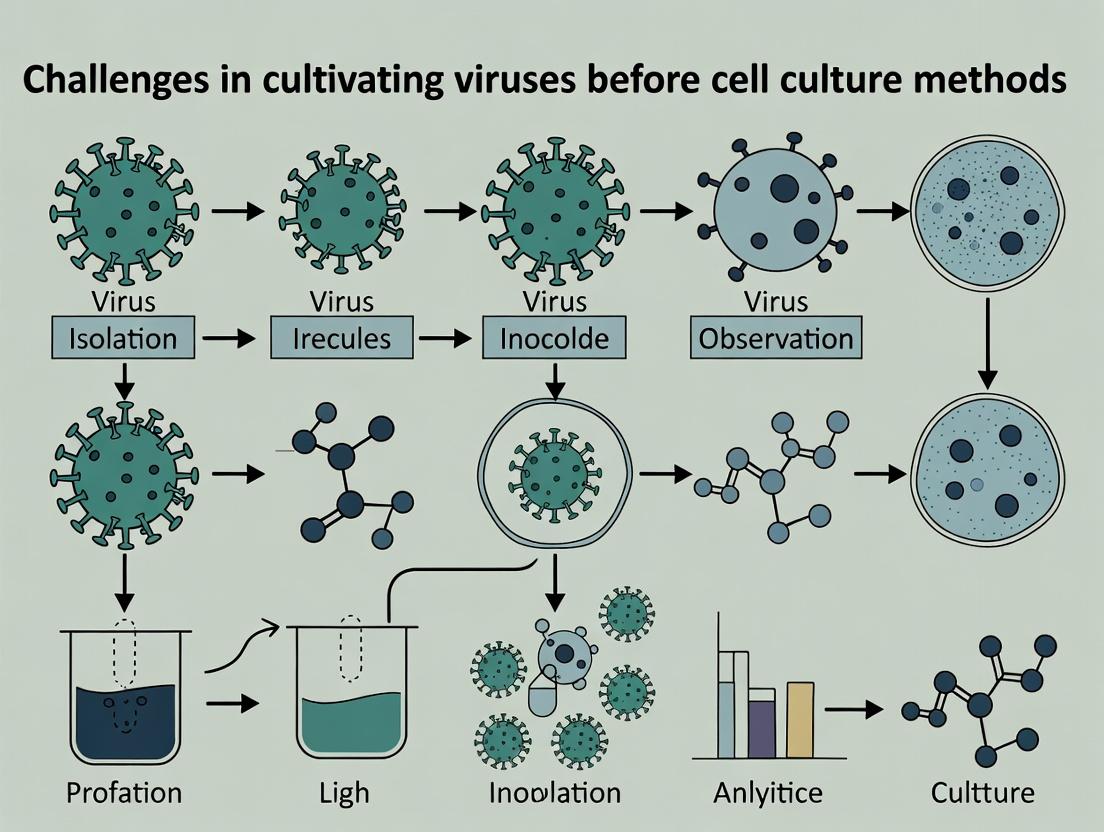
This article explores the formidable challenges virologists faced in cultivating viruses before the advent of reliable cell culture methods.
From Chick Embryos to Ferrets: The Daunting Era of Pre-Cell Culture Virus Propagation
Abstract
This article explores the formidable challenges virologists faced in cultivating viruses before the advent of reliable cell culture methods. It details the foundational reliance on live animals and embryonated eggs, the complex methodologies and applications that defined early research, the pervasive troubleshooting required to maintain viral viability, and the crucial role of comparative validation in establishing these techniques. Aimed at researchers and drug development professionals, the analysis underscores how these historical constraints shaped foundational virology, vaccine development, and our understanding of viral pathogenesis, with enduring lessons for modern biomedical science.
Foundations of Pre-Cell Culture Virology: Why Animals and Eggs Were the First 'Bioreactors'
Technical Support Center
Troubleshooting Guide & FAQs
Q1: In our pre-cell culture model using embryonated chicken eggs, we observe high variability in viral titers between eggs. What are the primary factors to investigate?
- A: This is a classic challenge in host-dependent systems. Variability often stems from the living host's biological state. Investigate these factors in order:
- Egg Embryo Age & Vitality: The developmental stage is critical. An embryo that is too young may lack specific receptors; one that is too old may mount a robust innate immune response. Standardize the exact incubation hour (e.g., 9-11 days old) and use eggs from a single, reputable supplier.
- Inoculation Route & Technique: Ensure precise, consistent technique for the route (allantoic, amniotic, chorioallantoic membrane). Minor variations in injection depth or location can drastically alter infection outcomes.
- Host Genetic Background: Even within a specific poultry line, minor genetic differences can affect susceptibility. Document the supplier and flock code.
- Storage & Handling: Incorrect storage temperature or rotation of eggs before incubation can compromise embryo health.
- A: This is a classic challenge in host-dependent systems. Variability often stems from the living host's biological state. Investigate these factors in order:
Q2: When using animal inoculation (e.g., mouse model) for virus propagation, the pathogen loses virulence after serial passages. How can we stabilize the viral phenotype?
- A: Attenuation during serial passage is a key historical challenge. Your protocol must account for host selection pressure.
- Solution: Implement a "back-passage" strategy. Alternate passages between the primary animal host and a secondary, permissive system (e.g., a different tissue or a minimally maintained organ culture) to maintain selective pressure for the wild-type, virulent phenotype. Freeze master stocks at low passage numbers (P2-P5) for all future work.
- A: Attenuation during serial passage is a key historical challenge. Your protocol must account for host selection pressure.
Q3: Our lab is attempting to replicate historical protocols for virus cultivation in tissue fragments (Tyrode's solution, etc.). Contamination is pervasive. What are the modern antiseptic steps missing from these old protocols?
- A: Historical protocols often lacked modern antibiotics and rigorous antisepsis. Augment your workflow as follows:
- Donor Host Pre-treatment: If using tissue from a live host, administer a broad-spectrum antibiotic (e.g., enrofloxacin) via drinking water 24-48 hours pre-sacrifice to reduce endogenous bacterial load.
- Antibiotic Cocktail in Maintenance Media: Use a 5x concentration of a standard Antibiotic-Antimycotic solution (Penicillin-Streptomycin-Amphotericin B) in the initial wash and first 24-hour maintenance media.
- Surface Decontamination: For tissue fragments, perform a rapid (30-sec) dip in 70% ethanol followed by three washes in cold, antibiotic-rich balanced salt solution before moving to the maintenance chamber.
- A: Historical protocols often lacked modern antibiotics and rigorous antisepsis. Augment your workflow as follows:
Experimental Protocol: Standardized Viral Propagation in Embryonated Chicken Eggs
Objective: To reproducibly propagate an influenza A virus strain in the allantoic cavity of 10-day-old embryonated chicken eggs.
Materials:
- 10-day-old specific pathogen-free (SPF) embryonated chicken eggs.
- Influenza A virus inoculum.
- Ethanol (70%), iodine solution.
- Sterile syringes (1mL) and 25-27 gauge needles.
- Egg punch or small drill.
- Candling lamp.
- Sterile PBS or serum-free media.
- Refrigerated centrifuge.
- Allantoic fluid collection tools.
Methodology:
- Candling & Marking: Candle eggs to identify viable embryos and mark the air sac and a point just above the allantoic cavity (avoiding major blood vessels).
- Disinfection: Swab the marked area thoroughly with 70% ethanol, followed by iodine solution.
- Puncture & Inoculation: Using a sterile punch, create a small hole at the marked site above the allantoic cavity. Inject 0.1-0.2 mL of diluted virus inoculum vertically into the allantoic cavity using a sterile syringe.
- Sealing & Incubation: Seal the hole with sterile paraffin wax or glue. Incubate eggs at 35°C (±0.5°C) with 60% relative humidity for 48-72 hours. Rotate eggs manually twice daily.
- Harvesting: Chill eggs at 4°C for 4 hours or overnight to constrict blood vessels and reduce bleeding. Re-swab the top of the air sac with ethanol. Carefully remove the shell over the air sac. Pierce the chorioallantoic membrane with a sterile pipette and aspirate the allantoic fluid (typically 5-10 mL per egg). Pool fluids from multiple eggs.
- Clarification: Centrifuge the pooled allantoic fluid at 1000 x g for 10 minutes at 4°C to remove debris. Aliquot supernatant (containing virus) and store at -80°C.
The Scientist's Toolkit: Research Reagent Solutions for Host-Dependent Systems
| Reagent / Material | Function in Host-Dependent Viral Replication |
|---|---|
| Specific-Pathogen-Free (SPF) Eggs/Animals | Provides a defined, contaminant-free host system to ensure viral replication is not confounded by co-infections or heightened immune states. |
| High-Titer Seed Virus Stock (Low Passage) | Critical for initiating infection at a standardized MOI (multiplicity of infection) in the host system, improving reproducibility between experiments. |
| Antibiotic-Antimycotic Cocktail (100X) | Suppresses bacterial and fungal growth in tissue fragments or harvested fluids, a major challenge in pre-cell culture methods. |
| Balanced Salt Solution (e.g., Tyrode's, Hanks') | Maintains physiological pH and ion concentration for ex vivo tissue survival during short-term cultivation or wash steps. |
| Formalin or Paraformaldehyde (10%) | For immediate fixation of infected host tissues (e.g., chorioallantoic membrane, organ samples) for subsequent histopathology and viral antigen localization. |
Quantitative Data: Viral Yield Comparison Across Historical Host Systems
Table 1: Typical Viral Titer Ranges from Pre-Cell Culture Host Systems
| Host System | Virus Example | Typical Titer Yield (Log10 PFU/mL or EID50/mL) | Incubation Time | Key Limitation |
|---|---|---|---|---|
| Mouse Lung (in vivo) | Influenza A (PR8) | 6.0 - 8.0 (PFU/mL homogenate) | 3-4 days | High host-to-host variability, ethical constraints. |
| Embryonated Hen's Egg (Allantoic) | Influenza A (H1N1) | 7.5 - 9.0 (EID50/mL) | 2-3 days | Restricted to certain virus families (orthomyxo-, paramyxoviruses). |
| Chorioallantoic Membrane (CAM) | Vaccinia Virus | 5.0 - 7.0 (PFU/membrane) | 2-3 days | Labor-intensive harvesting, limited scalability. |
| Tissue Fragment Culture (Tracheal Ring) | Human Coronavirus (229E) | 4.0 - 5.5 (TCID50/culture) | 5-7 days | Extremely short viability, high contamination risk. |
Visualization: Workflow & Pathway Diagrams
Title: Host Cell Dependency in Viral Replication Cycle
Title: Pre-Cell Culture Virus Propagation Workflow
Welcome to the Technical Support Center. This resource is designed to support researchers working within the historical context of pre-cell culture virology, where animal models were the primary substrate for virus cultivation, isolation, and titration. The following guides address common experimental challenges.
FAQs & Troubleshooting
Q1: In my rabbit corneal scarification experiment for Herpes Simplex Virus (HSV), the expected keratitis is inconsistent or absent. What could be the issue? A: This is a common titration challenge. Inconsistent infection often stems from variable viral inoculum adsorption. Ensure the corneal surface is gently but thoroughly dried with sterile gauze after anesthesia and before virus application. Apply the inoculum (typically 0.01-0.05 mL) and hold the eyelid closed, gently maneuaging the eyeball for 60 seconds to distribute the virus. Inadequate adsorption leads to runoff and variable titer.
Q2: When using mice for influenza virus LD50 titration, my control animals are also succumbing. What is the most likely cause and solution? A: This indicates bacterial contamination of your viral stock or improper housing. Before animal inoculation, always pass your lung homogenate supernatant through a 0.45 µm bacteriological filter. Maintain strict aseptic technique during intranasal instillation under light anesthesia. House inoculated animals separately from other experimental groups to prevent cross-contamination, a significant risk in early animal housing facilities.
Q3: During poliovirus propagation in primate spinal cord, the paralysis endpoint is ambiguous. How can I standardize the scoring? A: Subjective clinical scoring was a major historical limitation. Implement a standardized paralysis scoring protocol (see below). Sacrifice animals at a predefined, humane endpoint (e.g., full limb paralysis) immediately to harvest neural tissue at a consistent stage of infection, which is critical for obtaining high-titer virus stocks.
Q4: My harvested virus pools from animal tissues (e.g., mouse brain, rabbit skin) have low infectivity titers. How can I optimize the harvest protocol? A: Low titer often results from delayed harvest or suboptimal homogenization. Euthanize animals at the peak of clinical signs, not after morbidity advances. Rapidly dissect and chill target tissues. Prepare a 10-20% (w/v) homogenate in a balanced salt solution with protein (e.g., gelatin-saline) using a chilled mortar and pestle or mechanical homogenizer. Centrifuge at low speed (2000 x g, 10 min, 4°C) to clarify. Aliquot and freeze (-70°C or lower) immediately. Avoid repeated freeze-thaw cycles.
Experimental Protocols
Protocol 1: Intracerebral Inoculation of Mice for Arbovirus Titration
- Anesthesia: Lightly anesthetize a 3-4 week-old Swiss albino mouse using ether.
- Restraint: Hold the mouse head firmly with the thumb and forefinger.
- Injection: Using a 0.25 mL syringe and a 27-gauge needle, insert the needle 2-3 mm off the midline on a line drawn between the external canthus of the eye and the external auditory meatus.
- Delivery: Penetrate approximately 3-4 mm and deliver a precise 0.03 mL inoculum.
- Post-op: Monitor animals twice daily for signs of encephalitis (ruffled fur, hunched posture, paralysis, seizures). Record time to onset and death.
Protocol 2: Rabbit Skin Inoculation for Vaccinia Virus Pock Assay
- Preparation: Closely shear the fur on the dorsal flank of a New Zealand White rabbit. Cleanse the skin with 70% ethanol.
- Scarification: Gently abrade a 2x2 cm area with sterile sandpaper or a needle until glistening but not bleeding.
- Inoculation: Apply 0.1 mL of serial decimal dilutions of virus stock to separate scarified sites.
- Absorption: Allow to adsorb for 5-10 minutes.
- Observation: Monitor sites daily for 48-72 hours for the development of localized pocks (raised, inflammatory lesions). Count pocks at each dilution to calculate titer (pock-forming units/mL).
Table 1: Historical Animal Model Efficacy for Selected Viruses
| Virus | Primary Animal Model | Typical Route | Key Readout | Approximate Incubation Period | Mortality/Response Rate |
|---|---|---|---|---|---|
| Poliovirus | Rhesus Monkey | Intracerebral / Intraspinal | Flaccid Paralysis | 5-20 days | 90-100% (for virulent strains) |
| Herpes Simplex | Rabbit | Corneal Scarification | Keratitis (Eye Lesions) | 24-48 hours | 80-95% |
| Influenza A | Ferret / Mouse (adapted) | Intranasal | Pneumonia, Weight Loss, Death | 4-10 days | Variable by strain/mouse lineage |
| Yellow Fever | Rhesus Monkey | Subcutaneous | Hepatitis, Hemorrhagic Fever | 3-6 days | 90-100% |
| Vaccinia | Rabbit | Skin Scarification | Localized Pock Formation | 48-72 hours | N/A (Lesion Count) |
Table 2: Common Pitfalls in Animal-Based Virus Cultivation
| Issue | Likely Cause | Preventative Solution |
|---|---|---|
| No infection in any animal | Non-viable inoculum | Include a virus-positive control animal with a known stock. |
| Highly variable disease onset | Inconsistent inoculation technique | Train all personnel to a standard operating procedure (SOP). |
| Secondary bacterial infections | Non-sterile technique during inoculation/harvest | Use filtered stocks, sterilize surgical sites, use antibiotic washes in tissue homogenates. |
| Failure to passage virus | Animal immunity / Insufficient replication | Source immunologically naïve animals; confirm susceptibility of species/strain. |
The Scientist's Toolkit: Research Reagent Solutions
| Item | Function in Historical Animal Virology |
|---|---|
| Gelatin-Saline (0.75% gelatin in 0.85% NaCl) | Diluent and stabilizer for virus stocks during animal inoculation, protecting viral integrity. |
| Ether or Sodium Pentobarbital | Anesthesia for humane restraint during inoculation procedures (intranasal, intracerebral). |
| Sterile Mortar and Pestle (chilled) | For manual homogenization of harvested animal tissues (brain, liver, skin) to release virus. |
| Bacteriological Filters (Seitz, Berkefeld) | For clarifying tissue homogenates and removing bacteria from virus-containing fluids pre-inoculation. |
| Neutral Buffered Formalin (10%) | For immediate fixation of tissue samples post-mortem for histopathological confirmation of viral lesions. |
Visualizations
Title: Animal-Based Virus Propagation & Harvest Workflow
Title: Poliovirus Primate Model Pathway
Technical Support Center: Troubleshooting & FAQs
Context Note: This support content is framed within historical and methodological research on the challenges of cultivating viruses before the widespread adoption of monolayer cell culture techniques. The embryonated hen's egg was a critical, yet sometimes finicky, platform that required specific expertise.
Frequently Asked Questions (FAQs)
Q1: At what embryonic day should I inoculate for optimal growth of influenza virus? A: The optimal day depends on the inoculation route and virus type. For allantoic cavity inoculation of influenza for high-yield harvest of viral particles, days 9-11 are standard. For amniotic inoculation of primary clinical isolates, days 10-13 are preferred. Inoculating too early can lead to poor embryo viability; too late can reduce yield.
Q2: My eggs show no signs of virus growth (no hemagglutination, embryo death). What are the most common causes? A: This is a classic pre-cell culture challenge. The causes typically follow this logical troubleshooting path:
Q3: How do I accurately determine the 50% egg infectious dose (EID₅₀) endpoint? A: The EID₅₀ is calculated using the Reed-Muench or Karber method after serial log₁₀ dilution of the virus stock and inoculation into multiple eggs per dilution. Observe for embryo death or positive hemagglutination activity in allantoic fluid after 48-72 hours.
Table 1: Sample EID₅₀ Calculation (Reed-Muench Method)
| Virus Dilution (log₁₀) | Eggs Infected | Eggs Not Infected | Cumulative Infected | Cumulative Not Infected | Infection Ratio | % Infected |
|---|---|---|---|---|---|---|
| 10⁻³ | 5/5 | 0/5 | 12 | 0 | 12/12 | 100 |
| 10⁻⁴ | 4/5 | 1/5 | 7 | 1 | 7/8 | 87.5 |
| 10⁻⁵ | 2/5 | 3/5 | 3 | 4 | 3/7 | 42.9 |
| 10⁻⁶ | 1/5 | 4/5 | 1 | 8 | 1/9 | 11.1 |
| 10⁻⁷ | 0/5 | 5/5 | 0 | 13 | 0/13 | 0 |
Proportional Distance = (50% - % at dilution above 50%) / (% at dilution below 50% - % at dilution above 50%). EID₅₀/mL = Negative log of dilution above 50% + (Proportional Distance × log dilution factor).
Q4: What causes non-specific embryo death shortly after inoculation? A: Common causes include: (1) Bacterial or fungal contamination of the inoculum, (2) Excessive trauma during inoculation (needle damage to vital structures), (3) Toxicity of the inoculum vehicle (e.g., preservatives, impurities), (4) Overly mature or unhealthy embryos prior to inoculation.
Q5: How sterile does the eggshell need to be before inoculation? How is it achieved? A: Given the historical context of pre-antibiotic virology, shell sterilization was critical to prevent overgrowth of contaminants. The standard protocol is to wipe the shell at the inoculation site with 70% ethanol, followed by application of iodine tincture. The egg must then be allowed to dry in a sterile hood or cabinet before puncturing.
Key Experimental Protocols
Protocol 1: Routine Allantoic Cavity Inoculation for Virus Propagation
- Candle 9-11 day-old embryonated eggs to mark the air sac and viable embryo.
- Sterilize the top (air sac end) of the egg as per FAQ A5.
- Puncture a small hole in the shell over the air sac using a sterile punch or drill bit.
- Using a 1 mL tuberculin syringe and a 23-25 gauge needle (½ to 1 inch length), insert the needle at a slight angle through the hole, directing it downward into the allantoic cavity (approx. 1-1.5 cm depth).
- Inject 0.1-0.2 mL of inoculum.
- Seal the hole with sterile melted paraffin or a glue dot.
- Incubate the eggs at 35-37°C with 60-70% relative humidity for the required time (often 48-72 hours).
- Harvest by chilling eggs at 4°C for 4 hours or overnight to constrict blood vessels. Aseptically remove the shell over the air sac, puncture the shell membrane, and use a sterile pipette to aspirate the allantoic fluid (typically 5-10 mL per egg).
Protocol 2: Amniotic Cavity Inoculation for Primary Isolation
- Use older embryos (12-14 days). Candle and mark the position of the embryo.
- Sterilize a spot on the shell directly over the embryo.
- Carefully drill a small window in the shell, avoiding damage to the shell membrane.
- Moisten the shell membrane with sterile saline to make it translucent. Re-candle to see the embryo.
- Using a fine-gauge needle, pierce the membrane and amniotic sac and inject 0.1-0.2 mL of inoculum directly into the amniotic fluid.
- Seal the window with sterile tape or paraffin film and incubate.
The Scientist's Toolkit: Research Reagent Solutions
Table 2: Essential Materials for Egg-Based Virology (Pre-Cell Culture Era)
| Item | Function & Explanation |
|---|---|
| Embryonated Specific-Pathogen-Free (SPF) Eggs | Provides a biologically contained, immune-incompetent host for a wide range of viruses. SPF status prevents confounding results from vertical transmission of avian pathogens. |
| Egg Candler (LED or Halogen) | Allows visualization of the embryo's viability, size, and blood vessel integrity to select appropriate eggs and guide inoculation. |
| Sterile Punch/Drill | Creates a clean opening in the calcareous shell without shattering it, minimizing contamination risk. |
| Tuberculin Syringes (1 mL) & 25G Needles | The standard for precise, low-volume inoculation into defined compartments with minimal reflux. |
| Hemagglutination (HA) Test Reagents | Includes standardized red blood cells (guinea pig, turkey, or human type O) and buffer. The primary, rapid assay for detecting orthomyxoviruses, paramyxoviruses, and others grown in eggs. |
| Allantoic/Aminoic Fluid Harvesting Pipettes | Long, sterile glass or plastic pipettes for aspirating fluid from the respective cavities without disturbing the embryo or yolk sac. |
| Paraffin Wax or Sterile Adhesive Dots | Used to seal inoculation holes, maintaining compartment integrity and preventing airborne contamination during incubation. |
Workflow Visualization
Technical Support Center: Troubleshooting Pre-Cell Culture Virology Experiments
This support center addresses common experimental challenges faced by researchers working within the historical context of virus cultivation prior to the advent of monlayer cell culture. The guidance is framed within the thesis on the challenges that spurred the development of modern virological methods.
Troubleshooting Guides & FAQs
Q1: My embryonated chicken eggs show no signs of viral growth (e.g., no pocks, embryo death) after inoculation with a suspected influenza strain. What are the primary causes? A: Failure can stem from several pre-cell culture technical issues:
- Incorrect Egg Vitality: Eggs must be 9-12 days old. Older embryos are more resistant; younger ones are too fragile.
- Improper Inoculation Route: Influenza A requires the allantoic cavity for optimal growth. Verify your inoculation site (allantoic vs. amniotic vs. yolk sac) matches the virus tropism.
- Non-viable Viral Inoculum: The original clinical sample may have degraded. Always include a known positive control (e.g., PR8 strain) to validate the egg batch and technique.
- Inadequate Incubation: After inoculation, eggs must be sealed with paraffin or glue and incubated at 35-37°C with 60-70% humidity for 48-72 hours.
Q2: During the in vivo mouse brain passage for yellow fever virus (YFV) isolation, my results are inconsistent with high mortality variability. How can I standardize this? A: The "Mouse Protection Test" era was notoriously variable. Key controls are essential:
- Mouse Strain & Age Standardization: Use a genetically uniform, susceptible strain (e.g., Swiss albino). Age is critical—use 2-4 day old suckling mice for highest susceptibility to many neurotropic viruses.
- Inoculation Precision: Intracerebral inoculation must be performed with a calibrated syringe to a precise depth (2-3mm). Inconsistent technique is a major source of error.
- Sample Preparation: Ensure clinical samples are homogenized in a sterile diluent (e.g., broth with antibiotics) and centrifuged to remove bacterial contaminants. Always include a negative (diluent only) and a positive (known YFV strain) control group of mice.
- Observation Protocol: Monitor mice every 12 hours for specific neurological signs (paralysis, tremors). Record time-to-symptom-onset precisely; this can be a crude measure of viral titer.
Q3: In the polio virus typing experiment using the "Salk Method," how do I definitively distinguish between the three poliovirus types when cross-neutralization occurs? A: Cross-neutralization indicates antiserum specificity issues. Follow this protocol:
- Titrate Your Antisera: Use known prototype strains (Brunhilde Type I, Lansing Type II, Leon Type III) to determine the exact neutralizing titer of each typing antiserum. Use the highest dilution that provides complete neutralization.
- Standardize Viral Dose: Use a fixed dose of your unknown virus (usually 100 TCID50 or LD50 for mice) against the standardized antiserum dilution.
- Include All Controls: Every test must have:
- Virus + Normal Serum (Negative Control)
- Virus + Phosphate Buffer (Virus Viability Control)
- Known Virus Types + Their Specific Antisera (Positive Typing Controls)
- Interpretation: The type is identified by the specific antiserum that completely prevents cytopathic effect (in tissue culture) or paralysis/death (in monkeys/mice). If cross-reactivity persists, repeat with higher specificity antisera produced by more extensive cross-adsorption.
Q4: My tissue minces (e.g., for poliovirus in monkey kidney) become contaminated or show no viral replication. What are the best practices for maintaining explant cultures? A: Pre-cell culture explant techniques demand aseptic rigor.
- Tissue Harvest: Perform dissection rapidly under sterile conditions. Wash tissue fragments multiple times in cold Hanks' Balanced Salt Solution (HBSS) with 5x the usual concentration of antibiotics (Penicillin, Streptomycin, Amphotericin B).
- Mincing Technique: Use two sterile scalpels in a scissoring motion. Do not crush the tissue. Fragment size should be ~1mm³.
- Plasma Clot Adherence: The traditional method uses a chicken plasma clot to anchor explants to the glass surface. Ensure the plasma is sterile and the thrombin solution is fresh. Allow clot to set fully before adding nutrient medium (e.g., Eagle's Basal Medium with 2% serum).
- Medium Management: Change 50% of the medium every 3 days with extreme care not to dislodge explants. Look for outgrowth of cells from the explant edge as a sign of health before virus inoculation.
| Virus | Primary Pre-Cell Culture System | Typical Host/Substrate | Time to Result (Approx.) | Key Limitation / Failure Rate |
|---|---|---|---|---|
| Influenza Virus | Embryonated Chicken Egg | Allantoic/Amniotic Cavity | 48-72 hours | Route-specific; 20-30% of clinical samples fail to grow (source variability). |
| Yellow Fever Virus | In vivo Mouse Brain | Suckling Mouse (intracerebral) | 5-10 days | High animal use, ethical cost, ~15% mortality from trauma alone. |
| Poliovirus | Monkey Kidney Explant | Primary Tissue Minces | 7-14 days for CPE | Contamination rates up to 25%; explant viability highly variable. |
| Poliovirus (Typing) | Neutralization Test | Monkey/Mouse in vivo or Explant | 14-21 days | Cross-neutralization errors required repetition; used 10-20 animals per isolate. |
Experimental Protocols
Protocol 1: Influenza Virus Isolation in Embryonated Eggs (Allantoic Route)
- Candle 10-11 day old fertilized eggs to mark the air sac and viable embryo.
- Disinfect the eggshell at the inoculation site (above air sac) with 70% ethanol and iodine.
- Puncture the shell with a sterile drill or needle.
- Inject 0.1-0.2mL of sterile-filtered clinical sample (e.g., throat washings) into the allantoic cavity using a 23-gauge needle, angling away from the embryo.
- Seal the hole with sterile paraffin wax or glue.
- Incubate eggs horizontally at 35°C with 60% relative humidity for 48-72 hours.
- Harvest: Chill eggs at 4°C for 4 hours to embryo and constrict blood vessels. Aseptically open the shell and harvest allantoic fluid with a pipette. Test for hemagglutination activity.
Protocol 2: Poliovirus Typing by Neutralization in Monkey Kidney Explants (Salk Method)
- Prepare Antiserum-Virus Mixtures: In a series of tubes, mix 100 LD50 of the unknown virus isolate with an equal volume of standardized, heat-inactivated typing antisera (Types I, II, III). Include virus + normal serum control.
- Incubate: Hold mixtures at 37°C for 1 hour, then at 4°C overnight.
- Inoculate Explants: For each mixture, inoculate onto 2-4 viable monkey kidney tissue culture explants in plasma clots.
- Observe: Maintain cultures with regular medium changes. Observe daily for cytopathic effect (CPE) – rounding and detachment of cells.
- Interpret: The virus type is identified by the antiserum that completely prevents CPE for the full observation period (14 days). Confirmation often required a repeat test or passage in monkeys for definitive typing.
Visualizations
Title: Poliovirus Typing by Serum Neutralization Workflow
Title: Evolution of Virus Cultivation Methods Driven by Challenges
The Scientist's Toolkit: Research Reagent Solutions (Pre-Cell Culture Era)
| Item | Function in Historical Context |
|---|---|
| Embryonated Chicken Eggs | Living, self-contained bioreactor providing multiple membrane surfaces for virus growth (chorioallantoic, allantoic, amniotic). |
| Suckling Mice (2-4 day old) | Highly susceptible in vivo system for isolation and propagation of neurotropic viruses (e.g., Yellow Fever, Coxsackie). |
| Monkey Kidney Tissue | Primary explant source providing susceptible epithelial cells for poliovirus and other enteroviruses; the precursor to primary cell cultures. |
| Type-Specific Antisera | Hyperimmune sera raised in animals (horses, rabbits) against known virus types; critical for identification via neutralization tests. |
| Chicken Plasma & Thrombin | Used to create a biological "clot" to anchor tissue explants to glass surfaces for outgrowth and maintenance. |
| Hanks' Balanced Salt Solution (HBSS) | Isotonic salt solution used for washing tissues and diluting viral inocula to maintain physiological pH and osmolarity. |
| Hemagglutination Assay | Simple test using red blood cells (e.g., guinea pig) to detect presence of hemagglutinating viruses (e.g., Influenza) in harvested allantoic fluid. |
Welcome to the Technical Support Center. This resource addresses the practical and analytical challenges faced when studying virus propagation within a living host organism—a critical, yet historically opaque, phase preceding modern in vitro cell culture methods.
Troubleshooting Guides & FAQs
Q1: During in vivo serial passage experiments to adapt a virus to a new host, virulence unexpectedly attenuates instead of increasing. What could be the cause? A: This is often a sign of a bottleneck event or host immune selection pressure.
- Check: Sequence the viral genome from the harvested inoculum at each passage. Look for deletions or mutations in virulence genes.
- Protocol for Bottleneck Analysis:
- Sample Collection: Collect target tissue (e.g., lung, liver) at peak infection from multiple animals per passage.
- Nucleic Acid Extraction: Use a high-fidelity extraction kit to minimize bias.
- Deep Sequencing: Perform next-generation sequencing (NGS) on the viral population. A library prep protocol targeting viral genomes is required.
- Data Analysis: Calculate population diversity metrics (e.g., Shannon entropy, nucleotide diversity) using tools like Geneious or custom pipelines. A sharp drop in diversity at a specific passage indicates a bottleneck.
Q2: How can I accurately quantify viral load in specific tissues when non-specific background signal is high? A: Use a dual-assay verification approach combining quantitative PCR (qPCR) with plaque assay or TCID₅₀.
- Protocol for Tissue-Specific Viral Titer:
- Homogenization: Aseptically harvest tissue, weigh it, and homogenize in a known volume of cold sterile PBS or cell culture medium (e.g., 1 mL per 100 mg tissue).
- Clarification: Centrifuge at 10,000 x g for 5 minutes at 4°C to remove cellular debris.
- Quantitative PCR:
- Extract total RNA/DNA from the supernatant.
- Run qPCR/RT-qPCR with primers/probes specific to a conserved viral gene.
- Use a standard curve from a plasmid or in vitro transcribed RNA of known copy number.
- Infectivity Assay (Plaque):
- Serially dilute the same clarified homogenate.
- Infect permissive cell monolayers in duplicate or triplicate.
- Overlay with agarose/carboxymethyl cellulose and incubate.
- Count plaques and calculate PFU per gram of tissue.
Q3: How do I differentiate between active viral replication in a tissue and passive deposition from the bloodstream? A: Implement strand-specific RT-PCR to detect replicative intermediate RNAs (e.g., negative-sense RNA for positive-sense RNA viruses).
- Protocol for Strand-Specific RT-PCR:
- RNA Extraction: Extract total RNA, treating with DNase.
- Primer Design: Design primers specific to the viral negative-sense strand.
- cDNA Synthesis: Perform reverse transcription using a primer that binds only to the positive-sense genomic RNA to generate cDNA from the negative-sense strand.
- PCR Amplification: Use a nested or semi-nested PCR protocol with internal primers to amplify the cDNA, confirming active replication.
Table 1: Comparison of Viral Quantification Methods in Tissue Homogenates
| Method | Target | Advantage | Limitation | Typical Sensitivity |
|---|---|---|---|---|
| Plaque Assay (PFU/g) | Infectious virions | Gold standard for infectivity; quantitative. | Slow (2-7 days); requires permissive cells. | 10-100 PFU/g |
| TCID₅₀ (Tissue Culture Infectious Dose) | Infectious virions | Handles samples with cytotoxicity; quantitative. | Statistical endpoint; less precise than plaque. | ~100 virions/g |
| qPCR/RT-qPCR (copies/g) | Viral genome (DNA/RNA) | Rapid, highly sensitive; high throughput. | Does not indicate infectivity. | 1-10 copies/g |
| Strand-Specific RT-PCR | Replicative RNA intermediates | Confirms active in situ replication. | Technically demanding; semi-quantitative. | Varies by design |
Table 2: Common In Vivo Propagation Challenges & Mitigations
| Challenge | Potential Root Cause | Recommended Mitigation Strategy |
|---|---|---|
| Loss of Viral Diversity | Genetic bottleneck during passage | Increase inoculum size; pool samples from multiple animals. |
| Inconsistent Shedding/Titers | Host immune response variability | Use inbred/immunodeficient animal models; standardize infection route/dose. |
| High Background in Assays | Non-specific tissue factors (e.g., RNases) | Include homogenization inhibitors; purify virus via ultracentrifugation or filtration. |
| Unclear Cell Tropism In Vivo | Virus infects unexpected cell types | Perform immunohistochemistry (IHC) or in situ hybridization (ISH) on tissue sections. |
Experimental Workflow & Pathway Visualization
Diagram 1: In Vivo Propagation & Analysis Workflow
Diagram 2: Host-Virus Interaction 'Black Box'
The Scientist's Toolkit: Research Reagent Solutions
Table 3: Essential Materials for In Vivo Propagation Studies
| Item | Function & Rationale |
|---|---|
| Immunodeficient Mouse Strain (e.g., NSG, IFNAR-/-) | Allows study of viral pathogenesis without full adaptive or innate immune clearance, mimicking pre-adaptive phases. |
| Pathogen-Free Tissue Homogenizer | Ensures consistent and aseptic breakdown of tissue to release virions without cross-contamination. |
| RNase/DNase Inhibitors | Preserves viral nucleic acid integrity during homogenization and extraction for accurate molecular assays. |
| Plaque Assay-Compatible Cell Line | A permissive cell line is essential for quantifying infectious virus particles (PFU) from tissue samples. |
| Strand-Specific RT-PCR Kit | Critical for differentiating viral genomic material from active replication intermediates within tissues. |
| High-Fidelity NGS Library Prep Kit | Enables accurate sequencing of the viral population to track quasispecies evolution and bottlenecks. |
| Ultracentrifugation System | Purifies and concentrates virus from large-volume tissue homogenates or blood for cleaner analysis. |
Methodologies of a Bygone Era: Step-by-Step Protocols for Animal and Egg-Based Cultivation
Technical Support Center: Troubleshooting and FAQs
FAQ: Host Factors & Model Selection
Q1: Our murine model shows inconsistent viral titers after intranasal inoculation of a respiratory virus. What host factors should we re-evaluate? A1: Inconsistent replication often stems from unaccounted-for host factors. Key variables to audit include:
- Age: Neonatal and aged mice have different immune competence and receptor expression profiles compared to young adults.
- Genetic Background: C57BL/6 vs. BALB/c strains can have profoundly different Th1/Th2-biased immune responses, affecting viral clearance and pathology.
- Microbiome Status: Commensal bacteria influence baseline immune activation. Compare specific pathogen-free (SPF) with germ-free or antibiotic-treated cohorts.
- Pre-existing Immunity: Conduct serological screening for unintended prior exposure to related viruses.
Table 1: Impact of Common Host Factors on Viral Titers in Murine Respiratory Models
| Host Factor | Variable Compared | Typical Impact on Peak Viral Titer (Log10 PFU/mL) | Key Immune Correlate |
|---|---|---|---|
| Age | 6-8 wk vs. 18+ mo | Increase of 1.0-2.0 in aged | Reduced IFN-γ, CD8+ T cell response |
| Strain | C57BL/6 vs. BALB/c | Can vary by ± 1.5 depending on virus | Differential Th1/Th2 cytokine polarization |
| Immune Status | Immunocompetent vs. IFNAR-/- | Increase of 3.0-5.0 in knockout | Lack of type I interferon signaling |
Q2: For a neurotropic virus study, should we choose intracranial (IC) or intraperitoneal (IP) inoculation? Our goal is to model natural spread. A2: IC inoculation bypasses peripheral and blood-brain barriers, leading to direct, rapid, and uniform CNS infection. This is useful for vaccine-challenge studies. To model natural hematogenous spread, IP is preferable but requires the virus to be neuroinvasive. Confirm viremia and sequential spread to the CNS via qPCR. Failure after IP route often indicates a lack of appropriate receptors on endothelial cells or insufficient viremia.
Troubleshooting Guide: Routes of Inoculation
Issue: Low infection rate following intramuscular (IM) inoculation. Potential Causes & Solutions:
- Inaccurate Injection Depth: Too superficial leads to leakage; too deep may hit bone.
- Protocol: For mouse hind limb, use a 29G insulin syringe. Stretch the leg, insert needle at a 45-60° angle into the caudal thigh muscle. Aspirate briefly before injection to avoid intravascular delivery.
- Injection Volume: Large volumes cause backflow and tissue damage.
- Protocol: For mouse, do not exceed 50µL per site. For larger muscles in ferrets or NHPs, volumes of 0.5-1mL are acceptable. Divide dose into multiple sites if necessary.
- Virus Preparation: Virus may be binding to serum proteins in inoculum.
- Protocol: Dilute virus in PBS or minimal medium with low protein (e.g., 0.1% BSA). Keep on ice and use immediately.
Issue: Non-uniform infection after intranasal (IN) inoculation under anesthesia. Potential Causes & Solutions:
- Incorrect Animal Positioning: Supine position can lead to swallowing rather than aspiration.
- Protocol: Anesthetize mouse deeply (confirmed by toe pinch). Hold mouse upright in a "sloppy vertical" position (nose pointed up). Apply droplets slowly to the nares, allowing inhalation between drops.
- Inoculum Volume: Excessive volume drowns the animal and is ingested.
- Protocol: For mice, a total volume of 20-50µL (10-25µL per nare) is standard. Use a micropipette with a soft gel tip.
Experimental Protocol: Standardized Intranasal Inoculation in Mice
- Anesthesia: Induce anesthesia using an approved inhaled (isoflurane) or injectable (ketamine/xylazine) regimen.
- Preparation: Hold the anesthetized mouse vertically.
- Inoculation: Using a pipette with a sterile tip, dispense the calculated droplet volume onto one naris. Wait for the droplet to be fully inhaled before dispensing the next droplet. Repeat for the second naris.
- Recovery: Place the mouse in a clean cage on its side on a heating pad until fully ambulatory. Monitor closely.
The Scientist's Toolkit: Research Reagent Solutions
| Item | Function & Application |
|---|---|
| Ketamine/Xylazine Cocktail | Injectable anesthetic for prolonged procedures like intranasal inoculation. Provides 20-30 minutes of surgical plane anesthesia. |
| Isoflurane Vaporizer System | Preferred inhaled anesthetic for short procedures. Allows rapid induction and recovery, minimizing stress. |
| PBS, Low-Protein Diluent | Sterile phosphate-buffered saline, often with 0.1% BSA. Used to dilute viral stocks without neutralization by serum proteins. |
| 29G Insulin Syringes | Ultra-fine needles for precise intramuscular, subcutaneous, or intradermal injections with minimal tissue trauma and leakage. |
| PCR/Serology Panel | Pre-screening assay to check animal colonies for pre-existing immunity to common pathogens or related viruses. |
| Telemetry Implants (e.g., DSI) | Subcutaneous or intraperitoneal implants for continuous, remote monitoring of body temperature and activity, reducing handling stress. |
Visualizations
Technical Support Center & Troubleshooting Guides
FAQs & Troubleshooting
Q1: During candling, I cannot clearly see the air sac and embryo vessels. What could be wrong? A: This is typically an issue with the light source or egg age/quality. Ensure you are using a bright, focused candler in a completely dark room. Eggs older than 12-14 days have denser shells and more developed embryos, making visualization difficult. For best results, use specific pathogen-free (SPF) eggs between 7-12 days old. Blood vessels may be obscured if the embryo has died; compare with a live control egg.
Q2: After inoculation via the allantoic route, my viral titers are consistently low. What are the most likely causes? A: Low titers can stem from several protocol failures. Refer to the troubleshooting table below for common causes and solutions.
Q3: Upon harvesting allantoic fluid, I notice it is bloody or contains tissue debris. Is my harvest contaminated and unusable? A: Bloody fluid indicates damage to the chorioallantoic membrane (CAM) or embryo during inoculation or harvesting. While it may contain virus, cellular debris can interfere with downstream assays (e.g., hemagglutination). Centrifuge the harvest at 2000 x g for 10 minutes at 4°C to clarify. For consistent, clean yields, practice precise needle insertion depth and use a sterile, sharp tool to punch the harvest hole.
Q4: My embryos are dying prematurely (within 24 hours) post-inoculation. Is this due to viral pathogenicity or technical error? A: Sudden, widespread embryo death is more often a sign of bacterial or fungal contamination or physical trauma. Viral death typically follows a more predictable time course. Review aseptic technique: disinfect the egg shell thoroughly with 70% ethanol and iodine, use sterile instruments, and seal the inoculation hole properly with melted paraffin or glue. Inoculate a control group with sterile diluent to differentiate toxicity from infection.
| Issue | Possible Cause | Recommended Solution | Success Rate* |
|---|---|---|---|
| Low Viral Yield | Incorrect egg age for virus strain | Match virus to optimal site/age (see Table 2). | >90% |
| Inoculum volume too large/small | Use standard volumes: Allantoic/Amniotic: 0.1-0.2ml; Yolk Sac: 0.2-0.5ml; CAM: 0.05-0.1ml. | 85% | |
| Improper incubation temp/time | Incubate at 35-37°C; harvest at strain-specific peak (often 48-72 hrs). | 95% | |
| Contamination | Inadequate shell sterilization | Use a two-step disinfectant (70% EtOH, then iodine). | 98% |
| Faulty seal on inoculation hole | Seal hole with sterile paraffin wax or cyanoacrylate glue. | 97% | |
| Poor Candling | Light source insufficient | Use a high-intensity LED candler in a dark box. | 99% |
| Eggs too old/dark-shelled | Use 7-12 day old white-shelled SPF eggs. | 95% | |
| Embryo Trauma | Needle insertion too deep | Use a sterile needle with a depth guard (max 1.5cm for allantois). | 90% |
*Estimated based on protocol adherence.
Experimental Protocols
Protocol 1: Standard Candling and Allantoic Cavity Inoculation
Purpose: To aseptically introduce a viral sample into the allantoic cavity for large-scale virus propagation (e.g., influenza, Newcastle disease virus). Materials: 9-11 day old embryonated SPF eggs, candler, 70% ethanol & iodine swabs, sterile 1ml syringe with 25-27G needle, sterile drill or punch, paraffin wax or glue, incubator at 35-37°C with 55-65% humidity. Procedure:
- Candle: In a dark room, hold egg to candler. Mark the air sac boundary and a point just below a prominent, non-veined area on the lateral side.
- Disinfect: Swab the marked lateral area and blunt end thoroughly with 70% ethanol, then iodine. Allow to dry.
- Puncture: Using a sterile tool, carefully pierce a small hole in the shell at the marked lateral point. Do not puncture the underlying shell membrane.
- Inoculate: Hold egg at a 45° angle with the lateral hole upward. Insert a 25G needle (bevel up) ~1-1.5 cm deep, parallel to the shell's long axis, into the allantoic cavity. Inject 0.1-0.2 ml of inoculum.
- Seal: Apply a drop of sterile paraffin wax or glue over the inoculation hole to seal it.
- Incubate: Place eggs in an egg incubator with the blunt end slightly elevated. Incubate at appropriate temperature (e.g., 35°C) for the required duration (e.g., 48-72 hours). Candle daily to check for embryo viability (live embryos will move).
- Harvest: Chill eggs at 4°C for 4+ hours to constrict vessels. Disinfect blunt end. Break open the air sac shell with sterile forceps. Tip egg to pool allantoic fluid away from the CAM. Aspirate fluid with a sterile pipette. Clarify by centrifugation at 2000 x g for 10 min at 4°C. Aliquot and store at -80°C.
Protocol 2: Chorioallantoic Membrane (CAM) Inoculation for Pock Assay
Purpose: To inoculate virus onto the CAM for the formation and counting of discrete pocks (lesions), used for viral titration and isolation (e.g., vaccinia, herpesviruses). Materials: 10-12 day old embryonated SPF eggs, materials as in Protocol 1, plus sterile scissors and covering tape. Procedure:
- Candle & Mark: Identify a large, avascular area on the lateral side of the CAM. Mark this "window" (approx. 1cm x 1cm).
- Disinfect & Window: Disinfect the area. Gently use a sterile drill or sandpaper to thin a window in the shell, taking care not to break the underlying shell membrane.
- Drop CAM: Use a sterile needle to make a small prick in the shell membrane over the air sac at the blunt end. This creates a negative pressure, causing the CAM to drop away from the shell at the window site.
- Inoculate: Carefully peel away the shell membrane in the window to expose the dropped CAM. Apply 0.05-0.1 ml of inoculum directly onto the CAM surface.
- Seal & Incubate: Seal the window with sterile transparent tape or a coverslip and glue. Incubate horizontally with the window up for required time (e.g., 48-72 hrs).
- Harvest: Open the window fully. Excise the CAM with sterile scissors and place in a sterile petri dish with saline. Examine for pocks under a dissecting microscope.
Diagrams
Title: Embryonated Egg Inoculation & Harvest Workflow
Title: Egg Technique's Role in Pre-Cell Culture Virology
The Scientist's Toolkit: Research Reagent Solutions
| Item | Function & Importance in Egg Techniques |
|---|---|
| Specific Pathogen-Free (SPF) Eggs | Essential to prevent background viral/bacterial infections that confound results and lower yield. Must be white-shelled for effective candling. |
| High-Intensity LED Candler | Provides bright, focused light to visualize embryo viability, vasculature, and the air sac for accurate inoculation site targeting. |
| Sterile Drills/ Punches (18-22G) | Used to create a clean hole in the eggshell without damaging the underlying membranes, crucial for maintaining asepsis. |
| Syringes & Needles (25-27G, 1/2 to 1 inch) | For precise delivery of inoculum. Smaller gauge (higher number) minimizes tissue trauma. Depth guards can be added for consistency. |
| Two-Step Disinfectant (70% Ethanol, then Iodine) | Ethanol cleans and degreases; iodine is a potent, broad-spectrum antiseptic. Sequential use is critical for maintaining sterility. |
| Sterile Paraffin Wax or Cyanoacrylate Glue | Used to seal the inoculation hole immediately after injection, preventing contamination and moisture loss during incubation. |
| Humidified Egg Incubator | Maintains optimal temperature (35-37°C) and humidity (55-65%) for embryo survival and viral replication. Must have reliable air circulation. |
| Antibiotic/Antimycotic Solution (e.g., Pen/Strep/Ampho B) | Added to inoculum or wash buffers to suppress potential bacterial/fungal contaminants, though not a substitute for aseptic technique. |
| Phosphate-Buffered Saline (PBS) or Viral Transport Media | Standard diluent for preparing viral inoculum and for resuspending harvested tissues or fluids. |
| Cell Culture Media (e.g., DMEM with Serum) | Often used as a diluent or for post-harvest viral titration assays in cell culture, linking classic and modern methods. |
Troubleshooting Guides & FAQs
Q1: During an egg inoculation experiment for influenza virus, we observe low or inconsistent mortality in embryonated chicken eggs. What could be the cause? A: Low mortality can result from several factors. First, verify the egg viability and incubation temperature (should be 33-37°C for most influenza strains). Second, ensure correct inoculation site (allantoic cavity for influenza) and technique to avoid trauma. Third, the viral inoculum may be of low titer or have reduced pathogenicity. Always include a known positive control virus to benchmark expected mortality rates. Pre-test egg viability by candling before inoculation.
Q2: Our hemagglutination (HA) assay results are faint or inconsistent, making titer determination difficult. How can we improve reliability? A: Faint HA can be due to old or improperly prepared red blood cells (RBCs). Use fresh avian (e.g., turkey, chicken) or mammalian (e.g., guinea pig) RBCs, typically at a 0.5-1.0% concentration in PBS. Ensure the RBCs are washed and resuspended properly. Incubate the V-bottom plate at room temperature for the correct duration (30-60 minutes). Also, verify the pH of your saline or PBS, as extremes can cause RBC lysis or agglutination failure. Include known positive and negative controls on every plate.
Q3: When assessing pock lesions on the chorioallantoic membrane (CAM), how do we distinguish viral lesions from non-specific trauma or bacterial contamination? A: True viral pocks (e.g., from vaccinia) are typically raised, white, and focal with a defined center. Non-specific trauma from poor inoculation technique is irregular in shape and location. Bacterial contamination often produces diffuse, cloudy, or hemorrhagic areas. Always perform the procedure under aseptic conditions. Include an uninfected CAM control from the same egg batch to identify background abnormalities. Histological staining of lesion scrapings can provide definitive confirmation.
Q4: What is the most common cause of non-specific hemagglutination in control wells? A: Non-specific agglutination in negative controls is often caused by bacterial contamination of the RBC stock or the saline/PBS used. Contaminants can cause RBCs to clump. Ensure all reagents are sterile and stored correctly. Another cause can be using RBCs from an inappropriate species that have inherent agglutinins. Always centrifuge and wash RBCs thoroughly before preparing the working suspension.
Key Experimental Protocols
Protocol 1: Hemagglutination Assay for Influenza Virus Titer (HAU)
- Prepare RBCs: Draw blood from chicken or turkey into Alsever's solution. Wash cells three times in sterile PBS by centrifugation (200 x g for 5 min). Prepare a 0.5% (v/v) suspension in PBS.
- Prepare Serial Dilutions: Using a V-bottom 96-well plate, add 50 µL of PBS to all wells. Add 50 µL of virus-containing allantoic fluid to the first well of a row. Perform two-fold serial dilutions across the row using a multichannel pipette.
- Add RBCs: Add 50 µL of the 0.5% RBC suspension to each well. Gently tap the plate to mix.
- Incubate: Let the plate sit undisturbed at room temperature (20-25°C) for 30-40 minutes.
- Read Results: The HAU titer is the reciprocal of the highest dilution causing complete hemagglutination (a uniform sheet of RBCs covering the well bottom). Partial agglutination (a ring) at a higher dilution is considered negative.
Protocol 2: Viral Pathogenicity Scoring via Lesion Enumeration on CAM
- Prepare Eggs: Incubate 10-12 day-old embryonated chicken eggs. Candle to identify a viable embryo and mark the chorioallantoic membrane (CAM) area.
- Drop the CAM: Using a small drill or sandpaper, make a shallow window in the shell over the marked CAM area without piercing the shell membrane. Apply gentle pressure to create an artificial air sac over the CAM, causing it to drop away from the shell membrane.
- Inoculate: Carefully puncture the dropped shell membrane with a sterile needle. Apply 0.1-0.2 mL of viral inoculum directly onto the CAM surface.
- Seal & Incubate: Seal the window with transparent tape or sterile glue. Return eggs to the incubator (35-37°C) for 48-72 hours.
- Harvest & Score: Open the window and excise the CAM. Place in a Petri dish with PBS. Count discrete, raised, opaque pock lesions under good illumination. Calculate pock-forming units (PFU) per mL of inoculum.
Table 1: Comparative Analysis of Viral Growth Readout Methods (Pre-Cell Culture Era)
| Readout Method | Typical Virus Applications | Time to Result | Quantitative Capability | Key Advantage | Key Limitation |
|---|---|---|---|---|---|
| Mortality (LD₅₀) | Influenza, Herpesviruses, Rabies | 3-10 days | Indirect (Endpoint Titration) | Clear clinical endpoint; measures pathogenicity | Ethical concerns; high animal/egg use; slow |
| Lesion Formation (PFU) | Vaccinia, Herpes Simplex | 2-4 days | Direct (Pock/Blemish Count) | Visual and quantifiable; allows strain isolation | Limited to viruses causing visible lesions |
| Hemagglutination (HAU) | Influenza, Parainfluenza, Mumps | < 1 hour | Semi-quantitative (Titer) | Rapid, simple, inexpensive; no need for live virus | Only for hemagglutinating viruses; not a measure of infectivity |
Table 2: Troubleshooting Common Hemagglutination Assay Issues
| Symptom | Possible Cause | Recommended Solution |
|---|---|---|
| Faint or no button in RBC control | RBC concentration too low; plate not V-bottom | Re-prepare RBCs to correct %; use proper plate type |
| Non-specific agglutination in controls | Bacterial contamination; incorrect PBS salinity/pH | Use sterile technique; check PBS pH (7.2-7.4) and osmolarity |
| Tearing or irregular RBC sheet | Plate shaken during incubation; drafts | Place plate on stable surface; avoid movement during incubation |
| Inconsistent titers between replicates | Improper serial dilution technique; uneven RBC mixing | Use calibrated pipettes; mix RBC suspension thoroughly before dispensing |
Visualizations
Title: Egg-based Viral Growth & Readout Workflow
Title: Hemagglutination Assay Result Logic
The Scientist's Toolkit: Research Reagent Solutions
Table 3: Essential Materials for Pre-Cell Culture Virology
| Item | Function & Specification | Typical Use Case |
|---|---|---|
| Embryonated Chicken Eggs | Living host system for viral replication and amplification. Specific pathogen-free (SPF), 9-12 days old. | Growth of influenza, poxviruses, herpesviruses for research and vaccine production. |
| Alsever's Solution | Anticoagulant and preservative for red blood cells (RBCs). Contains citrate, dextrose, and saline. | Collection and short-term storage of avian or mammalian RBCs for HA assays. |
| V-Bottom Microtiter Plates | Plate geometry promotes RBC settling into a distinct button or sheet for clear HA reading. 96-well format. | Performing hemagglutination and hemagglutination inhibition (HI) assays. |
| Candling Light | High-intensity light source to visualize embryo viability and vasculature through the eggshell. | Selecting viable eggs pre-inoculation and monitoring embryo post-inoculation. |
| Allantoic Fluid Harvesting Kit | Sterile pipettes or syringes for aspirating fluid from the allantoic cavity of eggs. | Collecting viral progeny after egg incubation for downstream assays or purification. |
| Specific Antisera | Antibodies raised against specific viruses for neutralization or identification. | Confirming viral identity in lesion material via neutralization tests on CAM or in eggs. |
Technical Support Center: Troubleshooting Historical & Modern Viral Cultivation
Context: This support content is framed within the broader thesis on "Challenges in Cultivating Viruses Before Widespread Cell Culture Methods." It addresses common experimental issues encountered in both historical and modern contexts of vaccine development.
FAQs & Troubleshooting Guides
Q1: In egg-based influenza vaccine production, we observe low virus yield in embryonated chicken eggs. What are the primary factors to investigate?
A: Low hemagglutinin (HA) yield is a common issue. Troubleshoot using the following protocol:
- Virus Strain Adaptation: Not all clinical isolates grow well in eggs. Perform serial passage (5-10 cycles) in eggs to select for egg-adapted variants. Monitor HA titer at each passage using a hemagglutination assay.
- Egg Quality & Age: Use specific pathogen-free (SPF) eggs, 9-11 days old. Younger eggs have less developed chorioallantoic membranes (CAM); older eggs may have lower fluid volumes. Record egg lot and age.
- Inoculation Route & Precision: Inject 0.1-0.2 mL of virus inoculum into the allantoic cavity. Practice aseptic technique on the candled egg to avoid damaging the embryo or injecting into the wrong compartment.
- Incubation Conditions: Maintain precise temperature (33-35°C for most strains) and humidity (>50% RH). Agitate eggs periodically to prevent membrane adhesion.
Q2: During primary monkey kidney cell culture for poliovirus research (Salk method), we encounter high rates of microbial contamination. What is the corrective action?
A: Microbial contamination was a paramount challenge in pre-cell culture eras. Follow this historical yet relevant aseptic protocol:
- Tissue Source & Handling: Source kidneys from healthy, quarantined monkeys. Sacrifice using a dedicated, sterile protocol. Remove kidneys to a sterile container on ice immediately.
- Decapsulation and Mincing: Perform all steps in a laminar flow hood (historical context: use a dedicated sterile room with UV lights). Rinse tissue 3x in PBS containing 5x the standard concentration of penicillin (500 U/mL), streptomycin (500 µg/mL), and mycostatin (100 U/mL).
- Trypsinization: Use cold trypsin (0.25%) digestion at 4°C for 18-24 hours (not enzymatic at 37°C) to disaggregate cells while inhibiting bacterial growth. Filter the cell suspension through multiple layers of sterile gauze.
- Cell Seeding & Monitoring: Seed cells in medium with high antibiotics. Before virus inoculation, replace with maintenance medium containing lower antibiotic levels. Always include negative control flasks (no inoculum) to monitor for latent contamination.
Q3: When preparing the formalin-inactivated poliovirus vaccine (IPV) using the Salk process, how do we ensure complete inactivation while preserving antigenicity?
A: This is a critical safety checkpoint. Implement the following Mandatory Validation Protocol:
- Formalin Preparation: Use reagent-grade, stabilized formaldehyde. Dilute to 1:4000 (0.025% v/v) in virus harvest. Ensure precise pH buffering at 7.0-7.2 (phosphate buffer), as inactivation efficiency is pH-sensitive.
- Temperature Control: Maintain inactivation bath at 36.8°C ± 0.2°C. Use a calibrated thermometer with continuous logging.
- Sampling Schedule: Remove samples for safety testing at defined intervals (e.g., days 2, 5, 7, 9, 12). The protocol is not time-based alone but requires empirical clearance.
- Safety Test (Mandatory): Inoculate each sample onto susceptible cell culture (monkey kidney) and observe for cytopathic effect (CPE) for 14 days. Also inoculate into the brains of at least 10 susceptible monkeys (historical test) or modern equivalent (e.g., transgenic mouse model) and observe for 30 days for neurological signs. Inactivation is only confirmed after no live virus is detected in the final sample.
Q4: For modern Vero cell-based vaccine production, what are optimal parameters to scale up poliovirus replication while avoiding cell density-induced inhibition?
A: Vero cells grown on microcarriers (e.g., Cytodex) require optimized parameters:
| Parameter | Low Yield / Inhibition Condition | Optimized Condition | Rationale |
|---|---|---|---|
| Cell Seeding Density | > 2.5 x 10^5 cells/mL | 1.5 - 2.0 x 10^5 cells/mL | Prevents contact inhibition & nutrient depletion pre-infection. |
| MOI (Multiplicity of Infection) | < 0.01 PFU/cell | 0.05 - 0.1 PFU/cell | Ensures synchronous infection across the population. |
| Time of Infection (TOI) | Late log phase (high metabolic waste) | Mid-log phase (70-80% confluence) | Cells are metabolically active and not stressed. |
| Glucose Concentration | < 1 g/L at TOI | Maintain > 2 g/L at TOI | Critical for virus synthesis; monitor and feed if needed. |
| Harvest Time | Based on fixed time (e.g., 48hpi) | Based on CPE (>90% cells detached) | Maximizes virus titer; timing is strain-dependent. |
Experimental Protocols
Protocol 1: Hemagglutination Assay (HA Titer) for Influenza Virus Quantification in Allantoic Fluid Purpose: To quantify influenza virus particles in harvested allantoic fluid. Materials: 96-well V-bottom plate, PBS, 0.5% chicken red blood cells (cRBCs), allantoic fluid samples, multichannel pipette. Procedure:
- In a V-bottom plate, add 50 µL PBS to wells 2-12 of each row.
- Add 50 µL of virus-containing allantoic fluid to well 1 and 2 of a row. Serially dilute 1:2 from well 2 through well 11. Discard 50 µL from well 11. Well 12 is an RBC-only control.
- Add 50 µL of 0.5% cRBCs to every well.
- Tap gently to mix. Incubate at room temperature for 30-45 minutes.
- Read Results: A positive result (virus present) forms a diffuse "mat" of RBCs. A negative result (no virus) forms a tight "button" at the well bottom. The HA titer is the reciprocal of the last dilution showing complete hemagglutination (e.g., 1:256).
Protocol 2: Primary Monkey Kidney Cell Culture for Poliovirus Propagation (Historical Method) Purpose: To prepare susceptible cell substrates for poliovirus research and vaccine production. Materials: Kidney from rhesus monkey, Hanks' Balanced Salt Solution (HBSS), 0.25% trypsin, growth medium (Eagle's MEM + 2% calf serum), maintenance medium (MEM + no serum). Procedure:
- Aseptically remove kidney capsule and decapsulate. Cortex is minced into ~1-2 mm³ fragments.
- Wash fragments 3x with cold HBSS to remove blood.
- Transfer fragments to a trypsinization flask with cold 0.25% trypsin. Stir gently at 4°C for 18 hours.
- Filter supernatant through sterile gauze into chilled centrifuge tubes. Centrifuge at 800 rpm for 10 min. Resuspend cell pellet in growth medium.
- Count cells and seed at 2-3 x 10^5 cells/cm² in glass roller bottles or flasks.
- Incubate at 37°C until a confluent monolayer forms (5-7 days). Replace growth medium with maintenance medium prior to virus inoculation.
Diagrams
The Scientist's Toolkit: Research Reagent Solutions
| Item | Function & Application in Viral Cultivation |
|---|---|
| Embryonated Chicken Eggs (SPF) | Living host system for propagating influenza and other viruses. Provides the chorioallantoic membrane and fluid for high-yield replication. |
| Primary Monkey Kidney Cells | Historically essential, susceptible cell substrate for poliovirus, adenovirus, and SV40. Lacks interferon response, enabling high virus yield. |
| Vero Cells (Continuous Cell Line) | African green monkey kidney cell line. Permissive for a wide range of viruses (polio, rabies, influenza). Used in modern vaccine production under cGMP. |
| Trypsin (Cold, 0.25%) | Protease used for disaggregating tissue to establish primary cell cultures. Cold digestion minimizes cell damage and bacterial overgrowth. |
| Formalin (37% Formaldehyde) | Chemical inactivating agent for "killed" vaccines (e.g., Salk IPV). Cross-links viral nucleic acid and proteins, rendering it non-infectious while preserving antigenic structure. |
| Hemagglutination (HA) Assay Reagents | Chicken red blood cells and buffers. Rapid, quantitative test for influenza virus particle concentration based on viral HA protein's ability to agglutinate RBCs. |
| Eagle's Minimum Essential Medium (MEM) | A standard, chemically defined cell culture medium. Provides essential amino acids, vitamins, and salts for maintaining cell monolayers during virus infection. |
| Microcarriers (Cytodex) | DEAE-dextran or collagen-coated beads for growing anchorage-dependent cells (like Vero) in large-scale bioreactors, providing high surface area for cell growth. |
Troubleshooting the Uncontrollable: Contamination, Variability, and Ethical Quandaries
Combating Bacterial and Cross-Species Contamination in Animal Hosts
Technical Support Center
Troubleshooting Guide & FAQs
Q1: During in vivo virus cultivation in mouse models, we observe sudden host mortality not consistent with expected viral pathology. Bacterial septicemia is suspected. How do we diagnose and address this?
A1: This indicates a likely breach in aseptic technique during inoculation or compromised animal health status.
- Diagnosis: Perform a necropsy under sterile conditions. Collect heart blood and liver/spleen homogenates. Perform Gram staining and culture on blood agar plates (aerobic and anaerobic). Compare bacterial morphology to common contaminants like Staphylococcus aureus (from skin) or Escherichia coli (from gut).
- Solution: Implement a stricter pre-operative skin disinfection protocol (e.g., triple wash with iodine scrub and 70% ethanol). Administer prophylactic, broad-spectrum antibiotics (e.g., enrofloxacin) in the drinking water 24 hours pre- and post-inoculation, ensuring it does not interfere with your viral study. Use pathogen-free animals from validated vendors.
Q2: Our lab cultivates a human respiratory virus in ferrets. We now need to use the same animal housing room for a study with a porcine virus. How do we prevent cross-species contamination?
A2: Physical and temporal separation is critical.
- Protocol: Enforce strict unidirectional workflow. Segregate species into different cubicles or rooms with separate HVAC systems. If sharing a room is unavoidable, house species in sealed, individually ventilated caging (IVC) systems. Schedule all procedures porcine-first, ferret-last each day. Decontaminate surfaces with peroxygen-based disinfectants (e.g., Virkon) which have broad-spectrum efficacy against enveloped and non-enveloped viruses. Allow a minimum 72-hour room vacancy between studies after full decontamination.
Q3: When harvesting virus from infected chicken embryos, our viral titers are inconsistent and often low, with evidence of microbial overgrowth. What step is most vulnerable?
A3: The inoculation site (air sac or allantoic cavity) on the eggshell is the primary contamination point.
- Methodology: Follow this enhanced protocol:
- Candle eggs to mark the air sac and viable embryo.
- Clean the inoculation site vigorously with 2% iodine in 70% ethanol, not just a single swipe.
- Use a sterile drill bit or needle to create a small hole, preventing shell fragments from falling in.
- Use a sterile syringe and a new, dedicated needle for each egg.
- Seal the hole immediately with sterile paraffin wax or a dedicated glue gun.
- Incubate inoculated eggs in a dedicated, sanitized incubator. Discard any eggs that die within 24 hours post-inoculation as this is likely due to bacterial introduction.
Q4: We are using humanized mouse models for virus cultivation. How do we monitor for latent or adventitious viral infections that could confound results?
A4: Regular health monitoring via serology and PCR is mandatory.
- Monitoring Panel: Screen sentinel animals quarterly. The table below summarizes key agents and methods.
Table 1: Key Pathogens for Health Monitoring in Humanized Mouse Colonies
| Pathogen / Agent Group | Detection Method | Typical Sample | Significance |
|---|---|---|---|
| Murine Parvovirus (MPV) | PCR (fecal pellets) | Fecal Swab | Highly stable, common contaminant; alters immune responses. |
| Mouse Hepatitis Virus (MHV) | Serology (MFI/Luminex) | Blood Serum | Causes enzootic infection; can modulate host cytokine levels. |
| Pneumonia Virus of Mice (PVM) | PCR (lung tissue) | Respiratory Tract | Can cause silent infections, potentiating respiratory virus studies. |
| Mycoplasma pulmonis | PCR (oropharyngeal swab) | Respiratory Swab | Bacterial agent causing chronic respiratory disease. |
| Ectoparasites (Mites, Lice) | Direct Microscopy | Fur/ Skin Tape Test | Causes immune dysregulation and dermatitis. |
The Scientist's Toolkit: Research Reagent Solutions
Table 2: Essential Materials forIn VivoContamination Control
| Item | Function & Rationale |
|---|---|
| Individually Ventilated Caging (IVC) System | Provides a physical barrier, contains allergens/ pathogens, and protects animals from cross-contamination via airborne particles. |
| Pathogen-Free Animal Stock (e.g., Viral Antibody Free) | Sourced from reputable vendors with comprehensive health reports. Reduces baseline variables and latent infections. |
| Broad-Spectrum Antibiotic Cocktails (e.g., Ampicillin/Gentamicin) | Added to viral inoculum in vitro prior to animal inoculation to suppress bacterial carryover. Must be titrated to avoid antiviral effects. |
| Peroxygen-Based Disinfectant (e.g., Virkon, Trifectant) | Effective against a wide range of viruses, bacteria, and fungi. Used for surface decontamination without high corrosion. |
| Barrier Personal Protective Equipment (PPE) | Includes dedicated lab coats, gloves, masks, and bouffant caps. Prevents researcher-introduced contaminants. |
| Sterile Sealant (Paraffin Wax or Nexaband) | For sealing inoculation sites in eggs or small wounds; prevents environmental pathogen entry. |
| PCR/Primer Sets for Common Murine Pathogens | For routine, sensitive, and specific monitoring of colony health status via environmental or sentinel animal testing. |
Experimental Protocol: Validating Aseptic Viral Inoculum Preparation from Animal Tissue
Title: Protocol for Processing Virus-Infected Animal Tissue with Antibiotic/Antimycotic Treatment.
Objective: To harvest and prepare a bacterial/fungal-free viral stock from the spleen of an infected animal host for subsequent passages or titration.
Materials: Sterile dissection tools, Dounce homogenizer, cold PBS, antibiotic-antimycotic solution (100X), sterile cell strainer (70µm), benchtop centrifuge, 0.22µm low-protein-binding syringe filter.
Procedure:
- Necropsy: Euthanize the animal following approved protocols. Immerse the carcass in 70% ethanol. Perform dissection in a Class II biosafety cabinet using sterile instruments.
- Organ Harvest: Aseptically remove the target organ (e.g., spleen) and place it in a sterile petri dish on ice.
- Homogenization: Mince the tissue with sterile scissors. Transfer to a pre-chilled Dounce homogenizer with 5-10mL of ice-cold PBS containing 1X antibiotic-antimycotic solution.
- Clarification: Homogenize with 10-15 gentle strokes. Pass the homogenate through a sterile 70µm cell strainer into a 15mL conical tube.
- Centrifugation: Centrifuge at 2,000 x g for 10 minutes at 4°C to pellet cellular debris.
- Filtration: Carefully collect the supernatant. Pass it through a 0.22µm PES syringe filter into a new sterile tube. This removes most bacteria and fungi.
- Aliquoting & Storage: Aliquot the clarified, filtered viral supernatant and freeze at -80°C. Note: This protocol does not remove other viruses.
Visualizations
Technical Support Center: Troubleshooting Host-Virus Interaction Experiments
Introduction: This support center addresses common challenges faced when studying viral replication and pathogenesis in the context of diverse host genetic backgrounds and immune states. This research is foundational for understanding the pre-cell culture challenges of isolating and propagating viruses directly from complex host environments.
FAQs and Troubleshooting Guides
Q1: In our animal model challenge studies, we observe highly variable viral titers between genetically identical hosts. What are the primary non-genetic factors we should control for?
A1: High variability in syngeneic models often stems from uncontrolled differences in immune status and microbiota.
- Checklist:
- Baseline Immune Profiling: Prior to challenge, quantify serum cytokines (e.g., IFN-γ, IL-6) and perform flow cytometry on PBMCs to establish immune cell subset baselines (CD4+, CD8+, NK cells).
- Pathogen Screening: Implement a comprehensive PCR panel for common latent pathogens (e.g., MHV, MNV, Helicobacter spp.) that could prime the immune system.
- Standardize Microbiota: Use co-housing protocols or defined bedding transfer for at least one week prior to experiment to normalize gut microbiota between subjects.
- Environmental Controls: Ensure strict control over light/dark cycles, feeding times, and handling stress.
Q2: When using primary human cells from different donors to measure viral permissiveness, how do we statistically account for and interpret donor-to-donor genetic heterogeneity?
A2: Donor variability is a feature, not a bug. Your experimental design must capture it.
- Protocol: Standardized Multi-Donor Susceptibility Assay
- Cell Source: Isolate primary target cells (e.g., PBMCs, bronchial epithelial cells) from a minimum of 5-8 genetically distinct, healthy donors.
- Normalization: Pre-quantify a host housekeeping protein relevant to your virus (e.g., CD46 for measles, ACE2 for SARS-CoV-2) via flow cytometry or Western blot. Use this to normalize infection inocula if variation is extreme.
- Infection & Readout: Infect cells at a standardized MOI. Measure infection outcome at 24h and 48h using a quantitative method (e.g., plaque assay, qPCR for viral genomes, flow cytometry for viral antigen).
- Data Analysis: Report data for each donor individually, not just the mean. Calculate the coefficient of variation (CV = Standard Deviation / Mean) across donors. A high CV (>25%) suggests strong host genetic influence on the phenotype being measured.
Q3: Our qPCR data for host immune gene expression (e.g., IFITs, ISGs) post-infection is inconsistent. What are the best normalization strategies for such dynamic systems?
A3: Viral infection drastically alters host cell transcription, degrading traditional reference genes (e.g., GAPDH, Actin).
- Solution: Use a geometric mean of multiple, validated reference genes.
- Validation Experiment: Prior to main study, infect cells and run qPCR for candidate reference genes (e.g., HPRT1, RPLP0, UBC) at your chosen time points.
- Analysis: Use software like NormFinder or geNorm to identify the most stable genes under your specific experimental conditions.
- Implementation: In your main study, normalize target gene expression (∆Ct) to the geometric mean of 2-3 validated reference genes. Always include a "no infection" control for baseline comparison.
Table 1: Impact of Host Factors on Viral Replication Kinetics (Representative Data)
| Host Factor | Model System | Virus | Measured Outcome | Variation (Fold-Difference) | Key Implication |
|---|---|---|---|---|---|
| IFITM3 SNP (rs12252-C) | Human PBMCs | Influenza A | Peak Viral Titer (24hpi) | 5-10x increase in CC vs. AA genotype | Common polymorphism significantly alters susceptibility. |
| Pre-existing CMV Immunity | Humanized Mice | MCMV | Latent Viral Load (Spleen) | 100-1000x variation | Host immune history dictates reservoir establishment. |
| Commensal Microbiota | Specific Pathogen-Free vs. Antibiotic-treated Mice | Rotavirus | Fecal Shedding (AUC) | ~50-100x reduction in treated mice | Microbiota critically supports enteric virus replication. |
| Baseline Type I IFN Tone | Ifnar1+/- vs. Wild-type Mice | West Nile Virus | Serum Viral RNA (Day 3) | ~1000x higher in Ifnar1+/- | Pre-infection immune state sets permissiveness threshold. |
Experimental Protocols
Protocol: Assessing the Role of Host Genetic Heterogeneity in Viral Entry Objective: To determine if variability in viral receptor expression explains differential permissiveness across primary cell donors.
Methodology:
- Cell Preparation: Isolate primary cells (e.g., airway epithelial cells) from N≥5 donors. Seed equal numbers in parallel plates for flow cytometry and infection.
- Receptor Quantification (Flow Cytometry):
- Harvest one plate at 80% confluency. Dissociate into single-cell suspension.
- Stain with fluorescently labeled antibody against the viral receptor (e.g., anti-ACE2) and a viability dye.
- Include an isotype control antibody for each donor.
- Acquire data on a flow cytometer. Calculate Median Fluorescence Intensity (MFI) and the percentage of receptor-positive cells for each donor.
- Parallel Infection Assay:
- Infect the parallel plate of cells from the same donors with a reporter virus (e.g., GFP-expressing pseudovirus) at a standard MOI.
- At 24 hours post-infection, harvest cells and fix.
- Quantify the percentage of GFP-positive cells via flow cytometry.
- Correlation Analysis: Plot receptor MFI (or % positive) against % GFP-positive cells for each donor. Perform linear regression analysis to determine the strength of correlation (R² value).
The Scientist's Toolkit: Research Reagent Solutions
Table 2: Essential Reagents for Managing Host Variability Studies
| Item | Function | Example/Note |
|---|---|---|
| Genotyping Kits | To stratify animal models or human cells by specific SNPs (e.g., IFITM3, CCR5Δ32). | TaqMan SNP Genotyping Assays. |
| Cytokine Multiplex Panels | To profile baseline and post-challenge immune status from small sample volumes. | Luminex or LEGENDplex assays. |
| Pathogen Detection Panels | To screen for confounding latent infections in animal colonies or primary tissues. | Comprehensive PCR panels (e.g., from IDEXX). |
| Isoflurane Anesthesia System | Standardized, less stressful method for animal procedures vs. injectable anesthetics, reducing stress-induced immune variability. | Vaporizer unit with induction chamber. |
| Defined Microbiota Feeds | To establish and maintain a consistent gut microbiome in animal models. | Commercial irradiated diets with defined flora. |
| Validated qPCR Reference Genes | For stable normalization of gene expression in infected cells. | Pre-validated panels (e.g., NormFinder-verified). |
| Recombinant IFNs/Priming Agents | To experimentally set a defined pre-infection immune state in cell cultures. | e.g., universal Type I IFN (PBL Assay Science). |
| Donor-Matched Control Sera | For cell culture media when working with primary human cells, to preserve natural signaling environment. | Collected from same donor as primary cells. |
Visualizations
Diagram 1: Workflow for Analyzing Host Genetic Impact on Infection
Diagram 2: Key Host Factors Influencing Viral Replication
Technical Support Center
Troubleshooting Guides & FAQs
Q1: We observe high variability in viral yield between replicates using the same MOI. What are the most common causes and solutions? A: High variability often stems from inaccurate cell counting or inconsistent cell seeding density. Ensure cells are in a single-cell suspension and counted with a automated cell counter or hemocytometer with trypan blue exclusion. Adherent cells should be seeded at least 4-6 hours before infection to ensure complete attachment and a consistent monolayer. Also, verify the titer of your viral stock via plaque assay or TCID50; inaccurate stock titers invalidate your calculated MOI.
Q2: During titration via plaque assay, our plaques are too small, indistinct, or overlapping. How can we optimize this? A: This typically indicates suboptimal overlay viscosity or incubation time.
- Overlay Issue: Use a semi-solid overlay (e.g., 0.6-1.0% Avicel or carboxymethyl cellulose) instead of agarose for clearer, more confined plaques. Ensure the overlay is at the correct temperature (∼37°C) when applied to avoid cell layer shock.
- Dilution Range: Serial dilutions must span an appropriate range (e.g., 10^-4 to 10^-8). Overlapping plaques mean the viral load is too high; prepare additional higher dilutions.
- Incubation Time: Fix and stain plates only when plaques are visible but not yet confluent. This may require pilot time-course experiments.
Q3: Our TCID50 assay endpoints are inconsistent, making the Reed-Muench or Spearman-Kärber calculations unreliable. What steps improve reproducibility? A: Inconsistent endpoints are frequently due to:
- Cell Condition: Use low-passage, vigorously dividing cells. Check for mycoplasma contamination.
- Infection Volume: Keep the infection volume minimal (e.g., 50-100 µl) during the adsorption period to ensure consistent viral contact with all cells. Rock plates gently every 15-20 minutes.
- Cytopathic Effect (CPE) Reading: Use standardized, blinded criteria for CPE. Employ a neutral red dye uptake assay post-adsorption for a more objective endpoint than visual inspection alone.
Q4: When standardizing dose for in vitro infection, should we use MOI based on physical particles (by qPCR) or infectious units (by plaque assay/TCID50)? A: Always use MOI based on infectious units (PFU or TCID50) for functional studies. The particle-to-infectious-unit ratio (P:I) can be high (e.g., 10:1 to 1000:1), meaning a physical particle-based MOI will drastically overestimate the infectious dose. Use qPCR-derived genome titers to calculate the P:I ratio, which is a critical quality metric for your viral preps but not for dosing.
Experimental Protocols
Protocol 1: Viral Titer Determination by Plaque Assay Objective: To quantify infectious viral particles (Plaque Forming Units, PFU/ml) in a stock. Materials: Confluent monolayer of permissive cells in 6-well plates, viral dilutions in infection medium, overlay medium (2X medium + 2% Avicel/FBS), neutral red or crystal violet stain. Method:
- Aspirate growth medium from cell monolayers.
- Inoculate wells in duplicate with 200 µl of serial 10-fold viral dilutions (e.g., 10^-4 to 10^-8). Incubate 1-2 hours at 37°C with gentle rocking every 15 min.
- Prepare Avicel overlay: Mix equal volumes of pre-warmed 2X culture medium and 2.4% Avicel solution. Keep at 37°C.
- After adsorption, carefully add 2 ml of overlay medium per well without disturbing the monolayer.
- Incubate plates for appropriate time (virus-dependent, e.g., 48-72 hours) until plaques are visible.
- Add 1 ml of neutral red stain (1:10 in PBS) directly to overlay, incubate 4-8 hours. Alternatively, fix cells with 4% formaldehyde and stain with 0.1% crystal violet.
- Count distinct plaques. Calculate PFU/ml = (Average plaque count) / (Dilution factor x Volume of inoculum in ml).
Protocol 2: Viral Titer Determination by TCID50 Assay Objective: To quantify the tissue culture infectious dose that infects 50% of inoculated cultures. Materials: 96-well plate with confluent cell monolayer, viral dilutions. Method:
- Prepare 8-10 serial ½-log or 5-fold dilutions of virus in infection medium.
- Aspirate medium from 96-well plate. Inoculate 8-10 wells per dilution with 100 µl of diluted virus.
- Incubate for adsorption (1-2 hours), then add 100 µl of maintenance medium per well.
- Incubate for virus-specific period (e.g., 5-7 days). Monitor daily for CPE.
- Record the number of CPE-positive wells per dilution.
- Calculate TCID50/ml using the Spearman-Kärber method:
- Log10 TCID50 = L + d(0.5 - S), where L=log10 of lowest dilution, d=log10 of dilution factor, S=proportion of positive wells at each dilution.
- TCID50/ml = 10^(Log10 TCID50) / (volume of inoculum in ml).
Data Presentation
Table 1: Comparison of Viral Titration Methods
| Method | Measures | Output Unit | Time to Result | Key Advantage | Key Limitation |
|---|---|---|---|---|---|
| Plaque Assay | Infectious virus | PFU/ml | 2-7 days | Direct, visual quantification of infectious units; gold standard. | Labor-intensive; requires semi-solid overlay; not all viruses form plaques. |
| TCID50 | Infectious virus | TCID50/ml | 5-10 days | Highly sensitive; works for viruses that don't form clear plaques. | Statistical, not direct count; longer incubation; subjective CPE scoring. |
| qPCR/Southern | Physical particles | Genome copies/ml | 1-2 days | Fast; high-throughput; quantitative; does not require infectious virus. | Does not distinguish infectious from defective particles; requires standard curve. |
| Flow Cytometry | Infectious virus (IFU) | IFU/ml | 1-2 days | Fast; can analyze multiple parameters (cell type, co-infection). | Requires specific antibody or reporter virus; equipment intensive. |
Table 2: Impact of Multiplicity of Infection (MOI) on Viral Yield in a Model System
| Target MOI (PFU/cell) | Actual Input PFU (Calculated) | Measured Yield (PFU/ml) @ 24hpi | Yield Variability (%CV, n=6) | Notes (Observed CPE) |
|---|---|---|---|---|
| 0.1 | 1.0 x 10^5 | 5.2 x 10^6 ± 1.1 x 10^6 | 21% | Partial, asynchronous infection. |
| 1 | 1.0 x 10^6 | 3.8 x 10^7 ± 3.5 x 10^6 | 9% | Synchronous infection; optimal yield/consistency. |
| 5 | 5.0 x 10^6 | 4.1 x 10^7 ± 5.0 x 10^6 | 12% | Near-complete CPE; moderate increase in yield vs. MOI=1. |
| 10 | 1.0 x 10^7 | 3.5 x 10^7 ± 8.0 x 10^6 | 23% | Rapid, complete CPE; cell lysis may reduce final yield. |
Mandatory Visualizations
Title: Viral Propagation & Titration Cycle
Title: MOI Impact on Yield & Stock Quality
The Scientist's Toolkit: Research Reagent Solutions
| Item | Function & Rationale |
|---|---|
| Avicel (RC-581) | Forms a viscous, nutrient-permeable overlay for plaque assays, confining virus spread for discrete, countable plaques. Superior to agarose for many cell types. |
| Trypan Blue Solution (0.4%) | Vital dye used in cell counting to distinguish viable (exclude dye) from non-viable cells, ensuring accurate seeding density for infection. |
| Polybrene (Hexadimethrine Bromide) | Cationic polymer that reduces electrostatic repulsion between viral particles and cell membrane, enhancing infection efficiency, especially for lentiviral/retroviral transduction. |
| DNase I (RNase-free) | Used during virus purification to degrade unpackaged nucleic acids, preventing overestimation of physical titer by qPCR and reducing viscosity of lysates. |
| Neutral Red Stain | Vital dye taken up by living cells; used in plaque assays to stain healthy monolayer, leaving clear, unstained plaques for easier visualization and counting. |
| Gradient Media (e.g., Iodixanol) | Used in ultracentrifugation for high-purity virus purification. Forms a density gradient separating infectious virions from cellular debris and defective particles. |
| Cell Disruption Buffer (with protease inhibitors) | For harvesting cell-associated virus. Efficiently lyses cells while maintaining virion integrity and preventing proteolytic degradation of viral proteins. |
| Rapid Titer Kit (e.g., by FACS or ELISA) | Commercial kits using antibody-based detection of viral proteins or reporter expression (e.g., GFP) for faster, alternative titer estimation vs. traditional assays. |
Technical Support Center: Troubleshooting Pre-Cell Culture Virus Cultivation
This support center addresses common challenges in historical and niche contemporary methods for virus cultivation used prior to or alongside modern cell culture. The guidance is framed within the thesis context of understanding the historical challenges and resource costs in virology that motivated the development of cell culture techniques.
FAQs & Troubleshooting Guides
Q1: During the cultivation of influenza virus in embryonated chicken eggs (the traditional method), we observe no hemagglutination activity in the allantoic fluid after 72 hours. What are the potential points of failure?
A: A lack of hemagglutination indicates likely unsuccessful viral replication. Key troubleshooting points:
- Viability of Embryo: The embryo may have died prior to infection or was non-viable. Candle eggs daily pre-inoculation to ensure vigorous embryonic movement.
- Inoculation Site Error: For influenza A, the allantoic cavity is standard. Inadvertent inoculation into the yolk sac or embryo itself can drastically reduce yield.
- Improper Incubation Conditions: Maintain strict temperature control at 35°C (±0.5°C). Fluctuations can halt replication. Ensure consistent humidity to prevent egg desiccation.
- Viral Stock Infectivity: The primary viral inoculum may have degraded. Always titrate your stock on eggs prior to large-scale experiments.
- Egg Age: Eggs should typically be 9-11 days old for optimal allantoic cavity size and immune incompetence.
Q2: When using animal inoculation (e.g., mouse brain passage for flaviviruses), the experiment yields inconsistent neurovirulence results with high animal mortality variability. What ethical and technical constraints should we re-evaluate?
A: This highlights the ethical constraint of unnecessary animal use amid variable data.
- Genetic Heterogeneity: Outbred animal stocks lead to inherent variability in susceptibility. Switch to defined inbred strains if possible, though this increases cost.
- Inoculum Standardization: Inconsistent volume or route (intracerebral) administration will cause variability. Implement precise, automated injection systems.
- Clinical Endpoint Ambiguity: High mortality variability often stems from subjective scoring of neurological symptoms. Establish and adhere to a rigorous, predefined clinical scoring sheet (e.g., limb paralysis, lethargy scales) to ensure humane and consistent endpoint determination.
- Statistical Power: The high cost and ethical constraints limit group sizes. Use statistical power analysis before the experiment to determine the minimum n required to detect significance, avoiding wasteful underpowered studies. Consider if modern alternatives (e.g., replicon systems, organoids) could answer the question.
Q3: In the suspended cell fragment (Maitland) culture technique, we see bacterial contamination frequently. How is this managed without modern antibiotics?
A: The Maitland method (minced tissue in serum-based medium) was notoriously prone to contamination.
- Aseptic Technique Paramount: All manipulations must be in a dedicated sterile room. Instruments and glassware require dry-heat or prolonged autoclave sterilization.
- Tissue Source: The tissue fragment itself is a major source. Perform exhaustive sterile washes of the organ sample in multiple baths of sterile saline or buffer containing sulfonamide drugs, which were historically available.
- Serum Quality: Use serum from a single, healthy animal source. Filter through a Selas or Berkefeld porcelain filter (predecessor to membrane filters) to remove bacteria.
- System Controls: Always include a non-inoculated control culture fragment to monitor for latent contamination from materials.
Q4: What are the key quantitative resource disadvantages of the plaque assay in bacterial lawns (for bacteriophage) compared to modern cell culture-based plaque assays?
A: The primary disadvantages are time, throughput, and quantification difficulty.
| Resource Factor | Bacterial Lawn Plaque Assay | Mammalian Cell Culture Plaque Assay |
|---|---|---|
| Time to Result | 18-24 hours (bacterial growth) + 6-18 hours (phage replication). | 1-7 days (cell growth) + 1-14 days (viral plaque formation). |
| Throughput | Lower. Requires fresh bacterial culture prep for each assay. | Higher. Frozen cell stocks allow rapid, consistent monolayer preparation. |
| Quantitative Precision | Lower. Bacterial growth phase critically impacts plaque size and clarity. | Higher. Cell monolayers provide a uniform, standardized substrate. |
| Specialized Materials Cost | Low (agar, broth). | High (culture media, serum, flasks, CO2 incubator). |
| Technical Skill Barrier | Low (basic microbiology). | Moderate to High (aseptic tissue culture technique). |
Experimental Protocols
Protocol: Cultivating Influenza Virus in Embryonated Chicken Eggs (Allantoic Route)
Methodology:
- Candling: In a dark room, candle 9-11 day old embryonated eggs using a bright light source. Mark the air sac and a prominent vein on the shell. Discard non-viable eggs (no vascularization or movement).
- Disinfection: Swab the marked area (air sac top) with 70% ethanol and then iodine solution.
- Perforation: Using a sterile egg punch or drill, make a small hole at the top of the air sac and another over the allantoic cavity (away from major blood vessels).
- Inoculation: Using a sterile 1-3 mL syringe and a 23-25 gauge needle (½ to 1 inch long), insert the needle at a 45-degree angle into the hole over the allantoic cavity. Inject 0.1-0.5 mL of viral inoculum.
- Sealing: Seal holes with sterile melted paraffin or nail polish.
- Incubation: Place eggs in a humidified egg incubator at 35°C for 48-72 hours. Candle daily to remove dead embryos.
- Harvesting: Chill eggs at 4°C for 4+ hours to constrict blood vessels. Swab top with disinfectant. Remove shell over air sac. Carefully puncture the chorioallantoic membrane with sterile forceps. Aspirate 5-10 mL of allantoic fluid using a sterile pipette or syringe.
- Clarification: Centrifuge harvested fluid at 1000-2000 x g for 10 minutes at 4°C to remove debris. Aliquot and store supernatant at -80°C.
Protocol: Titration of Viral Stock via Egg Infective Dose 50 (EID50)
Methodology:
- Serial Dilution: Prepare tenfold serial dilutions (10^-1 to 10^-10) of viral stock in sterile phosphate-buffered saline (PBS) or inoculation medium on ice.
- Inoculation: Inoculate 5-10 eggs per dilution as per the protocol above (Step 1-4).
- Incubation & Observation: Incubate at 35°C for a predetermined time (e.g., 72h for influenza). Candle daily. Record eggs with dead or live embryos.
- Detection: Use a primary detection method (e.g., hemagglutination assay) on harvested allantoic fluid to determine if infection occurred, not just death.
- Calculation: Use the Reed & Muench or Spearman-Kärber statistical method to calculate the dilution at which 50% of the eggs become infected (EID50/mL).
Diagrams
Title: Pre-Cell Culture Virus Cultivation Workflow & Failure Points
Title: Influenza A Replication Cycle in Egg Allantoic Cells & Inhibitors
The Scientist's Toolkit: Key Research Reagent Solutions
| Item | Function in Pre-Cell Culture Context |
|---|---|
| Embryonated Chicken Eggs (SPF) | Virus growth substrate. Specific Pathogen-Free status reduces confounding infections and increases yield predictability. |
| Selenite Filtration Apparatus | For sterilizing heat-sensitive solutions (e.g., serum, sugars) prior to the availability of nitrocellulose membrane filters. |
| Hemagglutination Assay (RBCs) | Primary method for detecting and titrating hemagglutinating viruses (e.g., influenza, parainfluenza) harvested from eggs or animal tissues. |
| Sulfonamide Drugs | Early antimicrobial agents added to tissue minces or media to suppress bacterial growth in ex-vivo cultures. |
| Inbred Mouse Strains (e.g., Swiss, C57BL/6) | Standardized animal models to reduce genetic variability in neurovirulence or lethality assays for viruses like flaviviruses or herpesviruses. |
| Egg Punch & Candling Light | Essential tools for creating a sterile inoculation port in the eggshell and assessing embryo viability pre- and post-inoculation. |
| Dry-Ice Ethanol Bath | Used for quick-freezing tissue samples or virus harvests prior to storage, preserving infectivity in the absence of -80°C freezers. |
| Diatomaceous Earth (Berkefeld Filter) | Component of gravity-flow filters used to clarify virus-containing fluids from bacterial contamination. |
Technical Support Center: Troubleshooting & FAQs
This support center addresses common experimental challenges in cultivating fastidious viruses, framed within the historical context of pre-cell culture research.
Frequently Asked Questions (FAQs)
Q1: Our viral inoculum, derived from embryonated eggs, shows no cytopathic effect (CPE) after multiple passages in our primary cell line. What are the primary causes? A: The likely causes are: 1) Host restriction mismatch: The primary cells lack specific permissive factors (receptors, transcription factors) present in the embryonated egg membranes. 2) Non-productive infection: The virus may enter but not complete its replication cycle. 3) Inoculum titer is too low after adaptation losses. Troubleshooting Protocol: First, quantify the viral nucleic acid load in the cell culture supernatant via qPCR at 24, 48, and 72 hours post-inoculation to check for non-productive entry/replication. Simultaneously, perform an immunofluorescence assay (IFA) for early viral antigens to confirm cell entry.
Q2: When attempting to adapt a clinical isolate to a new host system, how do we determine if a mutation is an adaptive mutation versus a neutral passer mutation? A: Implement a reverse genetics validation step. Experimental Protocol: 1) Clone the wild-type and putative adaptive mutant genomes into your reverse genetics system. 2) Recover isogenic viruses differing only by the mutation in question. 3) Perform parallel growth kinetics assays in the original and new host systems. A statistically significant increase in peak titer (e.g., ≥1 log10) or replication rate in the new host by the mutant virus confirms an adaptive mutation.
Q3: We suspect antibody-dependent enhancement (ADE) is interfering with our neutralization assays during host adaptation studies. How can we confirm and control for this? A: ADE can occur when sub-neutralizing antibodies facilitate viral entry via Fcγ receptors. Confirmatory Protocol: Repeat the infection assay in parallel using cells that express Fcγ receptors (e.g., certain macrophage cell lines) and isogenic cells that do not (or use Fc receptor-blocking antibodies). A higher infection rate in the FcγR-expressing cells in the presence of antiserum indicates ADE. Control: Use F(ab')2 antibody fragments for neutralization assays, which cannot bind Fc receptors.
Quantitative Data Summary: Growth Kinetics of Fastidious Virus X in Candidate Host Systems
| Host System | Primary Inoculum Titer (PFU/mL) | Peak Titer Achieved (PFU/mL) | Time to Peak (Hours Post-Inoculation) | CPE Observed? (Y/N) |
|---|---|---|---|---|
| Primary Chicken Embryo Fibroblasts | 1.0 x 10³ | 5.0 x 10⁷ | 72 | Y |
| Human Adenocarcinoma Line (A549) | 1.0 x 10³ | 2.5 x 10² | 96 | N |
| Human Glioblastoma Line (U-251 MG) | 1.0 x 10³ | 1.0 x 10⁵ | 120 | Y (Focal) |
| Syrian Hamster Kidney Line (BHK-21) | 1.0 x 10³ | < 1.0 x 10¹ | 120 | N |
| Ex Vivo Human Lung Explant | 1.0 x 10³ | 3.2 x 10⁶ | 48 | Y |
Experimental Protocol: Serial Passage for Host Adaptation Objective: To adapt a fastidious virus to a novel, semi-permissive cell line.
- Initial Infection: Inoculate a monolayer of target cells at ~80% confluency with the native viral isolate at a low MOI (0.01) in a minimal volume. Adsorb for 1 hour with gentle rocking every 15 minutes.
- Maintenance: Replace inoculum with maintenance medium containing 2% serum and a trypsin-like enzyme (e.g., TPCK-trypsin for orthomyxo-/paramyxoviruses) if required for cleavage activation.
- Harvesting: Collect the supernatant and cells (by scraping) when CPE is extensive OR at 5-7 days post-infection if no CPE is observed. Freeze-thaw once to release cell-associated virus. Clarify by centrifugation (2000 x g, 10 min).
- Passaging: Use 1/3 of the clarified harvest as inoculum for the next passage onto fresh cells. Reserve an aliquot for titer determination (plaque assay).
- Monitoring: Monitor for decreased time to CPE and increased viral titer over 10-15 passages. Sequence viral genomes at passages 0, 5, 10, and 15 to identify adaptive mutations.
Research Reagent Solutions Toolkit
| Reagent / Material | Function in Fastidious Virus Research |
|---|---|
| TPCK-Trypsin | Serine protease essential for cleaving the hemagglutinin (HA) glycoprotein of influenza and similar viruses, enabling infectivity in cell cultures. |
| Polymerase Constructs (e.g., plasmids expressing viral RdRp) | Enables reverse genetics systems to rescue and engineer recombinant viruses for host adaptation studies. |
| Fc Receptor Blocking Antibody | Critical control reagent to prevent Antibody-Dependent Enhancement (ADE) in neutralization and infection assays. |
| Small Molecule Signaling Agonists/Antagonists (e.g., JAK/STAT inhibitors, IFNAR blockers) | Used to modulate host cell signaling pathways to create a more permissive intracellular environment. |
| Recombinant Host Restriction Factors (e.g., APOBEC3 proteins, SAMHD1) | Used in in vitro assays to identify and characterize viral mechanisms for overcoming specific host barriers. |
Pathway Diagram: Host Cell Restriction vs. Viral Adaptation
Workflow Diagram: Host Adaptation & Validation Pipeline
Validation and the Cell Culture Revolution: A Comparative Analysis of Paradigm Shifts
Troubleshooting Guides & FAQs
Q1: Our in vivo neutralization test results show high variability between animals within the same treatment group. What are the most common causes and solutions? A: High inter-animal variability often stems from inconsistent viral inoculation titers, animal age/weight disparities, or improper handling of test sera. To mitigate this:
- Standardize Inoculum: Confirm viral titer via plaque assay on the day of inoculation. Use a back-titration to verify the administered dose.
- Animal Cohort: Use age- and weight-matched animals from a single source. Randomize assignment to cages and treatment groups.
- Serum Heat-Inactivation: Always heat-inactivate test sera at 56°C for 30 minutes to remove non-specific inhibitors before the assay.
Q2: When correlating animal neutralization titers with clinical trial data, the protective threshold appears inconsistent. How should we define a protective titer? A: A universal protective titer is often elusive due to differences in virus challenge strains, animal models, and clinical endpoints. Follow this protocol:
- Establish a standardized animal challenge model with a defined lethal dose (e.g., LD90) of a clinically relevant virus isolate.
- Perform a passive transfer study: Administer graded dilutions of convalescent or vaccinated animal serum to naive animals prior to challenge.
- Record survival and quantify viral load in target organs (e.g., lungs). The neutralization titer (ID50 or NT50) that confers ≥50% survival and a statistically significant reduction in viral load is a candidate protective threshold for clinical correlation.
Q3: How do we validate that neutralization observed in vitro is the primary mechanism of protection in our animal model? A: Use a complementary in vivo depletion protocol. For an antibody-mediated response:
- Protocol: Administer the vaccine or therapeutic to animals. Post-seroconversion, deplete specific immune components (e.g., CD4+ T cells, B cells, or complement) using monoclonal antibodies prior to virus challenge.
- Interpretation: If B-cell or complement depletion abrogates protection while T-cell depletion does not, it strongly indicates antibody-mediated neutralization is the key in vivo mechanism.
Q4: In the context of historical virus cultivation (pre-cell culture), how were animal neutralization tests performed, and what were their major limitations? A: Pre-cell culture, neutralization was tested in vivo using the original animal isolation method (e.g., mice for poliovirus, embryonated eggs for influenza).
- Protocol: Serum was mixed with virus and inoculated into the susceptible animal host. Survival or disease prevention indicated neutralization.
- Key Limitations: Quantification was crude (all-or-nothing), required large animal numbers, was slow (days/weeks), and results were confounded by innate host variability and non-specific antiviral factors.
Data Presentation
Table 1: Comparison of Neutralization Assay Platforms for In Vivo Correlation
| Assay Platform | Readout | Time to Result | Throughput | Correlation with In Vivo Protection (Typical R² Range*) | Key Consideration for Clinical Correlation |
|---|---|---|---|---|---|
| Plaque Reduction NT (PRNT) | Plaque count | 3-7 days | Low | 0.70 - 0.90 | Gold standard; measures functional, sterilizing antibody. |
| Microneutralization (MN) | CPE or staining | 2-5 days | Medium | 0.65 - 0.85 | Can be adapted to high-throughput; uses cell lines. |
| Fluorescence-Based NT | Fluorescent foci count | 1-2 days | Medium-High | 0.60 - 0.80 | Faster; requires specific antibodies/ staining. |
| Pseudovirus NT (pVNT) | Luminescence/Fluorescence | 2-3 days | High | 0.75 - 0.95 | Safe for BSL-2; ideal for emerging pathogens; may not capture all epitopes. |
*R² range is illustrative and varies by specific pathogen and study design.
Experimental Protocols
Protocol: Standard Plaque Reduction Neutralization Test (PRNT) for Serum Titer Determination Objective: To determine the 50% plaque reduction neutralization titer (PRNT50) of test serum. Materials: Vero/E6 cells (or virus-specific cell line), virus stock, test sera (heat-inactivated), overlay medium (with agarose or carboxymethylcellulose), formaldehyde, crystal violet stain. Procedure:
- Serially dilute test serum (e.g., 2-fold from 1:10 to 1:1280) in maintenance medium.
- Mix equal volumes (e.g., 100µL) of each serum dilution with a challenge virus dose containing ~100 plaque-forming units (PFU). Include virus-only and cell-only controls.
- Incubate serum-virus mixtures at 37°C for 1-2 hours.
- Inoculate pre-seeded cell monolayers in 12-well plates with 100µL of each mixture. Adsorb for 1 hour with gentle rocking.
- Overlay with semi-solid medium (e.g., 1.5% carboxymethylcellulose in maintenance medium) to restrict viral spread to focal plaques.
- Incubate at 37°C, 5% CO2 for the appropriate days until plaques are visible.
- Fix cells with 10% formaldehyde, remove overlay, and stain with 0.1% crystal violet.
- Count plaques. PRNT50 is the serum dilution that reduces plaque count by 50% compared to the virus control, calculated via non-linear regression (e.g., Spearman-Kärber method).
Visualizations
Title: In Vivo Validation Workflow for Neutralization Studies
Title: Historical Context of Neutralization Tests in Virology
The Scientist's Toolkit: Research Reagent Solutions
| Item | Function in Neutralization/Validation Studies |
|---|---|
| Specific Pathogen-Free (SPF) Animals | Provide a consistent, immunocompetent in vivo model devoid of confounding latent infections. |
| Reference Antisera (WHO/NIBSC) | International standard sera provide a benchmark for calibrating neutralization assays across labs. |
| Cell Lines for PRNT/MN (e.g., Vero E6) | Permissive cells for virus propagation and plaque formation; essential for quantitative in vitro NT. |
| Carboxymethylcellulose (CMC) Overlay | Semi-solid overlay medium restricts viral diffusion to allow discrete plaque formation for counting. |
| Plaque Picking Tools | Used to isolate viral clones from individual plaques for challenge stock preparation, ensuring genetic uniformity. |
| Viral Load Assay Kits (qRT-PCR) | Quantify viral RNA from animal tissue homogenates, providing a key quantitative protection endpoint. |
| Immune Cell Depletion Antibodies | Monoclonal antibodies (anti-CD4, anti-CD20) to deplete specific immune populations in vivo for mechanism studies. |
| Adjuvants (e.g., Alum, CpG) | Used in vaccine/protection studies to enhance immune responses in animal models. |
Prior to the advent of reliable cell culture methods, virology faced profound challenges. Researchers depended on costly, variable, and low-yield in vivo systems like embryonated eggs or live animals for virus propagation. These methods suffered from poor scalability, host immune interference, and significant ethical concerns, severely limiting the pace of fundamental virology and drug development. This technical support center frames the revolutionary impact of the HeLa cell line within this historical thesis, providing contemporary troubleshooting guidance for experiments leveraging HeLa's high-yield, rapid-growth characteristics.
Technical Support Center
Troubleshooting Guides & FAQs
Q1: My HeLa cell cultures are showing signs of microbial contamination (cloudy medium, rapid pH shift). How do I diagnose and salvage the experiment? A: Immediate action is required.
- Diagnosis: Check under a microscope for motile bacteria or fungal hyphae. Perform a Gram stain on a sample of supernatant.
- Protocol for Salvage (Antibiotic/Antimycotic Wash):
- Aspirate the contaminated medium.
- Gently wash the monolayer 3x with PBS containing 5x the normal concentration of penicillin-streptomycin and amphotericin B.
- Add fresh, pre-warmed complete medium with 2x antibiotics/antimycotics.
- Incubate and monitor every 6 hours. Passage cells at the first sign of recovery to fresh flasks with standard antibiotic levels.
- Prevention: Always use proper aseptic technique, regularly check water baths and CO₂ incubators for contamination, and use quarantine incubators for newly acquired cell lines.
Q2: I am achieving lower-than-expected viral yields (e.g., Adenovirus, Influenza) from HeLa cell infections. What are the key optimization points? A: Low viral titer is often a Multiplicity of Infection (MOI) or timing issue.
- Diagnosis: Quantify your input viral titer via plaque assay or TCID₅₀. Check cell confluence at infection (should be 70-80%). Confirm HeLa cell health ( >95% viability via Trypan Blue).
- Optimization Protocol:
- MOI Gradient: Infect parallel wells with an MOI series (e.g., 0.1, 1, 5, 10). Use a standardized adsorption protocol (1hr, 37°C, rocking every 15min).
- Harvest Time Course: Post-infection, harvest cell lysates and supernatant at 24, 48, 72, and 96 hours. Titer each sample to identify peak production.
- Enhancement: For some viruses, adding sodium butyrate (final 1-10mM) post-infection can enhance late gene expression and yield.
Q3: My HeLa cell preparations have high levels of host cell protein contamination, interfering with downstream virus purification. How can I improve purity? A: This requires optimization of both lysis and clarification steps.
- Diagnosis: Run SDS-PAGE of your purified virus prep alongside a whole-cell HeLa lysate; co-migrating bands indicate host protein carryover.
- Protocol for Enhanced Purity (Ultracentrifugation-based):
- Harvest: Collect both supernatant and cells (for cell-associated viruses). Freeze-thaw or ultrasonicate cell pellets.
- Clarification: Centrifuge crude lysate at 4,000 x g for 30 min at 4°C to remove large debris.
- PEG Precipitation: Add Polyethylene Glycol (PEG 8000) to the clarified lysate to a final concentration of 8-10%. Incubate overnight at 4°C, then pellet at 10,000 x g for 1 hr.
- Density Gradient Ultracentrifugation: Resuspend pellet in a small volume. Layer onto a pre-formed 10-40% (w/v) iodixanol or sucrose continuous gradient. Centrifuge at 100,000 x g for 2-3 hours. The virus will form a distinct band, which can be extracted via syringe, away from most host contaminants.
Q4: HeLa cells are detaching prematurely during virus infection, reducing yield. How do I improve adherence? A: This indicates either compromised cell health, over-confluence, or virus-induced cytopathic effect (CPE) that is too rapid.
- Solutions:
- Coating: Pre-coat culture vessels with Poly-L-Lysine (0.1 mg/mL for 1 hour) or Collagen I to enhance attachment.
- Infection Medium: Use a reduced-serum maintenance medium (e.g., 2% FBS) during infection to slow metabolism and CPE, but ensure it's supplemented to maintain viability.
- Reduce Agitation: Ensure infected cultures are not subjected to unnecessary vibration or shaking.
- Monitor CPE: If detachment is due to rapid virus replication, harvest earlier in the CPE cycle before widespread lysis occurs.
Data Presentation: HeLa vs. Pre-Cell Culture Methods
Table 1: Quantitative Comparison of Virus Propagation Systems
| Parameter | Embryonated Eggs (Influenza A) | Live Animal Model (Mice, Polio) | HeLa Cell Culture (Adenovirus, Polio, etc.) |
|---|---|---|---|
| Virus Yield (PFU/mL) | ~10⁷ - 10⁸ | Variable; tissue-dependent (~10⁴ - 10⁶ per gram) | ~10⁹ - 10¹¹ |
| Time to Harvest | 48-72 hours | Days to weeks | 24-72 hours |
| Purity (Host Contaminants) | High (egg proteins, allergens) | Very High (complex host tissue) | Moderate-High (definable, reducible) |
| Scalability Cost | Moderate / High | Very Low / Very High | High / Low |
| Experimental Consistency | Moderate (egg-to-egg variation) | Low (host genetic/immune variation) | Very High (clonal population) |
| Suitability for HTS | Poor | Poor | Excellent |
Experimental Protocol: HeLa-Based Virus Production & Titering (Plaque Assay)
Objective: To produce and quantify infectious virus particles from HeLa cells. Materials: See "Scientist's Toolkit" below. Method:
- Cell Seeding: Seed HeLa cells in a 6-well plate at 5 x 10⁵ cells/well in DMEM + 10% FBS. Incubate 24h to achieve ~90% confluence.
- Infection:
- Aspirate medium. Dilute virus stock in serum-free DMEM.
- Infect wells with 200 µL of serial 10-fold dilutions of virus (e.g., 10⁻⁴ to 10⁻⁸). Use duplicate wells per dilution.
- Incubate 1hr at 37°C, rocking every 15min for adsorption.
- Overlay:
- Prepare a 1:1 mix of 2X DMEM and 1.2% Avicel (microcrystalline cellulose) or 2% Carboxymethylcellulose. Warm to 37°C.
- Add 2 mL of overlay mix to each well. This restricts viral spread to form discrete plaques.
- Incubation: Incubate plate for 48-72 hours (time is virus-dependent).
- Plaque Visualization:
- Aspirate overlay. Fix cells with 4% formaldehyde for 30 min. Remove fixative.
- Stain with 0.1% Crystal Violet (in 20% ethanol) for 20 min.
- Rinse gently with water. Air dry.
- Calculation: Count distinct, clear plaques. Calculate viral titer as Plaque-Forming Units per mL (PFU/mL) using the formula: PFU/mL = (Plague count) / (Dilution factor * Infection volume in mL).
Mandatory Visualizations
Title: HeLa's Role in Solving Pre-Culture Challenges
Title: HeLa Plaque Assay Workflow for Virus Quantification
Title: Generalized Virus Replication Pathway in HeLa
The Scientist's Toolkit: Key Research Reagent Solutions
| Reagent / Material | Function in HeLa-based Virology |
|---|---|
| DMEM (Dulbecco's Modified Eagle Medium) | High-glucose growth medium optimized for HeLa cell proliferation and maintenance. |
| Fetal Bovine Serum (FBS) | Provides essential growth factors, hormones, and proteins for cell adhesion and growth. |
| Trypsin-EDTA (0.25%) | Proteolytic enzyme solution for dissociating adherent HeLa cells for passaging or harvest. |
| Penicillin-Streptomycin (Pen-Strep) | Antibiotic mixture used prophylactically to prevent bacterial contamination in cultures. |
| Poly-L-Lysine | Coating agent that enhances HeLa cell attachment to plastic/glass surfaces, critical for assays. |
| Avicel RC-591 (Microcrystalline Cellulose) | Semi-solid overlay for plaque assays, restricting virus diffusion to enable discrete plaque formation. |
| Iodixanol (OptiPrep) | Inert, iso-osmotic gradient medium for high-resolution, high-purity virus purification via ultracentrifugation. |
| Crystal Violet Stain | Vital dye that stains cell nuclei; used in plaque assays to visualize live cell monolayers and clear plaques. |
Technical Support Center: Troubleshooting Historical & Modern Poliovirus Cultivation
This support content is framed within the broader thesis: "Challenges in Cultivating Viruses Before Cell Culture Methods: Reliance on Animal Models and the Transition to *In Vitro Systems."*
FAQs & Troubleshooting Guides
Q1: During historical monkey inoculation experiments, we observe high variability in paralysis onset and severity between animals. What are the primary causes and mitigation strategies?
A: This was a major historical challenge. Variability stems from:
- Route of Inoculation: Intracerebral vs. intraspinal injection yields different progression rates.
- Virus Strain Neurovirulence: Different strains (e.g., Mahoney vs. Sabin) have inherent differences.
- Monkey Species & Age: Macaca mulatta (rhesus) and Cynomolgus monkeys show different susceptibility. Younger monkeys are generally more susceptible.
- Solution (Historical): Standardize the inoculum titer (e.g., use a 10% cord suspension), use a defined virus strain, and employ animals of the same species, age, and weight class. Statistical analysis requires large group sizes (n>10) to account for variability.
Q2: In modern cell culture propagation (e.g., in HeLa or HEp-2 cells), our poliovirus yield is consistently low. What are the critical parameters to optimize?
A: Low yield typically relates to cell health and infection conditions.
- Check Cell Confluency & Viability: Infect cells at 80-90% confluency. Use >95% viable cells.
- Optimize Multiplicity of Infection (MOI): For high-yield propagation, use an MOI of 5-10 to ensure synchronous infection.
- Monitor Cytopathic Effect (CPE): Harvest virus when CPE is extensive (~90% cell rounding/detachment), usually 24-48 hours post-infection. Delayed harvesting leads to virus degradation.
- Confirm Serum-Free Maintenance Media: Replace growth medium with serum-free maintenance medium post-adsorption to prevent serum inhibitors and enable new virion release.
Q3: We are attempting the classic "Enders' 1949" primary tissue culture method using human embryonic tissue. The explants are not sustaining growth, or virus propagation fails. What are common pitfalls?
A: This method is susceptible to contamination and poor tissue health.
- Aseptic Technique is Absolute: Work in a dedicated sterile hood. Use antibiotics (Penicillin-Streptomycin) in the culture medium.
- Tissue Handling: Minced tissue fragments must be small (<1 mm³) and thinly dispersed for nutrient exchange. Use plasma clot embedding for support if necessary.
- Media Composition: Use a balanced salt solution (Earle's or Hanks') with 2% inactivated human serum and chick embryo extract. Ensure correct pH (7.2-7.4) with a bicarbonate buffer system in a CO₂ incubator.
- Virus Inoculum: De-brief the tissue fragment culture with a sterile wash before adding virus to remove excess serum that may neutralize virus.
Q4: When comparing titers from monkey spinal cord homogenates versus cell culture lysates, how do the purification and quantification methods differ?
A: Key differences lie in the starting material's complexity.
| Aspect | Monkey Spinal Cord Homogenate | Cell Culture Lysate |
|---|---|---|
| Pre-Treatment | Requires rigorous homogenization (glass grinders). Must be centrifuged at low speed (2000 x g) to remove gross debris. | Simple freeze-thaw cycle or sonication. Clarify at low speed. |
| Contaminants | High lipid, myelin, and host neural protein content. | Primarily cellular debris; fewer complex host components. |
| Common Purification | Multiple rounds of low-/high-speed centrifugation, often with ether or chloroform treatment to remove lipids. | Clarification, followed by PEG precipitation, and/or ultracentrifugation (e.g., CsCl gradient). |
| Titer Assay | LD₅₀ (Lethal Dose 50%) in monkeys or ID₅₀ (Infective Dose 50%) in monkeys. Time-intensive (days-weeks), variable. | Plaque Assay (PFU/mL) on monolayer cell cultures. Quantitative, reproducible, results in 2-3 days. |
| Typical Yield | Highly variable; ~10⁴-10⁶ LD₅₀/mL from infected cord. | Consistent; ~10⁸-10⁹ PFU/mL from infected HeLa cells. |
Q5: What are the primary biosafety containment requirements when switching from monkey experiments to cell culture for poliovirus?
A:
- Monkey Experiments (Pre-1960s): Required animal Biosafety Level 2 (ABSL-2) or higher due to handling of infected primates, their tissues, and bodily fluids. Risk of bites, scratches, and aerosols was significant.
- Cell Culture (Modern): For wild-type or neurovirulent strains, BSL-2 containment is standard. Key requirements: certified biological safety cabinet, personal protective equipment (lab coat, gloves, eye protection), decontamination of all waste (autoclaving), and use of sharps with extreme caution. Attenuated vaccine strains (e.g., Sabin) can often be handled at BSL-1.
Detailed Experimental Protocols
Protocol 1: Historical Intraspinal Inoculation of Macaca mulatta for Poliovirus Neurovirulence Testing
- Animal Preparation: Anaesthetize a healthy rhesus monkey (2-3 kg) using appropriate anesthetic (e.g., ketamine/xylazine).
- Virus Inoculum: Prepare a 10% (w/v) homogenate of infected monkey spinal cord in nutrient broth. Clarify by centrifugation at 2000 x g for 10 minutes. Keep on ice.
- Site Preparation: Shave and surgically scrub the lumbar region. Aseptically expose the lumbar spinal cord via laminectomy.
- Inoculation: Using a tuberculin syringe with a 27-gauge needle, carefully inject 0.1 mL of the virus inoculum directly into the spinal cord parenchyma.
- Post-Procedure: Close the surgical site. Monitor animal twice daily for fever, limb weakness, tremors, and progression to flaccid paralysis.
- Endpoint & Harvest: Upon development of definitive paralysis, euthanize the animal via perfusion under deep anesthesia. Aseptically remove the spinal cord for virus titration or histopathology.
Protocol 2: Modern Propagation of Poliovirus in HeLa Cell Monolayers for High-Titer Stock Production
- Cell Preparation: Seed HeLa cells in a T-175 flask to reach 90% confluency in 24-48 hours. Use DMEM supplemented with 10% Fetal Bovine Serum (FBS).
- Infection:
- Wash cell monolayer once with sterile PBS or serum-free DMEM.
- Dilute poliovirus seed stock in serum-free DMEM to achieve an MOI of 5-10 in a final volume of 2-3 mL (enough to cover monolayer).
- Add inoculum to flask and incubate at 37°C, 5% CO₂ for 1 hour, rocking every 15 minutes.
- Post-Absorption: Remove inoculum and replace with 20 mL of serum-free DMEM (maintenance medium).
- Incubation & Harvest: Incubate at 37°C, 5% CO₂. Monitor for CPE. When CPE is ≥90% (typically 24-36 hours), freeze the entire flask at -80°C.
- Clarification: Thaw flask and pool contents. Subject to two freeze-thaw cycles. Clarify cell lysate by centrifugation at 3000 x g for 20 minutes at 4°C.
- Aliquoting & Storage: Aliquot supernatant (virus stock) into sterile cryovials. Store at -80°C. Determine titer by plaque assay.
Mandatory Visualizations
The Scientist's Toolkit: Research Reagent Solutions
| Item | Function in Poliovirus Cultivation | Historical vs. Modern Context |
|---|---|---|
| Primary Rhesus Monkey | In vivo host for virus replication, pathogenesis studies, and source of virulent virus stocks. | Historical Gold Standard. Ethical, cost, and variability led to its replacement. |
| HeLa Cell Line | Continuous, highly susceptible human epithelial cell line for high-titer virus propagation and plaque assays. | Modern Cornerstone. Enables reproducible, quantitative in vitro research. |
| Eagle's Minimum Essential Medium (MEM) | Balanced salt solution with amino acids and vitamins for sustaining cell health during virus infection. | Modern. Replaced more complex biological fluids (e.g., horse serum, embryo extract). |
| Plaque Assay (Agar Overlay) | Quantitative method to determine infectious virus titer (PFU/mL) based on lytic plaque formation in cell monolayers. | Key Modern Advance. Replaced crude LD₅₀ assays in monkeys, providing speed and precision. |
| Cesium Chloride (CsCl) | Gradient medium for ultracentrifugation, purifying concentrated poliovirus virions based on buoyant density. | Modern. Enabled biochemical and structural studies impossible with crude tissue homogenates. |
| Synthetic Poliovirus Receptor (CD155/PVR) | Recombinant receptor protein used to study viral entry mechanisms and develop neutralization assays. | Modern Molecular Tool. Direct result of cell culture-based virology enabling receptor identification. |
Welcome to the Technical Support Center. This resource is designed to support researchers navigating challenges in viral cultivation, specifically within the context of advancing pre-cell culture methodologies. The following FAQs and guides address common experimental hurdles framed by the thesis: Challenges in cultivating viruses before cell culture methods research.
Troubleshooting Guides & FAQs
FAQ 1: Why is my primary tissue explant showing excessive cytotoxicity after viral inoculation, confounding potency assay results?
- Answer: Excessive cytotoxicity often stems from overwhelming viral inoculum or suboptimal explant viability. Pre-culture methods demand precise viral titration.
- Troubleshooting Steps:
- Titer Verification: Re-quantify your viral stock using plaque assay or TCID50. Ensure the multiplicity of infection (MOI) is appropriate for primary tissue (typically much lower than for cell lines).
- Explant Health: Implement a viability stain (e.g., Trypan Blue) prior to inoculation. Viability should exceed 90%.
- Control: Include an uninfected explant control cultured under identical conditions to differentiate virus-induced cytopathy from culture-related decay.
- Protocol - Viral Titration for Primary Tissue:
- Prepare a log-fold dilution series (10^-1 to 10^-6) of your viral stock in maintenance medium.
- Apply each dilution to 5-6 replicate explants in a 96-well format.
- Incubate and monitor daily for cytopathic effect (CPE).
- Calculate the TCID50/mL using the Spearman-Kärber or Reed-Muench method.
- Troubleshooting Steps:
FAQ 2: How do I mitigate bacterial/fungal contamination in pre-cultured primary amniotic membrane samples used for safety profiling?
- Answer: Primary tissues are contamination-prone. A stringent, multi-step decontamination protocol is critical.
- Troubleshooting Steps:
- Antibiotic/Antimycotic Cocktail: Use a broad-spectrum cocktail (e.g., Penicillin-Streptomycin-Amphotericin B) in all wash and culture media. Note: Perform initial washes in high-concentration cocktails before transferring to standard culture concentrations.
- Validation Test: Post-culture, aliquot spent medium and incubate on LB agar and Sabouraud dextrose agar plates for 48-72 hours to confirm sterility.
- Aseptic Technique: Perform all dissections and washes in a biosafety cabinet, not a standard laminar flow hood.
- Protocol - Primary Amniotic Membrane Decontamination:
- Rinse tissue in sterile PBS containing 2x Antibiotic-Antimycotic.
- Soak for 1 hour at 4°C in PBS with 5x Antibiotic-Antimycotic.
- Wash 3x in PBS with 1x Antibiotic-Antimycotic.
- Proceed to explant culture in validated medium.
- Troubleshooting Steps:
FAQ 3: My viral propagation in pre-culture embryonated eggs shows high inter-egg variability in hemagglutination (HA) titer. How can I standardize yield?
- Answer: Variability often originates from egg age, inoculation route accuracy, and incubation conditions.
- Troubleshooting Steps:
- Standardize Eggs: Use eggs from a single supplier, of identical age (typically 9-11 days for many viruses), and candle them to ensure viability.
- Precision Inoculation: For allantoic route, calibrate inoculation depth to precisely 1-2 mm into the cavity. Use automated injectors if available.
- Incubation Monitoring: Maintain strict temperature (±0.5°C) and humidity (55-60%) control with continuous logging.
- Protocol - Standardized Allantoic Inoculation:
- Candle eggs and mark the air sac and a non-vascular point near the allantoic cavity.
- Disinfect the injection site with 70% ethanol and iodine.
- Using a calibrated needle, inject 100µL of inoculum at a 45-degree angle into the marked allantoic site.
- Seal the hole with sterile glue or wax.
- Incubate in a humidity-controlled egg incubator, turning eggs automatically 3x per hour.
- Troubleshooting Steps:
Data Presentation: Key Metrics in Pre-Culture Systems
Table 1: Comparison of Viral Yield & Variability Across Pre-Culture Methods
| Pre-Culture Method | Typical Viral Titer Yield (Log10 PFU/mL) | Inter-Assay Coefficient of Variation (CV) | Primary Application (Potency/Safety) |
|---|---|---|---|
| Embryonated Chicken Eggs | 7.5 - 9.0 | 15 - 25% | Vaccine seed stock production (Potency) |
| Primary Tissue Explants | 4.0 - 6.5 | 30 - 50% | Viral tropism & pathogenesis (Safety) |
| Suckling Mouse Brain | 5.5 - 8.0 | 20 - 40% | Neurovirulence testing (Safety) |
Table 2: Contamination Incidence in Primary Tissue Pre-Culture
| Tissue Type | Baseline Contamination Rate (No Protocol) | Rate with Enhanced Decontamination Protocol | Most Common Contaminant |
|---|---|---|---|
| Primary Amniotic Membrane | 25% | < 5% | Staphylococcus spp. |
| Human Tracheal Explants | 30% | < 8% | Candida albicans |
| Primary Monkey Kidney | 20% | < 3% | Mycoplasma |
Experimental Protocols
Core Protocol: Viral Potency Assay via Plaque Formation in Primary Explants
- Objective: To quantify infectious viral load from a pre-culture system.
- Materials: See Scientist's Toolkit below.
- Method:
- Explant Preparation: Minced tissue explants are embedded in a collagen matrix in a 24-well plate and allowed to condition for 48h.
- Inoculation: Explants are inoculated with 200µL of serially diluted viral harvest for 90 minutes with gentle rocking.
- Overlay: Inoculum is removed and replaced with a semi-solid overlay (e.g., 1.5% carboxymethylcellulose in maintenance medium).
- Incubation: Incubate for 5-7 days, depending on the virus's replication cycle.
- Staining: Fix with 10% formalin for 1 hour. Remove overlay and stain with 0.1% Crystal Violet for 15 minutes. Rinse to reveal plaques.
- Calculation: Count plaques and calculate PFU/mL: (Plaque Count) / (Dilution Factor x Inoculum Volume).
The Scientist's Toolkit: Research Reagent Solutions
Table 3: Essential Materials for Pre-Culture Viral Research
| Item | Function | Example/Supplier |
|---|---|---|
| Viral Transport Medium (VTM) | Stabilizes virus collected from pre-culture systems for transport and short-term storage. Contains proteins, buffers, and antibiotics. | Copan UTM, M4-RT |
| GentleMACS Dissociator | Standardizes the mechanical dissociation of primary tissues into small explants with minimal cell death. | Miltenyi Biotec |
| Recombinant Trypsin (TPCK-treated) | Essential for cleaving hemagglutinin of many viruses (e.g., influenza) to activate infectivity in pre-culture systems lacking suitable proteases. | Worthington, Sigma |
| Antibiotic-Antimycotic Solution (100X) | Prevents bacterial and fungal contamination in non-sterile primary tissues. | Gibco, Corning |
| Matrigel / Collagen I Matrix | Provides a physiologically relevant 3D scaffold for embedding and culturing tissue explants. | Corning, Thermo Fisher |
| Egg Candler with LED Light | Visualizes embryo viability and vasculature for accurate inoculation site selection in embryonated eggs. | Lyon Electric, Brinsea |
| Hemagglutination (HA) Assay Kit | Rapid, semi-quantitative titration of viruses propagated in eggs or explants. | Takara, WHO protocol reagents |
| Mycoplasma Detection Kit | Critical for screening primary tissues and final viral harvests for mycoplasma contamination. | Lonza MycoAlert, PCR-based kits |
Visualizations
Title: Pre-Culture Viral Propagation Workflow
Title: Pre-Culture Viral Product Safety Testing Cascade
Troubleshooting Guide & FAQ for Virus Cultivation in Animal Models
This support center addresses common challenges researchers face when using animal models for virus cultivation, particularly within the context of historical challenges preceding widespread cell culture adoption.
FAQ Section
Q1: Why does my inoculated animal model show no signs of disease, despite confirmed viral presence in the inoculum? A: This is a classic issue in pathogenesis studies. Potential causes and solutions include:
- Species or Strain Mismatch: The selected animal species or genetic strain may not be susceptible or permissive to the virus. Solution: Consult literature for established models or perform pilot susceptibility screens.
- Inoculum Titer Too Low: The viral dose is sub-infectious. Solution: Titrate your stock virus using an egg or cell-based assay (e.g., TCID50, plaque assay) to ensure a consistent, adequate infectious dose.
- Inappropriate Route of Inoculation: The route does not mimic natural infection or target the correct tissues. Solution: Review the virus's tropism and primary site of infection. Standard routes include intranasal (respiratory), intracranial (neurotropic), or intraperitoneal.
Q2: How do I differentiate between pathogen-specific pathology and nonspecific background lesions in my animal model? A: This is critical for accurate pathogenesis interpretation.
- Implement Proper Controls: Always include sham-inoculated (e.g., with sterile media) control animals housed under identical conditions.
- Histopathology with Blinding: Have tissue sections evaluated by a veterinary pathologist in a blinded manner.
- Viral Antigen/Nucleic Acid Detection: Use immunohistochemistry or in situ hybridization to colocalize viral material with lesions, confirming a direct link.
Q3: My serial passage experiment in eggs/animal lungs is leading to attenuation of clinical signs. What might be happening? A: This reflects a historical challenge in early virus cultivation.
- Host Adaptation: The virus may be adapting to grow more efficiently in the specific host organ (e.g., lung), potentially losing fitness for its original target tissue. Solution: Periodically assess viral tropism and genotype. Include a relevant in vitro model (e.g., primary cells) to check for maintained pathogenicity markers.
- Mutation Accumulation: High multiplicity passages can lead to defective interfering particles or attenuating mutations. Solution: Perform endpoint dilution passages (e.g., cloning) to maintain a genetically defined stock.
Q4: How can I validate findings from a historical animal model study using modern techniques? A: Modern validation is key to affirming the legacy of animal models.
- Pathway Analysis: Use transcriptomics (RNA-Seq) or proteomics on infected vs. control tissues to identify key signaling pathways. Compare these to human disease signatures from databases.
- Targeted Knockout/Knockin Models: Use CRISPR/Cas9 in animal models to test the functional role of a host gene identified in early studies.
- Biomarker Correlation: Measure proposed disease biomarkers (e.g., cytokines) in the animal model and correlate with clinical scores and human data.
Experimental Protocol: Serial Passage for Viral Adaptation & Pathogenesis Study
Objective: To cultivate and adapt a human viral isolate to a new animal host model, and study resultant pathogenesis.
Materials:
- Animal model (e.g., specific pathogen-free mice, ferrets)
- Virus inoculum (clinical isolate)
- Anesthesia equipment (e.g., isoflurane)
- Biosafety cabinet
- Sterile PBS or media for homogenization
- Tissue homogenizer
- Centrifuge
- Aliquot tubes
- Tools for euthanasia and necropsy
Method:
- Primary Inoculation: Anesthetize animals. Inoculate via the chosen route (e.g., 50 µL intranasally) with a standardized dose of the primary virus isolate. Include control groups.
- Monitoring: Monitor daily for clinical signs (weight loss, lethargy, respiratory distress, mortality). Score clinically.
- Harvest: At peak disease or a set timepoint post-infection, euthanize animals. Aseptically harvest the target organ (e.g., lungs).
- Homogenization: Homogenize tissues in a known volume of cold sterile PBS/media (e.g., 1 mL per 100 mg tissue). Clarify by centrifugation (e.g., 5000 x g, 10 min, 4°C).
- Passage: Use the clarified supernatant as the inoculum for the next group of naive animals. Repeat steps 1-5 for the desired number of passages (e.g., 5-10).
- Titration & Analysis: Titrate the virus from each passage stock. Preserve samples for genetic sequencing. Compare clinical progression, histopathology, and viral titers across passages.
Key Research Reagent Solutions
| Reagent/Material | Function in Virus Cultivation & Pathogenesis |
|---|---|
| Specific Pathogen-Free (SPF) Animals | Provides a defined, contaminant-free host to isolate viral effects from confounding infections. |
| Immunodeficient Animal Models (e.g., NSG mice) | Allows study of human-specific viruses or dissection of immune system components in pathogenesis. |
| Pathogen-Specific Antisera | Used for immunohistochemistry to localize virus in tissues, linking infection to pathology. |
| In Vivo Imaging Agents (e.g., Luciferase-tagged virus) | Enables real-time, longitudinal tracking of viral spread and replication within a live animal. |
| Next-Generation Sequencing Kits | For validating viral adaptation through genomic analysis of serial passage stocks. |
| Multiplex Cytokine Assay Kits | Quantifies host immune response profiles, correlating with disease severity. |
Table 1: Comparison of Animal Model Outcomes for a Hypothetical Respiratory Virus
| Model (Route) | Incubation Period | Peak Viral Titer (Log10 PFU/g lung) | Major Pathology | Mortality Rate |
|---|---|---|---|---|
| BALB/c Mouse (Intranasal) | 2-3 days | 7.5 | Interstitial pneumonia | 10% |
| Ferret (Intranasal) | 4-5 days | 8.2 | Bronchiolitis, fever | 0% (lethargy) |
| Syrian Hamster (Intraperitoneal) | 5-7 days | 5.1 | Systemic, hepatic | 60% |
Table 2: Validation Metrics for Legacy vs. Modern Findings
| Legacy Finding (1950s, Animal Model) | Modern Validation Technique | Result (Validated?) | Key Quantitative Data |
|---|---|---|---|
| Virus X causes neuronal necrosis in monkey brains. | RNAscope (in situ hybridization) on archived tissue. | Yes | 95% of necrotic neurons were virus RNA+. |
| Serial passage in mouse brain attenuates human disease. | Whole-genome sequencing of passaged virus. | Yes | Fixed 3 nucleotide changes in viral polymerase gene linked to attenuation in vitro. |
| Disease severity correlates with "toxic factor" in serum. | Multiplex cytokine assay (32-plex). | Partially | Identified specific correlation with IP-10 (CXCL10) levels (R²=0.89). |
Visualizations
Pathway of Viral Pathogenesis in Host Lung Tissue
Conclusion
The pre-cell culture era of virology was defined by ingenuity in the face of immense technical and biological constraints. While methods using animals and embryonated eggs provided the foundational discoveries for modern virology and enabled the first generation of vaccines, they were plagued by inconsistency, ethical concerns, and an inability to visualize or control the viral life cycle directly. The comparative analysis with the cell culture revolution highlights a dramatic shift towards precision, scalability, and safety. The key takeaway is that these historical challenges were not merely obstacles but formative experiences that established critical concepts in viral tropism, immunology, and assay validation. For contemporary researchers, this history underscores the importance of model system limitations and serves as a reminder that today's cutting-edge techniques, like organoids or in silico modeling, are the latest steps in the ongoing quest to study pathogens in ever more controlled and human-relevant contexts. Future directions in complex 3D culture and humanized animal models continue to balance the need for physiological relevance with the experimental control first made possible by the advent of the simple cell monolayer.