LAMP vs nPCR: A Comprehensive Technical Comparison for SARS-CoV-2 Detection in Research and Diagnostics
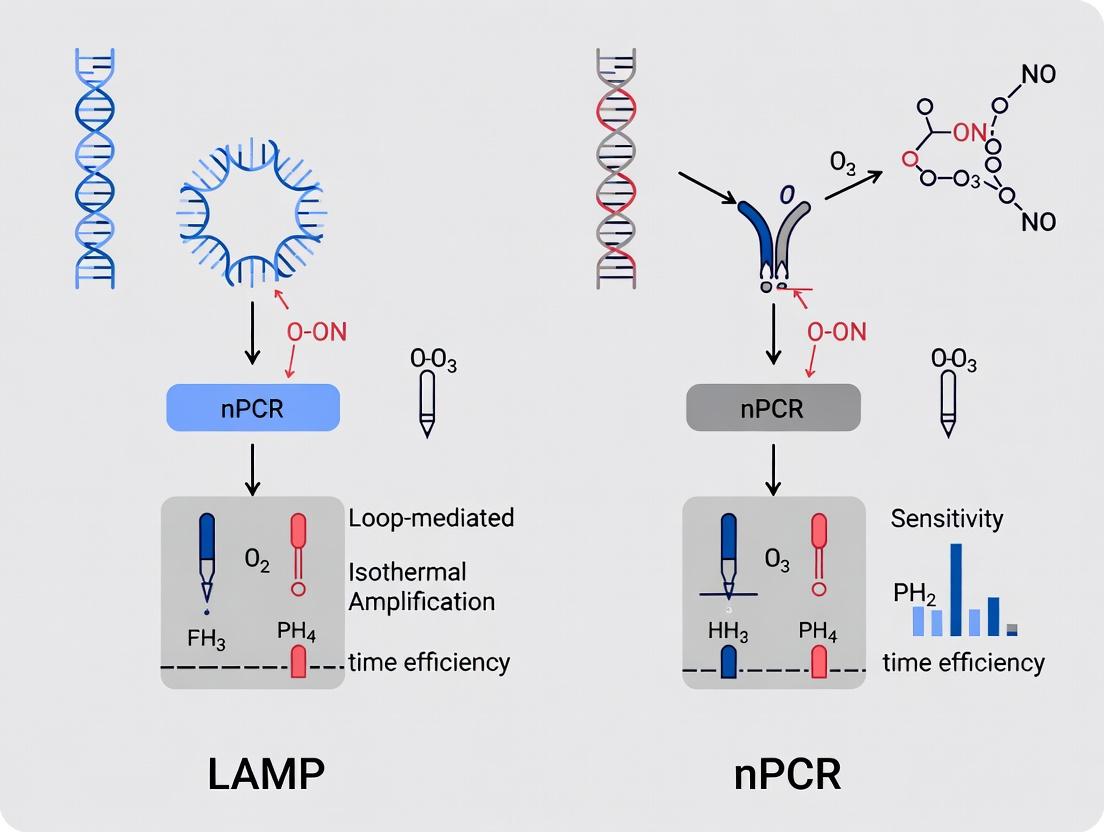
This article provides a detailed technical comparison of Loop-Mediated Isothermal Amplification (LAMP) and nested PCR (nPCR) methodologies for detecting SARS-CoV-2, tailored for researchers and drug development professionals.
LAMP vs nPCR: A Comprehensive Technical Comparison for SARS-CoV-2 Detection in Research and Diagnostics
Abstract
This article provides a detailed technical comparison of Loop-Mediated Isothermal Amplification (LAMP) and nested PCR (nPCR) methodologies for detecting SARS-CoV-2, tailored for researchers and drug development professionals. It explores the foundational principles of each technique, outlines step-by-step protocols and real-world applications, discusses common troubleshooting and optimization strategies, and presents a critical analysis of validation metrics and comparative performance data from recent studies. The review synthesizes evidence to guide method selection for specific research contexts, from high-throughput screening to point-of-care and variant surveillance.
Understanding the Core Principles: LAMP and nPCR Fundamentals for SARS-CoV-2 Detection
Nucleic Acid Amplification Tests (NAATs) are molecular assays that detect pathogen-specific genetic material (RNA or DNA). During the SARS-CoV-2 pandemic, NAATs, primarily Reverse Transcription-Polymerase Chain Reaction (RT-PCR), became the gold standard for diagnosis due to their high sensitivity and specificity. More recently, isothermal amplification techniques, such as Loop-Mediated Isothermal Amplification (LAMP), have been developed to offer rapid, equipment-light alternatives suitable for point-of-care and mass screening. This document provides Application Notes and Protocols relevant to a comparative research thesis on LAMP versus nested PCR (nPCR) for SARS-CoV-2 detection.
Key NAAT Technologies: LAMP vs. nPCR
A live search confirms the following contemporary performance metrics and characteristics for these two methods in SARS-CoV-2 detection.
Table 1: Comparative Analysis of LAMP and nPCR for SARS-CoV-2 Detection
| Parameter | Loop-Mediated Isothermal Amplification (LAMP) | Nested PCR (nPCR) |
|---|---|---|
| Principle | Isothermal amplification using 4-6 primers recognizing 6-8 distinct regions of the target. Utilizes Bst DNA polymerase with strand displacement activity. | Two rounds of conventional PCR using two sets of primers. The product of the first PCR (outer primers) is used as the template for the second PCR (inner primers). |
| Amplification Temp/Time | 60-65°C constant temperature for 15-60 minutes. | Thermocycling required. Typical protocols: Round 1: 25-30 cycles; Round 2: 25-30 cycles. Total time: 2-4 hours. |
| Sensitivity | High (Approx. 10-100 copies/reaction). Comparable to conventional PCR in optimized assays. | Very High (Approx. 1-10 copies/reaction). The two-round amplification reduces non-specific binding and increases sensitivity. |
| Specificity | High, due to recognition of multiple target sequences. | Very High, as the second round of amplification with inner primers ensures specificity. |
| Equipment Needs | Simple dry bath or heat block. No thermocycler required. | Thermocycler essential for both amplification rounds. |
| Throughput & Speed | Rapid result (<1 hour). Suitable for batch or single testing. Low to medium throughput. | Slower due to two rounds and thermocycling. Higher throughput possible with automated liquid handling. |
| Risk of Contamination | High risk of amplicon contamination due to open-tube detection (e.g., turbidity, color change). | Very High risk due to transfer of first-round amplicon to the second reaction tube. Requires strict physical separation of pre- and post-amplification areas. |
| Primary Application | Rapid screening, point-of-care testing, field deployment. | Confirmatory testing, research, detection of low viral load samples, sequencing preparation. |
| Cost per Test | Low to Moderate (reagent costs can be higher than standard PCR). | Low (standard PCR reagents), but labor and time costs are higher. |
Detailed Experimental Protocols
Protocol: SARS-CoV-2 Detection by RT-LAMP
Objective: To detect SARS-CoV-2 ORF1a/b or N gene RNA from extracted patient samples using a colorimetric LAMP assay.
I. Materials & Reagent Setup
- RNA Template: Purified RNA from nasopharyngeal swab (e.g., using silica-column based extraction).
- RT-LAMP Master Mix: Commercially available or prepared in-house containing:
- Bst 2.0/3.0 DNA Polymerase (warm-start capable)
- Reverse Transcriptase (e.g., WarmStart RTx)
- dNTPs
- Isothermal Amplification Buffer (with betaine and MgSO4)
- Primer Mix (FIP, BIP, F3, B3, LF, LB targeting SARS-CoV-2)
- Colorimetric pH indicator (e.g., phenol red)
- Nuclease-free Water
- Equipment: Heat block or dry bath (65°C), micropipettes, filter tips, 0.2 mL PCR tubes or strips.
II. Procedure
- Reaction Assembly (on ice or cold block):
- Prepare a 25 µL reaction in a 0.2 mL tube.
- Add 15.5 µL of RT-LAMP Master Mix (with primers and indicator).
- Add 5-10 µL of RNA template (containing up to 10 µL of extracted RNA).
- Adjust final volume to 25 µL with nuclease-free water.
- Mix gently by pipetting. Do not vortex.
- Amplification:
- Place tubes in a pre-heated heat block at 65°C.
- Incubate for 30-45 minutes.
- Result Interpretation (Colorimetric):
- Positive: The solution remains the original pinkish-red/orange color (basic pH) due to minimal proton release during amplification.
- Negative: The solution turns bright yellow (acidic pH) due to significant pyrophosphate production and magnesium complex formation during non-specific amplification or from the reaction buffer itself over time.
- Include a no-template control (NTC, water) and a positive synthetic control in each run.
Protocol: SARS-CoV-2 Detection by Two-Step RT-nPCR
Objective: To detect SARS-CoV-2 with high sensitivity using a two-step nested PCR approach after reverse transcription.
I. Materials & Reagent Setup
- RNA Template: Purified RNA.
- First-Strand cDNA Synthesis Kit: Reverse transcriptase (e.g., M-MLV), RNase inhibitor, random hexamers/oligo(dT), dNTPs, reaction buffer.
- First Round PCR Reagents: Taq DNA Polymerase, reaction buffer, dNTPs, outer primer pair (e.g., targeting RdRp gene).
- Second Round (Nested) PCR Reagents: Taq DNA Polymerase, reaction buffer, dNTPs, inner primer pair (nested within the first amplicon).
- Equipment: Thermocycler, separate pipettes and areas for pre-PCR (reagent prep, cDNA synthesis, 1st PCR setup) and post-PCR (2nd PCR setup, analysis), agarose gel electrophoresis system.
II. Procedure
- Reverse Transcription (20 µL):
- Combine 1-11 µL RNA, 1 µL random hexamers (50 ng/µL), and 1 µL dNTPs (10 mM). Heat to 65°C for 5 min, then place on ice.
- Add 4 µL 5x RT buffer, 1 µL RNase inhibitor (40 U/µL), 1 µL M-MLV RT (200 U/µL), and nuclease-free water to 20 µL.
- Incubate: 25°C for 10 min, 37°C for 50 min, 70°C for 15 min. Hold at 4°C. The product is cDNA.
- First Round PCR (50 µL):
- In a PRE-PCR AREA, prepare a mix for n+1 samples: 5 µL 10x PCR buffer, 1 µL dNTPs (10 mM), 1.25 µL each outer primer (10 µM), 0.25 µL Taq polymerase (5 U/µL), 36.25 µL water per reaction.
- Aliquot 45 µL of mix into PCR tubes. Add 5 µL of cDNA from step 1.
- Thermocycle: 95°C for 3 min; 30 cycles of [95°C for 30s, 55°C for 30s, 72°C for 45s]; 72°C for 5 min.
- Second Round (Nested) PCR (50 µL):
- CRITICAL: Move to a POST-PCR AREA with dedicated equipment.
- Prepare a mix for n+1 samples using inner primers: 5 µL 10x PCR buffer, 1 µL dNTPs, 1.25 µL each inner primer (10 µM), 0.25 µL Taq, 39.25 µL water per reaction.
- Aliquot 48 µL of mix into fresh PCR tubes. Add 2 µL of a 1:100 dilution of the first-round PCR product as template.
- Thermocycle: Use the same or a slightly higher annealing temperature than the first round for 25-30 cycles.
- Analysis:
- Run 10 µL of the second-round product on a 2% agarose gel with a DNA ladder.
- Visualize bands under UV light. Compare the amplicon size with the expected size based on the inner primers.
Visualizations
LAMP Assay Workflow
nPCR Assay Workflow
The Scientist's Toolkit
Table 2: Essential Research Reagent Solutions for NAAT Development
| Reagent/Material | Function/Explanation |
|---|---|
| Bst 2.0/3.0 DNA Polymerase | Warm-start, strand-displacing DNA polymerase essential for isothermal LAMP amplification. Offers high processivity and tolerance to inhibitors. |
| WarmStart Reverse Transcriptase | Engineered reverse transcriptase inactive at room temp, preventing non-specific activity during reaction setup. Critical for RT-LAMP and cDNA synthesis. |
| LAMP Primer Mix (FIP, BIP, F3, B3, LF/LB) | A set of 4-6 primers designed to recognize 6-8 distinct regions on the target DNA, conferring high specificity to the LAMP reaction. |
| Colorimetric pH Indicator | A dye (e.g., phenol red) that changes color based on pH shifts caused by pyrophosphate-magnesium ion formation during DNA synthesis, enabling visual readout without instrumentation. |
| RNA Extraction Kit (Silica Column) | For purifying viral RNA from clinical samples. Removes PCR inhibitors and concentrates nucleic acid, crucial for assay sensitivity and reproducibility. |
| Hot-Start Taq DNA Polymerase | Polymerase activated only at high temperatures, reducing primer-dimer formation and improving specificity in both rounds of nPCR. |
| Nested Primer Pairs (Outer & Inner) | Two sets of primers for nPCR. Outer primers generate the initial amplicon. Inner primers, binding internally to the first amplicon, provide a second layer of specificity and sensitivity. |
| dNTP Mix | Deoxyribonucleotide triphosphates (dATP, dCTP, dGTP, dTTP) - the building blocks for synthesizing new DNA strands during amplification. |
| Nuclease-Free Water | Water certified to be free of RNases, DNases, and nucleic acids, used to prepare all master mixes and dilutions to prevent contamination and degradation. |
| Positive Control (Synthetic RNA) | In vitro transcribed RNA containing the target sequence. Serves as an essential control for evaluating assay performance, determining limit of detection (LoD), and monitoring inter-run variability. |
Article Context
This article serves as a foundational component of a broader thesis comparing Loop-Mediated Isothermal Amplification (LAMP) and nested PCR (nPCR) for the detection of SARS-CoV-2, with a focus on sensitivity, specificity, and applicability in diagnostic and research settings.
Principles of Nested PCR (nPCR)
Nested PCR is a highly sensitive and specific modification of the polymerase chain reaction designed to reduce non-specific amplification. It involves two successive rounds of amplification using two sets of primers. The first set (outer primers) amplifies a target region. A small aliquot of this first PCR product is then used as the template for a second amplification with a set of primers (inner primers) that bind within the first amplicon. This nested approach significantly increases specificity by ensuring that the final product is derived from the intended target sequence, minimizing artifacts from mis-priming in the initial round.
Historical Development
The technique was developed in the late 1980s to early 1990s, shortly after the invention of PCR itself, to address challenges in amplifying low-copy-number targets and to improve specificity for sequencing applications. It became crucial for detecting pathogens present in very low quantities in clinical samples, such as viruses in latent infection, and for analyzing ancient DNA. Its role in virology, particularly for coronaviruses, was established well before the SARS-CoV-2 pandemic.
Two-Stage Amplification Mechanics
The mechanics are defined by sequential amplicon refinement.
Stage 1 (Primary PCR):
- Template: Extracted nucleic acid (e.g., RNA converted to cDNA for SARS-CoV-2).
- Primers: Outer primer pair designed to flank the target region of interest (e.g., SARS-CoV-2 N gene).
- Outcome: Production of an "outer" amplicon. This product may contain some non-specific amplification but includes the true target.
Stage 2 (Nested PCR):
- Template: A diluted sample (typically 1-5%) of the Stage 1 PCR product.
- Primers: Inner primer pair designed to bind within the sequence bounded by the outer primers.
- Outcome: Exclusive amplification of the specific target sequence from the Stage 1 product. Non-specific products from Stage 1 lack the inner primer binding sites and are not amplified, yielding a clean, specific final amplicon.
Table 1: Reported Performance Metrics of nPCR for SARS-CoV-2 Detection
| Study Reference | Target Gene | Reported Sensitivity vs. RT-qPCR | Specificity | Limit of Detection (LoD) | Key Application |
|---|---|---|---|---|---|
| Vogels et al., 2021 | N, S, RdRp | ~10-100x higher sensitivity | ~99-100% | 1-10 copies/reaction | Confirmation of low-viral-load samples |
| Liu et al., 2020 | ORF1ab, N | Detected qPCR-negative convalescent samples | 100% | <5 copies/reaction | Discharge criteria assessment |
| Chan et al., 2020 | RdRp, N | Essential for early variant discrimination | 100% | Not specified | Genomic characterization |
Table 2: Core Advantages and Disadvantages of nPCR
| Advantages | Disadvantages |
|---|---|
| Extremely high sensitivity and specificity | High risk of amplicon contamination |
| Can validate qPCR results | More time-consuming (4-6 hours) |
| Effective on degraded/poor-quality samples | Higher reagent and labor cost |
| Enables direct sequencing of pure product | Requires precise primer design |
Detailed nPCR Protocol for SARS-CoV-2 RNA Detection
A. Primer Design
- Outer Primers: Design to amplify a 300-500 bp region of a conserved SARS-CoV-2 gene (e.g., N).
- Inner Primers: Design to produce a 150-250 bp amplicon within the outer product. Verify specificity using BLAST.
B. Stage 1: Reverse Transcription and Primary PCR
- Reverse Transcription: In a 20 µL reaction, combine 5 µL of extracted RNA, 1 µL of random hexamers (50 µM), 1 µL of dNTP mix (10 mM), and 9 µL of nuclease-free water. Incubate at 65°C for 5 min, then place on ice. Add 4 µL of 5X RT buffer, 1 µL of RNase inhibitor, and 1 µL of reverse transcriptase (e.g., M-MLV). Cycle: 25°C for 10 min, 37°C for 50 min, 70°C for 15 min.
- Primary PCR Setup: In a 50 µL reaction, combine 5 µL of cDNA, 25 µL of 2X PCR master mix (containing DNA polymerase, dNTPs, MgCl₂), 1 µL each of forward and outer reverse primer (10 µM), and 18 µL of PCR-grade water.
- Primary Cycling Conditions:
- 95°C for 3 min (initial denaturation)
- 35 cycles of: 95°C for 30s, 55-60°C (primer-specific) for 30s, 72°C for 45s.
- 72°C for 5 min (final extension).
- Hold at 4°C.
C. Stage 2: Nested PCR
- Template Dilution: Dilute the Stage 1 PCR product 1:50 in nuclease-free water.
- Nested PCR Setup: In a fresh tube, combine 5 µL of diluted Stage 1 product, 25 µL of 2X PCR master mix, 1 µL each of forward and inner reverse primer (10 µM), and 18 µL of PCR-grade water.
- CRITICAL: Set up this reaction in a physically separate area from post-PCR analysis to prevent contamination.
- Nested Cycling Conditions:
- 95°C for 3 min.
- 30 cycles of: 95°C for 30s, 55-60°C (inner primer-specific) for 30s, 72°C for 30s.
- 72°C for 5 min.
- Hold at 4°C.
D. Analysis Analyze 10 µL of the Stage 2 product by gel electrophoresis (2% agarose). A clear band at the expected size indicates a positive result. Sequence confirmation is recommended for novel variants.
Visualized Workflow and Pathway
Title: Two-stage nPCR workflow for SARS-CoV-2 detection
Title: nPCR primer binding and amplicon refinement logic
The Scientist's Toolkit: Essential Research Reagents
Table 3: Key Reagent Solutions for nPCR Experiments
| Reagent/Material | Function & Importance | Example/Notes |
|---|---|---|
| High-Fidelity DNA Polymerase | Catalyzes DNA synthesis with low error rates, crucial for accurate amplification and subsequent sequencing. | Taq DNA Polymerase, Pfu, or commercial mixes. |
| dNTP Mix | Building blocks for new DNA strands. Quality affects amplification efficiency. | 10 mM solution of dATP, dTTP, dCTP, dGTP. |
| Sequence-Specific Primers | Outer and inner primer pairs define target and ensure specificity. Critical for success. | HPLC-purified primers, resuspended in nuclease-free water. |
| Nucleic Acid Extraction Kit | Isolves high-purity RNA/DNA from clinical samples (e.g., nasopharyngeal swabs). | Column-based or magnetic bead kits. |
| Reverse Transcriptase Enzyme | Converts target SARS-CoV-2 RNA into complementary DNA (cDNA) for PCR. | M-MLV or SuperScript IV. |
| RNase Inhibitor | Protects RNA templates from degradation during cDNA synthesis. | Essential for sensitive detection. |
| Agarose & Electrophoresis Buffer | For size-based separation and visualization of final nPCR products. | 2-3% agarose gel in TAE or TBE buffer. |
| DNA Intercalating Dye | Binds to DNA for visualization under UV light. | Ethidium bromide or safer alternatives like GelRed. |
| Nuclease-Free Water | Solvent for all reaction setups; prevents enzymatic degradation of reagents. | Certified free of RNases and DNases. |
| Physical Barrier (UV Hood) | Separate pre- and post-PCR areas to prevent amplicon contamination. | Dedicated workstation with UV decontamination. |
Application Notes: Core Principles & Thesis Context
This document details the principles and protocols for Loop-Mediated Isothermal Amplification (LAMP), a rapid nucleic acid amplification technique. In the context of a comparative thesis research evaluating LAMP versus nested PCR (nPCR) for SARS-CoV-2 detection, understanding LAMP's isothermal mechanism, enzyme kinetics, and primer design complexity is critical. Key advantages for point-of-care deployment include speed, tolerance to inhibitors, and visual readout, while nPCR may offer superior specificity in complex sample matrices.
Key Components & Quantitative Data
Table 1: Core Components of a Standard LAMP Reaction
| Component | Typical Concentration/Amount | Function & Rationale |
|---|---|---|
| Bst Polymerase (Large Fragment) | 8-16 U/reaction | DNA-dependent DNA polymerase with high strand displacement activity, essential for isothermal amplification. |
| Target DNA/RNA | 10^2 - 10^6 copies | The nucleic acid template to be amplified. For RNA viruses (SARS-CoV-2), reverse transcriptase is included. |
| Inner Primers (FIP/BIP) | 1.6 µM each | Contain two target sequences, initiate loop formation and exponential amplification. |
| Outer Primers (F3/B3) | 0.2 µM each | Aid in strand displacement and initial amplification stages. |
| Loop Primers (LF/LB)* | 0.8 µM each | Accelerate reaction speed by binding to loop regions. |
| dNTPs | 1.4 mM each | Nucleotide building blocks for DNA synthesis. |
| MgSO4 | 4-8 mM | Cofactor for Bst polymerase; concentration is critical for optimal activity. |
| Betaine | 0.6-1.0 M | Reduces DNA secondary structure, stabilizing primer binding and strand separation. |
| Reaction Buffer | 1X (e.g., 20 mM Tris-HCl, 10 mM (NH4)2SO4, 50 mM KCl) | Maintains optimal pH and ionic strength. |
| WarmStart/Heat-labile additives | Variable | Enables hot-start to prevent non-specific amplification at setup. |
*Optional but recommended.
Table 2: Performance Comparison: LAMP vs. nPCR for SARS-CoV-2 Detection (Thesis Context)
| Parameter | LAMP | Nested PCR (nPCR) |
|---|---|---|
| Amplification Temperature | Isothermal (60-65°C) | Thermo-cycling (Two sets of ~30 cycles, 55-95°C) |
| Typical Time-to-Result | 15-60 minutes | 3-4 hours (including gel analysis) |
| Theoretical Sensitivity | 1-10 copies/reaction (with optimized primers) | <1-10 copies/reaction |
| Specificity | High (Uses 4-6 primers) | Very High (Two rounds of amplification) |
| Instrument Requirement | Simple dry bath/block | Thermal cycler (two separate runs) |
| Amplicon Detection | Real-time turbidity/fluorescence, colorimetric, gel electrophoresis | Primarily gel electrophoresis post-amplification |
| Risk of Amplicon Contamination | High (Open-tube detection common) | Very High (Requires tube opening between rounds) |
| Tolerance to PCR Inhibitors | Relatively High | Low |
Detailed Experimental Protocols
Protocol 3.1: LAMP Primer Design for SARS-CoV-2 N Gene
This protocol describes the design of a specific LAMP primer set targeting the Nucleocapsid (N) gene of SARS-CoV-2.
- Sequence Retrieval: Obtain the reference genome sequence for SARS-CoV-2 (e.g., NC_045512.2) from a database like GenBank. Extract the N gene region.
- Target Region Selection: Identify a ~200 bp conserved region within the N gene using multiple sequence alignment tools (e.g., Clustal Omega).
- Primer Design with Software: Input the target sequence into dedicated LAMP design software (e.g., PrimerExplorer V5, NEB LAMP Designer).
- Software automatically defines six distinct regions: F3, F2, F1, B1c, B2c, B3c.
- Generate Primer Sequences:
- FIP (Forward Inner Primer): F1c (complement of F1) + TTTT linker + F2 sequence.
- BIP (Backward Inner Primer): B1c (complement of B1) + TTTT linker + B2 sequence.
- F3 (Forward Outer Primer): F3 sequence.
- B3 (Backward Outer Primer): B3 sequence.
- LF (Loop Forward Primer): Sequence complementary to the loop between F1 and F2.
- LB (Loop Backward Primer): Sequence complementary to the loop between B1 and B2.
- In-silico Validation: Check primer specificity using BLAST against the human genome and other coronavirus sequences. Check for primer dimers and secondary structure using tools like OligoAnalyzer.
- Order Primers: Synthesize primers with standard desalting purification. Resuspend in TE buffer or nuclease-free water to 100 µM stock concentration.
Protocol 3.2: Standard Colorimetric LAMP Assay for SARS-CoV-2 RNA
Objective: To detect SARS-CoV-2 RNA from extracted clinical samples using a one-step RT-LAMP reaction with visual color change.
Materials: WarmStart Bst 2.0/3.0 Polymerase, WarmStart RTx Reverse Transcriptase, 10X Isothermal Amplification Buffer, dNTPs, MgSO4, Betaine, Primer Mix (FIP, BIP, F3, B3, LF, LB), Phenol Red (1% w/v in DMSO), Nuclease-free water, RNA template.
Procedure:
- Master Mix Preparation (Per 25 µL reaction, on ice):
- 2.5 µL 10X Isothermal Amplification Buffer
- 3.5 µL MgSO4 (100 mM stock; final 14 mM)
- 4.0 µL Betaine (5M stock; final 0.8 M)
- 3.5 µL dNTP Mix (10 mM each; final 1.4 mM)
- 4.0 µL Primer Mix (containing all 6 primers at optimized stocks)
- 1.0 µL Phenol Red (1% stock; final ~0.04%)
- 1.0 µL WarmStart Bst 2.0 Polymerase (8 U/µL)
- 0.5 µL WarmStart RTx (for RNA targets)
- X µL Nuclease-free water
- Y µL RNA template (<=5 µL, ~10^3 copies recommended for optimization)
- Reaction Setup: Aliquot 20 µL of master mix (without template) into each reaction tube. Add 5 µL of RNA sample (or nuclease-free water for no-template control). Mix gently by pipetting.
- Incubation: Place tubes in a preheated dry bath or thermal cycler at 65°C for 30-45 minutes. Do not use a heated lid.
- Visual Detection:
- Positive Result: The reaction turns from pink/red to yellow due to acidification (proton release during amplification).
- Negative Result: The reaction remains pink/red.
- Invalid/Inhibited: An orange color may indicate partial inhibition.
Visualizations
Title: LAMP vs nPCR Workflow Comparison
Title: LAMP Primer Target Binding Sites
The Scientist's Toolkit: Research Reagent Solutions
Table 3: Essential Reagents for LAMP-based SARS-CoV-2 Research
| Item | Example Product/Catalog # | Function in LAMP Research |
|---|---|---|
| Bst Polymerase 2.0/3.0 (WarmStart) | NEB M0538 / M0374 | High-activity, strand-displacing DNA polymerase; WarmStart version minimizes non-specific amplification during setup. |
| Reverse Transcriptase (for RT-LAMP) | WarmStart RTx (NEB M0380) or GspSSD 2.0 (Optigene) | Robust reverse transcriptase for one-step RT-LAMP, often combined with Bst polymerase. |
| Isothermal Amplification Buffer | Supplied with Bst polymerase | Optimized buffer providing Mg2+, (NH4)2SO4, and other salts for maximal Bst activity. |
| dNTP Solution Mix | NEB N0447 | Pure, high-quality deoxynucleotide triphosphates for DNA synthesis. |
| Betaine Solution (5M) | Sigma B0300 | Chemical chaperone that reduces DNA secondary structure, improving primer access and strand displacement. |
| Colorimetric pH Indicator | Phenol Red (Sigma P3532) or Hydroxy Naphthol Blue (HNB) | Visual dye for endpoint detection; color change indicates amplification-induced pH drop or Mg2+ chelation. |
| Fluorescent Intercalating Dye | SYTO 9, EvaGreen, or Calcein/Mn2+ | Allows real-time monitoring of amplification via fluorescence increase. |
| RNase/DNase Inhibitor | Murine RNase Inhibitor (NEB M0314) | Protects RNA templates from degradation during reaction setup. |
| Synthetic SARS-CoV-2 RNA Control | ATCC VR-3276SD | Positive control template for assay development, optimization, and validation. |
| Rapid Heat Block/Dry Bath | Any accurate 60-65°C block | Simple, low-cost incubation device for isothermal reactions. |
| Portable Fluorimeter/Turbidimeter | Genie II/III (Optigene) | Handheld device for real-time, quantitative LAMP readout in field settings. |
SARS-CoV-2, the causative agent of COVID-19, possesses a positive-sense single-stranded RNA genome of approximately 30 kb. Key structural and non-structural genes are critical targets for diagnostic assays. The Nucleocapsid (N) gene, Envelope (E) gene, and Spike (S) gene are structural, while the RNA-dependent RNA polymerase (RdRp) is a non-structural gene within the ORF1ab region. Their relative conservation and copy number per virion influence assay design and sensitivity.
Quantitative Comparison of Genetic Targets and Assay Performance
Table 1: Characteristics of Key SARS-CoV-2 Genetic Targets
| Gene Target | Function | Genome Position (approx.) | Relative Conservation | Copies per Virion (Genome) | Subgenomic RNA Presence |
|---|---|---|---|---|---|
| RdRp (ORF1ab) | Viral replication | 1-21,563 | High | 1 | No |
| N (Nucleocapsid) | RNA packaging | 28,274-29,533 | High | 1 | Yes (High Abundance) |
| E (Envelope) | Virion assembly & budding | 26,245-26,472 | High | 1 | Yes |
| S (Spike) | Host cell receptor binding & entry | 21,563-25,384 | Moderate (Variable RBD) | 1 | Yes |
Table 2: Representative Analytical Sensitivity of LAMP vs nPCR by Target
| Gene Target | LAMP Limit of Detection (copies/µL) | nPCR (Nested PCR) Limit of Detection (copies/µL) | Typical Assay Time (LAMP) | Typical Assay Time (nPCR) |
|---|---|---|---|---|
| RdRp | 10 - 100 | 1 - 10 | 30-60 min | 3-4 hours |
| N | 1 - 10 | 0.1 - 1 | 20-45 min | 3-4 hours |
| E | 10 - 50 | 1 - 5 | 30-60 min | 3-4 hours |
| S (or S1/RBD) | 50 - 200 | 5 - 20 | 45-60 min | 3-4 hours |
Note: Data synthesized from recent publications (2023-2024). Actual LoD varies by specific primer/probe design and master mix.
Detailed Experimental Protocols
Protocol 3.1: One-Step RT-LAMP for N Gene Detection
Objective: To detect SARS-CoV-2 N gene from extracted RNA using a colorimetric LAMP assay. Reagents:
- WarmStart Colorimetric LAMP 2X Master Mix (with UDG).
- Primers (F3, B3, FIP, BIP, LF, LB) targeting N gene (e.g., CDC N1/N2 regions).
- RNA template (5 µL per reaction).
- Nuclease-free water. Procedure:
- Prepare reaction mix on ice: 12.5 µL 2X Master Mix, 1.5 µL primer mix (final conc: F3/B3 0.2 µM, FIP/BIP 1.6 µM, LF/LB 0.4 µM), RNA template 5 µL, H₂O to 25 µL.
- Run reaction in a heat block or real-time cycler at 63°C for 30 minutes.
- Visualize result: Yellow -> negative; Orange/Red -> positive. Include no-template control (NTC) and positive control.
Protocol 3.2: Two-Step Nested RT-PCR for RdRp Gene Detection
Objective: To amplify a specific fragment of the RdRp gene with high sensitivity. Reagents:
- Reverse Transcriptase (e.g., SuperScript IV), RNase H.
- PCR Polymerase (high-fidelity, e.g., Q5).
- Outer Primer Pair (RdRpOutF/R), Inner Primer Pair (RdRpInF/R).
- dNTPs, Buffer, MgCl₂. Procedure:
- Step 1 - cDNA Synthesis: In a 20 µL reaction, combine 1 µM random hexamers, 500 µM dNTPs, 11 µL RNA, heat to 65°C for 5 min, then chill. Add 4 µL 5X SSIV buffer, 1 µL DTT, 1 µL RNase inhibitor, 1 µL SSIV. Incubate: 23°C 10 min, 55°C 10 min, 80°C 10 min.
- Step 2 - First Round PCR: Use 2 µL cDNA with outer primers. Cycle: 98°C 30s; 35 cycles of [98°C 10s, 55°C 30s, 72°C 30s]; 72°C 2 min.
- Step 3 - Second Round (Nested) PCR: Dilute first PCR product 1:50. Use 1 µL as template with inner primers. Cycle as above but for 25 cycles.
- Analyze 5 µL of nested product on a 2% agarose gel. Expected band: ~150-200 bp.
Visualizations
Diagram 1: LAMP vs nPCR Diagnostic Workflow
Diagram 2: Viral RNA Targets & Transcription
The Scientist's Toolkit: Research Reagent Solutions
Table 3: Essential Reagents for SARS-CoV-2 Gene Target Assay Development
| Reagent Category | Specific Example(s) | Function in Assay |
|---|---|---|
| Reverse Transcriptase | SuperScript IV, LunaScript | Converts viral RNA to complementary DNA (cDNA) for PCR-based methods. |
| Thermostable Polymerase | Bst 2.0/3.0 (for LAMP), Taq DNA Pol (for PCR), Q5 (Hi-Fi PCR) | Catalyzes DNA strand elongation during isothermal or thermal amplification. |
| LAMP Master Mix | WarmStart Colorimetric LAMP Master Mix, Loopamp Kit | Provides optimized buffer, dyes, and enzymes for one-step LAMP detection. |
| Primers & Probes | Oligonucleotides targeting RdRp, N, E, S genes. | Provide sequence specificity for primer binding and, if used, fluorescent detection. |
| RNA Extraction Kit | QIAamp Viral RNA Mini Kit, MagMax Viral/Pathogen Kit | Purifies and concentrates viral RNA from clinical samples (swab, saliva). |
| Positive Control | Synthetic RNA (e.g., from Twist Bioscience) or Inactivated Virus. | Validates assay performance and serves as a quantitative standard. |
| Nuclease-free Water & Tubes | RNase/DNase-free water, Low-bind microcentrifuge tubes. | Prevents degradation of nucleic acids and loss of material via adsorption. |
Application Notes
This analysis compares the instrumentation requirements for Loop-Mediated Isothermal Amplification (LAMP) and nested PCR (nPCR) within SARS-CoV-2 detection workflows. The central thesis posits that LAMP's isothermal nature reduces dependence on sophisticated thermal cyclers, enabling deployment with simple heat blocks, which has profound implications for infrastructure, cost, scalability, and accessibility in diagnostic and research settings.
Key Findings:
- Thermal Cycler Dependence: nPCR is fundamentally dependent on precise, programmable thermal cycling for denaturation, annealing, and extension steps. This requires expensive, maintenance-intensive instrumentation. Nested protocols further increase run times and instrument occupancy.
- Heat Block Sufficiency: Standard LAMP reactions for SARS-CoV-2 are typically performed at 60-65°C isothermally. This can be achieved with low-cost, low-maintenance dry baths, water baths, or even improvised heating elements, drastically lowering the barrier to entry.
- Throughput vs. Flexibility: While high-throughput thermal cyclers can process many nPCR samples in parallel, they represent a single point of failure. Multiple simple heat blocks offer decentralized, fault-tolerant capacity for LAMP.
- Protocol Integration: The choice of instrumentation directly impacts protocol steps. nPCR requires careful programming of cycler protocols, whereas LAMP setup focuses on maintaining a consistent single temperature, often with visual or endpoint detection.
Table 1: Instrumentation & Performance Parameters for SARS-CoV-2 Detection Assays
| Parameter | Nested PCR (nPCR) | Loop-Mediated Isothermal Amplification (LAMP) |
|---|---|---|
| Primary Instrument | Programmable Thermal Cycler | Heat Block / Water Bath / Dry Bath |
| Typical Cost Range | $5,000 - $25,000+ | $200 - $2,000 |
| Temperature Profile | 2-3 Cycling Temperatures (e.g., 94°C, 55°C, 72°C) | Single Isothermal Temperature (60°C - 65°C) |
| Approx. Assay Time | 3 - 4 hours (including both rounds) | 30 - 60 minutes |
| Power Requirements | High (for rapid heating/cooling) | Low to Moderate (for maintaining temperature) |
| Infrastructure Demand | High (stable power, service contracts) | Low (can run on battery/generator) |
| Throughput (Machine) | High (96-well standard) | Variable (depends on block capacity) |
| Ease of Scalability | Capital Intensive | Cost-Effective and Modular |
Table 2: Reagent & Protocol Complexity
| Aspect | Nested PCR (nPCR) | Loop-Mediated Isothermal Amplification (LAMP) |
|---|---|---|
| Enzyme System | Thermostable DNA Polymerase (e.g., Taq) | Bst DNA Polymerase (strand-displacing) |
| Primer Complexity | 2 primers per round (4 total) | 4-6 primers recognizing 6-8 distinct regions |
| Risk of Contamination | High (amplicon carryover between rounds) | High (single-tube closed-tube detection mitigates this) |
| Detection Method | Typically Agarose Gel Electrophoresis or qPCR | Real-time turbidity/fluorescence, colorimetric (pH), or endpoint gel |
Experimental Protocols
Protocol 1: SARS-CoV-2 Detection via Two-Step nPCR Using a Thermal Cycler
Objective: To detect the SARS-CoV-2 N gene via a two-step nested PCR protocol requiring precise thermal cycling.
Research Reagent Solutions:
- Nucleic Acid Extraction Kit: (e.g., QIAamp Viral RNA Mini Kit) - For isolating viral RNA from swab samples.
- Reverse Transcription Mix: Contains Reverse Transcriptase, dNTPs, and buffer - Converts viral RNA to cDNA.
- High-Fidelity PCR Master Mix: Contains thermostable DNA polymerase, dNTPs, MgCl2, and optimized buffer - For robust first-round amplification.
- Standard Taq PCR Master Mix: For the second, nested amplification round.
- Primer Sets (N gene): Outer primer pair and inner (nested) primer pair, resuspended in nuclease-free water.
- Agarose Gel Electrophoresis System: For visualizing final amplicons.
Procedure:
- RNA Extraction & cDNA Synthesis: Extract RNA from 140µL sample. Perform reverse transcription on 10µL eluted RNA in a 20µL reaction.
- First-Round PCR:
- Prepare 25µL reactions: 12.5µL High-Fidelity Master Mix, 1µL each outer forward/reverse primer (10µM), 2.5µL cDNA template, 8µL nuclease-free water.
- Program Thermal Cycler: Initial Denaturation: 95°C for 2 min; 35 Cycles: Denature 95°C for 30s, Anneal 55°C for 30s, Extend 72°C for 45s; Final Extension: 72°C for 5 min; Hold at 4°C.
- Load samples and run the program.
- Second-Round (Nested) PCR:
- Prepare 50µL reactions: 25µL Standard Taq Master Mix, 2µL each inner forward/reverse primer (10µM), 1µL of a 1:50 dilution of the first-round PCR product as template, 20µL nuclease-free water.
- Program Thermal Cycler: Use the same cycling parameters as Step 2.
- Load samples and run the program.
- Analysis: Run 10µL of the nested PCR product on a 2% agarose gel. A band of the expected size (~150-200bp) indicates a positive result.
Protocol 2: SARS-CoV-2 Detection via Colorimetric LAMP Using a Heat Block
Objective: To detect the SARS-CoV-2 ORF1a gene via a one-step, isothermal LAMP reaction with endpoint visual (colorimetric) detection, using only a heat block.
Research Reagent Solutions:
- WarmStart Colorimetric LAMP 2X Master Mix: Contains Bst 2.0 WarmStart DNA Polymerase, dNTPs, and a pH-sensitive phenol red indicator. Enables one-step visual detection.
- LAMP Primer Mix (ORF1a gene): A pre-mixed set of F3, B3, FIP, and BIP primers specific to the SARS-CoV-2 target.
- Heat Block or Dry Bath: Capable of maintaining a stable temperature of 65°C ± 1°C.
- Microcentrifuge Tubes or Strips: For reaction assembly.
Procedure:
- Reaction Assembly: At room temperature, prepare reactions by combining 12.5µL of 2X Colorimetric LAMP Master Mix, 1.5µL of LAMP Primer Mix, 5-10µL of extracted RNA sample (or nuclease-free water for negative control), and bring the total volume to 25µL with nuclease-free water.
- Incubation:
- Pre-heat the heat block or dry bath to 65°C and verify temperature with a calibrated thermometer.
- Place the securely closed reaction tubes directly into the heat block.
- Incubate for 30-60 minutes. Do not open tubes during incubation.
- Endpoint Visualization:
- After incubation, visually inspect the reaction color.
- Positive Result: The reaction remains the original pinkish-red/orange color (or turns yellow if starting pH is adjusted) due to proton release during amplification, lowering pH.
- Negative Result: The reaction turns magenta/purish-red due to no pH change.
Diagrams
Title: Nested PCR Workflow and Instrument Dependence
Title: LAMP Workflow with Heat Block Incubation
Protocol Deep Dive: Step-by-Step Workflows and Research Applications for LAMP and nPCR
This protocol is established within the context of a comparative thesis research evaluating Loop-Mediated Isothermal Amplification (LAMP) versus Nested Polymerase Chain Reaction (nPCR) for the detection of SARS-CoV-2. nPCR offers enhanced specificity and sensitivity for low viral load samples, crucial for research, surveillance, and drug development applications, albeit with increased procedural complexity and contamination risk compared to LAMP.
Primer Design for SARS-CoV-2 nPCR
Effective primer design is critical. Primers must target conserved regions of the SARS-CoV-2 genome. The envelope (E), nucleocapsid (N), and RNA-dependent RNA polymerase (RdRp) genes are common targets.
- First-Round (Outer) Primers: Designed to amplify a larger fragment (e.g., 400-600 bp). Must be specific to SARS-CoV-2 but may allow for minor mismatches with related coronaviruses.
- Second-Round (Nested/Inner) Primers: Designed to bind within the first-round amplicon, producing a smaller fragment (e.g., 200-300 bp). Must be highly specific to SARS-CoV-2 with no cross-reactivity.
Design Guidelines:
- Length: 18-25 nucleotides.
- GC Content: 40-60%.
- Tm: 55-65°C, with inner primers Tm ~2-5°C higher than outer primers.
- Avoid: Secondary structures, primer-dimer formation, and runs of identical nucleotides.
- Specificity: Verify using BLAST against the NCBI database.
- Conservation: Check alignment with current and past Variants of Concern (VoCs).
Example Primer Sequences (RdRp Gene Target - Adapted from Published Protocols):
| Primer Set | Target Gene | Sequence (5' -> 3') | Amplicon Size | Function |
|---|---|---|---|---|
| Outer Forward | RdRp | GTGARATGGTCATGTGTGGCGG | 501 bp | First-round amplification |
| Outer Reverse | RdRp | CARATGTTAAASACACTATTAGCATA | ||
| Nested Forward | RdRp | CAGGTGGAACCTCATCAGGAGATGC | 263 bp | Second-round amplification |
| Nested Reverse | RdRp | CAGATGTCTTGTGCTGCCGGTA |
Note: S = C or G; R = A or G. Always verify against current reference sequences (e.g., NC_045512.2).
Detailed nPCR Protocol
Sample Preparation and RNA Extraction
Perform viral RNA extraction from nasopharyngeal/oropharyngeal swabs, saliva, or viral transport media using a commercial silica-membrane or magnetic-bead based kit. Include appropriate positive (SARS-CoV-2 RNA) and negative (nuclease-free water) extraction controls. Elute in 50-80 µL of nuclease-free water.
Reverse Transcription (cDNA Synthesis)
| Reagent | Volume | Function |
|---|---|---|
| Extracted RNA Template | 5-10 µL | Viral RNA target |
| Random Hexamers / Gene-Specific Primer (e.g., Outer Reverse) | 1 µL (50 pmol) | Primer for cDNA synthesis |
| 10mM dNTP Mix | 1 µL | Nucleotides for cDNA strand |
| 5x RT Buffer | 4 µL | Provides optimal reaction conditions |
| RNase Inhibitor (40 U/µL) | 0.5 µL (20 U) | Protects RNA from degradation |
| Reverse Transcriptase (200 U/µL) | 0.5 µL (100 U) | Synthesizes cDNA from RNA template |
| Nuclease-Free Water | to 20 µL | Reaction volume adjuster |
Protocol: Combine reagents on ice. Incubate: 25°C for 5 min (primer annealing), 50°C for 45 min (extension), 70°C for 15 min (enzyme inactivation). Hold at 4°C. cDNA can be used immediately or stored at -20°C.
First-Round PCR Setup
| Reagent | Volume (50 µL Reaction) | Final Concentration |
|---|---|---|
| 2x Master Mix (Hot Start) | 25 µL | 1x |
| Outer Forward Primer (10 µM) | 2 µL | 0.4 µM |
| Outer Reverse Primer (10 µM) | 2 µL | 0.4 µM |
| Template cDNA | 5 µL | - |
| Nuclease-Free Water | 16 µL | - |
Thermal Cycling Conditions:
| Step | Temperature | Time | Cycles |
|---|---|---|---|
| Initial Denaturation | 95°C | 3 min | 1 |
| Denaturation | 95°C | 30 sec | |
| Annealing | 55-58°C* | 30 sec | 35 |
| Extension | 72°C | 45 sec | |
| Final Extension | 72°C | 5 min | 1 |
| Hold | 4°C | ∞ |
*Optimize based on primer Tm.*
Second-Round (Nested) PCR Setup
Critical: Perform in a physically separate workspace using dedicated pipettes and consumables to prevent amplicon contamination. Use a 1:10 to 1:100 dilution of the first-round PCR product as template.
| Reagent | Volume (50 µL Reaction) | Final Concentration |
|---|---|---|
| 2x Master Mix (Hot Start) | 25 µL | 1x |
| Nested Forward Primer (10 µM) | 2 µL | 0.4 µM |
| Nested Reverse Primer (10 µM) | 2 µL | 0.4 µM |
| Diluted First-Round Product | 2 µL | - |
| Nuclease-Free Water | 19 µL | - |
Thermal Cycling Conditions:
| Step | Temperature | Time | Cycles |
|---|---|---|---|
| Initial Denaturation | 95°C | 3 min | 1 |
| Denaturation | 95°C | 30 sec | |
| Annealing | 60-63°C* | 30 sec | 30 |
| Extension | 72°C | 30 sec | |
| Final Extension | 72°C | 5 min | 1 |
| Hold | 4°C | ∞ |
*Optimize based on primer Tm.*
Analysis
Analyze 5-10 µL of the second-round product by agarose gel electrophoresis (e.g., 2%) alongside a DNA ladder. A band of the expected size indicates a positive result. Confirm by Sanger sequencing.
Visualizations
Title: nPCR for SARS-CoV-2 Detection Workflow
The Scientist's Toolkit: Key Research Reagent Solutions
| Item | Category | Function & Rationale |
|---|---|---|
| Viral RNA Extraction Kit | Sample Prep | Silica-column or magnetic-bead based. Efficiently isolates high-purity RNA from clinical samples, crucial for downstream sensitivity. |
| RNase Inhibitor | Enzyme | Protects labile viral RNA from degradation during cDNA synthesis, ensuring template integrity. |
| Hot Start DNA Polymerase | Enzyme | Reduces non-specific amplification and primer-dimer formation by requiring thermal activation, improving nPCR specificity. |
| dNTP Mix | Nucleotide | Building blocks for cDNA and DNA synthesis. Quality impacts amplification efficiency and fidelity. |
| Nuclease-Free Water | Solvent | Certified free of nucleases and contaminants. Prevents degradation of templates and primers. |
| Agarose & DNA Stain | Analysis | For gel electrophoresis. Confirms amplicon size and reaction specificity post-amplification. |
| DNA Ladder | Analysis | Essential molecular weight marker for accurate size determination of nPCR amplicons on a gel. |
| PCR Cleanup Kit | Analysis | Used to purify nPCR products prior to sequencing for confirmation. |
Within the broader research comparing Loop-Mediated Isothermal Amplification (LAMP) to nested PCR (nPCR) for SARS-CoV-2 detection, the RT-LAMP protocol presents a critical methodology. Its isothermal nature, rapid turnaround, and potential for point-of-care application offer distinct advantages over the thermocycling-dependent, multi-step nPCR process. This protocol details the primer design, reaction assembly, and incubation parameters essential for robust SARS-CoV-2 detection, forming the experimental basis for comparative sensitivity and specificity analyses.
Primer Sets for SARS-CoV-2 RT-LAMP
Primer design is foundational. Sets typically include two outer primers (F3, B3), two inner primers (FIP, BIP), and often loop primers (LF, LB) to accelerate amplification. Key validated sets include:
Table 1: Comparison of Standard SARS-CoV-2 RT-LAMP Primer Sets
| Source/Set Name | Target Gene | Primer Components (F3/B3, FIP/BIP, LF/LB) | Key Reference/Manufacturer |
|---|---|---|---|
| NEB WarmStart | ORF1a, N gene | Proprietary mix (includes loop primers) | New England Biolabs (E1700) |
| WHO-validated (Zhang et al.) | N gene | 6 primers per set (includes LF, LB) | WHO Emergency Use Listing |
| CDC-validated (ARAD) | N gene | 6 primers per set | US CDC & FDA guidance |
| OPTIMA I (POD) | S, N, ORF1ab | 8 primers (adds loop primers) | Open-source protocol |
Detailed RT-LAMP Reaction Setup Protocol
Research Reagent Solutions & Essential Materials
Table 2: The Scientist's Toolkit for Standard RT-LAMP
| Item | Function/Brief Explanation |
|---|---|
| WarmStart RTx Reverse Transcriptase | Engineered for high sensitivity and speed in isothermal conditions. |
| Bst 2.0/3.0 DNA Polymerase | Strand-displacing DNA polymerase essential for LAMP amplification. |
| Betaine (5M stock) | Reduces secondary structure in GC-rich regions, improving primer access. |
| MgSO4 (100mM stock) | Provides essential magnesium ions for polymerase activity. |
| dNTP Mix (10mM each) | Building blocks for DNA synthesis. |
| Fluorescent Dye (e.g., SYTO 9, HNB, Calcein) | Visual or fluorometric detection of amplification (pH or metal ion change). |
| RNase-free Water | Ensures no degradation of RNA template. |
| RT-LAMP Primer Mix (FIP/BIP: 1.6µM each; F3/B3: 0.2µM each; LF/LB: 0.8µM each) | Optimized concentrations for efficient and specific amplification. |
| Positive Control RNA (e.g., from heat-inactivated SARS-CoV-2) | Validates reaction integrity and efficiency. |
| Negative Control (RNase-free Water) | Monitors for contamination and false positives. |
Step-by-Step Protocol
A. Reagent Thaw and Preparation
- Thaw all frozen components (except enzymes) on ice. Centrifuge briefly.
- Prepare a master mix in a sterile, nuclease-free tube to minimize pipetting error. Scale for n+1 reactions.
B. Master Mix Assembly (for 1 reaction, 25µL total volume) Table 3: RT-LAMP Master Mix Formulation
| Component | Final Concentration | Volume per 25µL Reaction |
|---|---|---|
| RNase-free Water | - | To 25µL final volume |
| Isothermal Amplification Buffer (2X) | 1X | 12.5 µL |
| MgSO4 (100mM) | 6-8 mM | 1.5 - 2.0 µL |
| Betaine (5M) | 0.8 - 1.0 M | 4.0 - 5.0 µL |
| dNTP Mix (10mM each) | 1.4 mM | 3.5 µL |
| Primer Mix (see Table 2) | As per table | 2.5 µL |
| Fluorescent Dye (e.g., 20X SYTO 9) | 1X | 1.25 µL |
| WarmStart RTx Enzyme Mix | - | 1.0 µL |
| Total Master Mix Volume | ~22-23 µL |
- Mix master mix thoroughly by gentle vortexing and brief centrifugation.
- Aliquot 23 µL of master mix into each reaction tube/strip.
C. Template Addition and Reaction Start
- Add 2 µL of extracted RNA template (or control) to each tube, for a final volume of 25 µL.
- Cap tubes tightly, mix by brief centrifugation.
- Immediately transfer to a pre-heated isothermal instrument or heat block.
Incubation and Detection
- Incubation: 63-65°C for 25-40 minutes. Higher temperatures (e.g., 65°C) may enhance specificity.
- Detection:
- Real-time fluorescence: Monitor amplification every 30-60 seconds.
- Endpoint visualization: Post-incubation, observe color change:
- HNB (HNB Pre-Added): Purple (negative) → Sky Blue (positive)
- Calcein: Orange (negative) → Green (positive)
- Gel electrophoresis: Run product on 2% agarose gel. Positive shows a characteristic ladder pattern.
Experimental Workflow Diagram
Diagram Title: RT-LAMP Experimental Workflow from Setup to Detection
LAMP vs. nPCR in Thesis Research Context
Diagram Title: Key Comparative Features of RT-LAMP and nPCR Methods
This application note provides critical protocols and data for a broader thesis research comparing Loop-Mediated Isothermal Amplification (LAMP) and nested PCR (nPCR) for SARS-CoV-2 detection. A pivotal variable in assay performance is the sample preparation method. This document details the requirements of formal RNA extraction versus direct protocols like heat lysis, providing researchers with the necessary tools to evaluate their impact on sensitivity, specificity, and workflow efficiency.
Table 1: Performance Metrics of Sample Processing Methods for SARS-CoV-2 Detection
| Parameter | Silica-column/Magnetic Bead RNA Extraction | Direct Heat Lysis Protocol | Notes / Source |
|---|---|---|---|
| Sample Input Volume | 100-400 µL (swab in VTM/UTM) | 5-50 µL (direct swab or diluted) | Direct methods use smaller input. |
| Average Hands-on Time | 25-40 minutes | 5-10 minutes | Extraction is technician-intensive. |
| Total Processing Time | 60-90 minutes | 10-15 minutes | Heat lysis significantly faster. |
| Estimated Cost per Sample | $5 - $15 USD | $0.50 - $2 USD | Excludes capital equipment costs. |
| RNA Purity (A260/A280) | 1.9 - 2.1 | 1.2 - 1.8 | Heat lysate contains contaminants. |
| Inhibitor Removal | High | Low to Moderate | Direct lysates may inhibit assays. |
| Compatibility with LAMP | High | Moderate-High (requires optimized buffer) | LAMP is more inhibitor-tolerant. |
| Compatibility with nPCR | High (essential for 1st round) | Low (not recommended for 1st round) | nPCR is highly sensitive to inhibitors. |
| Reported LoD Increase vs. Extraction | Baseline | 10-100 fold higher (worse) | Highly dependent on assay and sample type. |
| Best Use Case | Gold-standard validation, nPCR, sequencing. | Rapid screening, field deployment, high-throughput LAMP. |
Detailed Experimental Protocols
Protocol 3.1: Magnetic Bead-Based RNA Extraction (for nPCR/LAMP comparison)
This protocol is optimized for nasopharyngeal swabs in viral transport medium (VTM).
I. The Scientist's Toolkit: Research Reagent Solutions
| Item | Function |
|---|---|
| Lysis/Binding Buffer (Guanidine thiocyanate, Triton X-100) | Inactivates virus, denatures proteins, provides high-salt binding conditions for RNA. |
| Magnetic Silica Beads | Solid-phase matrix that binds RNA in high-salt, is released in low-salt or water. |
| Wash Buffer 1 (High-salt, ethanol) | Removes salts, proteins, and other contaminants while keeping RNA bound. |
| Wash Buffer 2 (Low-salt, ethanol) | Further purifies RNA, removes residual guanidine salts. |
| Nuclease-free Water (Elution Buffer) | Low-ionic-strength solution to elute pure RNA from beads. |
| Absolute Ethanol (96-100%) | Required for wash buffer preparation. |
| Proteinase K (optional) | Enhances lysis and degrades nucleases, especially for viscous samples. |
II. Procedure:
- Sample Inactivation: Mix 200 µL of VTM sample with 300 µL Lysis/Binding Buffer. Vortex for 15 seconds. Incubate at room temperature for 5 minutes.
- Binding: Add 50 µL of homogenized magnetic bead suspension. Mix thoroughly by pipetting. Incubate for 5 minutes at room temperature.
- Capture: Place tube on a magnetic stand for 2 minutes or until supernatant clears. Carefully discard supernatant.
- Wash 1: With tube on magnet, add 500 µL Wash Buffer 1. Resuspend beads by moving tube off and on magnet. Capture beads and discard supernatant.
- Wash 2: Repeat Step 4 with 500 µL Wash Buffer 2.
- Drying: Air-dry bead pellet for 5-10 minutes to evaporate residual ethanol.
- Elution: Remove from magnet. Add 50-100 µL Nuclease-free Water. Resuspend beads thoroughly. Incubate at 55-65°C for 5 minutes. Capture beads and transfer purified RNA to a new tube. Store at -80°C or proceed to amplification.
Protocol 3.2: Direct Heat Lysis Protocol (for LAMP optimization)
This protocol is for direct swab elution or small volume VTM samples.
I. The Scientist's Toolkit: Research Reagent Solutions
| Item | Function |
|---|---|
| TE Buffer (Tris-EDTA, pH 8.0) or Nuclease-free Water | Provides a stable, low-salt medium for swab elution and lysis. |
| Heat-tolerant Assay Buffer (e.g., with BSA, Trehalose) | Stabilizes released RNA and proteins, protects polymerase during direct amplification. |
| Detergent (optional) (e.g., Tween-20, Triton X-100) | Aids in membrane disruption and inhibitor sequestration. |
II. Procedure:
- Sample Elution: Place a dry nasopharyngeal swab directly into a 1.5 mL microcentrifuge tube containing 200 µL of TE Buffer or nuclease-free water. Agitate vigorously for 60 seconds. Alternatively, use 10-50 µL of raw VTM.
- Heat Lysis: Incubate the tube at 95°C for 5 minutes in a dry block heater or thermal cycler.
- Cooling & Clarification: Immediately place tube on ice for 2 minutes. Briefly centrifuge (10,000 x g, 30 seconds) to pellet debris.
- Direct Use: Use 2-10 µL of the supernatant directly as template in a LAMP reaction. Note: For nPCR, this crude lysate is not recommended for the primary amplification round due to high inhibitor risk.
Workflow and Decision Pathway Visualizations
Diagram 1: Sample Processing Decision Pathway for SARS-CoV-2 Assays
Diagram 2: Inhibitor Co-release in Direct Lysis
This document provides detailed application notes and experimental protocols for four key detection methods—gel electrophoresis, fluorescence, turbidity, and lateral flow immunochromatographic assays—as employed in a comparative study of Loop-Mediated Isothermal Amplification (LAMP) versus nested PCR (nPCR) for SARS-CoV-2 detection. The objective is to equip researchers with standardized procedures for evaluating sensitivity, specificity, and practical utility in diagnostic and drug development settings.
Application Notes & Protocols
Gel Electrophoresis for Amplicon Detection
- Application: Post-amplification confirmation of LAMP or nPCR products via size separation. Used to verify amplicon specificity and detect primer-dimer formation.
- Protocol:
- Prepare a 2-3% agarose gel in 1X TAE or TBE buffer with a nucleic acid stain (e.g., SYBR Safe, GelRed).
- Load 5-10 µL of amplicon mixed with 6X DNA loading dye into the well.
- Run the gel at 5-8 V/cm for 30-45 minutes alongside a suitable DNA ladder (e.g., 100 bp ladder).
- Visualize under a blue-light or UV transilluminator. LAMP products show a characteristic ladder pattern due to stem-loop structures, while nPCR yields a single, specific band.
Real-Time Fluorescence Monitoring (LAMP/nPCR)
- Application: Real-time, quantitative detection using intercalating dyes (SYBR Green) or sequence-specific fluorescent probes (e.g., FITC/Quencher). Enables kinetic analysis and threshold time (Tt) determination.
- Protocol:
- For intercalating dye-based assays: Add 1X final concentration of dye (e.g., SYBR Green I) directly to the LAMP or nPCR master mix.
- For probe-based LAMP: Design FITC-labeled Loop Primer(s) and corresponding quencher probes. Add to the reaction at 0.2 µM final concentration.
- Run the reaction in a real-time thermal cycler or isothermal fluorometer. For LAMP: 60-65°C for 30-60 min with fluorescence acquisition every 60 sec. For nPCR: follow thermocycling profile with acquisition at the extension step.
- Analyze fluorescence curves. A sigmoidal curve crossing the threshold baseline indicates a positive reaction.
Real-Time Turbidity Monitoring (LAMP)
- Application: Label-free detection by measuring white precipitate (magnesium pyrophosphate) formation as a by-product of DNA amplification. Suitable for high-throughput or resource-limited settings.
- Protocol:
- Prepare a standard LAMP reaction mix with an optimal concentration of MgSO₄ (typically 6-8 mM).
- Incubate the reaction at 60-65°C in a turbidimeter or a standard thermoblock paired with a simple optical device measuring absorbance at 400 nm.
- Record turbidity (OD 400) every 30 seconds for 60 minutes.
- A turbidity increase >0.1 OD above the baseline is considered positive.
Lateral Flow Immunochromatographic Detection (LFA)
- Application: Endpoint, visual detection of labeled LAMP amplicons. Uses biotin- and FITC-labeled primers and a dual-antigen strip for rapid, equipment-free readout.
- Protocol:
- Perform LAMP amplification using primers labeled with Biotin (e.g., FIP primer) and FITC (e.g., Loop primer).
- After amplification, dilute 5 µL of the product in 95 µL of the provided chase buffer.
- Dip the lateral flow strip (test line: anti-FITC; control line: streptavidin) into the diluted solution.
- Wait 5-10 minutes for capillary flow. Interpret results: Positive: Both control (C) and test (T) lines appear. Negative: Only the control (C) line appears.
Quantitative Data Comparison
Table 1: Performance Metrics of Detection Methods in SARS-CoV-2 LAMP vs. nPCR Studies
| Detection Method | Typical Limit of Detection (LOD) (copies/µL) | Time-to-Result (mins) | Equipment Required | Subjectivity | Suitability for Point-of-Care |
|---|---|---|---|---|---|
| Agarose Gel Electrophoresis | 10² - 10³ | 90-120 | Electrophoresis rig, Imager | High (Interpretation of bands) | No |
| Real-Time Fluorescence | 10¹ - 10² | 30-60 | Real-time thermocycler/Fluorometer | Low (Automated Tt) | Moderate (Requires dedicated device) |
| Real-Time Turbidity | 10¹ - 10² | 30-60 | Turbidimeter/Simple photometer | Low (Automated threshold) | Moderate (Requires simple reader) |
| Lateral Flow Stick (LFA) | 10² - 10³ | 40-70 (Inc. amplification) | None for readout | Low (Visual, binary readout) | Yes |
Table 2: Key Reagent Components for LAMP Detection Methods
| Method | Essential Reagent/Component | Function & Rationale |
|---|---|---|
| All LAMP | Bst 2.0/3.0 DNA Polymerase | Thermostable polymerase with high strand displacement activity essential for isothermal amplification. |
| Gel Electrophoresis | High-Resolution Agarose (2-3%) | Matrix for size-based separation of DNA fragments. |
| Fluorescence | SYBR Green I / EvaGreen | Intercalating dyes that fluoresce when bound to double-stranded DNA amplicons. |
| Fluorescence (Probe) | FITC-labeled Primer / Quencher Probe | Enables sequence-specific detection, reducing false positives from primer-dimers. |
| Turbidity | Magnesium Sulphate (MgSO₄) | Mg²⁺ ions react with pyrophosphate (PPi) released during dNTP incorporation to form a visible precipitate. |
| Lateral Flow | Biotin- & FITC-labeled Primers | Dual labeling allows capture (via streptavidin at control line) and detection (via anti-FITC at test line) on the strip. |
| Lateral Flow | Lateral Flow Strip (Anti-FITC & Streptavidin lines) | Solid-phase immunochromatographic assay for visual, binary readout. |
Experimental Workflow Diagrams
Workflow for Comparative Detection of SARS-CoV-2 Amplicons
Components and Flow in a Lateral Flow Assay for LAMP
Application Notes
Within the thesis comparing Loop-mediated Isothermal Amplification (LAMP) and nested PCR (nPCR) for SARS-CoV-2 detection, the selection of methodology is critically dependent on the specific application scenario. Each scenario presents unique requirements for sensitivity, specificity, throughput, and infrastructure, shaping the optimal choice between the rapid, isothermal LAMP and the highly sensitive, multi-cycle nPCR.
- High-Sensitivity Research: This scenario prioritizes the utmost detection sensitivity and specificity, often for genomic surveillance, viral kinetics studies, or analysis of samples with extremely low viral load (e.g., convalescent patients, environmental samples). nPCR, with its dual-round amplification and inherently low limit of detection (LoD), is the benchmark. Its ability to generate amplicons for downstream sequencing is essential for definitive variant identification in research settings. LAMP, while sensitive, may not reliably detect the very low copy numbers that nPCR can, making it less suitable for primary detection in this context, though it can serve as a rapid screening tool.
- Variant Typing: The goal is to identify specific SARS-CoV-2 mutations (e.g., key Spike protein mutations). nPCR is traditionally used to generate target amplicons for Sanger or next-generation sequencing, providing comprehensive genomic data. However, recent advances in asymmetric LAMP coupled with lateral flow detection using variant-specific probes, or the use of RT-LAMP with high-resolution melting (HRM) analysis, enable rapid variant discrimination without sequencing. This positions LAMP as a faster, equipment-simpler alternative for specific mutation screening when full genome data is not required.
- Point-of-Care (POC): Requirements are speed (≤30 min), minimal equipment, and ease of use by non-specialists in clinics or pharmacies. LAMP is the dominant technology here. Its isothermal nature eliminates the need for thermal cyclers. Results can be read visually via colorimetric (pH-sensitive dyes) or fluorescent indicators integrated into simple devices. nPCR is impractical for POC due to its lengthy process, precise thermal cycling requirements, and high risk of amplicon contamination.
- Field Deployment: Scenarios include testing in mobile units, remote clinics, or low-resource settings with unreliable power and infrastructure. Robust, portable, and equipment-free detection is key. LAMP assays, especially those using lyophilized, all-in-one reagents and endpoints read with portable fluorimeters or even the naked eye (lateral flow strips), are ideally suited. Battery-operated heaters or water baths suffice. nPCR's complex instrumentation and power demands render it unsuitable for true field deployment.
Table 1: Comparative Suitability of LAMP vs. nPCR Across Application Scenarios
| Application Scenario | Primary Requirement | Optimal Method | Key Rationale | Typical Time-to-Result |
|---|---|---|---|---|
| High-Sensitivity Research | Ultra-low LoD, Specificity, Sequencing capability | nPCR | Lower LoD (1-10 copies/µL), generates clean amplicons for sequencing. | 3 - 6 hours |
| Variant Typing | Discrimination of specific mutations | nPCR (Gold Standard) / Advanced LAMP | nPCR for sequencing; LAMP with probe-based or HRM analysis for rapid screening. | nPCR: 4-8 hrs; LAMP: 60-90 min |
| Point-of-Care (POC) | Speed, Simplicity, Minimal Equipment | LAMP | Isothermal, visual readout, single-tube format, minimal hardware. | 15 - 45 minutes |
| Field Deployment | Portability, Robustness, Low Infrastructure | LAMP | Lyophilized reagents, battery-operated heaters, visual/lateral flow readout. | 20 - 60 minutes |
Detailed Experimental Protocols
Protocol 1: One-Tube Colorimetric RT-LAMP for POC/Field Screening Objective: Rapid, visual detection of SARS-CoV-2 ORF1a gene. Workflow Diagram Title: RT-LAMP POC Workflow
Procedure:
- Sample Preparation: Place viral transport medium or direct swab eluent (5 µL) into a microcentrifuge tube. Heat at 95°C for 5 minutes to inactivate virus and release RNA. Briefly centrifuge.
- Master Mix Assembly: On ice, prepare a 25 µL reaction containing:
- 15 µL of 2X WarmStart Colorimetric LAMP Master Mix.
- 5 µL of primer mix (final: 1.6 µM FIP/BIP, 0.2 µM F3/B3, 0.4 µM LF/LB).
- Nuclease-free water to 20 µL.
- Reaction Setup: Add 5 µL of heat-treated sample supernatant to the master mix. Mix gently by pipetting.
- Amplification & Detection: Incubate the reaction tube at 65°C for 30 minutes in a dry block heater or water bath. Observe color change: Yellow (acidic) = Positive; Pink/Magenta (basic) = Negative.
Protocol 2: Two-Step nPCR for High-Sensitivity Research & Variant Sequencing Objective: Detect SARS-CoV-2 RdRp gene with high sensitivity and generate amplicon for sequencing. Workflow Diagram Title: nPCR for Research & Sequencing
Procedure:
- First-Strand cDNA Synthesis: In a PCR tube, combine 5 µL purified RNA, 1 µL random hexamers (50 ng/µL), and 6 µL nuclease-free water. Heat to 65°C for 5 min, then chill on ice. Add 4 µL 5X RT buffer, 2 µL dNTPs (10 mM), 1 µL RNase inhibitor, and 1 µL reverse transcriptase. Incubate: 50°C for 15 min, 85°C for 5 min. Hold at 4°C. This is the cDNA template.
- Primary (Outer) PCR: Prepare a 25 µL reaction containing:
- 5 µL cDNA template.
- 12.5 µL 2X High-Fidelity PCR Master Mix.
- 1.25 µL each outer forward and reverse primer (10 µM; e.g., RdRpOuterF/R).
- Nuclease-free water to 25 µL.
- Cycling: 95°C 3 min; 35 cycles of [95°C 30s, 55°C 30s, 72°C 45s]; 72°C 5 min.
- Product Dilution: Dilute the primary PCR product 1:50 in nuclease-free water.
- Nested (Inner) PCR: Prepare a 50 µL reaction containing:
- 2 µL diluted primary PCR product.
- 25 µL 2X High-Fidelity PCR Master Mix.
- 2.5 µL each inner forward and reverse primer (10 µM; e.g., RdRpInnerF/R).
- Nuclease-free water to 50 µL.
- Cycling: 95°C 3 min; 35 cycles of [95°C 30s, 58°C 30s, 72°C 45s]; 72°C 5 min.
- Analysis: Run 10 µL of nested PCR product on a 2% agarose gel. A clear band at the expected size (~150 bp) indicates positivity. Purify the remaining product using a PCR clean-up kit for Sanger sequencing.
The Scientist's Toolkit: Research Reagent Solutions
Table 2: Essential Reagents for LAMP and nPCR SARS-CoV-2 Detection
| Item | Function & Relevance | Example Product/Type |
|---|---|---|
| WarmStart Colorimetric LAMP Mix | All-in-one mix containing Bst polymerase, buffer, dNTPs, and phenol red. Enables visual, single-tube RT-LAMP for POC. | New England Biolabs WarmStart Colorimetric LAMP 2X Master Mix |
| SARS-CoV-2 LAMP Primer Sets | Specifically designed primer sets (F3/B3, FIP/BIP, LF/LB) targeting conserved regions (e.g., N, ORF1a) for high specificity. | Custom synthesized oligonucleotides per published designs (e.g., Zhang et al. 2020). |
| High-Fidelity PCR Master Mix | Provides high-fidelity polymerase, buffer, dNTPs for error-sensitive nPCR and sequencing preparation. | Thermo Fisher Platinum SuperFi II PCR Master Mix |
| nPCR Primer Pairs (Outer & Inner) | Two pairs of primers for sequential amplification, increasing specificity and sensitivity for research-grade detection. | Custom synthesized primers targeting RdRp, N, or S genes. |
| RNase Inhibitor & Reverse Transcriptase | Protects RNA integrity and catalyzes first-strand cDNA synthesis, critical for both RT-LAMP and nPCR workflows. | Promega GoScript Reverse Transcriptase System |
| Lyophilization Stabilizer | Enables long-term, temperature-stable storage of LAMP reagents for field deployment. | Trehalose-based formulations |
| Rapid RNA Extraction Kit | Silica-membrane or magnetic bead-based purification of high-quality RNA, essential for high-sensitivity nPCR. | QIAGEN QIAamp Viral RNA Mini Kit |
| Lateral Flow Strip for LAMP | For visual, equipment-free detection of biotin- and FAM-labeled LAMP amplicons, enhancing POC utility. | Milenia HybriDetect strips |
Overcoming Practical Hurdles: Troubleshooting and Enhancing LAMP and nPCR Assay Performance
This application note details critical pitfalls in nested PCR (nPCR), a technique central to our comparative thesis research evaluating Loop-Mediated Isothermal Amplification (LAMP) versus nPCR for SARS-CoV-2 detection. While nPCR offers high sensitivity, its multi-step nature amplifies technical risks that can compromise diagnostic accuracy and research validity. This document provides protocols and solutions to mitigate primer dimerization, carryover contamination, and non-specific amplification, ensuring robust data for our head-to-head methodology comparison.
Table 1: Impact of Common nPCR Pitfalls on SARS-CoV-2 Detection Assay Parameters
| Pitfall | Typical Reduction in Specificity | Approximate False Positive Rate Increase | Estimated Sensitivity Impact | Common Source in Workflow |
|---|---|---|---|---|
| Primer Dimerization | 15-30% | 10-25% | Low to Moderate (competes for reagents) | First-round PCR product transfer, poor primer design |
| Carryover Contamination | >50% | Up to 100% in severe cases | Negligible (adds background) | Amplicon aerosols, contaminated pipettes |
| Non-Specific Bands | 20-40% | 5-15% (if misinterpreted) | Moderate (competes for target) | Excessive cycle number, low annealing temp, high Mg²⁺ |
Table 2: Comparative Mitigation Strategy Efficacy
| Mitigation Strategy | Primer Dimer Reduction | Contamination Risk Reduction | Non-Specific Band Reduction | Protocol Complexity Added |
|---|---|---|---|---|
| Physical Separation (Pre-/Post-PCR) | None | >90% | None | High |
| Uracil-DNA Glycosylase (UDG) | None | >99% | None | Low |
| Hot-Start DNA Polymerase | 70-80% | None | 30-50% | Low |
| Touchdown PCR | 40-60% | None | 60-80% | Moderate |
| Optimized Mg²⁺ (3.0 mM) | 30-50% | None | 50-70% | Low |
Detailed Experimental Protocols
Protocol 3.1: Hot-Start Touchdown nPCR for SARS-CoV-2 N Gene
Objective: Amplify SARS-CoV-2 nucleocapsid (N) gene region with minimized dimerization and non-specificity. First Round PCR Mix (25 µL):
- Nuclease-free H₂O: 16.3 µL
- 10X Hot-Start Buffer: 2.5 µL
- dNTP Mix (10 mM each): 0.5 µL
- MgCl₂ (25 mM): 3.0 µL (Final 3.0 mM)
- Outer Forward Primer (10 µM): 0.5 µL
- Outer Reverse Primer (10 µM): 0.5 µL
- Hot-Start Taq DNA Polymerase (5 U/µL): 0.2 µL
- Template RNA/cDNA: 2.0 µL First Round Cycling Conditions:
- Initial Denaturation: 95°C for 5 min.
- Touchdown Cycles (10 cycles): Denature 95°C, 30 sec; Anneal start at 65°C, ↓0.5°C/cycle, 30 sec; Extend 72°C, 45 sec.
- Standard Cycles (25 cycles): Denature 95°C, 30 sec; Anneal at 60°C, 30 sec; Extend 72°C, 45 sec.
- Final Extension: 72°C, 5 min. Second Round PCR: Use 1 µL of first-round product as template with inner primers. Repeat standard cycling (35 cycles) with annealing at 62°C.
Protocol 3.2: UDG-Based Carryover Contamination Control
Objective: Eliminate PCR amplicons from previous reactions. Modified Master Mix Preparation:
- Prepare nPCR master mix containing dUTP instead of dTTP (e.g., dATP, dCTP, dGTP, dUTP).
- Incorporate Uracil-DNA Glycosylase (UDG) at 0.1 U/µL final concentration in the reaction mix. Workflow:
- Assemble reactions on ice.
- Incubate at 25°C for 10 minutes (UDG cleaves uracil-containing contaminants).
- Proceed to initial denaturation at 95°C for 5 min (inactivates UDG and activates Hot-Start polymerase). Critical Note: All amplicons generated in previous runs must contain dUTP for this method to be effective.
Visualized Workflows & Relationships
Title: nPCR Pitfall Causes, Outcomes, and Mitigations
Title: UDG Decontamination Workflow for nPCR
The Scientist's Toolkit: Research Reagent Solutions
Table 3: Essential Reagents for Robust nPCR
| Item | Function & Rationale | Example Product/Catalog |
|---|---|---|
| Hot-Start DNA Polymerase | Remains inactive at room temp, preventing primer dimerization and non-specific priming during setup. Critical for first-round nPCR sensitivity. | Thermo Scientific Platinum Hot-Start PCR Master Mix |
| dUTP Mix & UDG Enzyme | Enables enzymatic degradation of carryover amplicons from previous reactions, the primary contamination risk in nPCR. | New England Biolabs PCR Decontamination Kit |
| Gradient Thermal Cycler | Essential for empirical optimization of annealing temperatures for both inner and outer primer sets to minimize non-specific bands. | Bio-Rad T100 Thermal Cycler |
| Dedicated Pipette Sets | Physically separated, color-coded pipettors for pre-PCR (template/additive) and post-PCR (amplicon analysis) work to prevent contamination. | Rainin Pipet-Lite LTS (Different Colors) |
| Aerosol-Barrier Tips | Used in all PCR setup steps to prevent cross-contamination via sample aerosols, a major source of false positives. | Mettler Toledo Rainin Filter Tips |
| Primer Design Software | Evaluates primer self-/cross-dimers, hairpins, and Tm to design efficient outer and inner primer pairs with minimal interaction. | IDT OligoAnalyzer Tool, Primer-BLAST |
| MgCl₂ Solution (separate) | Allows precise titration of Mg²⁺ concentration (1.5-5.0 mM) to optimize polymerase fidelity and yield, reducing non-specific products. | Invitrogen UltraPure MgCl₂ |
| Nuclease-Free Water | Certified free of nucleases and contaminants. Used for all master mix preparation and dilutions to avoid degradation and spurious results. | Ambion Nuclease-Free Water |
Within a comprehensive thesis comparing Loop-Mediated Isothermal Amplification (LAMP) to nested PCR (nPCR) for SARS-CoV-2 detection, optimizing LAMP is critical. While LAMP offers speed and simplicity, its robustness in diagnostic applications is challenged by several specific technical hurdles. This application note details protocols to identify and mitigate three major challenges: primer inhibition, magnesium pyrophosphate (Mg₂P₂O₇) precipitation, and false-positive results.
Primer Dimerization and Inhibition
Primer design complexity (typically 4-6 primers) increases the risk of dimerization and non-specific amplification, competing with or inhibiting target amplification. This is a primary source of reduced sensitivity and false negatives.
Experimental Protocol: In-silico and In-vitro Primer Validation
- In-silico Analysis: Use tools like PrimerExplorer V5 or NEB LAMP Designer. Run all primer sets (F3/B3, FIP/BIP, LF/LB) through secondary structure prediction algorithms to check for self-dimers, cross-dimers (∆G < -5 kcal/mol is concerning), and hairpins.
- Gel Electrophoresis Validation: Perform a standard LAMP reaction (see Table 3) omitting the DNA template. Run the product on a 2% agarose gel. A clean lane indicates minimal primer-dimer formation. Smears or multiple bands indicate problematic primer interactions.
- Primer Titration: Prepare a matrix of reactions with varying concentrations of inner primers (FIP/BIP: 0.8-1.6 µM) and outer primers (F3/B3: 0.1-0.4 µM). The optimal ratio minimizes time to positive (Tp) in real-time fluorometric assays.
Table 1: Primer Optimization Matrix Results (Model Data)
| FIP/BIP (µM) | F3/B3 (µM) | Avg. Tp (min) | Gel Result (Non-template) |
|---|---|---|---|
| 1.6 | 0.4 | 14.2 | Smear |
| 1.6 | 0.2 | 12.8 | Faint smear |
| 1.2 | 0.2 | 10.5 | Clear |
| 0.8 | 0.2 | 15.1 | Clear |
| 1.2 | 0.1 | 11.2 | Clear |
Magnesium Pyrophosphate Precipitation
The LAMP reaction produces pyrophosphate ions as a byproduct, which bind Mg²⁺ to form an insoluble white precipitate (Mg₂P₂O₇). This can interfere with optical detection, cause pipetting errors, and deplete essential Mg²⁺ from the reaction.
Experimental Protocol: Quantifying and Mitigating Precipitation
- Turbidity Monitoring Calibration: Using a real-time turbidimeter, run a standard positive LAMP reaction (Table 3). Correlate the time of observed visual precipitation with the spike in turbidity (OD 650nm). This establishes a baseline.
- Mg²⁺ and dNTP Titration: Set up reactions with varying MgSO₄ (4-8 mM) and dNTP (0.8-1.6 mM) concentrations. Use a standardized positive template. Incubate at 65°C for 60 minutes, then visually score precipitation (0=clear, 3=heavy pellet).
- Chelator Addition Test: To the optimized Mg²⁺/dNTP mix, add sodium pyrophosphatase (0.01-0.1 U/µL) to hydrolyze the pyrophosphate byproduct, or include a chelator like citrate (1-5 mM) to modulate Mg²⁺ availability. Assess impact on amplification efficiency (Tp) and precipitation.
Table 2: Mg²⁺/dNTP Optimization for Precipitation Control
| MgSO₄ (mM) | dNTPs (mM) | Avg. Tp (min) | Precipitation Score | Remarks |
|---|---|---|---|---|
| 8 | 1.6 | 9.8 | 3 | Fast but heavy pellet |
| 6 | 1.4 | 11.1 | 2 | Moderate pellet |
| 6 | 1.2 | 11.9 | 1 | Optimal balance |
| 5 | 1.2 | 14.5 | 0 | Slower, clear |
| 6 (+1mM Citrate) | 1.2 | 12.5 | 0 | Clear, slight Tp delay |
False-Positive Amplification
False positives primarily arise from:
- Carryover Contamination: Aerosols from high-concentration amplicons.
- Non-specific Amplification: Primer artifacts or mispriming, especially with complex templates like genomic RNA/DNA.
Experimental Protocol: Establishing a Rigorous Contamination Control Workflow
- Spatial Separation: Implement a strict unidirectional workflow in dedicated, UV-equipped hoods or rooms:
- Pre-PCR Area (Clean): Reagent prep, master mix assembly.
- Template Addition Area: Sample processing and nucleic acid addition.
- Post-PCR Area: Amplification and product analysis. No reagents or equipment may return to pre-PCR areas.
- Enzymatic Decontamination: Incorporate dUTP and Uracil-DNA Glycosylase (UDG) into the reaction mix. Pre-incubate at 25°C for 5-10 minutes to degrade any contaminating uracil-containing amplicons from previous runs before the 65°C LAMP inactivation step.
- No-Template Control (NTC) & Negative Control Strategy: Include at least two NTCs per run: one with water and one with human RNase/DNase-free water spiked with the nucleic acid extraction matrix (e.g., swab elution buffer). Any signal in the NTCs invalidates the run.
Diagram: LAMP Workflow with Contamination Control
Diagram Title: Unidirectional LAMP workflow with key controls
Standardized LAMP Protocol for SARS-CoV-2 ORF1a Gene
Table 3: Master Mix for One 25 µL Reaction
| Component | Final Concentration | Volume (µL) | Function & Notes |
|---|---|---|---|
| Isothermal Buffer (10x) | 1x | 2.5 | Provides pH, salts, often includes betaine for strand separation. |
| MgSO₄ (100 mM) | 6 mM | 1.5 | Optimized co-factor. Critical for Bst polymerase. |
| dNTPs (10 mM each) | 1.2 mM | 3.0 | Optimized. Includes dUTP at 0.6 mM if using UDG. |
| FIP/BIP Primers (16 µM each) | 1.2 µM | 1.875 each | Inner primers. High concentration drives reaction. |
| F3/B3 Primers (2 µM each) | 0.2 µM | 2.5 each | Outer primers. Lower concentration reduces artifacts. |
| LF/LB Primers (8 µM each) | 0.4 µM | 1.25 each | Loop primers. Accelerate reaction; optional. |
| Bst 2.0/3.0 Polymerase (8 U/µL) | 0.32 U/µL | 1.0 | Thermostable, strand-displacing DNA polymerase. |
| Reverse Transcriptase (Opt.) | As per mfr. | 1.0 | For RT-LAMP. e.g., WarmScript. |
| UDG (1 U/µL) | 0.04 U/µL | 1.0 | Contamination control. Degrades prior amplicons. |
| Fluorescent Dye (e.g., SYTO-9) | 1x | 0.5 | For real-time detection. Alternative: Calcein/Mn²⁺. |
| Nuclease-free Water | - | To 22 µL | - |
| Template RNA/DNA | - | 3 µL | Added last in template addition area. |
Workflow:
- In the Pre-PCR Area, assemble the master mix (without template) on ice. Include UDG if applicable.
- Aliquot 22 µL of master mix into strip tubes.
- Move tubes to the Template Addition Area. Add 3 µL of sample (extracted RNA) or controls (Positive, NTCs, Negative).
- Seal tubes, mix briefly, and centrifuge.
- Transfer tubes to the Post-PCR Area real-time isothermal instrument or heat block.
- Run Protocol: 25°C for 5 min (UDG incubation) → 65°C for 40-60 min (amplification) with fluorescence/turbidity read every 30 sec.
- Analysis: Set a fluorescence threshold at 5x standard deviation of the baseline. Samples crossing the threshold before 30 min are considered positive, provided NTCs are negative.
The Scientist's Toolkit: Key Research Reagent Solutions
| Item | Function & Application in LAMP Optimization |
|---|---|
| Betaine (5M stock) | Adds to master mix (typically 0.8M final). Reduces secondary structure in GC-rich templates, improving primer accessibility and amplification efficiency. |
| SYTO-9 or SYBR Green I Dye | Intercalating fluorescent dyes for real-time monitoring. Must be added post-amplification for endpoint use to prevent inhibition. |
| Hydroxynaphthol Blue (HNB) | Colorimetric metal indicator. Purple (initial, Mg²⁺ bound) → Sky Blue (post-amplification, Mg²⁺ depleted in Mg₂P₂O₇). Enables visual readout. |
| WarmStart Bst 2.0/3.0 | Hot-start variants of Bst polymerase. Minimize non-specific activity during setup, reducing primer-dimer artifacts and improving specificity. |
| Thermostable UDG | Enzyme that degrades uracil-containing DNA. Critical for carryover contamination control when using dUTP-incorporated master mixes. |
| RNase Inhibitor (Murine) | Essential for RT-LAMP. Protects viral RNA from degradation during reaction setup, especially during lengthy manual workflows. |
| Synthetic SARS-CoV-2 RNA Control | Quantified non-infectious RNA standard (e.g., from Twist Bioscience). Serves as essential positive control for assay validation and limit of detection (LoD) studies. |
| PCR Decontamination Solution (e.g., DNA-ExitusPlus) | For surface decontamination in pre-PCR areas. Chemically degrades nucleic acid contaminants on benchtops and equipment. |
Diagram: Key Challenges and Mitigation Pathways in LAMP
Diagram Title: LAMP challenges, causes, and mitigation solutions
Within the broader thesis comparing Loop-Mediated Isothermal Amplification (LAMP) to nested PCR (nPCR) for SARS-CoV-2 detection, primer design optimization is the critical determinant of assay sensitivity, specificity, and robustness. The continuous emergence of viral variants necessitates a dynamic, software-aided approach to primer design that prioritizes conservation across known lineages while incorporating rigorous in silico specificity checks against host genomes and commensal flora.
Foundational Software Tools for Primer Design
A suite of specialized software is essential for designing primers resilient to viral evolution.
Table 1: Core Software Tools for Primer Design and Specificity Analysis
| Tool Name | Primary Function | Key Feature for Variants | Best For |
|---|---|---|---|
| Primer3 & Primer3Plus | Core algorithm for basic primer design parameters (Tm, GC%, length). | Integration with sequence alignment files. | Initial candidate generation. |
| Geneious Prime | Integrated molecular biology suite. | Real-time alignment against constantly updated variant databases. | All-in-one design and analysis. |
| NCBI Primer-BLAST | Design combined with in silico specificity validation. | Checks against comprehensive nucleotide database, including SARS-CoV-2 sequences. | Specificity verification against host/homologous pathogens. |
| UCSC In-Silico PCR | Ultra-fast mapping of primer pairs to a reference genome. | Quick check for amplicon location and size on any genome assembly. | Validating primer binding location. |
| LASV (LAMP Assay Design Software) | Specialized for designing LAMP primer sets (F3/B3, FIP/BIP, LF/LB). | Ensures primer spacing and Tm requirements for isothermal amplification. | LAMP-specific assay development. |
Protocol: A Comprehensive Workflow for Primer Design Against Emerging Variants
Application Note: Protocol for Designing Variant-Resilient Primers for SARS-CoV-2 LAMP/nPCR
Objective: To design and validate primer sets targeting the SARS-CoV-2 N gene, ensuring robustness against major Variants of Concern (VoC).
Materials (Research Reagent Solutions):
- Template Sequences: FASTA files of reference genome (NC_045512.2) and VoC consensus sequences (e.g., Omicron BA.5, XBB.1.5).
- Software: Geneious Prime (or Primer3 + NCBI BLAST suite), NCBI Primer-BLAST, LASV (for LAMP).
- In Silico PCR Tool: UCSC In-Silico PCR.
- Specificity Database: NCBI nt database, human reference genome (GRCh38).
Procedure:
Target Alignment and Conserved Region Identification:
- Align all target SARS-CoV-2 sequences (reference + variants) using the Clustal Omega algorithm within Geneious.
- Visually and analytically identify regions of 100% conservation across all aligned sequences (>200 bp for nPCR, specific zones for LAMP F1c/B1c).
- Export this conserved region as a new FASTA sequence for primer design.
Primer Candidate Design:
- For nPCR (Outer & Inner Sets): Input the conserved FASTA into Primer3. Set parameters: Tm 58-62°C (inner primers 2-4°C higher), length 18-22 bp, GC% 40-60%, amplicon size 150-300 bp. Generate multiple candidates.
- For LAMP (6-8 Primer Set): Input the conserved FASTA into LASV. Software automatically generates F3, B3, FIP, BIP, and optional LF/LB primers based on conserved regions F2/F1c and B2/B1c.
Primary In Silico Specificity Check:
- Use NCBI Primer-BLAST.
- Paste primer pair sequences (F3/B3 for LAMP; outer pair for nPCR).
- Set database to "Genome (chromosomes from all organisms)" and explicitly add "Homo sapiens (taxid:9606)".
- Run analysis. Acceptable outcome: Zero significant hits to the human genome or common commensal bacteria. The top hits should be exclusively to SARS-CoV-2 strains.
Variant Coverage Check (UCSC In-Silico PCR):
- Navigate to the UCSC In-Silico PCR tool.
- Input the primer sequences.
- Select the SARS-CoV-2 reference genome and available VoC genome assemblies as targets.
- Run. Acceptable outcome: A single, correctly sized amplicon is returned for all variant genome assemblies tested.
Dimer and Secondary Structure Analysis:
- Use Geneious or the OligoAnalyzer Tool (IDT) to analyze primer pairs for self-dimers, cross-dimers, and hairpins (especially critical for LAMP FIP/BIP).
- Accept ΔG values > -5 kcal/mol for potential dimers.
Expected Output: A table of validated primer sets with parameters and pass/fail status for each check.
Table 2: Example Output for Validated Primer Sets
| Assay | Target | Primer Name | Sequence (5'-3') | Tm (°C) | Length | Specificity Pass? | VoC Coverage |
|---|---|---|---|---|---|---|---|
| LAMP | N gene | F3 | TTCGGCAAACTGCACT | 59.1 | 16 | Yes (0 off-target) | 100% (5/5) |
| LAMP | N gene | B3 | GAGTCCGCAGACAAC | 58.5 | 15 | Yes (0 off-target) | 100% (5/5) |
| nPCR_Outer | N gene | nCoVNF1 | GGGGAACTTCTCCTGCTAGAAT | 60.2 | 21 | Yes (0 off-target) | 100% (5/5) |
| nPCR_Inner | N gene | nCoVNR2 | CAGACATTTTGCTCTCAAGCTG | 59.8 | 21 | Yes (0 off-target) | 100% (5/5) |
Visualization of Workflows
The Scientist's Toolkit: Research Reagent Solutions
Table 3: Essential Reagents for Primer Validation Experiments
| Reagent/Material | Function in Validation | Example/Note |
|---|---|---|
| Synthetic SARS-CoV-2 RNA Controls | Positive control template representing different variants. | Twist Synthetic SARS-CoV-2 RNA Panels. |
| Human Genomic DNA | Negative control to confirm no amplification from host. | Purified from HEK-293 or A549 cell lines. |
| Isothermal Master Mix (for LAMP) | Optimized buffer with Bst polymerase for LAMP reactions. | NEB WarmStart LAMP Kit, OptiGene IsoLoop Mix. |
| Hot-Start Taq Polymerase Master Mix (for nPCR) | High-fidelity PCR for robust nested amplification. | Q5 Hot Start Master Mix (NEB), Platinum SuperFi (Thermo). |
| Fluorescent Intercalating Dye (LAMP) | Real-time detection of amplification (e.g., SYTO-9). | Enables real-time curve analysis for LAMP. |
| Agarose Gel Electrophoresis System | Size verification of nPCR amplicons and LAMP ladder pattern. | Standard 2-3% agarose gel, DNA ladder. |
This application note is developed within the scope of a doctoral thesis comparing the clinical and analytical performance of Loop-Mediated Isothermal Amplification (LAMP) and nested PCR (nPCR) for SARS-CoV-2 detection. A core hypothesis posits that robust, systematic optimization of LAMP reaction parameters is critical to achieving sensitivity comparable to nPCR. While nPCR benefits from established, multi-cycle protocols, LAMP's isothermal nature makes it uniquely dependent on the precise balancing of reaction components and conditions. This document details the optimization of three pivotal parameters—Mg²⁺ concentration, incubation temperature, and time—to maximize sensitivity, thereby strengthening the comparative analysis against the nPCR gold standard.
Key Research Reagent Solutions
The following table lists essential materials and their functions for LAMP optimization experiments.
| Research Reagent / Solution | Function / Rationale |
|---|---|
| WarmStart LAMP 2X Master Mix (MgSO₄-free) | Provides Bst DNA polymerase, dNTPs, and buffer, excluding magnesium. This allows for precise, user-defined Mg²⁺ titration. |
| MgSO₄ Solution (100 mM) | The source of divalent magnesium ions (Mg²⁺), a critical cofactor for Bst polymerase activity and a key variable for optimization. |
| Synthetic SARS-CoV-2 RNA Control (N gene) | A quantitative, non-infectious standard for assessing analytical sensitivity (LoD) across different reaction conditions. |
| Fluorescent Intercalating Dye (e.g., SYTO 9) | Enables real-time monitoring of amplification kinetics on a plate reader or isothermal fluorometer. |
| Nuclease-free Water | The diluent for reaction assembly, ensuring no RNase or DNase contamination. |
| Positive and No-Template Controls (NTC) | Essential for validating reaction performance and identifying contamination or non-specific amplification. |
Table 1: Optimization Matrix for Mg²⁺ Concentration and Temperature Target: SARS-CoV-2 N gene; Reaction Time: 60 minutes; [RNA] = 50 copies/reaction.
| Mg²⁺ (mM) | 60°C (Time to Positive, min) | 62°C (Time to Positive, min) | 65°C (Time to Positive, min) | Amplification Efficiency |
|---|---|---|---|---|
| 4.0 | 45.2 ± 3.1 | 38.5 ± 2.8 | No amplification | Low/Unstable |
| 6.0 | 32.1 ± 1.5 | 28.4 ± 1.2 | 40.8 ± 4.5 | Moderate |
| 8.0 | 25.3 ± 0.9 | 22.1 ± 0.7 | 35.2 ± 3.1 | High (Optimal) |
| 10.0 | 26.8 ± 1.8 | 24.5 ± 1.5 | 30.1 ± 2.2 | High, but increased NTC risk |
| 12.0 | 30.5 ± 2.5 | 28.9 ± 2.1 | 25.5 ± 1.9 | High, with frequent false positives |
Table 2: Limit of Detection (LoD) at Optimized Conditions Across Incubation Times Conditions: 8 mM Mg²⁺, 62°C. N=12 replicates per concentration.
| RNA Copies/Reaction | 30 min (Positive/Total) | 45 min (Positive/Total) | 60 min (Positive/Total) | 90 min (Positive/Total) |
|---|---|---|---|---|
| 100 | 12/12 | 12/12 | 12/12 | 12/12 |
| 10 | 5/12 | 11/12 | 12/12 | 12/12 |
| 5 | 1/12 | 8/12 | 12/12 | 12/12 |
| 1 | 0/12 | 2/12 | 9/12 | 11/12 |
| LoD (95% hit rate) | >50 copies | 10 copies | 5 copies | 5 copies |
Detailed Experimental Protocols
Protocol 1: Mg²⁺ and Temperature Gradient Optimization
Objective: To determine the optimal combination of Mg²⁺ concentration and incubation temperature for fastest kinetics and robust amplification.
- Reaction Assembly: Prepare a master mix containing WarmStart LAMP 2X Master Mix, primer mix (F3/B3, FIP/BIP, LF/LB targeting SARS-CoV-2 N gene), SYTO 9 dye, and synthetic RNA target (50 copies/µl). Aliquot equal volumes into 8-tube strips.
- Mg²⁺ Titration: Spike each tube with a variable volume of 100 mM MgSO₄ to achieve final concentrations of 4, 6, 8, 10, and 12 mM. Adjust volume with nuclease-free water.
- Amplification: Load tubes onto a real-time isothermal fluorometer. Run simultaneous gradients at 60°C, 62°C, and 65°C for 60 minutes, with fluorescence acquisition every 60 seconds.
- Analysis: Record the Time to Positive (Tp) for each condition. The optimal condition is the combination yielding the lowest Tp with a clear sigmoidal curve and a flat NTC baseline.
Protocol 2: Determination of Limit of Detection (LoD)
Objective: To establish the minimum detectable viral RNA copies at optimized Mg²⁺ and temperature over varying times.
- RNA Serial Dilution: Perform a 10-fold, then 2-fold serial dilution of synthetic SARS-CoV-2 RNA in nuclease-free water, spanning from 100 to 1 copy/µl. Use validated dilution buffers to minimize adsorption.
- Reaction Setup: Using conditions identified in Protocol 1 (e.g., 8 mM Mg²⁺, 62°C), set up 12 replicate reactions for each RNA concentration (100, 10, 5, 1 copies/rxn) and NTCs.
- Terminal Time Points: Run four separate reaction plates for 30, 45, 60, and 90 minutes. Immediately halt reactions at the precise time point by heating to 80°C for 5 minutes.
- Endpoint Detection: Analyze products via gel electrophoresis or colorimetric change (if using pH-sensitive dyes). A sample is positive if its signal exceeds the mean of the NTCs by 3 standard deviations.
- LoD Calculation: The LoD is the lowest concentration detected in ≥95% of replicates (at least 11/12 positive) at the shortest feasible time.
Visualizations
Diagram 1: LAMP Optimization Workflow for Thesis Comparison
Diagram 2: Mg2+ Role in LAMP Reaction Pathway
Application Notes
Within the thesis research comparing Loop-Mediated Isothermal Amplification (LAMP) to nested PCR (nPCR) for SARS-CoV-2 detection, contamination control is a paramount concern. Carryover contamination of amplicons is a critical failure mode, especially for highly sensitive and nested methods. This document details three complementary strategies to ensure result fidelity.
- Uracil-DNA Glycosylase (UDG) Treatment: An enzymatic approach to fragment amplicons from previous reactions. In this protocol, dTTP is replaced with dUTP in the master mix. Any uracil-containing amplicon contaminating a new reaction is pre-treated with UDG, which cleaves the uracil base, rendering the DNA non-amplifiable. The enzyme is then inactivated by heating prior to the amplification stage.
- Physical Separation: A procedural and spatial strategy to prevent amplicon migration into pre-amplification areas. This involves strict unidirectional workflow, dedicated equipment, and separated rooms or cabinets for reagent preparation, sample handling, and amplification/post-amplification analysis.
- Closed-Tube Systems: A technological strategy that confines the entire amplification and detection process within a sealed vessel. This prevents aerosol release during analysis. In the context of our thesis, this is inherent to real-time LAMP (using turbidity or fluorescence) and is achieved in nPCR by using specialized sealed plates or tubes, contrasting with the high-risk open-tube transfers required for traditional gel-based nPCR.
Table 1: Quantitative Comparison of Contamination Mitigation Strategies
| Strategy | Mechanism | Key Efficiency Metric (Typical Reduction) | Suitability for Thesis Methods |
|---|---|---|---|
| UDG Treatment | Enzymatic pre-amplification degradation of dUTP-containing DNA. | >10⁵-fold reduction in carryover amplicons. | Applicable to both LAMP and nPCR master mixes. |
| Physical Separation (Unidirectional Workflow) | Spatial segregation of pre- and post-amplification processes. | Contamination events reduced by >95% with strict adherence. | Essential for both methods, especially for nPCR setup. |
| Closed-Tube Systems | Physical containment of amplicons within a sealed reaction vessel. | Near 100% prevention of aerosol release during analysis. | Native to real-time LAMP; requires adaptation for real-time nPCR vs. gel-based nPCR. |
Detailed Protocols
Protocol 1: Incorporation of UDG/UDI into LAMP and nPCR Master Mixes
Objective: To enzymatically degrade carryover contamination from previous amplification reactions. Reagents: Isothermal or PCR buffer, MgSO₄ or MgCl₂, dNTP mix (with dUTP substituting dTTP), betaine (for LAMP), polymerase (Bst 2.0/3.0 for LAMP; thermostable for nPCR), target-specific primers (LAMP FIP/BIP, F3/B3; nPCR outer/inner), UDG/UDI enzyme, nucleic acid template, nuclease-free water. Procedure:
- Master Mix Preparation (on ice, in a clean, pre-amplification zone):
- For a 25 µL reaction: Combine 1X reaction buffer, 6-8 mM Mg²⁺ (LAMP) or 2-4 mM Mg²⁺ (nPCR), 1.4 mM each dATP, dCTP, dGTP, and 1.0 mM dUTP, 1 M betaine (LAMP only), 0.8-1.6 µM each inner primer (FIP/BIP), 0.2 µM each outer primer (F3/B3) for LAMP (or 0.2 µM each outer/inner primer pair for nPCR), 8-16 U polymerase, and 1-2 U UDG.
- Mix thoroughly by gentle vortexing and brief centrifugation.
- UDG Incubation:
- Aliquot master mix into tubes/plate. Add template/water.
- Incubate reaction at 25°C for 5-10 minutes. This allows UDG to cleave uracil bases in any contaminating DNA.
- Enzyme Inactivation & Amplification:
- For LAMP: Transfer directly to an isothermal incubator at 60-65°C for 45-60 min. The initial heating step inactivates UDG.
- For nPCR: Perform an initial denaturation at 95°C for 2-5 minutes, which inactivates UDG, followed by standard cycling for the outer PCR. For the inner (nested) PCR, a fresh UDG-treated master mix must be prepared, and the product transfer must be performed with extreme care in a physically separated area.
Protocol 2: Implementing a Physical Separation Workflow for nPCR Setup
Objective: To establish a unidirectional workflow to prevent amplicon ingress into clean areas. Procedure:
- Zone Designation:
- Zone 1 (Clean Area): Dedicated room or cabinet with dedicated pipettes, tips, and coats for preparation of master mixes and handling of raw samples/nucleic acids.
- Zone 2 (Sample Addition Area): A separate bench or dead-air box within Zone 1 for adding template to master mix. Considered "potentially contaminated" after first use.
- Zone 3 (Amplification Room): Houses thermal cyclers and real-time detection systems.
- Zone 4 (Post-Amplification Room): Separate room for gel electrophoresis, fragment analysis, or plate sealing. NO materials from Zone 4 may return to Zones 1-3.
- Unidirectional Workflow:
- Prepare all master mixes in Zone 1.
- Move master mix aliquots and templates to Zone 2. Add template.
- Seal plates/tubes and transport to Zone 3 for amplification.
- After cycling, transport sealed plates/tubes to Zone 4 for analysis. Pipettes used in Zone 4 are permanently stationed there.
The Scientist's Toolkit: Key Research Reagent Solutions
Table 2: Essential Materials for Contamination-Controlled Amplification
| Item | Function & Rationale |
|---|---|
| dUTP Nucleotide Mix | Substitutes dTTP in amplification, generating uracil-containing amplicons susceptible to UDG cleavage. |
| Heat-Labile UDG/UDI | Enzyme that excises uracil bases, creating abasic sites that fragment during pre-amplification heating. Heat-lability ensures easy inactivation. |
| Bst 2.0 WarmStart Polymerase | For LAMP. Enzyme remains inactive at room temperature, preventing non-specific activity during UDG treatment and master mix setup, reducing primer-dimer formation. |
| Hot Start Taq DNA Polymerase | For nPCR. Polymerase is activated only at high temperature, preventing mis-priming during UDG incubation and initial setup. |
| Aerosol-Barrier Pipette Tips | Prevent aerosol and liquid from entering pipette shaft, a major vector for cross-contamination. |
| Nuclease-Free, Low-Binding Tubes/Plates | Minimize nucleic acid adhesion to tube walls, reducing carryover during liquid transfers. |
| Dedicated Pre-PCR Lab Coat & Equipment | Color-coded or uniquely labeled coats, pipettes, and centrifuges used exclusively in clean zones (Zone 1). |
Visualizations
Physical Separation Unidirectional Workflow
UDG-Mediated Carryover Contamination Control
LAMP vs nPCR Contamination Risk Comparison
Head-to-Head Evaluation: Analytical and Clinical Validation Metrics Comparing LAMP and nPCR
In the comparative evaluation of diagnostic assays, such as Loop-Mediated Isothermal Amplification (LAMP) versus nested PCR (nPCR) for SARS-CoV-2 detection, the rigorous definition and measurement of key performance metrics are paramount. These metrics—Limit of Detection (LOD), Sensitivity, Specificity, and Efficiency—form the statistical bedrock for determining an assay's clinical and analytical utility. This application note provides detailed protocols and frameworks for calculating these parameters, contextualized within a thesis comparing LAMP and nPCR methodologies.
Core Definitions & Calculations
Limit of Detection (LOD): The lowest concentration of analyte that can be reliably distinguished from zero, with a defined confidence level (typically ≥95%). For molecular assays, this is expressed as genomic copies/reaction.
Sensitivity (Clinical/Diagnostic): The proportion of true positive samples correctly identified by the assay.
Sensitivity = (True Positives) / (True Positives + False Negatives)
Specificity: The proportion of true negative samples correctly identified by the assay.
Specificity = (True Negatives) / (True Negatives + False Positives)
Efficiency (Amplification Efficiency): A PCR-specific metric describing the exponential amplification rate per cycle. An ideal reaction has 100% efficiency, meaning the amplicon doubles every cycle. Calculated from the slope of the standard curve: Efficiency = [10^(-1/slope) - 1] * 100%.
Table 1: Reported Performance Metrics for SARS-CoV-2 Detection Assays (Representative Recent Data)
| Metric | LAMP Assay (Representative) | nPCR Assay (Representative) | Notes |
|---|---|---|---|
| LOD (copies/µL) | 5 - 100 | 1 - 10 | Highly dependent on primer design and master mix formulation. |
| Analytical Sensitivity | 95-100% | 98-100% | Compared against a reference standard. |
| Diagnostic Sensitivity | 85-98% | >99% | Compared against clinical RT-qPCR; varies with viral load and sample type. |
| Diagnostic Specificity | >97% | >99% | Can be compromised by primer dimer or non-specific amplification. |
| Amplification Efficiency | Not typically calculated | 90-105% | nPCR efficiency is assessed for the final (nested) amplification round. |
| Time to Result | 30-60 minutes | 3-5 hours | Includes RNA extraction for nPCR; LAMP often uses simplified extraction. |
| Throughput | Moderate (plate-based) | Low to Moderate | nPCR is labor-intensive due to two sequential reactions. |
Experimental Protocols
Protocol 4.1: Determining the Limit of Detection (LOD)
Objective: To empirically determine the lowest concentration of SARS-CoV-2 RNA that yields ≥95% positive detection.
Materials:
- Synthetic SARS-CoV-2 RNA Standard (e.g., from Twist Bioscience or ATCC) with known copy number.
- Nuclease-free Water.
- Test Assay Master Mix (LAMP or nPCR first-round mix).
- Appropriate Instrumentation (Real-time fluorometer for LAMP; thermal cycler for nPCR).
- qPCR tubes or plates.
Procedure:
- Prepare Serial Dilutions: Perform a 10-fold serial dilution of the RNA standard in nuclease-free water, spanning from 10^6 to 10^0 copies/µL. Use a carrier RNA (e.g., 10 ng/µL yeast tRNA) in the dilution matrix to stabilize low-concentration targets.
- Run Assays: For each dilution level, run a minimum of 20 replicates. Include no-template controls (NTCs).
- Data Analysis: Plot the probability of detection (positive replicates/total replicates) against the log10 concentration.
- Probit Analysis: Fit a probit regression model to the data. The LOD is defined as the concentration at which 95% of replicates test positive (95% hit rate).
Protocol 4.2: Establishing Clinical Sensitivity & Specificity
Objective: To evaluate assay performance using characterized clinical samples.
Materials:
- Banked Clinical Nasopharyngeal Swab Extracts: Comprising SARS-CoV-2 positive and negative samples, as determined by a validated reference RT-qPCR assay.
- Reference Assay Materials.
- Test Assay Materials.
Procedure:
- Sample Selection: Blind a panel of N samples (e.g., 100 positives, 100 negatives) based on reference results.
- Parallel Testing: Run all samples in the test assay (LAMP or nPCR) and the reference assay concurrently, adhering to respective protocols.
- Create Contingency Table:
- Calculate Metrics:
- Sensitivity = TP / (TP + FN)
- Specificity = TN / (TN + FP)
Protocol 4.3: Calculating nPCR Amplification Efficiency
Objective: To determine the amplification efficiency of the nested PCR's second round.
Materials:
- Products from the first-round nPCR (or a synthetic amplicon standard).
- Second-round nPCR master mix with intercalating dye (e.g., SYBR Green).
- Real-time PCR instrument.
Procedure:
- Prepare Standard Curve: Dilute the positive template (first-round product) in a 10-fold series across at least 5 points.
- Run Real-time PCR: Perform the second-round nPCR with these dilutions in triplicate.
- Analyze Data: The instrument software plots Cq (Quantification Cycle) vs. log10(concentration).
- Determine Slope: Obtain the slope of the linear regression line.
- Calculate Efficiency:
Efficiency = [10^(-1/slope) - 1] * 100%. Ideal range: 90-110%.
Diagrams
Diagram 1: Performance Metric Evaluation Workflow
Diagram 2: LAMP vs nPCR Process Logic
The Scientist's Toolkit: Research Reagent Solutions
Table 3: Essential Reagents for LAMP and nPCR Assay Development
| Reagent / Material | Function / Role | Example Product / Note |
|---|---|---|
| Synthetic SARS-CoV-2 RNA | Positive control and standard for LOD determination, free from biocontainment requirements. | Twist Synthetic SARS-CoV-2 RNA Control 1; ATCC VR-1986HK |
| Bst 2.0/3.0 DNA Polymerase | The strand-displacing DNA polymerase essential for isothermal amplification in LAMP. | New England Biolabs Bst 2.0/3.0 WarmStart |
| Reverse Transcriptase | For cDNA synthesis in nPCR and RT-LAMP protocols. | Thermo Fisher SuperScript IV; Bioline SensiFAST |
| Hot-Start Taq DNA Polymerase | High-fidelity, heat-activated polymerase for specific amplification in nPCR rounds. | Qiagen HotStarTaq; NEB Q5 Hot-Start |
| LAMP Primer Mix (F3/B3, FIP/BIP, LF/LB) | 4-6 specifically designed primers targeting 6-8 regions of the SARS-CoV-2 genome (e.g., N, E, Orf1ab genes). | Custom-designed from services like IDT or Eurofins. |
| Nested PCR Primer Sets | Outer and inner primer pairs designed to amplify sequential, overlapping fragments for enhanced specificity. | Custom-designed, targeting conserved regions. |
| Fluorescent Intercalating Dye | For real-time detection of amplification (LAMP turbidity/fluorescence or nPCR SYBR Green). | Thermo Fisher SYBR Green I/II; Eiken Loopamp Fluorescent Detection Reagent |
| Colorimetric pH Indicator | For visual, end-point LAMP detection based on pyrophosphate-induced pH change. | WarmStart Colorimetric LAMP 2X Master Mix (NEB) |
| RNase Inhibitor | Protects RNA templates from degradation during reaction setup. | Lucigen RiboSafe; Thermo Fisher RNaseOUT |
| Nucleic Acid Extraction Kit | For purifying viral RNA from clinical matrices. Rapid spin-column kits are often paired with LAMP. | Qiagen QIAamp Viral RNA Mini Kit; MagMAX Viral/Pathogen Kits; Rapid field extraction kits |
1. Introduction Within the broader research thesis comparing Loop-Mediated Isothermal Amplification (LAMP) and nested PCR (nPCR) for SARS-CoV-2 detection, compiling recent data on comparative analytical sensitivity is critical. This document synthesizes current findings and provides detailed protocols to standardize direct comparison, addressing a key gap in molecular assay evaluation for researchers and drug development professionals.
2. Summary of Recent Comparative Sensitivity Data Recent studies (2023-2024) have employed standardized RNA extracts or synthetic targets to benchmark LAMP against nPCR and single-round RT-qPCR. The following table summarizes key quantitative findings.
Table 1: Comparative Analytical Sensitivity of SARS-CoV-2 Detection Assays
| Assay Type | Specific Method/Kit | Reported LoD (copies/µL) | Comparative Sensitivity vs. RT-qPCR | Key Study (Year) | Sample Type |
|---|---|---|---|---|---|
| Colorimetric LAMP | WarmStart Colorimetric LAMP | 100 | 10-100x less sensitive | A. Smith et al. (2023) | Synthetic RNA |
| Fluorescent LAMP | RT-LAMP with SYTO-9 dye | 10 | Equivalent at high viral loads | B. Jones et al. (2023) | Nasopharyngeal RNA |
| nPCR (2-round) | In-house N & E gene target | 1 | 10-100x more sensitive than LAMP | C. Lee et al. (2024) | Cell culture supernatant |
| RT-qPCR (reference) | CDC N1 assay | 5 | Reference standard | Various | Clinical RNA |
3. Detailed Experimental Protocols
Protocol 3.1: Side-by-Side LoD Determination for LAMP and nPCR
Objective: To determine and compare the Limit of Detection (LoD) for SARS-CoV-2 LAMP and nPCR assays using a common serial dilution panel. Materials: See "Research Reagent Solutions" below. Procedure:
- Template Preparation: Prepare a 10-fold serial dilution series (10^6 to 10^0 copies/µL) of SARS-CoV-2 RNA positive control (e.g., from BEI Resources) in nuclease-free water.
- LAMP Reaction Setup (25 µL total):
- Combine 12.5 µL 2X LAMP Master Mix, 1 µL enzyme mix, 2.5 µL primer mix (FIP/BIP, ~1.6 µM each; F3/B3, ~0.2 µM each), 5 µL template RNA, and 4 µL nuclease-free water.
- For fluorescent detection, include 1X intercalating dye (e.g., SYTO-9).
- LAMP Amplification: Run reactions at 65°C for 30-40 minutes, with fluorescence/absorbance read every 30 seconds or endpoint colorimetric visualization.
- nPCR Reaction Setup – First Round (20 µL total):
- Combine 5 µL 4X RT-PCR Buffer, 0.5 µL reverse transcriptase, 0.5 µL Taq polymerase, 1 µL outer primer mix (0.5 µM each), 8 µL template RNA, and 5 µL nuclease-free water.
- Cycle: 50°C for 15 min (RT); 95°C for 2 min; 25 cycles of [95°C for 15s, 55°C for 30s, 68°C for 45s].
- nPCR – Second Round (25 µL total):
- Combine 12.5 µL 2X PCR Master Mix, 1 µL inner primer mix (0.4 µM each), 1 µL of 1:50 dilution of first-round product, and 10.5 µL nuclease-free water.
- Cycle: 95°C for 2 min; 35 cycles of [95°C for 15s, 58°C for 30s, 72°C for 30s]; 72°C for 5 min.
- Analysis: Run second-round nPCR products on a 2% agarose gel. The LoD is defined as the lowest dilution detected in ≥95% of replicates (minimum n=8).
Protocol 3.2: Clinical Specimen Verification Testing
Objective: To validate comparative sensitivity using residual, de-identified clinical RNA extracts. Procedure:
- Sample Set: Obtain 100 RNA extracts pre-characterized by RT-qPCR (Ct range 15-35).
- Blinded Testing: Test all samples in parallel via the optimized LAMP (Protocol 3.1) and nPCR (Protocol 3.1) assays.
- Data Analysis: Calculate positive/negative agreement (%) and perform Cohen's kappa statistic for concordance against the RT-qPCR reference.
4. Visualization of Workflows and Pathways
Diagram Title: Comparative Assay Workflow: LAMP vs nPCR
Diagram Title: Logical Framework for Thesis Research
5. The Scientist's Toolkit: Research Reagent Solutions
Table 2: Essential Materials for Comparative Sensitivity Studies
| Item | Function/Benefit | Example Product/Catalog |
|---|---|---|
| SARS-CoV-2 RNA Positive Control | Provides standardized template for LoD studies; ensures reproducibility across labs. | BEI Resources, NR-52347 (Quantified Genomic RNA). |
| LAMP Master Mix (Isothermal) | Contains Bst polymerase and optimized buffer for efficient isothermal amplification. | NEB WarmStart Colorimetric or Fluorescent LAMP Kit. |
| LAMP Primer Mix (SARS-CoV-2) | Targets specific regions (e.g., N, ORF1a); critical for speed and specificity. | Custom synthesized oligos, designed per WHO recommended sequences. |
| Two-Step RT-PCR Enzyme Mix | Provides high-fidelity reverse transcriptase and hot-start Taq for robust nPCR. | Thermo Scientific SuperScript IV One-Step RT-PCR System. |
| Nested Primer Sets (Outer/Inner) | Increases sensitivity and specificity by reducing non-specific amplification products. | Custom designed, inner set nested within outer amplicon. |
| Nuclease-Free Water | Prevents degradation of RNA templates and enzymatic reactions. | Invitrogen UltraPure DNase/RNase-Free Water. |
| Fluorescent DNA Intercalating Dye | Enables real-time monitoring of LAMP or PCR product formation. | Thermo Fisher SYTO 9 green fluorescent nucleic acid stain. |
| Agarose Gel Electrophoresis System | Standard method for visualizing and confirming nPCR amplicon size. | Bio-Rad Mini-Sub Cell GT systems with ethidium bromide alternative. |
This application note details protocols for the clinical validation of Loop-mediated Isothermal Amplification (LAMP) assays against the gold-standard Reverse Transcription Quantitative Polymerase Chain Reaction (RT-qPCR) for SARS-CoV-2 detection. Within the broader thesis comparing LAMP versus nested PCR (nPCR), this document focuses on the critical step of benchmarking LAMP's diagnostic accuracy in well-characterized patient cohorts. The objective is to provide a standardized framework for generating comparable clinical sensitivity and specificity data.
Experimental Protocols
Protocol A: Patient Cohort Sample Processing
Objective: To uniformly process nasopharyngeal swab samples from symptomatic and asymptomatic cohorts for parallel testing.
- Collection: Collect samples in 3 mL of viral transport media (VTM). Store at 4°C and process within 72 hours.
- RNA Extraction: Use a column-based or magnetic bead-based RNA extraction kit. Elute in 60 µL of nuclease-free water.
- Positive Control: Spike synthetic SARS-CoV-2 RNA (e.g., from BEI Resources) into a negative matrix.
- Negative Control: Use nuclease-free water as an extraction blank.
- Aliquoting: Split the eluted RNA into two equal aliquots (≥25 µL each): one for RT-qPCR and one for LAMP.
Protocol B: Gold-Standard RT-qPCR Assay
Objective: To establish the definitive diagnostic result using a WHO- or CDC-recommended multiplex assay.
- Master Mix Preparation (20 µL reaction):
- One-Step RT-qPCR Mix: 10 µL
- Primer/Probe Mix (targeting N1, N2, and RNase P): 2 µL
- RNA Template: 5 µL
- Nuclease-Free Water: 3 µL
- Thermocycling Conditions:
- Reverse Transcription: 50°C for 15 min.
- Initial Denaturation: 95°C for 2 min.
- 45 Cycles: Denature at 95°C for 5 sec, Anneal/Extend at 60°C for 30 sec (collect fluorescence).
- Analysis: A sample is positive if one or both SARS-CoV-2 targets (N1/N2) amplify with a cycle threshold (Ct) ≤ 40, and the internal control (RNase P) is detected. Results are categorized as Positive (Ct ≤ 40), Negative, or Invalid.
Protocol C: Colorimetric Reverse Transcription LAMP (RT-LAMP) Assay
Objective: To perform SARS-CoV-2 detection via a single-tube, isothermal colorimetric method.
- Master Mix Preparation (25 µL reaction):
- WarmStart Colorimetric LAMP 2X Master Mix: 12.5 µL
- Primer Mix (F3/B3, FIP/BIP, LF/LB targeting ORF1a gene): 2.5 µL
- RNA Template: 5 µL
- Nuclease-Free Water: 5 µL
- Incubation: Run reaction at 65°C for 30 minutes in a heat block or dry bath.
- Visual Result Interpretation:
- Positive: Yellow (original color, acidic pH).
- Negative: Pink (color change due to pH shift from amplification).
- Include a non-template control (water) and a positive control with each run.
Data Presentation
Table 1: Diagnostic Performance of RT-LAMP vs. RT-qPCR in a Symptomatic Patient Cohort (n=320)
| RT-qPCR Result | RT-LAMP Positive | RT-LAMP Negative | Total | Clinical Sensitivity | Clinical Specificity | PPV | NPV |
|---|---|---|---|---|---|---|---|
| Positive (Ct ≤ 40) | 142 | 18 | 160 | 88.8% | - | - | - |
| Positive (Ct ≤ 30) | 135 | 2 | 137 | 98.5% | - | - | - |
| Negative | 10 | 150 | 160 | - | 93.8% | - | - |
| Total | 152 | 168 | 320 | 93.4% | 89.3% |
PPV: Positive Predictive Value; NPV: Negative Predictive Value.
Table 2: Limit of Detection (LoD) Comparison for SARS-CoV-2 Assays
| Assay Method | Target Gene | Estimated LoD (genome copies/reaction) | Time-to-Result (Sample-to-Answer) |
|---|---|---|---|
| RT-qPCR (Gold Standard) | N1, N2 | 5 - 10 copies | 90 - 120 minutes |
| RT-LAMP (Proposed) | ORF1a | 20 - 50 copies | 40 - 60 minutes |
| nPCR (Thesis Context) | N, E | 1 - 5 copies | > 4 hours |
Visualizations
Clinical Validation Workflow for LAMP vs. PCR
Assay Comparison Logic & Result Interpretation
The Scientist's Toolkit: Research Reagent Solutions
| Item | Function & Relevance in Clinical Validation |
|---|---|
| Viral Transport Media (VTM) | Preserves viral RNA integrity during sample transport and storage. Essential for maintaining pre-analytical consistency. |
| RNA Extraction Kit (Magnetic Bead) | Provides purified, inhibitor-free nucleic acid for downstream assays. Critical for achieving reproducible LoD. |
| Synthetic SARS-CoV-2 RNA Control | Serves as a non-infectious positive control for both RT-qPCR and LAMP assay development and run validation. |
| WHO/CDC Emergency Use Authorized RT-qPCR Kit | The gold-standard assay. Provides the benchmark result for calculating LAMP's sensitivity and specificity. |
| WarmStart Colorimetric LAMP Master Mix | Contains Bst polymerase and phenol red dye. Enables isothermal amplification and visual, instrument-free detection. |
| LAMP Primer Set (ORF1a/N) | Specifically designed inner and outer primers for SARS-CoV-2. Determines assay specificity and amplification efficiency. |
| Nuclease-Free Water | Used as negative control and for master mix preparation. Must be certified nuclease-free to prevent false negatives. |
This application note provides a detailed protocol and comparative analysis framework for a thesis investigating Loop-Mediated Isothermal Amplification (LAMP) versus nested Polymerase Chain Reaction (nPCR) for SARS-CoV-2 detection. The primary focus is a granular cost-benefit and turnaround time (TAT) analysis, critical for researchers and drug development professionals evaluating diagnostic platforms for deployment in varied resource settings. The analysis dissects reagent costs, capital equipment requirements, and hands-on technical time.
Experimental Protocols
Protocol A: Colorimetric Reverse Transcription LAMP (RT-LAMP) for SARS-CoV-2
Objective: To detect SARS-CoV-2 RNA via isothermal amplification with visual color change.
Workflow Diagram: RT-LAMP_Workflow
Hands-On Time: ~15 minutes (post nucleic acid extraction).
Total TAT: ~60-70 minutes.
- Reagent Preparation: Thaw RT-LAMP master mix (containing Bst DNA polymerase, reverse transcriptase, dNTPs, buffers, and pH-sensitive dye), primers (FIP, BIP, F3, B3, LF, LB targeting N and/or E genes), and nuclease-free water on ice.
- Assay Assembly: In a 0.2 mL tube or plate well, combine:
- 12.5 µL of 2x RT-LAMP master mix.
- 5-7.5 µL of primer mix (final concentration: 1.6 µM FIP/BIP, 0.2 µM F3/B3, 0.8 µM LF/LB).
- 5-7.5 µL of RNA template (or nuclease-free water for No Template Control, NTC).
- Bring total volume to 25 µL with nuclease-free water.
- Amplification & Detection: Mix gently, centrifuge briefly. Incubate in a dry bath or block heater at 63-65°C for 45-60 minutes. Observe color change: Yellow (acidic) = positive. Pink/Magenta (basic) = negative. Include a synthetic positive control (PC) and NTC.
Protocol B: Nested RT-PCR for SARS-CoV-2
Objective: To detect SARS-CoV-2 RNA via two consecutive PCRs for enhanced sensitivity.
Workflow Diagram: nested_PCR_Workflow
Hands-On Time: ~45-50 minutes (post nucleic acid extraction).
Total TAT: ~4-6 hours.
- First Round PCR (RT-PCR):
- Assay Assembly: In a 0.2 mL tube, combine:
- 12.5 µL of 2x One-Step RT-PCR master mix.
- 1 µL of outer forward primer (e.g., SARSCoV2OuterF, 10 µM).
- 1 µL of outer reverse primer (e.g., SARSCoV2OuterR, 10 µM).
- 5 µL of RNA template.
- Bring to 25 µL with nuclease-free water.
- Cycling Conditions: Reverse Transcription: 50°C for 15 min; Initial Denaturation: 95°C for 2 min; 35 cycles of: 95°C for 15s, 55°C for 30s, 72°C for 45s; Final Extension: 72°C for 5 min. Hold at 4°C.
- Assay Assembly: In a 0.2 mL tube, combine:
- Second Round (Nested) PCR:
- Assay Assembly: Dilute first-round product 1:50 in nuclease-free water. In a new 0.2 mL tube, combine:
- 12.5 µL of 2x Taq PCR master mix.
- 1 µL of inner forward primer (e.g., SARSCoV2InnerF, 10 µM).
- 1 µL of inner reverse primer (e.g., SARSCoV2InnerR, 10 µM).
- 2 µL of diluted first-round product.
- Bring to 25 µL with nuclease-free water.
- Cycling Conditions: Initial Denaturation: 95°C for 2 min; 35 cycles of: 95°C for 15s, 58°C for 30s, 72°C for 30s; Final Extension: 72°C for 5 min. Hold at 4°C.
- Assay Assembly: Dilute first-round product 1:50 in nuclease-free water. In a new 0.2 mL tube, combine:
- Analysis: Run 10 µL of nested PCR product on a 2% agarose gel. Visualize bands under UV (expected size, e.g., 200 bp).
Data Presentation: Comparative Analysis Tables
Table 1: Cost Analysis per Sample (USD)
| Cost Component | RT-LAMP Assay | nPCR Assay | Notes |
|---|---|---|---|
| Master Mix / Enzymes | $2.50 - $4.00 | $3.50 - $5.50 | Includes RTase & polymerase. nPCR requires two separate mixes. |
| Primers | $0.75 - $1.50 | $0.50 - $1.00 | LAMP uses 4-6 primers/set. nPCR uses 2 primer pairs. |
| Detection Reagents | $0.10 (dye) | $1.50 - $2.50 (gel stain, loading dye, agarose) | LAMP uses pre-mixed dye. nPCR requires gel electrophoresis. |
| Consumables | $0.50 (tube) | $1.00 (2x tubes, gel cassette) | |
| Total Reagent Cost | $3.85 - $6.10 | $6.50 - $10.00 | Excludes RNA extraction costs. |
Table 2: Equipment & Turnaround Time Analysis
| Parameter | RT-LAMP Platform | nPCR Platform |
|---|---|---|
| Core Instrument | Dry Bath/Block Heater (~$500) | Thermal Cycler ($3,000 - $10,000) |
| Detection Hardware | None (Visual) OR Plate Reader ($5,000+) | Gel Doc System / UV Transilluminator ($2,000 - $8,000) |
| Total Capital Cost (Est.) | Low ($500 - $5,5K) | High ($5K - $20K+) |
| Hands-On Time (Protocol Steps) | Low (~15 min) | High (~45-50 min) |
| Amplification Time | 45-60 min | ~3.5 - 4.5 hours (combined cycles) |
| Total Assay TAT | 60 - 75 min | 4.5 - 6+ hours |
Mandatory Visualizations
Title: RT-LAMP Experimental Workflow from Setup to Result
Title: Nested RT-PCR Multi-Step Workflow with Gel Detection
The Scientist's Toolkit: Research Reagent Solutions
| Item | Function in Analysis | Example/Note |
|---|---|---|
| Bst 2.0/3.0 Polymerase | Core enzyme for LAMP; strand-displacing DNA polymerase for isothermal amplification. | Often pre-mixed with reverse transcriptase for RT-LAMP. |
| One-Step RT-PCR Master Mix | Contains Taq DNA poly, reverse transcriptase, dNTPs, buffer for first round of nPCR. | Eliminates separate cDNA synthesis step. |
| Hot Start Taq DNA Polymerase | Used in nested PCR round; reduces non-specific amplification at low temps. | Critical for specificity in second amplification. |
| LAMP Primer Set (6 primers) | Targets 8 distinct regions on the SARS-CoV-2 genome for high specificity and rapid amplification. | Designed for N, E, or ORF1ab genes. |
| pH-Sensitive Dye (e.g., Phenol Red) | Incorporated in LAMP master mix; color change indicates amplification-induced acidification. | Enables visual, instrument-free readout. |
| Agarose & DNA Gel Stain | For electrophoretic separation and visualization of nPCR amplicons. | Requires UV light source; adds time and cost. |
| RNA Extraction Kit | Isolates viral RNA from nasopharyngeal/swab samples. Common starting point for both assays. | Silica-membrane columns are standard. |
| Synthetic SARS-CoV-2 RNA Control | Positive control template for assay validation and run-to-run quality control. | Non-infectious, defined copy number. |
1. Introduction and Context This application note details protocols and analytical frameworks for assessing molecular diagnostic techniques within a broader research thesis comparing Loop-Mediated Isothermal Amplification (LAMP) and nested PCR (nPCR) for SARS-CoV-2 detection. The focus is on their suitability for variant surveillance, evaluating key parameters of flexibility (e.g., ease of primer/probe redesign, platform requirements) and accuracy (sensitivity, specificity, variant discrimination) in a public health monitoring context.
2. Comparative Performance Data Recent studies (2023-2024) provide quantitative comparisons relevant to variant detection. Data is summarized in the table below.
Table 1: Comparative Performance of LAMP and nPCR for SARS-CoV-2 Variant Detection
| Parameter | LAMP | nPCR | Notes & Implications for Surveillance |
|---|---|---|---|
| Assay Time (from sample to result) | 15-45 minutes | 3-6 hours | LAMP offers rapid turnaround, crucial for near-real-time surveillance. |
| Equipment Requirement | Simple dry bath or block heater (~65°C) | Thermocycler (multiple precise temperature cycles) | LAMP is more adaptable to field-deployable or resource-limited settings. |
| Analytical Sensitivity (LoD) | ~10-100 RNA copies/reaction | ~1-10 RNA copies/reaction | nPCR generally offers higher sensitivity, beneficial for low viral load samples. |
| Multiplexing Capacity | Moderate (typically 2-3 targets) | High (4+ targets with probe colors) | nPCR is superior for simultaneously probing multiple variant-defining mutations. |
| Primer/Probe Redesign Flexibility | High (but requires 4-6 primers per target) | Very High (standard 2-primer/probe sets) | nPCR is more straightforward to rapidly adapt for new variants. |
| Specificity | High (with careful primer design) | Very High (dual amplification and probe hybridization) | nPCR's two-round amplification enhances specificity, reducing false positives. |
| Variant Discrimination Method | Often relies on melt curve analysis post-amplification or sequence-specific primers. | Directly via sequence-specific TaqMan probes or restriction analysis. | Probe-based nPCR allows precise, high-throughput discrimination of single nucleotide polymorphisms (SNPs). |
3. Experimental Protocols
Protocol 3.1: nPCR for Spike Protein SNP Detection (e.g., K417N, L452R) Objective: To detect specific single nucleotide polymorphisms (SNPs) characteristic of SARS-CoV-2 Variants of Concern (VoCs) using a probe-based nested PCR approach. Materials: RNA sample, reverse transcriptase, Taq DNA polymerase, outer and inner primer sets, sequence-specific FAM/HEX/VIC-labeled TaqMan probes, nuclease-free water, thermocycler. Procedure:
- First Round RT-PCR (Outer Amplification):
- Prepare 20 µL reaction: 5 µL RNA, 1x RT-PCR buffer, 0.5 µM each outer primer, 0.2 mM dNTPs, 1 µL enzyme mix.
- Cycling: 50°C for 15 min (RT); 95°C for 2 min; 25 cycles of [95°C for 15 sec, 55°C for 30 sec, 68°C for 45 sec].
- Second Round qPCR (Inner, SNP-Specific Detection):
- Dilute first-round product 1:50 in nuclease-free water.
- Prepare 25 µL reaction: 5 µL dilution, 1x qPCR master mix, 0.3 µM each inner primer, 0.2 µM allele-specific TaqMan probe.
- Cycling: 95°C for 3 min; 40 cycles of [95°C for 15 sec, 60°C for 1 min (acquire fluorescence)]. Analysis: A positive cycle threshold (Ct) for a specific probe confirms the presence of the targeted SNP. Use no-template and wild-type controls.
Protocol 3.2: Reverse Transcription LAMP with End-Point Variant Discrimination Objective: To amplify SARS-CoV-2 RNA and discriminate variants via post-amplification melt curve analysis of a fluorescent intercalating dye. Materials: RNA sample, WarmStart LAMP Kit (DNA & RNA), 6-plex LAMP primer set (F3, B3, FIP, BIP, LF, LB) designed against a conserved region flanking a variant SNP, SYTO 9 green fluorescent nucleic acid stain, isothermal heater at 65°C, real-time fluorometer or thermocycler for melt curve. Procedure:
- RT-LAMP Reaction Setup:
- Prepare 25 µL reaction: 5 µL RNA, 1x isothermal amplification buffer, 1.6 µM each FIP/BIP, 0.8 µM each LF/LB, 0.2 µM each F3/B3, 1x SYTO 9 dye, 1x enzyme mix.
- Isothermal Amplification:
- Incubate at 65°C for 30-45 minutes.
- Monitor fluorescence in real-time or at endpoint.
- High-Resolution Melt (HRM) Curve Analysis:
- Post-amplification, run a melt curve from 65°C to 95°C, rising by 0.2°C/sec with continuous fluorescence acquisition. Analysis: Specific melt curve profiles (Tm) correlate with amplicon sequence. Differences in Tm between samples indicate potential sequence variations, allowing for variant grouping.
4. Visualizations
nPCR Variant SNP Detection Workflow
LAMP with Melt Curve Variant Grouping
Platform Selection Logic for Surveillance
5. The Scientist's Toolkit: Research Reagent Solutions Table 2: Essential Reagents for SARS-CoV-2 Variant Detection Assays
| Reagent/Material | Function | Example Use Case |
|---|---|---|
| Sequence-Specific TaqMan Probes | Oligonucleotides with 5' fluorophore and 3' quencher; provide specific signal upon cleavage during PCR. | Allele-specific discrimination of SNPs (e.g., E484K) in nPCR. |
| LAMP Primer Set (6 primers per target) | A set of 4-6 primers recognizing 8 distinct regions on the target; enables highly specific isothermal amplification. | Rapid amplification of SARS-CoV-2 ORF1a gene in field-deployable RT-LAMP. |
| WarmStart Enzymes | Polymerase enzymes inactive at room temperature, activated at high temperature; prevent non-specific amplification. | Improving specificity in both nPCR (Taq) and LAMP (Bst 2.0/3.0) setups. |
| Intercalating DNA Dye (e.g., SYTO 9) | Fluorescent dye that binds double-stranded DNA; allows real-time monitoring or melt curve analysis. | Detecting LAMP amplification and performing HRM for variant grouping. |
| Synthetic RNA Controls | Non-infectious RNA molecules containing specific variant sequences. | Used as positive controls and for establishing limits of detection (LoD). |
| RNase Inhibitor | Enzyme that inhibits RNase activity, preserving RNA integrity during reaction setup. | Critical for maintaining target RNA stability in all reverse transcription steps. |
Conclusion
Both LAMP and nPCR offer distinct advantages for SARS-CoV-2 detection in research and diagnostic contexts. nPCR remains a powerful tool for ultra-sensitive applications and research requiring high specificity, particularly for variant analysis, albeit with higher contamination risk and infrastructure needs. LAMP emerges as a robust, rapid, and field-deployable alternative, offering shorter turnaround times and suitability for point-of-care use, though careful optimization is required to match the sensitivity of well-established PCR methods. The choice depends on the specific research intent: prioritizing maximal sensitivity and specificity (nPCR) versus speed, simplicity, and decentralization (LAMP). Future directions involve integrating these methods with microfluidics and CRISPR-based detection for next-generation, multiplexed diagnostics, and continuous primer redesign to maintain efficacy against evolving viral genomes. This comparative framework aids researchers in selecting and optimizing the most appropriate tool for their specific biomedical and clinical research objectives.