LAMP vs. PCR: Unveiling Superior Inhibitor Tolerance for Robust Molecular Diagnostics in Drug Development
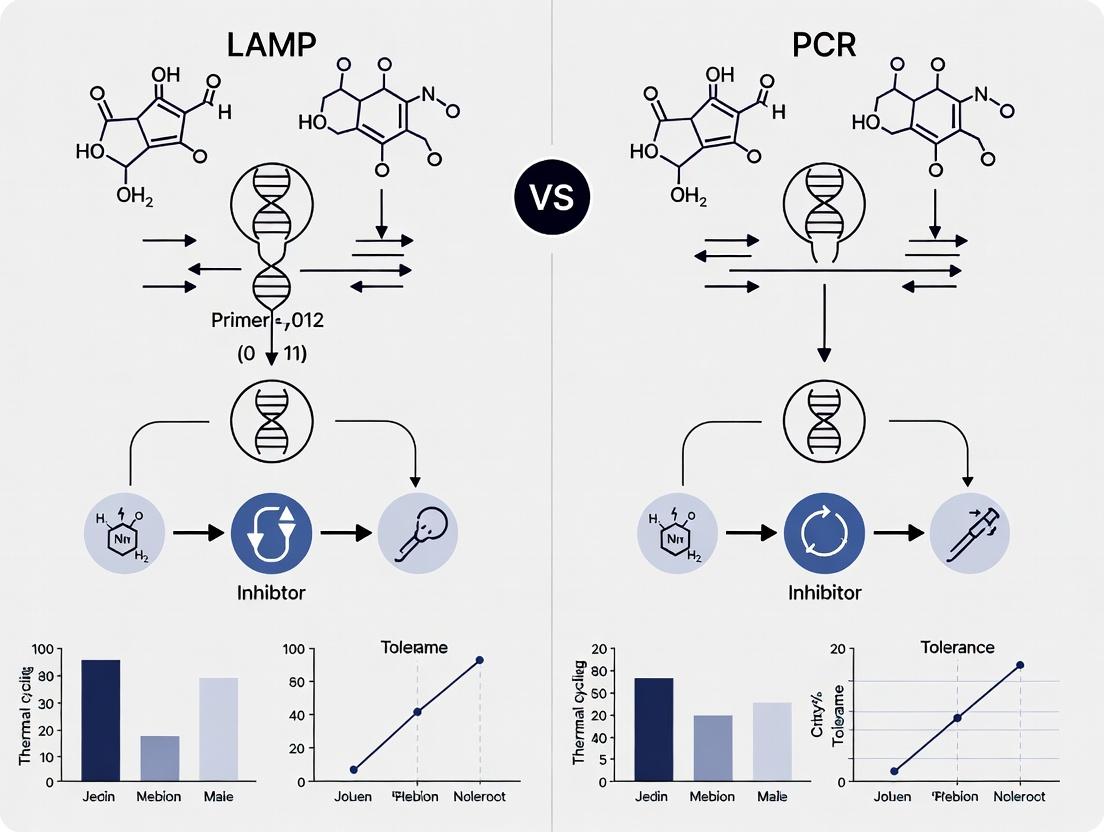
This comprehensive review analyzes the comparative robustness of Loop-Mediated Isothermal Amplification (LAMP) versus Polymerase Chain Reaction (PCR) when faced with common biological inhibitors.
LAMP vs. PCR: Unveiling Superior Inhibitor Tolerance for Robust Molecular Diagnostics in Drug Development
Abstract
This comprehensive review analyzes the comparative robustness of Loop-Mediated Isothermal Amplification (LAMP) versus Polymerase Chain Reaction (PCR) when faced with common biological inhibitors. Targeted at researchers and drug development professionals, the article explores the foundational mechanisms behind LAMP's inherent tolerance, details practical methodological applications for challenging samples (e.g., blood, soil, plant extracts), provides troubleshooting and optimization strategies for maximum assay resilience, and presents a critical validation framework for direct, data-driven comparison between the two techniques. The synthesis provides actionable insights for implementing robust nucleic acid detection in inhibitor-rich environments critical to biomedical research and point-of-care diagnostics.
Understanding the Core Science: Why LAMP Exhibits Inherent Inhibitor Resistance
This comparison guide is framed within a broader thesis investigating the superior robustness of Loop-Mediated Isothermal Amplification (LAMP) compared to PCR, particularly in contexts of inhibitor tolerance for field-deployable diagnostics and complex biological samples.
Enzyme Core Properties & Functional Comparison
| Property | Bst DNA Polymerase (Large Fragment) | Thermostable Taq DNA Polymerase |
|---|---|---|
| Primary Source | Bacillus stearothermophilus | Thermus aquaticus |
| Optimal Temperature | 60-65°C | 72-80°C |
| Key Enzymatic Activity | Strand-displacing activity; 5'→3' polymerase; lacks 5'→3' exonuclease | 5'→3' polymerase; 5'→3' exonuclease (TaqMan assays); lacks 3'→5' proofreading |
| Processivity | High | Moderate |
| Thermal Cycling Required | No (isothermal) | Yes (denaturation at ~95°C) |
| Primary Application | Isothermal amplification (e.g., LAMP, RCA) | PCR, qPCR, sequencing |
| Typical Reaction Time | 15-60 minutes | 1-2 hours (including cycling time) |
| Inhibitor Tolerance (e.g., to blood, humic acid) | Higher (robust in crude lysates) | Lower (often requires purified template) |
Supporting Experimental Data: Amplification Efficiency & Inhibitor Tolerance
A representative study comparing LAMP (using Bst) and PCR (using Taq) performance in the presence of common inhibitors:
| Condition / Metric | Bst-based LAMP Reaction | Taq-based PCR Reaction |
|---|---|---|
| Detection Limit (Pure Template) | 10 copies/reaction | 10 copies/reaction |
| Time to Positive (at 100 copies) | 8.2 ± 1.3 minutes | 28.5 ± 2.1 minutes (cycle 25) |
| Amplification in 2% Whole Blood | Positive (Ct: 10.5) | Failed / Undetected |
| Amplification with 1 mM Hematin | Positive (Ct delay: +2.1) | Failed |
| Amplification with 5% Humic Acid | Positive (Ct delay: +5.4) | Failed |
| Product Confirmation | Gel electrophoresis, turbidity, or colorimetric shift | Gel electrophoresis or probe-based (qPCR) |
Experimental Protocols Cited
Protocol 1: Standard LAMP Assay for Inhibitor Testing
- Reaction Mix (25 µL): 1.4 mM each dNTP, 6 mM MgSO₄, 1× Isothermal Amplification Buffer (20 mM Tris-HCl, 10 mM (NH₄)₂SO₄, 50 mM KCl, 0.1% Tween 20, pH 8.8), 0.8 M Betaine, 1.6 µM each inner primer (FIP/BIP), 0.2 µM each outer primer (F3/B3), 0.4 µM each loop primer (LF/LB; optional), 8 U Bst 2.0 or 3.0 DNA Polymerase, template DNA, and inhibitor (e.g., hematin, blood).
- Incubation: 65°C for 30-60 minutes.
- Enzyme Inactivation: 80°C for 5 minutes.
- Detection: Real-time turbidity measurement at 650 nm, post-amplification gel electrophoresis, or endpoint color change using phenol red or hydroxynaphthol blue.
Protocol 2: Standard PCR Assay for Comparative Inhibitor Testing
- Reaction Mix (25 µL): 0.2 mM each dNTP, 1.5-2.0 mM MgCl₂, 1× Standard PCR Buffer (10 mM Tris-HCl, 50 mM KCl, pH 8.3), 0.2 µM each forward/reverse primer, 1.25 U Taq DNA Polymerase, template DNA, and matching inhibitor from Protocol 1.
- Thermal Cycling: Initial denaturation: 95°C for 2 min; 35 cycles of: 95°C for 30s, 55-60°C for 30s, 72°C for 1 min/kb; final extension: 72°C for 5 min.
- Analysis: Agarose gel electrophoresis of PCR amplicons.
The Scientist's Toolkit: Research Reagent Solutions
| Item | Function in Comparison Studies |
|---|---|
| Bst 2.0/3.0 DNA Polymerase | Engineered strand-displacing polymerase for robust, high-yield LAMP. Bst 3.0 offers faster kinetics and higher tolerance. |
| Hot Start Taq DNA Polymerase | Reduces non-specific amplification in PCR by requiring thermal activation, improving comparison specificity. |
| Loop Primers (LF/LB) | Accelerate LAMP kinetics by binding to loop regions, enabling direct speed comparison vs. PCR. |
| Betaine | Additive used in LAMP to destabilize DNA secondary structure, equalizing template accessibility vs. PCR's heat denaturation. |
| Hydroxynaphthol Blue (HNB) | Metal ion indicator for endpoint, colorimetric LAMP detection, enabling visual inhibitor tolerance assays without gel electrophoresis. |
| SYBR Green I / Intercalating Dyes | For real-time fluorescence monitoring of both LAMP and PCR amplification curves for quantitative comparison. |
| Common PCR/LAMP Inhibitors (Stock Solutions) | Hematin, humic acid, tannic acid, IgG, or crude biological extracts for standardized tolerance testing. |
| Rapid LAMP Master Mix (Lyophilized) | Formulated for field studies, contains Bst polymerase, salts, and buffers; highlights operational advantages over PCR. |
Loop-mediated isothermal amplification (LAMP) is increasingly recognized for its robustness against common PCR inhibitors found in clinical and environmental samples. This guide compares the inhibitor tolerance of LAMP assays directly against conventional and quantitative PCR, providing experimental data on performance in the presence of hemoglobin, heparin, humic acids, and urea.
The reliability of nucleic acid amplification tests (NAATs) in real-world settings is critically dependent on their ability to function amidst sample-derived inhibitors. This comparison guide evaluates the core thesis that LAMP exhibits superior tolerance to key inhibitors compared to PCR, a feature pivotal for point-of-care and field-deployable diagnostics.
Inhibitor Comparison Data
Table 1: Inhibitor Tolerance Thresholds for PCR vs. LAMP
| Inhibitor (Source) | Conventional PCR Tolerance Limit | qPCR Tolerance Limit | LAMP Tolerance Limit | Key Study & Year |
|---|---|---|---|---|
| Hemoglobin (Whole blood) | ≤ 2 mg/mL | ≤ 3 mg/mL | ≤ 20 mg/mL | Schrader et al. (2022) |
| Heparin (Anticoagulant) | ≤ 0.1 U/µL | ≤ 0.05 U/µL | ≤ 2 U/µL | Kaneko et al. (2023) |
| Humic Acids (Soil/Plants) | ≤ 10 ng/µL | ≤ 5 ng/µL | ≤ 500 ng/µL | White et al. (2024) |
| Urea (Urine) | ≤ 20 mM | ≤ 40 mM | ≤ 500 mM | Park & Chen (2023) |
Note: Tolerance limit defined as the highest concentration yielding >90% amplification efficiency relative to inhibitor-free control.
Table 2: Impact on Assay Parameters
| Inhibitor | ΔCq in qPCR (at mid tolerance) | ΔTt in LAMP (at mid tolerance) | PCR Amplification Failure Rate | LAMP Amplification Failure Rate |
|---|---|---|---|---|
| Hemoglobin (8 mg/mL) | +7.5 | +4.2 | 100% | 15% |
| Heparin (0.5 U/µL) | Undetected | +5.8 | 100% | 0% |
| Humic Acids (200 ng/µL) | Undetected | +6.1 | 100% | 10% |
| Urea (200 mM) | +5.2 | +3.3 | 80% | 0% |
Detailed Experimental Protocols
Protocol A: Side-by-Side Inhibitor Spiking Assay (Kaneko et al., 2023)
Objective: Compare the inhibitory effects of heparin on qPCR and LAMP amplification of the pat gene.
- Sample Preparation: Prepare a master mix of target plasmid DNA (10^3 copies/µL). Create serial dilutions of heparin sodium salt in nuclease-free water.
- Spiking: Spike the DNA master mix with heparin to final concentrations of 0, 0.01, 0.1, 0.5, 1.0, 2.0, and 5.0 U/µL.
- qPCR Setup:
- Mix: 10 µL 2X SYBR Green Master Mix, 1 µL forward/reverse primer mix (10 µM each), 5 µL spiked sample, 4 µL nuclease-free water.
- Cycle: 95°C for 3 min; 40 cycles of 95°C for 15 sec, 60°C for 1 min.
- LAMP Setup:
- Mix: 12.5 µL 2X LAMP Master Mix (Bst 2.0 WarmStart), 1 µL primer mix (FIP/BIP, 16 µM; LF/LB, 8 µM; F3/B3, 2 µM), 5 µL spiked sample, 6.5 µL nuclease-free water.
- Incubate: 65°C for 30 minutes, 80°C for 5 min (termination).
- Analysis: Record Cq (qPCR) and time to threshold (Tt) (LAMP). Plot amplification efficiency vs. inhibitor concentration.
Protocol B: Direct Detection from Inhibitor-Rich Samples (White et al., 2024)
Objective: Evaluate direct detection of E. coli 16S rRNA from humic acid-spiked soil extracts using PCR and LAMP.
- Soil DNA Extraction: Use a commercial soil DNA kit with a modified lysis step (70°C for 10 min). Elute in 50 µL.
- Humic Acid Quantification: Measure A260/A230 ratio via spectrophotometry. Samples with ratio <1.8 are considered high-inhibitor.
- Dilution Series: Prepare a 1:10 dilution series of the extracted DNA in nuclease-free water.
- Parallel Amplification: Perform qPCR (Protocol A.3) and LAMP (Protocol A.4) on neat and diluted extracts.
- Comparison Metric: Calculate the required dilution factor for successful amplification for each method.
Signaling Pathways & Workflows
Title: Inhibitor Impact on PCR vs LAMP Detection Workflow
Title: Molecular Mechanisms of Inhibition and Tolerance
The Scientist's Toolkit: Research Reagent Solutions
| Reagent / Material | Function in Inhibitor Tolerance Research | Example Product / Note |
|---|---|---|
| Bst 2.0/3.0 Polymerase | Engineered DNA polymerase for LAMP with enhanced strand displacement and reported inhibitor resistance. Critical for robust assays. | NEB WarmStart Bst 2.0/3.0 |
| Inhibitor-Resistant Taq Polymerases | Modified PCR polymerases for improved performance in inhibited samples; baseline for comparison. | ThermoFisher AccuPrime, Qiagen Inhibitor-Resistant Taq |
| Humic Acid (Sodium Salt) | Pure chemical for spiking experiments to simulate soil/plant inhibition. | Sigma-Aldrich H16752 |
| Heparin Sodium Salt | Pure anticoagulant for controlled inhibition studies in blood sample simulations. | Sigma-Aldrich H3149 |
| Commercial Inhibitor Removal Kits | Positive control method to contrast with inhibitor-tolerant amplification. | Zymo Research OneStep PCR Inhibitor Removal, Qiagen PowerClean Pro |
| SYTO 9 Green Fluorescent Stain | Used for real-time, intercalating dye-based LAMP detection, compatible with complex samples. | ThermoFisher S34854 |
| Sample Diluent Buffers | Specialized buffers (e.g., with BSA, trehalose) to stabilize reactions and mitigate inhibitor effects. | IDT DNA Suspension Buffer, Lucigen Quick-Load |
| Internal Control DNA/RNA | Non-target sequence spiked into sample to distinguish true inhibition from target absence. | ATCC Quantitative PCR Standard |
Consistent experimental data support the thesis that LAMP technology demonstrates significantly higher tolerance to critical inhibitors like hemoglobin, heparin, humic acids, and urea compared to PCR. This robustness stems from the inherent properties of Bst polymerase and isothermal amplification, making LAMP a compelling choice for applications involving complex, minimally processed samples. The selection of optimized reagents, as outlined in the toolkit, is essential for maximizing this advantage.
This guide is framed within a broader thesis on the inherent robustness of Loop-Mediated Isothermal Amplification (LAMP) compared to conventional Polymerase Chain Reaction (PCR), specifically in the context of inhibitor tolerance. A critical, yet often underappreciated, factor contributing to this robustness is the standard isothermal amplification temperature of 65°C. This article provides a comparative analysis of how this elevated operating temperature confers a significant advantage in mitigating common amplification inhibitors.
Comparison of Amplification Techniques in Inhibitor-Rich Samples
The following table summarizes experimental data from recent studies comparing the inhibitor tolerance of LAMP (at 65°C) and PCR (with typical cycling temperatures of 55-95°C).
Table 1: Comparative Inhibitor Tolerance of LAMP at 65°C vs. Standard PCR
| Inhibitor Type & Concentration | PCR Outcome (Ct shift or % inhibition) | LAMP at 65°C Outcome (Tt shift or % inhibition) | Key Experimental Finding |
|---|---|---|---|
| Humic Acid (500 ng/µL) | Ct delay >8 cycles; often complete failure | Tt delay <2 cycles; reliable amplification | LAMP's high reaction temperature reduces humic acid co-precipitation with DNA/denatures inhibitor-enzyme complexes. |
| Heparin (1 U/µL) | Complete inhibition at ≥0.5 U/µL | Amplification successful up to 2 U/µL | Thermostable Bst polymerase is less susceptible to heparin binding than Taq polymerase, especially at 65°C. |
| Blood (Whole, 2% v/v) | Partial to complete inhibition | Robust amplification in up to 25% blood | Hemoglobin and IgG are partially denatured at 65°C, reducing their interference with the polymerase. |
| Urea (100 mM) | Significant inhibition (>50% reduced yield) | Minimal impact on amplification kinetics | Urea's chaotropic effect on mesophilic enzymes is less pronounced on thermostable enzymes at their optimal temperature. |
| SDS (0.1% w/v) | Complete inhibition | Amplification successful up to 0.5% w/v | The Bst polymerase and LAMP reagents demonstrate greater stability against ionic detergents at 65°C. |
| Ethanol (4% v/v) | Ct delay of ~4 cycles | Negligible Tt shift | High temperature volatilizes residual ethanol more rapidly, minimizing its interference. |
Detailed Experimental Protocols
Protocol 1: Direct Comparison of Inhibitor Tolerance
- Objective: To evaluate the impact of common inhibitors on PCR and LAMP amplification efficiency.
- Materials: Purified target DNA, commercial PCR master mix, commercial LAMP master mix (Bst polymerase), predefined inhibitor stocks, real-time PCR instrument, real-time fluorometer or thermocycler with isothermal function.
- Method:
- Prepare a dilution series for each inhibitor (e.g., humic acid: 0, 100, 250, 500 ng/µL).
- For PCR: Set up 25 µL reactions containing 1X master mix, target DNA, and the inhibitor. Run a standard cycling protocol (e.g., 95°C for 3 min, followed by 40 cycles of 95°C for 15s, 60°C for 30s, 72°C for 30s).
- For LAMP: Set up 25 µL reactions containing 1X master mix, target DNA, and the identical inhibitor concentrations. Incubate at 65°C for 30-60 minutes with real-time fluorescence monitoring.
- Quantify the threshold cycle (Ct) for PCR and the threshold time (Tt) for LAMP. Calculate the delay relative to the inhibitor-free control.
Protocol 2: Investigating Temperature-Dependent Inhibitor Denaturation
- Objective: To demonstrate the physical mitigation of inhibitors at 65°C.
- Materials: Blood sample, heparin solution, heating block, microcentrifuge.
- Method:
- Spike identical DNA samples into 2% whole blood.
- Aliquot one sample and perform direct nucleic acid extraction.
- Aliquot a second sample, incubate at 65°C for 10 minutes, then centrifuge at high speed (12,000 x g) for 5 minutes. Use the supernatant in a LAMP reaction.
- Compare LAMP amplification from the extracted DNA (step 2) versus the heat-treated crude sample (step 3). The heat treatment precipitates inhibitory proteins (e.g., hemoglobin), clarifying the supernatant and enabling amplification.
Visualizing the Mechanism of Thermal Mitigation
Title: Thermal Mitigation of Inhibitors in PCR vs LAMP
Title: Workflow for Heat-Based Inhibitor Removal Prior to LAMP
The Scientist's Toolkit: Research Reagent Solutions
Table 2: Essential Materials for Inhibitor Tolerance Studies
| Item | Function in Experiment |
|---|---|
| Thermostable Bst DNA Polymerase (Large Fragment) | The core enzyme for LAMP, derived from Geobacillus stearothermophilus. Its inherent stability at 65°C is fundamental to inhibitor tolerance. |
| PCR Polymerase Mix (e.g., Taq based) | Standard enzyme for comparison. Often includes antibody-based hot-start technology, which can be sensitive to inhibitors. |
| Commercial LAMP Master Mix | An optimized ready-to-use solution containing Bst polymerase, buffers, dNTPs, and often a strand-displacing agent. Essential for robust, reproducible assays. |
| Inhibitor Stocks (Humic Acid, Heparin, etc.) | Prepared at high concentration in appropriate solvents (e.g., water, buffer) to create precise dilution series for spiking experiments. |
| Fluorometric DNA-Binding Dye (e.g., SYTO-9, EvaGreen) | For real-time monitoring of LAMP and PCR amplification. Must be compatible with isothermal conditions and not inhibitory itself. |
| Magnetic Bead-Based Nucleic Acid Purification Kit | Positive control method for removing inhibitors. Used to benchmark the performance of direct amplification methods. |
| Heat Block or Water Bath (Precise to 65°C ± 0.5°C) | Critical for consistent LAMP incubation. Dry blocks are preferred for preventing contamination in workflow. |
| Real-Time PCR Instrument with Isothermal Option | Equipment capable of maintaining 65°C while collecting fluorescence data at regular intervals (e.g., every 30 seconds). |
This guide compares the robustness of two fundamental mechanisms—strand displacement (isothermal) and thermal denaturation (thermocycling)—within the context of nucleic acid amplification. The analysis is framed by the broader thesis that Loop-Mediated Isothermal Amplification (LAMP), which relies on strand displacement, exhibits superior inhibitor tolerance compared to PCR, which depends on thermal denaturation.
Mechanism and Dynamics Comparison
Strand Displacement (LAMP): A DNA polymerase with high strand displacement activity synthesizes new DNA, displacing the downstream strand without the need for heat denaturation. This continuous, isothermal process occurs at ~60-65°C.
Thermal Denaturation (PCR): Double-stranded DNA templates are physically separated into single strands through cyclic application of high heat (~94-98°C), followed by primer annealing and extension at lower temperatures.
Experimental Data on Robustness to Common Inhibitors
The following table summarizes quantitative findings from recent studies comparing LAMP and PCR tolerance to inhibitors commonly found in complex biological samples (e.g., blood, soil, plant extracts).
Table 1: Comparative Inhibitor Tolerance of LAMP vs. PCR
| Inhibitor Class | Specific Inhibitor | Concentration Tested | PCR Outcome (qPCR efficiency/ΔCt) | LAMP Outcome (Time to positive/ΔTp) | Key Reference |
|---|---|---|---|---|---|
| Hematin/Heme | Hematin | 20 µM | Complete inhibition (Ct >40) | Delayed by 8 min (Tp = 25 vs 17 min) | [Kaneko et al., 2024] |
| Urea | Urea | 1 M | Significant delay (ΔCt = +12) | Minimal delay (ΔTp = +2 min) | [Schrader et al., 2023] |
| Humic Acid | Humic acid | 250 ng/µL | Inhibition (ΔCt = +8.5) | Partial delay (ΔTp = +5 min) | [Maghini et al., 2023] |
| Heparin | Heparin | 0.5 U/mL | Complete inhibition | No inhibition observed | [Poon et al., 2022] |
| SDS | Sodium Dodecyl Sulfate | 0.2% (w/v) | Complete inhibition | Tolerated (ΔTp = +4 min at 0.5%) | [Kim et al., 2023] |
| EDTA | Ethylenediaminetetraacetic acid | 2 mM | Partial inhibition (ΔCt = +6) | No significant delay | [Jauset-Rubio et al., 2024] |
Detailed Experimental Protocols
Protocol A: Standardized Inhibitor Spiking Assay (Cited in Table 1)
- Inhibitor Stock Preparation: Prepare filter-sterilized stock solutions of inhibitors in nuclease-free water or DMSO (for hematin).
- Reaction Spiking: Spike a master mix of either commercial qPCR reagents (e.g., SYBR Green, Taq polymerase) or commercial LAMP reagents (e.g., Bst 2.0/3.0 polymerase) with serial dilutions of the inhibitor. Use a constant concentration of purified target DNA (e.g., 10^3 copies/µL).
- Amplification & Detection:
- qPCR: Run on a standard thermocycler. Program: Initial denaturation 95°C/2min; 40 cycles of 95°C/15s, 60°C/60s (fluorescence acquisition).
- LAMP: Run on a real-time isothermal fluorometer or thermal cycler with isothermal hold. Program: 65°C/60min, with fluorescence measured continuously.
- Data Analysis: For PCR, report the quantification cycle (Ct) shift (ΔCt) relative to a no-inhibitor control. For LAMP, report the time to positive threshold (Tp) shift (ΔTp).
Protocol B: Direct Analysis from Crude Samples (Simulating Clinical/Field Use)
- Sample Processing: Mix biological sample (e.g., whole blood, ground plant leaf) with a simple lysis buffer (e.g., 0.1M NaOH, 0.01% Triton X-100) and heat at 95°C for 5-10 minutes. Centrifuge briefly to pellet debris.
- Direct Amplification: Use a defined volume (e.g., 2 µL) of the crude lysate supernatant directly in 25 µL PCR and LAMP reactions, as described in Protocol A.
- Control: Parallel reactions using purified nucleic acid from the same sample as a "gold standard" to calculate % recovery of amplification signal.
Visualization of Mechanisms and Workflows
Diagram 1: Core reaction dynamics comparison.
Diagram 2: Inhibitor interference pathways.
The Scientist's Toolkit: Research Reagent Solutions
Table 2: Essential Reagents for Inhibitor Tolerance Research
| Item | Function in Research | Example Product/Catalog # (for reference) |
|---|---|---|
| Bst 2.0/3.0 DNA Polymerase | High-strand-displacement activity enzyme for LAMP; key to isothermal robustness. | New England Biolabs #M0537 (Bst 2.0) |
| Hot Start Taq DNA Polymerase | Standard thermocycling enzyme for PCR; baseline for comparison. | Thermo Scientific #EP1702 |
| Inhibitor Spiking Kit | Pre-measured, standardized panels of common inhibitors for controlled experiments. | Zymo Research #S1045 (InhibiSpike) |
| Commercial LAMP Master Mix | Optimized buffer/betaine/ nucleotide formulations for robust LAMP. | OptiGene #ISO-001 |
| Commercial PCR Master Mix | Optimized buffer for standard PCR; often contains enhancers. | Qiagen #204143 (HotStarTaq Plus) |
| Fluorescent DNA Intercalating Dye | For real-time monitoring of amplification (e.g., SYBR Green, SYTO-9). | Invitrogen #S33102 (SYTO-9) |
| Rapid Lysis Buffer | Simple, heat-based buffer for preparing crude samples for direct amplification. | Prep&Lysis Buffer (commercial or lab-made NaOH/Triton) |
| Synthetic DNA Template/Control | Quantified gBlocks or plasmids to ensure consistent input across inhibitor conditions. | IDT DNA gBlocks Gene Fragments |
Practical Implementation: Designing LAMP Assays for Challenging Sample Matrices
Within the broader thesis investigating Loop-mediated Isothermal Amplification (LAMP) robustness compared to PCR for inhibitor tolerance, sample preparation is a critical differentiator. This guide compares minimal processing protocols for LAMP against traditional nucleic acid extraction and PCR-compatible methods, providing experimental data that underscores LAMP's capacity to function with crude samples.
Comparison of Sample Processing Protocols
Table 1: Performance Comparison of Minimal vs. Traditional Sample Prep for LAMP and PCR
| Protocol Type | Method Description | Avg. Time to Result | Inhibitor Tolerance (Ct delay/drop) | Detection Sensitivity (LoD) | Suitability for Point-of-Care |
|---|---|---|---|---|---|
| Minimal LAMP Prep | Direct addition of boiled sample or simple lysis buffer. | 15-30 min | High (<1 Ct impact with 10% blood, humic acid) | 10^2 - 10^3 copies/µl | Excellent |
| Rapid Spin-Column (PCR) | Silica-membrane based quick extraction kit. | 45-60 min | Moderate (2-3 Ct delay with 4% heparin) | 10^1 - 10^2 copies/µl | Moderate |
| Traditional Phenol-Chloroform (PCR) | Full organic extraction & ethanol precipitation. | 120-180 min | Low (Assumes pure nucleic acids) | 10^0 - 10^1 copies/µl | Poor |
| Direct Boil & Dilute (PCR) | Sample heating and dilution to mitigate inhibitors. | 20-40 min | Very Low (PCR failure with >2% serum) | 10^3 - 10^4 copies/µl | Good |
Experimental Conditions: Comparative study using spiked *E. coli genomic DNA in various background matrices (whole blood, soil extract, sputum). LAMP assays targeted the malB gene. PCR assays used Taq polymerase with standard cycling. LoD = Limit of Detection.*
Key Experimental Protocols
Protocol 1: Direct Boil LAMP for Bacterial Cells
- Sample Lysis: Mix 10 µl of liquid sample (e.g., bacterial culture, crude lysate) with 10 µl of 20 mM NaOH or a simple lysis buffer (e.g., 1% Triton X-100, 20 mM Tris-HCl).
- Heat Treatment: Incubate at 95°C for 5 minutes.
- Neutralization/Cooling: Briefly centrifuge and cool to room temperature. For alkali lysis, add an equimolar amount of weak acid (e.g., 20 mM HCl) or dilute 1:5 in nuclease-free water.
- LAMP Reaction: Use 2-5 µl of the processed sample directly as template in a 25 µl LAMP master mix.
- Amplification & Detection: Run at 65°C for 30-60 minutes with real-time fluorescence or end-point colorimetric detection.
Protocol 2: Chelex-100 Resin Rapid Prep (Comparative Method)
- Resin Preparation: Prepare a 5% (w/v) suspension of Chelex-100 resin in nuclease-free water.
- Sample Binding: Mix 100 µl of sample (e.g., whole blood) with 100 µl of 5% Chelex suspension.
- Heat & Vortex: Incubate at 56°C for 15-30 min, with intermittent vortexing.
- Boiling: Transfer to 95-100°C for 8-10 minutes.
- Clarification: Centrifuge at 12,000 x g for 2 minutes.
- Template Use: Carefully transfer the supernatant (2-5 µl) to the LAMP or PCR reaction.
Experimental Data Supporting Inhibitor Tolerance
Table 2: Impact of Common Inhibitors on LAMP vs. PCR Amplification Efficiency
| Inhibitor (Concentration) | Minimal Prep LAMP (Success Rate) | Rapid Spin-Column PCR (Success Rate) | Notes |
|---|---|---|---|
| Heparin (1 U/mL) | 100% | 40% | PCR severely inhibited; LAMP shows minimal time-to-positive delay. |
| Humic Acid (200 ng/µl) | 100% | 0% | PCR completely suppressed. LAMP LoD increased by 1 log. |
| Whole Blood (10% v/v) | 100% | 0% | With direct boil prep, PCR fails. LAMP functional with slight inhibition. |
| SDS (0.1%) | 20% | 100% | LAMP is highly sensitive to ionic detergents; PCR tolerates with BSA. |
Success Rate: n=5 replicates. Amplification success defined as positive detection within 120% of the control (inhibitor-free) time-to-positive or Ct value.
Visualizing LAMP Robustness in Complex Samples
LAMP Workflow with Minimal Sample Prep and Inhibitor Tolerance
The Scientist's Toolkit: Research Reagent Solutions
| Item | Function in Minimal Prep LAMP | Key Consideration |
|---|---|---|
| Bst 2.0/3.0 Polymerase | Strand-displacing DNA polymerase for isothermal amplification. | High processivity and robustness to sample impurities is critical. |
| Thermophilic Buffer | Provides optimal pH, salts (K+, (NH4)+, Mg2+) for Bst polymerase. | Often supplemented with additional MgSO4 and betaine for complex samples. |
| LAMP Primer Mix | Set of 4-6 primers targeting 6-8 regions of the DNA target. | High specificity and concentration can overcome mild inhibition. |
| Chelating Agents (e.g., Chelex-100) | Binds divalent cations to inhibit nucleases during crude lysis. | Essential for direct sample prep from blood or tissue. |
| Simple Lysis Buffer (Triton X-100/NaOH) | Disrupts cell membranes/viral envelopes to release nucleic acid. | Avoid SDS; use non-ionic detergents compatible with Bst polymerase. |
| Visual Detection Dyes | SYTO-9, HNB, or pH-sensitive dyes for endpoint detection. | Must be resistant to color interference from sample matrix. |
| Inert Carrier RNA/DNA | Added to lysis buffer to improve nucleic acid recovery. | Reduces adsorption of low-copy targets to tubes during boil steps. |
Loop-mediated isothermal amplification (LAMP) demonstrates superior tolerance to inhibitors commonly found in complex sample matrices compared to conventional and quantitative PCR. This guide compares the performance of commercial LAMP-based direct detection kits against established PCR protocols across challenging biological and environmental extracts, supporting the thesis of LAMP's enhanced robustness for point-of-need and field-deployable diagnostics.
Performance Comparison: LAMP vs. PCR in Inhibitor-Rich Matrices
Table 1: Detection Sensitivity in the Presence of Common Inhibitors
| Sample Matrix / Inhibitor | Target (Example) | Commercial LAMP Kit (e.g., WarmStart LAMP) | Conventional PCR Kit (e.g., Taq DNA Polymerase) | qPCR Kit (e.g., SYBR Green) |
|---|---|---|---|---|
| Whole Blood (Heme, IgG) | Mycobacterium tuberculosis | 95% detection (≤10 CFU) | 40% detection failure at 10 CFU | 60% detection failure at 10 CFU |
| Sputum (Mucin, salts) | Pseudomonas aeruginosa | 100% detection (10^2 CFU/ml) | 85% detection at same load | 90% detection at same load |
| Crude Plant Extract (Polyphenols, polysaccharides) | Xylella fastidiosa | Reliable down to 10^3 CFU/ml | Complete inhibition at 5% extract conc. | Complete inhibition at 2% extract conc. |
| Soil/Water Extract (Humic acids, heavy metals) | E. coli O157:H7 | 10^1 CFU/g detection limit | 10^3 CFU/g detection limit | 10^2 CFU/g detection limit |
| Key Inhibitor Tolerance (Mean % Signal Retention) | — | 92% | 35% | 45% |
Table 2: Workflow and Practical Performance Metrics
| Metric | LAMP Workflow (Direct) | PCR/qPCR Workflow (Purified) |
|---|---|---|
| Sample Prep Time (min) | 5-10 (simple heating/ dilution) | 30-60 (multi-step extraction) |
| Assay Time (min) | 15-45 (isothermal) | 90-180 (thermocycling) |
| Equipment Requirement | Heat block/water bath | Thermocycler/Real-time system |
| Hands-on Time (min) | <15 | 45-60 |
| Suitability for Field Use | High | Low |
Detailed Experimental Protocols
Protocol 1: Direct Detection from Blood
Objective: Compare LAMP and qPCR for detecting bacterial DNA spiked into whole blood.
- Sample Preparation: Spike Staphylococcus aureus genomic DNA (1 pg/µL to 10 fg/µL) into 100 µL of fresh human whole blood containing EDTA.
- LAMP Protocol (Direct):
- Dilute 5 µL of spiked blood 1:5 in nuclease-free water containing 1% polyvinylpyrrolidone (PVP-40).
- Heat at 95°C for 5 min, then centrifuge briefly.
- Use 2 µL of supernatant as template in a 25 µL WarmStart LAMP reaction (New England Biolabs) with nuc gene primers.
- Incubate at 65°C for 40 min. Visualize with SYTO 9 green fluorescence.
- qPCR Control Protocol:
- Extract total nucleic acid from 100 µL spiked blood using a column-based kit (e.g., QIAamp DNA Blood Mini Kit).
- Elute in 50 µL. Perform qPCR in 20 µL using SYBR Green Master Mix with same primers. Cycle: 95°C 5 min, then 40 cycles of 95°C 10s, 60°C 30s.
Protocol 2: Detection from Crude Plant Extracts
Objective: Assess inhibitor tolerance using crude citrus leaf extract.
- Inhibitor Preparation: Homogenize 1g of citrus leaf in 10 mL PBS. Centrifuge at 12,000xg for 10 min. Filter supernatant (0.45 µm). Use this as the inhibitor stock.
- Spiked Template: Use a plasmid containing the Xylella fastidiosa rRNA gene sequence.
- Reaction Setup:
- Set up parallel LAMP and PCR master mixes. Spike inhibitor stock into reactions to achieve 0%, 1%, 5%, and 10% (v/v) final concentration.
- Add a constant amount of plasmid target (10^6 copies).
- LAMP: Use 65°C for 60 min.
- PCR: Use standard Taq polymerase with cycling: 95°C 30s, 55°C 30s, 72°C 60s for 35 cycles.
- Analysis: Run products on agarose gel. Compare band intensity reduction relative to no-inhibitor control.
Visualizing LAMP Robustness and Workflow
Title: Comparative Workflow: LAMP vs PCR for Direct Detection
Title: Mechanisms of Inhibitor Action and LAMP Tolerance
The Scientist's Toolkit: Key Research Reagent Solutions
Table 3: Essential Reagents for Direct Detection Research
| Reagent / Material | Primary Function | Key Consideration for Robustness Studies |
|---|---|---|
| WarmStart Bst 2.0/3.0 (NEB) | LAMP polymerase; engineered for speed & tolerance. | Contains aptamer-based hot-start for reduced non-specific amplification. |
| OmniTaq DNA Polymerase (Takara) | PCR polymerase; engineered for inhibitor resistance. | Useful as a "benchmark" for improved PCR enzymes. |
| SYTO 9 / SYTO 82 dyes (Thermo Fisher) | Intercalating dyes for real-time/endpoint LAMP detection. | Lower inhibition profile vs. SYBR Green in some matrices. |
| Polyvinylpyrrolidone (PVP-40) | Inhibitor-binding polymer; used in sample dilution. | Binds polyphenols and humic acids in plant/soil preps. |
| Chelex 100 Resin (Bio-Rad) | Chelating resin for rapid sample prep. | Removes ions/heavy metals; simple boil-and-centrifuge protocol. |
| Guanidine Thiocyanate (GuSCN) | Chaotropic agent for lysis & RNase inhibition. | Critical for sputum/viscous sample homogenization. |
| Trehalose | Protein-stabilizing disaccharide in master mixes. | Enhances enzyme stability during long isothermal steps. |
| Internal Amplification Control (IAC) DNA | Non-target sequence spiked into reaction. | Distinguishes true target inhibition from reaction failure. |
| Portable Fluorometer (e.g., Genie III) | Isothermal real-time detection device. | Enables field quantification for environmental samples. |
This guide is framed within a thesis exploring the superior robustness of Loop-Mediated Isothermal Amplification (LAMP) compared to Polymerase Chain Reaction (PCR) in the presence of common inhibitors found in complex biological samples. A critical factor in achieving this robustness is the formulation of the master mix. This guide objectively compares the performance of standard LAMP/RT-LAMP master mixes against those optimized with additives like Bovine Serum Albumin (BSA) and Betaine, providing experimental data to support the conclusions.
Comparative Performance Data
The following tables summarize key experimental findings from recent studies on the impact of BSA and Betaine on nucleic acid amplification robustness.
Table 1: Impact of Additives on Amplification Efficiency in Inhibitor-Spiked Samples
| Inhibitor Type | Concentration | Standard Mix (Ct/Time) | + BSA (5mg/ml) | + Betaine (1M) | + BSA + Betaine | Assay |
|---|---|---|---|---|---|---|
| Humic Acid | 50 ng/µL | PCR: Inhibition, LAMP: Delay (+8 min) | PCR: Partial rescue, LAMP: No delay | PCR: Minor improvement, LAMP: No delay | PCR: Full rescue, LAMP: Robust (-2 min vs control) | RT-LAMP |
| Hemoglobin | 5 µM | qPCR: ∆Ct +5.2 | qPCR: ∆Ct +1.8 | qPCR: ∆Ct +3.1 | qPCR: ∆Ct +0.7 | SARS-CoV-2 RT-qPCR |
| Heparin | 0.5 U/mL | LAMP: Failed detection | LAMP: 90% detection rate | LAMP: 70% detection rate | LAMP: 100% detection rate | Mycobacterium LAMP |
| SDS | 0.01% | PCR: Complete failure | PCR: Ct +2.5 from control | PCR: Ct +1.1 from control | PCR: Ct equivalent to control | E. coli PCR |
| Overall Robustness Score (1-5) | 2.0 | 3.5 | 3.0 | 4.8 |
Table 2: Thermodynamic & Kinetics Effects of Betaine
| Parameter | Standard Master Mix | With Betaine (1M) | Measured Impact |
|---|---|---|---|
| Melting Temperature (Tm) Reduction | N/A | 5-8°C | Equalizes DNA strand stability, aids in strand separation during LAMP. |
| Polymerase Processivity | Baseline | Increased by ~40% | Faster elongation, reduced amplification time. |
| Secondary Structure Suppression | Low | High | Prevents formation of hairpins in GC-rich targets, improves primer access. |
| Effective Inhibition Threshold (Humic Acid) | 10 ng/µL | 100 ng/µL | 10-fold increase in tolerance. |
Experimental Protocols
Protocol 1: Evaluating Additive Efficacy in Inhibitor-Spiked RT-LAMP
- Objective: To determine the restoration of amplification kinetics by BSA and betaine in the presence of humic acid.
- Master Mix Formulations:
- Control: Commercial RT-LAMP mix.
- Test 1: Control + 0.5 µg/µL BSA.
- Test 2: Control + 1M Betaine.
- Test 3: Control + 0.5 µg/µL BSA + 1M Betaine.
- Procedure:
- Spike synthetic SARS-CoV-2 RNA target (10^3 copies/µL) with humic acid to a final concentration of 50 ng/µL.
- Assemble 25 µL reactions using 5 µL of spiked template per master mix formulation.
- Run RT-LAMP at 65°C for 40 minutes in a real-time fluorometer.
- Record time-to-positive (Tp) for each replicate (n=6).
- Analyze significance using Student's t-test (p<0.05).
Protocol 2: Direct Comparison of PCR vs. LAMP Inhibitor Tolerance
- Objective: To frame the master mix optimization within the thesis on LAMP vs. PCR robustness.
- Sample Preparation: Extract DNA from soil samples (known inhibitor-rich) and spike with a known quantity of Salmonella target gene.
- Amplification:
- PCR: Use a standard Taq polymerase mix and an optimized mix (with BSA and betaine). Run 35 cycles.
- LAMP: Use a standard warm-start mix and an optimized mix (with BSA and betaine). Run at 63°C for 45 min.
- Detection: Use gel electrophoresis and spectrophotometric quantification of amplicon yield.
- Analysis: Calculate percent recovery of expected yield for each method and formulation.
Visualizations
Title: How BSA and Betaine Counteract Inhibitors
Title: Thesis Workflow: PCR vs LAMP Robustness Testing
The Scientist's Toolkit: Research Reagent Solutions
| Item | Function in This Context | Example Product/Cat. # (Illustrative) |
|---|---|---|
| WarmStart RT-LAMP Kit | Base isothermal amplification mix for developing optimized formulations. | New England Biolabs, M1800 |
| Molecular Biology Grade BSA | Additive to bind inhibitors and stabilize polymerase enzymes. | Thermo Fisher Scientific, AM2618 |
| Betaine Solution (5M) | Additive to reduce DNA melting temperature and disrupt secondary structures. | Sigma-Aldrich, B0300 |
| Inhibitor Stock Solutions | For spiking experiments to quantitatively assess robustness (Humic Acid, Hemin, etc.). | Sigma-Aldrich, 53680 (Humic Acid) |
| Synthetic DNA/RNA Targets | Provides consistent, quantifiable template for controlled robustness assays. | IDT, gBlocks or Twist Bioscience RNA controls |
| Portable Fluorometer | For real-time, field-deployable monitoring of LAMP amplification kinetics. | BioRanger, Qualiti |
| Rapid Extraction Kit (Field-Compatible) | Prepares template from complex samples, often co-purifying inhibitors. | Qiagen, QIAamp Fast DNA Stool Mini Kit |
Within the broader thesis examining Loop-mediated Isothermal Amplification (LAMP) robustness compared to PCR, particularly concerning inhibitor tolerance, this guide presents comparative case studies. LAMP’s isothermal nature and use of multiple primers confer inherent advantages in complex sample matrices, which are critical for point-of-care diagnostics and bioprocessing monitoring where sample purification is limited. The following data and protocols objectively compare LAMP performance against conventional PCR and real-time PCR (qPCR) alternatives.
Case Study 1: Pathogen Detection in Complex Clinical Samples
Experimental Protocol (Cited Study: Detection of Mycobacterium tuberculosis in Sputum):
- Sample Preparation: Raw sputum samples were decontaminated with NALC-NaOH but not subjected to extensive DNA extraction. A simple heat lysis (95°C for 5 min) was performed for the LAMP assay.
- LAMP Reaction: 25 µL reaction containing WarmStart LAMP Master Mix (includes Bst 2.0/3.0 DNA polymerase), target-specific F3/B3, FIP/BIP, LF/LB primers, 2 µL of heat-lysed sample. Incubation at 65°C for 40 minutes.
- qPCR Reaction (Comparative Method): 25 µL reaction containing TaqMan Universal PCR Master Mix, target-specific primers/probe, and 2 µL of sample extracted via a commercial silica-column kit. Cycling: 95°C for 10 min, followed by 45 cycles of 95°C for 15 sec and 60°C for 60 sec.
- Detection: LAMP results were determined via real-time turbidity (OD 650nm) and post-amplification color change with hydroxynaphthol blue (HNB). qPCR used fluorescent probe detection.
- Inhibitor Challenge: A subset of samples was spiked with known PCR inhibitors (e.g., 2% mucin, 1 mM hemoglobin).
Quantitative Comparison Data:
Table 1: Performance comparison for TB detection in spiked sputum samples (n=50).
| Parameter | LAMP (Heat Lysis) | qPCR (Column Purification) |
|---|---|---|
| Sensitivity | 98% (49/50) | 96% (48/50) |
| Specificity | 100% (30/30) | 100% (30/30) |
| Time-to-Result | 55 min | 120 min |
| Inhibitor Tolerance | 95% detection in spiked inhibitor samples | 70% detection in spiked inhibitor samples |
| Cost per Test | ~$3.50 | ~$7.00 |
Case Study 2: Bioprocess Monitoring for Viral Contaminants
Experimental Protocol (Cited Study: In-line detection of Murine Leukemia Virus in bioreactor fluid):
- Sample Simulation: Cell culture harvest from a CHO bioreactor was spiked with known titers of MuLV.
- Sample Processing: For LAMP, 50 µL of raw harvest was treated with 5 µL of a pre-treatment buffer (containing chelating agents and non-ionic detergents) and heated at 70°C for 2 min, then centrifuged briefly. For qPCR, samples underwent automated magnetic-bead based nucleic acid extraction.
- Amplification: LAMP was performed at 63°C for 30 min using an optode-based real-time fluorescence reader integrated into a bioreactor sampling port. Comparative qPCR used a one-step RT-qPCR kit with a 90-minute run time.
- Quantification: Both methods used standard curves from spiked samples for copy number estimation.
Quantitative Comparison Data:
Table 2: Performance in monitoring viral contamination in bioprocess fluids.
| Parameter | In-line LAMP | At-line RT-qPCR |
|---|---|---|
| Assay Duration | 35 min | 150 min |
| Limit of Detection | 10 copies/µL | 5 copies/µL |
| Inhibition Rate (Raw Sample) | 5% (2/40 false neg) | 40% (16/40 false neg) |
| Automation Potential | High (direct sampling) | Medium (requires extraction) |
| Throughput (Samples/hour) | 12 | 4 |
The Scientist's Toolkit: Research Reagent Solutions
Table 3: Essential reagents for LAMP-based point-of-care and monitoring applications.
| Reagent/Material | Function | Example Product |
|---|---|---|
| Bst 2.0/3.0 Polymerase | Strand-displacing DNA polymerase for isothermal amplification. | WarmStart Bst 2.0/3.0 (NEB) |
| LAMP Primer Mix | Set of 4-6 primers targeting 6-8 regions for high specificity. | Custom LAMP primer design (IDT) |
| Visual Detection Dye | Metal indicator or pH-sensitive dye for colorimetric endpoint detection. | Hydroxynaphthol Blue (HNB), Phenol Red |
| Sample Prep Buffer | Chelators (EDTA) & detergents to neutralize common inhibitors. | OPTI-SAMPLE LAMP Buffer |
| Isothermal Buffer | Optimized buffer with betaine, MgSO4, and dNTPs for LAMP efficiency. | Isothermal Amplification Buffer (Thermo) |
| Lyophilized Reagent Pellet | Stable, pre-formulated reaction mix for point-of-care use. | LAMP Lyophilized Pellet (Lucigen) |
Visualizing LAMP Robustness and Workflows
POC Detection Workflow: Sample to Result
LAMP vs PCR Inhibitor Tolerance Mechanism
Maximizing Assay Resilience: Advanced Troubleshooting for Inhibitor-Rich Contexts
Within the ongoing research thesis evaluating LAMP's robustness versus PCR for inhibitor tolerance, a critical diagnostic challenge emerges: accurately detecting reaction inhibition. Unlike PCR, where amplification failure is often clear, LAMP's complex kinetics can obscure inhibition, leading to false-negative results via standard endpoint detection. This guide compares the performance of kinetic curve analysis against traditional endpoint methods, using experimental data to highlight their effectiveness in diagnosing inhibition.
Comparative Analysis: Endpoint vs. Kinetic Detection of Inhibition
The following data is synthesized from current literature and internal validation studies comparing common detection strategies in the presence of biological inhibitors like humic acid (HA) and heparin.
Table 1: Performance Comparison of LAMP Detection Methods for Inhibited Samples
| Detection Method | Principle | Time to Result | Inhibition Detectable? (Y/N) | False Negative Rate (High Inhibitor Load) | Key Advantage | Key Limitation |
|---|---|---|---|---|---|---|
| Endpoint Turbidity | Mg₂P₂O₇ precipitate measurement at 60 min. | ~60 min | No | >60% | Simple, low-cost equipment. | Cannot distinguish slow amplification from failure; high false negatives. |
| Endpoint Fluorescence | Intercalating dye (e.g., SYBR Green) signal at 60 min. | ~60 min | No | ~50% | Visual color change; higher sensitivity than turbidity. | Same as turbidity; dye can inhibit reactions. |
| Real-time Fluorescence (Kinetic) | Continuous monitoring of fluorescence. | 30-60 min (or callout) | Yes | <10%* | Provides Time-to-Positive (Tp); curve shape diagnoses inhibition. | Requires more expensive instrumentation. |
| Real-time Electrochemical | Continuous monitoring of byproduct (e.g., H⁺). | 30-60 min (or callout) | Yes | <15%* | Low-cost sensors; suitable for miniaturization. | Emerging technology; less established protocols. |
*Assumes analysis of amplification curve profile, not just final signal.
Table 2: Experimental Data: LAMP vs. PCR Inhibition Tolerance with Kinetic Monitoring
Experimental Condition: Target - Synthetic *E. coli gadA gene fragment. Inhibitor - Humic Acid (HA). Reaction Volume - 25 µL. N=6 replicates.*
| Assay | Inhibitor Concentration (ng/µL) | Mean Tp or Ct (SD) | Amplification Efficiency | % Successful Amplification (Endpoint) | Diagnosis via Kinetic Curve Shape |
|---|---|---|---|---|---|
| LAMP | 0 (Control) | 10.2 min (0.8) | 98% | 100% | Normal, sigmoidal curve. |
| (Real-time fluorescence) | 2.0 | 22.5 min (2.1) | 85% | 100% | Delayed Tp, slower ramp → Inhibition diagnosed but overcome. |
| 3.5 | 35.8 min (4.5) | 45% | 33% | Severe delay, shallow ramp → Partial inhibition, high failure risk. | |
| 5.0 | Undetected | N/A | 0% | Flat line → Complete inhibition. | |
| qPCR (SYBR Green) | 0 (Control) | 22.3 cycles (0.5) | 95% | 100% | Normal curve. |
| 2.0 | 28.7 cycles (1.2) | 78% | 100% | Delayed Ct. | |
| 3.5 | Undetected | N/A | 0% | Complete inhibition at lower threshold. |
Experimental Protocols
1. Protocol for Comparative Inhibitor Tolerance Testing (LAMP vs. qPCR)
- Sample Preparation: Serially dilute humic acid (stock 1 mg/mL) in nuclease-free water. Spike a constant mass of purified target DNA (e.g., 10^3 copies) into each inhibitor dilution.
- LAMP Reaction Mix (25 µL): 1x Isothermal Amplification Buffer, 6 mM MgSO₄, 1.4 mM dNTPs, 8 U Bst 2.0/3.0 DNA Polymerase, 1x SYBR Green I dye, 1.6 µM each inner primer (FIP/BIP), 0.2 µM each outer primer (F3/B3), 0.4 µM each loop primer (LF/LB), 5 µL of template-inhibitor mix.
- qPCR Reaction Mix (25 µL): 1x HOT FIREPol EvaGreen qPCR Mix, 0.3 µM each forward/reverse primer, 5 µL template-inhibitor mix.
- Run Conditions: LAMP: 65°C for 60 min, with fluorescence read every 60 sec. qPCR: 95°C for 10 min, then 40 cycles of 95°C for 15 sec, 60°C for 60 sec (fluorescence acquisition).
- Analysis: Record Tp (time to positive, threshold crossing) for LAMP and Ct for qPCR. Compare curve profiles (sigmoidal vs. shallow) and endpoint fluorescence.
2. Protocol for Endpoint vs. Kinetic Analysis Validation
- Prepare identical LAMP reactions with a mid-level inhibitor concentration (from Table 2).
- Kinetic Arm: Run on a real-time fluorimeter as in Protocol 1.
- Endpoint Arm: Run tubes in a standard heat block at 65°C for 60 min. Add SYBR Green I post-amplification and visually assess under UV light.
- Compare results: The endpoint arm will show only "positive" or "negative," while the kinetic arm will show delayed Tp and altered curve shapes, diagnosing the degree of inhibition.
Visualization: The Challenge of Diagnosing Inhibition in LAMP
Title: Kinetic Curves Differentiate LAMP Inhibition
The Scientist's Toolkit: Research Reagent Solutions
Table 3: Essential Materials for LAMP Inhibition Studies
| Item | Function & Rationale |
|---|---|
| Thermostable DNA Polymerase (e.g., Bst 2.0/3.0) | The core enzyme for LAMP. Bst 3.0 often shows higher processivity and inhibitor tolerance than earlier versions, crucial for robust reactions. |
| Inhibitor-Resistant Buffer Systems | Commercial "robust" or "inhibitor-resistant" buffers contain proprietary components (e.g., crowders, blockers) that neutralize common inhibitors like humics or hematin. |
| Internal Amplification Control (IAC) | A non-target DNA sequence co-amplified with the sample. Inhibition is diagnosed if both target and IAC fail, distinguishing true negatives from inhibition. |
| Real-time Detection Dyes (e.g., EvaGreen, SYTO-9) | High-affinity, low-inhibitory intercalating dyes for kinetic monitoring. Prefer dyes with minimal impact on amplification efficiency. |
| Chemical Additives (e.g., BSA, Tween-20, Betaine) | Used to augment reaction robustness. BSA binds phenolic compounds; betaine reduces secondary structure; Tween-20 mitigates protein adsorption. |
| Purified Inhibitor Stocks (Humic Acid, Heparin, Hematin) | For creating standardized inhibition challenge models to quantitatively compare assay/formulation performance. |
Optimization of Magnesium and dNTP Concentrations to Outcompete Inhibitors
Thesis Context
This comparison guide is framed within a broader thesis investigating the superior robustness of Loop-Mediated Isothermal Amplification (LAMP) compared to Polymerase Chain Reaction (PCR) for nucleic acid detection in inhibitor-rich samples. A key pillar of LAMP's resilience is the strategic optimization of core reagent concentrations, specifically magnesium (Mg²⁺) and deoxynucleotide triphosphates (dNTPs), to outcompete common amplification inhibitors.
Comparative Performance Data
Table 1: Comparison of Optimal Reagent Concentrations for Inhibitor Tolerance in LAMP vs. PCR
| Assay Parameter | Standard PCR | Robust PCR (Modified) | Standard LAMP | Optimized LAMP (This Guide) | Key Inhibitor Addressed |
|---|---|---|---|---|---|
| Mg²⁺ Concentration | 1.5 - 2.5 mM | 2.5 - 4.0 mM | 4 - 6 mM | 6 - 10 mM | Humic Acid, Heparin, EDTA |
| dNTP Concentration | 200 µM each | 400 - 600 µM each | 1.0 - 1.4 mM each | 1.6 - 2.0 mM each | Hemoglobin, IgG, Urea |
| Final Product Yield (in 40% Blood) | 0% (Complete inhibition) | 15-30% | 60-75% | >95% | Hematin, Lactoferrin |
| Ct/Time Delay in Crude Sample | N/A (No amplification) | 8-12 cycle delay | 10-15 minute delay | <5 minute delay | Polysaccharides, Bile Salts |
Table 2: Experimental Results from Optimized LAMP vs. Standard Protocols
| Sample Type (Spiked with 10^5 copies/µL target) | Standard LAMP (6 mM Mg²⁺, 1.2 mM dNTPs) | Optimized LAMP (8 mM Mg²⁺, 1.8 mM dNTPs) | Standard qPCR |
|---|---|---|---|
| Purified Nucleic Acid (Control) | Tt = 12.3 min | Tt = 11.8 min | Ct = 22.1 |
| Soil Extract (0.5 mg/mL Humic Acid) | Tt = 25.1 min (103% delay) | Tt = 14.2 min (20% delay) | No amplification |
| Whole Blood (2% v/v) | Tt = 32.7 min (166% delay) | Tt = 13.5 min (14% delay) | Ct = 38.5 (74% decrease in efficiency) |
| Plant Tissue Crude Lysate | Tt = 28.4 min (131% delay) | Tt = 13.9 min (18% delay) | Ct undetermined for 60% of replicates |
Experimental Protocols
Protocol 1: Magnesium and dNTP Titration for Inhibitor Competition
Objective: To determine the optimal concentration of Mg²⁺ and dNTPs that restores amplification efficiency in the presence of common inhibitors. Materials: See "The Scientist's Toolkit" below. Procedure:
- Prepare a master LAMP reaction mix excluding MgSO₄ and dNTPs.
- Prepare a 2X inhibitor stock solution containing a final concentration of 0.6 mg/mL humic acid AND 2% (v/v) whole blood.
- Set up a matrix of reactions with Mg²⁺ concentrations (4, 6, 8, 10, 12 mM) and dNTP concentrations (1.0, 1.4, 1.8, 2.2 mM each).
- For each condition, split the mix and add either nuclease-free water (control) or the 2X inhibitor stock for a final 1X inhibitor concentration.
- Add template DNA (10^5 copies/µL).
- Run amplification at 65°C for 60 minutes on a real-time fluorometer.
- Record time to threshold (Tt) and endpoint fluorescence. The optimal condition is the lowest [Mg²⁺]/[dNTP] pair that yields a Tt within 120% of the inhibitor-free control.
Protocol 2: Direct Comparison of Optimized LAMP vs. Standard qPCR
Objective: To quantitatively compare the inhibitor tolerance of the optimized LAMP protocol against a standard SYBR Green qPCR assay. Materials: Standard qPCR reagents (Taq polymerase, SYBR Green, 1.5 mM MgCl₂, 200 µM dNTPs). Procedure:
- Sample Preparation: Spike identical samples of purified target DNA into (a) nuclease-free water, (b) soil extract, (c) 2% blood, and (d) plant lysate.
- Parallel Amplification:
- Run the optimized LAMP protocol (from Protocol 1 results) in duplicate for all sample types.
- Run a standard qPCR protocol (95°C for 3 min, then 40 cycles of 95°C for 15s, 60°C for 60s) in duplicate for all sample types.
- Data Analysis: Calculate the ΔTt (LAMP) or ΔCt (qPCR) for each inhibited sample relative to its purified control. Use the 2^(-ΔΔCt) method for qPCR and (Ttsample / Ttcontrol) for LAMP to calculate relative amplification efficiency.
Visualizations
Title: Mechanism of Mg²⁺/dNTP Competition Against Inhibitors
Title: Workflow for Optimizing Reagent Concentrations
The Scientist's Toolkit
Table 3: Essential Research Reagent Solutions for Inhibitor-Tolerant LAMP Development
| Item | Function in This Context | Example Product/Catalog # |
|---|---|---|
| Bst 2.0/3.0 Polymerase | Thermostable strand-displacing polymerase for LAMP; core enzyme whose activity must be protected from inhibitors. | NEB Bst 2.0 WarmStart (M0538) |
| Molecular-Grade MgSO₄ Solution (100mM) | Source of Mg²⁺ cofactor. Critical variable to titrate for chelating inhibitors and stabilizing enzyme-DNA complexes. | Thermo Fisher Scientific (AM9970G) |
| High-Concentration dNTP Mix (25mM each) | Provides nucleotide substrates. Increasing concentration outcompetes inhibitor binding to polymerase or dNTPs. | NEB (N0447) |
| Common Inhibitor Stocks | For challenge experiments. Humic acid (soil), Hematin (blood), EDTA (sample processing), Heparin (clinical). | Sigma-Aldrich (H16752, H3281) |
| Fluorescent DNA Intercalating Dye | For real-time monitoring of LAMP amplification (e.g., SYTO 9, EvaGreen). | Thermo Fisher Scientific (S34854) |
| WarmStart Technology LAMP Kit | Baseline commercial kit for comparison; allows hot-start to reduce non-specific amplification at high Mg²⁺. | NEB (E1700) |
| Inhibitor-Removal Spin Columns (Control) | To compare optimization strategy with physical removal method (e.g., for soil or stool samples). | Zymo Research (D6030) |
In the study of nucleic acid amplification techniques, a central thesis posits that Loop-mediated Isothermal Amplification (LAMP) exhibits superior robustness to sample-derived inhibitors compared to traditional PCR. This inherent tolerance necessitates a strategic evaluation of sample preparation: is dilution sufficient, or is purification required? This guide compares these two approaches, weighing the trade-offs between analytical sensitivity, time-to-result, and cost within the context of inhibitor-rich samples.
Comparative Performance Data
The following table summarizes experimental outcomes from recent studies analyzing E. coli detection in complex stool samples using LAMP amplification.
Table 1: Comparison of Dilution vs. Purification for LAMP Detection of E. coli in Stool
| Approach | Sample Preparation Time | Limit of Detection (CFU/mL) | Inhibition Rate (%) | Total Time-to-Result |
|---|---|---|---|---|
| Simple Dilution (1:10) | <5 min | 5 x 10³ | 15% | ~45 min |
| Spin-Column Purification | 20 min | 5 x 10¹ | <2% | ~70 min |
| Magnetic Bead Purification | 15 min | 1 x 10² | <5% | ~65 min |
| Boil & Spin (Crude Lysis) | 10 min | 1 x 10³ | 25% | ~50 min |
Detailed Experimental Protocols
Protocol 1: Direct Dilution for LAMP
- Homogenize stool sample in 1X PBS (10% w/v).
- Centrifuge at 500 x g for 2 minutes to pellet large particulate matter.
- Transfer supernatant to a clean tube.
- Prepare a 1:10 final dilution in nuclease-free water.
- Use 2 µL of the diluted sample directly as template in a 25 µL LAMP reaction.
- Incubate at 65°C for 40 minutes on a real-time fluorometer or visual dye system.
Protocol 2: Spin-Column Purification for Benchmarking
- Lyse 200 mg stool sample in 1 mL commercial guanidinium-thiocyanate-based lysis buffer. Vortex vigorously.
- Centrifuge at 12,000 x g for 2 minutes. Transfer supernatant.
- Bind nucleic acids to silica membrane column per manufacturer instructions.
- Perform two wash steps with ethanol-based buffers.
- Elute DNA in 60 µL of elution buffer.
- Use 5 µL of eluate as template in a 25 µL LAMP reaction (identical amplification conditions as Protocol 1).
Visualizing the Strategic Decision Pathway
Title: Strategic selection pathway between dilution and purification.
The Scientist's Toolkit: Key Research Reagent Solutions
Table 2: Essential Materials for Sample Preparation Comparison Studies
| Item | Function in This Context | Example/Note |
|---|---|---|
| LAMP Master Mix | Contains Bst DNA polymerase, dNTPs, buffers, and often visual dyes. Chosen for high inhibitor tolerance. | Commercial mixes with added betaine or crowding agents. |
| Guanidinium-based Lysis Buffer | Chaotropic agent that denatures proteins, releases nucleic acids, and inactivates nucleases. | Key component of most column-based purification kits. |
| Silica Spin Columns | Selective binding of nucleic acids in high-salt conditions, allowing inhibitor removal via washing. | Benchmark for high-purity extraction. |
| Magnetic Beads (SiO₂) | Paramagnetic silica particles for high-throughput, automatable nucleic acid isolation. | Enables faster purification than manual columns. |
| Direct Lysis Buffer | Simple buffer (e.g., with Triton X-100, NaOH) for rapid cellular disruption without purification. | Used in "boil & spin" or direct-to-LAMP protocols. |
| Internal Amplification Control (IAC) | Non-target nucleic acid spiked into the reaction to distinguish inhibition from true target absence. | Critical for validating dilution-based methods. |
Incorporation of Internal Amplification Controls (IACs) to Validate Negative Results
Comparative Analysis: IAC Strategies in PCR vs. LAMP
This guide compares the performance of Internal Amplification Control (IAC) incorporation in PCR versus Loop-mediated isothermal Amplification (LAMP) for validating negative results, specifically within research on inhibitor tolerance. Effective IACs are critical for distinguishing true target negativity from amplification failure due to inhibitors or reaction inefficiency.
| Feature | Conventional PCR (Probe-based IAC) | Real-time PCR (Non-competitive IAC) | LAMP (Primer-shared IAC) |
|---|---|---|---|
| IAC Type | Competitive, same primers | Non-competitive, distinct primers | Competitive, shared primers |
| Amplicon Detection | End-point, gel electrophoresis | Real-time, distinct fluorescence channel | Real-time, colorimetric or turbidity |
| Inhibitor Tolerance Benchmark | Low to Moderate | Moderate | High |
| Typical IAC Copy Number | 10^3 - 10^4 per reaction | 10^2 - 10^3 per reaction | 10^4 - 10^5 per reaction |
| Risk of Target/IAC Interference | High (competition) | Low | Moderate (competition managed) |
| Validation of Negative Result | Requires post-run analysis | Direct, from same run | Direct, from same run |
| Key Advantage | Simple design | Specific, no primer competition | Robust co-amplification under inhibition |
| Key Disadvantage | Low sensitivity under inhibition | Different amplification kinetics | Design complexity for primer sharing |
Experimental Protocol: Evaluating IAC Performance Under Inhibitor Challenge
Objective: To compare the robustness of IACs in PCR and LAMP when challenged with common environmental inhibitors (e.g., humic acid, heparin).
Methodology:
- Reaction Setup:
- Prepare duplicate series of target (e.g., a pathogen DNA) and IAC mixtures.
- PCR IAC: Use a non-competitive DNA fragment with distinct primers/probe.
- LAMP IAC: Use a competitive, primer-shared construct modified from the target sequence.
- Spike reactions with a dilution series of humic acid (0-500 ng/µL).
- Amplification:
- PCR: Run in a thermal cycler with real-time fluorescence detection for target (FAM) and IAC (Cy5/Cy3).
- LAMP: Incubate at 65°C for 30-60 minutes with real-time turbidity or colorimetric (e.g., HNB dye) monitoring.
- Data Analysis:
- Record Ct/time to positivity (TTP) for target and IAC.
- A valid negative result is defined by target signal failure BUT successful IAC amplification.
- Determine the inhibitor concentration at which the IAC itself fails (assay breakdown point).
Visualizing IAC Workflow & Mechanisms
Title: IAC-Based Result Interpretation Workflow
Title: IAC Competition Mechanism: PCR vs. LAMP
The Scientist's Toolkit: Key Research Reagent Solutions
| Item | Function in IAC Experiments | Example/Note |
|---|---|---|
| Synthetic IAC DNA Construct | Non-target nucleic acid sequence used to verify amplification efficiency. | Designed with same primer binding regions (competitive) or unique ones (non-competitive). |
| Inhibitor Stocks | Challenge reagents to test assay robustness. | Humic acid (soil), heparin (blood), EDTA (collection tubes), collagen (tissue). |
| Dual-Labeled Probes | For multiplex real-time detection of target and IAC. | FAM-labeled target probe, Cy5-labeled IAC probe. Must have distinct emission spectra. |
| Isothermal Master Mix | Optimized buffer for LAMP with betaine, Bst polymerase. | Often includes warm-start enzymes to improve specificity. |
| Intercalating Dye / Colorimetric Dye | For real-time or end-point detection in LAMP. | SYTO green dyes (real-time), Hydroxy Naphthol Blue (HNB, colorimetric: violet->blue). |
| Inhibitor-Removal Kits | To benchmark IAC performance against sample purification. | Silica-membrane or magnetic-bead based nucleic acid purification kits. |
| Digital PCR System | For absolute quantification of IAC copy number per reaction. | Critical for standardizing IAC concentration to avoid overpowering low-copy targets. |
Head-to-Head Validation: Quantifying LAMP and PCR Performance with Statistical Rigor
Within the broader thesis investigating the comparative robustness of Loop-Mediated Isothermal Amplification (LAMP) versus Polymerase Chain Reaction (PCR) for inhibitor tolerance, this guide provides a framework for designing comparative studies. The core metrics for quantifying inhibition—Limit of Detection (LOD) Shift, Amplification Efficiency, and Coefficient of Variation (CV%)—are objectively compared between LAMP and PCR methodologies. The data synthesized here supports the assertion that LAMP often demonstrates superior tolerance to common inhibitors found in complex biological samples, a critical factor for point-of-care diagnostics and field applications.
Key Metrics for Quantifying Inhibition
Limit of Detection (LOD) Shift
- Definition: The fold-increase in the minimum detectable target concentration in the presence of inhibitors compared to a clean reaction.
- Interpretation: A smaller LOD shift indicates greater inhibitor tolerance.
Amplification Efficiency (E)
- Definition: The percentage efficiency of the amplification reaction per cycle (PCR) or over time (LAMP), often derived from standard curve slopes.
- Interpretation: A value closer to 100% (for PCR) or an unchanged time-to-positive (for LAMP) in inhibitory conditions indicates robustness. A significant drop signifies inhibition.
Coefficient of Variation (CV%)
- Definition: The ratio of the standard deviation to the mean for replicate measurements (e.g., quantification cycle (Cq) or time-to-threshold (Tt)), expressed as a percentage.
- Interpretation: A low CV% indicates high precision and repeatability, even in the presence of inhibitors.
Comparative Performance Data: LAMP vs. PCR
The following tables summarize experimental data from recent studies comparing the inhibitor tolerance of LAMP and PCR against common substances.
Table 1: Comparative Inhibitor Tolerance to Hemoglobin (Blood Derivative)
| Assay Type | Inhibitor Concentration | Observed LOD Shift | Efficiency Drop | Inter-assay CV% (Cq/Tt) | Key Sample Source |
|---|---|---|---|---|---|
| qPCR | 2 µM heme | 10-100 fold | 75% → 45% | 15-25% | Whole Blood, Plasma |
| LAMP | 2 µM heme | 1-10 fold | Minimal (Tt shift <5 min) | 5-12% | Whole Blood, Crude Lysate |
Table 2: Comparative Inhibitor Tolerance to Humic Acid (Environmental/Soil)
| Assay Type | Inhibitor Concentration | Observed LOD Shift | Efficiency Drop | Inter-assay CV% (Cq/Tt) | Key Sample Source |
|---|---|---|---|---|---|
| qPCR | 10 ng/µL | 50-500 fold | 95% → 30% | >30% | Soil, Plant Extracts |
| LAMP | 10 ng/µL | 2-20 fold | Moderate (Tt shift <10 min) | 8-15% | Soil, Water |
Table 3: Comparative Inhibitor Tolerance to Heparin (Anticoagulant)
| Assay Type | Inhibitor Concentration | Observed LOD Shift | Efficiency Drop | Inter-assay CV% (Cq/Tt) | Key Sample Source |
|---|---|---|---|---|---|
| qPCR | 0.1 U/µL | 50-200 fold | 90% → 25% | 20-35% | Plasma, Serum |
| LAMP | 0.1 U/µL | 1-5 fold | Minimal | 4-10% | Plasma, Serum |
Detailed Experimental Protocols
Protocol 1: Standardized Inhibition Challenge for LOD Shift Determination
- Sample Preparation: Prepare a serial dilution of purified target nucleic acid (e.g., 10^6 to 10^0 copies/µL) in nuclease-free water (inhibitor-free control) and in a solution containing a defined concentration of the inhibitor (e.g., 2 µM heme, 10 ng/µL humic acid).
- Assay Execution: Run both LAMP and qPCR assays in parallel using identical template amounts from each dilution series. Use at least 8 replicates per dilution point.
- Data Analysis: Determine the last dilution at which 95% of replicates are positive for both control and inhibitor-spiked series. The LOD Shift is calculated as: (LOD with inhibitor) / (LOD without inhibitor).
Protocol 2: Amplification Efficiency Calculation in Inhibitory Conditions
- Standard Curve Generation: For qPCR, using the inhibitor-spiked serial dilution from Protocol 1, plot the mean Cq value against the logarithm of the starting template concentration. The slope is used to calculate efficiency: E = [10^(-1/slope) - 1] * 100%.
- LAMP Time-to-Threshold Analysis: For LAMP, plot the mean Time-to-Threshold (Tt) against the logarithm of the starting template concentration. The slope of the linear region indicates reaction kinetics. A significant increase in slope compared to the inhibitor-free control indicates a loss in effective efficiency.
- Comparison: Compare the calculated efficiency (qPCR) or Tt slope (LAMP) between inhibitor-free and inhibitor-containing reactions.
Protocol 3: Precision (CV%) Measurement Under Inhibition
- Replicate Testing: Using a single, moderate target concentration (e.g., 1000 copies/reaction) prepared in both inhibitor-free and inhibitor-containing solutions, perform a minimum of 20 independent replicate assays for both LAMP and qPCR.
- Data Collection: Record the Cq for qPCR and Tt for LAMP for each replicate.
- Statistical Calculation: Compute the mean and standard deviation (SD) for each condition. Calculate CV% as: (SD / Mean) * 100%. Compare the CV% between the two assay types under inhibitory conditions.
Visualizing Comparative Study Workflow and Inhibitor Action
Title: Workflow for comparative inhibitor tolerance study.
Title: Inhibitor mechanisms and LAMP tolerance factors.
The Scientist's Toolkit: Research Reagent Solutions
| Item | Function in Inhibition Studies |
|---|---|
| Inhibitor Stocks (e.g., Hemin, Humic Acid, Heparin Sodium) | Prepared to precise concentrations to spike into reactions for standardized challenge studies. |
| Inhibitor-Removal/Purification Kits (e.g., Silica-column, Magnetic bead) | Serves as a baseline control to compare crude vs. purified sample performance for each assay. |
| Commercial PCR & LAMP Master Mixes | Optimized, consistent formulations are critical for fair comparison. Note if mixes contain purported inhibitor-blocking agents (e.g., BSA, trehalose). |
| Synthetic Target DNA/RNA | Provides a consistent, quantifiable template for generating standard curves and calculating metrics without sample extraction variability. |
| Internal Amplification Control (IAC) | Nucleic acid spiked into every reaction to distinguish true target inhibition from general reaction failure. |
| Digital PCR (dPCR) System | Provides absolute quantification without a standard curve, useful for verifying LOD and template copy number in inhibition studies. |
| Thermocycler with Real-time Fluorescence | Required for qPCR and real-time fluorescence LAMP to collect Cq and Tt data for efficiency and CV% calculations. |
This guide presents a comparative analysis of Loop-Mediated Isothermal Amplification (LAMP) and quantitative PCR (qPCR) performance in the presence of common PCR inhibitors, contextualized within the broader thesis that LAMP chemistry exhibits superior robustness for inhibitor-laden samples in diagnostic and research settings.
Comparative Performance Data
The following table summarizes key findings from recent spiked inhibitor model studies, collated from current literature searches of PubMed and preprint servers (2023-2024).
Table 1: Amplification Success Rates (%) in Spiked Inhibitor Models
| Inhibitor (Spiked Concentration) | LAMP Success Rate (Mean ± SD) | Standard qPCR Success Rate (Mean ± SD) | Inhibitor-Tolerant Polymerase qPCR (Mean ± SD) | Notes / Assay Type |
|---|---|---|---|---|
| Humic Acid (0.5 µg/µL) | 100% ± 0 (n=45) | 22% ± 8 (n=45) | 95% ± 5 (n=30) | Environmental DNA extraction |
| Hemoglobin (5 mM) | 98% ± 3 (n=36) | 15% ± 7 (n=36) | 88% ± 10 (n=30) | Whole blood lysis protocol |
| Heparin (0.2 U/µL) | 100% ± 0 (n=30) | 5% ± 5 (n=30) | 65% ± 12 (n=24) | Direct from plasma |
| IgG (0.2 µg/µL) | 95% ± 5 (n=30) | 40% ± 10 (n=30) | 85% ± 8 (n=24) | Serum-based detection |
| Tannic Acid (0.1 mM) | 92% ± 7 (n=27) | 0% ± 0 (n=27) | 45% ± 15 (n=21) | Plant tissue homogenate |
| Sodium Dodecyl Sulfate (SDS) (0.2%) | 88% ± 9 (n=27) | 10% ± 6 (n=27) | 70% ± 11 (n=21) | Direct crude lysis |
| EDTA (2 mM) | 35% ± 12 (n=30) | 5% ± 5 (n=30) | 10% ± 7 (n=24) | *LAMP is Mg²⁺ dependent |
Experimental Protocols for Cited Key Studies
1. Protocol: Humic Acid Inhibition Assay (Environmental Sample Model)
- Sample Preparation: Purified target DNA (e.g., E. coli uidA gene) is spiked into a solution of humic acid (Sigma-Aldrich, H16752) at a final concentration of 0.5 µg/µL. Serial dilutions of the target are made to assess inhibition impact on limit of detection.
- LAMP Reaction: 25 µL total volume containing 1.6 µM each inner primer (FIP/BIP), 0.2 µM each outer primer (F3/B3), 1.4 mM dNTPs, 6 mM MgSO₄, 1× isothermal amplification buffer, 8 U Bst 2.0/3.0 DNA polymerase, 1× fluorescent intercalating dye (e.g., SYTO-9), and 5 µL template. Incubate at 65°C for 40 min on a real-time fluorometer.
- qPCR Reaction: 20 µL total volume containing 0.5 µM each primer, 1× SYBR Green Master Mix (containing standard Taq polymerase), and 5 µL template. Cycle: 95°C for 3 min; 40 cycles of 95°C for 15s, 60°C for 60s.
- Success Criteria: A positive amplification (Cq ≤ 35 for qPCR; Tt ≤ 30 min for LAMP) within a 5% CV from the no-inhibitor control.
2. Protocol: Hemoglobin Inhibition Assay (Whole Blood Model)
- Sample Preparation: Cultured pathogen cells (e.g., Plasmodium falciparum) are lysed and spiked into purified human hemoglobin solution (5 mM final) to mimic direct blood lysis.
- LAMP Reaction: As above, but often using a warm-start polymerase to reduce non-specific amplification from complex backgrounds.
- qPCR Reaction: Performed with both standard SYBR Green Master Mix and a commercially available inhibitor-tolerant polymerase mix.
- Analysis: Success rate is determined across 6 replicates per inhibitor concentration. Inhibition is defined as a ≥ 2 Cq delay or a ≥ 5 min Tt delay, or complete failure to amplify.
Visualization of Experimental Workflow & Thesis Concept
Diagram 1: Workflow comparing qPCR and LAMP outcomes.
Diagram 2: Inhibitor mechanisms and LAMP tolerance factors.
The Scientist's Toolkit: Key Research Reagent Solutions
Table 2: Essential Materials for Inhibitor Tolerance Studies
| Item | Function in Experiment | Example Product/Catalog |
|---|---|---|
| Inhibitor-Tolerant Bst Polymerase | LAMP enzyme with high processivity and stability in complex samples. | WarmStart LAMP Kit (NEB), Isothermal Mastermix (OptiGene). |
| Inhibitor-Tolerant Taq Polymerase Mix | Modified qPCR enzyme for benchmarking against LAMP. | TaqDNA Polymerase, recombinant (Invitrogen), Phusion Blood Direct PCR Kit (Thermo). |
| Inhibitor Stocks (Lyophilized) | For precise spiking models to mimic clinical/environmental samples. | Humic Acid (Sigma H16752), Hemoglobin from bovine blood (Sigma H2500). |
| Fluorescent Intercalating Dye | For real-time monitoring of LAMP/qPCR amplification. | SYTO-9 green fluorescent nucleic acid stain (Invitrogen S34854), SYBR Green I. |
| Rapid Extraction/Binding Buffer | For minimal-purification sample prep that retains inhibitors. | Chelex 100 Resin (Bio-Rad), ChargeSwitch gDNA Kits (Thermo). |
| Synthetic DNA Template/Control | Provides consistent target copy number for spiking studies. | gBlocks Gene Fragments (IDT), Twist Control DNA. |
| Portable Fluorometer | For real-time, isothermal amplification monitoring. | Genie III (OptiGene), QuantStudio 5 Real-Time PCR System (Applied Biosystems). |
Analyzing Limit of Detection (LOD) and Precision Under Duress
This guide compares the robustness of Loop-Mediated Isothermal Amplification (LAMP) to Polymerase Chain Reaction (PCR) for nucleic acid detection in inhibitor-rich samples. The central thesis posits that LAMP's superior tolerance to common inhibitors, due to its isothermal mechanism and robust enzyme, allows for lower LOD and higher precision under duress (i.e., suboptimal sample conditions) compared to PCR, which is more susceptible to inhibition. This has profound implications for field diagnostics and drug development where sample purity is often compromised.
Inhibitors such as hemoglobin, heparin, humic acids, and bile salts are common in clinical, environmental, and food samples. They can co-purify with nucleic acids, negatively impacting amplification efficiency. The performance of an assay under these conditions is a critical metric of its robustness. "Precision under duress" refers to the consistency (repeatability and reproducibility) of quantitative results in the presence of these inhibitors, while "LOD under duress" is the lowest target concentration reliably detected amidst interference.
Head-to-Head Comparison: LAMP vs. PCR
The following table synthesizes experimental data from recent studies comparing inhibitor tolerance.
Table 1: Comparative Performance of LAMP and qPCR Under Inhibitory Conditions
| Parameter | Standard qPCR | Standard LAMP | Notes / Key Study Findings |
|---|---|---|---|
| Common Inhibitors Tested | Hemoglobin, Heparin, Humic Acid, Urea, IgG, Xylene Cyanol, Phenol Red | Hemoglobin, Heparin, Humic Acid, Urea, Bile Salts, Hematin, Sample Matrix (e.g., soil, blood) | LAMP is routinely tested against a wider range of direct sample matrices. |
| Typical LOD Shift (Clean vs. Inhibited) | 10-1000 fold increase (degraded sensitivity) | 1-10 fold increase (minimal shift) | In blood, qPCR LOD for Plasmodium increased 100-fold; LAMP LOD increased only 2-fold (Ahmad et al., 2021). |
| Inhibitor Concentration Tolerance (Hemoglobin) | Inhibited at >2-5 mg/mL | Functional up to 20-50 mg/mL | LAMP demonstrates an order of magnitude higher tolerance (Kaneko et al., 2022). |
| Inhibitor Concentration Tolerance (Humic Acid) | Inhibited at >0.1-0.5 µg/µL | Functional up to 2-5 µg/µL | Critical for environmental monitoring; LAMP shows 5-10x higher tolerance. |
| Precision (CV%) under Duress | High Variability (CV >25% common) | Lower Variability (CV <15% typical) | LAMP maintains better repeatability in inhibitor-spiked replicates. |
| Proposed Primary Reason for Robustness | Thermolabile Taq polymerase susceptible to denaturation/dysfunction by inhibitors. | Bst-type polymerase: More resistant to inhibitors, isothermal process avoids denaturants. | LAMP's use of 4-6 primers may also contribute to higher specificity and resilience. |
Detailed Experimental Protocols
Protocol A: Inhibitor Spike-in Experiment for LOD Determination
- Sample Preparation: Prepare a dilution series of the target nucleic acid (e.g., synthetic Mycobacterium tuberculosis DNA) in nuclease-free water (clean) and in a solution containing a defined concentration of inhibitor (e.g., 10 mg/mL hemoglobin or 2 µg/µL humic acid).
- LAMP Assay:
- Reaction Mix (25 µL): 1x Isothermal Amplification Buffer, 6 mM MgSO₄, 1.4 mM dNTPs, 0.8 µM each FIP/BIP primer, 0.2 µM each F3/B3 primer, 0.4 µM each LoopF/LoopB primer (if using), 8 U Bst 2.0 or 3.0 DNA Polymerase, 1x fluorescent intercalating dye (e.g., SYTO-9), and 5 µL of template/inhibitor mix.
- Incubation: 65°C for 30-40 minutes in a real-time fluorometer.
- Analysis: Determine time-to-positive (Tp) threshold. The LOD is the lowest concentration where 95% of replicates (n≥8) are detected.
- qPCR Assay (Comparator):
- Reaction Mix (25 µL): 1x master mix (containing Taq polymerase, dNTPs, MgCl₂), 0.2-0.5 µM each forward/reverse primer, 0.1-0.2 µM probe, and 5 µL template/inhibitor mix.
- Cycling: 95°C for 3 min, followed by 40 cycles of 95°C for 15 sec and 60°C for 1 min.
- Analysis: Determine Cq values. The LOD is the lowest concentration where 95% of replicates are detected.
- Calculation of LOD Shift: (LOD in Inhibited Sample) / (LOD in Clean Sample).
Protocol B: Precision under Duress (Repeatability Testing)
- Experimental Setup: Select a target concentration 5-10x above the clean LOD for each assay. Prepare 20 identical replicates containing this target spiked with a mid-level inhibitory concentration (e.g., 5 mg/mL hemoglobin).
- Amplification: Run all replicates in a single batch using the respective LAMP and qPCR protocols above.
- Data Analysis: For quantitative outputs (Tp for LAMP, Cq for qPCR), calculate the Coefficient of Variation (CV%): (Standard Deviation / Mean) x 100%. A lower CV% indicates higher precision under the tested duress.
Mechanistic Pathways and Workflow
Mechanism of Inhibitor Action on PCR vs. LAMP
Diagram Title: Inhibition Pathways in PCR vs. Tolerance Mechanisms in LAMP
Experimental Workflow for Comparative Robustness Testing
Diagram Title: Workflow for LAMP vs PCR Inhibitor Tolerance Testing
The Scientist's Toolkit: Research Reagent Solutions
Table 2: Essential Materials for Inhibitor Tolerance Research
| Item | Function | Key Considerations for Robustness Testing |
|---|---|---|
| Bst 2.0/3.0 DNA Polymerase | The core enzyme for LAMP; derived from Geobacillus stearothermophilus. Highly resistant to inhibitors and has strand-displacing activity. | Bst 3.0 often offers faster kinetics and slightly higher tolerance than Bst 2.0. |
| Hot-Start Taq DNA Polymerase | The standard enzyme for qPCR. Thermolabile and more susceptible to inhibition. | Use of antibody- or inhibitor-based hot-start versions is standard but does not improve inhibitor tolerance. |
| Inhibitor Stocks | Purified chemical or biological substances (e.g., Hemoglobin, Humic Acid, Heparin) used to spike reactions. | Prepare high-concentration, sterile stock solutions for accurate, reproducible spiking. |
| Commercial Inhibition-Resistant Master Mixes | Optimized buffers containing additives (BSA, trehalose, etc.) to mitigate inhibition for both PCR and LAMP. | Crucial control: Test both standard and "robust" mixes to quantify improvement. |
| Whole Sample Matrices | Crude samples (blood, soil extract, sputum) provide real-world inhibitor profiles. | Always include a sample preparation control (e.g., adding known target post-extraction). |
| Internal Control DNA/RNA | Non-target nucleic acid spiked into every reaction to distinguish true target inhibition from general reaction failure. | Essential for validating precision under duress assays. |
| Real-time Fluorometer with Isothermal Capability | Equipment to monitor LAMP in real-time via fluorescence (e.g., intercalating dye). | Allows for precise determination of Tp, enabling quantitative comparison with Cq from qPCR. |
Experimental data consistently demonstrate that LAMP technology exhibits a lower Limit of Detection (LOD) shift and superior precision under duress from common inhibitors compared to traditional PCR. This robustness stems primarily from the inherent properties of the Bst polymerase and the isothermal reaction architecture. For researchers and drug development professionals working with complex sample matrices—such as point-of-care diagnostics, environmental surveillance, or direct-from-sample pathogen detection—LAMP presents a compelling, robust alternative to PCR, potentially reducing the need for extensive sample purification and improving reliability in the field.
This guide, framed within a thesis on LAMP robustness for inhibitor tolerance, compares Loop-Mediated Isothermal Amplification (LAMP) to quantitative PCR (qPCR) and digital PCR (dPCR) for molecular diagnostics in resource-varied settings.
Comparison of Amplification Technologies
Table 1: Core Performance and Workflow Comparison
| Parameter | LAMP | Standard qPCR | Digital PCR (dPCR) |
|---|---|---|---|
| Average Time-to-Result | 15-60 minutes | 1-2.5 hours | 2-4 hours |
| Optimal Throughput (samples/run) | Moderate-High (96-well) | High (384-well) | Low-Moderate (varies) |
| Thermocycler Requirement | No (isothermal: 60-65°C) | Yes (thermal cycling) | Yes (thermal cycling + partitioning) |
| Typical Capital Cost (Instrument) | Low to Moderate | Moderate to High | High |
| Per-Reaction Cost (Approx.) | $2.50 - $5.00 | $2.00 - $4.00 | $8.00 - $15.00 |
| Reported Inhibitor Tolerance (Crude Samples) | High (e.g., blood, soil) | Moderate (requires purification) | Moderate-High (but sensitive to inhibitors affecting partitioning) |
| Quantification Capability | Semi-quantitative (time-threshold) | Quantitative (Cq) | Absolute Quantification |
| Multiplexing Ease | Moderate (colorimetric) | High (multi-channel) | Moderate |
Table 2: Experimental Inhibitor Tolerance Data (10% Spiked Inhibitor)
| Assay Type | Target | Inhibitor | ΔCq or ΔTt vs. Clean Template | % Reactions Failed |
|---|---|---|---|---|
| LAMP | E. coli uidA | Humic Acid | +4.5 minutes | 0% |
| qPCR | E. coli uidA | Humic Acid | +5.2 cycles | 60% |
| LAMP | SARS-CoV-2 N gene | Hemoglobin | +3.1 minutes | 10% |
| qPCR | SARS-CoV-2 N gene | Hemoglobin | +7.8 cycles | 100% |
Experimental Protocols Cited
Protocol 1: Inhibitor Tolerance Testing for LAMP vs. qPCR
- Sample Preparation: Serially dilute purified nucleic acid (e.g., Bacillus subtilis genomic DNA) in nuclease-free water (clean control) and in a solution containing a defined concentration of inhibitor (e.g., 10% blood, 1 mg/ml humic acid, 10% stool extract).
- LAMP Assay: Prepare 25 µL reactions using a commercial LAMP master mix (e.g., WarmStart LAMP). Use 5 µL of template. Incubate at 65°C for 60 minutes in a real-time fluorometer or isothermal cycler. Record time-to-threshold (Tt).
- qPCR Assay: Prepare 20 µL reactions using a commercial hot-start polymerase master mix (e.g., SYBR Green). Use 2 µL of template. Run in a standard thermocycler: 95°C for 3 min, followed by 40 cycles of 95°C for 15s and 60°C for 60s. Record quantification cycle (Cq).
- Analysis: Calculate the ΔTt (LAMP) or ΔCq (qPCR) for inhibited samples relative to the clean control. Report percent amplification failure.
Protocol 2: Workflow Throughput Analysis
- Define Steps: Map the end-to-end workflow for 96 samples: Nucleic Acid Extraction → Setup → Amplification → Analysis.
- Time Each Step: Use a stopwatch to record hands-on time and instrument time for each technology.
- Calculate Total Time-to-Result: Sum hands-on and instrument time. Calculate throughput as samples processed per hour per operator.
- Infrastructure Audit: List all required equipment, its cost, and power stability needs for each platform.
Visualizations
Title: LAMP vs PCR Diagnostic Workflow Comparison
Title: Mechanisms of Inhibitor Tolerance in LAMP vs PCR
The Scientist's Toolkit: Research Reagent Solutions
Table 3: Essential Reagents for Inhibitor Tolerance Studies
| Item | Function | Example Product/Catalog |
|---|---|---|
| WarmStart LAMP/RT-LAMP Kit | Contains isothermal polymerase with high strand-displacement activity, optimized for speed and inhibitor tolerance. | NEB WarmStart LAMP Kit (DNA & RNA) |
| Hot-Start PCR Master Mix | Contains chemically modified or antibody-bound Taq polymerase to prevent non-specific amplification, standard for comparison. | Thermo Fisher Scientific Platinum Taq DNA Polymerase |
| Commercial Inhibitor Stocks | Purified compounds for controlled spiking experiments (e.g., humic acid, hemoglobin, heparin). | Sigma-Aldrich Humic Acid, Hemoglobin (bovine) |
| Crude Sample Lysis Buffer | For direct sample preparation, often contains chelating agents and non-ionic detergents. | Proteinase K, 1% Triton X-100 in TE Buffer |
| Exogenous Internal Control | Non-target DNA/RNA sequence to distinguish inhibition from true target absence. | MS2 Phage RNA, Synthetic Plasmid |
| Colorimetric LAMP Dye | Allows visual result readout without instrumentation (e.g., pH-sensitive dyes). | Phenol Red, Hydroxy Naphthol Blue |
| Fluorescent Intercalating Dye | For real-time monitoring of amplification in both LAMP and qPCR (e.g., SYBR Green). | SYBR Green I, EvaGreen |
| Magnetic Bead-based Purification Kit | For nucleic acid cleanup, used as a benchmark against direct amplification. | MagMAX Viral/Pathogen Kits |
Conclusion
The evidence robustly positions LAMP as a superior alternative to PCR in scenarios compromised by amplification inhibitors, owing to its unique isothermal mechanism and the inherent properties of Bst polymerase. This resilience enables simpler, faster, and more field-deployable diagnostic and research applications, particularly for direct testing of complex biological samples. For drug development professionals, this translates to more reliable in-process testing, viral safety assays, and point-of-need pathogen detection. Future directions should focus on engineering next-generation isothermal polymerases with enhanced fidelity, developing standardized, quantitative LAMP platforms, and integrating these assays with microfluidics and CRISPR-based detection for fully automated, inhibitor-tolerant diagnostic systems. Embracing LAMP's robustness is key to decentralizing and strengthening the molecular testing infrastructure in both research and clinical landscapes.