Maximizing RNA Yield and Integrity: A 2024 Guide to Extraction Efficiency Across Diverse Sample Types
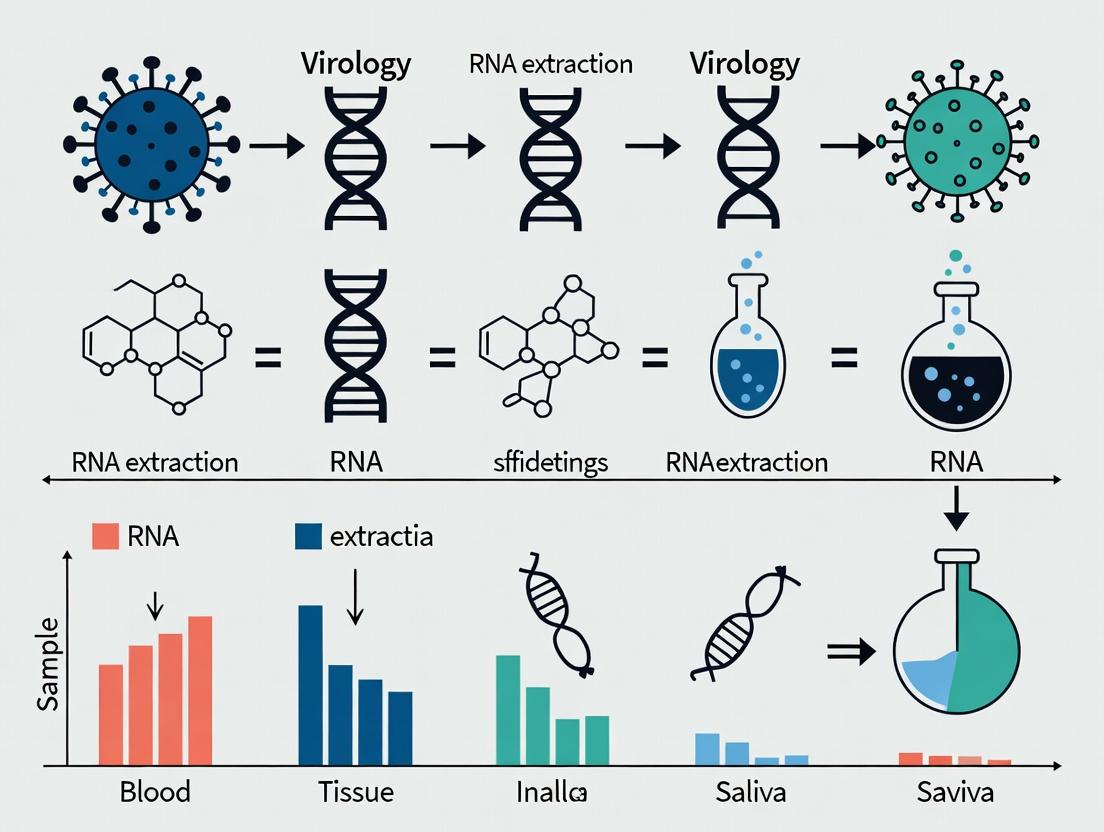
This comprehensive guide examines the critical factors influencing RNA extraction efficiency across diverse biological samples, including FFPE tissues, blood, plasma, cells, and challenging low-input samples.
Maximizing RNA Yield and Integrity: A 2024 Guide to Extraction Efficiency Across Diverse Sample Types
Abstract
This comprehensive guide examines the critical factors influencing RNA extraction efficiency across diverse biological samples, including FFPE tissues, blood, plasma, cells, and challenging low-input samples. Aimed at researchers and drug development professionals, we explore foundational principles of RNA isolation, detail optimized protocols for different matrices, provide advanced troubleshooting strategies, and present comparative data on modern commercial kits. Our analysis synthesizes the latest methodologies to help scientists select the optimal extraction approach, ensure high-quality RNA for downstream applications like qPCR, RNA-seq, and biomarker discovery, and ultimately improve the reliability of their experimental data.
RNA Extraction Fundamentals: Why Sample Type Dictates Your Protocol and Yield
Technical Support Center
Troubleshooting Guide & FAQs
Q1: My RNA yield from whole blood is consistently low and degraded. What are the primary causes and solutions? A: Low yield from whole blood is often due to high RNase activity and the overwhelming abundance of globin mRNA and ribosomal RNA from red blood cells, which can mask your target signal.
- Solution: Immediately lyse red blood cells post-collection using a commercial RBC lysis buffer. Use a stabilizing reagent (e.g., PAXgene) at the point of collection. Prioritize methods that include a globin mRNA depletion step or use leukocyte isolation kits prior to extraction.
Q2: I get variable RNA purity (A260/280 ratios) when processing fatty tissue samples. How can I improve consistency? A: Variable ratios are typically caused by co-purification of lipids which absorb near 280 nm, skewing the ratio.
- Solution: Incorporate a rigorous lipid removal step. After homogenization, perform a chloroform extraction or use a commercial lipid-removal column prior to the main RNA binding step. Increase the number of wash steps with ethanol-based buffers.
Q3: When comparing FFPE and fresh frozen tissue of the same type, my FFPE RNA is highly fragmented. Is this expected, and can I still use it for qPCR? A: Yes, this is inherent to FFPE samples due to formalin-induced cross-linking and fragmentation during processing.
- Solution: You can use it, but you must design amplicons < 120 bp. Use an FFPE-specific extraction kit that includes robust de-crosslinking steps (incubation at high temperature with a specialized buffer). Always perform an RNA Integrity Number (RIN) or DV200 analysis (percentage of fragments >200 nucleotides) to assess usability.
Q4: Bacterial cell pellets yield RNA with high genomic DNA contamination, affecting my downstream assays. How do I eliminate this? A: Bacterial cell walls are tough to lyse, often requiring mechanical disruption which can shear genomic DNA.
- Solution: Optimize lysis conditions to be sufficient for cell breakage but not overly harsh. Follow the on-column DNase I digestion protocol strictly, extending incubation time to 30 minutes. For tough gram-positive bacteria, consider adding a second, off-column DNase treatment post-extraction.
Q5: RNA from plant tissues (e.g., leaves) is contaminated with polysaccharides and polyphenols, inhibiting enzyme reactions. A: These secondary metabolites are a core challenge in plant biology.
- Solution: Use a pre-lysis wash with cold, DEPC-treated acetone or a specialized precipitation buffer (e.g., CTAB-based). During extraction, include polyvinylpyrrolidone (PVP) in the lysis buffer to bind polyphenols. Increase centrifugation speed and time to pellet insoluble polysaccharides.
Table 1: Yield, Integrity, and Purity Benchmarks
| Sample Type | Avg. Yield (µg per 10^6 cells/mg tissue) | Avg. RIN/DV200 | Avg. A260/280 | Key Contaminant | Recommended QC Focus |
|---|---|---|---|---|---|
| Whole Blood (Leukocytes) | 0.5 - 2 µg / mL blood | RIN: 7.0 - 9.5 | 1.9 - 2.1 | Hemoglobin, Genomic DNA | Yield, Globin Depletion |
| Adipose Tissue | 0.1 - 0.5 µg / mg | RIN: 6.5 - 8.5 | 1.7 - 1.9 | Lipids | Purity (A260/280), Lipid Removal |
| Fresh Frozen Tissue | 1 - 4 µg / mg | RIN: 8.0 - 10.0 | 2.0 - 2.1 | Protein, Collagen | Yield, Integrity (RIN) |
| FFPE Tissue | 0.05 - 0.5 µg / mg slice | DV200: 30-70% | 1.8 - 2.0 | Cross-linked Proteins, Salt | DV200, Fragment Size |
| Bacterial Culture (E. coli) | 5 - 20 µg / 10^9 cells | RIN: 8.5 - 10.0 | 2.0 - 2.1 | Genomic DNA | DNA Contamination (gel/qPCR) |
| Plant Leaf | 0.5 - 2 µg / mg | RIN: 5.0 - 8.0 | 1.8 - 2.0 | Polysaccharides, Phenolics | Purity, PCR Inhibitors |
Experimental Protocol: RNA Extraction Efficiency Comparison
Protocol Title: Parallel RNA Extraction from Diverse Sample Types Using Silica-Membrane Column Technology.
1. Sample Preparation:
- Whole Blood: Collect in EDTA or citrate tubes. Mix 1 mL blood with 3 mL RBC lysis buffer. Incubate on ice for 15 min, centrifuge (500 x g, 10 min, 4°C). Use leukocyte pellet.
- Tissue (Frozen/FFPE): Cryosection or microtome 10-20 mg of tissue. Place in 600 µL lysis buffer (containing β-mercaptoethanol for fresh/frozen; de-crosslinking buffer for FFPE). Homogenize immediately.
- Bacterial Pellet: Harvest 10^9 cells by centrifugation. Resuspend in 200 µL TE buffer with 10 mg/mL lysozyme. Incubate 10 min at room temperature.
- Plant Leaf: Flash-freeze in liquid N2. Grind to powder. Add 500 µL CTAB-based lysis buffer and 1% PVP-40.
2. Homogenization & Lysis:
- Lyse all samples using a rotor-stator homogenizer (tissues) or vortexing with glass beads (bacteria, plant) for 1-2 minutes.
- Transfer lysate to a microcentrifuge tube. For fatty/plant samples, add 200 µL chloroform, vortex, and centrifuge (12,000 x g, 15 min, 4°C). Transfer upper aqueous phase to a new tube.
3. Binding & Washing:
- Add 1 volume of 70% ethanol to the lysate/aqueous phase. Mix by pipetting.
- Apply mixture to a silica-membrane column. Centrifuge (≥ 8000 x g, 30 sec). Discard flow-through.
- Perform On-Column DNase I Digestion: Add 80 µL DNase I incubation mix directly to membrane. Incubate at room temp for 30 min.
- Wash 1: Add 700 µL Wash Buffer 1 (high guanidine content). Centrifuge. Discard flow-through.
- Wash 2: Add 500 µL Wash Buffer 2 (ethanol-based). Centrifuge. Discard flow-through.
- Repeat Wash 2. Centrifuge empty column for 2 min to dry membrane.
4. Elution:
- Place column in a clean 1.5 mL tube. Apply 30-50 µL RNase-free water directly to the center of the membrane.
- Let stand for 2 min. Centrifuge at maximum speed for 1 min to elute RNA.
- Store at -80°C.
QC Analysis: Quantify yield via UV spectrophotometry (Nanodrop). Assess purity via A260/280 and A260/230 ratios. Analyze integrity via Bioanalyzer (RIN for most, DV200 for FFPE).
Visualizations
Diagram Title: RNA Extraction Troubleshooting Workflow
Diagram Title: Sample-Specific Contaminant Pathways
The Scientist's Toolkit: Research Reagent Solutions
Table 2: Essential Materials for RNA Extraction from Challenging Samples
| Item | Function | Application Note |
|---|---|---|
| RNase Inhibitors | Inactivate ubiquitous RNase enzymes to prevent degradation. | Critical for high-RNase samples (pancreas, spleen, bacterial lysates). Add directly to lysis buffer. |
| Globin mRNA Depletion Kits | Selectively remove abundant globin transcripts from blood-derived RNA. | Essential for whole-blood RNA-Seq to improve detection of low-abundance transcripts. |
| DNase I (RNase-free) | Degrades contaminating genomic DNA post-lysis. | Mandatory for bacterial samples and any downstream application sensitive to DNA (qPCR, sequencing). |
| Polyvinylpyrrolidone (PVP) | Binds and precipitates polyphenols and tannins. | Added to lysis buffer for plant tissues (leaves, roots, seeds). |
| CTAB Lysis Buffer | Cetyltrimethylammonium bromide-based buffer efficient for polysaccharide removal. | Standard for polysaccharide-rich samples (plants, fungi, certain bacteria). |
| Proteinase K | Broad-spectrum protease to digest proteins and reverse formalin cross-links. | Used in high concentrations during FFPE sample lysis and de-crosslinking steps. |
| Glycogen or Carrier RNA | Co-precipitates with low-concentration RNA to visualize pellet and improve yield. | Used during ethanol precipitation steps for low-yield samples (e.g., small cell numbers, FFPE). |
| RNA Integrity Number (RIN) Kits | Microfluidics-based analysis providing a numerical score (1-10) of RNA degradation. | Standard QC for fresh/frozen tissue RNA. Not suitable for FFPE (use DV200 instead). |
Within the context of a thesis comparing RNA extraction efficiency across diverse sample types (e.g., tissues, cells, biofluids), accurate quantification and qualification of RNA are paramount. This technical support center defines the key metrics and provides troubleshooting guidance for common issues encountered during RNA quality control.
Defining the Core Metrics
Yield
Yield is the total amount of RNA recovered from a sample, typically measured in nanograms (ng) or micrograms (µg). It is crucial for determining if sufficient material is available for downstream applications (e.g., qRT-PCR, RNA-seq).
Purity
Purity is assessed by spectrophotometric ratios, indicating the presence of contaminants.
- A260/A280 Ratio: Assesses protein contamination. Pure RNA has a ratio of ~2.0.
- A260/A230 Ratio: Assesses contamination by organic compounds (e.g., guanidine salts, phenol, ethanol). Pure RNA has a ratio of ~2.0-2.2.
Table 1: Interpretation of Spectrophotometric Ratios
| Ratio | Ideal Value | Low Value Indicates | High Value Indicates |
|---|---|---|---|
| A260/A280 | 1.8 - 2.0 | Protein or phenol contamination | Potential instrument error/lysis buffer interference |
| A260/A230 | 2.0 - 2.2 | Chaotropic salt, carbohydrate, or organic solvent carryover | Rare; often technical error |
RNA Integrity (RIN/RQN)
RNA Integrity Number (RIN, Agilent) or RNA Quality Number (RQN, BioRad) are algorithms that assign a numerical value (1=degraded, 10=intact) based on the entire electrophoretic trace of an RNA sample, primarily focusing on the 18S and 28S ribosomal RNA peaks.
Table 2: Guidelines for RNA Integrity Values
| RIN/RQN Score | Interpretation | Suitability for Downstream Apps |
|---|---|---|
| 9-10 | Excellent/Intact | All applications, including long-read sequencing |
| 7-8 | Good | Standard RNA-seq, microarrays, qRT-PCR |
| 5-6 | Moderate | qRT-PCR (short amplicons recommended) |
| <5 | Degraded | Problematic for most quantitative applications |
Troubleshooting Guides & FAQs
FAQ: Low Yield
Q: My RNA yield from FFPE tissue is consistently low. What can I do? A: FFPE samples are challenging. Ensure deparaffinization is complete. Optimize proteinase K digestion time and temperature (e.g., extend incubation at 56°C). Use a specialized FFPE RNA extraction kit designed to recover fragmented RNA. Include a DNase digestion step to remove genomic DNA that can co-pellet and interfere with accurate quantification.
Q: My yield from whole blood is low. A: Ensure complete lysis of red blood cells before proceeding to leukocyte/RNA stabilization. Starting with a higher blood volume may be necessary. For PAXgene or Tempus tubes, strictly adhere to the recommended protocol for homogenization and washing steps.
FAQ: Purity Issues
Q: My A260/A280 ratio is below 1.7. A: This suggests protein or phenol contamination.
- Solution: Repeat the final wash steps with the provided ethanol-based wash buffers. Ensure the wash buffer is prepared with the correct concentration of ethanol. For phenol-based methods, ensure proper phase separation and avoid taking the interphase. Perform an additional cleanup using a column-based kit or ethanol precipitation.
Q: My A260/A230 ratio is below 1.8. A: This indicates carryover of chaotropic salts, carbohydrates, or organic compounds.
- Solution: Ensure complete removal of the final wash buffer. Centrifuge the empty column for an additional 1-2 minutes before elution. Elute with nuclease-free water (preheated to 70°C can improve elution efficiency) instead of TE buffer, as EDTA can depress A230. Re-dissolving an ethanol pellet in 70% ethanol and re-pelleting can also help remove salts.
FAQ: Integrity Problems
Q: My RIN score is low (<7), but my qRT-PCR works. Why? A: qRT-PCR with short amplicons (<150 bp) can be robust even with moderately degraded RNA. RIN assesses the entire ribosomal RNA profile, which may degrade faster than your target mRNA. Always correlate RIN with functional data from your intended application.
Q: How do I prevent RNA degradation during extraction? A:
- Work RNase-free: Use designated RNase-free reagents, tips, and tubes. Wear gloves.
- Keep it cold: Perform steps on ice when possible.
- Act fast: Process samples immediately or stabilize them in RNAlater or similar reagents.
- Use inhibitors: Include β-mercaptoethanol or other RNase inhibitors in lysis buffers.
- Store properly: Store purified RNA at -80°C in aliquots.
Experimental Protocol: Assessing RNA Quality
Protocol: RNA QC using Bioanalyzer/TapeStation and Spectrophotometry
- Quantification: Dilute 1-2 µL of RNA in nuclease-free water. Measure absorbance at 230nm, 260nm, and 280nm using a spectrophotometer. Calculate yield and purity ratios.
- Integrity Analysis: Follow manufacturer instructions.
- For Agilent Bioanalyzer: Heat 1 µL of RNA (diluted to ~50 ng/µL) with RNA ladder and dye at 70°C for 2 minutes. Load onto an RNA Nano chip and run the assay.
- For Agilent TapeStation: Mix 1 µL of RNA sample with 3 µL of ScreenTape buffer. Load into a RNA ScreenTape and run.
- Analysis: Software automatically calculates RIN/RQN and displays the electrophoretogram.
Visualizations
Title: RNA Quality Control Assessment Workflow
Title: Troubleshooting Low RNA Purity Ratios
The Scientist's Toolkit: Research Reagent Solutions
Table 3: Essential Materials for RNA QC Experiments
| Item | Function | Example/Note |
|---|---|---|
| Nanodrop/UV-Vis Spectrophotometer | Measures RNA concentration and A260/A280, A260/A230 purity ratios. | For low-volume, high-concentration samples. |
| Qubit Fluorometer & RNA HS Assay | Fluorescence-based specific quantitation of RNA, unaffected by contaminants. | Critical for accurate yield before library prep. |
| Agilent Bioanalyzer 2100 | Microfluidics-based capillary electrophoresis for RIN assessment. | Gold standard for RNA integrity. |
| Agilent 4200 TapeStation | ScreenTape-based electrophoresis for RQN assessment. | Higher throughput alternative to Bioanalyzer. |
| RNase-free Water | Elution and dilution of RNA samples. | Prevents degradation and avoids A230 depression from EDTA. |
| RNA-specific Dyes | Fluorescent dyes that bind RNA for integrity analysis. | e.g., Agilent RNA dye. |
| RNA Ladder | Size standard for calibrating electrophoresis runs. | Essential for accurate RIN/RQN calculation. |
| RNase Inhibitors | Added to lysis buffers or reactions to prevent degradation. | e.g., Recombinant RNasin. |
| Solid-Phase Extraction Columns | Silica-membrane columns for binding and purifying RNA. | Foundation of most modern kit-based extractions. |
Troubleshooting Guide & FAQs
Q1: My RNA yield from liver tissue is consistently low and degraded. What is the most likely cause and how can I mitigate it? A: The liver is exceptionally rich in RNases, particularly RNase A-type enzymes. Degradation occurs rapidly during tissue homogenization. Mitigation requires immediate and potent RNase inhibition.
- Protocol: For every 100 mg of liver tissue, homogenize in 1 mL of a commercial, phenol-based, denaturing lysis buffer (e.g., TRIzol or TRI Reagent) using a mechanical homogenizer. Ensure the tissue is submerged in lysis buffer before homogenization. Process samples on ice and proceed to phase separation immediately.
Q2: I am extracting RNA from serum for liquid biopsy analysis, but my qPCR fails due to insufficient RNA quality. How can I improve recovery of intact RNA from biofluids? A: Biofluids like serum and plasma contain circulating RNases and lack protective factors. Standard tissue protocols fail here.
- Protocol: Use a specialized silica-membrane column kit designed for low-abundance RNA in biofluids. Pre-treat the sample with Proteinase K (0.2 mg/mL, 10 min at 55°C) to digest RNase-complexing proteins. Add 1 µg of carrier RNA (like poly-A RNA) or glycogen (20 µg/mL) during binding to the column to precipitate and recover the minute amounts of target RNA. Elute in a small volume (e.g., 15 µL) of RNase-free water.
Q3: My RNA integrity number (RIN) is high from cultured cells but low from matched patient tissue biopsies, despite using the same kit. Why? A: Tissue biopsies have a complex extracellular matrix and variable ischemic time (time between collection and preservation), leading to intrinsic RNase activation.
- Protocol: Implement immediate stabilization. For tissue biopsies, snap-freeze in liquid nitrogen within minutes of excision, then store at -80°C. Alternatively, immerse the biopsy directly in a commercial RNA stabilization reagent (e.g., RNAlater) at 4°C overnight before long-term storage at -80°C. During extraction, include an additional mechanical disruption step (e.g., bead beating) while the sample is in lysis buffer to fully penetrate the tissue matrix.
Q4: I suspect my lab environment or reagents are contaminated with RNases. What is the most effective decontamination procedure? A: Environmental RNase contamination is a common issue. Implement rigorous decontamination.
- Protocol:
- Surfaces: Wipe down benches, pipettes, and equipment with an RNase-deactivating solution (e.g., 0.1% Diethyl pyrocarbonate (DEPC)-treated water, or commercial RNaseZap solutions). For DEPC, treat water overnight and then autoclave to destroy residual DEPC.
- Glassware & Tools: Bake at 250°C for at least 4 hours.
- Solutions: Use certified RNase-free water and reagents. For critical solutions you prepare, treat with 0.01% DEPC (with subsequent autoclaving) or filter-sterilize through a 0.22 µm filter.
- Personal Practice: Always wear gloves and change them frequently.
Q5: During RNA extraction from pancreas, should I use a chaotropic salt-based or hot acid-phenol method for best results? A: The pancreas has some of the highest RNase concentrations in the body. A hot acid-phenol:chloroform method is the historical gold standard for such difficult tissues.
- Protocol:
- Homogenize tissue in a strong denaturing buffer (e.g., 4 M guanidinium thiocyanate, 25 mM sodium citrate, 0.5% N-lauroylsarcosine).
- Add sodium acetate (0.2 M final), acid phenol (pH 4.5-4.7), and chloroform:isoamyl alcohol (49:1). Vortex vigorously.
- Centrifuge for phase separation. The RNA partitions to the upper aqueous phase.
- Precipitate RNA from the aqueous phase with isopropanol. This method maintains an acidic pH, denatures RNases, and efficiently separates RNA from DNA and protein.
Table 1: Relative RNase Activity and Recommended Inhibitors by Sample Type
| Sample Type | Relative RNase Activity (Arbitrary Units) | Recommended RNase Inhibition Strategy | Expected RIN Range (Optimal Prep) |
|---|---|---|---|
| Cultured Cell Lines | Low (1-10) | Standard lysis buffers with mild chaotropes | 9.5 - 10.0 |
| Whole Blood | Moderate (50) | Immediate leukocyte isolation or PAXgene-type tubes | 7.0 - 9.0 (from PBMCs) |
| Serum/Plasma | High (100-200) | Proteinase K digestion, carrier RNA | N/A (low mass) |
| Liver Tissue | Very High (500) | Immediate denaturation in strong chaotropic salts | 7.5 - 9.0 |
| Pancreas Tissue | Extremely High (1000+) | Hot acid-phenol method, immediate freezing | 6.5 - 8.5 |
Table 2: Impact of Ischemic Time on RNA Integrity in Tissue Biopsies
| Ischemic Time (minutes at 25°C) | Average RIN (Liver) | Average RIN (Breast Tumor) | % Reduction in mRNA Yield |
|---|---|---|---|
| 0 (Snap-frozen) | 8.8 | 9.1 | 0% |
| 10 | 7.2 | 8.5 | 15% |
| 30 | 5.1 | 7.0 | 45% |
| 60 | 2.4 | 5.5 | 75% |
The Scientist's Toolkit: Key Research Reagent Solutions
| Item | Function in RNase Control |
|---|---|
| Guanidinium Thiocyanate (GITC) | Potent chaotropic agent. Denatures RNases and other proteins immediately upon cell lysis. Found in TRIzol and RLT buffers. |
| β-Mercaptoethanol (BME) or DTT | Reducing agent. Breaks disulfide bonds critical for the tertiary structure of many RNases, inactivating them. |
| RNase Inhibitor (e.g., Recombinant RNasin) | Protein that non-covalently binds to and inhibits RNase A-type enzymes. Critical for downstream enzymatic reactions (RT, IVT). |
| Diethyl Pyrocarbonate (DEPC) | Alkylating agent. Inactivates RNases by covalent modification of histidine residues. Used to treat water and solutions. |
| Acid Phenol (pH 4.5) | During liquid-phase extraction, at acidic pH, RNA is selectively partitioned into the aqueous phase, while DNA and proteins remain in the organic phase or interface. |
| Silica-Membrane Columns | Bind RNA in the presence of high-salt chaotropic conditions, allowing efficient washing away of RNases and other contaminants. |
| RNAlater / RNA Stabilization Reagent | Aqueous, non-toxic solution that permeates tissue to stabilize and protect cellular RNA by inactivating RNases post-collection. |
Experimental Protocols
Protocol 1: Robust RNA Extraction from RNase-Rich Tissues (e.g., Liver, Pancreas) Method: Hot Acid-Phenol Chloroform Extraction.
- Homogenization: Rapidly weigh ≤100 mg of tissue. Immediately place it in 1 mL of Denaturing Solution (4M GITC, 25mM sodium citrate, 0.5% sarcosyl, 0.1M β-Mercaptoethanol) in a pre-chilled tube. Homogenize with a rotor-stator homogenizer for 30 seconds on ice.
- Acid-Phenol Addition: Add 100 µL of 2M sodium acetate (pH 4.0), 1 mL of acid-saturated phenol (pH 4.5), and 200 µL of chloroform-isoamyl alcohol (49:1). Cap tightly.
- Vortex & Incubate: Vortex vigorously for 60 seconds. Incubate the suspension for 15 minutes on ice.
- Centrifugation: Centrifuge at 12,000 x g for 20 minutes at 4°C. The RNA will be in the upper, clear aqueous phase (approx. 1 mL).
- Precipitation: Transfer the aqueous phase to a new tube. Add 1 mL of 100% isopropanol. Mix and incubate at -20°C for at least 1 hour.
- Pellet RNA: Centrifuge at 12,000 x g for 30 minutes at 4°C. A gel-like RNA pellet will form.
- Wash: Wash the pellet twice with 75% ethanol (made with DEPC-water). Centrifuge at 7,500 x g for 5 minutes at 4°C each time.
- Resuspend: Air-dry the pellet for 5-10 minutes. Dissolve in 30-50 µL of RNase-free water.
Protocol 2: Evaluating RNase Contamination in Lab Reagents Method: Fluorescent Ribonuclease Assay.
- Prepare Substrate: Dilute a synthetic, fluorophore-labeled RNA substrate (e.g., 5'-FAM-UUUUUUUUUU-3'-Iowa Black FQ) in the provided assay buffer to 100 nM.
- Sample Setup: In a black 96-well plate, mix 50 µL of the substrate solution with 50 µL of the test reagent (e.g., water, buffer). For a positive control, add 50 µL of substrate to 50 µL of a known RNase solution. For a negative control, use RNase-free water.
- Incubate & Measure: Incubate the plate at 37°C for 30-60 minutes. Protect from light.
- Detection: Measure fluorescence (excitation ~485 nm, emission ~528 nm) using a plate reader. An increase in fluorescence over the negative control indicates cleavage of the quenched substrate by RNase activity in the test reagent.
Diagrams
Title: Optimal RNA Extraction Workflow for Difficult Samples
Title: Common Sources of RNase Contamination
Troubleshooting Guides & FAQs
Q1: Why is my RNA yield from FFPE tissue significantly lower than from fresh-frozen tissue, and how can I improve it? A: The primary cause is formalin-induced RNA-protein cross-linking and fragmentation. To improve yield:
- Deparaffinize thoroughly: Use multiple xylene or limonene-based washes followed by ethanol rinses.
- Optimize Proteinase K digestion: Increase digestion time (up to 18 hours) and temperature (50-56°C). Use a fresh, high-activity batch.
- Implement a specialized lysis buffer: Use buffers containing high concentrations of chaotropic salts (e.g., guanidine thiocyanate) and ionic detergents to reverse cross-links.
- Add a post-extraction incubation step: Heat eluted RNA at 55-60°C for 10-20 minutes to break any residual cross-links.
Q2: My RNA from FFPE samples has poor purity (low A260/A280 ratio). What is the likely contaminant and how do I remove it? A: A low A260/A280 ratio (<1.8) typically indicates residual protein or guanidine salts from the lysis buffer.
- Cause: Incomplete protein digestion or carryover of lysis reagents.
- Solution: Perform an additional cleanup using silica-membrane columns designed for FFPE RNA. Include an on-column DNase digestion step. Follow with an extra wash step using 80% ethanol containing a mild detergent. Ensure the final elution is performed with pre-warmed nuclease-free water or TE buffer.
Q3: Why does my RNA from FFPE samples perform poorly in downstream applications like RT-qPCR, especially for longer amplicons? A: Formalin fixation causes random RNA fragmentation. The average fragment length in FFPE RNA is often between 100-300 nucleotides.
- Solution: Design assays targeting shorter amplicons (60-100 bp). Always use probes (e.g., TaqMan) over SYBR Green for specificity. Perform a RNA integrity assessment specific to fragmented RNA (e.g., DV200 metric - percentage of fragments >200 nucleotides) instead of RIN.
Q4: How can I effectively remove genomic DNA contamination from FFPE RNA preps? A: Genomic DNA is a major contaminant due to co-extraction.
- Best Practice: Use a rigorous on-column DNase I digestion step. For critical applications, follow with a post-elution DNase treatment using a robust DNase enzyme, then re-purify. Always include a no-reverse-transcriptase (-RT) control in downstream PCR assays.
Q5: What is the optimal method for quantifying and assessing the quality of FFPE-derived RNA? A: Traditional metrics like RIN are not reliable.
- Recommended Protocol:
- Quantification: Use a fluorescence-based RNA-specific assay (e.g., Qubit RNA HS Assay). Avoid absorbance (Nanodrop) for accurate concentration, though it can be used for purity screening.
- Quality Assessment: Use the DV200 metric on a Fragment Analyzer or Bioanalyzer. A DV200 > 30% is generally suitable for downstream sequencing. Use RT-qPCR of a short vs. long amplicon from a housekeeping gene as a functional quality check.
Table 1: Quantitative Comparison of RNA Recovery Metrics
| Metric | Fresh/Frozen Tissue | FFPE Tissue | Notes |
|---|---|---|---|
| Average Yield | 2-5 µg/mg tissue | 0.1-1 µg/mg tissue | Yield highly dependent on fixation time and storage age. |
| RNA Integrity (RIN) | 8.0 - 10.0 | 1.5 - 3.5 (misleading) | RIN is not applicable for FFPE. |
| DV200 (%) | >90% | 30% - 70% | Key metric for FFPE RNA suitability for NGS. |
| Average Fragment Length | >2000 nucleotides | 100 - 300 nucleotides | Direct result of hydrolysis and cross-linking. |
| Success in Long RT-PCR (>500bp) | Excellent | Very Poor to None | Requires short amplicon designs. |
| Major Contaminants | Protein, DNA | Cross-linked protein, DNA, formalin adducts | Requires specialized de-cross-linking steps. |
Table 2: Impact of Fixation Variables on FFPE RNA Quality
| Fixation Variable | Recommended Best Practice | Negative Impact if Suboptimal |
|---|---|---|
| Fixation Delay | < 30 minutes | Rapid RNA degradation begins post-excision. |
| Fixation Time | 18-24 hours | Prolonged fixation (>48h) increases cross-linking irreversibility. |
| Fixative Type | 10% Neutral Buffered Formalin | Unbuffered formalin causes acidic pH, accelerating RNA hydrolysis. |
| Tissue Thickness | < 5 mm | Thick sections lead to poor penetration and uneven fixation. |
| Storage Time | < 5 years | Older blocks yield more fragmented RNA, though successful extraction from decades-old blocks is possible. |
Experimental Protocols
Protocol 1: RNA Extraction from FFPE Tissue Sections (Specialized Column-Based Method)
- Deparaffinization: Cut 3-5 x 10 µm sections. Add 1 mL xylene, vortex, incubate 5 min RT, centrifuge. Discard supernatant. Repeat once.
- Ethanol Wash: Add 1 mL 100% ethanol, vortex, centrifuge. Discard supernatant. Repeat once. Air-dry pellet for 5-10 min.
- Lysis & De-cross-linking: Add 200 µL Proteinase K and 200 µL specialized FFPE lysis buffer (with guanidine salts). Vortex. Incubate at 56°C for 15 min, then 80°C for 15-30 min.
- DNase Treatment: Add ethanol, mix, and load onto column. Centrifuge. Add on-column DNase I mix. Incubate RT for 15 min.
- Washes: Wash with low-salt buffer. Wash twice with high-salt/ethanol wash buffer. Centrifuge columns dry.
- Elution: Elute in 20-30 µL pre-warmed (60°C) nuclease-free water. Incubate eluate at 60°C for 5 min before storage at -80°C.
Protocol 2: RNA Extraction from Fresh/Frozen Tissue (Phenol-Guanidinium-Based Reference Method)
- Homogenization: Rapidly homogenize 30 mg tissue in 1 mL TRIzol/TRItype reagents using a bead beater or rotor-stator homogenizer.
- Phase Separation: Incubate 5 min RT. Add 0.2 mL chloroform, shake vigorously, incubate 2-3 min. Centrifuge at 12,000 x g for 15 min at 4°C.
- RNA Precipitation: Transfer aqueous phase to a new tube. Precipitate with 0.5 mL isopropanol. Incubate 10 min RT. Centrifuge at 12,000 x g for 10 min at 4°C.
- Wash: Remove supernatant. Wash pellet with 1 mL 75% ethanol. Centrifuge at 7,500 x g for 5 min at 4°C.
- Redissolution: Air-dry pellet for 5-10 min. Dissolve in 30-50 µL nuclease-free water. Assess quality via RIN and quantity.
Visualization: Workflows and Pathways
Diagram Title: Workflow Comparison: RNA from FFPE vs. Fresh Tissue
Diagram Title: Molecular Impact of Formalin on RNA
The Scientist's Toolkit: Research Reagent Solutions
| Item | Function in FFPE vs. Fresh/Frozen RNA Research |
|---|---|
| Specialized FFPE RNA Kit | Contains optimized lysis buffers with chaotropic salts and ionic detergents to reverse cross-links, and silica membranes calibrated for short RNA fragments. |
| Proteinase K (High Purity) | Essential for digesting cross-linked proteins in FFPE samples. Requires extended incubation times and high concentrations. |
| DNase I (RNase-free) | Critical for removing genomic DNA co-extracted from both sample types, especially problematic in FFPE due to similar extraction properties. |
| RNA-Specific Fluorescence Dye | (e.g., Qubit RNA HS dye) Provides accurate quantification of fragmented FFPE RNA, unaffected by contaminants that skew A260. |
| Xylene or Limonene-Based Reagent | For complete removal of paraffin wax from FFPE sections prior to lysis. Incomplete deparaffinization is a major cause of failure. |
| Nuclease-Free Water (pre-warmed) | Warm elution water (60°C) increases RNA elution efficiency from silica columns, improving yield from both FFPE and frozen samples. |
| RNA Stabilization Reagent | (e.g., RNAlater) For fresh tissue, halts degradation immediately upon collection, preserving near-FFPE-quality RNA without cross-linking. |
| Acid-Phenol:Chloroform | Gold-standard for phase-separation in fresh/frozen extractions (e.g., TRIzol). Effectively removes protein but is less effective on cross-linked FFPE material. |
Troubleshooting Guides & FAQs
FAQ 1: Why is my RNA yield from plasma/serum so low, and how can I improve it?
- Answer: Low RNA yield, particularly of cell-free RNA (cfRNA), is common due to its low concentration and degradation. To improve yield:
- Increase Input Volume: Process larger volumes of plasma/serum (e.g., 1-4 mL), but ensure you use a compatible extraction kit designed for high-volume inputs.
- Inhibit Degradation: Add RNA stabilization reagents (e.g., RNase inhibitors) to blood collection tubes immediately after draw and during plasma processing.
- Optimize Elution: Elute in a small volume (e.g., 10-15 µL) of nuclease-free water or TE buffer. A second elution step can recover residual RNA but will dilute the final concentration.
- Carrier RNA: Use provided carrier RNA or linear acrylamide during extraction. This improves the precipitation and binding efficiency of minute amounts of cfRNA.
FAQ 2: How do I mitigate PCR inhibition from hemoglobin and other heme compounds?
- Answer: Hemoglobin from hemolyzed samples is a potent PCR inhibitor.
- Prevention: Use careful blood draw and plasma separation protocols to minimize hemolysis. Visually inspect samples for pink/red discoloration.
- Dilution: Diluting the template RNA can reduce inhibitor concentration, but also dilutes the target.
- Kit Selection: Use RNA extraction kits specifically validated for plasma/serum that include steps to remove heme-based inhibitors.
- PCR Additives: Supplement PCR reactions with additives like bovine serum albumin (BSA) or T4 gene 32 protein, which can bind to and neutralize inhibitors.
FAQ 3: My plasma RNA is dominated by ribosomal RNA (rRNA) from blood cells. How can I enrich for cfRNA?
- Answer: Abundant rRNA typically indicates contamination from cellular RNA due to inefficient removal of cells or platelets during plasma preparation.
- Rigorous Centrifugation: Perform a double centrifugation protocol (e.g., 1,600-2,000 x g for 10 min at 4°C, then transfer supernatant to a new tube and centrifuge at 16,000 x g for 10 min).
- Filtration: Use a 0.8 µm or 0.45 µm syringe filter post-initial spin to remove residual cells.
- DNase/RNase Treatment: Treat the extracted RNA with DNase to remove genomic DNA contamination. Note: RNase treatment is not applicable if targeting RNA.
- Probe-Based Depletion: Use commercially available probe-based kits to selectively deplete abundant rRNA sequences (e.g., from platelets) post-extraction.
FAQ 4: What is the best method to check RNA quality from plasma/serum when Bioanalyzer/TapeStation signals are low?
- Answer: Traditional electrophoresis is often insufficient for low-concentration cfRNA.
- qRT-PCR for Housekeeping Genes: The most sensitive method. Use primers for stable cfRNA markers (e.g., GAPDH, RNU6-1 for miRNA) to assess amplifiability and rule out inhibition. A high Cq value (>30) is expected for mRNA.
- Digital PCR: Provides absolute quantification without a standard curve and is more tolerant of inhibitors.
- Fragment Analyzer with High Sensitivity Kits: Some systems offer kits designed for very low input (pg levels) of RNA.
Comparative Data Table: RNA Extraction Kits for Plasma/Serum
| Kit Name | Recommended Sample Volume | Key Feature for Hemoglobin/Inhibitor Removal | Carrier RNA Included? | Avg. cfRNA Yield (from 1 mL plasma)* | Suitability for Downstream NGS |
|---|---|---|---|---|---|
| Kit A (miRNA & cfRNA) | 1-4 mL | Silica-membrane column with inhibitor-removal wash | Yes, synthetic | 5-15 ng | Excellent, includes small RNA |
| Kit B (cfNA) | 0.5-4 mL | Proprietary precipitation and wash technology | Optional | 2-10 ng | Good, requires fragmentation for mRNA-seq |
| Kit C (Liquid Bioopsy) | 1-2 mL | Magnetic bead-based with stringent washes | Yes, poly-A | 4-12 ng | Excellent, optimized for library prep |
| Manual Phenol-Chloroform | Up to 5 mL | Phase separation removes many inhibitors | No (must add) | 10-30 ng (but more cellular RNA) | Moderate, may contain organic residues |
*Yields are highly variable and depend on donor and collection method. This table is for comparative illustration.
Key Experimental Protocol: cfRNA Extraction from Plasma for qRT-PCR
Title: Protocol for Hemolysis-Resistant Plasma cfRNA Extraction and qPCR Validation.
Materials: K2-EDTA or Streck cell-free RNA BCT blood collection tubes, refrigerated centrifuge, 0.8 µm syringe filter, high-volume plasma RNA extraction kit (e.g., Kit A), DNase I (RNase-free), qRT-PCR assay.
Procedure:
- Plasma Preparation: Centrifuge whole blood at 1,600 x g for 10 min at 4°C. Transfer supernatant to a new tube without disturbing the buffy coat. Centrifuge a second time at 16,000 x g for 10 min at 4°C. Transfer supernatant through a 0.8 µm filter. Aliquot and store at -80°C.
- RNA Extraction: Thaw plasma on ice. Follow manufacturer's instructions for the chosen high-volume kit. Include the optional on-column DNase I digestion step (15 min at RT). Elute in 15 µL nuclease-free water.
- Quality Assessment: Perform qRT-PCR for a spiked-in synthetic control (e.g., ath-miR-159a) to assess extraction efficiency. Perform qRT-PCR for a housekeeping gene (e.g., GAPDH) to assess amplifiable RNA presence and Cq value.
- Inhibition Test: Perform a 1:2 dilution of the RNA eluate. Re-run qPCR for the housekeeping gene. A ΔCq of ~1 (i.e., the diluted sample is 1 cycle later) indicates minimal inhibition. A larger shift suggests residual PCR inhibitors.
Research Reagent Solutions Toolkit
| Item | Function & Rationale |
|---|---|
| Cell-Free RNA BCT Tubes | Blood collection tubes containing preservatives that stabilize nucleases and prevent cellular lysis for up to 72-96 hours, crucial for reproducible cfRNA levels. |
| Carrier RNA | Unlabeled RNA (e.g., poly-A, tRNA) added during lysis to improve binding efficiency of low-abundance cfRNA to silica columns/beads and compensate for low starting material. |
| RNase Inhibitor | Enzyme added to plasma processing buffers or eluates to prevent degradation of the already scarce cfRNA during handling. |
| Magnetic Beads (Silica-Coated) | Used in high-throughput, automated extraction protocols. Their surface chemistry is optimized to bind nucleic acids in high-volume, low-copy-number samples. |
| PCR Inhibitor Removal Additives (BSA, T4 gp32) | Added directly to the PCR mix to bind and neutralize residual heme or phenolic compounds that co-purify with RNA, restoring polymerase activity. |
| Spike-In Synthetic RNA Controls | Non-human RNA sequences (e.g., ath-miR-159a, ERCC RNAs) added to the lysis buffer to monitor and normalize for extraction efficiency and reverse transcription variability. |
| DNase I (RNase-free) | Critical for removing contaminating genomic DNA, which is a major confounder in RNA-based assays, especially when targeting mRNA or using intergenic primers. |
| Ribo-depletion Kit (Probe-Based) | Used post-extraction to remove abundant rRNA sequences derived from residual platelets or lysed cells, thereby enriching for cfRNA and improving sequencing library complexity. |
Visualizations
Title: Plasma cfRNA Extraction & Analysis Workflow
Title: Blood-Based RNA Interference: Sources & Solutions
Technical Support Center: Troubleshooting & FAQs
Q1: During low-input RNA extraction, my yield is consistently lower than expected. What are the most common points of loss? A: The primary points of RNA loss in low-input protocols are:
- Non-specific adsorption to tube surfaces: Use low-binding tubes throughout.
- Incomplete cell lysis or RNA release: Ensure lysis buffer is fresh and thoroughly mixed. For single cells, verify the lysis method is sufficiently vigorous.
- Inefficient binding to silica columns or beads: Ensure ethanol concentration in the binding mixture is correct. Do not overload binding columns; consider splitting samples.
- Over-elution volume: Elute in the smallest feasible volume (e.g., 8-12 µL) of nuclease-free water or TE buffer.
Q2: I'm seeing high variability in RNA Integrity Number (RIN) between single-cell replicates. How can I improve consistency? A: High RIN variability often stems from pre-extraction factors:
- Cell viability and stress: Ensure >95% viability and process cells immediately after sorting/isolation to minimize stress-induced RNA degradation.
- Inconsistent lysis: Implement a fixed, timed lysis step immediately upon cell capture. Automated liquid handlers or dedicated single-cell systems improve reproducibility.
- Contamination with RNases: Use RNase inhibitors specifically formulated for single-cell lysis and include them in all reaction buffers. Perform all prep steps in a clean, dedicated workspace.
Q3: My downstream qPCR or sequencing from single-cell extracts shows high technical noise. Is this from the extraction? A: While amplification contributes noise, extraction can be a source. Key issues:
- Incomplete genomic DNA (gDNA) removal: Even trace gDNA causes significant artifacts. Use rigorous DNase I treatment, ideally with a column-based clean-up step afterwards to remove enzymes and ions. Verify with no-RT controls.
- Carover RNA/DNA Contaminants: Ensure all purification beads or columns are thoroughly washed with the recommended high-ethanol buffers.
- Inhibitor carryover: Salt or solvent carryover can inhibit enzymes. Perform a final 80% ethanol wash and air-dry beads/columns adequately before elution.
Key Experimental Protocol: RNA Extraction from Single Cells for Sequencing
Method: Silica-based column extraction with on-column DNase treatment.
- Cell Capture & Lysis: A single cell is captured via FACS or micromanipulation directly into a 4 µL lysis buffer (e.g., 0.2% Triton X-100, 2 U/µL RNase inhibitor, 1 mM dNTPs, and 2.5 µM oligo-dT primer).
- Immediate Processing: Heat at 72°C for 3 minutes to lyse and denature, then immediately place on ice.
- Reverse Transcription: Add reagents for reverse transcription directly to the lysate to synthesize cDNA.
- cDNA Clean-up & Amplification: Purify cDNA using a silica-membrane column (elution in 20 µL). Amplify with a limited-cycle PCR.
- Final Purification: Purify the amplified cDNA using a size-selection bead system (e.g., SPRI beads) to remove primers and primer dimers. Elute in 15 µL.
- Quality Control: Analyze using a Bioanalyzer High Sensitivity DNA assay. Proceed to library preparation.
Table 1: Comparative Performance of RNA Extraction Methods for Minimal Samples
| Sample Type | Input Quantity | Method | Avg. Yield (pg) | Avg. RIN/DV200 | Key Limitation |
|---|---|---|---|---|---|
| Single Cell | 1 cell | Column-based post-amplification | 10-50* (cDNA) | N/A (cDNA QC) | Amplification bias, gDNA removal |
| Low-Input | 100-1000 cells | Direct column purification | 500-6000 | 8.2 - 9.5 | Surface adsorption losses |
| Low-Input | 100-1000 cells | Phenol-Chloroform (miRNA focus) | 800-7000 | 7.5 - 8.8 | Technical complexity, inhibitor risk |
| Standard Bulk | 10^6 cells | Direct column purification | 5-10 µg | 9.5 - 10 | Not optimized for low input |
*Yield post-amplification for sequencing. Direct RNA yield is often below reliable detection.
Research Reagent Solutions Toolkit
Table 2: Essential Reagents for Low-Input/SCRNA Extraction
| Item | Function | Example/Note |
|---|---|---|
| RNase Inhibitor, Murine | Suppresses RNase activity in dilute lysates | Essential for single-cell lysis buffers. |
| Low-Binding Microtubes | Minimizes nucleic acid adhesion to plastic walls | Use for all sample handling steps. |
| Silica-Membrane Spin Columns | Selective binding and washing of RNA/cDNA | Choose columns rated for >100 pg recovery. |
| SPRI (Solid Phase Reversible Immobilization) Beads | Size-selective purification of nucleic acids | Critical for post-amplification clean-up. |
| Cell Lysis Buffer (with detergent) | Disrupts membrane, releases RNA, inactivates RNases | Often contains Triton X-100 or IGEPAL. |
| DNase I, RNase-free | Digests genomic DNA contaminants | On-column treatment is most effective for low-input. |
| ERCC RNA Spike-In Mix | External controls for normalization & QC | Added during lysis to monitor technical variability. |
Workflow and Pathway Diagrams
Optimized RNA Extraction Protocols: Step-by-Step Guides for Each Sample Matrix
Troubleshooting Guides & FAQs
Phenol-Guanidine (TRIzol) Method
Q1: My RNA pellet from TRIzol extraction is invisible or gelatinous. What went wrong? A: A gelatinous or invisible pellet often indicates contamination with genomic DNA or excessive salt carryover. This is common with samples high in DNA, carbohydrates, or lipids (e.g., adipose tissue, plant tissues). Ensure proper homogenization and do not exceed the recommended sample volume. Add an optional DNase I treatment on the isolated RNA, or perform an extra wash with 75% ethanol. For "stringy" pellets, reduce the aqueous phase volume transferred during phase separation.
Q2: My RNA yield after TRIzol extraction is lower than expected. A: Low yield can stem from several points:
- Incomplete Homogenization: Ensure the sample is fully lysed with no visible clumps.
- Incomplete Phase Separation: Centrifuge for the full recommended time (15 min at 12,000 x g at 4°C). Ensure samples are at room temperature before separation.
- RNA Loss in Interphase/Organic Phase: Do not aspirate any of the interphase or organic layer when collecting the aqueous phase. Leave a generous buffer.
- Inefficient Precipitation: Ensure the use of high-quality glycogen or glycolblue as a co-precipitant (especially for low-input samples). Increase precipitation time to overnight at -20°C or use 2.5-3 volumes of 100% ethanol with 0.1 volume of 3M sodium acetate (pH 5.2).
Q3: My RNA has low purity (260/280 < 1.8) after TRIzol. A: A low 260/280 ratio typically indicates phenol contamination. Ensure you are carefully aspirating the aqueous phase without disturbing the phenol layer. Perform an additional wash step: after the first ethanol wash, briefly dry the pellet and resuspend it in nuclease-free water. Re-precipitate with sodium acetate and ethanol, then wash again with 75% ethanol.
Silica-Membrane Column Method
Q4: My RNA yield from columns is consistently low across sample types. A: Low yield with columns often relates to binding or wash efficiency.
- Incomplete Lysis/Binding: Ensure lysate is homogeneous. Add β-mercaptoethanol to lysis buffer for difficult samples. For high-biomass samples, do not overload the column; split the lysate.
- Inadequate Ethanol Concentration: Verify that the correct volume of ethanol/isopropanol was added to the lysate. Use fresh, high-purity alcohols.
- Over-drying the Membrane: Do not over-dry the membrane after the final wash. Elute immediately while the membrane is slightly damp. Over-drying reduces elution efficiency.
- Elution: Use pre-warmed (42-50°C) nuclease-free water or TE buffer for elution. Let it sit on the membrane for 2-5 minutes before centrifugation.
Q5: I see genomic DNA contamination in my column-purified RNA. A: DNA contamination occurs if the DNase I treatment is ineffective or omitted.
- DNase I Protocol: Ensure the DNase I incubation is performed directly on the silica membrane for the full recommended time (15-30 min at 20-25°C). The digestion buffer must contain Mg2+/Ca2+ ions for enzyme activity.
- Thorough Wash: Perform all recommended wash steps after DNase I treatment to remove enzyme and residual salts.
Q6: My column consistently clogs during the lysate flow-through step. A: Clogging is caused by particulates or overloading.
- Pre-clear Lysate: Centrifuge the lysate at max speed for 2-5 minutes after adding ethanol/isopropanol. Carefully apply the supernatant to the column, avoiding the pellet.
- Filter Columns: For challenging samples (e.g., tissue, soil, plant), use a pre-filter column or a shredder column before the binding column.
- Reduce Load: Use less starting material.
Table 1: Comparison of Key Performance Metrics
| Metric | Phenol-Guanidine (TRIzol) | Silica-Membrane Columns |
|---|---|---|
| Typical Yield (μg RNA/mg tissue) | High (Liver: 8-12 μg) | Moderate-High (Liver: 6-10 μg) |
| Purity (A260/A280) | 1.7-2.0 (prone to phenol carryover) | 1.9-2.1 (generally higher) |
| Genomic DNA Removal | Requires separate DNase step | On-column DNase treatment available |
| Hands-on Time | High | Low |
| Throughput | Low (manual) | High (potential for automation) |
| Cost per Sample | Low | Moderate-High |
| Suitability for Small RNAs | Excellent (retains miRNAs) | Variable (specific kits required) |
| Chemical Hazard | High (toxic phenol) | Low (mostly ethanol) |
Table 2: Recommended Method by Sample Type
| Sample Type | Recommended Chemistry | Key Reasoning & Protocol Note |
|---|---|---|
| Adipose Tissue, Brain | TRIzol | Column binding inefficient for lipid-rich samples. Use TRIzol with increased chloroform volume and glycoblue co-precipitation. |
| Fibrous Plant Tissue | TRIzol | More effective at breaking down polysaccharides/cell walls. Protocol includes an initial homogenization in liquid N2. |
| Whole Blood (PAXgene) | Silica Column | Optimized for stabilized blood; integrates well with stabilization chemistry. Use manufacturer's specific protocol. |
| Formalin-Fixed Paraffin-Embedded (FFPE) | Specialized Column | Kits designed for cross-link reversal and fragmented RNA binding. Requires xylene deparaffinization and proteinase K digestion. |
| Cell Culture (High-throughput) | Silica Column | Suited for 96-well plate formats and automation. Use a plate-based vacuum or centrifuge protocol. |
| Microbes (Bacteria, Yeast) | TRIzol + Bead Beating | Effective for breaking tough cell walls. Protocol: Add TRIzol and 0.1mm zirconia beads, homogenize in bead beater for 3x1 min cycles. |
Experimental Protocols
Protocol 1: RNA Extraction from Fibrous Plant Tissue using TRIzol
- Homogenization: Freeze 50-100 mg tissue in liquid N2. Grind to a fine powder with a mortar and pestle.
- Lysis: Transfer powder to a tube containing 1 mL TRIzol Reagent. Vortex vigorously for 1 min.
- Phase Separation: Incubate 5 min at RT. Add 0.2 mL chloroform. Shake vigorously for 15 sec. Incubate 2-3 min at RT.
- Centrifuge: 12,000 x g, 15 min, 4°C. The mixture separates into a red phenol-chloroform, interphase, and colorless aqueous phase.
- RNA Precipitation: Transfer aqueous phase to a new tube. Add 0.5 mL 100% isopropanol and 2 μL glycoblue. Incubate 10 min at RT.
- Pellet RNA: Centrifuge 12,000 x g, 10 min, 4°C. Remove supernatant.
- Wash: Wash pellet with 1 mL 75% ethanol. Centrifuge 7,500 x g, 5 min, 4°C. Air-dry pellet 5-10 min.
- Resuspend: Dissolve RNA in 30-50 μL nuclease-free water.
Protocol 2: RNA Extraction from Cultured Cells using Silica-Membrane Columns (with DNase)
- Lysis: Aspirate media from a 6-well plate. Lyse cells directly by adding 350 μL RLT Plus buffer (with β-mercaptoethanol) to the well. Pipette to homogenize.
- Homogenization: Pass lysate through a shredder column placed in a collection tube. Centrifuge at 13,000 x g for 2 min.
- Adjust Binding: Transfer flow-through to a new tube. Add 1 volume (350 μL) of 70% ethanol. Mix by pipetting.
- Bind RNA: Apply mixture (up to 700 μL) to a silica-membrane column. Centrifuge at 11,000 x g for 30 sec. Discard flow-through.
- Wash 1: Add 700 μL RW1 buffer. Centrifuge at 11,000 x g for 30 sec. Discard flow-through.
- DNase I Digestion: Prepare DNase I stock (10 U/μL) in digestion buffer. Apply 80 μL directly to membrane. Incubate at RT for 15 min.
- Wash 2: Add 700 μL RW1 buffer. Centrifuge at 11,000 x g for 30 sec. Discard flow-through.
- Wash 3: Add 500 μL RPE buffer (with ethanol). Centrifuge at 11,000 x g for 30 sec. Discard flow-through.
- Dry Membrane: Centrifuge at full speed for 2 min to dry.
- Elute: Place column in a clean 1.5 mL tube. Apply 30 μL nuclease-free water to membrane. Let sit for 2 min. Centrifuge at 11,000 x g for 1 min.
Visualization
RNA Extraction Method Decision Workflow
Phase Separation in TRIzol Protocol
Silica-Membrane Column Binding & Elution Principle
The Scientist's Toolkit: Research Reagent Solutions
| Item | Function in RNA Extraction |
|---|---|
| TRIzol/ TRI Reagent | Monophasic solution of phenol and guanidine isothiocyanate. Simultaneously lyses cells, denatures proteins, and inactivates RNases. |
| Chaotropic Salt (e.g., Guanidine HCl) | Disrupts hydrogen bonding, denatures proteins, and allows RNA to bind to silica membranes in column-based kits. |
| RNase Inhibitors | Enzymes (e.g., Recombinant RNasin) that non-competitively bind and inhibit common RNases. Critical for post-elution handling. |
| Glycogen / GlycoBlue | Inert co-precipitants. Visibly aid RNA pelleting and improve recovery of low-concentration and small RNAs in ethanol precipitation steps. |
| DNase I (RNase-free) | Enzyme that degrades genomic DNA. Essential for applications sensitive to DNA contamination (e.g., qRT-PCR). |
| β-Mercaptoethanol (BME) | Reducing agent added to lysis buffers. Helps denature proteins and inactivate RNases by breaking disulfide bonds, especially critical for tough samples. |
| Agencourt RNAClean XP Beads | Solid-phase reversible immobilization (SPRI) magnetic beads. Used for high-throughput, automated RNA purification and size selection. |
| RNA Stabilization Reagents (e.g., RNAlater, PAXgene) | Penetrate tissues/cells to rapidly stabilize and protect RNA at the moment of sample collection, preserving in vivo gene expression profiles. |
This technical support center is framed within the context of a comparative thesis on RNA extraction efficiency across diverse biological samples. The following troubleshooting guides, FAQs, and protocols are designed to support researchers, scientists, and drug development professionals in obtaining high-quality, high-yield RNA.
Troubleshooting Guides & FAQs
Q1: I consistently get low RNA yields from my primary tissue samples (e.g., liver, spleen). What are the most likely causes and solutions?
A: Low yields from dense tissues are often due to incomplete homogenization or lysis. Tissues rich in RNases (like pancreas) or fibrous connective tissue are particularly problematic.
- Solution: Ensure tissue is rapidly frozen after collection and kept in RNAlater or liquid N₂ until processing. Use a sufficiently vigorous mechanical disruption method (e.g., bead mill homogenizer for <30 mg tissue, rotor-stator homogenizer for larger pieces). Increase the volume of lysis buffer relative to tissue mass and ensure the homogenate is visually homogenous before proceeding. For fibrous tissues, an additional proteinase K digestion step (10-15 min at 55°C) prior to adding alcohol can significantly improve yield.
Q2: My RNA from cultured cells has acceptable yield but poor purity (260/280 < 1.8, 260/230 < 1.5). How can I improve this?
A: Poor 260/280 indicates protein contamination, while low 260/230 suggests carryover of guanidine salts, carbohydrates, or other organic compounds.
- Solution for Protein Contamination: Add an additional chloroform extraction step. After the initial phase separation, transfer the aqueous phase to a new tube, add an equal volume of fresh chloroform, mix, centrifuge, and only then proceed to the RNA precipitation step. Ensure no protein interphase is transferred.
- Solution for Salt/Organic Contamination: During the wash steps, ensure the wash buffer (usually 70-80% ethanol) is prepared fresh with nuclease-free water and molecular-grade ethanol. Let the RNA pellet air-dry for 5-10 minutes after washing to evaporate residual ethanol, but do not over-dry. Resuspend in nuclease-free water instead of TE buffer if downstream applications are sensitive to EDTA.
Q3: I see genomic DNA contamination in my RNA prep. Is a DNase step always necessary?
A: While many spin-column methods efficiently remove most DNA, some sample types (e.g., nuclei-rich cells, tissues with high DNA content) or applications extremely sensitive to DNA (e.g., RT-qPCR for low-copy genes) require DNase I treatment.
- Solution: Perform an on-column DNase I digestion. After loading the lysate onto the column and performing the first wash, apply a mix of DNase I in a specific digestion buffer directly onto the membrane. Incubate at room temperature for 15 minutes, then proceed with the remaining wash steps. This is more effective and convenient than in-solution digestion followed by cleanup.
Q4: How does the efficiency of RNA extraction compare between different sample types in a standardized protocol?
A: Extraction efficiency varies significantly. The following table summarizes expected yield and quality ranges from 1 million cells or 10 mg of tissue using a standardized silica-membrane column protocol.
Table 1: Comparative RNA Extraction Efficiency Across Sample Types
| Sample Type | Expected Yield Range | Common Purity (A260/280) | Key Challenge | Recommended Protocol Modification |
|---|---|---|---|---|
| HEK293 Cells | 8 - 15 µg | 1.9 - 2.1 | None, model system. | Standard protocol. |
| Whole Blood | 1 - 3 µg (from leukocytes) | 1.7 - 1.9 | High RNase, hemoglobin inhibition. | Use specific leukocyte isolation or RNA stabilization tubes. |
| Mouse Liver | 15 - 25 µg | 1.8 - 2.0 | Extremely high RNase content. | Immediate homogenization in >10 vol lysis buffer; add β-mercaptoethanol. |
| Rat Brain | 6 - 12 µg | 1.9 - 2.1 | High lipid content. | Additional chloroform wash; careful avoidance of lipid layer. |
| Fibrous Tissue (e.g., Heart) | 4 - 8 µg | 1.8 - 2.0 | Difficult homogenization. | Use a rotor-stator homogenizer; optional proteinase K step. |
| Adipose Tissue | 1 - 4 µg | 1.7 - 1.9 | Very high lipid content. | Multiple chloroform extractions; centrifuge at 4°C to solidify fat. |
| Plant Tissue (Leaf) | 5 - 10 µg | 1.8 - 2.0 | Polysaccharides, polyphenols. | Use CTAB or specific plant kits with PVP; pre-cool all equipment. |
Q5: My RNA is intact but my RT-qPCR results are inconsistent. Could extraction be the issue?
A: Yes, co-purification of inhibitors (e.g., heparin, salts, polysaccharides, lipids) that affect reverse transcriptase or polymerase activity is a common culprit.
- Solution: Perform a 1:5 and 1:10 dilution of your RNA template in the RT reaction. If the Cq values become more consistent or the amplification curve improves at higher dilutions, an inhibitor is likely present. Re-clean the RNA using a precipitation step or a second column cleanup. Using an inhibitor-resistant reverse transcriptase is also advisable for complex samples.
Detailed Experimental Protocol: High-Yield RNA Extraction via Guanidinium-Thiocyanate/Phenol-Chloroform Method
This benchmark protocol, against which many commercial kits are compared, offers high yield and scalability.
Materials:
- Lysis Buffer: 4M Guanidinium thiocyanate, 25mM Sodium citrate, 0.5% Sarkosyl, 0.1M β-mercaptoethanol (added fresh).
- Acidified Phenol:Chloroform:Isoamyl Alcohol (125:24:1), pH ~4.5
- Chloroform
- Isopropanol
- 75% Ethanol (in nuclease-free water)
- Nuclease-free water
Method:
- Homogenization: For tissues, homogenize <30 mg of sample in 1 mL of ice-cold lysis buffer using a motorized homogenizer. For cells, lyse pellet directly in lysis buffer by pipetting.
- Phase Separation: Add 0.1 volume of chloroform, vortex vigorously for 15 seconds. Incubate on ice for 5 minutes.
- Centrifuge: Centrifuge at 12,000 x g for 15 minutes at 4°C. The mixture will separate into a lower red phenol-chloroform phase, an interphase, and a colorless upper aqueous phase containing RNA.
- RNA Precipitation: Transfer the aqueous phase (approx. 500 µL) to a new tube. Add an equal volume of room-temperature isopropanol. Mix by inversion. Incubate at -20°C for 1 hour (or -80°C for 30 min for maximum yield).
- Pellet RNA: Centrifuge at 12,000 x g for 30 minutes at 4°C. A gel-like RNA pellet will form.
- Wash: Discard supernatant. Wash pellet with 1 mL of 75% ethanol. Vortex briefly. Centrifuge at 7,500 x g for 5 minutes at 4°C. Discard ethanol.
- Resuspend: Air-dry pellet for 5-10 minutes. Dissolve RNA in 20-50 µL of nuclease-free water by pipetting and incubating at 55-60°C for 10 minutes.
- Quantification & Storage: Measure concentration and purity via spectrophotometry. Assess integrity by agarose gel electrophoresis (sharp 28S and 18S rRNA bands). Store at -80°C.
Workflow & Pathway Visualizations
High-Yield RNA Extraction Workflow
Key Factors Affecting RNA Integrity
The Scientist's Toolkit: Research Reagent Solutions
Table 2: Essential Reagents for High-Yield RNA Extraction
| Reagent/Material | Primary Function | Critical Consideration |
|---|---|---|
| Guanidinium Thiocyanate | Powerful chaotropic agent. Denatures proteins and RNases, dissociates nucleoproteins. | Concentration must be >4M in lysis buffer for effective RNase inhibition. |
| β-Mercaptoethanol (or DTT) | Reducing agent. Breaks disulfide bonds in RNases, further inactivating them. | Must be added fresh to lysis buffer as it oxidizes rapidly. |
| Acid-Phenol (pH ~4.5) | Organic solvent. Denatures and partitions proteins into organic phase, DNA into interphase, leaving RNA in aqueous phase. | pH is critical. Acidic pH favors RNA partition into the aqueous phase. |
| Silica-Membrane Columns | Bind RNA in high-salt conditions; impurities are washed away. RNA eluted in low-salt buffer. | Binding capacity must not be exceeded. Ensure ethanol concentration in wash buffers is correct. |
| RNase Inhibitors | Proteins (e.g., RNasin) that non-covalently bind to and inhibit RNases. | Used in downstream reactions, not typically in the extraction itself. |
| RNAlater / RNA Stabilization Reagents | Penetrate tissue to rapidly stabilize and protect RNA at room temperature for storage/transport. | For large tissue pieces, volume must be sufficient for full penetration (>10x vol/weight). |
| DNase I (RNase-free) | Enzyme that degrades contaminating genomic DNA. | On-column treatment is most effective. Requires specific Mg²⁺/Ca²⁺-containing buffer. |
Technical Support Center
Troubleshooting Guide: Common Issues & Solutions
Q1: After deparaffinization and lysis, my pellet is gelatinous and difficult to handle. What is happening and how can I fix it? A: A gelatinous pellet typically indicates excessive carryover of paraffin or insufficient proteinase K digestion. This can trap nucleic acids and drastically reduce yield.
- Solution: Ensure complete deparaffinization by using fresh xylene or a certified xylene substitute (two changes, 10 minutes each). After ethanol washes, ensure the pellet is completely dry by air-drying for 5-10 minutes before lysis. Increase the proteinase K digestion time (overnight at 56°C) and vortex thoroughly during the incubation. Adding a second, higher-temperature incubation step (e.g., 80°C for 15 minutes) after proteinase K can help reverse cross-links and dissolve the gel.
Q2: My RNA yield is low but the A260/A280 ratio is >2.0. What does this indicate? A: An A260/A280 ratio >2.0 often signifies contamination with residual guanidinium salts or other components from the lysis/binding buffer, not pure RNA. This contamination can inhibit downstream applications.
- Solution: Perform an additional wash step with the provided wash buffer (typically containing ethanol). Centrifuge briefly and remove all residual wash buffer with a fine pipette tip. Ensure a final 80% ethanol wash is performed on silica columns. Extend the final column dry spin time to 5 minutes to evaporate all ethanol. Elute in nuclease-free water instead of TE buffer, as EDTA can affect spectrophotometry.
Q3: I observe poor performance in downstream qPCR (high Cq, low efficiency). My RNA is intact from fresh tissue but fails from FFPE. What are the key variables to check? A: FFPE-derived RNA is highly fragmented (average size 100-300 nucleotides). The issue is likely related to RNA fragment recovery or the presence of PCR inhibitors.
- Solution:
- Check Fragment Size: Analyze RNA on a Bioanalyzer or TapeStation to confirm expected fragmentation. Intact 18S/28S peaks are not indicative of successful FFPE extraction.
- Optimize Reverse Transcription: Use a random-hexamer priming method and a reverse transcriptase engineered for high processivity on fragmented, cross-linked templates.
- Remove Inhibitors: Include a post-elution purification step using a silica-column clean-up kit or perform a bead-based clean-up. Target short amplicons (<100 bp) in your qPCR assays.
Q4: During the binding step to the silica column, the flow-through is still viscous. Does this affect yield? A: Yes, a viscous flow-through indicates that not all nucleic acids have bound to the column membrane, likely due to overloading or insufficient binding buffer/ethanol conditions.
- Solution: Do not overload the column; for a standard column, the recommended maximum is 20 mg of FFPE tissue per 100 µl of lysis buffer. Ensure the binding mixture (lysate + ethanol/isopropanol) is mixed thoroughly by pipetting 8-10 times before loading onto the column. Pass the flow-through through the same column a second time to increase binding efficiency.
Frequently Asked Questions (FAQs)
Q: What is the single most critical step for maximizing nucleic acid recovery from FFPE? A: Complete and efficient deparaffinization is foundational. Any residual paraffin will create a physical barrier during lysis, preventing access of the digestion buffer to the tissue and leading to catastrophic failure in all subsequent steps.
Q: How long can I store digested FFPE lysates before proceeding to the binding step? A: Digested lysates are stable for several weeks at -80°C. However, it is recommended to proceed to the binding step immediately after the 80°C incubation to minimize room-temperature nuclease activity. If storage is necessary, add 1 volume of 100% ethanol to the lysate and store at -80°C.
Q: Should I use isopropanol or ethanol for the binding step? A: Both are used, but ethanol is generally preferred for shorter fragments (like FFPE RNA). Ethanol (at the correct concentration, typically 70-80% in the binding mix) provides more stringent binding conditions that favor the binding of smaller nucleic acid fragments to the silica membrane.
Q: Is it better to elute in one step with a larger volume or two steps with smaller volumes? A: For maximum concentration, perform two elutions. Apply the first elution buffer (e.g., 15-30 µl), incubate at room temperature for 2 minutes, then centrifuge. Apply the same eluate or fresh buffer to the center of the membrane for a second incubation and spin. This can increase final yield by 15-25%.
Q: How do I handle very old (>10 years) FFPE blocks? A: Anticipate lower yields and higher fragmentation. Increase proteinase K digestion time to 48-72 hours, refreshing the enzyme at 24-hour intervals. Consider using specialized recovery solutions containing higher concentrations of surfactants and cross-link reversal agents.
Table 1: Effect of Deparaffinization Stringency on RNA Yield from 10 µm FFPE Sections (10 mg tissue)
| Deparaffinization Protocol | Average Yield (ng/µl) | A260/A280 Ratio | % RNA >200 nt |
|---|---|---|---|
| Standard: 2 x Xylene, 5 min each | 18.5 ± 3.2 | 1.85 ± 0.10 | 65% |
| Optimized: 2 x Xylene, 10 min each | 25.1 ± 4.1 | 1.92 ± 0.05 | 78% |
| With post-xylene ethanol gradient wash | 26.8 ± 3.8 | 1.94 ± 0.03 | 82% |
Table 2: Comparison of Elution Strategies for FFPE RNA Recovery
| Elution Method | Elution Volume | Total Yield (ng) | Concentration (ng/µl) | DV200 (%) |
|---|---|---|---|---|
| Single elution, 30 µl | 30 µl | 450 ± 60 | 15.0 ± 2.0 | 52 ± 5 |
| Two sequential elutions, 2x15 µl | 30 µl total | 570 ± 75 | 19.0 ± 2.5 | 55 ± 4 |
| Heated elution (70°C), 30 µl | 30 µl | 520 ± 70 | 17.3 ± 2.3 | 54 ± 4 |
Experimental Protocols
Protocol 1: Optimized Deparaffinization and Digestion for Maximum Lysis Efficiency
- Cut 2-4 sections of 10 µm thickness and place in a sterile 1.5 ml microcentrifuge tube.
- Deparaffinization: Add 1 ml of 100% xylene. Vortex vigorously for 10 seconds. Incubate at 56°C for 10 minutes. Centrifuge at full speed (>12,000 x g) for 2 minutes. Carefully remove and discard supernatant.
- Repeat Step 2 with fresh xylene.
- Ethanol Washes: Add 1 ml of 100% ethanol to the pellet. Vortex. Centrifuge at full speed for 2 minutes. Discard supernatant. Repeat with a second 1 ml wash of 100% ethanol.
- Pellet Drying: Air-dry the visible pellet at 37°C for 10-15 minutes until all ethanol odor dissipates.
- Digestion: Add 200 µl of digestion buffer (e.g., containing 1% SDS) and 20 µl of proteinase K (20 mg/ml). Vortex thoroughly until the tissue is fully resuspended.
- Incubate at 56°C with agitation (900 rpm) in a thermomixer for a minimum of 3 hours (overnight is optimal).
- Cross-link Reversal: Incubate the lysate at 80°C for 15 minutes. Immediately place on ice.
Protocol 2: Enhanced Binding and Elution for Fragmented RNA
- Binding Mix Preparation: Transfer the cooled digest (≤200 µl) to a new tube. Add 1 volume of 100% ethanol (e.g., 200 µl). Mix thoroughly by pipetting 10 times.
- Column Binding: Apply the entire mixture to a silica-membrane spin column. Centrifuge at 10,000 x g for 1 minute. Discard flow-through. Optional: Reload the flow-through once.
- Washes: Wash with 700 µl of commercial Wash Buffer 1 (containing guanidine salts). Centrifuge. Discard flow-through. Wash with 500 µl of Wash Buffer 2 (80% ethanol). Centrifuge. Discard flow-through. Repeat the Wash Buffer 2 step.
- Column Drying: Centrifuge the empty column at full speed for 5 minutes to dry the membrane completely.
- Elution: Place the column in a clean 1.5 ml tube. Apply 15 µl of preheated (70°C) nuclease-free water to the center of the membrane. Close the cap and incubate at room temperature for 2 minutes. Centrifuge at full speed for 1 minute.
- Second Elution: Re-apply the eluate from the collection tube back onto the center of the membrane. Incubate for 2 minutes and centrifuge again. The final eluate volume will be ~13-14 µl.
Experimental Workflow Visualization
Title: Optimized FFPE Nucleic Acid Extraction Workflow
The Scientist's Toolkit: Key Research Reagent Solutions
Table 3: Essential Materials for High-Yield FFPE Recovery
| Item | Function in Protocol | Key Consideration for Optimization |
|---|---|---|
| High-Purity Xylene or Xylene Substitute | Dissolves paraffin wax from tissue. | Must be fresh and moisture-free. Substitutes are less toxic but efficacy varies. |
| Proteinase K (Recombinant, >600 U/ml) | Digests proteins and reverses formalin cross-links. | Use high-activity, RNA-grade. Extended incubation (overnight) is critical for old blocks. |
| Silica-Membrane Spin Columns | Binds nucleic acids in high-salt/ethanol conditions. | Select columns validated for short-fragment (<300 bp) binding. |
| Guanidinium Thiocyanate (GTC) Lysis Buffer | Denatures proteins, inactivates RNases, provides binding conditions. | Often proprietary; ensure compatibility with your tissue mass. |
| Ethanol (100%, Molecular Biology Grade) | Used in binding mixture and wash buffers. | Must be nuclease-free. Concentration in binding mix is critical for fragment binding. |
| Nuclease-Free Water (preheated) | Elutes nucleic acids from the silica membrane. | Pre-heating to 70°C significantly increases elution efficiency of fragmented RNA/DNA. |
| Inhibitor Removal Additives | Additional agents to chelate ions or absorb organics. | Crucial for downstream NGS/qPCR from difficult samples. Often added during lysis. |
Troubleshooting Guides & FAQs
Q1: My RNA yield from PBMCs is consistently low. What are the primary causes? A: Low RNA yield from PBMCs is commonly due to:
- Poor PBMC Viability/Recovery: Improper Ficoll density gradient centrifugation (speed, time, braking) or delays in processing post-collection can drastically reduce viable cell count.
- Incomplete Cell Lysis: PBMCs require rigorous lysis. Ensure sufficient vortexing with the lysis buffer and confirm the solution becomes viscous.
- RNA Degradation: Use RNase-free reagents and tubes. Process samples quickly or stabilize using commercial RNase inhibitors (e.g., RNAlater) if immediate processing is impossible.
- Carrier RNA Omission: For silica-membrane columns, adding carrier RNA during lysis is critical for efficient binding of low-concentration RNA from limited PBMC numbers.
Q2: I see genomic DNA contamination in my RNA eluate from whole blood. How do I resolve this? A: Genomic DNA (gDNA) contamination manifests as a high-molecular-weight smear on an agarose gel or high pre-amplification baselines in qPCR.
- Solution 1: Use an on-column DNase I digestion step. Apply the DNase I solution directly to the silica membrane after washing, incubate for 15-20 minutes, then perform additional wash steps.
- Solution 2: Ensure wash buffers contain ethanol at the correct concentration. Insufficient washing can leave gDNA bound.
- Solution 3: For whole blood, do not over-extend the lysis incubation time, as this can release excessive gDNA. Follow kit-specific timing.
Q3: My plasma/serum RNA extraction results in low yield and high variability. What can I optimize? A: Cell-free RNA from plasma/serum is inherently low-abundance and fragmented.
- Input Volume: Increase the starting volume of plasma/serum (e.g., from 200 µL to 1 mL). Use kits designed for high-volume input.
- Precipitation Efficiency: For phenol-based methods, ensure complete phase separation. Increase the glycogen or carrier RNA concentration during precipitation to recover small RNAs.
- Inhibitor Removal: Hemolyzed samples (pink/red plasma) contain heme, a potent PCR inhibitor. Use extra wash steps or inhibitor removal kits. Avoid serum separator tubes that can cause gDNA release.
- Consistency: Standardize the centrifugation speed and time for plasma/serum preparation to minimize cellular contamination.
Q4: How do I handle lipemic (milky) plasma samples during RNA isolation? A: High lipid content interferes with phase separation and column binding.
- Pre-clearing: Perform an additional centrifugation step at high speed (e.g., 16,000 x g for 15 minutes at 4°C) to pellet lipids before adding lysis buffer to the clarified plasma.
- Modified Binding: For column-based kits, increase the volume of ethanol or binding buffer (by 10-20%) to compensate for lipid interference. An extra wash buffer with higher ethanol content may help.
Q5: My RNA Integrity Number (RIN) is poor for whole blood RNA. Why? A: Whole blood is rich in RNases. Key factors:
- Stabilization: Use blood collection tubes with RNA stabilizers (e.g., PAXgene) if not processing within hours. For standard EDTA tubes, process within 2-4 hours.
- Temperature: Keep samples at 4°C during processing. Never leave blood at room temperature.
- Erythrocyte Lysis: For methods requiring red blood cell lysis, perform it swiftly and remove the lysate completely.
Table 1: Average Yield and Quality by Sample Type (Typical Ranges)
| Sample Type | Starting Material | Avg. Total RNA Yield | Typical RIN/A260/A280 | Key Challenge |
|---|---|---|---|---|
| Whole Blood | 2.5 mL (stabilized) | 1 - 5 µg | RIN: 7-9 / 1.9-2.1 | High RNase, gDNA contamination |
| PBMCs | 5 x 10^6 cells | 2 - 8 µg | RIN: 8-10 / 2.0-2.1 | Low cell yield, apoptosis |
| Plasma | 1 mL (cell-free) | 5 - 30 ng (cfRNA) | RIN: 2-6 / 1.8-2.0 | Very low concentration, inhibitors |
| Serum | 1 mL (cell-free) | 5 - 25 ng (cfRNA) | RIN: 2-6 / 1.8-2.0 | Clotting-related RNA release, variability |
Table 2: Recommended Isolation Methods by Downstream Application
| Sample Type | qRT-PCR | Microarray | RNA-Seq (Bulk) | Single-Cell RNA-Seq |
|---|---|---|---|---|
| Whole Blood | Column-based | PAXgene tube system | Ribo-depletion + DNase I | Not typical direct input |
| PBMCs | Column-based / TRIzol | Column-based | Oligo-dT enrichment | Requires live cell suspension |
| Plasma/Serum | Phenol-chloroform + carrier | Specialized cfRNA kits | SMALL RNA-Seq kits | Not applicable |
Experimental Protocols
Protocol A: PBMC Isolation via Density Gradient Centrifugation
- Dilution: Mix fresh blood (collected in EDTA/CPT tubes) with an equal volume of PBS or saline.
- Layering: Carefully layer the diluted blood over Ficoll-Paque PLUS (in a 2:1 blood:Ficoll ratio) without mixing the layers.
- Centrifugation: Centrifuge at 400 x g for 30-40 minutes at 20°C with the brake OFF.
- Harvest: Using a pipette, aspirate the buffy coat layer (mononuclear cells) at the interface.
- Wash: Transfer cells to a new tube, add 3x volume PBS, centrifuge at 300 x g for 10 minutes. Repeat wash.
- Count & Lyse: Resuspend pellet, count cells, and proceed immediately to RNA lysis.
Protocol B: Column-Based RNA Extraction from PBMCs/Whole Blood
- Lysis: Lyse up to 5x10^6 PBMCs or 200 µL stabilized whole blood in 350-600 µL RLT buffer (+ β-mercaptoethanol). Vortex vigorously.
- Homogenization: Pass lysate through a genomic DNA elimination column or shredder. Centrifuge at full speed (≥13,000 x g) for 2 min.
- Binding: Mix flow-through with 70% ethanol (1:1 ratio). Apply entire volume to an RNeasy silica membrane column. Centrifuge.
- Wash: Wash with RW1 buffer. Perform on-column DNase I digestion (15 min, RT). Wash with RPE buffer twice.
- Elution: Elute RNA in 30-50 µL RNase-free water by centrifugation.
Protocol C: Cell-Free RNA from Plasma/Serum via Phenol-Chloroform
- Clearance: Centrifuge plasma/serum at 16,000 x g for 10 min at 4°C to remove debris.
- Lysis: Mix 1 mL supernatant with 3-4x volume TRIzol LS. Vortex. Incubate 5 min.
- Separation: Add 200 µL chloroform per 1 mL TRIzol LS. Shake vigorously, incubate 3 min. Centrifuge at 12,000 x g for 15 min at 4°C.
- Precipitation: Transfer upper aqueous phase. Add 1 µL glycogen (20 mg/mL) and 0.5x volume isopropanol. Precipitate at -20°C overnight.
- Pellet & Wash: Centrifuge at 12,000 x g for 45 min at 4°C. Wash pellet with 75% ethanol. Air dry.
- Resuspend: Dissolve in 20 µL RNase-free water.
Visualization: Experimental Workflows
Title: RNA Isolation Paths from Whole Blood
Title: PBMC RNA Isolation and QC Workflow
The Scientist's Toolkit
Table 3: Essential Research Reagent Solutions for RNA Isolation
| Item | Function/Application | Key Consideration |
|---|---|---|
| RNase Inhibitors | Inactivates RNases during cell lysis and processing. Critical for whole blood and PBMCs. | Add fresh to lysis buffers. Not a substitute for rapid processing. |
| Carrier RNA | Improves binding efficiency of low-abundance RNA (e.g., from plasma) to silica columns. | Use synthetic, RNase-free carriers to avoid background in sequencing. |
| DNase I (RNase-free) | Digests genomic DNA contamination post-lysis. Essential for PCR-based applications. | On-column treatment is preferred for ease and to prevent RNA loss. |
| Ficoll-Paque PLUS | Density gradient medium for isolating mononuclear cells (PBMCs) from whole blood. | Must use proper blood:diluent:Ficoll ratios and brake-off centrifugation. |
| Glycogen (Molecular Grade) | Co-precipitant to enhance recovery of low-concentration RNA during ethanol/isopropanol precipitation. | Inert and does not interfere with downstream enzymatic reactions. |
| β-Mercaptoethanol (or alternative) | Reducing agent used in lysis buffers (e.g., RLT) to denature proteins and inhibit RNases. | Handle in fume hood. Alternatives like DTT may be used. |
| Magnetic Beads (Silica-Coated) | For high-throughput, automated isolation of RNA from multiple sample types. | Bead-to-sample ratio and washing stringency are critical for purity. |
| PAXgene Blood RNA Tubes | Stabilizes intracellular RNA profile in whole blood for up to several days at room temperature. | Requires dedicated processing reagents and protocols. |
Troubleshooting & FAQ: Technical Support Center
Q1: I am extracting RNA from Gram-positive bacteria (e.g., Bacillus). My yields are consistently low, even after bead-beating. What could be the issue? A: Low yields from Gram-positive bacteria are often due to inefficient cell lysis. Their thick peptidoglycan layer requires specialized, mechanical disruption. Ensure you are using a lysis kit specifically designed for tough Gram-positive cells. Follow this optimized protocol:
- Resuspend pellet in 800 µL of a dedicated Lysis Buffer (containing high-concentration lysozyme and proteinase K).
- Incubate at 37°C for 30 min to enzymatically weaken the cell wall.
- Transfer to a tube containing sterile, RNase-free 0.1mm zirconia/silica beads.
- Homogenize in a bead mill for 3 cycles of 1 minute at maximum speed, with 1-minute intervals on ice.
- Proceed with kit-specific binding and wash steps. Critical: Do not skip the enzymatic pre-treatment.
Q2: My plant RNA extracts (from coniferous tissues) have high A260/A230 ratios (>2.2), suggesting carbohydrate/polyphenol contamination. How can I improve purity? A: High A260/A230 is typical for polysaccharide and polyphenol carryover. Use a kit with a modified binding buffer designed to co-precipitate these contaminants. Revised Workflow:
- Grind tissue in liquid nitrogen to a fine powder.
- Use 5 volumes (w/v) of a CTAB-based Lysis Buffer (with 2% PVP-40 and 2% β-mercaptoethanol added fresh) to the frozen powder. Incubate at 65°C for 10 min with vortexing.
- Perform a chloroform:isoamyl alcohol (24:1) extraction.
- To the aqueous phase, add 0.25 volumes of 10M LiCl and incubate at -20°C for 30 min. This selectively precipitates RNA, leaving many carbohydrates in solution.
- Centrifuge, then dissolve the pellet in the kit's specific binding buffer for column purification.
Q3: When processing lipid-rich tissues (e.g., brain, adipose), the column consistently clogs during the lysate flow-through step. How do I prevent this? A: Clogging is caused by excess lipids and proteins forming an emulsion. A mandatory delipidation and protein denaturation step is required. Protocol:
- After tissue homogenization in the primary lysis buffer, add 0.2 volumes of chloroform.
- Vortex vigorously for 1 minute and centrifuge at 12,000 x g for 10 min at 4°C.
- Carefully recover the upper aqueous phase (containing RNA), avoiding the white interphase.
- To this aqueous phase, add 1 volume of 70% ethanol before loading onto the binding column. This step prevents column clogging and significantly improves RNA integrity.
Q4: I see inconsistent RNA Integrity Numbers (RIN) for replicates from the same bacterial culture. What are the key variables to control? A: Inconsistent RIN often stems from variable RNase activity during harvest. Bacterial RNA degrades extremely rapidly upon cell stress. Critical Control Points:
- Quenching: Stop metabolism instantaneously. Pour culture directly into a 2:1 volume of chilled RNAprotect Bacteria Reagent or into a flask submerged in a dry-ice/ethanol bath.
- Temperature: Keep samples at or below 4°C for all centrifugation steps post-quenching.
- Speed: Process samples immediately or store pellets at -80°C for a single freeze-thaw cycle only.
Q5: How do I choose between a column-based and a magnetic bead-based kit for my difficult sample? A: The choice depends on sample throughput and lysate viscosity. See the comparison table below.
Table 1: RNA Yield & Purity Comparison from Challenging Samples (Mean ± SD, n=5)
| Sample Type | Kit Type (Specialization) | Average Yield (µg/mg tissue or per 10^9 cells) | A260/A280 | A260/A230 | Average RIN |
|---|---|---|---|---|---|
| E. coli (Gram-negative) | Standard Silica Column | 12.5 ± 1.8 | 1.98 | 2.10 | 9.2 |
| S. aureus (Gram-positive) | Tough Cell Lysis Kit | 8.2 ± 1.5 | 2.01 | 1.95 | 8.8 |
| Arabidopsis Leaf | Standard Plant Kit | 4.5 ± 0.9 | 1.85 | 1.40 | 7.5 |
| Pine Needle | Polysaccharide-Rich Kit | 3.1 ± 0.7 | 2.05 | 2.00 | 8.0 |
| Mouse Liver | Standard Tissue Kit | 9.8 ± 1.2 | 2.00 | 2.15 | 9.0 |
| Mouse Brain (Lipid-Rich) | Lipid-Rich Tissue Kit | 6.4 ± 0.8 | 2.02 | 2.05 | 8.5 |
Table 2: Troubleshooting Guide: Symptoms, Causes, and Solutions
| Symptom | Likely Cause (Sample Type) | Recommended Solution |
|---|---|---|
| Low Yield | Incomplete lysis (Gram+ Bacteria, Plant Cell Wall) | Incorporate mechanical disruption (beads) & enzymatic pre-treatment. |
| Low A260/A280 (<1.8) | Protein contamination | Add an extra proteinase K step; ensure proper wash buffer usage. |
| Low A260/A230 (<1.8) | Salt, carbohydrate, or organic solvent carryover | Use an extra wash step with wash buffer containing ethanol; LiCl precipitation for plants. |
| Column Clogging | High viscosity, lipid/protein complexes (Tissue) | Perform a preliminary chloroform extraction; filter lysate before binding. |
| RNA Degradation (Low RIN) | RNase activity or slow processing (All) | Use RNase inhibitors, process samples on ice, and use rapid lysis buffers. |
Experimental Protocols
Protocol 1: RNA Extraction from Gram-Positive Bacteria using a Specialized Kit
- Harvest & Lysis: Pellet 1-5 x 10^9 bacterial cells. Resuspend in 500 µL Lysis Buffer (with lysozyme, 20 mg/mL). Incubate 10 min at room temp.
- Mechanical Disruption: Add suspension to a tube containing 0.5g of 0.1mm beads. Homogenize in a bead beater for 3 x 45 sec pulses, cooling on ice between pulses.
- Binding: Centrifuge bead tube. Transfer supernatant to a new tube. Add 1 volume of 70% ethanol. Mix and load onto silica column.
- Wash: Wash column with 700 µL Wash Buffer 1 (with guanidine HCl). Wash twice with 500 µL Wash Buffer 2 (with ethanol). Dry column by centrifugation.
- Elution: Elute RNA with 30-50 µL RNase-free water by centrifugation.
Protocol 2: RNA Extraction from Polyphenol-Rich Plant Tissue using CTAB/LiCl Method
- Grinding: Freeze 100 mg tissue in liquid N2. Grind to fine powder with mortar/pestle.
- CTAB Lysis: Add powder to 1 mL pre-warmed (65°C) CTAB Lysis Buffer (2% CTAB, 2% PVP-40, 100 mM Tris-HCl pH 8.0, 25 mM EDTA, 2.0 M NaCl, 0.05% spermidine, 2% β-mercaptoethanol added fresh). Vortex, incubate at 65°C for 10 min.
- Extraction: Add 1 volume chloroform:isoamyl alcohol (24:1). Vortex. Centrifuge at 12,000 x g, 15 min, 4°C.
- RNA Precipitation: Transfer aqueous phase. Add 0.25 volumes 10M LiCl. Mix and incubate at -20°C for 30 min. Centrifuge at 12,000 x g, 20 min, 4°C.
- Wash & Resuspend: Wash pellet with 70% ethanol. Air-dry. Resuspend in kit-specific binding buffer and complete purification on a silica column.
Visualizations
Diagram 1: Decision Workflow for Selecting RNA Extraction Kits
Diagram 2: Critical Steps to Prevent RNA Degradation
The Scientist's Toolkit: Research Reagent Solutions
| Item / Reagent | Primary Function in Challenging RNA Extraction |
|---|---|
| Lyzozyme (High Purity) | Enzymatically degrades peptidoglycan layer of Gram-positive bacterial cell walls. |
| Proteinase K | Broad-spectrum protease; digests nucleases and proteins to aid lysis and prevent degradation. |
| Zirconia/Silica Beads (0.1mm) | Provides mechanical shearing for tough cell walls (bacteria, fungi, plant tissues) during bead milling. |
| CTAB (Cetyltrimethylammonium bromide) | Ionic detergent effective in lysing plant cells and co-precipitating polysaccharides and polyphenols. |
| β-Mercaptoethanol | Reducing agent added to plant lysis buffers to inhibit polyphenol oxidases and RNases. |
| Polyvinylpyrrolidone (PVP-40) | Binds to and removes polyphenols during plant RNA extraction, preventing co-purification. |
| LiCl (Lithium Chloride) | Selective precipitant for RNA; leaves many carbohydrates and proteins in solution. |
| RNAprotect Bacteria Reagent | Rapidly stabilizes bacterial RNA profiles at the point of collection, inhibiting degradation. |
| Acid-Phenol:Chloroform | For phase separation; RNA partitions to aqueous phase, DNA/protein to interphase/organic phase. |
| RNase-free DNase I | Removes genomic DNA contamination during column purification (on-column or in-solution). |
Technical Support Center
Troubleshooting Guides & FAQs
Q1: During automated magnetic bead-based purification, we observe consistently low RNA yield. What could be the cause and solution? A: Low yields in automated systems are often due to suboptimal bead binding. Ensure the sample-to-bead ratio is calibrated for your specific sample type (e.g., whole blood vs. tissue). On the robot, verify that the mixing speed and duration during binding are sufficient to keep beads in suspension. Check for potential ethanol carryover from wash steps by ensuring proper aspiration and adding a 30-second dry time before elution.
Q2: Our automated extracts show poor RNA purity (260/280 ratio <1.8) from FFPE samples. How can we resolve this? A: Poor purity from FFPE samples is frequently caused by residual guanidine thiocyanate or paraffin. Implement an extra wash step on the automated protocol using an 80% ethanol solution prepared with nuclease-free water. For integrated deparaffinization modules, verify the hexane or xylene incubation temperature is set to 60°C and that the subsequent wash is thorough.
Q3: The liquid handler frequently generates "liquid class" errors when transferring lysis buffer. What should we check? A: Liquid class errors relate to the instrument's liquid sensing parameters. The viscous nature of many lysis buffers requires adjustment. Access the liquid class settings and increase the aspiration/dispense "delay" times to allow full fluid flow. Calibrate the specific gravity and viscosity parameters for your buffer. Ensure tips are seated correctly and not partially blocked.
Q4: We see cross-contamination between samples in high-density plate formats (e.g., 96-well). How is this prevented? A: Cross-contamination in high-throughput runs requires both protocol and hardware checks. 1) Program the robot to use fresh tips for every sample transfer, especially during lysis and elution. 2) Include a "tip touch" step to remove droplets. 3) Implement a deck-level UV sterilization cycle between runs. 4) Verify that the plate sealer is applying an even, airtight seal during incubation steps.
Q5: When scaling up from 24 to 96 samples per run, the eluate volume becomes inconsistent. What is the fix? A: Inconsistent elution at scale is often a volume or temperature issue. Ensure the elution buffer is pre-heated to 65-70°C on the deck and that the heated lid function is active for the elution plate. Program the robot to mix the beads vigorously in elution buffer for at least 2 minutes. Verify that the magnetic separation time is consistent (≥3 minutes) to fully clear the beads before final aspiration.
Table 1: Automated vs. Manual RNA Extraction Efficiency Across Sample Types
| Sample Type | Manual Yield (ng/µL) | Automated Yield (ng/µL) | Manual 260/280 | Automated 260/280 | CV (%) - Automated |
|---|---|---|---|---|---|
| Whole Blood | 12.5 ± 2.1 | 11.8 ± 1.5 | 1.92 ± 0.03 | 1.90 ± 0.05 | 12.7 |
| FFPE Tissue | 45.2 ± 15.3 | 42.7 ± 8.9 | 1.85 ± 0.08 | 1.87 ± 0.04 | 20.8 |
| Cell Culture | 310 ± 45 | 305 ± 32 | 2.02 ± 0.02 | 2.01 ± 0.03 | 10.5 |
| Plasma | 8.7 ± 3.2 | 8.1 ± 2.1 | 1.75 ± 0.10 | 1.78 ± 0.06 | 25.9 |
Table 2: Troubleshooting Common Automated Extraction Issues
| Issue | Probable Cause | Recommended Action | Expected Outcome |
|---|---|---|---|
| Low Yield | Bead aggregation | Increase mixing speed, add bead resuspension step | Yield increase of 15-30% |
| Protein Contamination | Incomplete wash | Add extra wash step, ensure proper aspiration | 260/280 ratio >1.9 |
| DNA Contamination | DNase I inefficiency | Verify on-deck incubation temp (25°C) & time (15 min) | ΔCq in qPCR >5 |
| Instrument Error | Clogged tips/filters | Replace tip racks, run system prime | Error log cleared |
| Poor Reproducibility | Pipette calibration drift | Perform monthly gravimetric calibration | CV reduced to <10% |
Detailed Experimental Protocol: Comparative RNA Extraction Efficiency
Title: Protocol for Comparing Automated and Manual RNA Extraction from Diverse Clinical Samples.
Objective: To quantitatively compare the yield, purity, and integrity of RNA extracted using an automated magnetic-bead platform versus a manual column-based method across four sample matrices, within the context of a high-throughput clinical study.
Materials: See "The Scientist's Toolkit" below.
Method:
Sample Preparation:
- Whole Blood: Collect 500 µL of whole blood in PAXgene tubes. Homogenize by inversion.
- FFPE Tissue: Cut three 10 µm sections from each block. Deparaffinize by adding 1 mL xylene, vortexing, and centrifuging at 12,000 x g for 2 minutes. Remove supernatant. Wash twice with 1 mL 100% ethanol.
- Cell Culture: Harvest 1x10^6 cells. Wash with PBS.
- Plasma: Isolate 500 µL of plasma via centrifugation at 2,000 x g for 10 minutes.
Lysis & Homogenization:
- Add recommended volume of lysis buffer containing β-mercaptoethanol to each sample.
- For tissues, homogenize using a benchtop homogenizer (30 seconds, full speed).
- For all samples, incubate at 56°C for 10 minutes on a thermal mixer.
Automated Extraction (96-well format):
- Load lysates, magnetic beads, wash buffers, and DNase I onto a pre-programmed liquid handler.
- Run protocol: Bind RNA to beads (10 min mixing), two ethanol washes (Buffer AW1/AW2), on-deck DNase I digestion (15 min, 25°C), two final ethanol washes, elution in 50 µL nuclease-free water (5 min, 70°C).
- Seal plate and store extracts at -80°C.
Manual Extraction (Column-based):
- Follow manufacturer's instructions for the relevant column-based kit, processing samples in parallel.
QC Analysis:
- Yield/Purity: Quantify using a spectrophotometer (e.g., Nanodrop). Record concentration and 260/280 ratio.
- Integrity: Analyze 100 ng of each extract on a Bioanalyzer to generate RNA Integrity Number (RIN).
Mandatory Visualizations
Title: Automated High-Throughput RNA Extraction Workflow
Title: Troubleshooting Logic for Low RNA Yield
The Scientist's Toolkit: Research Reagent Solutions
Table 3: Essential Materials for Scaling Up RNA Extraction
| Item | Function | Example/Note |
|---|---|---|
| Magnetic Bead RNA Kit | Binds and purifies RNA via silica surface; scalable for automation. | Choose a kit validated for your liquid handler (e.g., MagMAX). |
| DNase I (RNase-free) | Degrades genomic DNA to prevent contamination in downstream assays. | Ensure on-deck incubation conditions are optimized. |
| RNA Stabilization Tubes | Preserves RNA in whole blood/solid tissue prior to processing. | PAXgene or Tempus tubes for unbiased expression profiles. |
| Nuclease-free Water | Elution medium; must be free of nucleases to prevent degradation. | Use certified, DEPC-treated water. |
| Wash Buffers (Ethanol-based) | Removes contaminants (salts, proteins, organics) from bound RNA. | Prepared fresh or from stabilized commercial concentrates. |
| Lysis Buffer (w/ GuSCN) | Denatures proteins and RNases, releasing RNA into solution. | Often contains β-mercaptoethanol for additional reduction. |
| 96-Well Deep Well Plate | Holds samples and reagents during automated processing. | Polypropylene, 2.2 mL capacity, compatible with magnetic stands. |
| Sealing Foils/Mat | Prevents evaporation and cross-contamination during heating steps. | Use pierceable and adhesive foils for automated workflows. |
| External RNA Controls | Spiked-in synthetic RNAs to monitor extraction efficiency and QC. | Useful for normalizing recovery across sample batches. |
Troubleshooting Low Yield & Degradation: Sample-Specific Fixes and Pro-Tips
Troubleshooting Guides & FAQs
Q1: My RNA yield is consistently low from tough tissue samples (e.g., heart, skin). What could be the primary cause? A: Low yield from fibrous or lipid-rich tissues often stems from incomplete homogenization or lysis. RNases released during inefficient disruption degrade RNA before stabilization. Key steps: Use a more vigorous mechanical homogenizer (e.g., bead mill) pre-chilled in liquid nitrogen, increase homogenization time, and ensure immediate immersion in a denaturing guanidinium thiocyanate-based lysis buffer.
Q2: My RNA has a low A260/A280 ratio (<1.8). What does this indicate, and how can I fix it? A: A low A260/A280 ratio suggests protein contamination (phenol or chaotropic salt carryover is also possible). This is common when the organic phase separation during chloroform extraction is incomplete or if the aqueous phase was disturbed during transfer. Fix: Repeat a careful chloroform extraction. Ensure samples are centrifuged at the correct temperature (4°C), and only remove 60-75% of the upper aqueous phase. An additional ethanol precipitation step can also help.
Q3: My RNA has a good yield and purity ratios but fails in downstream applications like RT-qPCR. What might be wrong? A: This typically indicates RNA degradation, often invisible on a purity ratio check. Degradation can occur due to RNase contamination during handling, inefficient RNase inhibition during extraction, or repeated freeze-thaw cycles. Always check RNA integrity on a bioanalyzer or agarose gel. A Degradation Integrity Number (DIN) <7.0 or smeared gel bands confirm degradation. Use RNase-free consumables, change gloves frequently, and include a specific RNase inhibitor during elution or cDNA synthesis. Aliquot RNA to avoid freeze-thaw cycles.
Q4: How do I differentiate between gDNA contamination and RNA degradation? A: Run an agarose gel. gDNA contamination appears as a high-molecular-weight band above the ribosomal RNA bands. RNA degradation appears as a smear below the 18S rRNA band. For a sensitive check, perform a no-reverse transcriptase (-RT) control in your PCR. Amplification in the -RT control indicates gDNA contamination, which can be remedied by using a DNase I digestion step during extraction.
Experimental Protocol: Comparative RNA Extraction & QC
Protocol Title: RNA Extraction from Diverse Sample Types (Cell Culture, Fibrous Tissue, Blood) Using Spin-Column Methodology.
Sample Lysis & Homogenization:
- Adherent Cells: Lyse directly in the culture dish using the recommended volume of lysis buffer (containing guanidinium salts and β-mercaptoethanol).
- Fibrous Tissue (e.g., Mouse Heart): Snap-freeze in liquid N₂. Pulverize with a mortar/pestle or cryomill. Transfer powder to lysis buffer and homogenize with a rotor-stator homogenizer for 45 seconds.
- Whole Blood: Mix with 3-5 volumes of RBC lysis buffer, incubate on ice for 15 mins, pellet leukocytes. Lyse pellet in the primary denaturing buffer.
Phase Separation: Add 1 volume of acid-phenol:chloroform to the homogenate. Shake vigorously for 15 seconds. Incubate 2-3 minutes at room temperature. Centrifuge at 12,000 x g for 15 minutes at 4°C.
RNA Binding: Transfer the upper aqueous phase to a new tube. Add 1 volume of 70% ethanol and mix. Pass the mixture through a silica-membrane spin column.
Wash: Wash column once with a low-pH buffer (e.g., containing ethanol), and twice with a high-salt buffer. Centrifuge columns dry.
DNase Digestion (On-Column): Apply a mix of DNase I and digestion buffer directly to the dry membrane. Incubate at room temp for 15 minutes.
Final Wash & Elution: Perform a final wash. Elute RNA in 30-50 µL of RNase-free water.
Quality Control:
- Yield: Measure A260 on a spectrophotometer. Calculate yield (1 A260 unit = 40 µg/mL RNA).
- Purity: Record A260/A280 and A260/A230 ratios.
- Integrity: Run 100-500 ng on an Agilent Bioanalyzer RNA Nano chip to obtain an RNA Integrity Number (RIN) or equivalent.
Table 1: Typical Yield, Purity, and Integrity Metrics by Sample Type (per 10⁶ cells or 10 mg tissue)
| Sample Type | Average Yield (µg) | A260/A280 (Mean ± SD) | A260/A230 (Mean ± SD) | Average RIN/DIN | Primary Contaminant Risk |
|---|---|---|---|---|---|
| HEK293 Cell Culture | 8 - 15 | 2.10 ± 0.05 | 2.20 ± 0.10 | 9.5 - 10.0 | Low |
| Mouse Liver Tissue | 4 - 8 | 2.05 ± 0.08 | 2.10 ± 0.15 | 8.5 - 9.5 | Protein, Glycogen |
| Mouse Heart Tissue | 1.5 - 4 | 1.95 ± 0.12 | 1.90 ± 0.20 | 7.0 - 8.5 | Protein, Collagen |
| Human Whole Blood | 2 - 6 (from WBCs) | 1.85 ± 0.15 | 1.80 ± 0.25 | 8.0 - 9.0 | Hemoglobin, IgG |
| Plant Leaf (Arabidopsis) | 3 - 7 | 2.00 ± 0.10 | 1.70 ± 0.30 | 7.5 - 8.5 | Polysaccharides, Phenols |
Diagnostic Decision Pathway
Diagram Title: RNA Quality Issue Diagnostic Flowchart
RNA Extraction & Stability Pathways
Diagram Title: RNA Degradation vs. Stabilization Pathways
The Scientist's Toolkit: Essential Reagents for RNA Research
| Reagent/Material | Primary Function | Key Consideration |
|---|---|---|
| Guanidinium Thiocyanate | Powerful chaotropic agent. Denatures proteins (inactivates RNases) and allows RNA binding to silica. | Core component of most modern lysis buffers (e.g., QIAzol, TRIzol). |
| β-Mercaptoethanol | Reducing agent. Breaks disulfide bonds in proteins, aiding denaturation and inactivating RNases. | Must be added fresh to lysis buffer. Handle in a fume hood. |
| Acid-Phenol:Chloroform | Organic solvent for liquid-phase separation. Denatures and removes proteins, lipids, and DNA. | The acidic pH (≈4.5) partitions RNA to the aqueous phase. |
| Silica-Membrane Spin Column | Selective binding of RNA in high-salt, alcohol conditions. Allows washing away of contaminants. | Binding capacity must not be exceeded for optimal yield/purity. |
| DNase I (RNase-free) | Enzyme that digests contaminating genomic DNA during the extraction process. | Critical for RNA used in sensitive applications like RT-qPCR or RNA-seq. |
| RNase Inhibitor (e.g., Recombinant) | Protein that non-competitively binds and inhibits common RNases. | Essential for downstream steps like reverse transcription and long-term storage. |
| RNAstable or RNA Later | Chemical matrix for room-temperature RNA stabilization, especially for field or clinical samples. | Prevents degradation during sample transport before extraction. |
| Sodium Acetate (3M, pH 5.2) | Provides monovalent cations (Na⁺) to facilitate RNA precipitation by ethanol. | The acidic pH enhances recovery and inhibits residual RNase activity. |
Troubleshooting Guides & FAQs
Q1: My RNA yield from FFPE tissue is consistently low. What are the primary optimization points for Proteinase K digestion? A: Low yield often stems from incomplete digestion. Optimize by:
- Incubation Time & Temperature: Standard protocol is 15-60 minutes at 50–56°C. For older or highly cross-linked samples, extend time to 3 hours or overnight at 55°C.
- Enzyme-to-Sample Ratio: Increase Proteinase K concentration to 1–2 mg/mL. For tough samples, use up to 5 mg/mL.
- Buffer Conditions: Ensure digestion buffer contains 1% SDS or a similar detergent to expose tissue. Check pH is optimal (Tris-HCl, pH 7.5–8.0).
- Section Thickness: Use thinner sections (5–10 µm) for more complete digestion versus thicker (>20 µm) sections.
Q2: I suspect residual cross-links are causing RNA fragmentation. How can I enhance cross-link reversal? A: Beyond standard heating, consider:
- Combined Heat and Chemical Reversal: Use a buffer containing 20 mM Tris-HCl (pH 7.0), 1% SDS, and 50 mM DTT at 70°C for 1 hour. DTT helps break formaldehyde-induced methylene bridges.
- Alternative De-cross-linking Agents: Incubation with 0.1M glycine (pH 2.0) for 10 minutes post-digestion can help neutralize residual formaldehyde.
- Pressure Cooking: A short treatment (5 min at 120°C in appropriate buffer) can physically break cross-links but requires optimization to avoid excessive RNA degradation.
Q3: My RNA Integrity Number (RIN) is poor after extraction. What steps protect RNA during digestion/reversal? A: Incorporate RNase inhibition and minimize exposure to high heat:
- Add a broad-spectrum RNase inhibitor (e.g., 0.4 U/µL) directly to the Proteinase K digestion mix.
- Perform digestion at the lowest effective temperature (e.g., 50°C) for the shortest effective time.
- After Proteinase K digestion, inactivate the enzyme at 80°C for 15 minutes (with chaotropic salts present) before proceeding to reverse cross-links.
Q4: How does sample age (FFPE block storage time) impact the required protocol adjustments? A: Older samples require more aggressive treatment. The table below summarizes adjustments based on sample age.
Table 1: Protocol Optimization Based on FFPE Sample Age
| Sample Age (Years) | Proteinase K Digestion Time | Suggested Cross-link Reversal Additive | Expected RNA Yield (ng/mg tissue)* | Expected DV200 (%)* |
|---|---|---|---|---|
| < 2 | 30-60 min @ 56°C | None or mild (1% SDS) | 200-500 | 40-70 |
| 2 - 5 | 1-3 hrs @ 56°C | 1% SDS + 20mM DTT | 100-300 | 30-50 |
| 5 - 10 | Overnight @ 55°C | 1% SDS + 50mM DTT | 50-150 | 20-40 |
| > 10 | Overnight @ 55°C, possible re-digestion | Pressure-assisted or glycine treatment | 10-80 | 10-30 |
*Values are approximate ranges from published literature. Actual results vary by tissue type and fixation.
Experimental Protocols
Protocol 1: Optimized Proteinase K Digestion for Challenging FFPE Samples
- Cut 2-3 sections of 10 µm thickness into a sterile microfuge tube.
- Deparaffinize by adding 1 mL xylene, vortex, incubate 5 min at RT, centrifuge at max speed for 2 min. Remove supernatant.
- Wash twice with 1 mL 100% ethanol. Air-dry pellet for 5-10 min.
- Resuspend pellet in 200 µL of Digestion Buffer (20 mM Tris-HCl pH 8.0, 1% SDS, 5 mM EDTA).
- Add Proteinase K to a final concentration of 2 mg/mL and RNase inhibitor (0.4 U/µL).
- Incubate at 56°C for 3 hours with gentle agitation (or overnight for >5-year-old samples).
- Heat-inactivate at 80°C for 15 minutes. Proceed to RNA purification or cross-link reversal.
Protocol 2: Combined Digestion and Chemical Cross-link Reversal
- Follow Protocol 1 steps 1-6.
- After digestion, do not heat-inactivate. Instead, add DTT to a final concentration of 50 mM and β-mercaptoethanol to 5% (v/v).
- Incubate at 70°C for 1 hour.
- Cool on ice and immediately add binding buffer from your chosen RNA extraction kit (containing guanidine isothiocyanate) to stabilize RNA.
Visualizations
Title: FFPE RNA Extraction Troubleshooting Workflow
Title: Mechanisms of FFPE Cross-link Reversal
The Scientist's Toolkit
Table 2: Key Research Reagent Solutions for FFPE RNA Optimization
| Reagent/Material | Function | Key Consideration |
|---|---|---|
| Proteinase K (Recombinant) | Proteolytic digestion of tissue to release nucleic acids. | Use RNA-grade, high specific activity (>30 U/mg). Lyophilized stocks ensure stability. |
| RNase Inhibitor | Protects RNA from degradation during prolonged digestion. | Use a broad-spectrum, protein-based inhibitor compatible with Proteinase K buffers. |
| Dithiothreitol (DTT) | Reducing agent that breaks formaldehyde-induced methylene cross-links. | Freshly prepare stock solutions. Higher concentrations (up to 100 mM) for older samples. |
| Sodium Dodecyl Sulfate (SDS) | Ionic detergent that denatures proteins and aids tissue lysis. | Critical for efficient digestion. Ensure it's fully dissolved in buffer. |
| Glycine Solution (0.1M, pH 2.0) | Quenches residual formaldehyde by binding free aldehyde groups. | Use as a wash step post-digestion to prevent re-cross-linking. |
| Xylene & Ethanol (100%) | For complete deparaffinization of FFPE sections. | Ensure ethanol is RNase-free. Complete removal is vital for buffer compatibility. |
| Chaotropic Salt Binding Buffer | Stabilizes RNA and enables silica-membrane binding. | Part of most extraction kits. Must be added promptly after digestion/reversal. |
Technical Support Center: Troubleshooting & FAQs
FAQ 1: My RNA yields from whole blood are consistently low despite using an optimized kit. What are the primary causes and solutions? Low RNA yield from blood is frequently due to inhibitor carryover (hemoglobin, lactoferrin, immunoglobulins) or suboptimal recovery of low-concentration RNA. The primary solution involves enhancing wash efficiency and implementing carrier RNA.
Solution Protocol: Enhanced Wash Step:
- After the standard wash buffer 1 step, perform an additional wash with a modified buffer.
- Prepare Wash Buffer 1A: Add 25 mL of absolute ethanol (96-100%) to every 19 mL of the kit's standard Wash Buffer 1. This increases ethanol concentration.
- Apply 700 µL of Wash Buffer 1A to the spin column. Centrifuge at ≥11,000 x g for 1 minute. Discard flow-through.
- Proceed with the standard Wash Buffer 2 step(s).
Solution Protocol: Carrier RNA Spike-In:
- Prepare a working solution of carrier RNA (e.g., poly-A RNA, tRNA) in RNase-free water. A typical concentration is 1-5 µg/mL.
- Spike the carrier RNA into the lysis buffer immediately before sample homogenization. Use 5-10 µL of working solution per 1 mL of lysis buffer.
- Proceed with the standard extraction protocol. The carrier RNA co-precipitates with the target RNA, improving pellet formation and recovery, especially from diluted samples.
FAQ 2: My RNA from blood passes QC but consistently fails in downstream RT-qPCR (inhibition). How can I remove persistent inhibitors? This indicates efficient recovery but incomplete purification. Inhibitors like hematin or salts co-elute with RNA. Implement a post-elution purification step.
- Solution Protocol: Silica Column Clean-up:
- Adjust the eluted RNA volume to 100 µL with RNase-free water.
- Add 350 µL of Binding Buffer (from any RNA clean-up kit) and 250 µL of 100% ethanol. Mix thoroughly.
- Transfer the mixture to a new silica membrane spin column. Centrifuge at 11,000 x g for 30 seconds.
- Wash with 700 µL of Wash Buffer (standard or high-stringency). Centrifuge.
- Perform a second, dry spin with an empty column for 2 minutes to remove residual ethanol.
- Elute in 30-50 µL of RNase-free water.
FAQ 3: Does adding carrier RNA interfere with quantitative analysis or RNA sequencing? Yes, it can. Carrier RNA will be measured by spectrophotometry (inflating yield values) and will appear in sequencing libraries.
- Solution: Quantify RNA using a fluorescence-based assay (e.g., Qubit) that is specific to dsDNA or RNA and does not detect the single-stranded carrier RNA. For sequencing, use poly-A selection if you used a poly-A carrier, or ensure your bioinformatics pipeline can identify and filter carrier-derived reads.
Data Summary Table: Impact of Protocol Modifications on RNA Quality from Whole Blood
| Sample Type | Protocol Modification | Average Yield (ng/µL) | A260/A280 | A260/A230 | RT-qPCR CT Value (Housekeeping Gene) | Inhibition Observed? |
|---|---|---|---|---|---|---|
| Whole Blood | Standard Kit Protocol | 12.5 ± 3.2 | 1.78 ± 0.08 | 1.65 ± 0.15 | 28.5 ± 1.2 | Yes (20% of samples) |
| Whole Blood | + Additional Ethanol Wash | 11.8 ± 2.9 | 1.85 ± 0.05 | 1.95 ± 0.10 | 27.8 ± 0.8 | Minimal (5% of samples) |
| Whole Blood | + Carrier RNA (2 µg/mL) | 35.6 ± 5.1* | 1.80 ± 0.05 | 1.70 ± 0.12 | 27.2 ± 0.5 | No |
| Whole Blood | + Both Modifications | 34.2 ± 4.8* | 1.87 ± 0.03 | 2.02 ± 0.08 | 26.9 ± 0.4 | No |
| Plasma (Cell-free) | Standard Kit Protocol | 0.8 ± 0.3 | 1.75 ± 0.10 | 1.50 ± 0.20 | Undetermined (Low yield) | N/A |
| Plasma (Cell-free) | + Carrier RNA (5 µg/mL) | 5.9 ± 1.2* | 1.82 ± 0.06 | 1.85 ± 0.11 | 32.1 ± 1.0 | No |
Note: Yield includes carrier RNA. Quantify via fluorescence assay for accurate target RNA concentration.
Experimental Protocols Cited
Protocol: Comparative RNA Extraction from Diverse Blood Fractions Objective: To compare RNA extraction efficiency and inhibitor removal across whole blood, PBMCs, and plasma using modified protocols.
Sample Preparation:
- Whole Blood: Collect in EDTA or PAXgene tubes. Process within 2 hours.
- PBMCs: Isolate using Ficoll density gradient centrifugation. Lyse cell pellet directly.
- Plasma: Centrifuge whole blood at 2000 x g for 10 min. Transfer supernatant to a new tube.
Lysis & Homogenization:
- Add 300-500 µL of sample to 1 mL of lysis buffer spiked with 2 µg/mL carrier RNA.
- Vortex vigorously for 30 seconds. Incubate at room temperature for 5 minutes.
Binding & Washing:
- Add 500 µL of 100% ethanol. Mix by inversion.
- Load onto silica column. Centrifuge at 11,000 x g for 30 sec.
- Wash 1: Standard Wash Buffer 1.
- Wash 1A (Enhanced): Modified Wash Buffer 1A (see FAQ 1). Perform this step on designated samples.
- Wash 2: Standard Wash Buffer 2. Perform twice.
- Dry column with a 2-minute empty spin.
Elution:
- Elute RNA in 30 µL of RNase-free water pre-heated to 70°C. Incubate on column for 2 min before centrifugation.
QC & Analysis:
- Quantify yield via spectrophotometry AND fluorometry.
- Assess purity via absorbance ratios.
- Test functionality via RT-qPCR of a housekeeping gene (e.g., GAPDH, β-actin).
Visualizations
Workflow for RNA Extraction from Blood with Modifications
Inhibitors in Blood RNA Extraction and Mitigation Strategies
The Scientist's Toolkit: Research Reagent Solutions
| Item | Function/Benefit in Blood RNA Extraction |
|---|---|
| Carrier RNA (e.g., Poly-A, tRNA) | Improves precipitation and binding efficiency of low-concentration RNA, increasing yield from plasma and serum. |
| RNase Inhibitors | Protects fragile RNA from degradation during the extended processing times common with complex samples. |
| Enhanced Wash Buffers | Higher alcohol or salt concentrations improve removal of hemoglobin, salts, and other small molecule inhibitors. |
| Silica Membrane Spin Columns | Selective binding of nucleic acids; key for inhibitor removal during wash steps. |
| Glycogen or Linear Polyacrylamide | Alternative inert carriers to aid RNA precipitation, especially in phenol-chloroform methods. |
| Magnetic Beads (Silica-coated) | Enable high-throughput, automated processing for large-scale blood-based studies. |
| Plasma/Serum Preparation Tubes | Contain gel barriers or stabilizers to separate and preserve cell-free RNA at the point of collection. |
| Fluorometric RNA Assay Kits | Provide accurate quantification of target RNA in the presence of carrier RNA or contaminants. |
Troubleshooting Guides & FAQs
Q1: My RNA Integrity Number (RIN) is consistently low (<7) from mammalian tissue samples. What are the most critical steps I might be missing during collection? A: Immediate stabilization is paramount. The critical window is within minutes post-excision.
- Primary Error: Placing tissue directly into RNAlater or similar stabilizer without proper preparation.
- Best Practice Protocol:
- Excise tissue rapidly with a clean, RNase-free scalpel.
- Slice the tissue into pieces <0.5 cm in any dimension to allow rapid penetrance of the stabilization solution.
- Immerse tissue pieces in 10 volumes (w/v) of RNAlater.
- Incubate overnight at 4°C for complete penetration, then store at -80°C.
- Alternative for RNA-seq: For single-cell or spatial transcriptomics, consider immediate snap-freezing in liquid nitrogen followed by storage at -80°C, followed by cryosectioning and direct lysis.
Q2: I see variable yields when extracting RNA from whole blood. How can I improve consistency? A: Variability often stems from incomplete leukocyte isolation or degradation during processing. Use an optimized protocol for PAXgene or Tempus tubes.
- Detailed Protocol for PAXgene Blood RNA Tubes:
- Invert the collection tube 8-10 times immediately after draw.
- Incubate upright at room temperature for 2-4 hours (critical for RNase inactivation and cell lysis).
- Store at -20°C or -80°C for long-term.
- For lysis, thaw, completely resuspend the pellet using a vortex, and use the recommended proprietary lysis buffers with proteinase K digestion.
Q3: My bacterial RNA extracts show high genomic DNA contamination, interfering with qRT-PCR. How do I prevent this during lysis? A: This is common with mechanical lysis methods for tough bacterial walls. A combined enzymatic and mechanical approach is best.
- Optimized Lysis Protocol for Gram-Negative Bacteria (e.g., E. coli):
- Pellet 1-5 mL of bacterial culture.
- Resuspend in 200 µL of TE buffer containing 1 mg/mL Lysozyme. Incubate at 37°C for 5-10 min.
- Add 400 µL of a guanidinium-thiocyanate-based lysis buffer (e.g., from RNeasy or TRIzol kits).
- Immediately transfer to a bead-beating tube with 0.1 mm zirconia beads.
- Process in a bead-beater for 45 seconds at maximum speed. Keep samples cold.
- Proceed with chloroform separation and column purification, including the recommended on-column DNase I digestion step.
Q4: How long can I store homogenized lysates in TRIzol before phase separation? A: While TRIzol effectively inactivates RNases, storage time before proceeding affects yield and integrity.
- Recommendations:
- -80°C: Homogenates can be stored for several months.
- -20°C: Store for up to one week.
- 4°C: Process within 24 hours.
- Room Temperature: Process immediately. Do not store.
Q5: What is the best practice for storing tissue long-term for future RNA extraction? A: The method depends on your downstream application and need for morphology.
Table 1: Long-Term Sample Storage Best Practices
| Sample Type | Optimal Storage Method | Maximum Recommended Storage (for high-quality RNA) | Key Consideration for RNA Extraction Efficiency |
|---|---|---|---|
| Solid Tissue (e.g., liver, tumor) | Snap-frozen in liquid N₂, then -80°C | 1-2 years | Preserves most labile transcripts. Must homogenize while frozen. |
| Solid Tissue (for morphology) | RNAlater stabilization, then -80°C | 6-12 months | Allows cutting before lysis. Penetration is rate-limiting. |
| Whole Blood | PAXgene/Tempus tubes, then -80°C | 2-5 years | Standardized for consistency; critical for clinical trials. |
| Cultured Cells | Pelleted, snap-frozen, -80°C or in lysis buffer, -80°C | 1 year | Pellet size should be thin for quick freezing. |
| Bacterial Cells | Pelleted, flash-frozen, -80°C | 6 months | Consider adding RNA protectant reagent for challenging species. |
Experimental Protocols Cited
Protocol 1: RNA Extraction from Snap-Frozen Tissue for qRT-PCR Comparison. Principle: Mechanical disruption under denaturing conditions. Steps:
- Pre-cool a mortar and pestle with liquid nitrogen.
- Transfer 30 mg of frozen tissue into the mortar. Keep submerged in LN₂ and pulverize to a fine powder.
- Transfer powder to a tube containing 1 mL of TRIzol Reagent using a pre-cooled spatula.
- Immediately homogenize using a rotor-stator homogenizer for 30 seconds.
- Incubate 5 min at RT to complete dissociation.
- Add 0.2 mL chloroform, shake vigorously, incubate 3 min.
- Centrifuge at 12,000 x g, 15 min, 4°C.
- Transfer aqueous phase to a new tube. Mix with 0.5 mL 100% isopropanol. Incubate 10 min at RT.
- Centrifuge at 12,000 x g, 10 min, 4°C. Wash pellet with 75% ethanol.
- Air dry pellet (5-10 min) and resuspend in 30 µL RNase-free water.
Protocol 2: RNA Extraction from RNAlater-Preserved Tissue for Microarray Analysis. Principle: Liquid-phase separation followed by silica-membrane purification. Steps:
- Remove tissue from RNAlater and blot dry.
- Place tissue in 600 µL of RLT Plus buffer (with β-mercaptoethanol) in a gentleMACS C Tube.
- Homogenize using a gentleMACS Octo Dissociator (program: RNA_01.01).
- Centrifuge lysate at 10,000 x g for 1 min to pellet debris.
- Transfer supernatant to a gDNA Eliminator spin column. Centrifuge at 10,000 x g for 30 sec.
- Add 1 volume of 70% ethanol to the flow-through and mix.
- Apply mixture to an RNeasy MinElute spin column. Centrifuge, wash with RW1 and RPE buffers.
- Perform on-column DNase I digestion (15 min RT) as per kit instructions.
- Perform final washes. Elute in 30 µL RNase-free water.
Visualizations
Diagram 1: RNA Degradation Pathways in Cell Lysis
Diagram 2: Workflow for Optimal RNA Preservation
The Scientist's Toolkit: Research Reagent Solutions
Table 2: Essential Materials for RNA Preservation & Extraction
| Item | Function & Rationale |
|---|---|
| RNAlater Stabilization Solution | Penetrates tissue to inactivate RNases post-collection, preserving RNA at +4°C for short-term and allowing flexible processing. |
| PAXgene Blood RNA Tubes | Integrated collection/stabilization system for blood; lyses cells and inactivates RNases instantly upon drawing, ensuring reproducible leukocyte RNA profiles. |
| TRIzol / Qiazol Reagent | Monophasic solution of guanidinium thiocyanate and phenol. Simultaneously denatures proteins, inactivates RNases, and dissolves cellular components. |
| Silica-Membrane Spin Columns | Selective binding of RNA in high-salt conditions. Allows efficient washing and on-column DNase digestion to remove gDNA contamination. |
| DNase I, RNase-free | Enzyme that degrades contaminating genomic DNA post-lysis, critical for sensitive downstream applications like qRT-PCR and RNA-seq. |
| β-Mercaptoethanol (or DTT) | Reducing agent added to lysis buffers. Disrupts disulfide bonds in RNases, ensuring their complete inactivation. |
| RNaseZAP / RNase Decontaminant | Surface decontaminant spray/wipe to eliminate RNases from benches, pipettes, and instruments. |
| RNase-free LoBind Tubes | Plasticware with low binding properties to prevent RNA loss via adsorption to tube walls, crucial for low-concentration samples. |
Troubleshooting & FAQ Center
Q1: In my low-input RNA extraction, my final RNA yield is consistently lower than expected. What could be the primary cause and how can I address it? A: Low recovery in low-input (<100 ng total RNA) protocols is often due to inefficient RNA pellet formation and handling losses. Carrier RNA and glycogen are co-precipitants designed to mitigate this. Carrier RNA (e.g., poly-A RNA) provides a physical scaffold for target RNA to bind during ethanol precipitation, while glycogen acts as an inert, non-interfering pellet visualizer and carrier. Ensure you are using the correct type (e.g., linear poly-A Carrier RNA, not tRNA) and that it is added fresh to the lysis buffer. Degraded Carrier RNA can be a major contributor to poor yield.
Q2: My downstream qPCR shows inhibition or inconsistent Ct values after using glycogen as a carrier. Why might this happen? A: Commercial glycogen preparations can sometimes contain impurities like polysaccharides or salts that inhibit enzymatic reactions. This is less common with molecular biology-grade glycogen. To troubleshoot:
- Perform a 1:2 or 1:5 dilution of your RNA eluate to dilute potential inhibitors.
- Include a control reaction spiked with a known quantity of exogenous transcript to check for inhibition.
- Consider switching to a purified, nuclease-free glycogen source or testing Carrier RNA as an alternative. See Table 1 for a comparison.
Q3: When should I use Carrier RNA versus glycogen? A: The choice depends on your sample type and downstream application. See Table 1 for a structured comparison.
Table 1: Quantitative Comparison of Carrier RNA vs. Glycogen in Low-Input RNA Recovery
| Parameter | Carrier RNA (e.g., linear poly-A) | Glycogen (Purified) |
|---|---|---|
| Typical Use Concentration | 1-10 µg/mL in lysis buffer | 50-200 µg/mL in precipitation steps |
| Mechanism of Action | Binds directly to target RNA, provides homologous precipitation scaffold | Inert precipitant, visualizes pellet |
| Avg. Yield Increase* | 25-50% in samples <10 cells | 15-30% in samples <10 cells |
| Downstream Compatibility | May interfere with RNA quantification; must be DNase treated | Generally inert; less risk of enzymatic inhibition |
| Cost per extraction | High | Low |
| Best for Application | Viral RNA, cell-free RNA, single-cell protocols | Tissue biopsies, LCM samples, general precipitation |
*Data synthesized from comparative studies on cultured cell dilutions (n=5-10 studies).
Q4: Can I use both Carrier RNA and glycogen together? A: Yes, a combined approach is sometimes used for extremely low-input samples (e.g., single cells or circulating tumor RNA). A typical protocol adds Carrier RNA to the lysis buffer to stabilize RNA immediately and includes glycogen during the ethanol precipitation step. However, you must empirically determine if the combined benefits outweigh potential complexities and cost, and validate that it does not introduce inhibition.
Experimental Protocol: Comparative Evaluation of Carriers for Low-Input RNA Extraction
Objective: To compare the recovery efficiency and qPCR compatibility of Carrier RNA versus glycogen from a limiting dilution of cultured cells.
Materials (The Scientist's Toolkit):
Table 2: Essential Research Reagent Solutions
| Reagent/Material | Function |
|---|---|
| Limiting Cell Dilution | Provides standardized low-input sample (e.g., 10-100 cells). |
| Guanidine-Thiocyanate Lysis Buffer | Denatures RNases, provides chaotropic environment for RNA stability. |
| Linear Poly-A Carrier RNA | Homologous carrier; enhances RNA precipitation and recovery. |
| Molecular Grade Glycogen | Inert co-precipitant; aids pellet visualization and recovery. |
| Silica-Membrane Spin Columns | Selective binding and washing of RNA. |
| DNase I (RNase-free) | Removes genomic DNA contamination. |
| RT-qPCR Master Mix & Primers | For quantitative assessment of recovered RNA quality and presence of inhibitors. |
| Synthetic RNA Spike-in (e.g., ERCC) | External control for normalization and absolute quantification of recovery. |
Methodology:
- Sample Preparation: Create three sets of identical low-input samples (e.g., 50 cells per replicate in lysis buffer).
- Carrier Addition:
- Group A (Carrier RNA): Supplement lysis buffer with 2 µg/mL linear poly-A Carrier RNA.
- Group B (Glycogen): No carrier in lysis. Add 20 µL of 5 mg/mL glycogen during the ethanol precipitation step.
- Group C (Control): No added carrier.
- Extraction: Proceed with a standard silica-column based RNA extraction protocol for all groups, including an on-column DNase digest step.
- Elution: Elute RNA in 20 µL nuclease-free water.
- Analysis:
- Quantify total RNA yield using a fluorescence-based assay (e.g., Qubit RNA HS Assay).
- Perform RT-qPCR on a housekeeping gene (e.g., GAPDH) and the spiked-in exogenous RNA control. Calculate recovery efficiency and Cq values.
- Assess RNA integrity (RIN) if input allows using a Bioanalyzer.
Visualization: Experimental Workflow & Decision Logic
Title: Decision Workflow for Choosing an RNA Carrier
Title: RNA Extraction Protocol with Carrier Addition Points
Common Pitfalls in Homogenization and Their Impact on Different Tissues
Technical Support Center
Troubleshooting Guides & FAQs
Q1: I consistently get low RNA yield from my fibrous cardiac tissue samples. What is the most likely issue and how can I resolve it? A: The primary issue is likely insufficient mechanical disruption of the dense extracellular matrix and myofibrils. Cardiac muscle is highly resistant to standard rotor-stator homogenization. To resolve:
- Protocol Adjustment: Use a bead mill homogenizer with 2.8mm ceramic beads for 2-3 cycles of 60 seconds each, with 90-second cooling intervals on ice.
- Lysis Buffer: Ensure your buffer contains a high concentration of guanidinium thiocyanate (e.g., 4M) and a potent reducing agent like β-mercaptoethanol (e.g., 1% v/v) to denature proteins and disrupt disulfide bonds.
- Pre-processing: Snip the tissue into sub-5mg pieces under liquid nitrogen before adding to the lysis tube.
Q2: My RNA from homogenized liver shows excessive degradation (low RIN). What are the critical control points? A: Liver is rich in RNases. The pitfalls are slow homogenization and inadequate RNase inhibition.
- Critical Fix: Homogenize in a denaturing lysis buffer (containing guanidinium salts) immediately upon tissue immersion. Do not mince tissue in non-denaturing buffers.
- Speed & Temperature: Complete the homogenization process within 60 seconds per sample, keeping the tube chilled in an ice-water slurry throughout.
- Reagent Solution: Use a commercial lysis buffer supplemented with a strong RNase inhibitor. Ensure the tissue-to-buffer ratio does not exceed 1:10 (mg:μL).
Q3: Homogenizing adipose tissue leads to poor phase separation and lipid contamination in my RNA prep. How do I clean it up? A: The high lipid content co-precipitates and interferes with aqueous phase isolation.
- Protocol Modification: After homogenization in TRIzol or similar, perform a lipid removal step. Add 1 volume of chloroform, vortex, and centrifuge at 12,000 x g for 15 minutes at 4°C. Carefully remove the top lipid layer with a gel-loading tip before proceeding with the aqueous RNA phase extraction.
- Alternative: Use a commercial RNA isolation kit specifically validated for fatty tissues, which includes a lipid removal column or solution.
Q4: How does homogenization time affect RNA integrity across different soft tissues (e.g., brain vs. spleen)? A: Over-homogenization generates heat and shear stress, fragmenting RNA. Optimal time varies by tissue type.
- Brain (soft, high lipid): Shorter, gentler cycles (e.g., 20-30 seconds with a Dounce homogenizer) are sufficient. Prolonged time increases lipid emulsion.
- Spleen (friable, nucleated cells): Requires slightly more time for complete cell disruption (e.g., 30-45 seconds with a rotor-stator), but exceeding 90 seconds significantly degrades RNA.
- General Rule: Use the minimum effective time. Start with short bursts and validate yield/integrity.
Table 1: Effect of Homogenization Method on RNA Yield and Quality from Different Tissues
| Tissue Type | Homogenization Method | Optimal Time (sec) | Avg. RNA Yield (μg/mg tissue) | Avg. RNA Integrity Number (RIN) | Common Pitfall if Suboptimal |
|---|---|---|---|---|---|
| Mouse Liver | Rotor-Stator (Probe) | 30-45 | 8.5 ± 1.2 | 8.7 ± 0.3 | Rapid RNase degradation; yield drops >50% |
| Rat Heart | Bead Mill (Ceramic) | 3 x 60* | 4.2 ± 0.8 | 8.2 ± 0.5 | Incomplete disruption; yield <2 μg/mg |
| Human Adipose | GentleMacerator | 120 | 1.5 ± 0.4 | 7.5 ± 0.6 | Lipid contamination; A260/280 ratio skewed |
| Mouse Brain | Dounce Homogenizer | 20-30 | 6.0 ± 1.0 | 9.0 ± 0.4 | Over-homogenization; RIN <7.0 |
| Rat Spleen | Syringe & Needle (21G) | N/A (10 passes) | 7.8 ± 1.5 | 8.5 ± 0.5 | Clogging; inconsistent yield between samples |
*With cooling intervals.
Table 2: Impact of Homogenization Buffer Additives on RNA Recovery from RNase-Rich Tissues
| Additive | Concentration | Target | Effect on RNA Yield from Pancreas (%) | Effect on RIN |
|---|---|---|---|---|
| β-mercaptoethanol | 1% v/v | Disulfide bonds | +220% | +2.5 |
| Proteinase K | 0.8 mg/mL | Proteins | +150% | +1.8 |
| RNase Inhibitor | 1 U/μL | RNases | +80% | +1.2 |
| None (Control) | N/A | N/A | 100% (Baseline) | 5.5 (Baseline) |
Experimental Protocols
Protocol 1: Optimal Bead Mill Homogenization for Fibrous Tissues (Heart, Muscle)
- Pre-chill: Pre-cool the bead mill chamber and adapter to 4°C.
- Sample Prep: Flash-freeze tissue in liquid N₂. Crush with mortar/pestle under liquid N₂. Weigh ≤25mg into a pre-chilled, bead-containing tube.
- Lysis: Immediately add 600μL of chilled, β-mercaptoethanol-supplemented lysis buffer (e.g., RLT Plus from Qiagen).
- Homogenize: Secure tubes and run for 3 cycles of 60 seconds at maximum speed, with 90-second pauses on ice between cycles.
- Clarify: Centrifuge at 12,000 x g for 3 minutes at 4°C. Transfer supernatant to a new tube, avoiding debris.
Protocol 2: Phase Separation and Lipid Removal for Adipose Tissue
- Homogenize: Process adipose tissue (≤50mg) in 1mL TRIzol using a gentle mechanical homogenizer.
- Incubate: Incubate 5 min at RT for complete dissociation.
- Phase Separate: Add 0.2mL chloroform, shake vigorously for 15 sec, incubate 3 min.
- Centrifuge: 12,000 x g, 15 min, 4°C. Three layers form.
- Remove Lipids: Using a gel-loading tip, carefully aspirate and discard the top, opaque lipid layer.
- Recover RNA: Proceed with transferring the clear aqueous phase to a new tube. Add isopropanol to precipitate RNA.
Visualizations
Title: Tissue-Specific Homogenization Strategy Workflow
Title: Pathways Leading to RNA Degradation During Homogenization
The Scientist's Toolkit: Research Reagent Solutions
Table 3: Essential Materials for Effective Tissue Homogenization in RNA Work
| Item | Function & Rationale |
|---|---|
| Denaturing Lysis Buffer (e.g., TRIzol, Qiazol) | Contains guanidinium salts that instantly denature proteins and RNases, stabilizing RNA upon tissue disruption. The foundation of most single-step extraction methods. |
| β-Mercaptoethanol (BME) or DTT | Potent reducing agent added to lysis buffers. Breaks disulfide bonds in proteins, aiding in complete denaturation of RNases and other proteins, crucial for tough tissues. |
| RNase Inhibitors (e.g., Recombinant RNasin) | Added to non-denaturing or mild lysis buffers to chemically inhibit RNase activity, providing an extra layer of protection for sensitive samples. |
| Ceramic or Zirconium Beads (2.8mm & 1.4mm) | Used in bead mill homogenizers. Provide aggressive mechanical shearing for fibrous and hard-to-lyse tissues. Different sizes can be combined. |
| Polished Dounce Homogenizer (Glass) | Provides controlled, shear-based disruption for soft, delicate tissues (brain, spleen) with minimal heat generation, preserving RNA integrity. |
| Cryogenic Mortar & Pestle | For pulverizing frozen tissue into a fine powder under liquid nitrogen. Allows for representative sampling and easier subsequent lysis of heterogeneous samples. |
| Chloroform | Used in phase-separation for phenol-chloroform (TRIzol) methods. Also critical for removing lipid contaminants from fatty tissue lysates. |
| RNA-specific Binding Silica Columns | Used in spin-column kits. Selective binding of RNA in high-salt conditions allows for washing away of contaminants (protein, salts, lipids) eluted in pure RNA. |
Benchmarking 2024's Top RNA Kits: A Data-Driven Comparison for Your Sample
Technical Support Center
Troubleshooting Guide: Common RNA Extraction Issues
Q1: My RNA yield from whole blood is consistently low with Kit A, but fine with cultured cells. What could be the cause and how can I improve it? A: Low yield from whole blood is often due to inefficient leukocyte lysis or RNA degradation by high RNase activity. Protocol modifications are required.
- Solution: Increase the initial lysis incubation time (15 to 20 minutes) and ensure vigorous vortexing. Add an optional DNase I digestion step before the kit's wash steps to remove genomic DNA contamination that can co-precipitate and interfere. For storage, immediately mix blood with 3x volume of RBC lysis buffer or PAXgene RNA tubes if not processing within 2 hours.
Q2: I am getting high A260/A230 ratios (<1.7) with Kit B when extracting from fatty tissue, suggesting guanidine salt carryover. How do I resolve this? A: Carryover of kit reagents like guanidine thiocyanate is common in samples with high lipid content.
- Solution: Perform an extra wash step. After the standard penultimate wash, perform an additional wash with 80% ethanol (made with nuclease-free water). Ensure the spin column is thoroughly dried by centrifuging for an additional 2 minutes after the final wash step before elution.
Q3: The RNA Integrity Number (RIN) from FFPE samples is poor across all kits tested. Is this expected, and what can I optimize? A: FFPE RNA is inherently fragmented due to cross-linking and chemical degradation. The goal is to maximize the yield of usable fragments.
- Solution: Deparaffinization must be complete. Use 1ml of 100% xylene per 5-10μm section, followed by two 100% ethanol washes. Optimize proteinase K digestion: increase digestion time to 3 hours and temperature to 56°C. Use a specialized FFPE RNA extraction kit that includes a robust de-crosslinking step.
Q4: My qPCR results show inhibition when using RNA from sputum samples extracted with Kit C, but not with Kit D. How can I identify the inhibitor? A: Common inhibitors in complex samples like sputum include polysaccharides, proteoglycans, and latex from immune cells.
- Solution: Perform a 1:5 and 1:10 dilution of your cDNA in the qPCR reaction. If the Cq values shift proportionally, inhibition is present. To remove it, include a pre-lysis wash step: homogenize the sputum in 1x PBS, centrifuge, and discard the supernatant before proceeding with the kit's lysis buffer. Alternatively, use a silica-matrix kit with a specific inhibitor removal wash buffer (often included in Kit D).
Frequently Asked Questions (FAQs)
Q: What are the most critical metrics for comparing kit performance across different sample types? A: The primary metrics are Yield (ng/mg or ng/ml), Purity (A260/A280 and A260/A230 ratios), and Integrity (RIN or DV200). However, the weight of each metric depends on the sample type and downstream application. For FFPE samples, DV200 (% of RNA fragments >200 nucleotides) is more relevant than RIN. For qPCR, purity (absence of inhibitors) is often more critical than high integrity.
Q: How should I handle technical replicates when evaluating kits? A: Always perform a minimum of n=3 technical replicates per sample type per kit. Use the same source sample aliquoted for each replicate to minimize biological variation. Report the mean ± standard deviation for yield and purity metrics. For integrity analysis, one replicate per sample/kit condition is often sufficient due to cost.
Q: What is the best elution strategy to maximize RNA concentration? A: Elute in a small volume (e.g., 30-40μL) of pre-warmed (65°C) nuclease-free water. Apply the eluent to the center of the column membrane, incubate at room temperature for 2 minutes, then centrifuge. For maximum yield, a second elution with the same volume can be performed, but this will dilute the final concentration.
Q: How do I statistically analyze performance data from multiple kits and sample types? A: Use a two-way Analysis of Variance (ANOVA) to determine the main effects of Kit and Sample Type, and their interaction effect. A significant interaction indicates that kit performance is not consistent across sample types—which is the core finding of a comparative framework. Follow up with post-hoc tests (e.g., Tukey's HSD) for pairwise comparisons.
Table 1: Comparative Performance of Three Commercial RNA Kits
| Metric / Sample Type | Kit A (Silica-Membrane) | Kit B (Magnetic Beads) | Kit C (Organic Precipitation) |
|---|---|---|---|
| Cultured Cells (Yield, ng/10^6 cells) | 5500 ± 320 | 4800 ± 290 | 5100 ± 410 |
| A260/A280 | 2.08 ± 0.03 | 2.10 ± 0.02 | 1.98 ± 0.05 |
| RIN | 9.8 ± 0.1 | 9.7 ± 0.2 | 9.5 ± 0.3 |
| Whole Blood (Yield, ng/ml) | 85 ± 15 | 210 ± 25 | 180 ± 30 |
| A260/A230 | 1.9 ± 0.2 | 2.1 ± 0.1 | 1.5 ± 0.3 |
| DV200 (%) | 95 | 97 | 90 |
| Mouse Liver (Yield, ng/mg) | 1200 ± 150 | 1100 ± 130 | 1400 ± 200 |
| A260/A280 | 2.05 ± 0.04 | 2.07 ± 0.03 | 1.95 ± 0.06 |
| RIN | 8.5 ± 0.4 | 8.3 ± 0.5 | 7.9 ± 0.6 |
| FFPE Tissue (Yield, ng/section) | 450 ± 80 | 380 ± 70 | 550 ± 90 |
| A260/A230 | 1.8 ± 0.3 | 1.7 ± 0.2 | 1.4 ± 0.4 |
| DV200 (%) | 42 ± 6 | 38 ± 7 | 35 ± 8 |
Data presented as mean ± SD (n=3). Yield focus varies by sample type (per cells, volume, weight, or section).
Experimental Protocols
Protocol 1: Standardized RNA Extraction for Kit Comparison
- Sample Homogenization: Homogenize each sample type in the kit's specified lysis buffer. Use a rotor-stator homogenizer for tissues (30 sec), vortex adapter for cells, and rigorous pipetting/vortexing for liquid samples.
- DNAse Treatment (On-Column): For silica-membrane kits, perform the optional on-column DNase I digestion (15 min, RT) after the first wash step.
- RNA Binding & Washing: Follow kit instructions precisely. For magnetic bead kits, ensure complete resuspension during wash steps.
- Elution: Elute in 40μL of pre-warmed (65°C) nuclease-free water. Incubate column/beads for 2 min before final centrifugation.
- QC Analysis: Quantify yield and purity (UV spectrophotometry/Nanodrop). Assess integrity (Bioanalyzer/TapeStation).
Protocol 2: Inhibitor Testing via qPCR Dilution Series
- cDNA Synthesis: Convert 500ng of RNA from each sample/kit condition using a high-capacity reverse transcription kit with random hexamers.
- Dilution Series: Prepare a 5-fold serial dilution of each cDNA sample in nuclease-free water (e.g., 1:5, 1:25).
- qPCR Setup: Run triplicate qPCR reactions for each dilution using primers for a high-abundance housekeeping gene (e.g., GAPDH).
- Analysis: Plot Cq values against the log dilution factor. A slope significantly steeper than -3.32 indicates PCR inhibition in the original, undiluted sample.
Visualizations
Diagram 1: RNA Extraction & QC Workflow
Diagram 2: Two-Way ANOVA Analysis Concept
The Scientist's Toolkit: Research Reagent Solutions
| Item | Function in RNA Extraction Comparison |
|---|---|
| Silica-Membrane Spin Columns | The core of many kits; RNA binds to the silica membrane in high-salt conditions and is eluted in low-salt buffer. Efficient for most sample types. |
| Magnetic Beads (e.g., SPRI) | Paramagnetic particles that bind RNA. Enable high-throughput, automated processing and are effective for viscous samples. |
| Guanidinium Thiocyanate | A potent chaotropic salt in lysis buffers. Denatures proteins and RNases, and facilitates RNA binding to silica. |
| DNase I (RNase-free) | Enzyme that degrades genomic DNA contamination. Critical for applications sensitive to DNA, like qPCR. |
| RNA Integrity Number (RIN) Chips | Microfluidic chips (Bioanalyzer) that provide an electrophoretogram and numerical score (1-10) for RNA quality. |
| DV200 Assay | A TapeStation metric specifically for FFPE RNA, calculating the percentage of RNA fragments >200 nucleotides. |
| Inhibitor Removal Wash Buffers | Specialized wash solutions (often containing ethanol and specific salts) designed to remove polysaccharides and other PCR inhibitors. |
| PAXgene Blood RNA Tubes | Collection tubes that immediately lyse blood cells and stabilize RNA, essential for reproducible blood transcriptomics. |
Technical Support Center
Troubleshooting Guides & FAQs
Q1: My RNA yield from FFPE tissue is consistently low across multiple kits. What are the primary factors to investigate? A: Low yield typically originates from pre-extraction variables. Key factors are:
- Tissue Fixation: Prolonged fixation (>24 hours) in formalin causes excessive RNA-protein crosslinking. Prioritize samples fixed for 12-24 hours.
- Section Thickness & Age: Use 5-10 µm sections. Older blocks (>5 years) will have degraded RNA; increase starting material.
- Deparaffinization: Ensure complete xylene/alternative reagent removal with absolute ethanol washes. Residual paraffin inhibits protease and enzyme activity.
- Lysis Incubation: Extend the proteinase K digestion time. A 3-hour incubation at 56°C, with vortexing every 30 minutes, is often necessary for complete lysis.
Q2: I achieve good yield but poor RNA Integrity Number (RIN) or DV200 scores. How can I improve RNA fragmentation? A: RIN is less informative for FFPE-RNA; DV200 (% of fragments >200 nucleotides) is a more relevant metric. To improve it:
- Optimize Digestion: Over-digestion with proteinase K can fragment RNA. Titrate digestion time (1-3 hours) and temperature (50-56°C).
- Minimize RNase Exposure: Despite crosslinking, reintroduce RNase inhibitors during and after lysis. Use fresh, certified RNase-free reagents and consumables.
- Post-Extraction Handling: Elute in RNase-free water or TE buffer (pH 8.0), not DEPC-water which can be acidic. Store at -80°C immediately. Avoid repeated freeze-thaw cycles.
Q3: I see carryover of gDNA in my RNA eluate, affecting downstream qPCR. How do I resolve this? A: Genomic DNA contamination is common. Solutions include:
- On-Column DNase I Treatment: This is the most effective method. Ensure the DNase I incubation is performed on the dry silica membrane for the recommended time (15-30 min). Do not over-dry the column before this step.
- Post-Extraction DNase Treatment: Use a rigorous in-solution DNase I kit with a subsequent clean-up step, though this may lead to RNA loss.
- QC Check: Always check RNA with a no-reverse-transcriptase (-RT) control in qPCR assays targeting intron-spanning regions.
Q4: The RNA eluate appears cloudy or has particulate matter. What does this indicate? A: Cloudiness often indicates incomplete deparaffinization or carryover of guanidine salts.
- Centrifuge: Briefly spin the eluate at maximum speed (>12,000 x g) for 2 minutes and transfer the supernatant to a new tube.
- Re-precipitate: Add 1/10 volume 3M sodium acetate (pH 5.2) and 2.5 volumes 100% ethanol. Incubate at -80°C for 30 min, then centrifuge and wash with 75% ethanol. Redissolve in RNase-free buffer.
Comparative Performance Data
Table 1: Performance Comparison of Leading FFPE RNA Extraction Kits Data synthesized from recent manufacturer protocols and published comparative studies (2023-2024). Yields are approximate and highly sample-dependent.
| Kit Name | Principle | Avg. Yield (10µm section) | Typical DV200 | Protocol Duration | Key Differentiator |
|---|---|---|---|---|---|
| Qiagen RNeasy FFPE Kit | Silica-membrane column after xylene deparaff & proteinase K digestion | 0.5 - 2 µg | 30-60% | ~4 hours | Integrated deparaffinization, reliable for diverse sample ages. |
| Thermo Fisher RecoverAll Total Nucleic Acid Kit | Glass-filter column, includes optional isolation of small RNAs | 0.8 - 3 µg | 40-70% | ~4.5 hours | Co-isolation of total nucleic acid; strong performance for miRNA. |
| Roche High Pure FFPET RNA Isolation Kit | Specific binding chemistry & column after extended digestion | 0.4 - 1.5 µg | 25-55% | ~5 hours (inc. overnight digestion) | Overnight digestion option for highly crosslinked, old samples. |
| Promega Maxwell RSC FFPE RNA Kit | Automated magnetic bead-based purification on Maxwell RSC | 0.6 - 2.5 µg | 35-65% | ~2 hours hands-on time | High throughput, consistency, and minimal hands-on steps. |
Table 2: Recommended Protocol Adjustments for Challenging Samples
| Sample Challenge | Protocol Adjustment | Rationale |
|---|---|---|
| Old Blocks (>10 years) | Double proteinase K digestion time; use overnight option if available. | Reverses long-term, advanced crosslinking. |
| High Fat Content (e.g., breast, brain) | Add a chloroform wash step after lysis; increase ethanol % in binding buffer. | Removes lipids that interfere with binding. |
| Very Small/Scarce Tissue | Use carrier RNA (e.g., glycogen) during binding; elute in low volume (15-20 µL). | Improves binding efficiency and prevents loss. |
Detailed Experimental Protocol for Comparative Analysis
Title: Protocol for Comparative Evaluation of FFPE RNA Extraction Kits
Objective: To quantitatively compare the yield, purity, and fragment size distribution of RNA extracted from matched FFPE tissue sections using different commercial kits.
Materials:
- Consecutive 10 µm sections from the same FFPE tissue block (e.g., human colon carcinoma, fixed <24h).
- Selected commercial kits (see Table 1).
- Xylene, 100% and 70% Ethanol.
- Heating block or oven set to 56°C and 80°C.
- Microcentrifuge, spectrophotometer (Nanodrop), and fragment analyzer (e.g., Agilent TapeStation/Bioanalyzer).
Methodology:
- Sectioning: Cut 5-10 consecutive sections per kit to be tested. Use a fresh microtome blade for each block to avoid cross-contamination.
- Deparaffinization:
- Transfer each section to a sterile 1.5 mL microcentrifuge tube.
- Add 1 mL of xylene. Vortex vigorously for 10 seconds.
- Incubate at room temperature for 5 minutes. Centrifuge at max speed for 2 minutes.
- Carefully remove and discard the xylene supernatant.
- Wash with 1 mL of 100% ethanol. Vortex and centrifuge as above. Discard supernatant. Air-dry the pellet for 5-10 minutes.
- Kit-Specific Lysis/Digestion:
- Follow each manufacturer's lysis protocol precisely.
- Standardization: For comparison, standardize the proteinase K digestion time to 3 hours at 56°C with intermittent vortexing across all kits where possible.
- RNA Purification: Complete the binding, washing, and elution steps as per each kit's instructions. Elute all samples in a consistent volume (e.g., 30 µL) of RNase-free water.
- Post-Elution Handling: Immediately place eluates on ice. Quantify and quality check within 2 hours or store at -80°C.
- QC Analysis:
- Yield/Purity: Measure RNA concentration and A260/A280 ratio via spectrophotometry.
- Integrity/Fragment Size: Analyze 5-100 ng of RNA on a High Sensitivity RNA ScreenTape or chip to generate a DV200 score and electrophoretogram.
Visualizations
Diagram 1: Core FFPE RNA Extraction Workflow
Diagram 2: Key Factors Impacting RNA Yield & Quality
The Scientist's Toolkit: Essential Research Reagents & Materials
| Item | Function & Rationale |
|---|---|
| High-Quality Microtome Blades | To produce clean, uncompressed tissue sections, minimizing physical shearing of biomolecules at the first step. |
| RNase Decontamination Spray | To systematically eliminate RNases from bench surfaces, equipment, and gloves prior to setup. |
| Nuclease-Free Microcentrifuge Tubes & Tips | Certified to be free of nucleases and human DNA/RNA to prevent sample contamination. |
| Proteinase K (Lyophilized, >600 mAU/mL) | The critical enzyme for reversing formaldehyde crosslinks; high specific activity is essential. |
| Molecular-Grade Xylene or Alternative (e.g., Limonene) | For complete paraffin dissolution without damaging RNA or leaving inhibitory residues. |
| Glycogen (RNA Grade, 20 mg/mL) | Acts as a neutral carrier to precipitate and visualize minute quantities of RNA, improving recovery from low-input samples. |
| RNase-Free DNase I (Recombinant) | For rigorous on-column or in-solution digestion of contaminating genomic DNA prior to sensitive applications like RT-qPCR. |
| RNA ScreenTape/High Sensitivity RNA Chips | For precise analysis of FFPE-RNA fragment size distribution (DV200) instead of traditional RIN. |
Troubleshooting Guides & FAQs
Q1: My RNA yield from plasma is consistently low, even with high-volume inputs. What are the primary culprits? A: Low yield often stems from pre-analytical variables or kit incompatibility.
- Check Sample Collection & Handling: Ensure blood was collected in the correct EDTA or Streck tubes, processed to plasma within 2 hours, and centrifuged with proper double-spin protocols (e.g., 1,600 x g for 20 min, then 16,000 x g for 10 min) to remove platelets. Avoid heparin tubes.
- Assess Kit Binding Capacity: Your sample volume may exceed the kit's binding capacity for the specific biofluid. Refer to the table below and consider reducing input volume or switching to a high-capacity kit.
- Verify Elution Volume: Concentrate your RNA by eluting in a smaller volume (e.g., 15 µL instead of 50 µL). Ensure the elution buffer is applied directly to the silica membrane.
Q2: I am detecting genomic DNA contamination in my cell-free RNA (cfRNA) eluates. How can I improve purity? A: DNase I treatment is critical. Use an on-column DNase step per the kit's protocol. If the kit lacks this, perform an in-solution DNase digestion post-extraction, followed by RNA clean-up. Verify the absence of DNA by performing a no-reverse transcription control in subsequent qPCR assays.
Q3: My RNA Integrity Number (RIN) from plasma seems irrelevant, and my bioanalyzer profile shows a strong peak for small RNAs but no 18S/28S ribosomal peaks. Is this normal? A: Yes, this is expected for circulating RNA from plasma. The cfRNA pool is dominated by fragments (<200 nt), including microRNAs, piRNAs, and other small RNAs. Ribosomal RNAs are largely absent. Do not use RIN as a quality metric. Instead, use metrics like the miRNA peak profile on a Bioanalyzer Small RNA assay or specific qPCR for a housekeeping miRNA (e.g., miR-16-5p) to assess recovery.
Q4: I am comparing two kits, but my qPCR data for reference miRNAs is highly variable. What step is most prone to variation? A: The most variable steps are typically:
- Plasma Thawing: Thaw samples on ice and vortex gently before aliquoting.
- Phase Separation (if applicable): For phenol-based kits, ensure precise sample-to-acid phenol:chloroform ratios and thorough, consistent mixing.
- Carrier RNA Reconstitution & Use: If the kit requires exogenous carrier RNA (e.g., poly-A, MS2 RNA), prepare a fresh, aliquoted stock, add it consistently to the lysis buffer, and mix thoroughly before adding plasma.
Key Experimental Protocol: Comparative Efficiency Extraction from Plasma
Objective: To quantitatively compare the recovery efficiency of total cell-free RNA and specific miRNA species from identical human plasma samples using three commercial kits.
Materials:
- Pooled, platelet-poor human plasma (healthy donor), aliquoted into 1 mL volumes.
- Kit A: MagCapture cfRNA Extraction Kit (phenol-free, magnetic bead-based).
- Kit B: miRNeasy Serum/Plasma Advanced Kit (phenol/chloroform, silica-membrane).
- Kit C: Norgen’s Plasma/Serum Circulating RNA Purification Kit (silica-membrane, column-based).
- Synthetic spike-in controls: UniSp2, UniSp4, UniSp5 (miRNeasy RT Control Kit) added to lysis buffer.
- Qubit RNA HS Assay Kit, Agilent Bioanalyzer 2100 with Small RNA Kit.
- TaqMan MicroRNA Assays for hsa-miR-16-5p, hsa-miR-21-5p, and spike-ins.
Method:
- Spike-in Addition: Thaw plasma aliquots on ice. Add 3.5 µL of a 1:200 dilution of the synthetic RNA spike-in mix (UniSp2,4,5) directly to 1 mL of plasma and mix by vortexing for 5 seconds.
- Parallel Extraction: Perform extractions on 1 mL of the same spiked plasma pool in triplicate for each kit (Kit A, B, C), strictly following respective manufacturer protocols.
- Elution: Elute all samples in a standardized volume of 25 µL of nuclease-free water.
- Quantification & QC:
- Measure total RNA concentration using the Qubit RNA HS Assay.
- Assess size distribution and quality using the Agilent Bioanalyzer Small RNA assay.
- Reverse Transcription & qPCR:
- Perform reverse transcription for miR-16, miR-21, and spike-ins using the TaqMan MicroRNA RT Kit.
- Run qPCR in triplicate. Use the ΔΔCq method for analysis. The extraction efficiency for each endogenous miRNA is calculated relative to the exogenous spike-ins (UniSp4, UniSp5) which control for technical variation in the extraction and RT-qPCR steps.
- Efficiency Calculation: Lower Cq values for endogenous miRNAs indicate higher recovery. Normalized Recovery = 2^-(Cq(endogenous) - Cq(spike-in)).
Table 1: Quantitative Yield and Recovery from 1 mL Plasma (n=3)
| Kit | Principle | Avg. Total RNA Yield (ng) ± SD | Avg. miR-16 Recovery (Rel. to UniSp4) ± SD | Avg. miR-21 Recovery (Rel. to UniSp4) ± SD |
|---|---|---|---|---|
| Kit A | Magnetic Bead | 8.5 ± 1.2 | 1.05 ± 0.15 | 1.12 ± 0.18 |
| Kit B | Phenol/Chloroform + Column | 12.1 ± 2.1 | 1.00 (Ref) ± 0.12 | 1.00 (Ref) ± 0.14 |
| Kit C | Silica Column | 6.8 ± 0.9 | 0.82 ± 0.11 | 0.79 ± 0.10 |
Table 2: The Scientist's Toolkit: Key Reagent Solutions
| Item | Function | Example/Note |
|---|---|---|
| RNase Inhibitors | Prevents degradation of RNA during processing. | Add to plasma upon thawing or to lysis buffer. |
| Carrier RNA | Improves binding efficiency of low-abundance RNA to silica. | Often poly-A or MS2 bacteriophage RNA. |
| Acid Phenol:Chloroform | Denatures proteins and separates RNA into aqueous phase. | Critical for high-yield, phenol-based protocols. |
| Magnetic Beads (Silica-coated) | Bind RNA in presence of high chaotropic salt; enable automation. | Used in high-throughput, automated workflows. |
| DNase I (RNase-free) | Digests genomic DNA contamination on-column. | Essential for applications sensitive to DNA. |
| Synthetic RNA Spike-ins | Exogenous controls to normalize for extraction and RT-qPCR efficiency. | Added at lysis; e.g., UniSp2, UniSp4, UniSp5, or cel-miR-39. |
Workflow and Analysis Diagrams
Title: Comparative cfRNA Extraction and Analysis Workflow
Title: Key Variables in cfRNA Extraction Efficiency
Technical Support Center
FAQ & Troubleshooting
Q1: During RNA extraction from whole blood, my yield is consistently low. What could be the issue? A: Low yield from whole blood is often due to inefficient leukocyte lysis or RNA degradation. Ensure the blood is properly mixed with the lysis buffer containing a chaotropic salt (e.g., guanidine thiocyanate) and a reducing agent (β-mercaptoethanol) immediately upon collection. Degradation can occur if samples are not processed quickly or stored at -80°C. For PAXgene or Tempus tubes, adhere strictly to the recommended incubation times and centrifugation speeds.
Q2: When extracting from formalin-fixed, paraffin-embedded (FFPE) tissue, I get poor RNA quality (low DV200 or RIN). How can I improve this? A: FFPE RNA is often fragmented. Key steps are:
- Deparaffinization: Completely remove paraffin using xylene or a commercial dewaxing solution, followed by absolute ethanol washes.
- Proteinase K Digestion: Perform an extended, rigorous digestion (e.g., 15-24 hours at 55°C with vigorous shaking) to reverse cross-links.
- DNase Treatment: Use an on-column, rigorous DNase I digestion step to remove genomic DNA contamination that can skew downstream quantification.
Q3: My cost per sample for plant tissue RNA extraction is higher than expected due to low throughput. Any recommendations? A: For fibrous or polysaccharide-rich plant tissues, a CTAB-based lysis protocol followed by a silica-column cleanup often provides the best yield/cost balance. For higher throughput, consider a 96-well format kit designed for plant tissues. Pooling samples into plate-based processing can reduce hands-on time per sample by over 60%. Ensure tissue is ground to a fine powder in liquid nitrogen to maximize lysis efficiency.
Q4: How can I reduce hands-on time for processing many cell culture samples simultaneously? A: Adopt a plate-based workflow. Lyse cells directly in the culture plate using a lysis/binding buffer, then transfer the lysate to a deep-well plate containing a binding plate for vacuum or centrifugal processing. This eliminates individual tube handling. Automated liquid handlers can further reduce hands-on time by over 80%.
Q5: My RNA extracts from bacterial pellets have high genomic DNA contamination. How do I resolve this? A: Bacterial RNA extraction requires optimized lysis and effective DNase treatment. Use a dedicated lysozyme incubation step followed by mechanical disruption (bead beating) for gram-positive bacteria. Incorporate a stringent, on-column DNase I digestion step (30 minutes at room temperature) rather than a brief or in-solution treatment. Purification kits with specific buffers for bacterial nucleic acid separation are recommended.
Comparative Data Summary
Table 1: Cost-Benefit Metrics for RNA Extraction Methods by Sample Type
| Sample Type | Recommended Method | Avg. Hands-On Time (per 12 samples) | Avg. Throughput (samples per 8h day) | Est. Cost per Sample (Reagents Only) | Expected Yield & Quality (RIN/DV200) |
|---|---|---|---|---|---|
| Whole Blood (Fresh) | Silica-Membrane Spin Column | 45 min | 96 | $4 - $8 | 1-5 µg, RIN >8.5 |
| FFPE Tissue Sections | Dedicated FFPE Kit with Protease Digestion | 90 min | 48 | $12 - $25 | 0.1-2 µg, DV200 >30% |
| Mammalian Cells (Culture) | Phenol-Chloroform + Precipitation | 60 min | 24 | $1 - $3 | 5-20 µg, RIN >9.0 |
| Mammalian Cells (Culture) | 96-Well Plate-Based Silica | 30 min | 192 | $6 - $10 | 2-10 µg, RIN >9.0 |
| Plant Tissue (Leaf) | CTAB + Column Cleanup | 75 min | 36 | $3 - $7 | 5-30 µg, RIN 7.0-9.0 |
| Bacterial Pellet | Bead Beating + Spin Column | 50 min | 72 | $5 - $9 | 2-15 µg, RIN >8.5 |
Experimental Protocol: RNA Extraction Efficiency Comparison
Protocol 1: Standardized Spin-Column Protocol for Comparative Analysis
- Lysis: Homogenize 20 mg tissue or cell pellet in 600 µL of RLT Plus buffer (with β-mercaptoethanol added). Vortex vigorously for 1 minute. For FFPE, follow deparaffinization and proteinase K steps prior.
- Homogenate Clearance: Centrifuge the lysate at 12,000 x g for 3 minutes at 4°C. Transfer the supernatant to a new tube.
- Ethanol Adjustment: Add 1 volume of 70% ethanol to the cleared lysate. Mix thoroughly by pipetting.
- Binding: Apply the mixture to a silica-membrane spin column. Centrifuge at 11,000 x g for 30 seconds. Discard flow-through.
- Washes: Wash with 700 µL RW1 buffer. Centrifuge. Discard flow-through. Wash twice with 500 µL RPE buffer. Centrifuge fully to dry membrane.
- DNase Treatment (On-Column): Add 80 µL of DNase I incubation mix directly to the membrane. Incubate at RT for 15 minutes.
- Final Washes: Perform two RPE washes as in step 5.
- Elution: Elute RNA in 30-50 µL of RNase-free water by centrifugation at 11,000 x g for 1 minute. Quantify via spectrophotometry and assess integrity (RIN/DV200) by bioanalyzer.
The Scientist's Toolkit
Table 2: Key Research Reagent Solutions for RNA Extraction
| Reagent/Material | Primary Function |
|---|---|
| Guanidine Thiocyanate (GITC) | Chaotropic salt that denatures proteins, inactivates RNases, and promotes nucleic acid binding to silica. |
| β-Mercaptoethanol (BME) | Reducing agent that disrupts disulfide bonds in proteins, aiding in complete lysis and RNase inhibition. |
| Silica-Membrane Spin Columns | Selective binding of RNA in high-salt conditions, allowing impurities to be washed away. |
| DNase I (RNase-free) | Enzyme that degrades genomic DNA to prevent contamination in downstream applications like qPCR. |
| Proteinase K | Broad-spectrum serine protease used to digest proteins and reverse formalin cross-links in FFPE samples. |
| RNase Inhibitors | Proteins (e.g., Recombinant RNasin) added to lysis or elution buffers to protect RNA from degradation. |
| Magnetic Beads (SiO₂-coated) | Paramagnetic particles for high-throughput, automated RNA purification in plate-based formats. |
| PAXgene / Tempus Tubes | Blood collection tubes containing stabilizing reagents that immediately lyse cells and stabilize RNA. |
Visualizations
RNA Extraction and Quality Control Workflow
Primary Factors Influencing RNA Extraction Cost
Welcome to the Technical Support Center for Downstream Application Validation. This resource, framed within a thesis comparing RNA extraction efficiency across diverse sample types (e.g., FFPE, whole blood, tissues), provides targeted troubleshooting for researchers validating RNA quality in qPCR, RNA-Seq, and microarray experiments.
Troubleshooting Guides & FAQs
Q1: My qPCR results show high Ct values and poor reproducibility across replicates, even with a high RNA Integrity Number (RIN) from the bioanalyzer. What could be the issue? A: High RIN indicates intact RNA but does not guarantee the absence of inhibitors or quantitation inaccuracies. Common causes are:
- Inhibitors from Extraction: Residual guanidinium salts, phenol, or heparin from certain sample types can inhibit reverse transcriptase and Taq polymerase.
- Solution: Perform a 1:5 or 1:10 dilution of your RNA template. Alternatively, re-purify the RNA using a spin-column-based clean-up kit, which often removes small molecule inhibitors.
- Inaccurate RNA Quantification: Spectrophotometry (A260) overestimates RNA concentration in the presence of contaminating genomic DNA or free nucleotides.
- Solution: Use a fluorescence-based RNA-specific assay (e.g., Qubit RNA HS Assay) for accurate quantitation. Always include a no-reverse-transcriptase (-RT) control in your qPCR setup.
Q2: My RNA-Seq library prep fails at the cDNA amplification stage, showing no product or smears on the gel. The RNA passed quality control. What steps should I take? A: This typically points to RNA quantity or quality issues not captured by standard QC.
- Fragment Integrity: For FFPE or degraded samples, a high DV200 (% of RNA fragments >200 nucleotides) is a better predictor of sequencing success than RIN. A DV200 <30% often leads to library prep failure.
- Solution: Quantify RNA using a fragment analyzer and calculate DV200. For low DV200 samples, use a library prep kit specifically designed for degraded RNA, which often incorporates specialized reverse transcription and adapter-ligation chemistries.
- Oxidative Damage: RNA oxidation (8-oxoguanine) from suboptimal extraction or storage can block reverse transcriptase.
- Solution: Ensure RNA was stored at -80°C in nuclease-free, slightly acidic TE buffer (pH 7.0-7.5). Use a reducing agent like DTT in the reverse transcription reaction.
Q3: My microarray data shows high background noise and low specific signal intensity. What are the likely culprits? A: Microarrays are highly sensitive to sample purity and labeling efficiency.
- Contaminating Salts or Organic Compounds: These interfere with the enzymatic labeling reaction (e.g., cDNA synthesis and in vitro transcription).
- Solution: Perform an ethanol precipitation with sodium acetate to remove contaminants. Ensure all wash buffers in the extraction protocol are completely removed.
- Insufficient cDNA/cRNA Yield: Low starting RNA mass or degraded RNA yields insufficient labeled material for hybridization.
- Solution: Pre-qualify your RNA using a test array or a qPCR-based pre-amplification QC assay recommended by the array manufacturer if starting material is limited.
Q4: How do I decide which downstream application is most suitable for my RNA sample type, especially when extraction yields are low or quality is compromised? A: The choice depends on RNA quality metrics and required data output. Refer to the decision table below.
Data Presentation: Application Success Rates by Sample RNA Quality
Table 1: Downstream Application Suitability Based on RNA QC Metrics
| Sample Type (Post-Extraction) | Typical RIN/RQN Range | Recommended QC Metric (Primary) | Most Robust Application | Application with High Likelihood of Failure |
|---|---|---|---|---|
| Fresh-Frozen Tissue | 8.5 - 10 | RIN > 8.5 | RNA-Seq (all types), qPCR, Microarray | None |
| Whole Blood (PAXgene) | 7.0 - 9.0 | RIN > 7.0, DV200 > 70% | qPCR, Targeted RNA-Seq | Full-length mRNA-seq |
| FFPE Tissue (Optimized extraction) | 2.0 - 7.0 | DV200 > 30% | qPCR, 3'-RNA-Seq, Microarray (3' biased) | Standard mRNA-seq |
| Single Cells / Low Input | Not Applicable | Bioanalyzer peak area for amplifiable material | qPCR, Targeted RNA-Seq, Specialized low-input kits | Standard Microarray, Standard RNA-Seq |
Experimental Protocols
Protocol 1: RNA Integrity and Purity Assessment for Downstream Validation
- Quantitation: Use 1-2 µL of RNA sample. Perform fluorescence-based RNA-specific quantitation (e.g., Qubit RNA HS Assay) for accurate yield. Record concentration in ng/µL.
- Purity Check: Dilute RNA 1:10 in nuclease-free water. Measure absorbance on a nanodrop at 230nm, 260nm, and 280nm. Acceptable ratios: A260/A280 ~2.0, A260/A230 >2.0.
- Integrity Analysis: Use the Agilent Bioanalyzer 2100 or TapeStation with the RNA Integrity Number (RIN) or DV200 algorithm. For FFPE/degraded samples, prioritize DV200 calculation.
Protocol 2: Inhibitor Check via qPCR Dilution Series
- Template Preparation: Create a 4-point serial dilution (e.g., undiluted, 1:5, 1:25, 1:125) of your test RNA in nuclease-free water.
- qPCR Setup: Use a robust, high-expression reference gene assay (e.g., GAPDH, β-actin). Set up reactions in triplicate for each dilution, including a no-template control (NTC).
- Analysis: Plot Log10(RNA input) vs. Ct value. A linear relationship (R² > 0.98) with a slope close to -3.32 indicates absence of inhibitors. A non-linear curve or plateau at high concentrations confirms inhibition.
Mandatory Visualization
Diagram 1: Downstream Application Decision Workflow
Diagram 2: Common Inhibition Pathways in qPCR
The Scientist's Toolkit
Table 2: Essential Research Reagent Solutions for Downstream Validation
| Reagent / Kit | Primary Function | Key Consideration for RNA Validation |
|---|---|---|
| Fluorometric RNA Quantitation Kit (e.g., Qubit RNA HS) | Accurately quantifies RNA concentration without interference from DNA or contaminants. | Critical for low-concentration or contaminated samples. Must be used before library prep or cDNA synthesis. |
| Bioanalyzer/TapeStation RNA Kits | Assesses RNA integrity (RIN) and fragment size distribution (DV200). | DV200 is essential for FFPE/degraded RNA. Predicts success in 3'-based assays. |
| RNA Clean-up & Concentration Kits (e.g., SPRI beads, silica columns) | Removes salts, enzymes, primers, and other inhibitors from RNA samples. | First-line troubleshooting step for failed reactions. Use after extraction or before critical steps. |
| RT and PCR Inhibitor Removal Additives (e.g., BSA, DTT, specialized commercial supplements) | Stabilizes enzymes, chelates inhibitors, and improves reaction efficiency. | Add directly to reverse transcription or PCR mix when working with challenging sample types (e.g., whole blood). |
| No-RT Control qPCR Assay | Detects contamination from genomic DNA (gDNA) in RNA preps. | Mandatory control for every qPCR experiment. Use primers spanning an intron if possible. |
| RNA Spike-in Controls (External & Internal) | Monitors technical variation and efficiency across sample prep and sequencing runs. | Vital for RNA-Seq with variable input quality/quantity. Differentiates biological from technical effects. |
Introduction This technical support center is designed within the context of a thesis comparing RNA extraction efficiency across diverse sample types (e.g., whole blood, FFPE tissue, bacterial cells, plant tissue). The goal is to provide clear, consistent troubleshooting to ensure protocol robustness and reproducible yield/purity data, critical for downstream applications like qRT-PCR and RNA sequencing.
Troubleshooting Guides & FAQs
Q1: My RNA yield from FFPE tissue sections is consistently low and the 260/280 ratio is below 1.8. What are the primary causes and solutions? A: Low yield and poor purity from FFPE samples often stem from inadequate deparaffinization and protein contamination.
- Solution: Ensure complete xylene (or substitute) deparaffinization followed by absolute ethanol washes. Increase proteinase K digestion time (up to 3 hours at 56°C) and consider using a fresh, higher concentration. Include a robust DNase digestion step. For purity, always use the provided wash buffers in the correct order and volume; do not skip washes.
- Protocol Detail: After microtome sectioning, place 1-3 x 10 µm sections in a tube. Add 1 ml xylene, vortex, incubate 5 min at RT, centrifuge. Remove supernatant. Repeat. Wash twice with 1 ml 100% ethanol. Air-dry pellet. Proceed with lysis buffer and extended proteinase K digestion.
Q2: My RNA integrity number (RIN) from mammalian cell cultures is degraded, showing a smear on the bioanalyzer. How can I improve RNA integrity? A: Rapid RNase inactivation is key. Degradation typically occurs during cell lysis or immediately after.
- Solution: Work quickly on ice. Use a lysis buffer that immediately denatures RNases (e.g., containing guanidine isothiocyanate). Pre-chill all equipment. Process samples immediately or stabilize them in lysis buffer at -80°C. Ensure the sample is not overloaded, which can inhibit lysis.
- Protocol Detail: Aspirate culture media completely. Directly add appropriate volume of chilled lysis buffer to the plate/well (e.g., 350 µL per well of a 6-well plate). Lyse immediately by pipetting. Transfer lysate to a nuclease-free tube without delay.
Q3: The RNA extracted from plant tissue (leaf) has a brownish hue and a low 260/230 ratio. What is the contaminant and how do I remove it? A: This indicates contamination with polyphenols, polysaccharides, and pigments, common in plant tissues.
- Solution: Use a specialized plant RNA extraction kit with CTAB or other polyphenol-binding agents. Increase the number of wash steps with the provided wash buffers. Consider a post-extraction purification using a lithium chloride precipitation or an additional column clean-up step.
- Protocol Detail: Grind tissue in liquid N2. Homogenize in CTAB-based lysis buffer. Perform a chloroform extraction. Precipitate the aqueous phase with isopropanol. Redissolve and apply to a silica column. Wash with ethanol-based buffer twice. Elute.
Q4: My protocol yields inconsistent results between different users in the lab. How do we standardize our technique? A: Inconsistency often arises from subtle variations in technique. Key factors include: incomplete homogenization, inaccurate incubation times/temperatures, inconsistent handling during wash steps, and elution practices.
- Solution: Create a detailed, step-by-step standard operating procedure (SOP). Use calibrated pipettes. For wash steps, ensure the wash buffer contacts the entire column membrane by careful pipetting. Always centrifuge at correct speeds and times. For elution, use pre-heated (e.g., 65°C) nuclease-free water or buffer, let it incubate on the column membrane for 2 minutes before centrifugation.
- Standardization Protocol: Implement a "test sample" (e.g., a standard cell pellet) that all users extract periodically. Track yield, purity (260/280, 260/230), and RIN in a shared log to identify and correct deviations.
Data Presentation: RNA Extraction Performance Summary
Table 1: Typical Yield and Purity Ranges by Sample Type
| Sample Type | Expected Total RNA Yield (Range) | Optimal 260/280 Ratio | Common 260/230 Ratio Target | Primary Contaminant Challenge |
|---|---|---|---|---|
| Mammalian Cells (1e6) | 5-15 µg | 1.9 - 2.1 | 2.0 - 2.2 | Genomic DNA, Proteins |
| Whole Blood (1 ml) | 2-8 µg | 1.8 - 2.0 | 1.8 - 2.2 | Hemoglobin, Heparin |
| FFPE Tissue (10 µm section) | 0.5 - 5 µg | 1.7 - 1.9 | 1.8 - 2.0 | Proteins, Paraffin |
| Bacterial Culture (1 ml) | 5-20 µg | 1.9 - 2.1 | 2.0 - 2.3 | Polysaccharides |
| Plant Leaf (100 mg) | 10-50 µg | 1.8 - 2.0 | 1.8 - 2.0 | Polyphenols, Polysaccharides |
Mandatory Visualizations
Diagram Title: Generic RNA Extraction Core Workflow
Diagram Title: Troubleshooting RNA Quality Based on QC Metrics
The Scientist's Toolkit: Research Reagent Solutions
Table 2: Essential Reagents for RNA Extraction Efficiency Studies
| Reagent/Material | Function in RNA Extraction | Key Consideration |
|---|---|---|
| Guanidine Thiocyanate (GITC) | Powerful chaotropic salt. Denatures proteins/RNa ses, disrupts cells, and allows RNA to bind to silica. | Core component of most high-yield lysis buffers. Handle with care (toxic). |
| Silica Membrane Spin Columns | Selective binding of RNA in high-salt conditions, release in low-salt or water. | Ensure no carryover of ethanol from wash buffers. Do not let membrane dry completely before elution. |
| β-Mercaptoethanol (BME) or DTT | Reducing agent. Disrupts disulfide bonds in proteins, helps inactivate RNases, crucial for tough samples. | Always add fresh to lysis buffer just before use. Work in a fume hood. |
| DNase I (RNase-free) | Enzymatically degrades genomic DNA contamination. | For on-column digestion, ensure the column is equilibrated correctly. In-solution digestion requires subsequent clean-up. |
| RNA Storage Buffer (with EDTA) | Long-term storage of purified RNA. Chelates Mg2+ to inhibit RNase activity. | Prefer over nuclease-free water for long-term storage (>1 month) at -80°C. |
| RNA Integrity Number (RIN) Chips | Microfluidic capillary electrophoresis for objective assessment of RNA degradation. | Essential for samples destined for sequencing (RNA-seq). RIN >7 is often required. |
Conclusion
Achieving optimal RNA extraction efficiency is not a one-size-fits-all endeavor but a sample-specific strategy. This guide underscores that success hinges on understanding the unique biochemical composition of your starting material—from cross-linked FFPE blocks to inhibitor-rich blood—and selecting a chemistry and protocol designed to overcome its specific challenges. The foundational principles of RNase inhibition and quantitative assessment provide the basis for methodological choice, while targeted troubleshooting can rescue problematic samples. Comparative data reveals that modern kits offer specialized solutions, though trade-offs exist between yield, integrity, speed, and cost. Moving forward, the field is advancing towards more automated, integrated, and sensitive workflows, particularly for liquid biopsies and spatial transcriptomics. By applying the insights synthesized here, researchers can ensure the isolation of high-quality RNA, forming the reliable cornerstone essential for groundbreaking discoveries in molecular biology, diagnostics, and therapeutic development.