Navigating the Minefield: A Comprehensive Guide to Viral Database Sequence Error Management and Taxonomic Classification
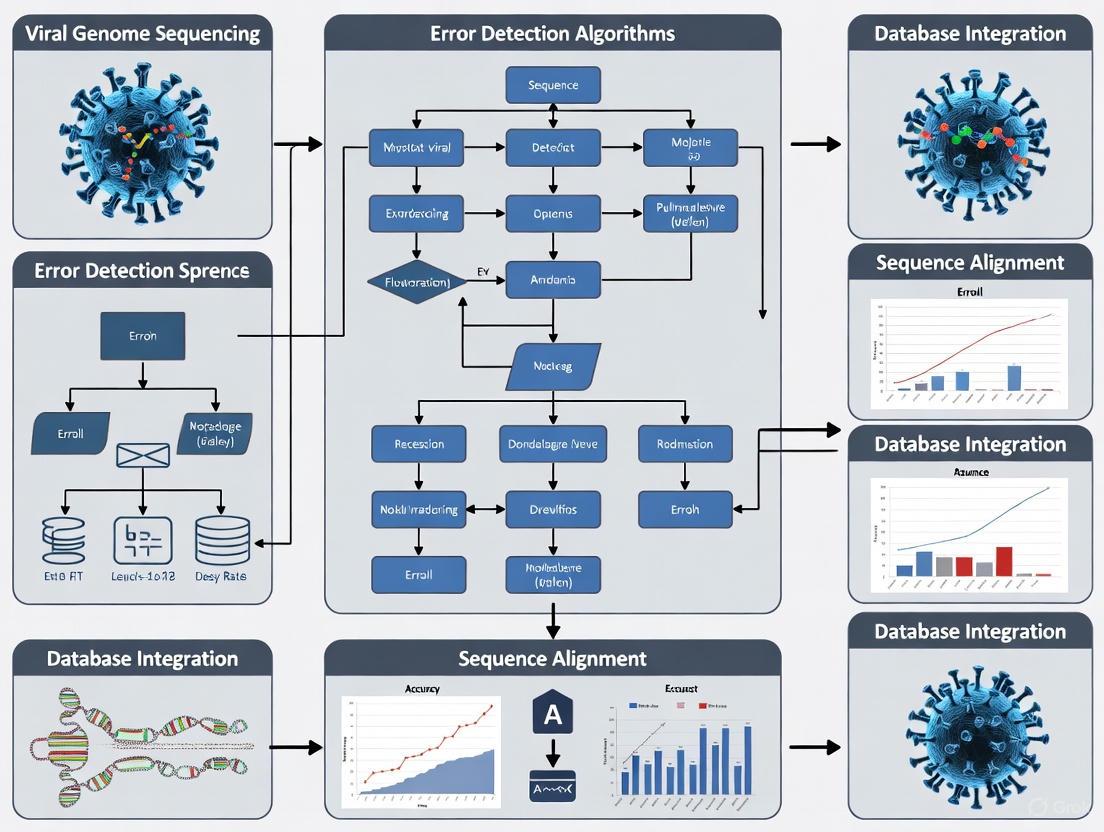
This article provides a systematic review of the current landscape of viral sequence databases, focusing on the critical challenges of data quality, taxonomic errors, and curation strategies.
Navigating the Minefield: A Comprehensive Guide to Viral Database Sequence Error Management and Taxonomic Classification
Abstract
This article provides a systematic review of the current landscape of viral sequence databases, focusing on the critical challenges of data quality, taxonomic errors, and curation strategies. Tailored for researchers, scientists, and drug development professionals, it explores the origins and types of pervasive sequence errors, evaluates advanced computational and machine learning methods for classification and host prediction, outlines practical strategies for error mitigation and database optimization, and compares the performance of leading taxonomic classification tools. The goal is to equip practitioners with the knowledge to select appropriate databases, implement robust quality control measures, and improve the accuracy and reproducibility of viral genomics research, ultimately strengthening downstream applications in outbreak management and therapeutic development.
Understanding the Viral Database Landscape: Sources and Spectra of Sequence Errors
Frequently Asked Questions (FAQs)
Q1: What are the primary root causes of errors in public sequence databases like NCBI NR? Errors in databases like NCBI NR originate from three main sources: user metadata submission errors during data deposition, contamination in biological samples (e.g., from soil bacteria in a plant sample), and computational errors from tools that predict annotations based on homology to existing, potentially flawed, sequences [1]. These errors are then propagated as the databases grow.
Q2: How widespread is the problem of taxonomic misclassification? The problem is significant. One large-scale study identified over 2 million potentially misclassified proteins in the NR database, accounting for 7.6% of the proteins with multiple distinct taxonomic assignments [1]. In the curated RefSeq database, an estimated 1% of prokaryotic genomes are affected by taxonomic misannotation [2].
Q3: What is a common consequence of using a database with unspecific taxonomic labels? When sequences are annotated to a broad, non-specific taxon (e.g., merely "Bacteria"), it prevents precise identification in downstream analysis. This lack of specificity precludes crucial tasks like species-level classification, which is vital for clinical diagnostics and ecological studies [2].
Q4: Beyond contamination, what other issues affect reference databases? While contamination is a well-known issue, other pervasive problems include taxonomic misannotation, inappropriate sequence inclusion or exclusion criteria, and various sequence content errors. These issues are often inherited because many metagenomic tools simply mirror resources like NCBI GenBank and RefSeq without additional curation [2].
Troubleshooting Guides
Issue 1: Suspected Taxonomic Misclassification in Your Analysis
Problem: Your metagenomic analysis returns results with unexpected or taxonomically implausible organisms (e.g., detecting turtle DNA in human gut samples [2]).
Solution: Follow this workflow to identify and correct for potential misclassifications.
Experimental Protocol: Heuristic Detection of Misclassified Sequences
This protocol is based on a method demonstrated to have 97% precision and 87% recall in detecting misclassified proteins [1].
- Data Acquisition: Download the latest NCBI NR database files.
- Identify Ambiguous Annotations: Isolate sequences that have more than one distinct taxonomic assignment in their metadata.
- Generate Clusters: Cluster all sequences at 95% sequence similarity.
- Apply Heuristic Filters:
- Provenance & Frequency: For each cluster, compare the taxonomic assignments from manually curated (high-quality) databases (e.g., RefSeq, SwissProt) against those from non-curated databases. The most frequent annotation from curated sources is often the correct one.
- Phylogenetic Analysis: Automatically generate a phylogenetic tree for the sequences in a cluster. Sequences whose annotations place them on a distant branch from the cluster's consensus are likely misclassified.
- Propose Correction: For a sequence flagged as misclassified, reassign its taxonomy to the most probable taxonomic label based on the heuristic analysis above.
The following diagram illustrates the logical workflow for this diagnostic process:
Issue 2: Managing the Risk of Error Propagation
Problem: Your research relies on public repositories, but you are concerned that existing errors could compromise your results and lead to error propagation in your own publications.
Solution: Adopt a Threat and Error Management (TEM) framework, adapted from aviation safety, to proactively manage database-related risks [3] [4].
Methodology: Implementing a TEM Framework for Bioinformatics
Identify Threats: Actively recognize potential database issues (Threats) before and during your analysis.
- Anticipated Threats: Known issues like common contaminants (e.g., human sequence contamination in bacterial genomes [1]) or specific genera with high error rates (e.g., Aeromonas has reported 35.9% discordance [2]).
- Unexpected Threats: A novel misannotation in a previously trusted taxonomic group.
- Latent Threats: Systemic issues like default database configurations in software that may be unsuitable for your specific research question [2].
Prevent and Detect Errors: Implement countermeasures to prevent threats from causing analytical errors.
- Systemic Countermeasures: Use curated subset databases (e.g., RefSeq over GenBank where possible), employ contamination screening tools like VecScreen, and utilize bioinformatic tools designed to detect misclassified sequences [1] [2].
- Individual & Team Countermeasures:
- Planning: Brief your team on known database threats relevant to your project.
- Execution: Actively monitor analytical outputs for red flags (e.g., unexpected taxa).
- Review: Hold regular data review meetings to challenge and validate findings.
Manage Undesired States: If an error is not caught and leads to an incorrect analytical result (an Undesired State), have a recovery plan. This involves recalculating results with a corrected or different database and documenting the discrepancy for future learning.
The relationship between these components and the necessary countermeasures is shown below:
Quantitative Data on Repository Errors
Table 1: Quantified Prevalence of Errors in NCBI Databases
| Database / Resource | Error Type | Quantified Prevalence | Potential Impact |
|---|---|---|---|
| NCBI NR (Non-Redundant) | Taxonomic Misclassification | 2,238,230 proteins (7.6% of multi-taxa sequences) [1] | False positive/negative taxa detection; error propagation [1] |
| NCBI NR (95% clusters) | Taxonomic Misclassification | 3,689,089 clusters (4% of all clusters) [1] | Impacts cluster-based analyses and functional annotation [1] |
| NCBI GenBank | Contaminated Sequences | 2,161,746 sequences identified [2] | Detection of spurious organisms (e.g., turtle DNA in human gut) [2] |
| NCBI RefSeq | Contaminated Sequences | 114,035 sequences identified [2] | Reduced accuracy of curated "ground truth" [2] |
| NCBI RefSeq | Taxonomic Misannotation | ~1% of prokaryotic genomes [2] | Limits reliable identification in clinical/metagenomic settings [2] |
Table 2: Root Causes and Frequencies of Taxonomic Misannotation
| Root Cause | Description | Example | Frequency / Evidence |
|---|---|---|---|
| User Submission Error | Incorrect metadata provided by researcher during data deposition. | Submitting Glycine soja data as Glycine max [1]. | NCBI flags ~75 genome submissions/month for review [2]. |
| Sample Contamination | Impurities in the biological sample lead to foreign sequences. | Soil bacteria in a plant root sample [1]. | Human sequences contaminate 2,250 bacterial/archaeal genomes [1]. |
| Computational Error | Tool misannotation based on homology to existing erroneous sequences. | Propagation of an initial misclassification [1]. | Underlying cause for a significant portion of the 7.6% misclassified proteins [1]. |
| Limitations of Legacy ID | Inability of traditional methods to differentiate closely related species. | 16S rRNA cannot reliably differentiate E. coli and Shigella [2]. | Leads to technically inaccurate labels in databases [2]. |
The Scientist's Toolkit: Research Reagent Solutions
Table 3: Essential Tools for Database Curation and Error Mitigation
| Tool / Resource | Function | Use Case in Error Management |
|---|---|---|
| BoaG / Hadoop Cluster [1] | A genomics-specific language and platform for large-scale data exploration. | Enables analysis of massive datasets like the entire NR database, which is not feasible with conventional tools. |
| VecScreen [1] | A tool recommended by NCBI to screen for vector contamination. | Used as a standard countermeasure to identify and remove common contaminant sequences. |
| Average Nucleotide Identity (ANI) [2] | A metric to compute the genetic similarity between two genomes. | Detects taxonomic misannotation by identifying sequences that are outliers (e.g., below 95% ANI) for their assigned species. |
| MisPred / FixPred [1] | Tools that detect erroneous protein annotations based on violations of biological principles. | Identifies mispredicted protein sequences (e.g., violating domain integrity) in public databases. |
| Gold-Standard Type Material [2] | Trusted biological material deposited in multiple culture collections. | Serves as a reference for validating and correcting the taxonomic identity of misannotated sequences. |
Troubleshooting Guides
FAQ 1: What are the most common error types in viral reference sequence databases, and how do they impact my analysis?
Errors in viral reference databases are pervasive and can significantly skew research findings. The most common issues include taxonomic mislabeling, where a sequence is assigned to the wrong species or genus, and various forms of sequence contamination, such as chimeric sequences (artificial fusion of two distinct sequences) and partitioned contamination (where contaminants are spread across different entries). These errors can lead to false positive identifications, false negative results, and imprecise taxonomic classifications, ultimately compromising the validity of your research, from outbreak tracking to phylogenetic studies [5].
FAQ 2: How can I identify and resolve taxonomic mislabeling in viral sequences?
Taxonomic mislabeling occurs when a sequence is assigned an incorrect taxonomic identity, often due to data entry errors or misidentification of the source material by the submitter [5].
Diagnosis:
- Unexpected Phylogenetic Placement: Your phylogenetic analysis shows sequences clustering with distantly related or unexpected viral groups.
- Inconsistent Metadata: Anomalies are discovered between the sequence's taxonomic label and its associated metadata (e.g., a "human adenovirus" sequence sourced from a plant).
- Failed Classification: Reference-based classifiers assign your query sequence to a different taxon than expected, or classification confidence is unusually low for a supposedly well-characterized virus.
Resolution Protocol:
- Cross-Reference with Type Material: Compare the sequence in question against sequences derived from type material or authoritative, curated strains [5].
- Perform Robust Phylogenetic Analysis: Use whole-genome or conserved core gene sequences to build phylogenetic trees. Mislabeled sequences will often appear as outliers within their assigned taxon [5].
- Leverage Taxonomic Tools: Utilize tools and databases that specialize in detecting taxonomic discordance. The NCBI Taxonomy database is continuously updated to reflect the latest ICTV standards, which can help resolve discrepancies [6].
FAQ 3: What steps should I take when I suspect a chimeric sequence or other contamination?
Sequence contamination, including chimeras, is a recognized and widespread issue in public databases. Chimeras are hybrid sequences formed from two or more parent sequences, often during sequencing or assembly [5].
Diagnosis:
- Inconsistent Coverage: A sudden, sharp drop in sequencing coverage in a specific region of the genome may indicate a chimera junction.
- Tool-Based Detection: Specialized software tools are designed to scan sequences and identify chimeric regions [5].
- Taxonomic Discordance: Different regions of the same contig or sequence are classified to divergent taxonomic groups with high confidence.
Resolution Protocol:
- Detection: Run your sequences through dedicated chimera detection tools [5].
- Validation & Removal: Manually inspect the flagged regions. For confirmed chimeras, the contaminated sequence should be removed from your analysis or the chimeric region trimmed if the remainder of the sequence is valid.
- Prevention: Implement stringent laboratory controls during sample processing and library preparation to minimize the creation of chimeras. Always vet sequences from public databases before inclusion in a custom reference set [5].
Error Type Reference Tables
Table 1: Common Viral Database Sequence Errors and Mitigation Strategies
| Error Type | Description | Potential Impact on Research | Recommended Mitigation Tools & Strategies |
|---|---|---|---|
| Taxonomic Mislabeling [5] | Sequence is assigned an incorrect taxonomic identity. | False positive/negative detections; inaccurate phylogenetic trees; incorrect conclusions about viral diversity. | Phylogenetic analysis against type material; use of curated databases; tools for taxonomic discordance detection [5]. |
| Chimeric Sequence Contamination [5] | Artificial fusion of two or more parent sequences into a single sequence. | Inaccurate genome assemblies; erroneous gene predictions; invalid evolutionary inferences. | GUNC, CheckV, Conterminator [5]. |
| Partitioned Sequence Contamination [5] | Contaminating sequences are distributed across multiple database entries. | Inflated estimates of taxonomic diversity; misassignment of sequence reads. | BUSCO, CheckM, EukCC, compleasm [5]. |
| Poor Quality Reference Sequences [5] | Sequences with high fragmentation, low completeness, or other quality issues. | Reduced number of classified reads; lower classification accuracy; biased results. | Implement strict quality control (e.g., CheckM for completeness, fragmentation checks); use curated subsets like RefSeq [5]. |
Table 2: Key Experimental Protocols for Error Identification
| Experiment / Analysis | Objective | Detailed Methodology |
|---|---|---|
| Phylogenetic Validation | To verify the taxonomic placement of a sequence and identify potential mislabeling. | 1. Sequence Selection: Extract the sequence of interest. Gather reference sequences from type material and representative genomes for the suspected and related taxa.2. Multiple Sequence Alignment: Use a tool like MAFFT or MUSCLE to align the sequences.3. Model Selection: Find the best-fit nucleotide substitution model using software like ModelTest-NG.4. Tree Construction: Infer a phylogenetic tree using maximum likelihood (RAxML, IQ-TREE) or Bayesian (MrBayes) methods.5. Interpretation: A mislabeled sequence will not cluster robustly with its named taxon but will instead group with its true relatives. |
| Chimera Detection | To identify artificial hybrid sequences within a dataset. | 1. Tool Selection: Choose a detection tool such as GUNC or CheckV [5].2. Input Preparation: Format your sequences (e.g., FASTA) according to the tool's requirements.3. Execution: Run the tool on your dataset. Each tool uses different algorithms (e.g., reference-based, de novo) to identify chimeric breaks.4. Manual Curation: Visually inspect the output, checking aligned regions and coverage plots for putative chimeras. Remove or trim confirmed chimeric sequences. |
Workflow Diagrams
Diagram 1: Diagnostic Workflow for Database Errors
Diagram 2: Sequence Contamination Identification
The Scientist's Toolkit: Research Reagent Solutions
Table 3: Essential Tools for Viral Sequence Error Management
| Tool / Resource | Function | Brief Explanation |
|---|---|---|
| GUNC [5] | Chimera Detection | Identifies chimeric sequences in genomes by assessing taxonomic homogeneity. |
| CheckV [5] | Genome Quality Assessment | Evaluates the completeness and quality of viral genome sequences and identifies contaminant host regions. |
| BUSCO [5] | Contamination & Completeness | Assesses genome completeness based on universal single-copy orthologs; significant deviations can indicate contamination or poor quality. |
| NCBI Taxonomy [6] | Taxonomic Standardization | Provides a curated taxonomy used by public databases, updated to reflect ICTV rulings, helping to resolve naming and classification conflicts. |
| CheckM [5] | Quality Control (Prokaryotes) | Uses lineage-specific marker genes to estimate genome completeness and contamination in prokaryotic datasets. |
| Curated RefSeq | High-Quality Reference Set | A non-redundant, curated subset of NCBI sequences, generally of higher quality and with lower contamination rates than GenBank [5]. |
The Impact of Incomplete and Inaccurate Metadata on Downstream Analysis
Technical Support Center
Troubleshooting Guides & FAQs
Q1: My downstream phylogenetic analysis produced unexpected results. How can I determine if incomplete metadata is the cause?
A: Unexpected results, such as low statistical support for clades or anomalous clustering of viral sequences, can often be traced to incomplete or inaccurate lineage metadata. To diagnose this:
- Perform Data Provenance Checks: Use your platform's lineage impact analysis feature to trace the upstream sources of your sequence data [7]. Verify that the source databases and original sample metadata are consistent with your assumptions.
- Audit Taxonomic Classifications: Cross-reference the species and genus classifications in your dataset with the latest International Committee on Taxonomy of Viruses (ICTV) ratified proposals [8]. Misclassified sequences can severely skew analysis.
- Profile Metadata Completeness: Before analysis, run a script to calculate the completeness percentage for critical metadata fields (e.g., host organism, collection date, geographic location). Datasets with completeness below 85% for these key fields carry a high risk of analytical error.
Q2: After a schema change in our internal viral database, several automated genotyping workflows failed. What steps should we take?
A: This is a classic impact of incomplete technical metadata. To resolve and prevent future issues:
- Immediate Root Cause Analysis: Use active metadata management platforms to conduct a root cause analysis [9]. These systems can furnish comprehensive insights, helping you identify that the schema change altered a critical field used by the downstream workflows.
- Execute Downstream Impact Analysis: Utilize a lineage impact analysis tool to understand the complete set of downstream dependencies (e.g., scripts, dashboards, reports) affected by the changed data entity [7]. This allows you to proactively identify and notify owners of impacted assets.
- Implement Active Metadata Management: To prevent a recurrence, adopt active metadata management. With this, automated processes and real-time APIs ensure that every change to metadata triggers instant updates across the ecosystem [9]. This enables proactive detection of breaking changes before they cause failures.
Q3: What is the practical difference between data quality and data observability in the context of managing a viral sequence database?
A: These are complementary but distinct concepts crucial for database health [10].
- Data Quality is the goal—it describes the condition of your data against defined dimensions like accuracy, completeness, and consistency. For example, a requirement that "all submitted sequences must have a host organism metadata field populated" is a data quality standard.
- Data Observability is the method—it is the degree of visibility you have into your data's health and behavior in real-time. It uses continuous monitoring of metadata (like freshness, volume, and schema) to detect anomalies [10]. If the ingestion pipeline stops adding new sequences, an observability platform would alert you to this freshness issue before users notice.
Q4: Our team often applies "quick fixes" to metadata errors, but the same issues keep reoccurring. How can we break this cycle?
A: This indicates an over-reliance on reactive error management and a lack of error prevention strategies [11]. A balanced approach is needed:
- Shift from a pure Error Management Culture (EMC): While an EMC that encourages moving quickly and fixing problems later is agile, it can lead to error prevention processes that are "misapplied, informal or absent" [11].
- Institute Error Prevention Measures: Establish formal, standardized processes and controls for metadata entry and validation [11]. This includes implementing data quality rules (e.g., validating country names against a standard list) and using automated profiling tools to identify anomalies before data is integrated into critical systems [9].
- Foster Organizational Learning: Conduct post-mortem analyses of metadata errors to identify the root cause. Use this learning to update and strengthen your prevention measures, creating a positive feedback loop [11].
Quantitative Data on Data Quality Dimensions
The following table summarizes key dimensions of data quality that directly impact analytical reliability. Incomplete or inaccurate metadata directly undermines these dimensions [10].
Table 1: Intrinsic Data Quality Dimensions and Metadata Impact
| Dimension | Description | Consequence of Poor Metadata |
|---|---|---|
| Accuracy | Does the data correctly represent the real-world object or event? | Inaccurate host or geographic metadata leads to incorrect ecological inferences. |
| Completeness | Are all necessary data and metadata records present? | Missing collection dates prevents analysis of viral evolutionary rates over time. |
| Consistency | Is the data uniform across different systems? | The same virus labeled with different names in different sources creates duplication and false diversity. |
| Freshness | Is the data up-to-date with the real world? | Outdated taxonomic information (e.g., not reflecting ICTV changes) misinforms phylogenetic models [8]. |
| Validity | Does the data conform to the specified business rules and formats? | Geographic location metadata that does not follow a standard format (e.g., "USA" vs. "United States") hinders grouping and filtering. |
Table 2: Extrinsic Data Quality Dimensions and Metadata Impact
| Dimension | Description | Consequence of Poor Metadata |
|---|---|---|
| Relevance | Does the data meet the needs of the current task? | Including environmental viruses in a human-pathogen study due to poor host metadata dilutes signal. |
| Timeliness | Is the data available when needed for use cases? | Delays in annotating and releasing sequence metadata slows down critical research during an outbreak. |
| Usability | Can the data be used in a low-friction manner? | Metadata stored in unstructured PDFs instead of queryable database fields makes analysis prohibitively laborious. |
| Reliability | Is the data regarded as true and credible? | A database with a known history of incomplete provenance metadata will not be trusted by the research community. |
Experimental Protocols
Protocol 1: Assessing Metadata Impact on Machine Learning-based Host Prediction
This protocol is adapted from methodologies used to predict virus hosts using machine learning and k-mer frequencies [12].
1. Objective: To quantify how incomplete or inaccurate taxonomic metadata in training data affects the performance of a model predicting whether a virus infects mammals, insects, or plants.
2. Materials:
- Dataset: Complete genome sequences of RNA viruses with confirmed hosts (e.g., from Virus-Host DB) [12].
- Software: Python with scikit-learn, lightgbm, and xgboost libraries.
3. Methodology:
- Step 1 - Data Preparation & Feature Engineering:
- Step 2 - Create Controlled Metadata Scenarios:
- Scenario A (Control): Train and test the model using datasets where families and genera are correctly represented in both sets.
- Scenario B (Incomplete Taxonomy): Train the model on a dataset from which entire virus families have been excluded, then test on sequences from those excluded families. This simulates a knowledge gap in the database.
- Scenario C (Inaccurate Host): Introduce a known error rate (e.g., 15%) by randomly shuffling the host labels (mammal, insect, plant) in the training dataset to simulate incorrect host metadata.
- Step 3 - Model Training & Evaluation:
- For each scenario, train multiple machine learning algorithms (e.g., Random Forest, Support Vector Machine, Gradient Boosting) [12].
- Evaluate model performance using weighted F1-scores across the three host classes. Compare the F1-scores from Scenarios B and C against the control (Scenario A) to quantify the degradation caused by poor metadata.
Protocol 2: Lineage Impact Analysis for Root Cause Investigation
1. Objective: To rapidly identify the upstream source of a data quality issue affecting downstream viral variant reports.
2. Materials:
- A data catalog or platform with lineage impact analysis capability (e.g., DataHub) [7].
3. Methodology:
- Step 1 - Identify the Affected Entity: Locate the specific Dashboard, Chart, or Dataset that is showing erroneous or unexpected results.
- Step 2 - Execute Upstream Lineage Analysis:
- Navigate to the "Lineage" tab for the affected entity [7].
- Set the view to "Upstream" dependencies and increase the "Degree of Dependencies" to visualize the full data pipeline.
- Step 3 - Isolate the Root Cause:
- Use filters to isolate entities by type (e.g., "Table"), platform, or owner.
- Examine upstream datasets for recent schema changes, pipeline failures, or data freshness anomalies. The system provides visibility into dependencies, guiding impact analysis and change management [13].
- The root cause is often the most upstream entity showing a failure or recent change.
Visual Workflows
Diagram: Metadata Error Propagation Pathway
Diagram: Proactive Metadata Quality Management
The Scientist's Toolkit: Research Reagent Solutions
Table 3: Essential Tools for Viral Sequence Metadata Management
| Tool / Reagent | Function | Application in Research |
|---|---|---|
| Active Metadata Platform | Automates the collection, synchronization, and activation of metadata. Drives proactive data management [9]. | Provides real-time alerts on pipeline failures or schema changes that could corrupt viral sequence data before it affects downstream models. |
| Data Observability Tool | Provides continuous visibility into data health and behavior by monitoring logs, metrics, and lineage [10]. | Monitors statistical profiles of sequence data to detect sudden anomalies in data volume or content, indicating a potential ingestion error. |
| Lineage Impact Analysis | Visualizes and analyzes upstream and downstream dependencies of data assets [7]. | Used for root cause analysis to trace an erroneous variant call back to a specific problematic data source or processing step. |
| ICTV Taxonomy Reports | Provides the authoritative, ratified classification and nomenclature of viruses [8]. | Serves as the ground truth for validating and correcting taxonomic metadata in internal databases, ensuring phylogenetic accuracy. |
| Machine Learning Classifiers | Predicts host or other traits from viral genome k-mer frequencies [12]. | Can flag sequences where the predicted host strongly contradicts the recorded host metadata for manual review, identifying potential errors. |
The FAIR Guiding Principles—Findable, Accessible, Interoperable, and Reusable—establish a framework for enhancing the utility and longevity of digital research assets [14]. For researchers managing viral database sequences and taxonomy, implementing FAIR principles directly addresses critical challenges in data error management, ensuring datasets remain discoverable and usable by both humans and computational systems amid rapidly expanding data volumes [15].
The core objective of FAIR is to optimize data reuse, with specific emphasis on machine-actionability—the capacity of computational systems to find, access, interoperate, and reuse data with minimal human intervention [14]. This is particularly relevant for viral sequence data, where accurate host prediction and classification rely on computational analysis of large datasets [12].
Troubleshooting Guides & FAQs
FAQ: How do FAIR principles specifically help with viral sequence error reduction?
FAIR principles combat viral sequence errors through enhanced metadata richness, persistent identifiers, and standardized vocabularies. These elements create an audit trail that helps identify discrepancies, standardize annotation practices across databases, and facilitate cross-referencing between datasets to flag inconsistencies [15] [16]. For example, the use of controlled vocabularies (Interoperability principle I2) ensures that a host organism is consistently labeled, reducing classification errors that complicate viral taxonomy research [16].
FAQ: We have a legacy viral sequence dataset. What's the first step to make it FAIR?
The initial step involves conducting a FAIRness assessment against the established sub-principles. The following table outlines key actions for this process [16]:
Table: Initial FAIRification Steps for a Legacy Viral Sequence Dataset
| FAIR Principle | Key Assessment Questions | Recommended Immediate Actions |
|---|---|---|
| Findability | Do sequences have persistent identifiers? Is metadata rich enough for discovery? | Register dataset in a repository for a DOI; create rich metadata file describing sequencing methods, host organism, collection date [17]. |
| Accessibility | How is the data retrieved? Is metadata preserved if data becomes unavailable? | Upload to a trusted repository with standard protocol; ensure metadata is stored separately from data [14]. |
| Interoperability | What formats are used? Are community standards applied? | Convert sequences to standard format (e.g., FASTA); use controlled terms for host species, tissue type [15]. |
| Reusability | Is the data usage license clear? Are provenance and experimental details documented? | Apply a clear usage license; document lab protocols, data processing steps, and software versions used [14]. |
Troubleshooting Guide: Resolving Common FAIR Implementation Challenges
- Problem: Inconsistent host organism identification in metadata.
- Solution: Adopt and use a single, authoritative taxonomy database (e.g., NCBI Taxonomy) for all host organism labels. This implements Interoperability sub-principle I2, which requires using FAIR vocabularies [16].
- Problem: Computational tools cannot process our data automatically.
- Problem: Dataset is not being discovered or cited by other researchers.
- Solution: Register your dataset in a domain-specific repository (e.g., Virosaurus, GenBank for sequences) and a general-purpose repository (e.g., Zenodo) to obtain a persistent identifier. This fulfills Findability sub-principles F1 and F4 [15].
- Problem: Difficulty integrating data from different viral studies.
- Solution: Use shared data models and standardized metadata schemas (e.g., MIxS from the Genomic Standards Consortium) for your domain. This directly implements Interoperability principles I1 and I3 [16].
Experimental Protocols for FAIRness Evaluation
This protocol provides a methodology to quantitatively assess the implementation of FAIR principles within a viral database, focusing on metrics relevant to sequence error management and host prediction research.
Protocol 1: Quantitative Assessment of FAIR Implementation in a Viral Database
1. Objective: To measure the adherence of a viral sequence database (e.g., Virus-Host DB) to the FAIR principles using a scorable checklist [16] [12].
2. Materials and Reagents:
- Target viral sequence database (e.g., from Virus-Host DB, NCBI RefSeq).
- FAIR assessment checklist (see Table 1 below).
- Spreadsheet software for scoring.
3. Methodology:
- Step 1: Define the Scope. Identify the specific dataset or subset within the larger database to be evaluated.
- Step 2: Checklist Application. For each sub-principle in the checklist, score "1" for fully met, "0.5" for partially met, and "0" for not met. Gather evidence for each score.
- Step 3: Data Collection. Attempt to access data and metadata using the provided protocols and identifiers.
- Step 4: Interoperability Test. Try to integrate a sample of data with a standard bioinformatics workflow (e.g., a k-mer counting script for host prediction).
- Step 5: Reusability Audit. Check for the presence of a license, detailed provenance, and data creation protocols.
- Step 6: Analysis. Calculate a total FAIR score and scores for each letter (F, A, I, R). Identify weak areas for improvement.
Table 1: FAIR Principles Assessment Checklist for Viral Databases
| Principle | Sub-Principle Code | Metric for Viral Database Context | Score (0, 0.5, 1) |
|---|---|---|---|
| Findability (F) | F1 | Data and metadata are assigned a globally unique and persistent identifier (e.g., DOI, accession number). | |
| F2 | Data is described with rich metadata (e.g., host health status, sequencing platform, assembly method). | ||
| F3 | Metadata clearly includes the identifier of the data it describes. | ||
| F4 | (Meta)data is registered in a searchable resource (e.g., domain-specific repository). | ||
| Accessibility (A) | A1 | (Meta)data are retrievable by their identifier via a standardized protocol (e.g., HTTPS, API). | |
| A1.1 | The protocol is open, free, and universally implementable. | ||
| A1.2 | The protocol allows for an authentication and authorization procedure, if necessary. | ||
| A2 | Metadata remains accessible, even if the underlying data is no longer available. | ||
| Interoperability (I) | I1 | (Meta)data uses a formal, accessible, shared, and broadly applicable language for knowledge representation (e.g., JSON-LD, RDF). | |
| I2 | (Meta)data uses FAIR-compliant vocabularies (e.g., NCBI Taxonomy, EDAM ontology, MeSH terms). | ||
| I3 | (Meta)data includes qualified references to other (meta)data (e.g., links to host organism database). | ||
| Reusability (R) | R1 | (Meta)data are richly described with a plurality of accurate and relevant attributes. | |
| R1.1 | (Meta)data is released with a clear and accessible data usage license. | ||
| R1.2 | (Meta)data is associated with detailed provenance (e.g., sample collection, processing steps). | ||
| R1.3 | (Meta)data meets domain-relevant community standards. |
Protocol 2: Experimental Workflow for Evaluating the Impact of FAIR Data on Virus Host Prediction Models
This protocol uses machine learning to test the hypothesis that FAIRer data improves the performance and generalizability of models for predicting hosts from viral sequences [12].
1. Objective: To compare the performance of virus host prediction models trained on datasets with varying levels of FAIRness.
2. Materials and Reagents:
- Viral Sequence Data: Curated sets of complete RNA virus genomes from a database like Virus-Host DB [12].
- Computing Environment: Python programming environment with scikit-learn, XGBoost, LightGBM libraries.
- Feature Extraction Tools: Scripts for calculating k-mer frequencies (e.g., 4-mer frequencies).
3. Methodology:
- Step 1: Data Curation and FAIRness Scoring. Assemble two datasets from Virus-Host DB: one with high-quality, well-annotated sequences (High-FAIR) and another with sparse metadata (Low-FAIR). Score each using the checklist from Protocol 1.
- Step 2: Feature Engineering. For all viral genomes, compute k-mer frequency features (e.g., k=4). This converts each genome into a numerical vector based on the frequency of all possible sub-sequences of length
k[12]. - Step 3: Model Training. For each dataset (High-FAIR and Low-FAIR), train multiple machine learning models (e.g., Support Vector Machine, Random Forest) to predict the host class (e.g., mammal, insect, plant).
- Step 4: Model Evaluation. Use a rigorous train-test split, such as the "non-overlapping genera" approach, where genera in the test set are entirely absent from the training set. This tests the model's ability to predict hosts for truly novel viruses [12].
- Step 5: Performance Comparison. Evaluate models using the weighted F1-score and compare the performance between models trained on High-FAIR vs. Low-FAIR data.
The following workflow diagram illustrates this experimental protocol:
Experimental Workflow for FAIR Data Impact
The Scientist's Toolkit: Research Reagent Solutions
Table: Essential Resources for FAIR-Compliant Viral Taxonomy Research
| Tool / Resource | Function / Description | Relevance to FAIR Principles & Viral Research |
|---|---|---|
| CyVerse [18] | A scalable, cloud-based data management platform for large, complex datasets. | Provides the infrastructure for making data Accessible and Findable, handling massive datasets like the 300TB Precision Aging Network release. |
| Virus-Host DB [12] | A curated database of taxonomic links between viruses and their hosts. | Serves as a potential source of Interoperable data that uses standard taxonomies, useful for training host prediction models. |
| HALD Knowledge Graph [19] | A text-mined knowledge graph integrating entities and relations from biomedical literature. | Demonstrates advanced Findability and Interoperability by linking disparate data types (genes, diseases) using NLP, a model for linking viral and host data. |
| GitHub / Zenodo | Code repository and general-purpose data repository. | Findability, Accessibility, Reusability: GitHub hosts code; Zenodo provides a DOI for permanent storage, linking code and data for full provenance. |
| PubMed / PubTator [19] | Biomedical literature database with automated annotation tools. | Findability: Critical for discovering existing knowledge. PubTator helps extract entities for building structured, machine-readable (Interoperable) knowledge bases. |
| NCBI Taxonomy | Authoritative classification of organisms. | Interoperability: Using this standard vocabulary for host organisms ensures data can be integrated and understood across different systems. |
| Support Vector Machine (SVM) [12] | A machine learning algorithm effective for classification tasks. | Used for virus host prediction based on k-mer frequencies; performance is a metric for testing the Reusability and quality of underlying FAIR data. |
In the fields of virology, epidemiology, and drug development, reliance on accurate database sequences is paramount. Errors introduced at any stage—from sequence submission and annotation to clinical data entry—can propagate through the scientific ecosystem, leading to misguided research conclusions, flawed diagnostic assays, and inefficient therapeutic development. This technical support center outlines documented case studies and provides actionable troubleshooting guides to help researchers identify, mitigate, and prevent such errors within the context of viral database sequence error management taxonomy.
Documented Case Studies and Quantitative Error Analysis
Case Study: Misclassification in Viral Metagenomics
The Problem: A study evaluating taxonomic classification tools using a controlled Viral Mock Community (VMC) revealed that standard analysis methods could misclassify viral sequences. For instance, one standard approach missed a rotavirus constituent and generated misclassifications for adenoviruses, incorrectly labeling some contigs and failing to identify others [20].
The Impact: Such misclassification complicates the understanding of virome composition, which is critical for studies investigating viral associations with diseases, environmental health, or for biosurveillance. Inaccurate profiles can lead researchers to pursue false leads.
The Solution: The study found that the VirMAP tool, which uses a hybrid nucleotide and protein alignment approach, correctly identified all expected VMC constituents with high precision (F-score of 0.94), outperforming other methods, especially at lower sequencing coverages [20]. The quantitative comparison is summarized below.
Table 1: Performance Comparison of Taxonomic Classifiers on a Viral Mock Community
| Pipeline/Method | Precision | Recall | F-score | Key Issue |
|---|---|---|---|---|
| VirMAP | 0.88 | 1.0 | 0.94 | Correctly identified all 7 expected viruses [20] |
| Standard Approach | N/A | Low | N/A | Missed rotavirus; misclassified adenovirus B [20] |
| FastViromeExplorer | High | Lower | N/A | Recall lowered by read count/taxonomic rank cutoffs [20] |
| Read Classifying Pipelines | Variable | Variable | Generally Lower | Suffer from aberrant database alignments [20] |
Case Study: Clinical Research Database Entry Errors
The Problem: An analysis of several clinical oncology research databases revealed alarmingly high error rates. When the same 1,006 patient records were entered into two separate databases, discrepancy rates for demographic data fields (e.g., date of birth, medical record number) ranged from 2.3% to 5.2%. Discrepancies for treatment-related data (e.g., first treatment date) were significantly worse, ranging from 10.0% to 26.9% [21].
The Impact: These errors directly affect the reliability of research outcomes. For example, an analysis of two independently entered datasets on tumor recurrence in 133 patients showed statistically significant differences in the calculated "time to recurrence" [21]. This could directly mislead conclusions about treatment efficacy.
The Solution: The study found that error detection based solely on "impossible value" constraints (e.g., a radiation treatment date on a Sunday) caught fewer than 2% of errors. The most effective method was double-entry, where two individuals independently enter the same data, with subsequent reconciliation of discrepancies [21].
Table 2: Clinical Data Entry Error Rates and Detection Methods
| Error Category | Field Example | Error Rate | Ineffective Detection Method | Effective Detection Method |
|---|---|---|---|---|
| Demographic Data | Date of Birth, MRN | 2.3% - 5.2% | Constraint-based alarms | Double-data entry with reconciliation [21] |
| Treatment Data | First Treatment Date | Up to 26.9% | Checking for "impossible" Sunday dates | Double-data entry with reconciliation [21] |
| Internal Consistency | Vital Status vs. Relapse | 8.4% - 10.6% | N/A | Logic checks between related fields [21] |
Case Study: Sequence Annotation and Submission Pitfalls
The Problem: The submission of uncultivated virus genomes (UViGs) to public databases like GenBank carries inherent risks of error. A common issue is the preemptive or incorrect use of taxonomic names in the ISOLATE field of a record. Since virus taxonomy is dynamic, an isolate named "novel flavivirus 5" may later be reclassified outside of the Flaviviridae family, creating persistent confusion [22].
The Impact: Misannotated sequences in public databases become part of the reference set used by other researchers for sequence comparison, taxonomy, and primer/probe design, thereby propagating the error and compromising all downstream analyses that rely on that record.
The Solution: Adherence to International Nucleotide Sequence Database Collaboration (INSDC) and International Committee on Taxonomy of Viruses (ICTV) guidelines is critical. For a novel sequence, the ORGANISM field should use the format "<lowest fitting taxon> sp." (e.g., "Herelleviridae sp."), while the ISOLATE field should contain a unique, taxonomy-free identifier (e.g., "VirusX-contig45") [22].
Troubleshooting Guides and FAQs
FAQ 1: Our metagenomic analysis produced a novel viral contig. How should we submit it to a public database to avoid common annotation errors?
Answer: Follow standardized submission guidelines to ensure long-term accuracy and utility.
- Choose the Right Database: Submit the annotated genome sequence to an INSDC database (GenBank, ENA, or DDBJ) [22].
- Use Correct Naming Conventions:
- Provide Rich Metadata: Include critical metadata using MIUViG (Minimum Information about an Uncultivated Virus Genome) and MIxS (Minimum Information about any (x) Sequence) checklists, detailing genome quality, assembly methods, and environmental source [22].
- Indicate Genome Completeness: Use the "complete genome" tag only if genome termini have been experimentally verified (e.g., by RACE). Otherwise, describe it as "coding-complete" if all open reading frames are fully sequenced [22].
FAQ 2: We are seeing inconsistent viral taxonomic assignments from the same dataset when using different bioinformatics tools. How can we troubleshoot this?
Answer: Inconsistent results often stem from the underlying algorithms and databases used by different tools.
- Benchmark with Mock Communities: If possible, process a published mock community dataset with known constituents using your tools. This will reveal biases and error rates specific to each pipeline [20].
- Investigate Underlying Method: Understand if the tool is based on read mapping, contig mapping, or a hybrid approach. Contig-based classifiers generally have higher precision but may miss low-abundance viruses, while read-based classifiers can suffer from false positives due to short, non-specific alignments [20].
- Validate with a Hybrid Approach: For critical findings, use a tiered approach. For example, use a sensitive read-based classifier for initial discovery, followed by confirmation with a more precise contig-based classifier or a tool like VirMAP that uses both nucleotide and protein-level information [20].
- Check Database Versions: Ensure you are using the same, most recent version of viral reference databases across all tools to eliminate discrepancies caused by outdated taxonomy.
FAQ 3: What is the most effective way to minimize errors in our manually curated clinical research database?
Answer: Proactive error prevention is more effective than post-hoc detection.
- Implement Double-Data Entry: The highest data integrity is achieved by having two trained individuals independently enter the same set of records, followed by a systematic reconciliation of all discrepancies. This method has been shown to catch errors that other methods miss [21].
- Design Smart Electronic Data Capture (EDC) Systems: Incorporate real-time validation checks that go beyond simple range checks. Include:
- Audit and Feedback: Conduct regular, random audits of data entries and provide feedback to the data entry team to correct systematic misunderstandings or common mistakes.
Experimental Protocols for Error Detection
Protocol: Validating Viral Taxonomic Classification
Purpose: To confirm the taxonomic assignment of a viral genome sequence derived from metagenomic data using a robust, multi-layered approach.
Methodology:
- Assembly Quality Control: Assemble reads into contigs and assess for chimerism by evaluating the distribution of mapped reads and read pairs. Check for terminal redundancy as evidence of genome termini [22].
- Tiered Classification: Run the assembled contigs through a classification pipeline that uses a combination of:
- Nucleotide Alignment (BLASTn): For identifying highly similar sequences.
- Protein Alignment (BLASTx/tBLASTn): For detecting more divergent viruses where nucleotide similarity is low but protein sequences are conserved [20].
- Consensus and Confidence Scoring: Generate a consensus taxonomy from the different methods. Employ a bits-per-base or similar scoring system to assign confidence to the classification, setting a minimum threshold for acceptance [20].
- Comparative Analysis: Validate your result by comparing the output of multiple dedicated taxonomic classifiers (e.g., VirMAP, Kaiju, VPF-Class) on your dataset [23] [20].
Protocol: Implementing a Double-Data Entry System
Purpose: To minimize data entry errors in clinical or manually curated research databases.
Methodology:
- First Entry: Have Technician A enter the data from the source document (e.g., electronic medical record, paper form) into the database.
- Second Entry: Have Technician B, blinded to the entries made by Technician A, enter the same set of source documents into a temporary, parallel database.
- Automated Reconciliation: Use a software script or database function to compare the two datasets field-by-field. All discrepancies are automatically flagged in a discrepancy report.
- Adjudication: A third, senior researcher or data manager reviews the original source document against the discrepancy report and determines the correct value. The final, adjudicated value is then entered into the master research database.
The Scientist's Toolkit: Research Reagent Solutions
Table 3: Essential Resources for Viral Sequence Error Management
| Tool / Reagent | Function / Purpose | Example(s) |
|---|---|---|
| Viral Mock Communities | Gold-standard positive controls for benchmarking the accuracy and precision of wet-lab and computational workflows. | Published communities from BioProjects PRJNA431646 [20] and PRJNA319556 [20]. |
| Hybrid Taxonomic Classifiers | Bioinformatics tools that combine nucleotide and protein alignment strategies for more accurate classification of divergent viruses. | VirMAP [20], VirusTaxo [23]. |
| INSDC Submission Portals | Official channels for submitting annotated viral genome sequences, ensuring persistence, accessibility, and proper taxonomy linkage. | NCBI's BankIt/table2asn, ENA's Webin, DDBJ's NSSS [22]. |
| MIUViG/MIxS Checklists | Standardized metadata checklists for reporting genomic and environmental source data, promoting reproducibility and data reuse. | MIUViG standards for genome quality, annotation, and host prediction [22]. |
| Double-Data Entry Workflow | A process, not a reagent, but essential for creating high-fidelity manually curated datasets for clinical or phenotypic correlation. | Implementation of dual entry with reconciliation as described in clinical error analyses [21]. |
Advanced Tools and Techniques for Accurate Taxonomic Classification and Host Prediction
What is the primary limitation of traditional, homology-based methods like BLAST for virus host prediction?
Traditional methods like BLAST rely on sequence similarity to identify hosts. A significant drawback is their inability to predict hosts for novel or highly divergent viruses that share little to no sequence similarity with any known virus in reference databases. This results in a large proportion of metagenomic sequences being classified as "unknown" [24]. Machine learning (ML) approaches overcome this by using alignment-free features, such as k-mer compositions, which can capture subtle host-specific signals even in the absence of direct sequence homology [25].
How can machine learning predict a virus's host just from its genome sequence?
Over time, the co-evolutionary relationship between a virus and its host embeds a host-specific signal in the virus's genome. This occurs because viruses must adapt to their host's cellular environment, including its nucleotide bias, codon usage, and immune system. Machine learning models are trained to recognize these patterns [25]. They use features derived from the viral genome sequence—such as short k-mer frequencies, codon usage, or amino acid properties—to learn the association between a virus's genomic "fingerprint" and its host [12] [25].
Within the context of viral database sequence error management, what is an "Error Taxonomy"?
An Error Taxonomy is a systematic classification framework that categorizes different types of errors, failures, and exceptions. In the context of viral sequence analysis, this can help researchers systematically identify, understand, and resolve issues that may arise during the host prediction workflow. It classifies problems by their cause, severity, and complexity, enabling targeted solutions rather than ad-hoc troubleshooting [26]. Common categories in this field might include sequence quality errors (e.g., sequencing artifacts, contamination), database-related errors (e.g., misannotated reference sequences, outdated host links), and model application errors (e.g., using a model on a virus type it was not trained for).
Troubleshooting Guides
Guide: Addressing Poor Model Performance on Novel Viruses
Problem: Your ML model performs well on viruses related to those in your training set but fails to generalize to novel or evolutionarily distant viruses.
Solution: This is often a dataset composition issue. To create a model that robustly predicts hosts for unknown viruses, the training and testing datasets must be split in a way that prevents data leakage from closely related sequences.
Methodology: Implement a Phylogenetically-Aware Train-Test Split
Do not randomly split your genome sequences into training and test sets. Instead, partition them based on taxonomic groups to simulate a real-world scenario where the host of a completely novel genus or family needs to be predicted [12].
- Data Collection: Obtain complete genome sequences from a curated database like the Virus-Host Database.
- Data Filtering: Exclude genomes that are overly similar (e.g., >92% identity) to reduce bias from overrepresented families. Also exclude arboviruses with multiple hosts, as they complicate the labeling process [12].
- Dataset Partitioning: Create different train-test splits for evaluating model generalization [12]:
- Non-overlapping Genera: All genera in the test dataset are completely absent from the training dataset.
- Non-overlapping Families: All families in the test dataset are completely absent from the training dataset.
- Performance Evaluation: Train your model on the training set and evaluate it on the held-out test set. Use metrics like the weighted F1-score to account for class imbalance. A study using this method achieved a median weighted F1-score of 0.79 for predicting hosts of unknown virus genera, a significant improvement over baseline methods [12].
Guide: Handling Short/Partial Viral Sequences from Metagenomics
Problem: Metagenomic studies often produce short sequence reads or contigs, and models trained on full viral genomes perform poorly on these fragments.
Solution: Train your model using short sequence fragments that mimic the actual output of metagenomic sequencing, rather than using complete genomes.
Methodology: Training on Simulated Metagenomic Fragments
- Fragment the Genomes: Take the complete virus genomes from your training set and computationally break them down into non-overlapping subsequences of a defined length (e.g., 400 or 800 nucleotides) [12].
- Create a Balanced Fragment Set: To avoid over-representing longer genomes, randomly select a fixed number of fragments (e.g., two) from each genome for training [12].
- Train on Fragments: Use these short fragments, with their corresponding host labels, to train the ML model. This approach consistently improves prediction quality on real metagenomic data because the model learns to recognize host-specific signals from short sequence stretches [12].
Guide: Selecting the Right Features for Host Prediction
Problem: You are unsure which features to extract from your viral genomes to train the most effective host prediction model.
Solution: The optimal feature type can depend on the specific prediction task. Empirical evidence suggests that simple, short k-mers from nucleotide sequences are highly effective and often outperform more complex features.
Methodology: Comparative Feature Evaluation
Research indicates that for RNA viruses infecting mammals, insects, and plants, using simple 4-mer (tetranucleotide) frequencies from the nucleotide sequence with a Support Vector Machine (SVM) classifier yielded superior results for predicting hosts of unknown genera [12]. The following table summarizes key findings from recent studies on feature performance.
Table: Comparison of Features for Virus Host Prediction with Machine Learning
| Feature Type | Description | Reported Performance | Use Case & Notes |
|---|---|---|---|
| Nucleotide k-mers [12] [25] | Frequencies of short nucleotide sequences of length k. | Median weighted F1-score of 0.79 for 4-mers on novel genera [12]. | Simple, fast to compute. Predictive power generally improves with longer k (e.g., k=4 to k=9) [25]. |
| Amino Acid k-mers [25] | Frequencies of short amino acid sequences from translated coding regions. | Consistently predictive of host taxonomy [25]. | Captures signals from protein-level interactions. Performance improves with longer k (e.g., k=1 to k=4) [25]. |
| Relative Synonymous Codon Usage (RSCU) [24] | Normalized frequency of using specific synonymous codons. | Area under ROC curve of 0.79 for virus vs. non-virus classification [24]. | Useful for tasks like distinguishing viral from host sequences in metagenomic data. |
| Protein Domains [25] | Predicted functional/structural subunits of viral proteins. | Contains complementary predictive signal [25]. | Reflects functional adaptations to the host. Can be combined with k-mer features for improved accuracy [25]. |
Key Takeaway: While all levels of genome representation are predictive, starting with nucleotide 4-mer frequencies is a robust and efficient approach for host prediction tasks [12].
Frequently Asked Questions (FAQs)
Q1: Which machine learning algorithm is best for virus host prediction? There is no single "best" algorithm, as performance can depend on the dataset and task. However, studies have consistently shown that Support Vector Machines (SVM), Random Forests (RF), and Gradient Boosting Machines (e.g., XGBoost) are among the top performers [12] [27] [28]. One study found SVM with a linear kernel performed best with 4-mer features, while RF and XGBoost were top performers in other tasks involving virus-selective drug prediction [12] [28]. It is recommended to test multiple algorithms.
Q2: My model has high accuracy but I suspect it's learning the wrong thing. What's happening? This could be a sign that your model is learning the taxonomic relationships between viruses rather than the host-specific signals. If your training data contains multiple viruses from the same family that all infect the same host, the model may learn to recognize the virus family instead of the true host-associated genomic features. This is why using a phylogenetically-aware train-test split (see Troubleshooting Guide 2.1) is critical for a realistic evaluation [12] [25].
Q3: Can these methods predict hosts for DNA viruses and bacteriophages? Yes, the underlying principles apply across virus types. The host-specific signals driven by co-evolution and adaptation are present in DNA viruses as well. For bacteriophages (viruses that infect bacteria), machine learning approaches are similarly employed, using features like k-mer compositions to predict bacterial hosts, and are considered a key in-silico method in phage research [25] [29].
Q4: How do I manage errors from using incomplete or misannotated viral databases? This is where an Error Taxonomy can guide your workflow. Implement a pre-processing checklist:
- Sequence Quality Control: Filter out sequences with excessive ambiguous bases (N's) or that are too short.
- Database Versioning: Always record the version of the database (e.g., Virus-Host DB, RefSeq) used for training. Errors in the reference data will propagate into your model.
- Label Verification: Manually audit a subset of host labels, especially for viruses that are known to have complex or multiple host relationships. This helps mitigate errors stemming from incorrect or outdated database annotations.
Visual Workflows & Diagrams
Virus Host Prediction ML Workflow
Error Taxonomy in Host Prediction
The Scientist's Toolkit: Research Reagent Solutions
Table: Essential Resources for ML-Based Virus Host Prediction
| Resource / Reagent | Function / Description | Example / Note |
|---|---|---|
| Curated Virus-Host Database | Provides the essential labeled data (virus genome + known host) for training and testing models. | The Virus-Host Database is a widely used, curated resource that links viruses to their hosts based on NCBI/RefSeq and EBI data [12] [25]. |
| Sequence Feature Extraction Tools | Software or custom scripts to convert raw genome sequences into numerical feature vectors. | Python libraries like Biopython can be used to compute k-mer frequencies and Relative Synonymous Codon Usage (RSCU) [24]. |
| Machine Learning Libraries | Pre-built implementations of ML algorithms for model training, evaluation, and hyperparameter tuning. | scikit-learn (for RF, SVM) and XGBoost/LightGBM (for gradient boosting) in Python are standard [12] [27]. |
| Phylogenetic Analysis Software | Tools to assess evolutionary relationships between viruses, crucial for creating robust train-test splits. | Tools like CD-HIT can be used to remove highly similar sequences and avoid overfitting [24]. |
| Metagenomic Assembly Pipeline | For processing raw sequencing reads from environmental samples into contigs for host prediction. | Pipelines often combine tools like Trinity, SOAPdenovo, or IDBA-UD for assembly, followed by BLAST for initial classification [24]. |
FAQs and Troubleshooting Guides
FAQ 1: What is a k-mer and how is it used in feature representation for machine learning?
A k-mer is a contiguous subsequence of length k extracted from a longer biological sequence, such as DNA, RNA, or a protein [30]. In machine learning, k-mers serve as fundamental units for transforming complex, variable-length sequences into a structured, fixed-length feature representation suitable for model ingestion [31]. This process involves breaking down each sequence in a dataset into all its possible overlapping k-mers of a chosen length. The resulting k-mers are then counted and their frequencies are used to create a numerical feature vector for each sequence. This feature vector acts as a "signature" that captures the sequence's compositional properties, enabling the application of standard ML algorithms for tasks like classification, clustering, and anomaly detection [31] [30].
FAQ 2: How do I choose the optimal k-mer size for my project?
The choice of k is critical and involves a trade-off between specificity and computational tractability. The table below summarizes the key considerations:
Table 1: Guidelines for Selecting K-mer Size
| K-mer Size | Advantages | Disadvantages | Ideal Use Cases |
|---|---|---|---|
| Small k (e.g., 3-7) | - Lower computational memory and time [31]- Higher probability of k-mer overlap, aiding assembly and comparison [30] | - Lower specificity; may not uniquely represent sequences [31]- Higher rate of false positives in matching [32]- Cannot resolve small repeats [30] | - Rapid metagenomic profiling [32]- Initial, broad-scale sequence comparisons |
| Large k (e.g., 11-15) | - High specificity; better discrimination between sequences [31]- Reduced ambiguity in genome assembly [30] | - Exponentially larger feature space (4k for DNA) [31]- Sparse k-mer counts, leading to overfitting [31]- Higher chance of including sequencing errors [31] | - Precise pathogen detection [31]- Distinguishing between highly similar genomes or genes |
Troubleshooting Guide: If your model is suffering from poor performance, consider adjusting k. If you suspect low specificity is causing false matches, gradually increase k. Conversely, if the model is slow and the feature matrix is too sparse, try reducing k. For a balanced approach, some tools use gapped k-mers to maintain longer context without the computational blow-up [31].
FAQ 3: Our ML model is not generalizing well on viral sequence data. Could k-mer feature representation be a factor?
Yes, this is a common challenge, especially with k-mers. The issues and solutions are:
- Problem: Overfitting to Sparse Features. With long k-mers, the feature space becomes vast, and each k-mer may appear in very few samples. The model may then "memorize" these rare k-mers instead of learning generalizable patterns [31].
Solution: Use smaller k-values or dimensionality reduction techniques like PCA on the k-mer frequency matrix. Alternatively, employ
minimizersorsyncmers, which are subsampled representations of k-mers that reduce memory and runtime while preserving accuracy [31].Problem: Evolutionary Divergence and Database Errors. Your training data, based on a specific version of a taxonomic database (e.g., ICTV), may contain k-mer profiles that become obsolete as the database is updated with renamed taxa or new viral sequences. Furthermore, gene prediction errors in reference databases can propagate incorrect k-mers [33] [34].
- Solution: Implement a flexible k-mer database system that can be easily updated with new taxonomic releases. For error mitigation, incorporate error-correction methods for your raw sequencing reads and use multiple, high-quality reference databases to cross-validate the k-mers used for training [35] [34].
FAQ 4: What are the best practices for managing k-mer databases to minimize errors?
Managing k-mer databases effectively is key to reliable results.
- Strategy 1: Use Efficient, Scalable Storage. Leverage database engines optimized for k-mer storage and retrieval. For example, kAAmer uses a Log-Structured Merge-tree (LSM-tree) Key-Value store, which is highly efficient for SSD drives and supports high-throughput querying, making it suitable for hosting as a remote microservice [32].
- Strategy 2: Incorporate Rich Annotations. Beyond the k-mers themselves, store comprehensive metadata about the source sequences (e.g., taxonomic lineage, protein function). This enriches downstream analysis and helps in troubleshooting and filtering results [32].
- Strategy 3: Implement Version Control. Given that reference taxonomies like the ICTV are updated frequently, maintain a system that tracks the version of the taxonomy used to build the k-mer database. Tools like ICTVdump can help automate the downloading of sequences and metadata for specific ICTV releases [33].
Experimental Protocols
Protocol 1: Building a Custom K-mer Database for Viral Protein Identification
This protocol is based on the design of the kAAmer database engine for efficient protein identification [32].
1. Key Research Reagents and Solutions
Table 2: Essential Materials for K-mer Database Construction
| Item Name | Function/Description |
|---|---|
| Badger Key-Value Store | An efficient Go-language implementation of a disk-based storage engine, optimized for solid-state drives (SSDs). It forms the backbone of the database [32]. |
| Sequence Dataset | A collection of protein sequences in FASTA format from sources like UniProt or RefSeq. This is the raw data for k-merization [32]. |
| Protocol Buffers | A method for serializing structured data (protobuf). Used to efficiently encode and store protein annotations within the database [32]. |
2. Methodology
- Step 1: Data Acquisition. Use a tool like ICTVdump to download a consistent set of viral nucleotide or protein sequences and their associated metadata (e.g., taxonomic lineage) from a specific release of a reference database [33].
- Step 2: K-merization. Process each sequence to extract all possible overlapping amino acid k-mers of a fixed length (e.g., 7-mers). The fixed size allows for efficient storage and indexing [32].
- Step 3: Database Construction. Populate three interconnected key-value (KV) stores:
- K-mer Store: Keys are the individual k-mers. Values are pointers to entries in the combination store.
- Combination Store: Keys are the pointers from the k-mer store. Values are lists of protein identifiers that contain a given combination of k-mers.
- Protein Store: Keys are protein identifiers. Values are rich annotations (serialized via Protocol Buffers) for each protein, such as its full sequence, taxonomic ID, and functional description [32].
The workflow for this database construction is outlined below.
Protocol 2: K-mer-Based Protein Identification and Benchmarking
This protocol details how to use a k-mer database for identification and how to rigorously benchmark its performance against other tools [32].
1. Methodology
- Step 1: Query Processing. For a given query protein sequence, decompose it into its constituent k-mers (the same
kused to build the database). - Step 2: Database Lookup. For each k-mer in the query, perform a lookup in the K-mer Store and then the Combination Store to retrieve all protein targets in the database that share at least one k-mer with the query.
- Step 3: Scoring and Ranking. Score the matches between the query and each target. A simple but effective scoring metric is the count of shared k-mers. The targets can then be ranked based on this score. To improve accuracy, this alignment-free step can be optionally followed by a local alignment step for the top hits [32].
- Step 4: Benchmarking. Compare your k-mer-based method against established alignment tools like BLAST, DIAMOND, and Ghostz.
- Sensitivity Benchmark: Use a dataset with known positive and negative matches (e.g., protein families from ECOD) to plot a Receiver Operating Characteristic (ROC) curve. This evaluates the tool's ability to identify true positives while minimizing false positives [32].
- Speed Benchmark: Execute all tools on the same query dataset of varying sizes (e.g., from 1 to 50,000 proteins) and measure the wall-clock execution time. This highlights the trade-off between sensitivity and computational efficiency [32].
The logical flow of the identification and benchmarking process is visualized in the following diagram.
Frequently Asked Questions (FAQs)
Q1: What is CHEER, and what specific problem does it solve in viral metagenomics? CHEER (HierarCHical taxonomic classification for viral mEtagEnomic data via deep leaRning) is a novel deep learning model designed for read-level taxonomic classification of viral metagenomic data. It specifically addresses the challenge of assigning higher-rank taxonomic labels (from order to genus) to short sequencing reads originating from new, previously unsequenced viral species, a task for which traditional alignment-based methods are often unsuitable [36].
Q2: How does CHEER's approach differ from traditional alignment-based methods? Unlike alignment-based tools that rely on nucleotide-level homology search, CHEER uses an alignment-free, composition-based approach. It combines k-mer embedding-based encoding with a hierarchically organized Convolutional Neural Network (CNN) structure to learn abstract features for classification, enabling it to recognize new species from a new genus without prior sequence similarity [36].
Q3: Can CHEER distinguish viral from non-viral sequences in a sample? Yes. CHEER incorporates a carefully trained rejection layer as its top layer, which acts as a filter to reject non-viral reads (e.g., host genome contamination or other microbes) before the hierarchical classification process begins [36].
Q4: What are the key performance advantages of CHEER? Tests on both simulated and real sequencing data show that CHEER achieves higher accuracy than popular alignment-based and alignment-free taxonomic assignment tools. Its hierarchical design and use of k-mer embedding contribute to this improved classification performance [36].
Q5: Where can I find the CHEER software? The source code, scripts, and pre-trained parameters for CHEER are available on GitHub: https://github.com/KennthShang/CHEER [36].
Troubleshooting Guide
Common Experimental Issues and Solutions
| Problem Category | Specific Issue | Suggested Solution |
|---|---|---|
| Model Performance | Model performance is significantly worse than expected or reported [37]. | 1. Start Simple: Use a simpler model architecture or a smaller subset of your data to establish a baseline and increase iteration speed [37].2. Overfit a Single Batch: Try to drive the training error on a single batch of data close to zero. This heuristic can catch a large number of implementation bugs [37]. |
| Model error oscillates during training. | Lower the learning rate and inspect the data for issues like incorrectly shuffled labels [37]. | |
| Model error plateaus. | Increase the learning rate, temporarily remove regularization, and inspect the loss function and data pipeline for correctness [37]. | |
| Implementation & Code | The program crashes or fails to run, often with shape mismatch or tensor casting issues. | Step through your model creation and inference step-by-step in a debugger, meticulously checking the shapes and data types of all tensors [37]. |
Encounter inf or NaN (numerical instability) in outputs. |
This is often caused by exponent, log, or division operations. Use off-the-shelf, well-tested components (e.g., from Keras) and built-in functions instead of implementing the math yourself [37]. | |
| Data-Related Issues | Poor performance due to dataset construction. | Check for common dataset issues: insufficient examples, noisy labels, imbalanced classes, or a mismatch between the distributions of your training and test sets [37]. |
| Pre-processing inputs incorrectly. | Ensure inputs are normalized correctly (e.g., subtracting mean, dividing by variance). Avoid excessive data augmentation at the initial stages [37]. |
Performance Tuning and Validation Protocol
To systematically evaluate and improve your CHEER model, follow this experimental validation protocol. The table below outlines key metrics and steps for benchmarking.
| Protocol Step | Description | Key Parameters & Metrics to Document |
|---|---|---|
| 1. Baseline Establishment | Compare CHEER's performance against known baselines. | - Simple Baselines: e.g., linear regression or the average of outputs to ensure the model is learning [37].- Published Results: from the original CHEER paper or other taxonomic classifiers on a similar dataset [36]. |
| 2. Data Quality Control | Ensure the input data is suitable for the model. | - Read Length: Confirm reads are within the expected size range for viral metagenomics.- Sequence Quality: Check for per-base sequencing quality scores.- Composition: Verify the absence of excessive adapter or host contamination. |
| 3. Model Validation | Assess the model's predictive accuracy and robustness. | - Accuracy: Overall correctness of taxonomic assignments [36].- Hierarchical Precision/Recall: Measure performance at each taxonomic level (Order, Family, Genus).- Comparison to Alternatives: Benchmark against tools like Phymm, NBC, or protein-based homology search (BLASTx) [36]. |
| 4. Runtime & Resource Profiling | Evaluate computational efficiency, especially for large datasets. | - Processing Speed: Time to classify a set number of reads.- Memory Usage: Peak RAM/VRAM consumption during inference. |
Experimental Workflow and Visualization
The following diagram illustrates the core hierarchical classification workflow of CHEER, which processes viral metagenomic reads from input to genus-level assignment.
Research Reagent Solutions
The table below details key computational tools and resources essential for research in viral taxonomic classification, providing alternatives and context for CHEER.
| Tool/Resource Name | Brief Function/Description | Relevance to CHEER & Viral Taxonomy |
|---|---|---|
| CHEER | A hierarchical CNN-based classifier for assigning taxonomic labels to reads from new viral species [36]. | The primary tool of focus; uses k-mer embeddings and a top-down tree of classifiers. |
| Phymm & PhymmBL | Alignment-free metagenomic classifiers using interpolated Markov models (IMMs) [36]. | Predecessors in alignment-free classification; useful for performance comparison. |
| VIRIDIC | Alignment-based tool for calculating virus intergenomic similarities, recommended by the ICTV for bacteriophage species/genus delineation [38]. | Represents the alignment-based approach; a benchmark for accuracy on species/genus thresholds. |
| Vclust | An ultrafast, alignment-based tool for clustering viral genomes into vOTUs based on ANI, compliant with ICTV/MIUViG standards [38]. | A state-of-the-art tool for post-discovery clustering and dereplication; complements CHEER's classification. |
| ICTV Dump Tools | Scripts (e.g., ICTVdump from the Virgo publication) to download sequences and metadata from specific ICTV releases [33]. | Crucial for obtaining the most current and version-controlled taxonomic labels for training and evaluation. |
| geNomad Markers | A set of virus-specific genetic markers used for classification and identification in metagenomic data [33]. | Can serve as a source of features or a baseline model for comparison with deep learning-based methods like CHEER. |
Robust Classification of Contigs and MAGs with ORF-Based Tools like CAT and BAT
FAQs: Contig and MAG Classification with CAT and BAT
Q1: What are CAT and BAT, and how do they improve upon traditional best-hit classification methods?
CAT (Contig Annotation Tool) and BAT (Bin Annotation Tool) are taxonomic classifiers specifically designed for long DNA sequences (contigs) and Metagenome-Assembled Genomes (MAGs). Unlike conventional best-hit approaches, which often assign classifications that are too specific when query sequences are divergent from database entries, CAT and BAT integrate taxonomic signals from multiple open reading frames (ORFs) on a contig. They employ a sophisticated algorithm that considers homologs within a defined range of the top hit (parameter r) and requires a minimum fraction of supporting bit-score weight (parameter f) to assign a classification. This results in more robust and precise classifications, especially for sequences from novel, deep lineages that lack close relatives in reference databases [39].
Q2: During analysis, I encountered an error stating a protein "can not be traced back to one of the contigs in the contigs fasta file." What causes this and how can I resolve it?
This error occurs when the protein file (e.g., *.faa) provided to the CAT bin command contains a protein identifier that does not match any contig name in your bin fasta file. A common cause is analyzing an individual bin with a protein file generated from a different assembly, such as a composite of multiple bins. The tool expects protein identifiers to follow the format contig_name_# [40].
Solution: Ensure consistency between your input files. The recommended workflow is to run CAT on your entire assembly first. Then, you can use BAT to classify individual bins based on the CAT-generated files (*.predicted_proteins.faa and *.alignment.diamond). This ensures the protein identifiers are correctly derived from the original contig set. If you must use separately generated protein files, verify that every protein's source contig is present in the bin fasta file you are classifying [40].
Q3: How should I set the key parameters 'r' and 'f' in CAT for an optimal balance between precision and taxonomic resolution?
The parameters r (the range of hits considered for each ORF) and f (the minimum fraction of supporting bit-score) control the trade-off between classification precision and taxonomic resolution [39].
- Parameter
r: A higherrvalue includes homologs from more divergent taxonomic groups, pushing the Last Common Ancestor (LCA) to a higher rank. This increases precision but results in fewer classified sequences and lower taxonomic resolution. - Parameter
f: A lowerfvalue allows classifications to be based on evidence from fewer ORFs. This leads to more sequences being classified at lower taxonomic ranks, but with a potential decrease in precision.
Based on comprehensive benchmarking, the default values of r = 10 and f = 0.5 are recommended as a robust starting point for most analyses. These defaults are designed to provide high precision while maintaining informative taxonomic resolution [39].
Q4: Can CAT and BAT correctly classify sequences from organisms that are not in the reference database?
Yes, this is a key strength of these tools. Through rigorous benchmarking using a "clade exclusion" strategy (simulating novelty by removing entire taxa from the reference database), CAT and BAT have demonstrated the ability to provide correct classifications at higher taxonomic ranks (e.g., family or order) even when the species, genus, or family is absent from the database. The LCA-based algorithm automatically assigns classifications at a lower rank when closely related organisms are present and at a higher rank for unknown organisms, ensuring high precision across varying levels of sequence "unknownness" [39].
Troubleshooting Guide
Issue 1: Protein Cannot Be Traced to Contig
- Symptoms: The workflow fails with an error:
ERROR: found a protein in the predicted proteins fasta file that can not be traced back to one of the contigs in the contigs fasta file. - Possible Causes:
- The protein file was generated from a different assembly or set of contigs than the one being analyzed.
- The contig names in the bin fasta file and the protein identifiers in the protein file do not follow the same naming convention.
- Solutions:
- Adhere to the standard workflow: Always use the
*.predicted_proteins.faafile generated by CAT from your original, full set of contigs when subsequently running BAT on individual bins. - Check file consistency: Manually inspect the headers in your bin fasta file and the protein file. Ensure that for a protein ID
contig_10_1, a contig namedcontig_10exists in your bin. - Re-run ORF prediction: If the problem persists, consider re-running the ORF prediction step on your specific bin to generate a matching protein file.
- Adhere to the standard workflow: Always use the
Issue 2: Low Classification Precision or Overly Specific Annotations
- Symptoms: Classifications appear to be incorrect when validated against known data, or are too specific (e.g., at species level) for novel organisms.
- Possible Causes:
- The parameters
randfare set too low for the level of novelty in your dataset. - The reference database lacks close relatives, causing the best-hit method to mislead.
- The parameters
- Solutions:
- Adjust parameters: Increase the
rparameter to include more divergent homologs, which will push the LCA to a higher, more conservative rank. You can also increase thefparameter to require more robust support for the classification. - Benchmark your settings: If ground truth data is available, run CAT with different parameter combinations to find the optimal balance between precision and recall for your specific data.
- Use a different database: Ensure you are using a comprehensive, up-to-date reference database.
- Adjust parameters: Increase the
Issue 3: Poor Classification of Novel Species
- Symptoms: Known novel species are not classified, or are classified only at very high taxonomic ranks (e.g., phylum).
- Possible Causes: This is an inherent challenge when dealing with genuine novelty. The tool is behaving correctly by refusing to make a specific classification it cannot support.
- Solutions:
- Leverage advanced tools: Consider using post-classification refinement tools like Taxometer, which uses neural networks and features like tetra-nucleotide frequencies (TNFs) and abundance profiles to improve annotations, especially for novel organisms. It has been shown to significantly increase the share of correct species-level annotations for other classifiers [41].
- Manual validation: For critical findings, supplement the automated classification with manual phylogenetic analysis using marker genes.
Experimental Protocols & Workflows
Protocol 1: Standard Workflow for Classifying Contigs and MAGs
Prerequisites:
- Input Data: Assembled contigs in FASTA format and (for BAT) a list of bins.
- Software: CAT and BAT installed.
- Database: Pre-built CAT reference database (e.g., from NCBI).
Contig Classification with CAT:
- Step 1: Run ORF prediction and alignment on your contigs.
CAT contigs -c [your_contigs.fa] -d [database_dir] -t [taxonomy_dir] -o [output_dir] -p [processes] - Step 2: (Optional) Create a tabular output with the classification results.
CAT add_names -i [output_contig2classification.txt] -o [output_official_names.txt] -t [taxonomy_dir] - Step 3: (Optional) Generate a report summarizing the classifications.
CAT summarise -i [output_official_names.txt] -o [summary_report.txt]
- Step 1: Run ORF prediction and alignment on your contigs.
MAG Classification with BAT:
- Step 1: Classify bins using the files generated by CAT.
CAT bin -b [your_bin.fa] -d [database_dir] -t [taxonomy_dir] -o [BAT_output] -p [CAT_predicted_proteins.faa] -a [CAT_alignment.diamond]
- Step 1: Classify bins using the files generated by CAT.
Protocol 2: Benchmarking Classification Performance using Clade Exclusion
This protocol is used to rigorously assess classifier performance on sequences from novel taxa, as described in the CAT/BAT publication [39].
Database Reduction:
- Select a comprehensive reference database (e.g., NCBI RefSeq).
- To simulate novel species, remove all sequences from one or more entire species. For novel genera or families, remove all sequences belonging to those respective taxa.
Query Sequence Preparation:
- Generate test contigs from the genomes that were removed from the database. This creates a set of queries with a known taxonomy that is absent from the reference database.
Classification and Evaluation:
- Run the classifier (e.g., CAT, Kraken, Kaiju) with the reduced database.
- Compare the output classifications to the known taxonomy of the query sequences.
- Metrics: Calculate precision, sensitivity, and the fraction of classified sequences at each taxonomic rank.
Data Presentation
Table 1: Performance of CAT Compared to Other Classifiers on Simulated Contig Sets with Varying Levels of Novelty [39]
| Database Scenario | Classifier | Precision | Fraction of Sequences Classified | Mean Taxonomic Rank of Classification |
|---|---|---|---|---|
| Known Strains (Full DB) | CAT (r=10, f=0.5) | High | High | Intermediate |
| Kaiju (Greedy) | High | High | Low | |
| LAST+MEGAN-LR | High | High | Intermediate | |
| Novel Species | CAT (r=10, f=0.5) | High | High | Higher |
| Kaiju (Greedy) | Lower | High | Low | |
| LAST+MEGAN-LR | High | Medium | Higher | |
| Novel Genera | CAT (r=10, f=0.5) | High | Medium | High |
| Kaiju (Greedy) | Low | High | Low | |
| BEST HIT (DIAMOND) | Low | High | Low |
Table 2: Effect of Key CAT Parameters on Classification Output (Based on a parameter sweep) [39]
| Parameter Change | Effect on Precision | Effect on Taxonomic Resolution | Effect on Fraction of Classified Sequences |
|---|---|---|---|
Increase r |
Increases | Decreases (higher rank) | Decreases |
Decrease r |
Decreases | Increases (lower rank) | Increases |
Increase f |
Increases | Decreases (higher rank) | Decreases |
Decrease f |
Decreases | Increases (lower rank) | Increases |
Workflow Visualization
CAT and BAT Classification Workflow
The Scientist's Toolkit
Table 3: Essential Research Reagents and Computational Tools
| Item Name | Function/Brief Explanation | Relevance to Viral Database & Error Management |
|---|---|---|
| CAT/BAT Software | The core ORF-based tools for robust taxonomic classification of contigs and MAGs. | Central to the thesis topic for accurately placing sequences in a taxonomic context, managing errors from over-specification. |
| Reference Database (e.g., NCBI, GTDB) | A comprehensive collection of reference genomes and their taxonomy. | Database completeness is crucial for minimizing false negatives and managing errors related to sequence novelty. |
| DIAMOND | A high-speed sequence aligner used for comparing ORFs against protein databases. | Used in the CAT/BAT pipeline for fast homology searches. Its sensitivity impacts ORF classification. |
| ORFcor | A tool that corrects inconsistencies in ORF annotation (e.g., overextension, truncation) using consensus from orthologs. | Directly addresses errors in ORF prediction, a key source of inaccuracy in downstream taxonomic classification [42]. |
| Taxometer | A post-classification refinement tool that uses neural networks, TNFs, and abundance profiles to improve taxonomic labels. | Can be applied to CAT/BAT output to further enhance accuracy, particularly for novel sequences and in multi-sample experiments [41]. |
| BUSCO | A tool to assess the completeness and quality of genome assemblies using universal single-copy orthologs. | Validates the input MAGs/contigs, ensuring classification is performed on high-quality data, reducing noise [43]. |
Integrating Multiple Biological Signals for Improved Prediction Accuracy
Technical Support Center
Frequently Asked Questions (FAQs)
Q1: During multi-omics integration for viral host prediction, my model performance is poor. What could be the cause? A1: Poor integration often stems from data misalignment or batch effects, which are exacerbated by sequence errors in reference databases. Ensure you have:
- Pre-processed each 'omic dataset individually (e.g., normalization, noise reduction).
- Applied batch effect correction (e.g., using ComBat) to account for technical variation between sequencing runs.
- Conducted a thorough quality control check on the viral sequences from your database, as mis-annotated open reading frames (ORFs) can corrupt subsequent transcriptomic and proteomic signal integration.
Q2: How can I validate that a predicted viral-host interaction is not an artifact of a database sequence error? A2: Implement a multi-step validation protocol:
- In-silico Verification: Cross-reference the viral sequence against a consolidated, high-quality database like the NCBI RefSeq Virus database to check for annotation consistency.
- Experimental Validation: Use a technique like Co-Immunoprecipitation (Co-IP) to confirm physical protein-protein interactions predicted by your integrated model.
- Signal Concordance Check: If your integrated model uses genomic, transcriptomic, and structural signals, ensure there is concordance. A prediction supported by only one signal type is more likely to be spurious, potentially originating from a flawed reference sequence.
Q3: What is the most effective way to handle missing data points when integrating signals from heterogeneous sources? A3: Do not use simple mean imputation, as it can introduce significant bias. Preferred methods include:
- k-Nearest Neighbors (k-NN) Imputation: Estimates missing values based on samples with similar multi-omics profiles.
- Multivariate Imputation by Chained Equations (MICE): Models each variable with missing data as a function of other variables in a round-robin fashion.
- Leveraging the Integration Model: Some advanced integration algorithms (e.g., MOFA+) are designed to handle missing data natively.
Troubleshooting Guides
Issue: Inconsistent Pathway Activation Scores from Integrated Genomic and Proteomic Data. Symptoms: The same biological pathway shows high activation in genomic data but low activation in proteomic data, or vice versa. Potential Causes & Solutions:
- Cause 1: Temporal Disconnect. mRNA expression (genomic/transcriptomic signal) changes rapidly, while protein abundance (proteomic signal) follows with a delay.
- Solution: If time-course data is available, align signals using dynamic time warping or similar techniques. If not, frame conclusions within this biological limitation.
- Cause 2: Database-Driven Annotation Error. The pathway mapping for a viral protein may be incorrect due to an error in the source database record.
- Solution: Manually curate the pathway annotation for your viral protein of interest by checking multiple databases and literature evidence.
- Cause 3: Post-translational Regulation. The pathway may be regulated by phosphorylation or other modifications not captured by standard proteomics.
- Solution: Integrate phosphoproteomic data if available, or use network inference methods to predict regulatory influences.
Issue: High Dimensionality and Overfitting in a Multi-Signal Predictive Model. Symptoms: The model performs excellently on training data but poorly on validation or test data. Potential Causes & Solutions:
- Cause 1: Redundant and Correlated Features.
- Solution: Apply feature selection techniques (e.g., LASSO regression, Recursive Feature Elimination) before integration to reduce noise.
- Cause 2: Insufficient Training Samples for the Number of Features.
- Solution: Use dimensionality reduction methods like Principal Component Analysis (PCA) on each data layer individually, then integrate the lower-dimensional components. Alternatively, employ models designed for high-dimensional data, such as random forests or regularized regression.
Experimental Protocol: Co-Immunoprecipitation (Co-IP) for Validating Host-Viral Protein Interactions
Objective: To experimentally confirm a physical interaction between a viral protein and a host protein, predicted by an integrated biological signals model.
Materials:
- Cell line expressing the host protein of interest.
- Plasmid encoding the viral protein (e.g., with a FLAG-tag).
- Transfection reagent.
- Lysis Buffer (e.g., RIPA buffer with protease inhibitors).
- Protein A/G Agarose Beads.
- Antibody against the host protein (or the tag on the viral protein).
- Isotype control IgG.
- Western Blotting equipment and reagents.
Methodology:
- Transfection: Transfect cells with the plasmid encoding the tagged viral protein. Include a negative control (empty vector).
- Cell Lysis: 24-48 hours post-transfection, lyse cells in a suitable lysis buffer to extract total protein. Clear the lysate by centrifugation.
- Pre-clearing: Incubate the lysate with Protein A/G beads for 1 hour to remove non-specifically binding proteins. Pellet the beads and collect the supernatant.
- Immunoprecipitation:
- Divide the pre-cleared lysate into two aliquots.
- To the first aliquot, add the specific antibody against the host protein (or the viral protein tag). This is the IP sample.
- To the second aliquot, add an isotype control IgG. This is the negative control.
- Incubate at 4°C for 2-4 hours with gentle rotation.
- Bead Capture: Add Protein A/G beads to both aliquots and incubate for another 1-2 hours to capture the antibody-protein complexes.
- Washing: Pellet the beads and wash 3-5 times with ice-cold lysis buffer to remove unbound proteins.
- Elution: Elute the bound proteins by boiling the beads in SDS-PAGE loading buffer.
- Analysis: Analyze the eluted proteins by Western Blotting.
- Probe the membrane with an antibody against the viral protein (if you IP'd the host protein) or the host protein (if you IP'd the viral protein).
- A band in the IP sample, but not the IgG control, confirms the interaction.
Quantitative Data Summary
Table 1: Comparison of Prediction Accuracy for Viral Tropism Using Single vs. Integrated Biological Signals.
| Model Type | Signals Integrated | Accuracy (%) | Precision (%) | Recall (%) | F1-Score |
|---|---|---|---|---|---|
| Genomic Only | Viral Sequence Features | 78.2 | 75.1 | 72.5 | 0.738 |
| Transcriptomic Only | Host Cell Gene Expression | 81.5 | 79.3 | 77.8 | 0.785 |
| Proteomic Only | Host Cell Surface Protein Data | 76.8 | 74.6 | 71.2 | 0.728 |
| Integrated Model | All of the above | 92.7 | 91.5 | 90.1 | 0.908 |
Table 2: Impact of Viral Database Sequence Error Correction on Model Performance.
| Database Condition | Example Error Type | Integrated Model F1-Score (Viral Tropism Prediction) |
|---|---|---|
| Raw, Uncurated Database | Frameshift mutations, mis-annotated ORFs | 0.841 |
| After Automated Curation | Corrected indels, filtered low-quality entries | 0.883 |
| After Manual Curation & RefSeq Mapping | Expert-verified ORFs, consistent nomenclature | 0.908 |
Signaling Pathway and Workflow Diagrams
Multi-Omic Integration Workflow
Viral GPCR Signaling Pathway
The Scientist's Toolkit
Table 3: Essential Research Reagents for Multi-Signal Viral-Host Interaction Studies.
| Reagent / Solution | Function | Key Consideration |
|---|---|---|
| High-Fidelity DNA Polymerase | Amplifies viral genomic sequences for analysis with minimal errors. | Critical for reducing introduction of new errors during PCR for sequencing. |
| Phosphatase & Protease Inhibitor Cocktails | Preserves the native phosphorylation state and integrity of proteins in lysates for proteomic studies. | Essential for accurate signal transduction analysis. |
| Anti-FLAG M2 Affinity Gel | For immunoprecipitation of tagged viral or host proteins to validate interactions. | High specificity reduces background in Co-IP assays. |
| Next-Generation Sequencing (NGS) Library Prep Kit | Prepares transcriptomic or genomic libraries for sequencing. | Select a kit with a low duplicate read rate for quantitative accuracy. |
| Liquid Chromatography-Mass Spectrometry (LC-MS/MS) System | Identifies and quantifies proteins and their post-translational modifications. | High resolution and sensitivity are required for detecting low-abundance host factors. |
| Multi-Omic Data Integration Software (e.g., MOFA+) | Statistically integrates different data types into a unified model for analysis. | Ability to handle missing data and model non-linear relationships is key. |
A Practical Framework for Error Mitigation and Database Curation
Ten Common Issues with Reference Sequence Databases and How to Mitigate Them
FAQs and Troubleshooting Guides
FAQ 1: What are the most common types of errors in reference sequence databases?
Reference sequence databases are foundational for metagenomic analysis, but several common errors can compromise their reliability and downstream results [2].
- Taxonomic Errors: These include misannotation (incorrect taxonomic identity) and unspecific labeling (annotation to a non-leaf taxonomic node) [2]. It is estimated that about 3.6% of prokaryotic genomes in GenBank and 1% in RefSeq are affected by taxonomic misannotation [2].
- Sequence Contamination: This is a well-recognized, pervasive issue. Systematic evaluations have identified millions of contaminated sequences in major databases [2]. Contamination can be partitioned (foreign DNA within a sequence record) or chimeric (sequences from different organisms joined together) [2].
- Sequence Content and Quality Issues: Reference sequences may suffer from fragmentation, incompleteness, or inaccuracies introduced during sequencing, especially with error-prone technologies [44]. Furthermore, long stretches of low-complexity sequences can lead to false-positive classifications during analysis [44].
- Inappropriate Inclusion/Exclusion and Underrepresentation: The criteria for including host, vector, and non-microbial taxa are crucial. Inappropriate databases can lead to false positives and negatives [44]. Conversely, many ecological niches and strain variants are underrepresented, making it impossible to detect taxa missing from the database [44].
FAQ 2: How does database contamination affect my viral variant calling, and how can I fix it?
Database contamination directly impacts the accuracy of read mapping, which is the first step in variant identification. Errors in the reference, such as false duplications or collapsed regions, can cause reads to map to incorrect locations, leading to both false positive and false negative variant calls [45].
Mitigation Protocol: Efficient Remapping
For a rapid correction of existing data without starting from raw sequences, you can use a tool like FixItFelix [45]. This method is significantly faster than full remapping.
- Tool: FixItFelix
- Principle: This approach efficiently re-aligns only the reads affected by known database errors to a modified reference genome, correcting existing BAM/CRAM files [45].
- Procedure:
- Obtain a modified version of the reference genome (e.g., GRCh38) where known erroneous regions have been masked or corrected with decoy sequences from a more complete assembly like T2T-CHM13 [45].
- Use FixItFelix to extract reads from your original alignment that map to problematic regions or their homologs.
- Remap these extracted reads to the modified reference genome.
- Reintegrate the correctly mapped reads into your alignment file.
- Outcome: This process improves mapping quality and variant calling accuracy for affected genes while maintaining the same genomic coordinates. The entire process for a 30x genome coverage BAM file takes approximately 4-5 minutes of CPU time [45].
FAQ 3: I have a novel virus. How can I prevent misclassification due to taxonomic errors in the database?
Preventing misclassification requires proactive database curation and the use of robust classification tools that can handle ambiguous labels.
Mitigation Protocol: Curating a Custom Database
- Objective: To create a project-specific reference database with verified taxonomic labels.
- Procedure:
- Extract Sequences: Download sequences of interest from primary repositories like NCBI GenBank/RefSeq.
- Detect Misannotations: Use bioinformatic tools to systematically identify misannotated sequences.
- Method: Compare sequences against a gold-standard dataset or other sequences within the database using metrics like Average Nucleotide Identity (ANI). Sequences that are outliers (e.g., ANI below the 95-96% species demarcation for most prokaryotes) should be flagged for review [2].
- Validation: Cross-reference the taxonomy with type material or trusted sources where possible [2].
- Correct or Exclude: Either correct the taxonomic labels based on your analysis or, more conservatively, exclude sequences that cannot be verified.
- Ensure Specific Labelling: Verify that all sequences are annotated to the most specific, accurate leaf node in the taxonomic tree [2].
FAQ 4: My metagenomic analysis detected host sequences as pathogens. What is the likely cause and solution?
This is a classic symptom of an incomplete reference database that lacks appropriate host sequences [44].
- Root Cause: When you perform metagenomic classification, reads are compared against the provided database. If host sequences are not included, reads derived from the host have no perfect match and may be misclassified onto phylogenetically similar pathogenic organisms present in the database [44].
- Solution: For host-associated metagenomic studies (e.g., human gut, animal tissue), it is critical to include the host's genome in the reference database. This provides a true "sink" for host-derived reads, preventing their misclassification [44]. The choice of host reference is significant, and the bioinformatics community is encouraged to adopt newer, more accurate reference genomes [44].
The following table summarizes the scale of specific issues within the GRCh38 reference genome and the demonstrated improvement from applying mitigation strategies [45].
Table 1: Impact of GRCh38 Reference Errors and Efficacy of the FixItFelix Mitigation
| Metric | Original GRCh38 | After FixItFelix Remapping | Impact / Improvement |
|---|---|---|---|
| Falsely Duplicated Sequence | 1.2 Mbp [45] | Masked in modified reference [45] | Eliminates source of mapping ambiguity |
| Falsely Collapsed Sequence | 8.04 Mbp [45] | Supplemental decoys added [45] | Provides missing loci for correct read placement |
| Reads with MAPQ=0 in Duplicated Regions | 358,644 reads | 103,392 reads [45] | 78% reduction in ambiguously mapped reads [45] |
| SNV Recall in Medically Relevant Genes* | 0.007 | 1.0 [45] | Dramatic improvement in variant detection sensitivity |
| SNV Precision in Medically Relevant Genes* | 0.063 | 0.961 [45] | Dramatic reduction in false positive calls |
| INDEL Recall in Medically Relevant Genes* | 0.0 | 1.0 [45] | Enabled detection of previously missed variants |
| Computational Time for Remapping | ~24 CPU hours (full remap) | ~4-5 CPU minutes [45] | Highly efficient workflow correction |
*Benchmarking performed on the GIAB HG002 sample for genes like KCNE1 and CBS within the CMRG benchmark set [45].
Experimental Protocols
Protocol 1: Workflow for Validating a Reference Database for Viral Research
This protocol outlines a general procedure to check a viral reference database for common issues before use in a critical analysis.
Step-by-Step Procedure:
- Acquire Sequences: Download viral sequences from NCBI or other repositories based on your target taxa.
- Screen for Contamination:
- Tools: Use tools like
CheckM(for prokaryotes) orBUSCO(for eukaryotes) to assess sequence purity, which can also indicate contamination [2]. For a more comprehensive screen, compare sequences against a database of known contaminants. - Action: Flag or remove sequences with significant hits to non-viral or unexpected organisms.
- Tools: Use tools like
- Check Taxonomic Labels:
- Method: Perform an all-vs-all ANI analysis or build a phylogenetic tree using a core gene.
- Action: Identify sequences that cluster outside their designated taxon. Manually review literature for these outliers to decide on re-labeling or exclusion [2].
- Assess Sequence Quality:
- Metrics: Evaluate sequence completeness (e.g., is it a full genome?), fragmentation (number of contigs), and annotation quality.
- Action: Consider excluding highly fragmented genomes or those generated with highly error-prone sequencing technologies to reduce noise [44].
- Evaluate Host/Vector Inclusion:
- Decision: Based on your experimental design (e.g., cell culture, clinical sample), decide if host or vector sequences should be added to the database to prevent misclassification of reads [44].
Protocol 2: Methodology for Benchmarking Database Performance
This protocol describes how to empirically test the accuracy of a database and classification tool using a positive control.
Step-by-Step Procedure:
- Create a Mock Community:
- Compile a set of sequenced reads from well-characterized viral strains whose sequences are present in your reference database. This is your "ground truth" [2].
- Spike with Distractors:
- Add a small percentage of reads from organisms that are not in the database to test false positive rates.
- Run Classification:
- Process the mock community through your standard metagenomic classification pipeline (e.g., Kraken2, Centrifuge) using the database under evaluation.
- Analyze Results:
- Calculate performance metrics like Recall (How many of the expected taxa were found?) and Precision (What percentage of the reported taxa were correct?) [45].
- High recall but low precision may indicate database contamination or overly permissive classification. Low recall often points to taxonomic underrepresentation [2] [44].
The Scientist's Toolkit: Research Reagent Solutions
Table 2: Essential Tools for Managing Reference Database Issues
| Tool / Resource | Function | Relevance to Issue Mitigation |
|---|---|---|
| FixItFelix [45] | Efficient local remapping | Corrects mapping and variant calling errors in existing BAM/CRAM files caused by reference genome issues without requiring full re-analysis. |
| CheckM / BUSCO [2] | Contamination assessment | Estimates the purity and completeness of genome assemblies, helping to identify and remove contaminated sequences from a custom database. |
| ANI Analysis (e.g., fastANI) [2] | Taxonomic validation | Identifies misannotated sequences by comparing them to type material or trusted references, flagging taxonomic outliers. |
| Dustmasker [44] | Low-complexity sequence masking | Soft-masks low-complexity regions in sequences to prevent false-positive read mappings during classification. |
| T2T-CHM13 [45] | Complete reference genome | Serves as a resource for obtaining correct sequences for regions that are erroneous or missing in GRCh38, which can be added as decoys to a modified reference. |
| NCBI RefSeq [2] | Curated sequence database | A higher-quality subset of GenBank with reviewed sequences; a better starting point for database construction than the full GenBank. |
Frequently Asked Questions
1. What are the most common types of errors in viral sequence databases? The primary errors can be categorized into two groups: taxonomic labeling errors (incorrect classification of a viral sequence) and sequence contamination (the presence of foreign DNA or RNA from a different organism within a genome assembly). Contamination confounds biological inference and can lead to incorrect conclusions in comparative genomics [46].
2. Which automated tools can I use to check for contamination in my viral genome assemblies? FCS-GX is a highly sensitive tool from NCBI specifically designed to identify and remove contaminant sequences. It is optimized for speed, screening most genomes in minutes, and uses a large, diverse reference database to detect contaminants from a wide range of taxa [46].
3. How can I assess the quality and completeness of a viral contig, especially if it's a novel virus? CheckV is a dedicated pipeline for assessing the quality of single-contig viral genomes. It estimates completeness by comparing your sequence to a large database of complete viral genomes and can also identify and remove flanking host regions from integrated proviruses. It classifies sequences into quality tiers (e.g., Complete, High-quality, Medium-quality) based on these assessments [47].
4. My research involves both DNA and RNA viruses. Is there a classification tool that works well for both? VITAP (Viral Taxonomic Assignment Pipeline) is a recently developed tool that offers high-precision classification for both DNA and RNA viral sequences. It automatically updates its database with the latest ICTV references and can effectively classify sequences as short as 1,000 base pairs to the genus level [48].
5. What is a key advantage of VIRify for taxonomic classification? VIRify uses a manually curated set of virus-specific protein profile hidden Markov models (HMMs) as taxonomic markers. This approach allows for reliable classification of a broad range of prokaryotic and eukaryotic viruses from the genus to the family rank, with an reported average accuracy of 86.6% [49].
Troubleshooting Guides
Problem: Low Annotation Rate in Taxonomic Classification
- Description: Your pipeline classifies only a small fraction of your viral contigs.
- Potential Cause: The tool you are using may have low sensitivity for short sequences or for viruses from certain phyla.
- Solution:
- Benchmark your tool: Compare the annotation rates of different pipelines. Recent benchmarks show that for sequences as short as 1-kb, the VITAP pipeline demonstrated significantly higher annotation rates across most DNA and RNA viral phyla compared to other tools like vConTACT2 [48].
- Use a multi-tool approach: Consider using a pipeline like VIRify or VITAP that is designed for a broad range of viral taxa, not just prokaryotic viruses [48] [49].
- Check sequence length: If possible, use longer contigs, as annotation rates generally improve with increased sequence length [48].
Problem: Suspected Host Contamination in a Provirus
- Description: You suspect your viral contig, assembled from a metagenome, is integrated into a host genome and contains host sequence regions.
- Potential Cause: Assembly of integrated proviruses can capture flanking host DNA on one or both ends of the viral sequence.
- Solution:
- Run a dedicated host-removal tool: Use the
CheckVpipeline. Its first module is specifically designed to identify and remove non-viral (host) regions from the edges of contigs. It does this by analyzing the annotated gene content (viral vs. microbial) and nucleotide composition across the sequence [47]. - Verify with a contamination screen: Run the cleaned sequence through
FCS-GXto check for any remaining contaminant sequences that may be from other sources [46].
- Run a dedicated host-removal tool: Use the
Problem: Evaluating the Confidence of a Taxonomic Assignment
- Description: You need to know how much trust to place in an automated taxonomic label.
- Potential Cause: Not all classifications are made with the same level of certainty; this depends on the similarity to known references.
- Solution:
- Use tools that report confidence: Employ pipelines that provide a confidence level for their assignments. For example,
VITAPprovides low-, medium-, or high-confidence results for each taxonomic unit based on its internal scoring thresholds [48]. - Check completeness estimates: In
CheckV, the confidence in a "complete" genome call (based on terminal repeats) is linked to its estimated completeness (e.g., ≥90% for high confidence) [47].
- Use tools that report confidence: Employ pipelines that provide a confidence level for their assignments. For example,
Performance Comparison of Automated Tools
The table below summarizes key performance metrics for the tools discussed, based on published validation studies.
| Tool Name | Primary Function | Reported Performance Metrics | Key Strengths |
|---|---|---|---|
| FCS-GX [46] | Contamination Detection | High sensitivity & specificity: 76-91% Sn (1 kbp fragments); Most datasets achieved 100% Sp [46]. | Rapid screening (minutes/genome); Large, diverse reference database; Integrated into NCBI's submission pipeline. |
| CheckV [47] | Quality & Completeness Assessment | Identifies closed genomes; Estimates completeness; Removes host contamination. | Robust database of complete viral genomes from isolates & metagenomes; Provides confidence levels for completeness estimates. |
| VITAP [48] | Taxonomic Classification | High accuracy, precision, recall (>0.9 avg.); Annotation rate 0.13-0.94 higher than vConTACT2 for 1-kb sequences [48]. | Effective for both DNA & RNA viruses; Works on short sequences (1 kbp); Auto-updates with ICTV. |
| VIRify [49] | Detection & Classification | Average accuracy of 86.6% (genus to family rank) [49]. | Uses curated viral protein HMMs; Classifies prokaryotic & eukaryotic viruses; User-friendly pipeline. |
Experimental Protocol: Contamination Screening with FCS-GX
This protocol is adapted from the FCS-GX publication for screening a single genome assembly [46].
1. Prerequisites and Input Data
- Software: Install FCS-GX from https://github.com/ncbi/fcs.
- Input File: Your genome assembly in FASTA format.
- Taxonomic Identifier: The correct NCBI taxid for the source organism of your genome.
2. Execution Command The basic command to run FCS-GX is:
--assembly: Path to your input FASTA file.--taxid: The NCBI taxonomy ID of the host species.--output: Desired name for the output directory.
3. Output Interpretation FCS-GX will generate a report file detailing any sequences identified as contamination. The report will specify:
- The contig ID of the contaminated sequence.
- The start and end coordinates of the contaminant region.
- The predicted taxonomic source of the contaminant.
4. Downstream Analysis
- Use the coordinates provided in the report to mask or remove the contaminant regions from your original FASTA file before proceeding with any further genomic analysis.
Research Reagent Solutions
| Tool / Resource | Function in Viral Error Management |
|---|---|
| FCS-GX [46] | Identifies and removes cross-species sequence contamination from genome assemblies. |
| CheckV [47] | Assesses genome quality (completeness/contamination) and identifies fully closed viral genomes. |
| VITAP [48] | Provides precise taxonomic labeling for both DNA and RNA viral sequences. |
| VIRify [49] | Performs detection, annotation, and taxonomic classification of viral contigs using protein HMMs. |
| NCBI Taxonomy Database [50] | Provides a curated classification and nomenclature backbone for all public sequence databases. |
Workflow Diagram for Proactive Curation
The diagram below visualizes a recommended integrated workflow for automated checks, combining the tools discussed to ensure data quality.
Clade Exclusion and Other Benchmarking Strategies to Test Classification Robustness
Troubleshooting Guide: Resolving Common Challenges in Robustness Benchmarking
FAQ 1: My viral classifier performs well on standard benchmarks but fails on newly discovered viruses. How can I better test for this scenario?
- Challenge: This indicates a potential weakness in handling the "open-set" problem, where sequences belong to novel, unexplored taxonomic groups not present in the training data.
- Solution:
- Implement clade exclusion benchmarking. During evaluation, systematically withhold all sequences from specific, entire clades (e.g., novel genera or families) from the training set and use them exclusively for testing. This simulates the discovery of new viruses and assesses the model's ability to assign them to the correct, broader taxonomic level (e.g., family instead of genus) rather than forcing an incorrect genus-level prediction [51].
- Utilize tools like ViTax, which are specifically designed for this. ViTax uses a "taxonomy belief mapping" tree and the Lowest Common Ancestor algorithm to adaptively assign a sequence to the lowest taxonomic clade it can confidently identify, making it robust for classifying sequences from unknown genera [51].
FAQ 2: How can I benchmark my tool's performance across viruses with highly different genetic characteristics?
- Challenge: A classifier might be biased towards well-studied viral groups (like prokaryotic dsDNA viruses) and perform poorly on others (like RNA viruses), leading to misleading overall performance metrics.
- Solution:
- Conduct phylum- or class-level performance breakdowns. Do not rely solely on aggregate metrics. Benchmark your tool's accuracy, precision, and annotation rate separately for different viral phyla (e.g., Cressdnaviricota, Kitrinoviricota) [48].
- Compare against specialized pipelines. As shown in the table below, a tool may have a high overall annotation rate but show significant weaknesses in specific phyla. A rigorous benchmark reveals these nuances.
FAQ 3: My classification results are inconsistent when using different reference database versions. How should I manage this?
- Challenge: Viral reference databases are frequently updated with new sequences and corrected annotations. This can lead to shifting taxonomic labels for the same sequence, affecting the reproducibility of your benchmarking results.
- Solution:
- Use a fixed, versioned database for a specific set of experiments to ensure reproducibility.
- Employ databases that undergo rigorous quality control. For example, the Reference Viral Database (RVDB) has been refined to remove misannotated non-viral sequences, phage sequences, and low-quality SARS-CoV-2 genomes, which increases classification accuracy and reduces false positives [52].
- Consider tools that automatically synchronize with official taxonomy. The VITAP pipeline, for instance, automatically updates its database with each new ICTV release, ensuring benchmarking uses the most current taxonomic framework [48].
FAQ 4: How do I benchmark classifiers with sequences of varying lengths, such as short contigs from metagenomes?
- Challenge: Classification tools can have vastly different performance characteristics when processing short contigs versus complete genomes.
- Solution:
- Use simulated viromes with controlled sequence lengths. Perform benchmarks on datasets where viral sequences are trimmed to specific lengths (e.g., 1 kbp, 5 kbp, 30 kbp) to evaluate how performance degrades as sequences get shorter [48].
- Report metrics like annotation rate and accuracy separately for each length group. This helps identify the minimum sequence length for which your tool provides reliable classifications.
Benchmarking Data and Performance Metrics
The following tables summarize key quantitative data from benchmarking studies of viral classification tools, highlighting the importance of robust evaluation strategies.
Table 1: Benchmarking VITAP vs. vConTACT2 on Simulated Viromes (Genus-Level) [48]
| Viral Phylum | Sequence Length | VITAP Annotation Rate | vConTACT2 Annotation Rate | Performance Advantage |
|---|---|---|---|---|
| Cressdnaviricota | 1 kbp | ~0.94* | ~0.00* | VITAP +0.94 |
| Kitrinoviricota | 30 kbp | ~0.86* | ~0.00* | VITAP +0.86 |
| Cossaviricota | 30 kbp | ~0.75* | ~0.95* | vConTACT2 +0.20 |
| Artverviricota | 30 kbp | ~0.38* | ~0.32* | VITAP +0.06 |
| All Phyla (Average) | 1 kbp | ~0.56* | ~0.00* | VITAP +0.56 |
| All Phyla (Average) | 30 kbp | ~0.75* | ~0.37* | VITAP +0.38 |
Note: Values marked with * are approximations derived from graphical data in [48].
Table 2: General Performance Comparison of Viral Classification Tools [48] [51]
| Tool | Classification Approach | Key Strengths | Documented Limitations |
|---|---|---|---|
| VITAP | Alignment-based with taxonomic scoring | High annotation rate for short sequences (from 1 kbp); automatic database updates; provides confidence levels [48]. | Performance varies by viral phylum; may be outperformed in specific phyla (e.g., Cossaviricota) [48]. |
| ViTax | Learning-based (HyenaDNA foundation model) | Superior on long sequences; handles open-set problem via adaptive hierarchical classification; robust to data imbalance [51]. | Relies on training data; computational complexity may be higher than alignment-based methods. |
| vConTACT2 | Gene-sharing network | High precision (F1 score) for certain viral groups; widely adopted for prokaryotic virus classification [48]. | Low annotation rate, especially for short sequences and RNA viruses [48]. |
| PhaGCN/PhaGCN2 | Learning-based (CNN & GCN) | Effective for phage classification at the family level [51]. | Limited to family-level classification; does not extend to genus [51]. |
Experimental Protocol: Implementing a Clade Exclusion Benchmark
This protocol provides a detailed methodology for testing a viral taxonomic classifier's robustness using a clade exclusion strategy.
1. Principle This experiment evaluates a classifier's ability to handle sequences from taxonomic groups not seen during training by systematically excluding all sequences from selected clades and assessing its performance on them.
2. Materials and Reagents
- Hardware: A standard computational workstation with sufficient RAM and CPU cores for model training and evaluation.
- Software: Python/R environment for data processing, the viral classification tool to be benchmarked.
- Biological Data: A curated dataset of viral genomes with consistent taxonomic labels, such as the ICTV's Master Species List (VMR-MSL) or the NCBI Viral RefSeq database [48] [51].
3. Procedure Step 1: Dataset Curation and Pre-processing
- Obtain a comprehensive set of viral genomes from a trusted source.
- Filter the dataset to include only sequences with high-confidence taxonomic assignments from the species up to the family level.
- Annotate each sequence with its full taxonomic path (e.g., Family; Genus; Species).
Step 2: Define Exclusion Clades
- Identify specific clades at the genus or family level to be excluded from training. These should be well-represented in the dataset to allow for meaningful testing.
- Split the entire dataset into two parts:
- Training Set: Contains sequences from all clades except the excluded ones.
- Hold-out Test Set: Contains only sequences from the excluded clades.
Step 3: Model Training and Evaluation
- Train the classification model from scratch using only the Training Set.
- Use the Hold-out Test Set to evaluate the model's predictions.
- Key Metrics to Record:
- Accuracy/Precision at the Genus Level: Expected to be low for excluded genera.
- Accuracy/Precision at the Family Level: Measures the model's ability to correctly assign a novel genus to its known family.
- Annotation Rate: The proportion of test sequences for which any taxonomic assignment is made.
Step 4: Adaptive Classification Analysis
- For tools that support hierarchical confidence (like ViTax), analyze whether sequences from excluded genera are adaptively assigned to their parent family with high confidence [51].
- Compare the results against a baseline model trained on the full dataset (without exclusion).
4. Expected Outcome A robust classifier will show a significant drop in genus-level accuracy on the hold-out test set but will maintain high family-level accuracy, successfully placing novel sequences into their correct broader taxonomic groups.
Workflow Visualization
Clade exclusion benchmarking workflow.
The Scientist's Toolkit: Research Reagent Solutions
Table 3: Essential Resources for Viral Taxonomy and Benchmarking Research
| Item Name | Type/Format | Primary Function in Research |
|---|---|---|
| ICTV VMR-MSL [48] | Database (List) | The authoritative reference for viral taxonomy; provides the ground truth labels for training and benchmarking classification tools. |
| Reference Viral Database (RVDB) [52] | Database (Sequence) | A comprehensive, quality-controlled viral sequence database with reduced cellular and phage content, enhancing accuracy in virus detection and classification. |
| ViTax Tool [51] | Software | A classification tool using a foundation model for long sequences; ideal for testing robustness against open-set problems and data imbalance. |
| VITAP Pipeline [48] | Software | A high-precision classification pipeline useful for benchmarking performance on short sequences (from 1 kbp) across diverse DNA and RNA viral phyla. |
| Simulated Viromes [48] | Dataset | Custom-generated datasets of viral sequences trimmed to specific lengths; crucial for evaluating a tool's performance on incomplete genomes and contigs. |
Building and Maintaining Custom Curated Databases for Specific Research Applications
Frequently Asked Questions (FAQs)
FAQ 1: What are the primary strategies for initially populating a custom viral research database? You can populate your database through several methods. For viral research, this typically involves importing complete genome sequences from curated public repositories like the Virus-Host Database, which provides pre-established taxonomic links between viruses and their hosts [12]. For structural database needs, you can implement frameworks for incremental data exports from existing systems to feed changes into your downstream database [53].
FAQ 2: How can I improve the accuracy of host prediction for novel viruses in my database? Based on recent research, using support vector machine (SVM) classifiers trained on 4-mer frequencies of nucleotide sequences has shown notable improvement over baseline methods, achieving a median weighted F1-score of 0.79 when predicting hosts of unknown virus genera [12]. This approach carries sufficient information to predict hosts of novel RNA virus genera even when working with short sequence fragments [12].
FAQ 3: What methods help maintain data quality when incorporating short sequence reads? When working with short virus sequence fragments from next-generation sequencing, research indicates that prediction quality decreases less significantly when using same-length fragments for training instead of full genomes [12]. For 400-800 nucleotide fragments, creating specialized training datasets with non-overlapping subsequences of comparable length consistently produced improvement in prediction quality [12].
FAQ 4: How should I handle taxonomic changes and updates in my curated database? Establish regular review cycles aligned with major taxonomic updates, such as those ratified annually by the International Committee on Taxonomy of Viruses (ICTV) [54]. The 2024 proposals ratified in 2025 included the creation of one new phylum, one class, four orders, 33 families, 14 subfamilies, 194 genera and 995 species, demonstrating the substantial evolution in viral classification that databases must accommodate [54].
Troubleshooting Guides
Issue 1: Duplicate or Highly Similar Sequences Skewing Analysis
Problem: Your database contains nearly identical sequences from overrepresented virus families (e.g., Picornaviridae, Coronaviridae, Caliciviridae), creating bias in machine learning models [12].
Solution:
- Implement identity threshold filtering: Establish a sequence identity threshold (e.g., 92% identity) and exclude genomes exceeding this similarity [12].
- Apply taxonomic balancing: Ensure proportional representation across virus families in your training datasets.
- Verify with baseline comparisons: Compare your ML results against a dummy classifier that assigns the most frequent host class to validate that your models are learning beyond simple frequency patterns [12].
Issue 2: Poor Host Prediction Performance with Novel Virus Genera
Problem: Machine learning models fail to accurately predict hosts for viruses from genera not represented in training data [12].
Solution:
- Optimize feature selection: Use nucleotide k-mer frequencies with k=4, which has demonstrated superior performance for this challenging task [12].
- Implement proper data splitting: Use "non-overlapping genera" approach where genera in the test dataset are completely absent from training data during model development [12].
- Algorithm comparison: Test multiple ML algorithms; recent research shows Support Vector Machines outperformed random forest and gradient boosting machines for unknown genus prediction [12].
Issue 3: Handling Segmented Genomes and Arboviruses
Problem: Segmented genomes and viruses with multiple hosts (e.g., arboviruses) create inconsistencies in database organization and analysis [12].
Solution:
- Genome concatenation: For segmented genomes, concatenate segments into single sequences before feature extraction [12].
- Exclude complex hosts: Remove arboviruses (arthropod-borne viruses that alternate vertebrate and arthropod hosts) from initial training sets to maintain clear host prediction signals [12].
- Create specialized datasets: Develop separate database sections for viruses with complex host relationships to avoid contaminating single-host prediction models.
Experimental Protocols & Methodologies
Protocol 1: Building a Virus-Host Prediction Database
Purpose: Create a structured database for predicting virus hosts using machine learning and k-mer frequencies [12].
Materials:
- Complete virus genome sequences from curated databases
- Host taxonomy information from Virus-Host DB
- Computing infrastructure for sequence processing and machine learning
Procedure:
- Data Collection:
- Download complete genome sequences of RNA viruses from Virus-Host Database
- Retrieve corresponding amino acid sequences using genome accession numbers
- Exclude arboviruses and closely related genomes with identity >92% [12]
Data Preprocessing:
- Concatenate segmented genomes
- Create multiple dataset partitions using different approaches:
- Closely related: All families represented in both training and test
- Non-overlapping families: Test families excluded from training
- Non-overlapping genera: Test genera excluded from training [12]
Feature Extraction:
- Compute nucleotide k-mer frequencies with k values 1-7
- Compute amino acid k-mer frequencies with k values 1-3
- Normalize frequencies by sequence length [12]
Model Training:
- Implement multiple ML algorithms: Random Forest, LightGBM, XGBoost, Support Vector Machine
- Optimize hyperparameters using cross-validated grid-search
- Train on different feature combinations [12]
Protocol 2: Handling Short Sequence Fragments from NGS Data
Purpose: Adapt database and algorithms for viral host prediction using short sequences from metaviromic studies [12].
Procedure:
- Fragment Dataset Creation:
- Divide complete genomes into non-overlapping subsequences of 400 or 800 nucleotides
- Randomly select two fragments per genome for training sets [12]
Model Adaptation:
- Train models using same-length fragments rather than full genomes
- Compare performance against models trained on complete genomes
- Evaluate using weighted F1-scores for multiclass classification [12]
Validation:
- Compare against homology-based methods (tBLASTx)
- Benchmark against published ML methods like Host Taxon Predictor [12]
Database Composition and Performance Metrics
Table 1: Virus Database Composition and Host Prediction Performance
| Metric | Dataset Composition | Performance Results |
|---|---|---|
| Initial Dataset | 17,482 complete RNA virus genomes from Virus-Host DB [12] | N/A |
| Curated Dataset | 1,363 virus genomes after filtering (92% identity threshold) [12] | N/A |
| Taxonomic Coverage | 42 virus families (26 ssRNA+, 10 ssRNA-, 6 dsRNA) [12] | N/A |
| Host Prediction (Non-overlapping genera) | Insect (0.25), Mammalian (0.49), Plant (0.26) host ratios [12] | Median weighted F1-score: 0.79 with SVM + 4-mers [12] |
| Baseline Comparison | Same dataset composition | tBLASTx: F1-score 0.68; Traditional ML: F1-score 0.72 [12] |
| Short Fragment Performance | 400-800 nucleotide fragments | Quality decreases but improves with same-length training [12] |
Machine Learning Algorithm Comparison
Table 2: Algorithm Performance for Virus Host Prediction
| Algorithm | Best Feature Set | Optimal Use Case | Performance Notes |
|---|---|---|---|
| Support Vector Machine (SVC) | Nucleotide 4-mer frequencies [12] | Predicting hosts of unknown virus genera [12] | Highest performance for challenging classification tasks [12] |
| Random Forest (RF) | Combined nucleotide and amino acid k-mers | General host classification | Robust with diverse feature sets [12] |
| Gradient Boosting (XGBoost, LightGBM) | Dinucleotide frequencies + phylogenetic features | Multi-class host prediction (11 host groups) [12] | Previously shown to outperform other methods in broader classification [12] |
| Deep Learning Models | Varied architectures | Narrow taxonomic groups [12] | Performance comparable to ML but not universally applied [12] |
Research Reagent Solutions
Table 3: Essential Tools for Viral Database Research
| Tool/Resource | Function | Application in Research |
|---|---|---|
| Virus-Host Database | Curated database of virus-host taxonomic links [12] | Source of validated virus-host relationships for database population |
| k-mer Frequency Tools | Sequence feature extraction [12] | Convert viral genomes to numeric vectors for machine learning |
| Scikit-learn | Machine learning library in Python [12] | Implementation of RF, SVM, and other algorithms for host prediction |
| LightGBM/XGBoost | Gradient boosting frameworks [12] | High-performance gradient boosting for classification tasks |
| tBLASTx | Homology-based comparison [12] | Baseline method for evaluating ML performance |
| Host Taxon Predictor | Published ML framework [12] | Benchmark for comparing custom database performance |
Workflow Diagrams
Viral Database Construction Workflow
Machine Learning Training Pipeline
Best Practices for Data Submission and Metadata Annotation to Minimize Future Errors
Frequently Asked Questions
What are the most common types of errors in sequence databases? Sequence databases are affected by several common error types [5]:
- Taxonomic Misannotation: Incorrect taxonomic identity is assigned to a sequence. Estimates suggest this affects about 1% of genomes in the curated RefSeq database and 3.6% in GenBank, with some genera having much higher error rates [5].
- Sequence Contamination: Databases contain sequences from vectors, hosts, or other organisms that are not the target of the study. One systematic evaluation identified over 2 million contaminated sequences in GenBank [5].
- Poor Quality Sequences: References may be fragmented, incomplete, or contain a high proportion of ambiguous bases, which reduces their utility for analysis [5].
How can sequencing errors in viral amplicon data be managed? Sequencing technologies have inherent error rates. For viral amplicon data, such as from 454 pyrosequencing, several error-correction strategies can be applied [55] [56]:
- k-mer-based error correction (KEC): Uses substrings of a fixed length k to detect and correct error-prone regions [55].
- Empirical frequency threshold (ET): Uses control data from single-clone samples to set a frequency threshold for filtering out improbable haplotypes [55].
- Neglection: Discards all sequences that contain ambiguities (e.g., 'N' bases). This strategy often outperforms others when errors are random, but can introduce bias if errors are systematic [56].
Why is metadata annotation as important as the sequence data itself? High-quality metadata is essential for making data Findable, Accessible, Interoperable, and Reusable (FAIR). It provides the context needed to understand, use, and share data in the long term [57]. In biomedical research, this includes critical details about the reagents, experimental conditions, and analysis methods that ensure reproducibility and correct interpretation [57].
What is a simple first step to improve my data submissions? Always use established metadata standards or schemas for your discipline. Consult resources like FAIRsharing.org before you begin collecting data to understand what information should be recorded. Recording metadata during the active research phase is most efficient and ensures accuracy [57].
Troubleshooting Guides
Issue 1: High Proportion of Ambiguous Bases in NGS Data
Problem Your Next-Generation Sequencing (NGS) data contains a high number of sequences with ambiguous bases (non-ATCGN characters), making downstream analysis and interpretation unreliable.
Explanation Ambiguities can arise from sequencing errors or technical artifacts. Their impact on analysis can be severe. Research on HIV-1 tropism prediction shows that as the number of ambiguous positions per sequence increases, the reliability of predictions decreases significantly [56].
Diagnosis and Solutions
- Step 1: Quantify the Ambiguity. Determine the percentage of reads in your dataset that contain one or more ambiguous bases.
- Step 2: Evaluate Error Handling Strategies. Choose a mitigation strategy based on the extent and nature of the problem.
- If the errors are random and affect a small subset of reads: The neglection strategy (removing all sequences with ambiguities) is often the most effective [56].
- If a large fraction of reads is affected or errors are systematic: Use a deconvolution with majority vote strategy. This involves generating all possible sequences from the ambiguity, running the analysis on each, and taking the consensus result. Be aware this is computationally expensive [56].
- Avoid the worst-case scenario assumption, as it tends to be overly conservative and can lead to incorrect conclusions [56].
Issue 2: Suspected Taxonomic Misannotation in Your Analysis
Problem You suspect that your metagenomic classification or BLAST results are inaccurate due to incorrectly labeled sequences in the reference database.
Explanation Taxonomic misannotation is a pervasive issue in public databases. A study comparing two major 16S rRNA databases (SILVA and Greengenes) found that approximately one in five annotations is incorrect [58]. This can lead to false positive detections of organisms in your samples [5].
Diagnosis and Solutions
- Step 1: Cross-Reference Databases. Run your analysis against multiple, independently curated databases (e.g., RefSeq, GTDB) and compare the results. Discrepancies in taxonomic assignment for the same sequence indicate a potential error in at least one of the databases [5] [58].
- Step 2: Use Type Material for Validation. Where possible, compare your sequences or results against sequences derived from type strain material, which has a verified taxonomic identity [5].
- Step 3: Employ Quality Control Tools. Use tools like BUSCO, CheckM, or GUNC to assess the completeness and purity of genomic sequences in the database, which can help identify contaminated or misassembled references [5].
Issue 3: Incomplete or Unstructured Metadata
Problem Your data lacks the necessary metadata for others (or yourself in the future) to understand the experimental context, making the data difficult to reuse or reproduce.
Explanation Metadata is "data about data" and is crucial for long-term usability. It ensures that the context for how data was created, analyzed, and stored is clear and reproducible [57]. In biomedical research, this includes information about biological reagents, experimental protocols, and analytical methods [57].
Diagnosis and Solutions
- Step 1: Adopt a Metadata Schema. Before starting your experiment, select a community-standard metadata schema for your field (e.g., from FAIRsharing.org or HUPO PSI for proteomics) and use it as a template [57].
- Step 2: Record Metadata Proactively. Record metadata during the research process, not at the end. Use an Electronic Lab Notebook (ELN) or a predefined template to ensure consistency and completeness [57].
- Step 3: Create a README File. Include a
README.txtfile in your project directory or data submission. This file should describe the contents and structure of the dataset and folder, acting as a data dictionary [57].
Table 1: Comparison of Error Handling Strategies for Ambiguous NGS Data [56]
| Strategy | Description | Best Use Case | Performance Notes |
|---|---|---|---|
| Neglection | Sequences containing ambiguous bases are removed from the analysis. | Random errors affecting a small subset of reads. | Often outperforms other strategies when no systematic errors are present. Can bias results if errors are not random. |
| Deconvolution (Majority Vote) | All possible sequences from the ambiguity are generated and analyzed; the consensus result is taken. | Datasets with a high fraction of ambiguous reads or systematic errors. | Computationally expensive for many ambiguities. More reliable than worst-case assumption. |
| Worst-Case Assumption | The ambiguity is resolved to the nucleotide that leads to the most conservative (e.g., most resistant) prediction. | Generally not recommended. | Leads to overly conservative conclusions and can exclude patients from beneficial treatments; performs worse than other strategies. |
Table 2: Reported Taxonomy Annotation Error Rates in 16S rRNA Databases [58]
| Database | Reported Annotation Error Rate | Context and Notes |
|---|---|---|
| SILVA | ~17% | A lower-bound estimate; error rate is roughly one in five sequences. |
| Greengenes | ~17% | A lower-bound estimate; error rate is roughly one in five sequences. |
| RDP | ~10% | Roughly one in ten taxonomy annotations are wrong. |
Experimental Protocols
Protocol: Error-Correction of Viral Amplicons using KEC and ET
This protocol is adapted from testing performed on HCV HVR1 amplicons sequenced with 454 GS-FLX Titanium pyrosequencing [55].
1. Sample Preparation and Sequencing
- Plasmid Clones: Create a set of plasmid clones with known, variant viral sequences (e.g., for HCV HVR1). The average number of nucleotide differences among clones should be sufficient to distinguish haplotypes (e.g., >40 nt) [55].
- Sample Mixtures: Prepare control samples containing single clones and mixtures of clones at known concentrations to validate the error-correction method [55].
- Amplification and Sequencing: Amplify the target region (e.g., 309 nt for HCV E1/E2) using a nested PCR protocol with primers containing 454 adaptors and multiplex identifiers (MIDs). Sequence the amplicons on an appropriate platform (e.g., 454/Roche GS FLX) [55].
2. Data Preprocessing
- Demultiplexing: Assign reads to samples based on their MIDs.
- Quality Filtering: Remove low-quality reads using the sequencing platform's native software (e.g., GS Run Processor for 454 data) [55].
3. Application of Error-Correction Algorithms
- k-mer-based error correction (KEC): This algorithm optimizes the detection of error-prone regions in amplicons and applies a novel correction method. It is highly suitable for the rapid recovery of error-free haplotypes [55].
- Empirical frequency threshold (ET): This method includes a calibration step using sequence reads from the single-clone control samples. It calculates an empirical frequency threshold to filter out indels and false haplotypes that fall below a level expected from true biological variation [55].
4. Validation
- Compare the output haplotypes from the algorithms against the known plasmid sequences in the control samples. Both KEC and ET have been shown to be significantly more efficient than other methods (e.g., SHORAH) in removing false haplotypes and accurately estimating the frequency of true ones [55].
The Scientist's Toolkit
Table 3: Essential Research Reagent Metadata
| Research Reagent | Critical Metadata to Record | Purpose of Metadata |
|---|---|---|
| Plasmid Clone | Clone ID, insert sequence, vector backbone, antibiotic resistance. | Provides the ground truth for sequence validation and enables reproduction of genetic constructs. |
| Clinical/Biological Sample | Sample source, donor ID, collection date, processing method, storage conditions. | Ensures traceability and allows for assessment of sample-related biases. |
| Antibody | Target antigen, host species, clonality, vendor, catalog number, lot number. | Critical for reproducibility of immunoassays; performance can vary significantly between lots. |
| Cell Line | Name, organism, tissue, cell type, passage number, authentication method. | Prevents misidentification and cross-contamination, a common source of error. |
| Chemical Inhibitor/Drug | Vendor, catalog number, lot number, solubility, storage conditions, final concentration. | Ensures experimental consistency and allows for troubleshooting of off-target effects. |
Workflow Diagram
Viral Sequence Data Error Management Workflow
Benchmarking Taxonomic Classifiers: Precision, Recall, and Handling Novelty
FAQs on Benchmarking Metrics and Taxonomic Classification
1. What is the practical difference between precision and sensitivity (recall) when benchmarking a taxonomic classifier?
Precision and sensitivity (which is equivalent to recall) measure different aspects of classifier performance [59].
- Precision answers: "Of all the positive identifications my tool made, how many were actually correct?" It is calculated as TP / (TP + FP), where TP is True Positives and FP is False Positives. High precision means you have few false alarms [60] [59].
- Sensitivity/Recall answers: "Of all the positive cases that exist in the sample, how many did my tool successfully find?" It is calculated as TP / (TP + FN), where FN is False Negatives. High sensitivity means you are missing very few true positives [60] [59].
The choice of which metric to prioritize depends on your research goal. If the cost of a false positive is high (e.g., incorrectly reporting a pathogenic species), you should optimize for precision. If missing a true positive is a greater concern (e.g., in a diagnostic screen for a severe disease), you should optimize for sensitivity [61] [59].
2. My classifier has high sensitivity and specificity, but I don't trust its positive predictions. Why?
This can occur when your dataset is highly imbalanced, which is common in metagenomics where the number of true negative organisms vastly exceeds the positives [59]. Sensitivity and specificity can appear high while your positive predictions are unreliable. In such scenarios, precision is the critical metric to examine, as it focuses exclusively on the reliability of the positive calls [59]. A tool might have high sensitivity (it finds most true positives) and high specificity (it correctly rejects most true negatives), but if it makes a large number of false positive calls relative to the total number of positives in the sample, the precision will be low.
3. Why does my taxonomic classifier lose species-level resolution as my database grows?
This is a fundamental challenge in taxonomic classification. As a reference database includes more sequences from densely sampled taxonomic groups, the likelihood of interspecies sequence collisions increases [62]. This means that short DNA sequences, or k-mers, from different species can become identical, making it impossible for classifiers that rely on a single marker to distinguish between those species [62]. One study demonstrated that this loss of resolution correlates with database size for various marker genes, including the 16S rRNA gene [62].
4. Besides database size, what other factors specific to ancient or degraded viral sequences affect classifier performance?
Ancient and degraded viral metagenomes present specific challenges that impact the performance of classifiers designed for modern DNA [63].
- Damage Patterns: DNA damage, such as C-to-T misincorporations (deamination) and extreme fragmentation, can prevent reads from matching perfectly to a reference database [63].
- Contamination: Contamination with modern microbial or host DNA can deplete the relative abundance of endogenous viral sequences and lead to misclassification [63]. One benchmarking study found that contamination has a more pronounced negative effect on classifier performance than deamination and fragmentation alone [63].
The following table defines the core metrics used to evaluate the performance of a taxonomic classifier [60] [61] [59].
| Metric | Formula | Interpretation | Best Used When... |
|---|---|---|---|
| Sensitivity (Recall) | TP / (TP + FN) | Ability to find all true positives. The proportion of actual positives correctly identified. [60] [61] | It is critical to avoid false negatives (e.g., in diagnostic screening). [59] |
| Specificity | TN / (TN + FP) | Ability to correctly reject true negatives. The proportion of actual negatives correctly identified. [60] [61] | Correctly identifying the absence of a taxon is as important as detecting its presence. [59] |
| Precision | TP / (TP + FP) | Reliability of positive predictions. The proportion of positive identifications that are actually correct. [60] [59] | The dataset is imbalanced or false positives are costly. [59] |
| F1-score | 2 × (Precision × Recall) / (Precision + Recall) | Harmonic mean of precision and recall. Provides a single score balancing the two. [60] | You need a balanced measure that accounts for both false positives and false negatives. [60] |
Experimental Protocol: Benchmarking a Classifier on a Defined Mock Community
This protocol outlines how to empirically evaluate the performance of a taxonomic classifier using a Defined Mock Community (DMC), which provides a known "ground truth" for validation [64].
1. Sample and Data Preparation
- Obtain or Create a DMC: Use a commercially available DMC or create a mixture of known viruses with pre-defined, staggered concentrations to simulate uneven abundances [64].
- DNA Extraction and Sequencing: Extract total nucleic acid from the sample. For viral metagenomics, perform shotgun sequencing using either Illumina (short-read) or Oxford Nanopore Technologies (ONT; long-read) platforms [64]. Record the sequencing chemistry and library preparation details, as these impact error profiles.
2. In Silico Analysis and Metric Calculation
- Bioinformatic Preprocessing: Quality-trim the sequencing reads using tools like Fastp or Porechop. For ancient/degraded sequences, consider damage pattern analysis with tools like mapDamage.
- Taxonomic Classification: Run the processed reads through the classifiers you wish to benchmark (e.g., Kraken2, MetaPhlAn4) against a defined reference database [63] [64]. It is crucial to use the same version of the reference database for all tools to ensure a fair comparison [64].
- Generate Ground Truth Table: Create a table listing all known species in the DMC and their expected relative abundances.
- Calculate Performance Metrics: Compare the classifier's output to the ground truth. For each taxonomic level (species, genus, etc.), compile counts of True Positives (TP), False Positives (FP), True Negatives (TN), and False Negatives (FN). Use these counts to calculate precision, sensitivity, specificity, and F1-score as defined in the table above [60].
The logical flow of this benchmarking experiment, from sample to evaluation, is shown below.
The following table lists key resources for conducting benchmarking experiments in viral taxonomy.
| Item | Function in Experiment |
|---|---|
| Defined Mock Community (DMC) | A synthetic mixture of known viruses providing the essential "ground truth" for calculating benchmarking metrics like precision and recall. [64] |
| Reference Database | A curated collection of genomic sequences (e.g., NCBI RefSeq, GTDB) used by classifiers to assign taxonomic labels. The completeness and quality of the database are paramount. [64] [62] |
| High-Throughput Sequencer | Instrument (e.g., Illumina NovaSeq, Oxford Nanopore GridION) for generating the raw sequencing data from the DMC or environmental samples. [64] |
| Taxonomic Classifier Software | A computational tool (e.g., Kraken2, MetaPhlAn4) that assigns taxonomic labels to sequencing reads by comparing them to a reference database. [63] [64] |
| Bioinformatics Pipeline | A set of scripts or workflow (e.g., in Nextflow or Snakemake) that standardizes data preprocessing, classification, and metric calculation to ensure reproducible results. [64] |
Frequently Asked Questions (FAQs)
Q1: What is the core purpose of the clade exclusion benchmarking method? Clade exclusion is a robust benchmarking approach designed to rigorously assess the performance of taxonomic classification tools when they encounter sequences from novel, unknown organisms. Unlike simpler "leave-one-out" methods, it simulates a more realistic level of unknownness by removing all sequences belonging to entire taxonomic groups (e.g., all species within a genus, or all genera within a family) from the reference database. This tests a classifier's ability to correctly identify and, crucially, not over-classify sequences from deeply divergent lineages that are absent from the database [39].
Q2: How does clade exclusion differ from a standard "leave-one-out" benchmark? A standard leave-one-out approach removes a single genome from the database and uses it as a query. However, because of taxonomic biases in databases, closely related strains or species often remain, providing strong hints to the classifier. Clade exclusion creates a more challenging and realistic scenario by removing all organisms within a specific taxonomic clade, ensuring no close relatives are present. This better reflects the level of novelty found in real-world metagenomic studies, where sequences can be only distantly related to any known reference [39].
Q3: What are the key trade-offs when tuning parameters for a classification tool like CAT in a clade exclusion benchmark? The benchmark reveals a fundamental trade-off between classification precision and taxonomic resolution. Using the CAT tool as an example, two key parameters control this:
- Parameter
r: Defines the divergence of homologous sequences included for each open reading frame (ORF). Increasingrincludes more divergent hits, which pushes the classification to a higher taxonomic rank (e.g., family instead of genus). This increases precision but results in less specific, and sometimes uninformative, classifications [39]. - Parameter
f: Governs the minimum fraction of supporting evidence required. Decreasingfallows classifications to be based on fewer ORFs, leading to more specific but potentially more speculative classifications at lower taxonomic ranks, which can lower overall precision [39].
Q4: What is a common pitfall of simpler classification methods that clade exclusion exposes? Clade exclusion benchmarks often reveal that conventional best-hit approaches can lead to classifications that are too specific, especially for sequences from novel deep lineages. When a query sequence has no close relatives in the database, the best hit might be to a distantly related organism or one that shares a conserved region through horizontal gene transfer. Relying solely on this best hit results in a spurious, over-specific classification that is incorrect [39].
Troubleshooting Common Experimental Issues
Issue: Low Classification Precision on Novel Sequences
- Problem: Your classifier is assigning precise but incorrect low-rank taxa (e.g., species, genus) to sequences from unknown clades.
- Solution:
- Adjust Algorithm Parameters: Increase the
rparameter in CAT/BAT-like tools to include more divergent homologs, which will push the final classification to a more conservative, higher taxonomic rank [39]. - Implement a Support Threshold: Use or increase a parameter like
fin CAT to ensure classifications are only made when a sufficient fraction of the sequence's evidence (e.g., from multiple ORFs) supports the taxonomic call [39]. - Method Selection: Consider switching from a best-hit method to one that integrates multiple taxonomic signals, such as CAT or BAT, which are specifically designed to handle unknown sequences more robustly [39].
- Adjust Algorithm Parameters: Increase the
Issue: High Rate of Unclassified Sequences or Trivially High-Rank Classifications
- Problem: After tuning for precision, too many sequences are being classified only at very high ranks (e.g., "cellular organisms") or not classified at all, which is uninformative.
- Solution:
- Loosen Parameters: Slightly decrease the
randfparameters to allow for more specific classifications based on less divergent homology and weaker aggregated evidence [39]. - Database Evaluation: Check the composition of your reference database. A database that lacks diversity or is too small for the clade exclusion level you are simulating (e.g., species-level exclusion in a data-sparse family) may not contain enough information for any meaningful classification. Consider using a more comprehensive database.
- Loosen Parameters: Slightly decrease the
Issue: Inconsistent Benchmarking Results Across Studies
- Problem: Results from a clade exclusion benchmark cannot be fairly compared to other studies.
- Solution:
- Standardize the Benchmark: Clearly report the exact taxonomic rank used for exclusion (e.g., "all genera from family X were removed"). Use established benchmark datasets like the CAMI dataset where possible [39].
- Document Database Version: Always specify the exact version and source of the reference database used, as classifications are highly dependent on database composition [39].
- Use Consistent Metrics: Report a standard set of metrics, including precision, sensitivity, the fraction of sequences classified, and the mean taxonomic rank of classification, to give a complete picture of performance [39].
Experimental Protocol: Executing a Clade Exclusion Benchmark
The following protocol provides a detailed methodology for setting up and running a clade exclusion benchmark, based on the approach used to validate the CAT and BAT tools [39].
Materials and Workflow
The diagram below illustrates the key steps in the clade exclusion benchmarking workflow.
Step-by-Step Instructions
- Select Reference Database: Choose a comprehensive reference database, such as a specific version of the NCBI RefSeq genome database. The choice of database will directly impact your results [39].
- Define Exclusion Clade: Select the taxonomic rank (e.g., family, genus) and the specific clade you wish to simulate as "unknown." For example, you might choose to exclude all members of the genus Escherichia.
- Create Reduced Database: Remove all sequences and their associated taxonomic identifiers that belong to the selected clade from the reference database. This creates your "unknown" training environment.
- Create Query Set: The sequences from the excluded clade now form your positive control query set. Their "ground truth" taxonomy is known, but they are absent from the database.
- Run Classification: Use the reduced database to run your taxonomic classifier (e.g., CAT, BAT, Kaiju) on the query set. It is critical to record the precise taxonomic rank (species, genus, family, etc.) of each output prediction [39].
- Evaluate Performance: Compare the classifier's predictions against the known ground truth for the query sequences. Calculate metrics like precision, sensitivity, and the fraction of classified sequences at each taxonomic rank.
Key Experimental Metrics and Data
Table: Typical Performance Metrics in a Clade Exclusion Benchmark
This table summarizes key metrics used to evaluate classifier performance in a clade exclusion benchmark, illustrating the trade-off between precision and resolution as implemented in the CAT tool [39].
| Metric | Description | Interpretation in Clade Exclusion Context |
|---|---|---|
| Precision | The proportion of correctly classified sequences among all sequences that were classified. | High precision indicates the classifier avoids over-classifying novel sequences into incorrect, specific taxa. |
| Sensitivity (Recall) | The proportion of correctly classified sequences among all sequences that should have been classified. | Measures the classifier's ability to not "give up" and leave too many sequences unclassified. |
| Fraction of Sequences Classified | The percentage of the total query sequences that received any classification. | A low value can indicate an overly conservative classification strategy. |
| Mean Taxonomic Rank of Classification | The average taxonomic rank (e.g., species=1, genus=2) of the classifications. | A lower number indicates more specific classifications; this often decreases as precision is tuned to increase. |
The Scientist's Toolkit: Research Reagent Solutions
Table: Essential Tools and Databases for Benchmarking
| Tool or Reagent | Function in Benchmarking | Application Note |
|---|---|---|
| CAT (Contig Annotation Tool) / BAT (Bin Annotation Tool) | Taxonomic classifiers that integrate signals from multiple ORFs for robust classification of long sequences and genomes, specifically designed to handle unknown taxa [39]. | The default parameters (r=10, f=0.5) offer a good balance, but should be tuned based on the benchmark results [39]. |
| Kaiju | A fast protein-level taxonomic classifier that uses a best-hit approach with an optional last common ancestor (LCA) algorithm [39]. | Useful as a baseline for comparison against more complex methods. Can be run in MEM (maximum exact match) or Greedy mode. |
| DIAMOND | A high-speed sequence aligner for protein searches, often used as the engine for best-hit classification approaches [39]. | Provides the raw homology data that can be fed into simpler or more complex classification algorithms. |
| NCBI RefSeq | A curated, non-redundant database of genomes, transcripts, and proteins. Serves as a standard reference database for benchmarking [39]. | The specific version used must be documented, as database growth and changes significantly impact classification results. |
| CAMI Dataset | The Critical Assessment of Metagenome Interpretation (CAMI) provides gold-standard benchmark datasets for evaluating metagenomic tools [39]. | Provides a standardized and community-accepted framework for comparing tool performance across different studies. |
Frequently Asked Questions (FAQs)
Q1: My viral metagenomic data contains many sequences from novel deep lineages. Which classifier is most robust to prevent over-specific classifications? A1: The CAT/BAT tool is specifically designed for this scenario. Conventional best-hit methods often produce classifications that are too specific when dealing with novel lineages. CAT/BAT integrates multiple taxonomic signals from all open reading frames (ORFs) on a contig or bin. It automatically classifies at low taxonomic ranks when closely related organisms are in the database and at higher ranks for unknown organisms, ensuring high precision even for highly divergent sequences [39].
Q2: How do protein-based classifiers like Kaiju perform compared to nucleotide-based methods on long-read data? A2: According to recent benchmarks, tools using a protein database, like Kaiju, generally underperform compared to those using a nucleotide database when analyzing long-read sequencing data. They tend to have significantly fewer true positive classifications and a higher number of false positives, resulting in lower accuracy at both the species and genus level [65].
Q3: For a quick analysis of long-read metagenomic data, what type of classifier offers the best balance of speed and accuracy? A3: Kmer-based tools (e.g., Kraken2, CLARK) are well-suited for rapid analysis. However, if your priority is heightened accuracy, general-purpose long-read mappers like Minimap2 demonstrate slightly superior performance, albeit at a considerably slower pace and with higher computational resource usage [65].
Q4: The NCBI taxonomy database is updating virus classifications. How will this affect my taxonomic assignments? A4: Taxonomic updates, such as the widespread renaming and reorganization of virus taxa by NCBI, are critical. They ensure classifications reflect the latest scientific understanding and ICTV standards. Your results will change as these updates are implemented across resources. It is essential to review your bioinformatics workflows, including sequence submission, retrieval, and classification tools, to ensure they accommodate the updated classifications and that you are using the latest database versions [6].
Q5: What is a key parameter in CAT to control the trade-off between classification specificity and precision?
A5: In CAT, the r parameter is crucial. It defines the range of homologs included for each ORF beyond the top hit. Increasing r includes more divergent homologs, which pushes the classification to a higher taxonomic rank (lower resolution) but increases precision. The default value is r = 10, which offers a good starting balance [39].
Troubleshooting Guides
Issue 1: Poor Classification Accuracy on Novel Taxa
- Problem: Classifier is assigning specific species or genus names to sequences that represent novel families or orders.
- Solution:
- Switch your method: Use CAT/BAT instead of a conventional best-hit approach. Its algorithm is less prone to over-classifying unknown sequences [39].
- Adjust parameters: If using CAT/BAT, consider increasing the
rparameter to include a wider range of homologs for a more conservative (higher-rank) classification [39]. - Verify your database: Ensure you are using the most comprehensive and up-to-date reference database available. Database completeness is a major factor in classification performance [65].
Issue 2: Tool Performs Well on Mock Communities But Fails on Real Data with Host Contamination
- Problem: Classification accuracy drops dramatically when a high percentage of reads come from a host (e.g., 99% human).
- Solution:
- Pre-filter reads: Identify and remove host-derived reads from your dataset before taxonomic profiling. This can be done by mapping reads to the host genome and extracting unmapped reads.
- Benchmark with relevant data: Be aware that most classifiers experience a performance drop in the presence of a high proportion of host genetic material. Test your pipeline on datasets that mimic your real-world samples [65].
Issue 3: Inconsistent Taxonomic Results After NCBI Virus Taxonomy Update
- Problem: Your workflow produces different viral lineage names, breaking existing analysis scripts.
- Solution:
- Update your tools: Ensure your classification software and any dependent packages (e.g.,
taxpy) are updated to their latest versions. - Re-download databases: Download a new version of the reference database (e.g., NCBI RefSeq) that incorporates the latest taxonomy changes [6].
- Consult ICTV: Use the ICTV's "Find the Species" tool to map old names to new ones and update your sample metadata accordingly [6].
- Update your tools: Ensure your classification software and any dependent packages (e.g.,
Comparative Performance Data
Table 1: Benchmarking Results on Simulated Long-Read Data (Species Level) [65]
| Tool Category | Example Tools | Read-Level Accuracy (Approx.) | Key Strength | Key Weakness |
|---|---|---|---|---|
| General Purpose Mapper | Minimap2 (alignment) | ~90-95% | Highest accuracy | Slower, more resource-intensive |
| Mapping-Based (Long-Read) | MetaMaps, deSAMBA | ~85-90% | Good accuracy, designed for long reads | Moderate speed |
| Kmer-Based | Kraken2, CLARK-S | ~80-90% | Very fast | Prone to false positives; struggles with unknowns |
| Protein-Based | Kaiju, MEGAN-LR (Protein) | ~70-80% | Useful for divergent protein coding regions | Lower overall accuracy on long reads |
Table 2: Classifier Characteristics and Best Use Cases [39] [65]
| Tool | Classification Basis | Ideal Use Case | Database Type |
|---|---|---|---|
| CAT/BAT | Multiple ORFs / LCA | Classifying contigs/MAGs from novel deep lineages; high precision | Nucleotide (Protein homology) |
| Kaiju | Protein best-hit / MEM | Fast classification of protein-coding reads; identifying distant homology | Protein |
| MEGAN-LR | LCA of multiple hits | Interactive analysis; long-read classification with nucleotide or protein DB | Nucleotide or Protein |
| Conventional Best-Hit | Single best BLAST hit | Well-curated environments with close references; baseline comparisons | Nucleotide |
Experimental Protocols
Protocol 1: Benchmarking a Classifier Using a Clade-Exclusion Experiment
This methodology tests a classifier's performance on sequences from taxa not represented in the reference database [39].
- Database Reduction: Create a modified reference database by removing all sequences belonging to one or more specific taxonomic groups (e.g., an entire family or genus).
- Query Set Preparation: Prepare a set of query sequences (contigs or reads) derived from the excluded taxa.
- Classification: Run the taxonomic classifier using the reduced database on the query set.
- Analysis: Evaluate the precision and taxonomic rank of the resulting classifications. A robust tool should classify these "unknown" sequences at appropriately higher taxonomic ranks (e.g., family instead of genus) without false specificity [39].
Protocol 2: Standardized Workflow for Long-Read Taxonomic Profiling
A general workflow for benchmarking and applying classifiers to long-read metagenomic data, as used in recent comparative studies [65].
- Data Input: Start with FASTA/FASTQ files of long reads (PacBio or ONT).
- Quality Control: (Optional) Filter reads based on length and quality.
- Taxonomic Classification: Execute one or more classifiers (Kmer-based, Mapping-based, Protein-based).
- Abundance Estimation: For tools that only provide read labels, use an abundance estimation tool (e.g., Bracken for Kraken2).
- Output: Generate a taxonomy report table (e.g., Kraken-style report, CAMI profile).
Classifier Benchmarking Workflow
The Scientist's Toolkit: Essential Research Reagents & Materials
Table 3: Key Bioinformatics Reagents for Metagenomic Classification
| Item Name | Function / Purpose | Example / Notes |
|---|---|---|
| Reference Database | Collection of reference genomes/sequences used for taxonomic assignment. | NCBI RefSeq, GTDB. Must be regularly updated [6]. |
| Taxonomy Mapping File | Links sequence IDs to their full taxonomic lineage. | File from NCBI or other database source. Critical for post-processing. |
| Clade Exclusion Scripts | Custom scripts to remove specific taxa from a database for benchmarking. | Enables testing on "unknown" sequences [39]. |
| Sequence Simulation Tool | Generates synthetic reads from known genomes to create mock communities. | Allows for controlled accuracy benchmarking [65]. |
| Abundance Profiler | Calculates organism abundance from classified reads. | Bracken (used with Kraken2) [65]. |
Performance Analysis on Highly Divergent Sequences and Novel Taxa
Troubleshooting Guides & FAQs
FAQ: Addressing Common Experimental Issues
Q1: My sequence similarity tools (like BLAST) are failing to classify metagenomic contigs. The classifications seem too specific and unreliable. What is the cause and how can I resolve this?
A1: This is a common problem when analyzing sequences from novel or highly divergent taxa. Conventional best-hit approaches often produce spuriously specific classifications when closely related reference sequences are absent [39].
- Solution: Use tools designed for divergent sequences that integrate multiple signals rather than relying on a single best hit.
- Recommended Tool: Employ the Contig Annotation Tool (CAT) and Bin Annotation Tool (BAT). These tools use an ORF-based algorithm that aggregates taxonomic signals from multiple open reading frames on a contig or genome, leading to more robust classifications [39].
- Key Parameters: In CAT, adjust the
r(hits included within range of top hits) andf(minimum fraction classification support) parameters. Increasingrandfyields higher precision but lower taxonomic resolution, while lower values produce more specific but more speculative classifications. The default values (r=10, f=0.5) offer a good balance [39].
Q2: How can I accurately determine phylogenetic relationships for protein sequences with very low identity (≤25%), often called the "twilight zone"?
A2: Standard Multiple Sequence Alignment (MSA)-based phylogenetic methods break down at extreme divergence levels due to low information content and alignment inaccuracies [66].
- Solution: Utilize alignment-free phylogenetic methods that can amplify the weak phylogenetic signal in highly divergent sequences.
- Recommended Tool: Implement the PHYRN algorithm. PHYRN uses the Euclidean distance of sequence profiles generated against a set of position-specific scoring matrices (PSSMs) to infer phylogenies, bypassing the need for a traditional MSA [66].
- Performance: In simulations at "midnight zone" divergence (~7% pairwise identity), PHYRN significantly outperformed traditional MSA-based methods (MAFFT, CLUSTAL, etc.) coupled with tree-inference programs like PhyML and RAxML [66].
Q3: My research requires functional analysis of genes across multiple species. Standard Gene Ontology (GO) tools are designed for single species. How can I perform an integrated, phylogenetically informed GO enrichment analysis?
A3: Single-species GO enrichment analysis (GOEA) tools lack the statistical framework to combine results across multiple species while accounting for evolutionary relationships [67].
- Solution: Use a multi-taxonomic GOEA tool that incorporates phylogenetic distances.
- Recommended Tool: Apply TaxaGO. This tool performs high-performance GOEA across thousands of species and uses a phylogenetic generalized weighted least squares (PGWLS) model to compute a combined enrichment score for a taxonomic group, revealing conserved or lineage-specific functional profiles [67].
- Workflow: Input your gene sets via FASTA or CSV. TaxaGO will use curated background populations for over 12,000 species and perform the phylogenetically aware meta-analysis [67].
Q4: For detecting novel bacterial pathogens in NGS data, similarity-based methods fail when close references are missing. What alternative approach can predict pathogenicity despite high genetic divergence?
A4: Machine learning models trained on known pathogenic and non-pathogenic genomes can overcome the limitations of similarity-based searches [68].
- Solution: Use a machine learning-based pathogenicity prediction tool.
- Recommended Tool: Leverage PaPrBaG (Pathogenicity Prediction for Bacterial Genomes). It uses a random forest classifier trained on comprehensive genomic features to predict the pathogenic potential of bacterial genomes or reads, even when they are highly divergent from known references [68].
- Advantage: Unlike methods that discard low-similarity reads, PaPrBaG provides a prediction for all input data and remains reliable at low genomic coverages [68].
Experimental Protocols for Key Analyses
Protocol 1: Robust Taxonomic Classification of Novel Sequences using CAT
Objective: To achieve precise taxonomic classification of long DNA sequences (contigs) or metagenome-assembled genomes (MAGs) that are highly divergent from reference databases [39].
- Input Preparation: Assemble your metagenomic or genomic reads into contigs. For MAG classification, bin the contigs into draft genomes.
- Database Setup: Download a reference protein database (e.g., NCBI NR) and build a custom DIAMOND database.
- ORF Calling & Homology Search: Use Prodigal to identify open reading frames (ORFs) in your contigs or MAGs. Align these ORFs against the reference database using DIAMOND (BLASTP mode).
- Running CAT: Execute the CAT pipeline using the DIAMOND output and the ORF file.
- Parameter Tuning: If classifications are too specific (imprecise), increase the
rparameter. If too many sequences remain unclassified, consider lowering thefparameter. - Output Interpretation: Analyze the output classification files. CAT provides classifications at the most specific reliable taxonomic rank, which may be a higher rank (e.g., family) for novel organisms.
Protocol 2: Phylogenetic Analysis of Highly Divergent Protein Sequences using PHYRN
Objective: To infer an accurate phylogenetic tree for a set of protein sequences with very low pairwise identity (≤25%) [66].
- Input Preparation: Compile your set of divergent protein sequences in FASTA format.
- PSSM Database Construction: Generate a set of position-specific scoring matrices (PSSMs). This can be done by collecting a diverse set of protein sequences and building PSSMs using tools like PSI-BLAST.
- Sequence Profiling: For each query sequence, perform pairwise alignments against the entire PSSM database to create a sequence profile (a vector of alignment scores).
- Distance Matrix Calculation: Calculate the Euclidean distance between all pairs of sequence profiles to construct a NxN distance matrix.
- Tree Inference: Use a distance-based tree inference method, such as Neighbor-Joining, on the PHYRN-generated distance matrix to build the final phylogeny.
Table 1: Performance Comparison of Taxonomic Classification Tools on Sequences of Varying Novelty [39]
| Tool / Method | Known Strains (Precision) | Novel Species (Precision) | Novel Genera (Precision) | Novel Families (Precision) |
|---|---|---|---|---|
| CAT (default) | ~98% | ~97% | ~95% | ~90% |
| LAST+MEGAN-LR | ~98% | ~96% | ~90% | ~80% |
| Kaiju (Greedy) | ~97% | ~90% | ~75% | ~65% |
| Best-Hit (DIAMOND) | ~97% | ~85% | ~70% | ~55% |
Table 2: Performance of Phylogenetic Methods at Extreme Sequence Divergence ("Midnight Zone") [66]
| Method Category | Specific Method | Average Robinson-Foulds Distance from True Tree | Key Limitation |
|---|---|---|---|
| MSA-based (ML) | PhyML, RAxML | High | Alignment quality deteriorates |
| MSA-based (Distance) | Neighbor-Joining | High | Sensitive to substitution rate variation |
| Alignment-free | PHYRN | Low | Requires PSSM database construction |
| Alignment-free | ACS, LZ | Medium | Lower statistical support |
Table 3: Comparison of Gene Ontology (GO) Enrichment Analysis Tools [67]
| Tool | Multi-Species Support | Phylogenetic Integration | Key Feature |
|---|---|---|---|
| TaxaGO | Yes (Batch) | Yes (PGWLS model) | Combines species results into a taxonomic score |
| g:Profiler | Yes (Sequential) | No | Supports >800 species with user-defined sets |
| clusterProfiler | Yes (Sequential) | No | Popular R package for visualization |
| DAVID | Yes (Sequential) | No (Uses ortholog mapping) | Interactive web interface |
Workflow and Signaling Pathways
Diagram 1: Workflow for Robust Taxonomic Classification with CAT/BAT
Diagram 2: Alignment-Free Phylogenetics with PHYRN
The Scientist's Toolkit: Research Reagent Solutions
Table 4: Essential Tools and Databases for Analyzing Divergent Sequences and Novel Taxa
| Item Name | Type | Primary Function | Use Case Example |
|---|---|---|---|
| CAT/BAT [39] | Software Tool | Robust taxonomic classification of contigs and MAGs. | Classifying a novel bacterial phylum from a metagenome. |
| PHYRN [66] | Algorithm/Software | Alignment-free phylogenetic inference for highly divergent sequences. | Resolving deep evolutionary relationships in a protein superfamily. |
| TaxaGO [67] | Software Tool | Phylogenetically informed multi-species GO enrichment analysis. | Identifying conserved biological processes across a eukaryotic clade. |
| PaPrBaG [68] | Machine Learning Model | Predicting bacterial pathogenicity from NGS data despite divergence. | Assessing the pathogenic potential of an uncharacterized clinical isolate. |
| NCBI GenBank [69] | Database | Primary repository for nucleotide sequences for training and reference. | Source of viral genome sequences for training a BERT model. |
| DIAMOND [39] | Software Tool | Accelerated BLAST-compatible homology search for large datasets. | Rapidly aligning ORFs from thousands of MAGs against the NR database. |
| DNA Language Models (e.g., DNABERT) [70] | Algorithm/Model | Generating informative genomic sequence representations for downstream tasks. | Quickly identifying the taxonomic unit of a new sequence for phylogenetic placement. |
For researchers managing viral database sequences, building accurate classifiers to identify errors or anomalies is a fundamental task. However, this process often involves navigating a critical trade-off between two key performance metrics: Specificity and Precision [71]. This guide provides troubleshooting and experimental protocols to help you optimize this balance within your research.
Frequently Asked Questions
What are Specificity and Precision in simple terms? Specificity (True Negative Rate) measures your model's ability to correctly identify sequences that are not errors. Precision (Positive Predictive Value) measures the reliability of your model's positive predictions; when it flags a sequence as an error, how often is it correct? [71].
Why can't I have high Specificity and high Precision at the same time? These metrics are often in tension because they focus on different types of errors [71]. Increasing your model's Precision (reducing false positives) typically requires making it more conservative, which can cause it to miss some actual errors (increasing false negatives and potentially lowering Sensitivity, which is related to Specificity). This is a fundamental trade-off in classification.
My model has high overall accuracy, but it's missing crucial sequence errors. What should I do? High accuracy with high missed errors suggests a class imbalance where your model is biased toward the majority class (e.g., "correct sequences") [72] [73]. In this scenario, Recall (the model's ability to find all positive instances) is a more important metric than accuracy [71]. You should prioritize improving Recall and Specificity to ensure errors are caught.
A colleague suggested using SMOTE. Is this relevant for sequence data? Yes. SMOTE (Synthetic Minority Over-sampling Technique) is a sampling method designed to address imbalanced datasets, like those where sequencing errors are rare. It generates synthetic examples of the minority class (e.g., "errors") to help the classifier learn a more robust decision boundary, which can improve Sensitivity (and relatedly, Specificity) without a drastic loss of Precision [72] [73].
Troubleshooting Guide: Balancing Specificity and Precision
Follow this logical workflow to diagnose and resolve issues with your classifier's performance.
Phase 1: Understand the Problem and Isolate the Cause
Ask Good Questions & Gather Information
- Clarify the Cost of Errors: Determine the real-world impact of false positives versus false negatives in your research. Is it worse to mistakenly flag a correct sequence (wasting lab resources on verification) or to miss a genuine sequencing error (compromising downstream analysis)? [74] [71].
- Reproduce the Issue: Use a confusion matrix on a held-out test set to quantify the exact numbers of True Positives, False Positives, True Negatives, and False Negatives [71].
Isolate the Issue
- Check for Class Imbalance: Calculate the ratio of correct sequences to erroneous sequences in your training data. A highly imbalanced dataset is a common root cause of models with poor Specificity or Recall [72] [73].
- Remove Complexity: Temporarily simplify your model (e.g., reduce features) or use a simpler algorithm to establish a performance baseline. This helps determine if complexity is masking the core trade-off issue [74].
Phase 2: Find a Fix or Workaround
For a Strong Class Imbalance: Use Sampling Methods
- Action: Apply sampling techniques to your training data. As demonstrated in predictive toxicology, using SMOTE can significantly improve Sensitivity (True Positive Rate) while maintaining high Specificity (True Negative Rate), effectively balancing the model's performance [72] [73].
- Experimental Protocol:
- Split Data: Divide your viral sequence dataset into training and testing sets.
- Apply SMOTE: Use a library like
imbalanced-learnto generate synthetic examples of the minority class only on the training set. - Train Model: Train your classifier (e.g., Random Forest) on the resampled training data.
- Evaluate: Test the model on the untouched test set and compare the Specificity and Precision metrics against the model trained on the original data.
To Fine-Tune the Balance: Adjust the Classification Threshold
- Action: The standard threshold for classification is 0.5. You can adjust this value to favor Precision or Recall/Specificity [71].
- Experimental Protocol:
- Probability Prediction: Use your classifier to predict probabilities on the test set.
- Vary Threshold: Calculate Precision and Recall/Specificity metrics across a range of thresholds from 0 to 1.
- Plot & Choose: Plot a Precision-Recall curve to visualize the trade-off. Select the threshold that provides the best balance for your specific research needs [71].
Experimental Protocols & Data
The table below summarizes a key experiment from the literature that successfully balanced specificity and sensitivity (closely related to the Specificity/Precision dynamic) using sampling methods on an imbalanced chemical dataset [72] [73].
Table 1: Performance of DILI Prediction Model with SMOTE and Random Forest
| Performance Metric | Result with SMOTE Sampling |
|---|---|
| Accuracy | 93.00% |
| AUC | 0.94 |
| Sensitivity (Recall) | 96.00% |
| Specificity | 91.00% |
| F1 Measure | 0.90 |
Source: Banerjee et al. (2018), Front. Chem. [72] [73]
Detailed Methodology for Sampling Experiments
This protocol is adapted for viral sequence data based on the cited studies [72] [73].
Data Preparation & Molecular Descriptors:
- Data Curation: Standardize and curate your viral sequence data from public databases (e.g., GenBank, RefSeq). Resolve discrepancies by prioritizing a single, reliable benchmark dataset.
- Feature Extraction (Descriptors): Instead of chemical fingerprints, generate feature vectors from sequences using k-mer frequencies, alignment scores, or physicochemical properties of nucleotides/proteins.
Sampling Methods (Applied to Training Set):
- No Sampling (Baseline): Train a model on the original, imbalanced dataset.
- Random Under-Sampling (RandUS): Randomly remove instances from the majority class (correct sequences) to balance the class distribution.
- SMOTE (Synthetic Minority Over-sampling Technique): Generate synthetic examples for the minority class (erroneous sequences) to balance the class distribution.
Model Training & Evaluation:
- Classifier: Train a Random Forest classifier on each of the three training sets (original, under-sampled, SMOTE-applied).
- Evaluation: Compare models on the independent test set using a suite of metrics: Accuracy, AUC, Sensitivity, Specificity, and Precision.
The Scientist's Toolkit
Table 2: Essential Research Reagents & Computational Tools
| Item | Function / Explanation |
|---|---|
| Reference Viral Database (e.g., ICTV, RefSeq) | Provides a curated, high-quality set of sequences to define the "normal" or "correct" class, serving as the ground truth for training and evaluation. |
| Sequence Alignment Tool (e.g., BLAST, HMMER) | Used for feature generation by finding homologous sequences or domains, creating inputs for the classification model. |
| k-mer Frequency Counter | A computational tool that breaks sequences into shorter fragments of length k, generating numerical feature vectors that capture sequence composition without alignment. |
SMOTE Algorithm (e.g., from imbalanced-learn) |
A key reagent for addressing class imbalance; algorithmically creates synthetic examples of the rare class (errors) to improve model learning. |
| Random Forest Classifier | A versatile and powerful machine learning algorithm that performs well on various biological data types and is robust to overfitting, making it ideal for initial experiments. |
Conclusion
Effective management of viral database sequence errors and robust taxonomic classification are not merely academic exercises but foundational to accurate virological research, reliable outbreak tracking, and confident drug target identification. This synthesis underscores that a multi-faceted approach is essential: combining a deep understanding of common database pitfalls with the strategic application of modern, AI-powered classification tools that integrate diverse biological signals. Future progress hinges on the widespread adoption of FAIR data principles, increased investment in systematic and continuous database curation, and the development of even more sophisticated algorithms capable of handling the vast, uncharted diversity of the virosphere. By embracing these strategies, the scientific community can transform viral databases from potential minefields into trusted resources that drive genuine innovation in public health and therapeutic discovery.
References
- 1. Detecting and correcting misclassified sequences in the ... [https://pmc.ncbi.nlm.nih.gov/articles/PMC7821992/]
- 2. Ten common issues with reference sequence databases ... [https://www.frontiersin.org/journals/bioinformatics/articles/10.3389/fbinf.2024.1278228/full]
- 3. Threat and Error Management (TEM) in Flight Operations [https://skybrary.aero/articles/threat-and-error-management-tem-flight-operations]
- 4. Threat and error management [https://en.wikipedia.org/wiki/Threat_and_error_management]
- 5. Ten common issues with reference sequence databases ... [https://pmc.ncbi.nlm.nih.gov/articles/PMC10978663/]
- 6. NCBI Taxonomy Updates to Virus Classification - NCBI Insights [https://ncbiinsights.ncbi.nlm.nih.gov/2025/04/25/ncbi-taxonomy-updates-virus-classification-april-2025/]
- 7. Lineage Impact Analysis [https://docs.datahub.com/docs/act-on-metadata/impact-analysis]
- 8. Summary of taxonomy changes ratified by the International ... [https://pmc.ncbi.nlm.nih.gov/articles/PMC12451637/]
- 9. Operationalizing Data Quality with Active Metadata [https://medium.com/@selectstar/operationalizing-data-quality-with-active-metadata-f63b31bbb722]
- 10. Data quality vs data observability: How they differ but work ... [https://www.metaplane.dev/blog/data-quality-vs-data-observability]
- 11. The interrelatedness of error prevention and ... [https://pmc.ncbi.nlm.nih.gov/articles/PMC10175611/]
- 12. The effect of taxonomic, host-dependent features and ... [https://www.nature.com/articles/s41598-025-17123-w]
- 13. Metadata Management: The Critical Foundation for Data ... [https://www.dataversity.net/articles/metadata-management-the-critical-foundation-for-data-leverage/]
- 14. FAIR Principles [https://www.go-fair.org/fair-principles/]
- 15. The FAIR Guiding Principles for scientific data ... [https://www.nature.com/articles/sdata201618]
- 16. Evaluation of FAIR Principles in Indigenous Water-Climate ... [https://datascience.codata.org/en/articles/10.5334/dsj-2025-031]
- 17. Understanding and Practicing FAIR Data [https://mdpiblog.wordpress.sciforum.net/2025/07/01/fair-data/]
- 18. Precision Aging Network data release will open new ... [https://news.arizona.edu/news/precision-aging-network-data-release-will-open-new-pathways-healthy-aging-research]
- 19. HALD, a human aging and longevity knowledge graph for ... [https://www.nature.com/articles/s41597-023-02781-0]
- 20. Maximal viral information recovery from sequence data ... [https://www.nature.com/articles/s41467-018-05658-8]
- 21. Analysis of Data Errors in Clinical Research Databases [https://pmc.ncbi.nlm.nih.gov/articles/PMC2656002/]
- 22. Guidelines for public database submission of uncultivated ... [https://pmc.ncbi.nlm.nih.gov/articles/PMC10526704/]
- 23. VirusTaxo: Taxonomic classification of viruses from the ... [https://www.sciencedirect.com/science/article/pii/S0888754322001598]
- 24. Machine Learning for detection of viral sequences in human ... [https://bmcbioinformatics.biomedcentral.com/articles/10.1186/s12859-018-2340-x]
- 25. Predicting host taxonomic information from viral genomes [https://pmc.ncbi.nlm.nih.gov/articles/PMC7307784/]
- 26. What is Error Taxonomy? Definition [https://decodo.com/glossary/error-taxonomy]
- 27. Machine learning in biological research: key algorithms ... [https://pmc.ncbi.nlm.nih.gov/articles/PMC12574268/]
- 28. Leveraging viral genome sequences and machine learning ... [https://www.nature.com/articles/s42004-025-01583-2]
- 29. Global overview and major challenges of host prediction ... [https://www.sciencedirect.com/science/article/pii/S1879625721000572]
- 30. K-mer [https://en.wikipedia.org/wiki/K-mer]
- 31. A survey of k-mer methods and applications in bioinformatics [https://pmc.ncbi.nlm.nih.gov/articles/PMC11152613/]
- 32. Flexible protein database based on amino acid k-mers [https://www.nature.com/articles/s41598-022-12843-9]
- 33. Bidirectional subsethood of shared marker profiles enables ... [https://pmc.ncbi.nlm.nih.gov/articles/PMC12291348/]
- 34. Understanding the causes of errors in eukaryotic protein ... [https://bmcbioinformatics.biomedcentral.com/articles/10.1186/s12859-020-03855-1]
- 35. Benchmarking of computational error-correction methods for ... [https://genomebiology.biomedcentral.com/articles/10.1186/s13059-020-01988-3]
- 36. CHEER: HierarCHical taxonomic classification for viral ... [https://pmc.ncbi.nlm.nih.gov/articles/PMC7255349/]
- 37. Lecture 7: Troubleshooting Deep Neural Networks [https://fullstackdeeplearning.com/spring2021/lecture-7/]
- 38. Ultrafast and accurate sequence alignment and clustering ... [https://www.nature.com/articles/s41592-025-02701-7]
- 39. Robust taxonomic classification of uncharted microbial ... [https://genomebiology.biomedcentral.com/articles/10.1186/s13059-019-1817-x]
- 40. Problem running BAT with CAT output · Issue #28 [https://github.com/dutilh/CAT/issues/28]
- 41. Improving taxonomic classification of metagenomics contigs [https://www.nature.com/articles/s41467-024-52771-y]
- 42. ORFcor: Identifying and Accommodating ORF Prediction ... [https://pmc.ncbi.nlm.nih.gov/articles/PMC3590147/]
- 43. Chromosome-level genome assembly and annotation of ... [https://www.nature.com/articles/s41597-025-06004-6]
- 44. Ten common issues with reference sequence databases ... [https://www.bohrium.com/paper-details/ten-common-issues-with-reference-sequence-databases-and-how-to-mitigate-them/975575377244061698-85116]
- 45. FixItFelix: improving genomic analysis by fixing reference errors [https://genomebiology.biomedcentral.com/articles/10.1186/s13059-023-02863-7]
- 46. Rapid and sensitive detection of genome contamination at ... [https://genomebiology.biomedcentral.com/articles/10.1186/s13059-024-03198-7]
- 47. CheckV assesses the quality and completeness of ... [https://pmc.ncbi.nlm.nih.gov/articles/PMC8116208/]
- 48. VITAP: a high precision tool for DNA and RNA viral ... [https://www.nature.com/articles/s41467-025-57500-7]
- 49. VIRify: An integrated detection, annotation and taxonomic ... [https://journals.plos.org/ploscompbiol/article?id=10.1371/journal.pcbi.1011422]
- 50. Home - Taxonomy - NCBI - NIH [https://www.ncbi.nlm.nih.gov/taxonomy]
- 51. ViTax: adaptive hierarchical viral taxonomy classification with ... [https://pmc.ncbi.nlm.nih.gov/articles/PMC11805961/]
- 52. Refinement of the Reference Viral Database (RVDB) for ... [https://pmc.ncbi.nlm.nih.gov/articles/PMC12306153/]
- 53. Introducing Curated Solutions for Databases on AWS [https://aws.amazon.com/blogs/database/introducing-curated-solutions-for-databases-on-aws/]
- 54. Summary of taxonomy changes ratified by the International ... [https://pmc.ncbi.nlm.nih.gov/articles/PMC12451628/]
- 55. Efficient error correction for next-generation sequencing of ... [https://pmc.ncbi.nlm.nih.gov/articles/PMC3382444/]
- 56. Comparative analyses of error handling strategies for next- ... [https://www.nature.com/articles/s41598-020-62675-8]
- 57. Documentation & Metadata | Data Management [https://datamanagement.hms.harvard.edu/collect-analyze/documentation-metadata]
- 58. USEARCH - Taxonomy errors in 16S databases [https://www.drive5.com/usearch/manual/tax_annot_errs.html]
- 59. Benchmarking performance with sensitivity, specificity, ... [https://epi2me.nanoporetech.com/benchmarking-performance/]
- 60. Accuracy, Precision, Sensitivity, Specificity, and F1 | Sabor Edge [https://saboredge.com/accuracy-precision-sensitivity-specificity-F1]
- 61. Sensitivity and specificity [https://en.wikipedia.org/wiki/Sensitivity_and_specificity]
- 62. Database size positively correlates with the loss of species ... [https://journals.plos.org/ploscompbiol/article?id=10.1371/journal.pcbi.1012343]
- 63. Benchmarking Metagenomic Classifiers on Simulated ... [https://pmc.ncbi.nlm.nih.gov/articles/PMC10609333/]
- 64. Benchmarking bacterial taxonomic classification using ... [https://www.nature.com/articles/s41597-024-03672-8]
- 65. Comparative analysis of metagenomic classifiers for long-read ... [https://bmcbioinformatics.biomedcentral.com/articles/10.1186/s12859-024-05634-8]
- 66. PHYRN: A Robust Method for Phylogenetic Analysis of Highly ... [https://journals.plos.org/plosone/article?id=10.1371/journal.pone.0034261]
- 67. TaxaGO: a novel, phylogenetically informed gene ontology ... [https://pmc.ncbi.nlm.nih.gov/articles/PMC12581831/]
- 68. PaPrBaG: A machine learning approach for the detection of ... [https://www.nature.com/articles/srep39194]
- 69. Classification of Highly Divergent Viruses from DNA/RNA ... [https://pmc.ncbi.nlm.nih.gov/articles/PMC10216192/]
- 70. PhyloTune: An efficient method to accelerate phylogenetic ... [https://www.nature.com/articles/s41467-025-61684-3]
- 71. Accuracy vs. Precision vs. Recall in Machine Learning [https://encord.com/blog/classification-metrics-accuracy-precision-recall/]
- 72. Prediction Is a Balancing Act: Importance of Sampling ... [https://www.frontiersin.org/journals/chemistry/articles/10.3389/fchem.2018.00362/full]
- 73. Prediction Is a Balancing Act: Importance of Sampling ... [https://pmc.ncbi.nlm.nih.gov/articles/PMC6149243/]
- 74. The Art of Troubleshooting for Customer Support ... [https://www.helpscout.com/helpu/art-of-troubleshooting-support/]