Preserving the Message: A Comprehensive Guide to RNA Stabilization in Environmental Samples for Biomedical Research
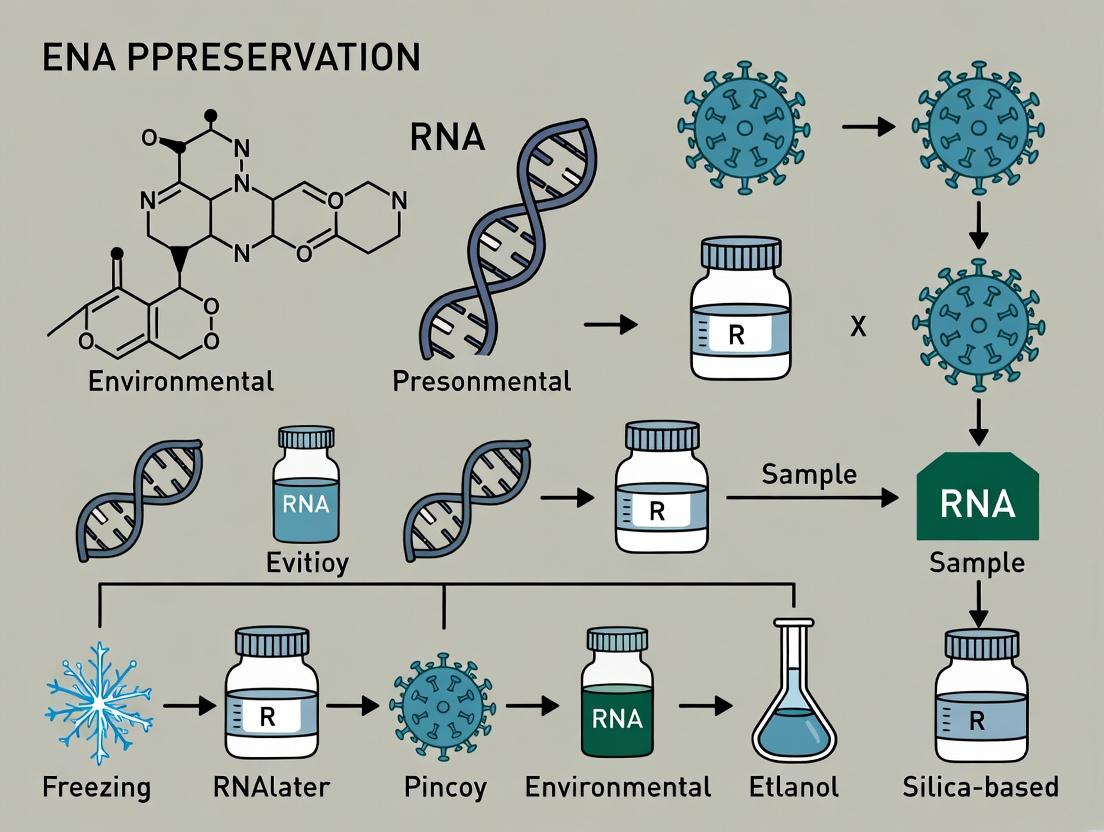
This article provides a detailed, current guide to RNA preservation methods for environmental samples, tailored for researchers, scientists, and drug development professionals.
Preserving the Message: A Comprehensive Guide to RNA Stabilization in Environmental Samples for Biomedical Research
Abstract
This article provides a detailed, current guide to RNA preservation methods for environmental samples, tailored for researchers, scientists, and drug development professionals. It explores the fundamental challenges of RNA degradation in diverse environments and the critical importance of stabilization for accurate downstream analysis. The content systematically reviews established and emerging field preservation techniques, from chemical solutions to physical desiccation. It addresses common troubleshooting scenarios and optimization strategies for specific sample types and logistical constraints. Finally, the article offers a comparative analysis of method performance based on RNA yield, integrity, and compatibility with modern sequencing platforms, empowering researchers to select and validate the optimal protocol for their experimental and clinical objectives.
Why RNA Degrades in the Wild: Understanding the Enemies of Environmental Transcriptomics
Technical Support Center: RNA Preservation & Integrity Troubleshooting
Troubleshooting Guide: Common RNA Degradation Issues
Issue 1: Poor RNA Yield and Integrity from Environmental Samples Question: I am collecting soil and water samples for metatranscriptomics. My RNA yields are consistently low, and Bioanalyzer shows severe degradation (RIN < 4.0). What are the primary failure points? Answer: Environmental samples are hotspots for ribonuclease (RNase) activity and microbial hydrolysis. The failure points are typically:
- Inadequate Immediate Stabilization: RNases from lysed microbes and environmental substrates become active instantly upon sampling. Delay in adding stabilizer is the most common cause of degradation.
- Ineffective Lysis: Many environmental microbes (e.g., Gram-positive bacteria, spores) have tough cell walls. Mechanical lysis (bead-beating) is often necessary but must be performed in the presence of a denaturing agent.
- pH Shift During Processing: Even brief exposure to neutral or alkaline pH (e.g., using non-acidic phenolic reagents) drastically accelerates RNA hydrolysis.
Issue 2: Inconsistent Reverse Transcription-qPCR Results Question: My qPCR results for target microbial transcripts in water samples are highly variable between replicates, despite using the same RNA input. Answer: This points to partial, non-uniform RNA degradation.
- Hydrolysis Hotspots: RNA is most susceptible to hydrolysis at phosphodiester bonds adjacent to pyrimidine bases (C and U), especially under slightly alkaline conditions. This creates random cleavage points, making amplification of longer amplicons inconsistent.
- Solution: Target shorter amplicons (<150 bp) in your qPCR assays. Implement a pre-amplification RNA integrity check using a microfluidic capillary system to assess fragment size distribution.
Issue 3: RNase Contamination in Lab Question: I suspect lab-based RNase contamination is degrading my RNA after extraction, even when using RNase-free reagents. How can I confirm and mitigate this? Answer:
- Confirm: Run an "RNase Alert" test plate. Also, aliquot a high-integrity RNA control and leave it exposed on your bench during sample processing, then run it on a Bioanalyzer.
- Mitigate: Establish unidirectional workflow zones (pre-PCR, post-PCR). Use dedicated RNaseZap-treated surfaces, filter tips, and replace gloves frequently. For critical work, include a broad-spectrum RNase inhibitor (not effective against all environmental RNases) in your reactions.
Frequently Asked Questions (FAQs)
Q1: What is the single most critical factor for preserving RNA in field-collected environmental samples? A1: Immediate physical/chemical inhibition of RNases upon collection. This outweighs all other factors. For most samples, this means instantaneous immersion or mixing with a denaturing stabilization solution (e.g., RNAlater, TRIzol, or proprietary commercial stabilizers). Flash-freezing in liquid nitrogen is effective only if the freezing is instantaneous throughout the sample, which is often not achieved for core or bulk samples.
Q2: How does pH specifically catalyze RNA hydrolysis? A2: RNA hydrolysis is catalyzed by both acid and base. Under alkaline conditions (pH > 6), the 2'-OH group acts as an intramolecular nucleophile, attacking the adjacent phosphodiester bond, leading to strand cleavage. This reaction is ~100,000 times faster for RNA than for DNA. Under acidic conditions, cleavage occurs via protonation and subsequent rearrangement. Neutral pH is ideal for storage but only after RNases are completely inactivated.
Q3: Are all ribonucleases equally problematic? A3: No. They vary greatly in stability, cofactor requirements, and resistance to inhibitors.
- RNase A-family: Common in mammalian tissues, resistant to heat and mild denaturants, requires reducing agents for activity, inhibited by specific protein inhibitors.
- Microbial RNases (e.g., RNase I, Barnase): Often broader specificity, more heat-stable, and may not be inhibited by standard inhibitors. Environmental samples contain a vast, undefined consortium of these.
Q4: What is the recommended maximum storage time for stabilized environmental samples? A4: See quantitative data summary in Table 1.
Q5: Can I use DNase I to remove DNA without risking RNA degradation? A5: Commercial DNase I preparations are often contaminated with RNase. Always use certified, RNase-free, recombinant DNase I. Perform digestion in the presence of a ribonuclease inhibitor and use a defined, mild (e.g., Mg2+-only) buffer. Remove the DNase immediately after digestion via a clean-up step.
Table 1: RNA Stability Under Various Preservation Conditions (Simulated Environmental Sample)
| Condition / Agent | Initial RIN | RIN after 24h (4°C) | RIN after 1 week (-80°C) | % Full-length Transcript Recovery (by qPCR) |
|---|---|---|---|---|
| No Stabilizer (Raw Sample) | 8.5 | 2.1 | 1.5 | <5% |
| RNAlater (Ambion) | 8.7 | 8.5 | 8.3 | 92% |
| Flash Freeze (Liquid N2) | 8.5 | N/A | 7.0* | 75% |
| Ethanol (70%) + EDTA | 8.0 | 6.2 | 5.8 | 45% |
| Acid Phenol (pH 4.5) Immediate Mix | 8.8 | 8.6 | 8.5 | 95% |
Assumes incomplete thermal core freezing. *RNA stored in acid phenol phase at -80°C.
Table 2: RNA Hydrolysis Half-Life vs. pH and Temperature
| pH | Temperature | Approximate Half-life (t1/2) for Depurination/Cleavage* | Key Risk Factor |
|---|---|---|---|
| 4.0 | 25°C | ~100 years | Acid-catalyzed depurination |
| 7.0 | 25°C | ~10-100 years | Minimal spontaneous hydrolysis |
| 8.0 | 25°C | ~1 year | Base-catalyzed strand cleavage initiates |
| 9.0 | 25°C | ~10 days | Rapid strand cleavage |
| 7.0 | 80°C | ~5 minutes | Heat dramatically accelerates all routes |
*Data compiled from published kinetic studies; half-lives are estimates for illustrative comparison. In vivo or in complex samples, RNases reduce this to seconds.
Experimental Protocols
Protocol 1: Immediate Stabilization of Water Column Microbes for Transcriptomics Objective: Preserve in-situ RNA profiles from aquatic microbes. Materials: Peristaltic pump with silicone tubing, in-line 0.22µm filter capsule, sterile forceps, 50ml conical tubes prefilled with 5ml of RNAlater or DNA/RNA Shield. Method:
- Deploy pump and tubing. Filter 1-10 liters of water through the capsule to collect microbial biomass.
- Immediately (<30 sec delay) asceptically open the capsule with forceps.
- Cut the filter membrane and submerge it entirely in the stabilization solution in the 50ml tube.
- Agitate vigorously for 30 seconds.
- Store at 4°C for up to 1 week or at -80°C for long-term storage. Key: The time from stopping filtration to immersion in stabilizer is the critical determinant of integrity.
Protocol 2: Assessing RNase Contamination in Laboratory Workflows Objective: Diagnose location and source of RNase contamination. Method:
- Purchase or prepare a synthetic, fluorescently labeled RNA oligo (e.g., 50-nt).
- Aliquot the oligo in low-ionic-strength buffer.
- Surface Test: Pipette 1µL droplets onto cleaned vs. uncleaned bench areas, recover after 1 min, and run on a denaturing PAGE gel. Smearing indicates degradation.
- Reagent/Air Test: Add 1µL of the oligo to 10µL of the test reagent (e.g., water, buffer) or expose in an open tube in the lab air for 10 mins. Incubate at 37°C for 15 min. Run on a gel.
- Compare band sharpness and intensity to a no-exposure control.
Diagrams
Title: Pathways of RNA Degradation
Title: RNA Preservation Workflow from Environmental Sample
The Scientist's Toolkit: Key Research Reagent Solutions
| Reagent / Material | Primary Function in RNA Preservation | Key Consideration for Environmental Samples |
|---|---|---|
| RNAlater / DNA/RNA Shield | Denatures RNases in situ upon contact, stabilizing nucleic acid profiles at collection. | Effectiveness varies with sample volume/type. For soils, ensure complete penetration. |
| TRIzol / QIAzol | Monophasic solution of phenol/guanidine isothiocyanate. Simultaneously lyses cells, denatures proteins/RNases, and partitions RNA into aqueous phase. | Essential for difficult-to-lyse microbes. Acidic pH (phenol, pH ~4.5) protects RNA from hydrolysis. |
| β-Mercaptoethanol (BME) or DTT | Reducing agent. Breaks disulfide bonds in RNase enzymes, aiding in their denaturation. | Must be added to lysis buffer fresh; critical for samples with high oxidative potential. |
| RNase Inhibitor Proteins (e.g., RNasin) | Bind non-covalently to RNases (esp. RNase A-family) and inhibit activity. | Add to purified RNA or reaction mixes. Not sufficient for initial field stabilization. Heat-labile. |
| Recombinant DNase I (RNase-free) | Degrades contaminating genomic DNA without degrading RNA. | Mandatory for RNA-seq. Verify absence of RNase contamination by vendor certification. |
| Silica-membrane Spin Columns | Bind RNA in high-salt conditions, allow contaminants to wash away, elute in low-salt buffer. | Enables rapid cleanup but may lose small RNAs (<200 nt); select appropriate column chemistry. |
| Sodium Acetate (3M, pH 5.2) | Provides Na+ ions for ethanol co-precipitation of RNA; acidic pH inhibits residual RNases. | Use with 2.5x volumes of 100% ethanol. Prefer over sodium chloride for RNA precipitation efficiency. |
Technical Support Center
Troubleshooting Guide & FAQs
Q1: My RNA yield from an environmental soil sample is consistently low. What could be the primary adversaries, and how can I mitigate them?
A: Low RNA yield is frequently caused by the combined action of microbial RNases and oxidative damage. These adversaries are often exacerbated by temperature fluctuations during sample collection. Implement the following protocol immediately upon sampling:
- Homogenize 0.5-1 g of soil in 2 ml of a commercial RNA stabilization reagent (e.g., containing guanidinium isothiocyanate and a reducing agent).
- Flash-freeze the homogenate in liquid nitrogen for 30 seconds.
- Store at -80°C until processing. For field work, use portable liquid nitrogen dewars or validated stabilization tubes that inactivate RNases at ambient temperature for up to 4 weeks.
Q2: I suspect oxidative damage in my preserved RNA, leading to degraded or modified nucleotides. How can I confirm this, and what preservation method failed?
A: Oxidative damage (e.g., 8-oxoguanosine) often results from inadequate use of antioxidants during lysis or from repeated freeze-thaw cycles. To confirm:
- Analyze RNA integrity via Fragment Analyzer or Bioanalyzer, looking for a smeared electrophoregram rather than sharp ribosomal peaks.
- Use a commercial oxidative damage ELISA kit specific for RNA.
- Failed Step: Likely insufficient concentration of a reducing agent (e.g., β-mercaptoethanol, DTT) in the lysis buffer, or storage at -20°C instead of -80°C.
Q3: My RNAseq data from water samples shows high bacterial ribosomal content, overwhelming eukaryotic signals. How do I suppress microbial activity during preservation?
A: This indicates microbial proliferation between sampling and preservation.
- Immediate Fix: Use a pre-lytic preservative. Add 2% (v/v) of molecular-grade sodium azide (CAUTION: Toxic) or a proprietary microbial growth inhibitor directly to the sample bottle before field collection.
- Protocol: Filter 100-500 mL of water through a 0.22µm filter within 2 minutes of collection. Immediately immerse the filter in a RNA later-like solution supplemented with 40 mM Chelating Agent (EDTA).
Q4: How do temperature fluctuations during transport affect different RNA preservation methods, and what are the quantitative benchmarks for failure?
A: Not all preservation methods are equally resilient. See the quantitative comparison below.
Table 1: Impact of Temperature Fluctuations on RNA Preservation Methods
| Preservation Method | Recommended Storage Temp | Exposure to 25°C for 72h (Simulated Transport) | Effect on RNA Integrity Number (RIN) |
|---|---|---|---|
| Flash Freeze (Liquid N2) | -80°C or -196°C | Critical Failure if thaw occurs | RIN drop: >6.0 → <3.0 (if thawed) |
| Commercial Stabilization Tubes (e.g., RNAlater) | Ambient to -80°C | Tolerated (Designed for this) | RIN drop: Minimal (≤ 1.0) |
| Ethanol-Based Fixatives | -80°C | Partial Degradation | RIN drop: ~2.0 – 3.0 |
| Dried Filter Papers | -20°C | High Risk of Microbial Activity | RIN drop: Variable, often >4.0 |
Q5: What is a detailed protocol for validating a new RNA preservation method against these three adversaries?
A: Validation Protocol for Environmental RNA Preservation Objective: To assess the efficacy of a novel preservative (e.g., a new commercial solution or a lab-formulated buffer) against microbial activity, oxidation, and temperature stress. Experimental Design:
- Sample Preparation: Aliquot identical homogenates of a model environmental matrix (e.g., wetland sediment) into 5 tubes.
- Treatment Groups:
- Group 1 (Control): Immediate TRIzol extraction, flash-frozen.
- Group 2 (Test): Add novel preservative, store at 4°C for 1 week.
- Group 3 (Stress Test): Add novel preservative, expose to three 12-hour cycles between 4°C and 25°C.
- Group 4 (Microbial Challenge): Spike sample with 10^4 CFU of E. coli, add preservative, store at 25°C for 48h.
- Group 5 (Oxidation Challenge): Add preservative without antioxidant, bubble with air for 10 min, store at 4°C for 1 week.
- Analysis: Extract RNA from all groups using the same kit. Quantify yield (ng/µl) by fluorometry, assess integrity (RIN), and perform RT-qPCR on a housekeeping gene to calculate % Recovery vs. Control.
The Scientist's Toolkit: Research Reagent Solutions
Table 2: Essential Reagents for Combating Environmental Adversaries in RNA Preservation
| Reagent / Material | Primary Function | Key Consideration |
|---|---|---|
| Guanidinium Thiocyanate (GTC) | Chaotropic agent. Denatures RNases and proteins instantly upon cell lysis. | Core component of TRIzol and similar. Effective concentration must be >4M. |
| β-Mercaptoethanol (BME) / DTT | Reducing agent. Scavenges reactive oxygen species, prevents oxidative damage. | Must be added fresh to lysis buffers. DTT is more stable and less odorous. |
| RNAlater & Similar Stabilizers | Anionic salts that permeate tissue, precipitate RNases, and stabilize RNA. | Volume:sample ratio is critical. May not fully penetrate dense samples. |
| RNAstable / Biomatrica Tubes | Technology that immobilizes RNA in a chemical matrix for ambient storage. | Excellent for shipping. Rehydration must be performed meticulously. |
| Sodium Azide (NaN3) | Microbial growth inhibitor. Prevents degradation by bacteria/fungi in liquid samples. | HIGHLY TOXIC. Use at low concentrations (0.02-0.1%) with appropriate safety protocols. |
| Silica Membrane / Magnetic Bead Kits | Bind RNA in high-salt conditions, wash away contaminants, elute in low-salt. | Choose kits designed for complex, inhibitor-rich environmental lysates. |
Experimental Workflow & Pathway Diagrams
Technical Support Center: Troubleshooting RNA Degradation & Bias in Complex Samples
FAQs & Troubleshooting Guides
Q1: My metatranscriptomic data shows an unexpectedly high proportion of ribosomal RNA (rRNA) despite depletion, skewing community composition. What went wrong? A: This is a common bias from differential degradation. Labile messenger RNA (mRNA) degrades faster than stable rRNA. In environmental or clinical samples with even minor RNase activity, mRNA loss is disproportionate.
- Troubleshooting Steps:
- Check RIN/RQN values: Use Bioanalyzer/TapeStation. A high value (>8) alone doesn't guarantee mRNA integrity. Check the electrophoregram for a smeared lower-molecular-weight region indicating mRNA fragmentation.
- Assess Sample Fixation: If using preservatives (e.g., RNAlater), ensure rapid and complete penetration. Large tissue or biomass cores prevent effective fixation.
- Validate with Spike-Ins: Use exogenous RNA spike-in controls (see Table 1) added at collection. Their recovery quantifies mRNA-specific loss.
- Protocol: Using External RNA Controls Consortium (ERCC) Spike-Ins for Degradation Assessment
- At Collection: Add a known quantity of ERCC spike-in mix (a complex cocktail of long and short RNAs) directly to your sample immediately upon sampling (e.g., into RNAlater).
- Proceed with RNA Extraction: Isolate total RNA using your standard protocol.
- Sequencing & Analysis: Sequence and map reads. Calculate the ratio of observed vs. expected abundance for each spike-in. A pattern where longer spike-ins are under-represented compared to shorter ones confirms differential degradation.
Q2: In host-pathogen transcriptomic studies, I observe a severe depletion of host mRNA relative to pathogen/bacterial RNA. Is this biological or technical? A: It is often technical bias from lysis and stabilization. Host cells (e.g., eukaryotic) are more fragile than many bacterial/viral capsids or spores. Harsh lysis or delayed preservation causes host cell rupture and rapid mRNA degradation, while intact microbes are protected.
- Troubleshooting Steps:
- Review Lysis Method: Gentle, enzymatic lysis (e.g., lysozyme for bacteria combined with gentle detergents for host cells) can be superior to harsh bead-beating for mixed samples.
- Immediate Stabilization: Use instant-stabilizing reagents like PAXgene or Tempus that inactivate RNases within seconds upon contact.
- Pathogen Enrichment Bias: Confirm if any pathogen-enrichment steps (e.g., centrifugation, filtration) were used that could mechanically shear host cells.
- Protocol: Differential Lysis for Host-Microbe RNA Preservation
- Collect Sample: Sputum, tissue homogenate, etc., into a primary stabilizer.
- Gentle Lysis: Incubate sample with a lysozyme/mutanolysin buffer (for Gram+ bacteria) and a low-concentration detergent (e.g., 0.1% Triton X-100) for 15 mins at 37°C to permeabilize microbial walls.
- Simultaneous Host Lysis & Stabilization: Add a commercial stabilization/lysis buffer (e.g., from Qiagen or Norgen) that immediately lyses eukaryotic cells while inactivating RNases.
- Proceed with RNA extraction using a protocol designed for concurrent recovery of prokaryotic and eukaryotic RNA.
Q3: How can I objectively compare the performance of different RNA preservation methods (e.g., RNAlater vs. flash-freezing vs. commercial cards) for my specific sample type? A: You must use a standardized, quantitative assay that measures the functionally relevant RNA (mRNA) over time. See Table 1 for a comparison framework.
Table 1: Quantitative Metrics for Comparing RNA Preservation Methods
| Metric | Measurement Tool | What It Indicates | Ideal Outcome |
|---|---|---|---|
| Total RNA Yield | Qubit/Bioanalyzer | Gross recovery of all RNA | High, but not sufficient alone. |
| RIN/RQN | Bioanalyzer/TapeStation | Overall integrity of rRNA & large transcripts. | >7, but can be misleading. |
| mRNA Integrity Number (mIN) | qRT-PCR of long vs. short host transcripts (e.g., GAPDH 3’ vs 5’ amplicons) | Specific integrity of labile mRNA. | Ratio close to 1.0. |
| Spike-In Recovery Ratio | Sequencing of added ERCC controls | Bias and loss across transcript lengths. | Near 1.0 across all lengths. |
| Microbial:Host Ratio Shift | qPCR for conserved 16S vs. host 18S rRNA before and after preservation delay | Differential preservation bias. | Minimal change from baseline. |
Experimental Protocol: Systematic Comparison of Preservation Methods
- Sample Pooling: Create a large, homogeneous sample pool (e.g., soil slurry, infected tissue homogenate).
- Aliquot & Preserve: Split into identical aliquots. Subject each to a different preservation method (A, B, C) and include a "no preservation" control held at room temperature.
- Time Series: Process aliquots from each method at time points T=0, 30min, 2hr, 24hr.
- Spike-In Addition: Add ERCC spike-ins to each aliquot at the beginning of the preservation period.
- RNA Extraction: Use a single, optimized extraction protocol for all samples.
- Analysis: Perform Qubit, Bioanalyzer, qRT-PCR (for mIN), and sequencing. Plot all metrics from Table 1 over time for each method.
The Scientist's Toolkit: Key Research Reagent Solutions
| Reagent/Material | Function & Role in Mitigating Bias |
|---|---|
| RNAlater Stabilization Solution | Penetrates tissues to inactivate RNases. Crucial for preserving in situ transcript ratios but penetration speed is critical. |
| PAXgene Tissue & Blood Tubes | Provides immediate chemical fixation/frostification upon contact, ideal for stabilizing labile host transcripts in mixed samples. |
| ERCC Exogenous RNA Spike-In Controls | A defined mix of RNA sequences. Added at collection to quantify technical bias, degradation, and amplification efficiency. |
| RNase Inhibitors (e.g., Recombinant RNasin) | Essential addition to lysis and purification buffers to inhibit introduced RNases during processing. |
| Bead Beating Tubes with Zirconia/Silica Beads | For mechanical lysis of tough environmental samples (e.g., soil, biofilm). Bead size must be optimized to avoid excessive shearing. |
| Polyadenylation-Independent rRNA Depletion Kits (e.g., Ribo-Zero) | For microbial/environmental samples where bacterial mRNA is not polyadenylated. Critical for reducing rRNA-driven sequencing bias. |
| Duplex-Specific Nuclease (DSN) | Normalizes cDNA libraries by degrading abundant double-stranded cDNA (from rRNA), improving coverage of rare transcripts. |
Diagram 1: Workflow for Bias Assessment in RNA Preservation
Diagram 2: Degradation Bias in Host-Pathogen RNA
Technical Support & Troubleshooting Center
FAQs & Troubleshooting Guides
Q1: My RNA yield from an environmental soil sample is consistently low. What are the primary culprits and solutions? A: Low yield often stems from inefficient cell lysis or RNA degradation/binding during extraction.
- Troubleshooting Steps:
- Enhance Lysis: For tough environmental matrices (soil, biofilm), combine mechanical disruption (bead beating) with a potent, inhibitor-tolerant lysis buffer (e.g., containing CTAB or guanidine thiocyanate). Increase bead-beating time cold to prevent heat degradation.
- Add Carrier: Include 1-2 µg of linear polyacrylamide or glycogen as an inert carrier during ethanol precipitation to visualize the pellet and improve recovery of low-concentration RNA.
- Inhibit RNases: Ensure RNase inhibitors are fresh and added immediately post-lysis. For samples with high microbial load, consider a pre-lysis step with a dedicated RNase inhibitor cocktail.
- Validate Protocol: Perform a spike-in control with a known quantity of synthetic RNA from an unrelated organism to distinguish between poor recovery and true low biomass.
Q2: I have a good RNA yield, but my RIN value is poor (<6.0) despite immediate preservation. What happened? A: Poor RIN with good yield suggests rapid but incomplete metabolic quenching or post-preservation issues.
- Troubleshooting Steps:
- Preservation Efficacy: Ensure your preservation agent (e.g., RNAlater, TRIzol, flash-freezing in LN2) penetrates the sample rapidly. For bulky samples, dissect or submerge in excess volume. For RNAlater, the sample must be sufficiently thin (<0.5 cm).
- Thawing/Homogenization: If frozen, never let the sample thaw before adding it to lysis buffer. Homogenize directly in the denaturing lysis buffer while the sample is still frozen.
- Instrument Artifact: Environmental RNA can have unusual fragment distributions. Cross-verify integrity using the DV200 metric (see Table 1) and capillary electrophoresis traces. Degradation shows a smear; unusual but intact bacterial RNA may show shifted peaks.
Q3: My sequencing data shows skewed transcript representation compared to expected microbial activity. How can preservation bias be diagnosed? A: Transcript skewing can arise from non-instantaneous preservation or protocol bias.
- Troubleshooting Steps:
- Spike-In Controls: Co-preserve the sample with a synthetic, predefined RNA spike-in mix (e.g., from the External RNA Controls Consortium - ERCC) at the moment of preservation. Post-sequencing, deviations from the expected spike-in ratios indicate biased recovery or amplification.
- Compare Methods: Split a single, homogenized sample and preserve it with two different gold-standard methods (e.g., flash-freeze in LN2 vs. rapid immersion in TRIzol). Compare yield, integrity, and sequencing profiles to identify method-specific biases.
- Check Polysome Profiles: If feasible, analyze polysome stabilization. Effective preservatives (like "Snapshot" freezing with cycloheximide) halt translation instantly, preserving in-vivo transcript distributions.
Table 1: Comparative Performance of RNA Preservation Methods for Environmental Samples
| Preservation Method | Optimal Sample Type | Avg. RNA Yield (µg/g sample)* | Avg. RIN (Eukaryotes) | Avg. DV200 (%) (Prokaryotes) | Key Bias/Note |
|---|---|---|---|---|---|
| Flash-Freezing (LN2) | Most types, if small | 5-20 (sediment) | 8.0-9.5 | 85-95 | Gold standard; requires immediate LN2 access. |
| RNAlater Immersion | Plant tissue, microbiome | 3-15 (soil) | 7.5-9.0 | 80-90 | Penetration issues with dense samples; can bias taxa recovery. |
| TRIzol/QLAzol | Water filters, biofilms | 8-25 (biofilm) | N/A (denatured) | 85-98 | Excellent for difficult, RNase-rich samples; denatures RNases instantly. |
| Ethanol-Based Fixatives | Large field collections | 2-10 (sediment) | 6.0-8.0 | 70-85 | Can be suboptimal for RNA but good for dual RNA/DNA extraction. |
| FTA Cards | Remote, quick sampling | 0.5-5 (various) | 4.0-6.0 | 60-75 | Very low yield/quality; suitable only for targeted assays (RT-qPCR). |
Yields are highly sample-dependent. Values represent a synthesized range from recent literature. *DV200 assessed after RNA isolation from the denatured lysate.
Experimental Protocols
Protocol 1: Evaluating Preservation Efficacy with Spike-In Controls Objective: To quantitatively assess the bias introduced during sample preservation and RNA extraction. Materials: See "Scientist's Toolkit" below. Steps:
- Spike-In Addition: Prior to preservation, add a known, low concentration (e.g., 0.1% of total expected RNA) of a synthetic, sequence-defined RNA spike-in mix (e.g., ERCC Spike-In Mix) directly to the environmental sample (e.g., soil slurry, filtered biomass).
- Preservation: Immediately apply the test preservation method (e.g., submersion in RNAlater).
- RNA Extraction: Proceed with your standard RNA extraction protocol.
- Quantification & Sequencing: Measure RNA yield and integrity. Proceed with library preparation and sequencing.
- Analysis: Map reads to the spike-in reference sequences. Calculate the correlation (R²) between the observed read counts and the known molar concentrations of each spike-in transcript. A high R² (>0.95) indicates minimal technical bias.
Protocol 2: Comparative Integrity Assessment using RIN and DV200 Objective: To reliably assess RNA integrity from diverse and challenging environmental samples. Materials: Bioanalyzer/TapeStation, RNA samples. Steps:
- Prepare Samples: Isolate RNA using a consistent method from samples preserved by different techniques.
- RIN Analysis (Eukaryotic-focused): Run ~100 ng RNA on an Agilent Bioanalyzer Eukaryote Total RNA Nano assay. The software generates an RIN (1-10) based on the entire electrophoretogram, heavily weighting the 18S and 28S rRNA peaks.
- DV200 Analysis (Universal): For the same samples, run the Agilent Bioanalyzer RNA 6000 Nano or the TapeStation High Sensitivity RNA assay. Calculate the DV200 value: the percentage of RNA fragments larger than 200 nucleotides.
- Interpretation: For bacterial/archaeal samples where rRNA lacks 28S/18S peaks, DV200 is more reliable. A DV200 > 80% is generally suitable for downstream sequencing. Use the table below for guidance.
Visualizations
Title: RNA Preservation & Analysis Workflow
Title: Decision Tree for RNA Integrity Metrics
The Scientist's Toolkit
Table 2: Essential Reagents for RNA Preservation Studies
| Item | Function & Rationale |
|---|---|
| RNAlater Stabilization Solution | Aqueous, non-toxic solution that permeates tissue to stabilize and protect cellular RNA at non-freezing temperatures for storage/transport. |
| TRIzol/QLAzol Reagent | Mono-phasic solution of phenol and guanidine isothiocyanate. Immediately denatures RNases upon contact, enabling simultaneous lysis and preservation. |
| Liquid Nitrogen (LN2) | Provides ultra-rapid freezing ("snapshot") of metabolic activity, considered the gold-standard preservation method when instantly available. |
| ERCC RNA Spike-In Mixes | Defined cocktails of synthetic RNA transcripts at known concentrations. Added at preservation to monitor technical bias through sequencing. |
| Linear Polyacrylamide (LPA) Carrier | An inert, co-precipitating agent used to dramatically improve the recovery of low-nanogram amounts of RNA during ethanol precipitation. |
| Inhibitor-Tolerant Beads (e.g., Zirconia/Silica) | Used in bead-beating homogenizers for mechanical lysis of tough environmental matrices without releasing PCR inhibitors. |
| Agilent Bioanalyzer RNA Kits | Microfluidics-based capillary electrophoresis for automated, precise assessment of RNA integrity (RIN) and size distribution (DV200). |
| DNase I (RNase-free) | Critical for removing genomic DNA contamination from RNA preparations prior to sensitive applications like RNA-seq or RT-qPCR. |
| Broad-Spectrum RNase Inhibitors | Enzyme inhibitors (e.g., recombinant ribonucleoside vanadyl complexes) added to lysis buffers to inactivate sampled and endogenous RNases. |
From Field to Freezer: A Toolkit of RNA Preservation Techniques for Every Scenario
Technical Support Center: Cryopreservation & RNA Integrity Troubleshooting
FAQs & Troubleshooting Guides
Q1: Our field site is a 6-hour hike from the nearest liquid nitrogen (LN2) source. Samples show degraded RNA despite being flash-frozen in dry shippers. What are the critical failure points? A: The primary failure points are: 1) Pre-freeze Warm Ischemia: Time between collection and freezing must be minimized (<2 minutes is ideal). 2) Dry Shipper Temperature Decay: Ensure the dry shipper was properly charged (saturated with LN2) and held at <-150°C for the duration. Use data loggers to verify. 3) Sample Size: Tissue cores >5mm thick may freeze too slowly, causing ice crystal formation. Protocol: For remote collection, pre-label and pre-cool cryovials in the dry shipper. Submerge small tissue pieces (<3mm) immediately in a cryopreservation solution like RNAlater-ICE (pre-cooled on dry ice) before placing in the dry shipper. This solution stabilizes RNA at -20°C for up to 8 weeks, providing a buffer against temporary warming.
Q2: We observe high variability in RNA Integrity Number (RIN) between replicate samples from homogeneous environmental slurries. Could the cryopreservation process itself be the cause? A: Yes. Inhomogeneous freezing rates within and between vials are a common culprit. Protocol for Consistent Freezing:
- Use identical, low-protein-binding cryovials (e.g., 2.0 mL screw-cap).
- Standardize slurry volume (e.g., 1.0 mL ±0.1 mL).
- For immersion in LN2, use a controlled-rate freezer or a "Mr. Frosty" isopropanol-filled container that cools at ~1°C/min to -80°C before LN2 transfer. This minimizes thermal shock and cracking.
- Always snap-freeze in parallel, not serially. Place all vials in a float rack and submerge them into LN2 simultaneously.
Q3: What is the actual quantitative penalty of delayed cryopreservation for meta-transcriptomic studies? A: Recent studies on microbial communities in freshwater and soil matrices show a rapid decline in detectable mRNA transcripts. See summarized data below.
Table 1: Impact of Preservation Delay on RNA Recovery from Environmental Samples
| Delay Time at 4°C | RIN Value (Mean) | % mRNA Recovery vs. Immediate LN2 (Metatranscriptomic) | Key Degraded Pathways (Typical) |
|---|---|---|---|
| Immediate (<2 min) | 8.5 - 9.5 | 100% (Baseline) | N/A |
| 10 minutes | 7.0 - 8.0 | 65-80% | Nitrate reduction, Oxidative phosphorylation |
| 30 minutes | 5.5 - 6.5 | 40-60% | Above + Ribosomal proteins, Translation |
| 2 hours | 3.0 - 4.0 | 10-25% | Broad metabolic and anabolic pathways |
Q4: Our lab must switch to stabilization buffers for a long polar expedition. How does RNA quality compare statistically to immediate LN2? A: Commercial stabilization buffers (e.g., RNAlater, DNA/RNA Shield) are effective but niche-specific. They halt degradation but do not fully "pause" all enzymatic activity indefinitely. See comparison table.
Table 2: Immediate LN2 vs. Stabilization Buffers for Long-Term Storage
| Preservation Method | Initial Fixation | Long-Term Storage Temp. | Max Recommended Duration | RIN After 1 Year | Cost per Sample (approx.) | Logistical Burden |
|---|---|---|---|---|---|---|
| Immediate LN2 | Instantaneous | -196°C (LN2) or -150°C (Vapor) | Indefinite | 8.5 - 9.2 | High | Very High |
| Stabilization Buffer | 24-48 hrs at RT | -80°C | 12-24 months | 7.0 - 8.5 | Medium | Medium/Low |
Protocol for Buffer Use: For 0.5g sediment, use 2mL of buffer. Dissect sample fully within buffer. Invert 20x. Store at 4°C for 24h to allow penetration, then move to -20°C or -80°C.
The Scientist's Toolkit: Key Reagent Solutions
Table 3: Essential Materials for Field Cryopreservation
| Item | Function & Critical Note |
|---|---|
| LN2 Dry Shipper (K-Series) | Safe transport of frozen samples. Must be charged 48-72 hours prior. |
| Pre-cooled Cryogenic Vials | Pre-cool in vapor phase of dry shipper to prevent initial warming. |
| RNAlater-ICE | Glyoxal-based solution for pre-freezing stabilization at -20°C to -80°C. |
| Portable Data Logger | Monitors internal temperature of dry shipper/storage. Critical for audit. |
| Sterile Biopsy Punches (3-5mm) | Standardizes tissue sample size for uniform freezing rate. |
| Cryo-Gloves & Face Shield | Mandatory PPE for handling LN2 to prevent severe burns. |
| "Mr. Frosty" or Cryo 1°C Freezing Container | Provides ~1°C/min cooling to -80°C to reduce thermal stress. |
| RNA Stabilization Tubes (e.g., PAXgene, DNA/RNA Shield) | For immediate chemical stabilization when LN2 is unavailable. |
Experimental Workflow Diagram
Signaling Pathway of RNA Degradation Post-Sampling
This technical support center is framed within a thesis on RNA preservation for environmental samples research, which often involves complex matrices and variable conditions. Effective stabilization is critical to prevent RNA degradation by ubiquitous RNases. This guide details mechanisms, protocols, and troubleshooting for common agents.
Mechanisms of Action
RNAlater (and similar aqueous, non-toxic buffers): Penetrates tissues to inactivate RNases via a high concentration of salts (typically ammonium sulfate), creating a dehydrating environment that denatures proteins, including RNases, while maintaining RNA integrity within cells.
TRIzol/ TRI Reagent: A monophasic solution of phenol and guanidine isothiocyanate. It simultaneously lyses cells, denatures proteins (via guanidine), and separates RNA into an aqueous phase during chloroform addition, effectively isolating it from DNA and protein.
Other Commercial Buffers (e.g., DNA/RNA Shield, RNAprotect): Often use a combination of denaturants, chelating agents, and RNase inhibitors in a proprietary blend to rapidly penetrate samples and chemically inactivate nucleases.
Key Research Reagent Solutions
| Reagent/Buffer | Primary Function | Key Components (Typical) | Best For |
|---|---|---|---|
| RNAlater | Tissue RNA Stabilization | Ammonium sulfate, EDTA, Sodium citrate | Field collection, tissue biopsies, microbial pellets. |
| TRIzol | RNA Isolation & Stabilization | Phenol, Guanidine isothiocyanate | Immediate homogenization, combined stabilization/isolation. |
| DNA/RNA Shield | Nucleic Acid Stabilization | Proprietary, non-toxic, biocide-free | Environmental samples (soil, water), safe transport. |
| RNAprotect | RNA Stabilization (Bacterial) | Proprietary salts for rapid penetration | Bacterial cultures, biofilms. |
| Anhydrous Ethanol | Precipitation & Washing | Ethanol (100%) | RNA precipitation and wash steps post-isolation. |
| Beta-Mercaptoethanol | RNase Inhibition | Reducing agent | Additive to lysis buffers to inhibit RNases. |
| DNase/RNase-Free Water | Resuspension & Dilution | Nuclease-free water | Final resuspension of purified RNA. |
Detailed Protocols
Protocol 1: Stabilization of Environmental Microbial Biomass with RNAlater
- Collection: Filter water sample (0.22µm membrane) or collect soil/sediment core.
- Immediate Stabilization: Submerge filter or <0.5 cm³ core piece in 5-10 volumes of RNAlater in a sterile tube.
- Incubation: Store at 4°C for 24 hours to allow penetration, then decant excess solution and store biomass at -80°C long-term.
- Processing: Thaw sample, remove residual RNAlater, proceed to mechanical lysis (bead-beating) in your standard RNA extraction buffer (e.g., from a kit).
Protocol 2: Direct Homogenization and RNA Isolation with TRIzol from Plant Tissue
- Homogenization: Flash-freeze 100mg leaf tissue in liquid N2. Grind to fine powder. Add powder to 1mL TRIzol in a tube. Vortex vigorously for 1 minute.
- Phase Separation: Incubate 5min at RT. Add 0.2mL chloroform. Shake vigorously for 15 sec. Incubate 2-3min at RT. Centrifuge at 12,000xg, 15min, 4°C.
- RNA Precipitation: Transfer clear aqueous phase to new tube. Add 0.5mL isopropanol. Mix. Incubate 10min at RT. Centrifuge at 12,000xg, 10min, 4°C. Pellet is RNA.
- Wash: Remove supernatant. Wash pellet with 1mL 75% ethanol (in DNase-free water). Centrifuge 7,500xg, 5min, 4°C.
- Resuspension: Air-dry pellet 5-10min. Dissolve in 30-50µL RNase-free water.
Troubleshooting Guides & FAQs
Q1: My RNA yield from RNAlater-preserved tissue is low. What could be wrong? A: RNAlater penetration is critical. For large or dense tissue pieces, dice into <0.5 cm thick slices before immersion. Ensure a 5:1 volume ratio (RNAlater:sample). For fibrous plant or soil samples, consider an initial brief homogenization in RNAlater.
Q2: After TRIzol extraction, my RNA has a 260/230 ratio below 1.8, indicating contamination. A: Low 260/230 suggests carryover of guanidine or phenol. Ensure you do not disturb the interphase/organic layer during aqueous phase transfer. Perform an extra wash step: after the first ethanol wash, briefly air-dry and redissolve the pellet in a small volume of RNase-free water, then reprecipitate with sodium acetate and ethanol.
Q3: Can I use RNAlater-stabilized samples for protein analysis later? A: Generally, no. The denaturing salts in RNAlater irreversibly denature most proteins. If multi-omics is planned, consider splitting the sample or using a different stabilization buffer compatible with downstream proteomics.
Q4: My environmental sample (e.g., soil) inactivates the stabilization buffer. What do I do? A: High organic matter or enzymatic activity can overwhelm buffers. Increase the buffer-to-sample ratio dramatically (10:1 or higher). For soils, consider immediate freezing in liquid N2 as the primary stabilization, followed by processing in a denaturing buffer.
Q5: The RNA integrity number (RIN) from my preserved sample is poor, showing degradation. A: This indicates either slow penetration of the stabilizer (for RNAlater-type buffers) or delay before homogenization in TRIzol. For tissues, immerse in stabilizer immediately upon dissection. For liquid samples, mix with the stabilizer instantly. Degradation begins in seconds.
| Agent | Stabilization Mechanism | Sample Types | Storage After Stabilization | Compatible Downstream Apps |
|---|---|---|---|---|
| RNAlater | Protein Denaturation/Salt Precipitation | Tissues, Cell Pellets, Some Microbes | 24h RT, 1 wk 4°C, Long-term -80°C | RNA isolation, Microarrays, RT-qPCR |
| TRIzol | Denaturation & Phase Separation | Tissues, Cells, Bacteria, Plants | Homogenate stable 24h at 4°C, Long-term -80°C | RNA isolation, Northern Blot, RT-qPCR |
| DNA/RNA Shield | Nuclease Inactivation (Proprietary) | Swabs, Tissues, Soil, Water | 30 days RT, Long-term -80°C | RNA/DNA isolation, Sequencing |
| RNAprotect | Rapid Penetration & RNase Inactivation | Bacterial Cultures, Biofilms | 1 wk RT, Long-term -80°C | Bacterial RNA isolation, Transcriptomics |
Visualized Workflows
RNAlater Sample Processing Workflow
TRIzol RNA Isolation Mechanism
This support center addresses common issues encountered when using Filter Paper, RNAstable, and Lyophilization for RNA preservation in extreme field conditions, as part of a thesis on environmental sample RNA preservation.
Troubleshooting Guide: Field Application
| Issue | Possible Cause | Solution |
|---|---|---|
| Low RNA yield from filter paper | Incomplete elution; RNA tightly bound. | Increase elution buffer volume and incubation time (e.g., 65°C for 30 min). Use a buffer with 1% SDS. Soak and vortex vigorously. |
| RNA degradation in RNAstable pellets | Pellet was rehydrated before storage; storage conditions suboptimal. | Ensure pellet is completely dry before sealing. Store only at room temperature or cooler in a desiccated, dark environment. Never store a rehydrated pellet. |
| Sample loss during lyophilization | "Flaking" or "bumping" due to rapid vacuum application. | Use a programmed freeze-dryer with a controlled ramp for vacuum. Ensure samples are completely frozen before starting. Use sample additives (e.g., trehalose). |
| Inconsistent desiccation across samples | Variable humidity/temperature in field; uneven spotting. | Use a standardized, timed drying protocol. Employ a portable, sealed desiccator with consistent desiccant. Spot samples in uniform, small volumes. |
| Inhibitors co-eluted with RNA | Carryover of paper matrix or preservation chemicals. | Include a wash step with 70-80% ethanol after spotting and drying. For elution, use a column-based clean-up kit after the initial elution. |
Frequently Asked Questions (FAQs)
Q1: What is the maximum sample volume I can apply to a standard filter paper card for reliable RNA preservation? A: Do not exceed 100 µL per defined spot (typically a circle of 10-13mm diameter). For larger volumes, apply in multiple, sequential 50-75 µL aliquots, allowing complete drying between applications. Exceeding this volume risks incomplete drying, leading to RNase activity and poor sample recovery.
Q2: How long can RNAstable-preserved samples be stored at fluctuating, high field temperatures (e.g., 35-45°C)? A: Peer-reviewed studies demonstrate that RNAstable-treated RNA remains intact and PCR-amplifiable for at least 30 days at 50°C. For field conditions with lower average temperatures (<45°C), storage for several months is typically viable, though consistent, cooler storage is always recommended post-collection.
Q3: Can I lyophilize samples directly in the field without a dedicated freeze-dryer? A: True lyophilization requires vacuum and is not feasible without specialized equipment. However, a critical simulated field alternative is rapid desiccation using portable chemical desiccants. Place your aqueous sample in a thin-walled PCR tube inside a sealed container with ample silica gel or other desiccant. This achieves a stable, dry state comparable for short-term stabilization until lyophilization can be performed.
Q4: Which method yields the highest RNA Integrity Number (RIN) after 4 weeks of storage? A: Quantitative data from controlled aging experiments show clear trends. Refer to Table 1.
Table 1: Comparative RNA Integrity After 4 Weeks of Storage
| Preservation Method | Storage Temp. | Avg. RIN (Post-Recovery) | Key Quantitative Advantage |
|---|---|---|---|
| RNAstable | 37°C | 8.2 - 9.1 | Superior long-term stability at elevated temperatures. |
| Lyophilization (with trehalose) | 22°C (Room Temp) | 7.5 - 8.5 | Excellent stability, independent of cold chain. |
| Filter Paper (FTA Classic) | 22°C (Room Temp) | 6.0 - 7.0 | Cost-effective; good for PCR targets <500 bp. |
Experimental Protocol: Comparative Validation of Desiccation Methods
Title: Protocol for Field-Trialing RNA Preservation Methods on Environmental Swab Samples.
1. Sample Preparation:
- Collect uniform environmental swab samples (e.g., biofilm swabs).
- Elute swabs in 500 µL of a stabilization buffer (e.g., RNA Later or 1:1 ethanol:water).
- Split the eluent into three 150 µL aliquots for parallel processing.
2. Desiccation Protocols:
- Filter Paper: Spot 3 x 50 µL of aliquot onto labeled circles of an RNA-specific card (e.g., Whatman FTA RNA). Air-dry for 3 hours in a shaded, portable desiccator.
- RNAstable: Mix 30 µL of sample aliquot with 10 µL of RNAstable solution. Dispense 40 µL into a tube and dry in a vacuum concentrator (or field desiccator) until a clear pellet forms (~60-90 mins).
- Lyophilization: Mix 50 µL of sample aliquot with 50 µL of 5% (w/v) trehalose solution. Flash-freeze in liquid nitrogen or dry ice/ethanol bath. Lyophilize overnight.
3. Storage & Analysis:
- Store all replicates at a simulated field temperature (e.g., 40°C) and a control temperature (-20°C) for a defined period (e.g., 1, 4, 12 weeks).
- Rehydrate/elute samples per manufacturer or optimized protocols.
- Quantify recovery (ng/µL) via fluorometry and assess integrity via RIN or PCR amplification of long targets (>1 kb).
Visualization: Workflow Diagram
The Scientist's Toolkit: Key Research Reagent Solutions
| Item | Function in RNA Preservation |
|---|---|
| FTA RNA Cards | Cellulose-based filter paper impregnated with chemicals that lyse cells, denature proteins, and protect RNA from nucleases upon contact. |
| RNAstable Solution | A proprietary mixture of biocompatible di- and tri-saccharides that forms a stable, anhydrous glass matrix around RNA, preventing hydrolysis. |
| Trehalose | A non-reducing disaccharide used as a lyoprotectant in lyophilization. It replaces water molecules, maintaining RNA structure during drying. |
| Silica Gel Desiccant | Provides a low-humidity environment in portable containers for rapid, passive drying of filter paper spots or RNAstable pellets in the field. |
| Portable Vacuum Concentrator | Uses centrifugal force and vacuum to rapidly remove aqueous solvents from samples, enabling pellet formation for RNAstable or pre-lyophilization. |
| RNase-free Elution Buffer (w/ SDS) | Contains sodium dodecyl sulfate (SDS) to disrupt the strong binding of RNA to filter paper matrices, maximizing recovery during elution. |
Technical Support Center
Troubleshooting Guides & FAQs
Q1: My RNA yield after ethanol precipitation from a turbid environmental slurry is consistently low. What could be the cause? A: Low yield is often due to inefficient RNA recovery during precipitation. For complex environmental matrices, a co-precipitant is essential.
- Solution: Add glycogen or linear polyacrylamide (LPA) as a carrier (final concentration: 50-150 µg/mL) prior to adding ethanol. This inert carrier forms a visible pellet, dramatically improving recovery of low-concentration and fragmented RNA.
- Protocol Adjustment: Ensure the sample is well-mixed after adding the carrier and the ethanol. Incubate at -20°C or -80°C for a minimum of 1 hour (overnight is optimal for dilute samples).
Q2: The precipitated RNA pellet is difficult to resuspend and shows poor performance in downstream cDNA synthesis. How can I improve this? A: This indicates residual salt contamination, which inhibits enzymatic reactions.
- Solution: Perform a stringent 70-80% ethanol wash step. Do not vortex the pellet during washing. Centrifuge, carefully aspirate the ethanol, and air-dry the pellet for 5-10 minutes only. Over-drying makes the pellet hydrophobic and difficult to resuspend.
- Protocol: Resuspend in nuclease-free water or TE buffer (pH 8.0), not DEPC-water, as slightly acidic pH can degrade RNA.
Q3: I am sampling large volumes of water. Isopropanol precipitation is often recommended over ethanol. Which should I use and why? A: The choice depends on volume, salt concentration, and target RNA size. See the comparison table below.
Q4: How can I assess RNA integrity after field preservation with ethanol, given the potential for degradation? A: Standard bioanalyzer traces may be poor. Use a RT-qPCR assay targeting amplicons of different lengths (e.g., 100 bp vs. 400 bp) within a conserved region (e.g., 16S rRNA for bacteria). A high ratio of long to short amplicon Cq values indicates degradation.
Q5: Can I use commercial "RNA stabilization" reagents instead of ethanol for bulk environmental samples? A: For true bulk sampling (liters of water, grams of soil), commercial reagents are cost-prohibitive. Ethanol remains the most scalable option. For targeted meta-transcriptomics where community composition is critical, consider that ethanol may lyse some fragile cells, biasing results. For these cases, a filtration-concentration step followed by immediate immersion in a dedicated stabilization reagent may be superior, though at higher cost.
Table 1: Comparison of Common Alcohol Precipitants for RNA
| Parameter | Ethanol | Isopropanol |
|---|---|---|
| Required Volume (per 1 vol sample) | 2.0 - 2.5 vol | 0.6 - 1.0 vol |
| Incubation Time (at -20°C) | 30 min to O/N | 10 - 30 min |
| Salt Co-precipitation Risk | Lower | Higher |
| Ideal Use Case | Large volume precipitation, routine recovery | Precipitation from small volumes, concentrating dilute samples |
| Pellet Characteristics | Less visible, may be looser | More compact, often more visible |
Table 2: Carrier Agent Efficacy for Low-Abundance RNA Recovery
| Carrier Agent | Typical Working Concentration | Advantages | Drawbacks |
|---|---|---|---|
| Glycogen (Molecular Biology Grade) | 50 µg/mL | Inert, does not interfere with enzymes, visible pellet. | Can be metabolized by contaminants if stored wet. |
| Linear Polyacrylamide (LPA) | 150 µg/mL | Highly effective, very inert, not metabolizable. | Requires separate purchase/preparation. |
| Sodium Acetate (Salt) | 0.3 M final concentration | Standard, inexpensive. | Ineffective for nanogram-level RNA, high salt carryover risk. |
Experimental Protocols
Protocol 1: Bulk Water Sample RNA Preservation & Precipitation (Field Protocol)
- Field Collection: Collect water sample (e.g., 100 mL to 1 L) in a sterile container.
- Immediate Preservation: Add 2 volumes of 100% molecular-grade ethanol (pre-chilled) and 1/10 volume of 3M sodium acetate (pH 5.2). Mix thoroughly by inversion. Store at 4°C or on ice for transport (stable for weeks).
- Laboratory Processing: Centrifuge the preserved sample at 10,000 x g for 30 min at 4°C to pellet total nucleic acids. Decant supernatant.
- Wash: Add 1 mL of ice-cold 80% ethanol (in DEPC-treated water) to the pellet. Vortex briefly and centrifuge at 10,000 x g for 10 min at 4°C. Carefully aspirate supernatant.
- Dry & Resuspend: Air-dry pellet for 5-10 min. Resuspend in 50 µL of nuclease-free water or TE buffer.
Protocol 2: Enhanced Recovery with Carrier for Low-Biomass Samples
- Follow Protocol 1 steps 1-2.
- Prior to centrifugation, add molecular-grade glycogen to a final concentration of 50 µg/mL. Mix thoroughly.
- Proceed with centrifugation. A small, white pellet should be visible.
- Perform the 80% ethanol wash twice to remove salts and residual ethanol more thoroughly.
- Resuspend as in Protocol 1.
Visualizations
Title: Workflow for Bulk Sample RNA Preservation & Precipitation
Title: Ethanol's Dual Mechanism for RNA Stabilization
The Scientist's Toolkit
Table 3: Essential Reagents for Ethanol-Based RNA Field Sampling
| Reagent / Material | Function | Critical Specification |
|---|---|---|
| 100% Molecular-Grade Ethanol | Primary preservative and precipitant. | Nuclease-free, no additives. Use dedicated stock for RNA work. |
| 3M Sodium Acetate, pH 5.2 | Provides cations for efficient ethanol precipitation. | Must be pH 5.2 (optimal for RNA co-precipitation), DEPC-treated or nuclease-free. |
| Molecular-Grade Glycogen | Inert carrier to visualize pellet and improve yield. | Must be RNase-free. Do not use glycogen from liver extract. |
| Nuclease-Free Water | Final resuspension of RNA pellet. | Certified nuclease-free. |
| RNase-Decontaminating Spray | To decontaminate surfaces and equipment in the field/lab. | Effective against RNases. |
| Filter Sterilizers (0.22 µm) | For filtering buffers and solutions if sterility is compromised. | Low RNA binding preferred. |
| Centrifuge Tubes (Conical) | For sample precipitation and pelleting. | RNase-free, capable of high-speed centrifugation. |
| 80% Ethanol Wash Solution | Removes residual salts from the pellet. | Prepared with nuclease-free water and molecular-grade ethanol. |
Technical Support Center: Troubleshooting & FAQs for RNA Stabilization in Environmental Sampling
This support center addresses common experimental challenges when integrating solid-state and room-temperature (RT) stabilization systems into RNA preservation workflows for environmental research (e.g., soil, water, biofilms). The protocols are framed within a thesis investigating novel, field-deployable RNA preservation matrices.
Frequently Asked Questions (FAQs)
Q1: After retrieving samples from my solid-state stabilization pouch (e.g., based on anionic polymers & dessicants), the RNA yield is low. What are the primary causes? A: Low yield typically stems from (1) Incomplete sample homogenization prior to contact with the stabilization matrix, as the matrix immobilizes RNA in situ; (2) Elution buffer incompatibility—ensure you are using the specific, recommended high-ionic-strength buffer (often with >1M NaCl) to disrupt ionic interactions between RNA and the solid-state matrix; (3) Over-drying, which can make RNA irreversibly adhere to the matrix fibers.
Q2: My room-temperature stabilized samples show RNA degradation upon qRT-PCR, despite using a commercial RT stabilization cartridge. What should I check? A: First, verify sample load volume did not exceed the cartridge's capacity, causing reagent saturation. Second, confirm the storage temperature did not exceed the specified limit (often 30-40°C max for long-term storage). Third, for liquid samples, ensure immediate and thorough mixing upon introduction to the cartridge's lysis/stabilization buffer. Delay causes degradation.
Q3: Can I use phenol-chloroform extraction for samples preserved in silica-based solid-state formats? A: It is not recommended as a first step. The primary protocol is direct elution into a suitable buffer. If necessary, perform elution first, then concentrate via standard ethanol precipitation. Phenol-chloroform can carry over silica particles and interfere with downstream applications.
Q4: How do I assess the performance of a new solid-state stabilization card for complex environmental samples? A: Follow this validation protocol:
- Spike-Control Experiment: Spike a known quantity of exogenous control RNA (e.g., from Arabidopsis thaliana) into your sample matrix before application to the card.
- Time-Course Storage: Store loaded cards at target RT (e.g., 22°C, 37°C) for defined periods (1 day, 1 week, 1 month).
- Elution & Quantification: Elute and quantify both the endogenous target RNA (e.g., a microbial 16S rRNA fragment) and the spike-control via qRT-PCR. Calculate percentage recovery and degradation rates.
Q5: What is the key difference between "dry-state" and "lyophilized" stabilization formats mentioned in recent literature? A: Dry-state systems typically use a chemical matrix on a card or in a pouch that rapidly removes water and immobilizes RNA. Lyophilized formats contain freeze-dried reagents in a tube or pellet that are rehydrated by the sample; they often include RNase inhibitors and chelating agents. The choice depends on sample viscosity and required downstream analysis.
Experimental Protocol: Validating a Solid-State FTA Card for Soil RNA Preservation
Adapted from recent methodologies for pathogen detection in soil.
Objective: To preserve microbial community RNA from a soil sample at room temperature for subsequent metatranscriptomic analysis.
Materials:
- Soil sample (≤ 100 mg fresh weight)
- Commercial solid-state stabilization card (e.g., FTA-type card with RNA-stable chemistry)
- Sterile pestle and mortar or bead-beater tubes
- Nuclease-free 3mm glass beads
- Elution Buffer: 1.2M NaCl, 20mM Tris-HCl (pH 8.0), 20mM EDTA
- Heating block
- Centrifuge and collection tubes
Procedure:
- Homogenization: Flash-freeze soil sample in liquid N₂. Grind to a fine powder using a sterile pestle and mortar pre-chilled with liquid N₂.
- Application: Immediately apply 10-20 mg of the frozen powder onto the designated circle of the stabilization card. Use a sterile tip to spread the sample thinly.
- Drying: Allow the card to dry completely at room temperature for a minimum of 3 hours in a clean, desiccated environment.
- Storage: Place the card in a sealed, low O₂ barrier pouch with a desiccant sachet. Store at room temperature (document conditions).
- Elution: Punch a 3mm disc from the sample spot. Place in a 1.5mL tube with 200µL of Elution Buffer and 50mg of glass beads. Vortex vigorously for 10 minutes.
- Incubation & Collection: Heat the tube at 95°C for 10 minutes, then vortex again for 2 minutes. Centrifuge at 12,000 x g for 5 minutes. Carefully transfer the supernatant (containing eluted RNA) to a new tube. Proceed to RNA clean-up/concentration.
Table 1: Comparison of Recent Commercial Room-Temperature RNA Stabilization Systems for Liquid Environmental Samples (e.g., Water)
| System Type | Max Sample Volume | Claimed Stability Duration (RT) | Key Chemical Mechanism | *Reported % RNA Recovery (vs. fresh) | Compatible Downstream Analysis |
|---|---|---|---|---|---|
| Solid-State Card | 50-100 µL | 12 months | Nucleic acid adsorption to cationic silica/ polymers | 65-80% | qRT-PCR, Targeted Sequencing |
| Lyophilized Tube | 0.5 - 2 mL | 8 months | Lyophilized RNase inhibitors & chaotropic salts | 70-90% | qRT-PCR, Metatranscriptomics |
| Stabilization Pouch | Up to 1 g (solid) | 6 months | Anionic exchange matrix & controlled desiccation | 60-75% | qRT-PCR, Microarray |
| Liquid Stabilization Cocktail | 1:1 to 1:5 sample:cocktail | 4 weeks | Immediate RNase denaturation & pH stabilization | >90% (short term) | All, including full-length RNA-seq |
*Recovery percentages are approximate and highly sample-dependent. Based on manufacturer whitepapers and peer-reviewed comparisons (2023-2024).
The Scientist's Toolkit: Key Research Reagent Solutions
Table 2: Essential Materials for Solid-State/RT RNA Stabilization Experiments
| Item | Function & Rationale |
|---|---|
| Solid-State Cards (FTA-type) | Provides a stable, dry matrix for nucleic acid binding, inhibiting microbial growth and RNase activity for transport/storage. |
| Lyophilized RNase Inhibitor Beads | Pre-portioned, stable beads that rehydrate with sample, offering immediate RNase inactivation without cold chain. |
| High-Ionic-Strength Elution Buffer | Critical for displacing RNA from ionic-binding solid matrices (e.g., cards, pouches) during the extraction step. |
| Exogenous RNA Spike-In Controls (e.g., S. pombe RNA) | Added to sample pre-preservation to quantitatively track recovery efficiency and degradation during storage. |
| Low O₂ Barrier Pouches with Desiccant | Prevents oxidative damage and maintains dryness for solid-state formats during long-term RT storage. |
| Sample Homogenization Beads (Zirconia/Silica) | Ensures complete lysis of tough environmental matrices (soil, biofilm) prior to interaction with the stabilization matrix. |
Visualizations
Title: Workflow for RT RNA Stabilization of Environmental Samples
Title: Troubleshooting Logic for RT Stabilization Issues
Solving Preservation Pitfalls: Optimization Strategies for Challenging Samples
Technical Support Center
This technical support center is framed within a thesis on advancing RNA preservation methods for environmental microbiology and transcriptomics. The goal is to ensure the integrity of labile RNA molecules from complex, enzyme-rich environmental matrices for downstream applications in research and drug discovery.
Troubleshooting Guides & FAQs
Q1: I consistently obtain low RNA yield from soil samples, even with high biomass. What are the likely causes and solutions? A: Low yield often stems from inefficient cell lysis and/or RNA adsorption to organic matter.
- Troubleshooting Steps:
- Pre-homogenization: Use a bead-beating step with a mix of zirconia/silica beads (e.g., 0.1 mm and 0.5 mm) for 45-60 seconds to disrupt robust environmental cells and biofilms.
- Inhibit RNases: Ensure your lysis buffer contains potent, broad-spectrum RNase inhibitors (e.g., 1-2% β-mercaptoethanol or proprietary cocktails) before homogenization.
- Prevent Adsorption: Add a competitor molecule like polyvinylpyrrolidone (PVP, 1-2% w/v) to the lysis buffer to bind polyphenols and humic acids, preventing them from co-purifying with or degrading RNA.
- Protocol Adjustment: Increase the lysis buffer-to-sample ratio (e.g., 5:1) for organic-rich soils.
Q2: My RNA extracts from sediment or biofilm samples are heavily contaminated with humic substances (brown color), inhibiting downstream cDNA synthesis. How can I clean them effectively? A: Humic acids mimic nucleic acids and interfere with enzymes.
- Troubleshooting Steps:
- Post-Lysis Cleanup: After phase separation, perform an additional cleanup step using commercially available "humic acid wash" buffers or columns designed for environmental samples.
- Gel-Based Purification: For critical applications, consider excising the RNA band from a low-melt agarose gel after electrophoresis, which physically separates nucleic acids from contaminants.
- Optimized Precipitation: Use a modified alcohol precipitation with 0.3M sodium acetate (pH 5.5) and 2.5M ammonium acetate. The high ionic strength helps leave humics in solution.
Q3: I need to preserve microbial RNA transcripts in situ immediately upon water sampling to capture true expression profiles. What is the best immediate preservation method? A: Instant chemical fixation is required to halt microbial activity.
- Detailed Protocol:
- Reagent: Prepare a concentrated RNA stabilization reagent (e.g., 5x volume of RNAlater or a solution of 2% SDS, 20 mM EDTA, 200 mM sodium acetate pH 5.2).
- Procedure: Upon collection, immediately mix the water sample with the preservative at a 1:4 or 1:5 (sample:preservative) ratio. Invert vigorously for 30 seconds.
- Handling: Flash-freeze the stabilized sample in a dry-ice/ethanol bath or liquid nitrogen within 15 minutes. Store at -80°C until extraction.
- Key Consideration: For planktonic samples, first concentrate cells by gentle filtration (e.g., 0.22μm polyethersulfone filter) and immediately immerse the filter in preservative.
Q4: How do I evaluate the quality and integrity of RNA from these complex matrices, given that standard spectrophotometry (A260/280) and Bioanalyzer readings are unreliable due to contaminants? A: Employ a combination of functional and quantitative assays.
- Quality Control Workflow:
- RT-qPCR Inhibition Test: Perform a dilution series of your RNA in a standard reverse transcription and qPCR reaction using a conserved 16S rRNA gene target. Calculate the inhibition threshold.
- Fragment Analyzer: Use capillary electrophoresis systems with specialized assays that are more tolerant of some contaminants than the Bioanalyzer.
- Functional Yield: Report the RNA yield as "amplifiable units per gram" (e.g., cDNA yield from a fixed RT reaction input) alongside ng/μL.
Table 1: Comparison of Immediate Preservation Methods for Water Column Samples
| Preservation Method | Avg. RNA Yield (ng/L) | RIN Equivalent* | Inhibition Threshold (Dilution Factor) | Suitability for Metatranscriptomics |
|---|---|---|---|---|
| Flash Freezing (LN₂) | 15.2 ± 3.1 | 6.5 | 1:5 | Moderate (Risk of transcript shift) |
| Acidic Guanidinium-Thiocyanate (Immediate) | 42.7 ± 8.5 | 7.1 | 1:10 | High |
| Commercial RNAlater (Ambion) | 38.9 ± 6.2 | 7.4 | 1:15 | High |
| SDS-EDTA Buffer | 35.5 ± 5.8 | 6.8 | 1:8 | High |
*RIN (RNA Integrity Number) equivalent assessed via Fragment Analyzer; values >7.0 indicate good quality for sequencing.
Table 2: Impact of Bead-Beating Parameters on RNA Yield from Complex Matrices
| Matrix Type | Bead Composition | Beating Time (s) | % Increase in Yield vs. Vortexing | Resulting Humic Contamination (A340) |
|---|---|---|---|---|
| Peat Soil | 0.1 mm Zirconia | 30 | 220% | 0.85 |
| Peat Soil | 0.1 mm + 0.5 mm Zirconia | 45 | 310% | 0.92 |
| Riverine Biofilm | 0.15 mm Silica | 60 | 180% | 0.45 |
| Marine Sediment | 0.5 mm Zirconia | 90 | 250% | 0.78 |
Detailed Experimental Protocol: Integrated RNA Preservation & Extraction from Soil/Biofilm
Title: Simultaneous Preservation and Lysis for Transcript Stabilization in Biofilms.
Objective: To rapidly inactivate RNases while lysing cells to stabilize labile mRNA transcripts from microbial biofilms.
Materials: See "The Scientist's Toolkit" below. Procedure:
- In-Situ Preservation: Apply 1 mL of Thermolytic Lysis Buffer (TLB+PVP) directly onto the undisturbed biofilm surface (approx. 1 cm²). Incubate for 2 minutes at room temperature to allow penetration and RNase inactivation.
- Physical Dislodgement & Lysis: Gently scrape the biofilm into the buffer. Transfer the slurry to a bead-beating tube containing a mix of 0.1mm and 0.5mm zirconia beads.
- Homogenization: Bead-beat at 5.5 m/s for 45 seconds. Immediately place the tube on ice for 2 minutes.
- Phase Separation: Add 200 μL of chloroform:isoamyl alcohol (24:1). Vortex vigorously for 15 seconds. Centrifuge at 12,000 x g for 15 minutes at 4°C.
- RNA Precipitation: Transfer the aqueous phase to a new tube. Add 0.7 volumes of ice-cold isopropanol and 1 μL of GlycoBlue coprecipitant. Precipitate at -20°C for 1 hour.
- Cleanup: Pellet RNA at 12,000 x g for 30 minutes. Wash pellet with 75% ethanol (made with RNase-free water). Air-dry and resuspend in 30-50 μL of RNase-free water with 1 U/μL RNase inhibitor.
- Post-Extraction Cleanup: Process the resuspended RNA through a silica column kit optimized for environmental samples following manufacturer's instructions, including on-column DNase I treatment.
Visualizations
Title: Workflow for RNA from Complex Environmental Matrices
Title: RNA Degradation Threats & Preservation Mechanisms
The Scientist's Toolkit: Key Research Reagent Solutions
| Reagent/Material | Function in RNA Preservation/Extraction |
|---|---|
| Acidic Guanidinium Thiocyanate-Phenol Buffer (e.g., TRIzol variant) | Denatures RNases and proteins immediately upon contact, stabilizing RNA during cell lysis. |
| Polyvinylpyrrolidone (PVP), 1-2% w/v | Competes with RNA for binding to polyphenols and humic acids, critical for clean extracts from soil/plants. |
| β-Mercaptoethanol (BME) or DTT | Reducing agent that inactivates RNases by breaking disulfide bonds. Essential in lysis buffers. |
| RNase Inhibitors (e.g., Recombinant RNasin) | Added to resuspension buffers and master mixes to protect RNA after purification. |
| Silica Membrane Columns (Env. Kits) | Selective binding of nucleic acids in high-salt conditions; wash buffers remove common environmental contaminants. |
| DNase I (RNase-free) | Critical for removing genomic DNA contamination prior to RNA-seq or RT-qPCR. |
| Glycogen or Blue Coprecipitants (e.g., GlycoBlue) | Visualizes the RNA pellet, improves recovery of low-concentration samples during precipitation. |
| Zirconia/Silica Bead Mix (0.1, 0.5 mm) | Mechanically disrupts tough environmental cell walls and biofilm matrices during homogenization. |
Technical Support Center: Troubleshooting Guides & FAQs
FAQ 1: Why does my RNA yield from a low-biomass soil sample remain undetectable despite using a standard extraction kit? Answer: Standard kits are optimized for cell-rich samples. For low-biomass samples, the binding capacity of silica columns is often not the limiting factor; instead, the issue is inefficient cell lysis and nucleic acid binding due to inhibitory substances. Solution: Increase the starting sample volume (e.g., filter 1-2 liters of water or process 10g of soil) to concentrate biomass. Crucially, adjust reagent volumes proportionally: For a 5x increase in sample mass, increase lysis buffer volume by 3-4x to ensure complete homogenization and inhibitor neutralization, but do not increase carrier RNA proportionally—a 1.5x increase is often sufficient to facilitate binding without adding unnecessary cost or contaminants.
FAQ 2: How do I prevent inhibitor carryover when processing large volumes of microbial-rich sediment? Answer: Processing larger masses of microbial-rich samples concentrates both cells and co-extracted inhibitors (e.g., humic acids, polysaccharides). Solution: Implement a stepped purification protocol. After initial lysis, perform a pre-cleaning step (see Table 2). Furthermore, split the lysate across multiple binding columns to avoid overloading the silica membrane's binding capacity for both RNA and inhibitors. Do not exceed the manufacturer's stated binding capacity for the column.
FAQ 3: My RNA Integrity Number (RIN) is poor for low-biomass samples. Is this due to extraction or preservation? Answer: For low-biomass samples, rapid RNA degradation post-sampling has a greater impact than in dense cultures. The lower starting molecule count means each degradation event has a larger proportional effect on RIN. Solution: Immediate preservation at point of collection is non-negotiable. For water samples, use an on-site filtration rig that immediately passes filtrate into an RNA-stabilizing solution (e.g., RNAlater). For soils, sub-core and immerse directly in stabilization reagent. Optimization of in situ preservation method is more critical than extraction tweaks for RIN improvement.
Data Presentation
Table 1: Recommended Volume and Reagent Adjustments for Sample Types
| Sample Type | Biomass Level | Starting Material Recommendation | Lysis Buffer Adjustment | Carrier RNA/Glycogen Adjustment | Elution Volume |
|---|---|---|---|---|---|
| Marine Snow / Rich Sediment | High | 0.1 - 0.5 g | 1x (Standard) | 1x (Standard) | 30 µL |
| Oligotrophic Seawater | Very Low | 2 - 10 L (filtered) | 3x (vs. standard pellet protocol) | 2x | 20 µL |
| Subsurface Soil (Low Activity) | Low | 5 - 15 g | 4x | 1.5x | 25 µL |
| Activated Sludge | Very High | 0.05 g | 1x | 1x | 50 µL |
| Indoor Dust | Variable | 100 mg | 2x | 2x | 30 µL |
Table 2: Troubleshooting Matrix for Common Issues
| Problem | Likely Cause (Rich Sample) | Likely Cause (Low-Biomass Sample) | Recommended Action |
|---|---|---|---|
| Low Yield | Inhibitor overload on column | Insufficient starting biomass; RNA loss during precipitation | Rich: Add inhibitor removal step. Low: Increase input; use carrier. |
| Inhibitor Carryover (A260/A230 < 1.8) | Incomplete wash steps due to viscous lysate | Binding of dissolved organics from large volume/filter | Rich: Dilute lysate; use more wash buffer. Low: Implement post-lysis clean-up (e.g., CTAB). |
| Degraded RNA (RIN < 6) | Endogenous RNases during processing | Extended sampling-to-preservation delay | Both: Ensure immediate stabilization. Validate in situ preservation method (e.g., flash-freeze vs. liquid). |
| Inconsistent Replicates | Heterogeneous sample distribution | Stochastic "patchiness" of cells | Both: Increase technical replicates. Low: Pool multiple sub-samples before processing. |
Experimental Protocols
Protocol 1: Optimized RNA Extraction from Low-Biomass Water Samples (Filter-Based) Principle: Concentrate cells via filtration and perform on-filter lysis to maximize yield and minimize loss.
- Collection & Preservation: Filter a measured volume (2-10 L) of water through a sterile 0.22 µm polycarbonate membrane filter using a peristaltic pump.
- Immediate Stabilization: While the filter is still damp, immediately place it in a tube containing 5 mL of RNA stabilization reagent (e.g., LifeGuard Soil Solution). Incubate at 4°C for 24 hours, then store at -80°C.
- Lysis: Transfer the filter to a bead-beating tube. Add 1.8 mL of optimized lysis buffer (e.g., RLT buffer with 1% β-mercaptoethanol) and 5 µL of carrier RNA (1 µg/µL). Homogenize in a bead beater at high speed for 2 minutes.
- Inhibitor Removal: Add 0.5 volume of 5% CTAB solution, mix, incubate at 65°C for 5 min. Add 0.7 volume of chloroform, mix, and centrifuge. Transfer aqueous phase.
- RNA Purification: Add 1 volume of 70% ethanol to the aqueous phase. Load onto a silica column (do not exceed 700 µL per column; split if needed). Wash as per manufacturer. Elute in 20-30 µL of nuclease-free water.
Protocol 2: Inhibitor-Removal Workflow for Microbial-Rich Soils/Sediments Principle: Separate inhibitors from nucleic acids post-lysis using selective precipitation.
- Initial Lysis: Homogenize 0.25 g of sample in 1 mL of commercial lysis buffer (e.g., PowerBead Tubes with RLT) via bead beating.
- Clarification: Centrifuge at 13,000 x g for 2 min. Transfer supernatant to a new tube.
- Precipitation: Add 0.25 volume of 5 M NaCl and 0.25 volume of 10% CTAB in 0.7 M NaCl. Mix and incubate at 65°C for 10 min.
- Organic Extraction: Add 1 volume of chloroform:isoamyl alcohol (24:1). Mix vigorously, centrifuge. Transfer aqueous upper phase to a new tube.
- Final Binding: Proceed with standard silica-column binding and washing, but increase wash buffer volumes by 50%.
Mandatory Visualization
The Scientist's Toolkit
Table 3: Research Reagent Solutions for Biomass-Specific RNA Workflows
| Item | Function | Application Note |
|---|---|---|
| RNAlater Stabilization Solution | Penetrates tissues to stabilize and protect cellular RNA in situ. | Critical for low-biomass field samples; immerse filter or sub-core immediately. |
| LifeGuard Soil Preservation Solution | Specifically designed to preserve RNA in environmental matrices containing inhibitors. | Superior for diverse soil types; allows room temp transport for 1 week. |
| Carrier RNA (e.g., poly-A, MS2 RNA) | Enhances recovery of low-concentration RNA via silica column co-precipitation. | Use 5-10 µg per extraction for low-biomass; essential for precipitation steps. |
| CTAB (Cetyltrimethylammonium bromide) | Precipitates polysaccharides and humic acids while leaving nucleic acids in solution. | Key for inhibitor removal in rich soils/sediments (see Protocol 2). |
| Polycarbonate Membrane Filters (0.22 µm) | For concentrating microbial cells from large liquid volumes; low RNA binding. | Use for low-biomass water; avoid nitrocellulose which binds RNA. |
| Inhibitor Removal Technology Columns (e.g., OneStep PCR Inhibitor Removal) | Silica-based columns with optimized chemistry to bind common inhibitors. | Use post-lysis, pre-binding for notoriously inhibitory samples (e.g., peat). |
| Bead Beating Tubes with Heterogeneous Beads | Mechanical lysis of diverse cell walls (Gram+, Gram-, spores, fungi). | Ensure bead size mix (e.g., 0.1, 0.5, 2 mm) for comprehensive lysis in complex samples. |
Technical Support Center: Troubleshooting & FAQs
Q1: We collected marine microbial samples for RNA analysis. The on-board freezer failed. The samples were in RNAlater at 4°C for 72 hours before we could transfer them to -80°C. Is the RNA likely degraded, and what should we do next?
A: The integrity of your RNA depends on the sample type and volume relative to RNAlater volume. For most microbial pellets, RNAlater is effective at 4°C for up to 4 weeks for RNA stabilization. However, for large tissue pieces, penetration is slower. Immediate protocol:
- Proceed with RNA extraction but first assess integrity.
- Use an Agilent Bioanalyzer or TapeStation. A clear 16S/23S ribosomal peak (for prokaryotes) or 18S/28S peak (for eukaryotes) indicates usable RNA (RNA Integrity Number, RIN >7 is often acceptable for metatranscriptomics).
- If degradation is evident (smear on electrophoregram), consider switching to a protocol designed for degraded RNA, like random hexamer-primed cDNA synthesis for sequencing.
Q2: Our field site is remote. We are using RNA stabilization tubes but have a 12-hour window before placing them in liquid nitrogen. The ambient temperature is 30°C. What is the maximum allowable delay?
A: This is highly sample-dependent. Refer to the quantitative data table below, synthesized from current manufacturer guidelines and recent literature (2023-2024).
Table 1: Maximum Ambient Temperature Hold Times for Common Preservation Formats
| Preservation Format | Sample Type (Example) | Max Hold Time @ 22-25°C (from literature) | Max Hold Time @ 30°C (extrapolated/guideline) | Key Degradation Risk Beyond Window |
|---|---|---|---|---|
| RNAlater (10:1 v/v) | Mouse liver, 5 mg | 7 days | 24-48 hours | Partial rRNA degradation, 3' bias in seq. |
| RNAstable Tubes | Bacterial pellet | 30 days | 7 days | Minimal change per manufacturer data. |
| PAXgene Tissue | Human biopsy | 3 days | 24 hours | Loss of long transcripts (>2kb). |
| Direct in TRIzol | Cell culture monolayer | Immediate | <1 hour | Rapid RNase activity post-lysis. |
| Flash-freeze (no stabilizer) | Plant leaf | Minutes | <2 minutes | Ice crystal formation & RNase activity. |
Experimental Protocol Cited: Validation of Ambient Temperature Storage
- Objective: To determine the stability of prokaryotic RNA in RNAlater at 30°C over 7 days.
- Methodology:
- Sample Collection: Concentrate 1L of freshwater from a defined site via 0.22µm filtration. Cut filter membrane into 5 equal sections.
- Preservation: Immerse each section in 1mL of RNAlater in separate, labeled cryovials.
- Incubation: Place vials at 30°C. Remove one vial at time points: 0h (control, immediately frozen at -80°C), 24h, 48h, 96h, and 168h.
- RNA Extraction & Analysis: After all time points are collected, extract total RNA using a bead-beating/phenol-chloroform protocol. Quantify yield via Qubit. Assess integrity via Bioanalyzer Prokaryote Total RNA assay. Perform RT-qPCR on a housekeeping gene (e.g., rpoB) and a longer mRNA target (~1.5kb) to measure fragmentation.
- Expected Outcome: RIN values and rpoB CT values may remain stable for 48-96h, but the longer amplicon CT value will increase significantly after 48h, indicating fragmentation.
Q3: For single-cell RNA-seq from environmental samples, we are debating between immediate cryopreservation or preservation in a commercial stabilization buffer. Which has a wider optimal window?
A: For maintaining cellular viability and transcriptomic profiles for single-cell applications, cryopreservation in appropriate cryoprotectant (e.g., 10% DMSO) and rapid placement in liquid nitrogen is the gold standard and offers a very narrow processing window (minutes). Commercial stabilization buffers (e.g., for fixed, permeabilized cells) offer a much wider preservation window (hours to days at ambient temp) but commit you to a specific downstream chemistry (e.g., 10x Genomics Fixed RNA Profiling). The decision hinges on your field logistics and downstream platform.
Diagram 1: Decision Pathway for Post-Collection RNA Preservation
Q4: Our RNA yields from soil samples preserved for 1 month at -80°C are low. Could the preservation window pre-freeze have affected yield, not just integrity?
A: Yes. Prolonged exposure (even at 4°C) to certain stabilization reagents before freezing can lead to RNA-protein cross-linking or incomplete RNase inhibition in complex matrices like soil, reducing extractable yield. Optimization is required.
Experimental Protocol Cited: Soil RNA Preservation Time-Course
- Objective: To evaluate the effect of pre-freeze incubation time in RNAlater on final RNA yield and quality from soil.
- Methodology:
- Homogenization: Sieve and homogenize 50g of soil. Subdivide into 10 x 0.5g aliquots in tubes.
- Preservation & Incubation: Add 1.5mL of RNAlater to each tube. Vortex. Process tubes in pairs: Immediately freeze one of the pair at -80°C. Hold the other at 4°C for a specified time (e.g., 6h, 24h, 72h, 1 week) before transferring to -80°C.
- RNA Extraction: Use a dedicated soil RNA kit with bead-beating and inhibitor removal columns. Elute in equal volumes.
- Analysis: Quantify yield (ng RNA per mg soil). Assess purity via A260/A280 and A260/A230 ratios. Check integrity.
- Expected Outcome: Yields may plateau for incubations up to 24h but decrease significantly after 1 week at 4°C pre-freeze, despite stable RIN, due to increased binding to soil organics.
The Scientist's Toolkit: Key Research Reagent Solutions
Table 2: Essential Materials for RNA Preservation Studies
| Item | Function & Rationale |
|---|---|
| RNAlater Stabilization Solution | Aqueous, non-toxic solution that rapidly permeates tissues to inactivate RNases. Allows temporary ambient temp storage. |
| RNAstable Tubes | Contain a chemical matrix that desiccates and stabilizes RNA at room temperature for long-term storage without freezing. |
| PAXgene Tissue System | Fixes and stabilizes tissue morphology and nucleic acids simultaneously, ideal for combined histology/transcriptomics. |
| Cryostor CS10 | Serum-free, GMP-grade cryopreservation medium. Minimizes ice crystal formation and maintains cell viability for single-cell apps. |
| DNA/RNA Shield | A stabilization buffer that instantly lyses samples and protects nucleic acids from degradation, nuclease activity, and oxidation. |
| ZymoBIOMICS Spike-in Control | Defined mock microbial community with known RNA ratios. Added at preservation to benchmark technical variation in yield and integrity. |
Diagram 2: RNA Degradation Pathways Post-Sample Collection
Technical Support Center
Frequently Asked Questions (FAQs) & Troubleshooting Guides
Q1: My environmental RNA (eRNA) samples showed severe degradation upon arrival at the lab, despite being flash-frozen in liquid nitrogen at the collection site. What could have gone wrong during shipping? A: The most likely failure point is the maintenance of the cold chain during transit. Liquid nitrogen dry shippers must be validated for the entire shipping duration. Check the shipping log for temperature excursions. A common issue is insufficient liquid nitrogen charge for the shipment's duration and static hold time before pickup. Ensure your dry shipper was >80% charged with LN2 and validated to hold temperature for at least 1.5x the expected transit time. Thawing, even partial, rapidly degrades RNA.
Q2: We use RNAlater for soil sample preservation in the field. In the lab, we observe inconsistent RNA yields and quality. What are the key protocol steps we might be missing? A: Inconsistency often stems from inadequate sample penetration by RNAlater. For soil/core samples, the protocol must ensure complete and rapid permeation. The sample must be finely subdivided (e.g., 0.5 cm³ chunks) and immediately immersed in at least 5-10 volumes of RNAlater. Vigorous vortexing or manual shaking is required to drive the solution into the matrix. Delay before immersion or using insufficient volume leads to partial preservation and degradation.
Q3: Can we use dry ice instead of liquid nitrogen for shipping aquatic eRNA samples filtered onto membranes? A: Dry ice (-78°C) is acceptable but introduces specific risks. Sublimation can lead to CO2 gas buildup and potential sample thawing if packaging is compromised or shipping is delayed. For membrane filters, immediately place the filter in a cryovial with stabilization buffer (e.g., RNA Shield) or in a sterile aluminum foil pouch, then immerse in dry ice. Crucially, use a validated cooler, pack with sufficient dry ice (≥5 kg per 24 hours), and use a temperature data logger. For ultra-sensitive meta-transcriptomic studies, LN2 is still the gold standard.
Q4: What is the maximum allowable temperature fluctuation for storing preserved eRNA samples at -80°C long-term? A: Stability is compromised by repeated freeze-thaw cycles and temperature drift. The table below summarizes key quantitative data on RNA integrity under various storage conditions:
Table 1: Impact of Storage Conditions on RNA Integrity (RNA Integrity Number - RIN)
| Storage Condition | Temperature Fluctuation | Duration | Approximate RIN Drop | Key Risk |
|---|---|---|---|---|
| Optimal Long-Term | Stable -80°C ± 3°C | Years | < 0.5 | None if stable. |
| Faulty Freezer | Cycling -65°C to -80°C | 6 months | 2.0 - 4.0 | Partial thawing cycles. |
| Transient Hold | -20°C for 24 hours | 1 day | 1.5 - 3.0 | Enzymatic degradation resumes. |
| Non-Frost-Free -80°C | Stable, but frost-free cycle | N/A | Significant | Frost-free cycles cause warming. |
Protocol: To monitor this, place a independent temperature logger inside the freezer. Audit logs weekly. Never use frost-free -20°C or -80°C freezers for long-term RNA storage.
Q5: Our shipment was held by customs for 3 days. The samples were in a dry ice shipment, but the tracker showed dry ice was depleted after 48 hours. Are the samples usable? A: The likelihood of obtaining intact eRNA is low. Once dry ice sublimates, the internal temperature rises rapidly to ambient. For samples critical for quantitative analysis (e.g., gene expression), they should be considered compromised. For potential qualitative presence/absence assays (e.g., for specific viral RNA), you may proceed but must sequence extensively and interpret with extreme caution, noting the high probability of bias and fragmentation.
Experimental Protocol: Validating a Field-to-Freezer Preservation Workflow for Soil eRNA
Title: Protocol for Evaluating RNAlater vs. Direct Freezing for Soil Meta-transcriptomics.
Objective: To systematically compare two common preservation methods for soil eRNA intended for next-generation sequencing.
Materials:
- Soil corer, sterile tubes, liquid nitrogen dry shipper, RNAlater, RNA Shield, sterile scalpels, -80°C freezer.
- Research Reagent Solutions Table:
Reagent/Kit Function in Protocol RNAlater Stabilization Solution Penetrates tissue/sample to rapidly stabilize and protect cellular RNA at room temperature for field use. RNA Shield (Zymo Research) An alternative stabilization reagent that inactivates RNases and prevents degradation upon sample immersion. RNeasy PowerSoil Total RNA Kit (Qiagen) Isolates high-quality total RNA from complex soil matrices, removing PCR inhibitors. Agilent RNA 6000 Nano Kit Used with the Bioanalyzer to generate an RNA Integrity Number (RIN) for quality control. Qubit RNA HS Assay Kit Provides highly sensitive, selective quantification of RNA concentration.
Methodology:
- Sample Collection: At the field site, collect triplicate soil cores from the same microsite.
- Immediate Processing: Within 2 minutes of collection:
- Method A (Direct Freeze): Subsample 0.5g of soil into a cryovial, immediately plunge into liquid nitrogen in the field dry shipper.
- Method B (RNAlater): Subsample 0.5g of soil, finely dice with a sterile scalpel in a petri dish, transfer to 2mL of RNAlater in a tube. Vortex vigorously for 60 seconds.
- Method C (In-Field Control): Process an identical subsample in the lab mobile hood using the same reagents as B, but within 10 minutes of collection.
- Shipping: Keep Method A samples in LN2 dry shipper. Methods B and C can be shipped at 4°C or ambient per manufacturer's claims.
- Lab Processing: After 72 hours (simulating typical transit):
- Transfer Method A samples to -80°C.
- Decant RNAlater from Methods B & C and store pellets at -80°C.
- Analysis: Extract RNA from all triplicates using the same kit (e.g., RNeasy PowerSoil). Quantify yield (Qubit), assess integrity (Bioanalyzer RIN), and perform downstream cDNA synthesis and qPCR for a conserved bacterial rRNA gene to compare amplifiable RNA recovery.
Diagram: Field-to-Lab RNA Preservation Workflow
Diagram: Key RNA Degradation Pathways During Logistics
Troubleshooting Guides & FAQs
Q1: My RNA from preserved environmental samples shows good purity (A260/280 ~2.0), but qPCR yields high Cq values or failed amplification. What is the cause? A: This is a classic sign of RNA fragmentation or carryover preservative interference. Chemical preservatives (e.g., RNAlater, TRIzol, or proprietary buffers) can inhibit reverse transcriptase or DNA polymerase. Check RNA integrity via a Bioanalyzer or TapeStation. An RNA Integrity Number (RIN) below 7 for animal tissues or an DV200 (percentage of fragments >200 nucleotides) below 30% for highly degraded samples (like FFPE) indicates excessive fragmentation unsuitable for long-amplicon qPCR (>300 bp).
- Solution: Perform a spin-column-based clean-up post-isolation to remove inhibitors. For qPCR, design primers to amplify short targets (<100 bp). Always include an inhibition control (spiking a known amount of synthetic transcript into the RT reaction).
Q2: My preserved RNA sequences successfully, but my NGS data shows unusual coverage bias, poor alignment rates, or high duplicate reads. How do I troubleshoot? A: These issues stem from fragmentation bias or incomplete removal of preservation-associated contaminants. Fragmentation is non-random, leading to over-representation of certain regions. Contaminants like salts, phenols, or polysaccharides can impair library preparation enzymes.
- Solution: Use an input normalization method based on fragment size distribution (e.g., Qubit HS assay + Fragment Analyzer) rather than total RNA concentration. Employ rigorous, validated clean-up protocols (e.g., solid-phase reversible immobilization (SPRI) beads with adjusted ratios). For ribosomal RNA (rRNA)-depleted samples from microbes, use probes designed for your sample's phylogenetic domain.
Q3: How do I choose between ribosomal RNA depletion and poly-A selection for preserved environmental samples? A: The choice is critical and sample-dependent. Poly-A selection is ineffective for prokaryotic RNA (no poly-A tails) and degraded eukaryotic mRNA. Ribosomal depletion is broader but requires species-specific probes.
| Selection Method | Best For | Key Consideration for Preserved Samples |
|---|---|---|
| Poly-A Selection | Intact eukaryotic mRNA (e.g., from higher organisms in soil/water). | Requires RNA with intact 3’ poly-A tails. Poor performance if DV200 is low. |
| Ribosomal Depletion | Complex communities (bacteria, archaea), degraded eukaryotes, or whole-transcriptome analysis. | Cross-kingdom depletion kits are available. Efficiency can drop with highly fragmented RNA. |
Q4: What are the critical QC checkpoints for preserved RNA before committing to expensive NGS? A: Implement a tiered QC workflow:
- Spectrophotometry (NanoDrop): Screen for gross contaminants (e.g., phenol, salts). Accept A260/230 >1.8, A260/280 1.9-2.1.
- Fluorometry (Qubit): Quantify RNA accurately, as spectrophotometry overestimates in the presence of contaminants.
- Fragment Analyzer/Bioanalyzer: The most critical step. Assess integrity (RIN, DV200).
- Pre-lib QC qPCR: Amplify a short and a long target from a housekeeping gene to assess functionality and fragmentation.
Experimental Protocols
Protocol 1: Clean-up of Inhibitor-Contaminated RNA using SPRI Beads This method is effective for removing salts, phenolics, and small organic compounds.
- Bring up to 50 µL of RNA in nuclease-free water to a 100 µL volume.
- Add 150 µL of SPRI bead suspension (1.5x ratio). Mix thoroughly.
- Incubate for 5 minutes at room temperature.
- Place on a magnetic stand until the solution clears. Discard supernatant.
- Wash beads twice with 200 µL of 80% ethanol. Air-dry for 5 minutes.
- Elute in 20-30 µL of nuclease-free water.
Protocol 2: Assessing RNA Functional Integrity via Two-Target qPCR
- Perform reverse transcription on 100 ng RNA using a robust, inhibitor-resistant reverse transcriptase.
- Design two primer sets for a constitutive gene (e.g., GAPDH for eukaryotes, rpoB for bacteria):
- Short Amplicon: 70-100 bp.
- Long Amplicon: 300-400 bp.
- Run qPCR on both targets using the same cDNA dilution.
- Analysis: Calculate ΔCq (Cqlong - Cqshort). A ΔCq > 3-5 cycles indicates significant fragmentation affecting utility for longer amplicons.
Visualizations
Diagram 1: Preserved RNA QC and Application Decision Workflow
Diagram 2: Sources of Inhibition in RNA Preserved Samples
The Scientist's Toolkit: Research Reagent Solutions
| Item | Function & Rationale |
|---|---|
| Inhibitor-Resistant Reverse Transcriptase | Engineered enzymes (e.g., from thermophilic bacteria) to withstand common inhibitors in preserved samples, ensuring complete cDNA synthesis. |
| Single-Tube Library Prep Kits | Minimize sample loss during clean-up steps between enzymatic reactions, crucial for low-input or precious preserved samples. |
| Cross-Kingdom rRNA Depletion Kits | Remove rRNA from mixed samples containing bacterial, archaeal, and eukaryotic RNA without poly-A selection. |
| RNA Clean-up Beads (SPRI) | Size-selective paramagnetic beads for removing contaminants, primers, and adapters while recovering desired RNA/cDNA fragments. |
| Fluorometric RNA Assay Kits (Broad Range) | Accurately quantifies RNA in the presence of common contaminants that skew UV spectrophotometry readings. |
| Fragment Analyzer / Bioanalyzer RNA Kits | Provides electropherograms and integrity numbers (RIN, DV200) essential for assessing fragmentation from preservation. |
| Synthetic RNA Spike-in Controls | Exogenous RNA added at lysis to monitor efficiency of extraction, reverse transcription, and amplification, detecting inhibition. |
Benchmarking Preservation Methods: Data-Driven Selection for Your Research Goals
Technical Support & Troubleshooting Center
FAQs & Troubleshooting Guides
Q1: Our RNA yields from soil samples are consistently low regardless of the extraction kit used. What are the primary factors and how can we improve yield? A: Low yield in soil is often due to co-purification of humic acids and other inhibitors, or inefficient cell lysis of robust environmental microbes. To improve:
- Pre-treatment: Implement a preliminary wash with 120 mM sodium phosphate buffer (pH 8.0) to displace humics.
- Enhanced Lysis: Combine bead beating (0.1 mm zirconia/silica beads) with a high-efficiency lysis buffer containing CTAB and β-mercaptoethanol. Increase mechanical lysis time to 3 x 1-minute cycles with cooling on ice between cycles.
- Inhibitor Removal: Use a post-extraction clean-up with a column designed for polyphenolic/humic acid removal (e.g., OneStep PCR Inhibitor Removal Kit).
- Protocol Modification: Double the starting sample mass (e.g., 2g instead of 1g) if inhibitor load allows.
Q2: We observe high 260/230 ratios (>2.5) but our RIN values for water filter RNA are poor (<5). What does this indicate? A: A high 260/230 ratio indicates a lack of common contaminants like chaotropic salts or phenols, but poor RIN suggests enzymatic degradation. This is common in aqueous samples with low biomass.
- Root Cause: Degradation likely occurred during sample collection/filtration or immediately upon cell lysis due to endogenous RNases.
- Solution: Immediately upon collection, preserve the filter in a commercial stabilization reagent (e.g., RNAlater) or submerge it in QIAzol Lysis Reagent. Process filters frozen, and perform lysis directly in the tube containing the filter and beads. Ensure all tools (forceps) are RNase-free.
Q3: When comparing spin-column vs. magnetic bead-based RNA extraction from biofilms, we get conflicting RIN data. Which is more reliable for viscous samples? A: Magnetic bead methods generally offer more consistent RIN for viscous samples.
- Issue: Spin-columns can clog with polysaccharides from biofilms, leading to shearing of long RNA molecules during forced passing and variable recovery.
- Recommended Protocol: Use a magnetic bead kit optimized for difficult samples. Incorporate an initial step with a high-salt binding buffer and 15% ethanol to improve nucleic acid binding in the presence of polysaccharides. Perform all binding and wash steps with gentle pipette mixing, not vortexing.
Q4: Our RNA from plant-associated samples (rhizosphere, phyllosphere) is contaminated with genomic DNA. DNase treatment is reducing our yield significantly. How to resolve this? A: This is a common trade-off. Optimize the DNase step:
- On-Column DNase I Digest: Perform the digest on the purification column/matrix (as per kit instructions) rather than in solution. This localizes the enzyme and allows for more efficient removal post-digest, minimizing RNA loss.
- Strict Control: Use the recommended amount of DNase I (typically 5-10 Kunitz units) and incubate for exactly 15 minutes at room temperature. Longer incubation or higher temperatures lead to RNA degradation.
- Alternative: Use a kit with a dedicated, optimized DNase digestion buffer system.
Table 1: Comparative RNA Yield and RIN from Different Environmental Matrices Using Three Common Methods
| Sample Type | Method A: Spin-Column (Commercial Kit X) | Method B: Magnetic Bead (Commercial Kit Y) | Method C: Guanidinium-Thiocyanate Phenol-Chloroform |
|---|---|---|---|
| Forest Soil (1g) | Yield (ng/g): 850 ± 120RIN: 4.2 ± 0.8 | Yield (ng/g): 1100 ± 180RIN: 5.5 ± 0.6 | Yield (ng/g): 2200 ± 350RIN: 6.8 ± 0.5 |
| Marine Water Filter (2L) | Yield (ng/filter): 45 ± 10RIN: 3.5 ± 1.2 | Yield (ng/filter): 65 ± 15RIN: 5.0 ± 0.9 | Yield (ng/filter): 80 ± 20RIN: 4.1 ± 1.0 |
| Wastewater Biofilm (0.5g) | Yield (ng/mg): 180 ± 40RIN: 5.8 ± 0.7 | Yield (ng/mg): 220 ± 30RIN: 6.5 ± 0.4 | Yield (ng/mg): 250 ± 50RIN: 6.0 ± 0.8 |
| Leaf Phyllosphere (wash from 5g) | Yield (ng/sample): 320 ± 70RIN: 7.1 ± 0.3 | Yield (ng/sample): 290 ± 50RIN: 6.9 ± 0.4 | Yield (ng/sample): 400 ± 90RIN: 6.5 ± 0.6 |
Data presented as mean ± standard deviation (n=5). Highlighted values indicate the best-performing method for Yield or RIN per sample type.
Table 2: Impact of Preservation Delay on RNA Integrity (RIN) in Sediment Cores
| Delay to Preservation (Minutes at 4°C) | RIN Value (Spin-Column Method) | RIN Value (Magnetic Bead Method) |
|---|---|---|
| Immediate (0 min) | 7.5 ± 0.2 | 7.6 ± 0.2 |
| 15 min | 6.1 ± 0.5 | 6.4 ± 0.4 |
| 30 min | 4.0 ± 0.9 | 4.8 ± 0.7 |
| 60 min | 2.5 ± 0.5 | 3.0 ± 0.6 |
Experimental Protocols
Protocol 1: Optimized RNA Extraction from Soil/Sediment (Guanidinium-Thiocyanate Phenol-Chloroform Method)
- Weigh 1-2 g of soil into a sterile, bead-beating tube.
- Add 2 ml of Lysis Buffer (4 M guanidinium thiocyanate, 25 mM sodium citrate, 0.5% N-lauroylsarcosine, 0.1 M β-mercaptoethanol).
- Add 0.5 g of 0.1 mm zirconia beads and 2 ml of acid-equilibrated phenol:chloroform:isoamyl alcohol (25:24:1, pH 4.5).
- Secure caps and bead-beat at 6.5 m/s for 3 x 45-second cycles, placing tubes on ice for 2 minutes between cycles.
- Centrifuge at 12,000 x g for 10 minutes at 4°C.
- Transfer the aqueous upper phase to a new tube. Add an equal volume of chloroform, vortex, and centrifuge as in step 5.
- Transfer aqueous phase. Precipitate RNA with 0.7 volumes of isopropanol and 0.1 volumes of 3M sodium acetate (pH 5.2) at -20°C for 1 hour.
- Pellet RNA by centrifugation at 16,000 x g for 30 minutes at 4°C.
- Wash pellet twice with 75% ethanol, air-dry for 5-10 minutes, and resuspend in 50 µl of RNase-free water.
Protocol 2: On-Column DNase I Treatment for DNA-Rich Samples
- After the final wash step during a spin-column purification, remove residual wash buffer by brief centrifugation.
- Prepare the DNase I Digestion Mix: 70 µl of RNase-free water, 10 µl of 10x DNase I Reaction Buffer, and 10 µl of RNase-free DNase I (5-10 U/µl).
- Apply the 90 µl mix directly onto the center of the silica membrane in the column. Incubate at room temperature (20-25°C) for 15 minutes.
- Add 200 µl of the kit's provided wash buffer 1 to the column and incubate for 5 minutes at room temperature.
- Proceed with the standard wash and elution steps as per the kit protocol.
Visualizations
Title: General Workflow for High-Quality Environmental RNA Extraction
Title: Decision Tree for RNA Extraction Method Selection
The Scientist's Toolkit: Key Research Reagent Solutions
| Item | Function in Environmental RNA Research |
|---|---|
| RNAlater Stabilization Reagent | Preserves RNA integrity in tissues and cells at collection by inactivating RNases. Critical for field work. |
| Zirconia/Silica Beads (0.1 & 0.5 mm mix) | Provides mechanical shearing for robust lysis of microbial, fungal, and plant cells in environmental matrices. |
| Guanidinium Thiocyanate-based Lysis Buffer | A potent chaotropic agent that denatures proteins (including RNases) and facilitates nucleic acid release. |
| Acid-Phenol:Chloroform (pH 4.5) | Organic extraction solution that separates RNA (aqueous phase) from DNA and proteins (organic/interphase). |
| DNase I, RNase-free | Enzyme that degrades contaminating genomic DNA without degrading RNA. Essential for transcriptomic work. |
| Silica Spin Columns / Magnetic Beads | Solid-phase matrices that bind RNA under high-salt conditions for purification and concentration. |
| β-Mercaptoethanol or DTT | Reducing agent added to lysis buffers to disrupt disulfide bonds in proteins and inhibit RNases. |
| Sodium Acetate (3M, pH 5.2) | Salt used with ethanol/isopropanol to precipitate and concentrate nucleic acids from aqueous solutions. |
| CTAB (Cetyltrimethylammonium bromide) | Detergent effective in removing polysaccharides and polyphenols during plant/enriched-soil RNA extraction. |
| PCR Inhibitor Removal Kit | Specialized columns or beads designed to sequester humic acids, polyphenolics, and other common inhibitors. |
Technical Support Center: Troubleshooting Guides and FAQs
Context: This support center operates within a research thesis investigating optimal RNA preservation methods for complex environmental samples (e.g., soil, water, host-associated microbiomes). The goal is to minimize bias and ensure accurate downstream metatranscriptomic and host transcriptomic analysis.
FAQ: Common Experimental Issues
Q1: My metatranscriptomic data shows an overrepresentation of rRNA despite depletion. What went wrong? A: This is common. The bias often stems from the RNA preservation and extraction method.
- Cause: Many preservation reagents (e.g., some commercial kits) lyse cells differentially, releasing labile mRNA and stable rRNA at varying rates. Rapid degradation of microbial mRNA before preservation skews the pool toward rRNA.
- Solution: Immediately freeze samples in liquid nitrogen and use a preservation agent like RNAlater or a specialized reagent for diverse cell types (see Toolkit). For field work, consider rapid immersion in a chaotropic salt-based buffer.
Q2: My microbial community profile from metatranscriptomics doesn't match my 16S rRNA gene sequencing data from the same sample. Which is correct? A: Neither is perfectly "correct"; they measure different things, and bias affects both.
- Cause: Metatranscriptomics reflects actively transcribing community members, weighted by their expression levels. 16S DNA sequencing reflects genomic potential/presence. Furthermore, mRNA extraction efficiency varies drastically between Gram-positive and Gram-negative bacteria, and for fungi/protozoa.
- Troubleshooting: Ensure your lysis protocol includes mechanical disruption (bead-beating) to break tough cell walls. Compare the ratio of known taxa between datasets as a bias diagnostic (see Table 1).
Q3: How do I distinguish host eukaryotic mRNA from microbial eukaryotic mRNA (e.g., from fungi)? A: This is a critical challenge in host-microbe studies (e.g., gut, plant roots).
- Cause: Poly-A selection, commonly used for host mRNA, will also capture poly-adenylated mRNA from microbial eukaryotes.
- Solution: Use ribodepletion (rRNA removal) on total RNA instead of poly-A selection. This captures all transcripts. During bioinformatics, use careful genomic filtering: map reads first to the host genome, then the unmapped reads to microbial databases.
Q4: My sample's RNA Integrity Number (RIN) is high, but downstream gene expression seems biased. Why? A: RIN primarily assesses rRNA degradation, not mRNA preservation state.
- Cause: In a mixed community, ribosomal RNAs from robust cells (e.g., spores) can remain intact, yielding a high RIN, while mRNAs from sensitive taxa have already degraded.
- Solution: Use spike-in controls. Add a known quantity of synthetic RNA or cells from an organism not in your sample immediately upon collection. This controls for technical variation in preservation and extraction (see Protocol 1).
Experimental Protocols
Protocol 1: Implementing External Spike-In Controls for Bias Assessment Purpose: To quantify technical bias introduced during RNA preservation, extraction, and library prep.
- Select Control: Choose an artificial spike-in (e.g., ERCC RNA Mix) or non-native cells (e.g., Pseudomonas fluorescens for gut samples).
- Addition Point: Add a precise, small volume of control to the environmental sample immediately upon collection before preservation.
- Process: Co-process the sample and spike-in through all steps: preservation, RNA extraction, library preparation, and sequencing.
- Analysis: The known ratio of spike-in transcripts allows you to mathematically correct for bias in your experimental data.
Protocol 2: Bead-Beating Optimization for Diverse Cell Lysis Purpose: To maximize simultaneous lysis of microbes with varying cell wall strengths.
- Sample: Take 0.5g of preserved sample (e.g., soil, biofilm).
- Bead Tube: Use a lysing matrix containing a mixture of ceramic (0.1mm), silica (0.5mm), and larger glass (1mm) beads.
- Buffer: Add 1ml of a chaotropic guanidinium-thiocyanate buffer (e.g., from RNeasy PowerSoil Kit).
- Homogenization: Process in a high-speed bead beater for 3 cycles of 45 seconds each, with 2-minute intervals on ice.
- Proceed: Centrifuge and follow your chosen RNA extraction kit's protocol from the supernatant.
Data Presentation
Table 1: Impact of Preservation Method on Downstream Taxonomic Representation Data synthesized from recent literature (2022-2024) comparing methods.
| Preservation Method | Avg. mRNA Yield (ng/g sample) | Bias Index (Gram+ vs. Gram-) * | rRNA % in Final Lib | Suitability for Host RNA |
|---|---|---|---|---|
| Flash Freezing (LN2) | High (150-300) | Low (1.2x) | 15-30% | Excellent |
| RNA*later | Medium (80-200) | Medium (3.5x) | 40-70% | Good |
| Ethanol + Acid | Low-Medium (50-150) | High (8.0x) | 60-85% | Poor |
| Commercial "OMNI" | High (200-400) | Low-Medium (2.0x) | 20-50% | Excellent |
Bias Index: Ratio of recovery for Gram-positive vs. Gram-negative model organisms. Closer to 1.0 indicates less bias.
Table 2: Key Research Reagent Solutions Toolkit
| Item | Function | Key Consideration |
|---|---|---|
| RNA*later Stabilization Solution | Permeates tissues to stabilize and protect cellular RNA. | Optimal for structured samples; may bias against some microbes. |
| RNAlater-ICE (Frozen Transition) | Allows sample stabilization at -20°C without immediate LN2. | Critical for field logistics; maintains RNA integrity during freezer transition. |
| ZymoBIOMICS Spike-in Control | Defined community of prokaryotic/eukaryotic cells for extraction control. | Quantifies lysis and extraction bias across domains. |
| ERCC ExFold RNA Spike-In Mixes | Synthetic mRNA transcripts at known ratios. | Controls for technical variation in library prep and sequencing. |
| RNeasy PowerSoil Pro Kit | Optimized for humic acid removal and microbial cell lysis. | Includes bead-beating step; essential for soil/sediment. |
| NEBNext rRNA Depletion Kit (Bacteria) | Probes to remove bacterial and archaeal rRNA. | Use after total RNA extraction to retain non-polyadenylated transcripts. |
| Duplex-Specific Nuclease (DSN) | Normalizes cDNA libraries by degrading abundant transcripts. | Reduces rRNA carryover and dominant mRNA sequences, improving depth. |
Visualizations
Title: Workflow Showing Impact of Preservation on Downstream Results
Title: Bioinformatics Strategy to Separate Host and Microbial Transcripts
This technical support center provides troubleshooting guidance for researchers conducting cost-benefit analyses of RNA preservation methods for environmental sampling, a critical step for reliable downstream applications in drug discovery and ecological research.
Troubleshooting Guides & FAQs
Q1: Our field RNA stabilizer is exceeding budget. What are effective, lower-cost alternatives for soil microbial RNA preservation without significant degradation? A: Consider in-situ stabilization with an ethanol-based buffer (e.g., 95% ethanol with 1% β-mercaptoethanol). While commercial stabilizers (e.g., RNAlater) offer broad-spectrum protection, recent (2024) protocols validate ethanol-lysis buffers for soil, reducing reagent cost by ~80%. Critical factor: samples must be frozen at -80°C within 8 hours of ethanol addition. For comparative data, see Table 1.
Q2: We observe inconsistent RNA yields between samples preserved with different methods and processed on automated vs. manual nucleic acid extractors. How do we isolate the variable? A: This often stems from incomplete cell lysis due to fixative residue. Automated systems may have shorter default lysis steps.
- Troubleshooting Protocol:
- Post-preservation, add a dedicated wash step with a mild buffer (e.g., 10mM Tris-EDTA, pH 8.0).
- Visually inspect pellets. If discolored, repeat wash.
- For automated platforms, create a custom protocol that inserts a 5-minute static incubation with lysis buffer before the mechanical mixing cycle.
- Include a homogenization control (e.g., a bead-beating standard) in your yield analysis.
Q3: Rapid, high-throughput processing is needed for shipboard preservation of marine samples. Which method optimizes the trade-off between speed and long-term stability? A: Flash-freezing in liquid nitrogen (LN2) is the gold standard for stability but is logistically complex. For throughput, focus on chemical stabilization.
- Recommended Workflow: Immediately syringe-filter water samples (≤500ml) and submerge the filter in a pre-alliquoted, room-temperature stabilizer (e.g., DNA/RNA Shield). This allows batch processing of dozens of samples in minutes. Stability is maintained at 4°C for up to 4 weeks, enabling transport to the core lab. Processing time is reduced by ~70% compared to individual LN2 freezing per sample.
Q4: RNA integrity (RIN) is poor from ancient sediment cores preserved with a low-cost method, impacting sequencing. How can we salvage these samples? A: Degraded RNA from sub-optimal preservation can still be used for metatranscriptomic if ribosomal RNA is depleted.
- Salvage Protocol: Use a probe-based ribosomal RNA depletion kit specifically designed for environmental or degraded RNA. Perform a double-round depletion. Prior to library prep, quantify the remaining fragmented mRNA using a fluorescence assay (e.g., Qubit RNA HS) rather than a bioanalyzer, as the size distribution will be skewed. Expect lower input requirements (~10ng) for ultra-low input library prep kits.
Data Presentation
Table 1: Comparative Analysis of Common RNA Preservation Methods for Environmental Samples (2024)
| Method | Avg. Reagent Cost per Sample (USD) | Essential Equipment | Estimated Field Processing Time per Sample (min) | Stable Storage Before Extraction | Best For |
|---|---|---|---|---|---|
| Commercial Stabilizer (RNAlater) | $8 - $15 | Cooler, room temp tubes | 2-5 | 1 month at 25°C; long-term at -80°C | Diverse sample types, warm climates |
| Ethanol-Based Buffer | $1 - $3 | -80°C freezer or dry shipper, fume hood | 5-10 | 1 week at 4°C; long-term at -80°C | Budget-limited, high-volume soil studies |
| Flash Freezing (LN2) | $5 - $10 (LN2) | LN2 dewar, cryovials, PPE | 10-15 | Indefinite at -80°C | Sensitive taxa, long-term archives |
| FTA Cards | $4 - $7 | Desiccant, forceps, punch tool | 5-8 | Years at room temp (dry) | Extreme remote locations, pathogen detection |
| DNA/RNA Shield | $6 - $12 | None (stable at RT) | 2-5 | 1 month at 37°C; long-term at -80°C | High-throughput water filtering, shipboard work |
Experimental Protocols
Protocol: Head-to-Head Evaluation of Preservation Efficacy in Soil Samples Objective: Quantify RNA yield, integrity, and microbial community representation across preservation methods. Materials: Sterile soil corer, 5 preservation treatments (see Table 1), RNA extraction kit, bead beater, bioanalyzer, qRT-PCR setup. Methodology:
- Homogenize & Aliquot: Homogenize a single, large soil sample from your target environment. Subdivide into 15 identical 0.5g aliquots.
- Preservation (n=3 per method): Apply each preservation method according to manufacturer's or published protocol (e.g., for ethanol, add 1.5ml of 95% EtOH + 1% β-ME, vortex, incubate 5 min at RT).
- Storage Simulation: Store samples for 1 week mimicking field constraints (e.g., RT for stabilizers, 4°C for ethanol, -80°C for LN2 controls).
- Parallel Extraction: Extract RNA from all samples simultaneously using the same kit and elution volume.
- Analysis: Quantify yield (ng/µl) by fluorescence. Assess integrity (RIN/DV200). Amplify via 16S rRNA RT-qPCR (Ct value). Compare cost, time, and data metrics in a table.
Diagrams
Cost-Benefit Decision Pathway
RNA Preservation & Analysis Workflow
The Scientist's Toolkit: Research Reagent Solutions
| Item | Function in RNA Preservation Analysis |
|---|---|
| DNA/RNA Shield | A commercial, room-temperature stabilization reagent that immediately inactivates nucleases and preserves nucleic acid integrity upon sample immersion. |
| RNAlater Stabilization Solution | A widely used aqueous, non-toxic reagent that permeates tissues to stabilize and protect cellular RNA in unfrozen samples. |
| β-Mercaptoethanol (BME) | A reducing agent added to ethanol-based buffers to help break disulfide bonds in proteins, improving cell lysis and RNA release from complex matrices like soil. |
| Acid-Phenol:Chloroform | Used in phase-separation during RNA extraction to denature proteins and separate RNA into the aqueous phase, free from DNA and proteins. |
| RNase Inhibitors | Enzyme proteins (e.g., Recombinant RNasin) added to lysis buffers or elution steps to protect purified RNA from degradation by ubiquitous RNases. |
| Magnetic Beads (SiO₂) | Used in high-throughput automated extraction platforms for selective binding of RNA in the presence of chaotropic salts, enabling efficient washing and elution. |
| Ribosomal RNA Depletion Probes | Probe sets (e.g., bacteria-specific) designed to remove abundant rRNA from degraded or environmental total RNA, enriching for mRNA for sequencing. |
| Fluorescent Nucleic Acid Stain | Dyes (e.g., Qubit RNA HS dye) that bind selectively to RNA for accurate quantification, crucial for degraded samples where absorbance (A260) is unreliable. |
Troubleshooting Guides & FAQs
Q1: My RNA yield from a soil sample is consistently low. What are the primary factors to check? A: Low RNA yield from complex environmental matrices like soil is common. Focus on:
- Sample Homogenization: Ensure complete and rapid disruption of microbial cells. For soils, bead-beating with zirconia/silica beads in a phenol-based lysis buffer is most effective. Inefficient lysis is the leading cause of low yield.
- Inhibition Removal: Humic acids co-purify with RNA and inhibit downstream reactions. Check your extraction kit's capacity for humic acid removal. Consider adding a polyvinylpyrrolidone (PVP) wash step or using a kit specifically designed for humic substances.
- RNase Decontamination: Treat equipment and workspaces with RNase decontamination solutions. Use certified RNase-free tubes and tips.
Q2: I see degradation in my RNA electropherogram (RIN < 7) from water column samples. How can I improve integrity? A: RNA degradation in aquatic samples often occurs between collection and stabilization.
- Immediate Stabilization: Add a commercial RNA stabilizer (e.g., RNAlater or equivalent) directly upon collection in situ if possible. For filtration, immerse the filter in stabilizer within seconds of completing filtration.
- Temperature Control: Flash-freeze samples in liquid nitrogen or dry ice immediately after stabilization and store at -80°C. Avoid repeated freeze-thaw cycles.
- Protocol Adjustment: Reduce processing time. Keep samples chilled on wet ice throughout all pre-homogenization steps. For filtered biomass, lyse directly on the filter membrane.
Q3: My qRT-PCR assays for specific microbial taxa from sediment show high Ct values and poor reproducibility. What should I troubleshoot? A: This points to inefficient reverse transcription or PCR inhibition.
- Inhibition Test: Perform a spike-in control using an exogenous RNA (e.g., from Arabidopsis thaliana) at the RT step. Compare Ct values in the sample vs. a nuclease-free water control. A significant delay indicates inhibition.
- RNA Cleanup: Re-purify the RNA using a column-based cleanup kit designed to remove PCR inhibitors (salts, phenols, humics).
- Reverse Transcription Optimization: Use a reverse transcriptase enzyme resistant to inhibitors (e.g., thermostable reverse transcriptases). Increase the amount of enzyme and/or extend the reaction time.
Q4: When comparing RNA preservatives, what quantitative metrics are most critical for evaluation? A: Use the following metrics, summarized in the table below, for a systematic comparison.
Table 1: Quantitative Metrics for Evaluating RNA Preservation Methods
| Metric | Target Value | Measurement Method | Significance for Downstream Analysis |
|---|---|---|---|
| RNA Integrity Number (RIN) | > 7.0 (optimal) | Bioanalyzer/TapeStation | Induces overall integrity; crucial for long-read sequencing and transcript assembly. |
| DV200 (\% > 200nt) | > 30\% for FFPE; >70\% for fresh | Bioanalyzer/TapeStation | Critical for RNA-Seq library prep, especially from degraded samples. |
| Yield (ng RNA per mg or mL sample) | Maximize, sample-dependent | Fluorometry (Qubit) | Ensures sufficient material for all planned assays. |
| Inhibitor Presence (PCR Inhibition Score) | ΔCt < 2 vs. control | Spike-in qRT-PCR assay | Prevents failed or biased enzymatic reactions (RT, PCR, ligation). |
| Bias in Taxonomic/Transcript Profile | Minimal vs. snap-freeze | Metatranscriptomic sequencing | Ensures the preservation method does not alter the biological signal. |
Q5: Can you provide a protocol for evaluating a new RNA preservative in a marine biofilm sample? A: Protocol: Comparative Evaluation of RNA Preservatives for Marine Biofilms
- Sample Collection: Subsample a homogeneous marine biofilm into 5 aliquots (≥ 100 mg each).
- Preservation Treatment:
- Aliquot 1: Immediate snap-freeze in LN₂ (Gold Standard Control).
- Aliquot 2: Immerse in 5 volumes of Preservative A.
- Aliquot 3: Immerse in 5 volumes of Preservative B.
- Aliquot 4: Air-dry on ice for 30 min (Degradation Control).
- Hold all aliquots at 4°C for 24h to simulate field transport.
- RNA Extraction: Process all aliquots in parallel using the same extraction kit (e.g., RNeasy PowerBiofilm Kit). Include a DNase I digestion step.
- QC Analysis: Measure yield (Qubit), integrity (Bioanalyzer), and absence of inhibitors (spike-in qRT-PCR) as per Table 1.
- Downstream Validation: Perform 16S rRNA RT-qPCR on a universal bacterial gene and a specific taxon of interest. Compare Ct values and community structure (via 16S rRNA amplicon sequencing from the RNA) across preservation conditions.
Experimental Workflow Diagram
Title: Workflow for Evaluating RNA Preservation Methods
RNA Degradation Pathways & Stabilization Points
Title: RNA Degradation Pathways and Stabilization Interventions
The Scientist's Toolkit: Key Research Reagent Solutions
Table 2: Essential Reagents for RNA Preservation from Environmental Samples
| Item | Primary Function | Key Consideration for Environmental Samples |
|---|---|---|
| RNAlater Stabilization Solution | Penetrates tissues to inactivate RNases immediately upon immersion. | Effective for many sample types (tissue, filters); verify penetration for dense aggregates. |
| RNAprotect Bacteria Reagent | Specifically formulated for bacterial cells, stabilizes RNA immediately. | Ideal for water column and biofilm samples; may be less effective for soils/sediments. |
| Zirconia/Silica Beads (0.1mm) | Provides mechanical shearing for robust cell lysis in hard-to-lyse matrices. | Essential for microbial communities in soil, sediment, and biofilms. |
| Polyvinylpyrrolidone (PVP) | Binds to polyphenols and humic acids during extraction. | Critical addition to lysis buffer for plant-rich or organic-rich soils to prevent inhibition. |
| Acid Phenol:Chloroform (pH 4.5) | Denatures proteins and RNases, separates RNA into aqueous phase. | Gold-standard for manual extractions from complex, inhibitor-rich samples. |
| Inhibitor-Resistant Reverse Transcriptase | Enzymes engineered to perform reverse transcription in the presence of common inhibitors. | Vital for reliable cDNA synthesis from minimally purified environmental RNA. |
| Exogenous RNA Spike-in Control (e.g., ercc) | Added at lysis to monitor extraction efficiency and identify inhibition. | Quantitative standard for normalizing recovery and diagnosing process losses. |
Technical Support Center: Troubleshooting RNA Preservation for Environmental Sampling
This support center addresses common issues encountered during the collection, stabilization, and analysis of RNA from environmental samples (e.g., air, water, surfaces) for surveillance and drug discovery research.
Frequently Asked Questions (FAQs) & Troubleshooting
Q1: Our RNA yield from air sampler filters is consistently low and degraded. What are the primary factors we should check? A: Low yield and degradation typically stem from:
- Delayed Preservation: RNA begins degrading immediately upon collection. Ensure immediate immersion of the filter in a suitable RNA stabilization reagent (e.g., RNAlater) upon sampler retrieval. Do not allow filters to dry.
- Incorrect Lysis: Environmental matrices can inhibit lysis. Use a bead-beating step with a powerful chaotropic lysis buffer (e.g., containing guanidine thiocyanate) to disrupt tough environmental biofilms and microorganisms.
- Inhibitor Carryover: Co-purified humic acids, polysaccharides, or metals from the environment can inhibit downstream reactions. Incorporate a dedicated inhibitor removal step (see protocol below) or use inhibitor-resistant enzymes.
Q2: During qRT-PCR for pathogen surveillance, we get inconsistent Ct values and high background. How can we improve assay robustness? A: This points to PCR inhibition and/or non-specific amplification.
- Inhibition Test: Perform a 1:5 or 1:10 dilution of your RNA template. If the Ct value decreases proportionally or amplification efficiency improves, inhibition is confirmed. Re-purify the RNA.
- Assay Design: Use probe-based (e.g., TaqMan) assays instead of SYBR Green for higher specificity in complex environmental samples.
- Internal Control: Spike a known amount of synthetic control RNA (non-target) into the lysis buffer to distinguish between true inhibition and target absence.
Q3: For metatranscriptomic sequencing, we find a high proportion of ribosomal RNA (rRNA) despite depletion steps. What solutions exist? A: Ribodepletion in environmental samples is challenging due to sequence diversity.
- Probe Specificity: Use a pan-prokaryotic and/or pan-eukaryotic rRNA depletion kit designed for broad phylogenetic capture, not just model organisms.
- Combined Approach: Pair enzymatic ribodepletion with poly-A enrichment if focusing on eukaryotic pathogens.
- Optimized Input: Ensure you are using the recommended input RNA amount; too much or too little reduces depletion efficiency.
Q4: How do we effectively preserve RNA from water samples for longitudinal studies in the field where immediate freezing is not possible? A: Utilize chemical stabilization at the point of collection.
- On-Site Fixation: Immediately mix water samples with a volume of nucleic acid preservation buffer (e.g., DNA/RNA Shield) sufficient for the expected biomass.
- Filtration + Stabilization: Filter a large volume of water on-site, then immediately place the filter membrane into a tube pre-filled with stabilization reagent. This allows stable transport at ambient temperature for weeks.
Q5: When attempting to culture novel microbes from environmental RNA clues, we fail to grow them. What is a modern alternative? A: This is common. Move from cultivation to metagenome-assembled genomes (MAGs) and single-amplified genomes (SAGs).
- Workflow: Isolate single cells or sequence bulk community DNA/RNA. Reconstruct genomes bioinformatically. Express biosynthetic gene clusters (e.g., for antibiotic production) in a heterologous host like Streptomyces or E. coli for functional drug discovery.
Detailed Experimental Protocols
Protocol 1: Inhibitor-Free RNA Extraction from Soil/Sludge for Viral Surveillance
- Sample Prep: Homogenize 0.5 g of sample in 1.2 mL of ZymoBIOMICS Lysis Solution in a bead-beating tube.
- Bead Beat: Process at maximum speed for 5 minutes.
- Centrifuge: 10,000 x g for 1 minute. Transfer supernatant to a clean tube.
- Inhibitor Removal: Add 400 µL of supernatant to 200 µL of Inhibitor Removal Solution (Zymo Research). Vortex, incubate at 4°C for 5 min, centrifuge at 10,000 x g for 3 min.
- RNA Binding: Transfer clear supernatant to a column from the Zymo Soil/Fecal RNA kit. Complete the manufacturer's wash and elution steps.
- DNase Treatment: Perform on-column DNase I digestion for 30 minutes.
Protocol 2: Direct RNA Stabilization from Air Sampling Filters
- Materials: Coriolis air sampler with liquid collection cone, RNAlater stabilization reagent.
- Setup: Fill the collection vial of the Coriolis sampler with 15 mL of RNAlater.
- Sampling: Run the air sampler. Bioaerosols are collected directly into the stabilizing liquid.
- Post-Sampling: Concentrate the liquid by centrifugation (e.g., 0.22 µm filter cartridge or high-speed centrifugation). Proceed to RNA extraction from the pellet/residue using a kit like the RNeasy PowerMicrobiome.
Data Presentation: Comparison of RNA Preservation Methods
Table 1: Performance Metrics of Common RNA Stabilization Reagents for Environmental Samples
| Reagent / Method | Optimal Temp Post-Collection | Max Ambient Stability | Compatible Sample Types | Key Advantage | Key Limitation |
|---|---|---|---|---|---|
| Flash Freezing (-80°C) | -80°C | Minutes (pre-freeze) | All (small filters, liquid) | Gold standard, no chemicals | Impractical for field, transport logistics complex. |
| RNAlater | 4°C (long-term: -80°C) | 7 days | Filters, swabs, tissue, pellets | Penetrates tissues, standard for many protocols. | High salt can interfere with some downstream steps. |
| DNA/RNA Shield | Room Temp | 30 days | All, including water & soil | Inactivates nucleases & pathogens instantly, no cold chain. | Viscosity can make pipetting difficult. |
| RNAprotect Bacteria Reagent | Room Temp | 1 week | Liquid samples, bacterial pellets | Optimized for prokaryotic RNA stabilization. | Less effective for complex, heterogeneous matrices. |
| FTA Cards | Room Temp | Years | Swabs, liquid spots | Archival stability, easy transport. | RNA yield is typically lower than liquid methods. |
Table 2: Impact of Sample Processing Delay on RNA Integrity Number (RIN) from Surface Swabs
| Processing Delay (Hours at 22°C) | Mean RIN Score (n=5) | % Recovery of Target Viral RNA (qRT-PCR) | Success Rate for Sequencing (RIN >7) |
|---|---|---|---|
| Immediate Stabilization | 8.5 ± 0.3 | 100% ± 12% | 100% |
| 1 Hour Delay | 7.1 ± 0.8 | 85% ± 15% | 80% |
| 4 Hour Delay | 4.2 ± 1.1 | 45% ± 20% | 20% |
| 24 Hour Delay | 2.0 ± 0.5 | <5% | 0% |
Diagrams
Title: Environmental RNA Workflow for Surveillance & Drug Discovery
Title: Troubleshooting Guide for Environmental qRT-PCR Failure
The Scientist's Toolkit: Research Reagent Solutions
Table 3: Essential Reagents for Environmental RNA Research
| Item | Function & Rationale | Example Product(s) |
|---|---|---|
| Nucleic Acid Preservation Buffer | Instantly inactivates RNases and protects RNA from degradation at room temperature, enabling field collection. | DNA/RNA Shield (Zymo Research), RNAlater (Thermo Fisher) |
| Bead-Beating Tubes with Lysis Buffer | Mechanically disrupts tough environmental matrices (soil, biofilm) and microbial cell walls for complete nucleic acid release. | ZymoBIOMICS Lysis Kit, PowerBead Tubes (Qiagen) |
| Inhibitor Removal Technology | Binds and removes humic acids, polyphenols, and polysaccharides that co-purify with RNA and inhibit enzymes. | OneStep PCR Inhibitor Removal Kit (Zymo), InhibitorEX (Qiagen) |
| Broad-Spectrum Ribodepletion Kit | Removes abundant rRNA sequences from diverse, non-model organisms to enrich mRNA for metatranscriptomics. | QIAseq FastSelect (Qiagen), MICROBExpress (Thermo) |
| Inhibitor-Resistant Reverse Transcriptase | Enzyme engineered to perform reverse transcription even in the presence of trace environmental inhibitors. | SuperScript IV (Thermo), GoScript (Promega) |
| Spike-In Control RNA | Synthetic, non-target RNA added at sample lysis to monitor extraction efficiency and identify PCR inhibition. | RNA Spike-In Kit (External Control RNA) |
| Metatranscriptomic Library Prep Kit | Optimized for low-input and partially degraded RNA from complex communities. | SMARTer Stranded Total RNA-Seq (Takara Bio) |
Conclusion
Effective RNA preservation is the non-negotiable first step in unlocking the functional insights held within environmental samples, from microbiome activity to emerging pathogen detection. As this guide has detailed, the choice of method—be it chemical stabilization, desiccation, or cryopreservation—must be strategically aligned with the sample matrix, environmental constraints, and ultimate analytical goals, particularly the sensitivity demands of next-generation sequencing. While no single method is universally perfect, a clear understanding of the trade-offs between RNA integrity, cost, and logistical feasibility empowers researchers to design robust sampling campaigns. Looking forward, the integration of novel, room-temperature stabilization technologies with automated extraction platforms promises to further democratize high-fidelity environmental transcriptomics. This progress will accelerate discoveries in disease ecology, biomarker identification from environmental reservoirs, and the monitoring of antimicrobial resistance genes, thereby directly informing public health strategies and therapeutic development.