The Complete Guide to RNA Extraction: Methods, Optimization & Best Practices for Diverse Sample Matrices
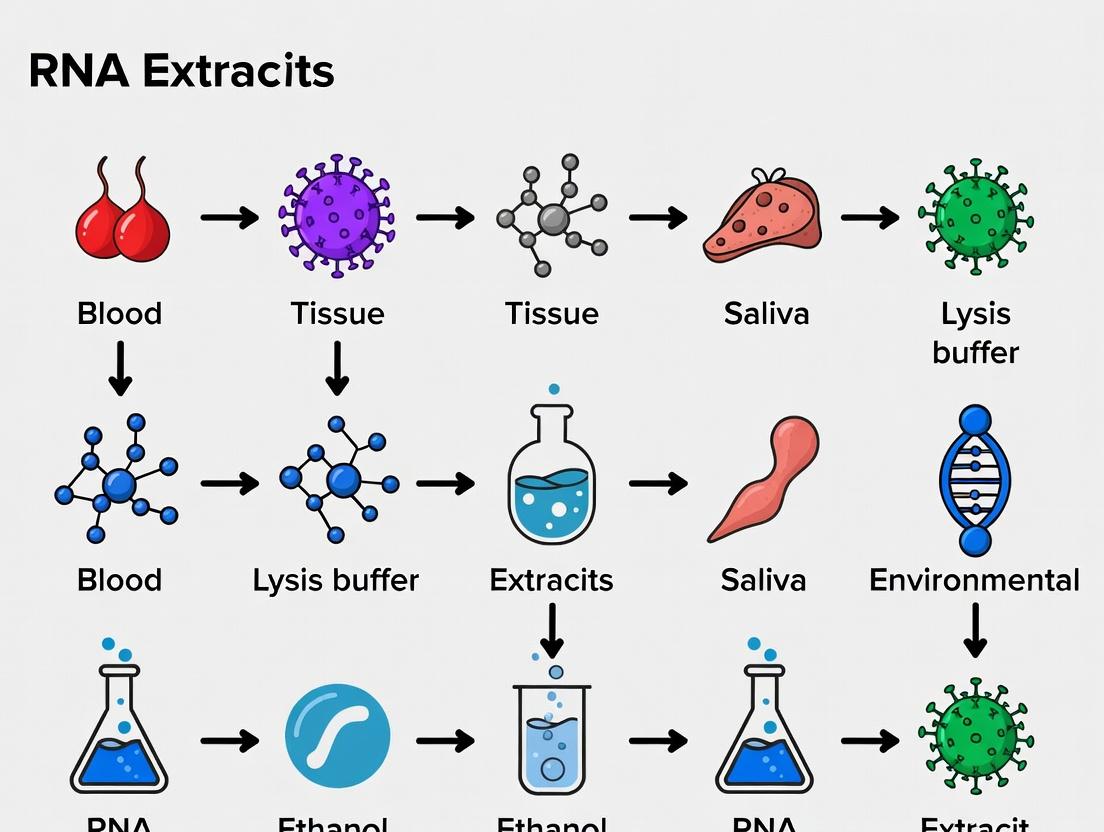
This comprehensive guide details RNA extraction methodologies tailored for a wide range of sample matrices, including blood, tissues (fresh, frozen, FFPE), cells, and challenging samples like plants and microbes.
The Complete Guide to RNA Extraction: Methods, Optimization & Best Practices for Diverse Sample Matrices
Abstract
This comprehensive guide details RNA extraction methodologies tailored for a wide range of sample matrices, including blood, tissues (fresh, frozen, FFPE), cells, and challenging samples like plants and microbes. Designed for researchers, scientists, and drug development professionals, it provides foundational knowledge, step-by-step protocols, troubleshooting strategies for common pitfalls (e.g., degradation, low yield, contaminants), and a critical comparison of manual, column-based, magnetic bead, and automated liquid handling techniques. The article further explores validation through quality control (RIN, DV200, qPCR) and discusses the implications of RNA integrity for downstream applications like NGS, qRT-PCR, and biomarker discovery, ensuring reliable results in genomics, diagnostics, and therapeutic development.
RNA Extraction Fundamentals: Understanding Sample Complexity and Preservation Needs
1. Introduction Within the broader thesis on optimizing RNA extraction for diverse biological samples, this Application Note addresses a fundamental, yet often underestimated, variable: the sample matrix. The intrinsic properties of the starting material—specifically its cellular composition and endogenous ribonuclease (RNase) content—directly dictate the success of downstream RNA analysis. Failure to account for these differences leads to irreproducible results, low yield, and degraded RNA. This document details the critical parameters, provides comparative data, and outlines specific protocols for handling challenging matrices.
2. Comparative Analysis of Sample Matrices The cellular heterogeneity and RNase activity vary dramatically across common sample types. The following tables summarize key quantitative differences that necessitate tailored extraction approaches.
Table 1: Cellular Composition and RNA Yield Potential
| Sample Matrix | Dominant Cell/Tissue Type | Approx. RNA Yield per 10⁶ cells (ng) | Key Challenge |
|---|---|---|---|
| Whole Blood | Erythrocytes, Leukocytes | 10-30 (from leukocytes) | High globin mRNA, hemoglobin inhibition. |
| PBMCs | Lymphocytes, Monocytes | 50-100 | Rapid stress response gene induction. |
| Adipose Tissue | Adipocytes, Stromal Cells | 50-200 | High lipid content inhibits aqueous buffers. |
| Skeletal Muscle | Myocytes, Satellite Cells | 100-300 | High contractile protein & connective tissue. |
| Liver Tissue | Hepatocytes | 500-1000 | Extremely high endogenous RNase activity. |
| Cultured Cells (Adherent) | Homogenous Cell Line | 50-150 | Matrix-dependent (e.g., collagenase treatment). |
| FFPE Tissue | Cross-linked Cells | 1-50 (highly degraded) | Nucleic acid cross-linking and fragmentation. |
| Bacterial Lysate | Prokaryotic Cells | 5-20 | Tough cell wall, high polysaccharide content. |
Table 2: Relative RNase Activity and Stabilization Requirement
| Sample Matrix | Relative RNase Activity (Scale: 1-10) | Primary RNase Source | Immediate Stabilization Critical? |
|---|---|---|---|
| Pancreas/Saliva | 10 | Secretory granules (e.g., RNase A) | Yes (<1 min) |
| Liver/Spleen | 9 | Lysosomal, cytoplasmic | Yes (<2 min) |
| Skeletal Muscle | 5 | Moderate cytoplasmic | Recommended (<10 min) |
| Whole Blood | 4 (plasma RNases) | Plasma, hemolyzed cells | For plasma RNA; <4h for PAXgene |
| Adipose Tissue | 3 | Low to moderate | Beneficial |
| Cultured Cells | 2 (unless lysed) | Released upon lysis | Upon lysis |
| Bacterial Cells | 1 | Low, different enzyme profile | No |
3. Application Protocols
Protocol A: Rapid RNA Isolation from High-RNase Tissues (e.g., Liver, Spleen) Objective: To preserve RNA integrity from tissues with exceptionally high RNase content.
- Pre-chill: Cool all tools (forceps, blades) and tubes on dry ice. Fill a cryovial with 1ml of RNAlater or appropriate stabilization reagent and keep on dry ice.
- Dissection: Excise ≤30 mg tissue sample swiftly.
- Immediate Stabilization: Submerge tissue in pre-chilled stabilizer within 30 seconds of excision. Incubate at 4°C overnight.
- Homogenization: Remove stabilizer. Add 600µl of high-denaturant lysis buffer (e.g., containing guanidine thiocyanate and β-mercaptoethanol). Homogenize immediately using a rotor-stator homogenizer for 15-30 seconds on ice.
- Processing: Proceed with acid-phenol:chloroform extraction or silica-membrane purification per kit instructions, maintaining samples on ice when possible.
Protocol B: RNA Extraction from Lipid-Rich Tissue (e.g., Adipose, Brain) Objective: To overcome inhibition from high lipid content.
- Washing: Mince 50-100mg tissue in ice-cold PBS to rinse off excess lipids.
- Dual-Phase Lysis: Add 1ml TRIzol or equivalent. Homogenize thoroughly. Incubate 5 min at RT.
- Defatting Step: Add 200µl chloroform, shake vigorously. Centrifuge at 12,000 x g, 15 min, 4°C.
- Phase Separation: Carefully transfer the lower aqueous phase to a new tube. Avoid the interphase and organic layer.
- Optional Secondary Clean-up: Add an equal volume of 70% ethanol. Mix and apply to a silica column. Wash with an additional wash buffer containing ethanol to remove residual lipids.
- Elution: Perform final elution in nuclease-free water.
4. Visualization of Experimental Strategy
Title: RNA Extraction Strategy Based on Sample Matrix
5. The Scientist's Toolkit: Essential Reagent Solutions
| Item | Function in Context of Sample Matrix |
|---|---|
| RNAlater / RNAprotect | Tissue Stabilizing Reagent. Penetrates tissue to inactivate RNases immediately upon collection, crucial for high-RNase tissues. |
| Guanidine Thiocyanate-based Lysis Buffer | Chaotropic Agent. Denatures proteins and RNases on contact, providing immediate protection during homogenization. |
| Acid-Phenol:Chloroform | Denaturant & Phase Separator. Effectively separates RNA from DNA, proteins, and lipids, critical for complex matrices. |
| β-Mercaptoethanol or DTT | Reducing Agent. Disrupts disulfide bonds in RNases, providing added protection in denaturing buffers. |
| Silica-Membrane Columns | Selective Binding Matrix. Binds RNA in high-salt conditions; effective for cleaning up inhibitors from complex lysates. |
| DNase I (RNase-free) | Enzyme. Removes genomic DNA contamination, especially critical for tissues with high nuclear content (e.g., spleen). |
| RNase Inhibitors (e.g., RNasin) | Protein. Added to lysis or elution buffers for extra protection, particularly for long-term storage of purified RNA. |
| Glycogen or Linear Acrylamide | Carrier. Improves RNA precipitation efficiency and recovery from low-abundance samples (e.g., FFPE, plasma). |
| Proteinase K | Enzyme. Digests proteins and aids in disruption of tough structures (FFPE, protein aggregates). |
This application note, framed within a thesis investigating RNA extraction from diverse sample matrices, details the core principles, optimized protocols, and practical tools for the three dominant RNA isolation methodologies. The objective is to provide a standardized reference for researchers and development professionals.
Core Principles and Comparative Analysis
The fundamental goal is to isolate intact, pure RNA from cellular lysates by separating it from DNA, proteins, and other contaminants. The three methods diverge in their capture and purification mechanisms.
Table 1: Comparison of Major RNA Extraction Principles
| Feature | Organic (Acid Guanidinium-Phenol-Chloroform) | Silica-Membrane Spin Column | Magnetic Bead Chemistry |
|---|---|---|---|
| Core Principle | Liquid-liquid phase separation based on solubility. | Selective adsorption of RNA to silica under high chaotropic salt conditions. | Selective binding of RNA to silica-coated magnetic beads under high chaotropic salt conditions. |
| Key Reagents | TRIzol/Tri-Reagent, chloroform, isopropanol. | Chaotropic salt lysis/binding buffer, ethanol/isopropanol, wash buffers. | Chaotropic salt lysis/binding buffer, magnetic beads, wash buffers. |
| Typical Yield (HeLa Cells) | High (~8-15 µg per 10⁶ cells) | High (~6-12 µg per 10⁶ cells) | High (~6-12 µg per 10⁶ cells) |
| RNA Purity (A260/A280) | ~1.8-2.0 (can carryover phenol) | ~1.9-2.1 (generally high) | ~1.9-2.1 (generally high) |
| Throughput | Low to medium | Medium (manual) to high (vacuum manifolds) | Very High (amenable to full automation) |
| Hands-on Time | High | Medium | Low (especially in automated workflows) |
| Cost per Sample | Low | Medium | Medium to High |
| Best For | Difficult samples (e.g., fibrous tissue, plants), maximum yield. | Routine processing, good quality/speed balance, multi-format kits. | High-throughput applications, automation, integration into robotic systems. |
Detailed Protocols
Protocol 2.1: Organic (Tri-Reagent) Extraction from Mammalian Tissue
Application Context: Used in thesis research for extracting RNA from lipid-rich or complex tissue matrices where column-based methods may clog.
- Homogenization: Homogenize 50-100 mg of snap-frozen tissue in 1 mL of Tri-Reagent using a mechanical homogenizer on ice.
- Phase Separation: Incubate homogenate 5 min at RT. Add 0.2 mL chloroform per 1 mL Tri-Reagent. Shake vigorously for 15 sec. Incubate 3 min at RT.
- Centrifugation: Centrifuge at 12,000 × g for 15 min at 4°C. The mixture separates into: a lower red phenol-chloroform phase, an interphase (DNA), and a colorless upper aqueous phase (RNA).
- RNA Precipitation: Transfer the aqueous phase to a new tube. Add 0.5 mL isopropanol per 1 mL Tri-Reagent used. Mix and incubate 10 min at RT.
- RNA Pellet: Centrifuge at 12,000 × g for 10 min at 4°C. A gel-like RNA pellet forms.
- Wash: Remove supernatant. Wash pellet with 1 mL 75% ethanol (in DEPC-water). Vortex and centrifuge at 7,500 × g for 5 min at 4°C.
- Redissolution: Air-dry pellet for 5-10 min. Dissolve in 30-50 µL of RNase-free water.
Protocol 2.2: Silica-Membrane Spin Column Protocol for Cultured Cells
Application Context: Standard method used in thesis for routine extraction from cell culture models, ensuring consistency across replicates.
- Lysis: Pellet 1-5 × 10⁶ cells. Lyse by vortexing in 350 µL of RLT Plus buffer (containing guanidine thiocyanate and β-mercaptoethanol).
- Homogenization: Pass lysate through a genomic DNA (gDNA) elimination spin column or a sterile needle to shear genomic DNA. Centrifuge at >10,000 × g for 30 sec.
- Ethanol Adjustment: Add 1 volume of 70% ethanol to the flow-through. Mix by pipetting.
- Binding: Apply mixture to an RNA-binding spin column. Centrifuge at 10,000 × g for 30 sec. Discard flow-through.
- Wash: Wash column with 700 µL RW1 buffer. Centrifuge 30 sec. Discard flow-through.
- DNase Treatment (On-Column): Add 80 µL of DNase I incubation mix directly onto membrane. Incubate at RT for 15 min.
- Secondary Washes: Wash with 700 µL RW1 buffer, then twice with 500 µL RPE buffer (ethanol-based). Centrifuge after each wash.
- Elution: Transfer column to a clean collection tube. Centrifuge at full speed for 2 min to dry membrane. Elute RNA in 30 µL RNase-free water by centrifugation.
Protocol 2.3: Magnetic Bead Protocol for High-Throughput Blood Samples
Application Context: Employed in the thesis for processing large cohorts of blood-derived samples for downstream transcriptomic analysis.
- Automated Lysis & Binding: In a 96-well plate, mix 200 µL of whole blood with 600 µL of lysis/binding buffer containing guanidine HCl and magnetic silica beads. Mix thoroughly on a plate shaker for 5 min.
- Capture: Place plate on a magnetic stand for 2 min until supernatant clears. Aspirate and discard supernatant.
- Washes (On-Bead): With beads captured, add 500 µL of wash buffer 1. Resuspend beads, return to magnet, and discard supernatant. Repeat with wash buffer 2 (twice).
- DNase Treatment: Resuspend beads in 50 µL of DNase I mix. Incubate at RT for 15 min. Perform a brief wash with wash buffer 2.
- Final Wash & Dry: Perform a final wash with 80% ethanol. Air-dry beads on magnet for 5-10 min.
- Elution: Remove from magnet. Add 50 µL of RNase-free water. Resuspend beads and incubate at 55°C for 2 min. Capture beads and transfer the eluted RNA to a new plate.
Visualized Workflows
Title: Three RNA Extraction Method Workflow Comparison
The Scientist's Toolkit: Key Reagent Solutions
Table 2: Essential Reagents for RNA Extraction Workflows
| Reagent/Solution | Primary Function | Key Considerations |
|---|---|---|
| TRIzol / Tri-Reagent | Monophasic solution of phenol, guanidine isothiocyanate. Simultaneously lyses cells, denatures proteins, and stabilizes RNA. | Critical for tough samples. Requires proper hazardous waste disposal. |
| Chaotropic Salt Buffers (e.g., Guanidine HCl/Thiocyanate) | Disrupt hydrogen bonding, denature proteins, and create high-salt conditions that promote RNA binding to silica. | The backbone of column and bead methods. Quality affects yield and purity. |
| Silica-Membrane Spin Columns | Porous silica filter that binds RNA. Allows sequential washing and elution via centrifugation. | Pore size and silica chemistry impact binding capacity and DNA contamination. |
| Magnetic Silica Beads | Superparamagnetic particles coated with a silica matrix. Enable liquid-phase binding and magnetic separation. | Bead size, uniformity, and coating stability are crucial for reproducibility and automation. |
| DNase I (RNase-free) | Enzyme that degrades contaminating genomic DNA. Used in on-column or on-bead digestion steps. | Essential for applications sensitive to DNA contamination (e.g., RT-qPCR, RNA-seq). |
| RNase Inhibitors | Proteins (e.g., Recombinant RNasin) that inactivate RNases. Added to lysis buffers or elution solutions. | Vital for labile samples or long processing times. |
| β-Mercaptoethanol or DTT | Reducing agent added to lysis buffers. Breaks disulfide bonds in proteins, aiding denaturation and RNase inactivation. | Must be fresh; added to buffer just before use. |
| Carrier RNA (e.g., Poly-A RNA) | Added to binding buffers during extraction of low-concentration samples (e.g., viral RNA, cfRNA). | Improves recovery efficiency by providing a matrix for silica binding. |
This document details the critical pre-analytical variables governing successful RNA extraction from diverse sample matrices, a foundational pillar of the broader thesis research. The integrity of downstream analyses, including qRT-PCR, RNA sequencing, and microarrays, is irrevocably determined by steps taken at collection, stabilization, and storage. Standardizing these protocols is paramount for generating comparable, high-quality data across sample types such as whole blood, tissues, and liquid biopsies.
Quantitative Comparison of Stabilization Methods
Table 1: Comparison of Major RNA Stabilization Solutions
| Variable | PAXgene Blood RNA System | RNAlater Stabilization Solution | Immediate Snap-Freezing (LN₂) |
|---|---|---|---|
| Primary Sample Types | Whole blood, bone marrow | Fresh tissues (e.g., tumor, organ), cell pellets | All tissue types, cell pellets |
| Mechanism of Action | Lyses cells & inactivates RNases instantly upon mixing | Rapid permeation to inactivate RNases; non-lytic for tissues | Physical halt of all biochemical activity |
| Optimal Sample Ratio | 2.5 mL blood : 6.5 mL PAXgene reagent | 10:1 reagent-to-tissue volume (e.g., 1 mL per 100 mg tissue) | N/A |
| Processing Delay | Can be stable for up to 7 days at 15-25°C | Small pieces stable for 1 day at 25°C, 7 days at 4°C, long-term at -20°C/+ | Must be processed immediately after thawing |
| Key Advantage | Standardizes & simplifies blood RNA profiling; eliminates PBMC isolation bias. | Preserves tissue morphology for parallel histology; no initial freezing hazard. | Considered the "gold standard" for maximum RNA integrity if handled perfectly. |
| Key Limitation | Not suitable for cell-based assays; total RNA includes globin transcripts. | Slow penetration for large (>0.5 cm) tissue pieces can lead to RNA degradation. | Risk of RNA degradation during thawing for processing; requires constant LN₂ access. |
| Downstream Extraction | Integrated PAXgene RNA kits or other phenol-based methods. | Compatible with most homogenization & extraction methods (TRIzol, column-based). | Requires homogenization under frozen conditions (e.g., mortar & pestle in LN₂). |
Note: LN₂ = Liquid Nitrogen; PBMC = Peripheral Blood Mononuclear Cell. + RNAlater-stabilized samples are stable at -80°C for long-term archival.
Detailed Experimental Protocols
Protocol 3.1: RNA Stabilization from Whole Blood Using PAXgene Tubes
Objective: To collect and stabilize total RNA from whole blood for transcriptomic analysis. Materials: PAXgene Blood RNA Tube (Pre-analytix/Becton Dickinson), phlebotomy kit, vortex mixer, centrifuge.
- Collection: Draw venous blood directly into a PAXgene Blood RNA Tube (2.5 mL draw volume). Invert the tube 8-10 times immediately.
- Initial Stabilization: Incubate the tube upright for a minimum of 2 hours and up to 72 hours at room temperature (15-25°C). This ensures complete lysis and RNase inactivation.
- Storage/Transport: After incubation, store tubes at 2-8°C for up to 5 days or at -20°C/-80°C for long-term storage (up to years).
- Pre-Extraction Processing: Prior to RNA extraction, thaw frozen tubes completely at room temperature. Centrifuge at 3000-5000 x g for 10 minutes using a swing-bucket rotor. Carefully decant or pipette away the supernatant, leaving the pellet (containing RNA).
- RNA Extraction: Proceed with the standard protocol of the PAXgene Blood RNA Kit, which includes proteinase K digestion, binding to a silica membrane, and DNase digestion on-column.
Protocol 3.2: RNA Stabilization from Tissue Using RNAlater
Objective: To preserve RNA integrity in fresh tissue specimens prior to homogenization and extraction. Materials: RNAlater Solution (Thermo Fisher/Ambion), sterile biopsy tools, 1.5-2 mL microcentrifuge tubes.
- Tissue Collection & Sizing: Excise tissue rapidly. Trim to dimensions not exceeding 0.5 cm in any one direction to ensure rapid reagent penetration. Weigh tissue if required.
- Immersion: Place tissue into a 5-10x volume excess of RNAlater Solution (e.g., 100 mg tissue in 1 mL RNAlater). Vortex briefly to ensure full immersion.
- Initial Incubation: Store the sample at 2-8°C overnight (18-24 hours) to allow complete diffusion of the solution into the tissue.
- Long-Term Storage: After the initial incubation, remove the tissue from solution (optional, saves storage space) or store in solution at -20°C or -80°C indefinitely.
- Pre-Extraction Processing: For RNA extraction, blot the tissue piece on a clean wipe to remove residual RNAlater. Proceed immediately to homogenization in your chosen lysis buffer (e.g., TRIzol, RLT buffer).
Signaling Pathways and Workflow Visualizations
Pre-Analytical RNA Workflow Decision Tree
RNA Degradation Pathway & Stabilization Intervention
The Scientist's Toolkit: Research Reagent Solutions
Table 2: Essential Materials for Pre-Analytical RNA Stabilization
| Item | Function & Rationale |
|---|---|
| PAXgene Blood RNA Tube | Integrated collection tube containing a proprietary blend of lysing agents and RNase inhibitors for immediate blood stabilization. Eliminates pre-processing variability. |
| RNAlater Stabilization Solution | Aqueous, non-toxic solution that rapidly permeates tissue to inactivate RNases. Preserves RNA at room temperature for short-term transit/storage. |
| Cryogenic Vials (Intern-Threaded) | For secure long-term storage of stabilized samples or tissue pieces at -80°C. Prevents sample loss and moisture ingress. |
| Liquid Nitrogen (LN₂) & Dewars | For instantaneous snap-freezing of tissues to vitrify cellular contents, providing the benchmark for RNA integrity preservation. |
| RNAse-Zap or Equivalent | Surface decontaminant to destroy RNases on benches, pipettes, and tools, preventing introduction of exogenous degradation. |
| Pre-Cooled Mortar & Pestle | For grinding snap-frozen tissue to a fine powder under continuous LN₂ cooling, facilitating effective subsequent lysis. |
| TRIzol / QIAzol Lysis Reagent | A monophasic solution of phenol and guanidine isothiocyanate for effective lysis and initial stabilization during homogenization of RNAlater-treated or frozen tissues. |
| Silica-Membrane Spin Columns | The core of most modern RNA extraction kits, allowing for selective binding, washing, and elution of high-purity RNA post-lysis. |
| DNase I (RNase-Free) | Critical for on-column or in-solution digestion of genomic DNA contamination, essential for sensitive applications like RNA-seq and qPCR. |
| Bioanalyzer / TapeStation RNA Kits | Microfluidics-based systems for quantitative assessment of RNA Integrity Number (RIN) to qualify samples pre-downstream analysis. |
In the context of a broader thesis on RNA extraction from diverse sample matrices (e.g., fresh tissue, FFPE, biofluids, plant), rigorous assessment of RNA quality is a critical gateway to downstream applications. Accurate quantification and integrity analysis are paramount for reliable gene expression data, sequencing, and RT-qPCR. This document details the core metrics—RIN, Yield, and Purity—defining their principles, acceptable ranges, and protocols for evaluation.
Purity Assessment: Spectrophotometry (A260/A280 & A260/A230)
UV spectrophotometry measures the absorption of light by nucleic acids and common contaminants. Key ratios are derived from absorbance at specific wavelengths.
Table 1: Interpretation of Spectrophotometric Purity Ratios
| Metric | Target Range (Pure RNA) | Indication of Low Value | Indication of High Value |
|---|---|---|---|
| A260/A280 | 1.8 - 2.1 | Protein contamination (phenol, aromatic compounds) | Potential RNA degradation |
| A260/A230 | 2.0 - 2.2 | Contaminants: chaotropic salts, guanidinium, phenol, carbohydrates | — |
Quantification and Yield
RNA concentration is calculated using the Beer-Lambert law (A260 of 1.0 ≈ 40 µg/mL ssRNA). Total yield is concentration × elution volume.
Table 2: Expected Yield Ranges from Different Sample Matrices
| Sample Matrix | Typical Total RNA Yield (Guidelines) | Note on Variability |
|---|---|---|
| Mammalian Tissue (10 mg) | 5 - 30 µg | Highly tissue-dependent (liver > muscle) |
| Cultured Cells (10^6) | 5 - 15 µg | Depends on cell type and growth conditions |
| Whole Blood (1 mL) | 0.5 - 5 µg | Low due to high ribonuclease content |
| FFPE Section (10 µm) | 0.1 - 5 µg | Heavily dependent on fixation and storage |
| Plant Leaf (10 mg) | 1 - 20 µg | High polysaccharide/polyphenol interference |
Integrity Assessment: RNA Integrity Number (RIN)
The RIN algorithm, developed for the Agilent Bioanalyzer, assigns a score from 1 (degraded) to 10 (intact) based on the entire electrophoretic trace, focusing on the 18S and 28S ribosomal RNA peaks.
Table 3: RIN Score Interpretation for Downstream Applications
| RIN Score | RNA Integrity | Suitability for Downstream Applications |
|---|---|---|
| 9 - 10 | Intact | Ideal for all applications including long-read RNA-Seq. |
| 7 - 8 | Good | Suitable for standard RNA-Seq, microarrays, RT-qPCR. |
| 5 - 6 | Moderate | May bias mRNA-Seq; acceptable for targeted assays. |
| < 5 | Degraded | Problematic for most quantitative applications. |
Detailed Experimental Protocols
Protocol 3.1: RNA Purity and Concentration Measurement via UV Spectrophotometry
Objective: To determine RNA concentration and assess purity via A260/A280 and A260/A230 ratios.
Materials:
- Purified RNA sample
- Nuclease-free water or TE buffer (10 mM Tris-Cl, 1 mM EDTA, pH 7.5)
- UV-transparent microcuvette or plate for spectrophotometer
- Microvolume spectrophotometer (e.g., NanoDrop)
Procedure:
- Blank Instrument: Use the same elution buffer (e.g., nuclease-free water) as the RNA sample to blank the spectrophotometer.
- Load Sample: Pipette 1-2 µL of RNA sample onto the measurement pedestal or into a cuvette.
- Measure Absorbance: Record absorbance values at 230nm, 260nm, and 280nm.
- Calculate: The instrument software typically calculates:
- Concentration (µg/mL) = A260 × 40 × Dilution Factor
- A260/A280 Ratio = A260 / A280
- A260/A230 Ratio = A260 / A230
- Clean: Wipe the measurement surfaces thoroughly with nuclease-free lab wipe and distilled water.
Interpretation: Refer to Table 1. Ratios outside the ideal range indicate contamination that may inhibit enzymatic reactions.
Protocol 3.2: RNA Integrity Analysis using Capillary Electrophoresis (Bioanalyzer)
Objective: To generate an electrophoregram and calculate an RIN score.
Materials:
- Agilent RNA 6000 Nano Kit (includes gel matrix, dye, ladder, chips)
- Agilent 2100 Bioanalyzer instrument
- RNA ladder and samples
- RNase-free tubes and tips
- Heat block set to 70°C
Procedure:
- Chip Priming: Load the gel matrix into the designated well on the chip. Place the chip in the priming station and prime for 30 seconds.
- Sample Preparation: For each RNA sample, mix 1 µL of RNA (~5-500 ng) with 2 µL of marker. Heat the ladder and samples at 70°C for 2 minutes, then place immediately on ice.
- Chip Loading: Load 1 µL of the RNA 6000 ladder into the ladder well. Load 5 µL of each prepared sample into separate sample wells.
- Vortex and Run: Vortex the chip for 1 minute at 2400 rpm. Place chip in the Bioanalyzer and run the "RNA Nano" assay.
- Data Analysis: The instrument software generates an electrophoregram, a pseudo-gel image, and calculates the RIN score based on the relative heights of the ribosomal peaks and the degradation profile.
Visualizing the RNA Quality Assessment Workflow
Title: RNA Quality Control Decision Workflow
The Scientist's Toolkit: Key Reagent Solutions
Table 4: Essential Reagents for RNA Quality Assessment
| Reagent/Kit | Primary Function | Key Consideration |
|---|---|---|
| RNaseZap / RNase AWAY | Surface decontaminant to inactivate RNases on labware. | Critical for preventing sample degradation during handling. |
| Nuclease-Free Water | Solvent for RNA elution/resuspension and spectrophotometry blanks. | Must be certified nuclease-free; EDTA can improve stability but affects A260/280. |
| TE Buffer (pH 7.5) | Alternative elution buffer; EDTA chelates Mg2+ to inhibit RNases. | EDTA absorbs at 230nm, can lower A260/230 ratio. |
| Agilent RNA 6000 Nano Kit | All-in-one reagents for capillary electrophoresis on the Bioanalyzer. | Provides gel-dye mix, ladder, chips, and markers for standardized RIN analysis. |
| Qubit RNA HS / BR Assay Kits | Fluorometric quantification specific to RNA, unaffected by contaminants. | More accurate than A260 for precious or contaminated samples; requires separate instrument. |
| RNA Stabilization Reagents | (e.g., RNAlater). Preserves RNA integrity in tissues immediately post-collection. | Essential for field work or when processing cannot be immediate; crucial for high RIN. |
Step-by-Step RNA Extraction Protocols for Specific Sample Types
Application Notes
This protocol is foundational within a broader thesis investigating the optimization of RNA extraction methodologies across diverse biological matrices (e.g., biofluids, FFPE tissues, plant material). The integrity of total RNA isolated from mammalian cells and fresh/frozen tissues is a critical upstream determinant for downstream applications such as RT-qPCR, RNA sequencing, and microarray analysis. Consistent, high-purity RNA (A260/A280 ~2.0, A260/A230 ≥ 2.0) with an RNA Integrity Number (RIN) > 8.0 is essential for generating reliable gene expression data in basic research, biomarker discovery, and preclinical drug development.
Detailed Protocol
Principle: This method employs a monophasic solution of phenol and guanidine isothiocyanate for immediate cell lysis and inhibition of RNases, followed by phase separation with chloroform. Total RNA is recovered by precipitation with isopropanol, washed with ethanol, and rehydrated in RNase-free water.
Materials & Equipment:
- Monophasic lysis reagent (e.g., TRIzol, TRI Reagent).
- Chloroform.
- Isopropanol (Molecular Biology Grade).
- Ethanol (75%, prepared with RNase-free water).
- RNase-free water (DEPC-treated or nuclease-free).
- Centrifuge capable of ≥12,000 × g.
- RNase-free microcentrifuge tubes, pipette tips, and homogenizers (e.g., pellet pestles).
Procedure:
- Homogenization:
- Cells: Lyse adherent or suspension cells directly in culture dish/flask by adding lysis reagent (e.g., 1 mL per 10 cm² area). Pass lysate through a pipette several times.
- Tissue: Rapidly weigh 30-50 mg of frozen tissue. Homogenize in 1 mL of lysis reagent using a motorized homogenizer or pellet pestle on ice. Ensure complete disruption.
Phase Separation: Incubate homogenate for 5 minutes at room temperature (15-25°C) to dissociate nucleoprotein complexes. Add 0.2 mL of chloroform per 1 mL of lysis reagent. Cap tube securely, shake vigorously for 15 seconds. Incubate at room temperature for 2-3 minutes. Centrifuge at 12,000 × g for 15 minutes at 4°C. The mixture separates into a lower red phenol-chloroform phase, an interphase, and a colorless upper aqueous phase containing RNA.
RNA Precipitation: Transfer the aqueous phase (approximately 50-60% of the original volume) to a new RNase-free tube. Avoid disturbing the interphase. Add an equal volume of room-temperature isopropanol. Mix by inversion. Incubate at room temperature for 10 minutes. Centrifuge at 12,000 × g for 10 minutes at 4°C. A gel-like RNA pellet forms at the bottom of the tube.
RNA Wash: Carefully decant the supernatant. Wash the pellet with 1 mL of 75% ethanol by vortexing briefly. Centrifuge at 7,500 × g for 5 minutes at 4°C. Carefully discard the wash.
Redissolving RNA: Air-dry the pellet for 5-10 minutes until no ethanol is visible. Do not over-dry. Dissolve the RNA in 20-50 µL of RNase-free water by passing the solution gently through a pipette tip and incubating at 55-60°C for 10 minutes.
Quality Control: Quantify RNA by UV spectrophotometry (Nanodrop). Assess purity via A260/A280 and A260/A230 ratios. Assess integrity by agarose gel electrophoresis (sharp 28S and 18S rRNA bands) or using a bioanalyzer (RIN).
The Scientist's Toolkit: Key Reagent Solutions
| Reagent / Material | Function |
|---|---|
| Monophasic Lysis Reagent (TRIzol type) | A chaotropic agent containing phenol and guanidine isothiocyanate. It simultaneously lyses cells, inactivates RNases, and denatures proteins. |
| Chloroform | Facilitates liquid-phase separation, extracting lipids and hydrophobic contaminants into the organic phase, leaving RNA in the aqueous phase. |
| Isopropanol | A precipitating agent. It reduces RNA solubility in the aqueous lysate, causing RNA to form a pellet upon centrifugation. |
| RNase-free Water (DEPC-treated) | The final resuspension buffer. It is free of RNases and provides a stable medium for dissolved RNA storage. |
| 75% Ethanol Wash Solution | Removes residual salts, solvents, and other contaminants from the RNA pellet while keeping RNA from dissolving back into solution. |
| RNA Stabilization Reagents (e.g., RNAlater) | For tissue samples. Penetrates tissues to rapidly stabilize and protect RNA at the point of collection, preventing degradation prior to homogenization. |
Table 1: Typical RNA Yield and Quality Metrics from Various Samples
| Sample Type | Starting Amount | Expected Total RNA Yield | A260/A280 Ratio | A260/A230 Ratio | RIN (Typical) |
|---|---|---|---|---|---|
| HEK293 Cells | 1 × 10⁶ cells | 10 - 15 µg | 1.9 - 2.1 | 2.0 - 2.4 | ≥ 9.5 |
| Mouse Liver (Fresh) | 30 mg tissue | 200 - 400 µg | 1.9 - 2.1 | 1.8 - 2.2 | ≥ 8.5 |
| Mouse Brain (Frozen) | 30 mg tissue | 80 - 150 µg | 1.9 - 2.1 | 1.8 - 2.2 | ≥ 8.0 |
| Rat Heart (Frozen) | 50 mg tissue | 100 - 200 µg | 1.9 - 2.1 | 1.8 - 2.2 | ≥ 8.0 |
Visualization: Workflow Diagram
Diagram Title: Total RNA Extraction Workflow from Mammalian Samples
Experimental Protocol for Cited Key Experiment: RNA Integrity Analysis via Microfluidic Electrophoresis
Objective: To assess the integrity of extracted total RNA using a bioanalyzer system (e.g., Agilent 2100), generating an RNA Integrity Number (RIN).
Methodology:
- Chip Priming: Load 550 µL of gel matrix into the appropriate well of an RNA Nano chip. Place the chip in the priming station and close the lid. Press the plunger until held by the clip. Wait 30 seconds, then release the clip. Wait 5 seconds before pulling the plunger back.
- Sample Loading: Pipette 5 µL of RNA marker into each sample well and the ladder well. Load 1 µL of RNA ladder into the designated ladder well. Load 1 µL of each RNA sample (concentration ~50 ng/µL) into separate sample wells.
- Chip Vortexing: Place the chip on an IKA vortex mixer adapter and vortex at 2400 rpm for 1 minute.
- Run Analysis: Place the chip into the bioanalyzer and run the "Eukaryote Total RNA Nano" assay according to manufacturer instructions.
- Data Interpretation: Software generates an electropherogram and calculates a RIN (1=degraded, 10=intact). Intact RNA shows two dominant peaks (18S and 28S rRNA) with a 28S:18S peak area ratio of ~1.8-2.0 for mammalian RNA.
Within the broader research thesis investigating RNA extraction methodologies across diverse sample matrices, FFPE tissues represent a critical but challenging source. Archival FFPE blocks are invaluable for retrospective studies, yet the cross-linking and degradation caused by formalin fixation pose significant hurdles for obtaining high-quality RNA. This protocol details a robust, optimized procedure for RNA extraction from FFPE sections, enabling reliable downstream applications like qRT-PCR and next-generation sequencing (NGS) in research and diagnostic contexts.
The following table summarizes the primary challenges in FFPE RNA extraction alongside empirically supported solutions and their quantitative impact.
Table 1: FFPE RNA Challenges and Optimized Solutions
| Challenge | Primary Consequence | Optimized Solution | Quantitative Improvement |
|---|---|---|---|
| Formalin Cross-linking | Covalent modification & fragmentation of RNA. | High-temperature incubation with optimized buffer. | Increased RNA yield (2-4 fold) and DV200 >30% for NGS. |
| Deparaffinization Inefficiency | Inhibitor carryover, reduced lysis efficiency. | Sequential xylene/ethanol washes. | >99% paraffin removal, reducing PCR inhibition. |
| RNA Fragmentation | Short fragment lengths (<200 nucleotides). | Use of RNA integrity number equivalent (RINe) or DV200. | DV200 values can reach 40-60% in well-preserved cores. |
| Co-extracted Inhibitors | Inhibition of downstream enzymatic reactions. | Silica-membrane column purification with stringent washes. | Post-purification RNA suitable for >95% PCR amplification efficiency. |
| Low RNA Concentration | Insufficient material for library prep. | Concentration by vacuum centrifugation. | Enables input of 50-100 ng into NGS library protocols. |
Detailed Experimental Protocol
Materials Required: Microtome, Water bath (42°C), Dry bath or oven (56°C), Microcentrifuge, Fume hood, Nuclease-free consumables.
Part A: Sectioning and Deparaffinization
- Using a microtome, cut 5-10 sections at 10 µm thickness per sample. Use a fresh blade for each block to prevent cross-contamination.
- For scrolls: Carefully transfer sections to a sterile, nuclease-free 1.5 mL microcentrifuge tube.
- Add 1.0 mL of 100% xylene to the tube. Vortex vigorously for 10 seconds.
- Incubate at room temperature for 5 minutes. Centrifuge at full speed (>12,000 × g) for 2 minutes.
- Carefully remove and discard the xylene supernatant without disturbing the pellet.
- Add 1.0 mL of 100% ethanol to the pellet. Vortex thoroughly until the pellet is dislodged.
- Centrifuge at full speed for 2 minutes. Discard the ethanol supernatant.
- Repeat the ethanol wash step (Steps 6-7) once more.
- Air-dry the pellet with the tube open in a fume hood for 5-10 minutes until no ethanol smell remains.
Part B: Proteinase K Digestion and RNA Extraction
- Prepare digestion buffer: A commercial FFPE RNA extraction kit buffer or a solution containing Tris-HCl, EDTA, SDS, and Proteinase K.
- Add 100-200 µL of digestion buffer containing 1-2 mg/mL Proteinase K to the dried pellet.
- Incubate in a dry bath or oven at 56°C for 60 minutes, then at 80°C for 60 minutes. Mix by vortexing briefly every 15-20 minutes.
- Centrifuge briefly to collect condensation. Proceed immediately to RNA purification.
- Bind RNA to a silica-membrane column: Add an equal volume of 70% ethanol to the lysate, mix, and transfer to the column.
- Centrifuge at ≥8000 × g for 15 seconds. Discard flow-through.
- Perform on-column DNase I treatment (recommended): Add 80 µL of DNase I incubation mix directly to the membrane. Incubate at RT for 15 minutes.
- Wash the column twice with the provided wash buffers, centrifuging after each addition.
- Elute RNA in 30-50 µL of nuclease-free water by centrifugation.
Part C: RNA Quality and Quantity Assessment
- Measure RNA concentration using a fluorometric assay (e.g., Qubit RNA HS Assay), as spectrophotometry is unreliable for fragmented FFPE RNA.
- Assess RNA fragmentation profile using a Bioanalyzer or TapeStation (Agilent). Report the DV200 (% of RNA fragments >200 nucleotides).
The Scientist's Toolkit: Research Reagent Solutions
Table 2: Essential Materials for FFPE RNA Extraction
| Reagent / Kit Component | Function | Key Consideration |
|---|---|---|
| Xylene | Dissolves paraffin wax from tissue sections. | Must be removed completely via ethanol washes to prevent inhibition. |
| Proteinase K | Digests cross-linked proteins to liberate nucleic acids. | High purity and activity are critical; incubation at 56°C & 80°C is standard. |
| Silica-Membrane Spin Columns | Selective binding and purification of RNA from lysate. | Removes salts, proteins, and inhibitors; enables DNase I on-column treatment. |
| DNase I, RNase-free | Degrades genomic DNA to prevent false-positive signals in RNA assays. | On-column treatment is more effective than post-elution treatment. |
| RNA-Specific Fluorescent Dye (Qubit) | Accurate quantitation of fragmented RNA. | Preferable to A260 which is skewed by contaminants and fragmentation. |
| FFPE RNA Extraction Kit | Provides optimized, standardized buffers for de-cross-linking and isolation. | Kits (e.g., from Qiagen, Thermo Fisher, Roche) improve reproducibility and yield. |
Visualization of Workflows
FFPE RNA Extraction and QC Workflow
Formalin Damage and Reversal Strategy
This protocol is framed within a broader thesis investigating RNA extraction efficiency and yield from diverse biological matrices. Liquid biopsies, particularly those utilizing circulating cell-free RNA (cfRNA), represent a critical frontier in non-invasive diagnostics and monitoring. The pre-analytical phase of cfRNA isolation from whole blood, plasma, and serum is paramount, as variations in yield, purity, and integrity directly impact downstream analyses (e.g., qPCR, RNA-Seq). This document provides a standardized, efficient protocol optimized for high-quality RNA extraction from these liquid biopsy sample types, ensuring reproducibility for research and drug development applications.
Comparative Analysis of Sample Matrices
The choice of starting material profoundly influences the yield, profile, and quality of isolated cfRNA. The following table summarizes key characteristics and comparative performance metrics based on current literature and internal validation.
Table 1: Comparative Analysis of Liquid Biopsy Matrices for cfRNA Isolation
| Parameter | Whole Blood | Plasma (EDTA/K2EDTA) | Serum |
|---|---|---|---|
| Definition | Unprocessed blood containing cells and plasma. | Cell-free fraction of blood, anticoagulated. | Cell-free fraction from clotted blood. |
| Primary RNA Targets | Cellular RNA (from leukocytes), platelet RNA, cfRNA. | Predominantly cfRNA, platelet-derived RNA. | cfRNA, RNA released from platelets/ cells during clotting. |
| Typical Yield Range | High (cellular RNA: µg total RNA); cfRNA: variable. | Moderate (cfRNA: 5-100 ng per mL plasma). | Often 2-4x higher than plasma (10-400 ng per mL serum), but more variable. |
| Key Advantages | Access to cellular transcriptome; larger RNA yield. | Standardized for cfRNA; less gDNA contamination; inhibits RNA degradation. | No anticoagulant interference; simpler processing. |
| Key Disadvantages | Rapid RNA degradation in cells; high gDNA & rRNA background. | Requires rapid processing to avoid background from lysed cells. | Clotting releases additional cellular RNA, increasing background variability. |
| Recommended Use | For combined cellular & cfRNA analysis; requires immediate stabilization. | Gold standard for cfRNA studies (e.g., miRNA, cf-mRNA). | For specific assays where anticoagulants interfere; historical sample archives. |
Detailed Experimental Protocol
Pre-Sample Processing: Collection and Handling
Principle: Prevent RNA degradation and contamination by cellular RNA. Maintain sample integrity from venipuncture to processing.
Protocol A: Plasma Preparation from Whole Blood (Recommended: K2EDTA Tubes)
- Collect blood via standard venipuncture into pre-chilled K2EDTA tubes.
- Invert tubes gently 8-10 times immediately after collection.
- Process within 30 minutes of draw. Keep samples at 4°C until processing.
- First centrifugation: 1,600 – 2,000 x g for 10 minutes at 4°C.
- Carefully transfer the upper plasma layer to a fresh microcentrifuge tube using a sterile pipette, avoiding the buffy coat.
- Second centrifugation: 16,000 x g for 10 minutes at 4°C to remove residual cells and platelets.
- Transfer the cleared, cell-free plasma to a final tube. Aliquot and store at -80°C or proceed to RNA extraction.
Protocol B: Serum Preparation from Whole Blood
- Collect blood into serum separator tubes (SST) or plain tubes.
- Allow clotting by incubating tubes upright at room temperature for 30 minutes.
- Centrifuge at 1,600 – 2,000 x g for 10 minutes at room temperature.
- Carefully transfer the serum (upper layer) to a fresh tube, avoiding the clot.
- Optional second spin: 16,000 x g for 10 minutes to clarify.
- Aliquot and store serum at -80°C.
Core Protocol: cfRNA Isolation Using Silica-Membrane Technology
Principle: Bind nucleic acids to a silica membrane in the presence of chaotropic salts, wash away contaminants, and elute in a low-ionic-strength solution.
Reagents & Equipment:
- Commercial cfRNA/Total RNA isolation kit (e.g., from Qiagen, Norgen Biotek, or Zymo Research).
- Ethanol (96-100%, molecular biology grade).
- β-Mercaptoethanol or alternative RNase inhibitor (if required by lysis buffer).
- RNase-free water, tubes, and pipette tips.
- Microcentrifuge, vortex, and heating block.
Workflow:
- Lysis: Thaw 1-3 mL of plasma/serum on ice. Mix with 3-5 volumes of lysis/binding buffer (containing guanidine thiocyanate and carrier RNA) by vortexing. Incubate for 5 minutes at room temperature.
- Binding: Add ethanol (typically 1:1 volume) to the lysate and mix thoroughly by pipetting. Apply the entire mixture to a silica-membrane spin column. Centrifuge at ≥ 10,000 x g for 30-60 seconds. Discard flow-through.
- Washing:
- Wash 1: Add wash buffer 1 (often containing guanidine HCl) to the column. Centrifuge. Discard flow-through.
- Wash 2: Add wash buffer 2 (often ethanol-based). Centrifuge. Discard flow-through.
- Dry Membrane: Perform an additional empty centrifugation at full speed for 2 minutes to dry the membrane completely.
- Elution: Place the column in a fresh RNase-free collection tube. Apply 15-50 µL of RNase-free water or TE buffer directly onto the center of the membrane. Incubate at room temperature for 2 minutes. Centrifuge at full speed for 1 minute to elute the RNA.
- Storage: Quantify RNA immediately (e.g., using Qubit RNA HS Assay) and store at -80°C.
Diagram 1: cfRNA Isolation Workflow
Quality Assessment Protocol
Principle: Accurately quantify and qualify the isolated cfRNA, which is typically fragmented and low concentration.
Method A: Fluorometric Quantification (Qubit RNA HS Assay)
- Prepare Qubit working solution by diluting RNA HS reagent 1:200 in RNA HS buffer.
- Prepare standards (#1 & #2) and samples in 0.5 mL tubes (200 µL working solution + 1-20 µL RNA sample).
- Vortex, incubate 2 minutes at room temperature.
- Read on Qubit fluorometer using the "RNA HS" setting.
Method B: Fragment Analyzer/Bioanalyzer (Agilent)
- Use the Agilent RNA 6000 Pico Kit for cfRNA.
- Follow kit protocol: Prepare gel-dye mix, prime chip, load markers, load samples (1 µL).
- Run chip on the instrument. Assess the electropherogram for a broad peak/smeardistributed between ~25-200 nucleotides, confirming cfRNA profile.
The Scientist's Toolkit: Research Reagent Solutions
Table 2: Essential Materials for cfRNA Isolation and Analysis
| Item / Reagent Solution | Function & Brief Explanation |
|---|---|
| K2EDTA Blood Collection Tubes | Prevents coagulation and inhibits RNases; preferred over heparin for downstream molecular applications. |
| Serum Separator Tubes (SST) | Facilitates clean serum separation post-clotting via a gel barrier. |
| cfRNA/Total RNA Isolation Kit | Silica-membrane based system optimized for low-abundance, fragmented cfRNA; includes carrier RNA to maximize binding yield. |
| Carrier RNA (e.g., poly-A RNA) | Co-precipitates with cfRNA to significantly improve binding efficiency to the silica membrane during isolation. |
| RNase Inhibitor | Added to lysis or elution buffers to protect RNA from degradation by ubiquitous RNases. |
| Qubit RNA HS Assay Kit | Highly sensitive fluorescent dye-based quantification specific for RNA; unaffected by common contaminants. |
| Agilent RNA 6000 Pico Kit | Microfluidics-based capillary electrophoresis for assessing RNA integrity number (RIN) and fragment size distribution. |
| DNase I (RNase-free) | Digests genomic DNA co-purified with RNA, crucial for removing background in sensitive assays like qPCR. |
Data Interpretation and Troubleshooting
Table 3: Troubleshooting Common Issues in cfRNA Isolation
| Problem | Potential Cause | Recommended Solution |
|---|---|---|
| Low Yield | Incomplete cell removal; poor plasma/serum quality. | Optimize centrifugation speed/time for double-spin. Ensure rapid processing post-collection. |
| Carrier RNA degraded or omitted. | Use fresh aliquots of carrier RNA; ensure it's added to lysis buffer. | |
| gDNA Contamination | Cellular lysis during plasma prep. | Ensure gentle handling; avoid disturbing buffy coat; perform optional DNase I digestion. |
| Degraded RNA | Slow processing; warm temperatures; RNase contamination. | Process on ice; use RNase-free consumables; add RNase inhibitors. |
| Inhibitors in Eluate | Incomplete washing or membrane drying. | Ensure wash buffers contain ethanol as specified; perform the dry spin step. |
| High Variability Between Replicates | Inconsistent sample volumes or pipetting during binding. | Pre-mix lysate/ethanol thoroughly; use consistent, accurate pipetting technique. |
Within the broader thesis investigating optimal RNA extraction methodologies across diverse sample matrices, Protocol 4 addresses unique challenges posed by structurally and chemically complex biological materials. Successful nucleic acid isolation from these difficult samples is a critical upstream step for downstream applications including RT-qPCR, RNA sequencing, and microarray analysis in research and drug development. This protocol details tailored strategies to overcome obstacles such as rigid cell walls, high RNase activity, polysaccharide/polyphenol contamination, and low target RNA concentration.
Sample-Specific Challenges & Solutions
Plant Tissues
Primary Challenges: High levels of RNases, complex polysaccharides (e.g., cellulose, pectin), phenolic compounds, and secondary metabolites that co-precipitate or degrade RNA. Core Strategy: Utilize effective lysis with simultaneous inhibition of RNases and polyphenol oxidases, followed by selective precipitation to remove contaminants.
Bacteria (Gram-positive and Gram-negative)
Primary Challenges: Tough cell walls (especially Gram-positive with thick peptidoglycan layers), high ribosomal RNA content, and rapid RNA turnover. Core Strategy: Mechanical or enzymatic cell wall disruption coupled with rapid inactivation of endogenous RNases.
Yeast/Fungi
Primary Challenges: Robust chitin-containing cell walls, high carbohydrate content, and viscous lysates. Core Strategy: Aggressive mechanical lysis (e.g., bead beating) often combined with hot acidic phenol extraction.
Biofluids (e.g., Plasma, Serum, CSF)
Primary Challenges: Extremely low RNA concentration (especially for cell-free RNA), high abundance of RNases, and PCR inhibitors (e.g., hemoglobin, immunoglobulin G, urea). Core Strategy: Volume reduction via precipitation or column binding, combined with robust RNase inhibition and carrier RNA/matrix use.
Table 1: Optimal Lysis Conditions for Difficult Samples
| Sample Type | Recommended Lysis Method | Key Lysis Buffer Additives | Typical Yield Range (Total RNA per mg or ml) | A260/A280 Purity Target |
|---|---|---|---|---|
| Plant Leaf | Bead beating or grinding in liquid N₂ | Guanidinium thiocyanate, β-mercaptoethanol, PVP | 5-25 µg per 100 mg tissue | 1.9-2.1 |
| Gram+ Bacteria | Lysozyme + bead beating | SDS, Proteinase K, Guanidine HCl | 5-50 µg per 10⁹ cells | 1.9-2.1 |
| Yeast (S. cerevisiae) | Bead beating with zirconia/silica beads | Hot acidic phenol, SDS, β-mercaptoethanol | 20-100 µg per 10⁹ cells | 1.9-2.1 |
| Human Plasma | Column-based binding | Carrier RNA (e.g., poly-A, MS2 RNA), RNase inhibitors | 1-100 pg cell-free RNA per mL | 1.8-2.0 |
Table 2: Common Contaminants and Removal Agents
| Sample Type | Primary Contaminants | Effective Removal Strategy |
|---|---|---|
| All Plants | Polysaccharides, Polyphenols | Lithium Chloride precipitation, CTAB buffer, Commercial polysaccharide removal kits |
| Bacteria | Proteins, Cell wall debris | Organic extraction (phenol:chloroform), Proteinase K digestion |
| Yeast | Carbohydrates, Proteins | Sequential ethanol precipitation, Silica-membrane column purification |
| Biofluids | Proteins, PCR inhibitors | Size-exclusion columns, DNase/RNase-free proteinase K, Selective binding buffers |
Detailed Experimental Protocols
Protocol 4.1: RNA Extraction from Polyphenol-Rich Plant Tissue (e.g., Conifer Needles, Mature Leaves)
Principle: Combine mechanical disruption with chemical inhibition of secondary metabolites.
- Pre-chill mortar, pestle, and liquid N₂.
- Homogenize 100 mg frozen tissue in liquid N₂ to a fine powder.
- Immediately transfer powder to a tube containing 1 mL of pre-heated (65°C) CTAB Lysis Buffer [2% CTAB, 2% PVP-40, 100 mM Tris-HCl (pH 8.0), 25 mM EDTA, 2.0 M NaCl, 0.5 g/L spermidine, add 2% β-mercaptoethanol just before use].
- Vortex vigorously, then incubate at 65°C for 10 min with occasional mixing.
- Add 1 volume of chloroform:isoamyl alcohol (24:1), mix thoroughly.
- Centrifuge at 12,000 x g, 4°C for 15 min.
- Transfer aqueous phase to a new tube. Add 0.25 volumes of 10 M LiCl to a final concentration of 2 M. Mix and incubate at 4°C overnight to precipitate RNA.
- Pellet RNA by centrifugation at 12,000 x g, 4°C for 30 min.
- Wash pellet with 70% ethanol (made with DEPC-treated water). Air-dry.
- Resuspend in 30-50 µL of RNase-free water. Quantify and assess purity.
Protocol 4.2: RNA Extraction from Gram-Positive Bacteria (e.g.,Bacillus subtilis)
Principle: Enzymatic weakening of cell wall followed by chaotropic lysis.
- Harvest 1-5 mL of bacterial culture at mid-log phase (OD600 ~0.6) by centrifugation at 5,000 x g for 5 min at 4°C.
- Resuspend pellet in 200 µL of TE buffer [10 mM Tris-HCl (pH 8.0), 1 mM EDTA] containing 1 mg/mL lysozyme. Incubate at 37°C for 10 min.
- Add 700 µL of RLT Plus Buffer (Qiagen) or equivalent guanidinium-based lysis buffer containing 10 µL β-mercaptoethanol per 1 mL buffer. Vortex vigorously.
- Transfer lysate to a tube containing 0.5 g of acid-washed glass beads (≤106 µm). Bead beat for 2 x 45 sec pulses with 1 min on ice between pulses.
- Centrifuge at 12,000 x g for 2 min. Transfer supernatant to a new tube.
- Add 1 volume of 70% ethanol. Mix by pipetting.
- Proceed with silica-membrane column purification (per manufacturer's instructions), including an on-column DNase I digestion step (15 min at RT).
- Elute RNA in 30-50 µL RNase-free water.
Protocol 4.3: RNA Extraction fromSaccharomyces cerevisiaeYeast
Principle: Hot acidic phenol effectively denatures proteins and separates RNA from carbohydrate-rich lysates.
- Grow culture to mid-log phase (OD600 ~0.8). Harvest 5-10 OD600 units by centrifugation (3,000 x g, 5 min, 4°C).
- Wash pellet once with 1 mL of ice-cold, RNase-free water. Centrifuge again.
- Resuspend pellet in 400 µL of AE Buffer [50 mM NaOAc (pH 5.2), 10 mM EDTA].
- Add 40 µL of 10% SDS. Vortex briefly. Immediately add 440 µL of acid phenol (pH 4.5, pre-warmed to 65°C). Vortex vigorously.
- Incubate at 65°C for 10 min, vortexing every 2 min.
- Chill on ice for 5 min. Centrifuge at 12,000 x g, 4°C for 10 min.
- Transfer aqueous (top) phase to a new tube. Avoid the white interphase.
- Add 1 volume of acid phenol:chloroform (1:1). Vortex. Centrifuge at 12,000 x g for 5 min.
- Transfer aqueous phase to a new tube. Add 1 volume of chloroform. Vortex and centrifuge as above.
- Precipitate RNA from the final aqueous phase by adding 0.1 volumes of 3M NaOAc (pH 5.2) and 2.5 volumes of ice-cold 100% ethanol. Incubate at -20°C for ≥1 hour.
- Pellet, wash (with 70% ethanol), dry, and resuspend as in Protocol 4.1.
Protocol 4.4: Cell-free RNA Extraction from Human Plasma/Serum
Principle: Maximize recovery of low-abundance RNA using carrier molecules and optimized binding conditions.
- Collect blood in EDTA or cfRNA-stabilizing tubes. Process within 2 hours: centrifuge at 2,000 x g for 10 min at 4°C to obtain plasma. Transfer supernatant to a new tube, centrifuge at 16,000 x g for 10 min at 4°C to remove residual cells. Aliquot and store at -80°C.
- Thaw 1-4 mL of plasma on ice. Add 1 volume of Denaturing Solution [4 M guanidinium thiocyanate, 25 mM sodium citrate, 0.5% N-lauroylsarcosine] containing 1% β-mercaptoethanol.
- Spike in 5 µL of a known concentration of synthetic carrier RNA (e.g., 1 ng/µL Arabidopsis thaliana mRNA or MS2 phage RNA) per 1 mL of starting plasma to monitor efficiency.
- Add 1 volume of 70% ethanol. Mix thoroughly by vortexing.
- Apply the mixture to a silica-membrane column (designed for small RNA/cfRNA binding) in aliquots, centrifuging at ≥10,000 x g for 1 min after each application.
- Wash the column twice with a high-stringency wash buffer (e.g., buffer containing ethanol and guanidine HCl).
- Perform on-column DNase I digestion for 30 min at RT.
- Wash column twice with standard ethanol-containing wash buffers.
- Dry column by centrifugation at full speed for 2 min.
- Elute in 20-30 µL of nuclease-free water, pre-heated to 70°C, by incubating on the column for 2 min before centrifugation.
Visualizations
Title: RNA Extraction Workflow for Difficult Samples
Title: Key Challenges and Corresponding Solutions
The Scientist's Toolkit: Research Reagent Solutions
Table 3: Essential Reagents for RNA Extraction from Difficult Samples
| Reagent/Material | Primary Function | Example Use Case |
|---|---|---|
| Guanidinium Thiocyanate (GTC) | Chaotropic agent; denatures proteins, inactivates RNases. | Core component of lysis buffers for all sample types. |
| β-Mercaptoethanol (BME) / DTT | Reducing agent; disrupts disulfide bonds in RNases and polyphenol oxidases. | Added to plant and yeast lysis buffers to inhibit oxidation. |
| Cetyltrimethylammonium Bromide (CTAB) | Detergent; efficiently removes polysaccharides and polyphenols. | Primary lysis buffer for polysaccharide-rich plant tissues. |
| Polyvinylpyrrolidone (PVP) | Binds and neutralizes phenolic compounds. | Added to plant extraction buffers to prevent polyphenol co-isolation. |
| Acid Phenol (pH 4.5) | Organic solvent; denatures and partitions proteins away from RNA at acidic pH. | Critical for yeast and bacterial RNA extraction to separate RNA from contaminants. |
| Lithium Chloride (LiCl) | Salt; selectively precipitates RNA while leaving many carbohydrates in solution. | Used in post-lysis cleanup for plant RNA to remove polysaccharides. |
| Lysozyme / Zymolase | Enzymes; hydrolyze specific bonds in bacterial (peptidoglycan) or yeast (cell wall) walls. | Pre-treatment step for gentle lysis of Gram-positive bacteria or yeast. |
| Silica-Membrane Columns | Solid-phase matrix; binds RNA under high-salt conditions, allows efficient washing. | Standardized purification post-lysis for most protocols; essential for biofluids. |
| Carrier RNA (e.g., Poly-A, MS2 RNA) | Non-target RNA; improves recovery of low-abundance RNA via co-precipitation/binding. | Spiked into biofluid lysates to mitigate adsorption losses. |
| RNase Inhibitors (e.g., Recombinant Proteins) | Protein-based; specifically binds and inhibits RNase activity. | Added to elution buffers or during initial lysis of RNase-rich samples. |
Within the broader research on RNA extraction methods from different sample matrices, the selection of an appropriate purification kit is paramount. The choice directly impacts RNA yield, purity, integrity, and suitability for sensitive downstream applications like next-generation sequencing (NGS), quantitative PCR (qPCR), and microarray analysis. This application note provides a structured decision matrix and detailed protocols to guide researchers in matching extraction kits to their specific sample type and analytical goals.
Decision Matrix for RNA Extraction Kits
The following table synthesizes current market data and performance benchmarks for major RNA extraction kits, categorized by challenging sample matrices. Data is compiled from recent product specifications and peer-reviewed comparative studies.
Table 1: RNA Extraction Kit Selection Matrix for Common Sample Types
| Sample Matrix | Recommended Kit Type | Avg. Yield (Total RNA) | Avg. RIN/DV200 | Key Downstream App Suitability | Major Vendor Examples |
|---|---|---|---|---|---|
| Whole Blood (PAXgene) | Stabilized Blood RNA Kits | 4-8 µg / 2.5 mL | RIN ≥ 8.0 | qPCR, Gene Expression Arrays | Qiagen PAXgene, Tempus Blood RNA |
| FFPE Tissue | Silica-membrane, FFPE-specific | 0.5-2 µg / 10 µm section | DV200 > 30% | NGS (RNA-Seq), Targeted Sequencing | Roche High Pure FFPET, Qiagen RNeasy FFPET |
| Cell Culture (Adherent) | Combined Lysis/Binding Column | 15-30 µg / 106 cells | RIN ≥ 9.5 | All, incl. sensitive NGS | Thermo Fisher PureLink, Zymo Quick-RNA |
| Plant Tissue (Polysaccharide-rich) | CTAB-based, DNase-treated | 10-50 µg / 100 mg | RIN ≥ 7.0 | qPCR, cDNA libraries | Qiagen RNeasy Plant, Spectrum Plant Total RNA |
| Bacteria (Gram-negative) | Enzymatic Lysis + Mechanical | 5-20 µg / 109 cells | - | Metatranscriptomics, qRT-PCR | Norgen Bacterial RNA, Macherey-Nagel NucleoSpin |
| Low Input/ Single-Cell | Solid-phase reversible immobilization (SPRI) beads | Varies by input | - | Single-cell RNA-Seq, ultrasensitive qPCR | Takara SMARTer, Clontech NucleoSpin XS |
| Liquid Biopsy (Exosomes) | Precipitation + Column-based | 5-50 ng / 1 mL plasma | - | miRNA Sequencing, Biomarker Discovery | Qiagen exoRNeasy, Norgen Plasma/Serum RNA |
Experimental Protocols
Protocol 1: RNA Extraction from FFPE Tissue for Downstream NGS
This detailed protocol is optimized for maximizing recoverable RNA fragments suitable for library construction.
Materials:
- Roche High Pure FFPET RNA Isolation Kit
- Xylene and Ethanol (100%, 96%)
- Proteinase K
- RNase-free water, tubes, and pipette tips
- Heating block or oven (56°C, 80°C)
- Microcentrifuge
Procedure:
- Deparaffinization: Cut 2-3 x 10 µm FFPE sections into a microcentrifuge tube. Add 1 mL xylene, vortex, incubate 5 min at RT. Centrifuge at max speed for 2 min. Remove supernatant.
- Ethanol Wash: Add 1 mL 100% ethanol to pellet, vortex, centrifuge 2 min. Remove supernatant. Air-dry pellet for 5-10 min.
- Proteinase K Digestion: Add 100 µL Tissue Lysis Buffer and 10 µL Proteinase K. Vortex vigorously. Incubate at 56°C for 15 min, then at 80°C for 15 min. Centrifuge briefly.
- DNase Treatment: Add 160 µL Binding Solution and 40 µL 100% ethanol. Mix thoroughly. Transfer mixture to a High Pure Filter Tube. Centrifuge at 8,000 x g for 15 sec. Discard flow-through.
- Wash: Apply 500 µL Wash Buffer I. Centrifuge at 8,000 x g for 15 sec. Discard flow-through. Apply 600 µL Wash Buffer II. Centrifuge at 8,000 x g for 15 sec. Discard flow-through. Repeat Wash Buffer II step.
- Elution: Place column in a fresh tube. Apply 50 µL Elution Buffer preheated to 70°C directly to the membrane. Incubate 2 min at RT. Centrifuge at 8,000 x g for 1 min.
- RNA QC: Quantify by fluorometry (e.g., Qubit RNA HS Assay). Assess fragment size distribution via TapeStation or Bioanalyzer (DV200 metric).
Protocol 2: RNA Extraction from Whole Blood Collected in PAXgene Tubes
This protocol is designed for high-integrity RNA from stabilized blood, ideal for gene expression profiling.
Materials:
- PreAnalytiX PAXgene Blood RNA Kit
- PAXgene Blood RNA Tubes
- Benchtop centrifuge with swing-out rotor
- RNase-free consumables
- Water bath or heating block (55°C)
Procedure:
- Sample Stabilization: Draw blood directly into a PAXgene Blood RNA Tube. Invert 10 times. Store upright at RT for 2-24 hours, then at -20°C or -80°C.
- Thawing: Thaw frozen PAXgene tubes at RT for 2 hours.
- Pellet RNA: Centrifuge tubes at 3,000-5,000 x g for 10 min at RT. Decant supernatant completely.
- Pellet Wash: Add 4 mL RNase-free water. Vortex until pellet is dissolved. Centrifuge at 3,000-5,000 x g for 10 min. Decant supernatant.
- Proteinase K Digestion: Add 350 µL BR1 Buffer and 300 µL BR2 Buffer. Vortex vigorously. Incubate at 55°C for 10 min, briefly vortexing halfway.
- Precipitation & Binding: Add 350 µL 100% ethanol. Vortex. Transfer lysate to a PAXgene Shredder spin column placed in a collection tube. Centrifuge at 14,000 x g for 3 min. Transfer flow-through to a new tube (discard column). Add 350 µL 100% ethanol, mix by pipetting.
- Column Purification: Transfer mixture to a PAXgene RNA spin column. Centrifuge at 14,000 x g for 1 min. Discard flow-through.
- DNase Treatment: Add 10 µL DNase I in 70 µL Buffer RDD directly to the membrane. Incubate 15 min at RT.
- Washes: Wash with 350 µL Buffer RW1 (centrifuge 1 min). Wash twice with 500 µL Buffer RW2 (centrifuge 1 min, then 2 min for empty column).
- Elution: Elute in 40 µL Buffer RE. Incubate 5 min at RT. Centrifuge 1 min.
- QC: Quantify RNA. Assess integrity using RNA Integrity Number (RIN) on a Bioanalyzer.
Visualizations
Title: Workflow for Selecting an RNA Extraction Kit
Title: RNA Quality Metrics Priority by Application
The Scientist's Toolkit: Essential Reagents & Solutions
Table 2: Essential Research Reagents for RNA Extraction & QC
| Reagent/Solution | Function | Key Consideration |
|---|---|---|
| RNase Inhibitors | Inactivates RNases introduced during handling. Essential for long or sensitive extractions. | Add to lysis or elution buffers for labile samples. |
| Molecular Grade Ethanol | Precipitates nucleic acids and is used in wash buffers for silica-membrane kits. | Must be RNase-free. Concentration (70-100%) is buffer-specific. |
| Proteinase K | Digests proteins and nucleases, crucial for FFPE and protein-rich samples. | Requires specific incubation temperatures (55-80°C) for optimal activity. |
| DNase I (RNase-free) | Removes genomic DNA contamination post-extraction, vital for qPCR and arrays. | On-column treatment is standard; requires Mg2+ for activation. |
| β-Mercaptoethanol or DTT | Reducing agent that denatures RNases by breaking disulfide bonds. Used in plant/bacterial lysis. | Add fresh to lysis buffer; handle in a fume hood. |
| Glycogen or Carrier RNA | Co-precipitates with low-concentration RNA to visualize pellet and improve recovery. | Use RNase-free carriers. Carrier RNA can interfere with some downstream assays. |
| RNA Stabilization Reagents | Immediately lyse cells and inactivate RNases at sample collection (e.g., TRIzol, PAXgene). | Choice determines compatible downstream extraction kits. |
| Magnetic SPRI Beads | Bind nucleic acids in a size-dependent manner for clean-up and selection. Used in automated and low-input protocols. | Bead-to-sample ratio is critical for size selection and yield. |
| Fluorometric RNA Assay Dye | Enables specific, sensitive quantification of RNA in solution (e.g., Qubit RNA HS Assay). | More accurate for dilute samples than A260 absorbance. |
| RNA Integrity Number (RIN) Chip | Microfluidic electrophoretic analysis for objective RNA quality assessment (Bioanalyzer/TapeStation). | The DV200 metric is more applicable than RIN for fragmented FFPE RNA. |
Solving Common RNA Extraction Problems: A Troubleshooting Manual
Within the broader thesis investigating RNA extraction methods from diverse sample matrices, a critical operational challenge is diagnosing the root cause of low RNA yield. The failure can typically be traced to three primary points: Incomplete Lysis, Poor Binding to the purification matrix, or Suboptimal Sample Input. Accurate diagnosis is essential for protocol optimization across matrices like whole blood, tissues, and cultured cells. This application note provides a structured diagnostic workflow, quantitative benchmarks, and targeted protocols to resolve these issues.
Diagnostic Workflow & Key Decision Points
The following diagram outlines the logical diagnostic process following a low-yield RNA extraction.
Diagram Title: Low RNA Yield Diagnostic Decision Tree
Quantitative Benchmarks for Diagnosis
The tables below provide critical reference values for diagnosing each failure mode.
Table 1: Expected RNA Yield & Quality by Sample Type
Data compiled from current manufacturer protocols and literature (2023-2024).
| Sample Matrix | Optimal Input Range | Expected Total RNA Yield (Intact) | Expected A260/A280 Ratio | Notes |
|---|---|---|---|---|
| Cultured Cells (HEK293) | 1e6 - 1e7 cells | 5 - 20 µg | 1.9 - 2.1 | High RNase activity; process rapidly. |
| Mouse Liver Tissue | 10 - 30 mg | 50 - 200 µg | 1.9 - 2.1 | Tough matrix; requires mechanical disruption. |
| Human Whole Blood (PAXgene) | 2.5 mL | 2 - 10 µg | 1.8 - 2.0 | High globin mRNA; requires globin reduction. |
| FFPE Tissue Section | 10 µm section | 0.5 - 5 µg | 1.7 - 2.0 | Yield and quality depend on fixation. |
| Plant Leaf (Arabidopsis) | 50 - 100 mg | 10 - 50 µg | 1.8 - 2.0 | High polysaccharide/polyphenol content. |
Table 2: Diagnostic Indicators for Failure Modes
| Failure Mode | Key Indicator (QC Metric) | Likely Sample Matrices | Suggested Corrective Action |
|---|---|---|---|
| Incomplete Lysis | Low yield; Low A260/A280 (<1.7); visible pellet post-lysis; high genomic DNA carryover. | Tissue, FFPE, Gram+ bacteria, Plant. | Increase mechanical disruption; optimize lysis time/temp; add proteinase K. |
| Poor Binding | RNA detected in flow-through/wash; low elution volume recovery; A260/A230 < 1.5. | All, especially high-salt or inhibitor-rich samples. | Adjust ethanol/binding buffer ratio; wash with fresh ethanol; use carrier RNA. |
| Suboptimal Input | Yield is proportionally low but quality is fine; sample outside recommended range. | All, particularly limited clinical samples. | Concentrate sample; use a protocol scaled for low input; incorporate RNA carriers. |
Detailed Experimental Protocols for Diagnosis & Resolution
Protocol 1: Diagnostic Test for Incomplete Lysis
Purpose: To visually and quantitatively assess lysis efficiency prior to purification. Materials: See "The Scientist's Toolkit" below. Workflow:
- Split Lysis: Divide the sample into two equal aliquots post-homogenization.
- Centrifugation: Spin one aliquot at 12,000 x g for 5 min at 4°C.
- Visual Inspection: Examine for insoluble pellet. A significant pellet suggests incomplete lysis.
- QC Analysis: Transfer supernatant to a new tube. Process both the supernatant and the uncentrifuged aliquot in parallel through the full RNA extraction protocol.
- Comparison: Compare yields and A260/A280 ratios. A significantly higher yield from the uncentrifuged aliquot confirms incomplete lysis.
Protocol 2: Diagnostic Test for Poor Binding/Column Carryover
Purpose: To determine if RNA is failing to bind or is being lost during washes. Materials: See "The Scientist's Toolkit" below. Workflow:
- Collect Flow-Through: After loading the lysate-binding mix onto the column, save the initial flow-through (FT1) in a labeled tube.
- Collect Wash Fractions: Save the first (W1) and second (W2) ethanol-based wash solutions after they pass through the column.
- Precipitate RNA: Add 1/10 volume of 3M sodium acetate (pH 5.2) and 1 µL glycogen (20 mg/mL) to each saved fraction (FT1, W1, W2). Add 2.5 volumes of 100% ethanol. Incubate at -20°C for 1 hour.
- Quantify Loss: Pellet RNA by centrifugation (≥12,000 x g, 30 min), wash with 75% ethanol, resuspend in nuclease-free water, and measure RNA concentration in each fraction via microvolume spectrophotometry or fluorometry. Significant RNA in FT1 indicates binding failure; RNA in W1/W2 indicates inefficient washing or over-washing.
Protocol 3: Protocol Optimization for Suboptimal Sample Input
Purpose: To maximize recovery from limited or dilute samples. Materials: See "The Scientist's Toolkit" below. Workflow:
- Sample Concentration: Use centrifugal concentrators (e.g., 10kDa MWCO) to concentrate dilute liquid samples (e.g., CSF, supernatant) at 4°C prior to lysis.
- Carrier Addition: Add 1 µL of glycogen (20 mg/mL) or commercial carrier RNA to the lysis buffer immediately after sample addition. This improves precipitation efficiency.
- Binding Adjustment: For silica-column protocols, ensure the lysate-to-ethanol ratio is precise. For very small volumes, consider adsorbing the entire lysate to the column by multiple load-and-spin steps.
- Elution Optimization: Elute in a minimal volume (e.g., 10-15 µL) of pre-warmed (65°C) nuclease-free water or TE buffer. Let the column sit for 2 minutes before centrifugation.
The Scientist's Toolkit: Key Research Reagent Solutions
| Item | Function in Diagnosis/Optimization | Example Product/Brand |
|---|---|---|
| Fluorometric RNA QC Kit | Accurately quantifies low-concentration RNA and detects contaminants in eluates and diagnostic fractions. | Qubit RNA HS Assay Kit (Thermo Fisher). |
| Proteinase K | Digests proteins and enhances lysis efficiency, especially for fibrous tissues or FFPE samples. | Proteinase K, molecular grade (Roche). |
| RNase Inhibitor | Protects RNA from degradation during prolonged lysis or handling steps. | Recombinant RNase Inhibitor (Takara). |
| Carrier RNA | Improves binding efficiency of low-abundance RNA to silica matrices during extraction. | Poly-A Carrier RNA (QIAGEN). |
| Glycogen (RNA-grade) | Acts as an inert coprecipitant to visualize and recover minute RNA pellets in diagnostic tests. | Glycogen, Blue (Thermo Fisher). |
| Mechanical Homogenizer | Ensures complete tissue/cell disruption. Critical for lysis efficiency. | TissueLyser II (QIAGEN) or bead mill homogenizer. |
| Automated Nucleic Acid Extractor | Provides reproducible binding and wash conditions, reducing variability in yield. | KingFisher Flex System (Thermo Fisher). |
| Microvolume Spectrophotometer | Provides rapid A260/A280 and A260/A230 ratios for quality assessment. | NanoDrop One (Thermo Fisher). |
| Genomic DNA Elimination Column | Removes gDNA contamination from lysate prior to RNA binding, clarifying lysis diagnosis. | gDNA Eliminator Spin Columns (QIAGEN). |
| Inhibitor Removal Additive | Added to lysis buffer to bind polysaccharides/polyphenols from complex matrices (plants, blood). | RNAstable (Biomatrica) or PVPP. |
Within a broader thesis investigating optimal RNA extraction methods from diverse sample matrices (e.g., blood, tissue, FFPE, plant), preserving RNA integrity is the paramount first step. RNA degradation, primarily through RNase contamination and improper handling, directly compromises downstream applications like qRT-PCR, RNA-Seq, and microarray analysis, leading to unreliable data and erroneous conclusions in research and drug development.
Quantitative Data on RNase Stability and Degradation Triggers
Table 1: Common Causes of RNA Degradation and Their Impact
| Degradation Factor | Typical Exposure | Observed Effect on RIN/RNA Integrity Number | Reference / Typical Observation |
|---|---|---|---|
| RNase A Contamination (on skin) | Finger contact on tube rim | RIN drop from 10 to <4.0 in <5 seconds | Ambion Tech Notes; RNases are ubiquitous and stable. |
| Repeated Freeze-Thaw Cycles (≥3) | -80°C to thawed, 3 cycles | RIN reduction of 1.5-3.0 points; up to 50% loss of mRNA. | Fleige & Pfaffl, 2006; Nucleic Acids Research. |
| Aqueous RNA at 4°C | 24-hour storage | RIN reduction of 1.0-2.0 points due to ambient RNases. | Best practice: Store at -80°C or in stabilized buffer. |
| Incubation at 65°C | 10 minutes in TE buffer | Complete degradation (RIN = 1.0). | Demonstrates thermal RNA hydrolysis. |
| UV Exposure (254 nm) | 5 minutes on transilluminator | Severe degradation; fragmented smears on gel. | Causes strand breaks; use UV inhibitors or gel dyes. |
Application Notes & Protocols
Protocol 1: Establishing an RNase-free Workspace
- Objective: To decontaminate the working environment for RNA handling.
- Materials: Dedicated pipettes, RNaseZap or equivalent, RNase-free barrier tips, microcentrifuge tubes, and plasticware. Clean lab coat, gloves (changed frequently).
- Procedure:
- Clear Surface: Remove all non-essential items from the bench.
- Chemical Decontamination: Liberally apply RNaseZap or a 10% bleach solution to the surface. Let sit for 2 minutes.
- Wipe Down: Thoroughly wipe the surface with RNase-free wipes or paper towels.
- Rinse: If using bleach, follow with wiping using RNase-free water to prevent corrosion.
- Equipment Prep: Wipe down pipettes, tube racks, and instrument handles with RNase decontamination solution.
- Maintain Barrier: Use only RNase-free plastics and barrier tips. Change gloves after touching any potential contaminant (door handles, phones, notebooks).
Protocol 2: Visual Assessment of RNA Degradation by Agarose Gel Electrophoresis
- Objective: To quickly assess RNA integrity, especially for total RNA.
- Materials: RNA sample, denaturing agarose gel (e.g., with MOPS-SDS buffer and formaldehyde or SYBR Safe RNA Gel Stain), running apparatus, RNA ladder.
- Procedure:
- Prepare a 1.2% denaturing agarose gel according to standard protocols.
- Mix 100-500 ng of RNA with loading dye containing a denaturant (e.g., formamide).
- Load sample alongside an RNA ladder.
- Run gel at 5-6 V/cm in the appropriate buffer until the dye front migrates ¾ of the way.
- Visualize under blue light or UV (if using ethidium bromide, use brief exposure).
- Interpretation: Intact total RNA shows two sharp ribosomal RNA bands (28S & 18S for eukaryotic RNA) with a 2:1 intensity ratio. Degraded RNA appears as a smear below the 18S band, with loss of distinct rRNA bands.
Protocol 3: Quantitative Assessment using the RNA Integrity Number (RIN)
- Objective: To obtain a numerical and objective assessment of RNA quality (Agilent Bioanalyzer/Tapestation).
- Materials: RNA sample, Agilent RNA 6000 Nano Kit, Bioanalyzer instrument.
- Procedure:
- Prepare the RNA Nano chip as per manufacturer's instructions: Prime chip with gel-dye mix.
- Sample Prep: Dilute 1 µL of RNA sample in ladder/sample buffer. Heat at 70°C for 2 minutes to denature secondary structure. Chill on ice.
- Load the ladder and samples into designated wells.
- Run the chip on the Bioanalyzer.
- Interpretation: The software generates an electrophoretogram and a RIN value (1=degraded, 10=intact). For thesis research, a RIN ≥8.0 is typically required for sensitive downstream applications.
Visualization of Workflows and Concepts
Diagram Title: RNA Degradation Pathways & Prevention
Diagram Title: RNA Integrity Assessment Workflow
The Scientist's Toolkit: Key Research Reagent Solutions
Table 2: Essential Materials for RNase-free RNA Work
| Item | Primary Function & Rationale |
|---|---|
| RNaseZap or Equivalent | A proprietary acidic solution that rapidly inactivates RNases on surfaces and equipment. More effective and less corrosive than DEPC treatment for decontamination. |
| RNase Inhibitor (e.g., Recombinant RNasin) | Protein that non-covalently binds to and inhibits a broad spectrum of RNases (A, B, C). Added to RNA storage buffers and enzymatic reactions (e.g., RT). |
| RNA Stabilization Reagents (e.g., RNAlater, PAXgene) | Penetrate tissues/cells to immediately inhibit RNases post-collection, preserving in vivo RNA profiles during sample transport and storage. Critical for clinical samples. |
| Denaturing Agents (Guanidinium Isothiocyanate, β-mercaptoethanol) | Strong chaotropic agents that denature proteins (including RNases) upon cell lysis, providing immediate protection during RNA extraction. |
| DEPC-treated Water | Water treated with Diethylpyrocarbonate (DEPC), which inactivates RNases by covalent modification. Note: Must be autoclaved to degrade excess DEPC before use. |
| Barrier (Filter) Pipette Tips | Prevent aerosol carryover and protect pipette shafts from sample contamination, a major source of cross-contamination and RNase introduction. |
| Certified RNase-free Tubes & Plastics | Manufactured to be free of detectable RNase activity, unlike standard plastics which may harbor contaminants. |
Within the broader research on RNA extraction methods from diverse sample matrices, achieving high-purity RNA is paramount for downstream applications like sequencing, RT-qPCR, and microarray analysis. A critical challenge lies in the consistent carryover of contaminants, including genomic DNA (gDNA), proteins, salts, and organic solvents, which can inhibit enzymatic reactions and produce inaccurate data. This application note details current, optimized protocols for the identification and removal of these key impurities.
Quantification of Common Contaminants & Impact
The table below summarizes typical contamination levels from common extraction methods and their inhibitory thresholds in key downstream applications.
Table 1: Common Contaminants in RNA Prep and Their Impact
| Contaminant | Common Source | Typical Carryover Level | Critical Inhibitory Threshold (Approx.) | Primary Downstream Impact |
|---|---|---|---|---|
| Genomic DNA | Incomplete DNase digestion, lysate carryover. | 1-5% of total nucleic acid. | >0.01% of total RNA mass for RT-qPCR. | False positives in RT-qPCR, skewed sequencing library prep. |
| Protein | Inefficient phenol/chloroform separation, proteinase K inactivation. | A260/A280 ~1.6-1.8. | A260/A280 <1.8 for enzymatic work. | Inhibits reverse transcriptase, polymerases, ligases. |
| Salt (e.g., Guanidine, Na⁺) | Incomplete ethanol/wiash buffer removal. | Conductivity >50 μS/cm. | >0.5 mM Guanidine HCl in RT reaction. | Precipitates with RNA in reactions, inhibits enzymes. |
| Organic Solvents (Phenol, EtOH) | Incomplete aqueous phase separation/evaporation. | Phenol: A270/A260 >0.1; EtOH: >0.1% v/v. | >0.1% Phenol; >1% EtOH in reaction. | Denatures enzymes, interferes with spectrometry. |
Detailed Remediation Protocols
Protocol A: Removal of Residual Genomic DNA (Post-Extraction)
Objective: To completely digest trace gDNA without degrading RNA. Materials: RNase-free DNase I (e.g., Turbo DNase), 10x DNase Reaction Buffer, RNase Inhibitor, Nuclease-free Water.
- Prepare RNA Sample: Use 1 μg of RNA in a volume ≤ 16 μL of nuclease-free water.
- Set Up Reaction: Add 2 μL of 10x DNase Reaction Buffer, 1 μL of RNase Inhibitor (40 U/μL), and 1 μL of Turbo DNase (2 U/μL) to the RNA. Mix gently.
- Incubate: Incubate at 37°C for 30 minutes.
- Inactivate DNase: Add 2 μL of DNase Inactivation Reagent (or EDTA to 2.5 mM final concentration). Incubate at room temp for 5 min, vortexing occasionally.
- Pellet Reagent: Centrifuge at 10,000 x g for 1.5 min. Carefully transfer the supernatant (pure RNA) to a new tube.
Protocol B: Protein & Organic Solvent Clean-up via Selective Precipitation
Objective: To remove protein residue and trace organics (phenol/chloroform) using a modified alcohol precipitation. Materials: 8M LiCl, 100% & 75% Ethanol (RNase-free), 3M Sodium Acetate (pH 5.2), Nuclease-free Water.
- Sample Adjustment: To the aqueous RNA-containing phase (≤ 200 μL), add 0.1 volumes of 3M Sodium Acetate (pH 5.2) and mix.
- Add LiCl (Optional): For heavy protein contamination, add 0.5 volumes of 8M LiCl (selectively precipitates RNA, leaving proteins in solution). Incubate at -20°C for 30 min.
- Precipitate RNA: Add 2.5 volumes of ice-cold 100% ethanol. Mix thoroughly. Incubate at -80°C for 30 min or -20°C overnight.
- Pellet: Centrifuge at >12,000 x g for 30 min at 4°C. A visible pellet should form.
- Wash: Carefully decant supernatant. Wash pellet with 500 μL of ice-cold 75% ethanol. Centrifuge at 12,000 x g for 10 min at 4°C.
- Dry & Resuspend: Air-dry pellet for 5-10 min (do not over-dry). Resuspend in 20-50 μL nuclease-free water. Heating at 55°C for 2 min can aid dissolution.
Protocol C: Desalting via Spin Column Filtration
Objective: To efficiently remove salts and residual ethanol. Materials: Silica-membrane or size-exclusion spin columns, Wash Buffer (e.g., 80% EtOH), Elution Buffer.
- Bind: Adjust RNA sample to appropriate binding conditions (usually with added ethanol) as per column instructions. Apply to column. Centrifuge at 11,000 x g for 30 sec. Discard flow-through.
- Wash (Critical Step): Add recommended Wash Buffer (e.g., 700 μL of 80% ethanol). Centrifuge at 11,000 x g for 30 sec. Discard flow-through. Repeat this wash step a second time.
- Dry Membrane: Centrifuge the empty column at max speed for 2 min to dry the membrane completely and remove all traces of ethanol.
- Elute: Transfer column to a clean collection tube. Apply 30-50 μL of pre-heated (60°C) nuclease-free water to the membrane center. Let stand for 2 min. Centrifuge at 11,000 x g for 1 min to elute pure, salt-free RNA.
Visual Workflow: Integrated Contaminant Removal Strategy
Diagram Title: Comprehensive RNA Clean-up Workflow
The Scientist's Toolkit: Essential Reagents & Materials
Table 2: Key Reagent Solutions for RNA Purity Remediation
| Reagent/Material | Function/Principle | Critical Application Note |
|---|---|---|
| Turbo DNase (RNase-free) | Powerful, recombinant DNase that rapidly digests DNA. Can be heat-inactivated. | Preferred over "standard" DNase I for its speed and robust activity in diverse buffers. |
| RNase Inhibitor (Protein-based) | Non-covalently binds and inhibits RNases. Essential for long incubations. | Must be added fresh to DNase digestion reactions to protect RNA. |
| 8M Lithium Chloride (LiCl) | Selective precipitation agent. RNA is insoluble in high [LiCl]; DNA and protein remain soluble. | Excellent for removing tRNA, ssDNA, and proteins. Do not use for small RNAs (<200 nt). |
| Silica-Membrane Spin Columns | Bind nucleic acids under high-salt/ethanol conditions; contaminants are washed away. | Ensure wash buffers contain ethanol for effective salt removal. Never let membrane dry before final wash. |
| Phase Lock Gel (Heavy) Tubes | Forms a barrier during phase separation, preventing carryover of interphase/organic phase. | Crucial for phenol:chloroform extractions to prevent phenol and protein carryover. |
| β-Mercaptoethanol (BME) or DTT | Reducing agent that denatures RNases by breaking disulfide bonds. | Always add fresh to lysis/denaturing buffers (e.g., TRIzol, Qiazol) when processing tissues high in RNase. |
| Nuclease-Free Water (PCR Grade) | Ultrapure water certified free of nucleases. Used for resuspension and reaction setup. | The final resuspension buffer. Using TE buffer (with EDTA) can interfere with some downstream enzymatic steps. |
Within the broader research on RNA extraction methodologies from diverse and challenging sample matrices, a core challenge is the inefficient isolation of low-concentration, degraded, or inhibitor-laden RNA. This application note details three critical, synergistic optimization strategies to overcome these hurdles: the use of carrier RNA, tailored lysis conditions, and rigorous DNase treatment. These protocols are essential for obtaining high-quality RNA from samples such as liquid biopsies, FFPE tissues, soil, and plant materials, enabling reliable downstream applications like qRT-PCR and RNA sequencing in research and drug development.
Key Optimization Strategies & Data
Table 1: Comparative Impact of Optimization Strategies on RNA Yield and Quality from Difficult Samples
| Optimization Strategy | Target Sample Type | Typical Yield Increase* | RIN/Purity (A260/A280) Improvement* | Key Metric Affected |
|---|---|---|---|---|
| Carrier RNA Addition | Plasma/Serum (cell-free RNA), Low-cell-number samples | 20-50% | Minimal direct effect; prevents adsorption loss | Yield, Consistency |
| Lysis Buffer Modification (e.g., +β-ME, +PK) | Fibrous tissues (plant, muscle), FFPE, Gram-positive bacteria | 30-200% | Significant (1.6 to 1.8-2.0) | Yield, Purity, Integrity |
| On-Column DNase I Digestion | Samples with high genomic DNA content (e.g., whole blood, tissue homogenates) | N/A (removes DNA) | Major (1.7-1.8 to 1.9-2.1) | RNA Purity (DNA-free) |
*Representative ranges based on current literature and application notes; actual results are sample-dependent.
Detailed Experimental Protocols
Protocol 1: Incorporation of Carrier RNA for Low-Abundance Samples
Principle: Carrier RNA (e.g., poly(A) RNA, tRNA) co-precipitates with target RNA, minimizing irreversible adsorption to surfaces and silica columns, thereby increasing effective yield.
- Preparation: Reconstitute lyophilized carrier RNA (e.g., poly(A) RNA) in nuclease-free water to a stock concentration of 1-5 µg/µL. Aliquot and store at -80°C.
- Addition: Thaw carrier RNA aliquot on ice. Add carrier RNA directly to the processed sample lysate before binding to the silica membrane. A final concentration of 0.5-2 µg per 100 µL of lysate is typically optimal.
- Procedure: Mix thoroughly by vortexing for 10 seconds. Immediately proceed with the standard binding and wash steps of your chosen RNA extraction kit. Note: Carrier RNA will co-elute with your target RNA.
Protocol 2: Modified Lysis for Recalcitrant or Inhibitor-Rich Samples
Principle: Enhanced disruption and denaturation improve RNA release and separation from contaminants.
- For Fibrous/Fatty Tissues: To the standard lysis buffer (e.g., RLT, QIAzol), add β-mercaptoethanol (β-ME) to 1% (v/v) or a proprietary detergent. Homogenize using a bead mill or rotor-stator homogenizer.
- For FFPE Tissues:
- Deparaffinize sections completely with xylene/ethanol washes.
- Resuspend pellet in 100-200 µL of lysis buffer containing 1 mg/mL Proteinase K.
- Incubate at 56°C for 15-30 min, then at 80°C for 15 min to reverse cross-links.
- Cool, centrifuge, and use supernatant for RNA extraction.
- For Polysaccharide-Rich Plants: Use a lysis buffer with elevated salt concentration (e.g., 2M NaCl) and/or CTAB to neutralize polysaccharides.
Protocol 3: Robust On-Column DNase I Treatment
Principle: Digests contaminating genomic DNA bound to the silica membrane after RNA binding.
- DNase I Cocktail Preparation: For each column, mix: 10 µL of DNase I stock (1 U/µL), 70 µL of Buffer RDD (Qiagen) or a specific DNase digestion buffer, and 5 µL of 0.09M MnCl₂ (if required for enzyme activation). Mix gently.
- Application: After the first wash step, apply the 85 µL DNase I mixture directly onto the center of the silica membrane. Do not touch the membrane.
- Incubation: Incubate at room temperature (20-25°C) for 15 minutes.
- Completion: Perform a second wash with the provided Wash Buffer 1, followed by two standard washes with Wash Buffer 2/ethanol. Proceed to elution.
Visualizations
Title: Integrated Workflow for Optimized RNA Extraction
The Scientist's Toolkit: Research Reagent Solutions
Table 2: Essential Reagents for Optimized RNA Extraction from Difficult Matrices
| Reagent / Material | Function in Optimization | Key Considerations |
|---|---|---|
| Carrier RNA (e.g., poly(A), tRNA) | Improves recovery efficiency of low-abundance RNA by preventing silica surface adsorption. | Use nuclease-free, certified. May interfere with some NGS library preps; assess compatibility. |
| Proteinase K | Digests proteins and enhances cell lysis, crucial for FFPE and protein-rich samples. | Requires incubation at 56°C. Must be inactivated or removed post-lysis. |
| β-Mercaptoethanol (β-ME) | A reducing agent that disrupts disulfide bonds, aiding lysis of fibrous tissues. | Toxic and volatile. Use in a fume hood. Add to lysis buffer just before use. |
| DNase I, RNase-free | Enzymatically degrades genomic DNA contaminating the RNA prep. | On-column treatment is most effective. Requires specific buffer (e.g., with Mg²⁺/Mn²⁺). |
| Silica-Membrane Spin Columns | The core platform for selective RNA binding, washing, and elution. | Compatible with carrier RNA and on-column DNase treatment. |
| Inhibitor-Removal Buffers | Specialized wash buffers designed to remove humic acids, polysaccharides, heme. | Critical for environmental and clinical samples (e.g., blood, soil). |
Validating Your RNA: Quality Control and Comparative Analysis of Extraction Platforms
In a thesis investigating RNA extraction methods from diverse sample matrices (e.g., FFPE tissue, whole blood, bacterial cells, plant tissue), rigorous quality control (QC) is paramount. The integrity and purity of isolated RNA directly dictate the reliability of downstream functional analyses (e.g., gene expression, sequencing). This document details the application of three gold-standard QC tools—Spectrophotometry, Bioanalyzer/TapeStation, and qRT-PCR—to assess RNA quantity, integrity, and function, providing critical data to compare extraction protocol efficacy across matrices.
Spectrophotometry for Purity and Quantity Assessment
Protocol: UV Spectrophotometric Analysis of RNA
- Principle: Measures absorbance at 230nm, 260nm, and 280nm to calculate nucleic acid concentration and assess purity from contaminants.
- Materials: Purified RNA sample, Nuclease-free water, UV-transparent microcuvette or plate, Spectrophotometer (e.g., NanoDrop, Take3).
- Procedure:
- Blank the instrument using the same solution used for RNA elution/dilution (e.g., nuclease-free water or TE buffer).
- Apply 1-2 µL of RNA sample to the measurement pedestal or dilute in a microplate.
- Record absorbance values at A230, A260, and A280.
- The instrument software calculates concentration (using the Beer-Lambert law, where A260 of 1.0 ≈ 40 µg/mL for RNA) and purity ratios (A260/280 and A260/230).
- Clean the pedestal between samples.
Key Research Reagent Solutions & Materials
| Item | Function in QC |
|---|---|
| Nuclease-free Water | Diluent for blanking and sample dilution; prevents RNA degradation. |
| TE Buffer (pH 8.0) | Alternative diluent; EDTA chelates Mg²⁺, inhibiting RNases. |
| UV-Compatible Microplates | Enable high-throughput spectrophotometry of diluted samples. |
| Ethanol & Lint-Free Wipes | For cleaning measurement surfaces to prevent carryover contamination. |
Table 1: Interpretation of Spectrophotometric RNA Metrics
| Metric | Ideal Value | Indication of Issue |
|---|---|---|
| A260/A280 | 2.0 - 2.1 (RNA) | Ratio <1.8 suggests protein/phenol contamination. |
| A260/A230 | 2.0 - 2.2 | Ratio <1.8 suggests chaotropic salt (e.g., guanidine) or organic compound carryover. |
| Concentration | Sample-dependent | Based on A260; informs downstream reaction loading. |
Bioanalyzer/TapeStation for Integrity Assessment
Protocol: RNA Integrity Number (RIN) or RNA Quality Number (RQN) Analysis
- Principle: Microfluidic electrophoretic separation evaluates RNA fragment size distribution, assigning a numerical integrity score.
- Materials: RNA sample, Agilent RNA Nano Kit / ScreenTape, Thermal cycler, Bioanalyzer 2100 or TapeStation system.
- Procedure (Bioanalyzer Example):
- Prepare the RNA Nano gel matrix, dye, and ladder according to kit instructions.
- Load the gel-dye mix into the microfluidic chip primed in the station.
- Add 1 µL of RNA ladder to the designated well. Add 1 µL of each RNA sample (typically 5-500 ng/µL) to other wells.
- Add 1 µL of marker to all sample and ladder wells.
- Run the chip in the Bioanalyzer 2100. Software generates an electrophoretogram, calculates the RNA Integrity Number (RIN 1-10), and displays the 18S and 28S ribosomal RNA peaks for eukaryotic samples.
Table 2: Comparison of Microfluidic Capillary Electrophoresis Platforms
| Feature | Agilent Bioanalyzer | Agilent TapeStation |
|---|---|---|
| Consumable | Microfluidic Chip | ScreenTape (pre-made gel) |
| Sample Throughput | ≤ 12 samples/chip | ≤ 16 samples/tape |
| Sample Volume | 1 µL | 1 µL |
| Key Output | Electropherogram, RIN (1-10) | Electropherogram, RQN (1-10) |
| Best For | Detailed analysis, precious samples | Higher throughput, routine screening |
qRT-PCR for Functional Assessment
Protocol: Reverse Transcription Quantitative PCR (qRT-PCR) for RNA Quality
- Principle: Amplification efficiency of long mRNA amplicons is highly sensitive to RNA fragmentation, providing a functional assessment of integrity.
- Materials: RNA sample, Reverse Transcriptase Kit, qPCR Master Mix, Target-specific primers (short ~100bp and long ~400bp amplicons), Housekeeping gene primers, Real-Time PCR instrument.
- Procedure:
- DNase Treatment: Treat RNA with DNase I to remove genomic DNA contamination.
- Reverse Transcription: Synthesize cDNA using random hexamers and/or oligo-dT primers.
- qPCR Setup: Set up duplicate reactions for each RNA sample/target combination:
- Master Mix, forward/reverse primers (for short and long amplicons of a stable gene, e.g., GAPDH or ACTB), cDNA template, nuclease-free water.
- qPCR Run: Use a standard two-step cycling protocol (e.g., 95°C for 10 min, then 40 cycles of 95°C for 15 sec and 60°C for 1 min).
- Analysis: Calculate ΔCq (Cqlong – Cqshort). A larger ΔCq indicates greater degradation and reduced amplification efficiency of the longer target.
Table 3: qRT-PCR Assay Design for RNA Functional QC
| Target Amplicon | Purpose | Ideal Cq Difference (ΔCq) |
|---|---|---|
| Short (~100 bp) | Serves as a control; less affected by mild degradation. | Baseline for comparison. |
| Long (>400 bp) | Sensitive probe for RNA fragmentation/integrity. | ΔCq (Long-Short) < 1 indicates high integrity. |
| 3’:5’ Assay Ratio | Primers at extreme ends of a transcript; ratio >1 indicates 5’ degradation. | Ratio ≈1.0 indicates intact RNA. |
Diagram 1: Integrated QC Workflow for RNA Post-Extraction
Diagram 2: qRT-PCR Principle for Assessing RNA Integrity
Integrated Application Notes
- Sequential Use: Apply tools sequentially: 1) Spectrophotometry for quick quantity/purity check, 2) Bioanalyzer/TapeStation for integrity, 3) qRT-PCR for functional validation of samples for critical assays.
- Matrix-Specific Considerations: FFPE-derived RNA typically has low RIN (2-5) but may still be functional for short-amplicon qPCR. Bacterial RNA lacks 28S/18S peaks; the Bioanalyzer assesses 23S/16S ratios.
- Thesis Data Correlation: When comparing extraction methods, present QC data in a consolidated table (Extraction Method, Yield [Spectro], RIN [Chip], ΔCq [qPCR]) to objectively demonstrate superiority for a given sample matrix.
Application Notes and Protocols for RNA Extraction Research
This application note provides a comparative analysis and detailed protocols for RNA extraction using manual spin column kits and automated magnetic bead systems. The research is conducted within the thesis context: "Optimizing RNA Extraction Methods from Diverse Sample Matrices for Downstream Genomic Applications in Drug Development."
Table 1: Performance Comparison Across Sample Types
| Metric | Manual Spin Column (Human FFPE) | Automated Magnetic Bead (Human FFPE) | Manual Spin Column (Mouse Plasma) | Automated Magnetic Bead (Mouse Plasma) |
|---|---|---|---|---|
| Average Yield (ng/μL) | 15.2 ± 3.1 | 18.5 ± 2.8 | 8.5 ± 1.9 | 9.1 ± 2.2 |
| A260/A280 Purity | 1.92 ± 0.08 | 2.05 ± 0.05 | 1.88 ± 0.12 | 1.96 ± 0.07 |
| DV200 (%) | 42.5 ± 6.5 | 45.8 ± 5.2 | N/A | N/A |
| Hands-on Time (min) | 45 | <10 | 40 | <10 |
| Throughput (samples/8hr) | 16-24 | 96 | 16-24 | 96 |
| Cost per Prep (Reagents) | $4.50 | $6.80 | $4.50 | $6.80 |
Table 2: Downstream qPCR Analysis (Ct Values)
| Sample Type / Method | GAPDH (Mean Ct) | RNase P (Mean Ct) | % Inhibition |
|---|---|---|---|
| FFPE / Spin Column | 24.8 ± 0.7 | 25.1 ± 0.9 | 12% |
| FFPE / Magnetic Bead | 23.9 ± 0.5 | 24.2 ± 0.6 | 5% |
| Plasma / Spin Column | 28.5 ± 1.2 | 29.0 ± 1.4 | 18% |
| Plasma / Magnetic Bead | 27.8 ± 0.8 | 28.1 ± 1.0 | 10% |
Experimental Protocols
Protocol A: Manual Spin-Column RNA Extraction from FFPE Tissue Sections
- Lysis & Deparaffinization: Cut 2-3 x 10μm sections into a microcentrifuge tube. Add 1 mL xylene, vortex, incubate 3 min at RT, centrifuge 2 min at max speed. Remove supernatant. Wash with 1 mL 100% ethanol, vortex, centrifuge 2 min. Discard supernatant. Air-dry pellet 5-10 min.
- Proteinase K Digestion: Add 300 μL digestion buffer (with 1% β-mercaptoethanol) and 10 μL Proteinase K (20 mg/mL). Incubate at 56°C for 60 min, then 80°C for 15 min.
- Binding: Add 300 μL ethanol (96-100%) to lysate, mix by pipetting. Transfer entire volume to a spin column. Centrifuge at 11,000 x g for 30 sec. Discard flow-through.
- Washes: Add 700 μL Wash Buffer 1. Centrifuge 30 sec. Discard flow-through. Add 500 μL Wash Buffer 2. Centrifuge 30 sec. Discard flow-through. Repeat Wash Buffer 2 step.
- Elution: Place column in fresh collection tube. Centrifuge empty column for 2 min to dry membrane. Transfer column to a 1.5 mL RNase-free tube. Apply 30-50 μL RNase-free water directly to membrane. Incubate 2 min at RT. Centrifuge 2 min at 11,000 x g. Store RNA at -80°C.
Protocol B: Automated Magnetic Bead RNA Extraction from Plasma/Serum
- System Setup: Load reagents and consumables (deep-well plate, tips) onto a liquid handler (e.g., Thermo KingFisher, QIAGEN QIAcube HT).
- Lysis & Binding: In a deep-well plate, combine 200 μL plasma with 600 μL Lysis/Binding Buffer (containing guanidine thiocyanate and carrier RNA). Mix by automated pipetting. Add 50 μL magnetic silica beads (suspended). Mix thoroughly to bind RNA.
- Automated Wash: The system moves the magnetized bead-RNA complex sequentially through wash stations: 1) 500 μL Wash Buffer 1 (with guanidine HCl), 2) 500 μL Wash Buffer 2 (ethanol-based), and 3) a final 500 μL Wash Buffer 2. Each wash includes a mixing step and bead capture.
- Drying & Elution: After final wash, the bead pellet is dried for 5-10 minutes with the lid open. RNA is eluted by resuspending beads in 50 μL RNase-free TE buffer or water. The beads are magnetically separated, and the eluted RNA is transferred to an output plate. Seal and store at -80°C.
Visualization: Experimental Workflow
Diagram 1: RNA extraction workflow comparison.
The Scientist's Toolkit: Key Research Reagent Solutions
| Item | Function in RNA Extraction |
|---|---|
| Guanidine Thiocyanate (GTC) Lysis Buffer | Chaotropic salt that denatures proteins, inhibits RNases, and provides conditions for RNA binding to silica. |
| Silica-based Spin Column Membrane | Stationary phase that selectively binds RNA in high-salt conditions and releases it in low-salt elution buffers. |
| Magnetic Silica Beads | Mobile solid phase for RNA capture; beads are separated by a magnet, eliminating centrifugation steps. |
| Carrier RNA | Added to lysis buffer for dilute samples (e.g., plasma) to improve RNA recovery by providing a binding matrix. |
| Proteinase K | Digests proteins and histones, crucial for efficient RNA release from complex samples like FFPE tissue. |
| RNase Inhibitor | Added to elution buffers or reactions to protect purified RNA from degradation during storage or handling. |
| DNase I (RNase-free) | Digest contaminating genomic DNA during the wash step on the column or bead complex. |
| β-mercaptoethanol / DTT | Reducing agent added to lysis buffer to disrupt disulfide bonds in proteins, enhancing lysis efficiency. |
Evaluating Scalability, Cost-Effectiveness, and Reproducibility Across High-Throughput Workflows
Within the broader thesis investigating RNA extraction methods from diverse sample matrices, the evaluation of high-throughput workflows is paramount. This document provides application notes and protocols for assessing three critical parameters—scalability, cost-effectiveness, and reproducibility—when processing samples such as whole blood, formalin-fixed paraffin-embedded (FFPE) tissues, and microbial cultures for downstream transcriptomic analysis.
Quantitative Comparison of High-Throughput RNA Extraction Workflows
Data from recent evaluations of automated platforms and kit-based methods are summarized below.
Table 1: Scalability and Cost Analysis of Automated RNA Extraction Platforms (Per 96-Well Plate)
| Platform / Kit Name | Sample Matrix | Max Samples/Shift (Est.) | Hands-On Time (Minutes) | Reagent Cost/Sample (USD) | Average RNA Yield (ng) | RIN/DV200 Score |
|---|---|---|---|---|---|---|
| MagMAX Core HT | Whole Blood | 384 | 45 | 3.85 | 55-75 | RIN 8.2-9.0 |
| QIAcube HT | FFPE | 192 | 60 | 8.20 | 500-1500 | DV200 45-60% |
| KingFisher Apex | Bacterial Cell Pellet | 288 | 35 | 2.10 | 20-50 | RIN 7.5-8.5 |
| Maxwell RSC 48 | Diverse* | 96 | 25 | 6.50 | Varies by matrix | Varies |
| Manual Spin Column (Benchmark) | Various | 48 | 180 | 4.00-12.00 | Varies by matrix | Varies |
Note: Diverse matrices include tissue homogenates, cells, and biofluids. Cost includes magnetic beads/columns, buffers, and proteinase K. Yield and quality metrics are matrix-dependent. Data synthesized from recent manufacturer protocols and peer-reviewed method evaluations (2023-2024).
Table 2: Reproducibility Metrics Across Sample Matrices (Inter-Assay CV%, n=6)
| Sample Matrix | Extraction Method | CV% Yield (100ng spike) | CV% Purity (A260/A280) | CV% qPCR (Ct Value, GAPDH) |
|---|---|---|---|---|
| Whole Blood (PAXgene) | MagMAX Core HT | 5.2% | 1.8% | 2.1% |
| FFPE (10μm sections) | QIAcube HT (FFPE kit) | 15.7%* | 3.5% | 6.8%* |
| Bacterial Culture | KingFisher Apex (Lyse & Extract) | 7.3% | 2.1% | 3.0% |
| Mouse Liver Tissue | Maxwell RSC 48 | 8.5% | 2.5% | 3.5% |
Note: Higher CV% for FFPE is common due to sample heterogeneity and cross-linking variance. CV = Coefficient of Variation.
Detailed Experimental Protocols
Protocol 3.1: High-Throughput RNA Extraction from Whole Blood Using Magnetic Bead-Based Automation
Application: Scalable processing for pharmacotranscriptomic studies. Materials: MagMAX Core HT Kit, KingFisher Apex or equivalent magnetic particle processor, PAXgene Blood RNA Tubes, 96-well deep well plates, 70% ethanol, RNase-free water. Procedure:
- Sample Preparation: Centrifuge PAXgene tubes at 3000 x g for 10 minutes. Aspirate supernatant completely.
- Lysate Preparation: Add 300 μL of Lysis/Binding Solution containing 1% 2-mercaptoethanol to the pellet. Vortex vigorously for 10 seconds. Incubate at room temperature for 5 minutes.
- Binding: Transfer lysate to a 96-well deep well plate containing 30 μL of magnetic beads. Mix by pipetting.
- Automated Run: Execute the pre-programmed "Blood RNA HT" protocol on the processor. Key automated steps:
- Bead washing with 500 μL Wash Buffer 1.
- On-bead DNase I digestion (15 minutes, room temperature).
- Two washes with 500 μL Wash Buffer 2.
- Elution in 50 μL RNase-free water at 70°C.
- Quality Control: Quantify RNA using a fluorescence-based plate reader (e.g., Qubit). Assess purity by A260/A280 ratio (target 1.9-2.1).
Protocol 3.2: Reproducible RNA Extraction from Challenging FFPE Samples
Application: Consistent recovery from archived clinical specimens for biomarker discovery. Materials: QIAcube HT with FFPE RNA Kit, xylene, 100% ethanol, microtome, paraffin block. Procedure:
- Deparaffinization: Cut three 10 μm FFPE sections into a microtube. Add 1 mL xylene, vortex, incubate 5 minutes at 50°C. Centrifuge at full speed for 2 minutes. Remove xylene.
- Ethanol Wash: Add 1 mL 100% ethanol. Vortex, centrifuge, remove supernatant. Air-dry pellet for 5-10 minutes.
- Digestion: Add 150 μL PKD buffer + 10 μL Proteinase K. Incubate at 56°C for 15 minutes, then 80°C for 15 minutes. Cool on ice.
- Automated Processing: Load lysate onto the QIAcube HT with the following custom protocol:
- Buffer ERC addition and incubation (to remove cross-links).
- Binding to magnetic beads in high-salt conditions.
- Two on-instrument DNase I treatments (30 minutes total).
- Three ethanol-based washes.
- Elution in 30 μL Buffer EB.
- Post-Elution Cleanup: If needed, perform a second-round bead-based cleanup to remove inhibitors. Assess RNA fragment size distribution using TapeStation DV200 metric.
Protocol 3.3: Cost-Effective, High-Yield Extraction from Microbial Pellet Arrays
Application: Screening bacterial or yeast transcriptomes under compound libraries. Materials: KingFisher Apex, LYSOzyme (50 mg/mL), TRIzol-LS, GlycoBlue coprecipitant, 96-well plate magnetic beads, isopropanol, 75% ethanol. Procedure:
- Rapid Lysis: Pellet 1 mL of bacterial culture in a 2 mL 96-deep well plate. Resuspend in 200 μL TE buffer with 10 μL LYSOzyme. Incubate 5 minutes at room temperature.
- Organic Extraction: Add 500 μL TRIzol-LS. Shake plate on a high-speed orbital shaker for 10 minutes. Add 200 μL chloroform, shake for 2 minutes. Centrifuge at 4000 x g for 15 minutes at 4°C.
- Automated RNA Binding: Transfer aqueous phase to a new plate containing 1:1 isopropanol:binding beads mix. Include 2 μL GlycoBlue per well.
- Automated Purification: Run a 20-minute binding/wash/elute protocol. Use two 75% ethanol washes.
- Elution: Elute in 40 μL RNase-free water. Cost-Saving Note: This hybrid organic+magnetic bead method reduces costly column consumption by >70% compared to full-kit methods while maintaining RIN >7.5 for most prokaryotes.
Visualization of Workflows and Decision Pathways
Diagram 1: Workflow Selection Logic for High-Throughput RNA Extraction
Diagram 2: Generic Automated RNA Extraction Workflow
The Scientist's Toolkit: Essential Research Reagent Solutions
Table 3: Key Reagents and Materials for High-Throughput RNA Workflows
| Item Name & Supplier (Example) | Function in Workflow | Critical for Parameter |
|---|---|---|
| Magnetic Beads (Silica-Coated)e.g., MagMAX beads, Sera-Mag | Bind RNA in high-salt, release in low-salt. Enable automation and rapid washing. | Scalability, Reproducibility |
| DNase I (RNase-Free)e.g., Turbo DNase, Baseline-ZERO | On-column/on-bead genomic DNA removal. Essential for RNA-seq and sensitive qPCR. | Reproducibility |
| Lysis/Binding Enhancerse.g., 2-Mercaptoethanol, Proteinase K | Disrupt disulfide bonds (tissue) and digest proteins (FFPE). Critical for yield from complex matrices. | Reproducibility, Cost-Effectiveness (yield) |
| RNA Stabilization Reagentse.g., PAXgene, RNAlater | Immediately inhibit RNases in fresh samples. Enables batch processing without degradation. | Reproducibility |
| GlycoBlue Coprecipitant(Thermo Fisher) | Increases visibility of micro-pellets and improves recovery of low-concentration RNA during ethanol precipitation steps. | Cost-Effectiveness (yield) |
| Automation-Compatible Platese.g., 96-well Deep Well, KingFisher Plates | Standardized vessel for liquid handlers and magnetic processors. Minimizes dead volumes. | Scalability |
| Multichannel Pipettes & Reagent Reservoirs | For manual steps in semi-automated protocols. Reduces plating time. | Scalability, Reproducibility |
| QC Kits (Broad Range)e.g., Qubit RNA HS, TapeStation RNA ScreenTape | Accurate quantification and integrity assessment without sample consumption for electrophoresis. | Reproducibility (data quality) |
Within the broader thesis research on RNA extraction methodologies from diverse sample matrices (e.g., FFPE, whole blood, cultured cells, tough tissues), the choice of extraction protocol is a critical pre-analytical variable. This application note examines how extraction method parameters—including lysis chemistry, purification technology, and contaminant removal—directly influence key performance metrics in downstream genomic applications: Next-Generation Sequencing (NGS) library preparation, microarray hybridization, and single-cell sequencing. The integrity, purity, and representativeness of the isolated RNA dictate the success, reproducibility, and cost-efficiency of these high-value applications.
Table 1: Impact of RNA Extraction Metrics on Downstream Application Success Rates
| Downstream Application | Critical RNA Metric | Optimal Range (Extraction Method Dependent) | Typical Impact on Success | Recommended Extraction Feature |
|---|---|---|---|---|
| NGS (mRNA-Seq) | RIN/DV200 (FFPE) | RIN ≥ 8.0 (Cells/ Tissue); DV200 ≥ 50% (FFPE) | RIN<7: 15-30% ↓ in gene detection; increased 3' bias | Chemical or enzymatic fragmentation post-extraction of high-integrity RNA; rigorous gDNA removal. |
| NGS (smRNA-Seq) | Small RNA Yield & Purity | Enriched fraction <200 nt; Absence of adapter dimers | Organic phase sep. crucial; silica column binding conditions critical for miRNA retention. | Specific small RNA binding conditions (high ethanol); PEG-enhanced precipitation. |
| Microarray | Purity (A260/A280, A260/A230) | A260/A280: 1.9-2.1; A260/A230 > 2.0 | A260/A230 < 1.8: 25% increase in background noise, non-specific hybridization. | Clean-up protocols with wash buffers to remove salts, organics, polysaccharides. |
| Single-Cell RNA-Seq | RNA Integrity & Inhibitor-Free | RIN ≥ 8.5 (from bulk equivalent); No carryover of alcohols, detergents | Inhibitors cause RT reaction failure; degraded RNA reduces UMI counts. | Solid-phase reversible immobilization (SPRI) clean-ups; DNase I treatment in-column. |
| All Quantitative Apps (qPCR) | Reverse Transcription Efficiency | Dependent on inhibitor-free RNA | PCR inhibitors from lysis (e.g., phenol, heparin) can reduce efficiency by >50%. | Silica-membrane columns or magnetic bead purification with stringent washes. |
Table 2: Comparison of Extraction Method Performance by Sample Matrix
| Sample Matrix | Recommended Extraction Method | Key Challenge | NGS Library Prep QC Pass Rate* | Microarray Pass Rate* | scRNA-seq Viability* |
|---|---|---|---|---|---|
| Fresh Frozen Tissue | Guanidinium thiocyanate + phenol (TRIzol) + column clean-up | Lipid/protein carryover | 95% | 92% | 88% (from dissociated cells) |
| FFPE Tissue | Proteinase K digestion + high-temperature incubation + specialized column | Crosslinking-induced fragmentation, formaldehyde adducts | 85% (DV200>50%) | 80% | Not recommended directly |
| Whole Blood (PAXgene) | Proteinase K + proprietary bead/column tech. | Abundant globin mRNA, RNases, PCR inhibitors | 90% (globin depletion advised) | 88% | 90% (from PBMCs isolated first) |
| Cultured Cells | Spin column (silica membrane) | Rapid RNase activation upon lysis | 98% | 96% | 95% |
| Plant Tissue | CTAB or hot borate + lignin/polysaccharide removal | Polysaccharides, phenolics, secondary metabolites | 75% (requires intensive clean-up) | 70% | Challenging |
| Bacteria | Enzymatic lysis (lysozyme) + glass fiber filter | Tough cell walls, rapid RNA turnover | 90% | 85% | Specialized protocols required |
*Pass rates are illustrative benchmarks derived from literature; actual rates depend on specific protocol adherence.
Detailed Experimental Protocols
Protocol 3.1: RNA Extraction from FFPE Tissue for NGS Library Prep (Focus on DV200)
Application: Maximizing yield of long (>200 nt) RNA fragments from FFPE for successful NGS library construction.
Materials:
- FFPE tissue sections (10 µm thick, 3-5 slices)
- Deparaffinization solution (xylene or proprietary)
- Absolute ethanol
- Proteinase K digestion buffer
- High-temperature incubation buffer
- DNase I (RNase-free)
- RNA purification columns (designed for FFPE)
- Nuclease-free water
Procedure:
- Deparaffinization: Add 1 mL xylene to tubes containing FFPE curls. Vortex. Incubate 5 min at RT. Centrifuge 2 min at max speed. Discard supernatant.
- Ethanol Wash: Add 1 mL 100% ethanol. Vortex. Incubate 5 min at RT. Centrifuge 2 min. Discard supernatant. Air-dry pellet briefly.
- Proteinase K Digestion: Resuspend pellet in 200 µL digestion buffer + 20 µL Proteinase K. Vortex. Incubate at 56°C for 15 min, then 80°C for 15 min.
- RNA Binding: Add equal volume of binding buffer (with ethanol). Transfer to purification column. Centrifuge 30 sec.
- DNase Treatment: Add 50 µL DNase I mix directly to column membrane. Incubate 15 min at RT.
- Washes: Perform two wash steps with provided wash buffers. Centrifuge thoroughly to dry membrane.
- Elution: Elute in 20-30 µL nuclease-free water. Pre-heat elution buffer to 80°C for improved yield.
- QC: Analyze on Bioanalyzer for DV200 metric.
Protocol 3.2: RNA Extraction from Whole Blood for Microarray Analysis
Application: Isolating high-purity, globin-reduced total RNA from whole blood collected in PAXgene tubes.
Materials:
- PAXgene Blood RNA Tube
- PAXgene Blood RNA Kit
- Optional: Globin mRNA depletion kit
- β-mercaptoethanol
- 100% ethanol (molecular grade)
- Microcentrifuge with 15,000 x g capability
Procedure:
- Sample Stabilization: Invert PAXgene tube 10x immediately after draw. Store at RT overnight (for cell lysis), then at -20°C or -80°C.
- Thawing & Centrifugation: Thaw at RT. Centrifuge at 3000 x g for 10 min. Discard supernatant completely.
- Pellet Wash: Add 4 mL RNase-free water. Vortex. Centrifuge at 3000 x g for 10 min. Discard supernatant.
- Resuspension & Digestion: Add 350 µL resuspension buffer + 300 µL binding buffer + 40 µL Proteinase K. Vortex. Incubate at 56°C for 10 min.
- Precipitation: Add 350 µL 100% ethanol. Vortex.
- Binding: Transfer mix to purification column. Centrifuge 30 sec at 15,000 x g.
- Wash: Perform two on-column wash steps.
- DNase Treatment: Apply DNase I mix directly to membrane. Incubate 15 min at RT.
- Final Washes: Perform two additional wash steps.
- Elution: Elute in 40 µL elution buffer.
- Globin Reduction (Optional): Apply 2-5 µg RNA to globin depletion beads/columns per manufacturer’s protocol.
- QC: Measure A260/A280 (target 1.9-2.1) and A260/A230 (target >2.0) via spectrophotometry.
Protocol 3.3: High-Purity RNA Extraction from Single-Cell Suspensions for scRNA-seq
Application: Generating inhibitor-free, high-integrity total RNA from bulk single-cell suspensions prior to partitioning (for plate-based methods) or as a quality control step.
Materials:
- Viable single-cell suspension in PBS + 0.04% BSA
- Magnetic bead-based RNA purification kit (e.g., SPRIselect)
- RNase inhibitor
- Lysis buffer with β-mercaptoethanol
- 80% Ethanol (freshly prepared)
- Magnetic stand
- Nuclease-free tubes and tips
Procedure:
- Cell Lysis: Pellet up to 10^6 cells. Aspirate supernatant completely. Resuspend in 200 µL lysis buffer + 2 µL RNase inhibitor. Pipette mix thoroughly. Incubate 2 min at RT.
- Magnetic Binding: Add 1.8x sample volume of SPRIselect beads. Mix thoroughly by pipetting. Incubate 5 min at RT.
- Capture: Place tube on magnetic stand for 2 min until supernatant clears. Carefully remove and discard supernatant.
- Ethanol Washes (Critical): With tube on magnet, add 200 µL freshly prepared 80% ethanol. Incubate 30 sec. Remove supernatant. Repeat for a total of two washes.
- Dry Beads: Let beads air-dry on magnet for 2-5 min until cracks appear. Do not over-dry.
- Elution: Remove from magnet. Add 20 µL nuclease-free water. Mix thoroughly. Incubate 2 min at RT. Capture beads on magnet and transfer eluate to a fresh tube.
- QC: Run 1 µL on Bioanalyzer RNA Pico chip. Expect a broad peak of RNA with minimal genomic DNA. RIN equivalent should be high if cells were healthy.
Visualizations
Diagram 1 Title: RNA Extraction Parameters Dictate Downstream Success
Diagram 2 Title: Generalized High-Impact RNA Extraction Workflow
The Scientist's Toolkit: Essential Research Reagent Solutions
Table 3: Key Reagents and Their Functional Role in Extraction & Downstream Success
| Reagent/Category | Specific Example(s) | Primary Function | Impact on Downstream Application |
|---|---|---|---|
| Lysis/Binding Buffer | Guanidinium thiocyanate (GITC), TRIzol, Qiazol | Denature proteins, RNases; promote nucleic acid binding to silica. | Incomplete lysis reduces yield; residual GITC inhibits enzyme reactions in NGS/scRNA-seq. |
| Acid-Phenol:Chloroform | TRIzol, QIAzol | Separate RNA into aqueous phase, DNA/organics into interphase/organic phase. | Critical for miRNA yield; poor phase separation leads to protein/phenol carryover, failing microarrays. |
| Silica-Membrane Columns | RNeasy Mini columns, PureLink columns | Bind RNA under high-salt, ethanol conditions; contaminants are washed away. | Membrane quality/chemistry affects small RNA retention (miRNA-seq) and inhibitor removal. |
| Magnetic Beads | SPRIselect beads, AMPure XP beads | Bind nucleic acids; size-selective purification via PEG/ salt concentration. | Bead:buffer ratio critical for library size selection in NGS; efficient for clean-up pre-scRNA-seq. |
| DNase I, RNase-free | On-column DNase, Turbo DNase | Degrade genomic DNA to prevent false positives in RNA-seq, qPCR. | Incomplete removal leads to high background in sequencing, inaccurate gene expression. |
| RNase Inhibitors | Recombinant RNasin, SUPERase•In | Inhibit RNases during cell lysis and subsequent handling. | Essential for preserving RNA integrity, especially in single-cell and low-input protocols. |
| Carrier RNA | Poly-A RNA, glycogen (RNase-free) | Precipitate trace amounts of RNA, improve recovery from dilute samples. | Vital for low-input samples (e.g., liquid biopsies) to ensure measurable yield for library prep. |
| Inhibition Removal Beads | OneStep PCR Inhibitor Removal beads | Bind humic acids, heparin, polyphenols, melanin. | Crucial for challenging matrices (soil, plants, blood) to restore RT and PCR efficiency. |
| Globin Reduction Reagents | GLOBINclear, AnyGlobin | Specifically hybridize and remove globin mRNA from blood RNA. | Dramatically improves microarray and RNA-seq data quality from whole blood by reducing dominant signals. |
| RNA Integrity Assay Kits | Agilent RNA 6000 Pico/Nano kits, Fragment Analyzer | Electrophoretically assess RNA size distribution and degradation. | RIN/DV200 value directly correlates with NGS library complexity and is a key QC gatekeeper. |
Conclusion
Successful RNA extraction is not a one-size-fits-all process but a sample-specific, method-critical first step that determines the validity of all subsequent genomic analyses. This guide synthesizes that the choice of method must be dictated by the sample matrix, with careful attention to pre-analytical stabilization and protocol optimization to overcome inherent challenges like RNase activity or inhibitory compounds. Robust troubleshooting and stringent quality control, using metrics like RIN and functional assays, are non-negotiable for ensuring data integrity. As biomedical research advances towards more complex samples and scalable omics, the evolution of automated, integrated extraction and analysis platforms will be pivotal. Mastering these fundamentals empowers researchers to generate reliable, reproducible RNA for groundbreaking discoveries in molecular diagnostics, biomarker identification, and precision medicine therapeutics.