Unlocking Viral Blueprints: Advanced Strategies to Overcome Key Limitations in Genome Sequencing
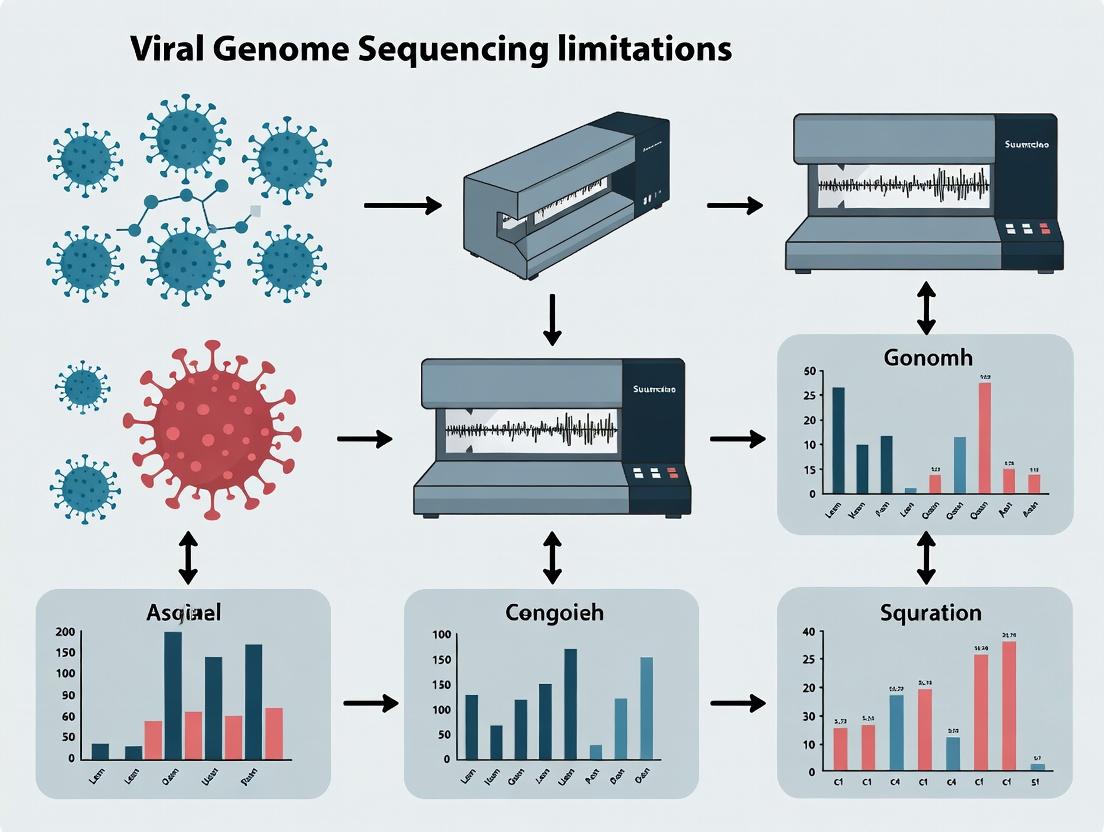
Viral genome sequencing is fundamental for outbreak tracking, vaccine design, and therapeutic development, yet persistent technical challenges limit its accuracy and scope.
Unlocking Viral Blueprints: Advanced Strategies to Overcome Key Limitations in Genome Sequencing
Abstract
Viral genome sequencing is fundamental for outbreak tracking, vaccine design, and therapeutic development, yet persistent technical challenges limit its accuracy and scope. This article addresses the core intents of researchers and drug development professionals by first exploring the fundamental bottlenecks in current viral sequencing pipelines. It then details innovative methodological approaches, including long-read technologies and enrichment strategies, for complex applications. A dedicated troubleshooting section provides optimization protocols for low viral loads and high host contamination. Finally, the article compares and validates emerging platforms and bioinformatic tools, offering a comprehensive roadmap to achieve high-fidelity, complete viral genomes for transformative biomedical research.
The Viral Sequencing Bottleneck: Understanding Core Technical and Biological Limitations
This technical support center is dedicated to overcoming limitations in viral genome sequencing research by providing troubleshooting guides and FAQs for common experimental challenges.
Frequently Asked Questions (FAQs)
Q1: Why does my NGS data for viral genomes have high coverage but persistent low-complexity or "dropout" regions? A: This is often due to sequence-dependent biases. Common causes include:
- High GC/AT Content: Secondary structures in primer/probe binding sites during amplicon-based sequencing.
- RNA Secondary Structures: Stable stem-loops in the viral RNA that hinder reverse transcription or polymerase progression.
- Homopolymeric Regions: Slippage in nanopore or PacBio sequencing, leading to indel errors.
- Troubleshooting Steps:
- Verify with Multiple Assays: Confirm the dropout with an orthogonal method (e.g., Sanger sequencing of a PCR product spanning the region).
- Optimize Enzymes: Use a reverse transcriptase and polymerase mix specifically formulated for high GC content or structured RNA (e.g., mixtures with betaine or DMSO).
- Adjust Protocol: For amplicon approaches, re-design primer sets to tile across the problem region. For metagenomic approaches, increase input material and use fragmentation-based libraries.
Q2: My metagenomic sample contains a dominant host background. How can I enrich for low-abundance viral sequences? A: Host depletion is critical. Implement a combination of strategies:
- Pre-Sequencing:
- Nuclease Treatment: Use Benzonase or micrococcal nuclease to digest unprotected host nucleic acids, leaving encapsidated viral genomes intact.
- Probe-Based Depletion: Use commercial kits with probes against abundant host rRNA and mitochondrial DNA.
- Post-Sequencing:
- Bioinformatic Subtraction: Map reads to the host reference genome and remove aligning reads. Use sensitive, k-mer-based tools for divergent viruses.
- Troubleshooting: If viral yield remains low post-enrichment, spike a known quantity of an exogenous control virus (e.g., Equine Arteritis Virus) into your sample pre-processing to quantify and track recovery efficiency.
Q3: How do I resolve conflicting base calls in my consensus genome from different sequencing platforms? A: Discrepancies highlight platform-specific errors. Follow this decision tree: 1. Check Quality Metrics: Compare per-base quality scores (Q-score) at the conflicted position across platforms. 2. Examine Read Alignment: Visualize the raw read alignment (in IGV). Look for strand bias, coverage dips, or homopolymer stretches. 3. Apply a Validation Threshold: Establish a rule, e.g., "The base call requires agreement from at least two independent sequencing methods (e.g., Illumina + Oxford Nanopore) or confirmation by Sanger sequencing."
Q4: What is the minimum read depth required to confidently call rare variants (e.g., SNPs <1%) in a viral quasispecies? A: This depends on error rate. The table below summarizes requirements for common platforms to distinguish true variants from sequencing error.
| Platform | Typical Per-Base Error Rate | Recommended Minimum Depth for 1% Variant | Key Consideration |
|---|---|---|---|
| Illumina | ~0.1% (Phred Q30) | 2,000-5,000X | Error rate is low, but PCR duplicates can inflate depth artificially. Use deduplication. |
| Oxford Nanopore (Duplex) | ~0.01% (Q20) | 1,000-2,000X | Duplex mode dramatically reduces error. Standard "simplex" reads require much higher depth. |
| PacBio HiFi | ~0.01% (Q20) | 1,000-2,000X | Long, accurate reads are excellent for haplotype reconstruction (phasing). |
Experimental Protocol: To accurately characterize a viral quasispecies, use a high-fidelity amplification method (limit PCR cycles), sequence with a platform offering duplex or HiFi reads, and analyze with a specialized tool like LoFreq or QuasiRecomb that models error profiles.
The Scientist's Toolkit: Key Research Reagent Solutions
| Item | Function & Rationale |
|---|---|
| High-Fidelity Reverse Transcriptase (e.g., SuperScript IV) | Minimizes errors during cDNA synthesis from viral RNA, crucial for accurate variant calling. |
| Target-Specific Primer Panels (Amplicon) | Ensures uniform coverage across the viral genome. Must be frequently updated for emerging variants to avoid dropout. |
| Plasmid-Safe ATP-Dependent DNase | Digests linear host DNA post-extraction, enriching for circular viral genomes (e.g., some DNA viruses). |
| Exogenous Control RNA (e.g., ERCC RNA Spike-Ins) | Added to sample lysis buffer to monitor extraction efficiency, RT, and amplification losses quantitatively. |
| UMI (Unique Molecular Identifier) Adapters | Short random nucleotide tags ligated to each original molecule before PCR, allowing bioinformatic removal of PCR duplicates for accurate variant frequency. |
Experimental Protocols
Protocol 1: Tiled Amplicon Sequencing for RNA Viruses (ARTIC Network-style)
Objective: Generate complete, high-coverage genomes from low viral load samples. Detailed Method:
- Primer Design: Download the latest primer scheme (e.g., from ARTIC GitHub repo) for your target virus. Resuspend primers in TE buffer to 100 µM. Create a working pool of all primers at 1 µM each.
- Reverse Transcription: In a 0.2 mL tube, combine 5-10 µL of extracted RNA, 1 µL of dNTPs (10 mM), 1 µL of random hexamers (50 µM), and nuclease-free water to 12 µL. Heat to 65°C for 5 min, then place on ice. Add 4 µL of 5X SSIV buffer, 1 µL of DTT (100 mM), 1 µL of RNaseOUT, and 2 µL of SuperScript IV RT. Incubate: 23°C for 10 min, 55°C for 10 min, 80°C for 10 min. Hold at 4°C.
- Multiplex PCR 1: For each cDNA sample, set up two 25 µL reactions using a high-fidelity master mix. Add 2.5 µL of primer pool and 5 µL of cDNA. Cycle: 98°C for 30 sec; 35 cycles of 98°C for 15 sec, 65°C for 5 min; 72°C for 5 min.
- PCR Clean-up: Pool the two reactions per sample. Use a bead-based clean-up kit (e.g., AMPure XP) at a 0.8X ratio. Elute in 20 µL of EB buffer.
- Library Prep & Sequencing: Quantify cleaned PCR product by fluorometry. Proceed with standard Illumina or Nanopore library preparation, following manufacturer guidelines.
Protocol 2: Host Depletion and Viral Enrichment for Metagenomic Sequencing
Objective: Recover viral sequences from complex samples (e.g., nasopharyngeal swab, tissue). Detailed Method:
- Sample Processing: Centrifuge sample at 2,000 x g for 10 min to remove debris. Filter supernatant through a 0.45 µm or 0.22 µm PES filter.
- Nuclease Treatment: To the filtrate, add MgCl₂ (to 1 mM final) and Benzonase (e.g., 25 U/mL final) or micrococcal nuclease (with CaCl₂). Incubate at 37°C for 30-60 min to degrade free nucleic acids.
- Viral Concentration: Concentrate using a 100kD molecular weight cut-off centrifugal filter column or by polyethylene glycol (PEG) precipitation overnight at 4°C.
- Nucleic Acid Extraction: Extract using a broad-spectrum kit (e.g., QIAamp Viral RNA Mini Kit or DNA/RNA co-extraction kits). Include the exogenous control virus at this step.
- Host rRNA Depletion (Optional): Treat extracted RNA with a probe-based ribosomal depletion kit (e.g., FastSelect).
- Library Construction: Proceed with a stranded RNA-seq or DNA-seq library kit suitable for low input.
Visualizations
Viral Metagenomic Enrichment & Sequencing Workflow
Resolving Conflicting Base Calls in Viral Genomes
Technical Support Center: Viral Quasispecies Sequencing & Analysis
Welcome, Researcher. This center addresses common experimental hurdles in sequencing and analyzing viral quasispecies. The guidance is framed within the thesis: Overcoming limitations in viral genome sequencing research through enhanced error correction, targeted enrichment, and advanced bioinformatic partitioning.
Troubleshooting Guides
Issue 1: Inability to Detect Low-Frequency Variants (<2%) in Mixed Population
- Problem: Standard NGS pipelines fail to distinguish true low-frequency mutations from sequencing errors.
- Solution: Implement Duplex Sequencing.
- Protocol:
- Library Prep: Fragment viral RNA/DNA. Ligate double-stranded adapters with unique molecular identifiers (UMIs) to both ends of each original molecule.
- Amplification & Sequencing: PCR amplify and sequence to high depth (≥100,000x).
- Bioinformatic Analysis: Bioinformatically group reads derived from the same original molecule using UMIs. Create a consensus from both the forward and reverse strands of the original duplex. A true variant must appear in both strands. Filter out errors present in only one strand.
Issue 2: Primer Bias in Amplicon-Based Sequencing Skews Variant Frequency
- Problem: Primer mismatches due to viral diversity lead to differential amplification, altering true quasispecies composition.
- Solution: Use Tiled Primer-Free Enrichment (e.g., Probe-based Hybrid Capture).
- Protocol:
- Design: Synthesize biotinylated DNA or RNA probes (80-120nt) tiled across the entire viral reference genome with 2-3x overlap.
- Hybridization: Fragment and adapter-ligate cDNA (from viral RNA). Denature and hybridize with probe pool for 16-24 hours.
- Capture: Bind hybridized molecules to streptavidin beads, wash stringently, and elute the captured viral library.
- Sequencing: Amplify and sequence. This method is more tolerant of sequence divergence than PCR.
Issue 3: High Error Rate of Reverse Transcriptase (RT) Masks True Genomic Diversity
- Problem: RT enzymes introduce errors during cDNA synthesis, which are then sequenced and misinterpreted as viral variants.
- Solution: Use High-Fidelity RT enzymes and incorporate technical replicates.
- Protocol:
- Enzyme Selection: Use RTs with proofreading activity (e.g., certain mutant M-MLV variants).
- Replicate & Contrast: Perform at least three independent cDNA synthesis reactions from the same RNA extract.
- Analysis: Sequence each replicate separately. True viral variants will appear consistently across replicates, while RT errors will be stochastic and non-reproducible.
Frequently Asked Questions (FAQs)
Q1: What is the minimum sequencing depth required for reliable quasispecies analysis? A: The required depth depends on the variant frequency you aim to detect. For clinical/functional studies targeting variants >1%, a minimum depth of 10,000x is recommended. For studying the full mutant spectrum, including variants at 0.1%, depths exceeding 100,000x are necessary, especially when using error-correction methods like UMI-based protocols.
Q2: How do I choose between amplicon sequencing and metagenomic shotgun sequencing for my sample? A: See the decision table below.
Q3: My bioinformatics pipeline is collapsing real diversity. What key parameters should I check? A:
- Mapping: Use a sensitive aligner (e.g., BWA-MEM, HISAT2) and avoid overly stringent mapping quality filters that discard divergent reads.
- Variant Calling: For standard pipelines, set the minimum variant frequency threshold appropriately (e.g., 0.5-1% for duplex sequencing, 2-5% for standard UMI). Use a variant caller designed for high-depth data (e.g., LoFreq, VarScan2).
- Haplotype Reconstruction: For connected variants, use tools like PredictHaplo or ShoRAH to reconstruct full-length haplotypes from read data.
Data Presentation Tables
Table 1: Comparison of Key Viral Sequencing Methodologies
| Method | Principle | Key Advantage | Major Limitation | Optimal Variant Detection Frequency |
|---|---|---|---|---|
| Standard Amplicon Seq | Multiplex PCR of genomic regions. | High sensitivity for low viral load; cost-effective. | Severe primer bias; cannot detect inter-primer variation. | ~5% and above. |
| Hybrid Capture Seq | Solution-based hybridization with biotinylated probes. | Reduced amplification bias; captures unknown flanking regions. | Higher input DNA required; more complex protocol. | ~1% and above. |
| UMI-Based Error-Corrected Seq | Tags each original molecule with a unique barcode. | Distinguishes sequencing errors from true biological variants. | Increased cost and complexity; requires specialized analysis. | ~0.1% - 0.5%. |
| Single-Molecule (PacBio) Seq | Long-read, real-time sequencing without amplification. | Reads full-length haplotypes directly; no PCR bias. | High raw error rate (~10-15%) requiring circular consensus sequencing. | ~5% and above for CCS reads. |
Table 2: Performance Metrics of Common Viral Variant Callers (Theoretical)
| Software | Algorithm Type | Key Strength | Recommended Use Case |
|---|---|---|---|
| LoFreq | Sensitive variant caller using quality scores. | Excellent for detecting very low-frequency variants. | Standard amplicon or capture data. |
| VarScan2 | Heuristic/statistic-based caller. | Robust to coverage imbalances; good for mixed populations. | Comparative sample analysis (e.g., pre/post treatment). |
| HaploClique (ShoRAH) | Bayesian clustering & error correction. | Reconstructs haplotypes; models PCR and sequencing errors. | Quasispecies haplotype reconstruction from short reads. |
| diversityseq (UMI Tools) | UMI-based consensus building. | Drastically reduces false positive variant calls. | Data from UMI-tagged error-corrected libraries. |
Experimental Workflow Diagram
Title: Error-Corrected Viral Quasispecies Analysis Workflow
The Scientist's Toolkit: Research Reagent Solutions
| Item | Function & Rationale |
|---|---|
| High-Fidelity Reverse Transcriptase | Minimizes introduction of errors during first-strand cDNA synthesis, providing a more accurate template for sequencing. |
| Unique Molecular Identifiers (UMIs) | Short random nucleotide sequences used to tag individual RNA/DNA molecules before amplification, enabling bioinformatic error correction. |
| Target-Specific Hybrid Capture Probes | Biotinylated RNA/DNA oligo pools for unbiased enrichment of viral sequences from complex backgrounds (e.g., host RNA). |
| Proofreading DNA Polymerase | Used in amplification steps to maintain sequence fidelity and prevent introduction of polymerase errors. |
| RNase Inhibitor | Protects vulnerable viral RNA templates from degradation during sample processing and reverse transcription. |
| Magnetic Streptavidin Beads | For efficient pulldown of hybridized target-probe complexes in hybrid capture workflows. |
| Size Selection Beads | To clean up and select optimal fragment sizes post-fragmentation or post-capture, improving library uniformity. |
Technical Support Center: Troubleshooting Guides & FAQs
FAQ 1: Why is my viral genome assembly poor despite high sequencing coverage? Answer: High host nucleic acid contamination, even with high total sequencing depth, results in insufficient on-target viral reads. Host-derived reads can constitute >99% of total sequencing data in low viral load samples, leaving <1% for viral assembly. Ensure you are using a viral enrichment protocol (see Protocol 1 below) prior to library preparation.
FAQ 2: How can I differentiate between true viral integration events and artifacts from host contamination during alignment? Answer: Artifacts often arise from ambiguous mapping of reads with high similarity to both host and viral reference genomes. To troubleshoot, use a stringent two-step alignment strategy: first, map all reads to the host genome (e.g., human GRCh38) and discard all mapped reads. Second, map the unmapped reads to a comprehensive viral database. Confirm integration events using PCR and Sanger sequencing across the junction.
FAQ 3: My negative control shows unexpected viral reads. What is the source of this contamination? Answer: Common sources include cross-contamination during sample processing, index hopping in multiplexed pools, or reagent contamination (e.g., with bacteriophages). Implement strict spatial separation for pre- and post-PCR work, use unique dual indexes (UDIs) to mitigate index hopping, and include multiple negative controls (extraction and library preparation) to identify the contamination stage.
FAQ 4: What is the minimum Viral Read Percentage required for confident variant calling? Answer: For single nucleotide variant (SNV) calling, a minimum of 5-10% viral reads in the total library is generally required, with a depth of at least 1000x at the position for low-frequency variants (<5%). Below this percentage, sensitivity drops sharply. See Table 1 for quantitative guidelines.
FAQ 5: How do I choose between host depletion and viral enrichment methods? Answer: The choice depends on sample type and viral target. Host depletion (e.g., rRNA, globin, or total human RNA depletion) is broad but non-specific. Viral enrichment via probe hybridization (e.g., pan-viral panels) is specific but requires prior sequence knowledge. For novel viruses, host depletion followed by metagenomic sequencing is the standard approach.
Data Presentation
Table 1: Quantitative Impact of Host Contamination on Sequencing Sensitivity
| Host DNA in Sample | Effective Viral Depth (from 100M total reads) | Confident SNV Calling Threshold | Recommended Action |
|---|---|---|---|
| 99.9% | 100,000x | ~5% allele frequency | Sufficient for most applications. |
| 99.99% | 10,000x | ~10% allele frequency | Borderline for low-frequency variants. |
| 99.999% | 1,000x | Only major variants (>50%) | Host depletion or viral enrichment required. |
Table 2: Comparison of Host Removal Techniques
| Technique | Principle | Approximate Host Reduction | Key Limitation |
|---|---|---|---|
| Nuclease Digestion | Digests unprotected host DNA/RNA (e.g., Benzonase). | 10- to 100-fold | Can damage non-enveloped virions. |
| Probe-based Depletion | Hybridization & removal of host sequences (e.g., rRNA). | 100- to 1000-fold | Costly; requires species-specific probes. |
| Centrifugal Filtration | Size-based separation of virus from host cells. | 10- to 50-fold | Poor recovery of variable-sized particles. |
| Hybrid Capture Enrichment | Probe-based pull-down of viral sequences post-sequencing. | Enriches viral reads 100-10000x | Limited to known viral sequences. |
Experimental Protocols
Protocol 1: Pan-Viral Hybrid Capture Enrichment for Metagenomic Sequencing
- Sample Input: Begin with 100-500 ng of total nucleic acid extracted from clinical sample (e.g., plasma, CSF).
- Library Preparation: Construct a dual-indexed sequencing library using a kit compatible with degraded/low-input RNA/DNA (e.g., Illumina TruSeq Total RNA or KAPA HyperPrep). Do not perform poly-A selection.
- Probe Hybridization: Dilute 100-200 ng of purified library into hybridization buffer. Add a pan-viral probe panel (e.g., Twist Bioscience Pan-Viral Panel, ~1-2 million probes tiling known viral families). Denature at 95°C for 5 min and hybridize at 65°C for 16-24 hours.
- Capture & Wash: Add streptavidin magnetic beads to bind biotinylated probe-target complexes. Perform a series of stringent washes (e.g., with SSC buffer at 65°C) to remove non-specifically bound host DNA.
- Amplification: Perform 12-14 cycles of PCR to amplify the captured library.
- Sequencing & Analysis: Pool and sequence on an Illumina platform (aim for 20-50 million paired-end reads). Analyze using a pipeline as depicted in Workflow Diagram 1.
Protocol 2: DNase I Treatment for RNA Virus Enrichment in Serum
- Sample Treatment: Add 2-10 µL of serum/plasma to 50 µL of PBS containing 2 µL of Turbo DNase I (2 U/µL) and 2 µL of recombinant RNase inhibitor.
- Incubation: Incubate at 37°C for 30 minutes to degrade unprotected host and free-floating DNA.
- Inactivation: Add 5 µL of DNase Inactivation Reagent (e.g., EDTA or specific magnetic beads). Incubate at room temperature for 5 minutes, then pellet the beads.
- RNA Extraction: Transfer the supernatant (containing protected viral RNA in capsids) to a standard viral RNA extraction column (e.g., QIAamp Viral RNA Mini Kit).
- Proceed to RNA-seq library preparation with ribosomal RNA depletion.
Visualizations
Title: Bioinformatics Workflow for Host Contamination Removal
Title: Hybrid Capture Viral Enrichment Pathway
The Scientist's Toolkit: Key Research Reagent Solutions
| Reagent / Material | Function & Rationale |
|---|---|
| Turbo DNase I | Degrades host and environmental DNA outside of viral capsids, enriching for encapsulated viral genomes (especially RNA viruses). |
| RiboPOOL rRNA Depletion Probes | Removes >99% of host ribosomal RNA, drastically increasing the proportion of viral mRNA/cDNA in RNA-seq libraries. |
| Twist Pan-Viral Family Panel | Biotinylated oligonucleotide probes for hybrid capture enrichment of known viral families from complex libraries. |
| Unique Dual Index (UDI) Kits | Minimizes index hopping and cross-contamination artifacts in multiplexed sequencing runs, crucial for sensitive detection. |
| SPRIselect Beads | Size-selects nucleic acid fragments; used to clean up post-enrichment libraries and remove adapter dimers. |
| Zymo Quick-RNA Viral Kit | Designed for low-copy viral RNA extraction from body fluids, includes a carrier to maximize yield. |
| Artic Network Primer Pools | Multiplex PCR primers for tiling amplification of specific viral genomes (e.g., SARS-CoV-2, influenza) from low-input samples. |
Welcome, Researcher. This support center provides targeted troubleshooting and protocols for overcoming sequencing challenges in early infection and latent reservoirs. Our guidance is framed within the thesis: Overcoming limitations in viral genome sequencing research.
Frequently Asked Questions (FAQs) & Troubleshooting
Q1: Our NGS library prep for plasma samples with low viral load (<1000 copies/mL) consistently fails. What are the critical steps to improve success? A: Failure at this stage is often due to nucleic acid degradation and inhibitor carryover. Key troubleshooting steps include:
- Implement Duplicate RNA Extraction: Process the sample in two independent parallel extractions and combine eluates to maximize yield.
- Use Carrier RNA: Add 1 µg of poly(A) carrier RNA (e.g., yeast tRNA) to the lysis buffer to improve binding efficiency of viral RNA during silica-column purification.
- Increase Elution Volume: Elute in a reduced volume (e.g., 15-20 µL) of nuclease-free water (not TE buffer, which can inhibit downstream PCR) to increase template concentration.
- Apply Targeted Enrichment: Use virus-specific oligonucleotide probes (e.g., SureSelect or Twist Pan-Viral panels) post-cDNA synthesis to enrich viral sequences before library amplification.
Q2: During latency studies, our PCR for integrated proviral DNA shows high background from non-integrated forms. How can we specifically target the integrated fraction? A: This is a common issue due to abundant linear and episomal forms. Employ an Alu-PCR protocol or repeat-based nested PCR.
- Principle: Design one primer in the human Alu repeat elements (flanking integration sites) and a second in the conserved viral region (e.g., HIV gag or pol). Only proviruses integrated in the human genome will amplify.
- Critical Control: Always run a "no-template" control and a "human genomic DNA only" control to rule out primer-dimer artifacts and non-specific amplification of human sequences.
Q3: Our single-genome sequencing (SGS) results for early infection samples show a high proportion of "blank" reactions, suggesting primer mismatches. How should we update our primer design? A: Primer mismatch due to viral diversity is a major hurdle. Follow this protocol:
- Perform Rapid Regional Sequencing: First, generate a bulk NGS amplicon (e.g., using MiSeq) of the target region (e.g., HIV env C2-V3) from the same sample to characterize the dominant quasispecies.
- Design Sample-Specific Primers: Using the consensus sequence from step 1, design new SGS primers, placing degenerate bases (W, S, R) at identified variable positions within the last 5 nucleotides at the 3' end.
- Validate Primer Efficiency: Test new primer pairs in a dilution series of plasmid controls containing the sample's consensus sequence.
Q4: Bioinformatic assembly of viral genomes from fragmentary data yields chimeras. What pipeline parameters are most effective for avoidance? A: Chimera formation often arises from incorrect overlap assembly. Adjust your assembler (e.g., SPAdes or IVA) parameters as follows:
- Increase Overlap Stringency: Set
--min-overlap-lengthto 50-100 bp for short-read data. - Employ a Reference-Guided Approach: For highly diverse viruses, first map reads to a close reference using a tolerant aligner (e.g., BWA-MEM with low penalty scores), extract mapped reads, and then perform de novo assembly on this subset.
- Implement a Chimera-Checking Step: Use a tool like UCHIME (within USEARCH/VSEARCH) against a custom database of known viral sequences from your study to flag and remove chimeric contigs post-assembly.
Experimental Protocol: Near-Complete Genome Amplification from Low-Titer Plasma
Objective: To generate sufficient template for NGS from plasma with viral load between 200-1000 copies/mL.
Materials & Reagents:
- Sample: 3-5 mL of EDTA or ACL plasma.
- Extraction: QIAamp Viral RNA Mini Kit (Qiagen) with exogenous carrier RNA.
- Reverse Transcription: SuperScript IV Reverse Transcriptase (Thermo Fisher) with virus-specific antisense primer pool.
- First-Round PCR: LongAmp Taq DNA Polymerase (NEB) or Q5 High-Fidelity DNA Polymerase (NEB).
- Second-Round (Nested) PCR: Platinum SuperFi II DNA Polymerase (Thermo Fisher).
- Primers: Overlapping, semi-degenerate primer sets tiling the full viral genome (designed from up-to-date alignments).
Methodology:
- RNA Extraction & DNase Treatment: Extract RNA from 1 mL plasma per duplicate. Pool eluates. Treat with TURBO DNase (Thermo Fisher) at 37°C for 30 min to remove contaminating DNA.
- cDNA Synthesis: Perform reverse transcription in a 20 µL reaction using 10 µL of extracted RNA and a primer pool (4-6 primers) targeting conserved regions across the viral genome. Use 50°C for 60 min.
- First-Round PCR (Multiple Fragments): Set up separate 50 µL reactions for each of the 4-6 overlapping genome fragments. Use 5 µL of cDNA per reaction. Cycle conditions: 94°C 2 min; 35 cycles of [94°C 30s, 50°C 45s, 65°C 3-5 min (depending on fragment size)]; 65°C 10 min.
- Purification: Clean up each first-round product using SPRIselect beads (Beckman Coulter) at a 0.8x ratio.
- Second-Round (Nested) PCR: Use 2 µL of purified first-round product as template. Employ inner primer sets. Cycle conditions: 98°C 30s; 35 cycles of [98°C 10s, 55°C 30s, 72°C 2-3 min]; 72°C 5 min.
- Quality Control: Verify fragment size and yield on Agilent TapeStation. Quantify by fluorometry (Qubit). Products are now ready for NGS library preparation.
Table 1: Comparison of Viral Enrichment Methods for Low Input Samples
| Method | Principle | Minimum Input (copies/mL) | Approximate Enrichment Factor | Key Limitation |
|---|---|---|---|---|
| Untargeted PCR (e.g., SGS) | Limiting dilution & direct amplification | ~500-1000 | 1x | High failure rate due to primer mismatch |
| Hybrid Capture (e.g., SureSelect) | Solution-based probe hybridization | ~50-100 | 100-1000x | Requires significant off-target sequencing |
| Amplification with UMIs | Unique molecular identifiers for error correction | ~200-500 | 10-100x (after dedup) | PCR bias persists in amplification step |
| Microdroplet PCR (ddPCR) | Target-specific digital quantification & enrichment | ~10-50 | Up to 10,000x | Amplicon size limited (<1kb) |
Table 2: Recommended NGS Metrics for Confident Variant Calling in Mixed Populations
| Metric | Target for Low-Frequency Variants (>1%) | Target for Clonal Analysis (SGS) | Tool for Verification |
|---|---|---|---|
| Average Read Depth (Target Region) | >5,000x | >500x per amplicon | samtools depth |
| Q30 Score (Base Quality) | >85% | >80% | FastQC |
| Mapping Quality (MAPQ) | >30 | >20 | samtools view |
| Duplication Rate | <20% (post-UMI dedup) | Not Applicable | picard MarkDuplicates |
Visualizations
Title: Workflow for Near-Complete Viral Genome Amplification
Title: Bioinformatic Pipeline for Fragmentary Data
The Scientist's Toolkit: Research Reagent Solutions
| Item | Function in Context of Low Viral Load/Latency |
|---|---|
| Carrier RNA (e.g., yeast tRNA) | Improves recovery of low-concentration viral RNA during silica-column extraction by providing bulk for efficient binding. |
| Unique Molecular Identifiers (UMIs) | Short random nucleotide sequences added during cDNA synthesis to tag original molecules, enabling bioinformatic removal of PCR duplicates and error correction. |
| Pan-Viral Hybrid Capture Probes | Solution-phase biotinylated oligonucleotides designed to enrich sequences from a broad range of viral strains/families prior to sequencing. |
| Long-Amp or High-Fidelity Polymerase | Enzymes with high processivity and fidelity essential for amplifying long, overlapping fragments from damaged or scarce templates. |
| SPRIselect Beads | Solid-phase reversible immobilization beads for size-selective purification of PCR amplicons, removing primers and primer dimers. |
| DNase I (RNase-free) | Critical for pre-treatment of nucleic acid extracts from latent cell samples to degrade contaminating non-integrated viral DNA, ensuring specific analysis of provirus. |
Technical Support Center
Troubleshooting Guides & FAQs
Q1: During library prep for a high-GC viral genome (e.g., Herpesviridae, ~70% GC), my sequencing yield is extremely low. What are the primary causes and solutions? A: Low yield often stems from polymerase stalling during PCR amplification due to strong secondary structures. Standard polymerases fail to efficiently denature and replicate these regions.
- Solutions:
- Use a high-GC PCR mix: Employ polymerases and buffers specifically formulated for high-GC content (e.g., Q5 High-GC, GC-Rich solutions). These often include additives like DMSO, betaine, or 7-deaza-dGTP to lower melting temperatures and destabilize secondary structures.
- Optimize thermocycling: Implement a touchdown or slow-ramping PCR protocol to improve specificity and efficiency in complex templates.
- Consider PCR-free library prep: For sufficient input DNA, use ligation-based, PCR-free library construction to entirely bypass amplification bias.
Q2: My viral genome assembly is fragmented with gaps in repetitive regions (e.g., terminal repeats in poxviruses). How can I resolve this? A: Short-read technologies struggle with repeats longer than the read length, causing collapses and misassemblies.
- Solutions:
- Integrate long-read sequencing: Use Oxford Nanopore (ONT) or PacBio HiFi sequencing to generate reads spanning entire repetitive regions. Hybrid assembly (short-read + long-read) is the standard.
- Apply specialized assemblers: Use assemblers with repeat-aware algorithms (e.g., Flye, Canu for long reads; SPAdes with careful parameter tuning for short reads).
- Experimental enrichment: For terminal repeats, use techniques like restriction enzyme digestion and circularization to capture junction sequences.
Q3: How can I confirm the structure of complex secondary elements (e.g., cis-acting regulatory elements in retroviruses) predicted in silico? A: Computational prediction requires experimental validation.
- Protocol: SHAPE-MaP (Selective 2′-Hydroxyl Acylation analyzed by Primer Extension and Mutational Profiling)
- In vitro transcription: Generate RNA of the target viral region.
- SHAPE probing: Treat RNA with a SHAPE reagent (e.g., 1M7), which acylates flexible, unpaired nucleotides.
- Reverse transcription: Reverse transcribe using a primer. The acylated sites cause mutations in the cDNA.
- Library prep and sequencing: Construct a library from the cDNA and sequence.
- Analysis: Map mutation rates to the reference sequence. High mutation rates indicate single-stranded, flexible regions; low rates indicate base-paired, structured regions.
Q4: What are the key metrics for evaluating the success of sequencing extreme genomes? A: Beyond standard metrics, specific parameters are critical.
| Metric | Target for Extreme Genomes | Interpretation |
|---|---|---|
| Read Length (N50) | As long as technically possible (>10 kb for repeats) | Essential for spanning repeats and structural variants. |
| Coverage Uniformity | Coefficient of Variation (CV) < 0.25 | High CV indicates regions of poor coverage due to GC bias or structures. |
| Assembly Contiguity | N50 > repeat length, # contigs approaching 1 | Indicates successful resolution of repeats and structures. |
| GC Coverage Bias | Flat profile across 20-80% GC range | Shows successful mitigation of GC-bias during library prep. |
Q5: Are there specific library preparation kits validated for extreme viral genomes? A: Yes, performance varies significantly. Key considerations include input DNA requirements and tolerance to GC content.
| Kit Name | Optimal Use Case | Key Feature for Extreme Features |
|---|---|---|
| Nextera XT | Rapid, low-input standard genomes | Not recommended for high GC; shows severe bias. |
| Illumina DNA Prep | General purpose, moderate GC | Improved over Nextera, but may require GC bias correction in bioinformatics. |
| KAPA HyperPlus | Challenging genomes | Robust enzyme mix often performs better with high-GC and structured DNA. |
| Nanopore Ligation | Long-repeat resolution | No PCR step; ideal for minimizing bias. Requires high-quality HMW DNA. |
| PacBio SMRTbell | High-accuracy long reads | HiFi reads provide both length and high accuracy for complex regions. |
The Scientist's Toolkit: Research Reagent Solutions
| Reagent / Material | Function in Tackling Extreme Features |
|---|---|
| 7-deaza-dGTP | Nucleotide analog that reduces base-pairing strength, facilitating polymerase progression through high-GC and structured regions. |
| Betaine | PCR additive that equalizes the melting temperatures of GC- and AT-rich regions, improving amplification uniformity. |
| DMSO | Destabilizes DNA secondary structures by interfering with hydrogen bonding, aiding in denaturation. |
| Proof-reading / High-Fidelity Polymerase | Essential for accurate replication of difficult templates and reducing errors in subsequent assembly. |
| Magnetic Beads for Size Selection | Critical for selecting long DNA fragments prior to long-read library prep, enabling repeat span. |
| SHAPE Reagent (e.g., 1M7) | Chemically probes RNA secondary structure for experimental validation of predicted elements. |
| GC Spike-in Controls | Synthetic DNA with known GC content used to monitor and bioinformatically correct for GC bias. |
Experimental Workflow Diagram
Title: Workflow for Sequencing Extreme Viral Genomes
SHAPE-MaP Validation Protocol Diagram
Title: SHAPE-MaP RNA Structure Probing Workflow
Beyond Short Reads: Cutting-Edge Methodologies for Complex Viral Sequencing Applications
Technical Support Center
Troubleshooting & FAQ
Q1: My PacBio HiFi data yield is lower than expected from the SMRTcell. What are the primary causes? A: Low yield in HiFi sequencing often stems from library preparation issues or instrument run parameters.
- Check 1: Library Quality. Assess the insert size and purity via Bioanalyzer/Fragment Analyzer. A smear below the target insert size indicates over-shearing. Contaminants can inhibit polymerase binding. Recommended: Re-prepare library, ensuring clean AMPure bead purifications.
- Check 2: Primer-to-Template Ratio. An incorrect ratio during complex preparation leads to inefficient SMRTbell formation. Follow the
Binding Calculatortool recommendations precisely for your insert size. - Check 3: Run Conditions. Low movie acquisition time or laser power can reduce read length and yield. For viral genomes (typically 5-300 kb), ensure a movie time of ≥30 hours.
Q2: I am observing high error rates in my raw Nanopore data, affecting viral variant calling. How can I mitigate this? A: While basecalling models have improved accuracy, systematic errors can occur.
- Action 1: Re-basecall with Latest Model. Always use the most recent super-accurate basecalling model (e.g., Dorado
suporsupmodel). Retraining occurs frequently. - Action 2: Optimize Library Load. Overloading the flow cell causes pore competition and signal drop-off. For viral genomes, aim for 5-10 fmol of library loaded.
- Action 3: Ensure Sample Purity. Salt or organic carryover during DNA extraction disrupts pore current. Re-precipitate or clean up DNA with a recommended kit (e.g., AMPure XP). Use a nuclease flush step if pore performance declines mid-run.
Q3: My haplotype phasing for a viral quasispecies is collapsing, even with long reads. What step is critical? A: Successful phasing requires reads longer than the longest stretch of identical sequence between variants.
- Critical Protocol: For RNA viruses with high recombination rates, ensure your read length N50 significantly exceeds the repetitive or conserved region length. Use Ultra-Long (UL) Nanopore protocols with HMW extraction or size-selection >10 kb for PacBio. A
ccs(HiFi) ordoradobasecall must be performed to generate accurate circular consensus sequences or raw signals before phasing with tools likeClair3orWhatshap.
Q4: How do I resolve ambiguous assemblies in complex viral genomic regions (e.g., inverted terminal repeats - ITRs)? A: Use a hybrid approach that leverages the strengths of both technologies.
- Detailed Method:
- Generate a HiFi-based primary assembly using
hifiasmorCanu. This provides a high-accuracy linear contig. - Generate a Nanopore ultra-long read dataset from the same sample.
- Map UL reads to the HiFi assembly using
minimap2. - Identify reads spanning the entire repetitive ITR region. The length of UL reads often allows a single read to cover the repeat and unique flanking sequence, resolving the ambiguity.
- Manually curate the assembly in a tool like
GeneiousorBandageusing the spanning read as a guide.
- Generate a HiFi-based primary assembly using
Experimental Protocols
Protocol 1: High-Molecular-Weight (HMW) Viral DNA Extraction for Ultra-Long Nanopore Sequencing Objective: Obtain intact DNA strands >50 kb from viral particles. Steps:
- Concentrate virus from culture supernatant via PEG precipitation or ultracentrifugation.
- Resuspend pellet in gentle lysis buffer (e.g., with Proteinase K and SDS). Incubate at 55°C for 1 hour.
- Perform phenol-chloroform-isoamyl alcohol (25:24:1) extraction carefully without vortexing. Use wide-bore pipette tips.
- Precipitate DNA with isopropanol. Spool out DNA using a sealed, bent Pasteur pipette.
- Wash spooled DNA in 70% ethanol and dissolve in nuclease-free TE buffer (pH 8.0) overnight at 4°C.
- Quantify by Qubit Broad Range assay and check integrity via pulsed-field gel electrophoresis or Femto Pulse system.
Protocol 2: Targeted Enrichment for Low-Titer Viral Samples Prior to PacBio HiFi Sequencing Objective: Amplify complete viral genomes without introducing amplification bias or fragmenting. Steps:
- Design ~2 kb overlapping amplicons tiling across the viral genome using primers with universal overhangs.
- Perform multiplex PCR with a high-fidelity, long-range polymerase (e.g., PrimeSTAR GXL).
- Purify amplicons with AMPure XP beads at 0.6x ratio to remove primer dimers.
- Perform a second, limited-cycle PCR to add PacBio SMRTbell barcoded adapters.
- Quantity the final library with a dsDNA assay, size-profile on a Fragment Analyzer, and pool equimolarly for SMRTbell preparation.
Data Presentation
Table 1: Comparison of PacBio HiFi & Oxford Nanopore for Viral Haplotype Resolution
| Feature | PacBio HiFi (Sequel IIe/Revio) | Oxford Nanopore (PromethION/P2) |
|---|---|---|
| Typical Read Length | 15-25 kb | 10-100+ kb (Ultra-long up to N50 >100 kb) |
| Raw Read Accuracy (Q-score) | Q30 (99.9%) | Q20+ (99%+) with latest duplex/sup models |
| Key Strength for Haplotyping | High single-read accuracy enables direct variant linkage | Extreme read length spans complex repeats |
| Optimal Viral Application | Dense variant phasing in quasispecies (e.g., HIV, HCV) | Resolving large structural variations & ITRs (e.g., Herpesviruses, Adenoviruses) |
| Throughput per Run | ~4 million HiFi reads (Revio) | 10-100+ Gb (PromethION P2 Solo) |
| Sample Input Requirement | 1-5 µg HMW DNA (standard protocol) | 50-1000 ng (ligation kit) |
| Time to Data | 24-72 hours | 10-72 hours (real-time basecalling possible) |
Diagrams
Title: Viral Haplotype Resolution Workflow
Title: Error Correction & Phasing Logic
The Scientist's Toolkit: Research Reagent Solutions
Table 2: Essential Materials for Complete Viral Haplotyping
| Item | Function in Experiment | Example Product/Brand |
|---|---|---|
| HMW DNA Extraction Kit | Gentle lysis & purification to maintain DNA integrity >50 kb for UL reads. | Nanobind CBB Big DNA Kit (PacBio), Monarch HMW DNA Extraction Kit (NEB) |
| Magnetic Beads (SPRI) | Size-selective purification and cleanup during library prep. Critical for removing short fragments. | AMPure XP Beads (Beckman Coulter), Sera-Mag Beads |
| High-Fidelity PCR Mix | For targeted enrichment without introducing errors that confound haplotype calls. | PrimeSTAR GXL (Takara), Q5 Hot Start (NEB) |
| Library Prep Kit | Prepares DNA for the specific sequencing platform (SMRTbell or Ligation). | SMRTbell Prep Kit 3.0 (PacBio), Ligation Sequencing Kit V14 (ONT) |
| Flow Cell/Polymerase | The consumable that generates sequencing data. Choice depends on throughput needs. | SMRT Cell 8M (PacBio Revio), R10.4.1 Flow Cell (ONT) |
| Qubit dsDNA Assay | Accurate quantification of low-concentration DNA samples without overestimating yield. | Qubit dsDNA HS/BR Assay Kits (Thermo Fisher) |
| Fragment Analyzer | Critical QC to visually confirm DNA fragment size distribution pre-sequencing. | Femto Pulse System (Agilent), Fragment Analyzer (Agilent) |
Technical Support Center: Troubleshooting Guides & FAQs
FAQ 1: Why is my viral sequencing yield low after hybrid capture?
- Answer: Low yield is often due to inefficient hybridization. Key factors include:
- Probe Design: Ensure probes cover conserved regions and account for viral diversity. Mismatches >15% significantly reduce capture efficiency.
- Input DNA/RNA Quality: Use high-integrity nucleic acids. Degraded samples (DV200 < 30% for RNA) lead to poor capture. See Table 1.
- Blocking Reagents: Insufficient blocking of adapter sequences (e.g., with Cot-1 DNA, adapter-specific blockers) allows libraries to "self-hybridize" rather than bind to probes.
- Hybridization Time/Temperature: Standard conditions (16-24 hrs at 65°C) are a starting point. For high-GC viral genomes, consider adding betaine (2M) or adjusting temperature.
FAQ 2: How do I mitigate amplicon dropouts or primer-dimers in amplicon sequencing?
- Answer: This is a common limitation in amplicon-based viral sequencing. Solutions include:
- Multiplex Primer Design: Use tiling, overlapping schemes with primer pools. Validate in silico against a diverse reference database to ensure binding.
- Thermocycling Optimization: Use high-fidelity, hot-start polymerases. Implement touchdown PCR or gradient PCR to find optimal annealing temperatures.
- Cleanup: Use double-sided magnetic bead cleanup (e.g., 0.6x left-side, then 0.8x right-side) to remove primer-dimer artifacts prior to library quantification.
- UMI Integration: Incorporate Unique Molecular Identifiers (UMIs) to correct for amplification biases and PCR errors during bioinformatic analysis.
FAQ 3: What is the cause of high host background in my viral enrichment data?
- Answer: Excessive host reads indicate non-specific capture or amplification.
- For Hybrid Capture: Increase stringency of post-hybridization washes. If using commercial kits, perform an extra wash at 65°C. Ensure ribodepletion (for RNA viruses) or mitochondrial depletion (for some DNA viruses) is effective prior to capture.
- For Amplicon Sequencing: This typically indicates off-target priming. Redesign primers using more stringent specificity checks or consider switching to a capture-based approach for complex backgrounds.
Table 1: Key Performance Indicators & Troubleshooting Targets
| Metric | Target (Hybrid Capture) | Target (Amplicon) | Below Target: Likely Cause |
|---|---|---|---|
| On-Target Rate | >50% (high background) >10% (low background) | >90% | Probe/primer specificity; host nucleic acid contamination. |
| Coverage Uniformity | <5-fold difference across genome | <100-fold difference across amplicons | Probe/tile design bias; PCR amplification bias. |
| Duplication Rate | <30% (with UMIs: <10%) | <50% (with UMIs: <15%) | Insufficient input material; over-amplification. |
| Minimum Input | 10-100 ng DNA/cDNA | 1-10 ng DNA/cDNA | Below threshold leads to stochastic dropout and poor uniformity. |
Experimental Protocol: Viral Genome Enrichment via Solution-Based Hybrid Capture
Objective: Enrich viral sequences from total RNA extracts (e.g., from clinical samples) for next-generation sequencing.
Materials: See "Research Reagent Solutions" table.
Procedure:
- Library Preparation: Convert total RNA to double-stranded cDNA. Fragment to 200-300bp using ultrasonication or enzyme-based fragmentation. Ligate Illumina-compatible adapters with unique dual indices (UDIs). Amplify library with 8-10 PCR cycles.
- Hybridization: Combine 100-250ng of purified library with viral probe panel (e.g., 1-5µl), 5µl of adapter blocker, and 1µl of Cot-1 DNA in hybridization buffer. Denature at 95°C for 5 min, then incubate at 65°C for 16-24 hours in a thermal cycler.
- Capture: Add streptavidin-coated magnetic beads to the hybridization mix. Incubate at 65°C for 45 min with agitation to bind biotinylated probe-target complexes.
- Washing: Perform a series of stringent washes:
- a. Wash once with pre-warmed (65°C) Wash Buffer I.
- b. Wash twice with pre-warmed (65°C) Wash Buffer II.
- c. Wash once at room temperature with Wash Buffer III.
- Elution & Amplification: Elute captured library from beads in nuclease-free water. Amplify the enriched library with 12-14 PCR cycles using a high-fidelity polymerase.
- Cleanup & QC: Purify PCR product with magnetic beads (0.8x ratio). Quantify by qPCR and assess size distribution by bioanalyzer/tapestation.
Diagram: Viral Targeted Enrichment Workflow Comparison
The Scientist's Toolkit: Research Reagent Solutions
| Item | Function & Rationale |
|---|---|
| High-Fidelity DNA Polymerase | Crucial for accurate amplification with minimal errors during library and amplicon generation. |
| Biotinylated Oligo Probe Panels | Designed against viral consensus sequences; biotin enables streptavidin-based capture of target-DNA complexes. |
| Streptavidin Magnetic Beads | Solid-phase support for isolating biotin-labeled probe-target hybrids from solution. |
| Unique Dual Index (UDI) Adapters | Enables sample multiplexing and accurate demultiplexing; eliminates index hopping artifacts. |
| Cot-1 DNA / Adapter Blockers | Blocks repetitive sequences (Cot-1) and free adapters, reducing non-specific capture and improving on-target rate. |
| Magnetic Beads (SPRI) | For size-selective cleanup and purification of nucleic acids at various steps (fragmentation, PCR cleanup). |
| RNase Inhibitor | Protects viral RNA from degradation during extraction and reverse transcription steps. |
| UMI Adapters/Primers | Unique Molecular Identifiers tag original molecules to enable bioinformatic correction of PCR duplicates and errors. |
Single-Virus Genomics and Sequencing from Complex Microbial Communities
Technical Support Center
Troubleshooting Guide
FAQ 1: During single-virus sorting via fluorescence-activated virus sorting (FAVS), I am getting a low yield of sorted viral particles. What could be the cause?
- Answer: Low yield in FAVS is common and often stems from instrument configuration or sample preparation.
- Clogged Nozzle: Viral samples often contain cellular debris. Use a larger nozzle diameter (e.g., 70-100 µm) and filter all buffers and sheath fluid through a 0.1 µm filter.
- Poor Staining: The fluorescent signal from nucleic acid stains (e.g., SYBR Gold) is weak. Ensure dye incubation is in the dark at 80°C for 10 minutes, not on ice, to enhance stain penetration of capsids.
- Gating Errors: Overly conservative gating on side scatter (SSC) and fluorescence can exclude genuine viral particles. Use a control sample of known bacteriophages (e.g., PhiX174) to establish baseline gates. Re-gate using control samples run daily.
FAQ 2: My whole-genome amplification (WGA) from a single virus yields high-molecular-weight smears or no product. How can I optimize this step?
- Answer: This indicates non-specific amplification or failure of the Multiple Displacement Amplification (MDA) reaction, often due to contamination or suboptimal conditions.
- Contamination Control: Implement rigorous ultraviolet irradiation and bleach cleaning of workspaces and instruments. Use uracil-DNA glycosylase (UDG) treatment in pre-amplification mixes to degrade carryover contaminants.
- MDA Optimization: Reduce the reaction volume to 5-10 µL to increase template concentration. Use a modified phi29 polymerase buffer with added betaine (1M) and DTT (1-5 mM) to improve amplification efficiency and denature complex secondary structures.
- Reagent Freshness: Aliquot all WGA reagents (especially DTT and polymerase) to avoid freeze-thaw cycles. Perform negative (no-template) controls in parallel with every batch.
FAQ 3: My sequenced viral genomes are chimeric or show high rates of contamination from host DNA. What steps can prevent this?
- Answer: Chimeras arise during WGA, and host contamination occurs during initial purification.
- Host DNA Digestion: Treat your viral concentrate with a combination of DNase I (to digest free DNA) and DNA intercalating agents like propidium monoazide (PMA) or ethidium monoazide (EMA) before lysis. These compounds penetrate compromised (host) cells but not intact viral capsids, and upon photoactivation, they crosslink to and inhibit the amplification of external DNA.
- Bioinformatic Filtering: Post-sequencing, use tools like
Bowtie2to map reads against relevant host genome databases (e.g., human, bacterial) and subtract matching reads. Employ chimera-checking algorithms within assembly pipelines likeSPAdes(using the--metaand--carefulflags).
FAQ 4: How can I assess the completeness and quality of my recovered single-virus genome?
- Answer: Use a combination of completeness markers and assembly metrics.
- Viral Completeness Markers: Search your assembled contig for the presence of major capsid protein (MCP) and terminase genes, which are near-universal in tailed phages. Their absence suggests a partial fragment.
- Assembly Metrics: Check for circularization (overlapping ends) or direct terminal repeats. A complete genome typically assembles into a single contig with high mean coverage depth (>50x) and no internal gaps. Use CheckV for automated completeness estimation and quality grading.
Detailed Experimental Protocol: Single-Virus Genomics with MDA
Title: Isolation and Whole-Genome Amplification of a Single Viral Particle from an Environmental Concentrate.
1. Viral Concentration & Purification:
- Filter water sample through 0.22 µm PES filter.
- Concentrate viral particles by tangential flow filtration (TFF) or polyethylene glycol (PEG) precipitation.
- Purify via density gradient ultracentrifugation (e.g., CsCl or iodixanol gradient).
- Treat purified concentrate with DNase I (1 U/µL, 37°C, 1 hr) to degrade free nucleic acids.
2. Fluorescence-Activated Virus Sorting (FAVS):
- Stain 50 µL of concentrate with SYBR Gold (1X final dilution) at 80°C for 10 min, protected from light.
- Dilute sample 1:10 in sterile Tris-EDTA buffer.
- Sort on a flow cytometer (e.g., BD Influx) equipped with a 70 µm nozzle.
- Gating Strategy: (1) Gate on particles with low side scatter (SSC). (2) Gate on SYBR Gold fluorescence (530/40 nm). (3) Sort single particles directly into 200 µL PCR tubes containing 5 µL of nuclease-free water. Sort one particle per well across a 96-well plate.
3. On-Well Lysis & DNA Release:
- To each sorted droplet, add 2 µL of alkaline lysis buffer (400 mM KOH, 100 mM DTT, 10 mM EDTA).
- Incubate at 65°C for 10 minutes.
- Neutralize with 2 µL of neutralization buffer (400 mM HCl, 600 mM Tris-HCl, pH 7.5).
4. Multiple Displacement Amplification (MDA):
- Prepare a 10 µL MDA master mix per reaction:
- 1X phi29 Polymerase Reaction Buffer
- 50 µM random hexamer primers
- 1 mM dNTPs
- 1 M Betaine
- 5 mM DTT
- 5 U phi29 DNA Polymerase
- Add 8 µL of master mix to the 9 µL neutralized lysate.
- Incubate at 30°C for 8-12 hours, followed by enzyme inactivation at 65°C for 10 minutes.
5. Amplification Cleanup & QC:
- Purify MDA product using AMPure XP beads (0.8x ratio).
- Quantify DNA yield using Qubit dsDNA HS Assay.
- Verify amplification success via qPCR for a universal viral gene (e.g., major capsid protein) or by fragment analysis (e.g., Bioanalyzer). Proceed to library preparation and sequencing.
Table 1: Comparison of Single-Virus Sequencing Platforms & Yields
| Platform/Technique | Average Input (Particles) | Mean Genome Coverage | Amplification Bias (SD of Coverage) | Success Rate (Complete Genome) | Estimated Cost per Genome |
|---|---|---|---|---|---|
| MDA (phi29) | 1 | 150-500x | High (>50%) | 15-30% | $200 - $500 |
| MALBAC-based WGA | 1-5 | 80-200x | Moderate (30-40%) | 10-20% | $300 - $600 |
| Multiple Annealing & Looping-Based Amplification Cycles (MALBAC) | 1 | 50-150x | Moderate (30-40%) | 10-20% | $300 - $600 |
| Tagmentation-Based (Nextera XT) | 10-100 | 50-100x | Low (<20%) | 5-15% | $100 - $300 |
Table 2: Critical Steps and Their Impact on Data Quality
| Experimental Step | Key Parameter | Optimal Value | Impact of Deviation |
|---|---|---|---|
| Viral Staining (FAVS) | Dye Concentration | SYBR Gold, 1X final | Low: Miss particles. High: Background noise. |
| On-Well Lysis | Incubation Temperature | 65°C | Low: Incomplete lysis. High: DNA damage. |
| MDA Reaction | Incubation Time | 8-12 hours | Short: Incomplete genome. Long: Increased chimera formation. |
| Host Depletion | PMA Exposure (Pre-lysis) | 50 µM, 10 min light activation | Insufficient: High host read contamination. |
Visualizations
Title: Single-Virus Genomics Experimental Workflow
Title: Host DNA Depletion Strategy for Viral Preps
The Scientist's Toolkit: Research Reagent Solutions
| Item | Function | Key Consideration |
|---|---|---|
| SYBR Gold Nucleic Acid Gel Stain | Fluorescent dye for detecting dsDNA/RNA in viral capsids during FAVS. | Must be heat-activated (80°C) for capsid penetration. Light-sensitive. |
| Propidium Monoazide (PMA) | DNA intercalating dye for selective host DNA depletion. Penetrates only compromised membranes. | Requires a bright blue LED light source for photoactivation. Critical for complex samples. |
| phi29 DNA Polymerase | High-fidelity polymerase for Multiple Displacement Amplification (MDA). Offers high processivity and strand displacement. | Requires random hexamer primers. Sensitive to freeze-thaw; must be aliquoted. |
| Betaine | Chemical additive used in MDA buffer. Reduces DNA secondary structure, improving amplification of GC-rich regions. | Typically used at 1M final concentration. |
| AMPure XP Beads | Solid-phase reversible immobilization (SPRI) beads for post-amplification cleanup and size selection. | The bead-to-sample ratio (e.g., 0.8x) controls the size cutoff for retaining DNA fragments. |
| DNase I (RNase-free) | Enzyme that degrades unprotected DNA in solution prior to viral lysis. Removes contaminating free-floating host DNA. | Must be thoroughly inactivated (e.g., with EDTA/heat) before proceeding to lysis and WGA. |
Troubleshooting Guide & FAQs
FAQ Section
Q1: During library prep for Direct RNA sequencing of viral genomes, I observe consistently low yield. What are the primary causes and solutions?
A: Low yield is commonly caused by RNA degradation or inefficient adapter ligation. For viral RNA, which is often polyadenylated, ensure poly(A) tail integrity. Use fresh RNA isolation kits with RNase inhibitors. For adapter ligation, optimize the reaction time and temperature; a common protocol uses T4 DNA ligase at 25°C for 1 hour, but increasing to 37°C for 30 minutes can improve efficiency for structured viral RNAs. Include a spike-in control of synthetic RNA with known modifications to quantify capture efficiency.
Q2: My sequencing run shows an abnormally high proportion of reads mapping to ribosomal RNA, despite using a viral enrichment protocol. How can I improve specificity?
A: This indicates failed depletion of host RNA. For viral research, combine multiple enrichment strategies. Use a custom probe-based depletion panel targeting abundant host rRNA. Follow this with a targeted enrichment using biotinylated probes complementary to your viral genome of interest. A detailed protocol is below. Additionally, treat samples with Terminator 5'-Phosphate-Dependent Exonuclease to degrade processed host RNAs prior to library construction.
Q3: The signal for detecting epigenetic modifications (like m6A) from my direct RNA-seq data is noisy and inconsistent across replicates. What steps improve detection reliability?
A: Signal inconsistency often stems from insufficient read depth or basecalling calibration. First, ensure a minimum of 50-100x coverage depth across the viral genome. Use a control sample with known modification sites (e.g., synthetic RNA spikes) to calibrate the basecaller's modification detection model (e.g., Dorado's --modification flags). Perform adaptive sampling during sequencing to enrich for viral reads, increasing effective coverage. Consensus calling from multiple sequencing runs improves accuracy.
Q4: How can I distinguish between genuine RNA modifications and sequencing artifacts introduced by reverse transcription in traditional methods?
A: This is a key advantage of Direct RNA Sequencing. To conclusively identify artifacts, run a parallel experiment using a standard cDNA-seq library from the same sample. Compare the modification calls. Signals present only in the cDNA library are likely RT artifacts. For a clean workflow, use Direct RNA-seq without PCR amplification. A protocol for a comparative analysis is provided in the next section.
Detailed Experimental Protocols
Protocol 1: Combined Depletion and Enrichment for Viral Direct RNA Sequencing
Objective: To maximize viral RNA sequencing yield from host-contaminated samples (e.g., cell culture supernatant, infected tissue).
Materials: See Research Reagent Solutions table. Procedure:
- RNA Extraction: Extract total RNA using a column-based kit with on-column DNase I digestion. Elute in 15 µL nuclease-free water. Keep on ice.
- Ribodepletion: Use 1 µg total RNA with a commercial ribosomal depletion kit (e.g., NEBNext rRNA Depletion Kit). Follow manufacturer instructions but extend hybridization time of probes to 15 minutes at 70°C for better efficiency.
- Probe-based Viral Enrichment:
- Design 120-mer biotinylated DNA probes (20x tiling density) covering the complete viral genome(s) of interest.
- Fragment the ribodepleted RNA to 300-500 nt via controlled incubation at 94°C for 5 minutes in fragmentation buffer.
- Hybridize fragmented RNA with 250 ng of probe pool in hybridization buffer at 65°C for 16 hours.
- Capture probe-bound RNA using Streptavidin MyOne C1 beads. Wash stringently.
- Elute enriched viral RNA in 12 µL elution buffer.
- Library Preparation: Proceed immediately with a Direct RNA Sequencing kit (e.g., ONT SQK-RNA004), using the entire eluate.
Protocol 2: Comparative Modification Detection: Direct RNA-seq vs. cDNA-seq
Objective: To validate RNA modifications and identify reverse transcription artifacts.
Procedure:
- Sample Split: Divide the purified viral RNA sample into two equal aliquots (≥500 ng each).
- Direct RNA-seq Library: Prepare one aliquot using Protocol 1 above or a standard Direct RNA-seq kit. No reverse transcription is involved.
- cDNA-seq Library: Prepare the second aliquot using a standard RNA-seq kit with reverse transcription (e.g., ONT SQK-PCS109 or Illumina kit). Include PCR amplification as per kit instructions.
- Sequencing & Analysis: Sequence both libraries on appropriate platforms. Map reads to the viral reference. Use modification detection tools (e.g., Tombo for ONT, m6Anet for m6A) on the Direct RNA-seq data. Call variants/signal from the cDNA-seq data. Use the following table to interpret results.
Table: Interpretation of Signals from Comparative Modification Analysis
| Signal Location (Genomic Position) | Direct RNA-seq Signal | cDNA-seq Signal | Interpretation |
|---|---|---|---|
| Consistent across replicates | Present | Absent | Genuine RNA Modification |
| Inconsistent or sporadic | Present | Present | Probable Sequencing Artifact |
| Consistent across replicates | Absent | Present | Reverse Transcription Artifact |
| Consistent across replicates | Present | Present (but shifted) | Modification affecting RT processivity |
Data Presentation
Table: Key Performance Metrics for Direct RNA Sequencing of Representative Viral Genomes
| Virus (Genome Type) | Avg. Read Length (nt) | Average Coverage Depth | m6A Sites Identified (Known/Novel) | Estimated Accuracy vs. Mass Spec |
|---|---|---|---|---|
| Influenza A (ssRNA, segmented) | 850 | 120x | 8 / 2 | 92% |
| SARS-CoV-2 (ssRNA+, linear) | 1,200 | 75x | 12 / 5 | 89% |
| HIV-1 (ssRNA+, dimeric) | 650 | 50x | 15 / 8 | 85% |
| Herpes Simplex 1 (dsDNA, transcriptome) | 950 | 200x (per transcript) | Varies by transcript | 90% |
The Scientist's Toolkit: Research Reagent Solutions
Table: Essential Materials for Viral Direct RNA Sequencing
| Item | Function & Rationale |
|---|---|
| ONT SQK-RNA004 Kit | Provides motor proteins, sequencing buffer, and RTA for unamplified Direct RNA sequencing. Essential for native modification detection. |
| NEBNext rRNA Depletion Kit | Removes host cytoplasmic and mitochondrial rRNA, increasing the proportion of viral reads in total RNA samples. |
| Biotinylated RNA/DNA Hybrid Probes | For targeted enrichment of specific viral RNAs from complex backgrounds. Increases on-target rate. |
| MyOne Streptavidin C1 Beads | Magnetic beads for capturing biotinylated probe-RNA hybrids during enrichment. Low nonspecific binding is critical. |
| RNA CS (Control Strand) | Synthetic RNA spike-ins with known modifications. Used for calibration of basecalling and quality control. |
| Terminator 5'-Phosphate-Dependent Exonuclease | Degrades processed, 5'-monophosphorylated host RNAs (like degraded rRNA), leaving 5'-triphosphate viral transcripts intact. |
| Murine RNase Inhibitor | Superior to other inhibitors for long incubations. Prevents degradation of full-length viral genomes during library prep. |
| High-Salinity Wash Buffer (0.5X SSC) | Used in post-enrichment washes to maintain stringency and reduce off-target binding, improving specificity. |
Visualizations
Troubleshooting Guides & FAQs
Q1: After assembly, I get many short contigs but no long, complete viral genomes. What are the primary causes and solutions?
A: This is often due to high host DNA contamination, low viral titer, or inappropriate assembly parameter selection.
- Cause: High host: viral DNA ratio.
- Solution: Apply more stringent wet-lab enrichment (e.g., dual nuclease treatment with DNase/RNase, centrifugation filters) or in silico subtraction using tools like
BBmapto map reads to the host genome and remove matches.
- Solution: Apply more stringent wet-lab enrichment (e.g., dual nuclease treatment with DNase/RNase, centrifugation filters) or in silico subtraction using tools like
- Cause: Insufficient sequencing depth for low-abundance viruses.
- Solution: Increase sequencing depth. For Illumina, aim for >50 million reads per sample for complex environments. Use spike-in controls to quantify viral load.
- Cause: Incorrect k-mer choice during assembly.
- Solution: Run multiple k-mer assemblies (e.g., 21, 31, 51, 71, 101) and use a meta-assembler like
MetaSPAdeswhich employs a multi-k-mer strategy. For highly diverse samples, shorter k-mers (21-31) perform better.
- Solution: Run multiple k-mer assemblies (e.g., 21, 31, 51, 71, 101) and use a meta-assembler like
Q2: My pipeline is heavily biased towards known viruses, failing to detect novel ones. How can I adjust my analysis to be more discovery-oriented?
A: This bias typically originates from over-reliance on reference-based mapping and classification.
- Solution 1: Prioritize de novo assembly. Use assemblers specifically designed for metagenomics (e.g.,
MetaSPAdes,MEGAHIT) before any classification step. - Solution 2: Use protein-level homology searches. After gene prediction (with
ProdigalorMetaGeneMark), useDIAMONDorHMMERto search against expansive protein databases (NR, pVOGs) instead of nucleotide BLAST, which is less sensitive for divergent viruses. - Solution 3: Implement viral signature detection. Use
VirSorter2,DeepVirFinder, orCheckVto identify contigs with viral hallmarks (e.g., phage genes, genome ends) irrespective of database matches.
Q3: I suspect chimeric contigs (hybrids of different viral genomes) are common in my assemblies. How can I identify and correct them?
A: Chimeras arise from misassembly of related sequences.
- Detection: Use dedicated tools like
MetaCherchantor the validation module inCheckV. Visualizing read mappings to contigs inBandagecan also reveal inconsistent coverage or paired-read connections. - Mitigation: Pre-process reads with digital normalization tools like
BBnormto reduce high-coverage repeats that cause misassemblies. Use assemblers with built-in chimera detection, such asmetaFlyefor long reads, which employs a repeat graph approach. Re-assemble with stricter--cov-cutoffand--min-overlapparameters.
Q4: How do I effectively benchmark and choose between different metagenomic assemblers for my viral dataset?
A: Benchmark using both quantitative metrics and biological relevance. The table below summarizes a recent benchmark study's key findings:
| Assembler | Best For | Key Metric (Avg. on Test Data) | Major Limitation |
|---|---|---|---|
| MetaSPAdes | Complex, diverse communities | N50: 12.5 kbp | High memory usage (>500 GB for large datasets) |
| MEGAHIT | Large-scale, high-depth projects | # Contigs >5 kbp: 1,240 | Can fragment low-coverage genomes |
| metaFlye | Long-read (ONT/PacBio) data | Viral Genome Completeness: 85% | Higher error rate requires polishing |
| SPAdes (Single) | Isolated viral particles | Assembly Speed: 15 min per sample | Not designed for mixed communities |
- Protocol for Benchmarking:
- Prepare a Mock Community: Use a known mix of viral DNA sequences.
- Simulate Reads: Use
InSilicoSeqorARTto generate realistic Illumina/ONT reads. - Run Assemblers: Use identical computational resources and standard parameters.
- Evaluate: Use
QUAST(for contiguity),CheckV(for completeness/contamination), and alignment to known references to compute precision and recall.
The Scientist's Toolkit: Research Reagent Solutions
| Item | Function in Viral Metagenomics |
|---|---|
| Benzonase Nuclease | Degrades linear nucleic acids (free host/viral DNA/RNA) to enrich for encapsidated viral particles. |
| PhiX Control v3 | Spike-in for monitoring sequencing quality and quantifying absolute viral abundance via qPCR calibration. |
| Colloidal Iron Cobalt | Enhances recovery of viral particles from environmental samples during flocculation and precipitation. |
| DNase I & RNase A | Combined treatment in buffer to digest unprotected host nucleic acids prior to viral lysis. |
| PEG 8000 (10%) | Precipitates viruses from large-volume filtrates for concentration and DNA yield improvement. |
| Proteinase K | Digests viral capsid proteins after nuclease treatment to release viral genomes for extraction. |
| Random Hexamers | Primers for unbiased reverse transcription and amplification of unknown viral RNA genomes. |
| MDA (Multiple Displacement Amplification) Kit | Whole-genome amplification for low-input viral DNA, though can introduce bias; use with caution. |
Experimental Protocol: Viral Particle Enrichment & Nucleic Acid Extraction for Metagenomics
Objective: To isolate high-purity, encapsidated viral nucleic acids from a mixed sample (e.g., serum, seawater, stool).
Materials: Filter units (0.22 µm, 100 kDa), Benzonase, DNase I, RNase A, Proteinase K, SDS, Glycogen, PEG 8000, Phenol:Chloroform:Isoamyl alcohol, Isopropanol, Ethanol, Nuclease-free water.
Method:
- Clarification & Filtration: Centrifuge sample at 10,000 x g for 15 min. Pass supernatant through a 0.22 µm PES filter to remove cells/debris.
- Viral Concentration: Ultracentrifuge filtered supernatant at 150,000 x g for 3 hours, OR use tangential flow filtration (100 kDa cutoff), OR precipitate overnight at 4°C with 10% PEG 8000 and 0.5 M NaCl.
- Nuclease Treatment: Resuspend pellet/concentrate in SM Buffer. Add 1 U/µL Benzonase, 5 U/µL DNase I, 0.1 mg/mL RNase A. Incubate at 37°C for 90 min to degrade free nucleic acids.
- Viral Lysis & Inactivation: Add Proteinase K (0.5 mg/mL final) and SDS (0.5% final). Incubate at 56°C for 60 min.
- Nucleic Acid Extraction: Perform phenol:chloroform extraction, followed by isopropanol precipitation with Glycogen as carrier. Wash pellet with 70% ethanol.
- Resuspension & QC: Resuspend in nuclease-free water. Quantify using Qubit HS dsDNA/RNA assays and assess fragment size with Bioanalyzer/TapeStation.
Visualizations
Title: Viral Metagenomic Wet-Lab & Computational Workflow
Title: Assembler Selection & Benchmarking Logic
From Sample to Sequence: Practical Protocols for Overcoming Common Pitfalls
Technical Support Center: Troubleshooting Guides & FAQs
Frequently Asked Questions (FAQs)
Q1: My post-amplification library yield is consistently low despite starting with a low-titer sample. What are the primary culprits? A: The most common issues are nucleic acid degradation during lysis, inefficient reverse transcription, and adapter dimer formation during library prep. Ensure rapid processing of specimens, use of fresh reducing agents in lysis buffers, and employ double-sided size selection or cleanup beads at a stringent ratio (e.g., 0.5X-0.7X bead-to-sample ratio) to remove adapter artifacts before final PCR.
Q2: How can I inhibit and detect contaminating host or environmental nucleic acids? A: Incorporate targeted nuclease treatments (e.g., Benzonase, DNase I) prior to viral lysis to degrade unprotected nucleic acids. Use negative extraction controls (NECs) and no-template controls (NTCs) in every run. For DNA viruses, a short pre-extraction incubation with a DNase that is then heat-inactivated can selectively digest non-encapsidated DNA.
Q3: My NGS data shows high duplicate read rates. Is this normal for low-titer samples? A: Yes, elevated duplication rates are expected due to the limited starting molecular diversity. However, rates >80% often indicate excessive PCR cycles or insufficient input into the library prep. Optimize by reducing PCR cycles (12-18 cycles is often sufficient for target enrichment products) and maximizing the volumetric input of your extracted nucleic acids into the reverse transcription or library construction reaction.
Q4: What is the most critical step for maximizing yield from degraded samples, like FFPE or ancient specimens? A: Repair. For RNA, use template-switch-based reverse transcriptases that are more tolerant of damage. For DNA, implement a dedicated enzymatic repair step before library preparation using a mix of polymerase, kinase, and ligase to repair nicks, gaps, and damaged ends, making molecules library-competent.
Troubleshooting Guide
| Symptom | Possible Cause | Recommended Action | Verification Method |
|---|---|---|---|
| No/Weak Amplification Post-RT | Inhibitors carried over, inefficient RT, RNA degradation. | Add a post-extraction clean-up (e.g., silica column). Use a RT enzyme with high processivity. Spike-in an exogenous RNA control (e.g., MS2 phage). | Run extracted RNA on a Bioanalyzer; check control amplification. |
| High Adapter Dimer Peak (~120bp) | Over-diluted insert, suboptimal clean-up, excessive PCR. | Perform double-sided size selection. Re-optimize bead cleanup ratios. Reduce library amplification cycles. | Analyze library on High Sensitivity Bioanalyzer or TapeStation. |
| Low Library Complexity | Excessive PCR amplification, very low starting input. | Input maximum volume of cDNA/DNA. Use PCR additives (e.g., DMSO, Betaine). Switch to a polymerase with lower bias. | Calculate pre- and post-deduplication metrics from sequencing data. |
| High Host Background | Insufficient nuclease treatment, non-specific capture. | Increase nuclease incubation time. Optimize probe/hybridization conditions for target capture. Deplete host rRNA (RNA-seq). | Map reads to host and pathogen reference genomes. |
Detailed Experimental Protocols
Protocol 1: Enhanced Recovery Viral Nucleic Acid Extraction
- Principle: Combine chemical lysis with mechanical disruption and inhibitor removal.
- Reagents: Lysis buffer (Gu-HCl, Triton X-100, β-mercaptoethanol), silica magnetic beads, wash buffers (ethanol-based), nuclease-free water.
- Steps:
- Mix 200µL specimen with 300µL lysis buffer. Vortex vigorously for 15 sec. Incubate at room temp for 10 min.
- Add 10µL (2U) of Benzonase. Incubate at 37°C for 15 min. (Degrades free nucleic acids)
- Add 550µL binding buffer and 20µL silica magnetic beads. Bind for 10 min.
- Wash twice with 800µL wash buffer 1, once with 800µL wash buffer 2.
- Air-dry beads for 5 min. Elute in 22µL nuclease-free water at 65°C for 5 min.
Protocol 2: cDNA Synthesis & Pre-Amplification for Low-Input RNA Viruses
- Principle: Use template-switching RT for full-length capture, followed by limited-cycle pre-amplification.
- Reagents: Template-switch reverse transcriptase (e.g., SMARTScribe), locked nucleic acid (LNA) primers, PCR polymerase.
- Steps:
- Primer Annealing: Mix 15.5µL RNA eluate with 1µL LNA-containing random hexamers (10µM). Heat to 65°C for 5 min, then hold at 4°C.
- RT & Template Switching: Add 4µL RT mix (enzyme, dNTPs, template-switch oligo). Run: 42°C 90 min, 10 cycles of (50°C 2 min, 42°C 2 min), 70°C 15 min.
- Pre-Amplification: Add 25µL PCR mix with universal primer. Run: 95°C 3 min; 12 cycles of (95°C 15s, 60°C 4 min); 72°C 5 min.
- Clean-up: Purify with 0.7X bead ratio. Elute in 15µL.
Visualizations
Diagram 1: Low-Titer Sample Prep Workflow
Diagram 2: Nuclease Treatment Logic
The Scientist's Toolkit: Research Reagent Solutions
| Item | Function | Key Consideration for Low-Titer |
|---|---|---|
| Silica Magnetic Beads | Bind nucleic acids under high-salt conditions for purification. | High-binding-capacity beads can improve recovery from dilute samples. |
| Template-Switch RTase | Adds a universal anchor sequence to 5' cDNA end during RT. | Enables full-length strand recovery from fragmented/damaged RNA. |
| LNA Primers | Primers containing Locked Nucleic Acids for higher binding affinity. | Improves reverse transcription and PCR initiation from low-copy targets. |
| Duplex-Specific Nuclease | Degrades double-stranded DNA, enriching for low-complexity sequences. | Reduces high-copy-number background (e.g., host DNA) post-amplification. |
| PCR Additives (DMSO, Betaine) | Reduce secondary structures, improve polymerase processivity. | Mitigates PCR bias and improves uniformity of low-input amplification. |
| Size Selection Beads | Paramagnetic beads for selecting specific fragment size ranges. | Critical for removing adapter dimers; use dual-side selection for purity. |
| Molecular Grade Carrier | Inert RNA/DNA (e.g., poly-A, tRNA) that co-precipitates with target. | Use with caution: Can interfere with downstream quantitation and increase background. |
Technical Support Center: Troubleshooting Guides & FAQs
Nuclease-Based Method (e.g., Benzonase, DNase I)
FAQ 1: Why is my post-nuclease treatment sample yield extremely low or undetectable?
- Cause: Over-digestion of both host and target nucleic acids due to excessive nuclease concentration or prolonged incubation.
- Solution: Titrate the nuclease enzyme carefully. Perform a time-course experiment (e.g., 15, 30, 60 minutes) at a fixed concentration to determine the minimum time required for effective host depletion. Always include a no-enzyme control.
- Protocol - Nuclease Titration:
- Prepare identical aliquots of your sample (e.g., 50 µL of clarified cell culture supernatant or homogenate).
- Add nuclease to final concentrations of 0, 0.5, 1, 2, and 5 U/µL.
- Incubate at recommended temperature (e.g., 37°C) for 30 minutes.
- Inactivate the nuclease precisely (e.g., with EDTA for Benzonase, or heat inactivation per manufacturer's guide).
- Proceed with nucleic acid extraction and use qPCR to quantify both a host gene (e.g., β-actin) and a target viral gene. The optimal condition maximizes host depletion while preserving viral signal.
FAQ 2: Why is host depletion inefficient despite nuclease treatment?
- Cause: Nuclease cannot access host DNA/RNA within intact cells or protected complexes.
- Solution: Ensure complete sample lysis and homogenization prior to nuclease addition. Use a combination of physical (e.g., bead beating) and chemical lysis. For DNA depletion, include an RNase step to reduce viscosity; for RNA depletion, include DNase.
Probe-Based Method (e.g., rRNA probes, SureSelect, Twist Pan-Viral)
FAQ 3: Why is there high off-target binding and loss of viral sequences?
- Cause: Probe pools may contain sequences with non-specific homology to your target viral genome or other organisms in the sample.
- Solution: If using custom probes, perform an in silico specificity check against the expected genome. For commercial panels, consult the manufacturer for known cross-reactivities. You can adjust hybridization stringency (temperature, salt concentration) during the capture step. Increase wash rigor.
- Protocol - Adjusting Hybridization Stringency:
- Following library hybridization with probes, perform post-capture washes.
- Instead of standard buffers, prepare a low-stringency wash buffer (e.g., 2X SSC, 0.1% SDS) and a high-stringency buffer (e.g., 0.1X SSC, 0.1% SDS).
- Wash beads sequentially: twice with low-stringency buffer at room temp, then once with high-stringency buffer at 65°C. Monitor the impact on host and viral read counts.
FAQ 4: Why is the recovery of viral genomes uneven or biased?
- Cause: Incomplete probe set covering all viral strains or sequence divergence in the target region.
- Solution: Use pan-viral or family-level probe sets designed with degenerate bases. For novel viruses, consider a hybridization-independent method (e.g., nuclease-based) for initial discovery. If using probes, supplement with tiling amplicon sequencing for gap filling.
FAQ 5: My post-capture library concentration is too low for sequencing. What happened?
- Cause: Inefficient probe hybridization or loss of beads during wash steps.
- Solution: Ensure the probe:library input ratio is correct (often 100-1000:1 by mass). Verify the fragmentation and size selection of your input library is optimal for capture. During wash steps, do not disturb the magnetic bead pellet. Elute in a small volume (e.g., 17-22 µL) of nuclease-free water or low-EDTA TE buffer.
Table 1: Core Characteristics Comparison
| Feature | Nuclease-Based Methods | Probe-Based Methods |
|---|---|---|
| Primary Mechanism | Enzymatic degradation of unprotected nucleic acids. | Sequence-specific hybridization and magnetic pull-down. |
| Typical Host Reduction | 10- to 100-fold (highly variable). | 100- to 10,000-fold (more consistent). |
| Target Specificity | None. Degrades all unprotected nucleic acids. | High. Directed by probe design. |
| Best For | Reducing total nucleic acid load; uncovering unknown/divergent viruses. | Enriching known virus families; deep sequencing of specific targets. |
| Cost per Sample | Low to Moderate. | High (probe cost is significant). |
| Hands-on Time | Low. | High (multi-step protocol). |
| Risk of Target Loss | High (non-specific). | Moderate (due to probe mismatch). |
| Suitability for Metagenomics | Excellent for unbiased discovery. | Limited to targets in probe design. |
Table 2: Troubleshooting Quick Reference
| Symptom | Likely Cause (Nuclease) | Likely Cause (Probe) | First Action |
|---|---|---|---|
| Low viral yield | Over-digestion | Overly stringent washes | Titrate enzyme; optimize wash buffers. |
| High host background | Incomplete lysis / access | Under-stringent washes | Improve lysis; increase wash temperature. |
| Uneven genome coverage | N/A | Poor probe design/tiling | Use pan-viral probes; consider sequence boosters. |
| Failed library prep | Enzyme not inactivated | Bead loss during washes | Confirm inactivation step; be gentle with beads. |
| High duplicate reads | Low input material post-depletion | Over-amplification post-capture | Increase input; limit PCR cycles post-capture. |
Visualized Workflows
Title: Nuclease-Based Host Depletion Workflow
Title: Probe-Based Target Enrichment Workflow
Title: Method Selection Decision Tree
The Scientist's Toolkit: Key Research Reagent Solutions
| Item | Function | Example/Note |
|---|---|---|
| Benzonase Nuclease | Degrades all forms of DNA and RNA (linear, circular, chromosomal). Used to digest host nucleic acids released from lysed cells. | Salt-tolerant; requires Mg2+; inactivated by EDTA or heat. |
| DNase I / RNase A | Specific nucleases for DNA or RNA depletion. Often used in combination. | Commonly used for differential depletion in RNA-seq of DNA viruses. |
| Pan-Viral Hybridization Probes | Biotinylated oligonucleotides designed against conserved regions of viral families. Captures viral sequences from complex libraries. | Commercial panels available (Twist, SureSelect). Critical for sensitivity. |
| Ribosomal RNA (rRNA) Probes | Probes to remove abundant host rRNA from RNA-seq libraries, indirectly enriching viral RNA. | Essential for RNA virosphere studies. Eukaryotic and bacterial sets available. |
| Streptavidin Magnetic Beads | Binds biotinylated probe-target complexes for magnetic separation and washing. | Key for probe-based capture efficiency. |
| Hybridization Enhancers | Agents like Cot-1 DNA, blocking oligonucleotides, or formamide to reduce non-specific binding. | Improve specificity of probe capture. |
| Fragmentase / Shearing Kit | Prepares appropriately sized input DNA for library construction and efficient probe hybridization. | Optimal size is 150-250 bp for most capture protocols. |
| Post-Capture PCR Kit | High-fidelity, low-bias polymerase for limited amplification of the enriched library prior to sequencing. | Critical to avoid over-amplification artifacts. |
Technical Support Center
Troubleshooting Guides & FAQs
Q1: My viral genome amplicon sequencing shows uneven coverage and dropouts in specific regions. What is the cause and how can I fix it? A: This is a classic sign of amplification bias, often due to primer mismatches from viral sequence diversity or high GC-rich regions. To mitigate:
- Redesign Primers: Use degenerate bases or incorporate inosine at highly variable positions. Keep primers short (18-22 bp) and amplicons small (<500 bp).
- Optimize Buffer: Use a PCR additive like betaine (1-1.5 M final concentration) or DMSO (3-5%) to reduce secondary structure in GC-rich regions.
- Protocol Adjustment: Implement a slow, controlled ramp rate during thermal cycling (e.g., 1-2°C/sec) to improve primer binding specificity and efficiency.
Q2: I am observing a high rate of chimeric reads in my pooled multi-amplicon sequencing data. How can I reduce chimera formation? A: Chimeras form during PCR when an incomplete extension product acts as a primer in a subsequent cycle. Key strategies include:
- Limit Cycle Number: Use the minimum number of PCR cycles necessary for adequate library yield (often 25-35 cycles).
- Modify Elongation: Increase extension time to allow complete amplification of each fragment.
- Optimize Template Input: Use a higher starting template concentration to reduce the stochastic effects of late-cycle amplification.
- Use Proofreading Polymerase: Employ a high-fidelity polymerase with 3'→5' exonuclease activity to reduce misincorporations that can lead to aberrant products.
Q3: How can I minimize nucleotide misincorporation errors (PCR-induced mutations) that confound low-frequency variant calling in viral populations? A: PCR errors are introduced by polymerase mistakes. Mitigation requires a multi-faceted approach:
- Polymerase Selection: Use ultra-high-fidelity polymerases (e.g., Q5, PrimeSTAR GXL) which have error rates 50-100x lower than Taq.
- Duplicate Sequencing: Employ unique molecular identifiers (UMIs) or duplex sequencing. This allows bioinformatic consensus-building to distinguish true viral variants from PCR errors.
- Replicate Reactions: Perform multiple independent PCR amplifications from the same sample and compare results; true variants will appear in multiple replicates.
Q4: What is the best strategy to choose between multiplex PCR and many singleplex reactions for viral target enrichment? A: The choice balances throughput, bias, and complexity. See the quantitative comparison below:
| Parameter | Multiplex PCR | Multiple Singleplex PCRs |
|---|---|---|
| Throughput | High; many targets in one reaction. | Lower; requires more reaction tubes. |
| Amplification Bias | Higher risk due to primer-primer interactions and competition. | Lower risk; each primer pair is optimized independently. |
| Hands-on Time | Lower. | Higher. |
| Cross-Reactivity Risk | Significant; requires careful in silico design and validation. | Minimal. |
| Optimal Use Case | Well-characterized viral genomes with conserved primer sites. | Highly diverse viral sequences or when quantifying absolute copy numbers is critical. |
Experimental Protocol: Two-Step UMI-Based Amplicon Sequencing for Error Correction
- Step 1: cDNA Synthesis and UMI Tagging. Reverse transcribe viral RNA using a reverse transcriptase with low RNase H activity. Use primers containing a unique molecular identifier (UMI; 8-12 random nucleotides) and a sample barcode. This labels each original RNA molecule uniquely.
- Step 2: Target Amplification. Perform a first-round PCR (5-10 cycles) using primers containing the UMI and partial Illumina adapter sequences. Clean up the product. Perform a second-round PCR (10-15 cycles) to add full adapter indices. Use a high-fidelity polymerase for both steps.
- Step 3: Bioinformatic Processing. Group reads derived from the same original molecule by their UMI. Generate a consensus sequence for each UMI family, effectively canceling out random PCR errors that occurred in individual amplification events.
Visualizations
Title: UMI-Based Amplicon Sequencing Workflow
Title: Root Causes & Solutions for Amplification Bias
The Scientist's Toolkit: Research Reagent Solutions
| Reagent / Material | Function |
|---|---|
| Ultra-High-Fidelity Polymerase (e.g., Q5, PrimeSTAR GXL) | Reduces nucleotide misincorporation errors due to 3'→5' exonuclease proofreading activity. |
| Betaine | PCR additive that equalizes melting temperatures, mitigating bias from GC-rich sequences. |
| Unique Molecular Identifiers (UMIs) | Short random nucleotide sequences that tag individual template molecules pre-amplification to enable error correction. |
| Degenerate Primer Mix | Primers containing mixed bases (e.g., W, S, N) at variable positions to improve binding to diverse viral sequences. |
| Magnetic Bead Cleanup Kit | For precise size selection and removal of primers, dNTPs, and salts between PCR rounds. |
| RNase Inhibitor | Protects viral RNA templates from degradation during reverse transcription and early PCR setup. |
TROUBLESHOOTING GUIDES & FAQS
Q1: My RNA integrity number (RIN) from the bioanalyzer is low (<7.0) for my difficult virus sample (e.g., clinical influenza, coronaviruses). What are the primary causes and solutions?
A: Low RIN in viral samples often stems from RNA degradation during sample handling or from the presence of nucleases. Ensure immediate lysis in a denaturing guanidinium-based buffer (e.g., TRIzol, QIAzol) upon collection. For frozen samples, avoid freeze-thaw cycles. Use RNase inhibitors rigorously. For heavily degraded samples, consider targeted amplicon approaches over metagenomic sequencing. Pre-treatment with proteinase K before extraction can improve yield from complex matrices.
Q2: I am experiencing poor coverage at the 5' and 3' genome termini during sequencing. Why does this happen and how can I fix it?
A: Incomplete genome ends are a common issue due to premature termination during reverse transcription, degradation, or inefficient adapter ligation. Solutions include:
- Terminal Transferase Tailings: Use poly(A) polymerase to add homopolymeric tails to 3' ends, enabling more complete RT.
- Template-Switching: Employ reverse transcriptases with high template-switching activity (e.g., Maxima H-) to capture the complete 5' end during cDNA synthesis.
- Circularization Methods: Use Circligase to circularize cDNA/DNA prior to amplification, which physically links the ends for more uniform representation.
Experimental Protocol: Template-Switching for Complete 5' End Capture
- Priming: Mix extracted viral RNA with a gene-specific primer (GSP) for the 3' end. Denature at 65°C for 5 min, then place on ice.
- Reverse Transcription: Prepare a master mix containing: 1x RT buffer, 1 mM dNTPs, 2-5 U/µL RNase inhibitor, 2 µL template-switching oligo (TSO, e.g., AAGCAGTGGTATCAACGCAGAGTGAATrGrGrG), and 10 U/µL Maxima H- reverse transcriptase. Incubate: 50°C for 60 min, 85°C for 5 min.
- PCR Amplification: Use a forward primer matching the TSO sequence and a reverse primer specific to the viral genome for PCR amplification of the cDNA.
Q3: What are the key metrics for assessing library quality before sequencing for difficult viruses?
A: Key quantitative metrics are summarized in the table below.
| Metric | Target Value | Assessment Tool | Implication for Difficult Viruses |
|---|---|---|---|
| RNA Integrity (RIN) | >7.0 (if intact expected) | Bioanalyzer/TapeStation | Low value may necessitate amplicon approach. |
| cDNA Yield | >10 ng in 20 µL | Qubit/Fluorometer | Low yield may require additional amplification cycles (caution: bias). |
| Library Fragment Size | Peak ~300-500 bp | Bioanalyzer/TapeStation | Verify removal of primer-dimer and adapter artifacts. |
| Library Molarity (qPCR) | >2 nM for Illumina | qPCR with library standards | Critical for accurate pooling and cluster density. |
Q4: How can I improve sequencing from samples with low viral titer and high host background?
A: Depletion of host nucleic acids is critical. Use probes (e.g., NEBNext rRNA depletion for human/mouse/rat) or enzymatic digestion (e.g., DNase I for host DNA). Target enrichment via hybridization capture using viral-specific panels can dramatically increase on-target reads. For RNA viruses, selective reverse transcription with viral-specific primers is more effective than random hexamers.
Experimental Protocol: Hybridization Capture for Viral Enrichment
- Library Prep: Construct a standard double-stranded DNA sequencing library from your sample.
- Hybridization: Denature the library (95°C, 10 min) and incubate with biotinylated DNA or RNA probes (xGen or SureSelect panels) covering the target viral genome(s) at 65°C for 16-24 hours in a hybridization buffer.
- Capture: Add streptavidin magnetic beads to bind probe-target hybrids. Wash stringently to remove off-target library fragments.
- Amplification: Perform a final PCR amplification (8-12 cycles) of the captured library before sequencing.
Visualization: Workflow for Sequencing Difficult Viral Genomes
Diagram Title: Workflow for Sequencing Difficult Viral Genomes
Visualization: Strategies to Overcome Incomplete Genome Ends
Diagram Title: Strategies to Overcome Incomplete Genome Ends
The Scientist's Toolkit: Research Reagent Solutions
| Item | Function & Rationale |
|---|---|
| Guanidinium-Thiocyanate Lysis Buffer (e.g., TRIzol) | Denatures RNases instantly upon contact, stabilizing labile viral RNA in complex samples. |
| Template-Switching Reverse Transcriptase (e.g., Maxima H-, SMARTScribe) | Adds non-templated nucleotides to cDNA 3' end, enabling a template-switching oligo (TSO) to bind and facilitate full-length 1st strand synthesis, capturing the 5' end. |
| DNA/RNA Hybridization Capture Probes (e.g., xGen, SureSelect) | Biotinylated oligonucleotides that bind to target viral sequences, allowing magnetic bead-based enrichment from complex backgrounds. |
| Ribonuclease Inhibitor (e.g., Recombinant RNasin) | Non-competitive inhibitor that binds tightly to RNases, protecting viral RNA during processing. |
| Circligase ssDNA Ligase | Catalyzes intramolecular ligation (circularization) of single-stranded DNA, physically linking genome ends for balanced amplification. |
| Poly(A) Polymerase | Adds a homopolymeric adenine tail to the 3' ends of RNA molecules, providing a universal priming site for reverse transcription to capture the 3' end. |
| High-Fidelity PCR Polymerase (e.g., Q5, KAPA HiFi) | Reduces PCR errors during library amplification, crucial for accurate variant calling in viral populations. |
Troubleshooting Guides & FAQs
Q1: After running my viral genome assembly, I find a high percentage of reads mapping to the human genome. How do I identify and remove this host contamination?
A: Host-derived reads are a common contaminant in viral sequencing from clinical samples.
- Identification: Use a fast, sensitive aligner like Bowtie2 or Minimap2 to map your raw reads (e.g., FASTQ files) to the host reference genome (e.g., GRCh38). Use stringent parameters to avoid ambiguous mappings.
- Removal: Filter out all reads that map to the host genome. Tools like SAMtools and seqtk facilitate this.
bowtie2 -x GRCh38_index -1 sample_R1.fastq -2 sample_R2.fastq --local --very-sensitive-local -S mapped_host.samsamtools view -b -f 12 -F 256 mapped_host.sam > unmapped_to_host.bamsamtools fastq unmapped_to_host.bam -1 viral_R1.fq -2 viral_R2.fq
- Verification: Re-map the filtered reads to the host genome to confirm depletion. The percentage of mapped reads should drop to near zero.
Q2: My sequencing data is from a mixed infection or environmental sample. How can I detect and separate reads from my target virus from other microbial or viral contaminants?
A: This requires a combination of subtraction and positive selection.
- Subtractive Screening: Create a custom "contaminant database" containing common lab contaminants (phiX, E. coli), other prevalent microbes, and the host genome. Use Kraken2 or Bracken for ultra-fast taxonomic classification.
kraken2 --db contaminant_db --paired viral_R1.fq viral_R2.fq --unclassified-out virome_clean#.fq --output kraken2_output.txt
- Positive Selection: Use the unclassified reads from step 1. Perform a reference-guided assembly against your target virus genome(s) using Bowtie2/BWA and SPAdes in
--metaor--rnaviralmode, or conduct a de novo assembly followed by BLAST against the NCBI NT/NR database to identify contigs of interest.
Q3: I am working with RNA viruses. How do I correct for high error rates introduced by reverse transcriptase and polymerase during sequencing?
A: Error correction is critical for accurate variant calling.
- Overlap-Based Correction: For long-read data (ONT, PacBio), use the Canu or Necat assembler's built-in correction module, which uses the high-fidelity overlap between reads to build a consensus.
canu -correct -p my_virus -d corrected_reads genomeSize=30k -nanopore-raw raw_reads.fastq
- Hybrid Correction: Use high-fidelity short reads (Illumina) to correct error-prone long reads. Tools like HyPo or Medaka are effective.
medaka_consensus -i long_reads.fastq -d reference_assembly.fasta -o medaka_corrected -t 8
- Polishing: After assembly, polish the consensus sequence multiple times using aligned reads with Racon (for long reads) or Pilon (for short reads).
Q4: My de novo assembled viral genome has many short, fragmented contigs. How can I improve assembly continuity and reduce fragmentation?
A: Fragmentation often stems from uneven coverage, contaminants, or repeats.
- Pre-assembly Clean-up: Aggressively trim adapters and low-quality bases with fastp or Trimmomatic. Employ digital normalization of read coverage using BBTools' bbnorm.sh to reduce high-coverage areas that confuse assemblers.
bbnorm.sh in=viral_R1.fq in2=viral_R2.fq out=normalized_R1.fq out2=normalized_R2.fq target=100 min=5
- Multi-Assembler Approach: Run multiple assemblers (e.g., SPAdes, MEGAHIT, Unicycler for hybrids) and use a consensus meta-assembler like Metavelvet or MAFFT to merge the best contigs.
- Scaffolding: Use paired-end or mate-pair read information with SSPACE or BESST to order and orient contigs. For closely related references, use RagTag for reference-guided scaffolding.
| Contaminant Type | Common Sources | Recommended Detection Tool | Recommended Removal/Action Tool |
|---|---|---|---|
| Host Genomic DNA/RNA | Clinical samples (blood, tissue) | Bowtie2, BWA, HISAT2 | SAMtools, seqtk, Trimmomatic (to trim identified adapter sequences) |
| Laboratory Contaminants | PhiX, E. coli, yeast | Kraken2/Bracken, BLAST | Kraken2 (--unclassified-out), SeqKit grep |
| Non-Target Microbes | Environmental/metagenomic samples | Kraken2, Centrifuge, DIAMOND | Read classification and filtering; positive selection via mapping |
| Sequencing Adapters/Primers | Library Prep | FastQC, fastp, Cutadapt | fastp, Cutadapt, Trimmomatic |
| Low-Quality Bases | Sequencing cycles | FastQC | fastp, Trimmomatic, PRINSEQ |
| PCR Duplicates | Amplification bias | Picard MarkDuplicates, SAMtools rmdup | Picard MarkDuplicates (mark/remove) |
Detailed Experimental Protocols
Protocol 1: Comprehensive Host Depletion and Viral Enrichment (Wet Lab-Informed Bioinformatic Pipeline)
Methodology:
- Initial QC: Run
fastp --in1 raw_R1.fq --in2 raw_R2.fq --out1 clean_R1.fq --out2 clean_R2.fq --detect_adapter_for_pe --trim_poly_g. - Host Read Subtraction: Align to host genome as detailed in FAQ A1. Retain only unmapped read pairs.
- Contaminant Screening: Classify reads using a curated Kraken2 database. Filter out reads classified as Bacteria, Archaea, or Fungi, retaining only viral and unclassified reads.
- De novo Assembly: Assemble filtered reads using SPAdes in metaviral mode:
spades.py --meta -1 final_R1.fq -2 final_R2.fq -o assembly_output. - Contig Identification: Blast all assembled contigs against the NCBI viral RefSeq database. Select contigs with significant hits (E-value < 1e-5) for further analysis.
Protocol 2: Error Correction and Polishing for Long-Read Viral Genomes
Methodology:
- Basecall and Demultiplex: Generate FASTQ from raw signals (e.g., using Guppy for ONT data).
- Initial Long-Read Correction: Perform self-correction with Canu (see FAQ A3) to produce a "corrected reads" set.
- De novo Assembly: Assemble corrected reads with Flye:
flye --nano-corr corrected_reads.fq --genome-size 30k --out-dir flye_assembly. - Short-Read Polishing (if available):
a. Map high-quality short reads to the draft assembly:
bwa-mem2 index draft.fasta && bwa-mem2 mem draft.fasta illumina_R1.fq illumina_R2.fq > mapped.sam. b. Polish using Pilon:java -Xmx16G -jar pilon.jar --genome draft.fasta --frags mapped.sam --output polished_v1 --changes. c. Iterate 2-3 times until no changes are made. - Long-Read Consensus Polishing: Finally, use Medaka with the original long reads to smooth the assembly:
medaka_consensus -i raw_long_reads.fq -d polished_v1.fasta -o final_assembly -t 8.
Visualizations
Diagram 1: Viral Genome Clean-Up & Assembly Workflow
Diagram 2: Decision Tree for Contaminant Identification
The Scientist's Toolkit: Research Reagent Solutions
| Tool/Reagent | Function in Bioinformatic Clean-Up | Example/Notes |
|---|---|---|
| Reference Genomes | Database for alignment-based subtraction of host/contaminant sequences. | Human (GRCh38), PhiX174, Common lab microbial strains. |
| Curated Contaminant DB | A pre-built database for fast taxonomic classification of contaminant reads. | Kraken2 standard DB + custom addition of frequent lab contaminants. |
| Adapter Sequence Files | Essential for identifying and removing artificial adapter sequences from reads. | TruSeq, Nextera adapter sequences provided to Cutadapt/fastp. |
| Quality Score Trimmer | Algorithm to remove low-confidence bases from read ends. | Integrated in fastp, Trimmomatic (SLIDINGWINDOW, TRAILING). |
| Digital Normalization Tool | Reduces read coverage in high-depth regions to improve assembly. | BBNorm (from BBTools), khmer. |
| Error Correction Algorithm | Core logic for fixing base-call errors using read overlaps or hybrid data. | Implemented in Canu (for long reads), Racon, Pilon. |
| Consensus Sequence Generator | Produces a final high-quality sequence from aligned reads. | BCFtools (mpileup + consensus), Medaka. |
Benchmarking Truth: Validating Platforms and Tools for Confident Viral Genomics
Technical Support Center
Troubleshooting Guides & FAQs
Q1: Our sequencing run shows unusually low coverage for the SARS-CoV-2 spike gene region when using a commercial panel. Negative controls show no amplification. What could be the issue? A: This is a common issue often caused by sequence divergence in the primer/probe binding regions of your target virus. Even minor mismatches can drastically reduce amplification efficiency.
- Step 1: Check the known circulating variants in your sample source region against the panel's design targets using GISAID or NCBI Virus.
- Step 2: Re-extract and re-sequence the sample, spiking in a known quantity of a synthetic control (e.g., from ATCC or Twist Bioscience) that is perfectly matched to your panel. This isolates wet-lab error.
- Step 3: If the synthetic control recovers normally (see Table 1), the issue is sample sequence divergence. Consider designing degenerate primers or switching to an updated panel.
- Step 4: If the synthetic control also shows low coverage, the issue is with the assay chemistry (e.g., degraded reagents, incorrect thermocycling profile). Re-calibrate with fresh master mix.
Q2: How do we differentiate between true low-frequency variants and sequencing errors, especially near read ends? A: Establishing a robust limit of detection (LoD) and limit of blank (LoB) is critical.
- Step 1: Create a dilution series of synthetic viral genomes with known, rare variants (e.g., 5%, 1%, 0.5%, 0.1% allele frequency) in a background of wild-type synthetic genome or negative matrix.
- Step 2: Process this dilution series alongside your clinical samples in the same sequencing run.
- Step 3: Analyze the data. The lowest concentration where the variant is consistently called (e.g., in 19/20 replicates) defines your empirical LoD. The LoB is determined from the negative controls.
- Step 4: Any variant in a clinical sample below your established LoD must be reported as "detected below the assay's validated limit of detection" and confirmed by an orthogonal method (e.g., digital PCR).
Q3: We observe batch-to-batch variation in our internal sequencing quality metrics (e.g., % reads mapped). How can we determine if the issue is with the samples, the library prep kit, or the sequencer? A: Implement a multi-level reference material system for each batch.
- Step 1: Include an External Positive Control (EPC). Use a well-characterized, intact viral stock (e.g., ZeptoMetrix's NATtrol) that undergoes the full workflow from extraction.
- Step 2: Include a Process Control. Spike a known amount of non-human, non-target synthetic RNA (e.g., Armored RNA External Run Control from Asuragen) into each sample's lysis buffer. This controls for extraction and reverse transcription.
- Step 3: Include a Library Preparation Control. Use a synthetic DNA oligo (e.g., from IDT) that is compatible with your library prep adapters but is unrelated to your target. It controls for ligation and amplification.
- Step 4: Compare the performance of all three controls across batches (see Table 2). The pattern of failure pinpoints the issue.
Table 1: Synthetic Control Recovery in Troubleshooting Scenario (Q1)
| Control Type | Source | Expected Coverage (x) | Observed Coverage (x) | Result Interpretation |
|---|---|---|---|---|
| Negative Extraction Control | Human cell line | 0 | 0 | No contamination. |
| Positive Synthetic Control (Spike-in) | ATCC VR-3338S | 5000 | 4850 | Assay chemistry is functional. |
| Clinical Sample | Patient Nasopharyngeal | N/A | 50 (in spike gene) | Sample-to-panel mismatch likely. |
| Clinical Sample re-extracted with Spike-in | Patient + ATCC VR-3338S | 5000 (spike-in) | 4800 (spike-in), 55 (sample) | Confirms sequence divergence. |
Table 2: Multi-Level Control Analysis for Batch Variation (Q3)
| Control Level | Example Product | Function | Acceptable Metric Range | Failed Metric Indicates Problem In: |
|---|---|---|---|---|
| External Positive Control (EPC) | ZeptoMetrix NATtrol | Whole-process control | >90% genome coverage @ >100x | Sample integrity, extraction, or major assay failure |
| Process Control (Spike-in) | Asuragen Armored RNA | Extraction & RT efficiency | Cq value ± 2 of historical mean | RNA extraction or reverse transcription |
| Library Prep Control | IDT DNA Oligo | Adapter ligation & PCR | >0.5% of total library reads | Library preparation chemistry |
| Sequencing Control | PhiX (Illumina) | Cluster generation & sequencing | >80% Q30, %PF > 70% | Sequencer flow cell or run parameters |
Experimental Protocols
Protocol: Establishing LoD/LoB using Synthetic Reference Materials Objective: To empirically determine the limit of detection and limit of blank for a viral genome sequencing assay. Materials: Synthetic wild-type viral RNA, synthetic variant viral RNA, negative matrix (e.g., tRNA in buffer), your standard extraction kit, sequencing library prep kit, sequencer. Procedure:
- Prepare LoD Series: Mix synthetic variant RNA with wild-type RNA at 5%, 1%, 0.5%, 0.1%, and 0.05% allele frequencies in a constant total RNA concentration (e.g., 10^4 copies/µL). Use negative matrix for 0%.
- Prepare LoB Samples: Prepare at least 20 replicates of the negative matrix (0% variant, 0 target).
- Extract and Process: Process all LoD and LoB samples through the entire workflow (extraction, library prep, sequencing) in a single batch.
- Bioinformatics Analysis: Use your standard pipeline to call variants. Do not apply any additional filters.
- Calculate LoB: Determine the 95th percentile of the variant allele frequency distribution observed in the 20 LoB replicates.
- Calculate LoD: The LoD is the lowest concentration where 19 out of 20 replicates show a variant call above the LoB.
Protocol: Implementing a Process Control Spike-in Objective: To monitor efficiency of RNA extraction and reverse transcription independently of the target virus. Materials: Armored RNA or similar non-target external control, lysis buffer from your extraction kit. Procedure:
- Spike-in Addition: Add a predetermined, consistent volume of the process control (e.g., 5 µL of 10^3 copies/µL) directly to the lysis buffer before adding the clinical sample. Vortex thoroughly.
- Proceed with Extraction: Continue with the standard extraction protocol. The control particles will co-purify with any native RNA.
- Downstream Analysis: Design a specific qPCR assay or a dedicated bioinformatics filter (e.g., alignment to the control's reference sequence) to quantify the recovery of the process control in every sample.
- Set Thresholds: Establish a mean Cq value or read count from validation runs. Flag any sample where the control signal deviates by more than 2 standard deviations for investigation.
Diagrams
Diagram 1: Multi-Level QC Framework for Viral Sequencing
Diagram 2: LoD/LoB Experimental Workflow
The Scientist's Toolkit: Key Research Reagent Solutions
| Item Name | Example Source | Primary Function in Validation |
|---|---|---|
| Synthetic Viral Genome (Full-length) | ATCC (VR-3338S), Twist Bioscience | Acts as an absolute positive control with no infectivity risk; used for LoD studies, contamination checks, and pipeline validation. |
| Armored RNA Technology | Asuragen, ZeptoMetrix | Nuclease-resistant, non-viral particles encapsulating target RNA. Ideal as a process control spiked into lysis buffer to monitor extraction & RT. |
| NATtrol Qualitative Controls | ZeptoMetrix | Inactivated, intact viral particles in a clinical matrix. Serves as an external positive control (EPC) mimicking a true clinical sample. |
| Commercial Panels with Reference Materials | Illumina (Respiratory Virus Oligo Panel), IDT (xGen Panels) | Often include validated positive control mixes optimized for the panel, ensuring reagent and workflow performance. |
| Digital PCR (dPCR) Assay Kits | Bio-Rad (ddPCR), Thermo Fisher (QuantStudio) | Provides orthogonal, absolute quantification for validating variant frequencies detected by NGS, especially near the LoD. |
| PhiX Control v3 | Illumina | A well-characterized, high-diversity library used as a sequencing control to monitor cluster density, alignment rates, and error profiles. |
Technical Support Center: Troubleshooting Guides & FAQs
FAQ 1: My genome assembly has high coverage but is highly fragmented. What could be the cause and how can I resolve it?
- Issue: This often indicates high intra-host viral diversity or a high error rate in the raw reads overwhelming the assembler's ability to resolve a single contiguous sequence.
- Solution: First, pre-process reads with quality trimming and error correction tools (e.g., BBDuk, Rcorrector). Consider using a hybrid (short-read + long-read) or a long-read-only approach if diversity is extreme. For short-read-only data, try multiple assemblers (SPAdes, MEGAHIT) and use a reference-guided assembler (IVA, VirGenA) to scaffold fragments. A consensus from multiple tools is often more reliable.
FAQ 2: The variant caller reports an implausibly high number of SNPs, suggesting a "caller cloud." How do I distinguish real low-frequency variants from sequencing artifacts?
- Solution: This is a core limitation in viral quasispecies analysis. Implement a strict bioinformatic pipeline:
- Experimental Protocol for Variant Validation:
- Library Preparation: Use duplex sequencing or unique molecular identifiers (UMIs) during cDNA synthesis to tag original molecules.
- Bioinformatic Filtering: Process UMI-tagged reads with tools like
fgbioto group duplicates and generate a consensus-per-molecule before alignment. - Variant Calling: Use specialized, sensitive callers like
LoFreqorVarScan2with strict thresholds (e.g., minimum strand bias, positional read depth). - Validation: Filter variants against a database of known systematic errors (e.g.,
BQSRtable in GATK) and require presence in multiple independent UMI families.
- Experimental Protocol for Variant Validation:
FAQ 3: How do I choose between de novo and reference-guided assembly for a novel or highly divergent virus?
- Issue: A distant reference can introduce bias and misassembly, while pure de novo assembly may fail due to low abundance or high diversity.
- Solution: Employ an iterative "reference-informed" assembly protocol.
- Perform an initial de novo assembly with SPAdes (using the
--metaor--rnaviralflag). - Use the longest contig(s) as a "custom reference" for a reference-guided assembler.
- Map reads back to this new assembly, and use the improved mapping to generate a final consensus. This balances sensitivity with the need for a coherent genomic structure.
- Perform an initial de novo assembly with SPAdes (using the
FAQ 4: My pipeline fails to detect large indels or structural variations in viral genomes, which are critical for functional analysis. What tools should I integrate?
- Solution: Short-read aligners and variant callers are poor at this. Integrate long-read sequencing (Oxford Nanopore, PacBio). For existing short-read data, use split-read and read-depth based algorithms.
- Experimental Protocol for SV Detection from Short Reads:
- Align reads with a soft-clipping aware aligner (e.g.,
BWA-MEM,Minimap2). - Run structural variant callers such as
Sniffles2(can also model SVs from long reads) orMantaon the aligned BAM file. - Visually inspect candidate regions in a genome browser (e.g., IGV) to confirm breakpoints supported by split reads.
- Align reads with a soft-clipping aware aligner (e.g.,
- Experimental Protocol for SV Detection from Short Reads:
Quantitative Tool Comparison Data
Table 1: Comparison of Viral Genome Assemblers
| Tool | Algorithm Type | Best Use Case | Key Strength | Key Limitation | Recommended For |
|---|---|---|---|---|---|
| SPAdes | De Bruijn Graph (multi-kmer) | Mixed infection, low coverage | Excellent with uneven coverage, has viral mode | Can be memory-intensive | General purpose, novel viruses |
| MEGAHIT | De Bruijn Graph (succinct) | Metagenomic, high-diversity samples | Very fast & memory efficient | May produce shorter contigs | Large-scale surveillance |
| IVA | Reference-guided | RNA viruses, known family | Excellent for coronaviruses, paramyxoviruses | Requires a related reference | Known viral families |
| VirGenA | Reference-guided/Scaffolding | Fragment completion | Best for scaffolding contigs to a reference | Dependent on reference quality | Gap closing, finishing |
Table 2: Comparison of Variant Callers for Viral Quasispecies
| Tool | Calling Method | Sensitivity | Key Feature | Best for Frequency | Critical Parameter |
|---|---|---|---|---|---|
| LoFreq | Poisson-model based | Very High (∼1%) | Detects low-frequency variants in noisy data | 1% - 100% | -q (base qual), -Q (map qual) |
| VarScan2 | Heuristic/Statistical | High (∼2-5%) | Robust to alignment errors, good for mixtures | 5% - 100% | --min-var-freq, --strand-filter |
| BCFtools | Bayesian (mpileup) | Medium (∼5%) | Fast, standardized, integrates with samtools | 10% - 100% | -q (min base qual), -Q (min mapping qual) |
| iVar | Pileup-based | Medium (∼1-5%) | Designed for viruses, includes primer trimming | 1% - 100% | -m (minimum depth), -t (frequency threshold) |
Experimental Workflow Diagrams
Viral Genome Assembly & Finishing Workflow
High-Confidence Variant Detection Pipeline
The Scientist's Toolkit: Research Reagent Solutions
| Item | Function in Viral Sequencing |
|---|---|
| Unique Molecular Identifiers (UMIs) | Short random nucleotide sequences ligated to each cDNA molecule pre-amplification to tag and bioinformatically identify PCR duplicates, enabling true variant frequency estimation. |
| Duplex Sequencing Adapters | Specialized adapters that allow sequencing of both strands of original DNA molecules, enabling ultra-high-fidelity sequencing by requiring mutations on both strands for a call. |
| RNase Inhibitor (e.g., Recombinant RNasin) | Critical for RNA virus workflows to prevent degradation of viral RNA during extraction and reverse transcription, preserving genome integrity. |
| High-Fidelity Reverse Transcriptase (e.g., SuperScript IV) | Enzyme with high processivity and fidelity for generating full-length, accurate cDNA from often structured viral RNA genomes. |
| Target-Specific Enrichment Probes (Pan-viral or Family-specific) | Biotinylated oligonucleotide probes used to capture and enrich viral sequences from complex clinical or metagenomic samples, increasing sensitivity. |
| High-Fidelity DNA Polymerase (e.g., Q5, KAPA HiFi) | Essential for accurate, low-error-rate amplification of viral material during library preparation PCR steps, minimizing introduced artifacts. |
Troubleshooting Guides & FAQs
Q1: My viral genome assembly has very short contigs. What metrics indicate this, and how can I improve contiguity? A: This indicates poor contiguity, measured by metrics like N50/L50. A low N50 relative to the expected genome size suggests fragmentation.
- Primary Issue: Low input DNA quantity/quality, high GC-content regions, or excessive sequence repeats causing assembler breaks.
- Solution:
- Pre-sequencing: Use long-read (ONT, PacBio) or linked-read technologies to span repeats. Implement targeted enrichment.
- During Assembly: Use a hybrid approach (mix long and short reads). Try multiple assemblers (e.g., Canu, Flye for long reads; SPAdes, Unicycler for hybrid) and compare.
- Post-assembly: Use a tool like
ragtagfor scaffolding against a close reference.
Q2: How can I tell if I've sequenced the complete viral genome, or if there are gaps? A: Assess completeness using these metrics:
- Breadth of Coverage: % of reference genome covered ≥1x. Aim for >95%.
- Depth of Coverage: Mean read depth across the genome. High variance may indicate gaps.
- Circularization: For circular genomes, check for overlapping contig ends or use tools like
circlator. - Presence of Terminal Repeats: Validate expected termini (e.g., ITRs in herpesviruses) by checking for read pileups at contig ends.
Q3: I suspect a mixed infection or intra-host variation. How do I resolve different haplotypes? A: This requires haplotype resolution, measured by switch error rate or phased block N50.
- Primary Issue: Short reads cannot link distant variants on the same physical molecule.
- Solution:
- Wet Lab: Use protocols that preserve long-range information (PacBio HiFi, ONT duplex, 10x Genomics linked reads).
- Bioinformatics: Use dedicated viral haplotype reconstructors like
PredictHaploorViQuaS. For long reads,Clair3for variant calling followed byWhatsHapfor phasing.
Q4: My coverage is highly uneven. Which metrics flag this, and how do I fix it? A: This affects coverage uniformity. Key metrics are the coverage distribution's coefficient of variation (CV) and the proportion of genome at >0.2x mean depth.
- Primary Issue: Amplification bias in PCR-based libraries or capture bias in hybridization enrichment.
- Solution: Switch to PCR-free library prep protocols. For enrichment, use multiple probe sets. Normalize coverage computationally using tools like
BBnorm(BBTools suite) prior to assembly.
Q5: How do I choose the right completeness metric for reporting? A: Use a combination. No single metric is sufficient.
- For Published Standards: Report BUSCO (using the viridae_odb10 dataset) scores for a gene-centric completeness measure. Single-copy core genes should be present.
- For Technical Reports: Include contiguity (N50), completeness (% reference covered), and accuracy (QV score) in a summary table.
| Metric Category | Specific Metric | Ideal Value (Viral Genomes) | Tool for Calculation | Interpretation |
|---|---|---|---|---|
| Coverage | Mean Depth | >50x | samtools depth |
Higher depth supports variant calling. |
| Breadth of Coverage | >99% | samtools coverage |
Percentage of genome covered. | |
| Coverage Uniformity | CV < 0.5 | samtools depth & custom script |
Lower CV means more even coverage. | |
| Contiguity | N50 / N90 | ≥ Expected genome size | QUAST |
Larger N50 indicates less fragmentation. |
| Number of Contigs | 1 (for circular) | QUAST |
Fewer contigs are better. | |
| Largest Contig Length | ≈ Genome size | QUAST |
Should approach full genome length. | |
| Completeness | BUSCO Score (Single) | C:100% [S:100%, D:0%] | BUSCO (--auto-lineage-vir) |
C=Complete, S=Single-copy, D=Duplicated. |
| Genome Fraction (%) | 100% | QUAST vs. reference |
% of reference aligned by assembly. | |
| Haplotype Resolution | Phased Block N50 | As large as possible | WhatsHap stats |
Larger blocks indicate better phasing. |
| Switch Error Rate | < 0.01 | WhatsHap stats |
Lower rate indicates more accurate phasing. | |
| Accuracy | Consensus Quality (QV) | > 40 | Merqury |
Q40 = 99.99% accuracy. |
Experimental Protocols
Protocol 1: Hybrid Assembly for Complex Viral Genomes (e.g., Herpesviruses) Goal: Generate a complete, circularized genome from mixed short and long reads.
- QC & Trimming: Trim adapters and low-quality bases from Illumina (
fastp) and ONT/PacBio reads (Filthong). - Error Correction: Correct ONT reads using Illumina reads via
hybridSPAdesin correction-only mode. - Assembly: Assemble corrected long reads with
Flye(using--nano-hqor--pacbio-hifi). - Polish: Polish the assembly 2-3 rounds using
medaka(long-read polish) followed bypolypolish(short-read polish). - Circularization: Run
circlator cleanto identify and circularize contigs. - Validation: Map reads back to final assembly with
minimap2, check coverage withsamtools, and runBUSCO.
Protocol 2: Intra-Host Haplotype Reconstruction from RNA-seq Data Goal: Resolve co-infecting viral haplotypes from clinical sample RNA.
- Viral Enrichment: Map RNA-seq reads to host genome with
STARand retain unmapped reads. - De Novo Assembly: Assemble viral reads using
SPAdes(meta mode) orIVA. - Variant Calling: Map reads to the assembly using
bwa mem, call variants withLoFreqfor sensitivity. - Phasing: Perform in silico phasing using
PredictHaplo(specifically designed for viral quasispecies). - Haplotype Validation: Check for consistent linkage of variants and reconstruct full-length haplotype sequences. Quantify haplotype frequencies.
Visualizations
Diagram 1: Viral Genome Assessment Workflow
Diagram 2: Hybrid Assembly & Polishing Pathway
The Scientist's Toolkit: Research Reagent Solutions
| Item | Function in Viral Genome Sequencing |
|---|---|
| PacBio HiFi or ONT Duplex Reads | Provides long, highly accurate reads essential for resolving repeats, haplotypes, and achieving complete circularization. |
| PCR-Free Library Prep Kits | Minimizes amplification bias, leading to more uniform genome coverage essential for accurate assembly. |
| Targeted Hybridization Probes | Enriches viral nucleic acids from complex host/background, increasing viral read depth for low-titer samples. |
| Metaviral Enrichment Panels | Probes targeting a broad range of viral sequences for discovery and detection in metagenomic samples. |
| Phi29 Polymerase (MDA) | Used in whole-genome amplification for low-input samples; use with caution as it introduces extreme bias. |
| RNA 5’ Cap Capture Reagents | Specifically enriches full-length viral mRNA, aiding in accurate transcriptome and 5’/3’ UTR annotation. |
| UCSC Viral Genome Browser | Not a wet-lab reagent, but a critical tool for visualizing assembly alignments, coverage, and annotations. |
FAQs & Troubleshooting Guides
Q1: My NGS run for viral genomes (e.g., SARS-CoV-2, HIV) has low coverage in specific genomic regions, leading to assembly gaps. What are the common causes and solutions?
A: This is often due to high GC/AT-rich regions, secondary structures, or primer bias in amplicon-based sequencing.
- Troubleshooting Steps:
- Verify Input DNA Quality: Use fluorometry (Qubit) for accurate quantification; avoid degraded samples.
- Adjust Library Prep: For amplicon panels, use a tiling approach with overlapping primers and consider multiplexed PCR schemes. For hybridization capture, increase probe tiling density over problematic regions.
- Optimize Sequencing Chemistry: Use kits designed for high-GC content. Increase sequencing depth to compensate for drop-offs.
- Utilize Alternate Technologies: Fill gaps with Sanger sequencing or use a complementary long-read (Oxford Nanopore, PacBio) approach.
Q2: How do I distinguish true low-frequency variants from sequencing artifacts when identifying viral quasi-species?
A: This is critical for drug resistance monitoring. False positives arise from PCR errors, cross-contamination, or base-calling errors.
- Troubleshooting Protocol:
- Implement Duplicate Sequencing: Use unique molecular identifiers (UMIs) during cDNA synthesis/library prep to tag original molecules. Bioinformatically group duplicate reads.
- Set Analytical Thresholds: Establish a variant frequency cutoff based on your platform's error rate (e.g., ≥0.5% for Illumina with UMIs, ≥5% without).
- Use Integrated Variant Callers: Tools like LoFreq or ivar are specifically designed for viral variant calling. Always visually inspect alignments (e.g., in IGV).
- Replicate Experiment: Confirm low-frequency variants in an independent library prep/run.
Q3: What are the best practices for correlating in vitro phenotypic assays (e.g., antiviral IC50) with clinical patient outcome data?
A: The challenge is ensuring the sequenced viral isolate is representative of the clinically relevant population.
- Methodology:
- Sample Timing: Sequence viral genome from the same sample aliquot used for the phenotypic assay.
- Population Representation: If using virus culture, limit passages to prevent bottlenecking. Consider deep sequencing the in vitro assay output to track variant selection.
- Data Normalization: Clinically, normalize drug exposure metrics (e.g., AUC, Cmin) alongside genomic data. Use multivariate statistical models.
- Controls: Include reference strains with known phenotypes in every assay batch.
Q4: My functional validation of a putative resistance mutation in a viral polymerase via reverse genetics is inconsistent. What could be wrong?
A: Inconsistency often stems from genetic context or assay design.
- Experimental Protocol for Site-Directed Mutagenesis & Phenotyping:
- Clone the Mutation: Introduce the mutation into an infectious clone or subgenomic replicon system. Perform full-length sequencing of the entire construct to ensure no secondary mutations.
- Control the Background: Use a homogeneous, well-characterized cell line. Monitor passage number.
- Replicate Rigorously: Perform a minimum of three independent transfections/reconstitutions.
- Measure Multiple Parameters: Don't rely on a single assay. Measure replication kinetics (growth curves), specific enzyme activity, and drug susceptibility in parallel.
Experimental Protocols
Protocol 1: Integrated Viral Genome Sequencing & Phenotypic Resistance Assay
Objective: To directly link viral genomic sequence to drug susceptibility phenotype from a clinical specimen.
Materials: See "Research Reagent Solutions" table.
Method:
- Sample Processing: Isolate viral RNA from patient plasma/serum. Split into two aliquots (A & B).
- Aliquot A (Sequencing):
- Perform reverse transcription with UMIs.
- Use a high-fidelity polymerase for cDNA amplification (amplicon or capture-based).
- Prepare NGS library and sequence on an Illumina platform (minimum 5000x depth).
- Assemble genome, call variants, and identify known/putative resistance mutations.
- Aliquot B (Phenotyping):
- Inoculate the virus onto susceptible cells (e.g., TZM-bl for HIV, Vero E6 for SARS-CoV-2).
- After expansion (minimal passages), perform a drug susceptibility assay (e.g., plaque reduction, focus forming assay).
- Calculate IC50/IC90 values for the relevant antivirals.
- Correlation: Statistically associate the presence/absence of mutations (and their frequency) with the fold-change in IC50 compared to a wild-type reference virus.
Protocol 2: Validation of Variant Effect via Reverse Genetics
Objective: To confirm the functional impact of a novel genomic variant found in surveillance data.
Method:
- Cloning: Use site-directed mutagenesis (e.g., KAPA HiFi HotStart ReadyMix with designed primers) to introduce the variant into a validated plasmid containing the full-length viral genome or target gene expression construct.
- Sequencing Verification: Sanger sequence the entire plasmid to confirm the desired mutation and absence of errors.
- Virus Recovery: Transfect the plasmid into permissive mammalian cells (e.g., HEK293T) using a high-efficiency transfection reagent (e.g., PEI). Harvest viral supernatant over time.
- Functional Assays:
- Replication Kinetics: Infect fresh cells at low MOI. Titrate virus in supernatant daily via TCID50 or plaque assay.
- Drug Challenge: Infect cells in the presence of a serial dilution of antiviral drug. Measure output (e.g., luciferase activity, plaque count) at 48-72hpi to generate a dose-response curve.
- Comparison: Compare growth curves and dose-response curves of mutant virus directly to the isogenic wild-type control.
Data Tables
Table 1: Common NGS Artifacts vs. True Viral Variants
| Feature | Sequencing Artifact | True Low-Frequency Variant |
|---|---|---|
| Pattern in Reads | Randomly distributed across reads | May be linked to other variants on same read (haplotype) |
| Strand Bias | Often strong bias (e.g., >90% on one strand) | Balanced forward/reverse strand representation |
| UMI Analysis | Not supported by UMI families | Supported by multiple independent UMI families |
| Replicate Consistency | Not reproducible across technical replicates | Reproducibly detected in independent library preps |
| Position Context | Common in homopolymer runs or ends of reads | Can occur anywhere |
Table 2: Key Metrics for Clinical-Genomic Correlation Studies
| Metric | Target Threshold | Measurement Method | Purpose |
|---|---|---|---|
| Sequencing Depth | >1000x mean coverage | Samtools depth | Ensure reliable variant calling |
| Coverage Uniformity | >95% of genome >100x | Bedtools coverage | Avoid assembly gaps |
| Variant Frequency Cutoff | Platform-specific (e.g., ≥0.5% with UMIs) | LoFreq, ivar | Distinguish signal from noise |
| Phenotypic Assay Z'-factor | >0.5 | (High-Throughput) IC50 assay | Confirm assay robustness for screening |
| Clinical Data Resolution | Patient outcome + pharmacokinetics | Electronic Health Records | Enable meaningful correlation |
Diagrams
Workflow for Validating Viral Genomic Data
Troubleshooting Low Coverage Regions
The Scientist's Toolkit: Research Reagent Solutions
| Item | Function | Example/Note |
|---|---|---|
| Unique Molecular Identifiers (UMIs) | Tags individual RNA molecules pre-amplification to distinguish true variants from PCR/sequencing errors. | Commercially available in kits (e.g., Twist UMI Adaptors, QIAseq DirectSARS-CoV-2). |
| High-Fidelity Polymerase | Amplifies viral cDNA with minimal error introduction, crucial for accurate variant calling. | KAPA HiFi HotStart ReadyMix, Q5 High-Fidelity DNA Polymerase. |
| Infectious Clone System | Plasmid containing full-length viral genome for reverse genetics studies of specific mutations. | SARS-CoV-2: pCC1-IBV-FL; HIV: pNL4-3. Must match your strain of interest. |
| Phenotypic Assay Cell Line | Engineered cell line expressing relevant receptors and often a reporter gene for quantitative drug testing. | TZM-bl cells (for HIV), Vero E6-TMPRSS2 (for SARS-CoV-2), Luc-Ubi-Neo-HEK293 (for replicons). |
| Hybridization Capture Probes | Biotinylated oligonucleotides tiled across viral genome to enrich viral RNA from host-contaminated samples. | MyBaits ExpertVirus kits, Twist Pan-Viral Panel. |
| Site-Directed Mutagenesis Kit | Enables precise introduction of point mutations into viral clones for functional testing. | Q5 Site-Directed Mutagenesis Kit, NEB Builder HiFi DNA Assembly. |
Conclusion
Overcoming the limitations in viral genome sequencing requires a multifaceted strategy that integrates an understanding of core biological challenges with state-of-the-art methodological innovations. By moving beyond short-read dominance to embrace long-read and targeted technologies, researchers can achieve complete, haplotype-resolved genomes critical for understanding quasispecies and immune evasion. Rigorous sample preparation and bioinformatic protocols are essential for troubleshooting low-quality inputs. Ultimately, validation through standardized benchmarks ensures data fidelity, turning raw sequence into reliable biological insight. The future of viral genomics lies in integrated, multi-platform workflows that deliver rapid, accurate, and actionable genomic intelligence, directly accelerating vaccine development, antiviral discovery, and precision outbreak response.