Unlocking Viral Mysteries: The Loeffler-Frosch Discovery of Foot-and-Mouth Disease Virus and Its Modern Research Impact
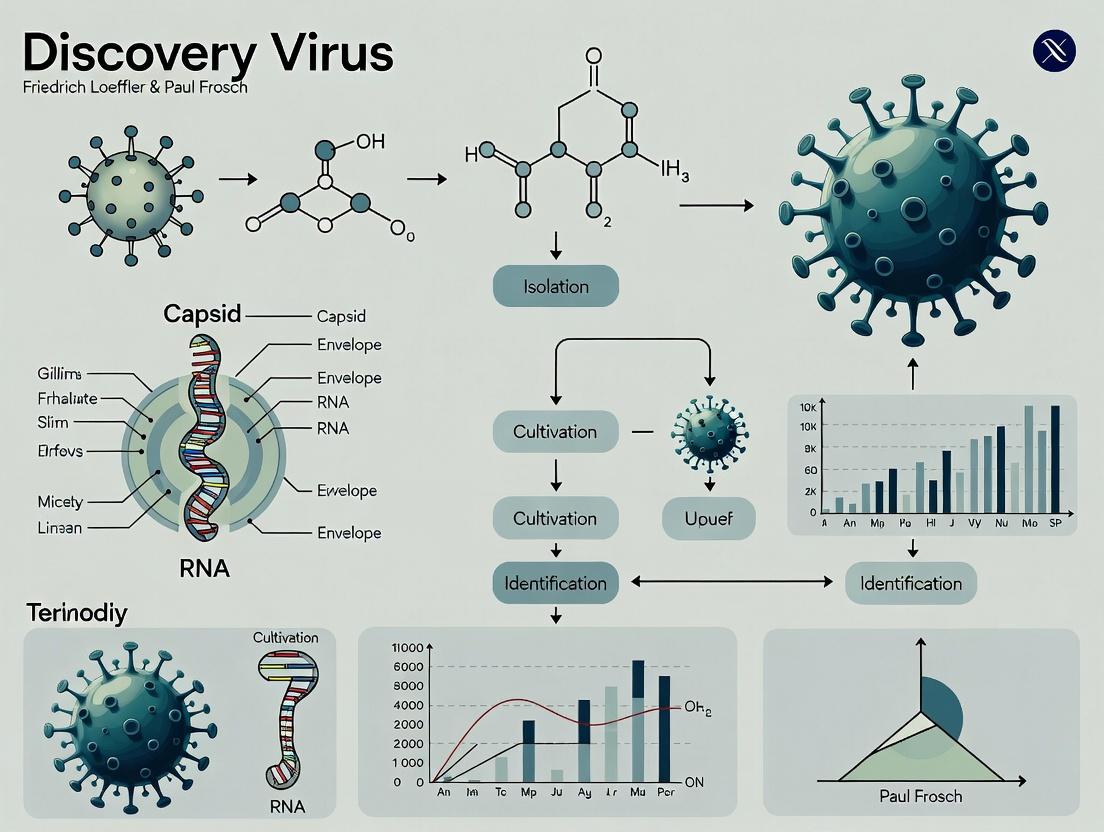
This article provides a detailed exploration of Friedrich Loeffler and Paul Frosch's landmark 1897-98 discovery of the foot-and-mouth disease virus (FMDV), the first animal virus ever identified.
Unlocking Viral Mysteries: The Loeffler-Frosch Discovery of Foot-and-Mouth Disease Virus and Its Modern Research Impact
Abstract
This article provides a detailed exploration of Friedrich Loeffler and Paul Frosch's landmark 1897-98 discovery of the foot-and-mouth disease virus (FMDV), the first animal virus ever identified. Targeted at researchers and drug development professionals, it examines the foundational science of their filtration experiments, the methodological paradigm shift they created in virology, the historical and modern challenges in FMDV research (including diagnostics and vaccine production), and the validation of their findings through contemporary molecular techniques. The synthesis highlights how this seminal work established core principles of virology that continue to inform pathogen discovery, antiviral strategies, and vaccine platform development.
The Paradigm Shift: How Loeffler and Frosch Pioneered Animal Virology and Discovered FMDV
In the closing decades of the 19th century, the germ theory of disease, championed by Robert Koch and Louis Pasteur, was ascendant. The etiological agents of numerous bacterial diseases—anthrax, tuberculosis, cholera—had been isolated and characterized. This framework, however, faced significant challenges when applied to certain highly contagious maladies. Foot-and-mouth disease (FMD), a devastating ailment in livestock, presented a critical anomaly. Despite rigorous application of Koch's postulates, the causative agent could not be cultivated on artificial media, seen clearly with the light microscope, or retained by filters known to trap bacteria. The research of Friedrich Loeffler and Paul Frosch on FMD between 1897 and 1898 became the pivotal work that exposed these limits and laid the foundational principles for the discovery of viruses, thereby defining the "pre-viral" conceptual landscape.
Core Competing Theories of Infection for Filterable Agents
Prior to Loeffler and Frosch's work, several hypotheses attempted to explain the nature of filterable, non-cultivable pathogens.
| Theory | Core Principle | Key Proponents/Context | Explanatory Power for FMD |
|---|---|---|---|
| Ultramicroscopic Bacteria | The agent is a bacterium too small to be resolved by light microscopy. | General extension of germ theory. | Explained filterability but failed on non-culturability. |
| Toxicogenic / Enzyme Theory | Disease is caused by a replicating, ferment-like substance or toxin. | Inspired by fermentology (Pasteur). | Explained filterability and non-visibility; challenged the "living" particulate model. |
| Contagium Vivum Fluidum | The agent is a living, infectious fluid. | Martinus Beijerinck (1898, Tobacco Mosaic Disease). | Explained filterability, invisibility, and diffusion in agar; contradicted by Loeffler/Frosch's dilution experiments. |
| Particulate Theory | The agent is a discrete, replicating, submicroscopic particle. | Friedrich Loeffler & Paul Frosch (1897, FMD). | Supported by dilution-to-extinction experiments indicating particulate, replicating nature. |
The Pivotal Experiment: Loeffler and Frosch's Investigation of Foot-and-Mouth Disease (1897-1898)
Experimental Protocol & Rationale
Objective: To determine the nature of the filterable, invisible causative agent of Foot-and-Mouth Disease.
Key Methodology Steps:
Filtration & Infectivity: Lymph from infected animals was serially filtered through Chamberlain-Pasteur-type porcelain filters (pore size ~0.1-0.2 µm), known to retain all known bacteria.
- Result: Filtrate remained highly infectious, inducing disease in healthy cattle.
Dilution-to-Extinction ("Limit Dilution") Experiment: This was the critical, hypothesis-testing step.
- Protocol: A precise volume of infectious lymph was diluted in a large, measured volume of sterile fluid. A small aliquot of this dilution was used to inoculate a susceptible animal. This process was repeated serially, with each step representing a massive dilution of the original material.
- Rationale: If the agent were a chemical toxin or a contagium vivum fluidum, the infectious activity would decrease gradually and proportionally with each dilution. If it were a discrete particle, there would be a threshold dilution where no single particle is transferred to the aliquot, resulting in a complete loss of infectivity in an "all-or-nothing" manner.
- Result: Infectivity persisted through several dilution passages but eventually ablated abruptly at a high dilution. This pattern was inconsistent with a diffusible fluid or toxin and strongly indicative of a replicating, particulate entity.
Attempts at In Vitro Culture: Repeated attempts to grow the agent on a wide variety of bacteriological media, including serum-based and tissue-infusion broths, under various atmospheric conditions.
- Result: Consistent failure. No growth was observed, distinguishing it fundamentally from bacteria.
Species Specificity & Host Range: Deliberate inoculation of various laboratory animal species.
- Result: Demonstrated a specific host range (primarily cloven-hoofed animals), arguing against a non-specific poison.
Research Reagent Solutions & Essential Materials
| Item / Reagent | Function in Experiment |
|---|---|
| Chamberland-Pasteur Porcelain Filter | Physical separation of bacteria-sized particles from infectious fluid. Pore size (~0.1 µm) defined "filterability." |
| Infectious Lymph | Primary source of the etiological agent, harvested from vesicular lesions of infected cattle. |
| Sterile Dilution Fluid (likely saline or serum) | Used for serial dilution experiments to determine particulate nature. |
| Susceptible Cattle (in vivo system) | Essential bioassay for detecting infectious agent. Replaced artificial culture media. |
| Bacteriological Culture Media (e.g., nutrient broths, agar, serum slants) | Used in attempts to cultivate the agent in vitro, proving its non-bacterial nature. |
| Light Microscope with Aniline Dyes | Used in attempts to visualize the agent; its failure defined "invisibility." |
Conceptual Breakthrough: From Fluid to Particle
Loeffler and Frosch's interpretation of their data was meticulous. They concluded the agent must be a particulate, replicating entity, too small to be resolved microscopically or retained by filters, and obligately dependent on the living host for reproduction. They explicitly rejected Beijerinck's contagium vivum fluidum model for FMD based on their dilution data. Their work established the first rigorous criteria for a new class of pathogens, effectively providing a blueprint for what would later be termed "viruses."
Visualizing the Paradigm Shift
Loeffler Frosch Paradigm Shift
FMD Agent Dilution Experiment Logic
Legacy and Impact on Modern Virology & Drug Development
The work of Loeffler and Frosch established the fundamental biological criteria that still define viruses: obligate intracellular parasitism, submicroscopic size, and genomic simplicity. For modern researchers and drug development professionals, this historical pivot is more than academic. It underscores that:
- Target Identification: Viral life cycles are inherently dependent on host cell machinery, creating a perennial challenge for therapeutic design—selectively targeting the viral process without harming the host.
- Model Systems: The necessity of using live animals (and later, cell cultures) as a "reagent" to propagate the agent established the in vivo and in vitro model systems that remain crucial for antiviral screening and vaccine development.
- Filterability as a Physical Principle: This led directly to the development of ultrafiltration, gradient centrifugation, and eventually molecular size-exclusion techniques, which are foundational for virus purification and characterization.
The pre-viral era culminated not with a visualization of the enemy, but with a logical, experimental proof of its existence—a testament to the power of inferential reasoning in biology, which continues to inform the hunt for novel and emerging pathogens.
The discovery of the foot-and-mouth disease (FMD) virus by Friedrich Loeffler and Paul Frosch stands as a monumental pillar in microbiology and virology. Working at the Institut für Infektionskrankheiten in Berlin under Robert Koch, their collaborative research from 1897 to 1898 provided the first conclusive evidence that an animal disease could be caused by a filterable agent smaller than a bacterium, establishing the fundamental concept of "filterable viruses." This whitepaper details their biographical contexts, synthesizes their experimental protocols, and analyzes their findings within the broader thesis that their work was a critical paradigm shift, creating the field of veterinary virology and enabling modern rational vaccine and therapeutic development.
Biographical Context & Scientific Partnership
Friedrich Loeffler (1852–1915) A Prussian physician and bacteriologist, Loeffler was a pivotal figure in Koch's research team. Prior to the FMD work, he identified the causative agents of glanders (Burkholderia mallei, 1882) and swine erysipelas. His methodological rigor and expertise in animal models were instrumental in the FMD investigations. He later founded the Insel Riems research institute, cementing his legacy in infectious disease research.
Paul Frosch (1860–1928) A medical doctor with a strong background in pathology and microscopy, Frosch was Loeffler's primary collaborator. His skills in histological examination and experimental design complemented Loeffler's bacteriological expertise. Frosch continued a distinguished career in public health, eventually leading the Robert Koch Institute.
Their Partnership: Their collaboration was a synergy of Loeffler's experience with animal pathogens and Frosch's meticulous laboratory analysis. Operating within the Koch's postulates framework, they systematically dismantled the prevailing bacterial hypothesis for FMD.
Core Experimental Protocols & Discovery
The landmark experiments, published in 1898, followed a logical sequence to prove the viral etiology of FMD.
Protocol 1: Filtration and Infectivity Assay
- Objective: To determine if the infectious agent could pass through a bacteria-retaining filter.
- Methodology:
- Lymphatic fluid from the vesicles of infected animals was collected.
- The fluid was passed through a Chamberland-Pasteur filter with a pore size fine enough to retain all known bacteria.
- The filtrate, confirmed sterile by culture on standard bacteriological media, was inoculated subcutaneously into the udders of healthy cows.
- Key Result: Filtered fluid reliably induced classic FMD symptoms, proving the agent was "filterable."
Protocol 2: Serial Passage and Dilution to Exclude Toxins
- Objective: To rule out a bacterial toxin as the cause and demonstrate the replicative nature of the agent.
- Methodology:
- Material from the vesicles of an animal infected via Protocol 1 was used to prepare a new filtered inoculum.
- This inoculum was serially passaged through multiple healthy animals.
- At each passage, the inoculum was greatly diluted (up to 1:1000,000) to eliminate any hypothetical toxin concentration.
- Key Result: Even at high dilutions, the filtrate remained infectious over multiple passages. This proved the agent could multiply within the host, a property exclusive to a living, replicating pathogen, not a mere toxin.
Protocol 3: Determination of Size and Nature
- Objective: To estimate the size of the agent and investigate its cultivation.
- Methodology:
- Attempts to culture the agent on artificial media, in blood serum, or in tissue fragments failed.
- Based on filtration through graded collodion membranes (a later refinement of their work), they correctly estimated the agent's size to be in the range of a few tens of nanometers.
- They demonstrated the agent's sensitivity to heat and certain chemicals (e.g., glycerin).
- Key Result: The agent was an obligate intracellular pathogen, uncultivable outside a living host, with dimensions orders of magnitude smaller than bacteria.
Table 1: Summary of Key Quantitative Findings from Loeffler & Frosch (1898)
| Experimental Parameter | Observation / Quantitative Result | Interpretation |
|---|---|---|
| Filtrate Infectivity | Positive infection from Chamberland-filtered lymph. | Agent is smaller than bacteria. |
| Culturalbility | No growth on any bacteriological media. | Not a cultivable bacterium. |
| Serial Passage | Infection maintained after >10 serial passages. | Agent is self-replicating. |
| Dilution Limit | Infectivity retained at dilutions up to 10⁻⁶. | Rules out a toxin; indicates replication. |
| Size Estimation | Passed through 100-120 nm pore membranes (later work). | Places agent in the viral size range. |
| Thermal Stability | Inactivated by 1-hour heating at 50-55°C. | Demonstrates biological nature, sensitive to denaturation. |
Visualizing the Experimental Logic & Impact
Loeffler-Frosch Experimental Workflow
Scientific Synergy Leading to Discovery
The Scientist's Toolkit: Research Reagent Solutions
Table 2: Key Research Materials & Their Functions in Loeffler & Frosch's Experiments
| Item / Reagent | Function in the Experimental Context |
|---|---|
| Chamberland-Pasteur Filter | Porcelain filter with pore sizes small enough to retain all bacteria. Critical for separating the viral agent from bacterial contaminants. |
| Lymph from Vesicles | Primary infectious material. Contains the highest titer of the FMD virus from active lesions in infected cattle. |
| Standard Bacteriological Media (e.g., Agar, Broth) | Used to confirm the sterility of filtrates. No growth proved the absence of cultivable bacteria. |
| Susceptible Cattle (in vivo model) | Essential biological system. Provided the only means to propagate, assay, and study the obligate intracellular pathogen. |
| Dilution Buffers (Saline) | Used for serial dilution experiments to disprove the toxin theory and demonstrate agent replication. |
| Glycerin | Used as a stabilizing agent for preserving infectious lymph samples for short periods, aiding experimental logistics. |
| Microscopy & Staining Reagents | Used for histological examination of tissues to characterize lesions and rule out visible bacterial pathogens. |
This guide details the design and execution of a critical methodological advance that enabled the seminal discovery by Friedrich Loeffler and Paul Frosch in 1898: the identification of the foot-and-mouth disease (FMD) pathogen as a contagium vivum fluidum (contagious living fluid). Their work, commissioned by the German government, sought to identify the causative agent of the economically devastating FMD. The prevailing germ theory suggested a bacterial cause, yet no cultivable bacterium was consistently found.
Loeffler and Frosch’s pivotal insight was to apply Charles Chamberland’s porcelain bacteriological filters—developed in Pasteur’s laboratory—not merely as a sterilization tool, but as a means of physical separation. Their experiments demonstrated that the infectious agent from vesicle lymph of sick animals passed through filters that retained all known bacteria. This filtrate remained infectious upon serial passage in healthy animals. They concluded the agent was a replicating entity smaller than bacteria, coining the term contagium vivum fluidum. This work is now recognized as the foundation of animal virology, providing the first evidence of viruses as filterable infectious agents.
Core Experimental Protocol: Chamberland Filtration and Bioassay
The definitive experiment is a sequential process of filtration, control, and biological amplification.
Protocol: Isolation and Demonstration of Filterable Infectivity
Step 1: Sample Acquisition and Preparation
- Source: Collect fresh vesicular fluid and epithelial tissue from the tongue or hoof of a cattle showing clear signs of acute FMD.
- Homogenization: Macerate the tissue in a sterile mortar with a minimal volume of sterile physiological saline (0.9% NaCl) or glycerin-phosphate buffer.
- Clarification: Centrifuge the homogenate at low speed (e.g., 2,000 x g for 15 min) to remove gross cellular debris. The supernatant is the "raw infectious lymph."
Step 2: Chamberland Filtration
- Apparatus: Assemble a sterile Chamberland filter (porcelain candle, model "F" or similar fine-grade) attached to a sterile receiving flask under partial vacuum.
- Filtration: Slowly pass the clarified lymph through the filter. Apply gentle suction if necessary. The material that passes through is the "filtrate."
- Control: Retain a portion of the pre-filtration lymph as "unfiltered control."
Step 3: Verification of Bacterial Sterility
- Culture both unfiltered lymph and filtrate on rich bacteriological media (e.g., nutrient agar, blood agar).
- Incubate at 37°C for 72 hours. The unfiltered control may show bacterial growth. The filtrate must show no bacterial colony growth to confirm the filter retained bacteria.
Step 4: Biological Assay (Inoculation)
- Subjects: Use susceptible, healthy cattle (or, as a smaller-scale model, guinea pigs).
- Inoculation Groups:
- Filtrate Group: Inoculate scarified oral mucosa or subcutaneous tissue with the sterile filtrate.
- Unfiltered Control Group: Inoculate with the original, unfiltered lymph.
- Negative Control Group: Inoculate with sterile buffer processed through the same filter.
- Monitoring: Observe animals daily for 2-10 days for development of primary vesicles (pyrexia, followed by lesions at inoculation site and potentially in the mouth and feet).
Step 5: Serial Passage (Proof of Replication)
- Harvest vesicular fluid from a Filtrate Group animal that developed disease.
- Repeat the filtration and inoculation process (Steps 1-4) using this new material as the source.
- The induction of disease by this second-passage filtrate provides definitive proof that the filterable agent replicates within the host, ruling out a mere toxin.
Data Presentation
Table 1: Results of the Definitive Filtration and Inoculation Experiment
| Experimental Group | Bacterial Culture Result | Clinical Outcome in Cattle (Incubation Period) | Interpretation |
|---|---|---|---|
| Unfiltered Lymph (Positive Control) | Growth likely | Disease (1-3 days) | Confirms infectiousness of source material. |
| Chamberland Filtrate (Test) | No growth | Disease (2-5 days) | Key Result: Infectivity is caused by a filterable agent smaller than bacteria. |
| Buffer through Filter (Negative Control) | No growth | No disease | Confirms filter and procedure are not contaminated. |
| Second-Passage Filtrate | No growth | Disease (consistent) | Proves the filterable agent is self-replicating (contagium vivum fluidum). |
Table 2: Modern Specifications of Historical Filtration Parameters
| Parameter | Chamberland Porcelain Candle (c. 1898) | Modern Interpretation / Equivalent |
|---|---|---|
| Pore Size Estimate | 0.1 - 0.2 µm (uncalibrated, nominal) | ~100-200 nm |
| Retention Capability | All cultivable bacteria (typically >0.5 µm) | Retains mycoplasma, most bacteria; passes most viruses. |
| Key Agent Used | Foot-and-mouth disease virus | FMDV diameter: ~23-25 nm (Picornaviridae) |
| Experimental Proof | Filtrate induced disease; no bacterial colonies | Virus particles physically pass through pores. |
The Scientist's Toolkit: Research Reagent Solutions
Table 3: Essential Materials for the Filtration-Virus Discovery Experiment
| Item | Function & Specification |
|---|---|
| Chamberland Porcelain Filter Candle (Grade F/Fine) | The core tool. Unglazed porcelain with fine pores. Creates a physical size-based separation, retaining bacteria while allowing sub-microscopic viral particles to pass. |
| Sterile Physiological Saline (0.9% NaCl) | Isotonic solution for tissue maceration and dilution. Maintains agent viability and prevents osmotic damage to potential pathogen. |
| Nutrient Agar & Blood Agar Plates | Sterility controls. Used to culture bacteria from pre- and post-filtration samples. Absence of growth in filtrate confirms bacterial retention by filter. |
| Susceptible Animal Model (Cattle/Guinea Pig) | Biological assay system. Provides the necessary host environment for the replication and amplification of the filterable agent, enabling detection of infectivity. |
| Sterile Syringes & Scarification Tools | For precise inoculation of test materials onto mucous membranes or subcutaneous tissues of the animal model. |
| Glycerin-Phosphate Buffer | Historical preservative/stabilizing medium for infectious lymph. Glycerin (≈50%) suppresses bacterial growth while maintaining FMDV infectivity for short periods. |
Visualized Workflows and Conceptual Diagrams
Title: Core Filtration Experiment Workflow
Title: Logical Path from Thesis to Discovery
Title: Serial Passage Proof of Concept
This technical guide examines the foundational experiments of Friedrich Loeffler and Paul Frosch in 1898, which provided definitive proof for the existence of a filterable, replicating, non-toxin pathogen—the foot-and-mouth disease (FMD) virus. Their work stands as a cornerstone in virology, decisively challenging the then-prevailing bacteriological paradigm. It established the critical conceptual framework for "filterable viruses" as a distinct class of infectious agents, characterized by their submicroscopic size, obligatory parasitism, and ability to replicate within a living host. This discovery directly enabled subsequent research into viral pathogenesis, immunology, and antiviral drug development.
Core Experimental Protocols & Findings
Key Experimental Series
Loeffler and Frosch’s conclusion was built upon a logical series of in vivo experiments using vesicular lymph from infected cattle.
Experiment 1: Filtration and Infectiousness
- Objective: To determine if the infectious agent could pass through a bacteria-retaining filter.
- Protocol:
- Collect vesicular fluid from the aphthae (blisters) of an infected calf.
- Dilute the lymph 1:100 in sterile glycerol-saline solution.
- Filter the dilution through a Chamberland-type porcelain filter (pore size approx. 0.1-0.2 µm), known to retain all cultivable bacteria.
- Inoculate multiple sites on the oral mucosa of two healthy, susceptible calves with 0.1 ml of the filtrate.
- Key Finding: Both calves developed typical foot-and-mouth disease lesions at the inoculation sites within 48 hours. This proved the agent was "filterable."
Experiment 2: Serial Passage and Replication Evidence
- Objective: To demonstrate the agent could multiply in vivo, distinguishing it from a chemical toxin.
- Protocol:
- Take lymph from the primary lesions induced in Experiment 1.
- Dilute this lymph 1:100 in glycerol-saline.
- Filter again through a Chamberland filter.
- Use this filtrate to inoculate a second pair of calves.
- Repeat this process (dilution, filtration, inoculation) through a series of up to ten animals.
- Key Finding: The filtrate remained potent and infectious through multiple serial passages. The massive dilution (1:100) at each step precluded the possibility that a fixed amount of a chemical toxin was being carried over. The sustained infectivity could only be explained by replication of the agent in each host.
Experiment 3: Exclusion of a Toxin
- Objective: To directly test the hypothesis that the disease was caused by a filterable toxin.
- Protocol:
- Collect a large volume of vesicular lymph from an infected animal.
- Inoculate a single, large dose (5 ml) of filtered lymph subcutaneously into a healthy calf.
- Key Finding: The calf developed localized lesions only at the inoculation site, not the generalized systemic disease that would be expected from a true toxin. Furthermore, the disease could not be induced by injecting blood from a sick animal, indicating the agent was not simply a soluble poison in circulation.
Experiment 4: Attempted In Vitro Culture
- Objective: To confirm the agent was not a cultivable bacterium.
- Protocol: Attempts to grow the agent on all standard bacteriological media of the time (agar plates, nutrient broths, serum-enriched media) under various atmospheric conditions.
- Key Finding: No bacterial growth was observed. Any colonies that appeared were proven non-pathogenic upon inoculation into animals.
Table 1: Summary of Key In Vivo Experimental Results (Loeffler & Frosch, 1898)
| Experiment | Material Inoculated | Dilution | Animal Model (Calf) | Result (Onset of Lesions) | Critical Inference |
|---|---|---|---|---|---|
| Initial Proof | Filtered vesicular lymph | 1:100 | 2 / 2 | 48 hours | Agent is filterable (<0.2 µm). |
| Serial Passage 1 | Filtrate from passage 0 lesion | 1:100 | 2 / 2 | 48 hours | Agent persists after dilution/filtration. |
| Serial Passage 3 | Filtrate from passage 2 lesion | 1:100 | 2 / 2 | 48-72 hours | Agent remains infectious. |
| Serial Passage 10 | Filtrate from passage 9 lesion | 1:100 | 2 / 2 | 48 hours | Replication proven: Agent concentration maintained despite massive cumulative dilution (1:100^10). |
| Toxin Test | Large volume (5 ml) filtered lymph | Undiluted | 1 / 1 | Local lesions only | No systemic poisoning; agent acts locally and replicates. |
Visualization of Experimental Logic and Impact
Title: Loeffler & Frosch 1898: Hypothesis Testing Workflow
The Scientist's Toolkit: Key Research Reagent Solutions
Table 2: Essential Materials for Replicating Historical & Early Viral Research
| Item / Reagent | Function in Context |
|---|---|
| Chamberland Porcelain Filter | The critical tool. A candle-shaped filter with pore sizes small enough (0.1-0.2 µm) to retain all known bacteria, allowing only viruses or soluble substances to pass. |
| Vesicular Lymph (Field Sample) | The source of the pathogen. Sterilely collected fluid from animal lesions, containing high titers of the virus. |
| Glycerol-Saline Diluent | A stabilizing solution used to dilute infectious material while maintaining viability, crucial for serial passage experiments. |
| Susceptible Animal Model (Cattle/Calf) | The essential in vivo culture system. Provided the necessary host environment for viral replication and disease manifestation. |
| Sterile Bacteriological Media | Used in control experiments to attempt cultivation, proving the agent was not a conventional bacterium. |
| Syringes & Cannulas | For precise inoculation of filtrates and samples into specific sites (oral mucosa, subcutaneous) in experimental animals. |
The 1898 discovery of Foot-and-Mouth Disease Virus (FMDV) by Friedrich Loeffler and Paul Frosch was a paradigm shift, establishing the first evidence of a filterable agent causing disease in animals—the founding principle of virology. This whitepaper frames FMDV not merely as a pathogen of agricultural concern but as the quintessential prototype for understanding animal virus biology. Its relatively simple structure, high replication fidelity in vitro, and well-characterized pathogenesis offer a unique and powerful model system. By leveraging modern tools, FMDV research provides immediate, transferable insights into viral replication, host adaptation, and therapeutic design applicable across diverse virus families.
Table 1: Prototypical Attributes of FMDV vs. Other Model Animal Viruses
| Attribute | FMDV (Prototype) | Poliovirus (Picornavirus) | Influenza A Virus (Orthomyxovirus) | Vesicular Stomatitis Virus (Rhabdovirus) |
|---|---|---|---|---|
| Genome Type | +ssRNA | +ssRNA | -ssRNA, segmented | -ssRNA, non-segmented |
| Genome Size (kb) | 8.2-8.5 | 7.5 | 13.5 (total) | 11.2 |
| Capsid Symmetry | Icosahedral | Icosahedral | Helical (RNP) | Helical (RNP) |
| Envelope | No | No | Yes | Yes |
| IRES Type | Type II | Type I | N/A | N/A |
| Mutation Rate (subs/site/year) | ~1 x 10⁻² - 10⁻³ | ~1 x 10⁻² | ~3 x 10⁻³ | ~1 x 10⁻⁴ |
| Known Serotypes/Antigenic Shift | 7 (A, O, C, SAT1-3, Asia1) | 3 | High (Antigenic Shift/Drift) | Low (Monotypic) |
Table 2: Experimental Advantages of the FMDV Model System
| Experimental Domain | FMDV Advantage | Broader Applicability |
|---|---|---|
| Replication Studies | Defined IRES-driven translation; simple replication cycle. | Model for all +ssRNA viruses & cap-independent translation. |
| Assembly & Morphogenesis | Precise, receptor-independent capsid assembly. | Insight into icosahedral symmetry & particle stability. |
| Host-Pathogen Interaction | Utilizes integrin & alternative receptors; clear cytopathology. | Model for receptor tropism, switching, and cell entry. |
| Antigenic Variation | High mutation rate leads to quasispecies & immune escape. | Direct model for viral evolution & vaccine strain selection. |
| Persistent Infection | Establishes persistent infection in carrier animals. | Model for chronic viral states and viral reservoirs. |
Key Experimental Protocols
Protocol: FMDV Quasispecies Analysis by Next-Generation Sequencing (NGS)
Objective: To characterize the genetic diversity and mutant spectrum within an FMDV population. Methodology:
- Viral RNA Extraction: Isolate RNA from cell culture supernatant or animal tissue (e.g., vesicular fluid) using a guanidinium thiocyanate-phenol-chloroform method or commercial kit.
- cDNA Synthesis & Amplification: Generate cDNA using reverse transcriptase with random hexamers. Perform PCR using high-fidelity polymerase to amplify targeted regions (e.g., VP1 capsid gene or the entire P1 capsid-coding region).
- NGS Library Preparation: Fragment amplicons, ligate sequencing adapters with unique dual indices (UDIs) to enable multiplexing and minimize index hopping.
- High-Throughput Sequencing: Perform sequencing on an Illumina MiSeq or NovaSeq platform to achieve high coverage depth (>10,000x per sample).
- Bioinformatic Analysis: Process raw reads through a pipeline: quality trimming (Trimmomatic), alignment to reference genome (BWA-MEM), and variant calling (LoFreq) to identify low-frequency variants (>0.1% frequency). Calculate genetic diversity metrics (e.g., Shannon entropy, nucleotide diversity).
Protocol: FMDV Neutralization Assay using Reporter Virus Particles (RVPs)
Objective: To quantify neutralizing antibody titers in serum against specific FMDV serotypes. Methodology:
- RVP Production: Generate FMDV RVPs by co-transfecting cells with: a) a replicon RNA expressing luciferase and the non-structural proteins, and b) plasmids expressing the structural proteins (VP0, VP1, VP3) of the target serotype.
- Serum Inactivation & Dilution: Heat-inactivate test serum at 56°C for 30 minutes. Prepare serial two-fold dilutions in cell culture medium.
- Virus-Serum Incubation: Mix equal volumes of diluted serum with a standardized titer of RVPs (e.g., 10⁵ RLU) and incubate at 37°C for 1 hour.
- Infection: Add the RVP-serum mixture to susceptible cells (e.g., BHK-21) in a 96-well plate. Incubate for 4-6 hours.
- Luciferase Readout: Lyse cells and add luciferase substrate. Measure relative luminescence units (RLU) on a plate reader.
- Data Analysis: Calculate percent neutralization for each serum dilution. Determine the 50% neutralization titer (NT₅₀) using a four-parameter logistic regression curve.
Visualizations: Signaling Pathways & Workflows
Diagram Title: FMDV Replication Cycle: Key Molecular Steps
Diagram Title: NGS Workflow for FMDV Quasispecies Analysis
The Scientist's Toolkit: Key Research Reagent Solutions
Table 3: Essential Materials for Core FMDV Research
| Reagent/Material | Function/Application | Key Detail/Example |
|---|---|---|
| Susceptible Cell Lines | In vitro virus propagation, titration, and assay substrate. | BHK-21 (Baby Hamster Kidney), IBRS-2, primary bovine thyroid cells. |
| Serotype-Specific Antisera | Serotyping, neutralization assays, and antigenic characterization. | Produced in guinea pigs or rabbits; reference standards from WOAH/FAO reference labs. |
| Monoclonal Antibodies (mAbs) | Epitope mapping, structural studies, and diagnostic development. | Neutralizing mAbs against antigenic sites (e.g., site 1 on VP1). |
| Infectious Clone Systems | Reverse genetics for precise genomic manipulation. | Plasmid-based systems for all seven serotypes enable targeted mutagenesis. |
| FMDV Reporter Virus Particles (RVPs) | Safe, high-throughput neutralization assays (no live virus required). | Luciferase or GFP-expressing pseudovirions with defined capsid proteins. |
| 3C Protease Inhibitors | Study of polyprotein processing and as potential antiviral leads. | Rupintrivir analogs; used to probe cleavage kinetics and host protein targets. |
| Integrin-Blocking Peptides | Investigation of receptor usage and entry pathways. | RGD (Arg-Gly-Asp) and LDV (Leu-Asp-Val) motif peptides to block integrin binding. |
| Next-Gen Sequencing Kits | Quasispecies analysis, transmission tracking, and evolution studies. | Illumina cDNA library prep kits for direct viral RNA sequencing. |
From Historical Techniques to Modern Applications: FMDV Research Methodologies and Drug Discovery Platforms
This whitepaper delineates the technical replication of the seminal 1898 filtration experiment by Friedrich Loeffler and Paul Frosch, which established the viral nature of the foot-and-mouth disease (FMD) agent. We contextualize this foundational work within modern pathogen discovery, detailing how its core principles—filtration, infectivity assays, and host-specific propagation—remain integral to contemporary viral metagenomics and unknown pathogen identification. The guide provides updated protocols, reagent specifications, and data frameworks for applying these classical concepts with current technology.
Historical and Thesis Context
The discovery of the foot-and-mouth disease virus (FMDV) by Loeffler and Frosch was a paradigm shift, proving that an infectious agent smaller than bacteria could cause disease. Their work rested on a logical, experiment-based framework: 1) Filtration of infectious material through bacteria-retaining filters, 2) Demonstration of retained infectivity in filtrate, 3) Serial transmission in a susceptible host, and 4) Calculation of an approximate size based on filter porosity. This thesis of "filterable agents" underpins all modern virology. Today, this framework is applied not to a known livestock disease, but to samples from unexplained infections, environmental reservoirs, and complex metagenomic datasets, seeking novel pathogens.
Core Experimental Principles & Modern Translation
The original study's pillars are translated below with contemporary equivalents.
Table 1: Translation of Core Principles from 1898 to Modern Practice
| Core Principle (1898) | 1898 Methodology | Modern Application & Tool |
|---|---|---|
| Agent Filtration | Porcelain Chamberland filters (100-150 nm pore size) | Sequential filtration using membranes (e.g., 0.45 µm, 0.22 µm, 100-kDa centrifugal filters). |
| Infectivity Assay | Inoculation of filtrate into the lip epithelium of cattle. | In vitro culture on permissive cell lines; in vivo models (e.g., IFNAR-/- mice); xenotransplantation. |
| Propagation & Proof | Serial passage of filtrate between cattle. | Serial passage in cell culture; amplification via cell culture or rolling circle amplification. |
| Size Estimation | Inference from filter pore size. | Electron microscopy (EM), dynamic light scattering, ultrafiltration size cut-offs. |
| Exclusion of Bacteria | Microscopy and culture on nutrient media. | Next-Generation Sequencing (NGS) with 16S rRNA screening, broad-range PCR, and sterility cultures. |
Detailed Modernized Experimental Protocols
Protocol: Sequential Filtration for Particle Size Separation
Objective: To separate and concentrate particles smaller than bacteria from a complex biological sample (e.g., tissue homogenate, CSF, plasma).
- Sample Prep: Clarify sample by low-speed centrifugation (5,000 x g, 10 min, 4°C) to remove debris.
- Primary Filtration: Pass supernatant through a 0.45 µm polyethersulfone (PES) membrane syringe filter.
- Secondary Filtration: Pass filtrate through a 0.22 µm PES membrane syringe filter. (Retain both filtrate and filter for downstream analysis).
- Viral Concentration: Concentrate the 0.22 µm filtrate using 100-kDa molecular weight cut-off (MWCO) centrifugal filters (e.g., Amicon Ultra) per manufacturer's protocol. The retentate contains virus-sized particles.
- Control: Process a sterile buffer in parallel as a negative control.
Protocol: Infectivity Assay in Cell Culture (Modern Equivalent of Cattle Inoculation)
Objective: To demonstrate the presence of a replicating, cytopathic agent in the filtrate.
- Cell Line Selection: Choose based on sample origin (e.g., Vero E6 for broad susceptibility, primary human bronchial cells for respiratory samples).
- Inoculation: Apply 100 µL of concentrated filtrate to a 70-80% confluent monolayer in a 24-well plate. Include mock-inoculated controls.
- Incubation: Adsorb for 1 hour at 37°C, rock gently. Add maintenance medium (e.g., DMEM with 2% FBS, antibiotics).
- Monitoring: Observe daily for cytopathic effect (CPE) for 7-14 days. Passage supernatant to fresh cells upon CPE observation or at endpoint.
- Confirmation: Extract nucleic acid from cell culture supernatant to confirm amplification of non-host, non-bacterial sequences via NGS.
Protocol: Metagenomic Sequencing for Pathogen Identification
Objective: To identify unknown nucleic acids in the infectious filtrate.
- Nucleic Acid Extraction: Use a method that captures both DNA and RNA (e.g., QIAamp Viral RNA Mini Kit with carrier RNA). Treat with DNase to remove free host DNA if focusing on RNA viruses.
- Library Prep: For RNA, perform reverse transcription and random amplification. For DNA, use multiple displacement amplification (MDA) with caution to avoid bias. Use a library preparation kit compatible with low input (e.g., Nextera XT).
- Sequencing: Perform high-throughput sequencing (Illumina MiSeq/NextSeq).
- Bioinformatics: Process reads through a pipeline: quality trim -> remove host reads (map to host genome) -> de novo assemble remaining reads -> BLAST against viral/nucleotide databases.
Visualizing the Workflow and Logical Framework
Title: Modern Pathogen Discovery Workflow from Filtration to ID
Title: Logical Evolution from FMDV Discovery to Modern Thesis
The Scientist's Toolkit: Research Reagent Solutions
Table 2: Essential Research Reagents & Materials for Replication Studies
| Item/Category | Specific Example/Type | Function in Modern Replication |
|---|---|---|
| Filtration Devices | 0.22 µm PES syringe filter; 100-kDa MWCO centrifugal filter (Amicon Ultra) | Removes bacteria/cells; concentrates virus-sized particles. |
| Cell Culture Systems | Vero E6, Caco-2, BHK-21 cells; air-liquid interface (ALI) cultures. | Permissive substrate for replicating unknown viruses from diverse tissues. |
| Nucleic Acid Extraction | QIAamp Viral RNA Mini Kit; DNase I (RNase-free). | Isolates total nucleic acid from filtrates; removes contaminating host DNA. |
| NGS Library Prep | NEBNext Ultra II RNA/DNA kits; SMARTer cDNA amplification kits. | Prepares sequencing libraries from low-input, fragmented nucleic acids. |
| Bioinformatics Tools | FastQC, Trimmomatic, Bowtie2/BWA, SPAdes, BLASTn/t. | Quality control, host subtraction, de novo assembly, sequence homology search. |
| Validation Assays | Reverse-transcription quantitative PCR (RT-qPCR); Immunohistochemistry (IHC). | Confirms presence and quantifies pathogen; visualizes in host tissue. |
| Imaging | Negative-stain Transmission Electron Microscopy (TEM). | Visualizes viral morphology in filtrate or culture. |
Quantitative Data & Expected Outcomes
Table 3: Representative Data from a Modern Filtration-Based Discovery Study
| Measurement Parameter | Sample (Pre-Filtration) | 0.22 µm Filtrate | 100-kDa Retentate (Concentrate) | Interpretation |
|---|---|---|---|---|
| Total DNA (ng/µL) | 125.4 | 8.7 | 15.2 | Significant host DNA removal by filtration. |
| Total RNA (ng/µL) | 85.6 | 5.2 | 12.8 | Viral RNA concentrated in retentate. |
| 16S rRNA PCR (Ct) | 22.1 | Undetected (Ct >40) | Undetected (Ct >40) | Confirms bacterial depletion. |
| Cell Culture CPE | Positive (48h) | Positive (120h) | Positive (72h) | Infectivity confirmed in all fractions, delayed in filtrate. |
| NGS Reads (Post-Host Depletion) | 5.2M reads; 99.7% host | 1.1M reads; 98.1% host | 1.8M reads; 75.3% host | Concentration enriches for non-host sequences. |
| Novel Viral Hits | Low coverage (<10x) | Identified, low coverage | Identified, high coverage (>1000x) | Concentrate enables robust genome assembly. |
The logical and experimental framework pioneered by Loeffler and Frosch remains astonishingly resilient. Replicating their filtration study today requires not mere historical recreation, but a sophisticated translation of its principles. By combining physical filtration with advanced cell culture, genomic amplification, and bioinformatic mining, researchers can systematically hunt for novel pathogens. This approach continues to validate the core thesis that filterable, transmissible agents are a primary cause of unexplained infectious disease, driving discovery in outbreaks, zoonoses, and chronic illnesses of unknown etiology.
The foundation of modern foot-and-mouth disease virus (FMDV) research rests upon the pioneering work of Friedrich Loeffler and Paul Frosch, who, in 1897, first demonstrated that the causative agent of FMD was a filterable virus—a discovery that established virology as a distinct scientific discipline. Central to all subsequent FMDV research, from basic virology to vaccine and antiviral development, has been the continuous evolution of in vitro cell culture systems. This guide details the technical progression from primary cells to immortalized cell lines, providing the methodologies and tools that underpin contemporary FMDV studies.
Historical Progression and Quantitative Comparison
The suitability of a cell culture system for FMDV propagation is determined by its susceptibility, permissible nature for viral replication, and its relevance for research or production applications. The following table summarizes key quantitative data across the evolution of these systems.
Table 1: Comparative Characteristics of FMDV Cell Culture Systems
| Cell System | Type | Typical Viral Yield (TCID₅₀/mL) | Key FMDV Receptor(s) | Primary Use | Major Limitation |
|---|---|---|---|---|---|
| Bovine Thyroid (BTY) | Primary | 10⁷ – 10⁸ | Integrins (αvβ₃, αvβ₆, αvβ₁) | Virus Isolation, Research | Short lifespan, donor variability |
| Porcine Kidney (PK) | Primary | 10⁶ – 10⁷.⁵ | Integrins (αvβ₃, αvβ₆) | Vaccine Production (historical) | Batch inconsistency, serum requirement |
| Baby Hamster Kidney-21 (BHK-21) | Continuous Line | 10⁸ – 10⁹ | Heparan Sulfate, Integrins (adapted) | Vaccine Antigen Production, Research | Genetic drift, adaptation artifacts |
| Porcine Kidney-15 (PK-15) | Continuous Line | 10⁶ – 10⁷ | Unknown (likely integrin-independent) | Diagnostic Assays, Research | Low virus yield for some strains |
| Fetal Goat Tongue (ZZ-R) | Primary | 10⁷ – 10⁸.⁵ | Integrins (αvβ₆) | High-titer virus isolation | Limited availability, ethical constraints |
| LF-BK αvβ6 | Genetically Engineered | 10⁸ – 10¹⁰ | Engineered bovine αvβ6 integrin | Vaccine Production, Research | Defined, consistent, high-yield platform |
| Bovine Kidney (FBK, ZFBK) | Immortalized | 10⁷ – 10⁹ | Integrins (αvβ₃, αvβ₆) | Research, Diagnostic | Requires characterization per clone |
Detailed Experimental Protocols
Protocol 1: Primary Bovine Thyroid (BTY) Cell Preparation for FMDV Isolation
BTY cells remain the "gold standard" for initial isolation of field strains due to high sensitivity.
- Tissue Acquisition: Aseptically collect thyroid glands from young calves (e.g., <6 months) at slaughter.
- Digestion: Mince tissue finely and digest with 0.25% trypsin and 0.1% collagenase Type IV in PBS for 45-60 minutes at 37°C with gentle agitation.
- Filtration & Washing: Filter cell suspension through 100μm then 40μm cell strainers. Pellet cells by centrifugation at 300 x g for 10 minutes. Wash twice in PBS.
- Culture: Resuspend in growth medium (Ham's F-12 supplemented with 10% FBS, 2mM L-glutamine, 100 U/mL penicillin, 100 μg/mL streptomycin, and 20mM HEPES). Seed at 2-3 x 10⁵ cells/cm² in tissue culture flasks.
- Infection for Isolation: Upon reaching 90% confluence, inoculate with clarified tissue homogenate. Adsorb for 1 hour at 37°C with 5% CO₂, then add maintenance medium (2% FBS).
Protocol 2: Titration of FMDV Using Immortalized LF-BK αvβ6 Cells
This protocol uses a genetically engineered cell line stably expressing the bovine αvβ6 integrin, the primary receptor for FMDV.
- Cell Seeding: Seed LF-BK αvβ6 cells in 96-well tissue culture plates at 1.5 x 10⁴ cells/well in growth medium (MEM + 10% FBS). Incubate 18-24 hours to achieve ~90% confluence.
- Virus Dilution: Prepare tenfold serial dilutions (10⁻¹ to 10⁻¹⁰) of virus sample in infection medium (MEM + 2% FBS). Use 8 wells per dilution.
- Inoculation: Remove growth medium from cells. Add 50μL of each virus dilution to respective wells. Include cell controls (medium only). Incubate 1 hour at 37°C, 5% CO₂.
- Overlay: Add 150μL of carboxymethylcellulose (CMC) overlay medium (MEM + 2% FBS, 1% CMC) to each well.
- Incubation & Fixing: Incubate plates for 48-72 hours. Fix cells with 10% formalin for 30 minutes, then stain with 0.1% crystal violet solution for 20 minutes.
- Plaque Counting & TCID₅₀ Calculation: Wash plates, air dry, and count plaque-forming units (PFUs). Calculate TCID₅₀ using the Spearman-Kärber or Reed & Muench method.
Visualizing FMDV Entry Pathways in Different Cell Systems
Title: FMDV Cellular Entry Mechanisms
Experimental Workflow for Cell Line Development & Virus Propagation
Title: Immortalized Cell Line & FMDV Production Workflow
The Scientist's Toolkit: Key Research Reagent Solutions
Table 2: Essential Materials for FMDV Cell Culture Research
| Reagent/Material | Function/Application | Key Considerations |
|---|---|---|
| Fetal Bovine Serum (FBS) | Provides essential growth factors, hormones, and nutrients for cell proliferation. | Must be gamma-irradiated and certified for virology use to avoid adventitious agents. Batch testing for optimal growth is critical. |
| MEM/Ham's F-12 Media | Basal nutrient medium for bovine/primary cells and engineered lines, respectively. | Often supplemented with non-essential amino acids, HEPES buffer, and sodium bicarbonate. |
| Recombinant Trypsin-EDTA | Passaging and detachment of adherent cell monolayers (e.g., BHK-21, PK-15). | Preferred over porcine trypsin to eliminate risk of contaminating porcine viruses. |
| Carboxymethylcellulose (CMC) | Viscous overlay for plaque assays to restrict virus spread, enabling discrete plaque formation. | Concentration (typically 1-1.5%) must be optimized per cell line to allow nutrient diffusion. |
| Cell Culture Grade DMSO | Cryopreservant for long-term storage of primary cells and master cell banks. | Use controlled-rate freezing and storage in liquid nitrogen vapor phase. |
| Recombinant Human Epidermal Growth Factor (EGF) | Supplement for primary epithelial cell cultures (e.g., BTY cells) to enhance growth and longevity. | |
| Anti-Integrin αvβ6 Monoclonal Antibody | Tool for blocking FMDV infection in receptor studies and confirming αvβ6-dependent entry. | Critical control for experiments using genetically engineered cell lines. |
| RGD-containing Peptide | Competitive inhibitor that blocks virus binding to integrin receptors. Used to study entry mechanisms. | |
| RNA Extraction Kit (Silica-membrane) | Rapid, reliable extraction of viral RNA from infected cell culture supernatant for RT-qPCR. | Should include a DNase treatment step to remove genomic DNA contamination. |
| Plaque Assay Staining Solution (Crystal Violet) | Stains live, fixed cells to visualize plaques (clear areas of cytopathic effect) for virus quantification. | Prepared in methanol or formalin for simultaneous fixing and staining. |
The discovery of foot-and-mouth disease virus (FMDV) by Friedrich Loeffler and Paul Frosch in 1897 was a landmark in virology, proving for the first time that an animal disease could be caused by a filterable agent smaller than bacteria. This foundational work established FMDV not only as a critical pathogen of cloven-hoofed livestock but also as a pioneering model system. Its study continues to illuminate fundamental principles of viral replication, genetics, and the complex dynamics of host-pathogen interactions, bridging historical discovery with modern molecular inquiry.
Viral Replication Cycle: A High-Fidelity Model
FMDV, a positive-sense single-stranded RNA virus of the Picornaviridae family, offers a streamlined yet comprehensive model for studying the viral life cycle.
Key Quantitative Data on FMDV Virion and Genome
Table 1: Core Physicochemical and Replication Properties of FMDV
| Property | Value / Characteristic | Technical Significance |
|---|---|---|
| Genome Type | +ssRNA, ~8.4 kb | Directly infectious; serves as mRNA. |
| Virion Diameter | ~25-30 nm | Prototypical small, non-enveloped icosahedral capsid. |
| 5' End | VPg protein (genome-linked) | Distinct from host mRNA; impacts translation initiation. |
| 3' End | Poly(A) tail | Similar to host mRNA; stabilizes genome. |
| IRES Type | Type II IRES | A model for cap-independent translation mechanisms. |
| Replication Rate | One cycle in ~4-6 hours | Enables rapid in vitro kinetics studies. |
| Mutation Rate | ~10⁻⁴ substitutions per nucleotide | High error rate drives quasispecies evolution. |
Detailed Protocol: Quantifying FMDV Replication via Plaque Assay
Objective: To titrate infectious FMDV particles and study replication kinetics.
Materials:
- FMDV strain (e.g., O1 Manisa, A24 Cruzeiro).
- Baby Hamster Kidney (BHK-21) cell monolayers in 6-well plates.
- Maintenance medium (Eagle's MEM, 2% FBS, antibiotics).
- Overlay medium (Maintenance medium + 1% agarose or 0.5% carboxymethyl cellulose).
- Fixative (10% formalin in PBS).
- Stain (0.1% crystal violet in 10% ethanol/water).
Methodology:
- Cell Preparation: Seed BHK-21 cells to achieve 90-100% confluent monolayers.
- Virus Inoculation: Serially dilute FMDV stock (10-fold steps in maintenance medium). Aspirate medium from cells, inoculate with 200 µL of each dilution per well, in duplicate. Incubate at 37°C, 5% CO₂ for 1 hour with gentle rocking every 15 min.
- Overlay: Add 2 mL of pre-warmed overlay medium (kept at 42°C) to each well. Allow to solidify at room temperature.
- Incubation: Incubate plates at 37°C, 5% CO₂ for 48-72 hours.
- Fixation & Staining: Add 2 mL of fixative on top of the solid overlay for 2 hours. Remove overlay and fixative, then stain cell monolayers with crystal violet for 20 min. Rinse with tap water.
- Analysis: Count distinct plaques. Calculate titer in Plaque-Forming Units per mL (PFU/mL): (Average plaque count) / (Dilution factor x Inoculum volume in mL).
Genetics and Evolution: The Quasispecies Paradigm
FMDV's high mutation rate, driven by error-prone RNA-dependent RNA polymerase (3Dpol), generates a diverse swarm of related mutants, a "quasispecies." This makes it a premier model for studying viral evolution, fitness, and adaptation.
Key Experimental Approach: Direct Sequencing of Viral Populations
Protocol: Amplicon-Based Next-Generation Sequencing (NGS) of FMDV Quasispecies
Objective: To characterize genetic diversity within an FMDV population.
Materials:
- Viral RNA extraction kit (e.g., QIAamp Viral RNA Mini Kit).
- Reverse transcription system (e.g., SuperScript IV).
- High-fidelity PCR polymerase (e.g., Q5 Hot Start).
- NGS library prep kit (e.g., Illumina Nextera XT).
- Bioanalyzer/TapeStation.
Methodology:
- RNA Extraction & cDNA Synthesis: Extract RNA from infected cell supernatant or tissue homogenate. Synthesize cDNA using random hexamers and reverse transcriptase.
- Amplicon Generation: Design primers flanking genomic regions of interest (e.g., VP1 for capsid variation, 3Dpol for polymerase mutations). Perform PCR with high-fidelity polymerase to minimize introduced errors.
- NGS Library Preparation: Fragment amplicons, attach dual-index barcodes and sequencing adapters using a library prep kit. Clean up libraries with magnetic beads.
- Quantification & Pooling: Quantify libraries via fluorometry (Qubit) and assess size distribution (Bioanalyzer). Pool libraries equimolarly.
- Sequencing & Analysis: Sequence on an Illumina MiSeq or NovaSeq platform (2x150 bp or 2x250 bp). Process data through a pipeline: quality trimming (Trimmomatic), alignment to reference (BWA-MEM), and variant calling (LoFreq) to identify low-frequency SNPs.
Host-Pathogen Interactions: Decoding Immune Evasion and Pathogenesis
FMDV employs sophisticated strategies to counteract host defenses, making it an excellent model for studying innate immune evasion and cell tropism.
Key Signaling Pathways Modulated by FMDV
Diagram 1: FMDV Modulation of Innate Immune Signaling
Title: FMDV Proteases Block IFN Induction and Signaling
Detailed Protocol: Measuring Host Cell Transcriptional Response by qRT-PCR
Objective: To quantify the expression of interferon-stimulated genes (ISGs) in FMDV-infected cells.
Materials:
- Cells (e.g., porcine PK-15 or bovine BTY cells).
- FMDV at known MOI.
- TRIzol Reagent.
- DNase I treatment kit.
- cDNA synthesis kit with random primers.
- SYBR Green PCR master mix.
- qPCR primers for target ISGs (e.g., ISG15, MX1, OAS1) and housekeeping genes (e.g., GAPDH, ACTB).
Methodology:
- Infection & Harvest: Infect cell monolayers at an MOI of 5. Maintain mock-infected controls. At timepoints post-infection (e.g., 4, 8, 12 h), lyse cells directly in TRIzol.
- RNA Isolation & DNase Treatment: Extract total RNA per TRIzol protocol. Treat with DNase I to remove genomic DNA contamination. Quantify RNA.
- cDNA Synthesis: Use 1 µg of total RNA per reaction with reverse transcriptase and random primers.
- qPCR Setup: Prepare reactions with SYBR Green mix, gene-specific primers, and cDNA template. Run in triplicate on a real-time cycler.
- Data Analysis: Calculate ∆Ct (Ct[target] - Ct[housekeeping]) for each sample. Determine ∆∆Ct relative to mock-infected control. Express fold-change as 2^(-∆∆Ct).
The Scientist's Toolkit: Key Research Reagent Solutions
Table 2: Essential Reagents for FMDV Research
| Reagent / Material | Function & Application | Example Product / Strain |
|---|---|---|
| Permissive Cell Lines | In vitro virus propagation, titration, and assay substrate. | BHK-21 (clone 13), IBRS-2, Primary Bovine Thyroid cells. |
| FMDV Reference Strains | Benchmarks for serotyping, vaccine challenge, and comparative studies. | O/PanAsia, A24 Cruzeiro, SAT2/ZIM/7/83. |
| Type II IRES Reporter Constructs | Study cap-independent translation mechanism. | Bicistronic luciferase plasmids with FMDV IRES. |
| Anti-FMDV Capsid mAbs | Detect virus in ELISA, neutralization tests, and immunohistochemistry. | Mab 6HC4 (anti-VP1), serotype-specific panels. |
| Recombinant FMDV Proteases (Lpro, 3Cpro) | In vitro cleavage assays to identify host substrates. | His-tagged Lpro expressed in E. coli. |
| FMDV Infectious Clone (Plasmid) | Reverse genetics: introduce precise mutations to study gene function. | pT7S3 (full-length O1K cDNA). |
| Polyclonal Swine/Bovine Convalescent Sera | Positive control for serological assays (ELISA, VNT). | Sera from animals recovered from experimental infection. |
| Chemical Inhibitors | Probe viral processes (replication, entry). | Guanine hydrochloride (3Dpol inhibitor), Heparin (receptor analog). |
From its seminal role in the dawn of virology with Loeffler and Frosch to its current status as a refined molecular model, FMDV remains an unparalleled system. Its rapid replication, genetic plasticity, and sophisticated host interactions provide a powerful lens through which to examine universal viral principles. The protocols and tools outlined here equip researchers to dissect these processes, driving forward both fundamental knowledge and applied strategies for combating picornaviruses and beyond.
The 1898 discovery by Friedrich Loeffler and Paul Frosch that foot-and-mouth disease was caused by a filterable agent smaller than bacteria—the first recognized animal virus—established a fundamental paradigm for pathogen isolation and characterization. This methodological breakthrough laid the groundwork for the very concept of viral vaccines, demonstrating the necessity of specialized cultivation and inactivation techniques distinct from those used for bacterial pathogens. Their work on viral filtration, host-specific propagation, and the maintenance of infectivity in cell-free filtrates directly informed the initial development of inactivated viral vaccines, establishing a research trajectory that has evolved through viral vector and subunit platforms to contemporary mRNA and VLP technologies.
Core Methodological Evolution: Platforms and Protocols
Early Inactivated Vaccines (The Direct Legacy)
Loeffler and Frosch's proof of a viral etiology necessitated methods to propagate the pathogen in vitro for vaccine production. The early inactivated vaccine workflow directly extends from their approach.
Protocol 2.1.1: Classical Inactivated Virus Vaccine Production (Egg-Based)
- Virus Propagation: The virus seed stock is inoculated into the allantoic cavity of 9-11 day-old embryonated chicken eggs.
- Incubation: Eggs are incubated at 33-37°C for 48-72 hours, depending on the virus strain.
- Harvesting: Eggs are chilled overnight at 4°C. The allantoic fluid containing high-titer virus is harvested aseptically.
- Clarification & Concentration: Fluid is clarified by low-speed centrifugation (2,000 x g, 30 min, 4°C). Virus is concentrated via ultracentrifugation (100,000 x g, 2 hours, 4°C) or tangential flow filtration.
- Inactivation: The viral pellet is resuspended in buffer. Chemical inactivation is performed using Beta-propiolactone (BPL) at a final concentration of 1:2000 to 1:4000 v/v, incubated at 4°C for 24-72 hours with constant stirring, or with formaldehyde (0.025-0.1%, v/v) at 25-37°C for several days.
- Safety Testing: Inactivation is validated by serial passage in embryonated eggs or permissive cell lines (e.g., MDCK, Vero) to confirm absence of live virus.
- Purification: Density gradient ultracentrifugation (e.g., sucrose gradient 20-60% w/v) separates whole virions from cellular debris.
- Formulation: Inactivated virus is mixed with an adjuvant (e.g., aluminum hydroxide).
Virus-Like Particle (VLP) Vaccines
VLPs represent an advancement beyond whole-inactivated viruses by presenting repetitive, ordered antigenic structures without viral genetic material, improving immunogenicity and safety.
Protocol 2.2.1: Recombinant VLP Production in Mammalian Cells
- Gene Cloning: Coding sequences for structural proteins (e.g., HPV L1, Hepatitis B surface antigen) are cloned into mammalian expression vectors (e.g., pcDNA3.1).
- Cell Transfection: HEK293 or CHO suspension cells are transfected with the plasmid(s) using polyethyleneimine (PEI). For multi-protein VLPs, plasmids are co-transfected at an optimized mass ratio.
- Bioprocessing: Cells are cultured in a bioreactor under controlled conditions (pH 7.2, 30-50% dissolved O₂, 37°C) for 4-7 days.
- Harvest & Lysis: Culture supernatant is harvested via centrifugation. For intracellular VLPs, cells are lysed using a detergent buffer (e.g., 1% Triton X-100).
- Purification: Clarified lysate/supernatant undergoes multi-step chromatography:
- Capture: Immobilized metal affinity chromatography (IMAC) if proteins are His-tagged.
- Polishing: Size-exclusion chromatography (SEC, e.g., Sepharose 4FF) to isolate correctly assembled VLPs based on hydrodynamic radius.
- Characterization: Assembly is verified by dynamic light scattering (DLS), transmission electron microscopy (TEM), and ELISA using conformation-specific antibodies.
Diagram 1: VLP Platform Workflow
mRNA Vaccine Platform
mRNA vaccines represent a paradigm shift from cultivating pathogens to direct in vivo synthesis of antigens, a concept far removed from Loeffler's viral cultivation but reliant on the fundamental virology he pioneered.
Protocol 2.3.1: Lipid Nanoparticle (LNP) Formulation of mRNA via Microfluidics
- mRNA Synthesis: DNA template is transcribed in vitro using T7 RNA polymerase. A cap-1 structure is added co-transcriptionally (CleanCap). mRNA is modified with N1-methylpseudouridine.
- Lipid Preparation: The ionizable cationic lipid (e.g., ALC-0315), phospholipid (DSPC), cholesterol, and PEG-lipid (DMG-PEG 2000) are dissolved in ethanol at precise molar ratios (e.g., 50:10:38.5:1.5).
- Aqueous Phase Preparation: The mRNA is diluted in citrate or acetate buffer (pH 4.0) to achieve a final N:P ratio (nitrogen in cationic lipid to phosphate in mRNA) of ~6:1.
- Microfluidic Mixing: Using a staggered herringbone or T-junction mixer, the ethanol lipid phase and aqueous mRNA phase are rapidly combined at a controlled flow rate ratio (typically 3:1 aqueous:ethanol) and total flow rate (>10 mL/min). Spontaneous LNP formation occurs.
- Buffer Exchange & Dialysis: The formed LNP suspension is dialyzed against PBS (pH 7.4) in a tangential flow filtration system to remove ethanol, raise pH, and establish neutral conditions.
- Filtration & Storage: LNPs are sterile-filtered (0.22 μm), filled into vials, and stored at -80°C.
Diagram 2: LNP-mRNA Assembly & Immune Activation
Quantitative Data Comparison of Vaccine Platforms
Table 1: Platform Characteristics & Manufacturing Timeline
| Parameter | Classical Inactivated | VLP (Recombinant) | mRNA-LNP |
|---|---|---|---|
| Development Time (Months) | 12-18 | 18-24 | 3-6 |
| Typical Yield (Doses/L) | 100-500 | 1,000-5,000 | 50,000-100,000+ |
| Cell Culture Required? | Yes (Eggs or Cells) | Yes (Mammalian/Insect/Bacterial) | No (IVT synthesis) |
| Cold Chain Requirement | 2-8°C | 2-8°C | -80°C to -20°C (Stable at 2-8°C for weeks) |
| Relative Potency | Low-Moderate (requires adjuvant) | High (self-adjuvanting structure) | Very High (potent humoral & cellular) |
| Key Regulatory Hurdles | Egg adaptation, inactivation validation | Consistency of assembly, purity | LNP toxicity profile, biodistribution |
Table 2: Immune Response Profile by Platform (Typical Metrics)
| Immune Parameter | Inactivated (Alum-adjuvanted) | VLP | mRNA-LNP |
|---|---|---|---|
| Neutralizing Antibody Titer (GMT) | 1:100 - 1:1000 | 1:1000 - 1:10,000 | 1:10,000 - 1:50,000+ |
| Seroconversion Rate (%) | 70-90% | >95% | >95% |
| CD4+ TH1 Response | Weak (TH2-skewed) | Strong | Very Strong |
| CD8+ Cytotoxic T Cell Induction | Minimal/None | Low (for some VLPs) | Potent |
| Duration of Response (Years) | 1-5 | 10+ (e.g., HPV) | Data evolving (≥2-3 demonstrated) |
The Scientist's Toolkit: Key Research Reagents & Materials
Table 3: Essential Reagents for Modern Vaccine Platform R&D
| Reagent/Material | Platform | Function & Rationale |
|---|---|---|
| Vero Cells (ATCC CCL-81) | Inactivated, Viral Vectors | WHO-certified cell line for scalable, serum-free viral vaccine production under GMP. |
| Expi293F/CHO-S Cells | VLP, Subunit | High-density suspension mammalian cells for transient or stable recombinant protein expression. |
| CleanCap Reagent (Trilink) | mRNA | Co-transcriptional capping agent enabling >99% Cap-1 structure, critical for translation efficiency and reduced immunogenicity. |
| Ionizable Cationic Lipid (e.g., ALC-0315) | mRNA-LNP | Key LNP component for encapsulating mRNA and enabling endosomal escape; structure determines potency and reactogenicity. |
| Polyethyleneimine (PEI MAX) | VLP, Viral Vectors | High-efficiency, low-cost transfection reagent for scalable transient gene expression in suspension culture. |
| HisTrap HP Column (Cytiva) | VLP, Subunit | Immobilized metal affinity chromatography column for rapid capture and purification of His-tagged recombinant antigens. |
| T7 RNA Polymerase (HiScribe) | mRNA | High-yield enzyme for in vitro transcription to produce research and GMP-grade mRNA. |
| Microfluidic Mixer (e.g., NanoAssemblr) | mRNA-LNP | Enables reproducible, scalable mixing for forming homogeneous, stable LNPs with high encapsulation efficiency. |
| Adjuvant System 04 (AS04) | Inactivated, Subunit | Licensed adjuvant (Aluminum hydroxide + MPL) enhancing TH1 responses for vaccines against viral pathogens like HPV. |
| Octet BLI System | All Platforms | Label-free bio-layer interferometry for real-time kinetics analysis of antigen-antibody binding and epitope binning. |
The seminal work of Friedrich Loeffler and Paul Frosch in 1898, which identified the filterable agent of foot-and-mouth disease (FMD), founded the field of virology and directly enabled the study of the Foot-and-mouth disease virus (FMDV), a Picornaviridae member. Their discovery that the causative agent was not a toxin but a replicating, sub-microscopic entity laid the groundwork for modern viral research. Today, FMDV remains a critical global pathogen affecting cloven-hoofed animals, with profound economic consequences. The pursuit of effective antivirals, particularly viral entry inhibitors, is a direct continuation of Loeffler and Frosch's legacy, now employing high-throughput screening (HTS) to systematically interrogate chemical space against defined molecular targets.
Core Targets for HTS Against FMDV
HTS campaigns against FMDV focus on disrupting key stages of the viral lifecycle, with viral entry being a prime target due to its extracellular accessibility.
Table 1: Primary FMDV Targets for Antiviral HTS
| Target Stage | Specific Target(s) | Rationale | Assay Readout |
|---|---|---|---|
| Viral Entry | Integrin receptors (αvβ1, αvβ3, αvβ6, αvβ8) | Block initial host-cell attachment. | Reduction in cell-bound virus (qPCR, fluorescence). |
| Viral Entry | Capsid (particularly the G-H loop of VP1) | Prevent receptor binding or stabilize capsid, inhibiting uncoating. | Inhibition of viral internalization (pH-sensitive dyes). |
| Genome Replication | Viral RNA-dependent RNA polymerase (3Dpol) | Direct inhibition of viral RNA synthesis. | Reduction in viral RNA (qRT-PCR, reporter luciferase). |
| Polyprotein Processing | Viral proteases (2A, 3Cpro, Lpro) | Block cleavage of polyprotein, halting virion production. | Fluorescence resonance energy transfer (FRET) peptide cleavage. |
| Host-Dependency Factors | Host factors (e.g., PI4KIIIβ, ACBD3) | Deprive virus of essential host machinery; higher barrier to resistance. | Cytopathic effect (CPE) reduction, reporter gene assays. |
HTS Experimental Protocols
Protocol: Cell-Based HTS for Entry Inhibitors Using a Pseudotyped Reporter System
This protocol uses a replication-incompetent vesicular stomatitis virus (VSV) pseudotyped with FMDV capsid proteins, delivering a luciferase reporter gene upon successful entry.
1. Assay Principle: VSVΔG (G-protein deleted) particles are coated with FMDV structural proteins (P1-2A polyprotein). Successful binding to integrins and subsequent entry leads to luciferase expression. 2. Materials:
- BHK-21 or SW480 cells (high integrin αvβ6 expression).
- VSVΔG-FMDV-Pseudotyped Particles (commercially available or produced in-house).
- Compound library (e.g., 10,000+ small molecules in DMSO).
- 384-well white, clear-bottom tissue culture plates.
- Bright-Glo or Renilla-Glo Luciferase Assay System.
- Plate reader with luminescence capability. 3. Procedure:
- Day 1: Seed cells at 5,000 cells/well in 50 µL growth medium.
- Day 2:
- Using an acoustic or pin-tool dispenser, transfer 100 nL of compound (or DMSO control) per well.
- Add pseudotyped virus particles at a pre-titered MOI of ~0.5 in 25 µL infection medium.
- Include controls: No-virus control (background), Virus-only control (100% entry), Known inhibitor control (e.g., heparin).
- Incubate for 16-24 hours at 37°C, 5% CO₂.
- Day 3:
- Equilibrate plate and Bright-Glo reagent to room temperature.
- Add 25 µL of Bright-Glo reagent directly to each well.
- Shake plate for 2 minutes, incubate for 10 minutes to stabilize signal.
- Measure luminescence on a plate reader. 4. Data Analysis:
- Calculate % Inhibition = [1 - (Lsample - Lbackground) / (Lvirus control - Lbackground)] × 100.
- Hits are typically defined as compounds showing >70% inhibition with Z'-factor >0.5 for the plate.
Protocol: Target-Based HTS for 3CproProtease Inhibitors
This biochemical assay screens for direct inhibitors of the FMDV 3C protease.
1. Assay Principle: A fluorogenic peptide substrate (e.g., Dabcyl-KNSTLQ↓GVPK-E(Edans)) is cleaved by recombinant 3Cpro, releasing fluorescence. 2. Materials:
- Recombinant FMDV 3Cpro.
- Fluorogenic peptide substrate.
- Assay Buffer (50 mM HEPES, pH 7.5, 150 mM NaCl, 0.1% CHAPS, 1 mM DTT).
- 384-well black, low-volume plates.
- Plate reader capable of fluorescence (Ex/Em ~360/460 nm). 3. Procedure:
- Dispense 10 µL of compound in buffer into plate.
- Add 10 µL of 3Cpro (final concentration 50 nM) to all wells except negative control (enzyme replaced by buffer).
- Pre-incubate compound and enzyme for 15 minutes at 25°C.
- Initiate reaction by adding 10 µL of substrate (final concentration 20 µM) using an integrated dispenser.
- Monitor fluorescence increase kinetically every minute for 30 minutes. 4. Data Analysis:
- Calculate initial velocity (V0) for each well.
- % Inhibition = [1 - (V0(sample)) / (V0(no inhibitor control))] × 100.
Visualization of Pathways and Workflows
HTS Campaign Pipeline for FMDV Inhibitors
FMDV Viral Entry Pathway & Inhibition Points
The Scientist's Toolkit: Key Research Reagent Solutions
Table 2: Essential Reagents for FMDV HTS Research
| Reagent / Material | Supplier Examples | Function in FMDV HTS |
|---|---|---|
| FMDV Pseudotyped VSV Particles | Kerafast, Imanis Life Sciences | Safe, BSL-2 alternative for entry assays; delivers reporter gene (luciferase, GFP). |
| Recombinant FMDV 3C Protease (3Cpro) | Sino Biological, ProSpec | Target protein for biochemical HTS; used in FRET/fluorogenic cleavage assays. |
| Fluorogenic 3Cpro Substrate (Dabcyl-Edans) | Genscript, Anaspec | Peptide substrate for protease activity measurement; cleavage increases fluorescence. |
| Integrin αvβ6 Expressing Cell Line | ATCC (e.g., SW480), genetically engineered lines | Provides physiologically relevant receptor for FMDV entry assays. |
| Cytopathic Effect (CPE) Inhibition Assay Kit | Creative Biolabs, Biorbyt | Validates hits in a live-virus context (requires BSL-3/Ag); measures cell viability. |
| Bright-Glo Luciferase Assay System | Promega | Highly sensitive, "add-and-read" luciferase reagent for cell-based reporter assays. |
| FMDV Genome qRT-PCR Kit | Qiagen, Thermo Fisher Scientific (Custom TaqMan) | Quantifies viral RNA load for replication inhibition studies. |
| Chemical Libraries (Diversity, FDA-Approved) | Selleckchem, MedChemExpress, Molport | Source of compounds for primary screening; focused libraries available for antiviral targets. |
Challenges in FMDV Research: Historical Hurdles, Contemporary Optimization, and Biosafety Considerations
The late 19th-century discovery of the foot-and-mouth disease (FMD) virus by Friedrich Loeffler and Paul Frosch stands as a landmark in virology, proving for the first time that an animal disease could be caused by a filterable agent smaller than bacteria. This work, conducted in 1897-1898, was achieved despite the profound absence of technologies that now define modern virology and microbiology. This paper analyzes their experimental design within the context of these historical constraints and details the methodologies that would be applied today, illustrating the revolutionary impact of the missing tools.
The Core Experiments of Loeffler and Frosch (1897-1898)
Loeffler and Frosch's conclusion that FMD was caused by a contagium vivum fluidum (a contagious living fluid) was derived through a series of logical, iterative filtration and infection experiments.
Key Experimental Protocol (Historical)
- Sample Acquisition & Preparation: Vesicular lymph (fluid from blisters) was collected from the tongues and hooves of infected cattle.
- Filtration: The lymph was filtered through a Chamberland-type porcelain filter, known to retain all known bacteria.
- Inoculation: The filtrate was subcutaneously injected into the papillae of the tongues of healthy cattle.
- Observation & Serial Passage: The development of classic FMD lesions was monitored. To rule out a possible toxin, filtrate from these new lesions was used to infect further animals in a serial passage.
- Control Experiments: Unfiltered lymph and bacteria-laden residue from the filter were also inoculated into control animals.
Table 1: Summary of Loeffler and Frosch's Key Filtration and Infection Experiments
| Experiment Phase | Material Inoculated | Target (Number of Cattle) | Result (Lesions Developed?) | Critical Conclusion |
|---|---|---|---|---|
| Primary Filtration | Filtered Vesicular Lymph | 4 | Yes (all 4) | Infectious agent is filterable. |
| Serial Passage 1 | Filtrate from 1st Infection | 2 | Yes (all 2) | Agent replicates, rules out a toxin. |
| Serial Passage 2 | Filtrate from 2nd Infection | 2 | Yes (all 2) | Confirms replicating, filterable agent. |
| Control | Unfiltered Vesicular Lymph | 2 | Yes (all 2) | Positive disease control. |
| Control | Filter Retentate (Bacteria) | 2 | No (0) | Rules out bacteria as causative agent. |
The Modern Toolkit: Overcoming Historical Obstacles
The following sections detail the critical technologies absent in 1898 and their transformative role in viral research.
The Cell Culture Revolution
Historical Obstacle: Loeffler and Frosch relied on live, susceptible cattle for every experiment. This was costly, slow, ethically burdensome, and impossible for quantitative assays.
Modern Protocol: Virus Isolation and Titration using Cell Culture
- Cell Line: Primary bovine kidney cells or established lines like BHK-21 (Baby Hamster Kidney).
- Method:
- Sample Processing: Vesicular fluid is clarified by low-speed centrifugation and treated with antibiotics.
- Inoculation: Serial dilutions of the sample are added to confluent cell monolayers in 96-well plates.
- Incubation & Observation: Plates are incubated at 37°C with 5% CO₂ and monitored daily for Cytopathic Effect (CPE)—cell rounding, detachment, and lysis.
- Titration (TCID₅₀): The dilution at which 50% of the wells show CPE is calculated, providing a precise quantitative viral titer (TCID₅₀/mL).
- Impact: Enables high-throughput virus propagation, quantification, neutralization assays, and cloning.
Visualization via Electron Microscopy (EM)
Historical Obstacle: The viral particle itself remained an invisible abstraction. Size could only be inferred from filter porosity.
Modern Protocol: Negative Staining for Virus Particle Visualization
- Method:
- Virus Purification: Ultracentrifugation of cell culture supernatant through a sucrose cushion.
- Grid Preparation: A carbon-coated EM grid is floated on a purified virus droplet.
- Staining: Grid is stained with 1-2% phosphotungstic acid (pH 7.0), which embeds around particles.
- Imaging: Grid is visualized under a transmission electron microscope at 80-120kV.
- Impact: Reveals virion morphology (icosahedral for FMDV), size (~30 nm), and surface structure, allowing classification.
Molecular Tools for Genomic Analysis
Historical Obstacle: The nature of the genetic material (RNA vs. DNA) and its sequence were completely unknown.
Modern Protocol: Reverse Transcription-Quantitative PCR (RT-qPCR) for Detection and Quantification
- Nucleic Acid Extraction: Viral RNA is extracted from sample using silica-membrane columns.
- Reverse Transcription: RNA is converted to complementary DNA (cDNA) using reverse transcriptase and random hexamers.
- qPCR Amplification: cDNA is amplified using FMDV-specific primers and a TaqMan probe. The fluorescence signal increases proportionally to the amount of target DNA.
- Quantification: Cycle threshold (Ct) values are compared to a standard curve of known copy numbers to calculate viral genomic copies/mL.
- Impact: Provides species/serotype identification via sequencing, tracks outbreaks via phylogenetics, and enables ultra-sensitive detection.
Research Reagent Solutions for Modern FMDV Research
Table 2: Essential Modern Research Tools for FMDV Investigation
| Research Reagent / Material | Function in FMDV Research |
|---|---|
| BHK-21 Cell Line | Susceptible mammalian cell line for virus propagation, plaque assays, and vaccine production. |
| TCID₅₀ / Plaque Assay Reagents (Agarose, Neutral Red) | Enable precise quantification of infectious viral particles. |
| FMDV-Specific Polyclonal/Monoclonal Antibodies | Used in ELISA, immunofluorescence, and western blot for antigen detection and serotyping. |
| RT-qPCR Master Mix & FMDV-Specific Primers/Probes | For highly sensitive and specific detection and quantification of viral RNA. |
| Sucrose Gradient Solutions | For ultracentrifugation-based purification and concentration of virions for EM or biochemical study. |
| Next-Generation Sequencing (NGS) Kits | For whole-genome sequencing to determine serotype, study evolution, and trace transmission pathways. |
Visualizing the Experimental and Conceptual Workflows
Loeffler & Frosch's 1898 Experimental Logic
Modern Integrated Viral Analysis Workflow
FMDV Replication Cycle in Host Cell
The seminal work of Friedrich Loeffler and Paul Frosch in 1898, which identified the filterable agent of foot-and-mouth disease as the first animal virus, laid the foundation for virology. Their discovery of a pathogen smaller than any known bacterium introduced a new paradigm in infectious disease. Today, the virus they first isolated—Foot-and-Mouth Disease Virus (FMDV)—presents one of virology's most complex challenges due to its extreme variability. This whitepaper examines the modern understanding of FMDV's antigenic diversity across seven serotypes (O, A, C, SAT1, SAT2, SAT3, and Asia1) and its quasispecies nature, framing these concepts as a direct continuation of the investigative principles established by Loeffler and Frosch. For contemporary researchers and drug developers, navigating this variability is the central obstacle to creating broadly effective countermeasures.
The global distribution and genetic diversity of FMDV serotypes are continuously monitored. Current data (as of late 2023) reveals the following epidemiological and molecular characteristics.
Table 1: Global Distribution and Key Characteristics of FMDV Serotypes
| Serotype | Primary Geographic Circulation (2023) | Approx. VP1 (1D) Genetic Diversity Within Serotype* | Notable Topotype/Lineage (Current) | Vaccine Match Challenge Index (1-5)† |
|---|---|---|---|---|
| O | Worldwide (Asia, Africa, Middle East, limited S. America) | 15-20% | O/ME-SA/PanAsia, O/SEA/Mya-98 | 4 |
| A | Asia, Africa, parts of S. America | 20-25% | A/ASIA/G-VII, A/ASIA/Iran-05 | 5 |
| C | Not detected since 2004 (potentially extinct) | Historical: 10-15% | N/A | N/A |
| SAT 1 | Sub-Saharan Africa, limited Middle East | 18-22% | SAT1/I (NWZ), SAT1/II (ESE) | 3 |
| SAT 2 | Sub-Saharan Africa, Middle East | 20-28% | SAT2/VII (Alx-12-like), SAT2/VIII | 4 |
| SAT 3 | Sub-Saharan Africa | 15-20% | SAT3/IV, SAT3/V | 3 |
| Asia 1 | Limited circulation (last outbreak India 2019) | 10-15% | Asia1/BD-18 (Group VII) | 2 |
*Data sourced from WOAH Reference Laboratories (Pirbright, WRLFMD) and GenBank sequence analysis. †Subjective scale where 5 represents highest antigenic diversity challenging vaccine matching.
Table 2: Critical Antigenic Sites on FMDV Capsid (Strain-Dependent Variations)
| Antigenic Site | Location (VP1) | Key Residues (Serotype O Example) | Variability Rate (Mutations/site/year)* | Role in Neutralization |
|---|---|---|---|---|
| G-H Loop (Site 1) | VP1 134-160 | R141, L144, R149, L151 | ~1.5 x 10⁻³ | Dominant, highly immunogenic |
| C-terminus (Site 2) | VP1 195-213 | R199, S201, K203 | ~0.8 x 10⁻³ | Critical for heparin binding |
| B-C Loop (Site 3) | VP2 70-79 | T71, K75, D77 | ~0.5 x 10⁻³ | Conformational, serotype-specific |
| B-B Knot (Site 4) | VP3 56-59 | D56, T59 | ~0.3 x 10⁻³ | Interserotypic, conserved |
*Estimated from longitudinal sequence datasets.
The Quasispecies Dynamic: Experimental Analysis
FMDV exists within an infected host not as a single genotype, but as a dynamic swarm of related mutants—a quasispecies. This is driven by the error-prone RNA-dependent RNA polymerase (RdRp) lacking proofreading, with an estimated mutation rate of 10⁻⁴ to 10⁻⁵ mutations per nucleotide per replication cycle.
Protocol: Quantifying Quasispecies Complexity via Next-Generation Sequencing (NGS)
Objective: To characterize the genetic heterogeneity of an FMDV population from a clinical or experimental sample. Materials: See "The Scientist's Toolkit" below. Method:
- Sample & RNA Extraction: Extract viral RNA from vesicular fluid or tissue homogenate using a high-fidelity column-based or magnetic bead-based kit. Include a DNase I treatment step.
- RT-PCR Amplification: Perform reverse transcription (High-Capacity cDNA kit). Amplify target regions (e.g., VP1 coding region, entire P1 capsid region) using a high-fidelity polymerase (e.g., Q5, Phusion) with minimal cycles (≤30) to reduce PCR-introduced diversity. Use barcoded primers for multiplexing.
- NGS Library Prep & Sequencing: Fragment amplicons via acoustic shearing. Prepare library using a kit optimized for low-input DNA (e.g., Illumina Nextera XT). Perform quality control (Bioanalyzer). Sequence on a platform providing high depth (e.g., Illumina MiSeq, ≥10⁶ reads per sample, 2x250bp).
- Bioinformatic Pipeline:
- Quality Filtering & Trimming: Use Trimmomatic or Fastp to remove adapters and low-quality reads.
- Alignment & Variant Calling: Map reads to a reference genome using Bowtie2 or BWA. Call variants (Single Nucleotide Variants - SNVs) using LoFreq or QuasiRecomb, with a minimum frequency threshold of 0.1-0.5%.
- Diversity Metrics Calculation:
- Shannon Entropy (S): S = -Σ (pi * ln pi), where p_i is the frequency of each sequence variant i.
- Nucleotide Diversity (π): Average number of nucleotide differences per site between any two sequences in the population.
- Mutation Frequency Spectrum: Plot the frequency of each SNV across the genome.
Protocol: In Vitro Fitness Competition Assay
Objective: To measure the selective advantage of specific variants within a quasispecies under selective pressure (e.g., antivirals, neutralizing antibodies). Method:
- Starting Population: Mix two or more well-characterized FMDV clones (e.g., a drug-resistant mutant and wild-type) at a known ratio (e.g., 1:99).
- Passaging: Infect susceptible cells (e.g., BHK-21) at low MOI (0.01-0.1) to allow competition. Perform serial passages (5-10) in triplicate. One set includes selective pressure (e.g., sub-neutralizing antibody concentration, sub-inhibitory drug), another serves as a no-pressure control.
- Monitoring: Harvest virus at each passage. Quantify the proportion of each variant using:
- Plaque Isolation & Sequencing: Isolate 20-30 plaques per passage, sequence target region.
- Quantitative RT-PCR with Probes: Design TaqMan probes specific to each variant's signature mutation.
- Fitness Calculation: The relative fitness (W) of variant A relative to B is calculated from the slope (m) of the linear regression of ln(A/B) over passages: W = exp(m).
Navigating Variability in Vaccine and Antiviral Design
Structural Basis of Serotype Distinction
Antigenic diversity stems from variations in surface-exposed loops of the icosahedral capsid (composed of VP1-4). The G-H loop of VP1 is the most variable and immunodominant region. Cryo-EM and X-ray crystallography reveal that serotype-specific antigenicity is governed by distinct conformations and charge distributions of these loops, affecting receptor (integrin) binding and antibody epitope presentation.
Experimental Protocol: Cross-Neutralization Assay for Vaccine Matching
Objective: To determine the antigenic relationship between a field isolate and vaccine strains. Method:
- Virus & Serum: Obtain reference antisera against existing vaccine strains (homologous controls) and field isolates. Prepare a constant amount of virus (e.g., 100 TCID₅₀) of the field isolate.
- Serum Titration & Incubation: Perform 2-fold serial dilutions of each antiserum in a cell culture medium. Mix equal volumes of diluted serum and virus. Incubate at 37°C for 1 hour.
- Neutralization Test: Add the serum-virus mixture to confluent cell monolayers in a 96-well plate. Incubate for 48-72 hours.
- Endpoint Calculation: Observe for cytopathic effect (CPE). The Neutralization Titer is the reciprocal of the highest serum dilution that protects 50% of wells (calculated via Spearman-Kärber method).
- r1-Value Calculation: The antigenic relationship is quantified as:
- r1 = (Neutralization titer of field virus with heterologous serum) / (Neutralization titer of field virus with homologous serum)
- An r1-value ≥ 0.3 indicates sufficient antigenic match for the vaccine to be considered protective.
The Scientist's Toolkit: Key Research Reagent Solutions
Table 3: Essential Materials for FMDV Variability Research
| Research Need | Specific Reagent/Kit | Function & Rationale |
|---|---|---|
| High-Fidelity Sequencing | Illumina COVIDSeq Test (or similar NGS library prep) | Adapted for FMDV amplicon sequencing. Provides robust, multiplexable library construction for quasispecies analysis. |
| Error-Prone PCR | Genemorph II Random Mutagenesis Kit (Agilent) | To experimentally generate diverse FMDV mutant libraries for in vitro evolution studies, mimicking quasispecies generation. |
| Capsid Structure Analysis | HEK 293 Freestyle Cells + Baculovirus Expression System | For high-yield expression of FMDV virus-like particles (VLPs) or empty capsids for structural (cryo-EM) and antigenic studies without BSL-3 constraints. |
| Single-Cell Analysis | 10x Genomics Single Cell Immune Profiling | Adapted with FMDV-specific antigen probes to profile B-cell receptor repertoires and antibody responses to heterogeneous viral populations. |
| Neutralization Assay | Luciferase-Reporter FMDV Pseudotypes (e.g., Vesicular Stomatitis Virus backbone) | BSL-2 compatible system to safely measure neutralizing antibodies against different serotypes/topotypes using luciferase readout. |
| Deep Mutational Scanning | FMDV Capsid Mutant Phage-Display Library | Allows high-throughput mapping of antibody epitopes and assessment of how every possible single mutation affects antigenicity and fitness. |
| In Vivo Pathogenesis | FMDV Mouse-Adapted Strains (e.g., O/CHN/2018 mouse-adapted) | Enables study of quasispecies dynamics, immune escape, and antiviral efficacy in a small animal model under BSL-2/BSL-3Ag conditions. |
The challenges posed by FMDV's seven serotypes and quasispecies nature represent a direct evolution of the fundamental problem Loeffler and Frosch identified: an elusive, mutable pathogen. Modern tools—from NGS to structural vaccinology—provide unprecedented resolution to dissect this variability. However, the core scientific imperative remains unchanged: to understand the rules governing viral diversity and adaptation. Successful vaccine and antiviral development will depend on strategies that either broadly target conserved regions across the quasispecies spectrum or are rapidly adaptable to the virus's constant evolution, honoring the legacy of foundational discovery through innovative solution-building.
Historical Thesis Context: The Loeffler-Frosch Legacy
The systematic investigation of foot-and-mouth disease (FMD) by Friedrich Loeffler and Paul Frosch (1897-1898) established the first evidence of a filterable animal virus, fundamentally shaping the field of virology. Their experimental protocol—using porcelain Chamberland filters to demonstrate a transmissible, replicating agent smaller than bacteria—created the initial framework for pathogen detection. This whitepaper examines the optimization of diagnostic assays from early immunological methods to contemporary molecular and CRISPR-based platforms, tracing a direct technical evolution from the foundational principles laid out by Loeffler and Frosch.
The following table summarizes the performance characteristics of key diagnostic assays discussed, from classical to contemporary.
Table 1: Comparative Performance Metrics of Diagnostic Assays for Viral Detection
| Assay Format | Approx. LOD (Genome Copies/µL) | Time-to-Result | Key Advantages | Primary Limitations | Suitability for FMDV |
|---|---|---|---|---|---|
| Complement Fixation (CF) | 10^4 - 10^5 | 18-24 hours | Serotype-specific, no special equipment. | Low sensitivity, prozone effect, complex reagents. | Historical typing; largely obsolete. |
| Antigen-ELISA | 10^3 - 10^4 | 3-5 hours | High throughput, robust, serotyping capability. | Moderate sensitivity, requires specific antibodies. | OIE/WHO recommended for antigen detection. |
| Conventional RT-PCR | 10^2 - 10^3 | 4-6 hours | High sensitivity, specific, identifies genetic lineages. | Risk of amplicon contamination, requires gel electrophoresis. | Sensitive detection of FMDV RNA. |
| Real-Time Quantitative RT-PCR (qRT-PCR) | 10^1 - 10^2 | 1.5-2.5 hours | Quantification, high sensitivity/specificity, rapid, closed-tube. | Requires expensive instrumentation, probe design. | Gold standard for rapid, sensitive FMDV detection. |
| CRISPR-Cas12a/Cas13-based (e.g., SHERLOCK/DETECTR) | 10^0 - 10^2 | 30-90 minutes | Single-molecule sensitivity, instrument-free potential, specific. | Optimization for new targets, robustness in field conditions. | Emerging for point-of-need and strain differentiation. |
Detailed Experimental Protocols
Protocol 1: Real-Time RT-PCR for FMDV (OIE-Recommended)
This TaqMan probe-based assay targets the conserved 3D (RNA-dependent RNA polymerase) region of the FMDV genome.
Materials & Reagents: RNA extraction kit (e.g., QIAamp Viral RNA Mini Kit), Superscript III One-Step RT-PCR System with Platinum Taq, sequence-specific forward/reverse primers, dual-labeled probe (FAM/BHQ-1), nuclease-free water, quantified FMDV RNA standard.
Procedure:
- RNA Extraction: Extract viral RNA from 140 µL of clinical sample (epithelial suspension or cell culture supernatant) following kit protocol. Elute in 60 µL elution buffer.
- Master Mix Preparation (25 µL reaction):
- 12.5 µL 2x Reaction Mix
- 1.0 µL Forward Primer (10 µM final)
- 1.0 µL Reverse Primer (10 µM final)
- 0.5 µL Probe (10 µM final)
- 0.5 µL Superscript III RT/Platinum Taq Mix
- 4.5 µL Nuclease-free water
- Loading: Add 5 µL of extracted RNA template to 20 µL of master mix in a 0.2 mL optical tube/strip.
- Thermocycling (QuantStudio 5 or equivalent):
- Reverse Transcription: 50°C for 15 min.
- Initial Denaturation: 95°C for 2 min.
- 45 Cycles of:
- Denaturation: 95°C for 15 sec.
- Annealing/Extension/Data Acquisition: 60°C for 30 sec.
- Analysis: Determine cycle threshold (Ct). A sample with Ct ≤ 35 is considered positive. Generate standard curve using serial dilutions of RNA standard for quantification.
Protocol 2: CRISPR-Cas12a-Based Detection (DETECTR Method)
This protocol outlines a rapid, isothermal assay for FMDV detection leveraging Cas12a's collateral cleavage activity.
Materials & Reagents: Recombinant LbCas12a protein, FMDV-specific crRNA, ssDNA reporter probe (e.g., 6-FAM/TTATT/3BHQ-1), target DNA from pre-amplified RT-PCR product, NEBuffer 2.1, T7 Endonuclease I.
Procedure:
- Pre-amplification (Optional but recommended): Perform a short (e.g., 10-cycle) PCR or RPA to amplify the target FMDV sequence from extracted RNA/cDNA.
- CRISPR Detection Reaction Assembly (20 µL total):
- 2.0 µL LbCas12a (10 µM)
- 2.0 µL crRNA (10 µM)
- 1.0 µL ssDNA Reporter (1 µM)
- 2.0 µL 10x NEBuffer 2.1
- 11.0 µL Nuclease-free water
- Initiation: Add 2 µL of the pre-amplified product (or extracted nucleic acid for direct assays) to the mix.
- Incubation: Incubate at 37°C for 15-30 minutes.
- Signal Detection: Visualize fluorescence using a portable fluorometer or lateral flow strip. For lateral flow: Use a FAM/biotin-labeled reporter and streptavidin-coated test line; cleavage prevents capture, making a "positive" result show only the control line.
Visualizing Diagnostic Workflows and Mechanisms
Diagram 1: Evolution of Viral Detection Tech (84 chars)
Diagram 2: qRT-PCR vs CRISPR Assay Workflow (91 chars)
Diagram 3: Cas12a Collateral Cleavage Mechanism (89 chars)
The Scientist's Toolkit: Key Research Reagent Solutions
Table 2: Essential Reagents for Advanced Molecular Detection of FMDV
| Reagent Category | Specific Example(s) | Function in Assay | Critical Notes for Optimization |
|---|---|---|---|
| Nucleic Acid Extraction | QIAamp Viral RNA Mini Kit, MagMax Viral/Pathogen Kits | Isolates and purifies viral RNA from complex clinical matrices (epithelium, serum). | Ensure removal of PCR inhibitors; automation increases throughput and reproducibility. |
| Reverse Transcriptase | Superscript III, IV, LunaScript RT | Converts viral RNA into complementary DNA (cDNA) for amplification. | Use enzymes with high thermal stability and fidelity for GC-rich templates. |
| Polymerase & Master Mixes | Platinum Taq DNA Polymerase, OneStep RT-PCR Kit, TaqPath 1-Step RT-qPCR Master Mix | Amplifies target cDNA sequence with high specificity and efficiency in qPCR. | Choose master mixes with inhibitors resistance for robust field sample analysis. |
| Sequence-Specific Oligos | Primer sets (e.g., FMDV 3D-targeting), Dual-Labeled TaqMan Probes (FAM/MGB-NFQ). | Binds specifically to target FMDV sequence for amplification and detection. | Design based on conserved regions; validate against all seven serotypes; avoid primer-dimer. |
| CRISPR Enzymes & Guides | Recombinant LbCas12a protein, FMDV-specific crRNA. | Provides programmable sequence recognition and collateral nuclease activity for signal generation. | crRNA must be designed against the pre-amplified target region; requires careful specificity profiling. |
| Isothermal Amplification | RPA (TwistAmp Basic), LAMP (WarmStart) kits. | Rapidly amplifies target DNA at constant temperature for CRISPR assay input. | Critical for increasing sensitivity to attomolar levels; optimize time to prevent non-specific amplification. |
| Fluorescent Reporters | ssDNA-FAM-Quencher reporters for Cas12a, SYBR Green dye. | Generates measurable signal upon target identification (cleavage or intercalation). | For lateral flow, use FAM/Biotin dual-labeled reporters coupled to gold nanoparticles. |
| Quantified Standards | FMDV RNA Standard (in vitro transcribed), Synthetic gBlocks. | Creates standard curve for absolute quantification in qRT-PCR; validates assay LOD. | Essential for assay calibration and inter-laboratory comparison. Must be stored in single-use aliquots. |
The trajectory from Loeffler and Frosch's filtration experiments to real-time qRT-PCR and CRISPR-based detection embodies the relentless pursuit of diagnostic optimization: aiming for higher sensitivity, specificity, speed, and field-deployability. While qRT-PCR remains the gold standard for FMDV detection in reference laboratories, emerging CRISPR-Cas methodologies offer a paradigm shift toward instrument-free, point-of-outbreak diagnostics. This evolution continues to be guided by the core virological principles established over a century ago, now powered by precise molecular tools that define modern pathogen surveillance and control strategies.
The seminal work of Friedrich Loeffler and Paul Frosch in 1898, which identified the foot-and-mouth disease (FMD) virus as the first filterable animal pathogen smaller than a bacterium, established the very foundation of virology and vaccine development. Their meticulous methodology—demonstrating transmission, filtering to exclude bacteria, and proving the agent replicated in a host—created a template for viral isolation and characterization that remains relevant. Modern vaccine troubleshooting grapples with challenges that Loeffler and Frosch could scarcely imagine, yet their core principle of precise, empirical observation guides us. This whitepaper examines three persistent hurdles in vaccine efficacy—antigenic drift, short-lived immunity, and cold-chain dependency—through a technical lens, providing updated data, experimental protocols, and strategic solutions for the research community.
Challenge I: Antigenic Drift in Seasonal Influenza & SARS-CoV-2
Mechanism & Impact: Antigenic drift, the accumulation of point mutations in surface protein genes (e.g., influenza HA/NA, SARS-CoV-2 Spike), leads to gradual escape from neutralizing antibodies. This necessitates frequent vaccine reformulation.
Table 1: Quantifying Antigenic Drift (Recent Data)
| Virus Strain (Example) | Key Antigenic Site Mutations | Rate of Evolution (Nucleotide Substitutions/site/year) | Reduction in Vaccine Serum Neutralization Titers (Fold-Change) | Typical Reformulation Frequency |
|---|---|---|---|---|
| Influenza A/H3N2 (2022-23) | HA: K121N, S131P, I140K, H183N | ~6.0 x 10⁻³ | 4-8 fold (vs. prior season's vaccine) | Biannual (WHO recommendation) |
| SARS-CoV-2 Omicron BA.5 | Spike: L452R, F486V, R493Q reversal | ~1.1 x 10⁻³ (Spike protein) | 20-40 fold (vs. Ancestral Wuhan strain) | 6-12 months (variant-specific updates) |
| FMDV Serotype O (ME-SA topotype) | VP1: Critical G-H loop mutations | ~1.3 x 10⁻² | Variable; can lead to complete mismatch | 2-5 years (regional monitoring) |
Experimental Protocol: Antigenic Cartography for Drift Assessment
- Objective: To quantify the antigenic distance between vaccine strains and circulating viral variants.
- Methodology (HI Assay for Influenza):
- Virus Panel: Isolate and propagate reference vaccine strains and contemporary field isolates in MDCK cells.
- Antiserum Preparation: Generate post-infection ferret antisera against reference strains (n≥3 animals per strain).
- Hemagglutination Inhibition (HI): Perform serial two-fold dilutions of antisera. Mix with standardized virus doses (4 HA units/25µL). Add 0.5% turkey RBCs. Incubate 30-60 min at room temperature.
- Data Analysis: HI titers are transformed into antigenic distances. Using Bayesian multidimensional scaling, construct an antigenic map where distance units (AU) represent log2 HI titer differences.
- Threshold: Viruses >2.0 AU apart are considered antigenically distinct, signaling a need for vaccine update.
Research Reagent Solutions for Antigenic Drift Studies
| Reagent / Material | Function / Explanation |
|---|---|
| MDCK-SIAT1 Cells | Engineered Madin-Darby Canine Kidney cells with enhanced human-type sialic acid receptors for superior human influenza virus isolation and propagation. |
| Receptor Destroying Enzyme (RDE) | Neuraminidase from Vibrio cholerae; pre-treats non-specific serum inhibitors prior to HI assay to prevent false-positive inhibition. |
| Monoclonal Antibody Panels (e.g., to HA head/stalk) | Precisely map epitope-specific changes and differentiate drift from broader antigenic shift. Critical for mechanistic studies. |
| Pseudotyping Systems (VSV, Lentivirus) | Safely study infectivity and neutralization of variants containing novel Spike/HA proteins in BSL-2 conditions. |
| Next-Generation Sequencing (NGS) Reagents (Illumina) | For whole-genome viral sequencing from clinical samples to track mutation accumulation in real-time. |
Challenge II: Short-lived Mucosal & Cellular Immunity
Mechanism & Impact: Many parenteral vaccines fail to generate robust, long-lived memory at mucosal portals of entry (lungs, gut) or durable tissue-resident memory T cells (TRM), leading to waning protection against infection (though severe disease protection may persist).
Table 2: Comparing Immunity Duration by Vaccine Platform & Route
| Vaccine / Platform | Immunization Route | Peak Neutralizing Antibody Half-life (Estimate) | Memory B-cell Persistence | Tissue-Resident T-cell (TRM) Generation |
|---|---|---|---|---|
| mRNA (SARS-CoV-2) | Intramuscular (IM) | ~60-90 days post-primary series | High (Germinal center activity prolonged) | Low in respiratory mucosa |
| Adenovirus Vectored | Intramuscular (IM) | ~70-100 days | Moderate to High | Moderate (dependent on vector) |
| Inactivated Polio (IPV) | Intramuscular (IM) | Long (serum IgG) | Yes | No gut mucosal immunity |
| Live Attenuated Influenza (LAIV) | Intranasal (IN) | Variable, often lower titers | Yes (mucosal) | High (Upper respiratory TRM) |
| Oral Polio (OPV) / Rotavirus | Oral | Variable | Yes (strong gut IgA) | High (gut-associated lymphoid tissue) |
Experimental Protocol: Assessing Mucosal TRM Cell Responses in Murine Lungs
- Objective: Quantify vaccine-induced CD8+ TRM cells in lung tissue.
- Methodology:
- Vaccination & Challenge: Immunize mice (e.g., intranasal adenovirus vector vs. IM protein subunit). Weeks later, challenge with pathogen or surrogate (e.g., recombinant Listeria expressing antigen).
- Tissue Harvest & Processing: Perfuse mice extensively with PBS to remove intravascular leukocytes. Excise lungs, digest with collagenase/DNase I, and generate single-cell suspensions.
- Flow Cytometry Staining: Surface stain for CD45, CD3, CD8, CD69, CD103. Intracellular stain for cytokines (IFN-γ, TNF-α) after ex vivo antigen re-stimulation.
- Gating Strategy: Identify CD45+ leukocytes → CD3+CD8+ T cells → CD69+CD103+ (canonical TRM phenotype). Co-expression of CD49a or CD101 further defines subsets.
- Functional Assay: Use intracellular cytokine staining or a in vivo cytotoxicity assay to determine TRM effector function.
Challenge III: The Cold Chain & Thermostability
Impact: The requirement for continuous refrigeration (2-8°C) from manufacture to administration is a major logistical and economic barrier, especially in low-resource settings. Breaches lead to potency loss and wasted doses.
Thermostabilization Strategies & Data:
- Lyophilization (Freeze-Drying): The gold standard. Removes water, preventing molecular degradation and freezing damage.
- Excipient Formulation: Addition of stabilizers like sucrose/trehalose (water substitution theory), surfactants (e.g., polysorbate 80), and bulking agents (e.g., sorbitol).
- Novel Platforms: Some live viral vectored and RNA vaccines show inherent thermostability advantages.
Table 3: Thermostability Data for Selected Vaccines/Platforms
| Vaccine / Candidate | Standard Storage | Accelerated Stability Data (Key Finding) | Primary Stabilization Method |
|---|---|---|---|
| Measles (Lyophilized) | 2-8°C; 36 months | 37°C for 1 week maintained potency (WHO "Controlled Temperature Chain" approval) | Lyophilization with sorbitol, gelatin, lactose. |
| Moderna mRNA-1273 | -25°C to -15°C (long-term) | 2-8°C stable for 30 days; Room temp (25°C) for 12 hours acceptable per FDA update. | Lipid nanoparticle (LNP) formulation, optimized ionizable lipid/cationic lipid ratio. |
| Pfizer-BioNTech BNT162b2 | -90°C to -60°C (long-term) | 2-8°C stable for 31 days; Room temp (25°C) for 2 hours pre-dilution. | LNP with ALC-0315 lipid, extensive cryo-preservation studies. |
| Vaxxas HD-MAP Patch (Model Antigen) | Ambient (<25°C) | Demonstrated stability >24 months at 5°C, 25°C, and 40°C in pilot studies. | Coating onto microprojections; solid-state stabilization. |
| CureVac 1st Gen RNA (CVnCoV) | 5°C for 3 months | Required -60°C for long-term storage; highlight of platform variability. | Unmodified RNA sequence, LNP formulation. |
Experimental Protocol: Real-Time & Accelerated Stability Testing
- Objective: Determine vaccine shelf-life and define storage conditions.
- Methodology (ICH Q1A(R2) & Q1E Guidelines):
- Sample Preparation: Fill vaccine vials/bulk according to GMP. Store under controlled conditions.
- Real-Time Stability: Store at recommended long-term condition (e.g., 5°C ± 3°C). Sample at predefined timepoints (0, 3, 6, 9, 12, 18, 24, 36 months).
- Accelerated Testing: Store at elevated temperatures (e.g., 25°C ± 2°C/60% RH ± 5%, or 40°C ± 2°C/75% RH ± 5%) for 6 months. Sample at 0, 1, 2, 3, 6 months.
- Potency Assays: For each timepoint, test key parameters:
- In vitro: Antigen content (ELISA), RNA integrity (Ribogreen/capillary electrophoresis), particle size (DLS for LNPs).
- In vivo: Immunogenicity in relevant animal model (e.g., mouse neutralizing antibody titer).
- Data Analysis: Plot degradation kinetics. Use Arrhenius equation for accelerated data to extrapolate degradation rates at lower temperatures, establishing a tentative shelf-life pending real-time data confirmation.
Research Reagent Solutions for Stability Studies
| Reagent / Material | Function / Explanation |
|---|---|
| Differential Scanning Calorimeter (DSC) | Measures thermal transitions (e.g., melting temperature Tm of viral capsid or lipid bilayer) to identify formulation-induced stabilization. |
| Dynamic Light Scattering (DLS) Instrument | Monitors particle size distribution and aggregation state of viral vectors or LNPs over time and under stress. |
| Forced Degradation Chamber | Provides precise control over temperature and relative humidity for accelerated stability studies. |
| Sucrose/Trehalose (Pharma Grade) | Key stabilizers forming an amorphous glassy matrix during lyophilization, immobilizing vaccine components. |
| RIBOgreen Assay Kit | Fluorescent dye specifically binding to RNA; quantifies intact RNA in mRNA vaccines post-storage, assessing degradation. |
The challenges outlined—antigenic drift, transient immunity, and the cold chain—are interconnected. Solving them requires a holistic approach inspired by foundational virology. Just as Loeffler and Frosch's filtration experiments defined a new class of pathogen, modern solutions lie in precise molecular engineering: structure-based design of conserved antigen scaffolds, rational selection of mucosal adjuvants and delivery vectors, and advanced biophysical formulation. The ultimate goal is a new generation of "hassle-free" vaccines: broadly protective, durable, and thermostable. This evolution from empirical observation to predictive design honors the legacy of early virologists while meeting the pressing demands of global health.
The pioneering work of Friedrich Loeffler and Paul Frosch, who in 1898 identified the foot-and-mouth disease virus (FMDV) as the first animal virus, established the fundamental paradigm for virology and the inherent risks of handling contagious agents. Their research, conducted with meticulous containment for its time, underscores the perpetual necessity for evolving biosafety protocols. Today, working with high-consequence animal pathogens like FMDV mandates operations within high-containment Biosafety Level 3 Agriculture (BSL-3/Ag) facilities. This whitepaper provides an in-depth technical guide to optimizing biosafety and biocontainment for such pathogens, framed within the legacy of foundational discovery.
Facility Design and Engineering Controls (BSL-3/Ag)
BSL-3/Ag incorporates all standard BSL-3 requirements with additional provisions for large or air-filtered animals.
Primary Barriers and Containment Equipment
| Equipment | Specification | Function |
|---|---|---|
| Class II or III BSCs | NSF/ANSI 49 certified; HEPA-filtered exhaust | Provides personnel and product protection during aerosol-generating procedures. |
| Animal Containment Caging | Solid-walled, sealed cages with HEPA-filtered exhaust. | Contains pathogens shed by infected animals; prevents cross-contamination. |
| Respiratory Protection | Powered Air-Purifying Respirators (PAPRs) or N95 respirators. | Required for entry into animal rooms or when BSCs cannot be used. |
| Sealed Centrifuge Rotors | Safety cups with O-rings; opened in BSC. | Prevents aerosol release during centrifugation. |
Facility Engineering Controls
| System | Requirement | Performance Standard |
|---|---|---|
| Directional Airflow | Negative pressure to corridors; inward airflow into lab. | Minimum differential of 0.05 inches of water gauge. |
| HEPA Filtration | 100% exhaust air; supply air if near air intakes. | 99.97% efficient on 0.3 µm particles. |
| Autoclave | Double-door, pass-through, located within containment. | Validated decontamination cycle (e.g., 121°C for 60 mins). |
| Effluent Decontamination | Heated chemical treatment of all liquid waste. | Validated kill for target pathogen (e.g., >6-log reduction). |
Diagram 1: BSL-3/Ag Primary Engineering Control Flow.
Operational Protocols & Risk Mitigation
Personnel Entry and Exit Procedure
- Entry: Remove personal clothing → don lab scrubs → secure personal items → don dedicated shoes/ boots → perform health check → don inner gloves → don Tyvek suit → don respirator (PAPR) → don outer gloves (tape sleeve).
- Exit: Remove outer gloves and tape → decontaminate suit surface (EPA-registered disinfectant) → shower-out (mandatory) → don personal clothing.
Sample Inactivation for Downstream Analysis
A critical step for safe downstream molecular analysis (e.g., qRT-PCR, sequencing) outside primary containment.
Protocol: TRIzol-LS-Based RNA Inactivation for FMDV Principle: TRIzol-LS (acid guanidinium thiocyanate-phenol) denatures proteins and viral capsids, inactivating the virus while preserving RNA integrity.
- In a BSC, add 250 µL of clarified cell culture supernatant or homogenized vesicular fluid to 750 µL of TRIzol-LS in a sealed, safe-lock microtube.
- Mix thoroughly by inversion. The sample in TRIzol-LS is now considered inactivated.
- Incubate at room temperature for 10 minutes to ensure complete inactivation.
- The mixture can now be safely removed from containment for RNA extraction (add chloroform, phase separation) in a BSL-2 lab. Validation: Log reduction factor of >6 log10 TCID50/mL for FMDV in TRIzol-LS after 10-min contact time.
Experimental Workflow: Virus Neutralization Test (VNT)
The VNT remains a gold standard for serology, measuring neutralizing antibodies.
Diagram 2: Virus Neutralization Test (VNT) Workflow.
Quantitative Data: Pathogen Stability & Decontamination
Table 1: FMDV Environmental Stability and Inactivation
| Parameter / Agent | Condition | Reduction (log10) or Survival Time | Reference |
|---|---|---|---|
| Thermal Inactivation | 56°C in serum | 1 log reduction per ~2-5 min | Current literature |
| pH Sensitivity | pH <6.8 or >9.0 | Rapid inactivation | Current literature |
| Disinfectant Efficacy | 4% Sodium Carbonate | >6 log in 1 min (surface) | Current guidelines |
| Disinfectant Efficacy | Citric Acid (0.2%) | >6 log in 1 min (surface) | Current guidelines |
| Environmental Survival | On dry hay | Up to 14 days | Current literature |
| Inactivation in TRIzol | Room Temperature | >6 log in 10 min | Validated protocol |
The Scientist's Toolkit: Research Reagent Solutions
Table 2: Essential Reagents for High-Consequence Pathogen Research
| Reagent / Material | Function & Specificity | Example / Note |
|---|---|---|
| TRIzol-LS / TRIzol | Viral inactivation & RNA preservation. For liquid samples. | Inactivates FMDV; enables safe RNA extraction. |
| Avicel Overlay | Semi-solid overlay for plaque assays. Restricts viral diffusion. | 1.2% Avicel RC-581 in maintenance media. |
| Neutralizing Antibodies | Positive controls for serology (VNT, LP-ELISA). | Guinea pig anti-FMDV serotype-specific sera. |
| Recovered Antigen (146S) | Intact viral capsid for ELISA. Detects structural protein antibodies. | Purified via sucrose density gradient. |
| Non-Structural Protein (NSP) ELISA Kits | Differentiates infected from vaccinated animals (DIVA). | Detects antibodies to 3ABC polyprotein. |
| Ethylenediaminetetraacetic Acid (EDTA) | Prevents viral aggregation for accurate titration. | Use in virus dilution buffers (e.g., PBS+1% EDTA). |
| Propidium Monoazide (PMA) | Nucleic acid dye for differentiating intact vs. damaged virions in RT-qPCR. | Penetrates only damaged capsids, inhibiting DNA amplification. |
Advanced Molecular Techniques within Containment
Protocol: Next-Generation Sequencing (NGS) Library Prep from Clinical Samples
Objective: To safely generate sequence-ready libraries from high-consequence pathogens.
- Viral Inactivation: In a BSC, mix 140 µL of vesicular fluid with 560 µL of AVL buffer (Qiagen) containing carrier RNA. Incubate 10 min at room temp.
- Nucleic Acid Extraction: Using a portable, bench-top extraction system (e.g., Qiagen EZ1), complete RNA extraction within the BSC. Elute in 60 µL.
- Library Preparation: Use a sealed-tube, amplicon-based sequencing approach (e.g., Illumina COVIDSeq). All steps up to the final, sealed PCR plate occur in the BSC.
- Post-Amplification Inactivation: Seal the PCR plate. Decontaminate its surface with disinfectant. The amplified cDNA libraries are now non-infectious and can be removed for sequencing.
Optimizing BSL-3/Ag operations requires a holistic integration of rigorous engineering, uncompromising procedural discipline, and innovative scientific methods that incorporate inactivation checkpoints. Just as Loeffler and Frosch established the principles of contagion and containment, modern research on high-consequence animal pathogens demands a continuous commitment to advancing biosafety, enabling critical research while protecting global agriculture and public health.
Validating a Legacy: Comparative Analysis of FMDV Discovery with Other Viruses and Modern Confirmatory Techniques
This whitepaper situates the pivotal discovery of the Foot-and-Mouth Disease Virus (FMDV) by Friedrich Loeffler and Paul Frosch within the broader context of early virology. Their work, which established FMDV as the first animal virus, is analyzed in parallel with the discovery of Tobacco Mosaic Virus (TMV) and other foundational milestones. This comparative analysis highlights the experimental paradigms that defined viruses as filterable, sub-microscopic, obligate intracellular pathogens, setting the stage for modern viral research and therapeutic development.
Table 1: Comparative Timeline of Early Virological Discoveries
| Virus/Agent | Year | Key Investigators | Host | Critical Finding | Filterability Demonstrated? |
|---|---|---|---|---|---|
| Tobacco Mosaic Disease | 1892 | Dmitri Ivanovsky | Tobacco Plant | Causative agent passes through bacteria-retaining filters. | Yes |
| Foot-and-Mouth Disease | 1898 | Friedrich Loeffler & Paul Frosch | Cattle | First animal virus discovered; proof of filterable agent in animals. | Yes |
| Yellow Fever | 1901 | Walter Reed | Humans | First human filterable virus discovered; mosquito vector identified. | Yes |
| Bacteriophage | 1915/1917 | Frederick Twort / Félix d'Herelle | Bacteria | Virus that infects bacteria; led to plaque assay. | Yes |
Table 2: Experimental Characteristics of FMDV vs. TMV Early Studies
| Parameter | Tobacco Mosaic Virus (Ivanovsky, 1892; Beijerinck, 1898) | Foot-and-Mouth Disease Virus (Loeffler & Frosch, 1898) |
|---|---|---|
| Experimental Host | Nicotiana tabacum (tobacco plant) | Cattle, guinea pigs |
| Sample Type | Sap from infected leaves | Vesicular fluid or lymph from infected animals |
| Filtration Medium | Chamberland-Pasteur filter (porcelain) | Chamberland-Pasteur filter (porcelain) |
| Control Experiment | Filtered sap failed to grow on bacteriological media. | Filtered lymph failed to grow on bacteriological media; induced disease in inoculated animals. |
| Key Interpretation | Beijerinck called it a contagium vivum fluidum (contagious living fluid). | Concluded the agent was a reproducing particulate substance smaller than bacteria. |
| Scale of Experiment | ~10s of plants | Herd-level (cattle) and controlled guinea pig studies. |
Detailed Experimental Protocols
Protocol 1: Loeffler and Frosch's FMDV Filterability and Infectivity Experiment (1898)
Objective: To prove the causative agent of Foot-and-Mouth Disease is filterable and transmissible.
- Sample Collection: Aseptically collect lymph from the vesicles (blisters) on the tongue or hoof of an infected cattle.
- Bacteriological Culture: Inoculate samples onto standard nutrient agar and broth. Incubate and observe for bacterial growth. (Result: Sterile).
- Filtration: Pass the lymph through a Chamberland-Pasteur porcelain filter, known to retain all known bacteria.
- Inoculation: a. Test Group: Subcutaneously inoculate filtered lymph into the pads of the hind feet of healthy guinea pigs (a susceptible model). b. Control Group: Inoculate with heat-inactivated filtered lymph or sterile saline.
- Observation: Monitor for disease signs (fever, vesicle formation at inoculation site and in mouth) over 2-5 days.
- Serial Passage: Harvest lymph from lesions of infected guinea pigs, repeat filtration and inoculation into new animals to demonstrate replicating agent. Conclusion: The filtered, bacteria-free material consistently induced disease, proving a filterable, replicating pathogen (virus) was responsible.
Protocol 2: Ivanovsky's and Beijerinck's TMV Filterability Experiments (1892-1898)
Objective: To identify the causative agent of Tobacco Mosaic Disease.
- Sample Preparation: Grind infected tobacco leaves with an abrasive (e.g., silica) in a buffer solution. Filter through cloth to obtain crude sap.
- Filtration: Pass the sap through a Chamberland-Pasteur porcelain filter.
- Infectivity Assay: Rub the filtered sap onto the leaves of healthy tobacco plants, using carborundum dust to create mild abrasions.
- Controls: Rub healthy plants with: a. Unfiltered sap from diseased plants. b. Filtered sap from healthy plants. c. Water.
- Observation: Monitor plants for several weeks for development of mosaic symptoms (chlorosis, stunting, leaf mottling). Conclusion: Filtered sap remained infectious, demonstrating a filterable pathogen distinct from bacteria.
Visualizing the Foundational Logic of Early Virology
The Scientist's Toolkit: Key Research Reagent Solutions in Early Virology
Table 3: Essential Materials and Their Functions
| Reagent/ Material | Function in Early Viral Discovery | Modern Equivalent/Evolution |
|---|---|---|
| Chamberland-Pasteur Filter (Porcelain) | Physical barrier with pores fine enough to retain all known bacteria, allowing the filtrate containing the viral agent to pass through. | Ultrafilters, nanofilters, size-exclusion chromatography. |
| Nutrient Agar/Broth | Sterility control medium. Failure of filtered inoculum to grow confirmed the agent was not a cultivable bacterium. | Cell culture media; differential and selective bacterial media. |
| Susceptible Host (Plant/Animal) | In vivo assay system to demonstrate infectivity and replication of the filterable agent. | Cell lines, organoids, standardized animal models (e.g., transgenic mice). |
| Vesicular Lymph / Infected Plant Sap | Crude source of the pathogen. Provided high-titer starting material for filtration experiments. | Purified virus stocks, clinical isolates, viral clones. |
| Guinea Pig Model (for FMDV) | Provided a controlled, ethical, and scalable animal model to replace cattle for serial passage and proof-of-replication studies. | Small animal models (mice, ferrets) for human and animal viruses. |
| Carborundum (Silicon Carbide) Abrasive | Used in plant inoculations to gently wound leaves, facilitating entry of the viral agent (TMV) into cells. | Chemical transfection reagents, electroporation, gene guns. |
The nearly concurrent discoveries of TMV and FMDV, using the shared technological cornerstone of the bacterial filter, established virology as a distinct discipline. Loeffler and Frosch's work on FMDV was particularly rigorous, incorporating sterility controls, serial passage, and a defined animal model, creating a template for animal virus research. These early milestones, driven by comparative logic and ingenious experimentation, defined the essential nature of viruses and provided the foundational toolkit upon which all modern antiviral drug and vaccine development relies.
Historical Thesis Context: The Foundational Discovery
In 1898, Friedrich Loeffler and Paul Frosch published a seminal study on the causative agent of foot-and-mouth disease (FMD). Through meticulous filtration experiments using Chamberland-Pasteur filters, they demonstrated that the infectious agent was not a bacterium but a novel, filterable entity smaller than any known microbe. They correctly hypothesized it was a "corpuscular," replicating agent, laying the cornerstone for the field of virology. This whitepaper details how modern genomic sequencing has definitively validated their conclusions and exponentially expanded our understanding of the Aphthovirus now known as FMDV.
Genomic Confirmation of the "Filterable Agent"
Loeffler and Frosch's filtration experiments provided the first physical characterization. Genomic sequencing has defined this entity with absolute precision.
Table 1: From Filtration to Genomic Definition
| Parameter | Loeffler & Frosch (1898) Inference | Modern Genomic Sequencing Validation |
|---|---|---|
| Nature of Agent | Filterable, replicating "corpuscular" agent | Single-stranded, positive-sense RNA virus (genus Aphthovirus, family Picornaviridae). |
| Size Estimate | < Bacteria (≈ < 0.2 µm) | Viral particle: ≈ 25-30 nm diameter. Genome: ≈ 8.3 kb in length. |
| Genetic Material | Unknown | RNA of 8,100-8,300 nucleotides. Encodes a single polyprotein cleaved into 12+ mature viral proteins. |
| Proof of Replication | Serial passage in animals causing disease | Identification of conserved replication elements (e.g., cis-acting replication element [CRE], internal ribosome entry site [IRES]). |
Expanded Understanding Through Sequencing
Beyond confirmation, sequencing has unveiled the molecular architecture and variability of FMDV that Loeffler and Frosch could not foresee.
3.1. Genomic Structure & Functional Annotation The FMDV genome is organized to maximize coding capacity in a compact form. Key regions include:
- 5' UTR: Contains the IRES for cap-independent translation and the cre element essential for RNA replication.
- Open Reading Frame (ORF): Encodes a polyprotein processed into structural (VP1-4) and non-structural (L, 2A, 2B, 2C, 3A, 3B, 3C, 3D) proteins.
- 3' UTR & Poly-A Tail: Involved in RNA stability and replication.
FMDV Genome Organization & Polyprotein Processing
3.2. Antigenic Variation & Topotypes Loeffler and Frosch noted variations in disease presentation. Sequencing has defined seven immunologically distinct serotypes (O, A, C, Asia1, SAT1-3) and numerous topotypes (geographic lineages), explaining vaccine cross-protection challenges.
Table 2: Genomic Diversity of FMDV Serotypes
| Serotype | Primary Geographic Distribution | Key Genomic Marker (VP1 Hypervariable Region) | Average Nucleotide Divergence from Other Serotypes |
|---|---|---|---|
| O | Global (Most prevalent) | Unique residue patterns at positions 138-160 | 30-40% |
| A | Asia, Africa, S. America | High variability in antigenic sites | 25-35% |
| Asia1 | Asia | Distinct conserved deletion patterns | 35-45% |
| SAT1-3 | Sub-Saharan Africa | Broader genetic diversity within serotype | 40-50% between SATs |
Key Experimental Protocols in Genomic Sequencing of FMDV
4.1. High-Throughput Sequencing (HTS) for Direct Clinical Samples
- Sample Preparation: Vesicular fluid or epithelial suspension is clarified and subjected to nuclease treatment to degrade host nucleic acids. Viral RNA is extracted using silica-membrane or magnetic bead-based kits.
- Library Construction: RNA is reverse-transcribed to cDNA. Libraries are prepared using tagmentation or ligation-based methods, often with unique dual indexing to multiplex samples. For low viral load samples, targeted enrichment via pan-serotype PCR or capture probes is employed.
- Sequencing: Run on Illumina (short-read, high accuracy) or Oxford Nanopore (long-read, real-time) platforms. Illumina is standard for definitive characterization; Nanopore is valuable for rapid outbreak sequencing.
- Bioinformatics Analysis: Reads are quality-trimmed (FastP) and mapped to reference genomes (BWA, minimap2). Variant calling (LoFreq, iVar) identifies SNPs and quasispecies. Phylogenetic trees (MAFFT, IQ-TREE) are constructed from aligned VP1 sequences to determine serotype and topotype.
4.2. Protocol for VP1 Sequencing (Historical Gold Standard)
- RT-PCR: Extract viral RNA. Use serotype-specific or degenerate primers targeting the 5' end of the VP1-coding (1D) gene. Perform reverse transcription followed by PCR amplification.
- Sanger Sequencing: Purify PCR amplicons. Sequence using cycle-sequencing chemistry and capillary electrophoresis.
- Analysis: Assemble sequences, translate to amino acids. Compare to reference databases (e.g., NCBI, WRLFMD) for serotype determination and phylogenetic placement.
FMDV Genomic Sequencing Methodologies
The Scientist's Toolkit: Key Research Reagent Solutions
Table 3: Essential Reagents for FMDV Genomic Research
| Reagent/Material | Function & Description | Critical Application |
|---|---|---|
| Nuclease Treatment Cocktail | Degrades unprotected host DNA/RNA, enriching for encapsidated viral RNA. | Sample prep for direct sequencing from clinical materials. |
| Pan-FMDV Enrichment Probes | Biotinylated oligonucleotide probes targeting conserved regions across all serotypes for hybridization capture. | Sequencing samples with very low viral titer or high host background. |
| Serotype-Specific & Degenerate Primers | Oligonucleotides designed against conserved VP1 regions for amplification and Sanger sequencing. | Rapid serotyping and initial phylogenetic analysis. |
| Multiplexed RNA-Seq Library Prep Kits | Kits (e.g., Illumina RNA Prep with Enrichment) for converting extracted RNA to indexed NGS libraries. | High-throughput, multiplexed whole-genome sequencing. |
| Positive-Sense RNA Virus Alignment Databases | Curated reference genome databases (e.g., from WRLFMD, NCBI Virus). | Essential for accurate read mapping, assembly, and variant calling. |
| Quasispecies Analysis Software (e.g., ShoRAH, QuRe) | Tools designed to identify and quantify minor variant populations from NGS data. | Studying intra-host evolution, vaccine escape mutants. |
The seminal discovery of foot-and-mouth disease virus (FMDV) as a filterable agent by Friedrich Loeffler and Paul Frosch in 1898 marked the birth of virology. Over a century later, modern structural biology techniques, namely X-ray crystallography and cryo-electron microscopy (cryo-EM), have elucidated the atomic details of the FMDV capsid. This whitepaper details how these techniques reveal the architectural principles governing capsid assembly, receptor binding, and antigenicity, providing a structural framework for rational antiviral and vaccine design.
FMDV is a non-enveloped, positive-sense RNA virus in the Picornaviridae family. Its icosahedral capsid, approximately 30 nm in diameter, is composed of 60 copies each of four structural proteins: VP1, VP2, VP3, and VP4. VP1-VP3 form the outer capsid surface, while VP4 is internal. A key feature is the "canyon" surrounding the five-fold axis, which contains the integrin-binding RGD motif critical for cell entry.
Table 1: Key Structural Parameters of the FMDV Capsid
| Parameter | Value / Description | Method Determined |
|---|---|---|
| Diameter | ~300 Å (30 nm) | Cryo-EM, X-ray |
| Symmetry | Icosahedral (T=1, pseudo T=3) | X-ray |
| Protein Copies | 60 each of VP1, VP2, VP3, VP4 | X-ray |
| Genome Packaging | ~8.2 kb ssRNA + 90-100 VPg proteins | Cryo-EM |
| Major Receptor Site | RGD loop on VP1 (canyon rim) | X-ray |
| pH Stability Threshold | Disassembly below pH 6.5 | SAXS, Cryo-EM |
Experimental Methodologies
X-ray Crystallography of FMDV Capsids
Protocol: This method requires high-quality, ordered crystals of entire virions or recombinant virus-like particles (VLPs).
- Sample Purification: FMDV (serotype O, A, or Asia1) is propagated in BHK-21 cells and purified via ultracentrifugation (sucrose/CsCl gradient). For VLPs, recombinant VP0 (precursor of VP2+VP4), VP1, and VP3 are co-expressed in insect or mammalian cells and purified.
- Crystallization: Using vapor-diffusion (hanging/sitting drop). Purified virus/VLP at 5-10 mg/mL is mixed with reservoir solution containing precipitant (e.g., 0.8-1.2 M NaCl, 5-10% PEG 8000, 0.1 M sodium cacodylate pH 6.5). Microseeding is often essential.
- Data Collection: Crystals are flash-cooled at 100 K. High-resolution data (often 1.9-2.5 Å) are collected at a synchrotron source (e.g., Advanced Photon Source).
- Structure Solution: The icosahedral symmetry simplifies phasing via Molecular Replacement using a known picornavirus structure as a search model.
Cryo-EM for FMDV Complexes and Dynamics
Protocol: This method visualizes particles in a near-native, vitrified state, suitable for analyzing transient complexes.
- Vitrification: 3-4 µL of purified FMDV/virus-receptor complex (≥ 0.5 mg/mL) is applied to a glow-discharged Quantifoil grid, blotted, and plunge-frozen in liquid ethane.
- Data Acquisition: Using a 300 keV Titan Krios microscope with a direct electron detector (e.g., Gatan K3). Movies are collected at a defocus range of -1.0 to -2.5 µm, with a pixel size of ~0.82 Å/pixel (super-resolution mode).
- Image Processing: Motion correction (MotionCor2), CTF estimation (CTFFIND4), particle picking (cryoSPARC, RELION). 2D classification removes junk particles. 3D refinement imposes icosahedral symmetry to reach ~2.8 Å resolution. For asymmetric features (e.g., RNA, bound antibodies), local refinement or 3D classification without symmetry is performed.
- Model Building: A high-resolution X-ray model is docked into the cryo-EM map and refined using real-space refinement in Coot and Phenix.
Title: Structural Biology Workflows for FMDV Capsid Analysis
Key Structural Insights and Data
Receptor Binding and Entry
Structural studies show the integrin-binding RGD motif is located on a flexible, protruding GH loop of VP1. Cryo-EM of virus-integrin complexes reveals minor capsid rearrangements upon binding.
Table 2: Structural Details of FMDV Receptor Binding Sites
| Site Component | Structural Feature | Role in Infection | Reference PDB ID |
|---|---|---|---|
| Primary: αVβ6 Integrin | VP1 GH loop (RGD motif) in a dynamic, extended conformation. | Mediates cell attachment and signaling for internalization. | 4GHA |
| Heparan Sulfate | Basic patch on VP3 (serotype O). | Alternative receptor for cell culture adaptation. | 1ZBE |
| Secondary/Stabilizing Sites | Conserved regions near the 2-fold and 5-fold axes. | May facilitate binding avidity or post-attachment steps. | 1FOD |
Capsid Dynamics and Acid-induced Disassembly
The capsid is acid-labile. Cryo-EM structures at pHs from 7 to 5 reveal a staged disassembly: externalization of VP1's N-terminus, loss of VP4, and RNA release, triggered by histidine protonation.
Title: FMDV Low-pH Triggered Uncoating Pathway
The Scientist's Toolkit: Research Reagent Solutions
Table 3: Essential Reagents for FMDV Structural Studies
| Reagent / Material | Function in Research | Key Supplier Examples |
|---|---|---|
| BHK-21 Cell Line | Permissive cell line for high-titer FMDV propagation. | ATCC, ECACC |
| Recombinant Baculovirus System | Expression of FMDV structural proteins for VLP assembly. | Thermo Fisher, Oxford Expression |
| ÄKTA Pure FPLC System | High-resolution purification of VLPs/virus (Size Exclusion, Ion Exchange). | Cytiva |
| Crystallization Screening Kits (JCSG+, MemGold) | Initial sparse-matrix screens for virion/VLP crystallization. | Molecular Dimensions |
| Quantifoil R 1.2/1.3 Au Grids | Cryo-EM sample support films for high-quality vitrification. | Quantifoil Micro Tools |
| Fab/Fv Fragments (e.g., from mAb 6H8) | For stabilizing specific antigenic states and facilitating complex formation. | Custom from GenScript, Absolute Antibody |
| Integrin αVβ6 Ectodomain | Recombinant receptor for structural studies of attachment. | R&D Systems, Sino Biological |
| Phenix & CCP-EM Software Suites | Integrated software for crystallographic & cryo-EM structure determination. | phenix-online.org, ccpem.ac.uk |
The discovery of Foot-and-Mouth Disease Virus (FMDV) by Friedrich Loeffler and Paul Frosch in 1897 marked a seminal moment in virology, establishing it as the first animal virus identified. This foundational work provides a critical historical context for contemporary research into FMDV’s phylogenetic positioning. Within the vast Picornaviridae family, FMDV's classification reflects a complex evolutionary history characterized by high mutation rates, recombination events, and persistent ecological niches. Accurate phylogenetic placement is paramount for understanding its epidemiology, guiding vaccine design, and informing global control strategies. This technical guide synthesizes current phylogenetic methodologies, genomic features, and evolutionary dynamics that situate FMDV within the picornaviral virosphere.
Genomic Architecture & Comparative Features
FMDV possesses a positive-sense, single-stranded RNA genome of approximately 8.4 kb, encoding a single open reading frame (ORF). The genomic organization is typical of picornaviruses: a 5' untranslated region (UTR) with an internal ribosome entry site (IRES), a long polyprotein (L-1ABCD-2ABC-3ABCD), and a 3' UTR with a poly(A) tail. The defining feature is the Leader (L) proteinase, which precedes the structural proteins. Phylogenetic classification relies on comparing these conserved and variable regions.
Table 1: Key Genomic Features for Phylogenetic Comparison inPicornaviridae
| Genomic Region | FMDV (Genus Aphthovirus) | Typical Enterovirus (e.g., Poliovirus) | Typical Cardiovirus (e.g., EMCV) | Phylogenetic Utility |
|---|---|---|---|---|
| 5' UTR IRES Type | Type II | Type I | Type II | Major clade determinant |
| Leader Protein | Lpro (papain-like) | Absent | L* (optional, in some strains) | Genus-specific marker |
| VP1 (1D) Length | ~213 amino acids | ~302 amino acids | ~281 amino acids | Serotype determination; high variability |
| 2A Protein | 2A (self-cleaving oligopeptide) | 2Apro (chymotrypsin-like) | 2A (NPGP motif) | Recombination & evolutionary marker |
| 3C Protease | 3Cpro (chymotrypsin-like) | 3Cpro (chymotrypsin-like) | 3Cpro (chymotrypsin-like) | Conserved; deep node analysis |
| Genome Length | ~8200-8500 nt | ~7400-7500 nt | ~7800-8000 nt | General classification |
Phylogenetic Methodology & Protocols
Protocol: Whole Genome Sequencing and Alignment for Phylogenetics
Objective: Generate high-fidelity whole-genome sequences for robust phylogenetic tree construction.
- Sample Preparation: Extract viral RNA from vesicular fluid or cell culture supernatant using a silica-membrane-based kit (e.g., QIAamp Viral RNA Mini Kit).
- Reverse Transcription: Use random hexamers and a high-fidelity reverse transcriptase (e.g., SuperScript IV) to generate cDNA.
- Long-Range PCR: Design overlapping primer sets spanning the entire FMDV genome. Use a high-fidelity polymerase (e.g., PrimeSTAR GXL) in a thermocycler program: 98°C for 2 min; 35 cycles of 98°C for 10 sec, 55-60°C for 15 sec, 68°C for 1 min/kb; final extension at 68°C for 10 min.
- Sequencing: Purify amplicons and submit for next-generation sequencing (Illumina MiSeq) or Sanger sequencing of overlapping fragments.
- Bioinformatic Processing:
- Assembly: Map reads to a reference genome (e.g., FMDV O/MAY/77) using a aligner (Bowtie2/BWA). Perform de novo assembly with SPAdes as a cross-check.
- Alignment: Compile sequences and align using a multiple sequence alignment (MSA) program (MAFFT or CLUSTAL Omega) with iterative refinement (G-INS-i algorithm).
- Curate: Manually inspect the alignment, trim ends, and mask hypervariable regions if analyzing conserved regions for deep phylogeny.
Protocol: Maximum Likelihood Phylogenetic Analysis
Objective: Infer the evolutionary relationships among FMDV isolates and other picornaviruses.
- Model Selection: Using the aligned sequence file (FASTA format), determine the best-fit nucleotide substitution model (e.g., GTR+G+I) with ModelTest-NG or jModelTest2, based on the Bayesian Information Criterion (BIC).
- Tree Construction: Run Maximum Likelihood analysis using RAxML-NG or IQ-TREE.
- Command example (RAxML-NG):
raxml-ng --msa alignment.fasta --model GTR+G+I --prefix FMDV_tree --threads 4 --seed 12345 - Perform 1000 bootstrap replicates to assess branch support:
--bs-trees 1000
- Command example (RAxML-NG):
- Visualization: Annotate and visualize the resulting tree file (.newick) in FigTree or iTOL, rooting the tree with an outgroup (e.g., Equine Rhinitis A Virus, ERAV).
Evolutionary Relationships & Key Findings
Phylogenetic analyses consistently place FMDV within the genus Aphthovirus, subfamily Picornavirinae. The seven serotypes (O, A, C, Asia1, SAT1, SAT2, SAT3) form distinct but related clades, with the SAT viruses constituting a more divergent lineage. Recent metagenomic studies of the virosphere reveal that aphthoviruses share a common ancestor with other picornaviruses infecting aquatic mammals and birds, suggesting a possible marine origin. Recombination, particularly in non-structural gene regions, is a major driver of diversity, complicating linear phylogenetic models.
Table 2: Quantitative Phylogenetic Distances withinAphthovirus(Representative)
| Comparison Pair | Genomic Region Analyzed | Nucleotide Identity (%) | Amino Acid Identity (Polyprotein, %) | Estimated Divergence Time (Years BP) |
|---|---|---|---|---|
| Between Serotypes (O vs A) | VP1 (1D) | 60-70% | 55-65% | ~500-1,000 |
| Within Serotype O (topotypes) | Whole Genome | 80-90% | 85-95% | ~50-200 |
| FMDV vs. Equine Rhinitis A Virus (ERAV) | 3D (Polymerase) | ~55% | ~62% | >1,500 |
| FMDV vs. Bovine Rhinitis B Virus (BRBV) | P1 (Structural) | ~45% | ~40% | >2,000 |
Title: Picornaviridae Phylogeny: FMDV Placement
Research Reagent Solutions Toolkit
Table 3: Essential Reagents for FMDV Phylogenetic Research
| Reagent / Material | Supplier Examples | Function in Research |
|---|---|---|
| Viral RNA Extraction Kit (QIAamp Viral RNA Mini Kit) | QIAGEN | Isolate high-quality, inhibitor-free viral RNA from clinical/culture samples. |
| High-Fidelity RT-PCR Kit (SuperScript IV One-Step RT-PCR) | Thermo Fisher | Generate full-length, error-minimized cDNA amplicons for sequencing. |
| NGS Library Prep Kit (Nextera XT) | Illumina | Prepare multiplexed, adapter-ligated libraries for high-throughput genome sequencing. |
| Phylogenetic Analysis Software (IQ-TREE, RAxML-NG) | Open Source | Perform Maximum Likelihood/Bayesian tree inference with statistical support metrics. |
| Reference Sequence Database (NCBI GenBank, VPIEu) | Public Repositories | Source sequences for alignment, comparison, and outgroup selection. |
| BHK-21 or LF-BK Cell Line | ATCC, ECACC | Propagate FMDV isolates for antigenic studies and RNA source material. |
| FMDV Serotype-Specific Antisera | The Pirbright Institute, OIE Reference Labs | Confirm serotype for correlating genetic data with antigenic phenotype. |
Title: FMDV Phylogenetic Analysis Workflow
Implications for Drug and Vaccine Development
Precise phylogenetic placement informs rational vaccine design by identifying conserved epitopes across lineages and predicting emerging variants. The high variability of VP1 dictates the need for multivalent vaccines and continuous strain surveillance. The conserved 3D polymerase and 3C protease, as revealed by deep phylogenetic comparisons across Picornaviridae, are prime targets for broad-spectrum antiviral development. Understanding recombination hotspots can guide the design of genetically stable live-attenuated vaccines.
This analysis is framed within the legacy of Friedrich Loeffler and Paul Frosch’s seminal 1897 discovery of the foot-and-mouth disease virus (FMDV)—the first demonstration of a filterable agent causing disease in animals, establishing the foundation of virology. Their work on FMDV, a prototypical picornavirus, initiated a century of comparative viral pathogenesis. This whitepaper explores the modern comparative pathogenesis of FMDV within the Picornaviridae family, drawing explicit parallels and contrasts with poliovirus (PV) and human rhinovirus (HRV) to illuminate conserved and divergent mechanisms of infection, host response, and immune evasion. The insights are critical for researchers and drug development professionals targeting broad-spectrum antiviral strategies.
Core Pathogenic Mechanisms: Entry, Replication, and Host Shutdown
Viral Entry and Receptor Utilization
A primary determinant of tropism and pathogenesis is receptor selection.
Table 1: Comparative Receptor Usage and Cellular Tropism of Select Picornaviruses
| Virus | Primary Receptor(s) | Coreceptor / Attachment Factor | Primary Cellular Tropism | Pathogenic Consequence |
|---|---|---|---|---|
| FMDV | Integrins (αvβ1, αvβ3, αvβ6, αvβ8) | Heparan Sulfate Proteoglycans (HSPG) | Epithelial cells (pharynx, foot/mouth), some endothelial | Epithelial vesculation, high viremia, persistent infection possible. |
| Poliovirus (PV) | PV Receptor (PVR/CD155), an Ig-like molecule | None | Motor neurons, anterior horn cells, M cells of gut | Neurological disease, flaccid paralysis. |
| Human Rhinovirus (HRV) | Major group: ICAM-1; Minor group: LDLR family | None | Respiratory epithelial cells (ciliated) | Upper respiratory infection, inflammation, common cold. |
Experimental Protocol: Receptor Binding Assay (ELISA-based)
- Objective: To quantify the binding affinity of a purified picornavirus capsid to soluble recombinant receptor proteins.
- Methodology:
- Coat a 96-well plate overnight at 4°C with 100 µL/well of soluble receptor protein (e.g., recombinant human αvβ6 integrin for FMDV, PVR for PV, ICAM-1 for major group HRV) at 2 µg/mL in carbonate buffer.
- Block plates with 200 µL/well of 3% BSA in PBS for 2 hours at room temperature (RT).
- Add serial dilutions of purified, inactivated virus or virus-like particles (VLPs) in blocking buffer (100 µL/well). Incubate for 1.5 hours at RT.
- Wash plates 3x with PBS + 0.05% Tween-20.
- Add 100 µL/well of primary antibody specific for the virus capsid (e.g., anti-VP1 mAb). Incubate 1 hour at RT.
- Wash 3x. Add 100 µL/well of HRP-conjugated secondary antibody. Incubate 1 hour at RT.
- Wash 3x. Develop with TMB substrate for 15 min. Stop reaction with 1M H₂SO₄.
- Read absorbance at 450 nm. Fit data using nonlinear regression (e.g., one-site specific binding model) to calculate the dissociation constant (Kd).
Host Shutdown and Immune Evasion
Picornaviruses employ proteases (2A, 3C, L) to cleave host factors, shutting down translation and innate immunity.
Table 2: Key Host Factor Cleavage Events by Picornaviral Proteases
| Virus | Protease | Key Host Target(s) | Functional Consequence |
|---|---|---|---|
| FMDV | Leader (Lpro) | eIF4G, eIF4A | Host translational shutoff. |
| p65/RelA (NF-κB) | Inhibition of innate immune gene transcription. | ||
| Poliovirus (PV) | 2Apro | eIF4G | Host translational shutoff. |
| 3Cpro | PABP, TIA-1 | Inhibition of host mRNA polyadenylation, stress granule disruption. | |
| Human Rhinovirus (HRV) | 2Apro | eIF4G | Host translational shutoff. |
| 3Cpro | NUP153, NUP62 | Disruption of nucleocytoplasmic transport. |
Experimental Protocol: Immunoblot Analysis of Host Protein Cleavage
- Objective: To detect protease-mediated cleavage of specific host proteins during viral infection.
- Methodology:
- Infect permissive cells (e.g., BHK-21 for FMDV, HeLa for PV/HRV) at an MOI of 10. Include mock-infected controls.
- Harvest cells at various time points (e.g., 0, 2, 4, 6, 8 hours post-infection) in RIPA lysis buffer with protease inhibitors.
- Quantify protein concentration by BCA assay.
- Separate 20-30 µg of total protein by SDS-PAGE (4-12% gradient gel).
- Transfer to PVDF membrane.
- Block membrane with 5% non-fat milk in TBST for 1 hour.
- Incubate with primary antibody against target host protein (e.g., anti-eIF4G, anti-p65) overnight at 4°C.
- Wash membrane 3x with TBST. Incubate with HRP-conjugated secondary antibody for 1 hour at RT.
- Detect using enhanced chemiluminescence (ECL) substrate and image. Cleavage products will appear as lower molecular weight bands over time in infected samples.
Innate Immune Evasion: A Signaling Pathway Comparison
Figure 1: Picornaviral Disruption of IFN Induction Pathways
Research Reagent Solutions Toolkit
Table 3: Essential Reagents for Comparative Picornavirus Research
| Reagent | Vendor Examples (Illustrative) | Function in Research |
|---|---|---|
| Recombinant Soluble Receptors | Sino Biological, R&D Systems | In vitro binding studies, pseudovirus entry blockade, structural biology. |
| Neutralizing Monoclonal Antibodies | BEI Resources, Absolute Antibody | Serotyping, epitope mapping, passive immunization studies, diagnostic standards. |
| Polyclonal Neutralizing Antisera | In-house generation, commercial | Plaque reduction neutralization tests (PRNT), vaccine efficacy testing. |
| Virus-Specific Protease Inhibitors | MedChemExpress, Sigma-Aldrich | Validation of protease function, high-throughput drug screening, antiviral studies. |
| Selective Cell Lines | ATCC: BHK-21 (FMDV), HeLa (PV, HRV), RD (PV), WI-38 (HRV) | Permissive cell culture systems for virus propagation, titration, and cytopathic effect studies. |
| eIF4G / p65 Cleavage-Specific Antibodies | Cell Signaling Technology, Abcam | Detection of proteolytic host shutoff and immune evasion via immunoblot/immunofluorescence. |
| IFN-β/λ Reporter Cell Lines | InvivoGen, BPS Bioscience | Quantification of innate immune pathway suppression by viral proteins. |
| IRES-Dependent Luciferase Reporter Plasmids | Addgene, Promega | Measurement of internal ribosome entry site (IRES) activity for translation studies. |
Quantitative Data: Key Metrics of Pathogenesis
Table 4: Comparative Quantitative Pathogenesis Parameters
| Parameter | Foot-and-Mouth Disease Virus (FMDV) | Poliovirus (PV) | Human Rhinovirus (HRV) |
|---|---|---|---|
| Incubation Period | 2-14 days | 5-35 days | 10-48 hours |
| Peak Viremia Titer (Experimental) | 10^7 - 10^9 TCID50/mL | Up to 10^6 PFU/mL (CNS) | Typically minimal (<10^2 PFU/mL) in blood |
| Basic Reproduction Number (R0) | Highly contagious; R0 >> 4 in naive herds | 3.5 - 6.0 in pre-vaccine era | ~1.5 - 2.0 |
| Genome Mutation Rate (subs/site/year) | ~10^-2 - 10^-3 | ~10^-2 | ~10^-3 |
| Case Fatality Rate | Low in adults (<5%), high in young animals | 2-5% (paralytic cases) | Negligible |
| Key Diagnostic CT Value (qRT-PCR) | CT < 24 (acute infection) | CT < 30 (CNS samples) | CT < 30 (nasopharyngeal swab) |
Experimental Protocol: Plaque Reduction Neutralization Test (PRNT)
- Objective: To quantify neutralizing antibody titer in serum.
- Methodology:
- Heat-inactivate test serum at 56°C for 30 minutes.
- Prepare serial two-fold dilutions of serum in cell culture medium (e.g., from 1:8 to 1:1024).
- Mix equal volumes of diluted serum with a fixed titer of virus (e.g., ~100 PFU of FMDV, PV, or HRV). Include virus-only and cell-only controls.
- Incubate serum-virus mixture at 37°C for 1 hour.
- Inoculate the mixture onto confluent monolayers of susceptible cells in 6-well plates. Adsorb for 1 hour at 37°C with gentle rocking.
- Overlay with a semi-solid medium (e.g., 1% agarose or carboxymethyl cellulose in maintenance medium).
- Incubate for an appropriate period (24-72 hrs for PV/HRV, 48-72 hrs for FMDV) until plaques are visible.
- Fix cells with formalin and stain with crystal violet. Count plaques.
- The PRNT50 titer is the highest serum dilution that reduces plaque count by 50% compared to the virus-only control. Calculate using nonlinear regression.
Figure 2: PRNT Workflow for Neutralizing Antibody Quantification
The comparative pathogenesis of picornaviruses, from FMDV to PV and HRV, reveals a spectrum of strategies built upon a conserved replication blueprint. Loeffler and Frosch's identification of a filterable agent in 1897 opened a field where we now dissect molecular details: integrin versus Ig-superfamily receptor engagement, cytosolic versus nuclear targets of viral proteases, and distinct modes of innate immune sabotage. Quantitative comparisons of parameters like R0, viremia, and host factor cleavage efficiency, structured in accessible tables, highlight the evolutionary adaptations to different niches. This comparative framework, underpinned by standardized experimental protocols and a core toolkit of reagents, is indispensable for developing next-generation, broadly active antiviral countermeasures that honor the foundational legacy of early comparative virology.
Conclusion
The discovery of foot-and-mouth disease virus by Friedrich Loeffler and Paul Frosch was far more than an isolated finding; it was the foundational act that defined the field of animal virology. Their meticulous filtration experiments established the core concept of filterable, replicating, sub-microscopic pathogens, creating a methodological blueprint for all subsequent virus discoveries. For modern researchers and drug developers, this legacy is twofold. First, it provides a historical framework for understanding the iterative nature of scientific breakthroughs, where each technological advance—from cell culture to sequencing—serves to validate and deepen foundational insights. Second, FMDV remains a critical model system, its study driving innovations in vaccine platform technology (e.g., for rapid response to emerging diseases), antiviral discovery, and understanding viral evolution and host range. Future directions include leveraging structural insights for rational vaccine design, developing broad-spectrum picornavirus inhibitors, and applying One Health frameworks to control this economically devastating pathogen. The Loeffler-Frosch story underscores that pioneering research not only answers a specific question but also provides the essential tools and concepts for generations of inquiry to come.