Virus Propagation in Cell Culture: A Comprehensive Guide for Research and Vaccine Development
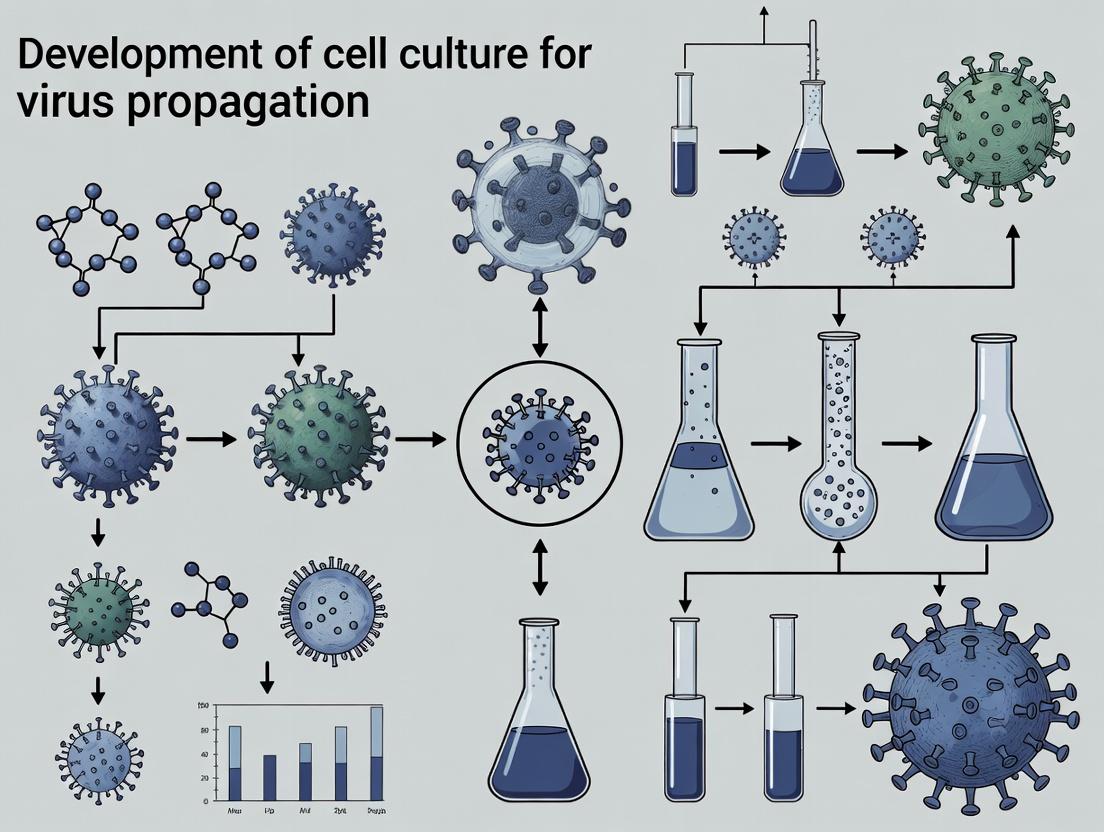
This article provides a detailed overview of modern cell culture techniques for virus propagation, essential for virology research, vaccine development, and antiviral drug screening.
Virus Propagation in Cell Culture: A Comprehensive Guide for Research and Vaccine Development
Abstract
This article provides a detailed overview of modern cell culture techniques for virus propagation, essential for virology research, vaccine development, and antiviral drug screening. It covers foundational principles, practical methodologies for diverse viral families, troubleshooting strategies for common issues, and validation frameworks for ensuring yield and purity. Designed for researchers and industry professionals, it integrates current best practices and technological advancements to support robust and reproducible virological workflows.
Foundations of Viral Replication: Selecting the Right Cell Line and Culture System
Application Notes
Foundation for Basic Virology
Cell culture systems are indispensable for isolating, identifying, and characterizing novel viruses. The transition from in vivo to in vitro models has enabled precise study of viral replication cycles, host-cell interactions, and pathogenesis. Continuous cell lines (e.g., Vero, HEK-293) and primary cells provide tailored systems for different virus families.
Platform for Vaccine Development and Bioproduction
The scalability of cell culture is critical for manufacturing viral vaccines, viral vectors for gene therapy, and oncolytic viruses. Suspension-adapted cell lines (e.g., MDCK-S, CAP-T) in bioreactors have increased yield and consistency over traditional egg-based methods.
Table 1: Cell Lines for Virus Propagation and Production
| Cell Line | Origin | Key Virus Applications | Production Scale | Typical Viral Titer (PFU/mL or TCID50/mL) |
|---|---|---|---|---|
| Vero (WHO-certified) | African Green Monkey Kidney | Polio, Rabies, SARS-CoV-2, Influenza | Microcarrier Bioreactor (Up to 2000L) | 10^8 - 10^9 PFU/mL (Influenza) |
| MDCK-S | Canine Kidney (Suspension) | Influenza A/B | Stirred-Tank Bioreactor (Up to 6000L) | 10^8 - 10^9 TCID50/mL |
| HEK-293T | Human Embryonic Kidney (Transformed) | Lentiviral/Adeno-associated Viral Vectors | Fixed-bed/Stacked-plate (Up to 500L) | 10^10 - 10^11 VG/mL (AAV) |
| CAP-T | Engineered Human Cell Line | Complex Glycoproteins, Viral Vectors | Perfusion Bioreactor | 10^10 - 10^11 VG/mL (Lentivirus) |
| BHK-21 | Baby Hamster Kidney | Rabies, Veterinary Viruses | Roller Bottles/Bioreactor | 10^7 - 10^8 PFU/mL |
Enabling Drug Discovery and Neutralization Assays
High-throughput screening of antiviral compounds and quantification of neutralizing antibodies (e.g., for SARS-CoV-2, HIV) rely on reproducible cell-based assays like plaque reduction neutralization tests (PRNT) and cytopathic effect (CPE) inhibition.
Table 2: Common Virology Assays and Cell-Based Readouts
| Assay Name | Purpose | Typical Cell Line | Key Readout | Throughput Capability |
|---|---|---|---|---|
| Plaque Assay | Quantify Infectious Virus | Vero E6, MDCK | Plaque Formation (Visual) | Low |
| TCID50 | Determine Infectious Dose | Caco-2, A549 | CPE (Microscopy) | Medium |
| Microneutralization | Measure Neutralizing Antibodies | HEK-293-ACE2 | Luminescence/RFU | High |
| High-Content Imaging | Screen Antiviral Compounds | Huh-7 | Viral Protein Staining (Automated) | Very High |
Protocols
Protocol 1: Viral Propagation and Harvest from Monolayer Vero Cells
Objective: Amplify stock of a clinical virus isolate (e.g., SARS-CoV-2) for downstream research. Materials: See "Research Reagent Solutions" table. Safety: Perform all steps in BSL-2/3 containment per local guidelines.
- Cell Seeding: Seed Vero E6 cells in T-175 flask at 80% confluence (approx. 2x10^7 cells) in complete DMEM. Incubate overnight at 37°C, 5% CO2.
- Infection:
- Aspirate medium. Inoculate with virus diluted in infection medium (DMEM + 2% FBS + 1x Antibiotic-Antimycotic) at an MOI of 0.01.
- Incubate for 1 hour at 37°C, rocking every 15 minutes.
- Add 30 mL of fresh infection medium.
- Incubation & Monitoring: Incubate at 37°C, 5% CO2. Monitor daily for CPE (cell rounding, detachment).
- Harvest: When CPE is >80% (typically 48-72 hpi), freeze flask at -80°C. Thaw, then collect supernatant.
- Clarification & Storage: Centrifuge at 2000 x g for 10 min at 4°C. Aliquot supernatant, store at -80°C. Titrate via plaque assay.
Protocol 2: Plaque Assay for SARS-CoV-2 Titration
Objective: Quantify infectious virus titer from harvested stock or experimental samples.
- Prepare Cell Monolayer: Seed Vero E6 cells in 12-well plate at 2.5x10^5 cells/well. Incubate 24h for 100% confluence.
- Virus Dilution: Prepare 10-fold serial dilutions of virus sample (10^-1 to 10^-8) in infection medium.
- Inoculation: Aspirate medium from cells. Add 200 µL of each dilution to duplicate wells. Incubate 1h at 37°C.
- Overlay: Prepare 1.5% carboxymethylcellulose (CMC) in 2x MEM with 4% FBS. Mix 1:1 with 2% Avicel RC-591. Add 1 mL/well over inoculum.
- Incubation: Incubate plate for 48-72h at 37°C, 5% CO2.
- Fix & Stain: Remove overlay. Fix with 10% formalin for 1h. Stain with 0.1% crystal violet for 30 min. Rinse, air dry.
- Plaque Count & Calculate Titer: Count distinct plaques. Titer (PFU/mL) = (Average plaque count) / (Dilution factor x Inoculum volume).
Protocol 3: Transient Production of Lentiviral Vectors in HEK-293T Cells
Objective: Produce VSV-G pseudotyped lentiviral vectors for gene delivery applications.
- Day 0: Seed Cells: Seed HEK-293T cells in 10 cm dish in complete DMEM to reach 70% confluence next day.
- Day 1: Transfection (Using Polyethylenimine - PEI):
- For one dish, prepare DNA mix in 500 µL Opti-MEM: Transfer plasmid (5 µg), psPAX2 (packaging, 3.75 µg), pMD2.G (envelope, 1.25 µg).
- In separate tube, dilute 30 µL PEI (1 mg/mL) in 500 µL Opti-MEM. Incubate 5 min.
- Combine DNA and PEI solutions, mix, incubate 20 min at RT.
- Add dropwise to cells with fresh medium.
- Day 2: Medium Change: Replace medium with 8 mL fresh complete DMEM.
- Day 3 & 4: Harvest: Collect supernatant (~48h & 72h post-transfection). Pool harvests.
- Concentration & Titration: Filter through 0.45 µm PVDF filter. Concentrate via ultracentrifugation (50,000 x g, 2h, 4°C). Resuspend pellet in small volume. Titrate on HeLa cells using qPCR for vector copies or fluorescent marker analysis.
Diagrams
Title: Virus Isolation & Characterization Workflow
Title: Key Steps in Viral Cell Entry Pathway
Title: Scalable Viral Vaccine Bioproduction Process
The Scientist's Toolkit: Research Reagent Solutions
| Reagent/Material | Function & Key Features | Example Vendor/Product |
|---|---|---|
| Vero E6 Cells | African green monkey kidney cell line; highly permissive for many viruses (SARS-CoV-2, Zika), low interferon response. | ATCC CRL-1586 |
| DMEM + 2% FBS | Standard infection/maintenance medium; low serum reduces cell growth while supporting viral replication. | Gibco, Thermo Fisher |
| Avicel RC-591 / CMC Overlay | Semi-solid overlay for plaque assays; restricts virus spread to form discrete plaques. | FMC BioPolymer / Sigma-Aldrich |
| Polyethylenimine (PEI) MAX | High-efficiency transfection reagent for viral vector production (lentivirus, AAV) in HEK-293 cells. | Polysciences, Inc. |
| Cell Dissociation Reagent (TrypLE) | Enzyme-free, gentle passaging agent; maintains high viability of sensitive cell lines. | Gibco, Thermo Fisher |
| Viral Transport Medium (VTM) | For clinical sample storage; contains protein stabilizer and antibiotics to preserve viability. | Copan UTM |
| Crystal Violet Stain (0.1%) | Stains live cell monolayer; plaques appear as clear zones against blue background. | Sigma-Aldrich |
| CD293/293 SFM | Serum-free, chemically defined medium for suspension HEK-293 culture; supports high-density growth for bioproduction. | Gibco, Thermo Fisher |
| Microcarriers (Cytodex 1) | Beads for scaling adherent cell culture (Vero, MRC-5) in stirred-tank bioreactors for vaccine production. | Cytiva |
| Neutralizing Antibody Standard | WHO or NIBSC reference serum for validating neutralization assays (e.g., anti-SARS-CoV-2). | NIBSC 20/136 |
Key Principles of Viral Host Range, Tropism, and Permissive Cells
Within the thesis on Development of cell culture for virus propagation research, understanding the principles governing viral host range and tropism is foundational. These concepts determine which cell lines or primary cultures will be permissive for productive viral infection, directly impacting virus stock production, assay development, and antiviral screening.
- Host Range: The spectrum of host species that a virus can infect. It is determined by the availability of host-specific cellular receptors and intracellular factors.
- Tropism: The specific tissues or cell types within a susceptible host that a virus can infect. It is governed by receptor distribution, entry mechanisms, and cell-type-specific permissiveness.
- Permissive Cell: A cell that supports the complete viral replication cycle, culminating in the production of new infectious virions.
Quantitative Data on Viral Entry Determinants
The following table summarizes key receptor interactions for model viruses used in cell culture propagation research.
Table 1: Primary Cellular Receptors and Determinants of Tropism for Select Viruses
| Virus | Primary Cellular Receptor(s) | Coreceptor / Entry Factors | Permissive Cell Lines (Common for Propagation) | Key Restriction Factor in Non-Permissive Cells |
|---|---|---|---|---|
| Influenza A | Sialic acid (α-2,3- or α-2,6-linked) | – | MDCK, A549 | Species-specific sialic acid linkage distribution; Mx1/IFITM proteins |
| SARS-CoV-2 | ACE2 | TMPRSS2, NRP1 | Vero E6, Caco-2, Calu-3 | Lack of ACE2 expression; TRIM5α restriction in some species |
| HIV-1 | CD4 | CCR5 or CXCR4 | PM1, TZM-bl, Primary CD4+ T cells | Lack of coreceptor expression; APOBEC3G, SAMHD1, TRIM5α |
| Adenovirus (type 5) | CAR (Coxsackievirus and Adenovirus Receptor) | αvβ3/5 integrins | HEK293, A549 | Lack of CAR expression; non-human cells often lack required factors |
| HSV-1 | HVEM, Nectin-1 | 3-O-sulfated heparan sulfate | Vero, HFF | Cell-type-specific entry mediators; intrinsic immune defenses |
Experimental Protocols for Assessing Permissiveness and Tropism
Protocol 3.1:Assessment of Viral Receptor Expression by Flow Cytometry
Objective: To quantify cell surface receptor expression on candidate cell lines to predict permissiveness. Materials: See "Research Reagent Solutions" below. Method:
- Harvest cells (adherent cells require gentle detachment with enzyme-free buffer).
- Wash cells 2x in cold FACS buffer (PBS + 2% FBS).
- Aliquot 1-5 x 10^5 cells per staining condition into FACS tubes.
- Incubate cells with fluorophore-conjugated primary antibody against target receptor (e.g., anti-ACE2) or appropriate isotype control (1:100 dilution in FACS buffer) for 30 min at 4°C in the dark.
- Wash cells 3x with 2 mL cold FACS buffer.
- Resuspend in 300-500 µL FACS buffer containing a viability dye (e.g., DAPI).
- Analyze immediately on a flow cytometer. Gate on live, single cells and compare fluorescence intensity to isotype control.
Protocol 3.2:Virus Infection Kinetics Assay to Determine Permissiveness
Objective: To quantify viral replication efficiency in a candidate cell line over time. Method:
- Seed target cells in a 24-well plate to reach 80% confluence at time of infection.
- Day 0 (Infection): Prepare virus inoculum at a low MOI (e.g., 0.01) in serum-free maintenance medium. Wash cells once with PBS. Add inoculum (200 µL/well). Incubate at 37°C for 1-2h with gentle rocking every 15 min.
- Remove inoculum, wash cells 2x with PBS to remove unbound virus, and add fresh complete medium.
- Sampling: At defined timepoints post-infection (e.g., 0, 12, 24, 48, 72h), harvest 50 µL of supernatant for viral genome quantification (qRT-PCR) and 100 µL for infectious titer determination (Plaque Assay or TCID50).
- Analysis: Plot viral genome copies/mL and infectious titer (PFU/mL) vs. time. A permissive cell line will show a logarithmic increase in both measures.
Protocol 3.3:Pseudotyped Virus Entry Assay for Tropism Screening
Objective: To isolate and study the specific contribution of viral envelope glycoproteins to cell entry, safely and without requiring BSL-3 containment for high-risk pathogens. Method:
- Cell Seeding: Seed candidate cell lines in a white-walled, clear-bottom 96-well plate.
- Pseudovirus Entry: Thaw a single aliquot of luciferase-reporter pseudovirus (e.g., VSV-G or HIV-1 core pseudotyped with SARS-CoV-2 Spike). Dilute in serum-free medium. Add diluted pseudovirus to cells (in triplicate). Include controls: no-virus, positive-control cell line, and pseudovirus with a neutralizing antibody.
- Incubation: Incubate for 48-72h at 37°C.
- Detection: Remove medium, add luciferase assay lysis/substrate reagent per manufacturer's instructions. Measure luminescence on a plate reader.
- Interpretation: Luminescence signal >10-fold over background/no-virus control indicates successful entry mediated by the envelope glycoprotein.
Visualization of Concepts and Workflows
Determinants of Viral Tropism and Permissiveness
Workflow to Evaluate Cell Line Permissiveness
The Scientist's Toolkit: Research Reagent Solutions
Table 2: Essential Reagents and Materials for Tropism/Permissiveness Research
| Reagent / Material | Function in Research | Example / Note |
|---|---|---|
| Validated Receptor Antibodies | Detection and quantification of cell surface receptor expression via flow cytometry or microscopy. | Anti-ACE2-APC, anti-CD4-FITC. Require species- and application-specific validation. |
| Luciferase-Reporter Pseudotyped Viruses | Safe, BSL-2 study of entry mediated by specific viral glycoproteins; high-throughput screening. | VSV-ΔG-Luc pseudotyped with Ebola GP, SARS-CoV-2 Spike. |
| qRT-PCR Assay Kits | Quantification of viral genome copies in supernatant or cell lysates to measure replication. | Target-specific primers/probes for viral genes (e.g., SARS-CoV-2 N gene, HIV-1 gag). |
| Plaque Assay Reagents | Gold-standard for quantifying infectious virus titer (PFU/mL) using permissive cell monolayers. | Carboxymethylcellulose or agarose overlay, crystal violet or immunostaining for plaques. |
| Neutralizing Antibodies | Controls for entry assays; used to confirm specificity of infection. | Anti-Spike mAb for SARS-CoV-2, anti-gB for HSV-1. |
| CRISPR/Cas9 Gene Editing Systems | To knockout restriction factors (create more permissive lines) or knock-in receptors (engineer tropism). | Used to generate ACE2-expressing A549 or Huh7 cells for SARS-CoV-2 research. |
| Small Molecule Inhibitors | To probe dependency on specific host pathways (e.g., endocytosis, proteases). | Camostat (TMPRSS2 inhibitor), Bafilomycin A1 (v-ATPase inhibitor for endosomal acidification). |
| Cell Line Authentication Service | Critical to confirm species and tissue origin of cell lines, ensuring experimental reproducibility. | STR (Short Tandem Repeat) profiling is the standard method. |
Within the broader thesis on the Development of Cell Culture for Virus Propagation Research, the selection of an appropriate cell substrate is a critical determinant of experimental success. Cell lines serve as essential tools for virus isolation, quantification, vaccine production, and antiviral drug screening. The three main categories—primary, diploid, and continuous cell lines—each possess distinct biological characteristics, advantages, and limitations that make them suitable for specific applications in virology. This article provides a detailed overview, comparative analysis, and standardized protocols for the use of these cell lines in virus propagation research.
Comparative Analysis of Cell Line Types
Table 1: Key Characteristics of Cell Line Types for Virology
| Characteristic | Primary Cell Lines | Diploid Cell Lines | Continuous Cell Lines |
|---|---|---|---|
| Origin | Directly from tissue (e.g., monkey kidney, chick embryo) | From primary cultures (e.g., human fetal lung fibroblasts) | From tumors or through immortalization |
| Karyotype | Diploid, heterogenous | Diploid, stable for limited passages (<50-60 PDL) | Aneuploid/Heteroploid |
| Lifespan | Finite (1-2 passages) | Finite (high but limited passages) | Infinite |
| Genetic Drift | Minimal | Low until senescence | High, susceptible to variation |
| Physiological Relevance | Very High, closely mimics in vivo | High | Low to Moderate |
| Susceptibility to Viruses | Broad, includes fastidious viruses | Broad, often similar to primary | Can be narrow or selective |
| Typical Applications | Virus isolation, diagnostic studies, vaccine production (e.g., rabies, polio) | Vaccine production (e.g., MRC-5 for Varicella, Hepatitis A), virus stock preparation | Virus research, protein expression, vaccine production (e.g., Vero for rabies, HEK293 for adenoviruses) |
| Major Advantages | Highest virus spectrum sensitivity | Consistent, well-characterized, safe history | Convenience, scalability, reproducibility |
| Major Limitations | Limited supply, donor variability, risk of contamination | Finite lifespan, slower growth | May lack receptors, aberrant signaling |
Research Reagent Solutions Toolkit
Table 2: Essential Materials for Cell Culture in Virus Propagation
| Item | Function/Benefit |
|---|---|
| Complete Growth Medium | Typically base medium (e.g., MEM, DMEM) + 5-10% FBS + antibiotics/antimycotics. Provides nutrients for cell maintenance. |
| Maintenance/Infection Medium | Low serum (0-2% FBS) or serum-free medium. Used during virus infection to enhance adsorption and prevent serum interference. |
| Trypsin-EDTA Solution | Detaches adherent cells for subculturing (passaging). Critical for diploid and continuous lines. |
| Virus Transport Medium | For clinical specimens. Contains buffers, proteins, antibiotics to preserve virus viability before inoculation onto primary cells. |
| Cell Cryopreservation Medium | Typically 90% FBS + 10% DMSO. Allows long-term storage of diploid and continuous cell stocks. |
| Cell Culture Detergent (e.g., Virkon) | For decontamination of waste and biosafety cabinets post-virus work. |
| PBS without Ca2+/Mg2+ | For washing cells to remove serum components prior to trypsinization or virus inoculation. |
| Quality-Controlled Fetal Bovine Serum (FBS) | Supports cell growth and attachment. Must be tested for viral contaminants. |
| Cell Counting Kit (e.g., Trypan Blue) | Determines cell concentration and viability for seeding standardized monolayers. |
Protocols for Cell Culture and Virus Propagation
Protocol 1: Preparation of Primary Chick Embryo Fibroblasts (CEFs)
Application: Isolation of avian viruses, influenza virus research.
- Materials: 9-11 day old embryonated eggs, 70% ethanol, PBS without Ca2+/Mg2+, 0.25% Trypsin-EDTA, Growth Medium (Medium 199 + 5% FBS).
- Egg Sanitization: Swab eggshell with 70% ethanol and allow to dry.
- Extract Embryo: Crack egg into sterile Petri dish, decant excess albumen. Transfer embryo to a new dish. Remove head, limbs, and viscera.
- Mince Tissue: Wash embryo carcass in PBS. Mince finely with sterile scalpels or scissors.
- Trypsinization: Transfer minced tissue to a flask with 0.25% Trypsin-EDTA (10ml per 5 embryos). Stir gently at 4°C for 6-18 hours (or 37°C for 15-20 min).
- Neutralize and Filter: Add cold growth medium with serum to neutralize trypsin. Filter cell suspension through sterile gauze or a 100µm cell strainer.
- Centrifuge & Seed: Centrifuge filtrate at 300 x g for 5 min. Resuspend pellet in growth medium, count cells, and seed at 1-2 x 10^6 cells/ml in culture vessels.
- Incubate: Incubate at 37°C with 5% CO2. A confluent monolayer forms in 24-48 hours.
Protocol 2: Subculturing Diploid Cell Lines (e.g., MRC-5, WI-38)
Application: Routine maintenance for vaccine production and virus stock generation.
- Materials: Confluent monolayer (~80-90%), PBS without Ca2+/Mg2+, 0.25% Trypsin-EDTA, Complete Growth Medium (e.g., MEM + 10% FBS).
- Wash: Aspirate medium from flask. Rinse cell monolayer gently with PBS to remove serum residues.
- Trypsinize: Add enough trypsin-EDTA to cover the monolayer (e.g., 2ml for T-75 flask). Incubate at 37°C for 2-5 minutes until cells detach.
- Neutralize: Add a double volume of complete growth medium to inactivate trypsin. Pipette gently to create a single-cell suspension.
- Centrifuge & Count: Centrifuge at 300 x g for 5 min. Aspirate supernatant, resuspend in fresh medium. Count cells using a hemocytometer.
- Seed: Seed new flasks at a recommended split ratio (e.g., 1:2 to 1:4 for MRC-5). Do not exceed the recommended Population Doubling Level (PDL).
- Incubate: Incubate at 37°C with 5% CO2. Medium change may be needed after 3-4 days.
Protocol 3: Virus Propagation in Continuous Cell Lines (e.g., Vero cells)
Application: Production of high-titer virus stocks for research or vaccines.
- Materials: Near-confluent monolayer of cells, Virus Inoculum, Maintenance Medium (e.g., OptiPRO SFM or MEM with 2% FBS), PBS.
- Prepare Cells: Ensure cells are healthy and ~80-90% confluent.
- Wash Monolayer: Aspirate growth medium. Wash cell monolayer once with PBS or serum-free medium to remove inhibitors.
- Inoculate Virus: Dilute virus inoculum in cold maintenance medium. Aspirate wash solution and add the virus-containing medium to the cells. Use an appropriate Multiplicity of Infection (MOI, typically 0.01-0.1 for stock production).
- Adsorption: Incubate at 37°C (or optimal virus temperature) for 1-2 hours with occasional gentle rocking to allow virus adsorption.
- Add Maintenance Medium: After adsorption, add fresh warm maintenance medium to cover the cells. Do not remove the inoculum unless it is cytotoxic.
- Incubate & Monitor: Incubate at appropriate temperature. Observe daily for cytopathic effect (CPE). For non-lytic viruses, harvest based on kinetic studies.
- Harvest: When CPE is advanced (~80-90%), freeze the entire culture (cells + supernatant) at -80°C. Perform one freeze-thaw cycle to release cell-associated virus. Clarify by centrifugation at 3000 x g for 10 min. Aliquot supernatant (virus stock) and store at -80°C.
Experimental Workflows and Decision Pathways
Title: Decision Tree for Selecting Cell Lines in Virology
Title: Generic Workflow for Virus Propagation in Cell Culture
This application note is framed within the thesis "Development of cell culture for virus propagation research." Selecting the optimal culture system is a critical foundational step. For scaling virus production—whether for vaccine development, gene therapy vectors, or antiviral testing—the choice between adherent and suspension platforms dictates scalability, productivity, cost, and regulatory strategy. This document provides a comparative analysis, experimental protocols, and key resources to guide this decision.
Comparative Analysis: Advantages and Limitations
The core operational and economic differences between adherent and suspension systems for scale-up are summarized below.
Table 1: Quantitative & Qualitative Comparison for Scale-Up
| Parameter | Adherent Culture | Suspension Culture |
|---|---|---|
| Scalability Limit | Limited by surface area. Roller bottles: ~10⁵ – 10⁷ cells/mL (effective). Fixed-bed reactors: up to ~10¹⁰ total cells. | Limited by bioreactor volume. Stirred-tank reactors: 10⁶ – 10⁷ cells/mL, scalable to 2000L+ volumes. |
| Capital & Media Cost | Higher cost/cm² for multi-layer vessels. Serum/coating agents often required. | Lower cost per cell at large scale. Defined, serum-free media are standard. |
| Process Intensity | High handling (trypsinization, surface coating). Labor-intensive scale-out. | Lower handling. Easier scale-up via volume increase. Amenable to automation. |
| Cell Types | Primary cells, many diploid cell lines (e.g., MRC-5, Vero), and some anchorage-dependent transformed lines. | Adapted cell lines (e.g., HEK-293, CHO, Sf9, BHK-21). Some lines require adaptation. |
| Productivity (Viral Yield) | High per-cell yield for many viruses (e.g., Vero for Zika). Limited by confluency and nutrient gradients. | Consistent, high volumetric yield in optimized bioreactors. Homogeneous environment. |
| Process Monitoring & Control | Challenging (glucose, lactate, pH, O₂ gradients). Sampling can be difficult. | Excellent control (pH, DO, temperature, feeding). Easy sampling for real-time analytics. |
| Regulatory Path | Well-established for vaccine production (e.g., influenza in MDCK cells). | Increasingly adopted for novel vaccines (e.g., PER.C6 for adenoviruses) and viral vectors. |
Table 2: Suitability for Virus Propagation Applications
| Virus Type / Application | Recommended System | Rationale |
|---|---|---|
| Influenza Vaccine (Traditional) | Adherent (MDCK or Vero in multi-layer factories) | Historical platform, regulatory precedent, high virus yield per cell. |
| Adenoviral / AAV Vectors for Gene Therapy | Suspension (HEK-293 in stirred-tank bioreactor) | Demand for large volumes of high-titer vector, serum-free production, superior process control. |
| Viral Vaccine for Emerging Pathogens (R&D) | Microcarrier-based Suspension (Vero on Cytodex) | Combines adherent-dependent cell growth with suspension scalability. |
| Oncolytic Viruses | Context-dependent. Adherent for R&D; Suspension/Bioreactor for clinical supply. | Scale-up needs vary; suspension offers cleaner purification from cell debris. |
| Baculovirus Expression Vector System (BEVS) | Suspension (Sf9/Sf21 in insect cell culture) | Native suspension growth, extremely high protein/virus yields. |
Detailed Protocols
Protocol 1: Scale-Up of Vero Cells on Microcarriers for Virus Propagation
This protocol hybridizes adherent cell requirements with suspension scalability.
A. Materials Preparation
- Microcarriers: Cytodex 1/3, prepared per manufacturer's instructions (swollen, washed, autoclaved).
- Bioreactor: 3L stirred-tank bioreactor with pH, DO, and temperature control.
- Cell Line: Vero cells (passage < 150).
- Culture Medium: VP-SFM (Virus Production Serum-Free Medium) supplemented with 4 mM L-glutamine.
- Trypsinization Solution: 0.25% Trypsin-EDTA.
B. Procedure
- Seed Preparation: Harvest exponentially growing adherent Vero cells using trypsin. Resuspend in growth medium at 2–3 x 10⁵ cells/mL.
- Inoculation: Transfer microcarriers (3 g/L final concentration) and cell suspension to the bioreactor. Set initial working volume to 50% of final.
- Initial Cultivation (24-48h): Set conditions: 37°C, pH 7.2, DO at 40% air saturation. Use intermittent stirring (e.g., 60 rpm for 2 min, stop for 30 min) for the first 8 hours to promote attachment.
- Continuous Cultivation: After cell attachment, maintain continuous stirring at 40-60 rpm. Increase DO setpoint to 50% if needed.
- Feed/Batch: Perform periodic medium exchanges or fed-batch additions once glucose drops below 4 mM.
- Virus Infection: When cell density reaches 1.5–2 x 10⁶ cells/mL, reduce temperature to 35°C. Aspirate medium and inoculate with virus at the desired MOI in a reduced volume of infection medium (e.g., 2% of total volume). Adsorb for 1 hour with intermittent stirring, then restore volume with fresh medium.
- Harvest: At peak cytopathic effect (typically 48-72 hpi), stop agitation. Allow microcarriers to settle. Collect supernatant containing virus. For cell-associated virus, homogenize the entire culture.
Protocol 2: Adaptation of HEK-293 Cells to Suspension & Serum-Free Medium
A. Materials
- Basal Medium: DMEM/F-12 (1:1) for initial adaptation.
- Target Medium: Commercial, chemically defined, serum-free medium (e.g., FreeStyle 293).
- Shaking Platform: 125 mL baffled Erlenmeyer flasks in a humidified, 8% CO₂, 37°C incubator with orbital shaking (110-130 rpm).
B. Stepwise Adaptation Procedure
- Stage 1 (Adherent to Suspension in Serum): Trypsinize adherent HEK-293 cells and seed into a flask with DMEM/F-12 + 10% FBS. Place on shaker. Monitor viability. Passage every 3-4 days, increasing flask size.
- Stage 2 (Serum Reduction): Once growing consistently in suspension (>95% viability), begin reducing FBS by 2% per passage (10% → 8% → 6%...).
- Stage 3 (Medium Transition): At 2% FBS, begin blending in the target serum-free medium. Start with a 1:1 mix of old (low-serum) and new (serum-free) medium for one passage. Then use 25% old : 75% new for one passage, then 100% serum-free medium.
- Stage 4 (Stabilization): Culture in 100% serum-free medium for at least 5 passages, monitoring growth kinetics (doubling time, peak density, viability). Cryopreserve adapted master cell bank.
Visualizations
Diagram 1: Scale-Up Decision Pathway for Virus Production
Diagram 2: Workflow for Suspension Adaptation of Cells
The Scientist's Toolkit: Key Reagent Solutions
Table 3: Essential Materials for Cell Culture Scale-Up Research
| Reagent/Material | Function/Application | Key Considerations for Scale-Up |
|---|---|---|
| Chemically Defined, Serum-Free Medium (e.g., FreeStyle 293, CD293, VP-SFM) | Supports growth and virus production without animal-derived components. Reduces variability and downstream purification burden. | Essential for suspension processes. Must be optimized for both cell growth and virus production phases. |
| Microcarriers (e.g., Cytodex, SoloHill) | Provide surface for adherent cell growth in stirred bioreactors, enabling large-scale adherent culture. | Choice of type (e.g., dextran vs. collagen-coated) depends on cell line. Requires optimization of concentration and seeding protocol. |
| Peptones/Hydrolysates | Complex, plant-derived supplements that can increase cell density, viability, and viral titers in serum-free media. | Quality and consistency are critical. Required for some high-density processes. |
| Antifoam Agents (e.g., Antifoam C) | Controls foam formation in aerated and agitated bioreactors, preventing overflow and sensor fouling. | Use at minimal effective concentration. Can sometimes interfere with downstream purification. |
| Cell Dissociation Agents (e.g., Trypsin-EDTA, Accutase) | Detaches adherent cells for passaging or harvest from microcarriers. | Must be well-quenched with medium or inhibitors to prevent cell damage. Recombinant, animal-free versions are preferred. |
| Bioreactor with Process Control (pH, DO, Temperature) | Provides a controlled, homogeneous environment for suspension or microcarrier culture. Enables scale-up and process optimization. | Critical for process consistency. Single-use bioreactors reduce cross-contamination risk and cleaning validation. |
| Viability & Metabolite Analyzer (e.g., Cedex, Nova) | Automated cell counting and analysis of metabolites (glucose, lactate, glutamine) for process monitoring and feeding strategy development. | Provides essential data for establishing critical process parameters (CPPs). |
Essential Culture Media, Supplements, and Environmental Conditions (pH, Temperature, CO2)
Application Notes and Protocols
1. Introduction Within the context of a thesis on the development of cell culture for virus propagation research, the optimization of culture components is fundamental. The selection of essential media, strategic supplementation, and precise environmental control directly determine cell viability, growth rate, and permissiveness to viral infection. These factors are critical for generating high-titer viral stocks for downstream applications in vaccine development, antiviral screening, and pathogenic studies.
2. Essential Culture Media The choice of basal medium is cell line-specific and influences metabolic pathways and virus yield. Common media formulations are detailed below.
Table 1: Common Basal Media for Virus Propagation Research
| Medium Name | Key Characteristics | Common Cell Lines | Typical Viral Applications |
|---|---|---|---|
| DMEM (Dulbecco's Modified Eagle Medium) | High glucose (4.5 g/L), amino acids, vitamins. Supports rapid growth. | HEK293, Vero, MDCK, many primary fibroblasts. | Adenovirus, HSV, Influenza (adaptated). |
| MEM (Minimum Essential Medium) | Lower nutrient concentration than DMEM. Often used with supplementation. | Vero, MRC-5, BHK-21. | Poliovirus, Measles, Rubella. |
| RPMI-1640 | Rich in vitamins (B12, biotin), buffered for suspended cells. | Lymphocytic lines (e.g., Jurkat, PBMCs), hybridomas. | HIV, HTLV, EBV. |
| Ham's F-12 / DMEM-F12 | 1:1 mix provides broad spectrum of components, including trace elements. | CHO, MCF-10A, some primary epithelial cells. | Recombinant AAV, Lentivirus production. |
| Leibovitz's L-15 | Phosphate buffered, uses galactose & pyruvate; designed for CO2-free environments. | Travel/field applications, some primary cultures. | Field virus isolation. |
3. Critical Supplements and Their Functions Supplements are added to basal media to provide growth factors, attachment factors, and to mitigate cellular stress.
Table 2: Essential Supplements for Virus Propagation Cultures
| Supplement | Standard Concentration | Primary Function | Impact on Virus Propagation |
|---|---|---|---|
| Fetal Bovine Serum (FBS) | 2-10% (v/v) | Source of growth factors, hormones, lipids, and protease inhibitors. | Enhances cell attachment and proliferation. May inhibit some viruses; often reduced or omitted ("serum-free") during infection. |
| Penicillin-Streptomycin (Pen-Strep) | 50-100 U/mL Pen, 50-100 µg/mL Strep | Broad-spectrum antibiotic combination to prevent bacterial contamination. | Essential for maintaining aseptic conditions over long-term cultures and infection periods. |
| L-Glutamine | 2-4 mM | Essential amino acid for energy production (TCA cycle) and protein synthesis. | Critical for high metabolic demand during viral replication. Use stable dipeptides (e.g., GlutaMAX) to prevent ammonia buildup. |
| Non-Essential Amino Acids (NEAA) | 0.1-1 mM | Provides amino acids cells can synthesize but may be depleted in stress. | Reduces metabolic burden on host cells, supporting higher viral yields. |
| HEPES Buffer | 10-25 mM | Additional pH buffering capacity independent of CO2. | Stabilizes pH during manipulations outside incubators (e.g., microscopy, infection procedures). |
| Trypsin-EDTA (for adherent cells) | 0.05-0.25% Trypsin | Protease for cell detachment and subculturing. EDTA chelates calcium. | Vital for cell line passaging. Specific trypsin (e.g., TPCK-treated) is used to activate certain viruses (e.g., Influenza). |
4. Environmental Conditions: pH, Temperature, and CO2
Table 3: Standardized Environmental Parameters
| Parameter | Typical Setting | Physiological Rationale | Protocol Consideration |
|---|---|---|---|
| pH | 7.2 - 7.4 | Matches physiological extracellular fluid. Critical for enzyme function, receptor binding. | Controlled by sodium bicarbonate/CO2 buffer system. Phenol red is a common pH indicator (yellow<7.0, red=7.4, purple>7.8). |
| Temperature | 37°C ± 0.5°C | Mammalian core body temperature. Optimal for cellular processes. | Lower temps (e.g., 33-35°C) can enhance yield of some respiratory viruses (e.g., RSV, some coronaviruses). |
| CO₂ Tension | 5% ± 0.5% | In equilibrium with sodium bicarbonate in media to maintain pH 7.4. | Required for bicarbonate-buffered media (DMEM, MEM, RPMI). Not needed for HEPES-buffered or L-15 media. |
| Relative Humidity | >95% | Prevents evaporation and hyperosmolarity of the culture medium. | Essential for incubators; use water pans or automated humidity control. |
5. Detailed Protocol: Optimizing Virus Propagation in Vero Cells for RNA Virus Production
- Objective: To propagate a model RNA virus (e.g., Zika virus) in Vero cells to generate a high-titer stock.
- Cell Line: Vero (African green monkey kidney epithelial cells).
- Materials: See "The Scientist's Toolkit" below.
A. Cell Seeding and Maintenance
- Thawing: Rapidly thaw a cryovial of Vero cells in a 37°C water bath. Transfer cells to 9 mL of pre-warmed complete growth medium (MEM + 5% FBS + 1% Pen-Strep + 2 mM GlutaMAX). Centrifuge at 200 x g for 5 min. Aspirate supernatant, resuspend pellet in fresh medium, and seed into a T-75 flask.
- Subculture: At ~80% confluence, aspirate medium. Wash with 5 mL PBS without Ca²⁺/Mg²⁺. Add 2 mL of 0.25% Trypsin-EDTA and incubate at 37°C for 3-5 min. Neutralize with 8 mL of complete growth medium. Centrifuge, resuspend, and seed at desired density (e.g., 1x10⁶ cells/T-25 for infection).
B. Infection Protocol for Virus Propagation
- Day 0: Seed cells in a T-25 flask to achieve 90% confluence within 24 hours.
- Day 1 (Infection): a. Aspirate growth medium. b. Prepare virus inoculum in Infection Medium (MEM + 2% FBS + 1% NEAA + 10mM HEPES). Use a low Multiplicity of Infection (MOI=0.01) to avoid defective interfering particles. c. Add 1 mL of virus inoculum to the flask. Incubate at 37°C, 5% CO2 for 1 hour, rocking every 15 min. d. Post-adsorption, add 4 mL of fresh Infection Medium.
- Incubation & Monitoring: Incubate at 37°C, 5% CO2. Monitor daily for Cytopathic Effect (CPE) (cell rounding, detachment).
- Harvesting: When CPE reaches >80% (typically 48-72 hours post-infection): a. Collect the culture supernatant into a 15 mL conical tube. b. Clarify by centrifugation at 1000 x g for 10 min at 4°C to remove cell debris. c. Aliquot the clarified virus-containing supernatant and store at -80°C or lower.
6. Visualizations
Diagram Title: Virus Propagation Protocol Workflow in Vero Cells
Diagram Title: CO2-Bicarbonate Buffer System for pH Control
7. The Scientist's Toolkit
Table 4: Key Research Reagent Solutions for Virus Propagation
| Reagent/Material | Function/Application |
|---|---|
| Complete Growth Medium (e.g., MEM + 5% FBS + GlutaMAX) | Supports robust cell expansion and maintenance prior to infection. |
| Infection/Maintenance Medium (Low Serum) | Supports cell viability while minimizing serum interference with viral adsorption and replication. |
| DMSO (Dimethyl Sulfoxide) | Cryoprotectant for long-term storage of cell banks. |
| Cell Freezing Medium | Typically 90% FBS + 10% DMSO, for cryopreservation of master cell stocks. |
| Phosphate-Buffered Saline (PBS), Ca²⁺/Mg²⁺-free | Washing cell monolayers to remove serum and divalent cations prior to trypsinization or infection. |
| Trypan Blue Solution (0.4%) | Viability stain for cell counting using a hemocytometer or automated counter. |
| Cell Scraper (Sterile) | Alternative to trypsin for detaching sensitive or infected cells. |
| Cryogenic Vials | For archiving master cell stocks and virus seed stocks at ultra-low temperatures. |
Step-by-Step Protocols: Culturing Cells and Infecting for Optimal Virus Yield
Within the broader thesis on the Development of Cell Culture for Virus Propagation Research, the establishment of robust, reproducible methods for preparing cell cultures is foundational. The choice between monolayer (adherent) and suspension culture systems directly impacts viral yield, host-cell interactions, and downstream analytical applications. These application notes provide standardized, detailed protocols for both systems, ensuring consistency crucial for virology and antiviral drug development research.
Comparative Analysis of Culture Systems for Virus Propagation
Table 1: Quantitative Comparison of Monolayer vs. Suspension Culture Parameters
| Parameter | Monolayer (Adherent) Culture | Suspension Culture |
|---|---|---|
| Primary Cell Types | Primary fibroblasts, epithelial cells (e.g., Vero, HEK-293T, A549) | Lymphoblastoid cells, adapted cell lines (e.g., HEK-293S, CHO, Sf9) |
| Typical Seeding Density | 1.0–5.0 x 10⁴ cells/cm² | 2.0–5.0 x 10⁵ cells/mL |
| Optimal Confluence for Infection | 70–90% | Cell density of 5.0–10.0 x 10⁵ cells/mL, >95% viability |
| Volumetric Scalability | Limited by surface area | High, via increased bioreactor volume |
| Typical Virus Harvest Method | Freeze-thaw lysate + supernatant collection | Direct supernatant centrifugation/filtration |
| Key Advantage | Mimics tissue architecture; easy visualization. | High-yield, scalable, suitable for low-multiplicity infection. |
| Key Disadvantage | Surface-area limited, labor-intensive scaling. | Not suitable for all cell/virus types. |
Detailed Experimental Protocols
Protocol 1: Standardized Preparation of Monolayer Cultures for Viral Infection
Objective: To generate consistent, sub-confluent adherent cell monolayers in multi-well plates or flasks for virus inoculation.
Materials: See "The Scientist's Toolkit" (Table 2).
Methodology:
- Thawing and Recovery: Rapidly thaw cryopreserved vial in a 37°C water bath. Transfer cells to 9 mL pre-warmed complete growth medium in a 15 mL conical tube. Centrifuge at 200 x g for 5 minutes. Aspirate supernatant and resuspend pellet in fresh medium.
- Cell Counting and Viability Assessment: Mix cell suspension 1:1 with Trypan Blue. Count viable (unstained) cells using a hemocytometer or automated counter. Calculate total viable cells and concentration.
- Seeding for Target Confluence:
- Calculate required cell volume using:
Volume (mL) = (Target Seeding Density (cells/cm²) × Growth Area (cm²)) / Cell Concentration (cells/mL). - Seed calculated volume into culture vessel. Gently rock vessel in a cross-pattern to ensure even distribution.
- Place vessels in a humidified 37°C incubator with 5% CO₂.
- Calculate required cell volume using:
- Incubation and Monitoring: Monitor daily via phase-contrast microscopy. Cells should be adherent and spread within 4-24 hours. Protocol for infection typically proceeds when cells reach 70-90% confluence (usually 24-48 hours post-seeding).
- Pre-infection Media Change: Prior to virus inoculation, aspirate spent medium and replace with fresh, pre-warmed infection medium (often serum-reduced to enhance viral adsorption).
Protocol 2: Standardized Preparation of Suspension Cultures for Viral Infection
Objective: To establish and maintain high-viability suspension cell cultures in shaker flasks or bioreactors for large-scale virus production.
Materials: See "The Scientist's Toolkit" (Table 2).
Methodology:
- Initiating Culture from Cryovial: Thaw cell vial as in Protocol 1, Step 1. Resuspend pellet in pre-warmed suspension-specific medium. Seed into a small-volume shaker flask (e.g., 125 mL) at a density of 2.0–3.0 x 10⁵ cells/mL.
- Adaptation and Expansion: Incubate flask on an orbital shaker platform at 110–130 rpm in a humidified, 5% CO₂ incubator. Passage cells every 2-3 days, maintaining density between 2.0 x 10⁵ and 2.0 x 10⁶ cells/mL. Dilute with fresh pre-warmed medium.
- Pre-infection Culture Standardization: On the day of infection, ensure cell viability is >95%. Adjust cell density to the optimal target for infection (e.g., 5.0 x 10⁵ cells/mL) by centrifugation (200 x g, 5 min) and resuspension in fresh infection medium or by direct dilution.
- Infection in Suspension: Add viral inoculum directly to the shake flask or bioreactor. Continue agitation to maintain cell homogeneity and gas exchange.
Visualizations
Title: Workflow for Selecting and Preparing Cell Culture Systems
The Scientist's Toolkit
Table 2: Essential Research Reagent Solutions for Cell Culture Preparation
| Item | Function & Specification |
|---|---|
| Complete Growth Medium | Basal medium (e.g., DMEM, RPMI-1640) supplemented with fetal bovine serum (FBS, 5-10%) and antibiotics (e.g., Pen/Strep). Provides nutrients for cell growth. |
| Infection/Maintenance Medium | Often serum-reduced (e.g., 1-2% FBS) to minimize interference with viral adsorption and host cell metabolism during propagation. |
| Phosphate-Buffered Saline (PBS) | Calcium- and magnesium-free PBS is used for washing cells to remove serum and divalent cations prior to trypsinization. |
| Trypsin-EDTA Solution | Protease (trypsin) chelating agent (EDTA) combination used to dissociate adherent cells from the substrate for passaging or harvesting. |
| Trypan Blue Stain (0.4%) | Vital dye used to distinguish viable (unstained) from non-viable (blue) cells during counting with a hemocytometer. |
| Cell Freezing Medium | Typically composed of complete growth medium with 10% DMSO, which acts as a cryoprotectant for long-term storage in liquid nitrogen. |
| Single-Use Bioreactor / Shake Flask | Sterile, vented vessels designed for gas exchange with orbital shaking, essential for scaling suspension cultures. |
Determining Multiplicity of Infection (MOI) and Calculating Viral Inoculum
Within the thesis on "Development of cell culture for virus propagation research," the accurate determination of the Multiplicity of Infection (MOI) and the subsequent calculation of the required viral inoculum are foundational techniques. MOI, defined as the ratio of infectious viral particles to the number of target cells, directly impacts infection kinetics, viral yield, and the uniformity of infection in a cell population. This application note provides detailed protocols and current best practices for these critical steps, essential for researchers, scientists, and drug development professionals engaged in virology, vaccine development, and antiviral screening.
Core Concepts and Quantitative Data
Multiplicity of Infection (MOI): The average number of infectious virus particles per cell. An MOI of 1 implies, on average, one infectious unit per cell. However, due to Poisson distribution, at an MOI of 1, only approximately 63% of cells actually receive one or more infectious particles.
Plaque Forming Unit (PFU): A measure of infectious titer, defined by the number of virus particles capable of forming a plaque (a region of cell death) in a monolayer of susceptible cells.
Tissue Culture Infectious Dose 50% (TCID₅₀): The dilution of virus required to infect 50% of inoculated cell cultures.
Key Quantitative Relationships: The proportion of infected cells (P) is related to MOI by the Poisson distribution: P = 1 - e⁻ᴹᵒᴵ.
Table 1: Relationship Between MOI, Percentage of Infected Cells, and Uninfected Cells
| Theoretical MOI | % Cells Infected (Poisson) | % Uninfected Cells |
|---|---|---|
| 0.1 | 9.5% | 90.5% |
| 0.5 | 39.3% | 60.7% |
| 1 | 63.2% | 36.8% |
| 2 | 86.5% | 13.5% |
| 3 | 95.0% | 5.0% |
| 5 | 99.3% | 0.7% |
Table 2: Common MOI Ranges for Different Experimental Goals
| Experimental Goal | Typical MOI Range | Rationale |
|---|---|---|
| High-Titer Stock Production | 0.01 - 0.1 | Prevents excessive cell damage early, allowing multiple rounds of replication for maximum yield. |
| Synchronous Infection for Omics Studies | 3 - 10 (High MOI) | Ensures nearly all cells are infected simultaneously for uniform downstream analysis. |
| Single-Cycle Growth Kinetics | 3 - 5 (High MOI) | Ensures infection is initiated in one short cycle; often combined with inhibitors to prevent secondary spread. |
| Plaque Assay / Viral Titration | 0.001 - 0.1 (Very Low) | Allows formation of distinct, countable plaques. |
| Transduction with Lentiviral Vectors | Variable (1-20) | Depends on vector titer, cell type susceptibility, and desired transduction efficiency. |
Protocols
Protocol 1: Determining Viral Titer by Plaque Assay
Objective: To quantify infectious virus titer (in PFU/mL) for subsequent MOI calculations.
Materials:
- Virus stock.
- Susceptible cell monolayer (e.g., Vero, MDCK, HEK-293) at 90-100% confluency in multi-well plates.
- Overlay medium (containing agarose or methylcellulose to restrict virus diffusion).
- Fixative (e.g., 10% Formalin, 4% Paraformaldehyde).
- Stain (e.g., Crystal Violet, Neutral Red).
Methodology:
- Prepare Cell Monolayers: Seed appropriate cells in 6-, 12-, or 24-well plates to achieve confluent monolayers at the time of assay.
- Serially Dilute Virus: Perform 10-fold serial dilutions of the virus stock in infection medium (e.g., serum-free maintenance medium). A typical range is 10⁻¹ to 10⁻⁸.
- Inoculate: Aspirate medium from cell monolayers. Inoculate duplicate or triplicate wells with a known volume (e.g., 100 µL) of each virus dilution. Include negative control wells with medium only.
- Adsorb: Incubate plates at 37°C for 1-2 hours with gentle rocking every 15-20 minutes to allow viral adsorption.
- Overlay: Remove the inoculum and carefully add the pre-warmed overlay medium to each well. Allow it to solidify at room temperature.
- Incubate: Return plates to the CO₂ incubator for the appropriate time (typically 2-7 days, depending on the virus).
- Visualize Plaques:
- For transparent overlays: Add a vital stain (e.g., Neutral Red) to the overlay or a subsequent medium layer. Live cells take up the stain; plaques appear as clear, unstained areas.
- For fixation: Remove overlay, fix cells with formalin, and stain with Crystal Violet (stains nuclei; plaques appear as clear zones).
- Count and Calculate: Count plaques in wells with 10-100 distinct plaques. Calculate titer using the formula: Viral Titer (PFU/mL) = (Number of Plaques) / (Dilution Factor x Inoculum Volume in mL).
Protocol 2: Calculating and Preparing Viral Inoculum for a Target MOI
Objective: To calculate the volume of virus stock required to infect a given number of cells at a specific MOI and to perform the infection.
Materials:
- Viral stock with known titer (PFU/mL or TCID₅₀/mL).
- Target cells, counted.
- Infection medium.
Methodology:
- Calculate Total Infectious Particles Needed:
- For titer in PFU/mL:
Total PFU required = MOI x Number of Cells. - Example: To infect 2 x 10⁶ cells at an MOI of 0.1, you need 0.1 x 2 x 10⁶ = 2 x 10⁵ PFU.
- For titer in PFU/mL:
- Calculate Inoculum Volume:
Volume of Virus Stock (mL) = Total PFU required / Viral Titer (PFU/mL).- Example: If stock titer is 1 x 10⁷ PFU/mL, volume = (2 x 10⁵ PFU) / (1 x 10⁷ PFU/mL) = 0.02 mL (20 µL).
- Prepare Inoculum Mixture: Dilute the calculated virus volume into the appropriate amount of pre-warmed, serum-free infection medium. The total volume should be sufficient to cover the cell monolayer (e.g., 200 µL for a 24-well plate, 1 mL for a 6-well plate).
- Perform Infection: a. Aspirate growth medium from cells. b. Wash cells once with PBS or serum-free medium. c. Add the inoculum mixture to the cells. d. Incubate at the appropriate temperature (usually 37°C) for the adsorption period (typically 1-2 hours), rocking periodically. e. After adsorption, aspirate the inoculum, wash cells gently to remove unbound virus, and add fresh maintenance or growth medium. f. Return cells to the incubator for the desired infection period.
Note for TCID₅₀/mL Titer: Convert TCID₅₀/mL to PFU/mL. A commonly used approximation is: 1 TCID₅₀ ≈ 0.69 PFU. Therefore, PFU/mL ≈ TCID₅₀/mL x 0.69. Use this converted value in the calculations above.
Visualizations
Title: Workflow for MOI-Based Infection Experiment
Title: Poisson Distribution Predicts Infection Proportion
The Scientist's Toolkit
Table 3: Essential Research Reagent Solutions for MOI Determination & Viral Infection
| Reagent / Material | Function & Importance in Protocol |
|---|---|
| Susceptible Cell Line (e.g., Vero, MDCK, HEK-293) | Provides the necessary receptors and intracellular machinery for viral replication. Cell health and passage number are critical for consistent results. |
| Plaque Assay Overlay Medium (Agarose or Methylcellulose) | Restricts released virions to immediate vicinity of the infected cell, enabling formation of discrete, countable plaques for titer determination. |
| Serum-Free Infection Medium | Used during virus adsorption. Absence of serum prevents neutralization of some viruses and facilitates virus-cell contact. |
| Vital Stain (Neutral Red) or Fixative/Stain (Crystal Violet) | Allows visualization of plaques. Neutral Red is taken up by live cells; plaques appear clear. Crystal Violet stains fixed cells; plaques appear as unstained holes. |
| TCID₅₀ Assay Reagents (Multi-well plates, statistical calculator) | For endpoint dilution assays to determine the dilution that infects 50% of cultures, an alternative method to plaque assays for viruses that do not form clear plaques. |
| Cell Counter (Automated or Hemocytometer) | Essential for accurately quantifying the number of target cells prior to infection, a direct variable in the MOI calculation. |
| Virus Dilution Tubes & Precise Pipettes | Required for performing accurate serial dilutions of virus stock, which is fundamental to both titration and inoculum preparation. |
Within the broader thesis on Development of cell culture for virus propagation research, the optimization of infection techniques is a critical determinant of viral yield, infectivity, and experimental reproducibility. This document provides detailed Application Notes and Protocols for the three core phases of in vitro virus production: Adsorption, Maintenance, and Harvesting. These standardized methodologies are designed for researchers, scientists, and drug development professionals aiming to produce high-titer viral stocks for vaccine development, antiviral testing, or virological studies.
Table 1: Comparative Parameters for Viral Infection by Virus Type
| Virus Family/Type | Typical Cell Line | Optimal MOI Range | Adsorption Temp & Time | Maintenance Media Supplement | Typical Harvest Time Post-Infection (h) | Expected Titer Range (PFU/mL or TCID50/mL) |
|---|---|---|---|---|---|---|
| Influenza A (IAV) | MDCK-SIAT1 | 0.001 - 0.01 | 37°C, 60-90 min | TPCK-trypsin (1-2 µg/mL) | 48 - 72 | 1x10^7 - 1x10^8 |
| Adenovirus (AdV5) | HEK293 | 5 - 10 | 37°C, 90 min | 2% FBS | 48 - 72 | 1x10^9 - 1x10^10 |
| Lentivirus (VSV-G) | HEK293T | N/A (Transfection) | 37°C, N/A | - | 48 - 72 | 1x10^7 - 1x10^8 (Transduction Units) |
| Herpes Simplex (HSV-1) | Vero | 0.1 - 1 | 37°C, 60-90 min | 2% FBS | 24 - 48 | 1x10^8 - 1x10^9 |
| SARS-CoV-2 | Vero E6 | 0.01 - 0.1 | 37°C, 60-120 min | 2% FBS | 48 - 72 | 1x10^6 - 1x10^7 |
Table 2: Impact of Adsorption Parameters on Infection Efficiency (Exemplar Data)
| Parameter | Condition 1 | Condition 2 | Condition 3 | Measured Outcome (Relative Infectivity %) |
|---|---|---|---|---|
| Adsorption Time | 30 min | 60 min | 90 min | 65%, 100%, 98% |
| Temperature | 4°C | 25°C | 37°C | 10%, 75%, 100% |
| Agitation | Static | Gentle Rocking | - | 100%, 120-135% |
| Inoculum Volume | Minimal (Just covers) | Standard (Covers + slight excess) | Large (High depth) | 100%, 100%, 60-80% (due to dilution) |
Detailed Experimental Protocols
Protocol 3.1: Viral Adsorption
Objective: To facilitate maximum contact and binding between virions and susceptible cell monolayers. Materials: Pre-seeded cell monolayers (70-90% confluent), viral inoculum, infection medium (often serum-reduced), aspirator/vacuum system, rocking platform (optional).
- Preparation: Aspirate and discard the growth medium from cell culture vessels (e.g., T-175 flask, 6-well plate).
- Wash: Gently rinse the monolayer with 5-10 mL of pre-warmed, serum-free medium or PBS to remove inhibitors/debris. Aspirate.
- Inoculation: Dilute viral stock to desired multiplicity of infection (MOI) in a minimal volume of infection medium (e.g., just enough to cover the monolayer: ~5 mL for T-175, ~0.5-1 mL for 6-well). Apply inoculum evenly to the cell surface.
- Adsorption: Place the culture vessel in a 37°C, 5% CO₂ incubator.
- Static: Allow virus to adsorb undisturbed for the predetermined time (typically 60-90 minutes).
- With Agitation: Place the vessel on a gentle rocking platform inside the incubator to enhance virion-cell contact. This can increase adsorption efficiency by 20-35% (see Table 2).
- Termination: After the adsorption period, carefully aspirate the inoculum. This step removes unbound virus.
- Post-Adsorption Wash (Optional but Recommended for precise MOI): Gently add 5-10 mL of pre-warmed maintenance medium or PBS to the monolayer, swirl, and aspirate to remove residual unbound virus.
- Proceed to Maintenance Phase (Protocol 3.2).
Protocol 3.2: Maintenance Phase & Incubation
Objective: To provide an optimal environment for viral replication and assembly without promoting excessive cell proliferation. Materials: Pre-warmed maintenance medium (with appropriate supplements, e.g., low serum, trypsin, cytokines), incubator.
- Media Addition: Immediately after adsorption (and optional wash), add the appropriate volume of pre-warmed maintenance medium to the culture vessel (e.g., 20-30 mL for T-175).
- Incubation Conditions: Return the vessel to the 37°C, 5% CO₂ incubator.
- Monitoring: Monitor cells daily for cytopathic effect (CPE) using an inverted light microscope. Signs include rounding, syncytia formation, detachment, and lysis.
- Media Change (If Required): For slow-replicating viruses or prolonged harvest times (>72 hours), a partial or complete media change at 48-72 hours may be necessary to replenish nutrients and remove excess cellular debris.
Protocol 3.3: Viral Harvesting & Clarification
Objective: To collect cell-associated and cell-free virus at peak infectivity while minimizing contamination with cellular components. Materials: Refrigerated centrifuge, sterile pipettes and collection tubes, freeze-thaw bath or sonicator (for cell-associated virus), clarifying filters (0.45 µm or 0.2 µm).
- Timing: Harvest when CPE is advanced (e.g., 70-90% of cells affected) but before complete lysis, as determined by prior optimization (see Table 1).
- Collection:
- Cell-Free Virus: Gently collect the culture supernatant into a sterile tube.
- Cell-Associated Virus: Scrape adherent cells into the medium or combine the supernatant with the pelleted cells from suspension culture.
- Clarification:
- Centrifugation: Centrifuge the harvested material at 500 x g for 10 minutes at 4°C to pellet cell debris.
- Filtration (Optional but Recommended): Carefully transfer the supernatant to a new tube. Pass it through a low-protein-binding 0.45 µm PES filter to remove remaining particulates. For final stock sterilization, use a 0.2 µm filter.
- Processing Cell Pellet for Cell-Associated Virus (if needed):
- Resuspend the cell pellet in a small volume of maintenance medium or buffer.
- Disrupt cells by three cycles of freeze-thawing (liquid nitrogen/37°C water bath) or brief sonication on ice.
- Clarify the lysate by centrifugation (2000 x g, 10 min, 4°C). Pool with the clarified supernatant if applicable.
- Aliquoting & Storage: Aliquot the clarified viral harvest into cryovials. Flash-freeze in liquid nitrogen or a dry-ice/ethanol bath. Store at -80°C for long-term storage. Avoid repeated freeze-thaw cycles.
Visualization: Workflows and Pathways
Virus Propagation Workflow from Adsorption to Harvest
Viral Replication Cycle in Cell Culture
The Scientist's Toolkit: Key Research Reagent Solutions
Table 3: Essential Materials for Infection Protocols
| Item/Reagent | Primary Function | Key Considerations & Examples |
|---|---|---|
| Susceptible Cell Line | Provides the necessary receptors and intracellular machinery for viral replication. | Select based on virus tropism (e.g., MDCK for influenza, Vero E6 for SARS-CoV-2). Use low-passage, authenticated stocks. |
| Viral Inoculum | Source of infectious particles to initiate infection. | Titer accurately (Plaque Assay/TCID50). Determine optimal MOI in pilot studies. |
| Serum-Free / Infection Medium | Medium for adsorption; reduces interference from serum proteins. | DMEM, MEM, or Opti-MEM without FBS. Ensures efficient virion-cell contact. |
| Maintenance Medium | Supports cell viability & viral replication post-adsorption without rapid cell growth. | Basal medium with low serum (0-2% FBS) and specific supplements (e.g., TPCK-trypsin for influenza). |
| TPCK-Trypsin | Cleaves viral hemagglutinin (HA) protein, enabling multicycle replication of influenza virus. | Required for many cell lines infected with influenza. Use at 1-2 µg/mL in maintenance medium. |
| Cell Detachment Reagent | For harvesting cell-associated virus or preparing cells pre-infection. | Use enzyme-free or trypsin-EDTA based on cell type and virus sensitivity. |
| Cryopreservation Medium | For long-term storage of viral harvests. | Often contains a stabilizing agent like sucrose, SPGA, or 5-10% FBS. |
| Clarification Filters (0.45µm & 0.2µm PES) | Removes cellular debris and sterilizes viral lysates. | Use low-protein-binding filters to prevent loss of titer. Sequential filtration may be used. |
| Cell Viability/Cytopathic Effect (CPE) Stain | Allows quantification of virus-induced cell damage. | Crystal violet, Neutral Red, or fluorescent viability dyes (e.g., Calcein-AM). |
The development of robust cell culture systems is fundamental for virus propagation research, enabling vaccine development, antiviral screening, and pathogenesis studies. The optimal methodology is critically dependent on the viral architecture (enveloped vs. non-enveloped) and genome type (RNA vs. DNA). This article provides detailed application notes and protocols for these categories within the context of advancing cell culture-based propagation.
Application Notes & Comparative Data
Core Cell Culture & Propagation Characteristics
Table 1: Comparative Propagation Requirements for Virus Classes
| Virus Class | Example Viruses | Primary Cell Types | Key Growth Medium Additives | Typical Propagation Time (Post-infection) | Optimal Harvest Metric |
|---|---|---|---|---|---|
| Enveloped RNA | Influenza A, SARS-CoV-2, HIV-1 | MDCK, Vero E6, HEK-293T, PBMCs | Trypsin (for Influenza), Cholesterol Lipids | 48-72 hours | Peak supernatant infectivity (TCID₅₀) |
| Non-enveloped RNA | Poliovirus, Rhinovirus, Hepatitis A | HeLa, RD, MRC-5, FRhK-4 | -- | 24-48 hours | Extensive CPE (>90% cell lysis) |
| Enveloped DNA | Herpes Simplex Virus (HSV), Varicella-Zoster (VZV) | Vero, MRC-5, HFF | Serum-Free Media for Downstream Use | 72-96 hours | Intracellular & extracellular virus harvest |
| Non-enveloped DNA | Adenovirus (AdV), Adeno-Associated Virus (AAV) | HEK-293, A549 | Ca²⁺ & Mg²⁺ ions (for AdV) | 48-72 hours (AdV); 96h (AAV) | Cell lysate (for AAV); Both lysate & supernatant (AdV) |
Quantitative Yield Data from Optimized Systems
Table 2: Typical Viral Yield from Optimized Culture Protocols
| Virus (Strain) | Cell Culture System | Viral Titer Achievable | Titration Method | Critical Parameter for High Yield |
|---|---|---|---|---|
| Influenza A (H1N1) | MDCK-SIAT1, Serum-Free | 1 x 10⁸ PFU/mL | Plaque Assay | Low MOI (0.001-0.01), Trypsin concentration (1-2 µg/mL) |
| SARS-CoV-2 (Omicron BA.5) | Vero E6 / hACE2-TMPRSS2 | 1 x 10⁷ TCID₅₀/mL | TCID₅₀ | Pre-optimized cell density (90% confluent), Low MOI (0.01) |
| Adenovirus Type 5 (Ad5) | HEK-293 in suspension | 1 x 10¹⁰ VP/mL | qPCR (VP) / Plaque Assay | Cell concentration at infection (1-2x10⁶ cells/mL), Harvest timing |
| AAV2/8 | HEK-293 Triple Transfection | 1 x 10¹⁴ VG total yield | ddPCR | Plasmid DNA quality, Transfection efficiency, Harvest of lysate |
Detailed Experimental Protocols
Protocol: Propagation of Enveloped RNA Virus (SARS-CoV-2) in Vero E6 Cells
Aim: To generate high-titer SARS-CoV-2 stock from cell culture supernatant.
Materials:
- Vero E6 cells (ATCC CRL-1586)
- DMEM + 2% FBS + 1% Penicillin-Streptomycin (Maintenance Medium)
- SARS-CoV-2 seed virus (approved BSL-3 facility required)
- Phosphate-Buffered Saline (PBS), Trypsin-EDTA
- T-75 culture flasks
Method:
- Cell Preparation: Seed Vero E6 cells in a T-75 flask to reach 90% confluency within 24 hours in complete growth medium (DMEM + 10% FBS).
- Infection: Aspirate medium. Dilute SARS-CoV-2 seed virus in Maintenance Medium to achieve an MOI of 0.01. Add 2 mL of virus inoculum to the flask.
- Adsorption: Incubate at 37°C, 5% CO₂ for 1 hour, rocking flask every 15 minutes.
- Incubation: Add 13 mL of fresh Maintenance Medium. Return flask to incubator.
- Harvest: Monitor for cytopathic effect (CPE). When CPE reaches 80-90% (typically 48-72h), freeze flask at -80°C.
- Clarification: Thaw, pool contents, and centrifuge at 2000 x g for 10 min at 4°C to remove cell debris. Aliquot supernatant as virus stock. Store at -80°C.
- Titration: Determine titer by TCID₅₀ assay on fresh Vero E6 cells.
Protocol: Propagation of Non-enveloped DNA Virus (Adenovirus) in Suspension HEK-293 Cells
Aim: To produce high yields of Adenovirus Type 5 (Ad5) using suspension-adapted HEK-293 cells.
Materials:
- HEK-293 Suspension Cells (e.g., 293F)
- FreeStyle 293 Expression Medium or equivalent
- Ad5 seed stock (high purity)
- 1L Erlenmeyer shake flasks
- Orbital shaker incubator (37°C, 5% CO₂, 125 rpm)
- Benzonase endonuclease
Method:
- Cell Preparation: Grow HEK-293 suspension cells to a density of 1.0 x 10⁶ cells/mL in a 1L flask with 300 mL medium. Ensure viability >95%.
- Infection: Add Ad5 seed stock at an MOI of 5-10 virus particles (VP) per cell. Record this as time zero.
- Incubation: Incubate cells at 37°C, 5% CO₂, 125 rpm for 48-72 hours.
- Lysis & Harvest: Add Benzonase (50 U/mL final concentration) to degrade unpackaged nucleic acid. Incubate for 30 min at 37°C.
- Clarification: Centrifuge the culture at 2000 x g for 15 min. Retain both supernatant (contains released virus) and cell pellet.
- Cell Pellet Processing: Resuspend the cell pellet in PBS or lysis buffer. Perform 3-5 freeze-thaw cycles or use a microfluidizer to release intracellular virus. Clarify by centrifugation.
- Pooling: Pool clarified supernatant and lysate. This is the crude virus harvest. Further purify via ultracentrifugation or chromatography.
- Titration: Quantify total viral particles by UV absorbance (OD₂₆₀) or genome copies by qPCR.
Diagrams & Visualizations
Title: Workflow for Enveloped RNA Virus Propagation
Title: Viral Entry Pathways: Enveloped vs. Non-enveloped
The Scientist's Toolkit: Research Reagent Solutions
Table 3: Essential Reagents for Advanced Virus Propagation
| Reagent / Material | Primary Function | Example Use Case & Rationale |
|---|---|---|
| Suspension-Adapted Cell Lines | Enable scalable virus production in bioreactors. | Production of adenovirus or AAV vectors in HEK-293F cells for gene therapy. |
| Serum-Free & Chemically Defined Media | Supports consistent growth, simplifies downstream purification. | Propagation of enveloped viruses (e.g., Influenza) for vaccine manufacturing. |
| Recombinant Trypsin (TPCK-treated) | Cleaves viral surface proteins to activate infectivity. | Essential for multicycle propagation of Influenza virus in MDCK cells. |
| Polyethyleneimine (PEI) Max | High-efficiency transfection reagent for plasmid DNA. | Critical for producing AAV or lentivirus via transient transfection in HEK-293 cells. |
| Benzonase Nuclease | Degrades free nucleic acids in lysates, reducing viscosity. | Used during adenovirus harvest to improve clarification and purification efficiency. |
| Virus Stabilization Buffer | Maintains viral integrity during storage and freeze-thaw. | Preserving infectivity of labile enveloped viruses like RSV or HSV. |
| Microcarriers (e.g., Cytodex) | Provide surface for adherent cell growth in bioreactors. | Scaling up Vero cell culture for production of Rabies or MMR vaccine viruses. |
| Cell Counting Reagents (e.g., Trypan Blue, AO/PI) | Determine cell count and viability pre- and post-infection. | Critical for calculating precise MOI and monitoring infection kinetics. |
Within the broader thesis on Development of cell culture for virus propagation research, downstream processing (DSP) is the critical bridge between upstream virus production and the final research or therapeutic application. Following viral harvest from bioreactors or cell culture flasks, the clarified, concentrated, and purified virus is essential for subsequent analytical characterization, in-vitro studies, in-vivo models, or vaccine/drug substance formulation. This document details current application notes and standardized protocols for these DSP unit operations, focusing on laboratory and pilot-scale processes suitable for research and early-stage development.
Clarification of Viral Harvests
The primary goal is the efficient removal of cells, cell debris, and large aggregates while maximizing viral recovery and maintaining infectivity.
Application Note: Depth filtration is often preferred over centrifugation for its scalability, contained operation, and consistent clarity. For sensitive enveloped viruses, gentle processing is paramount to avoid shear-induced inactivation.
Protocol 2.1: Two-Stage Depth Filtration for Clarification
Objective: To clarify a mammalian cell culture harvest containing an enveloped virus (e.g., Lentivirus, VSV-G pseudotyped vectors).
Materials:
- Harvested cell culture suspension (e.g., from HEK293T culture).
- Peristaltic pump or syringe driver.
- Pressure sensors (optional but recommended).
- Primary depth filter (e.g., 3-5 µm nominal porosity).
- Secondary depth filter or sterilizing grade filter (0.45 µm or 0.2/0.22 µm).
- Balance for gravimetric collection.
- Buffer (e.g., DPBS with 1% HSA or 0.1% Pluronic F-68).
Method:
- Harvest Preparation: Cool harvest to 4°C. If not processed immediately, store at 4°C for <24h.
- System Setup: Prime the filtration assembly and pumps with equilibration buffer. Ensure all connections are secure.
- Primary Filtration: Pump the harvest through the primary depth filter. Monitor pressure. Do not exceed the filter's maximum recommended differential pressure (e.g., 30 psi).
- Secondary Filtration: Directly pass the filtrate from the primary filter through the secondary 0.45/0.22 µm filter.
- Flush & Pool: At the end of feed, flush the filter train with 1-2 column volumes of cold stabilization buffer to recover residual virus from the void volume. Pool with the main filtrate.
- Sampling: Aseptically sample the clarified harvest for viability (plaque assay/TCID₅₀), total particle count (qPCR/dNase assay), and turbidity (NTU).
Table 1: Typical Clarification Performance Data
| Parameter | Unclarified Harvest | Clarified Filtrate | Analysis Method |
|---|---|---|---|
| Turbidity (NTU) | 200-1000 | < 20 | Nephelometry |
| Cell Density (cells/mL) | 1-5 x 10⁶ | 0 | Microscopy/VI-Cell |
| Viral Recovery (Infectious) | 100% (Reference) | 85-95% | Plaque Assay / TCID₅₀ |
| Total DNA Reduction | ~100 µg/mL | 10-30 µg/mL | PicoGreen assay |
| Processing Time | - | 2-4 hours for 10L batch | - |
Concentration and Diafiltration
This step reduces process volume and exchanges the harvest into a buffer suitable for purification.
Application Note: Tangential Flow Filtration (TFF) is the industry standard. For lab-scale, ultrafiltration (UF) centrifugal devices are common but less scalable.
Protocol 3.1: Tangential Flow Filtration (TFF) for Virus Concentration
Objective: Concentrate a clarified viral harvest 10-fold and diafilter into Purification Buffer (e.g., 20 mM Tris, 200 mM NaCl, pH 7.4).
Materials:
- Clarified viral harvest.
- TFF system (peristaltic pump, pressure gauges, reservoir).
- Ultrafiltration cassette (100-300 kDa MWCO, hollow fiber modules are also suitable).
- Diafiltration Buffer (5-10x the concentrated volume).
Method:
- System Preparation: Flush and wet the TFF membrane with DI water, then with Purification Buffer. Measure the system's water permeability.
- Concentration Mode: Recirculate the clarified harvest. Apply a controlled transmembrane pressure (TMP = (Pᵢₙ + Pₒᵤₜ)/2 - Pₜ) by adjusting retentate valve. A typical starting TMP is 5-10 psi. Concentrate to the desired volume reduction factor (VRF).
- Diafiltration Mode: Once concentrated, initiate constant-volume diafiltration. Add diafiltration buffer to the feed reservoir at the same rate as permeate is generated. Perform 5-10 diavolumes.
- Final Recovery: After diafiltration, recover the retentate. Flush the system with a small volume of buffer to maximize recovery.
- Analysis: Measure final volume, titer, and assess buffer exchange (pH/conductivity).
Table 2: TFF Performance Metrics for Viral Vectors
| Virus Type | Membrane MWCO | Typical VRF | Recovery (Infectious) | Key Process Parameter |
|---|---|---|---|---|
| Adenovirus | 300 kDa | 10-50x | 70-85% | TMP < 15 psi |
| Lentivirus | 300-500 kDa | 5-20x | 60-80% | Low shear, TMP < 10 psi |
| AAV | 100-300 kDa | 10-100x | 65-90% | TMP 5-12 psi, Crossflow Rate |
| Influenza | 300 kDa | 10-30x | 75-90% | Temperature (4°C) |
Purification
Purification separates the target virus from host cell proteins (HCP), DNA, and non-infectious or empty particles.
Application Note: Affinity chromatography is gaining prominence for specific vectors (e.g., AAV), while ion-exchange (IEX) and size-exclusion (SEC) remain workhorses.
Protocol 4.1: Ion-Exchange Chromatography (IEX) for Purification
Objective: Purify concentrated AAV8 vector using anion-exchange chromatography.
Materials:
- Concentrated/diafiltered viral sample.
- ÄKTA pure or similar FPLC system.
- Anion-exchange column (e.g., Capto Q ImpRes, 1-5 mL column volume).
- Buffer A: 20 mM Tris, pH 8.5.
- Buffer B: 20 mM Tris, 1 M NaCl, pH 8.5.
- 0.5 M NaOH for cleaning.
Method:
- Equilibration: Equilibrate column with 5-10 CV of Buffer A until UV and conductivity baselines are stable.
- Sample Preparation: Ensure sample is clarified and adjusted to conductivity/pH of Buffer A (<5 mS/cm).
- Load: Load sample at a linear flow rate of 150-300 cm/h. Monitor UV 280 nm.
- Wash: Wash with 5-10 CV of Buffer A or until UV returns to baseline.
- Elution: Apply a linear or step gradient from 0% to 100% Buffer B over 20 CV. Collect fractions (1-2 mL).
- Strip & Clean: Strip bound material with 100% Buffer B, then clean with 2-3 CV of 0.5 M NaOH.
- Analysis: Analyze fractions for viral genome titer (qPCR), infectivity, HCP (ELISA), and dsDNA (PicoGreen). Pool peak fractions.
The Scientist's Toolkit: Key Research Reagent Solutions
| Reagent/Material | Function/Application | Example/Notes |
|---|---|---|
| Nuclease (Benzonase/PULSin) | Degrades free nucleic acids, reduces viscosity and contaminant load. | Added post-harvest before clarification. |
| Pluronic F-68 | Non-ionic surfactant, protects enveloped viruses from shear and interfacial stress. | Used in buffers during TFF and chromatography (0.01-0.1%). |
| Human Serum Albumin (HSA) | Stabilizer, reduces nonspecific adsorption to filters and surfaces. | Used in formulation buffers (0.1-1%). |
| Chromatography Resins | Selective purification based on charge, size, or affinity. | Capto Q (AEX), Capto Core 700 (Core bead), AVB Sepharose (AAV affinity). |
| Ultrafiltration Membranes | Concentration and buffer exchange based on size exclusion. | 100-500 kDa MWCO, Pellicon or Centramate cassettes. |
| qPCR/RT-qPCR Kits | Quantification of viral genomes (total/fully packaged). | Essential for determining genomic titer (vg/mL). |
| HCP ELISA Kits | Quantification of host cell protein impurities. | Cell line-specific kits (e.g., HEK293 HCP ELISA). |
Integrated Downstream Workflow Diagram
Viral DSP Workflow from Harvest to Formulation
Critical Quality Attribute (CQA) Analysis Workflow
Post-Purification Viral CQA Assessment Pathway
Solving Common Challenges: Maximizing Viral Titers and Cell Viability
Low viral yield remains a critical bottleneck in virus propagation research, impacting downstream applications from vaccine development to virology studies. This application note, framed within a broader thesis on the development of advanced cell culture systems, provides a systematic, diagnostic protocol for researchers to identify and remediate the factors limiting viral titers. A methodical approach is essential to move beyond iterative, trial-and-error optimization.
Systematic Diagnostic Framework
The following flowchart outlines the logical decision-making process for diagnosing low viral yield.
Diagram Title: Diagnostic Workflow for Low Viral Yield
Key Diagnostic Protocols & Data
Protocol: Assessment of Pre-infection Cell Health
Objective: To ensure the host cell population is proliferative, viable, and at the correct confluence for infection. Materials: Relevant cell line, complete growth media, Trypan Blue, hemocytometer or automated cell counter. Procedure:
- Seed cells in a standard culture vessel (e.g., T-75 flask, 6-well plate) at a density to reach 70-90% confluence at the planned time of infection.
- Monitor daily for morphology and confluence. For adherent cells, ensure they are firmly attached and exhibit typical morphology.
- At planned infection time, detach cells (if necessary) and perform a viability count using Trypan Blue exclusion.
- Calculate total viable cell count and percentage viability. Acceptance Criteria: Cell viability should be >95%. Proceed only if confluence and morphology are optimal.
Protocol: Quantification of Infection Efficiency via Immunofluorescence
Objective: To determine the actual percentage of cells infected, verifying the effectiveness of the infection step. Materials: Infected cell sample, fixation buffer (e.g., 4% PFA), permeabilization buffer (0.1% Triton X-100), blocking buffer (e.g., 5% BSA), primary antibody against target virus antigen, fluorescently-labeled secondary antibody, DAPI, fluorescence microscope. Procedure:
- Infect cells in a multi-well chamber slide or plate at the intended MOI.
- At 12-24 hours post-infection (hpi), fix cells with 4% PFA for 15 min.
- Permeabilize with 0.1% Triton X-100 for 10 min. Block with 5% BSA for 1 hour.
- Incubate with primary antibody (diluted in blocking buffer) for 1-2 hours at RT or overnight at 4°C.
- Wash 3x with PBS. Incubate with fluorescent secondary antibody and DAPI for 1 hour.
- Image using a fluorescence microscope. Count virus-antigen-positive cells and total nuclei (DAPI) in multiple fields.
- Calculate: Infection Efficiency (%) = (Positive Cells / Total Cells) x 100.
Table 1: Quantitative Benchmarks for Key Parameters
| Parameter | Optimal Range | Suboptimal Indicator | Corrective Action |
|---|---|---|---|
| Pre-infection Viability | >95% | <90% | Revive new stock, optimize passaging. |
| Target Confluence | 70-90% (cell-type dependent) | <60% or 100% | Re-seed at appropriate density. |
| Actual Infection Efficiency* | >70% (High MOI) | <40% | Re-titer virus stock, enhance entry (e.g., add trypsin). |
| Time of Peak Viral Titer | 48-72 hpi (for many enveloped) | Harvested too early/late | Perform a one-step growth curve. |
| Media Glutamine Level | 2-4 mM | <1 mM | Supplement with GlutaMAX. |
Measured via immunofluorescence at 18-24 hpi. *Must be determined empirically for each virus-cell system.
The Scientist's Toolkit: Essential Research Reagents
Table 2: Key Research Reagent Solutions for Virus Propagation
| Reagent/Material | Primary Function | Example/Notes |
|---|---|---|
| High-Quality Cell Line | Host for viral replication. | Use authenticated, low-passage stocks (e.g., from ATCC). |
| Virus Reference Stock | Starting inoculum. | Aliquot, titer accurately, store at ≤ -80°C. |
| Cell Culture Media | Supports host cell metabolism. | Use appropriate basal medium (e.g., DMEM, MEM). |
| Serum/Serum Alternative | Provides growth factors, proteins. | Fetal Bovine Serum (FBS) or defined, virus-production-tested substitutes. |
| Infection Enhancers | Facilitates viral entry. | Polybrene (retroviruses), Trypsin (e.g., for influenza). |
| Cellular Health Assays | Monitors viability/cytotoxicity. | MTT, CellTiter-Glo, LDH release assays. |
| Titration Assay | Quantifies infectious virus yield. | Plaque Assay, TCID50, Immunofocus Assay. |
| Metabolic Supplements | Boosts cell energy & macromolecule synthesis. | Glucose, GlutaMAX, Sodium Pyruvate. |
| Harvest/Stabilization Buffers | Preserves virus integrity. | Sucrose-phosphate buffers, proprietary stabilizers. |
Advanced Intervention Strategies
When basic parameters are optimal, advanced strategies targeting host-cell metabolism and apoptosis are required. The diagram below illustrates key pathways to modulate.
Diagram Title: Advanced Pathways to Modulate for Higher Yield
Protocol: Suppression of Host Cell Apoptosis to Extend Production
Objective: To delay virus-induced cell death, allowing more time for viral assembly and egress. Materials: Broad-spectrum caspase inhibitor (e.g., Z-VAD-FMK), culture media, DMSO vehicle control. Procedure:
- Prepare working concentration of caspase inhibitor (e.g., 20-50 µM Z-VAD-FMK in complete media). Include a vehicle control (equal [DMSO]).
- Infect cells as usual. At 1-2 hpi, aspirate inoculum and add the inhibitor-containing media.
- Maintain the inhibitor in the media throughout the production phase.
- Harvest virus at predetermined time points.
- Assess viral titer (via plaque assay) and compare to control. Monitor cell viability over time (e.g., via live-cell imaging) to confirm delayed cytopathic effect (CPE).
Conclusion: A systematic, diagnostic approach is fundamental to overcoming low viral yield. By sequentially validating host cell status, infection parameters, harvest logistics, and media composition—then advancing to metabolic and anti-apoptotic interventions—researchers can efficiently identify the limiting factor and implement a targeted, high-impact solution, thereby accelerating virus propagation research.
Addressing Cell Culture Contamination (Mycoplasma, Bacteria, Cross-Contamination)
Within the critical context of developing robust cell culture systems for virus propagation research, contamination remains a primary barrier to reproducibility and data integrity. The inadvertent introduction of mycoplasma, bacteria, or other cell lines can compromise viral stock purity, alter host cell response, and lead to erroneous conclusions in drug and vaccine development. This application note details current protocols for prevention, detection, and eradication of these contaminants.
Contamination Detection: Methods and Data
Routine screening is the cornerstone of contamination control. The following table summarizes key detection methods, their principles, and performance metrics.
Table 1: Comparison of Cell Culture Contamination Detection Methods
| Contaminant | Primary Detection Method | Principle | Time to Result | Sensitivity | Key Advantage |
|---|---|---|---|---|---|
| Mycoplasma | PCR-based Kit | Amplification of mycoplasma-specific 16S rRNA gene sequences | 3-4 hours | ≤ 1 CFU/mL | High sensitivity, specificity, and speed. |
| Mycoplasma | Microbial Culture | Growth on selective agar/ broth, followed by colony observation. | Up to 28 days | 10-100 CFU/mL | Gold standard, allows for species ID. |
| Mycoplasma | Fluorescent Stain (e.g., Hoechst/DAPI) | DNA-binding dye staining of extracellular mycoplasma on indicator cells. | 24-48 hours | 10^4 - 10^5 CFU/mL | Visual confirmation, low equipment need. |
| Bacteria/Fungi | Direct Microscopy | Visual observation of motility or unusual morphology under phase contrast. | Minutes | ~10^5 CFU/mL | Immediate, low cost. |
| Bacteria/Fungi | Microbial Culture (BACTEC) | Growth detection in automated blood culture system by CO2 production. | 1-5 days | 1-10 CFU/mL | Highly sensitive, automated. |
| Cross-Contamination | STR (Short Tandem Repeat) Profiling | PCR amplification of hypervariable genomic loci for DNA fingerprinting. | 2-3 days | N/A | Definitive species and cell line identification. |
Detailed Experimental Protocols
Protocol 2.1: Rapid Mycoplasma Detection by PCR
Objective: To detect mycoplasma contamination in cell culture supernatant with high sensitivity. Materials: Commercial mycoplasma PCR detection kit, DNAse/RNAse-free water, thermal cycler, agarose gel electrophoresis system. Procedure:
- Sample Collection: Centrifuge 1 mL of cell culture supernatant at 300 x g for 5 min to remove cells. Use the supernatant.
- DNA Extraction: Mix 500 µL supernatant with 500 µL lysis buffer from the kit. Incubate at 65°C for 10 min.
- PCR Setup: Prepare a master mix containing specific primers for mycoplasma 16S rRNA, dNTPs, Taq polymerase, and reaction buffer. Add 5 µL of extracted DNA template to 45 µL master mix.
- Amplification: Run PCR: Initial denaturation at 95°C for 2 min; 35 cycles of 95°C for 30s, 60°C for 30s, 72°C for 1 min; final extension at 72°C for 5 min.
- Analysis: Run products on a 1.5% agarose gel. A band at the expected size (~500 bp) indicates contamination. Include positive and negative controls.
Protocol 2.2: Decontamination with Antibiotic/Antimycotic Cocktails
Objective: To eradicate bacterial or fungal contamination from a valuable cell line. Materials: Broad-spectrum antibiotic-antimycotic solution (e.g., containing penicillin, streptomycin, amphotericin B), phosphate-buffered saline (PBS), cell culture flasks. Procedure:
- Identify & Isolate: Immediately move the contaminated culture to a separate incubator.
- Wash Cells: Aspirate contaminated medium. Gently rinse the adherent cell monolayer twice with pre-warmed PBS.
- High-Dose Treatment: Trypsinize cells and resuspend in fresh complete medium containing 5x the normal concentration of antibiotic-antimycotic cocktail. Seed into a new flask.
- Monitor & Maintain: Culture for 48 hours. Replace medium daily with fresh medium containing the 5x cocktail.
- Wean & Verify: After 48-72 hours with no visible contamination, passage cells using 1x cocktail medium for two passages. Subsequently, culture in antibiotic-free medium and confirm sterility via a detection method from Table 1. Note: This protocol is not effective against mycoplasma.
Protocol 2.3: STR Profiling for Cell Line Authentication
Objective: To genetically authenticate a cell line and rule out cross-contamination. Materials: Commercially available STR profiling kit, cell pellet, thermal cycler, capillary electrophoresis sequencer. Procedure:
- DNA Isolation: Purify high-quality genomic DNA from a cell pellet using a commercial kit. Quantify DNA (aim for 1-2 ng/µL).
- PCR Amplification: Amplify 8-17 core STR loci plus a gender-determining locus using the multiplex PCR master mix provided in the kit.
- Fragment Analysis: Denature PCR products and perform capillary electrophoresis. Fluorescent labels on primers allow size determination of amplified alleles.
- Data Interpretation: Software converts peaks into an allelic profile. Compare this profile to reference databases (e.g., ATCC, DSMZ). A match probability of ≥80% is typically required for authentication.
Visualizations
Decision Workflow for Contamination Response (97 characters)
Bacterial Decontamination and Verification Protocol (94 characters)
The Scientist's Toolkit: Research Reagent Solutions
Table 2: Essential Reagents for Contamination Control in Virus Propagation Research
| Item | Function & Application |
|---|---|
| Mycoplasma Detection Kit (PCR-based) | Provides optimized primers, controls, and buffer for the most sensitive and rapid detection of mycoplasma contamination in cell stocks and viral supernatants. |
| Antibiotic-Antimycotic Solution (100X) | A broad-spectrum cocktail used prophylactically in routine culture (1X) or therapeutically at higher doses (5X) to combat bacterial and fungal outbreaks. |
| Plasmocin / BM-Cyclin | Specific, commercially available antibiotic combinations used for the eradication of persistent mycoplasma contamination from precious cell lines. |
| DNase/RNase-Free Water | Essential for molecular biology applications (e.g., PCR, STR profiling) to prevent enzymatic degradation of samples and reagents. |
| STR Profiling Kit | Contains multiplex PCR reagents and standards for authenticating cell line identity, crucial after decontamination procedures or when establishing new lines. |
| Hoechst 33342 Stain | A cell-permeant DNA dye used in fluorescent staining assays to visualize mycoplasma DNA adherent to infected host cells. |
| Certified Fetal Bovine Serum (FBS) | Heat-inactivated and rigorously tested for the absence of mycoplasma, viruses, and endotoxins to reduce contamination risk from media components. |
Optimizing Media Formulations and Feeding Schedules for High-Density Infection
The development of robust cell culture systems for virus propagation is a cornerstone of virology, vaccine development, and viral vector production. Within this broader thesis, the transition from research-scale to industrial-scale production presents a critical bottleneck: maintaining cell health and achieving high specific virus yields in high-density cultures, such as those in perfusion or intensified fed-batch bioreactors. A high cell density at infection (often >10-20 x 10^6 cells/mL) increases volumetric productivity but stresses nutrient availability and waste accumulation. Optimizing the media formulation (basal and feed) and the feeding schedule pre- and post-infection is therefore paramount to support both the cellular machinery for viral replication and the final infectious titer.
Core Principles and Key Variables
Successful high-density infection hinges on balancing several variables:
- Cell-specific metabolic demands: Shift from growth phase to production phase post-infection.
- Nutrient Depletion: Glucose, glutamine, amino acids, lipids, and trace elements.
- Inhibitor Accumulation: Lactate, ammonia, and alanine.
- Osmolality Control: Critical for cell viability and specific productivity.
- Infection Parameters: Multiplicity of Infection (MOI), time of infection, and harvest time.
Summarized Quantitative Data from Recent Studies
Table 1: Impact of Media and Feed Strategies on HEK293 & Sf9 Cell Virus Production
| Cell Line & Virus | Strategy | Key Parameter Change | Outcome (vs. Standard) | Reference (Type) |
|---|---|---|---|---|
| HEK293 / Lentivirus | Balanced Feed Pre- & Post-Infection | Reduced glucose (initial), increased amino acids | 2.5x increase in functional titer, 40% lower lactate | Appl Microbiol Biotechnol, 2023 |
| HEK293 / AAV | Post-infection Osmolality Shift | Step-down osmolality (~380 to ~320 mOsm/kg) | 3.1x increase in full capsids, improved cell viability | J Virol Methods, 2024 |
| Sf9 / Baculovirus | Structured Feeding Schedule | Bolus feed at 24h post-infection (hp.i.) | Peak infectious titer 4.8x higher, extended viability to 72 hp.i. | Biotechnol Prog, 2023 |
| CHO / Retrovirus | Glutamine Substitute | L-alanyl-L-glutamine dipeptide | Ammonia reduced by 60%, stable viral vector titer | Sci Rep, 2023 |
| CAP-T / IgG-VLP | Perfusion with Tailored Media | Perfusion rate 1.5 vvd, customized infection media | Cell density at infection: 30e6/mL, VLP yield +300% | Biotechnol Bioeng, 2024 |
Table 2: Optimized Feed Component Ranges for High-Density Mammalian Infection
| Component | Purpose in Infection Phase | Recommended Concentration Range in Feed | Notes |
|---|---|---|---|
| Glucose | Energy (maintained at low level) | 5-15 mM (maintain in bioreactor) | Avoid excess to minimize lactate shift. |
| Glutamine / Dipeptide | TCA cycle anaplerosis, nucleotide synthesis | 2-8 mM (equiv.) | Dipeptide slows ammonia generation. |
| Essential Amino Acids | Viral protein synthesis | 2-5x basal medium concentration | Lysine, leucine, arginine critical. |
| Lipids (Cholesterol) | Membrane synthesis for virion budding | 0.5 - 2.0 mg/L | Often limiting in standard media. |
| Nucleosides | Genome replication | 1-10 mg/L each | Crucial for DNA/RNA viruses. |
| Pluronic F-68 | Shear protection, membrane stability | 0.5 - 2 g/L | Vital in sparged bioreactors. |
| Sodium Butyrate | Cell cycle arrest, gene expression (mammalian) | 1-5 mM (post-infection) | Cell line and virus specific. |
Detailed Experimental Protocols
Protocol 1: Establishing a Baseline for High-Density Infection in Shake Flasks/Bioreactors
Objective: Determine critical nutrient depletion and waste accumulation kinetics leading to infection. Materials: High-density cell culture (e.g., HEK293SF, perfusion seed train), bioreactor or controlled shake flask, basal production medium, off-line analyzer (e.g., Nova, Cedex). Procedure:
- Seed bioreactor at 5 x 10^6 cells/mL in production medium.
- Maintain temperature, pH, DO as per standard.
- Sample every 12 hours: Measure VCD, viability, metabolites (glucose, lactate, glutamine, ammonia), and osmolality.
- Infection Point: When growth rate slows (µ < 0.015 h⁻¹) and viability >95%, infect at predetermined MOI.
- Post-Infection: Continue sampling every 12h until viability drops <70%.
- Analysis: Plot all parameters vs. time. Identify the timepoints of glucose/glutamine depletion and lactate/ammonia inflection relative to peak infectious titer (assayed separately).
Protocol 2: Testing a Structured Post-Infection Feeding Schedule
Objective: Evaluate the effect of timed nutrient boluses on viral titer and quality. Materials: Cells at high density ready for infection, virus stock, concentrated feed medium (5-10x), small-scale bioreactors (e.g., ambr). Procedure:
- Prepare 4 identical bioreactors with cells at target infection density (e.g., 15 x 10^6 cells/mL).
- Infect all vessels simultaneously at optimal MOI (Time = 0).
- Apply different feeding regimes:
- Control 1: No feed.
- Control 2: Continuous perfusion (1 vvd) of basal medium.
- Test 1: Single bolus feed (5-10% v/v) at 12 hours post-infection (hp.i.).
- Test 2: Dual bolus feed at 12 hp.i. and 24 hp.i..
- Monitor metabolites and osmolality closely.
- Harvest each vessel at peak titer (determined from prior kinetics).
- Assay: Infectious titer (TCID50/FFU), total particle titer (qPCR/dsDNA), and product quality (e.g., full/empty ratio for AAV). Compare yields and critical quality attributes.
Protocol 3: Osmolality Optimization for Viral Vector Production
Objective: Determine the optimal post-infection osmolality for specific productivity. Materials: High-density cell suspension, virus for infection, hypertonic NaCl stock, sterile water for dilution. Procedure:
- Post-infection (e.g., 2 hours post-virus addition), split the culture into multiple shake flasks or deepwell plates.
- Adjust each flask to a different target osmolality (e.g., 300, 320, 340, 360, 380 mOsm/kg) using careful additions of hypertonic NaCl or sterile water.
- Maintain cultures until harvest.
- Measure cell diameter, viability, and metabolic rates.
- Harvest and titer. Plot titer (cell-specific and volumetric) vs. osmolality to identify the optimum.
Visualizations
High-Density Infection Optimization Workflow
Process Optimization Decision Logic
The Scientist's Toolkit: Research Reagent Solutions
Table 3: Essential Materials for Media Optimization Studies
| Reagent / Solution | Function in Optimization | Example/Note |
|---|---|---|
| Concentrated Feed Media (Custom) | Provides nutrients in small volume to avoid dilution; allows testing of component ratios. | Commercial (e.g., Cell Boost) or formulated in-house (5-10x conc.). |
| L-Alanyl-L-Glutamine Dipeptide | Stable glutamine source; reduces cytotoxic ammonia generation in culture. | Superior to free glutamine for extended high-density culture. |
| Chemically Defined Lipid Supplements | Supplies cholesterol and fatty acids for membrane synthesis during virion budding. | Often a limiting factor in viral envelope formation. |
| Pluronic F-68 Non-Ionic Surfactant | Protects cells from shear stress in sparged bioreactors; stabilizes cell membranes. | Essential for viability in high-density bioreactor processes. |
| Sodium Butyrate Solution | Histone deacetylase inhibitor; can arrest cells and enhance viral/vector promoter activity. | Mammalian systems; concentration and timing are critical. |
| Osmolality Adjustment Solutions | To precisely raise (NaCl) or lower (Water) osmolality for stress studies. | Must be added slowly with mixing to avoid local cell shock. |
| Metabolite Analysis Cartridges/Kits | For rapid, frequent measurement of glucose, lactate, glutamine, ammonia, etc. | e.g., Nova Bioprofile or Cedex Bio HT. Enables kinetic feeding. |
| Infectious Titer Assay Kits | Quantify functional virus particles (e.g., TCID50, FFU assays with immunostaining). | Critical for measuring the primary output, not just genomic copies. |
The propagation of viruses in cell culture is a cornerstone of virology, vaccine development, and antiviral drug screening. A critical challenge in this process is the cytopathic effect (CPE), the visible degenerative changes in host cells caused by viral infection. While CPE is a useful marker of infection, excessive progression leads to a cascade of cell lysis, resulting in the premature release of proteases, host cell genomic DNA, and intracellular debris. This contaminates the viral harvest, reduces infectious titer, and complicates downstream purification. Therefore, within the broader thesis on optimizing cell culture systems for virus propagation, this application note details protocols for monitoring CPE and establishing the optimal harvest time to maximize viral yield and quality before the lysis cascade irrevocably damages the culture.
Quantitative Data on CPE Progression and Harvest Impact
The optimal harvest window is virus-cell line specific. The following table summarizes generalized kinetic data for common virus models.
Table 1: CPE Progression Kinetics and Optimal Harvest Parameters for Representative Virus-Cell Systems
| Virus (Strain) | Cell Line | Typical Onset of CPE (hpi*) | Progression to ~70-80% CPE (hpi) | Onset of Lysis Cascade (~90% CPE) (hpi) | Recommended Harvest Window (hpi) | Typical Titer Drop if Harvested Post-Lysis |
|---|---|---|---|---|---|---|
| Vesicular Stomatitis Virus (VSV) | Vero | 6-8 | 12-16 | 18-24 | 14-18 | 0.5-1.0 log10 |
| Human Adenovirus Type 5 (Ad5) | HEK293 | 24-36 | 48-60 | 66-72 | 48-60 | 1.0-1.5 log10 |
| Influenza A (H1N1) | MDCK | 24-36 | 48-72 | 78-96 | 60-72 | >1.5 log10 |
| Herpes Simplex Virus 1 (HSV-1) | Vero | 12-18 | 24-36 | 40-48 | 28-36 | 1.0-2.0 log10 |
hpi: hours post-infection. *For influenza, harvest often coincides with significant CPE but before complete detachment, sometimes requiring trypsin supplementation for multi-cycle propagation.
Table 2: Analytical Metrics for Determining Harvest Time
| Metric | Method | Target Value/Change Indicating Imminent Lysis Cascade | Advantage |
|---|---|---|---|
| Cell Viability | Trypan Blue Exclusion | Rapid decline to <50% | Simple, quantitative |
| Metabolic Activity | MTT/WST-1 Assay | Drop to 30-40% of mock-infected control | High-throughput, plate-based |
| Lactate Dehydrogenase (LDH) Release | LDH Cytotoxicity Assay | Sharp increase in supernatant LDH (>60% of total) | Direct marker of loss of membrane integrity |
| Glucose Consumption | Bioanalyzer/Test Strip | Consumption plateau or lactate spike | Indicates loss of cellular metabolism |
| Microscopic CPE Score | Visual Inspection | Score of 3+ to 4+ (see protocol) | Fast, non-invasive, direct |
Experimental Protocols
Protocol 1: Microscopic CPE Scoring and Harvest Decision Workflow
Objective: To standardize visual assessment of CPE for determining the optimal harvest time.
Materials: Inverted phase-contrast microscope, cell culture plates/flasks, timer.
Procedure:
- Pre-infection Baseline: Observe and note the morphology of uninfected, confluent cells (score 0).
- Infection & Monitoring: After virus adsorption and application of maintenance medium, begin monitoring at the expected onset time (Table 1).
- Scoring: Observe random fields at regular intervals (e.g., every 4-12 hours depending on virus kinetics). Assign a CPE score:
- 0: No CPE. Cells appear normal.
- 1+ (≤25%): Initial rounding or slight enlargement in isolated foci.
- 2+ (26-50%): Moderate involvement; affected cells show significant rounding, clustering, but monolayer largely intact.
- 3+ (51-75%): Extensive CPE; majority of cells rounded, detached, or syncytia present. This is the "Harvest Trigger" zone.
- 4+ (76-100%): Advanced lysis; complete destruction of monolayer, widespread cell debris and floating lysates.
- Harvest Decision: When the culture reaches a consistent score of 3+ (typically 70-80% CPE), immediately proceed to harvest. Do not wait for 100% CPE (4+).
Protocol 2: Complementary Viability Assay for Harvest Validation
Objective: To quantitatively confirm cell viability at the intended harvest point.
Materials: Trypan blue stain (0.4%), hemocytometer or automated cell counter, PBS, trypsin/EDTA (if adherent cells need detachment).
Procedure:
- Sample Collection: At the time of intended harvest (CPE score 3+), gently collect a small aliquot of supernatant (for suspension/lightly adherent cells) or trypsinize a representative well/flask.
- Staining: Mix 10 µL of cell suspension with 10 µL of Trypan blue. Incubate for 1-2 minutes at room temperature.
- Counting: Load onto hemocytometer. Count live (unstained) and dead (blue) cells in at least four major squares.
- Calculation: % Viability = [Live Cells / (Live + Dead Cells)] * 100.
- Decision Rule: If viability is between 40-60%, harvest is optimally timed. If viability is >70%, consider delaying harvest. If <30%, harvest is late, and yield may be compromised.
Visualization: Pathways and Workflows
Diagram 1: CPE Monitoring and Harvest Decision Workflow (100 chars)
Diagram 2: Cell Lysis Cascade Consequences (90 chars)
The Scientist's Toolkit: Key Research Reagent Solutions
Table 3: Essential Materials for CPE Management and Viral Harvest
| Reagent / Material | Function in CPE Management & Harvest | Key Consideration |
|---|---|---|
| Cell Culture Maintenance Medium (Serum-free) | Supports infected cell metabolism without promoting excessive growth; reduces downstream serum protein contamination. | Optimize glucose/glutamine levels for specific virus-cell system. |
| Lactate Dehydrogenase (LDH) Cytotoxicity Assay Kit | Quantifies the release of cytoplasmic LDH, a direct biochemical marker of loss of membrane integrity and onset of lysis. | Use to establish a kinetic profile for a new virus-cell pair. |
| Viability Stains (Trypan Blue, PI, 7-AAD) | Distinguish live from dead cells for quantitative harvest timing (Protocol 2). | Trypan blue is simplest; flow-based stains (PI/7-AAD) offer higher throughput. |
| Metabolic Assay Kits (MTT, WST-1, Resazurin) | Measure cellular metabolic activity as a proxy for health; rapid decline indicates advanced CPE. | Suitable for high-throughput screening in multi-well plates. |
| Cryoprotectant (e.g., Sucrose, SPGA Buffer) | Stabilize harvested virus during freeze-thaw if not processed immediately, preventing titer loss from residual enzymes. | Preferable to glycerol for some enveloped viruses. |
| Nuclease Enzymes (Benzonase, DNase I) | Added post-harvest to digest host genomic DNA released from lysed cells, reducing viscosity and aiding purification. | Critical if harvest is slightly delayed and lysis has begun. |
| Protease Inhibitor Cocktails | Added immediately post-harvest to inhibit released proteases, preserving viral surface proteins and infectivity. | Broad-spectrum cocktails are recommended. |
| Clarification Filters (0.45 µm, 0.22 µm) | Initial purification step to remove cell debris post-harvest, especially important if CPE is advanced. | Low protein-binding filters minimize viral particle loss. |
The successful adaptation of clinical viral isolates to propagate efficiently in laboratory cell lines is a foundational step in virology research, enabling studies on viral pathogenesis, drug discovery, and vaccine development. This process involves bypassing the initial host-specific barriers a virus encounters in vitro. This Application Note provides detailed protocols and strategic insights for this critical adaptation process, framed within the broader thesis of developing robust cell culture systems for virus propagation research.
Core Adaptation Strategies
Direct Serial Passaging
The most common strategy involves the serial passage of a clinical specimen (e.g., nasopharyngeal swab, tissue homogenate) onto permissive cell monolayers.
Protocol: Serial Passaging for Adaptation
- Sample Preparation: Clarify clinical specimen by centrifugation at 3000 × g for 10 minutes at 4°C. Filter through a 0.45 µm pore-size filter to remove bacteria and large debris.
- Inoculation: Aspirate growth medium from a confluent monolayer (e.g., Vero E6, Caco-2, primary human airway epithelial cells) in a T-25 flask. Wash monolayer twice with PBS.
- Infection: Inoculate with 500 µL of prepared specimen and 1.5 mL of maintenance medium (e.g., DMEM with 0.5–2% FBS, 1x Antibiotic-Antimycotic). Incubate at 37°C, 5% CO₂ for 1–2 hours with gentle rocking every 15 minutes.
- Maintenance: Add an additional 5 mL of maintenance medium. Incubate and monitor daily for cytopathic effect (CPE).
- Harvesting & Passage: Upon observation of significant CPE (or at 5–7 days post-inoculation if no CPE is observed), freeze-thaw the flask once. Clarify the supernatant by centrifugation at 3000 × g for 10 minutes. Use 500 µL of this supernatant to inoculate a fresh cell monolayer.
- Serial Repeats: Repeat steps 2–5 for 5–15 passages, monitoring for increased speed and magnitude of CPE.
Co-cultivation with Permissive Cells
Co-cultivating the original clinical specimen material with a permissive cell line can facilitate adaptation by allowing cell-to-cell transfer.
Protocol: Co-cultivation Setup
- Prepare a single-cell suspension of a susceptible cell line (e.g., MT-4 for HIV).
- Mix the cells with the processed clinical specimen at a high multiplicity of infection (MOI) if possible, or simply add specimen to the cell suspension.
- Culture the mixture in a T-25 flask with appropriate growth medium.
- Every 3–4 days, add fresh susceptible cells to the culture without removing the old medium, maintaining a dense cell population.
- Weekly, split the culture 1:2 into fresh medium with new susceptible cells.
- Monitor for viral replication by PCR or antigen detection assays.
Use of "Bridge" Cell Lines
Some viruses require adaptation through an intermediate, semi-permissive cell type before growing in a standard laboratory line.
Protocol: Bridge Cell Adaptation
- Inoculate the primary clinical specimen onto a primary cell or a cell line derived from the original host tissue (e.g., human respiratory epithelium for a respiratory virus).
- Perform 3–5 serial passages on this bridge cell line until consistent replication is confirmed.
- Harvest the virus from the bridge cell line and use it to inoculate the target laboratory cell line (e.g., Vero cells).
- Continue serial passaging on the target cell line until stable adaptation is achieved.
Quantitative Analysis of Adaptation Success
Key metrics for monitoring adaptation are summarized below.
Table 1: Quantitative Metrics for Monitoring Viral Adaptation
| Metric | Measurement Method | Interpretation of Successful Adaptation |
|---|---|---|
| Titer Increase | Plaque assay or TCID₅₀ endpoint dilution. | Log-fold increase in infectious titer over serial passages. |
| Kinetics of CPE | Time-to-CPE analysis via daily microscopy. | Reduction in time required for visible CPE to develop (e.g., from 7 days to 48 hours). |
| Plaque Morphology | Plaque assay with staining (crystal violet, immunostaining). | Emergence of larger, more defined plaques indicating efficient cell-to-cell spread. |
| Multiplicity of Infection (MOI) Required | Infectivity assays at varying inoculum dilutions. | Decrease in MOI needed to achieve 80% infection of the monolayer. |
| Viral Genome Copy Number | Quantitative RT-PCR/PCR of culture supernatant. | Increase in genome copies per mL, often plateauing at high levels. |
Pitfalls and Mitigation Strategies
- Loss of In Vivo Relevance: Adapted viruses may accumulate mutations that alter pathogenicity or antigenicity.
- Mitigation: Characterize early- and late-passage viruses genetically (whole-genome sequencing) and phenotypically (e.g., neutralization assays).
- Selection of Non-Human Cell-Adapted Variants: Adaptation can favor variants with receptor tropism for lab cell lines over the original human receptor.
- Mitigation: Use cell lines expressing the human receptor (e.g., ACE2-expressing Vero cells for SARS-CoV-2) or primary human cells for initial isolation.
- Contamination: Persistent bacterial/fungal contamination from clinical samples or mycoplasma from cell cultures.
- Mitigation: Use antibiotic-antimycotic during early passages and implement rigorous mycoplasma testing protocols.
- Failure to Propagate: The virus may be inherently poor at replicating in available cell lines.
- Mitigation: Screen a panel of cell lines (primary, continuous, organoid cultures). Consider using spinoculation (centrifugation-enhanced infection) or adding trypsin to the medium for cleavage-dependent viruses (e.g., influenza, rotavirus).
The Scientist's Toolkit: Essential Research Reagents
Table 2: Key Reagent Solutions for Viral Adaptation Work
| Reagent / Material | Function / Purpose |
|---|---|
| Vero E6 Cells | Standard continuous monkey kidney cell line, highly permissive for many viruses (e.g., coronaviruses, arboviruses). |
| Primary Human Airway Epithelial (HAE) Cells | Differentiated at air-liquid interface (ALI) to model human respiratory epithelium for isolating clinical respiratory viruses with high fidelity. |
| DMEM with Low Serum (0.5-2% FBS) | Maintenance medium that supports cell viability while limiting cell proliferation, which can compete with viral replication. |
| TPCK-Trypsin (1-2 µg/mL) | Serine protease added to influenza virus culture media to cleave viral hemagglutinin, enabling multi-cycle replication in cell lines. |
| Viral Transport Medium (VTM) | Used for clinical specimen collection and initial storage; typically contains protein stabilizers and antibiotics. |
| Polymerase Inhibitor Cocktail | Added to culture medium during reverse genetics rescue of cloned viruses to prevent premature genome replication. |
| Crystal Violet Stain (0.1%) | Used to fix and stain cell monolayers in plaque assays to visualize zones of lytic infection (plaques). |
Experimental Workflow and Pathway Diagrams
Diagram 1: Viral Adaptation Workflow Strategy Map
Diagram 2: Selection Pathway for Cell Line Adaptation
Assuring Quality and Efficacy: Titration, Characterization, and System Comparison
Application Notes
Within the context of developing robust cell culture systems for virus propagation research, selecting an appropriate viral quantification method is paramount. Each technique offers distinct advantages and limitations related to sensitivity, throughput, specificity, and the biological information provided, directly impacting the interpretation of culture optimization experiments.
Plaque Assay is the gold standard for measuring infectious virus titers, providing a direct count of replication-competent viral particles. It is indispensable for assessing the specific infectivity of virus stocks produced in newly developed culture systems. However, it is low-throughput and requires several days to complete.
TCID50 (50% Tissue Culture Infectious Dose) is an endpoint dilution assay that determines the titer at which 50% of inoculated cell cultures become infected. It is more rapid and less labor-intensive than plaque assays for many viruses, especially those that do not form clear plaques, making it useful for high-volume screening during culture condition optimization.
Flow Cytometry enables the rapid quantification of the percentage of infected cells (based on viral protein expression) in a population. This method provides single-cell data within hours post-infection, allowing researchers to monitor infection kinetics and heterogeneity in real-time, which is crucial for evaluating synchronous infection in novel culture formats.
Quantitative PCR (qPCR) measures viral genome copy number with exceptional sensitivity and speed (within hours). It is critical for quantifying total viral particles (infectious and non-infectious) and assessing steps in the viral life cycle like genome replication. However, it does not distinguish infectious from defective particles, which is a key parameter for stock quality.
The choice of method depends on the research question: use plaque assays or TCID50 for infectious titer, qPCR for genome copies, and flow cytometry for infection dynamics. A combination is often required to fully characterize virus production in a newly developed cell culture system.
Quantitative Data Comparison
| Method | What is Quantified | Typical Output | Dynamic Range | Time to Result | Key Advantage | Key Limitation |
|---|---|---|---|---|---|---|
| Plaque Assay | Infectious, replicating virus | Plaque-Forming Units per mL (PFU/mL) | 10^1 - 10^7 PFU/mL | 2-14 days | Direct measure of infectivity; "Gold standard" | Labor-intensive; slow; requires plaque formation |
| TCID50 | Infectious virus | 50% Tissue Culture Infectious Dose per mL (TCID50/mL) | 10^1 - 10^6 TCID50/mL | 2-7 days | Works for non-plaque forming viruses; statistical titer | Indirect measure; less precise than plaque assay |
| Flow Cytometry | Virus-infected cells | Percentage of Infected Cells (%); Particles per cell | 0.1% - 100% positive cells | 1-2 days (post-infection) | Single-cell data; fast; multiparametric | Requires specific antibody; measures infection, not virus particles |
| qPCR | Viral genome copies (Total virus) | Genome Copies per mL (GC/mL); Cq value | 10^1 - 10^10 GC/mL | 3-4 hours | Extremely sensitive and fast; high-throughput | Does not distinguish infectious from non-infectious virus |
Experimental Protocols
Protocol 1: Plaque Assay for Enveloped Viruses (e.g., HSV-1, VZV)
Objective: To determine the infectious titer of a virus stock in PFU/mL.
Materials: Confluent monolayers of permissive cells in 6-well plates, virus sample, overlay medium (e.g., carboxymethylcellulose or agarose), maintenance medium, neutral red or crystal violet stain, PBS, 4% paraformaldehyde.
Procedure:
- Cell Preparation: Seed appropriate cells to achieve 90-100% confluency in 6-well plates at the time of assay.
- Virus Dilution: Serially dilute the virus sample (e.g., 10-fold dilutions from 10^-1 to 10^-6) in infection medium (serum-free maintenance medium).
- Inoculation: Aspirate medium from cell monolayers. Carefully add 100 µL (or 200 µL) of each virus dilution to duplicate or triplicate wells. Include negative control wells with dilution medium only.
- Adsorption: Incubate plates at 37°C, 5% CO2 for 1-2 hours with gentle rocking every 15-20 minutes to ensure even distribution.
- Overlay: Prepare a viscous overlay medium (e.g., 1.5% carboxymethylcellulose in maintenance medium). Without removing the inoculum, carefully add 2-3 mL of overlay to each well to restrict virus spread to adjacent cells.
- Incubation: Incubate plates for the appropriate time (e.g., 2-5 days) until visible plaques develop.
- Staining & Plaque Visualization:
- Direct Stain: Add neutral red stain (diluted in overlay) for live staining of viable cells; plaques appear as clear zones.
- Fix & Stain: Fix cells with 4% PFA for 1 hour, remove overlay, and stain with 0.1% crystal violet (in 20% ethanol) for 20 minutes. Rinse with water; plaques appear as clear zones on a purple background.
- Counting & Calculation: Count plaques on wells containing 10-100 plaques. Calculate PFU/mL using the formula: PFU/mL = (Number of plaques) / (Dilution factor x Volume of inoculum in mL).
Protocol 2: TCID50 Assay for Cytopathic Effect (CPE)-Inducing Viruses
Objective: To determine the titer of a virus stock that infects 50% of inoculated cell cultures.
Materials: 96-well tissue culture plates, permissive cells, virus sample, maintenance medium, microscope.
Procedure:
- Cell Preparation: Seed cells in 96-well plates to achieve 80-90% confluency at the time of assay.
- Virus Dilution: Perform serial 10-fold (or ½ log) dilutions of the virus sample (e.g., 8-10 dilutions) in infection medium.
- Inoculation: Aspirate medium from 6-12 wells per dilution. Add 100 µL of each virus dilution to the respective wells. Include 6-12 cell control wells with medium only.
- Incubation: Incubate plates at 37°C, 5% CO2 for the appropriate period (until CPE is evident in positive controls, typically 3-7 days).
- Endpoint Scoring: Observe each well under a microscope for the presence (positive) or absence (negative) of CPE. A well is scored positive if any CPE is observed.
- Titer Calculation: Use the Reed & Muench or Spearman-Kärber method to calculate the TCID50/mL. For Reed & Muench:
- Tabulate the cumulative number of positive and negative wells at each dilution.
- Calculate the proportion of positive wells at each dilution and the distance factor between the dilution yielding >50% and <50% positivity.
- TCID50/mL = 10^(L + d*(S-0.5)), where L is the log of the dilution with >50% infection, d is the log dilution step, and S is the proportion of positive wells at dilution L.
Protocol 3: Flow Cytometry for Intracellular Viral Antigen Detection
Objective: To quantify the percentage of cells infected by a virus expressing a specific protein.
Materials: Infected cell sample, fixation/permeabilization buffer (e.g., Cytofix/Cytoperm), fluorescent-conjugated primary antibody against viral antigen, flow cytometry staining buffer (PBS with 2% FBS), flow cytometer.
Procedure:
- Sample Harvest: Harvest cells (adherent cells require trypsinization) at desired time post-infection. Wash once with PBS.
- Fixation & Permeabilization: Resuspend cell pellet in 100 µL of fixation/permeabilization buffer. Incubate for 20 minutes at 4°C in the dark.
- Washing: Add 1 mL of permeabilization/wash buffer (from kit) or staining buffer. Centrifuge. Repeat wash.
- Staining: Resuspend cell pellet in 100 µL of staining buffer containing the optimal concentration of fluorescent-conjugated antiviral antibody. Incubate for 30 minutes at 4°C in the dark. Include an isotype control.
- Final Wash & Resuspension: Wash cells twice with 1 mL of staining buffer. Resuspend final pellet in 300-500 µL of staining buffer for analysis.
- Acquisition & Analysis: Acquire 10,000-50,000 events per sample on a flow cytometer. Using flow analysis software, gate on single, live cells based on forward/side scatter. Determine the percentage of cells positive for the viral antigen fluorescence compared to the isotype control.
Protocol 4: qPCR for Absolute Viral Genome Quantification
Objective: To determine the absolute number of viral genome copies in a sample.
Materials: Viral nucleic acid extract, primers and probe specific for a conserved viral gene, qPCR master mix (containing DNA polymerase, dNTPs, buffer), nuclease-free water, standard curve of known copy number (e.g., gBlock gene fragment, plasmid).
Procedure:
- Nucleic Acid Extraction: Extract total DNA/RNA from virus stock or culture supernatant using a commercial kit. For RNA viruses, include a DNase treatment step and perform reverse transcription.
- Standard Curve Preparation: Prepare a 10-fold serial dilution series (e.g., 10^1 to 10^8 copies/µL) of the quantified standard in nuclease-free water.
- qPCR Reaction Setup: For each sample and standard, prepare reactions in triplicate. A typical 20 µL reaction contains: 10 µL 2x qPCR master mix, 1 µL each of forward and reverse primer (10 µM), 0.5-1 µL probe (5-10 µM), 5 µL of template (sample/standard/water), and nuclease-free water to volume.
- Thermocycling: Run plates on a real-time PCR instrument using the recommended cycling conditions (e.g., 50°C for 2 min, 95°C for 10 min, followed by 40 cycles of 95°C for 15 sec and 60°C for 1 min).
- Data Analysis: The instrument software generates a standard curve (Cq vs. log10 copy number). Ensure the efficiency is between 90-110% and R^2 > 0.99. The software will interpolate the copy number in each unknown sample from the curve. Report as genome copies per mL of original sample, accounting for all dilution factors.
Visualization Diagrams
Title: Plaque Assay Workflow
Title: TCID50 Assay and Calculation Process
Title: qPCR Application Logic in Virus Research
Title: Viral Quantification Method Selection Guide
The Scientist's Toolkit: Research Reagent Solutions
| Item | Function & Application in Viral Quantification |
|---|---|
| Carboxymethylcellulose (CMC) Overlay | A viscous polymer added after virus adsorption in plaque assays. It restricts secondary infection spread, enabling the formation of discrete, countable plaques. |
| Neutral Red Stain | A vital dye taken up by live, metabolically active cells. Used in live plaque assays to visualize clear plaques (zones of dead/unstained cells) against a red background. |
| Crystal Violet Stain | A fixed-cell stain that binds to proteins/DNA. Used after fixation in plaque assays to stain the intact cell monolayer, leaving plaques as clear, unstained areas. |
| Fluorescent-Conjugated Monoclonal Antibody | Antibody specific to a viral protein, tagged with a fluorophore (e.g., FITC, PE). Essential for detecting viral antigen inside or on the surface of cells via flow cytometry. |
| Fixation/Permeabilization Buffer Kit | A commercial reagent set (e.g., BD Cytofix/Cytoperm) that fixes cells to preserve structure and permeabilizes membranes to allow intracellular antibody staining for flow cytometry. |
| TaqMan Probe & Primer Set | Sequence-specific oligonucleotides for qPCR. The probe, with a fluorescent reporter and quencher, increases specificity and allows absolute quantification of viral genomes. |
| Quantified gBlock Gene Fragment | A synthetic double-stranded DNA fragment containing the target viral sequence. Used to generate an absolute standard curve for qPCR, enabling copy number determination. |
| 96-well & 6-well Tissue Culture Plates | Standard formats for TCID50 assays (96-well) and plaque assays (6-well). Surface-treated for optimal cell adherence and growth during infection. |
Characterizing Viral Fitness and Genetic Stability after Passage in Culture
Within the broader thesis on the development of cell culture systems for virus propagation, assessing viral fitness and genetic stability post-passage is critical. Serial passaging in cell culture is a cornerstone technique for viral attenuation, vaccine development, and basic virology research. However, it can impose selective pressures leading to genetic drift, adaptation to in vitro conditions, and potential phenotypic changes. These application notes provide detailed protocols and analytical frameworks for systematically characterizing these outcomes.
Key Concepts & Definitions
- Viral Fitness: The replicative capacity and adaptability of a virus within a given environment (e.g., a specific cell line).
- Genetic Stability: The fidelity of genome replication, measured by the rate and nature of introduced mutations (e.g., single nucleotide variants, insertions/deletions).
- Passage Number (P): The number of times a virus has been serially transferred into fresh cells or culture. Early (low P) and late (high P) passages are compared.
Application Notes & Protocols
Protocol 1: Serial Passage of Virus in Cell Culture
Objective: To generate virus stocks at defined passage levels for comparative analysis. Materials:
- Permissive cell line (e.g., Vero E6, MDCK, Caco-2)
- Growth medium and maintenance medium (with/without serum)
- Viral inoculum (P0 stock, titered)
- Dulbecco’s Phosphate-Buffered Saline (DPBS)
- Trypsin-EDTA (for adherent cells)
- Cryovials for stock storage at -80°C
Methodology:
- Seed appropriate cell culture vessels (e.g., T-25 flasks) to achieve 80-90% confluency at time of infection.
- Aspirate growth medium and inoculate cells with virus at a low multiplicity of infection (MOI 0.01) in a small volume of serum-free maintenance medium. Rock gently.
- Incubate at 37°C, 5% CO₂ for 1 hour for adsorption, rocking every 15 minutes.
- Aspirate inoculum, wash monolayer gently with DPBS, and add fresh maintenance medium.
- Incubate and monitor daily for cytopathic effect (CPE). Collect culture supernatant when CPE is advanced (e.g., >80%).
- Clarify supernatant by centrifugation (500 x g, 5 min). Aliquot supernatant as passage 1 (P1) stock and store at -80°C.
- For subsequent passages, repeat steps 1-6 using a standardized volume (e.g., 200 µL) or TCID50 from the previous passage as inoculum. Record passage number meticulously.
Protocol 2: Quantitative Assessment of Viral Fitness
Objective: To measure replicative capacity (growth kinetics) and infectious yield. Experiment: Multi-step growth curve analysis on early (e.g., P5) and late (e.g., P25) passage viruses.
Procedure:
- Infect triplicate cell monolayers at a low MOI (0.01) with P5 and P25 virus stocks (Protocol 1).
- Following adsorption and wash, collect culture supernatant samples from each flask at defined time points post-infection (e.g., 0, 12, 24, 48, 72, 96 h).
- Titrate each sample using plaque assay or TCID50 endpoint dilution to determine infectious titer (PFU/mL or TCID50/mL).
- Plot mean titer (±SD) versus time for each passage level.
Data Analysis & Presentation: Key parameters are extracted from growth curves and summarized in Table 1.
Table 1: Comparative Viral Fitness Parameters
| Passage | Peak Titer (log₁₀ PFU/mL) | Time to Peak (h) | Growth Rate (∆log titer/h) | Area Under Curve (AUC) |
|---|---|---|---|---|
| P5 | 7.2 ± 0.3 | 72 | 0.15 | 285 |
| P25 | 8.1 ± 0.2 | 48 | 0.22 | 352 |
Protocol 3: Analysis of Genetic Stability
Objective: To identify and quantify genetic changes accumulated during serial passage.
Method A: Next-Generation Sequencing (NGS) and Variant Calling
- Extraction: Isolate viral RNA/DNA from P1, P5, P10, P20, P30 stocks using a high-fidelity extraction kit.
- Library Prep & Sequencing: Prepare sequencing libraries using amplicon-based or metagenomic approaches. Sequence on an Illumina MiSeq or NovaSeq platform to achieve high coverage depth (>1000x).
- Bioinformatics Analysis:
- Alignment: Map reads to a reference genome using aligners like BWA or Bowtie2.
- Variant Calling: Use tools like LoFreq or iVar to call low-frequency variants. Set thresholds (e.g., >1% frequency, coverage >100x).
- Calculation: Determine consensus sequence for each passage.
Method B: Calculation of Mutation Frequency and Rate
- Mutation Frequency: Total number of mutations (SNVs, indels) divided by the total nucleotides sequenced. Reported as mutations/kb.
- Mutation Rate: Estimated using the formula: µ = m / (G * N), where m is number of mutations, G is genome length, and N is number of replication cycles.
Data Presentation: Table 2: Genetic Stability Metrics Across Passages
| Passage | Consensus Changes vs. P1 | SNV Frequency (per kb) | Indel Frequency (per kb) | Avg. Coverage Depth |
|---|---|---|---|---|
| P1 (Ref) | 0 | 0.02 | 0.001 | 1,850 |
| P10 | 2 | 0.15 | 0.005 | 2,100 |
| P20 | 5 | 0.41 | 0.012 | 1,970 |
| P30 | 9 | 0.78 | 0.020 | 2,250 |
Protocol 4: Phenotypic Correlate Assays
Objective: To link genetic changes to functional alterations.
- Plaque Morphology Assay: Assess changes in plaque size/shape, which may indicate altered cell-to-cell spread or cytotoxicity.
- Antigenic Characterization: Use neutralization assays with monoclonal antibodies or convalescent serum to detect escape mutations.
- Drug Susceptibility Testing: If applicable, determine changes in IC₅₀ to antiviral compounds (e.g., remdesivir, oseltamivir) using dose-response assays.
Visualizations
Title: Viral Passage and Analysis Workflow
Title: Genetic Stability Analysis Pipeline
The Scientist's Toolkit: Research Reagent Solutions
Table 3: Essential Materials for Passage & Fitness Studies
| Item | Function/Benefit | Example/Notes |
|---|---|---|
| Sensitive Cell Line | Permissive host for viral replication. Critical for efficient propagation. | Vero E6 (SARS-CoV-2), MDCK (Influenza), Caco-2 (Enteric viruses). |
| Viral RNA/DNA Extraction Kit | High-yield, pure nucleic acid isolation for downstream sequencing. | QIAamp Viral RNA Mini Kit, MagMAX Viral/Pathogen Kit. |
| NGS Library Prep Kit | Prepares viral genetic material for high-throughput sequencing. | Illumina COVIDSeq, Swift Amplicon Panels, NEBNext Ultra II. |
| Plaque Assay Reagents | For accurate quantification of infectious virus (titer). | Methylcellulose or Avicel overlay, crystal violet or neutral red stain. |
| Deep Well Storage Plates | Secure, organized archiving of sequential passage stocks. | 2D barcoded, sterile, compatible with -80°C. |
| Cell Culture Maintenance Medium | Supports cell viability during infection without promoting excessive cell growth. | Opti-MEM, DMEM with low serum (0.5-2%). |
| Bioinformatics Software | Essential for analyzing NGS data to identify mutations. | CLC Genomics Workbench, Geneious, DRAGEN, custom pipelines (iVar). |
Application Notes
Within the broader thesis on the development of cell culture for virus propagation research, the selection of a production platform is a foundational decision impacting viral yield, antigen fidelity, scalability, and regulatory approval pathways. This analysis compares adherent primary and diploid cell lines (traditional) with continuous, often engineered, cell lines (modern alternatives).
Key Considerations:
- Traditional Platforms (e.g., Primary CEF): Offer authentic viral replication and post-translational modifications but face challenges with batch-to-batch variability, limited scalability, and increased raw material complexity (e.g., serum).
- Modern Platforms (e.g., HEK-293, Suspension-adapted Vero, MDCK): Provide genetic uniformity, scalability in bioreactors, and suitability for serum-free processes. Engineered lines (e.g., HEK-293SF-3F6, MDCK-SIAT1) enhance specific productivity or glycan profiles. However, they may require adaptation for some viruses and must be thoroughly characterized for oncogenic potential.
Quantitative Comparison of Production Platforms
Table 1: Comparative Characteristics of Viral Production Cell Platforms
| Parameter | Primary CEF (Traditional) | Vero (Adherent) | HEK-293 (Suspension) | MDCK-SIAT1 (Engineered) |
|---|---|---|---|---|
| Cell Type | Primary, avian | Continuous, African Green Monkey Kidney | Continuous, Human Embryonic Kidney | Continuous, Canine Kidney (Engineered) |
| Growth Mode | Adherent | Adherent | Suspension | Adherent or Suspension-Adapted |
| Doubling Time (hours) | ~48 | 24-36 | 20-30 | 18-30 |
| Maximum Cell Density | ~2-3e6 cells/cm² | 2-4e6 cells/cm² | 5-10e6 cells/mL | 2-5e6 cells/mL (suspension) |
| Viral Yield (Example: IAV) | Moderate (HA titer variable) | High (e.g., 2-4 log10 TCID50/mL) | Moderate-High (platform-dependent) | Very High (e.g., >5 log10 TCID50/mL) |
| Serum Requirement | Often required | Can be adapted to serum-free | Typically serum-free | Serum-free formulations available |
| Regulatory Status | Well-established for vaccines (e.g., MMR) | WHO-prequalified for vaccines (e.g., polio, rabies) | Common for viral vectors & proteins | Approved for influenza vaccines |
| Key Advantage | Authentic glycosylation | Broad virus susceptibility, scalable on microcarriers | High growth rate, transfection efficiency | Enhanced human-type receptor expression for influenza |
Table 2: Example Viral Titers Achieved in Different Platforms (Representative Data)
| Virus | CEF (HAU/100µL or TCID50/mL) | Vero (TCID50/mL) | HEK-293 (VG/mL for AAV) | MDCK (FFU/mL for Influenza) |
|---|---|---|---|---|
| Influenza A (H1N1) | 256 - 512 HAU | 1.0e7 - 1.0e8 | N/A | 5.0e7 - 2.0e8 |
| Rabies Virus | N/A | 1.0e7 - 5.0e7 | N/A | N/A |
| Adeno-Associated Virus 5 | N/A | N/A | 1.0e10 - 5.0e10 | N/A |
| Measles Virus (Edmonston) | ~1.0e5 | >1.0e6 | N/A | N/A |
Experimental Protocols
Protocol 1: Comparative Viral Yield Assay in Adherent vs. Suspension Platforms
Title: Parallel Virus Propagation in Multiple Cell Platforms.
Objective: To directly compare the replication kinetics and final yield of a prototype virus (e.g., Influenza A/Puerto Rico/8/1934 H1N1) in Vero (adherent), CEF (adherent), and HEK-293SF (suspension) cells.
Materials: See "Scientist's Toolkit" below.
Methodology:
- Cell Seeding: Seed Vero and CEF cells in T-175 flasks at 80% confluence (∼5e6 cells/flask) in respective growth media. Seed HEK-293SF cells in a 500mL shake flask at 3e6 cells/mL in serum-free medium.
- Infection: Pre-cool cells and media to 4°C. Aspirate medium from adherent cells. Infect all platforms at a Multiplicity of Infection (MOI) of 0.01 in a minimal infection volume (5-10mL). Place on rocker at 4°C for 1 hour for adsorption.
- Post-Infection: For adherent cells, add 30mL of maintenance medium (with 1 µg/mL TPCK-trypsin for influenza). For suspension cells, dilute culture to 1e6 cells/mL with fresh medium containing trypsin.
- Incubation & Sampling: Incubate at 37°C, 5% CO2 (shaker for HEK-293SF). Collect 1mL samples at 0, 12, 24, 48, 72, and 96 hours post-infection (hpi).
- Titration: Clarify samples by centrifugation (500 x g, 5 min). Determine viral titer in supernatant using a TCID50 assay on MDCK cells or a plaque assay.
- Analysis: Plot viral titer (log10 TCID50/mL) vs. time for each platform to generate growth curves and determine peak yield.
Protocol 2: Adaptation of Virus to Serum-Free Suspension Culture
Title: Serial Passage for Suspension Adaptation.
Objective: To adapt a virus historically propagated in adherent, serum-containing systems (e.g., Vero) to a serum-free suspension cell line (e.g., HEK-293SF).
Materials: Parental virus stock, HEK-293SF cells, serum-free medium, bioreactor or shake flasks.
Methodology:
- Initial Infection: Infect HEK-293SF cells at 3e6 cells/mL with parental virus at MOI 0.1 in a small volume (e.g., 50mL shake flask).
- Passaging: Monitor cell viability and metabolism. When >50% cytopathic effect (CPE) is observed or at 96 hpi, harvest culture supernatant by centrifugation and filtration (0.45 µm).
- Scale-up: Use 10% (v/v) of the harvested supernatant to infect a fresh culture of HEK-293SF cells at 3e6 cells/mL. Repeat for 5-10 serial passages.
- Cloning & Selection: After adaptation, plaque-purify the virus three times on HEK-293SF cells to select a genetically homogeneous, high-yield clone.
- Characterization: Compare the growth kinetics and genomic stability of the adapted clone to the parental stock in the new and original host systems.
Visualization
Platform Selection & Culture Workflow
Virus Replication & Platform Factors
The Scientist's Toolkit
Table 3: Essential Research Reagents and Materials
| Item | Function & Application |
|---|---|
| Vero Cells (ATCC CCL-81) | Continuous adherent cell line; broadly permissive for many viruses (e.g., flaviviruses, rabies). |
| HEK-293SF-3F6 Cells | Serum-free adapted suspension cell line; engineered for high recombinant protein/virus yield. |
| TPCK-Treated Trypsin | Serine protease inhibitor-treated trypsin; essential for activating influenza virus HA in non-epithelial cells. |
| VP-SFM (Serum-Free Medium) | Virus Production Serum-Free Medium; supports growth of Vero and other cells without animal serum. |
| Cytodex 1 Microcarriers | Dextran-based beads for scaling adherent cell culture in bioreactors. |
| Benzonase Nuclease | Degrades host cell DNA/RNA in lysates, reducing viscosity and improving downstream purification. |
| Cell Counting Kit-8 (CCK-8) | Colorimetric assay for monitoring cell viability and proliferation during infection studies. |
| Plaque Assay Agarose (Overlay) | Semi-solid overlay to restrict virus spread for plaque-forming unit (PFU) quantification. |
| 0.45 µm PES Membrane Filter | Sterile filtration of virus harvests for cell debris removal. |
| Cryopreservation Medium (DMSO) | For long-term storage of master cell banks and virus seed stocks. |
Within the broader thesis on developing optimized cell culture systems for virus propagation research, implementing stringent quality control (QC) of biological products is paramount. This ensures the safety and reliability of research outcomes and therapeutic applications. QC assessment focuses on three critical parameters: Purity (freedom from process-related contaminants), Potency (biological activity of the target virus), and absence of Adventitious Agents (undesired microorganisms like viruses, mycoplasma). These assessments are prerequisites for downstream research, including vaccine development and virology studies.
The following table summarizes the core analytical techniques used for QC assessment of virus stocks or viral products derived from cell culture systems.
Table 1: Key QC Methods for Viral Products
| QC Parameter | Target | Primary Analytical Methods | Typical Acceptance Criteria (Examples) | Throughput |
|---|---|---|---|---|
| Purity | Host Cell Protein (HCP) Residuals | ELISA, Mass Spectrometry | < 100 ng/mg of viral protein | Medium-High |
| Purity | Host Cell DNA Residuals | qPCR, DNA Hybridization (Threshold) | < 10 ng/dose, < 200 bp fragment size | High |
| Purity | Process-related Chemicals (e.g., Benzonase) | Activity Assays, ELISA | Undetectable or < threshold | Medium |
| Potency | Infectious Titer | Plaque Assay, TCID50, Focus Forming Assay (FFA) | Lot-to-lot consistency, ≥ specified titer | Low |
| Potency | Genomic Integrity | qRT-PCR for gene copy number, Next-Gen Sequencing | Within ±0.5 log of reference standard | High |
| Potency | Functional Activity (e.g., Neutralizing Antibody Assay) | In vitro cell-based assays | EC50 within predefined range | Medium |
| Adventitious Agents | Mycoplasma | Culture, PCR-based (e.g., MycoAlert) | Non-detected in specified sample volume | High (PCR) |
| Adventitious Agents | Broad Virus Detection | In Vivo (e.g., suckling mice) & In Vitro Assays (multiple cell lines) | Non-detected | Very Low |
| Adventitious Agents | Specific Viruses (e.g., Retroviruses) | PCR, Transmission Electron Microscopy (TEM) | Non-detected | Medium |
Detailed Experimental Protocols
Protocol 3.1: Potency Assessment via Plaque Assay
Objective: Quantify infectious virus titer (Plaque Forming Units, PFU/mL).
- Seed Cells: Plate permissive cells (e.g., Vero, MDCK) in a 12-well plate to achieve 90-100% confluence at time of assay.
- Virus Dilution: Prepare 10-fold serial dilutions of the virus stock in infection medium (e.g., serum-free medium with 1 µg/mL TPCK-trypsin for influenza).
- Inoculate: Aspirate medium from cell monolayers. Add 200-300 µL of each virus dilution per well, in duplicate. Incubate (e.g., 1 hour, 37°C, 5% CO2) with gentle rocking every 15 minutes.
- Overlay: Prepare a viscous overlay medium (e.g., 1.5% Avicel or 0.8% agarose in maintenance medium). After adsorption, carefully add 1.5 mL of overlay per well without disturbing the monolayer. Let solidify.
- Incubate: Incubate plates for the appropriate time (e.g., 2-5 days) until plaques are visible.
- Fix & Stain: Fix cells with 10% formalin for 2 hours (in a biosafety cabinet). Remove overlay, stain cells with 0.1% crystal violet for 20 minutes. Rinse with tap water.
- Count & Calculate: Count distinct plaques. Calculate PFU/mL = (Average plaque count) / (Dilution factor x Volume of inoculum in mL).
Protocol 3.2: Purity Assessment via Host Cell Protein (HCP) ELISA
Objective: Quantify residual HCP contaminants.
- Coat Plate: Coat a high-binding 96-well plate with anti-HCP polyclonal antibody (against the specific host cell line used) diluted in carbonate buffer. Incubate overnight at 4°C.
- Block: Wash plate 3x with PBS/0.05% Tween-20 (PBST). Block with 1% BSA or 5% non-fat dry milk in PBST for 2 hours at room temperature (RT).
- Prepare Standards & Samples: Reconstitute HCP standard. Prepare serial dilutions for a standard curve (e.g., 2000 ng/mL to 31.25 ng/mL). Dilute test samples within the assay range using sample buffer.
- Incubate Samples: Add standards, samples, and appropriate controls (blank, positive) to the plate. Incubate for 2 hours at RT with gentle shaking.
- Detect: Wash 5x. Add detection antibody (biotinylated anti-HCP) for 1 hour at RT. Wash 5x. Add streptavidin-HRP conjugate for 30 minutes at RT.
- Develop: Wash 5x. Add TMB substrate solution. Incubate in the dark for 15-30 minutes until color develops.
- Stop & Read: Stop reaction with 1N H2SO4. Read absorbance at 450 nm (reference 620-650 nm). Plot standard curve and interpolate sample concentrations.
Protocol 3.3: Adventitious Agent Detection via PCR-Based Mycoplasma Test
Objective: Detect mycoplasma contamination with high sensitivity.
- Sample Preparation: Collect cell culture supernatant from the production batch. Centrifuge at 300 x g to remove cells. Filter supernatant through a 0.45 µm filter to remove debris and larger bacteria. Use the filtrate directly or extract nucleic acids.
- DNA Extraction (if required): Use a commercial DNA extraction kit following the manufacturer's protocol. Include positive (mycoplasma genomic DNA) and negative (nuclease-free water) extraction controls.
- PCR Setup: Prepare a master mix containing Hot Start Taq polymerase, dNTPs, MgCl2, and consensus primers targeting the 16S rRNA gene of mycoplasma (e.g., forward: 5'-GGG AGC AAA CAG GAT TAG ATA CCC T-3', reverse: 5'-TGC ACC ATC TGT CAC TCT GTT AAC CTC-3').
- Amplification: Aliquot master mix into PCR tubes. Add template DNA from samples and controls. Run PCR: Initial denaturation (95°C, 5 min); 35-40 cycles of denaturation (95°C, 30s), annealing (55°C, 30s), extension (72°C, 60s); final extension (72°C, 5 min).
- Analysis: Run PCR products on a 1.5% agarose gel. A band at ~500 bp indicates mycoplasma contamination. Compare to positive control. For quantitative results, use a commercial qPCR kit with specific probes.
Visualization: Workflows and Pathways
Title: Comprehensive QC Workflow for Viral Lot Release
Title: HCP ELISA Step-by-Step Protocol
The Scientist's Toolkit: Key Reagents & Materials
Table 2: Essential Research Reagent Solutions for QC Implementation
| Reagent/Material | Supplier Examples | Function in QC |
|---|---|---|
| Vero or MDCK Cells | ATCC, ECACC | Permissive cell substrates for virus propagation and plaque assays. |
| Avicel RC-591 | FMC Biopolymer | Forms a viscous, semi-solid overlay for plaque assays, enabling clear plaque visualization. |
| Anti-HCP ELISA Kit (Species Specific) | Cygnus, F550 | Quantifies residual host cell protein contaminants; kit includes antibodies, standards, and controls. |
| MycoAlert Detection Kit | Lonza | Bioluminescent assay for rapid, sensitive detection of mycoplasma contamination. |
| Threshold Total DNA Assay Kit | Molecular Devices | Ultrasensitive, non-isotopic system for quantifying residual host cell DNA. |
| qPCR/QRT-PCR Master Mix (Probe-Based) | Thermo Fisher, Bio-Rad | For quantitative analysis of residual DNA, viral genomic titer, or specific adventitious agents. |
| Transmission Electron Microscope (TEM) | JEOL, Thermo Fisher | High-resolution imaging to visualize virus morphology and detect unknown particulate contaminants. |
| Recombinant Trypsin (TPCK-Treated) | Sigma-Aldrich, Worthington | For proteolytic activation of viruses (e.g., influenza) in infection media without contaminating activities. |
| Reference Virus Standard | NIBSC, internal prep | Calibrated standard essential for assay validation and determining relative potency. |
| Cell Lines for In Vitro Adventitious Agent Screen | ATCC (e.g., MRC-5, HEK 293) | Multiple cell lines used to detect a broad range of potential contaminating viruses. |
Within the broader thesis on the Development of cell culture for virus propagation research, this document presents detailed application notes and protocols for four critical viral systems. The optimization of cell culture systems is fundamental to virology research, vaccine development, and gene therapy vector production. This guide provides current, standardized methodologies for propagating Influenza virus, SARS-CoV-2, Lentivirus, and Adenovirus, emphasizing quantitative comparisons and reproducible protocols.
Application Notes & Comparative Data
Table 1: Cell Culture Systems for Virus Propagation
| Virus | Primary Cell Line(s) | Alternative Cell Line(s) | Optimal Culture Medium | Typical Harvest Time Post-Infection | Key Application |
|---|---|---|---|---|---|
| Influenza A Virus | Madin-Darby Canine Kidney (MDCK) | MDCK-SIAT1, HEK-293SF | Serum-free MEM / UltraMDCK | 48 - 72 hours | Vaccine production, antiviral studies |
| SARS-CoV-2 | Vero E6 | Calu-3, Caco-2, Vero/hTMPRSS2 | DMEM + 2% FBS | 48 - 72 hours | Neutralization assays, viral stock generation |
| Lentivirus (VSV-G pseudotyped) | HEK-293T | Lenti-X 293T, HEK-293FT | High-glucose DMEM + 10% FBS | 48 - 72 hours (supernatant) | Gene delivery, stable cell line generation |
| Adenovirus (Type 5) | HEK-293 | HEK-293A, Per.C6 | DMEM + 2-10% FBS | 48 - 96 hours (cell lysis) | Gene therapy, vaccine vectors |
Table 2: Critical Viral Titration Methods
| Virus | Standard Titration Method | Typical Titer Range | Key Readout |
|---|---|---|---|
| Influenza | Plaque Assay (MDCK) | 1x10^7 - 1x10^9 PFU/mL | Plaque-forming units (PFU) |
| SARS-CoV-2 | TCID₅₀ (Vero E6) | 1x10^5 - 1x10^7 TCID₅₀/mL | 50% Tissue Culture Infectious Dose |
| Lentivirus | qPCR (p24 or RNA) / Functional | 1x10^7 - 1x10^9 TU/mL | Transducing Units (TU) |
| Adenovirus | Plaque Assay (HEK-293) | 1x10^9 - 1x10^11 VP/mL | Virus Particles (VP) or PFU |
Detailed Experimental Protocols
Protocol 1: Influenza A Virus Propagation in MDCK-SIAT1 Cells
Objective: To produce high-titer Influenza A virus stocks for research.
- Cell Seeding: Seed MDCK-SIAT1 cells in T-175 flasks at 2.5x10⁶ cells/flask in UltraMDCK serum-free medium. Incubate at 37°C, 5% CO₂ until 90-95% confluent.
- Virus Inoculation: Dilute virus stock in infection medium (serum-free MEM + 1 µg/mL TPCK-trypsin). Aspirate cell medium, wash once with PBS, and add virus inoculum (MOI of 0.01). Incubate at 37°C for 1 hour with gentle rocking every 15 minutes.
- Post-Inoculation: Aspirate inoculum, add fresh infection medium (15-20 mL/flask), and incubate at 33-35°C, 5% CO₂.
- Harvesting: Monitor cytopathic effect (CPE). At 48-72 hours post-infection, or when significant CPE is observed, collect supernatant. Clarify by centrifugation at 300 x g for 10 min at 4°C.
- Aliquoting & Storage: Aliquot clarified supernatant and store at -80°C. Determine titer by plaque assay on MDCK cells.
Protocol 2: SARS-CoV-2 Stock Production in Vero E6 Cells (BSL-3)
Objective: Generate working stocks of SARS-CoV-2 for research under appropriate containment.
- Cell Preparation: Seed Vero E6 cells in complete DMEM (+10% FBS) in a T-175 flask. Incubate at 37°C, 5% CO₂ until 80-90% confluent.
- Infection: Dilute SARS-CoV-2 seed virus in DMEM + 2% FBS (infection medium). Aspirate cell medium, add virus inoculum (MOI of 0.01-0.1), and incubate for 1 hour at 37°C.
- Incubation: Add fresh infection medium (20 mL). Incubate at 37°C, 5% CO₂ for 48-72 hours.
- Harvest: When CPE reaches ~80%, freeze flask at -80°C. Thaw and collect supernatant. Centrifuge at 3,000 x g for 10 min to remove cell debris.
- Concentration (Optional): Concentrate virus using 100 kDa molecular weight cut-off filters. Aliquot and titer via TCID₅₀ assay on Vero E6 cells. Store at -80°C.
Protocol 3: Third-Generation Lentivirus Production in HEK-293T Cells
Objective: Produce VSV-G pseudotyped lentiviral vectors for gene transduction.
- Transfection Prep: Day 1: Seed HEK-293T cells in Poly-L-Lysine coated dishes in DMEM + 10% FBS to reach 70-80% confluency the next day.
- Plasmid Transfection (Day 2): For a 10 cm dish, prepare transfection mix: 10 µg transfer plasmid, 7.5 µg psPAX2 (packaging), 2.5 µg pMD2.G (envelope) in Opti-MEM. In a separate tube, mix 45 µL PEI reagent (1 mg/mL) in Opti-MEM. Combine, incubate 15 min, and add dropwise to cells.
- Medium Change: 6-8 hours post-transfection, replace medium with fresh complete DMEM.
- Virus Harvest: Collect supernatant at 48 and 72 hours post-transfection. Pool harvests, filter through a 0.45 µm PVDF filter.
- Concentration & Storage: Concentrate using ultracentrifugation (e.g., 70,000 x g, 2 hours, 4°C) or commercial concentrators. Resuspend pellet in cold PBS. Aliquot, freeze on dry ice, and store at -80°C. Titer by qPCR or functional assay.
Protocol 4: Adenovirus Type 5 (Ad5) Propagation in HEK-293 Cells
Objective: Amplify recombinant Adenovirus serotype 5 vectors.
- Cell Infection: Seed HEK-293 cells in a cell factory or roller bottle to achieve ~90% confluency in DMEM + 2% FBS. Infect cells at an MOI of 5-10 in a small volume of medium. Adsorb for 1-2 hours at 37°C, rocking periodically.
- Maintenance: Add fresh maintenance medium (DMEM + 2% FBS) and incubate at 37°C, 5% CO₂.
- CPE Monitoring: Observe for advanced CPE (rounded, detached cells), typically 48-96 hours post-infection.
- Cell Harvest: Detach cells by scraping. Pellet cells and culture medium together by low-speed centrifugation (500 x g, 10 min).
- Virus Release: Resuspend pellet in a small volume of buffer (e.g., 10 mM Tris, 1 mM MgCl₂, pH 8.0). Lyse cells by 3-5 freeze-thaw cycles. Clarify lysate by centrifugation at 3,000 x g for 15 min. Purify supernatant via CsCl gradient ultracentrifugation or chromatography. Dialyze, aliquot, and store at -80°C.
Visualizations
Title: Influenza A Virus Propagation Workflow
Title: SARS-CoV-2 Host Cell Entry Pathway
Title: Lentiviral Vector Production Steps
The Scientist's Toolkit: Research Reagent Solutions
Table 3: Essential Materials for Viral Production
| Item | Function/Description | Example Vendor/Product |
|---|---|---|
| MDCK-SIAT1 Cells | Engineered for enhanced human-type receptor expression; optimal for influenza propagation. | ECACC (Cat# 05071502) |
| Vero E6 Cells | African green monkey kidney cells lacking interferon response; permissive for SARS-CoV-2. | ATCC (CRL-1586) |
| HEK-293T/293 Cells | Human embryonic kidney cells with high transfectability; used for lentivirus/adenovirus. | ATCC (CRL-3216, CRL-1573) |
| TPCK-Trypsin | Serine protease required for cleavage of influenza HA; enables multi-cycle replication. | Sigma-Aldrich (T1426) |
| Polyethylenimine (PEI) | Cationic polymer for high-efficiency transient transfection of plasmid DNA. | Polysciences (23966) |
| VSV-G Envelope Plasmid (pMD2.G) | Provides broad tropism pseudotype for lentiviral vectors. | Addgene (12259) |
| PsPAX2 Packaging Plasmid | Second-generation lentiviral packaging plasmid (gag/pol/rev). | Addgene (12260) |
| Serum-Free Medium (UltraMDCK) | Supports high-density growth and infection of MDCK cells without serum. | Lonza |
| 0.45 µm PVDF Filter | Sterile filtration of viral supernatants without significant particle loss. | Millipore (SLHV033RS) |
| Cryogenic Vials | For secure long-term storage of viral stocks at -80°C or liquid nitrogen. | Nunc (377267) |
Conclusion
Effective virus propagation in cell culture remains a cornerstone of virology, underpinning advancements in vaccine development, antiviral discovery, and fundamental research. Success hinges on a deep understanding of viral biology paired with meticulous cell culture practice, from selecting the appropriate permissive cell line to optimizing infection parameters and rigorously validating output. As the field evolves, the integration of novel systems like stem cell-derived cultures, microcarrier-based bioreactors, and advanced analytics will drive greater yields, consistency, and safety. Embracing a holistic approach—spanning foundational knowledge, robust methodology, proactive troubleshooting, and stringent validation—is essential for researchers to generate high-quality viral stocks that accelerate therapeutic breakthroughs and pandemic preparedness.